Advertisement

Apple Watch Patent reveals Recognition Support for Different Watch Bands

Apple has always been at the forefront of innovation, and even the seemingly simple bands or straps for the Apple Watch have not escaped their inventive spirit. In a newly granted patent, Apple reveals plans to revolutionize the way we interact with our Apple Watches through bands that can trigger automatic configurations, initiate workouts, and track strap usage. This exciting development could transform the Apple Watch experience, making it even more personalized and seamless.

The company plans to enhance personalization and user experience with this feature

The patent, titled “Identification of bands for wearable electronic devices,” explores the concept of Apple Watches recognizing and responding to specific bands. This goes beyond detecting band attachment or detachment; the watch will be capable of identifying the specific band in use. Once identified, the watch will then utilize this information to trigger various actions and functionalities.

Apple Watch

Apple envisions a plethora of potential functions that can be associated with band identification. The possibilities include launching apps, opening websites, starting timers, displaying messages, providing alerts, establishing communication with other devices, and much more. Essentially, any action within the capabilities of the Apple Watch could be initiated based on the recognized band.

The patent details several methods of band identification, one of which involves the use of a QR code positioned opposite the back of the watch. Another method utilizes light emitted from a source and reflected off an identification element on the band, which could include patterns reflecting specific wavelengths of light.

In addition to seamless band recognition, Apple aims to enhance personalization and usage tracking. The Apple Watch will log usage information such as dates, times, durations, locations, activities, user biometrics, and environmental features associated with each band. This data will provide users with valuable insights into their usage patterns and preferences.

With this new patent, Apple sets the stage for a future where the Apple Watch becomes even more integrated into our lives. The ability to recognize bands and respond accordingly opens up exciting possibilities for customization and convenience. Whether it’s adjusting settings, initiating workouts, or tracking strap usage, Apple continues to push boundaries and redefine wearable technology. As we eagerly await the implementation of this patent, we can only imagine the incredible experiences that lie ahead for Apple Watch users.

RELATED:

(Via)

Apple Music Classical dedicated application now available on Android

Apple Music Classical, a new dedicated application for classical music from the Cupertino-based technology giant, is now finally available on Android.

The application was first launched for the iOS platform in March of this year with a design that makes it easier for users to discover and listen to classical music. It focuses on offering users an immersive experience while listening to classical music.

Apple Music Classical for Android

For Android users, the app can be downloaded from the Google Play Store, with the requirement being that the device runs Android 9 or a later version of the operating system. Although it’s a separate app, it is a part of an Apple Music subscription, with an individual subscription costing $10.99 per month, while a family subscription costs $16.99 per month.

Apple Music Classical includes over five million classical music tracks, including new high-quality releases. Additionally, there are hundreds of curated playlists, thousands of exclusive albums, live radio stations, and more. Users can also search for music using keyword combinations that include composer, work, opus number, conductor, artist, or instrument.

While playing the music, the app shows composer biographies and more information about the piece of music playing at the time. It supports high-quality audio and can stream music in up to 129KHz and 24-bit Hi-Res Lossless mode. There’s also support for Spatial Audio and Dolby Atmos for select tracks.

RELATED:

Via

ASUS ROG Strix XG259QN monitor unveiled with upto 380Hz refresh rate & 1080p IPS panel

Asus recently unveiled an impressive 49-inch curved gaming monitor with a 144Hz QD-OLED panel. Now, at the ongoing Computex 2023 event, the brand has taken the curtains off the ROG Strix XG259QN gaming monitor that features a mind-blowing 380 Hz overclockable refresh rate.

ASUS

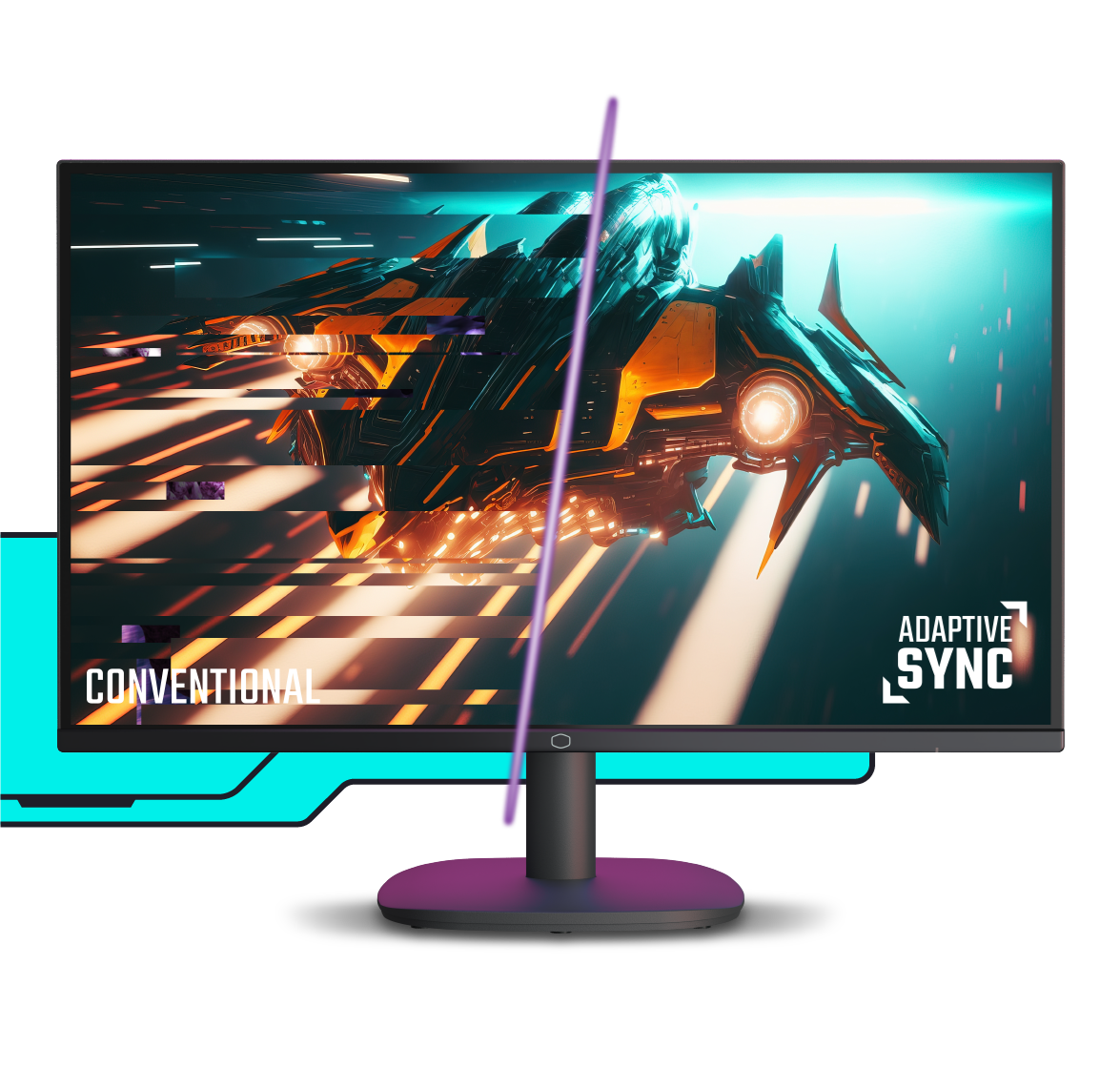
The monitor is built for esports titles as it comes with a 24.5-inch 1080p IPS panel which is set to 360Hz refresh rate by default. As mentioned above, you can overclock it to 380Hz. In addition, the gaming monitor provides support for AMD FreeSync Premium to address image tearing issues, along with Adaptive Sync variable refresh rate (VRR) technology. ASUS has also incorporated its unique ‘ELMB-sync’ feature, which is a backlight reduction mode designed to reduce motion blur while working in conjunction with VRR.

Moreover, the ROG Strix XG259QN boasts impressive specifications such as a rapid 1 ms response time (gray-to-gray), VESA DisplayHDR 400 certification, and a native resolution of 1080p. To cater to different connectivity needs, ASUS has equipped the monitor with DisplayPort 1.4 and HDMI 2.0 ports, both capable of supporting smooth 144 Hz gaming at 1080p. In terms of additional ports, the monitor offers two USB 3.2 Type-A ports and a 3.5 mm audio jack, although it does not include built-in speakers or Type-C connectivity.

Pricing and availability details are still under wraps, however, we can expect Asus to announce the details soon.

RELATED:

(Source)

Oppo K11x goes on sale in China, offers 120Hz display, 108MP dual cameras, 67W charging

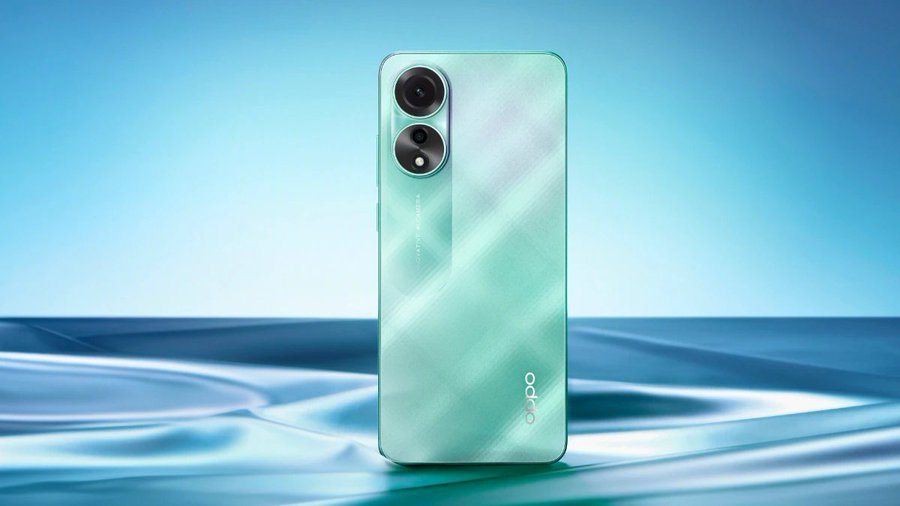
Just before announcing the Reno 10 series of smartphones in China, Oppo took off the covers from the Oppo K11x mid-range in the previous week. As announced, the device is now available for purchase in the Chinese market. Here is a look at the price and specifications of the device.

Oppo 11x price

The Oppo K11x comes in three options, such as 8 GB RAM + 128 GB storage, 8 GB RAM + 256 GB storage, and 12 GB RAM + 256 GB storage. These models are priced at 1,499 Yuan (~$211), 1,699 Yuan (~$239), and 1,899 Yuan (~$267), respectively. The K11x comes in green and blue shades. At present, there is no word on whether the phone will be released in markets outside of China.

Oppo 11x specifications

OPPO K11x
OPPO K11x

The Oppo K11x houses a spacious 6.72-inch LCD display that delivers impressive visuals with its Full HD+ resolution, smooth 120Hz refresh rate, and a cinematic 20:9 aspect ratio. Additionally, it offers a peak brightness of 550 nits and a side-facing fingerprint sensor. Running on the Android 13 OS with the ColorOS 13 skin, the K11x promises to offer a smooth experience.

The Snapdragon 695 chipset powers the K11x under the hood, along with up to 12 GB of LPDDR4x RAM and up to 256 GB of UFS 2.2 storage. For additional storage, it has a microSD card slot. To keep the lights on, the device houses a substantial 5,000mAh battery with 67W fast charging support.

The Oppo K11x offers a 16-megapixel front camera that captures detailed selfies and enhances your video calls. A 108-megapixel primary camera, a 2-megapixel depth sensor, and an LED flash are all part of the dual-camera system on its back.

Furthermore, the K11x incorporates a side-facing fingerprint sensor for effortless unlocking. It also boasts a range of additional features, including dual SIM support, 5G, Wi-Fi 5, Bluetooth 5.1, GPS, a USB-C port, a 3.5mm audio jack, and dual stereo speakers.

RELATED:

Huawei’s Mate X3 may be Tougher than the Competition, as per Promo Video

It’s a fact that folding phones are inherently more fragile due to their unique design and construction. Unlike traditional smartphones with rigid frames, folding phones utilize flexible displays and hinges that allow them to fold and unfold. This flexibility introduces additional vulnerability to the device, as the delicate display and intricate mechanisms are subjected to constant bending and stress. The repeated folding and unfolding motion can strain the internal components, such as the display, battery, and connectors, increasing the risk of damage or malfunction. Additionally, the development of durable and flexible materials for these devices remains a significant engineering challenge, further contributing to their fragility. However, it seems that Huawei is looking to overcome this challenge with is latest foldable, the Mate X3.

Consumers witnessed the phone’s internal display enduring the impact of a walnut and a kitchen tool

In a recent promotional video released by the manufacturer, the Mate X3 proved its durability by surviving a series of intense tests. This device not only withstood physical abuse but also emerged as the most popular handset in China during the first quarter of 2023, as announced at the prestigious Huawei Mobile Innovation Technology Media Communication Conference.

The promotional video showcased the Mate X3’s resilience in captivating fashion. Consumers witnessed the phone’s internal display enduring the impact of a walnut and a kitchen tool. The handset was then accidentally knocked off a chair, plummeting to the floor. To add to the suspense, a glass of water toppled over, drenching the fallen foldable. However, the Mate X3, unaffected by this chain of events, was picked up by its owner, who effortlessly folded it closed and utilized the external display to demonstrate that the device remained fully functional.

With an inward folding design, the Huawei Mate X3 boasts a 6.4-inch external OLED display featuring a 1080 x 2504 resolution and a 120Hz refresh rate. The internal OLED screen measures 7.8 inches and offers a nearly square 2496 x 2224 resolution, also complemented by a 120Hz refresh rate. Powering this phone is the Snapdragon 8+ Gen 1 chipset.

RELATED:

(Via)

Google Pixel Watch 2 will reportedly offer significantly improved battery life, a new processor, and Wear OS 4

Google launched its first smartwatch last year, named Pixel Watch. The company is now working on its successor, Pixel Watch 2, which is expected to go official in the coming months.

In the latest development, a new report from 9to5Google claims that the Google Pixel Watch 2 will come with significantly better battery life than its predecessor. With longer battery life, users will be able to wear the device for longer periods without having to worry about running out of power.

Google Pixel Watch
Google Pixel Watch

The report, which cites sources familiar with the matter, claims that the upcoming Google Pixel Watch 2 can last for over a day with the always-on display enabled. If some battery-saving features are enabled, then the device could last for up to two days. This indicates a major improvement given that the original model struggled to last for a day, that too with the always-on display feature disabled.

There are a few factors that help with the battery life of the upcoming Google smartwatch, including a new processor which will be more power efficient and a larger capacity battery. Pixel Watch 2 is expected to be powered by Qualcomm Snapdragon W5+ Gen 1 chip, which is claimed to be 20% more power efficient than the Snapdragon Wear 4100+ found in the Pixel Watch.

It is also said to have more health sensors embedded into the device, meaning more health-related features. The Google Pixel Watch 2 is also expected to be the first device to run Wear OS 4, an operating system from Google made especially for smartwatches. While the exact launch date is unknown, the device is expected to go official in the fall of this year.

RELATED:

Source

Motorola Razr 40 Ultra full specifications emerge once again before launch

Tomorrow, Motorola is set to unveil the Motorola Razr 40 Ultra during a global launch event. Nevertheless, the rumor mill continues to churn out leaked details about the Razr 40 Ultra, showing no signs of stopping. Tipster Snoopy Tech recently shared a tweet containing an image of the complete specifications sheet for the device.

Motorola Razr 40 Ultra specifications (rumored)

Razr 40 ultra specs sheet
Razr 40 ultra specs sheet by Snoopy Tech

The Motorola Razr 40 Ultra will measure 170.83 x 73.95 x 6.99mm in the folded state. When unfolded, it will have a dimension of 88.42 x 73.95 x 15.1mm. It will come equipped with a 6.9-inch FlexView pOLED display that offers an FHD+ resolution, a 22:9 aspect ratio, a 165Hz refresh rate, and HDR10+. On the outside, it will have a 3.6-inch QuickView pOLED display that will offer a 144Hz refresh rate and have Gorilla Glass 7 (appears to be Gorilla Glass Victus) protection.

The Razr 40 Ultra will have a 32-megapixel front-facing camera. Its back panel will feature an OIS-enabled 12-megapixel primary camera with an f/1.5 aperture and a 13-megapixel ultra-wide shooter, which doubles up as a macro camera. The device will run on a near-stock version of Android 13.

Under the hood, the Razr 40 Ultra will feature the Snapdragon 8 Plus Gen 1 chipset, 8 GB of RAM, 256 GB of storage, and a 3,800mAh battery. The latter will support 33W fast charging and 5W wireless charging. For security, the Razr 40 Ultra will offer features like face unlock and a side-facing fingerprint scanner.

The Razr 40 Ultra will come with connectivity features, such as dual SIM (nanoSIM + eSIM), 5G, Wi-Fi 6E, NFC, GPS, a USB-C, and support for Motorola’s Ready For feature. Lastly, the device will offer IP52-rated splash resistance. It will be available in three shades: Infinite black, Glacier Blue, and Viva Magenta.

RELATED:

(source)

Xiaomi 14, Xiaomi 14 Pro model numbers revealed, expected launch timeframe emerge

In December 2022, Xiaomi unveiled the Xiaomi 13 and Xiaomi 13 Pro flagship phones featuring the Snapdragon 8 Gen 2 chipset in China. Hence, it is being said that the Xiaomi 14 series of flagship smartphones will debut by the end of this year in the home market. A new report by GSMChina has revealed the model numbers of the Xiaomi 14 and 14 Pro. The launch timeframe of both smartphones can also be deduced from their model numbers.

23127PN0CC
23127PN0CC
23127PN0CG
23127PN0CG

Two new devices with model codes 23127PN0CC / 23127PN0CG and 23116PN5BC / 23116PN5BG have surfaced in the IMEI database. These devices are the Xiaomi 14 and 14 Pro, respectively, according to the publication. The model codes ending with “C” are the Chinese variants, whereas the ones having “G” at the end are their global versions.

23116PN5BC
23116PN5BC
23116PN5BG
23116PN5BG

The numbers 2312 and 2311 hint that the Xiaomi 14 series may go official in November or December in China. It is likely that the Xiaomi 14 and 14 Pro will land on the global market a couple of months later.

Reports have revealed that the Xiaomi 14 series will also include the Xiaomi 14 Ultra. Since nothing is known yet about the device, it appears that it could be landing in China in Q2 2024. The Xiaomi 14, 14 Pro, and 14 Ultra are expected to feature the next-generation Snapdragon 8 Gen 3 chipset, which may debut in November this year.

Recent reports have claimed that the Xiaomi 14 Pro could be arriving in flat and curved-edge screen variants. Its rear camera setup is expected to include three 50-megapixel cameras, of which the primary lens could be the 1-inch Sony IMX989. The setup is also expected to include a periscope zoom camera. The 14 Pro’s front camera is likely to support 4K video rerecording. The two variants of the 14 Pro may pack a 5,000mAh battery and support 90W and 120W charging, respectively.

RELATED:

(source)

MSI Unveils the Limited Edition Stealth 16 Mercedes-AMG Motorsport Laptop: Where Gaming Power Meets Automotive Luxury

MSI has teamed up with the German auto giant Mercedes to launch the new MSI Stealth 16 Mercedes-AMG Motorsport laptop. Combining powerful hardware with a touch of luxury inspired by the prestigious Mercedes-AMG brand, this laptop promises an exceptional gaming experience.

MSI

Sporting a sleek selenite grey magnesium alloy chassis, the Stealth 16 Mercedes-AMG Motorsport is designed to turn heads. Featuring prominent branding from both MSI and Mercedes-AMG, this limited edition model showcases the collaboration between the two renowned brands.

MSI Stealth 16 Mercedes-AMG Motorsport laptop specs & pricing

Under the hood, the laptop packs a punch with an Intel Core i9-13900H processor, ensuring top-tier performance for demanding gaming applications. Graphics capabilities are provided by the Nvidia GeForce RTX 4070, delivering stunning visuals and immersing players in captivating gaming worlds.

The 16-inch UHD+ OLED display takes gaming visuals to new heights with its impressive resolution of 3840 x 2400 and cinematic 16:10 aspect ratio. The result is a visually stunning experience that brings games to life with vibrant colors and intricate details.

MSI

As part of the package, MSI includes a range of exclusive accessories bearing the Mercedes-AMG logo. These include a precision-engineered mouse, a mouse pad, a high-speed USB drive, and a stylish carrying case, adding an extra touch of sophistication to the overall gaming setup.

With a price tag of €3,299 (US$3,533), the Stealth 16 Mercedes-AMG Motorsport targets a discerning audience seeking a combination of performance and luxury. Availability is expected in the coming weeks, allowing a select few to experience the seamless fusion of power and prestige.

RELATED:

(Source)

Apple WWDC Event Page Hints at Reality Pro Headset Unveil on June 5

Apple enthusiasts and tech enthusiasts alike are eagerly awaiting the arrival of Apple’s annual Worldwide Developers Conference (WWDC), which is set to take place on June 5, 2023. This year, however, there is an exciting twist. Apple has hinted towards the fact that the event will feature augmented reality (AR) and virtual reality (VR) announcements, marking a significant milestone in the company’s ongoing exploration of these cutting-edge technologies.

Apple introduced its first WWDC Easter egg in 2020

For several years now, Apple has delighted its audience by including hidden AR surprises on the event page leading up to WWDC. These Easter eggs have become somewhat of a tradition, captivating users and hinting at what’s to come. In 2020, Apple introduced its first AR Easter egg during the iPad and Apple Watch Series 6 event, and it has continued this trend ever since.

Apple

To uncover the AR Easter egg for WWDC23, all users need to do is visit the Apple Events webpage on their iPhone or iPad. Once there, they can simply tap on the morphing Apple logo located at the top of the page. As soon as they do so, an incredible AR experience will unfold before their eyes.

The AR experience showcases a static Apple logo shadow alongside a mesmerizing morphing Apple logo that occasionally reveals the date of the event, “June 5, 2023.” Users will have full control over the shifting Apple logo, allowing them to rotate it in any direction and adjust its size by pinching or expanding their fingers. Alternatively, they can choose to view the AR experience or focus solely on the captivating morphing Apple object set against a subtle gray background.

As Apple enthusiasts eagerly anticipate WWDC23, the inclusion of AR and VR announcements has generated a wave of excitement. With the rumored unveiling of Apple’s Reality Pro headset, the conference promises to showcase the company’s commitment to pushing the boundaries of technology and immersing users in innovative digital experiences.

The integration of AR into WWDC highlights the growing significance of this technology in various fields, including gaming, education, and productivity. As Apple continues to explore AR’s potential, we can expect groundbreaking developments that will reshape how we interact with the digital world. Apart from this, there are also rumors of the 15-inch Macbook Air dropping on the same date.

RELATED:

(Via)

Realme sub-brand DIZO may shut down amidst the reorganization of Realme Techlife to Narzo

There are feelers that Realme will discontinue its sub-brand DIZO after its CEO Abhilash Panda stepped down. The resignation of Panda was the culmination of a series of ping-pongs that now point to a reorganization of the brand. This is coming just two years after the DIZO sub-brand was unveiled.

Realme

Realme had hyped the DIZO sub-brand when it was launched in 2021. A raft of DIZO products followed the launch of the brand. The product lineup of DIZO included Bluetooth neckbands, hair dryers, trimmers, TWS earbuds, feature phones, and smartwatches. Specifically, from 2021 when it kicked off, DIZO has launched 17 smartwatches, 13 Bluetooth audio accessories, a hair dryer, three feature phones, and three hair trimmers.

DIZO caught the attention of the market with its whirlwind performance within its first year. DIZO’s CEO Panda also claimed DIZO was one of the leading smartwatch manufacturers in India, quoting Counterpoint Research.
It however seems that the DIZO bubble is already burst and Panda had resigned from his position. Realme seems to have also quietly distanced itself from the DIZO brand.

A fallout of Panda’s departure could be the shutting down of DIZO by Realme. The entire DIZO media communications team has left recently. Realme is yet to make any official statement relating to the shutdown of DIZO at this time. The brand had been silent since February without any updates or announcements.

Even with the possibility of a shutdown, Realme will continue to provide software support for all DIZO products and after-sales assistance. Last month (April), Realme announced the overhaul of its Techlife brand which will now be under the Narzo sub-brand. DIZZO could also be likely subsumed under the Narzo brand. Users of DIZO products could then easily access support for their gadgets via Narzo’s support ecosystem. It remains to be seen how the failure of the DIZO brand could hurt Realme.

There could be suspicion that the Narzo brand could also go the way of DIZO. A robust response and clarification are expected from Realme to calm negative suspicion.

RELATED:

(source)

Logitech G Pro X 2 gaming headset with graphene audio drivers announced

Logitech has announced its latest gaming headsets equipped with graphene audio drivers. The Logitech G Pro X 2 Lightspeed gaming headset is an innovation that comes with long-awaited graphene drivers. Graphene is an interesting form of carbon that has been hyped and promised as a revolutionary technology for two decades. It offers a lightweight and more reliable option than other materials when used as an audio driver.

Logitech G Pro X 2 gaming headset

The G Pro X 2 gaming headset, according to Logitech, comes with drivers that are both rigid and almost impossibly lightweight. This delivers high-fidelity sound with extremely low distortion for an immersive sound output.

The Logitech G Pro X 2 uses a 50mm graphene diaphragm for its audio driver. Apart from delivering an immersive sound experience, the headset is about 25g lighter than its predecessor. The sound production of the Logitech G Pro X 2 is exquisite when playing games, but the difference in sound quality with non-graphene driver headsets is not fully determined.

The surround sound and DTS sounds of the headset have been shown to be impressive when playing shooter games. The clarity of the sounds could be seen as the user can easily determine the direction of different degrees of sound while gaming. This could result in more accurate decision-making during gaming sessions, yielding a more competitive edge for users of the G Pro X 2.

The headset comes with Bluetooth connectivity, as well as a 3.5mm audio jack. This allows the user to connect the headset to a smartphone or operate the headset in the absence of the Lightspeed wireless dongle.

Logitech G Pro X 2 gaming headset

The Logitech G Pro X 2 gaming headset supports USB-C charging with a doubled battery life from that of the original Pro X. The headset delivers up to 50 hours of game time on a single charge. This is a significant improvement over the 20 hours of battery life in the original Pro X headset. Rotating hinges have also been added for easier and more comfortable gaming even for extended periods. Swappable ear pads are also featured for the headset in either leatherette or velour. The package also includes a case and a detachable microphone.

Logitech G Pro X 2 gaming headset promises up to 50 hours of battery life

The Logitech G Pro X 2 gaming headset goes on sale on May 30 at $249 in the US and €269 in Europe. This is not significantly more expensive than its predecessor with greater functionality and a lightweight, longer-battery life. There are no details for the availability of the headset outside the specified regions yet.

RELATED:

Skullcandy Smokin’ Buds TWS earbuds with a low carbon footprint and longer battery life launched for $20

Skullcandy has unveiled its Smokin Buds earbuds with long battery life and low carbon footprint. The Smokin Buds also come with a very affordable price tag of $19.99.

Skullcandy Smokin' Buds

The Smokin Buds earbuds catch the fancy with their remarkably affordable price but it is another matter of whether its performance will match the hype on the earbuds. The wireless earbuds market is filled with some heavily-priced and premium models including the Bose QuietComfort Earbuds, the Sony WF-1000XM4, and Apple’s AirPods Pro 2. One of the notable omissions on the Skullcandy Smokin Buds is active noise cancellation, which is pretty important in earbuds.

The Smokin Buds supports Bluetooth 5.2 connectivity and it has a microphone on each buds taking calls. It also features auto-on and auto-connect features that allow for automatically powering the earbuds and pairing them to an input device when removed from the case. There are capacitive touch controls on the earbuds that allow the user to play/ pause streaming or receive a call. The earbuds come with expertly tuned drivers with different sound modes for different scenarios. The Skullcandy Smokin Buds offer clear full-range sound with an impressive bass depth.

Skullcandy Smokin' Buds

The Skullcandy Smokin Buds earbuds come with IPX4 water resistance and are made from 50% certified recycled plastic, as well as 100% recycled packaging materials. The Smokin Buds come with smaller and more efficient batteries which results in an overall reduction of the carbon footprint. Up to 20 hours of playback can be provided by the earbuds together with the charging case. The earbuds themselves can last for 8 hours on a single charge and a rapid charge feature is also in charge for the Smokin Buds.

The Skullcandy Smokin Buds could catch the fancy of sustainability-focused customers with the choice of recycled materials used for its production. The smaller battery setup and overall lightweight design also put the earbuds on a decent footing. This is in addition to its decent sound output and ultra-affordable price of $19.99.

RELATED:

(source)

Xiaomi MIJIA Cross-Door 603L Ice Crystal Rock Refrigerator Unveiled in China

Xiaomi has announced the MIJIA Cross-Door 603L Ice Crystal Refrigerator in China. The new Xiaomi refrigerator comes with cutting-edge features that underscore the brand’s commitment to innovation. The refrigerator has a sleek design and it is adorned with a kryptonite glass panel with scratch resistance. The Xiaomi MIJIA Cross-Door 603L Ice Crystal Rock Refrigerator has a bottom heat dissipation framework and a cabinet body that takes about 0.57 square meters.

Xiaomi MIJIA Cross-Door 603L Ice Crystal Rock Refrigerator

The new refrigerator is coated with nano-toxic paint and offers organic fingerprint resistance. It has a 603-liters capacity divided into 8 compartments including cooling, variable temperature, and a 100L frozen compartment. Other compartments in the refrigerator are a fresh-keeping area, refrigerated and frozen areas. The size of the compartment can be adjusted to suit specific needs, providing flexibility for the refrigerator.

Xiaomi MIJIA Cross-Door 603L Ice Crystal Rock Refrigerator

A 360-degree air-cooled circulation system provides cooling for the interior of the refrigerator. The gadget is also equipped with an inverter compressor, frequency conversion fans, and temperature detection sensors for minimal temperature fluctuations inside the refrigerator.

Xiaomi MIJIA Cross-Door 603L Ice Crystal Rock Refrigerator

The Xiaomi MIJIA Cross-Door refrigerator has minimal power requirements and its operating noise level is 36dB. The interior of the refrigerator features embedded light sources that deliver panoramic lighting around the gadget. The refrigerator has an LCD touch screen, adjustable shelves, anti-bacterial door seals, and stainless steel sliding drawers on rails. The companion app for the refrigerator is the MIJIA app, which allows for remotely controlling the refrigerator using a smartphone.

Xiaomi MIJIA Cross-Door 603L Ice Crystal Rock Refrigerator price

The Xiaomi MIJIA Cross-Door 603L Ice Crystal Rock Refrigerator is now available in China for pre-order. The starting price of the new MIJIA refrigerator is 5,499 yuan (~$777). There are no global availability and pricing information for the refrigerator yet.

RELATED:

WhatsApp working on screen sharing feature for Android phones

WhatsApp continues its streak of adding new features to enhance user experience. The latest addition is the highly anticipated screen-sharing feature, currently being tested on Android devices. This functionality allows users to share their smartphone screens with others during video calls, making it easier to showcase content or seek assistance.

WhatsApp designed

Screen Sharing: WhatsApp’s Newest Feature for Android Users

According to a report from WABetaInfo, the screen-sharing feature is already available on the Google Play Store for users who have installed the latest beta version (2.23.11.19) of WhatsApp. During a video call, a new icon appears at the bottom of the screen, enabling users to initiate screen sharing. By clicking on this icon, a pop-up menu requests permission to share the screen, informing users that the content on their screens will be visible to others on the call. Users have full control over this feature and can easily stop sharing by clicking the “Stop Sharing” button.

This new functionality bears resemblance to Google Meet’s Live Sharing feature, introduced a few years ago, and Apple’s SharePlay feature, available on iOS, iPadOS, and macOS devices. WhatsApp’s screen-sharing feature is expected to be particularly beneficial for individuals who require assistance or guidance with their smartphones, such as elderly users or children.

WhatsApp screen sharing android

As WhatsApp continues to expand its range of features, this addition reinforces the platform’s commitment to providing versatile and user-friendly communication options. With screen sharing now on the horizon, WhatsApp aims to further enhance the overall video calling experience for its Android users.

WhatsApp is also working on potential introductions of usernames and a redesigned settings page, aiming to enhance user personalization and interface usability. The company has also introduced a password reminder feature for end-to-end encrypted backups. Additionally, the empowering message editing feature gives users greater control over their conversations, ensuring a seamless messaging experience.

RELATED:

China’s Latest Space Launch Includes First Civilian Astronaut

China launched a new three-person crew for its orbiting space station. On Tuesday morning, the Shenzhou 16 spacecraft embarked on its journey from the Jiuquan launch center situated on the outskirts of the Gobi Desert in northwestern China. Aboard a Long March 2-F rocket, the spacecraft initiated its ascent, marking another significant milestone in China’s space exploration endeavors.

Just a day after unveiling its intention to land astronauts on the moon before 2030, China has ignited a new realm of competition with the United States, further intensifying the rivalry between the two nations in the field of space exploration. The newly launched crew, which includes China’s first civilian astronaut, will have a brief period of overlap with the three astronauts currently aboard the Tiangong station. After completing their six-month mission, the existing crew will then return to Earth.

Jing Haipeng, the commander of the mission, along with rookies Zhu Yangzhu and Gui Haichao, both representing the third astronaut selection group, are embarking on a six-month journey aboard the Tiangong space station. Jing Haipeng brings extensive experience from previous missions (Shenzhou 7, 9, and 11), while Zhu Yangzhu and Gui Haichao are venturing into space for the first time. Zhu, a spaceflight engineer, was chosen for China’s third batch of astronauts in 2020, and Gui will make history as China’s first payload specialist to fly to Tiangong.

During a news conference at the Jiuquan Satellite Launch Center in northwestern China, Lin, Xiqiang, deputy director of the China Manned Space Agency, outlined the overarching objectives of China’s space program. These goals include achieving the first manned landing on the moon before 2030, conducting scientific exploration and technological demonstrations on the lunar surface, establishing a crew commuting and short-term stay system, and advancing key technologies such as human-robot integration testing.

He further stated that Chinese astronauts will conduct various activities on the moon, including walking on its surface, gathering samples in the vicinity of the landing site, and conducting in situ research. These missions will serve as a stepping stone for China’s manned expeditions, transitioning from low Earth orbit to deep space exploration. Lin emphasized that these endeavors will contribute to expanding humanity’s understanding of the moon’s origin, evolution, and the solar system as a whole.

China took the initiative to construct its own space station after being excluded from the International Space Station primarily due to concerns over its close association with the People’s Liberation Army. China achieved a significant milestone by becoming the third country, following the former Soviet Union and the United States, to independently launch a manned space mission.

Related:

(via)

Motorola Moto G Stylus (2023) launched with Snapdragon 6 Gen 1 chip

After Samsung and TCL, Motorola is probably the only company that makes usable stylus-equipped phones. The Moto G Stylus range is quite popular among consumers and today the company has launched its 2023 refresh. The Moto G Stylus (2023) debuts with the latest Snapdragon 6 Gen 1 chip and a large LCD display. It also gets a pretty decent camera setup and a 5,000mAh battery. Here are the detailed specifications and pricing.

Motorola Moto G Stylus (2023) Price & Specs

Moto G Stylus 5G (2023) arrives with a minimalist design, featuring a curved back and flat display on the front. The panel gets a punch-hole cutout, which encloses the 16MP selfie camera. The 6.6-inch IPS LCD comes with an FHD+ resolution and a 120Hz refresh rate. You get the signature stylus next to the charging port. Under the hood, the smartphone is equipped with the Qualcomm Snapdragon 6 Gen 1. It is in fact one of the first phones to feature this mid-range SoC.

Moto G Stylus 2023

For clicking pictures, the Moto G Stylus gets a 50MP main camera on the back with f/1.88, 1.0 µm native pixels alongside an 8MP ultrawide module that also functions as a macro camera. On the software front, it runs Android 13 with Motorola’s MyUX interface on top. The handset comes with a promise of one major Android update and up to three years of security updates.

The device is fueled by a 5,000 mAh battery with 20W charging support. It comes with stereo speakers, a headphone jack, and a microSD card slot.

Moto G Stylus 5G (2023) is offered in Cosmic Black and Rose Champagne colors. The 6GB + 256GB version is priced at $399 in the US. It can be purchased from Cricket Wireless starting June 2 or wait till June 16 to get the unlocked variant from Motorola, Amazon, and BestBuy.

RELATED:

(Source)

Dyson Study: Most Indians aware of virus, but only 1 in 7 clean to eliminate it

Dyson just held a briefing where it showed results of its study into dust and the various effects it has in our lives. But perhaps more interestingly, the study also found that most Indians are quite aware of viruses, yet are struggling with an effective ways of dealing with them. So let’s have a look.

Dyson
Nathan Lawson McLean, Design Manager, Floorcare Design Engineering, Dyson with the V15 Vacuum Cleaner

Dyson: 1 in 2 Indians are aware of viruses in dust

The known brand behind advanced home appliances like air purifiers, vacuum cleaners, hair dryers and much more, shared the Dyson Global Dust Study 2023. In this survey, the company made detailed studies into the dust that is all around us, cleaning habits across the globe, and even dust related awareness. In the study that had nearly 35,000 participants from 39 countries, the study found that Indians were some of the more aware for viruses, especially in the wake of the COVID-19 pandemic.

But despite most Indians being aware, the study found that only 1 in 7 Indians had effective ways in eliminating this virus in their homes. To elaborate, the dust here in question specifically refers to household dust that carries common allergy triggers. The survey showed that just 33% of participants knew that pollen could reside in household dust, while just 32% knew that dust even contains dust mite feces.

Dyson

To combat these invisible hazards, Dyson and its team has worked for decades to develop cutting edge technology to improve floorcare and cleaning. In the briefing, Nathan Lawson McLean, Design Manager for Floorcare Design Engineering at Dyson showcased the technology that powers its latest products. This includes new cord free vacuum cleaners like Dyson V15 model, which arrives with five stage filtration systems that can capture dust as tiny as 0.1 microns while also offering a robust fully sealed body.

RELATED:

Lenovo’s powerful GeekPro desktop 2023 is now available with Nvidia RTX 4060 Ti

Lenovo introduced an updated version of its high-performance GeekPro desktop in February this year. The refreshed model was available with either Core i5 or Core i7 processors and offered a choice between Nvidia RTX 3060 or RTX 3060 Ti graphics cards. However, Lenovo has now launched an even more powerful variant of the desktop featuring the Nvidia RTX 4060 Ti. Here are the details.

Lenovo GeekPro desktop gets its graphics upgraded

Lenovo launched the RTX 4060Ti version of the GeekPro high-performance desktop in two configurations: Core i7-13700F / RTX 4060 Ti and i5-13400F / RTX 4060 Ti. Both configurations come equipped with 16GB of dual-channel DDR4-3200 memory and a 1TB PCIe 4.0 solid-state drive. The desktop is currently available for pre-sale and is scheduled for an official launch on May 31 at 20:00.

Lenovo GeekPro 2023 Graphics

The Lenovo GeekPro desktop is equipped with a 16GB 3200MHz memory configuration and a 512GB NVMe PCIe 4.0 high-speed solid-state drive. It is powered by a 500W platinum power supply and comes with a 3-year warranty and 3-year on-site service for main components. Additionally, it comes pre-installed with genuine Windows 11 and Office Home.

The desktop features a 17L chassis with a front hidden air duct, allowing for efficient cooling. It is also equipped with a Wi-Fi 6 network card and a 2.5G wired network card. Furthermore, the GeekPro desktop supports tool-free HDD installation, making it convenient for upgrading or replacing hard drives.

Talking about the price, the Intel Core i5 version with Nvidia RTX 4060 Ti costs 7199 yuan ($1016) while the Core i7 variant with the same graphics card is priced at 8599 yuan ($1214). The Lenovo GeekPro desktops are not available outside China, at least for now.

RELATED:

Lenovo Xiaoxin 65W Gallium Nitride Charger strip launched with 2500W rated power

Lenovo makes a variety of consumer electronics, ranging from laptops, PCs, and smartphones to accessories like chargers and keyboards. The company has today launched a new 65W Gallium Nitride charger strip in China under its Xiaoxin line. It comes with 2500W rated power with a maximum output of 65W for fast charging. Here are the details.

Lenovo 65W Charging Strip comes with an affordable price

The Lenovo charging strip comes in white and features a durable build. It is claimed to be made using imported PC material, a national standard fire-resistant and flame-retardant shell, and has passed the lightning surge test. Additionally, it incorporates multiple protection measures.

Lenovo charging strip

As mentioned, the charging strip offers a maximum power of 65W for fast charging through a USB-C port. It has 2 USB-C ports and 1 USB-A port that adaptively distribute power. The three ports can output simultaneously. The fast-charging strip supports PPS, PD3.0, QC3.0, and other mainstream charging protocols. It can charge a notebook computer, mobile phone, tablet computer, game console, smart device, or small household appliance.

When multiple devices are used simultaneously, the plug-in strip intelligently allocates power based on the power supply requirements and protocols of the connected devices. The fast charging power of the plug-in strip is set to a maximum of 65W. When multiple interfaces are outputting power concurrently, the corresponding power will be matched according to the power supply demand. The total power across three ports will not exceed 65W.

The Lenovo Xiaoxin 65W Gallium Nitride Charger strip weighs 485g and is available for pre-order in China. It comes with a price tag of 159 yuan ($22). Xiaoxin products don’t usually make it out of China so we don’t suppose this one will.

RELATED: