Advertisement

Vivo Y36 4G clears NBTC & Google Play certifications, could launch soon

Vivo is working on a new mid-range 4G smartphone called the Vivo Y36 4G. This device has already emerged on Geekbench and Bluetooth SIG confirming some of the key specifications. Now, it has also emerged on NBTC & Google Play Certification listing hinting at an imminent launch.

As per the listing on the NBTC certification website, the Y36 4G smartphone has been assigned the model number V2247. The listing further confirms the official name of the device, which has also been verified by the Google Play Certification listing. This is the same model previously spotted on Geekbench and Bluetooth SIG. Let’s look at all the information available on the Vivo Y36 4G so far.

Vivo Y36 4G specs


Rumors surrounding the Vivo Y36 4G suggest that the phone will come with a sizable 6.8-inch LCD display, although there is no confirmation yet on whether it will feature a high refresh rate. Under the hood, the device is expected to run on the MediaTek Helio G99 chipset and offer 8GB of RAM. An interesting feature of the phone is its rumored additional 8GB of expandable RAM.

Vivo Y35


According to the Geekbench listing, the Vivo Y36 4G smartphone is powered by the Qualcomm Snapdragon 680 SoC, which is an older and comparatively inferior chipset as compared to the newer Helio G99. The smartphone managed to score 410 and 1,343 points in the single-core and multi-core test results, respectively, which is a satisfactory performance for a lower-midrange device.

As for camera capabilities, the upcoming Vivo Y36 4G is expected to come equipped with a 50MP primary camera on the rear, although details about the other camera sensors are yet to be disclosed. The device is anticipated to be powered by a 5,000mAh battery that supports 44W fast charging, ensuring that users can stay connected throughout the day.

RELATED:

(via)

Meta Unveils ImageBind, Revolutionizing AI with Multimodal Learning

In a groundbreaking development, Meta has unveiled ImageBind, an innovative AI model that bridges the gap between machines and humans in terms of holistic learning from multiple modalities. Unlike traditional AI systems that rely on specific embeddings for each modality, ImageBind creates a shared representation space, enabling machines to learn simultaneously from text, image/video, audio, depth, thermal, and inertial measurement units (IMU). This article explores the immense potential of ImageBind and its implications for the future of artificial intelligence.

ImageBind incorporates Multiple Sensory Inputs to Generate Media

ImageBind represents a significant leap forward in AI capabilities, transcending the limitations of previous specialist models trained on individual modalities. By incorporating multiple sensory inputs, ImageBind offers machines a comprehensive understanding that connects various aspects of information together. For instance, Meta’s Make-A-Scene can utilize ImageBind to generate images based on audio, enabling the creation of immersive experiences such as rainforests or bustling markets. Additionally, ImageBind opens doors for more accurate content recognition, moderation, and creative design, including seamless media generation and enhanced multimodal search functionalities.

Meta ImageBind

As part of Meta’s broader efforts to develop multimodal AI systems, ImageBind lays the foundation for researchers to explore new frontiers. The model’s ability to combine 3D and IMU sensors could revolutionize the design and experience of immersive virtual worlds. Furthermore, ImageBind offers a rich avenue for exploring memories by enabling searches across various modalities, such as text, audio, images, and videos.

The creation of a joint embedding space for multiple modalities has long posed a challenge in AI research. ImageBind circumvents this issue by leveraging large-scale vision-language models and utilizing natural pairings with images. By aligning modalities that co-occur with images, ImageBind seamlessly connects diverse forms of data. The model demonstrates the potential to interpret content holistically, enabling various modalities to interact and establish meaningful connections without prior exposure to joint training.

ImageBind’s unique scaling behaviour reveals that its performance improves with larger vision models. Through self-supervised learning and utilizing minimal training examples, the model showcases new capabilities, such as associating audio and text or predicting depth from images. Moreover, ImageBind outperforms prior methods in audio and depth classification tasks, achieving remarkable accuracy gains and even surpassing specialized models trained solely on those modalities.

With ImageBind, Meta paves the way for machines to learn from diverse modalities, propelling AI into a new era of holistic understanding and multimodal analysis. The company has been making significant strides in the field of AI, with the company launching its own AI model some time back.

RELATED:

(Source)

Elon Musk announces Twitter ‘Purge’, Inactive accounts at risk

Twitter CEO Elon Musk has announced that the social media platform will be “purging” accounts that have been inactive for several years. If you haven’t logged into your Twitter account in a while, you could be at risk of losing your handle. On the other hand, if you’ve been waiting for a specific handle to become available, you might be in luck soon.

Follower Count may drop sharply after the Twitter Account Purge

Musk did not provide a timeline for when the account deletions would take place, but he did caution that people should expect their follower count to drop after the purge.

This announcement follows Musk’s previous statement in December 2022 that Twitter would start “freeing the name space of 1.5 billion accounts,” which he clarified would include obvious account deletions with no tweets or logins for years.

However, Musk did not provide any clarification regarding what will happen to accounts belonging to deceased individuals or offer a way to memorialize those accounts. Additionally, if inactive accounts are opened up for claiming, this could lead to another impersonation problem for Twitter, which has already been plagued by the issue, as blue checkmarks are now available for purchase.

John Carmack, the founder of ID Software, replied to Musk’s tweet, warning that deleting inactive accounts could make it more challenging to source historic tweets. This could result in Twitter threads from years ago being fragmented with gaps of unavailable tweets.

Twitter has not yet responded to a request for comment on the matter.

It’s worth noting that Musk purchased Twitter in late 2022 for $44 billion, and since then, the platform has undergone significant changes. The site has seen an 80% reduction in its workforce, leaving around 1,500 employees. Twitter has also been embroiled in numerous controversies, including a rise in hate speech, account impersonations, and verification checkmarks being taken away from legacy accounts and major publications. Very recently, a bug allowed private tweets from Twitter Circle to be visible outside the Circle itself.

In light of Twitter’s takeover by Musk, several alternative social media platforms have emerged, hoping to attract disaffected users. These include Bluesky Social, founded by Twitter co-founder Jack Dorsey, Hive etc.

It remains to be seen what impact this account purge will have on Twitter and its users. While it may help to free up usernames and prevent account squatting, it could also result in the loss of valuable historical tweets and cause further impersonation issues.

RELATED:

(Via)

Google Pixel Tablet to hit markets on June 20 after May 10 unveiling

At last year’s I/O 2022 event, Google hinted at the release of its forthcoming Pixel Tablet. Recent rumors suggest that the launch of the device is imminent and could be announced at this year’s I/O event. Nevertheless, it is expected that customers will have to wait for another month before the Pixel Tablet hits the market.

Google

The news comes from known tipster SnooppyTech who shared an image of the tablet with its docking station on Twitter. The tipster claims that the actual launch will take place on June 20, while the unveiling will most likely happen later today (May 10).

Other than that, we recently reported on the leaked pricing of the 128 GB and 256 GB storage versions of the tablet as well as the entire spec sheet that leaked through a fumble by Amazon. Let’s take a look at what’s known so far.

Google Pixel Tablet specs

The Google Pixel Tablet is set to arrive with a tall 10.95-inch LCD panel that boasts a 2560 x 1600px resolution and a 16:10 aspect ratio. The screen will have a peak brightness of 500 nits and will be compatible with the USI 2.0 touch pen, providing users with a seamless drawing and writing experience.

Google-Pixel-Table

Under the hood, the Pixel Tablet will house the powerful Google Tensor G2 processor that is paired with a Titan M2 security coprocessor, ensuring optimal performance and top-notch security. The device will also come with 8GB of LPDDR5 RAM and either 128GB or 256GB of UFS 3.1 storage, providing ample space to store all your favorite apps, files, and media.

The Pixel Tablet will also feature an 8-megapixel camera on both the front and back, with a 1.12 μm pixel width, f/2.0 aperture, fixed focus, and an 84-degree field of view. This setup will allow users to capture stunning photos and videos, making the Pixel Tablet a perfect device for content creators.

Other notable features include WiFi 6 support, Bluetooth 5.2, a USB Type-C port, a quad-speaker setup, and three microphones, providing users with an immersive audio experience during video calls or while streaming media. Additionally, the rear pogo pins will allow for dock functionality, providing users with a versatile tablet experience. The Pixel Tablet can also be used as a smart home center, as it can connect to a speaker dock and function as a larger Google Nest Hub.

RELATED:

(Source)

WhatsApp Microphone Bug: User Privacy at Risk?

WhatsApp is a popular messaging application owned by Meta that has been in the spotlight for various security concerns in the past. The app has over two billion active users and is widely used around the world.

A Twitter Engineer found the bug on his Pixel 7 Pro

Recently, several users reported a bug in the app that allowed it to access the microphone even after the app had been closed. The issue was brought to the spotlight by a Twitter engineer who noticed it happening on his Pixel 7 Pro. The bug appears to be affecting several Android devices, including different Samsung and Pixel models, as well as several different versions of the Android app.

Whatsapp

This bug is concerning for users who are worried about their privacy and security. In several of these reports, microphone activity from the app has been spotted in Android’s Privacy Dashboard as well as through the visible green dot notification on the Android status bar. This means that even when the user thinks that they have closed the app, it is still accessing their microphone, potentially recording their conversations without their knowledge or consent.

WhatsApp has responded to these reports by claiming that the issue lies with Android and not the app itself. They state that this seems to be a bug on Android that misattributed information in the privacy dashboard and have asked Google to investigate further. Unfortunately, WhatsApp’s response came after Elon Musk took to his Twitter account to share his opinion on the matter, accusing the company of not being trustworthy.

This latest bug has raised concerns about the app’s security and privacy features, further eroding users’ trust in the app. It is crucial that Google investigate the issue and address it as soon as possible to ensure users’ privacy and security are protected.

While WhatsApp is a popular messaging app, it is important to stay vigilant and aware of any potential security issues. Users should regularly check their app permissions and settings to ensure that their data is being protected.

RELATED:

(Via)

Samsung’s One UI 6.0 based on Android 14 spotted in Early Testing on Flagship Phones

Samsung is known for its impressive Android devices and software, and the company has been making headlines lately for its work on Android 14. While the latest version of Android hasn’t even been officially released yet, Samsung is already testing early internal builds of the update on its Galaxy S23 devices, as well as the Galaxy Z Fold 4 and Flip 4. This is quite early, about two months ahead of schedule, and suggests that Samsung is moving quickly to prepare for the new update. The update, which is expected to be called “One UI 6.0” for Samsung devices, is confirmed to address longstanding issues with background apps on Galaxy devices, but it’s unclear what else Samsung has in store.

@tarunvats33 noticed the first One UI 6.0 Test Build on Samsung Servers

The evidence of Samsung’s testing was first spotted by multiple Twitter users, including @tarunvats33, who noticed the first One UI 6 test build on Samsung’s servers. The firmware is meant for internal testing on the Galaxy S23 Ultra and carries the identification S918BXXU1BWE2. The Galaxy Z Fold 4 test firmware has the F936BXXU2DWE1 identification, while the Galaxy Z Flip 4 test update carries firmware version F721BXXU2DWD7. The fact that these firmware versions are believed to be associated with One UI 6.0 lies in the fourth to last digit, which represents a new big One UI update.

Galaxy Z Fold 5

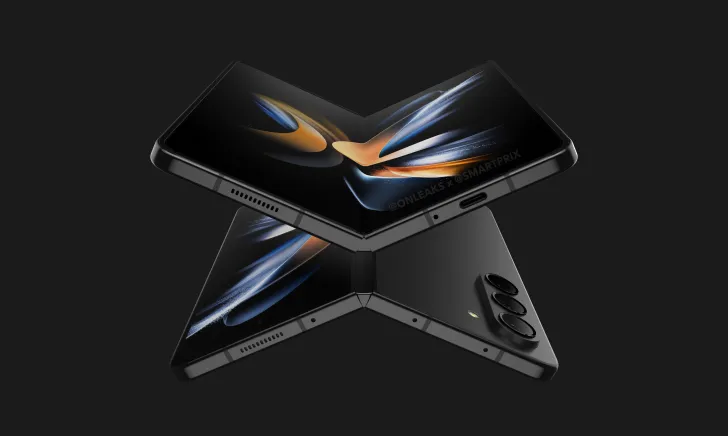
The Galaxy S23 series and the 2022 foldable flagship phones are expected to be the first to enter the Android 14 beta testing program later this year and could also be the first to receive the stable One UI 6.0 update. While it’s not entirely clear what One UI 6.0 will bring to Samsung devices, it’s expected to borrow some features from the Android 14 update that Google unveiled at its I/O conference. Samsung’s work on the update is an exciting development for Android fans who are eager to see what the new version of the operating system will bring. Samsung’s early testing suggests that the company is working hard to ensure that its devices are ready for Android 14 as soon as it’s released. The company is already working on its upcoming smartphones, such as the Galaxy Z Fold 5, which appeared in recent leaks.

RELATED:

(Via 1, 2)

Apple’s upcoming Beats Studio Pro headphones to be powered by a custom chip

Apple, under its Beats brand of audio products, has a top-end headphones named Beats Studio, but the company hasn’t updated it for almost half a decade now. However, the device is now all set to get refreshed and will come with some new and premium features.

According to the latest report from 9to5Mac, the Cupertino-based technology giant is about to launch new Beats Studio Pro headphones but the timeline for the launch of this product is not yet confirmed.

Beats Studio Pro Leak

It is also being claimed that the headphones will be powered by a custom Beats chip, which is also promised to come with improved support for Active Noise Cancellation and improved performance for the Transparency Mode.

Another update in the device will be the addition of a USB Type-C port for charging the headphones, that too with a faster speed. It is said to have support for features like audio sharing, automatic device switching, and Siri integration, among others. It is also claimed to feature personalized spatial audio.

As for the design, the Beats Studio Pro appears similar to the Studio3, but the company seems to have gotten rid of the Studio branding from the side of the headphones. If the reports are to be believed, then Apple partnered with fashion designer Samuel Ross for the Beats Studio Pro.

There are reports claiming that the Beats Studio Pro will be offered in four color options — Blue, Black, Brown, and White. It is not yet known what will be the price point of the headphones but given that it will be a premium offering, it will be priced on the higher side.

RELATED:

Source

Google Pixel 7a listed by US retailer ahead of its expected May 10 launch

The Pixel 7a will be one of the highlights of Google’s scheduled I/O conference on May 10. The Pixel 7a had been the subject of several unofficial leaks and it has already been listed by a US retailer. The unreleased smartphone was spotted on the US marketplace platform Swappa.

Already, multiple offers have been made for the smartphone. The highest offer yet for the Pixel 7a is $499. The listed Google Pixel 7a were in white, blue, and gray colors and all the listed units were carrier unlocked. The RAM/ storage configuration of all the listed Pixel 7a units was 8GB/ 128GB. Some other details of the Pixel 7a are visible from the images from the Swappa listing. The in-hand photos highlighted the USB-C cable, USB-C to USB-A dongle, and the normal documentations/ warranty for the phone.

All attention is now focused on the Google I/O conference on May 10. The Pixel 7a mid-ranger will be premiered with all its glory. The conference will be a busy one with a raft of innovative offerings expected to be released. The annual Google Developer conference is Google’s biggest event of the year. A minimum of two smartphones – the Pixel 7a and the Pixel Fold will be unveiled. This is in addition to the introduction of the Android 14 operating system. Google will also provide details about the Pixel tablet and other offerings still under development.

The 2023 Google I/O conference will kick off at 10 AM (5 PM UTC) on May 10, 2023. The event will take place at the Shoreline Amphitheatre in Mountain View, California.

RELATED:

(source)

Huawei Nova 8 SE refurbished version retaining the Kirin 710A launched starting at 1,099 yuan ($159)

Huawei has relaunched the Nova 8 SE smartphone in China. Recall that the Huawei Nova 8 SE was first launched in November 2021 powered by the HiSilicon Kirin 710A SoC. Launching a refurbished version of the smartphone is a testament of the model’s high resale value. The new Nova 8 SE is presently available on Huawei’s mall starting at 1,099 yuan ($159). For a devcie with a base memory option of 8GB RAM and 128GB storage, this is an incredible price tag.

Huawei Nova 8 SE refurbished version

The refurbished model retain the design and specs of the original model. To recall, the Huawei Nova 8 SE uses a 6.5-inch OLED water drop screen. The device packs a Quad camera setup at the rear comprising a 64MP main camera, an 8MP ultra-wide angle, 2MP depth of field, and a 2MP macro sensor. The device crams a decent 3,800mAh battery under the hood with support for 66W fast charging. The Huawei Nova 8 SE expectedly runs on HarmonyOS and the phone weighs about 180g. The phone is 7.5mm thick and the lowest memory/ storage configuration is 8GB/ 128GB.

Huawei Nova 8 SE refurbished version arrives with a cheaper price tag

As a result of the stringent chip embargo placed on Huawei by the United States government since 2020, Huawei has continued to evolve new options to remain afloat. The Kirin 710 was first released in 2018. The current Kirin 710A chipset is manufactured through SMIC’s 14nm process. It is equipped with a 4-core A73 clocked at 2.0GHz and a 4-core A53 clocked at 1.7GHz. This is atop a Mali G51-MP4 GPU.

Huawei Nova 8 SE refurbished version

The Huawei Nova 8 SE starts at 1,099 yuan (~$159) for the 8GB+128GB version. The original price of the particular model is 2,099 yuan (~$303). Huawei is yet to provide the optics of the global launch of the Nova 8 SE.

RELATED:

Volvo Unveils the EX30: A Small SUV Revolutionizing the Electric Vehicle Market

Swedish automotive giant Volvo continues to expand its successful electric vehicle portfolio. The company had previously introduced the electric luxury SUV model EX90, which is set to replace the XC90 series. Today, Volvo announced that they will unveil a brand new model even before the EX90 hits the market. The new electric model is called the Volvo EX30, and it is described as a small SUV. The global launch of the vehicle is scheduled for June 7th. Here are the details…

Volvo X30 Launch Date Revealed

The name Volvo EX30 has been circulating for a few weeks now, and the company’s recent announcement confirmed the existence of such a vehicle. According to the latest reports, the highly anticipated car will be a small SUV. The company emphasizes the importance of thinking small, describing the EX30 as “small in size, big in life.”

Details about the features and design of the EX30 are still scarce. However, it is expected to be positioned below the 40 series electric vehicles, which include the C40 Recharge and XC40 Recharge. The fact that it will be released as an SUV suggests that it could be taller than the C40.

It is possible to say that Volvo is targeting a younger audience with this vehicle. This means that there is a high likelihood of encountering a compact and sporty car. The new model is expected to help the brand reach a broader audience in the electric vehicle market, contributing to further growth. All eyes are now on the global launch set to take place on June 7th. At that time, we will learn more details and information about Volvo’s new electric SUV model, the EX30.

RELATED:

(via)

Fengmi Laser TV C3 4K UST Projector released in China

The Fengmi Laser TV C3 4K ultra-short throw (UST) projector has been launched in China. The new Fengmi TV C3 projector is available on pre-order in China and comes with some decent functionality.

Fengmi Laser TV C3

The Fengmi Laser TV C3 projector can cast content up to 200 inches wide and delivers a maximum brightness of 400 nits. The projector supports HDR10+, HDR10, HLG, and MEMC. It uses an ALPD laser light source and has a throw ratio of 0.23:1. This allows the projector to cast wide images when within 24cm away from the wall.

The projector is equipped with an AI image-enhancing MEMC motion smoothing and a 3,000:1 contrast ratio. The new Fengmi UST projector comes with several improvements over its predecessor, the Fengmi C2. It has HDMI 2.1, eARC ports and runs on FengOS 3.0. The projector can also cast content from other devices using Miracast and Apple AirPlay. The Xiaomi MIJIA Smart Home ecosystem is compatible with the Fengmi Laser TV C3 projector. You can also use voice commands to operate the projector.

On the sound aspect, two built-in 15W speakers provide the sound output of the projector with Dolby Audio and DTS-HD technology. You can also scale up the sound output by connecting external speakers to the device via USB 2.0 or S/ PDIF ports.

Fengmi Laser TV C3

The Fengmi Laser TV C3 projector is currently priced at 12,999 yuan (~$1,878). It is available on pre-order with a 100 yuan deposit (~$14).

Additional accessories of the projector like a Fresnel screen for an 88-inch model. Fengmi offered a discount for customers who purchase the product before May 8. Global pricing and availability details will be known soon.

RELATED:

AMOLED Displays Will be Better Than Ever with Visionox ViP Display Technology

Technology keeps advancing and enhancing our quality of life. For instance, televisions have evolved from displaying grainy images to presenting incredibly lifelike visuals. Nowadays, even our smartphones are equipped with 2K resolution screens, which are becoming the standard. With no limit to innovation, Visionox has introduced its groundbreaking Visionox Intelligent Pixelization (ViP) technology. This development has increased AMOLED pixel density to an impressive 1700 ppi or more. Here are the details…

Visionox Debuts Groundbreaking ViP Display Technology with AMOLED Pixel Density Above 1700 ppi

ViP technology offers significant improvements to AMOLED displays, including an impressive increase in the effective emitting area (aperture ratio) from the standard 29% to a remarkable 69%. In addition, it pushes pixel density to new heights, surpassing 1700 ppi. When combined with Visionox’s Tandem stacked devices, ViP technology is capable of delivering up to six times longer device lifespan or four times greater brightness compared to Fine Metal Mask (FMM) AMOLED screens.

According to Visionox, the advanced pixel precision achieved with ViP technology allows for enhanced clarity, color performance, and uniformity in AMOLED displays. By maintaining Real RGB pixel arrangement at high ppi levels and addressing common issues such as subpixel color mixing and crosstalk, ViP technology brings substantial improvements to the display experience.

One notable advantage of ViP technology is its ability to enhance existing technologies, like under-display cameras, AR/VR, wearables, smartphones, tablets, laptops, desktop displays, automotive screens, and televisions. Visionox has already successfully tested a medium-sized sample based on ViP technology and is actively working on mass production for all AMOLED sizes. The company has been developing photolithography-based pixel patterning since 2016 and started constructing a dedicated ViP technology mass production line in 2022.

RELATED:

(source)

The Great European Exit: Are Oppo and OnePlus Preparing to Withdraw?

Oppo is one of the world’s largest smartphone manufacturers, with its headquarters located in China. The company operates in numerous countries, striving to increase its market share. Or at least, that’s what we thought. Recently, some claims have emerged, suggesting that the situation might not be as it seems. It appears that Oppo and OnePlus, both under the BBK Group umbrella, are preparing to withdraw from Europe. The first country where they plan to cease operations is France. Here are the details…

All signs hint toward Oppo and OnePlus leaving France. Rest of Europe next?

Rumors have been swirling that Oppo and OnePlus are planning to leave Europe, with France reportedly being the first country where this withdrawal will take place. Although both companies deny these claims, people who have worked for Oppo in retail stores think otherwise, confirming that the situation is indeed bad. Employees have verified the companies’ cost-cutting measures, and another concerning detail comes from their advertising activities.

As in the rest of the world, brand awareness created through advertising is important in France. However, Oppo has ceased its commercial activities, which it had been actively pursuing for a long time, in recent weeks. It has also been alleged that the company is working to clear inventory in its French stores and not replenishing sold-out stocks.

One employee commented on the matter, saying, “We understood that they were leaving because we were no longer trained on new products. We saw the Find X being released in China, but not in France. The Reno 8 series arrives, but it’s not coming to France either. When the Find N2 Flip was launched, we were told about a store release, but in the end, it was only available on the website.”

Sudden End to Collaboration

Most of Oppo’s sales force worked for a subcontractor called Atmosphères. This company, which specializes in the sector, placed all external collaborators working for Oppo on partial unemployment, including store employees, regional managers, brand ambassadors, and trainers. The contract with this critical company for the Chinese tech giant’s operations in the country was set to expire on June 30th and was expected to be renewed soon.

However, instead of the collaboration ending as scheduled, the general manager of Atmosphères, Arnaud Dutin, announced that it was over. Philippe shared that Dutin told them, “Stop everything for Oppo.” When they mentioned that they still had ongoing tasks, Dutin responded, “We’re not doing anything anymore.”

Taking all these details into account, it seems possible that Oppo could indeed withdraw from France. The company has not yet confirmed this with an official statement, but future moves would not be surprising for anyone. Oppo has already suspended its operations in Germany due to a lawsuit involving Nokia.

When these two events are combined, it leads to the conclusion that the entire European operation could be halted. Unfortunately, this situation means that competition in the region will decrease, and consumers are always the ones who suffer the most from reduced competition. Therefore, as the Gizmochina team, we hope that the rumors remain just rumors and do not become reality.

RELATED:

(source)

WhatsApp rolls out edit messages feature for WhatsApp Web beta users

WhatsApp, the popular instant messaging platform, has released a highly anticipated feature that allows users to edit their sent messages. The feature which was announced last year is currently available to beta testers on WhatsApp Web and is expected to be rolled out to all users in the near future. The move is part of WhatsApp’s ongoing efforts to improve its platform and meet its users’ needs.

Say goodbye to embarrassing typos and mistakes on WhatsApp

According to WABetaInfo, a site that tracks WhatsApp’s latest developments, the edit messages feature can be accessed from the menu options for any text message. Users who select this option will be prompted to edit the message within a new window. The edited messages will be updated for everyone in the chat, as long as they have the latest version of WhatsApp.

Whatsapp Web Edit message feature

To ensure the authenticity of the conversation, the feature comes with a time limit of 15 minutes to edit messages, and users can edit them multiple times within this period. This is to prevent users from completely changing the message after a long time, as the feature is primarily intended to correct typing errors.

The edit messages feature is currently only available for WhatsApp Web beta users, but WhatsApp beta for Android users can expect to get it soon too. The latest WhatsApp beta for Android 2.23.10.10 update on the Google Play Store suggests that this is the final stage before the official launch of the feature.

WhatsApp has been receiving a lot of updates and enhancements recently, including more control over disappearing messages, companion mode, multi-device support, side-by-side for tablets and a UI revamp for Android users. Animated emojis and autoplay GIFs are also said to be arriving soon on WhatsApp, indicating that the company is keen to maintain its position as one of the best messaging apps worldwide.

Overall, the new edit messages feature for WhatsApp web users will undoubtedly be a welcome addition for many users who have been waiting for this feature for some time. With more features in the pipeline, it seems that WhatsApp is committed to improving its platform and providing users with a better messaging experience.

RELATED:

Europe’s largest 3D-printed building will take just 140 hours to complete

The construction of Europe’s largest 3D-printed building is currently underway in Germany, and according to experts, the project will take only several days, or approximately 140 hours, to complete.

Heidelberg Materials is supplying a unique 3D concrete printing material for the construction of the largest 3D-printed building in Europe, which is currently being built in Heidelberg, Germany. The building, which will serve as a data center, is scheduled to be finished by the end of July 2023.

source:heidelbergmaterials

According to Hans-Joerg Kraus, the developer of the 3D-printed building project in Heidelberg, the construction of the 55-meter-long, 11-meter-wide, and 9-meter-high building will be completed in just 140 working hours, and it is possible that in the future, only one person will be required to oversee the construction site

Heidelberg Materials is supplying i.tech 3D, a 100% recyclable material, for the construction of this building. The use of this material offers increased design freedom and enables up to 70% less material usage while ensuring safe work on the construction site. It also has a lesser carbon footprint as compared to traditionally used Portland cement.

When asked about the future of 3D printing, the company expressed confidence in the bright future of 3D printing technology, though it accepted that not all construction projects will be suitable for 3D printing, including those that require special architectural features that cannot be achieved with conventional means. 

While Kraus and his team are currently evaluating other construction projects that could use 3D printing technology, he emphasized that not all construction in the next 20 years will come from a 3D printer.

Related:

(via)

Engwe L20 e-bike is a female-focused electric bike with up to 140km range

There are new electric mopeds and e-bikes designed for females that are entering the market. Segway-Ninebot recently launched one of such models which is the Ninebot Q80C. The latest models to grace the female micro-mobility segment is the Engwe L20 models.

Engwe L20 e-bike

The Engwe L20 is an electric bike with several decent features. The model will be launched shortly. It has an accessible step-thru frame design and catchy color options. Engwe says that the L20 offers color, fashion, and accessibility to the womenfolk everywhere. It has simpler controls, comfortable seats, and ample loading space at the front and rear of the e-bike.

Engwe says the L20 is the perfect e-bike to help ladies have a refreshing taste of the outdoors. The Engwe L20 comes with fat tires and a 250W electric motor. It has a torque of 50Nm which puts the e-bike at the low end of the power spectrum.

Engwe L20 e-bike

The Engwe L20 delivers a riding range of 140km at its lowest power mode. The maximum range is achieved with a pedal assist in the e-bike and with its 624Wh removable battery. The bike’s battery is mounted behind the seat and it has mag wheels in place of spoked wheels. The L20 features front/ rear racks, a full fender set, and LED lighting. The bike will launch in Europe soon at about $1,200.

RELATED:

(via)

Get Lenovo Xiaoxin Mini PC for $699 at Giztop

Lenovo Xiaoxin Mini PC is now available on Giztop for $699 only. The Mini PC provides a quick and fresh platform to help you stay connected and productive while on the go. This PC boots with the Chinese version of Windows 11 and comes with pre-installed Microsoft Office (Chinese) for added convenience. The Mini PC supports both Chinese and English language. 

WHERE TO BUY
enovo Xiaoxin Mini PC at $699 @Giztop

Lenovo Xiaoxin Mini PC boasts a 13th Gen Intel i5-13500H or i7-13700H processor, paired with 16GB or 32GB RAM and 1TB storage, providing fast and efficient performance. The device comes equipped with a 150W 80 Plus Platinum power supply. Additionally, it features an Ultra Power Saving mode that enables users to keep their phones powered on for longer periods between charges. 

The device also boasts wireless connectivity capabilities, allowing users to transfer media, such as photos and music, between their Bluetooth-enabled cell phones, MP3 players, and the computer. Additionally, the computer can connect to Bluetooth wireless accessories, further enhancing its functionality.

Lenovo Xiaoxin Mini PC is equipped with various connectivity options, including support for WiFi 6 and Bluetooth. It features 3 x USB 3.2 Gen 2 (Type-A)ports, 1 x USB 3.2 Gen 2 Type-C port, 1 x Thunderbolt 4 port, 1 x USB 2.0 Type-A port, an HDMI 2.1 port, a DisplayPort 1.4 port, LAN connectivity, and a 3.5mm headphone jack.

For more information on such exciting deals and offers, check out our deals hub.

AOC AG493QCX monitor with a 49-inch curved screen, 144Hz refresh rate showcased

AOC has launched the AOC AG493QCX monitor packing a 49-inch curved display and a 32:9 aspect ratio. The AG493QCX provides an incredibly wide viewing area that’s equivalent to seamlessly connecting two 16:9 FHD displays side-by-side. This makes it an excellent choice for users who need a lot of screen real estate for multitasking, gaming, or creative work.

AOC AG493QCX monitor

The AG493QCX also comes with an 1800R curvature that helps to reduce eye strain and improve overall immersion. The monitor is also VESA DisplayHDR 400 certified, meaning it meets certain criteria for brightness, contrast, and color accuracy.

Furthermore, the monitor comes with a 144Hz refresh rate and 1ms (MPRT) response time, which provide a smooth and responsive feel. This makes it ideal for gaming. The AG493QCX also supports AMD FreeSync Premium technology, which helps to eliminate screen tearing and stuttering during fast-paced gameplay.

For color accuracy, the AG493QCX boasts a 99% sRGB and 90% DCI-P3 color gamut coverage with color accuracy ΔE<2 (average). This means that colors should be vibrant and true-to-life, making the monitor an excellent choice for photographers, graphic designers, and other creatives.

AOC AG493QCX monitor

The AG493QCX comes with a range of ergonomic features that make it comfortable to use for extended periods of time. The stand supports three directions of adjustment: up and down lift, left and right rotation, and back and forth tilt. Additionally, the monitor supports PBP dual-screen display/PIP picture-in-picture function, allowing users to view two inputs side-by-side.

There is no word yet on the pricing and availability.

RELATED:

UNISOC T750 5G platform with dual-band 5G support & built with 6nm EUV launched

Chinese chip maker UNISOC, formerly Spreadstrum has officially unveiled the T750 5G mobile platform. The new chipset is designed to bring high-speed and stable 5G connections to a wider range of users. The T750 is based on UNISOC’s second-generation 5G mobile platform and features a range of advanced technologies that make it a powerful and versatile platform for mobile devices.

 UNISOC T750

The chipset is an affirmation of the chipmaker’s drive to follow the roadmap of MediaTek in the low-end smartphone chip market. One of the key features of the UNISOC T750 is its support for 2G to 5G multi-mode full netcom as well as SA and NSA networking modes. This means that the platform can connect to different types of 5G networks, as well as older 2G and 3G networks. It also supports dual-carrier aggregation technology with a bandwidth of 130MHz, which allows the device to connect to two 5G networks at the same time.

The UNISOC T750 chipset also supports dual 5G SIM and standby, which means that users can use two 5G SIM cards simultaneously. It also supports dual VoNR high-definition voice function, which allows the main and secondary cards of the smartphone to support 5G high-definition voice calls at the same time. This means that users can surf the Internet while making calls, without experiencing any interruptions or delays.

UNISOC T750 5G Chip is the brings mid-range features to low-end smartphones

The T750 is built with 6nm EUV and features an eight-core CPU architecture with two large-core Arm Cortex-A76, which enables it to have higher performance and lower power consumption. The platform also features LPDDR4X memory and dual-channel UFS 3.1 high-speed flash memory, which allows for fast and efficient data transfer. The running score of AnTuTu is close to 350,000, which demonstrates the platform’s impressive performance.

 UNISOC T750 5G chip

In terms of multimedia performance, the T750 adopts a quad-core ISP architecture (2 masters and 2 slaves) and UNISOC’s sixth-generation Vivimagic image engine, which supports 64-megapixel high-definition cameras and 2K-resolution high-definition video recording. This makes it possible to capture clear and detailed images and videos, even in low-light conditions. The platform also supports a 90Hz screen refresh rate and full HD FHD+ screen display.

RELATED:

(source)

Lenovo Set to Unveil 2023 ThinkPad X1 Carbon and Nano Laptops with 13th Gen Intel CPUs

Lenovo continues to expand its product lineup. Following the recent launch of new ThinkStation and ThinkPad models, the company has now announced the launch event for its 2023 ThinkPad X1 laptops. Scheduled for May 18th, the event is expected to showcase a variety of flagship business laptops, high-performance business notebooks, and mobile graphics workstations. Here are the details…

Lenovo’s 2023 ThinkPad X1 Carbon and Nano Laptops Launching on May 18th

Lenovo has released a teaser for the new 2023 ThinkPad X1 series, featuring two exciting models: the ThinkPad X1 Carbon and X1 Nano. While the video doesn’t reveal many specifics, it gives us a glimpse of the design of the upcoming laptops. Interestingly, there isn’t anything particularly new here. Lenovo sticks to the familiar ThinkPad design, maintaining its iconic appearance. Despite modern preferences like thin bezels, if you’ve used a ThinkPad model in the past five years, you won’t notice much difference. So, what specs will these laptop models have?

Although we don’t have details about every model, we do have some information about the X1 Carbon. The 2023 Lenovo ThinkPad X1 Carbon will come equipped with Intel’s 13th generation Core i5 and i7 processors and feature onboard LPDDR5 memory. Weighing approximately 1.12 kg, this laptop promises portability without sacrificing power. Lenovo’s new X1 Carbon will boast a 1080p f/2.0 aperture front-facing camera, a quad-microphone array, and a variety of ports, including HDMI, dual USB-A, and dual USB-C.

The laptop’s carbon fiber body design ensures both a lightweight build and robust durability. Moreover, the sleek black design adds a touch of versatility and mystery to the ThinkPad X1 Carbon 2023. Additionally, the laptop’s back is fitted with a power connector, HDMI, and two USB-C ports. This design, unlike previous models with side-placed ports, aims to provide an even better user experience.

Previous leaks suggest that Lenovo plans to introduce a new model called the ThinkPad T14p, in addition to updating its regular X1 products. However, details are currently unknown.

RELATED:

(source)