Advertisement

Vivo S16 Pro Design Leaks via Renders

The Vivo V16 series is in the news since October. The successor of the Vivo S15 series is rumored to launch by the end of December. Ahead of that, more details about these phones have been emerging on the internet.

Today, a reliable source has leaked the design of the Vivo S16 Pro. Let’s check out what this handset will look like.

Vivo S16 Pro

Prolific leaker @OnLeaks (Steve Hemmerstoffer) has partnered with PriceBaba to share the 3D CAD renders of the upcoming Vivo S16 Pro. As per the images and the video, the phone will have a slightly different design compared to its predecessor.

The Vivo S16 Pro’s camera island will be rectangular and larger than that of the Vivo S15 Pro. The island will house three same-sized camera holes and an LED ring. Whereas, one of the three camera holes on the back of the Vivo S15 Pro is smaller than the other two.

The front of the S16 Pro will be dominated by a curved display, just like on the S15 Pro. At the bottom, it will have a speaker grille, a USB Type-C port, and a primary microphone hole. While the top will only include a secondary microphone hole and the volume as well as power keys will be located on the right side.

The tipster says that the handset will sport a  6.6-inch display. Finally, the device will measure 164 x 74.9 x 7.5mm in dimensions.

According to leaks and rumors, the Vivo S16 Pro will be powered by a MediaTek Dimensity 8200 chipset. It will flaunt a 120Hz OLED display and will house a Vivo V1+ chip for image processing.

The smartphone will carry support for 80W fast wired charging and will be available in three colors, such as black, green, and gold.

The Vivo S16 Pro is expected to be accompanied by Vivo S16 and Vivo S16e powered by Qualcomm Snapdragon 870 and Samsung Exynos 1080 chipsets, respectively.

RELATED:

Moto X40 3C Certification Hints That It Will Come in 68W and 125W Charging Options

Moto X40 is set to launch in China on December 15th. It will arrive as the successor to the X30 that debuted last year. So far, the smartphone is only confirmed to come with a 4,600mAh battery unit with support for 125W charging. Now ahead of the launch the device has been spotted on China’s 3C certification website revealing that it will come in two variants with different charging speeds. 

As per 3C, the Moto X40 is listed with model number XT2301-5. It reveals a 68W charger having model number MC-668N and another 125W GaN charger with model number MC-1258. The latest development is in line with the TENAA listing that revealed the Moto X40 in two variants with different battery capacities and charging speeds. The X40 model supporting 68W speed will be backed by a 5,000mAh battery cell. 

The Moto X40 is confirmed to come with IP68 certification against dust and water resistance. It will feature a centre-aligned punch-hole display with a curved screen. The device will have a horizontal lock camera feature that is said to be some action camera mode. 

Apart from this, the rest of the specs of the Moto X40 remain a mystery. It is expected to come with a 6.67-inch FHD+ AMOLED display with a 144Hz refresh rate and HDR10+ support. The device will be equipped with Snapdragon 8 Gen 2 SoC under the hood and pack up to 16GB LPDDR5 RAM and 512GB UFS 3.1 storage. 

We will learn more details about the Moto X40 at the launch event on Thursday. 

Related:

Google’s ChromeOS Gets an Update to Detect Number of People Sitting at a Computer

The upcoming Linux 6.2 kernel will include new features for ChromeOS, Google’s operating system for Chromebooks. One of the key new features is a driver for the ChromeOS Human Presence Sensor (HPS), which is used for detecting when one or more humans are present in front of a Chromebook.

Linux 6.2 Adding Driver for Google’s ChromeOS Human Presence Sensor

The Linux 6.2 kernel is set to include a new driver for Google’s ChromeOS Human Presence Sensor (HPS), which is used for detecting when one or more humans are present in front of a Chromebook. The cros_hps_i2c driver will be mainlined in the Linux 6.2 kernel to support the HPS, which is found on newer Chromebooks.

Google ChromeOS

The driver doesn’t report on the presence of humans, but user-space interfacing with the sensor can be done through an exposed character device. The HPS is used for a variety of purposes, such as adaptive backlight handling and deferring the screensaver. The patch-set from Google explains the new driver and its capabilities:

“This patch introduces a driver for the ChromeOS human presence sensor (aka. HPS). The driver supports a sensor connected to the I2C bus and identified as “GOOG0020” in the ACPI tables. 

When loaded, the driver exports the sensor to userspace through a character device. This device only supports power management, i.e., communication with the sensor must be done through regular I2C transmissions from userspace. 

Power management is implemented by enabling the respective power GPIO while at least one userspace process holds an open fd on the character device. By default, the device is powered down if there are no active clients.”

Privacy-conscious users can rest easy knowing that the hardware firmware for the HPS is open-source. The firmware, I2C protocol, and other technical documentation can be found on GoogleSource.com. The new driver was sent in as part of the Chrome platform updates for the Linux 6.2 merge window. In addition to the new HPS driver, other updates in the pull request include setting PROBE_PREFER_ASYNCHRONOUS for more ChromeOS drivers to speed up boot times for Chromebooks.

RELATED:

(via)

Honor receives investment from BOE to strengthen their relations

BOE is apparently investing in Honor, the former subsidiary of Huawei. The company is investing into Honor, which will help strengthen the ties between the two brands while also increasing their competitiveness in the market.

According to a new report, the known Chinese display maker is further reinforcing its relations with Honor. This would make BOE have a better standing in the country’s semiconductor display industrial chain, as per industry experts. The former Huawei sub brand had recently completed a new round of strategic financing from six new investors. This included the likes of BOE, China International Capital Corp Qizhi Equity Investment Center, Gousen Capital and Shenzhen Baoan District Investment Management Group.

Honor

Earlier this month, Honor stated that the company has been shifting its focus on “diversifying shareholding structure, and has always adhered to the principle of openness and collaboration.” For those unaware, BOE is a major supplier for various smartphone brands, which includes major clients like Huawei, Xiaomi, Oppo, Vivo, and Honor. The company is also best known for its OLED panel, which competes with Samsung and LG in the market.

As per Zhou Hua, chief analyst at CINNO Researchm “”For Honor, it is important to have a stable and reliable source of display panels as the company is ramping up efforts to expand its presence in the smartphone market.” So the strengthening of relations between the two will only benefit the company.

RELATED:

(Via)

Meizu’s Anti-Theft Patent Will Prevent Your Smartphone From Being Stolen

The increasing price of smartphones has made them a valuable target for thieves. This problem has been made worse by the fact that stolen smartphones can be difficult to locate, putting the personal data and privacy of their owners at risk. However, the recent authorization of Meizu Technology’s anti-theft patent offers a potential solution. This technology allows users to easily find their lost or stolen devices and protect their personal information.

Meizu Granted Patent For Anti-Theft Technology For Smartphones

Meizu Technology has recently been granted a patent for its anti-theft technology for smartphones. This patent is a response to the growing problem of stolen or lost smartphones, which can be difficult to locate and may result in the loss of personal data and breach of privacy.

Meizu 18 and 18 Pro
Representational image of Meizu 18 series

The patent specification outlines how the technology works. When the owner of a smartphone activates the anti-theft technology, the device receives a control instruction. Upon receiving the instruction, the smartphone is controlled into a black screen mode, rendering it inoperable. The SIM card slot is also locked, preventing others from using the device.

Alternatively, the technology can turn on the internet access function of the device and send location information, allowing the owner to locate the device. This can be useful if the device is not in the black screen mode or the SIM card slot is not locked.

Overall, this technology offers a solution to the problem of lost or stolen smartphones, protecting the user’s privacy and ensuring that lost devices can be located. The patent granted to Meizu Technology provides peace of mind for smartphone users, knowing that their device is protected against theft and can be easily located if it is lost or stolen.

RELATED:

(via)

Samsung Galaxy M14 5G & Galaxy F14 5G appear on Bureau of Indian Standards, could launch soon

Last month, Samsung‘s Galaxy M14 5G budget smartphone surfaced on Geekbench, revealing some of its key specifications like its chipset details, RAM, and operating system. Now, the smartphone has been spotted on the Bureau of Indian Standards certification website, indicating that it will launch in India soon.

The device appeared on BIS bearing the modern number SM-M146B/DS. Along with the M14 5G, the possible Galaxy F14 5G also appeared on BIS with model number SM-E146B/DS. The listing did not reveal any details regarding the specifications, so let’s take a look at the information available so far.

Samsung Galaxy M13 4G & 5G

According to the Geekbench listing of the Galaxy M14 5G, it features the Exynos s5e8535 SoC, which could be the upcoming Exynos 1330 chipset. The Geekbench score reveals that the chipset is quite capable considering it is being included in a budget range device. It has two cores clocked at 2.4GHz and six cores clocked at 2.00GHz. This comes with 4GB of RAM, but the company might also provide other RAM and storage options. The Galaxy M14 5G will come pre-installed with the Android 13 operating system and the One UI 5.0 skin, according to the Geekbench listing.

Regarding the Samsung Galaxy F14 5G, it is anticipated that this will be an improved model of the Samsung Galaxy F13, which was introduced in India in June of this year. The Galaxy F13 has a 6,000mAh battery, a Full HD+ display, a 50MP camera system, an Exynos 850 chipset, and 4GB of RAM. Therefore, we can anticipate an improvement with the Galaxy F14 5G.

RELATED:

(Via)

Red Magic starts pre-orders for new 27 inch 2K 240Hz gaming monitor

Red Magic has just recently launched a new gaming related product in its home market of China. The device in question is a new 27 inch gaming monitor that arrives with some notable specs and features.

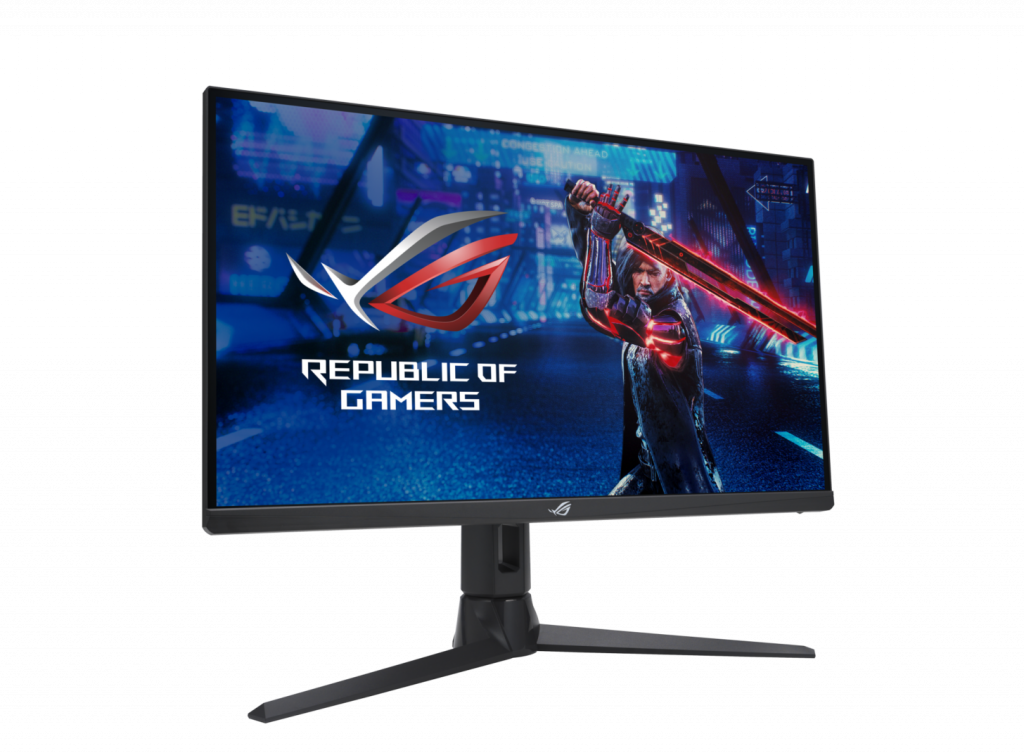
The Chinese smartphone maker had announced a new Red Magic 27 inch esports ready display. This variant of the gaming monitor sports a 27 inch panel that supports 2K 2560 x 1440p resolution with a 99 percent DCI P3 color gamut and a color accuracy Delta E of less than 2. This gaming monitor even houses a number of ports, including HDMI 2.0, Display Port 1.4, and even USB Type C ports as well.

Red Magic

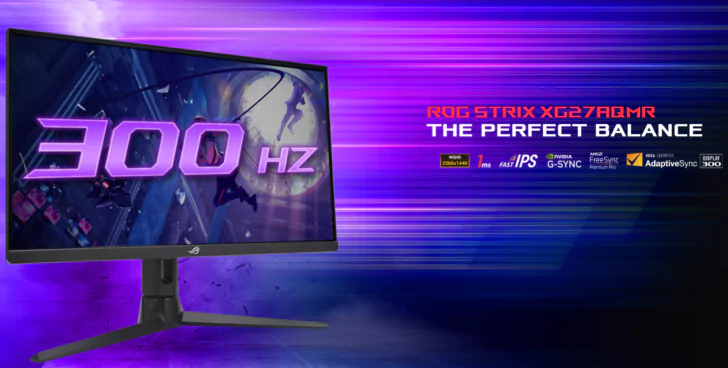
This screen also offer users 400nits of peak brightness and offers high 240Hz refresh rate, which makes it perfect for PC gaming. For those unaware, the brand had launched a gaming monitor with 4K resolution earlier this year. Now, Red Magic has released a 2K version of this display. While the resolution is lower than the 4K variant, it has a higher refresh rate than the 160Hz one found in the 4K model. It also includes DisplayHDR 400 certifications as well.

Looking at the design of this gaming monitor, we can see that the company has released the gaming monitor with thin bezels on the sides and the top. On the other hand, the bottom has a small chin. The brand has began pre-orders for this gaming monitor that has a price tag of 2,499 Yuan (roughly 358 US Dollars).

RELATED:

OnePlus Almost Finishes Android 13 Update Rollout in China

OnePlus has been long criticized for slower Android updates. To provide better software support to its users, the company discontinued the development of HydrogenOS and merged OxygenOS with ColorOS.

Though this move is considered controversial among the international media and netizens, it is doing wonders for the brand. For the first time, the company finishes the latest Android rollout for almost all of its eligible devices (except one) in China within just 4 months.

OnePlus Logo Green

OnePlus now sells a wide variety of phones across different price segments globally. But in China, it only sells a single budget model called OnePlus Ace Racing Edition. While the other models in the portfolio fall under mid-range and premium segments.

Apart from that one budget handset, OnePlus is done away with delivering Android 13 stable for its entire portfolio of phones released in China from 2020 to 2023.

The following OnePlus smartphones are currently running the Android 13-based ColorOS 13 stable software in China.

  • OnePlus 10 Pro
  • OnePlus 9 Pro
  • OnePlus 9
  • OnePlus 9RT
  • OnePlus 9R
  • OnePlus 8 Pro
  • OnePlus 8
  • OnePlus 8T
  • OnePlus Ace Pro
  • OnePlus Ace

Even outside mainland China, OnePlus is only left with updating its Nord lineup to the latest Android version.

Ever since Oppo entered the western markets, it started adapting its software ColorOS for those customers. Currently, ColorOS 13 is one of the best Android skins available globally.

At the same time, Oppo has also sped up software development. The rollout is getting faster with every generation since ColorOS 11.

Hence, it makes sense for OnePlus as a subsidiary of Oppo to use ColorOS. This has enabled the two brands deliver the Android 13 update to eligible devices much faster. Additionally, OnePlus now promises 4 Android updates and 5 years of security updates for select devices releasing in 2023 and later.

For the unaware, Oppo even became the first company other than Google to release Android 13 stable update for its devices this year. Although it was beaten by Samsung in the last couple of months in terms of covering a vast majority of phones and tablets, it is still commendable.

RELATED:

Twitter Blue relaunched, with new Gold checkmarks for businesses

Following a rocky launch, Twitter Blue has been relaunched by the company. Elon Musk had previously pulled back the Blue verification badge back in November 2022 due to various reasons, and now, the service has been rereleased with some notable changes.

Twitter

The microblogging platform is set to roll out the new Twitter Blue service starting from 12th December 2022. This will be first available on iOS and web users that were able to sign up for Twitter Blue. For those unaware, the Blue service from the company basically has subscribers gain access to features like Editing their Tweets, 1080p resolution video upload, and even a Reader Mode. Back in November 9, the Blue Verification service was originally launched, but had to be pulled back following high rates of impersonation on the platform.

Impersonation didn’t just impact known personalities or celebrities (including Elon Musk himself) but also targeted other known brands and businesses as well. But now, the company has relaunched Twitter Blue for 8 US Dollars per month for web users or 11 US Dollars per month for iOS devices users. Although Blue subscribers can also use it on all platforms that support it, including Android. Furthermore, existing Blue users will also be able to upgrade, cancel or set their subscription plans to automatically renew at the new price.

Twitter

Most notably, the company is also requiring phone verification for those that sign up for Twitter Blue. There are also different kinds of verification checkmarks now. Gold will designate businesses or corporations, while government and multinational accounts will get a grey checkmark. The Blue subscription is now available in the United States, Canada, Australia, New Zealand, and the United Kingdoms as well.

RELATED:

Samsung Galaxy M32 4G, F22, & A51 5G receive Android 13 based One UI 5 update

Samsung is on a roll with the number of devices for which it has released the Android 13 OS based One UI 5 updates. Now, the company has added three new smartphones in this list, so here are all the details.

Samsung
Galaxy F22

The South Korean tech giant is now rolling out the major software update for the Galaxy M32 4G model and the Galaxy F22. For those unaware, the Galaxy M32 5G variant has already receiving this update, and the 4G only model is now also being upgraded to the latest Android 13 operating system. The Galaxy M32 4G has received the new firmware versions M325FXXU4CVK6, while the Galaxy F22 comes with E225FXXU4CVK4.

Oddly enough, the company is rolling out the One UI 5.0 update for both smartphones but with just the October 2022 Android security patch instead of the December 2022 or even the November 2022 patches. Apart from these two models, the brand has also released the One UI 5 update for the Galaxy A51 5G model as well, with the A516BXXU5EVL2 firmware version. The company has even upgraded the Android security patch level on this smartphone model to the December 2022 patch.

Samsung
Galaxy A51 5G

As of right now, the Galaxy M32 4G and the Galaxy F22 are currently receiving the Android 13 OS based update in the Indian region. On the other hand, the Galaxy A51 5G is being rolled out in certain European countries like Switzerland, France, and other Nordic regions. For those that own these devices, you can check if you’ve received the update by manually heading to Settings and checking in the Software update menu.

RELATED:

(Via)

Moto X40 teased with SUV class charging, battery specs & Horizon Lock camera revealed

Motorola is gearing up to launch its latest generation of flagship smartphones in the Chinese market soon. The new premium grade handset in question is the Moto X40, which was recently teased by the company, revealing some interesting features and specifications. So let’s have a look.

Moto

For those unaware, the company is set to launch the high end device on December 15. Being a next gen flagship, it will feature Qualcomm’s latest and greatest Snapdragon 8 Gen 2 SoC. Now, the latest teaser from Motorola has revealed the battery specs of the device and more. Looking at the online teaser, the Moto X40 will arrive with “SUV class” charging. Apparently, the company is claiming that the smartphone is a powerful yet versatile model that will be the perfect match for those with active lifestyles out of the box.

While we had reported on battery specs of this flagship phone, the company has confirmed that the device will be powered by a large 4,600mAh battery pack. This battery will also support up to 125W fast charging support. Apart from the battery teaser, the company also revealed an interesting camera feature for the X40. Motorola will launch the phone with what it is calling a Horizon Lock feature. As the name suggests, it appears that it might be an action camera mode.

Moto

This is further backed by the teaser image, which shows the X40 being used to capture a person skiing in the snowy mountains. In other words, the camera mode will take mode photos in portrait mode. While the brand has yet to officially reveal the rear camera setup for the Moto X40, it is expected to feature a triple camera setup, with a 50 megapixel primary sensor that will be paired with a 50 megapixel ultra wide angle lens and a 12 megapixel telephoto shooter that offers 2x optical zoom as well.

RELATED:

India May Get the Chinese Redmi Note 12 Pro+

Xiaomi is gearing up to launch the Redmi Note 12 series in India. Yesterday, the company revealed that the new lineup will debut in the country on January 5. It also disclosed that the high-end model called Redmi Note 12 Pro Plus will sport a 200MP camera.

Today, the firm shared a video teasing the design of the said phone. Going by the clip, it seems like the handset heading to India could be the same as the one sold in China.

Redmi Note 12 Pro Plus

Previously, the Chinese Redmi Note 12 Pro Plus for India was mentioned in the MIUI codebase as Xiaomi 12i HyperCharge. Apparently, it was changed to Redmi Note 12 Pro+ a few days back.

So this will be the first time after a long while a Chinese Redmi Note will be released in India bearing its original branding. For the unaware, some of the Chinese Redmi Notes, such as Redmi Note 11T Pro, Redmi Note 11 Pro Plus, and Redmi Note 9 Pro were introduced in India as Redmi K50i, Xiaomi 11i HyperCharge, and Mi 10i, respectively.

Though it’s not confirmed by Xiaomi yet, the Redmi Note 12 Pro+ could be accompanied by Redmi Note 12 Pro and Redmi Note 12. At the moment, we are not sure if the other two models will be identical to the phones sold with the same names in China.

As per certifications, there will be a 4G variant of the Redmi Note 12 Pro as well. What’s interesting is that it will be a rebranded Redmi Note 10 Pro from 2021. It is not sure if this device will be launched in India.

We are looking forward to learning more about the Redmi Note 12 series for global markets in the coming days.

RELATED:

Google debuts Android 13 QPR2 Beta 1 update for Pixel smartphones

Last week, Google officially released the December 2022 Feature Drop for its Pixel devices. The update brings a lot of new and interesting features like an inbuilt VPN by Google One, unified security & privacy settings, Speaker labels with Pixel Recorder, clear calling, and more.

Google

Now, the company has begun seeding the first Android 13 QPR2 Beta 1 (Quarterly Platform Release) update to compatible pixel devices. Android 13 QPR2 Beta 1 (T2B1.221118.006) includes the December 2022 security patch in addition to brand-new platform improvements. The official changelogs for Android 13 QPR2 Beta 1, as well as the updates provided by Mishaal Rahman of Esper.io, are listed below (via):

  • Improved windowing options in desktop mode: A floating title bar that makes it simple to move, go back, depart, or open a toolbar to expand to full screen (leaving desktop mode), enter split screen, etc. is a feature of freeform windows with desktop mode enabled.
  • Larger clock at notifications panel: If you fully scroll down the notifications panel, the clock in the top-left corner has grown in size and the date has been added below the clock.
  • 1080p screen resolution option: Rahman alleges that Google modified the Pixel 6 Pro’s display driver to enable users to select a 1080p screen resolution, just as the Pixel 7 Pro.
  • Health Connect App: Health Connect is now much more accessible thanks to Google’s QPR2 update, at least for Pixel owners, since it will now appear as an app that needs to be updated rather than searched for or downloaded.
  • Re-enabled spatial audio on supported Pixel devices: Google has reactivated spatial audio on Pixels with the capability (Pixel 6, 6 Pro, 7, and 7 Pro). Additionally, he claims that Google intended to hold off on releasing the functionality until January 2023.
  • Fog-like effect on album art: He also mentions that the album art in the media player has a fog-like appearance after a short while.
  • BT A2DP enabled: In QPR2 Beta 1, Opus over BT A2DP appears to have been enabled, at least on the Pixel 7 Pro. This was probably done when the Pixel Buds Pro were awaiting a firmware upgrade and in anticipation of spatial audio with head tracking.
  • Users will have the choice to record either “the entire screen” or “a particular app” in a partial screen share.
  • Adaptive alert vibration: The strength of the vibration is reduced while your phone is still and the screen is facing up thanks to a new “adaptive alert vibration” feature. It is, however, currently hidden.
  • Separate ringer and notification volumes: Google is experimenting with a flag that separates the notification and ringer volumes in Android 13 QPR2. Initially separated, ring and notification volumes were subsequently integrated and have stayed as such for years.
  • Unlock only when screen is on: In order to use this feature, the screen must be turned on. This lessens unintentional unlocks on fingerprint scanners located on the side.

To experience these changes before they are publicly available, users can sign up for the beta program with supported devices. You should continue to receive QPR updates if you were a part of the Android 13 beta.

RELATED:

(Source)

Twitter to remove verified badges from non-Twitter Blue accounts

Twitter’s new owner, Elon Musk, has announced that the company will soon be removing all legacy blue checkmarks from accounts. The blue checkmark, also known as the verified badge, appears next to a user’s name on their Twitter profile and indicates that the account is authentic and belongs to a notable figure in society, such as a celebrity or public figure.

Twitter to remove verified badges from non-Twitter Blue accounts

In a tweet, Musk said that the way in which the blue checks were given out was “corrupt and nonsensical.” He did not provide any further details on what he meant by this or why the company is removing the verified badges.

From now on, the blue checkmark will only be given to users who subscribe to Twitter Blue, Twitter’s premium tier that offers extra features. Signups for Twitter Blue relaunched on Monday. The tier costs $8 per month for web signups, and $11 per month for iPhone or iPad signups. Android users can sign up via the web.

Twitter explains the new approach to blue checkmarks on its website. It says that the blue checkmark used to be attached to “active, notable, and authentic accounts of public interest that Twitter had independently verified based on certain requirements.” But going forward, only accounts that sign up to Twitter Blue will be eligible for the blue checkmark, once the user has been verified. To receive or retain the blue mark, the account must show a display name and profile photo, and have a confirmed phone number.

It is unclear how the removal of the verified badges will affect Twitter users and the platform as a whole. Some have suggested that it could lead to more confusion and misinformation on the platform, while others believe it could level the playing field and make it easier for ordinary users to gain recognition and followers.

In a further revamp of its verification system, company accounts on Twitter will receive a gold checkmark, while government accounts will receive a gray one.

RELATED:

(via)

Samsung & Oppo are licensing 5G tech from Huawei

Samsung and Oppo are apparently aiming on improving their 5G enabled modems. A new report has revealed that both companies are licensing key 5G technology from Huawei. So here are all the details regarding this matter.

For those unaware, Huawei is a major player in the telecommunications market apart from also being a known smartphone maker. The company was one of the pioneers of 5G technology, with its telecom equipment being used by a number of operators across the globe. However, following scrutiny sparked by the US, the Chinese tech giant was banned from telecom networks in certain regions. Furthermore, the US sanctions had even impacted its telecom operations as well. But, it appears that the company is still licensing its 5G tech expertise to other brands. A new report stated that Huawei announced a cross licensing deal with Oppo, which includes standard essential patents (SEP) for 5G networking.

Huawei

According to Adler Fend, Oppo’s Chief Intellectual Property Officer We are very pleased to enter into patent cross-licensing agreement with Huawei. It clearly demonstrates that the two companies recognize and greatly respect the value of each other’s intellectual property. It is a win-win deal for both sides. We will, as always, advocate for the establishment of a sustainable, healthy intellectual property ecosystem, where intellectual property licenses can be resolved through amicable negotiations and every company’s patent value are highly respected.”

The company is also licensing key 5G technologies to Samsung as well. While there are no details regarding the purpose of this licensing, the South Korean tech giant would likely use Huawei’s 5G tech to improve its own 5G modems. Apart from this, the brand could also use 5G networking gear to be used in Samsung Network’s own telecom equipment as well.

RELATED:

(Source)

B&W Px8 McLaren Edition headphones launched

Back in September, Bowers & Wilkins launched the PX8 headphones in the market. In October, the brand released the PX8 007 special edition on James Bond’s 60th anniversary. Now, the brand has collaborated with the iconic British luxury automotive manufacturer McLaren to launch the Bowers & Wilkins McLaren Edition headphones in the global markets.

Bowers & Wilkins

The headphones feature Galvanic Grey color cups and headband with a streak of McLaren’s Papaya Orange lapping around the earcups. The inside of the earcup also features the papaya orange color. The McLaren branding is present on the headband as well as the grey-colored carry case of the headphones.

Bowers & Wilkins

The headphones are equipped with 43.6 mm carbon fiber drivers and a DSP capable of reproducing 24-bit audio over AUX, Bluetooth, or USB Type-C. All B&W Px8 models support AAC, SBC, aptX, aptX HD, and aptX Adaptive Bluetooth codecs.

Furthermore, Bowers & Wilkins claims the PX8 has a battery life of up to 30 hours, though we assume this decreases with ANC enabled. The pair are said to have teamed up to commemorate their collaborations on the McLaren Artura, McLaren GT, and McLaren Speedtail.

The PX8 McLaren Edition is now available for order in the Eurozone, the United Kingdom, and the United States for €799, £699, and US$799, respectively. In short, the McLaren Edition is €100 more expensive than the standard PX8 because it has a McLaren-themed paint job. To find out more about the headphones, you can visit Bowers & Wilkins’ website.

RELATED:

(Via)

OnePlus 11R Prototype Confirms IR Blaster and Alert Slider, Key Specs Leaked

OnePlus has been working on its upcoming OnePlus 11 series of smartphones. We already have plenty of information available regarding the forthcoming OnePlus 11 smartphone from the series. Now, the next smartphone in the series, the OnePlus 11R has started making its round in the world of leaks and rumours. The very first information about the forthcoming device, The prototype of the OnePlus 11R Smartphone has been leaked online. The leak also confirms some of the key specifications of the device.

OnePlus 11R
Image Credit- MySmartPrice

Coming down to the Specifications of the device, a 120Hz Fluid AMOLED display with Full HD+ resolution and HDR10+ support will be included with the OnePlus 11R. The front selfie camera will fit inside a centred punch hole notch on the curved panel. A built-in fingerprint scanner will also fit within the display screen. A 5000mAh battery will be included with the upcoming OnePlus 11R.  The alert slider, which the company removed from the OnePlus 10R and OnePlus 10T, will be returned to the inexpensive flagship devices with the OnePlus 11R. The device will also carry support for the IR blaster.

An octa-core Qualcomm Snapdragon 8+ Gen 1 CPU developed with TSMC’s 4nm manufacturing technology will power the upcoming OnePlus 11R. The company will use LPDDR5 RAM in the forthcoming 11R. According to the leaked live image, the OnePlus 11R will have a triple rear camera configuration and an LED flash. A 50MP primary shooter, an ultra-wide-angle lens, and a 2MP shooter will all be found inside the camera module. The device’s 50MP main camera is anticipated to include a Sony IMX766 sensor, and the ultra-wide-angle lens may have a 13MP resolution. A 16MP selfie camera will be included with the smartphone.

Related

Source

Oppo Reno 8 Pro House of the Dragon Limited Edition goes on sale today in India – Check price, availability

The Oppo Reno 8 Pro House of the Dragon Limited Edition smartphone was recently released by Oppo in the Indian market. The Reno 8 Pro House of the Dragon Limited Edition, as its name suggests, is the product of a partnership between Oppo and the creators of the well-known series House of the Dragon.

The special edition is a box set containing several exclusive goodies. It comes in a Black colored customized box with a collectible gold-colored dragon egg, a keychain with the House Targaryen Sigil, and a Dragon Emblem Phone Holder. Specs-wise, the device is the same as the standard Oppo Reno 8 Pro. The device is finally going on sale, starting today. So, let’s take a look at the pricing, availability, and more.

Oppo Reno 8 Pro House of the Dragon Limited Edition price & availability

Priced at Rs 45,999 in India, the OPPO Reno 8 Pro House of the Dragon Limited Edition comes in a 12GB + 256GB configuration. The smartphone is exclusively available through Flipkart starting today (December 13) at 12:00 PM.

OPPO Reno 8 Pro specs

The OPPO Reno 8 Pro has a 6.7-inch FHD+ AMOLED display with a refresh rate of 120Hz. The smartphone has a MediaTek Dimensity 8100 Max processor inside, along with up to 12GB of RAM and 256GB of storage. Its operating system is Android 12 with a ColorOS 12.1 overlay on top.

The OPPO Reno 8 Pro boasts three cameras on the back, including a 50MP primary camera, an 8MP ultra-wide lens, and a 2MP macro camera. For selfies and video calls, there is a 32MP camera on the front.

The Reno 8 Pro has a 4,500mAh battery with 80W fast charging support. It has an in-display fingerprint reader for security, and it supports 5G, Bluetooth, and GPS, among other features.

RELATED:

OPPO Enco X2 Golden Years And OPPO Watch 3 Glacier Gray To Launch On December 15

OPPO has been launching a lot of mobile accessories along with mid-range and premium smartphones in the market. Now, the company is set to introduce new color options for two of its already-launched accessories.

The company has announced that the OPPO Enco X2 Golden Years and OPPO Watch 3 Series Glacier Gray will be launched in the Chinese market on 15th December, i.e., tomorrow.

The launch of this new version of devices will take place at the OPPO Future Technology Conference 2022, aka OPPO Inno Day 2022, which kicks off today, i.e., on 14th December, and ends tomorrow, on 15th December.

Not just these two new models, the company is also all set to launch its flagship OPPO Find N2 foldable smartphone on 15th December as a successor to the OPPO Find N that was launched earlier this year.

OPPO Enco X2 features a dual driver setup with an 11mm dynamic driver paired with a 6 mm planar diaphragm driver and supports a coding rate of up to 900kbps thanks to Bluetooth 5.2 and the LHDC 4.0 transmission protocol. It features a 38 dB/Pa microphone setup and multiple noise cancellation levels. The TWS earbuds use three microphones with Bone Voiceprint AI to reduce noise during calls and are capable of offering up to 9.5 hours of music playback on a single charge.

On the other hand, the OPPO Watch 3 features a 1.75-inch AMOLED display with a screen resolution of 430 x 372 pixels. It is powered by the new Qualcomm Snapdragon W5 chipset and the company’s own Apollo 4 Plus chip, coupled with 1GB RAM and 32GB of internal storage. The device runs the ColorOS Watch 5.0 out-of-the-box and is powered by a 400mAh battery, offering four days of battery life.

RELATED:

Xiaomi Mobile SSD 1TB Launched; Crowdfunding Begins On December 14 For 649 Yuan ($93)

Xiaomi, although well-known for its smartphones, has a whole lineup of accessories and other products in different categories of technology. Continuing the trend, the company has launched its first hard drive, called Xiaomi Mobile SSD 1TB.

As the name itself indicates, the newly announced hard drive from the brand has 1TB of capacity and is a Solid State Drive (SSD) which is about 10 times faster than the traditional hard drive.

Xiaomi Mobile SSD 1TB

For the Xiaomi Mobile SSD 1TB, the company is launching the product through Crowdfunding which will start on 14th December. Those who back the crowdfunding campaign will get the product for 649 yuan (~$93), and the company suggested retail price is 799 yuan (~$114).

It comes with an exquisite design in a metal body having a light-colored aluminum shell that has been processed with fine sandblasting and anodizing. As for the performance, the sequential read/write rate can reach up to 200 MB/s, and a 4K high-definition movie can be uploaded or copied within a minute.

The company has also revealed that the Xiaomi Mobile SSD 1TB is compatible with several different types of devices, including those running Windows 7 or later, macOS X 10.6 or later, Android 9 or later, Linux, and more.

RELATED: