Advertisement

iPhone 15 to launch with USB-C port, as Apple complies with EU law: Report

Apple is apparently planning on finally ditching its lightning port in favor of the USB Type C port. The company has been pushing its proprietary technology on its latest iPhones for years now, but it seems that this will soon change.

The European Union recently passed a law that made it mandatory for all smartphone makers to launch handsets that feature the USB Type C port by the year 2024. As of right now, the Cupertino based giant is the only major brand to not follow this USB standard in the smartphone market. Rather, it shipped its iPhones with its proprietary Lightning port. Now, the brand has explained the reasons for not adopting the USB Type C standard, however, it has also stated that it will be complying with the order to sell its iPhones in Europe in 2024.

Apple

The news arrives from Apple marketing lead Greg Joswiak during an interview with The Wall Street Journal. In the interview, the executive stated that “Obviously we’ll have to comply, we have no choice.” He also added that the brand is not happy being forced to adopt the USB Type C for the iPhone. Joswiak stated that the Lightning port and USB Type C port would never have been invented if Apple had previously switched to micro USB ports. But it seems like the iPhone 15 series might be the first ever smartphone from the brand to make the switch.

The official even said that switching to USB Type C ports from Lightning ports would also lead to a lot of e-waste as well. Despite this, it seems that the iPhone maker is planning on shipping its handsets with the mandatory change by or after 2024. This won’t be the first Apple product to feature the USB-C, since the 10th gen iPad already has it and the brand even uses it for its Mac models as well. So, it was only a matter of time that the brand made the switch.

RELATED:

Vivo S16 series chipset tipped once again, likely to feature new Dimensity 8-series chip

In May, Vivo unveiled the Vivo S15 and S15 Pro smartphones in China. These phones have remained exclusive to the home market. Recent reports have claimed that the company is now prepping up the Vivo S16 series. There could be three models in the line-up: the Vivo S16, the Vivo S16 Pro, and the Vivo S16e, which is the most basic variant.

In a recent Weibo post, Chinese tipster Digital Chat Station revealed that the upcoming Vivo S-series phones will be equipped with the Snapdragon 870 chipset and the forthcoming Dimensity 8200. To recall, the vanilla Vivo S15 came equipped with the Snapdragon 870. It appears that the same SoC will power its successor.

Vivo S15 series

The Dimensity 8200 is expected to debut in the coming months as the successor to the Dimensity 8100, which is currently under the hood of the Vivo S15 Pro. So, it looks like the Dimensity 8200 chipset will be used to power the Vivo S16 Pro.

Other reports have claimed that the Vivo S16e will be powered by the Dimensity 1080 chipset. Unfortunately, the other specifications of the Vivo S16 series have not surfaced yet.

The Vivo S16 is likely to come in black, blue, and purple colors, while the Pro model will be available in shades like black, green, and orange gold. It is speculated that the Pro variant will come equipped with the Vivo V1+, which will offer an enhanced photography experience.

As far as the launch of the Vivo S16 series is concerned, it appears that the company may announce it in the early months of 2023.  Rumors are rife that Vivo will unveil the Vivo X90 series of smartphones in December this year. The lineup is expected to feature the Dimensity 9200 and Snapdragon 8 Gen 2 chipsets as well as a 1-inch camera sensor.

RELATED:

Samsung Maintenance Mode globally launched to keep your data safe while your phone is getting repaired

Earlier this year, Samsung introduced the “Maintenance Mode” for its Galaxy smartphones in the Korean market. Now, the feature is finally making its way to the global market. Samsung also started rolling out One UI 5 update for its flagship Galaxy S22 series earlier this week.

Samsung Maintanance Mode

Maintenance mode

Users will be able to set up alternative user accounts to handle core tasks without having access to personal data when they turn in their device for repair. The person in charge of the device is prevented from accessing their private data, such as pictures, messages, contacts, or user-installed apps, when Maintenance Mode is enabled.

Samsung Maintenance Mode

Any data or accounts created during Maintenance Mode are automatically removed when the owner exits the mode. They will be allowed to download apps from the Galaxy Store, but as soon as the owner exits Maintenance Mode, those apps, together with any data or accounts made, will be erased.

To enable this mode, go to Settings > Battery and device care menu > enable “Maintenance Mode.”

The smartphone needs to be restarted after the mode has been enabled. According to Samsung, Knox, the company’s defense-grade security platform that offers multi-layered protection, powers this feature.

Select One UI 5 compatible models will start receiving this new feature over the next months. By 2023, more Galaxy devices will be made accessible as part of the rollout.

RELATED:

(Source)

Redragon launches Castor K631 Pro Wireless RGB Mechanical Gaming Keyboard

Redragon has just launched a new gaming product in the Indian market. The new device is the Castor K631 Pro, which is a wireless mechanical keyboard for gaming. It features RGB and has a compact form factor as well. So let’s have a look.

Redragon

For those unaware Redragon is a known brand in the region for offering a number of gaming related peripherals at a lucrative price tag. So, the new model is definitely interesting, since it’s a bit more premium and offers some notable features. The new Castor K631 Pro features Outemu mechanical keys in a 68 key size format that promises to deliver a smooth typing experience despite being so portable. Notably, the launch of the new wireless mechanical keyboard also arrives a short while after the company launched new RGB speakers in the region.

Looking at its design, it offers RGB backlighting and houses Outemu Red (Linear) switches, which are silent by design. Furthermore, the 68 key keyboard is 65 percent in size, which basically means it’s 35 percent smaller than conventional models. This helps gamers since it frees up more space for mouse movement on the desktop. It also weighs just 473 grams and can connect to your PC or laptop through a 2.4GHz USB receiver. Although, it even supports Bluetooth connectivity as well.

Redragon

For software, the company offers various options to control the RGB styles for better customizabiity. It has 20 built in backlighting styles and can even sync with your music. Users can also set Macro shortcuts and key bindings can also be put into the software for more efficient work and gaming. The Redragon Castor K631 Pro RGB Mechanical BT Wireless Keyboard is available on the company’s official website and Amazon India for a price tag of 5,990 INR.

RELATED:

I hiked 200 miles with my Apple Watch Ultra

apple watch ultra
Apple Watch Ultra

Wearing this Apple Watch Ultra, I completed a five-day trekking trip in Tibet.

The first thing I felt when I got the Apple Watch Ultra, it was indeed big, but much lighter than I thought it would be. The larger size objectively makes up for Apple Watch’s shortcomings in battery life and improves control in outdoor scenarios.

The most obvious change is the display, which makes it easier to see the customizable complications on the dial. And with a 2000-nit screen, it’s easy to see dials and sports data outdoors with this brightness.

Previously, we wore Apple Watch with a minimalist style, and two buttons and a touch screen were sufficient for interaction. But in outdoor hiking and diving scenarios, it’s very different.

Apple Watch Ultra
Apple Watch Ultra

In outdoor sports, there is more reliance on mechanical operation.

Because when wearing gloves or floating in the water, touch screen operations is prone to accidental touch. For this reason, mainstream outdoor watches are designed with 4-5 mechanical buttons on the side of the watch, and each of them protrudes for easy pressing.

The Apple Watch Ultra’s digital crown is rugged enough to be rubbed with gloves, and the Dock key has an increased surface area and protrudes outward for easier pressing. The custom buttons are the biggest change to get rid of the touch screen for extreme sports. Before I left each day, I pressed it to start recording, and to pause or continue, I double-pressed the custom button and the Dock key. Only when the hike is finished will I use the touch screen to end the exercise.

The 3 physical buttons are compact enough for the Apple Watch Ultra, but the customization of the keys is not extreme enough for what I experienced on foot. For example, when I press and hold the custom button, it does not open other functions, but instead appears as a shutdown screen like a long press on the Dock key. This will also lead to the compass, blood oxygen and other App in the middle of the hike, the physical button is not enough to support the application switch, still rely on the touch screen operation.

It is reasonable to say that the larger screen to see the data is also more clear. After the actual hiking experience, I think it’s more important to see than to hear. Especially during the summit stage above 4500m, my heart rate jumped from 120 to 153 every 10 steps, and although I still had the strength to lift my wrist, I didn’t feel like looking at the time, pace, and another information line by line.

On the hike, I asked a few fellow hikers wearing smartwatches what they would be concerned about on their watches. There were a few main things that people were most concerned about: route, elevation, heart rate, and the infrequently used but indispensable blood oxygen saturation.

Pre-installed routes are supported in some outdoor watches of Jamin and Sonto, and Apple Watch can import routes through third-party software two-step road, outdooractive, and Wikiloc. During the five days of the trek, I mainly used the Apple Watch Ultra to record the route and backtracked once in case I needed to do so.

Apple Watch Ultra

Elevation and heart rate are recorded for viewing during and after the hike.

I will adjust my pace based on these two data during the hike. After the hike is over, the climb and heart rate will be used as a reference for the difficulty of today’s hike, which will be used to decide whether to continue tomorrow or to take it slow.

Regarding the accuracy of the elevation, the local guide said, “According to past experience, the elevation shown on the smartwatch is about 100m off from the actual one. After I measured the elevation at two places, the Apple Watch Ultra’s elevation error was within 10 meters, which is quite accurate.

What about battery life? Let’s start with the conclusion that the Apple Watch Ultra lasts for more than 30 hours, but that’s for everyday use. If you want to continuously record more than 5 hours of exercise, you still have to charge it once a day.

I wore it to work before this test. I put it on at 9:24am on the first day and used the watch to record my run for 1 hour until 18:04pm the next day when the watch reminded me that 10% of the battery was left.

For the outdoor scenario, I used two tests.

With the all weather display on, I recorded a 6 hour hike starting at 10:00 am, with route tracking from third party software turned on. When I arrived at camp at 16:05, I had 37% battery left.

The all-weather display was turned off, and the 9-hour hike was recorded continuously. During this time, I played music for 40min and took photos with the screen lit for about 30min. 10% of the battery remained after the hike.

So, who needs it?

During the hike, I also talked to my friends who were wearing smart devices about what kind of outdoor smart watch they wanted. In the answers they gave, they put smart all in the first place, followed by outdoor features.

Now we have no shortage of smartwatch options and enough features to meet our daily fitness routine, but to go further, we still need to look towards outdoor watches that are more adaptable to the limits. When the Apple Watch Ultra combines the two, it can deal with extreme environments and record movement while intelligently managing it.

It’s a simpler option for outdoor enthusiasts.

Samsung Galaxy F04s in the works, could be a Galaxy A04s rebrand

Back in April 2021, Samsung launched the Galaxy F02s in India. The device was launched as an entry-level smartphone with an affordable price tag of Rs. 8,999. Now, a new report has emerged stating that the brand is working on a successor of the device called the Galaxy F04s.

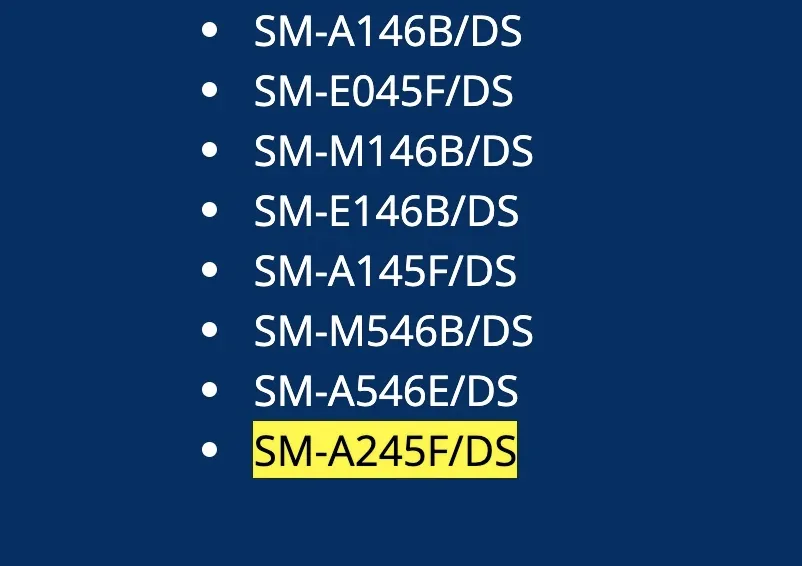
A Pricebaba report reveals that the alleged Samsung Galaxy F04s has been spotted on the Wi-Fi alliance database with the model number SM-E045F/DS.

Samsung Galaxy F04s Wi-Fi certified

It appears that Samsung is skipping a generation and jumping straight to Galaxy F04s. The SM-E045F/DS supports 2.4GHz single-band Wi-Fi, according to its Wi-Fi certification. The operating system on the device is Android 12. Unfortunately, no other details regarding the device are available as of yet.

Since the Samsung Galaxy F02s was a rebranded Galaxy M02s / Galaxy A02s, it is highly likely that the Galaxy F04s will also be a rebranded Galaxy A04s. Let’s take a look at the specifications of the Galaxy A04s to get an idea of what to expect from the Galaxy F04s.

Samsung Galaxy A04s specs

The Samsung Galaxy A04s features a 6.5-inch HD+ display with a waterdrop notch. It has a refresh rate of 90Hz and a Gorilla Glass 3 screen. The device sports a side-mounted fingerprint scanner built into the power button.

The Exynos 850 octa-core CPU is at the heart of the Galaxy A04s. It has a microSD card slot for expansion up to 1TB and 64GB of inbuilt storage with 4GB of RAM. Support for 4GB virtual RAM is also available. A 5,000mAh battery unit that supports 15W quick charging powers the gadget. On top of Android 12 OS, the smartphone runs OneUI 4.1.

The Samsung Galaxy A04s includes three cameras on the back, including a 50MP primary sensor, a 2MP macro lens, and a 2MP portrait camera. There is a 5MP selfie camera up front.

RELATED:

Google Pixel 8 Pro may sport an ultrasonic fingerprint scanner

We had just recently reported on Google working on a new Pixel series smartphone that features the model number G10. This model is apparently a modified Pixel 7 Pro model, however, this device also hints at some specs that we can expect for next year’s Pixel 8 Pro.

The initial news regarding the Pixel G10 model was shared by developer Kuba Wojciechowski on Twitter. But looking at his tweets, we can see that the modified version of the Pixel 7 Pro will reportedly feature a new Qualcomm Ultrasonic fingerprint scanner. In other words, this hints that the Pixel 8 Pro that will launch next year would likely feature this same technology as well. It would even address the issue many people have had with Pixel series smartphones, which is the slow fingerprint reader from their optical fingerprint sensor.

Google

As of right now, other brands like Samsung, Vivo, and others have already moved to an ultrasonic sensor for biometric security. With this new sensor, the Search Engine tech giant will be able to offer a faster and smoother unlocking experience to its users. There are other benefits as well, such as being able to unlock the device even if your finger is wet or oily. Its even more secure than other forms of fingerprint scanners as well.

Unfortunately, the finer details regarding the Pixel 8 Pro are still unknown at the moment. Although, it is believed to feature the next gen Tensor 3 chipset, which could be manufactured by Samsung. The new chip will likely bring performance upgrades over its predecessor and the Pixel 8 series as a whole might get an upgrade in fast charging support. Keep in mind that this is still just an unconfirmed report at the moment, so take this news with a pinch of salt for now.

RELATED:

Nothing to open its first physical store in London in the coming weeks

Nothing, a new consumer technology company founded by OnePlus co-founder Carl Pei, is just a couple of years old and has very limited products in the market. In fact, it has launched only two products so far — Ear (1) TWS earbuds and Phone (1) smartphone but that isn’t stopping the brand from making risky bets.

The company is all set to open its first Nothing Store in London in the coming weeks. The store will open “before Christmas” this year but no specific date is known yet.

Nothing Store in London

The first Nothing Store will open on 4 Peter Street in London’s fashion-oriented Soho neighborhood. The company promises a boutique rather than a tech shop experience, with design flourishes inspired by classic chains like Olivetti.

The physical store will see the company’s own products, which include the Phone 1, Ear 1, and the upcoming Ear Stick. Those who visit the store on the first day will get free merchandise and can buy one of the 100 limited edition Ear Sticks.

It appears that instead of opening the physical store to sell its products, the company’s primary aim for the store is marketing. With the store in a high-traffic area and in one of the posh locations in London, Nothing is aiming for brand recognition and getting attention from people who wouldn’t actively browse technology. It is a bold strategy for a two-year-old startup with very limited products, that too in categories with very high competition.

RELATED:

Apple iPad 10 and iPad Pro 2022 officially go on sale with a starting price of $449

A few days ago, Apple unveiled its much-awaited 10th generation iPad along with the new iPad Pro powered by the M2 processor. The company started taking pre-orders soon after the announcement. Now, from today, both devices officially go on sale and can be purchased.

The pricing of the 10th-generation iPad starts at $449 and goes up to $799 for the top-end model. On the other hand, the iPad Pro with an M2 chip has a starting price of $799 for the 11-inch model, while the 12.9-inch model starts at $1,299.

Apple iPad 10th Generation

The 10th-gen iPad now features a larger 10.9-inch LED display, offering a screen resolution of 2360 x 1640 pixels, 500nits brightness, along with True Tone technology. Under the hood, the device is powered by Apple’s A14 Bionic chipset with a 6-core CPU and quad-core GPU as well as a 16-core neural engine.

In the camera department, there’s a 12-megapixel camera sensor on the front for video calling as well as on the back of the tablet. The location of the Touch ID has been changed from the bottom bezel and is now embedded in the power button. It runs the iPadOS 16 and comes with support for the new Magic Keyboard Folio and first-gen Pencil.

On the other hand, the iPad Pro comes in two models — 11-inch and 12.9-inch, both featuring ProMotion support and an adaptive refresh rate of 120Hz. The 11-inch model has 600 nits brightest, while the 12.9-inch model offers 1,000 nits brightness.

Apple iPad Pro 2022
Apple iPad Pro 2022

Both of them come powered by Apple Silicon’s M2 processor, which the company claims offers 15 percent faster CPU performance through the 8-core CPU and up to 35 percent faster graphics performance with the 10-core GPU. The company also adds that the chipset can carry out 40 percent more operations per second than the M1 SoC.

It has a new media engine and an image signal processor, allowing support for the ProRes video capture feature for the first time on an iPad. The company adds that the tablet will be able to transcode ProRes footage up to three times faster than in the past. It also packs five studio-quality mics for sharp audio recording.

In the camera department, there’s a 12-megapixel ultra-wide sensor on the front with support for Center Stage. On the back side, the device features a 12-megapixel wide camera sensor and a 10-megapixel ultra-wide sensor. It runs the latest iPadOS 16, and the company promises 10 hours of web browsing and video usage over Wi-Fi connectivity for both models.

RELATED:

ZTE Yuanhang 40 Pro+ launched with Dimensity 810, 64MP triple cameras

Last week, ZTE confirmed that it would be launching the ZTE Yuanhang 40 Pro+ smartphone on Oct. 26 in China. The day has arrived, and the device has gone official. It is a new midrange 5G phone from the brand that offers key features like a tall aspect ratio display, a Dimensity 8-series chip, and an attractive design.

ZTE Yuanhang 40 Pro+ specifications and features

The Yuanhang 40 Pro+ features a glass back and measures 7.6mm in thickness. The device houses a 6.67-inch AMOLED display that offers a Full HD+ resolution of 2400 x 1080 pixels, a 20:9 aspect ratio, and a 60Hz refresh rate.

ZTE Yuanhang 40 Pro+

Under the hood, the Yuanhang 40 Pro+ has the Dimensity 810 chipset. The device comes with 8 GB of RAM and 256 GB of internal storage. To keep the lights on, the Yuanhang 40 Pro+ is equipped with a 4,510mAh battery, which carries support for 66W charging.

According to ZTE, the Yuanhang 40 Pro+ can charge to 55 percent in 15 minutes using the included 66W charger. The big battery offers up to 62 hours of music playback time.

On the front, the Yuanhang 40 Pro+ has a 16-megapixel selfie camera. The rear shell of the device has a 64-megapixel main camera with an f/1.8 aperture, a 5-megapixel macro camera, and a 2-megapixel depth sensor. The device has a side-facing fingerprint scanner. Under the hood, the device runs on MyOS 12 based on Android 12 OS.

ZTE Yuanhang 40 Pro+ price and availability

It is not clear whether the ZTE Yuanhang 40 Pro+ will be released in markets outside of China. In the home market, the device comes in a single 8 GB RAM + 256 GB storage configuration. The device is priced at 2,198 Yuan (~$302) and is up for purchase starting today.

RELATED:

Nothing OS 1.1.6 update rolls out with Google AR Core support & September security patch

Jio 5G compatibility was just added via the Nothing OS 1.1.5 upgrade to the Nothing Phone (1) In India. Now, the company has started distributing yet another update for its Nothing Phone (1). The Google AR Core is now supported on the Nothing Phone (1) thanks to the most recent firmware upgrade, NothingOS 1.1.6. This marks the sixth software update for the Nothing Phone (1) in the last three months.

Other than Google AR Core support, the new update also brings along the September Android security patch, and a few camera improvements including sharper video recording. The Nothing launcher has been optimized for a much more fluid experience and the Flip to Glyph animation has been made more reactive. You can check out the entire changelog below.

New features

● Now supports Google AR Core.
● Indian users covered by Reliance JIO can now access 5G.

Camera
● Sharper videos with improved stability.

● Recording light indicator is now always-on by default.

Improvements
● Optimised, more fluid Launcher experience.

● More accurate battery status.
● Increased maximum brightness when displaying HDR content.
● Updated, more reactive Flip to Glyph animation.
● Glyph charging light now synced to sound effect.
● Updated NFC sound effect.
● General bug fixes.

The update weighs around 62MB. As usual, the update will be rolling out in batches, and it is likely to arrive on all of the devices in the coming days. If you think you missed the OTA notification, you can check for it manually by navigating to Settings> System> System update and check for new updates.

RELATED:

OnePlus Ace Pro Genshin Impact edition is now available for Pre-Order at Giztop

Great news for all Genshin Impact fans. OnePlus Ace Pro Genshin Impact edition is now available at Giztop for $899 only. Please note that this is a pre-order and the actual shipment will begin in November. 

OnePlus Ace Pro Genshin Impact edition features a 6.7 inches AMOLED Full HD+ display with a 120Hz refresh rate. It is powered by the Snapdragon 8+ Gen 1 chipset and comes with 16GB LPDDR5 RAM and 512GB internal storage.

It features a triple rear camera setup with a 50MP main camera and 8MP + 2MP secondary sensors. For your selfies, you have a 16MP sensor in the front. Fueled with a 4800mAh battery it comes with 150W SuperVOOC fast charging which is  TÜV Rheinland certified for safe fast charge. 

For gaming enthusiasts, the OnePus Ace Pro is a good fit as it comes with Hyperboost Game Frame Stabilization Engine that reduces frame drops and screen jitters during long gaming sessions. Other interesting features include an in-screen fingerprint sensor, an X-axis linear motor, and a Vapor Chamber with the largest cooling area in the history of the OnePlus.

The Genshin Impact edition comes with special goodies like Walnut stickers, a Walnut painting limited poster, ‘A Letter to Travellers’, a SIM ejector pin, a Butterfly seat charging adapter, and a customized heat dissipation protective case.

You can now pre-order the OnePlus Ace Pro Genshin Impact edition for $899 only at Giztop. 

For more information on such exciting deals and offers check out our deals hub.

MediaTek Dimensity 9200 AnTuTu benchmark shows significant improvements in GPU performance, no apparent CPU uplift

MediaTek is said to debut the successor of the Dimensity 9000+ SoC called the Dimensity 9200 in November. The chipset will be MediaTek’s flagship, meant to go toe to toe with the upcoming Qualcomm Snapdragon 8 Gen 2.

Previous reports state that the chipset will be based on TSMC’s 4nm process node and will likely use the same Cortex-A710 and Cortex-A510 cores as before. Ahead of the launch, an AnTuTu benchmark of an undisclosed smartphone running the Dimensity 9200 has emerged giving us a look at its performance.

Dimensity 9200 AnTuTu score
MediaTek Dimensity 9200 AnTuTu score

Popular Weibo tipster DCS has shared a screenshot of a device running the Dimensity 9200 chipset. The chipset has managed a score of 1,266,102, which is quite impressive. It surpasses the performance of all the current-gen smartphones on the AnTuTu leader board, also beating out the ROG Phone 6D Ultimate, which has coveted the performance crown ever since its launch. For those unaware, the ROG Phone 6D Ultimate houses a Dimensity 9000+ chipset.

AnTuTu top-10 Android smartphone rankings November 2022

Taking a closer look at the performance numbers, the Dimensity 9200 outperforms the Dimensity 9000+ clad ROG Phone 6D Ultimate by around 12,000 points in the GPU test, however, the CPU test doesn’t show any improvements. Comparing to the best Snapdragon counterpart on the list, namely the ROG Phone 6 Pro which features the Snapdragon 8+ Gen 1 chipset, the Dimensity 9200 edges it out in the CPU benchmark and convincingly beats it in the GPU test.

The image also reveals that the Dimensity 9200 chipset is rather cool as the temps hit a maximum 37-degree celsius during the benchmark. However, it is currently unclear as to what kind of cooling solution was used for this device. So, we will hold out judgment till independent testing is conducted.

RELATED:

One UI 5.0 update roadmap unveiled for Samsung Galaxy smartphones & tablets

Samsung recently launched the Android 13-based One UI 5.0 stable update for its current flagship Galaxy S22 series devices. The company has now made public the release date for the One UI 5.0 update for additional Galaxy smartphones and tablets. According to Samsung, the One UI 5.0 upgrade, which is based on the stable version of Android 13, will be deployed to all of its high-end smartphones and tablets in the month of November.

One UI 5

The One UI 5 has polished many existing features of One UI 4 and includes additional capabilities for customization, security, and accessibility. With specially created Modes and Routines, as well as a Dynamic Lock screen.

In addition to the new and older flagship models, many other mid-range devices will be receiving the One UI 5.0 update throughout November, December, January, and February. You can check out the complete update schedule below.

October 2022

  • Galaxy S22
  • Galaxy S22+
  • Galaxy S22 Ultra

November 2022

  • Galaxy Z Fold 4
  • Galaxy Z Flip 4
  • Galaxy Z Fold 3
  • Galaxy Z Flip 3
  • Galaxy S21
  • Galaxy S21+
  • Galaxy S21 Ultra
  • Galaxy Note 20
  • Galaxy S20
  • Galaxy S20+
  • Galaxy S20 Ultra
  • Galaxy Tab S8
  • Galaxy Tab S8+
  • Galaxy Tab S8 Ultra
  • Galaxy Tab S7
  • Galaxy Tab S7+
  • Galaxy Quantum 3
  • Galaxy A53 5G
  • Galaxy A33 5G

December 2022

  • Galaxy Z Fold 2
  • Galaxy Z Flip 5G
  • Galaxy Z Flip
  • Galaxy S20 FE
  • Galaxy Tab S7 FE/S7 FE 5G
  • Galaxy Tab S6 Lite
  • Galaxy A Quantum
  • Galaxy A Quantum 2
  • Galaxy A52s 5G
  • Galaxy A51
  • Galaxy A51 5G
  • Galaxy A42 5G
  • Galaxy A32
  • Galaxy Jump
  • Galaxy Jump 2

January 2023

  • Galaxy Tab A8
  • Galaxy Tab A7 Lite
  • Galaxy Tab Active 3
  • Galaxy Buddy 2
  • Galaxy Wide 6
  • Galaxy Wide 5
  • Galaxy Buddy
  • Galaxy A23
  • Galaxy A13
  • Galaxy M12
  • Galaxy XCover 5

February 2022

  • Galaxy Tab Active 4 Pro

It is worth mentioning that this One UI 5.0 update schedule is specifically for the Korean market, however, we can expect the updates to arrive to the global users around the same time frame. More tablets and smartphones will receive the One UI 5.0 and stable Android 13 updates later in Q1 and Q2 of 2023.

RELATED:

(Source)

Vivo X90 specifications leak reveals 1.5K display, Dimensity 9200, & more

Several reports have claimed that the Vivo X90 series will be made official in December this year. Key details of the Vivo X90 Pro and X90 Pro+ have surfaced in recent reports. Now, a new leak courtesy of popular tipster Digital Chat Station (via. TechGoing) has surfaced to reveal what to expect from the vanilla Vivo X90.

According to the tipster, the Vivo X90 will feature a 1.5K resolution display. Like the predecessor model, it should be an AMOLED panel with an under-display fingerprint scanner.

Vivo X80
Vivo X80

MediaTek is likely to announce the Dimensity 9200 chipset next month (November). The tipster has claimed that the X90 will feature the Dimensity 9200. The SoC will debut as a successor to the Dimensity 9000 that powered the X80 and X80 Pro’s Dimensity variant.

DCS also revealed that the Vivo X90 will support 120W fast charging. The tipster had claimed last month that the device would pack a 4,700mAh dual-cell battery. It is also speculated to come equipped with a Sony IMX8-series main camera. He further revealed that, as compared to the X80, the X90 will offer better dust and water resistance. However, the device will not have an IP68 certification.

Rumors surrounding the X90 series have revealed that the Vivo X90 and X90 Pro+ will both feature the Snapdragon 8 Gen 2 chipset. Both smartphones are also tipped to arrive with a 1-inch main camera sensor. The X90 may feature a 4,870mAh battery with 100W charging, while the X90 Pro+ may house a 5,000mAh battery. The Pro+ is expected to arrive with a Samsung AMOLED E6 display, LPDDR5x RAM, and UFS 4.0 storage.

RELATED:

Redmi K60 Gaming key details, launch timeframe tipped as it appears in IMEI database

Redmi is reportedly working on the Redmi K60 series of smartphones. Recent reports have leaked a lot of information about the Redmi K60 handset. Now, the publication Xiaomiui has shared the key details of the Redmi K60 Gaming. The device will come out as the replacement for the Redmi K50 Gaming, which had a Snapdragon 8 Gen 1 chipset.

A new Xiaomi device with model number 23011310C has appeared in the IMEI database. The publication says that the device will be called the Redmi K60 Gaming when it comes out in China. Hence, it will be a gaming-focused smartphone.

Redmi K50 Gaming
Redmi K50 Gaming

The report states that the codename of the Redmi K60 Gaming is “Socrates.” It reveals that the device is powered by the Snapdragon 8 Gen 2, which is expected to go official in November this year. Unfortunately, the publication has not revealed any information on the specifications of the Redmi K60 Gaming. It seems that Chinese tipster Digital Chat Station has claimed that it carries support for 100W charging.

The Redmi K50 Gaming remained exclusive to the Chinese market. However, its rebranded version named the POCO F4 GT was released in the global market.

The publication claims that the Redmi K60 Gaming will remain exclusive to the Chinese market. It can be deduced from the model number of the device that it may break cover in Q1 2023. The global and Indian versions of the device haven’t shown up in the IMEI database, so it’s not clear if they exist or not. However, we believe that there could be a POCO F5 GT model for the global market, which might arrive as a rebranded version of the K60 Gaming.

RELATED:

Redmi Note 12 series roundup: launch date, specs, & expected price

In October 2021, Redmi announced the Redmi Note 11 series in China. On Oct. 27, the company will take off covers from the Redmi Note 12 series. Ahead of the launch, Redmi has been confirming the key features of the Note 12 lineup. In addition, some Chinese tipsters have tipped the key specs of the series.

Rumors have it that the Redmi Note 12 lineup will include three models, such as the Redmi Note 12 Pro, Note 12 Pro+, and Note 12 Explorer Version. Here is a look at all the information that has surfaced so far about the Redmi Note 12 lineup.

Redmi Note 12 series launch date

Redmi Note12 Pro

The Redmi Note 12 series launch event will go live at 7 PM (GMT+8) on Oct. 27 in China. The event will be live-streamed on the company’s Weibo account and on Chinese platforms for streaming videos.

Redmi Note 12 series design

The Redmi Note 12 series will look quite similar to the Redmi Note 11T lineup, which debuted in May this year. It is speculated that the lineup will be equipped with a flat OLED display and a rectangle-shaped camera module on the back.

The camera module is almost identical to the Note 11T. The only noticeable difference is that the Note 11T has a vertical LED flash unit, while Note 12 has a horizontal one. The lineup seems to be fitted with a side-mounted fingerprint sensor.

Redmi Note 12 Pro specifications

Redmi Note 12 Pro
Redmi Note 12 Pro

It will come with a 5,000mAh battery and 67W fast charging. The main camera on the back of the phone will be a 50-megapixel Sony IMX766 with optical image stabilization (OIS). It is said to have a thickness of 7.9mm and weighs nearly 187 grams. It will be available in four colors like Mirror Porcelain White, Midnight Dark, Time Blue, and Shallow Dreamy Galaxy.

Redmi Note 12 Pro+ specifications

Redmi Note 12 Pro+
Redmi Note 12 Pro+

The Note 12 Pro+ will come with an OIS-enabled 200-megapixel Samsung HPX camera and pack a 5,000mAh battery. The device will also support 120W rapid charging. It will arrive in Mirror Porcelain White, Midnight Dark, and Time Blue shades.

Redmi Note 12 Pro+ Yibo Limited Edition

Redmi Note 12 Pro+ Yibo Limited Edition

The Redmi Note 12 Pro+ Yibo Limited Edition (aka Redmi Note 12 Pro+ Track Edition) is likely to pack the same specs as the regular Note 12 Pro+. The left side of the phone’s back is black. The camera rings have green contours, and below them, there is a signature of Redmi brand ambassador Wang Yibo. The Redmi branding can be seen towards the bottom. The right side of the phone’s back is green and is engraved with a big-sized “Racing” text.

Redmi Note 12 Explorer specifications

Redmi Note 12 Explorer

The main camera on the Redmi Note 12 Explorer edition will be a 200-megapixel Samsung HPX with OIS.  It appears that the device will draw power from a smaller battery as compared to the Note 12 Pro and 12 Pro+. The Note 12 Explorer version will be the world’s first smartphone to support 210W fast charging. The device is likely to achieve a full charge in just 9 minutes. It will come in Midnight Dark.

The Redmi Note 12 Pro, Note 12 Pro+, and Note 12 Explorer are powered by the Dimensity 1080 chipset.

Redmi Note 12 series price

The Redmi Note 12 Pro is likely to be priced at around 1,500 Yuan (~$205), while the Pro+ model may cost around 2,000 Yuan (~$274).

RELATED:

iQOO Neo7 vs OnePlus 10T: Specs Comparison

A few days ago Vivo’s sub-brand announced the new flagship killer iQOO Neo7. It is one of the most impressive phones launched this year if we consider its hardware department and battery, a perfect device for gamers and even the first from this brand to run the latest Android version out of the box. Its amazing value for money is the reason why we are actually comparing it to a lot of flagship killers out there, especially the ones equipped with the Snapdragon 8+ Gen 1 chipset, for obvious reasons. Today, it is the turn of another very interesting flagship killer: the OnePlus 10T. Note that this device is a rebranded version of the OnePlus Ace Pro and it has exactly the same specifications. It is also placed in the same price range as the new iQOO device. Here is a comparison between the main specifications of the iQOO Neo7 and the OnePlus 10T or Ace Pro.

Vivo iQOO Neo7 vs OnePlus 10T

Vivo iQOO Neo7 OnePlus 10T
DIMENSIONS AND WEIGHT 164.8 x 76.9 x 8.5 mm,
197 g
163 x 75.4 x 8.8 mm,
204 g
DISPLAY 6.78 inches, 1080 x 2400 pixels (Full HD+), AMOLED 6.7 inches, 1080 x 2412 pixels (Full HD+), AMOLED
PROCESSOR MediaTek Dimensity 9000+, octa-core 3.2 GHz Qualcomm Snapdragon 8+ Gen 1, octa-core 3.19 GHz
MEMORY 8 GB RAM, 128 GB – 8 GB RAM, 256 GB – 12 GB RAM, 256 GB – 12 GB RAM, 512 GB 8 GB RAM, 128 GB – 12 GB RAM, 256 GB – 16 GB RAM, 256 GB
SOFTWARE Android 13, Origin OS Ocean Android 12, OxygenOS
CONNECTIVITY Wi-Fi 802.11 a/b/g/n/ac/6, Bluetooth 5.3, GPS Wi-Fi 802.11 a/b/g/n/ac/6, Bluetooth 5.3, GPS
CAMERA Triple 50 + 8 + 2 MP, f/1.9 + f/2.2 + f/2.4
16 MP f/2.5 front camera
Triple 50 + 8 + 2 MP, f/1.8 + f/2.2 + f/2.4
16 MP f/2.4 front camera
BATTERY 5000 mAh, fast charging 120W 4800 mAh, fast charging 150W
ADDITIONAL FEATURES 5G, dual SIM 5G, dual SIM

Design

The iQOO Neo 7 and the OnePlus 10T come with a good design. They are not built with the most premium materials, but they come with a high screen to body ratio and punch hole displays. On the rear side, they got big camera modules, not the best if you need a minimalistic phone, but they are not ugly devices. I personally prefer the OnePlus 10T because it has a glass back and a glass front protected by Corning’s Gorilla Glass 5, but it is mainly a matter of taste. These phones are very similar in terms of thickness and weight, the OnePlus is slightly more compact, but nothing very relevant. While the iQOO has volume buttons and the power key placed both on the right side, the 10T has a power key placed on the right side and volume buttons placed on the left.

Display

The displays of these two phones come with very similar specifications, there is nothing special to mention in terms of differences, so we will just list their specifications. The iQOO Neo7 has an AMOLED panel able to show up to one billion colors with a diagonal of 6.78 inches, a Full HD+ resolution of 1080 x 2400 pixels, a 120 Hz refresh rate, and HDR10+ certification, as well as an in-display fingerprint reader. The OnePlus 10T has an AMOLED display with one billion colors, a diagonal of 6.7 inches, a Full HD+ resolution of 1080 x 2400 pixels, a 120 Hz refresh rate, HDR10+ certification, and an in-display fingerprint reader. The very important difference is in the audio, as the OnePlus is the only one packing stereo speakers, so its audio is definitely more powerful.

Specs & Software

The OnePlus 10T wins the hardware comparison, even though by a slight margin. It is powered by the MediaTek Dimensity 9000+ mobile platform built with a 4 nm production process and sporting an octa-core architecture composed of a Cortex X2 CPU running at a max frequency of 3.2 GHz, three Cortex A710 CPUs running at 2.85 GHz, and four Cortex A510 CPUs running at 1.8 GHz, as well as a Mali G710 MC10 GPU. Alongside this SoC, there are up to 12 GB of RAM and up to 512 GB of native storage. The OnePlus 10T has a Snapdragon 8+ Gen 1 mobile platform built with a 4 nm production process and with an octa-core architecture including a Cortex X2 CPU with a max frequency of 3.19 GHz, three Cortex A710 CPUs running at 2.75 GHz, four Cortex A510 CPUs running at 1.8 GHz, and an Adreno 730 GPU. While the two processors have similar performance, the OnePlus 10T has higher multi-tasking capabilities thanks to the presence of 16 GB of RAM, but it only reaches 256 GB of native storage. However, the RAM is the component accounting for better performance. On the other hand, the iQOO Neo7 runs Android 13 out of the box, while the OnePlus 10T has Android 12.

Camera

If we consider the cameras, it is essentially a draw because these handsets have exactly the same camera department.

Battery

The battery is bigger on the iQOO Neo7, which is able to provide longer battery life in several scenarios. On the other hand, the OnePlus 10T charges quicker thanks to 150W fast charging against just 120W.

Price

The iQOO Neo7 starts from about €380 or $380, while the OnePlus 10T begins at $599 or €600. Which one would you pick?

Vivo iQOO Neo7 vs OnePlus 10T: PRO and CONS

Vivo iQOO Neo7

PRO

  • Bigger battery
  • Android 13 out of the box
  • Up to 512 GB of storage
  • Infrared port

CONS

  • Mono speaker

OnePlus 10T

PRO

  • Limited availability
  • Faster charging
  • Stereo speakers
  • More compact

CONS

  • Slower charging

RELATED

Check the latest videos from our YouTube channel and subscribe:

* Please Note: When you buy something using the links in our articles, we may earn a small commission at no cost to you.

Xiaomi Mi Rabbit Children’s Phone Watch Ultraman Edition unveiled in China for 799 yuan ($109)

Xiaomi has released the Mi Rabbit Children’s Phone Watch Ultraman Edition in China. The new children’s smartwatch is an iteration of the Mi Rabbit Children’s Phone Watch. The smartwatch supports WeChat and QQ. It incorporates elements of the Ultraman Cerro with several exclusive transformation actions possible.

Mi Rabbit Children’s Phone Watch Ultraman Edition

Using the Mi Rabbit Children’s Phone Watch Ultra, there are lots of features that make it quite different from the conventional children’s watch. You can add friends with mobile WeChat, mobile QQ, as well as other brands of children, watch version WeChat or QQ. With the Phone Watch, you can also send messages, make calls (voice or video), and communicate seamlessly. The Mi Rabbit Children’s Phone Watch supports Alipay and WeChat payments.

It can use the parent’s WeChat scan code to open the payment code and the parent can set daily limits. For Alipay, a consumption limit is supported and the parents can disable this at any time. The Mi Rabbit Children’s Phone Watch Ultra has a 1.52-inch screen, 8MP/5MP dual cameras, and supports 4G network connectivity. You can switch between cameras during video calls so the parent is abreast of the surroundings where his child is located. There are several sports modes in the Mi Rabbit Children’s Phone Watch Ultraman Edition. The sports compliance testing functions are developed for primary and middle school children and aim to quickly improve performance.

Mi Rabbit Children’s Phone Watch Ultraman Edition

There is a built-in XiaoAI classmate, knowledge encyclopedia Q&A, dictionary, alarm clock, and Chinese and English voice translation. It also features the MIJIA smart interconnection and other functions.

The Xiaomi Mi Rabbit Children’s Phone Watch Ultraman Edition is available for direct purchase via JD.com. It retails at 799 yuan (~$109) but won’t likely be available for the global market.

RELATED:

Lenovo launches the Xiaoxin Air 14 2023 laptop with a 2.8K 120Hz display & more!

Lenovo has announced the Xiaoxin Air 14 2023 laptop with a lightweight design, a 2.8K screen, and a 120Hz display refresh rate. The new Lenovo laptop is thin and weighs just about 1.34kg. It has a thickness between 14.9 to 15.9 mm and has the Intel Evo platform certification. The 14-inch screen of the Xiaoxin Air 14 2023 offers a resolution of 2880 x 1800p and up to 400 nits of brightness.

Lenovo Xiaoxin Air 14 2023

The Lenovo Xiaoxin Air 14 comes with excellent display features and supports full DC dimming. It is equipped with the Intel Core i5-1240P processor with 12 cores and 16 threads. The 12th-gen Core i5 has a maximum turbo frequency of 4.4GHz, with 16GB RAM and 512GB of storage. The laptop has a 1080p camera and supports both facial recognition-based unlocking and system-level beauty. It also supports an automatic lock screen when someone walks by, and two-way noise reduction during video calls.

Lenovo Xiaoxin Air 14 2023

The Lenovo Xiaoxin Air 14 2023 offers a decent sound output with its Dolby Atmos-equipped four-speaker system. Connectivity for the laptop can be done via Thunderbolt 4 (x2), USB-A 3.2 Gen 1, HDMI 2.0, etc.

Lenovo Xiaoxin Air 14

The new Lenovo laptop is now available on pre-sale in China for 5,699 yuan (~$780). The Xiaoxin Air 14 2023 can be purchased in China from Tmall. The delivery details, as well as global availability information, are lacking for the product at this time.

RELATED: