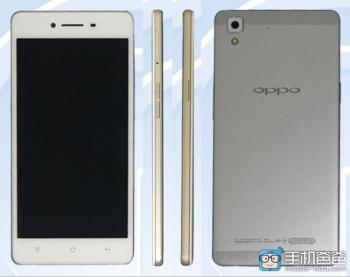
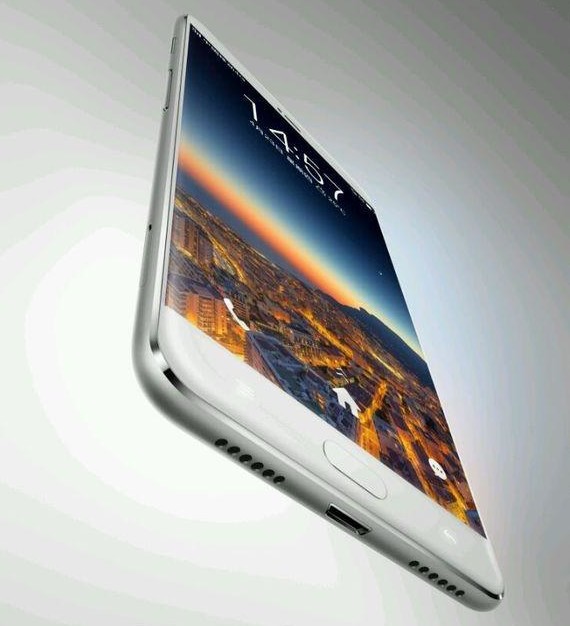
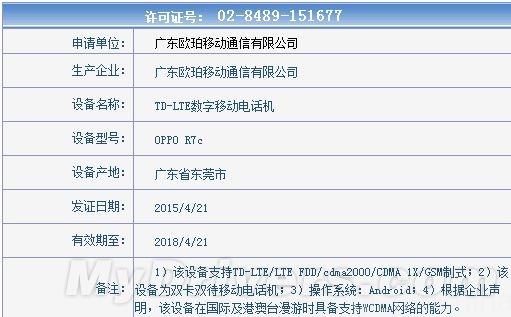
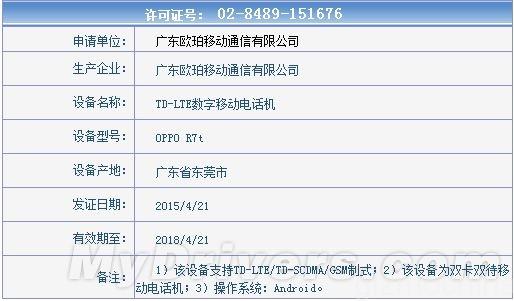
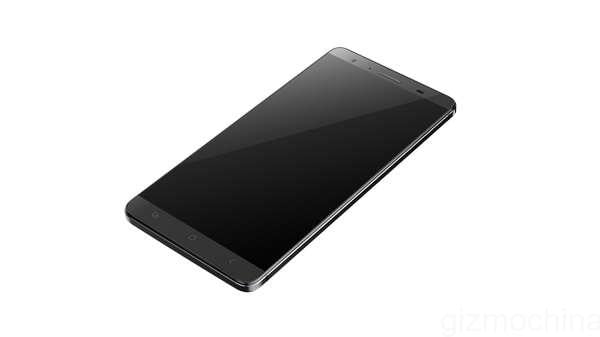
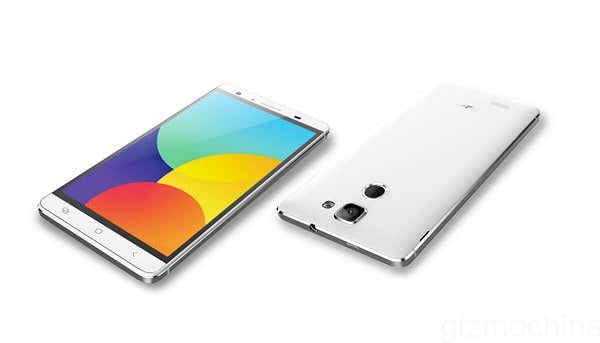
OPPO R7 has been the hot topic among tech lovers in the past few days, thanks to its super slim designed and rumored top end specs. Earlier, we had seen two different versions of the device hit TENAA namely the OPPO R7t and OPPO R7C, but at that time we didn’t know all specs of the device.
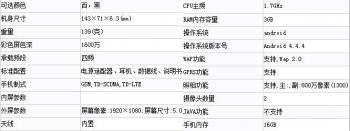
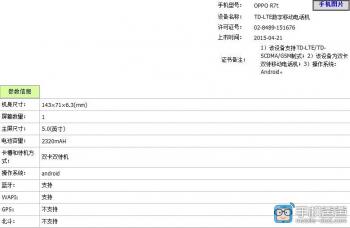
However, now the detailed tech specs of both the devices have been revealed and they confirm the top-end placement of the devices. There are slight differences between the two models since one is the China Mobile version while the other is the China Telecom version. However, the core specs remain the same on both the devices.
Before we actually move on to the specs, we have to note that there is no mention of a front or even a rear placed fingerprint sensor which probably means the R7 won’t feature this tech.
The biggest difference between the two versions is the processor under the hood. The OPPO R7 China Telecom Edition comes with a 1.5GHz Snapdragon 615 processor while the China Mobile version comes with a 1.7GHz Mediatek MT6752 octa-core processor. Other tech specs are the same, so the phone features a 5-inch Full HD display, 3GB of RAM and 16GB of internal storage. The storage is expandable up to 128 GB. There will be an 8MP camera up front with a 13MP shooter at the back. The device will feature a 2320mAh battery and will run on Android 4.4.4 KitKat OS.
As for the body, the phone comes with 2.5D glass in a 6.3mm thin fuselage. Its also pretty lightweight as it weighs just 139 grams. As you can see, the phone is quite capable, however, it isn’t as ground breaking update as expected. Probably the rumored OPPO R7 Plus will feature the expected top end technology but for now, OPPO R7 looks pretty ordinary.
With samples of both No.1 S6i and the Landvo S6 now doing the rounds, attention has once again turned to the China Clone phone industry.
Both handsets from the outside have near identical looks and build to the Samsung Galaxy S6 and therefore benefit from Samsung’s many hours of R&D and design testing.
Unfortunately the specifications of the phones is somewhat sub-par compared to many of the somewhat more original phones now coming out of Xiaomi and Elephone who’s phones whilst showing some influence and design cues from other handsets are not copies.
There must be a market for clones or they would not exist, who are the buying demographic? is it teenagers that want the look but can’t afford the originals? or just people that want the look but don’t need the power or price the original phones command? with iPhones some would argue that the style is great but they really do not want to use Apples IOS and would rather have a clone that offers the style but allows the customisation of android.
I would say that it is easier to justify Apple clones from that standpoint than Samsung clones that already feature Android.
I would be happy to have a galaxy s6 clone and would pay a decent price for it, but only if it had specs to match the looks, give me a full HD screen, dual sim, Mediatek MT6752 soc with 3gb of ram and 16gb+ rom and decent camera and I would happily pay $200
But with current S6 clones sporting non LTE 32bit SOC’s for me it does not matter how cheap they are the design is not enough to grab my money.
What do you think? why do people buy these clones and would you have one over a more original higher powered and sometimes cheaper phone such as the Elephone P7000?
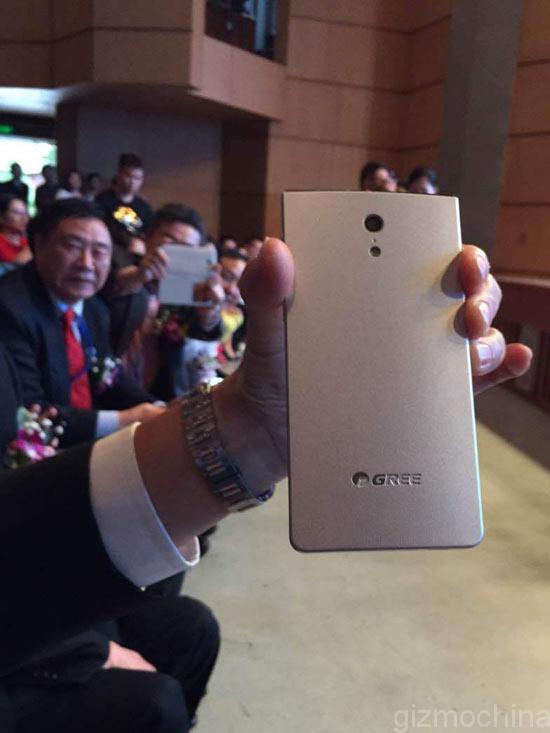
Dong Mingzhu, the Chairman of GREE Electric revealed earlier today that GREE will be starting the sale of its smartphones in the market pretty soon. However, the company is yet to announce the official price tag of the device.
GREE smartphone won’t just focus on taking calls but its aims to be much more than a phone. Mingzhu said that GREE smartphone can also act as an intelligent controller which that can monitor home security. It can also control air-conditioners and other appliances, which shouldn’t be a surprise since the company’s primary market is consumer appliances like these.
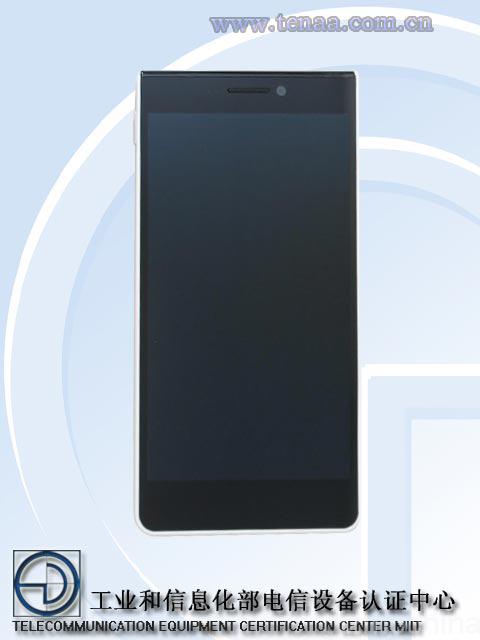
Thanks to the TENAA listing, we know the specs of the device. The GREE smartphone will be an entry level device with a 5-inch 720p display powered by a 1.2GHz Qualcomm Snapdragon 410 quad-core Chipset. There will be 1GB of RAM along with 8GB of internal storage which can be further expanded up to 32GB. AS for the camera, there will be an 8MP shooter at the back along with a modest 2MP front facing shooter. Finally, the phone will run on Android 4.4.4 KitKat OS.
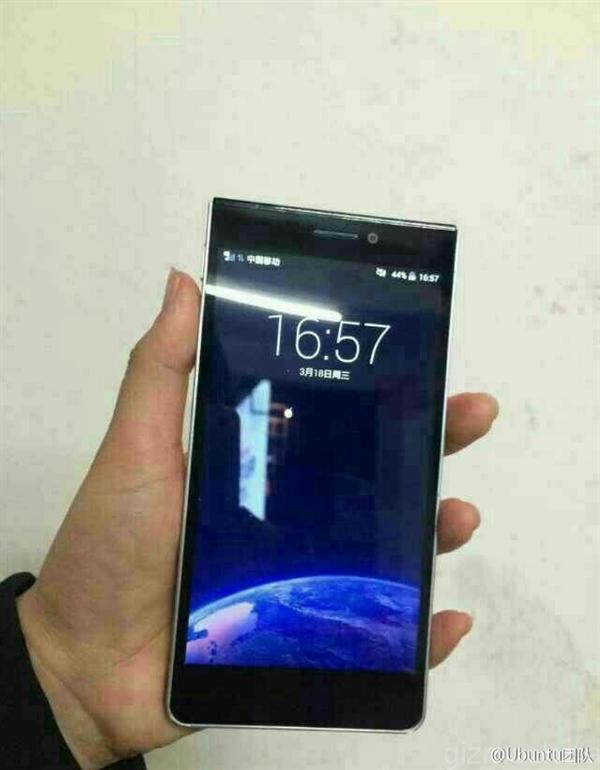
Of course, with such modest specs, don’t expect the price tag to be higher than 599 Yuan. We have seen the leaked images of the device earlier and they look quite good for an entry level smartphone.
Anyways, we will update with more information about the pricing and full feature list in the coming days. So, stay tuned!
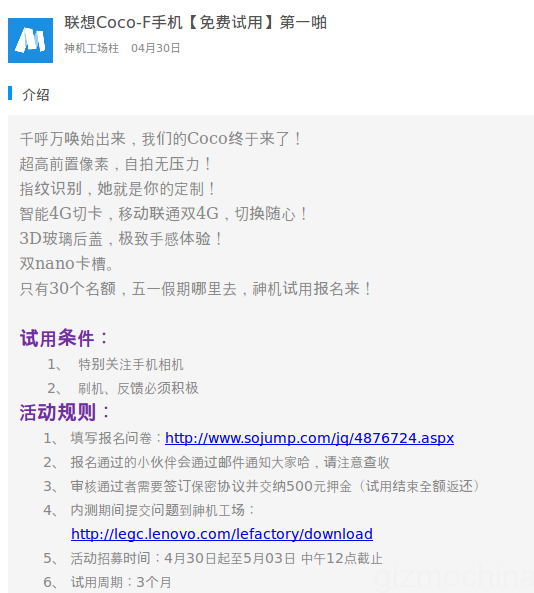
Its looks like Lenovo is cooking something big for the masses later this year. Earlier today, we came across a new image which states that Lenovo could be working on an interesting new concept smartphone called as the Lenovo Coco-F.
The Lenovo Coco-F is said to feature a unique 3D arch glass curved design. This should definitely set the phone apart from competitors at least in terms of design. As for the other specs, the phone will come with a fingerprint sensor and a ultra-high resolution front camera which should take great selfies.
The Lenovo Coco-F will support dual 4G China Unicom and China Telecom networks and comes with two nano SIM card slots. The phone has just entered the trail stage, but if everything goes well, we should see the device in the market in the later months.
Unfortunately, as of now, we don’t have any renders or other spec details of the device. But we will keep you guys posted about this upcoming Lenovo smartphone.
DJI is undoubtedly one of the world’s best UAV companies. The DJI Inspire and the DJI Phantom both are professional drones for enthusiasts.
Now, to make these drones all the more fun, the company has decided to open up the SDKs (Software Development Kits) for both, the Phantom 3 and Inspire 5 drones in May. This means that pretty soon developers can take advantage of the various high-end hardware on these devices for innovative functions. They can develop applications to tweak Inspire’s image transmission controls and Phantom 3’s camera control, flight control, signal strength, battery, waypoint commands, and PTZ control.
So, after May, we may see some interesting applications for both these UAVs.
It looks like Chinese manufacturers are set to unveil their tech advancements in the month of May. ZTE has already confirmed the launch of its bezelless smartphone in May, and a few days back, even OPPO confirmed their OPPO R7 launch in the same month.
A few hours ago, we reported that the ZTE Nubia Z9 hit TENAA with mind-blowing specs, and now, we spotted the OPPO R7 models too on TENAA. There are two different variants listed on the website, the OPPO R7C and the OPPO R7T models, the former being the China Mobile edition and the latter, the China Telecom version. The OPPO R7C will support TD-LTE / TD-SCDMA / GSM networks, while the China Telecom R7T edition supports TD-LTE / LTE FDD / cdma2000 / CDMA 1X / GSM. Both come with dual SIM dual standby support.
As for the tech specs, it is said that the phone will come with Mediatek Helio X10 MT6795 octa-core processor with a 4.7-inch full HD 1080p display. There will be a powerful 20.7MP camera at the back with laser auto focus. The earlier leaked images have shown a sleek and beautiful design. In fact, the company may have taken some inspiration directly from Apple’s iPhone 6 with its curved 2.5D glass front and dual speakers at the bottom. The phone also has a physical home button just below the display, which may feature a fingerprint recognition sensor. Finally, like most OPPO devices these days, the OPPO R7 is said to feature the VOOC fast charge technology to improve charging times.
Although the company has confirmed the launch in May, it has still not revealed the exact date. However, recent rumors state that the phone could be unveiled on May 20.
Anyways, we are sure we will receive more information about the upcoming R7 in the coming days, so stay tuned.
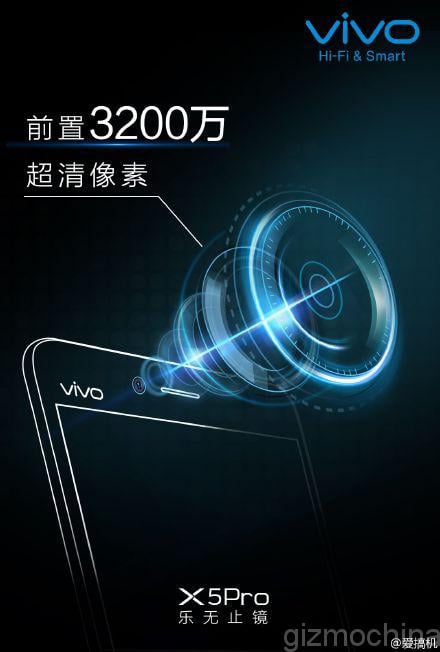
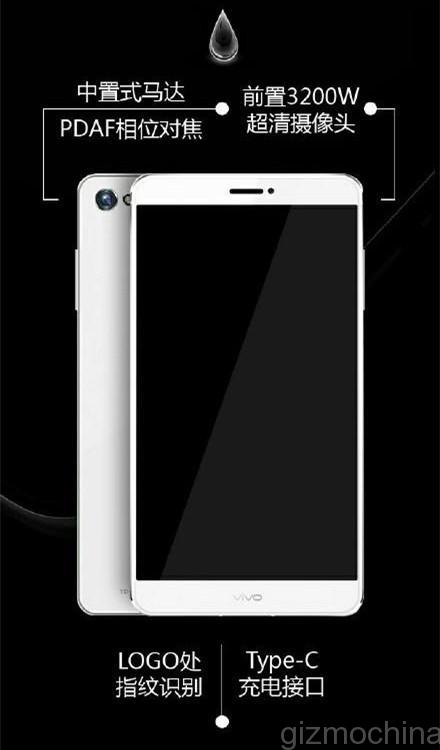
Vivo is all set to announce its new flagship, the Vivo X5Pro with an impressive set of specs. We already know a lot about the device, thanks to the official company teasers, but earlier today a new leak revealed further information about the upcoming flagship device.
The alleged pictures of Vivo X5Pro show off a glowing logo just below the display. There aren’t any visible capacitive buttons, so the phone could feature on screen ones. The phone has a simple yet attractive design, looks solid and comes with a glowing Vivo logo at the bottom which further enhances its looks. We have heard rumors about a fingerprint sensor on the device and this particular logo could incorporate that sensor.
You can clearly see the gentle curve of the 2.5D glass on the device, which is exactly what we heard a few days back from another leak. There seems to be an aluminum frame around the body and both the power and volume buttons lie on the right side of the device.
The phone appears to be gigantic, as it covers a significant part of the laptop screen in the picture. So, it looks like the Vivo X5Pro will indeed come with a 6-inch 1080p Full HD display. As for the processor, the phone is rumored to be powered by a Snapdragon 615 octa-core processor running on Android 5.0 with FunTouch 2.1 UI on top. There will be a 3500mAh battery on board.
Vivo has almost confirmed that its first camera can capture 32MP selfies. Even the rear camera will be powerful with a ‘faster than iPhone 6’ Phase Detection Auto Focus (PDAF). Other important features include the new USB Type-C port, a retina scanner and a fingerprint sensor under the glowing logo. Of course, its likely that only one of the two sensor will end up on the device, with the eye scanner being the likely one.
Vivo will announce the device on May 7, which is just around a week away, so stay tuned for more information.
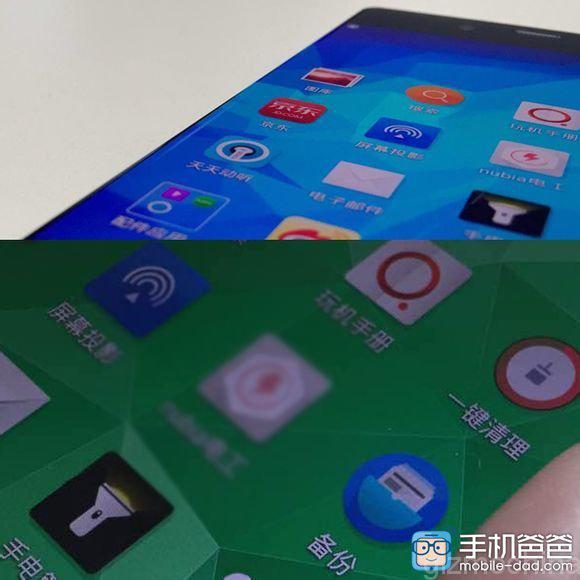
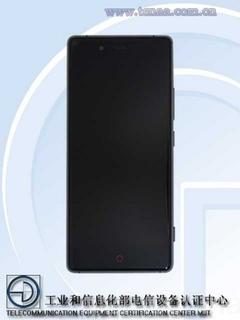
We have already seen a number of leaked images that show off the bezelless display on the new ZTE Nubia Z9 flagship. Even the company has officially confirmed this information, which means we are going to see a true bezelless flagship device from a well known manufacturer pretty soon.
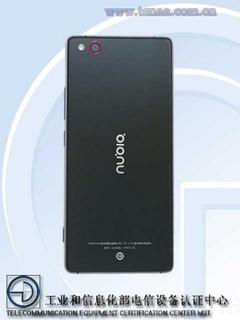
Now, the same phone has hit TENAA revealing some very impressive specs. In fact, the specs are so good, that we have some trouble believing that they are real. Usually, TENAA is accurate with its information, but this time, there could be some mistake.
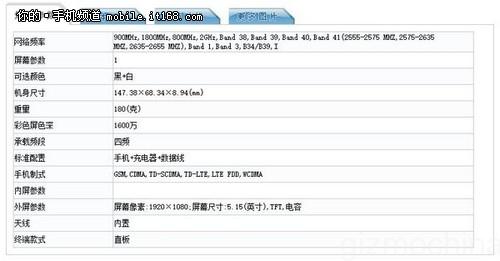
The Nubia NX508J model listed on TENAA reveals that the overall design should remain the same as the Nubia Z9 Max. But of course, being bezelless, the 2.5D curved glass extends to the sides of the device. The dimension of the phone are a bit odd. Its narrower than competitors with similar sized screens like Huawei P8, however, when it comes to the length and thickness, its more than the P8. You can clearly see the difference by checking out both the phone’s dimensions. The ZTE Nubia Z9 comes with the dimensions 147.38 × 68.34 × 8.94 (mm) while the P8 comes with 144.9 × 72.1 × 6.4 (mm) body. Also, the phone is going to be heavy, weighing about 180 grams as compared to Huawei P8 which weighs just 144 grams. You can also see a small circular home button on the front, which could incorporate a fingerprint sensor. But we haven’t heard about such a feature on the phone till now.
Like mentioned above, the specs are extremely high end. TENAA reveals that the Z9 will feature a 3.5GHz octa-core processor with 8GB of RAM. Yes, the TENAA page does show this configuration, but we feel there might be a mistake and the real phone will likely end up with 2.5GHz Snapdragon 810 and 4GB RAM. There will be a 5.15-inch display up front and 32GB internal storage which unfortunately, won’t be expandable.
As for the camera, it looks like the Z9 will feature the same 16MP rear camera unit as the Z9 Max and Mini, along with an 8MP front facing shooter. The phone will run on Android 5.0 Lollipop OS and will support GSM, CDMA, TD-SCDMA, TD-LTE, LTE FDD, WCDMA networks, and dual SIM dual standby. Finally, a 3000mAh battery will power all these specs.
Apart from the processor and the RAM, rest of the specs looks quite normal for a flagship smartphone. We just have to wait for a few more days, i.e. until May 6, when ZTE will officially announce the device.
So, what do you think about the upcoming Nubia Z9?
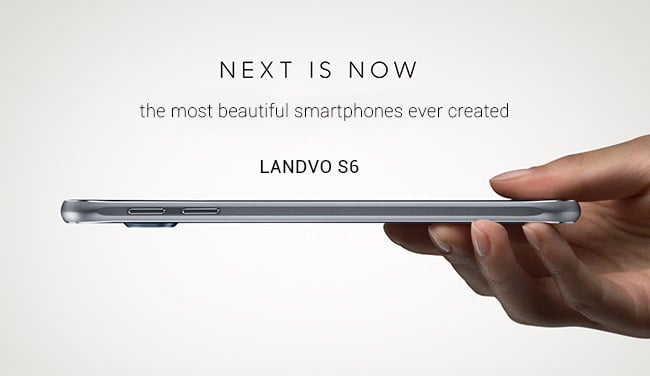
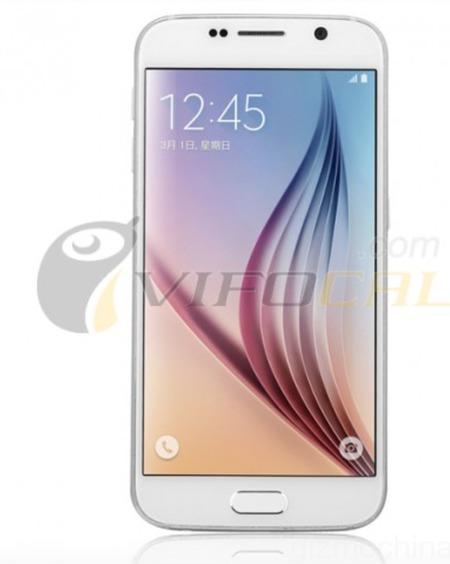
Landvo has unveiled a number of smartphones in the past few months. Notable devices include the Landvo L200S and Landvo L600S. Now, the company is all set to unveil a brand new smartphone and this time, it will take its design inspiration from the new Samsung Galaxy S6 flagship.
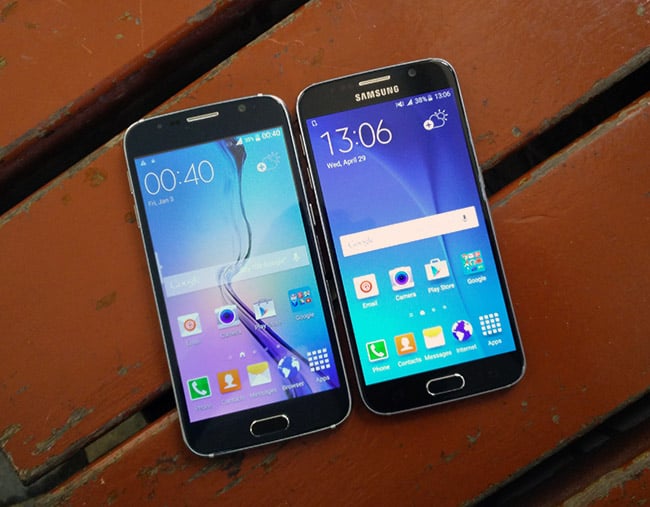
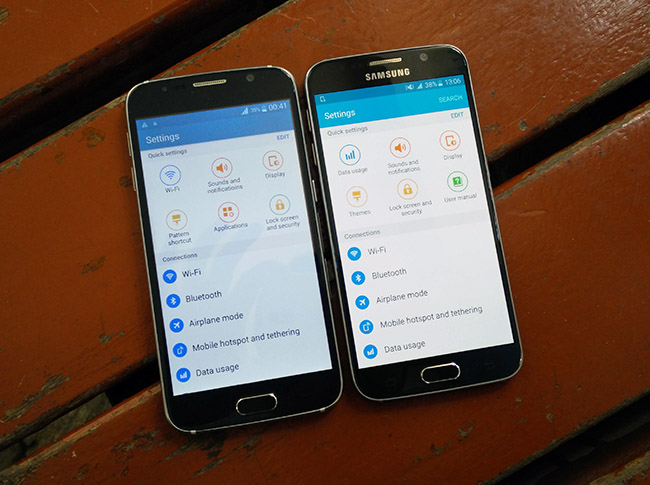
Yes, the company will release a new Galaxy S6 clone in the market pretty soon with the exact same design, materials and even the UI. We also have a couple of images to show off the device in action besides the original Galaxy S6 and you will see that apart from the logo, its really hard to distinguish between the two. It is said to sport the same metal and glass design as the original model. Even the dimensions are the same as the Galaxy S6.
As for the specs, the Landvo S6 will feature a 5.1 inch IPS screen, powered by MTK MT6582 quad-core processor. There will be a 16 megapixel rear camera and 5 megapixel front camera, along with 2550mAh battery, dual SIM card support and Android 5.0 lollipop OS.
We still don’t know the pricing or availability of the device, but expect more information soon. Stay tuned!
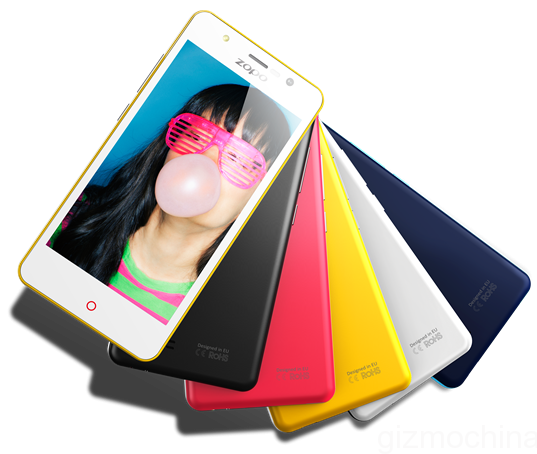
ZOPO is a well known brand when it comes to local Chinese manufacturers. The company has been releasing a number of interesting low cost but feature rich devices in the past few years and looks like they are all set to unveil two more smartphones in the market.
The company announced earlier today two new devices in its Color series. This particular lineup is targeted at young users who would like something vibrant and colorful. You can clearly see that the phone’s design and color scheme is targeted at the younger generation.
ZOPO has given simple names for its two devices namely the Color E and the Color C. Both the phones are expected to hit the markets in May, which is just a few days away. And the highlight of the phone would be the new Android 5.0 Lollipop version. These phones will also have a number of other special features such as Power-saving mode, face recognition, intelligent lock screen, smart unlock etc.
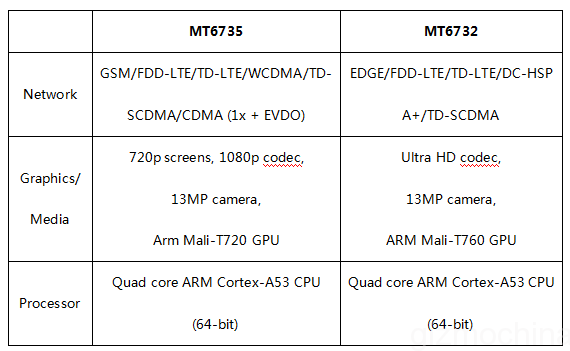
Under the hood, the new MT6735 processor will power these devices. Yes, in case you have been following our blog, this is the same SoC that supports all major network connectivity options. Its faster than Qualcomm’s budget Snapdragon 410 processor and supports the following major connectivity bands: MT6735 / MT6735M support LTECAT4, upstream highest 50Mps, next row 150Mps, native support for FDD-LTE / TD-LTE / WCDMA / TD-SCDMA / CDMA (1x + EVDO) and GSM networks. The 64-bit MT6735 is based on the Cortex A53 cores with the powerful ARM Mali-T720 graphics processor.
As of now, this is all we know about the two smartphones. But we expect more information in the coming few days, so stay tuned.
Meanwhile, the MT6735 processor and Android 5.0 looks like a good combination. We hope that the other specs and the overall pricing of the device is good enough to compete with other offerings in the market.
China is a budding smartphone market and as a result, in the past two years, we have seen many smartphone manufacturers rise up in this particular region. One of the latest entrants in town is the new MSTAR. This particular brand was formed back In February 2015 and is a sub-brand of LIHUA Group, which is a leading supplier of wireless communication products in the global market. LIHUA Group was found back in 2002 and is based from Hong Kong. The company has its factor in the world’s largest manufacturing base, i.e. Shenzen.
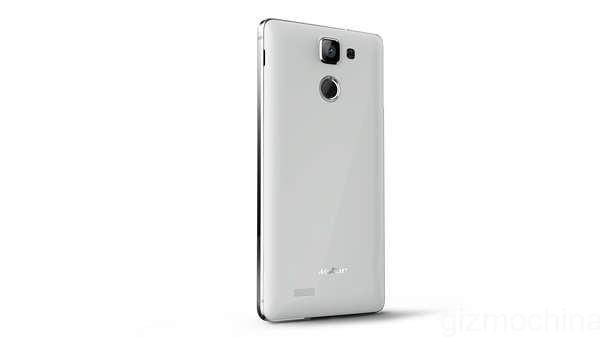
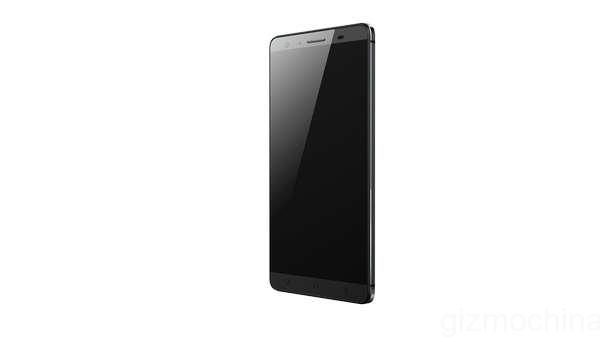
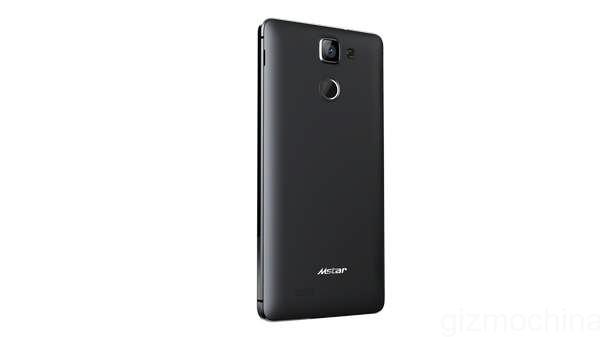
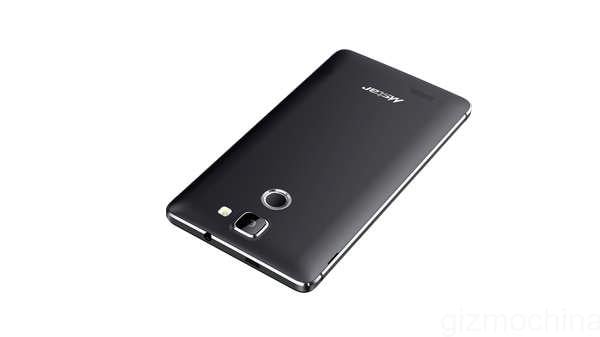
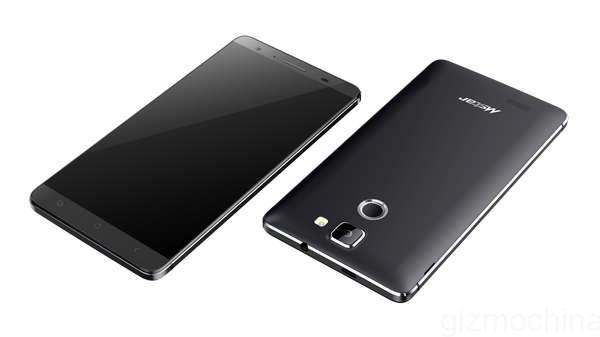
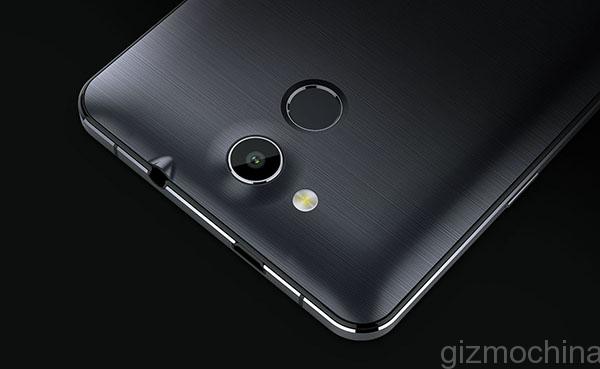
Now, MSTAR is all set to release its new smartphone in the market and what better way than to come up with a Huawei Mate 7 inspired phone. We have received the first set of renders of the upcoming MSTAR S700 and these images show a solid smartphone with a Mate 7 like fingerprint sensor at the back.
Like we mentioned above, we can see a few design aspects taken directly from the Mate 7. It looks like the MSTAR S700 will have a metal frame with a plastic back. The camera unit will be located on the top while the MSTAR logo lies at the bottom.
Unfortunately, apart from these pictures, we have no other details like specifications, pricing or availability. But since MSTAR is expected to launch the device soon, expect these information in the coming weeks.
Meanwhile, check out the renders of the upcoming MSTAR S700 and tell us what you think about the device.
1 of 7
If you are interested to know more about the brand, then read the excerpt given down below.
About MSTAR:
“With rich experience in mobile communication industry, LIHUA Group has setup a new smart phone brand – MSTAR in February, 2015 to meet the international marketing demand. The brand culture of MSTAR is “Making sense to amazing revolution”.
Revolution means that LIHUA will transform from the previous OEM, ODM customized marketing system to various marketing systems and methods featured by the combination of OEM, ODM and self-owned brands, creating the best possible products for consumers. The core of business is always bringing good product with high reputation of quality and cost. And quality is the only guarantee of brand.”
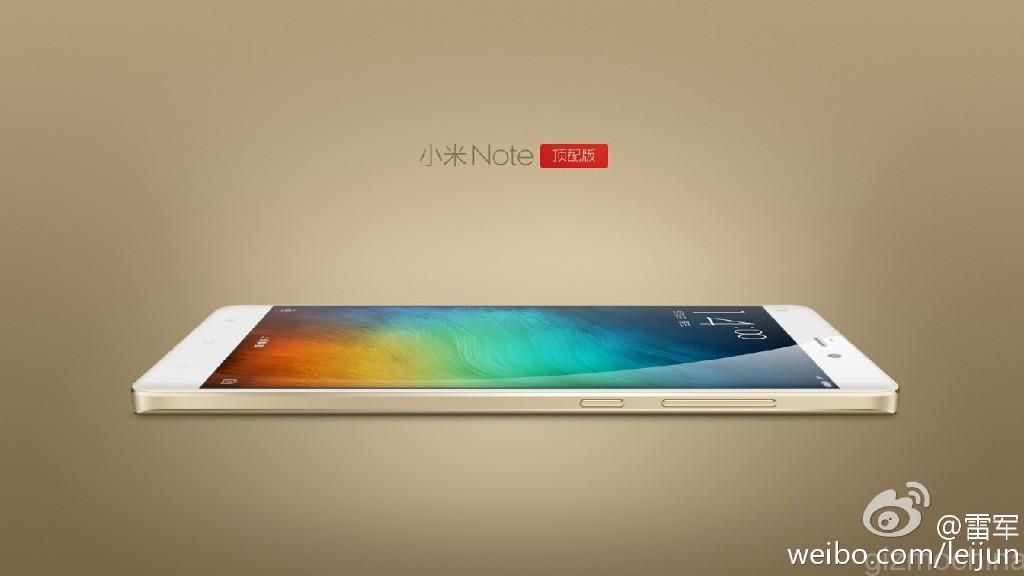
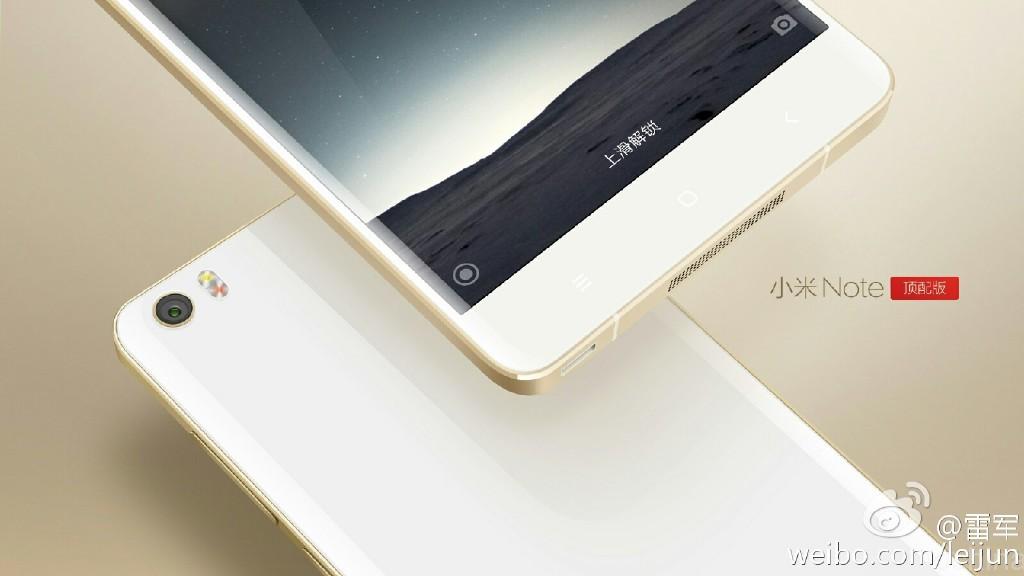
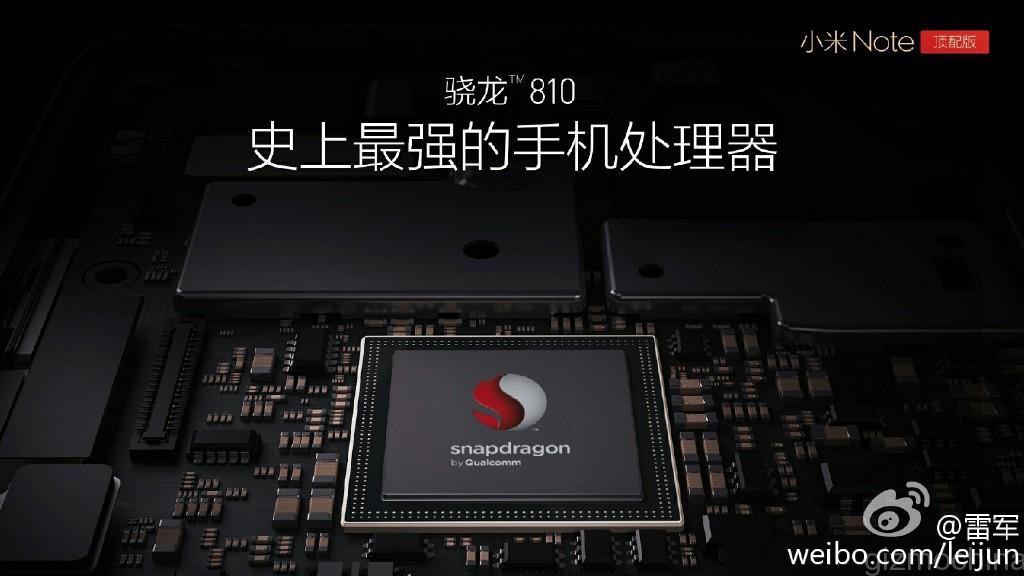
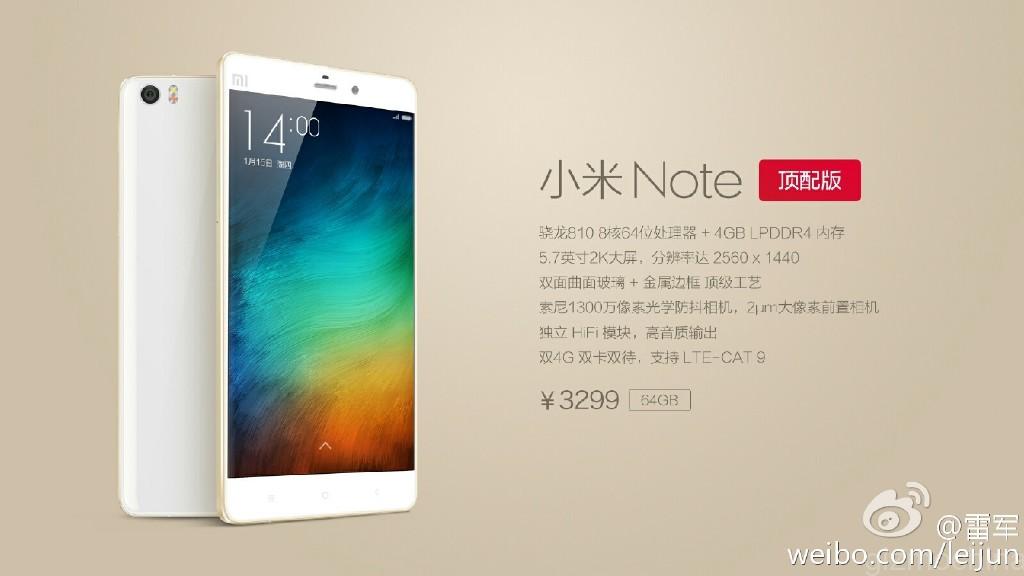
Xiaomi has just released several photos of its upcoming Xiaomi Mi Note Pro version. This is the most powerful smartphone from the company till date, which also means its Xiaomi’s costliest device uptil now.
Given that the company is primarily focused on the affordable market, almost everyone is interested to see what’s so special about the Xiaomi Mi Note Pro version. Of course, the specs reveal that the phone is definitely top-end and powerful enough to compete with any other flagship, but there’s more to the phone than sheer power.
The pictures reveal that the Xiaomi Mi Note Pro will feature a beautiful gold colored metal frame which will give it a premium feel. The front will be covered by 2.5D glass, which has become a trend among flagships in recent times. However, the highlight of the phone is the 3D glass at the back. This curved glass design along with the premium gold aluminum frame definitely shows that the device is meant for the top-end market.
Of course, the specs of the Xiaomi Mi Note Pro are better than most competitors out there. So, it comes with the powerful Snapdragon 810 chipset v1.2. This is the third generation Snapdragon 810 processor from Qualcomm. It is said that Xiaomi sent over 10 R&D engineers to Qualcomm’s headquarters to optimize the processor for power and performance. Also, the processor is supported by 4GB LPDDR4 RAM which is reportedly 70 percent faster than competitors.
Other tech specs include a 5.7-inch 2K resolution display, 13MP rear camera, ultrapixel front camera, and 4G LTE Cat. 9 connectivity support. Xiaomi Mi Note Pro will be available for purchase from May 6.
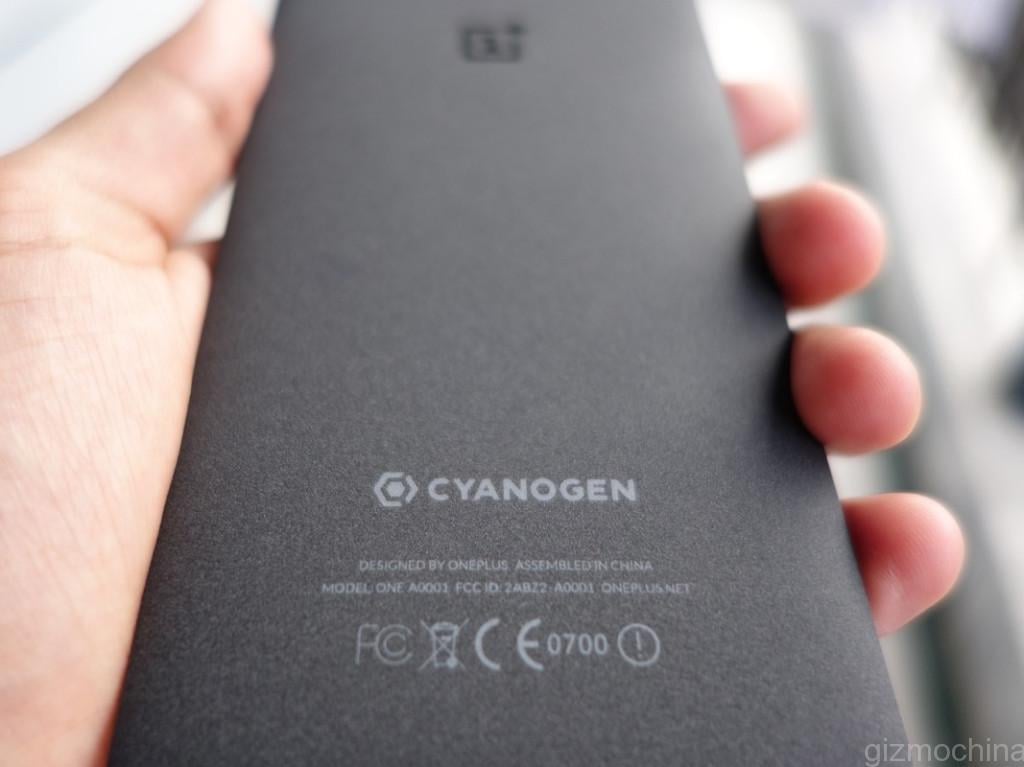
When OnePlus One first hit the markets, the device came with the much loved Cyanogen OS. However, in the later months, the strong partnership between the two companies started to weaken. Cyanogen tied up with the Indian manufacturer Yureka exclusively, which meant OnePlus Ones shipped in India was not be officially supported by Cyanogen. This put OnePlus in a tricky position which eventually led to the birth of the Oxygen OS.
Now, it looks like Cyanogen has decided to terminate its partnership with OnePlus. Speaking at the Global Mobile Internet Conference in Beijing, OnePlus CEO Kirt McMaster and founder Steve Kondik said a few things about the company’s plans for the future and it didn’t involve OnePlus.
Steve said that both the companies had different visions for their software which eventually led to clashes when each one tried to go on with their own visions.
That’s probably the last you will see from that partnership.” … “Two new companies are trying to do crazy stuff, a lot of people collide.”
But CEO Kirt is of the opinion that OnePlus’s success have been mostly led by its Cyanogen OS. He said that the company built its brand with the backing on his company.
Without Cyanogen, OnePlus would have sold like one device in international markets,” … “Essentially they built their brand on the back of Cyanogen.” – Kirt McMaster
Cyanogen has other big plans as the company aims to partner up with a brand that can expand much quicker than OnePlus into international territories. The company has not revealed any specific names, but it is said that the likely partner could be another Chinese company.
Meanwhile, OnePlus Ones will still be supported by Cyanogen but OnePlus will soon release its new OxygenOS to its users.
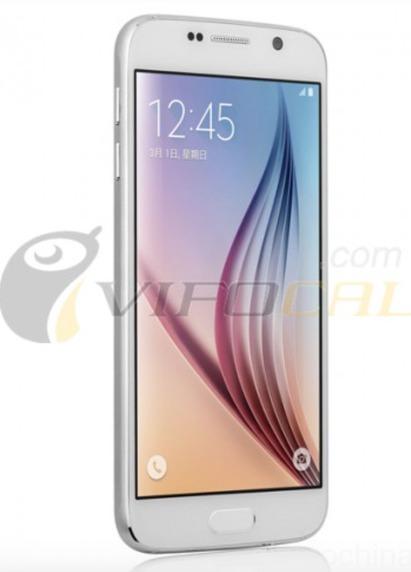
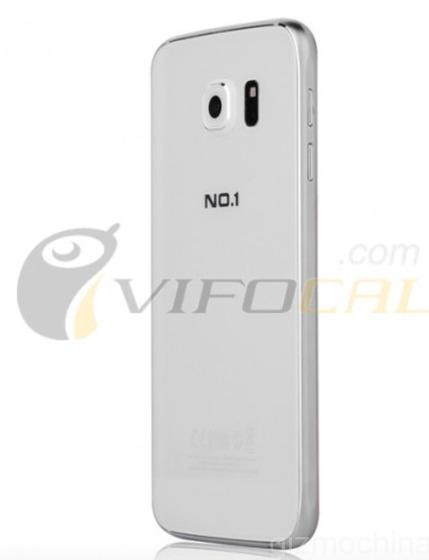
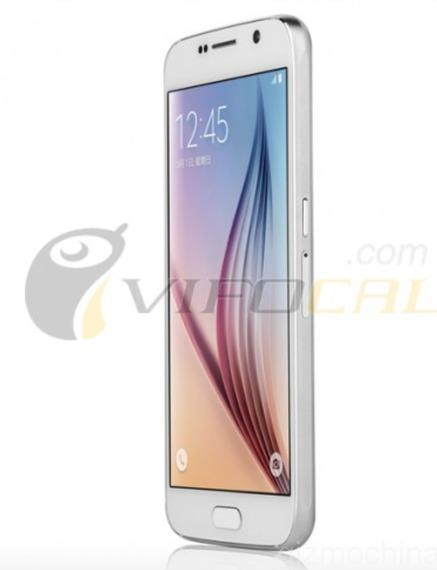
Samsung has done a pretty good job with its newest flagship model – Galaxy S6. It is indeed a beautiful phone with a metal frame and Gorilla Glass 4 sandwich construction on the front and the back of the device. It is indeed the most major overhaul of the whole Galaxy series and finally we can say that Samsung can produce a flagship grade premium design. However, there is one thing that you may not want to buy it. It is the price.
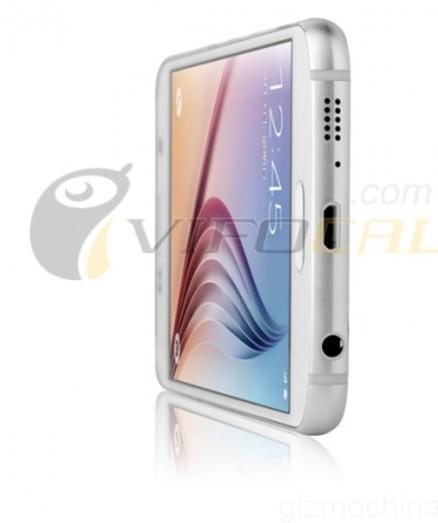
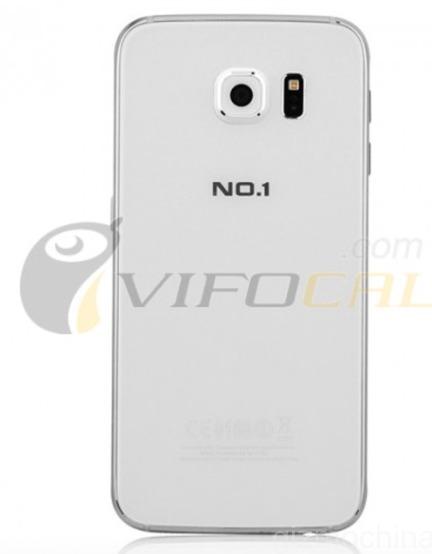
The cost of 700 EUR is a ridiculous price, but as usual we have some Chinese manufacturers, which are quick enough to produce the clones. Well, the clones as far as design goes, of course. One of those manufacturers is the No.1.
You may be familiar with this manufacturer, which specialises in producing clones. This time around they decided to make a Galaxy S6 clone, which definitely looks identical to the original as far as aesthetics go.
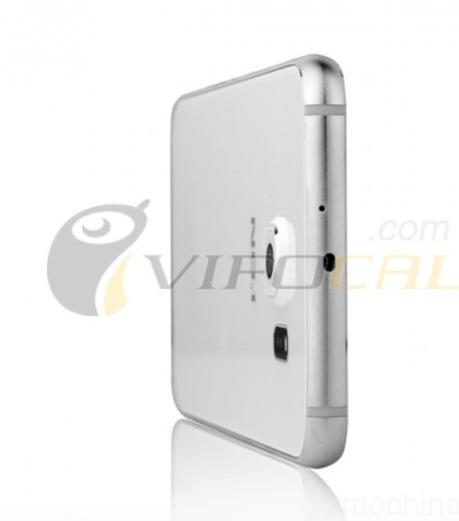
It spots a metal frame along with the metal buttons. Also, it features the glass on the front and the back. Moreover, it has a home button, which, however, does not have a finger print scanner.
1 of 5
The rest of the design elements are identical to the ones found on the Galaxy S6 as well.
As far as the specs go, the device features a 5.0 Inch 720p HD Screen, MTK6582 1.3GHz Quad Core chip, 1GB of RAM, 16GB of storage (expandable via micro SD slot up to 32GB). Also, it has a 5/13MP combo on the front and the back respectively.
All in all, it shapes up to be a decent offering if you want to have a Galaxy S6 look-a-like, but not willing to pay a ridiculous price.
Usually, the No.1 S6I costs $119.99, but Gizmochina readers can get $12 off with the coupon code s6ioff at vifocal.com!
I have just received an email direct from Elephone, they have some great news regarding the sensors, they have at higher costs managed to procure IMX214 sensors and these will now be fitted to all P7000’s it will be interesting to see how this move affects other China based manufacturers.
It is great to see a company that goes above and beyond to ensure that its customers get the phones they deserve.
Elephone may leave some pre-order buyers of the P7000 disappointed, they have advised customers that not all P7000 will be released featuring the IMX214 due to a market shortage of the Sony sensor, instead they will be using the Sony IMX135 instead.
The main differences in the two sensors are video frame rate based, the IMX214 can shoot 4k video at 30 fps, 1080p at 60 fps whilst the IMX135
sensor can only manage 1080p at 30 fps and cannot shoot 4k.
The IMX214 also has a slightly higher resolution 4224 x3200 (13.51mp) vs the IMX135 resolution of 4224 x 3176 (13.13mp), the IMX214 also has improvements in the optical stack improving colour crosstalk and giving better angular sensitivity.
Hopefully this change in sensor will be temporary whilst the supply chain is improved, it is good that Elephant have been upfront about the sensor issue as it gives people that have pre-ordered time to cancel if the other sensors features are a deal breaker for them.
Have you pre-ordered the P7000? will you cancel based on this? or are you happy to get a phone with otherwise great features and a decent camera for the price?
Leave a comment below to let us know your thoughts
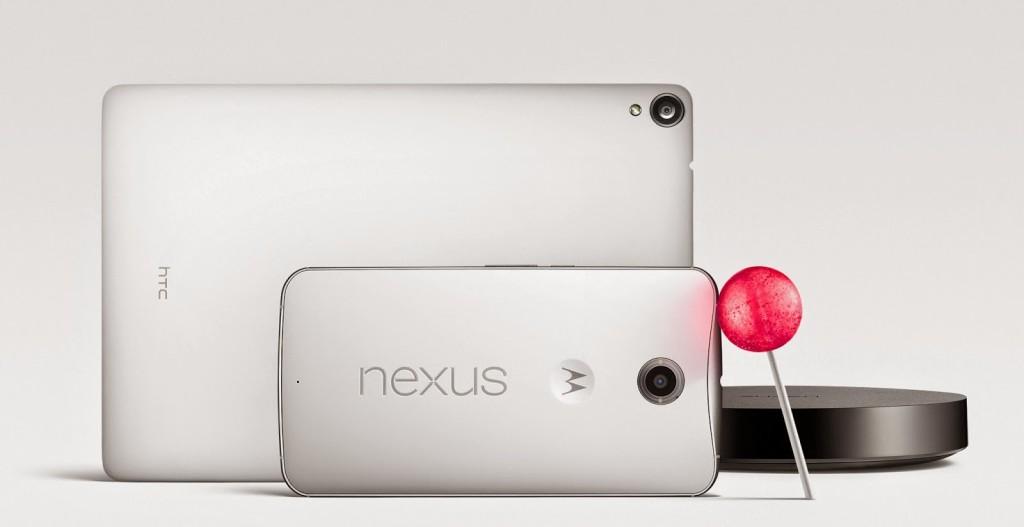
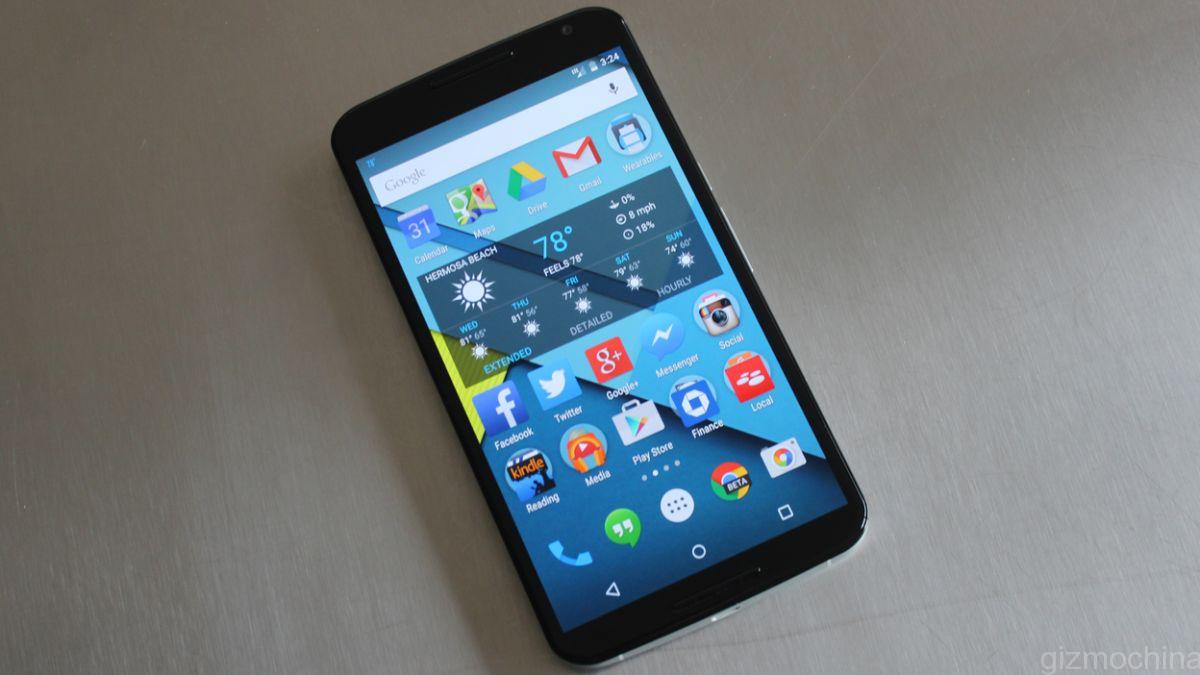
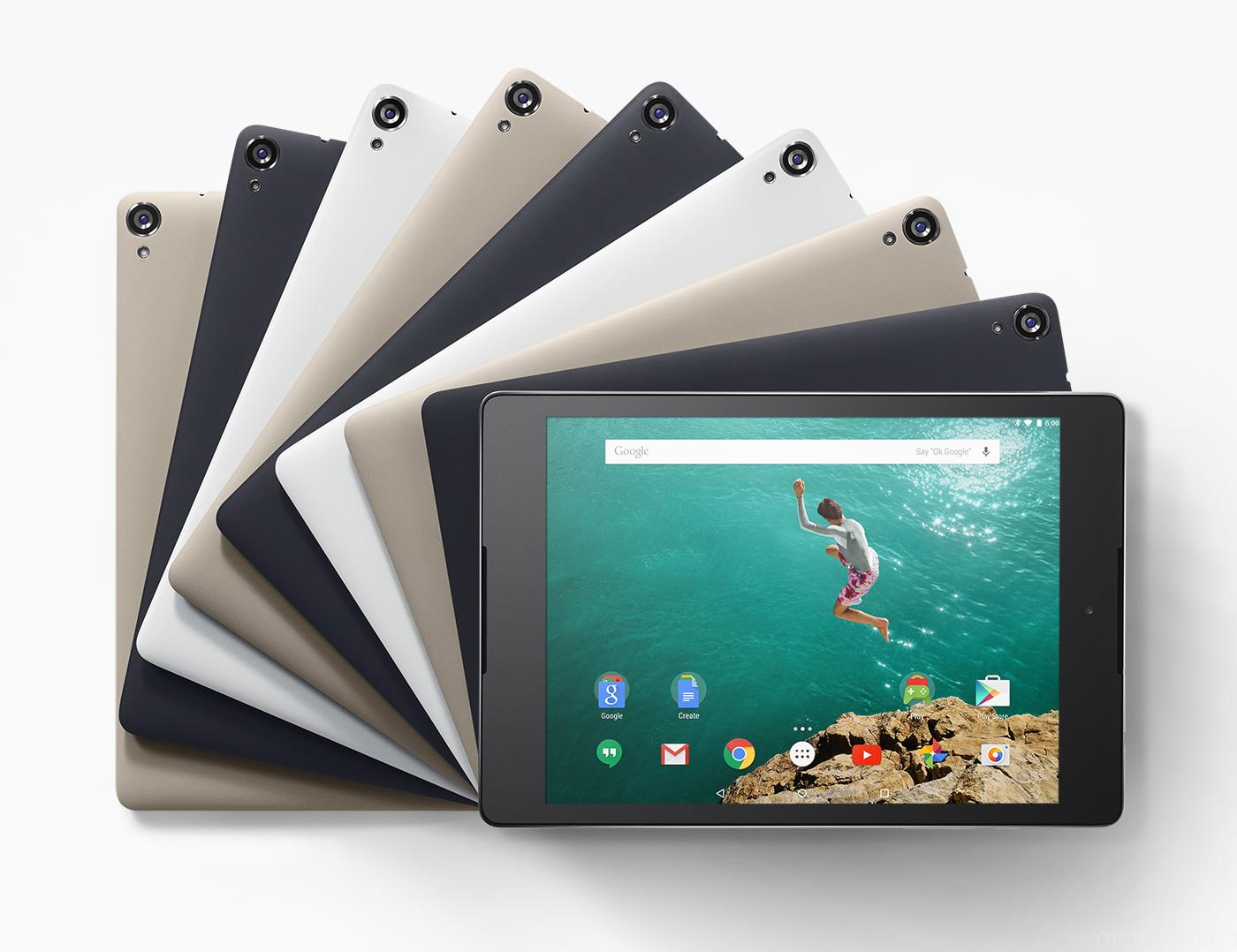
The transition to a pricier range of Nexus devices have lead to lower sales for the line this quarter. For the first half of 2014, Google was still offering the economically-priced Nexus 5 smartphone at the starting price of $349 and the similarly-affordable Nexus 7 tablet at $229. This quarter, Google is offering their latest devices, the Nexus 6 smartphone and Nexus 9 tablet at $649 and $399 respectively. The law of supply and demand would dictate that people would be unlikely to accept the price hike, and that’s taking into consideration even the high popularity of these devices running stock Android.
This could be stemming from a few possible reasons: The specifications offered for the Nexus 6 and 9 devices could simply be an insufficient upgrade for some to justify the price increase, which is understandable. Take the Nexus 6, for instance. Some might find the 6 inch display of the Nexus 6 and thus larger physical size to be unfeasible for practical daily usage in a smartphone. The new 64 bit Qualcomm Snapdragon 805 quad-core processor isn’t going to be much of a difference in real-world scenarios for some mainstream users, especially given that the next-generation Qualcomm Snapdragon 810 is already making headway. Also, It doesn’t help public perception much that the price hike is almost up to 50% more from last year’s huge-selling Nexus 5 to the latest Nexus 6.
On the Tablet side, the increase of price would not be such a major factor, but, instead, the fact that people do not upgrade their tablets as often as they do phones. Apple clearly dominates the Tablet market, but even the Cupertino giant is experiencing a sales slump with their iPads. Tablets in general would surely be no more influential than Smartphones in this recent swing towards lower Nexus device sales for Google. Neither would the Nexus Player, considered by many to be a minor product in the line.
While it is easy to see how insignificant overall Nexus sales would factor into the bigger picture at Google, the search giant actually stands to gain a few positives moving forward.
Google knows their limits a little better now
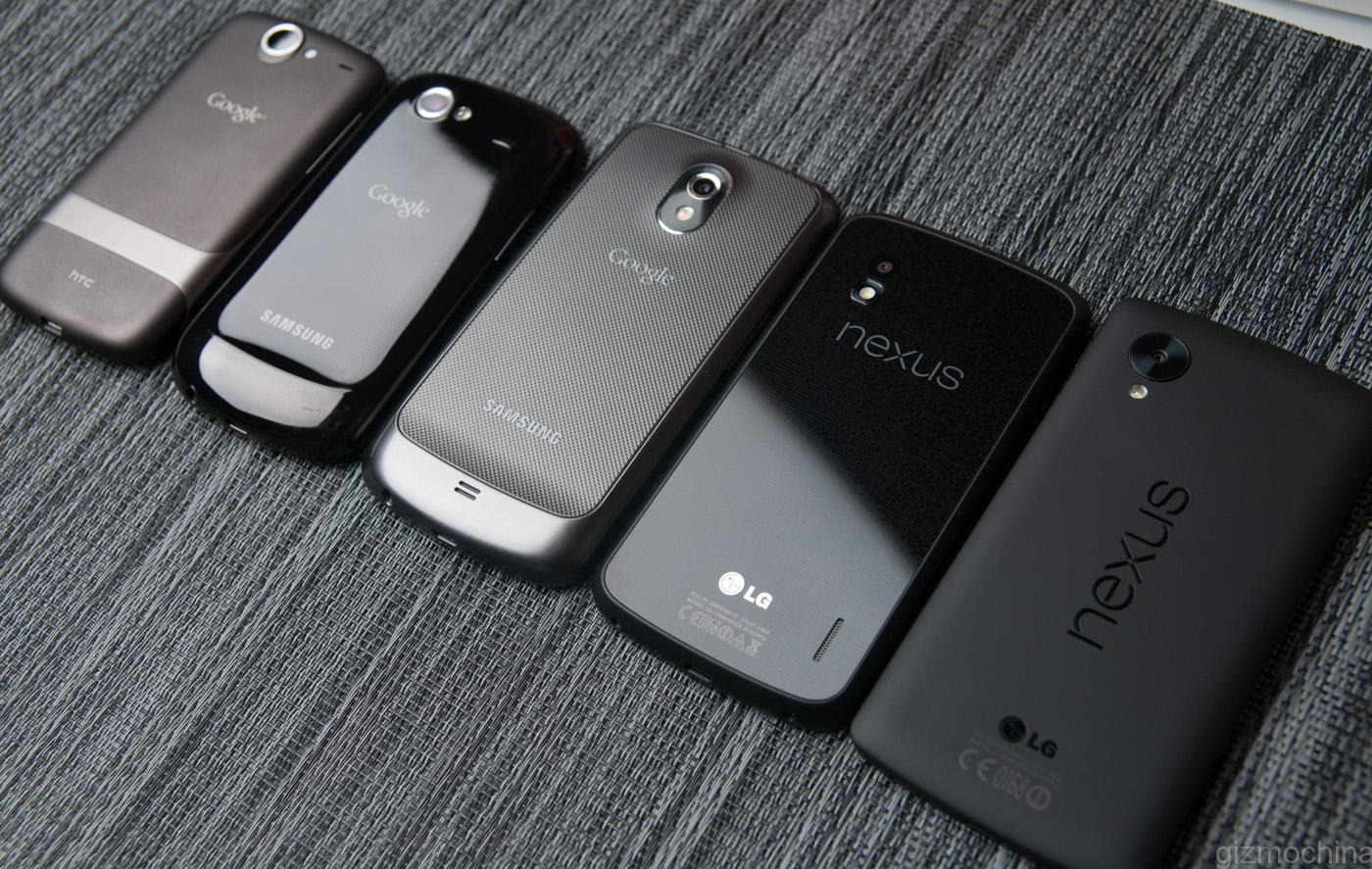
No other time has Google ever got all of the five major U.S carriers, AT&T, Verizon, Sprint, T-Mobile and U.S. Cellular in on the Nexus ‘action’, but Google accomplished it with the Nexus 6 for the first time. The closest Google has gone is with Samsung’s Galaxy Nexus, on which AT&T and Verizon were the only collaborators. Various other Carriers have offered certain Nexus phones from time-to-time, but Google now has the experience of offering a truly high-end flagship phone with every major carrier in the U.S. This gives Google invaluable experience and knowledge when it comes to pricing future Nexus Phones, no matter what distribution method it chooses in the future.
They have finally reached the pinnacle of screen sizes
With an uncommon screen of 6 inches, the Nexus 6 breaks new ground for an Android phone. Some have rejected the Nexus 6 on size alone, but the essential point to take away would be that Google pushed the boundaries of what is physically feasible for phone sizes. 6 inches may very well be the utmost limit when it comes to smartphones, and we would know that to be true simply because Google has attempted it and lived to tell the story. When it comes down, consumers can buy a 6 inch phone because Google has made the choice possible.
Google knows first-hand what it means to scale with phone manufacturers now
Google actually produced the Nexus 6 with Motorola still under their direct charge. They already know the struggles of domestic manufacturing, despite weak sales of the Moto X with its 2013 and 2014 editions, but they will forever have the experience of building smartphones under the belt. One little point in all of the mix is how Google has gained its fair share of experience producing a Motorola-branded Nexus as well. Google should have the best foot moving forward with future partnerships when it comes to providing inputs on the components that would yield the best balance of power and cost in future Nexus devices.
Conclusion:
With reports that LG would be producing the next Nexus Smartphone, it is clear the product line is far from dead. If anything, coming from the recent slump in sales for Nexus devices, a wiser, stronger Google would emerge and potentially be unstoppable for its next iteration of the Android operating system, and the devices that would be birthed along with it.
Once the Xiaomi Mi4 was launched some of the users were happy about it, but some of them not. It was that the company changed the design (made it more iPhoneish to get more recognition), but the specs did not have a huge bump. It seems that Xiaomi is not repeating the same mistake again as the rumours suggest that the Mi5 will have some bleeding edge specs.
One of the Chinese tech bloggers shared some info about the upcoming device on the popular Chinese social network Weibo.
Specifically, the new Xiaomi Mi5 is said to have a 5.2 inches screen, it will be equipped with the Snapdragon 810 chip and have an embedded finger print scanner. What is more, other part of the specs is said to be no slouch either. That includes 4GB of RAM, 16MP camera with OIS, at least 3000mAh capacity battery and so on.
Although many Chinese smartphone makers usually make larger screen devices, Xiaomi should stick with the 5.2 inch screen as they want to differentiate it from the Mi Note devices lineup.
It seems that we are yet to see another amazing device from the Apple of China (like this name or not). All of these rumoured specs sound possible as we have already seen Mi Note Pro. Also, we expect to see a premium build and design. Finally, there is one question that keeps us wondering is the price. Will the Xiaomi stick to the super cheap devices strategy or make it more expensive?
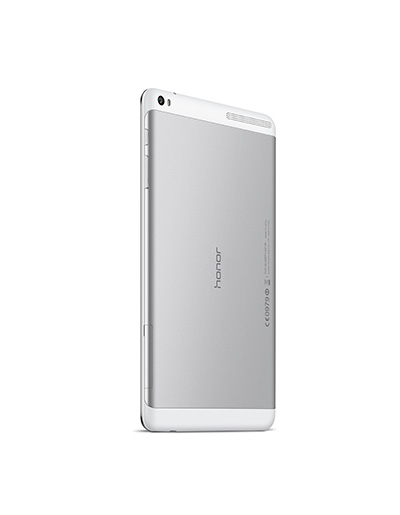
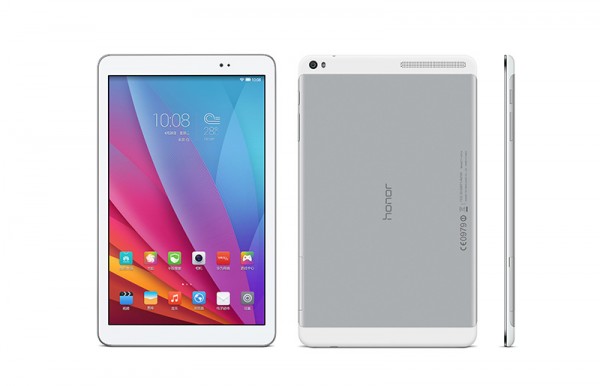
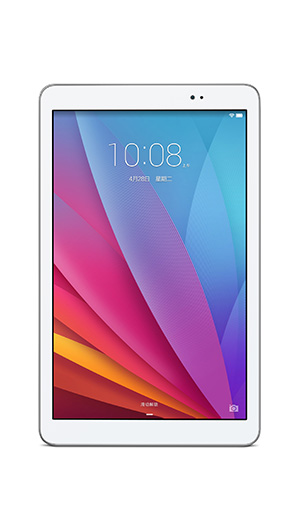
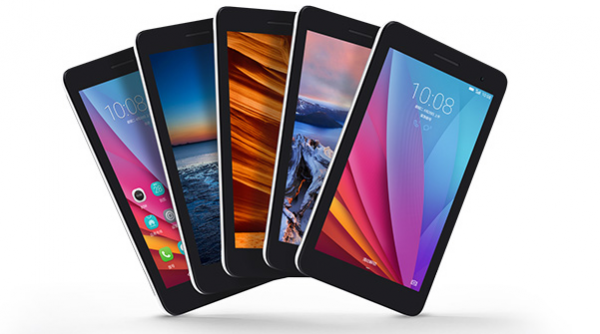
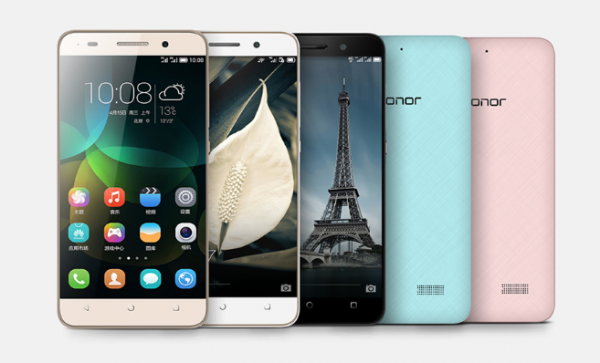
Huawei has officially released the Honor 4C lineup smartphones. There have been plenty of rumors about these devices for a long time, so its good to see all the three models go official.
First of all is the Honor 4C. From the specs point of view, we can consider this as the upgraded version of the glory 3C. The phone is equipped with a 5-inch 720p screen, providing 2GB of memory, equipped with Hass unicorn 620 octa-core 64-bit processor, while the China telecom version comes with the Snapdragon MSM8939 processor. In addition, the phone features a 2500mAh capacity battery, front 5MP + 13 million pixels rear shooter.
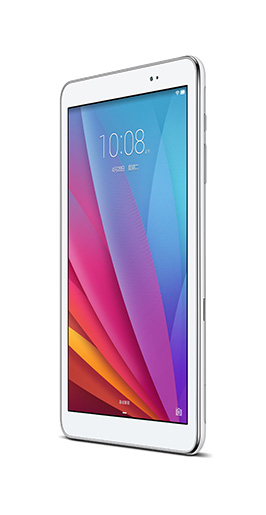
The Honor Pad features a body thickness of 8.5mm, the whole device weighing about 278g) is equipped with a 7-inch flat display (resolution of 600 × 1024 pixels). The tablet is equipped with Spreadtrum SC7731G 1.2GHz quad-core processor, built-in 1GB RAM and 16GB of storage space, built-in 4100mAh capacity battery, interestingly, it also supports 3G talk (provided Micro SIM card).
Finally Huawei Play Pad Note is equipped with a 9.6-inch 800 × 1280 screen, body thickness of 8.3mm, the overall body weighing about 430g. Also, the tablet offers Micro SIM card slot (no call). Its powered by Qualcomm Snapdragon 410 processor and 1GB memory, built-in 5MP rear camera and 4800mAh capacity battery, unfortunately, both the two tablets running Android 4.4 system.
As for the price, the Play 4C starts at 799 Yuan, Honor Play Pad starts at 599 Yuan while the Honor Play Pad Note starts at 999 Yuan.
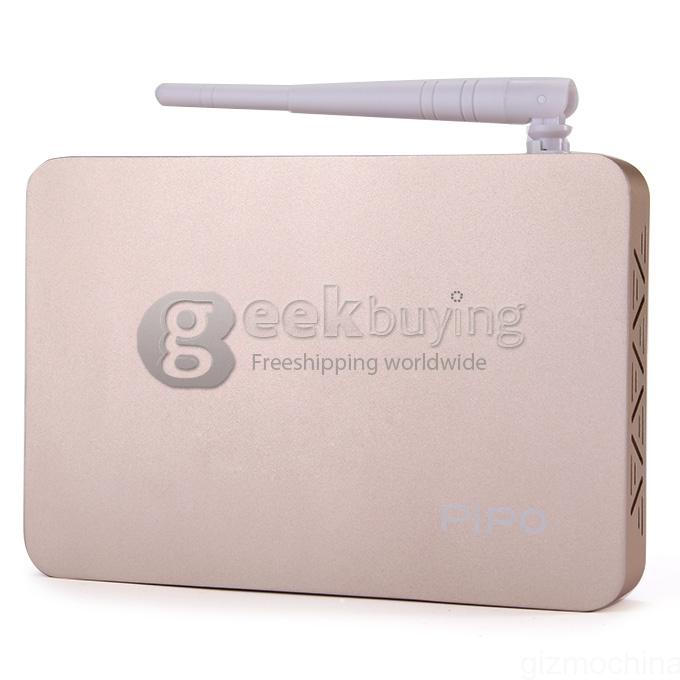
The PIPO X7S is a dual-boot mini-PC with both Windows and Android. It’s also called an Internet TV Box, set-top box, OTT box, etc. Once connected via HDMI to your regular LCD/LED TV it practically turns into a Smart TV.
The PIPO X7S features an Intel Z3736F quad-core CPU, Intel HD Graphics, 2GB of DDR3L RAM, 32GB of internal storage, a built-in speaker and microphone, Bluetooth 4.0 and WiFi 802.11 b/g/n connectivity, and can run either Windows 8.1 with Bing or Android 4.4. The box’s storage can be expanded via an SD card and up to four USB drives can be attached to the box at a time. The box also features a headphone jack and an Ethernet port (if WiFi is not available).
It comes pre-installed with a slew of software including Youtube, Facebook, Twitter, MSN, Skype, Calculator, Google Mail, Google Maps, iReader, Quick Office, and comes with 1 year of Office 365. The box itself is made from aluminum and measures only 188 x 150 x 24mm and weighs 390 grams.
Again, the PIPO X7S can be purchased through Geekbuying.com at $30USD off by using the coupon code, PIPOX7S30, which brings the price down to a very affordable $89.99USD.
Oppo has officially announced the launch date window of their upcoming flagship, the Oppo R7, through the company’s Weibo page.
According to the announcement, the company plans to release the Oppo R7 sometime in May. The exact date of the launch will probably be revealed at the beginning of next month. The announcement also mentioned that the Oppo R7 will definitely feature a full metal body with a smooth flat back panel which could be seen from previously leaked images of the R7.
The Oppo R7 will also feature the company’s VOOC flash charge technology which allows for fast charging by safely providing 4,000mA at 5V of current to the device for faster charging times. As for the phone’s new features, those are still unknown but more information should be released as the launch draws closer.
We use cookies on our website to give you the most relevant experience by remembering your preferences and repeat visits. By clicking “Accept”, you consent to the use of ALL the cookies.
This website uses cookies to improve your experience while you navigate through the website. Out of these, the cookies that are categorized as necessary are stored on your browser as they are essential for the working of basic functionalities of the website. We also use third-party cookies that help us analyze and understand how you use this website. These cookies will be stored in your browser only with your consent. You also have the option to opt-out of these cookies. But opting out of some of these cookies may affect your browsing experience.
Necessary cookies are absolutely essential for the website to function properly. This category only includes cookies that ensures basic functionalities and security features of the website. These cookies do not store any personal information.
Any cookies that may not be particularly necessary for the website to function and is used specifically to collect user personal data via analytics, ads, other embedded contents are termed as non-necessary cookies. It is mandatory to procure user consent prior to running these cookies on your website.