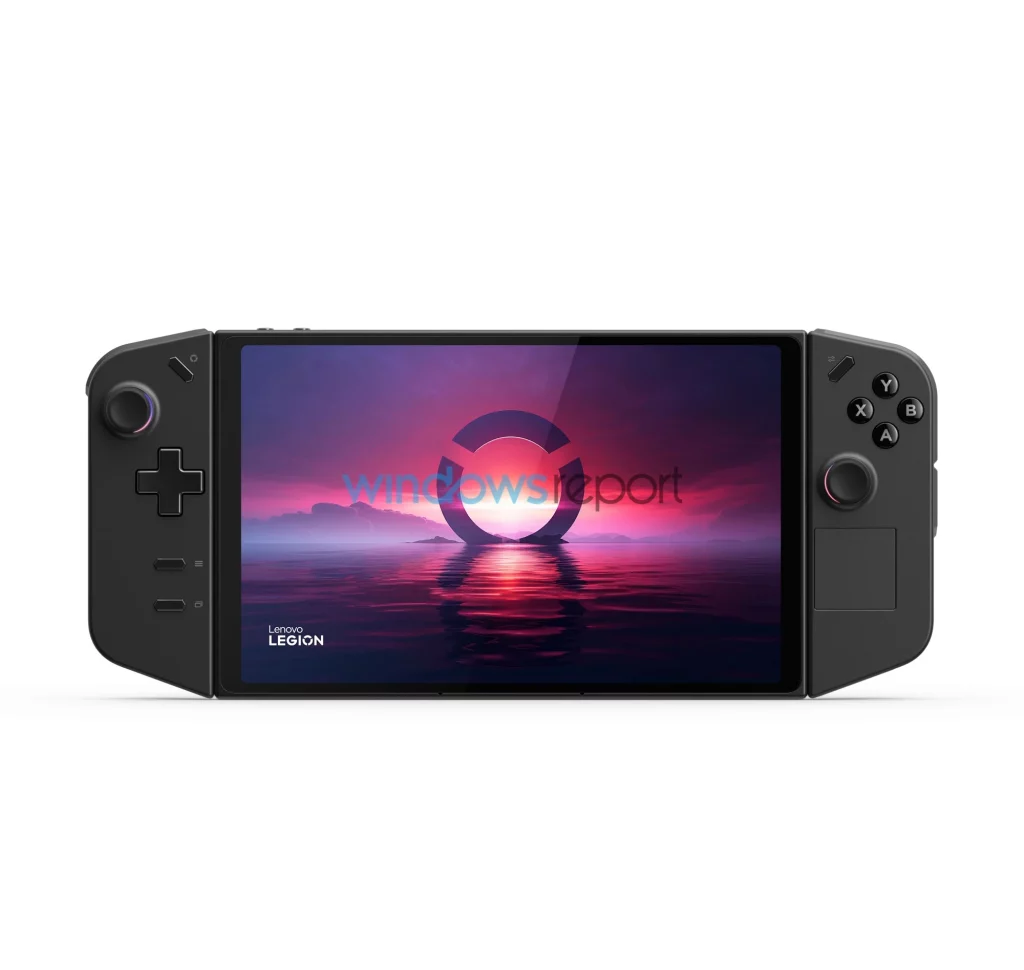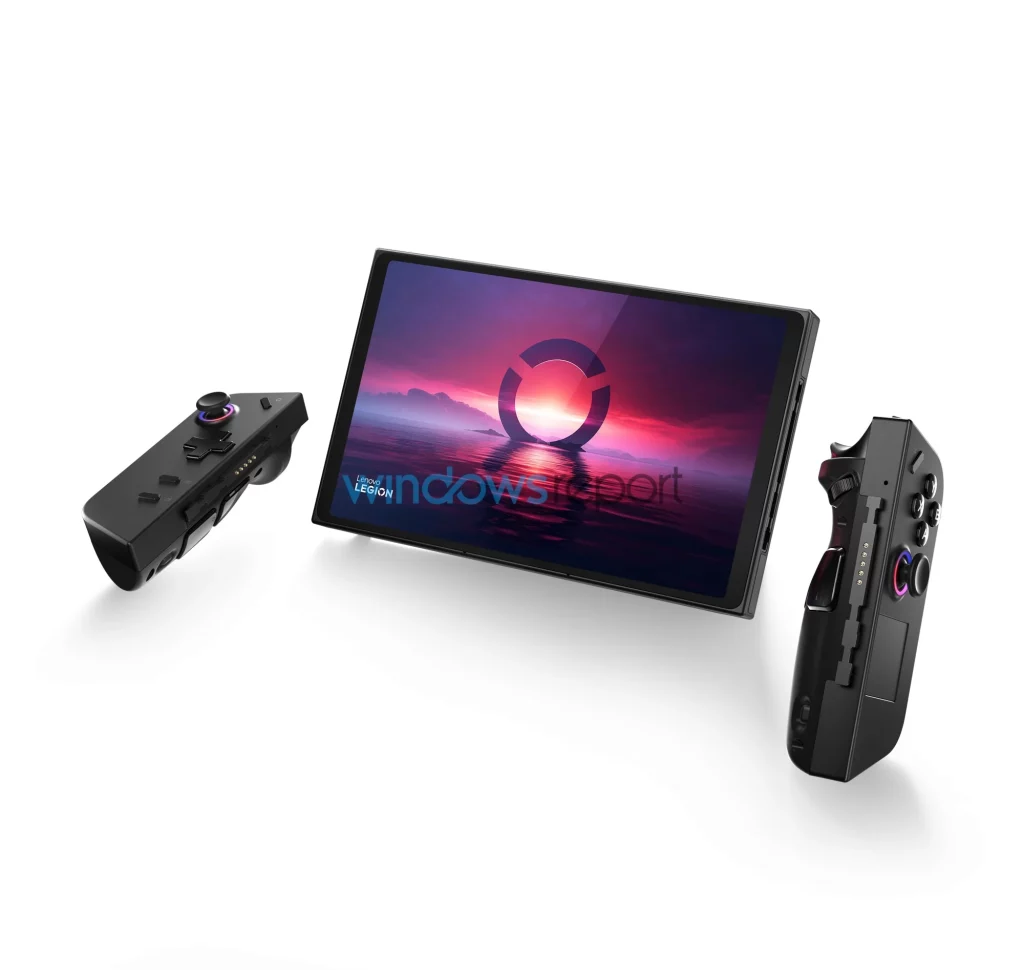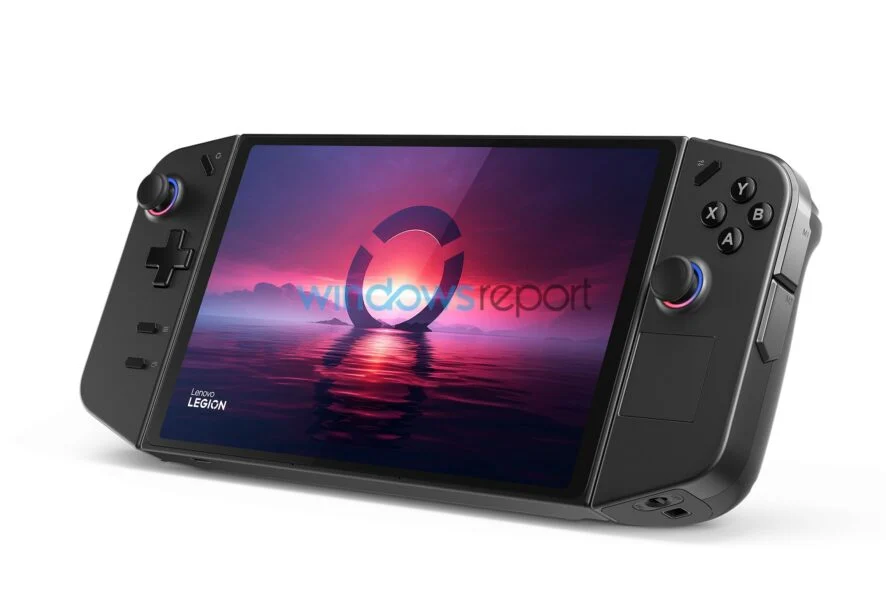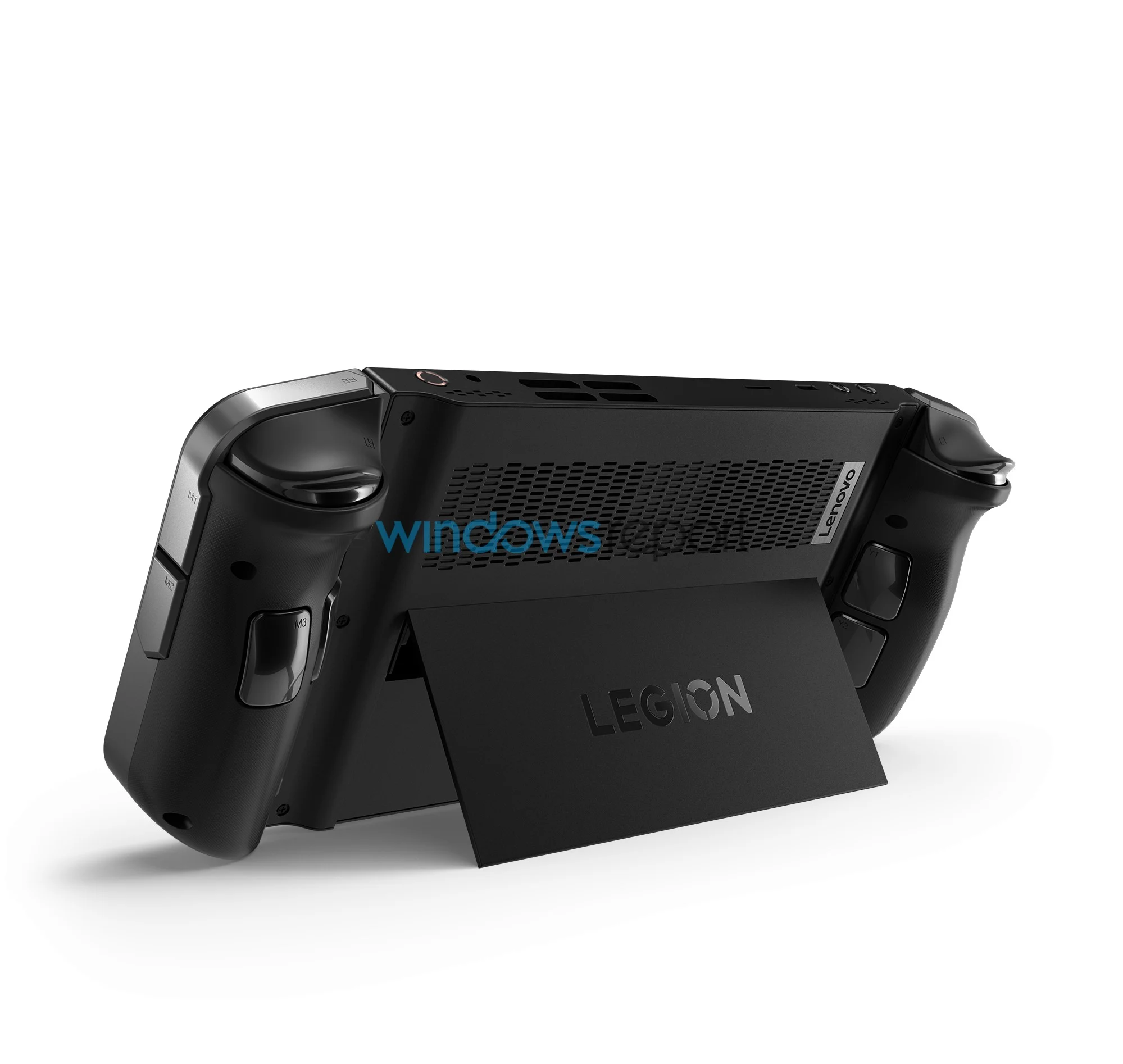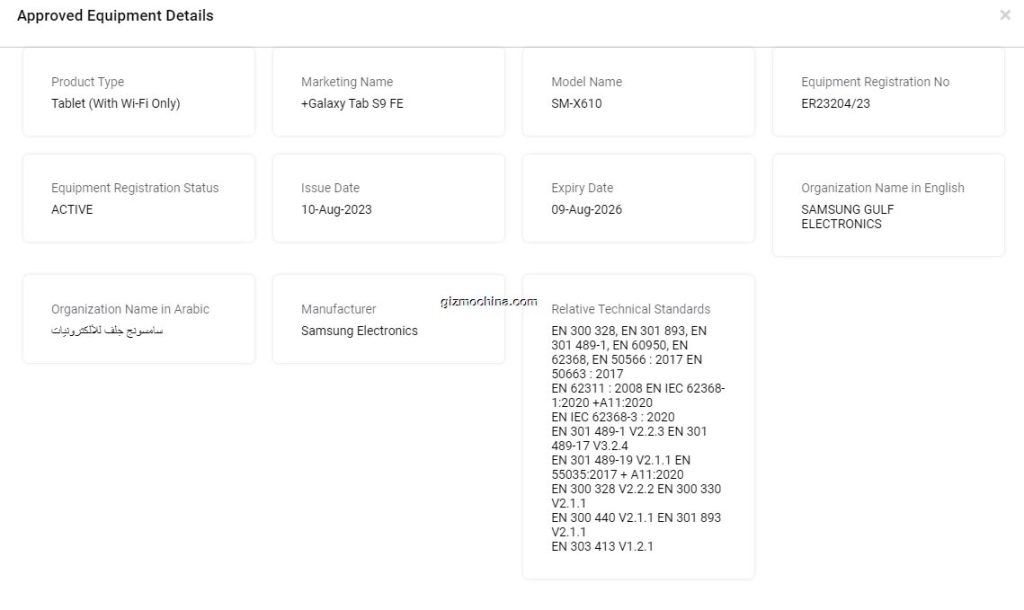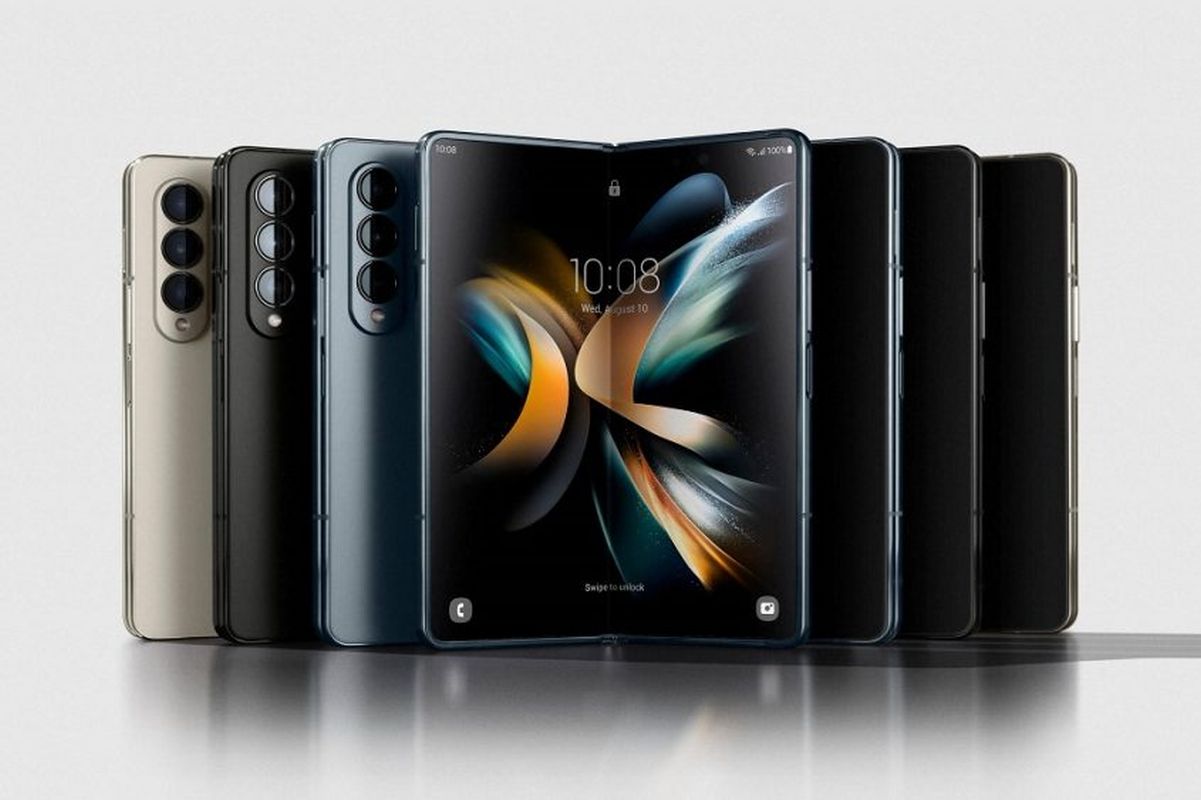
The launch timeline of the highly anticipated successor to the Nintendo Switch might have been revealed. A new financial report from a Chinese media site has hinted at a 2024 launch for the Switch 2.
Nintendo Switch 2 is hinted to launch in 2024 again
Earlier this month, we reported on the Switch 2’s launch being months away based on documents from the Microsoft and FTS case. Now, a financial report from another source has also hinted at a 2024 launch timeline. The report arrives from one of Nintendo’s partners, PixArt Imaging, who stated that the Japanese gaming giant’s next-gen console will be launching early next year. If this report is accurate, then it is probably the most reliable news regarding the Switch 2’s launch as it comes from the “supply chain”.

While the financial report did not directly mention Switch 2, it stated that the “Japanese game machine will be launched early next year, which has been absent for many years”. Since they specifically mention a Japanese game machine, it might even be referring to the Project Q handheld console from Sony.
For those unaware, PixArt has previously worked with Nintendo for the Wii and even the first Switch handheld console. So it won’t be surprising that the gaming company will work with its partner which has proven to be reliable. But keep in mind that this is still just an unconfirmed report, so take this news with a pinch of salt for now.
Xiaomi has released the Smart Door Lock M20 Pro, an advanced smart lock featuring AI-driven 3D structural light facial recognition for enhanced security and precise identification. The M20 Pro is an upgraded version of the standard M20 model launched earlier this year.
Xiaomi Smart Door Lock M20 Pro features:
The 3D structural light facial recognition technology is renowned for its adaptability and accuracy, commonly used in secure systems like financial payments, access control systems, and high-end digital devices. The dual-core AI chip, combined with the 3D structural light module, enhances the device’s accuracy and resistance against attempts to unlock using photos, videos, or masks. This lock system complies with financial payment-grade security standards, as certified by BCTC.
The M20 Pro Smart Lock offers a user-friendly and practical unlocking experience. Upon the user’s approach, the smart door lock automatically recognizes the user’s face, capturing 30,000 light spots to map unique facial features, resulting in a false recognition rate of less than 0.0001%. The intelligent lock can function efficiently under various lighting conditions, including daylight and darkness. This automated recognition process makes the lock easy to use for children, adults, and the elderly without the need for fingerprints.
The AI-powered smart cat-eye with 180° ultra-wide-angle camera feature provides real-time monitoring of the area in front of the door and enables timely alerts. The lock’s built-in display screen allows users to check who is at the door. The doorbell light and internal screen automatically turn on when a visitor approaches and rings the doorbell. This smart lock also supports multi-screen linkage, remote viewing via smartphones, and visual intercom functionality, thus enhancing home security and convenience.
The M20 Pro supports various unlocking methods, from facial recognition, password input, fingerprint scanning, temporary passwords, Bluetooth, NFC cards, and emergency keys, to Xiaomi’s smartwatches and fitness bands. It features a 5000mAh internal battery that can last for 12 months. Emergency power can be supplied via wireless reverse charging from a smartphone or a Type-C data cable in case of complete battery depletion.
The Xiaomi Smart Door Lock M20 Pro is priced at 2999 yuan ($419), but during the pre-sale period, it is available at a special price of 2799 yuan ($391). The device will be officially available for purchase starting from August 1st.
Last week, Xiaomi‘s Redmi brand launched the Redmi Smart TV A series 2024 models made up of the Smart TV A32, the A43, and A65 models with the numbers representing their display sizes. The Chinese tech giant has now added two more models to the lineup. The Redmi Smart TV A70 2024 and Smart TV A55 2024 have now been announced in China.
As their names imply, the Redmi Smart TV A70 2024 features an expansive 70-inch display size while its counterpart – the A55, comes with a 55-inch display size. The smart TVs keep up with the affordable pricing which the Redmi Smart TV models are known for. The A55 is priced at 1449 yuan while the A70, which is the largest model among the lot, is priced at 2299 yuan ().
Just like the other models, the Redmi Smart TV A55 and A70 both feature a display resolution of 3840×2160 pixels. The smart TV utilizes a metal unibody design with an ultra-high screen-to-body ratio of up to 97.1%. The smart TV also supports a 60Hz refresh rate and a 1.07 billion color display. The A series models are powered by a Quad-core A35 CPU and a G31 MP2 GPU for the graphics. The processor is backed by 1.5GB RAM while there is 8GB storage available.
The TV supports 2.4GHz Wi-Fi and infrared and crams two 10W stereo speakers. It also comes with two HDMI ports, an AV port, two USB ports, an analog signal/DTMB interface, an Ethernet interface, and an audio output S/DPIF interface. The smart TV runs on the MIUI TV OS and comes with a built-in XiaoAI voice assistant allowing users to integrate the smart TV with other smart home devices.
Xiaomi has officially confirmed the global debut of its upcoming Redmi 12 5G. The upcoming smartphone will be first unveiled globally in India at the start of next month. So here are all the details.
Redmi 12 5G India Launch
The Chinese tech giant shared a tweet on X (formerly Twitter) which confirmed the global launch date of the Redmi 12 5G. The device will first be announced in the Indian market, with a new microsite also also being launched on the company’s official website. As per the teaser, the new handset will ‘Join the 5G Revolution’. The tweet also carries a short video that showcases the Redmi 12 5G from the sides.
Redmi Note 12R
Redmi 12 5G Specifications
Based on what we know so far, the smartphone will sport a flat rear panel and sides. It will also come in multiple color options, including Moonstone Silver, Pastel Blue, and Jade Black. Redmi 12 5G recently surfaced on GeekBench as well carrying the Qualcomm Snapdragon 4 Gen 2 SoC. This processor was paired with 8GB of RAM and the device was listed running on Android 13 OS.
The wait is over, #XiaomiFans! Witness the global debut of #Redmi12 5G in India on 1st August 23'!
Join the #5GRevolution as we reshape connectivity and unleash a new era of possibilities!
Other storage options might include a 6GB + 128GB configuration, which will reportedly cost around 13,999 INR. The global version of the Redmi 12 5G is expected to be rebranded version of the Redmi Note 12R, which is also available in China. Apart from this model, the brand is also gearing up to launch the new Redmi 12 4G, Redmi Watch 3 Active, and Xiaomi Smart TV X Series in India.
In an interview with Android Authority, Justin Hume, the vice president of mobile for Samsung South Africa, addressed the gap between the Galaxy A54 5G and the Galaxy S23. When asked about the difference in size between the two models, he acknowledged the existence of an FE-sized gap at the moment. However, he alluded to an upcoming announcement for the S23 FE.
When Samsung did not launch a successor for the Galaxy S21 FE, which went official in January 2021, reports claimed that it may have axed the Fan Edition smartphone lineup. Samsung did not release an official statement as to why it did not launch the Galaxy S22 FE However, now it is certain that the brand is gearing up to launch the S23 FE.
Samsung Galaxy S23 FE CAD renders by SmartPrix / OnLeaks
As per recent leaks, the Galaxy S23 Fan Edition will be gradually released in different parts of the world. It is expected to launch in some countries within this quarter of the year, which indicates that it may launch in August or September. The other countries may receive it in the remaining months of the year in the first quarter of 2023.
Samsung Galaxy S23 FE specifications (rumored)
According to recent reports, the Galaxy S23 FE is expected to feature a 6.4-inch S-AMOLED display with FHD+ resolution and a 120Hz refresh rate. In terms of camera specifications, the smartphone will sport a 32-megapixel front camera, and the back will house an OIS-assisted 50-megapixel triple camera setup.
According to rumors, the Exynos 2200 chip powers the Galaxy S23 FE. However, there is a possibility that some countries may receive a variant with the Snapdragon 8 Gen 1hchipset instead. The device is expected to come with two RAM options, 6GB and 8GB of LPDDR5 RAM, along with 256GB of UFS 3.1 storage.
The smartphone is said to pack a 4,500mAh battery and support 25W wired charging, 15W wireless charging, and reverse wireless charging. On the software side, the Galaxy S23 FE will run on One UI 5.1.1 based on Android 13, providing users with a seamless and feature-rich user experience.
Yesterday, Samsung held a global launch event to announce its newest foldable phone, the Galaxy Z Fold 5. Just a couple of hours before the launch, OPPO released a tweet (shown below) to tease the arrival of its next foldable phone, which appears to be the Oppo Find N3.
In all likelihood, the Oppo Find N3 will debut in August in different markets. Previous reports claimed that the Find N3 will be only available in China like the original Find N and the Find N2. However, its appearance on certification platforms, such as Thailand and Indonesia, has revealed that these markets will also receive the Find N3.
Rumors are rife that the OnePlus Open, the first foldable phone by OnePlus will debut on Aug. 29. It is speculated that the Open will be a rebranded version of the Find N3. At present, there is no clarity on whether there will be any difference between Oppo Find N3 and OnePlus Open.
The Galaxy Z Fold 5 has arrived with a starting price of $1,799 in the global market. It is likely that the Find N3 / Open will be priced lower than the Z Fold 5. It is likely that Oppo will soon confirm the key details of the Find N3 in the next few days.
Oppo Find N3 specifications (rumored)
According to rumors, the Oppo Find N3 will arrive with a 6.5-inch AMOLED FHD+ 120Hz screen on the outside and a larger 8-inch AMOLED 2K 120Hz display on the inside. Powering the device will be a substantial 4,805mAh battery, which supports both 80W wired and 50W wireless charging.
Under the hood, the Find N3 will run on the 3.36GHz Snapdragon 8 Gen 2 chipset like the Z Fold 5. It will be paired with 16 GB of LPDDR5x RAM and 1 TB of UFS 4.0 storage. On the software side, the Find N3 is expected to run on ColorOS 13.1 and Android 13. As for the cameras, the foldable phone will have a 32-megapixel front camera. Internally, it may house either a 32-megapixel or 20-megapixel camera. On the back, the rear camera setup will comprise an OIS-enabled 50-megapixel Sony IMX890 main camera, a 48-megapixel ultra-wide lens, and a 32-megapixel periscope telephoto camera.
AYANEO has been on a roll with a bunch of announcements. The company recently unveiled new gaming handheld devices like the Air 1S and Pocket Air. Now, the latest one is pretty unique since it is the world’s first Windows gaming handheld with an RGB backlit keyboard.
AYAONEO Slide resembles old phones with QWERTY keypads
Unlike some of its more recent reveals, the company has shared more key details regarding the Slide model. AYANEO’s upcoming gaming handheld will feature a 6-inch IPS LCD panel that offers Full HD resolution and outputs 400 nits of peak brightness. Notably, the screen also covers 85 percent DCI-P3 and 120 percent sRGB color gamut.
For ports, you can expect to find two full function USB4 ports, an M.2 slot for PCIe 4.0 drives, and an SD 7.0 standard microSD card slot for memory expansion. Under the hood, the AYANEO Slid appears to be powered by an AMD Zen 4 and RDNA 3-based APU. This will be the world’s first Windows gaming handheld with an RGB backlit keyboard, which is something that is usually found in gaming rigs like gaming notebooks.
Apart from this, the device also features an x-axis linear motor, a six-axis gyroscope, and Hall effect joysticks and triggers. Unfortunately, this is all the information we have at the moment. So stick around for more, as the company has teased that a surprise pre-order campaign and official launch event is just around the corner.
The resurgence of handheld gaming consoles has captured the attention of gamers once more, thanks to impressive offerings like the Steam Deck, ROG Ally, ONEXPLAYER 2 Pro, and more. Alongside high-end consoles, brands are also introducing low-powered ones tailored for playing classic NES-era games. One such console is the Pocket 2S, launched by Retroid.
Affordable Hall Effect retro gaming console
Despite not being as powerful as its counterparts, the Pocket 2S has its unique strengths. Its retro aesthetics evoke a strong sense of nostalgia, and it boasts 3D hall effect joysticks, ensuring gamers won’t have to worry about stick drift issues. Hall effect joysticks use magnets and sensors to detect movement. They are more durable and accurate than traditional joysticks, and they do not have any moving parts that can wear out.
The Retroid Pocket 2S handheld gaming console comes in a compact and portable design, with dimensions of 155 x 80.6 x 28 mm and a weight of 200 grams. Powering the device is the Unisoc Tiger T610 SoC which has a Mali-G52 MC2 GPU to handle the graphics processing.
Gaming on the Pocket 2S is facilitated by its 3.5-inch touchscreen display, boasting a resolution of 640 x 480 pixels and a classic 4:3 aspect ratio. The console is equipped with a 4,000 mAh battery, ensuring sufficient playtime without frequent charging. Users have the option to choose between 32 GB or 64 GB of storage, and it comes with either 3 GB or 4 GB of RAM for smooth gaming performance.
Running on Android 11, the Pocket 2S provides access to a wide range of games and apps. The device is attractively priced at $99 for the 3 GB/32 GB variant and $119 for the 4 GB/64 GB variant, making it an affordable option for gamers seeking a portable retro gaming experience. Retroid has announced that the shipping of Retroid Pocket 2S pre-orders will commence on August 10.
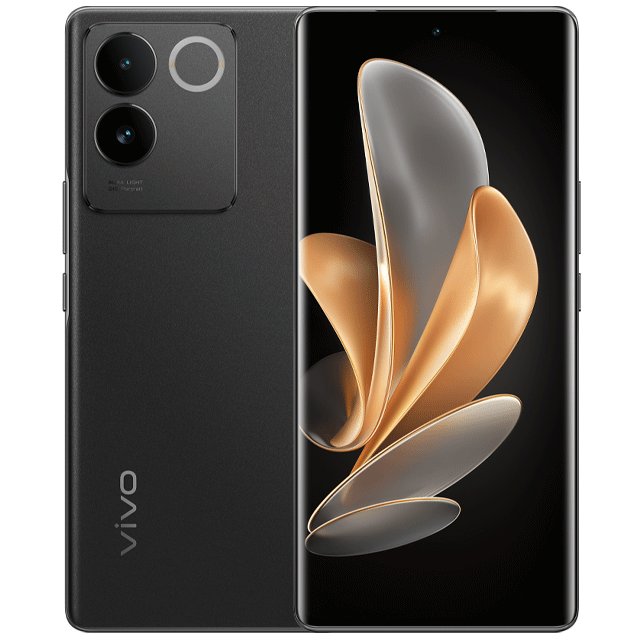
The Vivo V29 series is expected to debut soon in multiple markets. The vanilla was spotted with model number V2250 in the Google Supported Devices list recently. Now, a listing of the phone has appeared in the Google Play Console. As usual, it has revealed the key specifications, including the processor of the device. In addition, the listing has an image that reveals its front and rear designs.
Vivo V29 Google Play Console listing
Vivo V29 Google Play Console listingVivo V29
As per the Google Play Console listing, the Vivo V29 is powered by a Qualcomm chip that includes four Kyro 670 CPU cores operating 2.4GHz, four Kyro 670 CPU cores clocking at 1.8GHz, and Adreno 642L GPU. These details suggest that the device could feature the Snapdragon 778G chip. The listing further reveals that the device is equipped with 8 GB of RAM and Android 13, which is likely to be overlaid with FunTouch OS 13.
The image of the phone shown in the Play Console listing reveals that it has a curved-edge AMOLED display and a triple camera unit with a ring LED flash. It seems to be equipped with an under-display fingerprint scanner. The phone is equipped with volume buttons and a power key on the right.
The previously seen FCC listing of the device revealed that the Vivo V29 will pack a 4,505mAh battery and offer 80W charging. It will offer 5G and NFC, among other connectivity features.
It is speculated that the Vivo V29 could be equipped with a 50-megapixel front camera and an OIS-enabled 64-megapixel triple camera unit on the back. As far as the display of the V29 is concerned, the V29 may feature a 6.78-inch AMOLED panel that offers an FHD+ resolution and a 120Hz refresh rate.
Excited about the Snapdragon 778G-powered Vivo V29? We want to hear your thoughts! Share your opinions and expectations about the Vivo V29 in the comments below.
Samsung recently held its Galaxy Unpacked event where it unveiled a bunch of new anticipated products. One of the announcements included the latest flagship Galaxy Tab S9 series of tablets. And now, the Indian pricing for these large-screen devices has been revealed.
Samsung Galaxy Tab S9 Series Pricing & Availability
The South Korean tech giant’s new tablets arrive in two color options, namely Graphite and Beige. These will also come with no-cost EMI options for up to 18 months. As of right now, the Galaxy Tab S9 series is available for pre-orders in India from the Samsung Online Store and other major online and offline stores. So let’s have a look at the pricing:
Samsung Galaxy Tab S9
128GB (Wi-Fi only) – 72,999 INR
128GB (5G) – 85,999 INR
256GB (Wi-Fi only) – 83,999 INR
256GB (5G) – 96,999 INR
Samsung Galaxy Tab S9+
256GB (Wi-Fi only) – 90,999 INR
256GB (5G) – 1,04,999 INR
Samsung Galaxy Tab S9 Ultra
256GB (Wi-Fi only) – 1,08,999 INR
256GB (5G) – 1,22,999 INR
512GB (Wi-Fi only) – 1,19,999 INR
512GB (5G) – 1,33,999 INR
Notably, there are also bank cashback offers and upgrade bonus discounts, which will bring down the effective price tag of these tablets by up to 20,000 INR. Samsung’s Galaxy Tab S9 series are premium models that are powered by Snapdragon 8 Gen 2. All three models also feature a 120Hz AMOLED display and feature IP68 water and dust protection and an S Pen.
boAt held its first-ever tech launch event last month where it unveiled the Nirvana 525 ANC. During this event, the company made a lot of noise for these neckband earphones and even showcased some of its notable features like Hybrid Active Noise Cancellation in a special booth. But is it overpriced at 2,799 INR (roughly $34)? And do the world’s first Dolby Audio-powered neckband earphones actually sound good? Find out in our comprehensive review to see if they’re worth the hype.
What’s in the Box?
The hearables arrive in a surprisingly premium packaging box that opens up like a book. On the inside, you can find the wireless neckband earphones along with a 1-year warranty card, extra silicon tips, USB Type-C charging cable, and boAt stickers.
Design
The Nirvana 525 ANC arrives in three color options, namely Space Black, Cosmic Grey, and Celestial Blue. We reviewed the black variant, which also features red accents just below the earbuds. Since it features a neckband design, the company primarily employs silicon for the portion that wraps around your neck.
The ends of the silicone band on the right feature plastic that houses the buttons which include the volume rockers, the power button, the USB-Type C port, and the button dedicated to switching between the various modes. These buttons feel tactile and responsive and support custom mapping for additional functionalities.
The build quality won’t offer a premium feel, but the earphones do not feel cheap or flimsy at all and have a sleek look. As they offer a snug fit, you can expect good noise isolation even without ANC enabled. It was comfortable with longer periods of use as well, and the magnetic tips on the earbuds helped prevent the earphones from falling off when not in use.
But one feature that was sorely missed was the magnetic pairing feature. In recent neckband earphones, the device goes on pairing mode when the earbuds are separated and turn off when connected together. This can be found in earphones that are much cheaper, so it is odd that this wasn’t included.
Sound & Call Quality
For the Nirvana 525 ANC, boAt partnered up with Dolby to bring the world’s first Dolby Audio-powered neckband earphones. The signature boAt sound profile makes its way to these earphones as well, which basically means that bass heads are going to love this one. boAt always placed an emphasis on offering punchy and powerful bass and the 11mm drivers on the Nirvana 525 ANC delivers. Thankfully, the bass did not drown out the vocals, which were clear and stood out.
However, I found the highs of the Nirvana 525 ANC to be slightly distorted and compressed at higher levels while mids just blended in with the bass. The earphones had a one-of-a-kind sound profile, as the songs I listened to had pronounced vocals and an emphasis on bass and lows. Meaning, audiophiles might not appreciate this model, but bass lovers in India are in for a treat as the beats on their favorite tracks will have new energy in them. These were also quite loud and I rarely crossed 60 percent volume levels.
I tested out the earphones while mainly using the Dolby Audio mode out of the box. Although, you can also play around with the EQ from the boAt Wearables app. The Adaptive EQ on this app brings intelligent tests to create a personalized EQ profile for you, which is a nice feature to have. But apart from this, there are two custom presets, namely Natural mode and Movie mode. Note that selecting either of the two will disable Dolby Audio.
By default, the Nirvana 525 ANC runs on an SBC codec, so you’ll need to manually switch to AAC for higher quality. It supports Bluetooth 5.2 as well as dual pairing which is handy when switching between two different devices.
The calling experience from the Nirvana 525 ANC was solid with no issues in terms of audio clarity or connection. The ENx technology from boAt was also great in cutting out noise when in an outdoor environment. So the people on the other side were never bothered by traffic or any other jarring noises during calls. But there were times when the audio from Nirvana’s mic was muffled if the background noise got too loud.
Active Noise Cancellation
The Nirvana 525 ANC features good ANC (Active Noise Cancellation) for its sub-3000 INR price tag. As per official notes, it can lower sound by up to 42 decibels and the ANC was undoubtedly one of its strong suits. The Hybrid Active Noise Cancellation feature is powered by 4 microphones. Whenever I’m on a flight, my go-to audio product is a pair of over-the-ear headphones that feature ANC. These help in drowning out the engine sound or any crying babies on the flight.
But this time around, I tested the Nirvana 525 ANC in the same situation. Even without a track playing, the earphones made me a lot more comfortable by tuning out the noise while the ambient sound completely disappeared after the music started playing. The earphones feature an Ambient mode, which was decent but I recommend not using it on a busy street. A dedicated button lets you cycle through ANC, Ambient, or turn off both of them.
Battery
The company claims a battery life of 40 hours of battery life on a single full charge and I managed to get around 25 to 30 hours with ANC turned on. The fast charging feature is also pretty nifty since a few minutes of charging can get you a couple of hours of playback easily. I was never really worried about it being out of juice and small bursts of charging were always good enough for the day. It charges via a USB-Type C port that is housed right next to the buttons, under a protective flap.
Verdict
With a price tag of 2,799 INR, the boAt Nirvana 525 ANC may not be for everyone. If you’re looking for a more balanced audio listening experience, the earphones aren’t for you since the songs’ audio quality gets muddled at high volumes. However, boAt is cleverly leveraging the Indian market, since many in the region prefer loud bass over everything else. Just make sure to tinker with the equalizer to get the most out of these earphones.
To conclude, as I said before, this is going to be a hit with bass fans. But personally, I feel these earphones might have been a better deal if they cost around 2,000 INR. Dropping Dolby Audio might have helped in reducing cost since it isn’t too effective either.
You can get the boAt Nirvana 525 ANC earphones for around 2499 on Amazon right now.
Samsung recently unveiled its latest offerings, the Galaxy Z Fold 5 and the Z Flip 5, in addition to a range of other gadgets such as newtablets and smartwatches. The company has now disclosed the pricing for these foldable devices in India.
Samsung Galaxy Z Fold 5 & Flip 5 pricing in India
Samsung has officially announced the pricing and availability details for its much-anticipated devices, the Galaxy Z Fold 5 and the Z Flip 5, in India. Here’s a breakdown of the pricing:
Galaxy Z Fold 5:
The base variant with 12GB RAM and 256GB storage: Rs 1,54,999
12GB RAM and 512GB storage model: Rs 1,64,999
Top variant with 1TB storage and 12GB RAM: Rs 1,84,999
Color options:
Icy Blue, Phantom Black, and Cream (for the 12GB+256GB and 12GB+512GB models)
Icy Blue (exclusive color for the 1TB variant)
Galaxy Z Flip 5:
8GB RAM and 128GB storage model: Rs 99,999
8GB RAM and 512GB storage model: Rs 1,09,999
Color options:
Mint, Graphite, Cream, and Lavender
Both devices will be available for purchase starting August 17, 2023. Pre-orders are now open and can be made through offline as well as online stores across India.
Samsung is offering attractive pre-booking offers, including benefits worth Rs 20,000 for the Z Flip 5 and Rs 23,000 for the Z Fold 5.
Samsung Galaxy Z Fold 5 & Flip 5 specs
The Galaxy Z Fold 5 boasts a 7.6-inch QXGA+ Dynamic AMOLED main display with a 120Hz adaptive refresh rate, offering a resolution of 2176 x 1812 pixels and a peak brightness of 1750nits. Additionally, it features a 6.2-inch HD+ AMOLED cover display with the same refresh rate, providing 2316 x 904 pixels resolution and 402ppi. Powering the device is the Qualcomm Snapdragon 8 Gen 2 processor, clocked at up to 3.36GHz Octa-Core. It comes with a generous 12GB LPDDR5X RAM and storage options of 256GB, 512GB, or a whopping 1TB UFS 4.0.
Running on the latest One UI 5.1.1 based on Android 13, the Galaxy Z Fold 5 offers a versatile camera setup with a 50MP main camera (f/1.8, OIS), a 12MP ultra-wide lens (f/2.2), and a 10MP telephoto camera (f/2.4, OIS, PDAF) capable of 3x optical zoom and 30X space zoom. For selfies, there’s a 10MP front camera, and an additional 4MP under-display camera enhances the overall photography experience. The device is packed with features such as S Pen support, IPX8 water resistance rating, a side-mounted fingerprint scanner, NFC, stereo speakers with Dolby Atmos, a Type-C port, and eSIM support. The Galaxy Z Fold 5 is fueled by a 4,400mAh battery and supports 25W wired charging and 15W wireless charging.
On the other hand, the Galaxy Z Flip 5 offers a 6.7-inch Full-HD+ Dynamic AMOLED main display with a 120Hz adaptive refresh rate, providing a resolution of 2640 x 1080 pixels and 425ppi. It also comes with a 3.4-inch AMOLED cover display with a 60Hz adaptive refresh rate and 720 x 748 pixels resolution. Like its counterpart, it is powered by the Qualcomm Snapdragon 8 Gen 2 processor, with 8GB LPDDR5X RAM and storage options of 256GB or 512GB UFS 4.0.
Running on the same software, One UI 5.1.1 based on Android 13, the Galaxy Z Flip 5 features a 12MP main camera (f/1.8, OIS) and a 12MP ultra-wide lens (f/2.2) for photography needs. The front camera is a 10MP shooter, and the device shares several features with the Z Fold 5, including IPX8 water resistance rating, a side-mounted fingerprint scanner, NFC, stereo speakers with Dolby Atmos, a Type-C port, and eSIM support. The battery capacity is also the same at 4,400mAh, with support for 25W wired charging and 15W wireless charging.
In a significant blow to Meta Platforms, the parent company of Facebook, an Australian court has ordered the tech giant to pay fines amounting to $20 million ($14 million) for unlawfully acquiring user data through a smartphone application that misleadingly claimed to prioritize user privacy while covertly harvesting personal information.
The Federal Court of Australia also ruled that Meta, along with its subsidiaries Facebook Israel and the now-defunct app Onavo, must bear the legal costs of $400,000 payable to the Australian Competition and Consumer Commission (ACCC), the body that initiated the civil lawsuit against the company.
The ACCC’s legal action against Meta stemmed from its investigation into the data practices of the social media conglomerate, revealing that the Onavo app, marketed as a tool to protect user privacy, was surreptitiously collecting and mining users’ personal data without proper disclosure or consent.
This landmark ruling by the Australian court sends a stern message to tech companies about the importance of transparency and compliance with privacy regulations. The court’s decision is seen as a significant step towards safeguarding user privacy in the digital era, as it sets a precedent for holding tech giants accountable for their data collection practices.
In response to this case and the growing concerns about digital privacy, the Australian government, under the leadership of Prime Minister Anthony Albanese, has unveiled a series of proposed amendments to the Privacy Act. The proposed changes aim to modernize the legislation, bringing it in line with the evolving landscape of digital technology and the need to protect individuals’ personal information from unauthorized exploitation.
The fines and legal costs imposed on Meta Platforms not only serve as a financial penalty but also highlight the importance of transparency and accountability in the tech industry. With governments worldwide increasingly focusing on data protection and privacy concerns, this ruling may prompt other countries to review their own privacy laws and take necessary steps to hold tech giants accountable for mishandling user data.
Recently, Apple unveiled the anticipated 15-inch model of the MacBook Air, which is similar to the regular 13-inch model of the MacBook Air but with a bigger screen.
While the device was highly anticipated for a couple of years, customers’ actual demand for the 15-inch MacBook Air is not matching up. In fact, the sales numbers are so low that the company is cutting production.
According to the latest report coming from DigiTimes, sources in the supply chain claim that sales for the new 15-inch MacBook Air are as much as 50 percent lower than the Cupertino-based tech giant’s predictions.
The report further adds that because of the low demand, the company is scaling back production, but it is not yet known if Apple has made the move to lower the production numbers or is still in consideration.
This is the first model of the Apple MacBook Air to feature a larger 15-inch display. Prior to this, users would need to purchase the more expensive MacBook Pro models if they wanted a larger than 13-inch screen.
Apple’s new 15-inch MacBook Air, launched last month at WWDC, carries a starting price of $1,299. It continues with the same design and M2 chip as the regular model but with a larger display and two extra speakers.
Meta, formerly known as Facebook, has recently reported its best quarter since 2021. However, the company’s ambitious dive into the metaverse has been met with substantial financial setbacks. During the second quarter of 2023, Reality Labs, the division responsible for overseeing Meta’s virtual and augmented reality projects, reported a staggering loss of $3.7 billion, with a revenue of just $276 million.
Mass Employee Layoffs may have played a major role in stabilizing Meta’s position
Despite these challenging figures, Meta’s CEO Mark Zuckerberg remains steadfast in his commitment to the metaverse vision. During the company’s earnings call, he downplayed the significance of the losses, assuring investors that Meta will forge ahead. He expressed optimism about the upcoming launch of the Quest 3 headset at the Connect event in September, promising it to be the company’s most significant headset release since 2020. Zuckerberg attributed the rising expenses to bringing the tech to the market.
While the metaverse may be a financial drain at present, Meta’s overall performance remains quite robust. The company reported an impressive $32 billion in revenue, marking an 11 percent increase compared to the previous year. Key successes include the popularity of Reels, drawing a staggering 200 billion views daily across Facebook and Instagram. Meta’s emphasis on AI-driven recommendations has been instrumental in Reels‘ success.
Amid the metaverse challenges, Meta has launched Threads, a new application that has shown promise with early user engagement. Though analytics data indicated a slight decline, Zuckerberg remains hopeful, foreseeing Threads potentially attracting “hundreds of millions” of users in the long run.
Efficiency has been a central focus for Meta, evident in the completion of substantial layoffs since last fall, reducing the company’s workforce by over 20,000 employees. Zuckerberg’s cultural changes at Meta have streamlined operations, and he expressed satisfaction with Threads’ development led by a relatively small team.
However, when it comes to the metaverse’s profitability, Zuckerberg remains cautious. He acknowledged that it is a long-term bet and that investors may feel uncomfortable with the uncertainties. Nevertheless, he believes the metaverse aligns with the world’s future direction, and Meta is prepared to face the challenges (clearly).
A recent report claimed that Poco is gearing up to launch its first-ever TWS earbuds for the Indian market. It revealed that the brand will announce Poco Pods by the end of this month. Today, the brand officially confirmed that the Poco Pods will be announced on July 29 in the country.
Poco Pods launch date. price in India
Poco Pods
Poco India has officially announced that the Poco Pods will make their debut at 12 pm on July 29. As indicated in the poster above, the brand has also confirmed that the Poco Pods will be available at a special price of Rs 1,199 (~$15). A landing page for the product is now live on Flipkart, but at the time of writing this post, the page encountered an error and there is no information mentioned on it.
The Poco Pods feature a stylish dual-tone design, with the charging case in black and the inner portion in yellow. The earbuds themselves are black, while the eartip area is highlighted in yellow. The company has also confirmed that the Poco Pods will be equipped with 12mm extra bass drivers and will offer up to 30 hours of playback time. It will be available for purchase through Flipkart.
As per reports, the Poco Pods will be a rebranded version of the Redmi Buds 4 Active, which is priced at Rs 1,399 (~$17) in India.
The Redmi Buds 4 Active has 12mm audio drivers, a 34mAh battery in each earbud, and a 440mAh battery in the charging case. It is equipped with other features, such as fast charging, Bluetooth 5.3, a USB-C port, touch controls, and IPX4 water resistance.
What are your thoughts on their dual-tone design and the special price of Rs 1,199? Share your opinions and expectations in the comments below.
An upcoming Oppo phone with model number PJG110 was recently approved by China’s TENAA authority. The certification revealed images of the phone but did not shed any information about its specifications. A new leak, courtesy of tipster Digital Chat Station has shown that the PJG110 phone will be called the Oppo A2 when it arrives in the Chinese market.
OPPO A2 key details emerge
zOPPO PJG110 TENAA images
According to the tipster, the Oppo A2, which is codenamed Givenchy, will come equipped with a 6.7-inch display. It will sport an OLED panel that offers a Full HD+ resolution of 1080 x 2412 pixels and 2160 Hz PWM dimming.
The Oppo A2 will have a flagship-like appearance as it will feature a curved-edge display. DCS added that the device will be equipped with a new primary camera and a large battery. Unfortunately, the leaker did not share any more information about the Oppo A2.
The TENAA images of the phone revealed that it will feature a round camera module. It appears that the phone will come equipped with an under-display fingerprint sensor. The A2 will succeed the Oppo A1, which debuted earlier this year in April. Now that the Oppo A2 has received certification from the TENAA authority, it may debut in August in China.
To recall, the Oppo A1 features a 6.72-inch LCD panel that offers an FHD+ resolution and a 120Hz refresh rate. The device runs ColorOS 13.1-based Android 13 and comes with a side-facing fingerprint scanner.
Under the hood, the Oppo A1 has the Snapdragon 695 chipset, 8 GB / 12 GB of RAM, 256 GB of storage, and a 5,000mAh battery with 67W fast charging. It has an 8-megapixel front camera and a 50-megapixel + 2-megapixel dual-camera system.
Twitter, now known as X, is taking a tough stance on advertisers as part of its rebranding strategy to boost its revenue. Facing a concerning 50 percent drop in revenue, the company is implementing measures to increase its bottom line. According to The Wall Street Journal, X is demanding brands to spend a minimum of $1,000 per month on ads to maintain their verified status on the platform. This move comes as a response to combat the proliferation of scammers who create numerous fake accounts on the platform.
The company is facing a massive drop in Revenue, which will affect all departments
Elon Musk, the popular (and controversial) entrepreneur and Twitter user, defended the cost, stating that it serves as a deterrent against such malicious activities that are widespread these days. Alternatively, brands have the option to pay the same amount for the company’s verified organization badge. In an effort to attract more advertisers, X is also slashing prices on some of its advertising slots. The company is offering a generous 50 percent discount on all new bookings until July 31st, aiming to entice advertisers to capitalize on high-impact moments like sporting events, where they can significantly increase their reach.
While larger brands might find the $1,000 monthly expense manageable, the new approach could potentially hurt smaller businesses that lack the financial flexibility or the willingness to commit to this expense. This might lead to a disparity in the representation of businesses on the platform, favoring bigger players while hindering the growth and visibility of smaller enterprises.
The focus on advertisers may be essential to navigate through difficult times, but it also raises questions about the platform’s inclusivity and support for businesses of all sizes. It’ll be interesting to see if Twitter, or rather, X will emerge as a winner on the other side of this uphill battle.
Elon Musk’s ambitious rebranding of Twitter as ‘X’ has encountered a major obstacle in Indonesia. The social media platform, now known as X, faced a block in the country due to its association with the domain X.com, which had previously hosted sites violating Indonesia’s strict laws against online pornography and gambling.
In the past, Netflix, Google, Facebook and others have avoided similar problems by complying with content regulations
The Indonesian Ministry of Communication and Informatics confirmed the restriction and stated that they had communicated with representatives from Twitter to clarify the nature of the site. While Twitter assured the government that X.com would be used exclusively for their platform, this move left over 24 million Indonesian users unable to access the site. Indonesia’s total population stands at around 270 million.
Elon Musk‘s rebranding aimed to transform the platform into an “everything app,” extending its services beyond social networking to include payments and banking. However, the Indonesian authorities have a history of blocking or threatening to block websites deemed offensive, criminal, or harmful to social harmony. In the past, popular platforms like Netflix, Google, Facebook, Instagram, and Twitter faced potential bans but managed to avoid them by complying with content regulations.
Regarding the X.com block, some analysts speculate that negative connotations associated with the name might have contributed to the decision. Aribowo Sasmito, co-founder of a fact-checking group, pointed out that the name X.com might be seen as resembling “XXX,” alluding to adult content. This issue raises a dilemma in Indonesia, where some people value freedom of expression, while others prioritize adherence to religious values as the country has the world’s largest Muslim population. Despite the block, internet users in Indonesia have found ways to circumvent censorship in the past. Changing domain names or URLs to bypass restrictions has been a common practice among site owners, undermining the effectiveness of such measures.
Audi, the renowned German automaker, is celebrating impressive global car sales during the second quarter of 2023. Surging ahead with a remarkable 23 percent year-over-year increase, Audi sold 491,400 vehicles during the period. The first half of the year also showed strong performance, with sales amounting to 907,100, marking a 15.5 percent increase compared to the previous year.
The company sold almost 27,000 units of the Q4 e-tron during the second quarter
Key to Audi’s recent success is its all-electric car sales, which have reached new heights. In Q2 2023, the brand recorded the sale of approximately 41,100 battery electric vehicles (BEVs), a 59 percent increase from the same period last year. Audi’s BEVs accounted for 8.4 percent of total vehicle sales during Q2, up from 6.5 percent a year ago. The Audi Q4 e-tron, based on the MEB platform and available in Sportback version, shone as the star of the brand’s electric lineup. With an impressive 26,700 units sold in Q2, the Q4 e-tron represented almost two-thirds of all Audi BEVs sold.
In the first half of 2023, Audi recorded a 51 percent year-over-year increase in BEV sales, totaling 75,600 units, making up 8.3 percent of the brand’s total sales for the period. Looking back to 2022, Audi sold a total of 118,196 all-electric vehicles worldwide, witnessing a 44 percent year-over-year increase. At that time, BEVs accounted for about 7.3 percent of the brand’s total sales.
Committed to a greener and more sustainable future, Audi has announced its plan to introduce only all-electric models to the global market from 2026 onwards, signaling a decisive shift away from internal combustion engines and reinforcing their commitment to sustainability and environmental responsibility.
We use cookies on our website to give you the most relevant experience by remembering your preferences and repeat visits. By clicking “Accept”, you consent to the use of ALL the cookies.
This website uses cookies to improve your experience while you navigate through the website. Out of these, the cookies that are categorized as necessary are stored on your browser as they are essential for the working of basic functionalities of the website. We also use third-party cookies that help us analyze and understand how you use this website. These cookies will be stored in your browser only with your consent. You also have the option to opt-out of these cookies. But opting out of some of these cookies may affect your browsing experience.
Necessary cookies are absolutely essential for the website to function properly. This category only includes cookies that ensures basic functionalities and security features of the website. These cookies do not store any personal information.
Any cookies that may not be particularly necessary for the website to function and is used specifically to collect user personal data via analytics, ads, other embedded contents are termed as non-necessary cookies. It is mandatory to procure user consent prior to running these cookies on your website.