Advertisement

BYD leads China’s EV market: One in four cars sold in China is an EV

China has almost doubled its sales of passenger Electric Vehicles (EVs) in 2022 with a reported growth of 87% year on year. A recent report from Counterpoint’s Global Passenger Electric Vehicle Model Sales Tracker states that one in four cars sold in China is an EV. It further states that, amongst the top 10 fastest-growing EV markets in the world, China stood in second position in terms of sales right behind Japan which showed a 119% year-on-year growth in 2022. 

In 2022, BYD emerged as the largest EV seller in China with a 29.7% market share followed by GM, Tesla, Geely, and Changan. In the last quarter of 2022, BYD Song dethroned the most famous Wuling Hongguang MINI EV as the top-selling EV model in the country. 

China the most vibrant EV market in the World:

According to Soumen Mandal, Senior Analyst at Counterpoint, currently, China has the most versatile and vibrant EV market in the world. All the famous as well as not-so-famous EV companies offer their products and services in the country as it is the largest EV market in the world with more than 50% of global production. China’s EV market is served by almost 94 different brands that together offer more than 300 different models to its customers. The EV scene in China is so versatile that you can easily find a cheap EV with a starting price of  $5000 to something as costly as $90,000 and above. 

81% of the Chinese EV market is dominated by domestic companies which include top players like BYD, Wuling, Chery, Changan, and GAC. The remaining 19% is filled by foreign companies like Tesla and Volkswagen. Apart from these automobile giants, China is also home to some of the best EV startups like Nio, Xpeng, Neta, AITO, IM Motors, Zeeker, Aiways, and Livan which are performing quite well despite the tough competition from foreign and established domestic companies. 

Why are the Chinese favoring EVs?

Environmental health and government policies are the driving forces behind the tremendous growth of EVs in China. According to the survey conducted by Rakuten Insight, about 66 percent of the Chinese consumers who considered buying an electric car stated that they preferred an electric car over a conventional one because it is environment-friendly.  

Beijing has set a goal of becoming carbon neutral by 2060 and to achieve this goal the government offered major subsidies for EVs. For the past 12 years, China has designed its policy and funding to encourage the sales of Environment-friendly vehicles. Also, the country has the world’s biggest EV charging network and the rapid expansion of the charging infrastructure makes it easier and cheaper for consumers to travel across the country. 

The government policies have ultimately paid off as last year in November alone, 36% of new vehicles taking to the mainland roads were either pure electric or plug-in hybrid cars and today one in four vehicles sold in China is an EV. According to experts at Swiss Bank UBS, by 2030 three out of every five vehicles sold in China will be EV. 

What is the future of China’s EV market?

China’s EV boom was mainly driven by strong government subsidies and funding. Between 2020 and 2022, around two million vehicles were eligible for subsidies. However, since 2019, subsidies have been reduced progressively to date and in 2023, no new budget has been allocated for granting subsidies to EVs. Apart from the announced renewal of the 5% vehicle purchase tax exemption policy for new energy vehicles, there have been no announcements for renewal of the cash subsidies on EVs. This may lead to slower growth in the coming years.

Right now the Chinese EV market is witnessing a major price war which was started by Tesla and picked up by other players like BYD, Ford, Xpeng, and more. This price war may create additional demand and sustain EV sales in 2023. Though in the short term, the EV market may struggle due to the economic downturn and policy changes, the long-term outlook for China’s EV market is extremely positive as the country aims to reduce its particle emissions significantly and reach carbon neutrality. China had previously committed to creating a 50% EV market by 2035. However, right now this number looks too easy as the share of EVs in the passenger car market will exceed 50% and surpass traditional energy cars before 2030 itself. 

(source)

Panasonic PT-CMZ50 Ultra-short throw Laser Projector with 16:10 aspect ratio Showcased

Panasonic has previewed its latest projector with some impressive features. The Panasonic PT-CMZ50 ultra-throw laser projector has an aspect ratio of 16:10 and can create projections up to 120 inches. The new Panasonic projector has a native resolution of 1200p, a throw ratio of 0.235:1, and 5,200 Lumens of peak brightness.

The high brightness rating of the PT-CMZ50 means that it can be used in bright environments. The corresponding ANSI lumens brightness of the projector is 2,166 ANSI Lumens. The projector can create 120-inch images when placed 3.05 meters away from the projection surface. The native resolution of the Panasonic PT-CMZ50 is 1920 x 1200 pixels and the projector’s laser light source has a lifespan of 20,000 hours in normal or quiet mode. The lifespan extends to 24,000 hours when used primarily in ECO mode.

The PT-CMZ50 can operate at low noise levels which is also great. In quiet mode, it outputs 26dB of noise while 35dB is delivered in normal and ECO modes. The projector has several ports including HDMI with CEC, USB-A, and RS232C. The PT-CMZ50 ultra-short throw laser projector will come in two color options black and white.

Panasonic PT CMZ50 Projector

The Panasonic PT-CMZ50 laser projector is scheduled to be released in Q2 2023. Pricing and exact availability details are lacking for the projector at this time. It is unclear whether the projector will feature an in-built battery for enhanced versatility. The gadget could possibly compete with the Formovie Theater projector which outputs a peak brightness of 2,800 ANSI lumens.

RELATED:

(via)

Samsung Galaxy A24 4G Leaks in new colorful Renders, detailed Specifications emerge

Samsung launched the Galaxy A34 and A54 on Wednesday as its latest mid-range handsets. The two phones sit below the flagship S23 series and feature an immersive display. The company apparently has another A series handset in the works as it has been making rounds on various certification sites recently. The handset could be called the Galaxy A24 and today a report has shared its specifications along with some colorful renders.

Galaxy-A24-colors

Israeli Publication Gadgety has leaked the renders of the new Galaxy A24 4G in 4 colors— black, silver, red-burgundy, and lemon-green. The design of the device is not very different from the newly launched Galaxy A34. It has three camera rings on the back and a flat display on the front. The screen has thick bezels and features a waterdrop notch. The smartphone is reported to be 8.3 inches thick and weigh 195 grams.

Galaxy-A24-renders

As per the report, the Galaxy A24 will feature a 6.5-inch Super AMOLED FHD+ display with a 90Hz refresh rate and 1,000 nits of brightness. It will come with Vision Booster technology, which is claimed to not only make the screen brighter but also maintain better color accuracy. The handset may be equipped with a Snapdragon 680 SoC processor, paired with 4GB RAM and 128GB storage.

It could come with a microSD slot to help you expand the storage up to 1TB. The handset is reported to feature a 3.5mm headphone, which is now a rare sight on Samsung phones. It is expected to be equipped with a 5000mAh battery and support 25W charging.

In the camera department, the Galaxy A24 may get a 13MP selfie camera (aperture f/2.0) and three rear cameras, including a 50MP main camera with OIS (optical image stabilization) and f/1.8 aperture. A 5MP wide-angle camera with f/2.2 aperture and a 2MP macro sensor with f/2.4 aperture may also be present.


RELATED:

(Source)

Lenovo IdeaPad Duet 5 2-in-1 notebook with up to 13th-Gen Core i7-1355U Processor Launched

Leading PC manufacturing giant Lenovo has unveiled a new IdeaPad Duet 5 2-in-1 notebook. The new notebook comes with some upgrades over its predecessor one of which is the use of a 13th-generation Intel Core series processor. The notebook is expected to launch later on in China as Xiaoxin Duet 2023 as a successor to the Xiaoxin Duet 2022 2-in-1 notebook released in August 2022.

Lenovo IdeaPad Duet 5 2-in-1 notebook

In terms of configuration, the IdeaPad Duet 5 2-in-1 notebook is equipped with a 12.4-inch display with a resolution of 2560 x 1600 pixels, 500 nits of brightness, and a 95% DCI-P3 color gamut. The 13th-generation Core U series processors include the Core i7-1355U on the top model paired with 16GB LPDDR4x-4266 memory, and 512GB SSD. The display also supports a touch function and can be detached from the keyboard for use as a tablet. In terms of interfaces, the tablet includes two USB-C ports and a 3.5mm headphone jack. The ultra-thin tablet-style design means

Lenovo IdeaPad Duet 5 2-in-1 notebook

The pricing and availability details of the IdeaPad Duet 5 are still unknown at the moment but since the Xiaoxin Duet 2022 with the 12th-gen Core i5-1235U had a price tag of 5,999 yuan ($869), we expect this model to be slightly higher.

RELATED:

Xiaomi MIJIA Sweeping & Mopping Robot 3S with 4000Pa suction, dual Mop design Launched

Chinese tech giant Xiaomi has launched a new robot vacuum under the MIJIA brand. The product name translates as MIJIA Sweeping and Mopping Robot 3S which may also be listed as MIJIA Robot Vacuum 3S. The new home gadget comes with some impressive features as well as a tweak in the design.

MIJIA Sweeping & Mopping Robot 3S

The MIJIA Sweeping and Mopping Robot 3S utilizes a double mop design just like what obtains on a window cleaning robot. The two round mops are located side by side at the front. The device also comes with a large suction fan with a 4000Pa suction power. It also features three-dimensional obstacle avoidance meaning it does only avoid obstacles at the front but also at the top and bottom.

MIJIA Sweeping and Mopping Robot 3S

The double mops are serviced by three smart electric control water tanks with adjustable water volume. The wheels of the robot vacuum are propelled by brushless motor drives and they are capable of scaling obstacles that are 2cm high. The robot vacuum cleaner itself is only 97mm in height and so, can easily fit under sofas and beds. The device can also be controlled via the MIJIA app and can be connected to the XiaoAI speaker to achieve integration with other smart home devices.

The design of the MIJIA Sweeping and Mopping Robot 3S also includes the ability to clean along the wall, low space prediction, and the ability to avoid falling down the stairs. The package also includes a compact charging stand and a moisture-proof pad to isolate residual water.

MIJIA Sweeping and Mopping Robot 3S

As for the price, the MIJIA Sweeping and Mopping Robot 3S is priced at 1799 yuan but will go on sale on March 22 in China. We can’t say for now when Xiaomi will bring the gadget to the global market. The company has not been very aggressive in pushing its smart gadgets outside the Chinese market.

RELATED:

Huawei MatePad 11 (2023) officially Teased, Launching on March 23

On March 23, Huawei is set to host a mega spring event in Shanghai, China, where it will unveil a range of new flagship products. Among the devices to be launched are the premium Huawei P60 series and the highly anticipated Mate X3 foldable. Today, the brand has confirmed this year’s MatePad refresh will also be arriving on the same day. MatePad 11 (2023) has been teased to feature some interesting improvements. Here are the details.

As per official teasers, Huawei MatePad 11 tablet (2023) will offer a paper-like reading and writing experience. This device will also feature a smooth screen with anti-glare eye protection, marking Huawei’s first foray into this type of tablet. The tablet’s panel boasts impressive capabilities, as it can eliminate up to 97% of the distracting light in the surrounding environment.

Huawei Matepad 11 2023

Separately, TUV Rheinland has shared the device’s renders, which reveal its design. The tablet can be seen to have a single camera on the rear and a notch-less display on the front. The selfie camera is embedded vertically on the upper bezel. The MatePad 11 tablet has received the TUV Rheinland’s reflection-free certification, which means that it can shield users from the negative effects of indoor ambient light, resulting in a better overall experience.

MatePad 11 (2023) has also become the world’s first tablet to get the SGS low visual certification. This certification standard was recently developed by SGS and the China National Institute of Standardization (CNIS) to assess the level of visual fatigue products cause to users. Currently, other specifications of the Huawei tablet are not known. We expect the company to reveal more details through teasers before the launch. Stay tuned for the latest developments.

RELATED:

(Via)

TSMC to soon setup its first European chip plant in Germany

TSMC is apparently planning on building its first ever chip production facility in Europe. Germany will be the site for its latest semiconductor facility and the company is reportedly in advanced talks with the German government for this plan.

According to a new report, the world’s largest contract chipmaker is in serious and advanced discussion with the German state for the building of this new chip plant. As per sources close to the matter, the move from the company arrives after the local government had announced subsidies to support the investment. For those unaware, the European Union had unveiled the European Chips act to ease government funding rules for semiconductor plants that had previously faced state aid bans.

TSMC

One of the sources added that the talks between TSMC and Saxony are “serious and advanced”. Furthermore, the delegations from the eastern German state has also been coming to Taiwan for move forward this plan with the chipmaker. Setting up an advanced semiconductor production facility is a hefty investment and the costs also includes labor as well. Thus, TSMC is in discussion over subsidies that it could get in return of setting up the first European chip plant in Germany.

As per the company’s official statement back in December 2022, there is still “no concrete plan” to build a chip factory in the region. The German and Saxony government are open to provide subsidies but are also seeking further EU funds since “without subsidies nobody will come,” as per one of the sources.

RELATED:

(Via)

Alleged Google Pixel 7a prototype Selling on eBay months before Launch

Smartphone leaks are pretty common, but nothing leaks like a Google Pixel. The company’s upcoming Pixel 7a should launch in three months and we’ve already seen everything from its hands-on images to detailed specifications. Now an alleged Pixel 7a prototype has shown on eBay, and the listing also features photos of the device powered on. Here are the details.

An eBay user with the username nikoskom-94 is apparently selling a Pixel 7a prototype. The handset has been pictured with the same design that has been revealed by various reports but there’s one anomaly— the logo. Pixel smartphones have Google’s “G” logo on the back but this prototype features a logo more similar to the Pac-Man silhouette.

The eBay listing revealed that nikoskom-94 had attempted to auction off the prototype device for a whopping $5,000, but unsurprisingly, there were no takers. Consequently, the price was reduced to $2,500, then to $1,650. However, the device is now listed again with a price of US$2,550 and the auction is set to end on Saturday. This pricing is still exorbitant for a device that is expected to retail for under $500.

pixel 7a ebay price

The Pixel 7a is reported to debut in May during Google’s I/O 2023 conference. The company may also showcase the Fold and Pixel Tablet at the same event. According to previous reports, the Pixel 7a will sport a 6.1-inch FHD+ OLED display with a 90Hz refresh rate. It will likely feature the Tensor G2 chipset, similar to the Pixel 7 series, coupled with 8GB LPDDR5 RAM and 128GB UFS 3.1 storage. On the software front, the handset could boot Android 13 OS.

RELATED:

(Source) (Via)

PUBG Mobile Celebrates its 5th Anniversary with New Bugatti Collection

Following rumors of a special collaboration with a luxury car brand, PUBG has officially announced that it will be partnering up with Bugatti to bring a new collection to its PUBG Mobile app to celebrate its 5th year anniversary.

The mobile port of the popular battle royale title is collaborating with known the luxury automobile maker to bring a brand new Bugatti collection. As of right now, the company has just teased the upcoming collaboration that will roll out with the PUBG Mobile 2.5 update. So, finer details regarding the update is still unclear but considering that PUBG Mobile is known for its impressive collaboration, we can expect to see some great collection of the supercars.

PUBG Mobile

As per the official Tencent announcement, the Bugatti partnership will be dropping soon and players will soon get to try their “hands on a masterpiece, starting March 17th”. This collection ships with the global release of update 2.5 version. So as of right now, the studio has only shared a single image to tease this highly anticipated collaboration. Furthermore, the mobile game will also be bringing a new game mode called ‘Wonder of Wonder’.

In this new game mode, we will see various new maps to provide a refreshed gameplay experience to the fans. The 5th anniversary also brings special anniversary theme gameplay dubbed Imagiversary that will be available on 18th March 2023. This mode will include a backpack that comes with a unique item that is known as a ‘supply converter’ that lets you make new supplies by converting two of them together.

RELATED:

Lava Blaze 2 could Launch in April with Unisoc T616 SoC, Live Image & Price leak

With the entry of brands like Xiaomi and Oppo, it became hard for Lava to stay relevant in the Indian smartphone market. However, the home-grown brand is not giving up to the Chinese rivals and has in fact launched some decent smartphones recently. The newly launched Lava Blaze 5G arrived with some notable specifications for the price and it seems the brand will soon be launching its successor—Lave Blaze 2.

The information comes from reputed tipster Mukul Sharma who also shared the live image, price as well as some specifications of the handset. Sharma says the Lava Blaze 2 will be launching in the Indian market in April. While the specific date is not known yet, the tipster says the handset will be priced under Rs. 10,000 ($123) in the country. For reference, the Lava Blaze 5G (review) carries a price tag of Rs 10,999 (~$135).

Lava Blaze 2

As mentioned, Lava Blaze 2’s live image has also surfaced. As you can see in the image, the smartphone has a flat back with two large rings housing the camera sensors. The back is apparently made of glass. It has flat sides with the right edge housing the volume rockers and a power button, which is integrated with the fingerprint sensors. The front of the device is not depicted in the image but we can expect thick bezels as well as a waterdrop notch.

Sharma claims the Lava smartphone will be powered by the Unisoc T616 processor. Manufactured on the 12nm processor, it is an entry-level octa-core SoC with two fast ARM Cortex A75 cores clocked at up to 2 GHz and six power-efficient ARM Cortex A55 cores at up to 1.8 GHz. The rest of the specifications of the device are yet to be known. We should learn more in the near future.

RELATED:

(Source)

New TWS earbuds from Nothing’s alleged Sub-brand ‘Particles By XO’ Get Bluetooth SIG certified

Nothing – a relatively new company with only three products launched so far – is developing a sub-brand called Particles By XO, as per a December 2022 report by 91Mobiles. The report also included renders of the sub-brand’s first true wireless stereo (TWS) earbuds. Now, the same unnamed hearables have been spotted on the Bluetooth SIG website, hinting at a nearby launch. Let’s look at the available details.

Nothing is already scheduled to launch the successor of the original Ear (1) in the global market on March 22. They are expected to follow the same design language as the original model, flaunting a transparent body and charging case. The Carl Pei-led company may soon launch another set of wireless earbuds but under its alleged sub-brand, Particles by XO.

Nothing-Particles-by-XO-Bluetooth-SIG

The earbuds have been spotted on the Bluetooth SIG website today by the folks at 91Mobiles. The listing lacks substantial details, other than confirming that the earphones will be equipped with Bluetooth 5.2 and are assigned the model number B154.

Developer Kuba Wojciechowski discovered that model number B154 is allegedly linked to a pair of peculiar-looking true wireless earbuds with an unusual bulbous shape. Wojciechowski reportedly discovered images of the earbuds, as well as the branding “Particles by XO,” listed as a product made by Nothing in firmware obtained from the company’s servers.

Nothing-Particles-by-XO-TWS

As depicted in the image, the earbuds from Particles by XO have a distinctive L-shaped design, which should mean that they will be oriented upwards when inserted into the ear. These earbuds are like the eccentric cousin in Nothing’s family of semi-transparent earbuds with their wacky peanut-shaped design. But don’t be fooled by their odd appearance because they could potentially be in the elite TWS club with features like LHDC and ANC support.

RELATED:

(Source)

Gizmore partners with Amazon India to sell its smartwatches

Gizmore is an Indian consumer brand primarily selling affordable smart wearables. The company has an adequate portfolio of smartwatches. We have been covering their new releases for about a year now.

The company sells its products via offline channels, Flipkart, and its official website. Today, it announced a strategic partnership with Amazon India to extend the availability of its devices.

Gizmore states that it aims to widen its customer base and scale its presence in remote regions through the new collaboration. The firm’s CEO and co-founder Sanjay Kalirona says that their online presence has increased from 10% last year to 40% last quarter.

Gizmore Orbit
Gizmore Orbit

To commemorate the partnership, the brand has debuted two new smartwatches, namely Gizmore Orbit and Gizmore Star. They are currently up for sale on Amazon India for ₹1,999 (~$24) and ₹1,499 (~$18), respectively. Do note that these are introductory price tags.

In addition to these two new smart wearables, the company has also brought its three older models, such as Gizmore Blaze Pro, Gizmore Flash, and Gizmore Slate to Amazon. These models can be purchased through other channels but the newer two watches are exclusive to Amazon.

Talking about features, the new Gizmore Orbit offers a 1.32-inch circular display, 360 x 360 resolution, 600 nits peak brightness, AOD, metallic bezel, and Bluetooth calling. On the other hand, the Gizmore Star arrives with a 1.85-inch square display, 500 nits peak brightness, AOD, rotating crown, metal casing, and Bluetooth calling. 

RELATED:

Samsung Galaxy F54 clears Bureau of Indian Standards certification, could launch soon

Samsung has recently launched the Galaxy A34 and Galaxy A54 in India, which are their latest mid-range smartphones with several enhancements compared to their previous models. Additionally, the brand has some upcoming devices in the F series that cater to a more affordable price range.

Samsung

One of these devices is the Galaxy F54 which has been spotted on the Bureau of Indian Standards website. The device bears the model number SM-E546B/DS. This is likely the successor of the Galaxy F42. The listing does not reveal anything specifications related, but it is highly likely that the smartphone will offer 5G support. Let’s take a look at the specs of the Galaxy F42 to get an India of what to expect from the successor.

Samsung Galaxy F42 5G specs

Samsung

The Samsung F42 5G has a plastic build similar to other phones in the lineup. It boasts a 6.6-inch Infinity-V LCD display with FHD+ resolution and a 90Hz refresh rate.

Under the hood, the smartphone is powered by a MediaTek Dimensity 700 SoC coupled with 6GB/8GB of RAM and 128GB of internal storage. It supports dual SIM, 5G (12 bands), dual-band WiFi, Bluetooth 5.0, GNSS, USB Type-C port, and a 3.5mm headphone jack.

The phone features a triple camera setup at the back, including a 64MP primary sensor, a 5MP ultra-wide lens, and a 2MP depth sensor. At the front, there’s an 8MP shooter nestled in the notch. Additionally, the phone has a fingerprint sensor on the right side.

Running on One UI Core 3.1 based on Android 11, the device has dimensions of 167.2 x 76.4 x 9.0mm and comes equipped with a 5,000mAh battery with 15W charging support.

RELATED:

Sony WH-CH720N Over-Ear Headphone With ANC, 50-Hour Battery Life Launched In India

Sony has launched a new wireless headphone in India. It is the Sony WH-CH720N that debuted in the global markets last month. The audio device packs premium specifications and falls under the Rs 10,000 price segment. Read on to know what the headphones offer out of the box. 

The Sony WH-CH720N is an over-ear wireless headphone with a slider and oval-shaped earpads for a comfortable fit. The ear cups feature a swivel design. There are three buttons on the right ear cup for controlling music playback as well as a dedicated button for ANC. The left ear cup has a power button, a USB-C port, and a 3.5mm headphone jack. 

On the audio front, the Sony WH-CH720N is equipped with a 30mm dynamic driver and the company’s V1 chipset. It features active noise cancellation and DSEE technology that is capable of upscaling audio even when it is compressed. The ambient sound allows users to be aware of their surroundings and focus on voice mode lets them to communicate with others without taking the headphones off. There is also adaptive sound control that adjusts the audio balance and noise cancellation depending on the user’s surroundings. The headphones pack Precise Voice Pickup technology for clear quality during voice calls. 

The Sony WH-CH720N is claimed to deliver 50 hours of battery life without ANC and 35 hours with the feature enabled. The headphones support fast charging. It comes with Bluetooth 5.2 connectivity with Google Fast Pair support and can be connected to two devices simultaneously. 

The Sony WH-CH720N is priced at Rs 9,990. It is offered in Black, Blue and White colours. The audio device can be purchased from Sony Centre Stores, Sony Exclusive Stores, Sony Online Store, and e-commerce portals starting tomorrow. 

Related:

Meizu 20 Pro Camera Samples Emerge Ahead of Launch

Meizu is set to launch its new flagship smartphone series, the Meizu 20, on March 30 in China. Ahead of the launch, Senior Vice President Yang Xueliang has shared some camera samples from the Meizu 20 Pro on Weibo, giving us a glimpse of what the phone’s camera system is capable of.

Although the sample shots are not the best in terms of color accuracy, vibrancy, and detail, it’s worth noting that they were likely taken using pre-production software. Therefore, we should wait for official images from the retail units to make a proper judgment on the phone’s camera capabilities.

The Meizu 20 Pro is expected to come equipped with a 50MP main camera using Sony’s 1″ IMX989 sensor. While the camera samples so far have been underwhelming, it is worth noting that the unit used was probably running pre-production software. We will have to wait for official images from the retail units to get a better idea of the camera’s performance.

Aside from the camera, the Meizu 20 Pro’s appearance and configuration have been highly spoken of. The device will feature a Snapdragon 8 Gen 2 chipset, LPDDR5X memory, and UFS 4.0 storage. It will also have a 10-bit 1440p LTPO AMOLED display with a 120Hz refresh rate and a 5,000 mAh battery with 50W wireless charging. According to recent teasers, it will take only 30 minutes to charge wirelessly to 80%.

The smartphone will also come equipped with a self-developed 1-120 frame LTPO adaptive refresh technology and a new generation of SMA optical image stabilization and DarkVision 2.0 for night photography.

RELATED:

(Source)

Fastrack Revoltt FS1 With 1.83-inch Display Launched In India

Fastrack has expanded its range of smartwatches in India. The latest offering from the brand is Fastrack Revoltt FS1. It carries an affordable price tag and it competes against smartwatches offered by brands like Fire-Boltt, Noise, boAt, and more in the market. Read on to know what the device offers out of the box. 

Commenting on the launch, the company said “With the introduction of Revoltt FS1 which is the first in the new ‘Revoltt’ series and our other product launches lined up for this year, we are expanding our product portfolio, which will be a treat for the fashion and technology conscious youth of today. The brand’s commitment to quality is a vital part of our product development process. With 450+ tests on Fastrack Revoltt FS1, our customers are assured of a top-notch offering.”

The Fastrack Revoltt FS1 features a square dial and a physical button on the right side. It comes with a large 1.83-inch display with more than 200 customizable watch faces. 

On the health-centric front, the Fastrack Revoltt FS1 is equipped with a heart-rate sensor, auto-sleep tracker, and continuous stress monitor. The wearable device supports more than 110 sports modes. 

The Fastrack Revoltt FS1 features an advanced chipset powered by SingleSync technology for Bluetooth calling. There is AI voice assistant support onboard. The smartwatch packs features like smart notifications, weather updates, and more. It is claimed to support fast charging. 

The Fastrack Revoltt FS1 carries a price tag of Rs 1,695. It is offered in Black, Blue, Green, and Teal color options. The smartwatch can be purchased from the brand’s official website and Flipkart starting March 22 onwards. 

Related:

Google Rolls Out Android 13 QPR3 Beta 1 to Pixel Devices

Google has released the Android 13 QPR3 Beta 1 as part of its Feature Drop, which is now available to compatible Google Pixel devices. This latest beta version offers bug fixes, additional features, and performance optimizations, and will continue until Android 14 Beta kicks off. Participants in QPR3 Beta will automatically receive an OTA update to Android 14 Beta 1 when it becomes available, with no separate program opt-in required.

This new release comes in at 258MB and includes fixes for various issues, such as incorrect clock text color on the lock screen, Bluetooth audio problems, fingerprint icon display issues, and live wallpapers that couldn’t be selected or used. Additionally, widgets, app icon positions, and other configurable options on the home screen are no longer reset after installing an OTA update, and Face Unlock remains enrolled after updating.

Android 13

The following issues have been resolved in Android 13 QPR3 Beta 1:

  • Fixed an issue where the clock text on the lock screen was the wrong color.
  • Fixed an issue where Bluetooth audio wasn’t working on some devices.
  • Fixed an issue where the fingerprint icon that is normally displayed on screen to indicate the position of the fingerprint sensor erroneously changed to an exclamation point (!).
  • Fixed an issue where live wallpapers could not be selected or used.
  • Fixed an issue where widgets, app icon positions, and other configurable options on the home screen were reset after installing an OTA update.
  • Fixed an issue that caused a device to be unenrolled from Face Unlock after installing an OTA update.

However, Google has acknowledged that there are still some issues with the latest build, including potential camera blackouts when activated using the double press on the power button, unresponsiveness in the Recent apps list when the screen orientation is changed, and device reboots when activating or deactivating work profiles.

To try out the new beta, users need to enroll in the Android Beta Program and ensure that they are using a compatible Pixel device, such as the Pixel 4a, Pixel 5 and 5a, and Pixel 6 and 7 series. The latest beta update can then be downloaded through an OTA update or installed manually.

Overall, the Android 13 QPR3 Beta 1 release is a promising update that provides fixes and enhancements to the Google Pixel user experience. While there are still some known issues, Google’s commitment to improving the latest beta build is reassuring, and users can expect further improvements in future updates.

RELATED:

(Source)

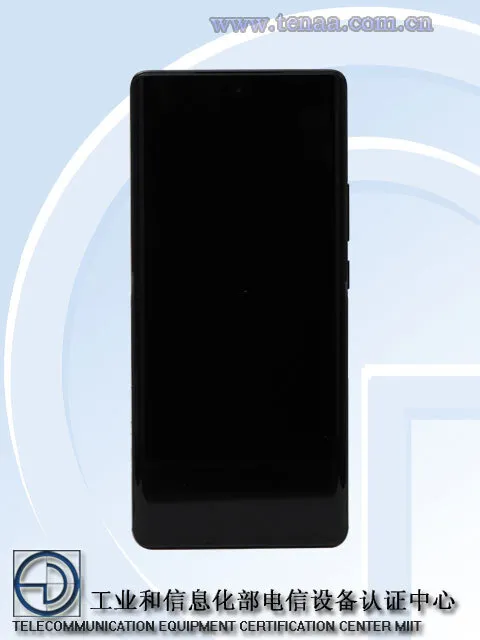
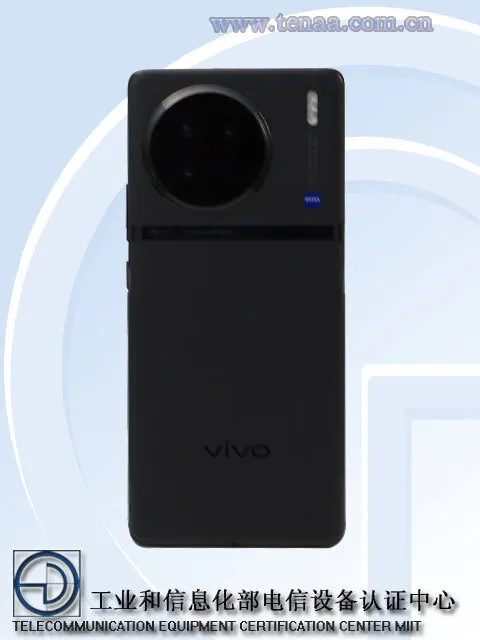
Vivo Y78+ With 4,900mAh Battery Appears On TENAA

Vivo is working on a new Y-series smartphone. It is said to be the Vivo Y78+ and will likely be limited to China. The smartphone with model number V2271A had surfaced on the web last month. Now the same device has bagged TENAA certification in its home country. The listing reveals some key specifications of the upcoming smartphone. The phone is expected to arrive as the successor to the Vivo Y77 that debuted last year. 

As per TENAA, the Vivo Y78+ will be powered by a 4,900mAh battery unit but we expect it to be marketed as 5,000mAh. The preliminary listing also mentions that the Vivo Y78+ will feature triple rear cameras, however, the configuration remains a mystery. Apart from this, the TENAA certification does not reveal any additional details of the Vivo Y78+. 

Since the Vivo Y78+ is rumored to be China-exclusive, we can expect its toned-down version i.e. the Y78 to debut in the global markets. We can also expect the key specifications and images of the Vivo Y78+ to surface online in the coming weeks. 

Apart from the Vivo Y78+, in other news, Vivo is also planning to launch the Y11 (2023). The specifications of the device were leaked earlier this month. The upcoming offering is expected to feature an FHD+ display. It is tipped to be powered by a MediaTek processor coupled with 4GB RAM along with 4GB virtual RAM and 128GB storage. The smartphone will reportedly be backed by a 5,000mAh battery unit with support for 18W charging and ship with Android 13 OS out of the box. 

Related:

Itel P40 launched in India with Poco-inspired design and 6,000mAh battery

A few days back, a report revealed that Itel would be releasing a new entry-level smartphone in India focused on battery and charging. This device is now official in the country. It goes by Itel P40.

At first look, one might assume it is a Poco-branded handset since it looks like one. Let’s check out what this product has to offer.

Itel P40

The newly launched Itel P40 is built around a 6.6-inch HD+ display (LCD). This panel has a water drop notch, which houses a 5MP front-facing camera.

The back of the smartphone features a dual-tone finish, which is reminiscent of Poco devices. The rear panel only houses a 13MP + QVGA dual-camera system but also a fingerprint sensor.

Under the hood, the phone is powered by a Unisoc SC9863A chipset, which includes an octa-core CPU. On the software front, it boots Android 12 Go Edition.

Other features include dual SIM, 4G, WiFi, Bluetooth, GNSS, a 3.5mm headphone jack, a MicroSD card slot, and a MicroUSB port. 

Last but not least, the handset is backed by a 6,000mAh battery with support for 18W wired charging. However, it only ships with a 10W charger.

The Itel P40 comes in three colors, such as Force Black, Dreamy Blue, and Luxurious Gold. The brand offers it in 2GB + 64GB and 4GB + 64GB memory configurations.

The phone starts at ₹6,799 (~$80) and comes with a 1-year warranty and a 100-day one-time screen replacement offer.

RELATED:

China sees a 17% fall in Semiconductor output in 2023

Chinese semiconductor output has fallen down by 17% in 2023. The first two months of the year saw the country producing only 44.3 billion units of ICs (Integrated Circuits) as compared to the 53.7 billion units for the same period in the last year.  The 17% drop in January and February alone is way more than the overall drop of 11.6 % recorded for the whole of 2022. 

The US sanctions have crippled the Chinese semiconductor industry, the result of which can be seen in the sharp decline in semiconductor production. Dwindling consumer demand and the economic downturn have also contributed to the fall in the production of chips in the world’s largest semiconductor market. 

In the first two months of 2023, Microcomputer shipments saw a drop of 21.9% whereas the smartphone output saw a 14.1% reduction year on year. When it comes to semiconductor imports, China saw a sharp drop of 26.5% which is way more than the 15% drop recorded in 2022. Last year the IC exports of China surprisingly showed an increase of 0.5%. However this year the IC exports also decreased by 20.9% year on year. 

Effect of US Sanctions and Zero Covid Policy on semiconductor business:

China which is the largest semiconductor market in the world has generally shown an upward growth trajectory in its semiconductor business. However, the ongoing US sanctions combined with the zero covid policy and economic slump saw the country recording its biggest monthly decline ever. Last year in October the semiconductor output fell by 26.7% year on year making it a record-breaking fall for the sector. 

However after Beijing changed its Zero Covid Policy, the overall economic situation has become better in the country. China’s manufacturing sector is now rebounding from the slump and showing an upward trend for January and February 2023. This year in February, the manufacturing purchasing managers’ index (PMI) beat all expectations by rising to 52.6, the highest reading since April 2012. Even the semiconductor industry which showed an overall decrease in output is performing slightly better as compared to its performance in October last year. 

Related:

(via)