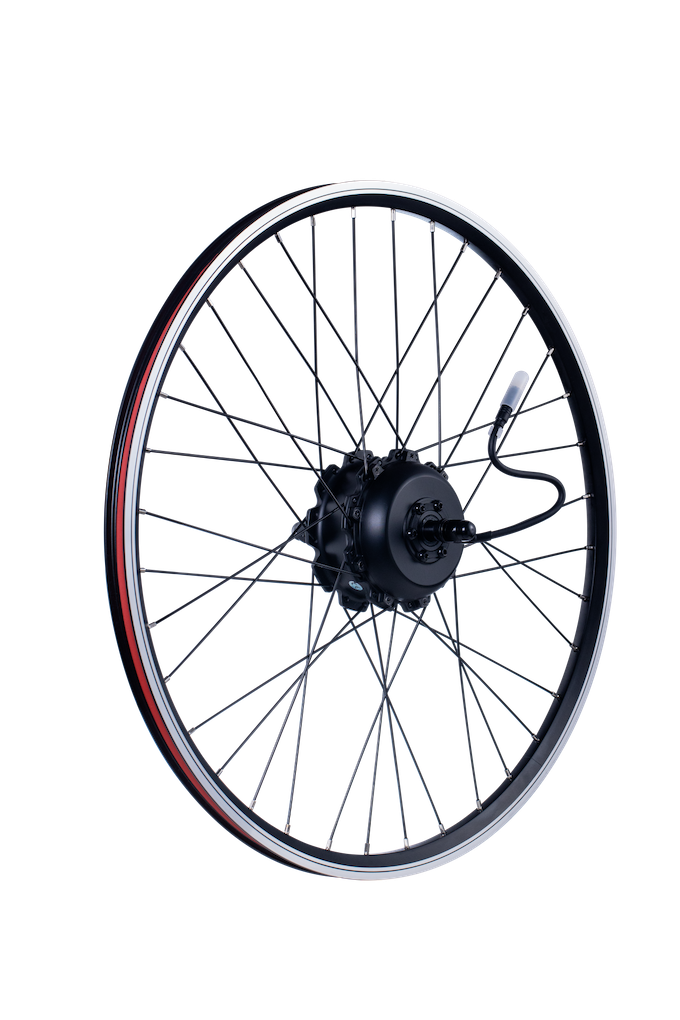
LUCIIDA has unveiled a new e-bike conversion kit that it says is easy to install. The LUCIIDA Motorized Wheel e-bike Conversion Kit allows users to convert their existing bike into an electric bike.
One of the key features of the LUCIIDA kit is the five modes of power assistance. These range from leisure to climbing, allowing users to adjust the level of assistance based on the terrain and their desired level of effort. The kit also includes the ability to shift between 0%, 50%, and 80% assistance, allowing users to adjust the force required from their pedaling.
The gadget uses a patented 250 W 38 Nm brushless motor that can assist riders at speeds up to 32 kph (~20 mph). The motor weighs just 1.9 kg. The e-bike kit also packs an integrated sensor that helps to provide a more natural feeling ride.
The kit includes an LCD monitor that can be mounted on the handlebars to display information such as speed, distance traveled, and remaining battery. This feature allows users to easily track their cycling data and plan their rides accordingly.
In terms of battery life, the kit comes with a 10.5 Ah 18650 lithium-ion battery that can deliver up to 130 km (~81 miles) assistance range on a single charge. The battery can be fully recharged in just 3.5 hours. In addition, the device has an IP65 waterproof rating making it capable of withstanding different weather conditions.
The LUCIIDA motorized wheel e-bike conversion kit is presently available for backing on Kickstarter and is priced at US$499.
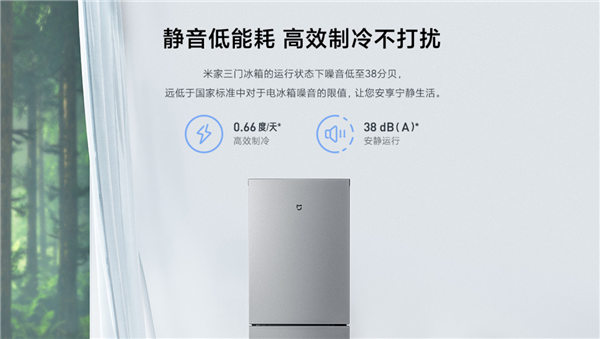
Chinese tech giant Xiaomi has launched a new refrigerator in China. The product is dubbed MIJIA Three-door Refrigerator 213L and it adopts a pre-sale price of 1099 yuan ($160). The gadget is expected to officially go on sale on February 28.
The MIJIA Three-door Refrigerator 213L is mainly aimed at single or two-person families considering the capacity. The 213L capacity is enough to store food for a week. Specifically, the refrigerated area of the refrigerator is 125L while there is a 30L middle door soft freezing area and a 58L freezer compartment at the top. Thus, you get three doors and three temperature zones, which should be enough to meet the needs of daily fresh food, short-term refrigeration, and long-term freezing.
The refrigerated area of MIJIA Three-door Refrigerator 213L can be adjusted from 0 to 7 levels, which is suitable for storing daily ingredients such as beverages, fruits, vegetables, or cooked eggs. Xiaomi says the refrigerator consumes about 0.66 degrees of electricity per day, and the operating noise is as low as 38 decibels, which is lower than the national standard for the noise limit of refrigerators.
In terms of design, the MIJIA Three-door Refrigerator 213L is 52.4cm wide, 58.2cm deep, and 180.8cm high, covering an area of about 0.31m². The refrigerator adopts steel door hinges, which are durable and noiseless. There is an LED cold light source on the top of the interior, which makes it easy to take things from the compartment at night. In addition, the door seals are removable and washable making daily cleaning and maintenance more convenient.
Earlier today, some detailed CAD renders of the iPhone 15 Pro surfaced online, showing significant changes to the design and features of Apple’s next flagship smartphone. Now, a newly leaked image is here to give us a look at the iPhone 15 Pro’s USB-C port and the new Titanium design.
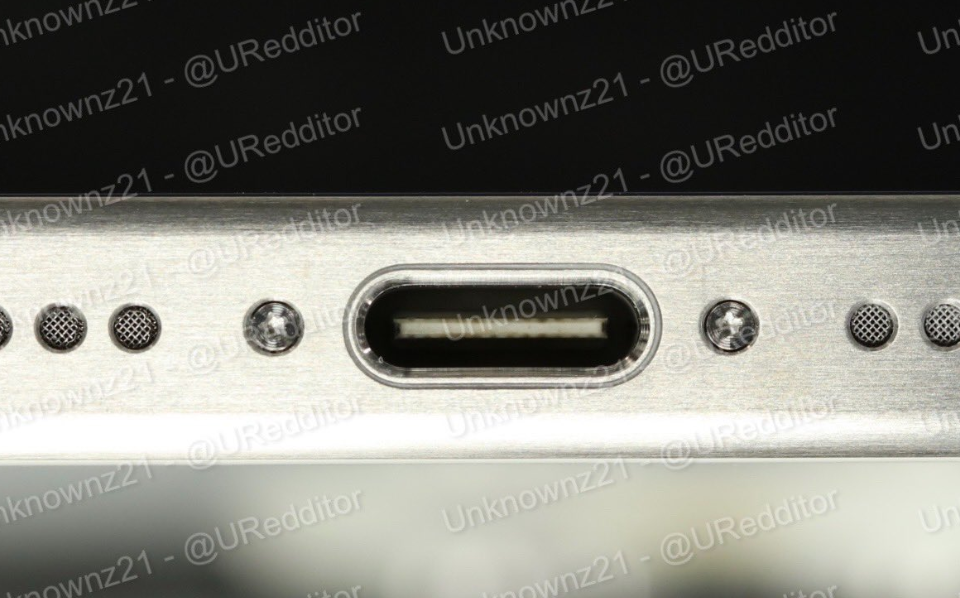
You might already know that in order to comply with regulatory changes introduced in Europe, Apple is planning to switch from its traditional Lightning port to the more common USB-C for its upcoming smartphones. Rumors suggest the iPhone 15 series phones will be the first to arrive with the new charging port. Today, the leaked image has corroborated these rumors as it offers us a first look at the iPhone 15 Pro chassis with included USB-C port.
The image was shared on Twitter by one Unknownz21. Focused on the bottom of the device, the image shows the iPhone with a USB-C port alongside two exposed screws and the speaker holes. The layout, sans the new port, appears to be the same as the existing iPhone 14 Pro. With the transition to USB-C, Apple wants to replace the E75 Lightning Controller with an E85 Port Controller, says the source.
This picture not only shows the USB-C port of the upcoming iPhone 15 Pro but could also be giving us a sneak peek of the phone’s new titanium design. According to several sources, Apple is planning to switch from using stainless steel to titanium for the iPhone 15 Pro series this year. Meaning the iPhone 15 Pro could have a similar matte finish to the Apple Watch Ultra, instead of the current glossy stainless-steel look.
If there’s one thing Apple does very well, it’s making products that are already on the market popular. For example, many companies have been producing and selling various tracking devices for years. However, after the introduction of AirTag, the popularity of trackers increased tremendously. However, the increase in usage has also led to increased security concerns. In response, Apple and other manufacturers have added anti-stalking features to AirTag. However, when this feature was exploited, Tile decided to follow a completely different path. Here are the details…
Tile Adds Undetectable Anti-Theft Mode to Tracking Devices, With $1 Million Fine If Used for Stalking
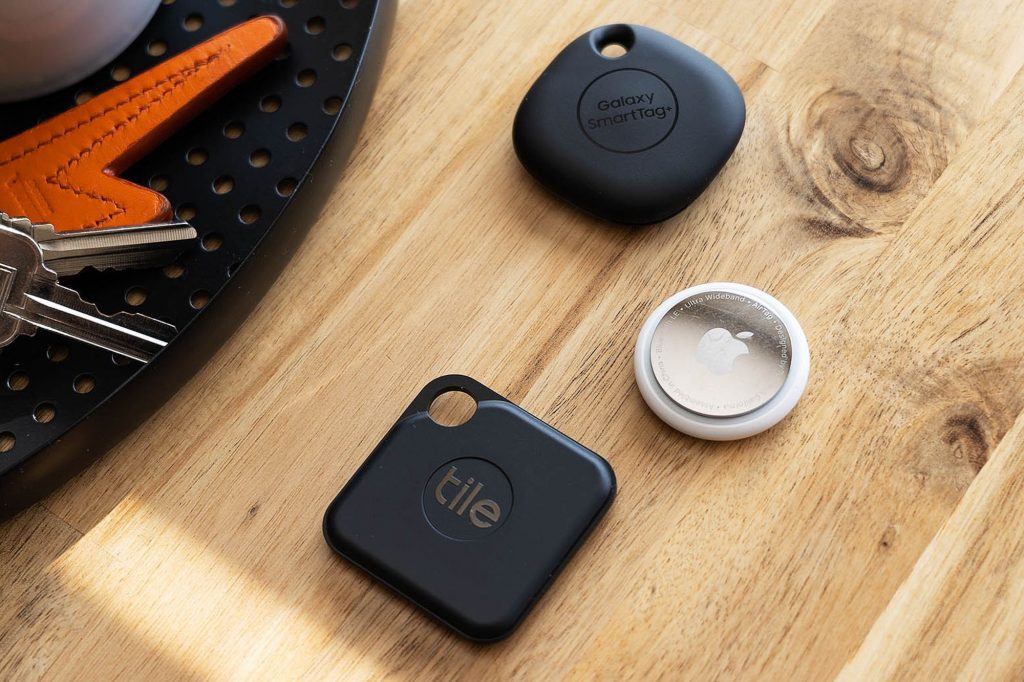
It seems that there is no right or wrong solution when it comes to tracking devices. For example, it was understood that AirTag was being used for stalking shortly after it was released. Taking immediate action, Apple developed a solution, but this also led to other problems. This time, thieves started to discover tracking devices and steal things more easily using these methods. Tile, a company that produces tracking devices, has announced the addition of an Anti-Theft Mode to its devices.
The Anti-Theft Mode is designed to make Tile accessories undetectable by the anti-stalking Scan and Secure feature, which was previously implemented by Tile to prevent stalking. Scan and Secure was introduced to allow iPhone and Android users to scan for and detect nearby Tile devices to prevent them from being used for stalking purposes. Unfortunately, the feature undermined the anti-theft capabilities of Tile as a stolen device’s Tile could be located and removed. Similarly, AirTags, a competitor product, also had a similar security feature, which could locate and remove stolen AirTags.
The Anti-Theft Mode introduced by Tile disables the Scan and Secure feature so that a Tile device cannot be located by someone who doesn’t own the tracker. However, to prevent stalking, Tile has stringent usage terms, including registering using multi-factor identification, and agreeing to the usage terms, which include a $1 million fine if the device is used to track a person without their consent. The Anti-Theft Mode option is intended to make it easier to locate stolen items by preventing thieves from knowing that an item is being tracked.
Unlike other Bluetooth trackers on the market, Tile does not notify nearby smartphone users when an unknown Bluetooth tracker is traveling with them. This feature makes Tile devices more useful for tracking stolen items than AirTags. Apple has added alerts for nearby AirTags to prevent them from being used for tracking people.
However, the proactive notifications found in the Bluetooth tracker industry were designed to prevent stalking. These anti-stalking measures have been criticized for being insufficient for victim protection, as they can make Bluetooth trackers easily identifiable by thieves. To enable Anti-Theft Mode, users must link a government-issued ID card to their Tile account and undergo an advanced ID verification process that uses a biometric scan to detect fake IDs. This measure is meant to deter people from using Tile trackers for stalking or other nefarious purposes. Tile states that any individual convicted of using Tile devices to illegally track another individual without their consent will be fined $1 million, which is in the Tile terms of service.
Tile is also taking a “highly collaborative stance” with law enforcement, and users who turn on Anti-Theft Mode acknowledge that their personal information “can and will” be shared with law enforcement officials in cases of suspected stalking. Tile claims that these usage terms are “progressive safety measures” that will protect people from being stalked with Tile devices.
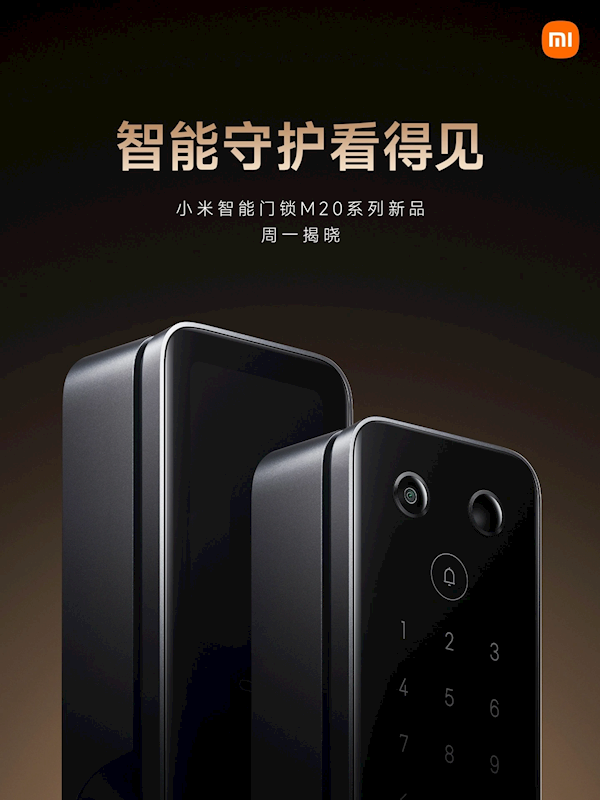
Xiaomi continues to expand its product range. Not content with just smartphones, the company operates in many different sectors, from toothbrushes to electric vehicles. One of them is smart home technologies. Now, Xiaomi is getting ready to introduce the new flagship smart door lock. Here are the details…
The Xiaomi Smart Door Lock M20 Series: Everything You Need to Know
February 20, 2023, Xiaomi will be launching its latest addition to the smart home product line; the Xiaomi Smart Door Lock M20 series. This new model, named the “Smart Guardian Can See,” is equipped with an integrated peephole camera and a display screen, providing users with a comprehensive view of the front door in real-time.
With its thick outer door lock design, the Smart Guardian Can See is a noticeable upgrade from the previous Xiaomi Smart Door Lock M20 released in 2022. The all-in-one design of the new model simplifies the installation process, making it an easy and straightforward addition to any home. Apart from the camera and screen, the Smart Guardian Can See also incorporates a doorbell function, adding to the convenience of the user. With a price point of around 2,000 yuan, the Smart Guardian Can See is expected to be a direct competitor to high-end smart door locks on the market.
Looking at the previous model, the Xiaomi Smart Door Lock M20, it has been highly praised for its durability and safety features. The high-strength alloy middle frame and integrated IML technology provide a sturdy and secure door lock. Moreover, the original anti-pinch design ensures user safety by customizing the direction of the handle based on the opening and closing orientation of the door.
The Xiaomi Smart Door Lock M20 also boasts various unlocking methods, including fingerprint, password, periodic/one-time password, NFC password, mobile phone Bluetooth unlocking, and Homekit. Private data storage such as fingerprints and passwords are stored locally in encrypted storage, ensuring maximum protection against hacking and data breaches.
The door lock also has the added feature of remote monitoring of the lock status through an app when used in conjunction with a device that has Bluetooth gateway function. This enables users to receive alerts for door not closed alarms, multiple trial and error alarms, and the outer door lock panel being pried alarm, among others. The Xiaomi Smart Door Lock M20’s battery life is impressive, lasting up to 10 months on eight AA batteries. In case of an emergency, the Type-C port of the outer door lock can serve as an emergency power supply, allowing the door lock to be unlocked even without battery power.
Xiaomi unveiled the Xiaomi 13 series comprising of regular (review) and Pro (review) variants in December last year. The smartphones are confirmed to debut at the upcoming Mobile World Congress in Barcelona on February 26th. Now, ahead of the launch, the standard model’s price has been leaked by tipster Roland Quandt for the European market.
As per Quandt, the Xiaomi 13’s 8GB + 256GB RAM and storage configuration will cost EUR 999 (~$1,061). The same variant is priced at RMB 4,299 (~EUR 588 ) in China. The leaked pricing indicates that the upcoming offering will be twice as expensive in Europe. The tipster doesn’t reveal any additional information about the Xiaomi 13. We can expect it to be available in more RAM and storage options.
In addition to the Xiaomi 13 and 13 Pro, the brand is also expected to announce the Xiaomi 13 Lite. Leaks and rumours confirm that it is a rebranded version of the Xiaomi Civi 2 in China. Quandt also revealed that the Xiaomi 13 Lite will cost EUR 499 for the 8GB + 128GB option. This is again expensive compared to the Civi 2’s pricing in China.
As for the Xiaomi 13’s core specifications, it comes with a 6.36-inch FHD+ AMOLED display with a 1,900 nits peak brightness, 120Hz refresh rate, integrated fingerprint scanner, and support for HDR10+ and Dolby Vision. The device is IP68 certified and has a boxy form factor. The smartphone features Leica-branded triple rear camera setup of a 50MP OIS-enabled main sensor, a 12MP ultra-wide-angle lens, and a 10MP telephoto unit.
Under the hood, the Xiaomi 13 houses Qualcomm’s flagship Snapdragon 8 Gen 2 processor paired with up to 12GB LPDDR5 RAM and 256GB UFS 4.0 storage technology. There is also a liquid cooling heat dissipation system onboard. The Xiaomi 13 is backed by 4,500mAh with support for 67W wired, 50W wireless and 10W reverse wireless charging.
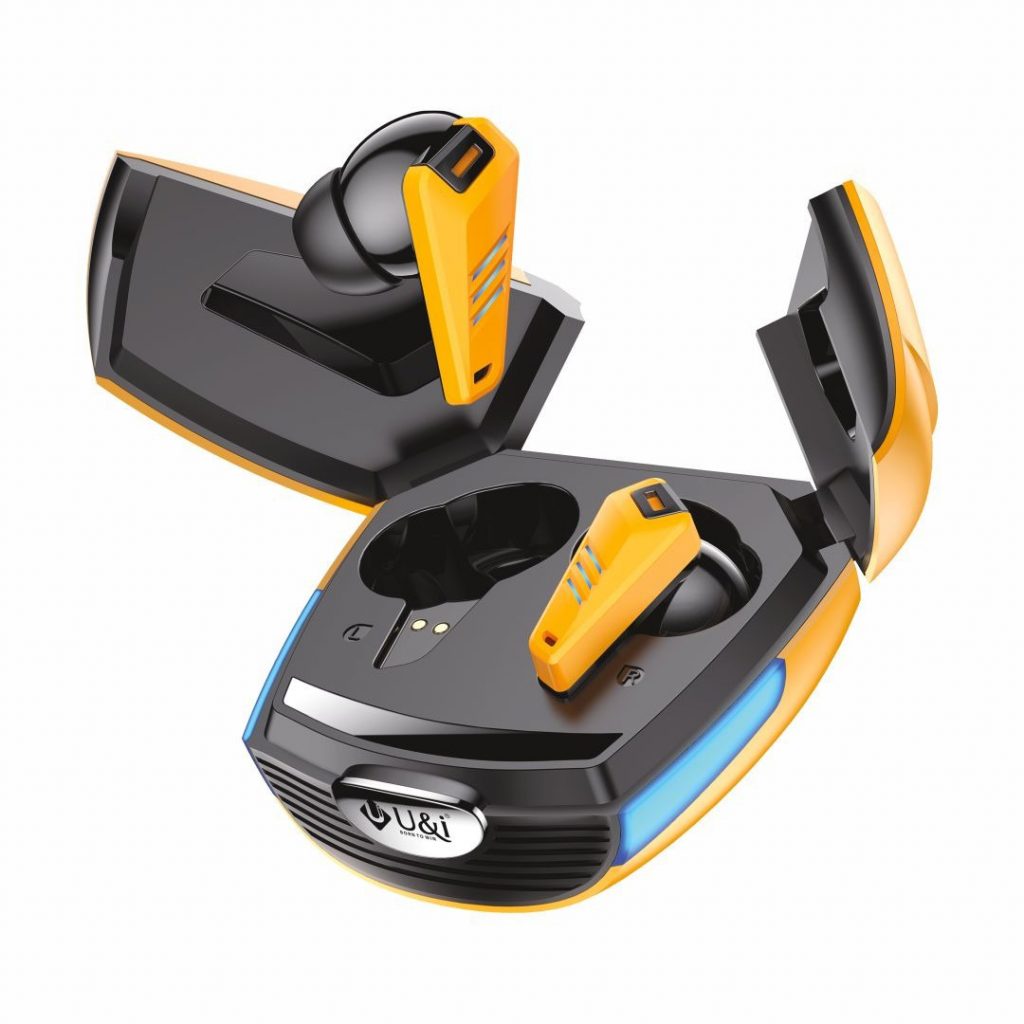
U&i has launched two new audio devices in India. Both are TWS earphones called the F1 series and House series. The former is aimed at gamers with a unique design whereas the other is a mainstream offering. Read on to know what both devices offer out of the box.
Beginning with the U&i F1 series, the earphones feature a dual-tone design with the stem in Yellow paint job and earbuds in Black colour. They are also offered in Grey and Black combination. The audio device also comes in a unique storage case where the lid opens upwards like the doors of a sports car. It also features LED lights. On the other hand, the U&i House series has a mainstream in-ear design with a stem that is similar to other TWS earphones in the market.
In terms of sound performance, the U&i F1 series offer passive noise cancellation for a disturbance-free experience. They are claimed to offer punchy bass and low latency for gaming purposes. Meanwhile, the U&i House series ensures that calls and music are uninterrupted and stutter-free.
The U&i F1 series earbuds are claimed to offer 5 hours of usage and a total of 40 hours of battery life with the 500mAh cell. The House series is capable of delivering 6 hours of playtime and with the case, it extends to 30 hours. Both TWS earphone models support Bluetooth 5.1 connectivity.
The U&i F1 series costs Rs 3,499 whereas the House series is priced at Rs 2,199. Both devices can be purchased from retail outlets across the country.
ARM China fired almost 100 employees mostly engineers after reporting a record 96% drop in its Net Profit in 2022. The majority of fired employees were from the high-performance computing (HPC) and system-on-a-chip (SoC) designs team. The company has assured that all the outgoing employees will be adequately compensated according to their tenure.
Arm China recorded a massive drop in its profit, even after achieving an increase in its annual revenue. In 2022, the company recorded a profit of $3.2 million as compared to $79.2 million in 2021. In the same period, the revenue grew from $665 million in 2021 to $890 million in 2022. According to Reuters, the company reported a $37 million loss in foreign exchange in 2022, compared with a gain of $9 million the previous year.
The company had a turbulent 2022, with its now-ousted CEO refusing to leave the company even after the majority voted against him. Moreover, with the ongoing US-China tech war and unfavorable political and economic conditions, the company had to go for mass layoffs to compensate for the downward trend in its profits. The mass layoffs don’t come as a surprise, as in the last few months, many American and Chinese tech companies have laid off their employees for the same reasons.
Arm China and its management struggles
Established in 2018, Arm China is a joint venture between the British semiconductor and software design company Arm and a group of Chinese investors. The parent company Arm primarily deals with designing ARM processors that are found in almost all smartphones and software development tools. Arm plays a vital role in the world’s largest computing ecosystem and works with partners like AWS, Google, MediaTek, Qualcomm, and more that use their technology across markets and applications.
Arm sells its products and services in China through Arm China. While Arm China is the only authorized platform that can sell Arm’s products, the company is allowed to sell its own independent designs and products apart from Arm, in the Chinese market.
source: arm
The Japanese conglomerate SoftBank Group which owns ARM also has a minority stake in Arm China. In 2018, SoftBank Group sold the majority stake in Arm China to a group of investors who have ties with the Chinese government. This led to management and control issues as Arm China’s Ex-Chairman and CEO Allen Wu declared that Arm China was independent of its parent company. He said that Arm China was a stand-alone entity and would soon go for an independent public offering.
Even after the majority of directors voted against him, CEO Wu refused to hand over control of the company. Finally, the Shenzen government, the home government of the company had to intervene to remove Wu from his position.
Wu still holds a 16% stake in the company and said that his removal should be seen as the parent company Softbank’s strategy to regain control of Arm China. He further added that if Softbank regains control over Arm China, then the sovereignty, technological self-sufficiency and supply chain security of China would be under threat. Arm refuted this claim by stating that the company’s intellectual property rights had nothing to do with internal management changes.
Arm’s vice president of external communications Phil Hughes said that Arm China was performing well and the company was expected to grow in the coming years. He further added that the new management team had quickly restored confidence in the China ecosystem, and the company had put the previous management issues behind it. Now Arm is only focused on expanding its technology into the Chinese market.
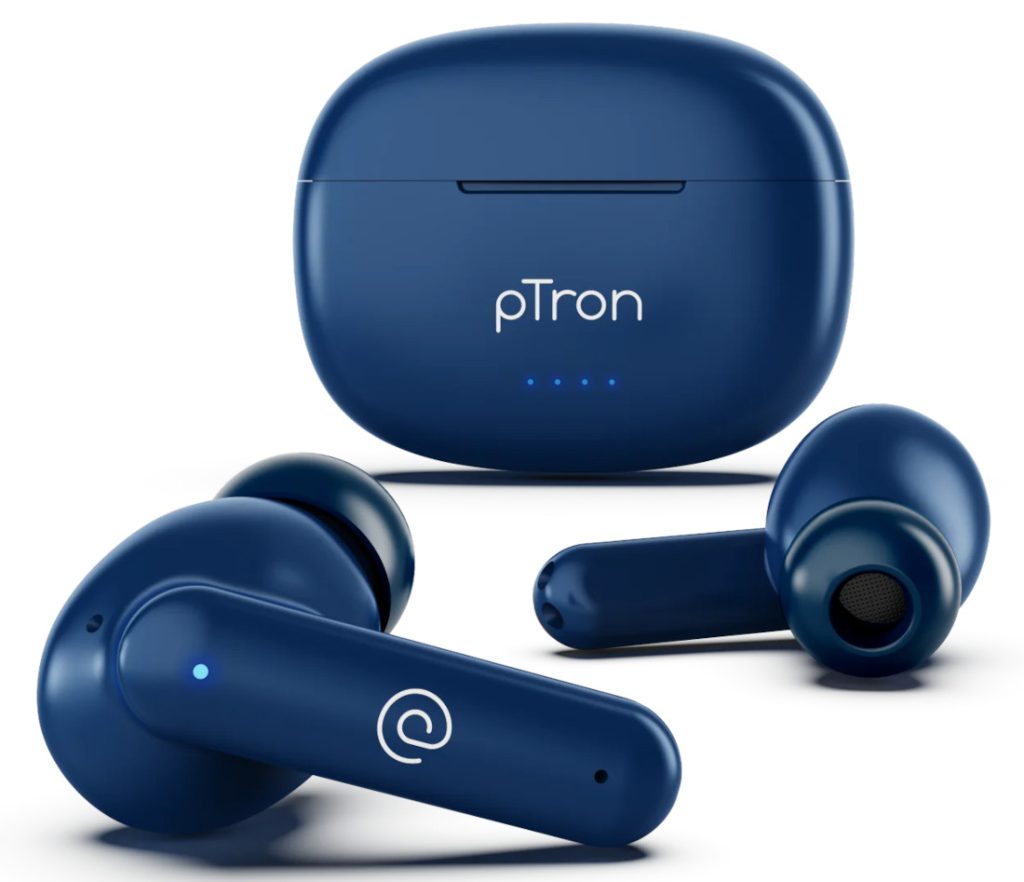
pTron has launched a new audio device in India. The brand has expanded its range of TWS earphones with the new offering called pTron Bassbuds Zen. pTron had announced the Basspods Flare last week. The Bassbuds Zen are affordable TWS earphones aimed at budget customers. The compete against other TWS earphones offered by brands like Noise, Boult Audio, boAt, and more in the market. Read on to know what they offer out of the box.
The pTron Bassbuds Zen feature an in-ear design with a stem and silicone ear tips. There is a small Blue-colour LED light at the top of the stem. Users can control various actions with touch controls. The earphones are IPX4-rated water-resistant.
In terms of audio, the pTron Bassbuds Zen is equipped with a 10mm dynamic driver. It features quad mics and environmental noise cancellation up to 30 dB. The audio device comes with a TruTalk feature for clear quality on calls. There is also cinematic 3D spatial sound. The TWS earphones support Bluetooth 5.3 connectivity with SBC and AAC audio codecs. They also support voice assistants.
The pTron Bassbuds Zen is powered by a 400mAh battery unit that is claimed to offer 50 hours of playtime with the case. There is a USB-C port that is said to offer 4 hours of usage with 10 minutes of charging.
The pTron Bassbuds Zen carries an introductory price tag of Rs 999 for a limited time after which it will be available for Rs 1,199. It is offered in Napoli Black and Cobalt Blue colours. The TWS earphones can be purchased from Amazon.
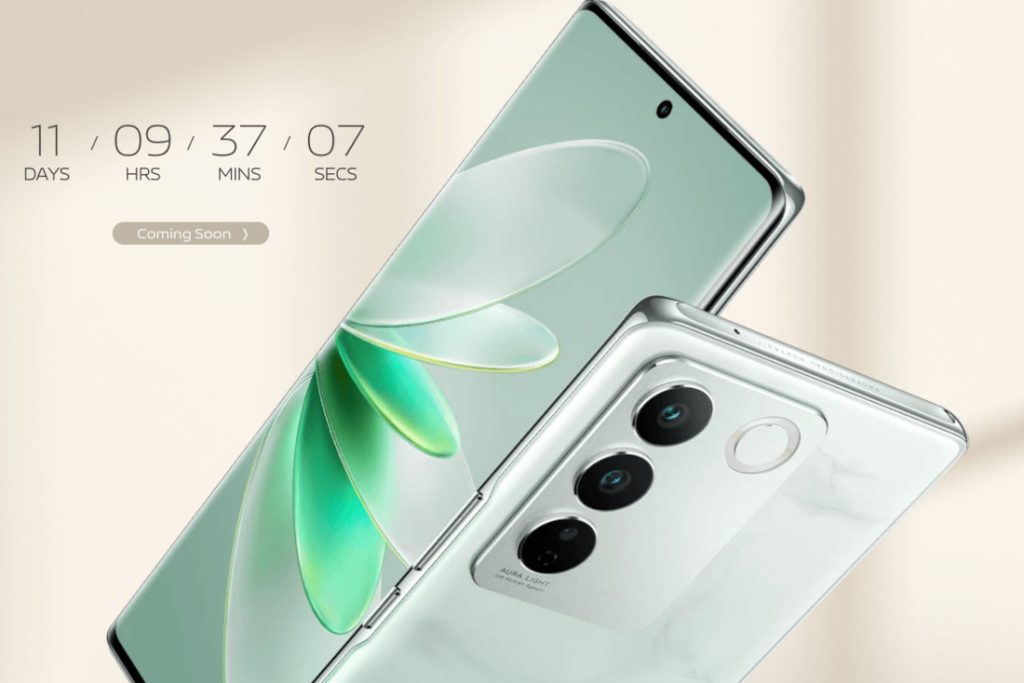
Vivo V27 series global launch date has been revealed. The brand has put up a microsite of the upcoming offering on its official global website. It shows the countdown to the launch event in 11 days from now. This means that the smartphones will debut on March 1st or on February 28th. The Vivo V27 series is also confirmed to launch in India but the event date remains a mystery for now.
The Vivo V27 series is expected to include the V27, V27 Pro, and V27e. We can also expect at least two devices at the upcoming event. The microsite reveals key specifications ahead of the launch. The Vivo V27 series is confirmed to sport a 120Hz display with a centre-aligned punch-hole cutout. It will feature a 3D curved screen with a 60-degree screen curvature offering an ergonomic grip.
The Vivo V27 series will come with a large rectangular camera module housing three sensors, an LED flash, and an LED ring light. The upcoming offering is confirmed to feature a 1/1.56” Sony IMX766V sensor with support for OIS. The smartphone will retain the colour-changing back panel from its predecessor i.e. the Vivo V25 series.
In the global markets, the Vivo V27 series will come in Emerald Green, Magic Blue, Noble Black, and Flowing Gold colours. The upcoming offerings are expected to debut as the rebranded Vivo S16 lineup which was announced in China last month.
We will learn more details about the Vivo V27 series in the coming days as we get closer to the launch event.
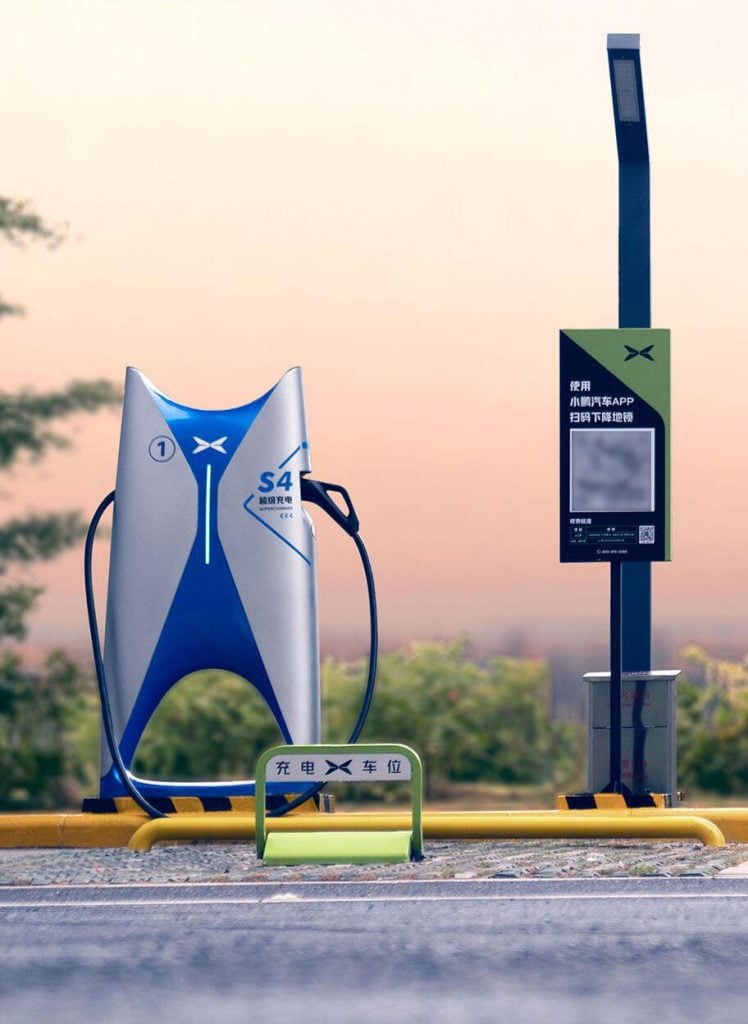
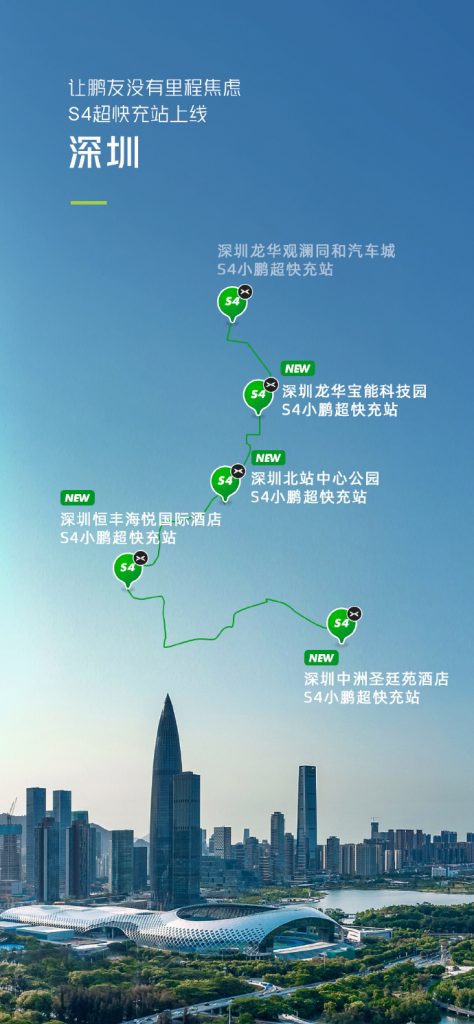
XPeng has just announced that it is launching its first batch of S4 super fast charging stations for electric vehicles in China. Earlier today (17th February 2023), the company rolled out these new EV charging stations in two major cities.
The Chinese smart electric vehicle maker had first introduced their S4 super fast charging stations for EVs back in 2022. And now, the company is finally releasing the first batch of these EV charging stations in the city of Shenzhen and Guangzhou. This wasn’t the only milestone since the brand also announced that it has managed to launch more than a 1,000 self operated charging stations that cover all prefecture level administrative regions and municipalities across the region.
As of right now, XPeng Motors has 58 charging stations in Shenzhen, out of which 5 are the new S4 super fast charging stations, 22 of these are its self operated charging stations (including its S4), and a total of 36 for its third party charging stations. On the other hand, it has a total of 79 charging stations in Guangzhou, out of these 6 are S4 super fast charging stations, 52 self operated XPend charging stations (includes S4 models as well), and 27 from third party charging stations.
In other words, the electric vehicle manufacturer is clearly focusing on expanding its network, which would help EV owners and prospective buyers in the future. With such a robust network in China, XPeng car owners can rest easy with the vast number of charging stations during trips between these cities as well.
The budget offering from Redmi called the Redmi A1 is rumored to get a successor soon. The Redmi A2 has already been certified on the Bureau of Indian Standards website and is also tipped to be close to mass production.
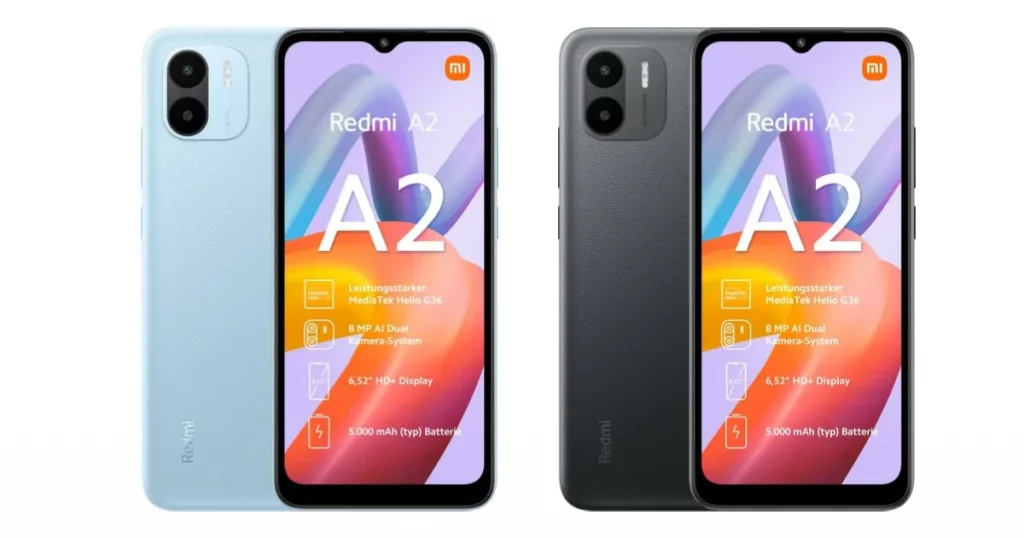
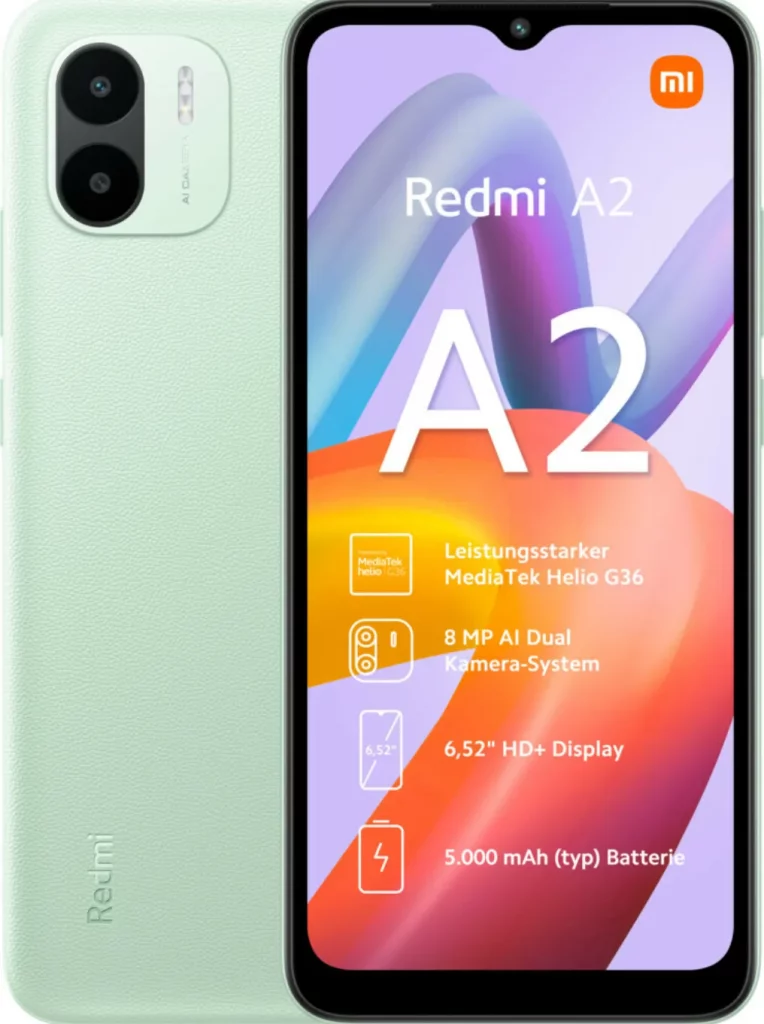
Now, tipster Roland Quandt (via WinFuture) has revealed renders of this upcoming device ahead of the launch. The report also claims that the device will have the new entry-level SoC from MediaTek called the Helio G36.
Taking a look at the renders, the Redmi A2 looks almost exactly like the Redmi A1. It has the same textured plastic back design with two cameras on the back. on the front, it has thick bezels and a thick chin along with a notch that houses the front camera. The power button and volume rocker are placed on the right, while there is a Micro-USB port and a 3.5mm audio jack at the bottom. The top features a speaker grille.
The report also mentions that the device will have three color options – Black, Blue, and Green. The European price for this device will be around 97 Euros. Let’s take a look at the specification details revealed by the report.
Redmi A2 specs
As mentioned above, the device will house a MediaTek Helio G36 SoC, which has an octa-core CPU based on a 12nm process. This chip has a max clock speed of 2.2GHz. It will have 2GB RAM and 32GB internal storage. Users will be able to expand the memory upto 512GB using a microSD
The Redmi A2 is reported to feature a 6.52-inch IPS LCD screen with an HD+ resolution of 1600 x 720 pixels. The absence of a rear fingerprint scanner suggests that it may only be available on the A2+ model. On the back, the phone will have an 8MP primary camera that can record videos up to 1080p, as well as a 2MP depth sensor. For taking selfies, the phone will have a 5MP front camera.
Additionally, the Redmi A2 is expected to come with a 5000mAh battery that supports 10W charging in Europe. It will include a single speaker and a 3.5mm headphone jack, and will launch with the latest Android 13 (Go Edition) update already installed. The phone will provide connectivity options such as a dual-SIM slot, Bluetooth 5.0, and 2.4Ghz WiFi.
POCO has just revealed the Indian launch date for its upcoming C55 smartphone model. The company had recently confirmed that the handset will be arriving in the Indian market, and now, its official release date has also been revealed.
As per the latest official tweet, the Chinese smartphone maker is planning on launching the new POCO C55 in India on 21st February 2023. For those unaware, it is a budget grade handset and will be a part of the company’s C series of smartphones. Based on what we know so far about the upcoming phone, the C55 is expected to feature a dual camera setup on the rear. It will have a large camera island module that also houses a rear mounted fingerprint scanner as well for added security.
Furthermore, previous teasers has also hinted at a leather like back panel design as well. The company has yet to reveal any finer details regarding the C55, although, this model is believed to be a rebranded version of the Redmi 12C, but with a new rear design. Meaning, the internal specifications are likely similar if not identical. The Redmi 12C was launched in China back in January and sports a tall 6.71 inch HD+ display and a 5 megapixel selfie shooter on the front.
Experience Speed and Swag the way it was meant to be with the #POCOC55.
Under the hood, it is equipped with the MediaTek Helio G85 SoC that is paired with up to 6GB of RAM. The primary camera on the rear is a 50 megapixel lens, which is paired with a 2 megapixel depth sensor. A large 5,000mAh battery pack powers the device but supports the standard 10W charging. So stick around for more, as we will be covering any other teaser or leak ahead of its official launch.
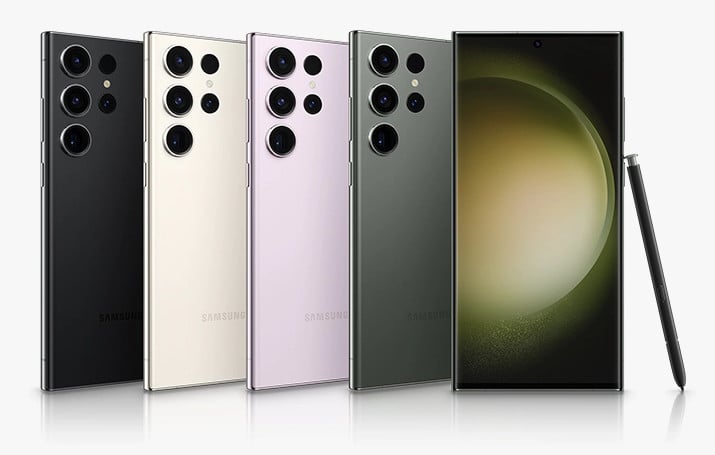
Samsung announced the Galaxy S23 series of flagship smartphones earlier this month. Now, the global release of the premium phone lineup has kicked off and it appears that the most expensive model is also the most popular in the series.
Earlier today (17th February 2023), the South Korean tech giant giant began taking pre-orders for the Galaxy S23 series. This marked the start of the global availability of the smartphones ahead of their full release. The global launch also marked an impressive number of pre-orders as well, as per the brand. Apparently, the top end Galaxy S23 Ultra model was the most popular with more than 60 percent of all pre-orders being just for this variant.
The Galaxy S23 Ultra features the company’s latest and greatest specs and features. This includes a new 200 megapixel Adaptive Pixel image sensor on the rear, with the device also arrive with an S Pen as well. The S23 series is equipped with Qualcomm’s new flagship chip, the Snapdragon 8 Gen 2 SoC. As of right now, the Galaxy S23 Ultra, Galaxy S23+, and the base Galaxy S23 will be available through various carries and retailers.
It can also be pre-ordered from the official Samsung website as well as leading e-commerce platforms like Amazon. The device have been launched in multiple color variants, with the S23 Ultra alone arriving in a Graphite, Red, Sky Blue, and Lime.
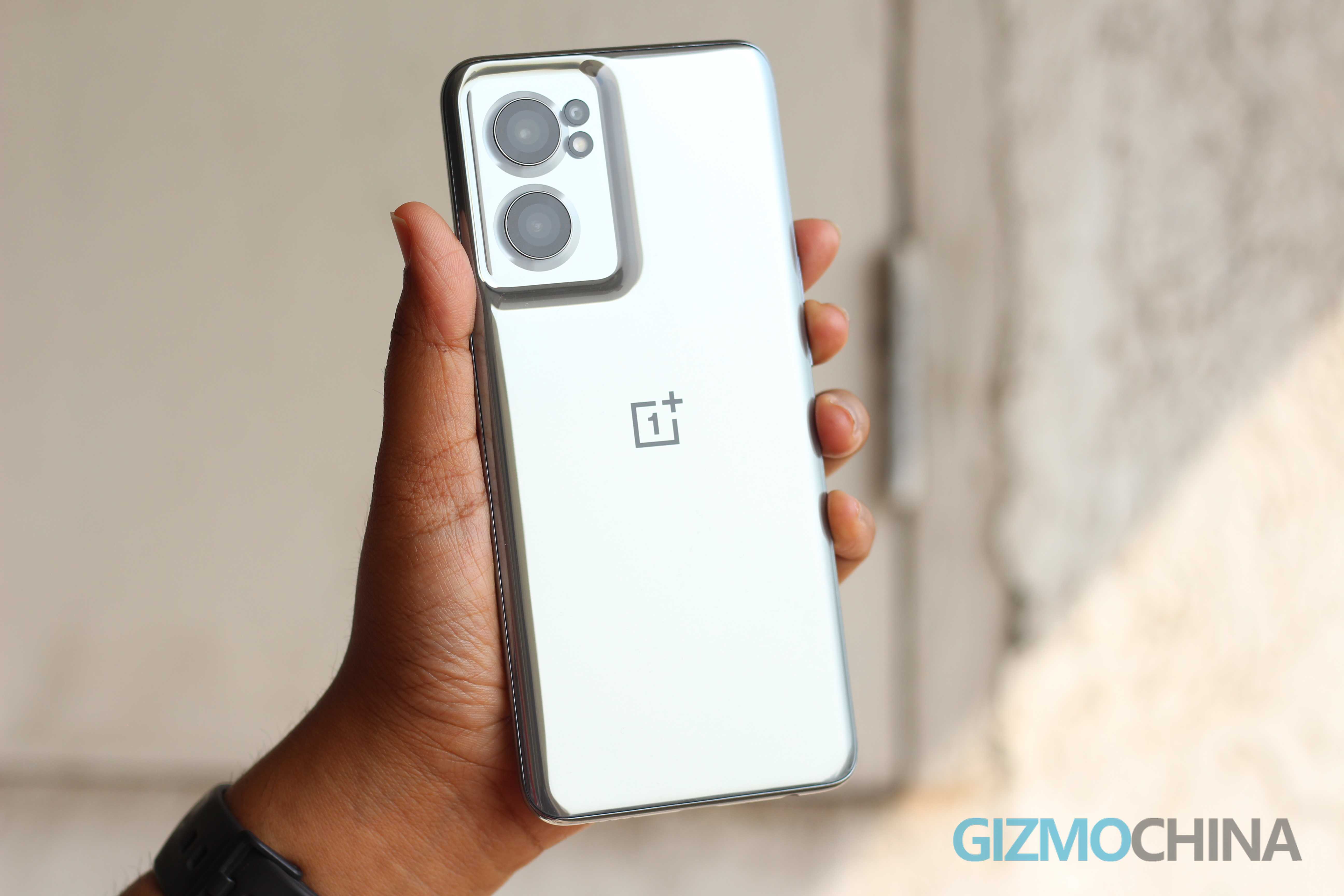
Back in December, OnePlus released the stable Android 13-based OxygenOS 13 for Nord CE 2 Lite. Now, OnePlus Nord CE 2 users are also getting the stable OxygenOS 13 update for their smartphones.
OnePlus has made a formal announcement on its community forum regarding the release of the OxygenOS 13 Stable update for the OnePlus Nord CE 2. The update is currently being rolled out to users who participated in the Open Beta program, with a wider release to all users expected in the upcoming days or weeks.
The update brings a new sidebar toolbox that allows users to open an app in a floating window on top of another app. Other security, privacy, and productivity features have also been added to the package. Let’s take a detailed look at everything that is coming with the update.
Changelog
Aquamorphic Design • Adds Aquamorphic Design theme colors for enhanced visual comfort. • Applies the Aquamorphic Design philosophy to animations to make them natural and vivid. • Adds Shadow-Reflective Clock, with shadow simulating the orientation of the sun and moon. • Adds a Home screen world clock widget to show the time in different time zones. • Upgrades to Quantum Animation Engine 4.0, with a new behavior recognition feature, which recognizes complex gestures and provides optimized interactions. • Optimizes UI layers for a clearer and neater visual experience. • Applies real-world physical motions to animations to make them look more natural and intuitive. • Optimizes the widget design to make information easier and quicker to find. • Optimizes fonts for better readability. • Optimizes system icons by using the latest color scheme to make the icons easier to recognize. • Enriches and optimizes illustrations for features by incorporating multicultural and inclusive elements.
Efficiency • Adds large folders to the Home screen. You can now open an app in an enlarged folder with just one tap and turn pages in the folder with a swipe. • Adds a new type of Always-On Display that shows live information about music, ride-hailing, and food delivery. (Supports only some apps) • Adds media playback control, and optimizes the Quick Settings experience. • Adds more markup tools for screenshot editing. • Adds support for adding widgets to the Home screen, making information display more personalized. • Upgrades Doodle in Notes. You can now draw on graphics to take notes more efficiently.
Seamless interconnection • Optimizes earphone connectivity to deliver a more seamless experience.
Personalization • Optimizes Bitmoji to offer more Always-On Display animations. • Optimizes Insight Always-On Display, with more personalized Always-On Display settings available. • Optimizes Portrait Silhouette Always-On Display, with more drawing tools and line colors available.
Security & Privacy • Adds an automatic pixelation feature for chat screenshots. The system can identify and automatically pixelate profile pictures and display names in a chat screenshot to protect your privacy. • Optimizes Private Safe. The Advanced Encryption Standard (AES) is used to encrypt all files for enhanced security of private files.
Health & Digital wellbeing • Adds Kid Space. When in Kid Space, your browser app automatically switches to Kids mode to create a child-friendly space. • Adds Eye comfort in Kid Space to protect children’s vision.
Performance optimization • Adds Dynamic Computing Engine to improve the system speed, stability, battery life, and app experience.
Gaming experience • Upgrades to HyperBoost GPA 4.0 to stabilize the frame rate and balance the performance and power consumption in key scenarios.
More than 300,000 Tesla EVs are subject to crash risk, says the latest National Highway Traffic Safety Administration (NHTSA). According to the report, there is a problem with the Full Self-driving (FSD) beta software rolled out in Model S, Model X, Model 3, and Model Y.
US authorities have now decided to recall 362758 Tesla EVs. However, the vehicles won’t be actually recalled to a service center instead, the company will roll out a software update that would fix the problem. Authorities said that the over-the-air (OTA) update will happen by April 15. Tesla said that the OTA updates will improve how FSD Beta negotiates certain driving maneuvers and will help to solve the issue.
source: Tesla
NHTSA opened an in-depth investigation on Tesla’s Autopilot system in August 2021. The regulatory authority said that it was a kind of investigation that required a lot of resources, and technical and legal expertise and covered more than 830000 vehicles. The regulatory authority also showed its concern for a December Tweet where CEO Elon Musk agreed to a suggestion of removing the ‘steering wheel nag,” an alert that instructs drivers to hold the wheel to confirm they are paying attention.
For years US authorities have been imploring Tesla to make better safety features for its EVs. Musk himself had admitted that crashes due to the autopilot system, stem more due to the company’s attitude towards the problem rather than technical difficulties.
What is the problem with Tesla FSD?
Recently, in a stock Exchange filing, Tesla informed that there were some glitches in its self-driving system. It said that the FSD may allow the vehicle to act unsafe around intersections and may make mistakes while proceeding through steady yellow traffic lights. The EVs also showed some issues when they had to travel straight through an intersection from a turn lane.
Between May 2019 to September 2022, Tesla received more than 18 warranties some of which may be related to the conditions mentioned above. However, the company said that it was not aware of any incidents or deaths due to this particular self-driving software issue.
Tesla has not yet made an official statement regarding the recall. However, CEO Elon Musk, shared a tweet showing his contempt for the word recall.
Definitely. The word “recall” for an over-the-air software update is anachronistic and just flat wrong!
Tesla Autopilot is a bunch of advanced driver-assistance features, offered by the company to its vehicles. The Autopilot system conforms to the Level 2 SAE International Vehicle Automation standards and offers functions like lane centering, self-parking, traffic-aware cruise control, auto lane change, semi-autonomous limited navigation and automatically getting the car from the garage or parking spot.
All Tesla Vehicles come with these standard driver-assist features. However, the company offers its advanced fully autonomous FSD system for an additional price of $15000. With the FSD in place, owners can get extra features like automatic speeding and slowing down, and making turns which is not available in the standard autopilot system. Currently, Tesla FSD remains a Level 2 advanced-driver assistance system which requires the driver to remain fully engaged while the vehicle is in motion.
The company is now rolling out FSD Hardware 4.0 which will make Tesla cars the most technologically advanced vehicles in the world. Though the company has not shared many details about FSD 4.0, experts are saying that the upgrades may include a generation 4 complex vehicle control system (Autopilot), a new computer that is going to be 4 times more powerful than the one available in FSD 3 and a new GNSS antenna for navigation. The upgrades may also include changes to the Automatic Dipped and Main Beam Sensor, unification of Model X brake system application, new stay arm for Model X interior rear-view mirror, update to the manufacturer’s engine code, update to the vehicle’s rear badging, an increased speed limit.
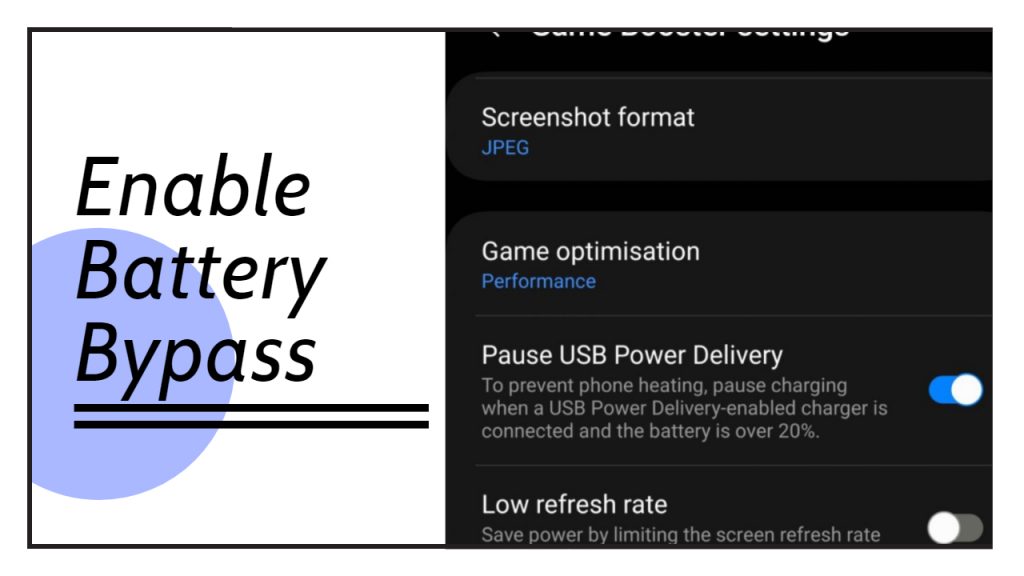
It’s been some time since Samsung introduced the Galaxy S23 with exciting new features and hardware. It is kind of impossible to replicate new hardware on its predecessors, but Samsung has surely introduced all the new software features for old flagship Galaxy Smartphones. We are talking about the much-touted Bypass Battery or Pause USB Power Delivery feature that allows bypassing battery while playing games on Galaxy S23.
Samsung has been slowly rolling out the Battery Bypass feature to compatible devices over the past couple of days. Several high-end and mid-range smartphones such as the Galaxy S22, Galaxy S22+, Galaxy S21, Galaxy Z Fold 4, Galaxy Z Flip 4, and Galaxy A73 are at the receiving end.
Explained – Battery Bypass Feature
The Pause USB Power Delivery feature is not new for Samsung Galaxy Smartphones. It was a part of the Samsung Galaxy Flagship device until the recent past. Well, the feature is also known as Battery Bypass terminates the battery charging and inputs power directly to the SoC. It is quite useful while doing CPU or GPU-intensive tasks as Battery Bypass shifts the power directly to SoC, instead of charging the battery. The process safeguards the battery’s aggressive charge and discharge, ultimately reducing the heating issue and improving the overall performance.
However, this feature is limited to use only while playing games on Samsung Galaxy Phones. The user needs to download or enable the Game Booster on the smartphone to get these new features. Below are the steps to enable the battery bypass feature on Galaxy Phones:
Steps to enable Battery Bypass on Samsung Galaxy Phone
It is quite an easy and straightforward process that you can perform in the span of 2-3 minutes. However, make sure you have a 25W PD charger as we need to connect it while using the Battery Bypass feature.
Download and Install the Game Booster (v5.0.03.0) on your Galaxy smartphone from the Galaxy Store.
Now, Connect your device to a charger. (Note: Your device should support 25W Superfast charging and the adapter should also be of output more than 25W. )
Open any Game via the Game Launcher app.
Minimize your game, open the Game Launcher app, tap on three vertical dots at the top-right corner, and select Game Booster.
Now, Game Booster Settings will open, where you have to toggle the Pause USB Power Delivery feature.
Once enabled, you can start enjoying the game again by bypassing the battery.
It will automatically turn off once you minimize or exit the game, or even if you unplug the charger.
However, as per reports from Sammobile and YouTube NL Tech, the feature allows the phone to fetch power as required from the adapter. During the test, the phone was using 15W to 20W power while playing some games. However, the value was around 6W while playing Call of Duty Mobile on the Galaxy S22+.
Q1. What Happens if I unplug the charger while playing games?
It will automatically shift to the battery power, and there will be no disruption in the gameplay.
Q2. What is the Battery Bypass feature introduced by Samsung on its Galaxy smartphones?
The Battery Bypass feature, also known as Pause USB Power Delivery, is a new software feature that allows Samsung Galaxy smartphone users to bypass the battery while playing games. It shifts the power directly to the SoC instead of charging the battery, reducing the heating issue and improving overall performance.
Q3. Which Samsung Galaxy smartphones are compatible with the Battery Bypass feature?
Samsung has started rolling out the Battery Bypass feature to several high-end and mid-range smartphones such as the Galaxy S22, Galaxy S22+, Galaxy S21, Galaxy Z Fold 4, Galaxy Z Flip 4, and Galaxy A73.
Q4. Can the Battery Bypass feature be used for any CPU or GPU-intensive task on Samsung Galaxy smartphones?
No, the Battery Bypass feature can only be used while playing games on Samsung Galaxy smartphones.
Q5. Can the Battery Bypass feature be used with any charger on Samsung Galaxy smartphones?
No, to use the Battery Bypass feature on Samsung Galaxy smartphones, users need to connect their devices to a charger that supports 25W Superfast charging and an adapter that has an output of more than 25W.
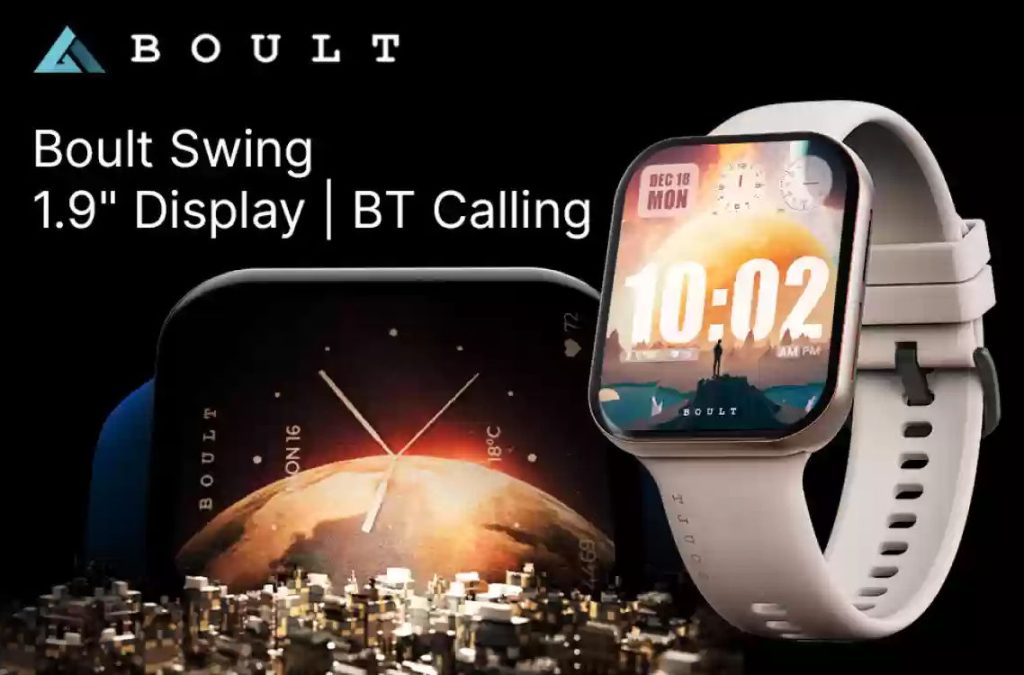
Boult had recently announced a new smartwatch for the Indian market. The Boult Swing is the new smart wearable in question and it has finally gone on sale in India with some notable specs. So let’s have a look.
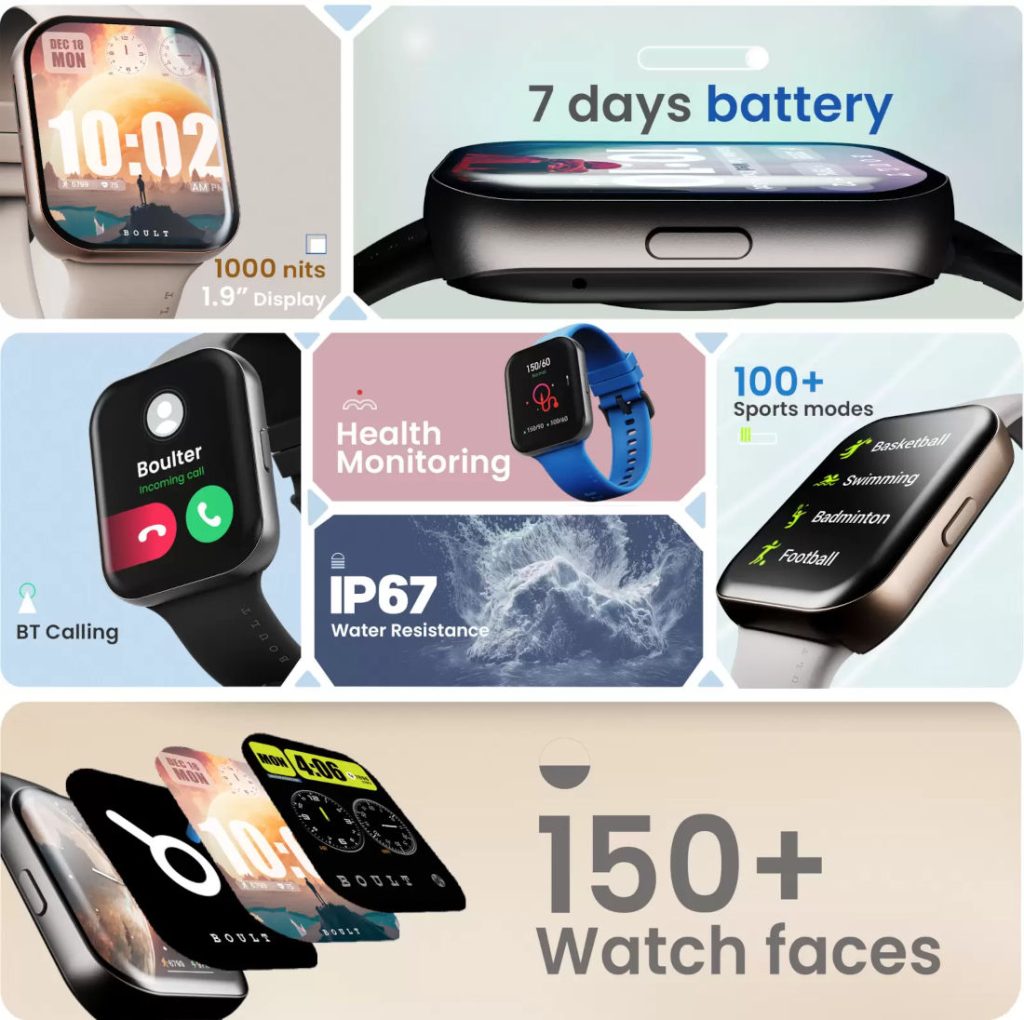
The new Swing smartwatch sports a tall 1.9 inch HD display that offers an impressive 1,000 nits of peak brightness. This panel is surrounded by a zinc alloy frame and a square dial design. Furthermore, the new device also houses a feature that lets users scan payment QR codes, which enables them to accept payments directly from the watch. The device offers up to 7 days of battery life and also comes with Bluetooth Calling, Voice assistants, and even a built in microphone and speaker for calling.
The new smartwatch comes with more than 100 sports modes and also comes with various health related features as well. This includes a heart rate tracker, an SpO2 blood oxygen sensor, blood pressure mapping, menstrual cycle tracking, sleep monitoring, and more. Other notable features include IP67 water resistance, Bluetooth 5.1, over 150 watch faces, and more.
The Boult Swing will be available in multiple color options, namely Beige, Blue, and even Black. THis smartwatch will go on sale on Flipkart and the company’s official website. This wearable is available for an introductory price tag of just 1,799 INR (roughly 22 US Dollars).
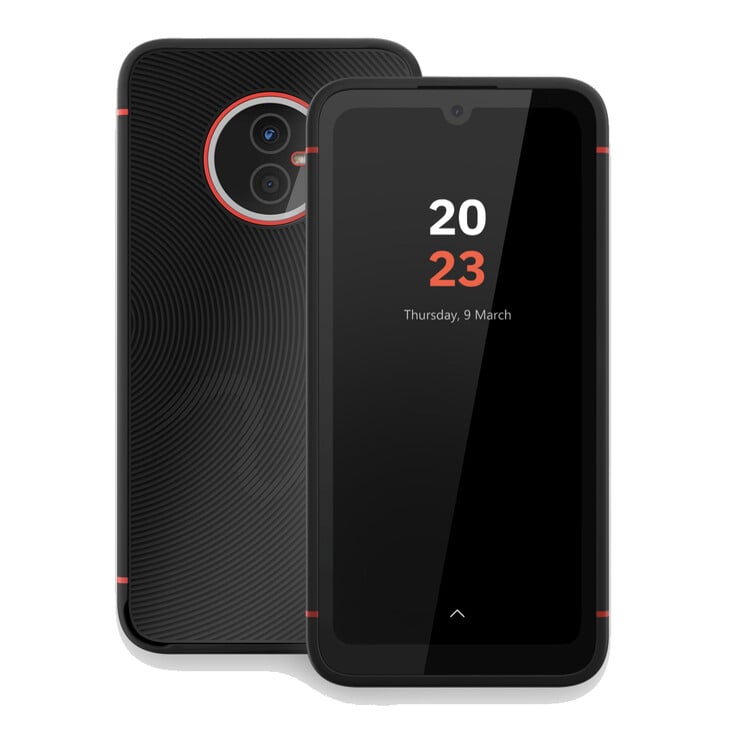
The Volla Phone X23, the latest iteration of the Volla Phone project, is now available for purchase from Hallo Welt Systeme. As with its predecessors, the Volla Phone X23 is Google-free and boasts an open-source operating system. The device is launching with a choice of either Volla OS or Ubuntu Touch as its default software.
Under the hood, the Volla Phone X23 is powered by a MediaTek Helio G99 chipset, which has previously received favorable reviews in devices such as the Moto G72 and POCO M5. The X23 is equipped with 4 GB of RAM and 64 GB of expandable storage. It is powered by a large 5,000 mAh battery, which supports both 30 W wired and 15 W wireless charging, providing ample power to the phone. The device also features a 6.1-inch ‘U-Notch’ display with a resolution of 1,560 x 720 pixels. The X23 has a dual camera, consisting of a 48 MP primary camera, an 8 MP ultra-wide-angle camera, and a 16 MP front-facing camera. The Volla Phone X23 is expected to deliver sharp photos and videos with such a camera setup. The device’s dimensions are 160.9 x 80 x 12.2 mm, and it weighs 270 g.
Currently, the Volla Phone X23 is available for purchase in Europe for €522 (~$555), with either Volla OS or Ubuntu Touch pre-installed. However, Hallo Welt Systeme is offering a 10% discount on the device until March 19 with the code ‘VOLLAX23’. This discount brings the launch price down to €478.13 (~$508). Customers who pre-order the device can expect to receive it in May. It appears that Hallo Welt Systeme is only selling the device in Europe at the moment, but the company’s FAQ suggests that it will eventually become available on Indiegogo for customers in other regions.
Oppo is planning on competing with Samsung in the foldable phone segment in more than one ways. Its latest Find N2 Flip model wouldn’t just be another foldable phone that rivals Samsung in the market. So let’s have look.
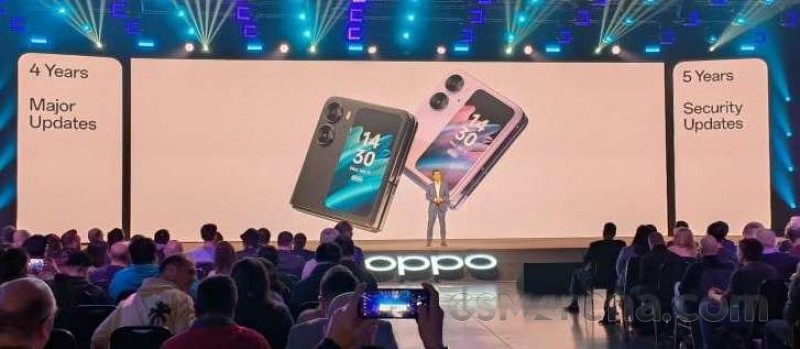
So far, the South Korean tech giant has been committed on offering 4 years of major Android OS update on its devices. Furthermore, the company even offers a total of 5 years of security updates as well. On the other hand, most OEMs only offer around 3 years of Android updates and 4 years of security patches. However, Oppo has also announced that it will offer longer software support for its new Find N2 Flip smartphone.
In other words, the Chinese smartphone maker is serious in taking on Samsung in the global markets for folding phones. For those unaware, the Find N2 Flip runs on ColorOS 13 out of the box. So we can expect the device to also receive Android 17 support eventually. Following this, it will also get another year of security patches before finally reaching the end of its software support life. The Oppo Find N2 Flip adopts a clamshell folding design, which is similar to the Galaxy Z Flip 4 or the Moto Razr model.
In an interview, Billy Zhang, Oppo President of Overseas Sales and Service, is clearly focusing on its foldable phone offerings right now. It declared its commitment to these phones, which will also be highly competitive in the global market.
We use cookies on our website to give you the most relevant experience by remembering your preferences and repeat visits. By clicking “Accept”, you consent to the use of ALL the cookies.
This website uses cookies to improve your experience while you navigate through the website. Out of these, the cookies that are categorized as necessary are stored on your browser as they are essential for the working of basic functionalities of the website. We also use third-party cookies that help us analyze and understand how you use this website. These cookies will be stored in your browser only with your consent. You also have the option to opt-out of these cookies. But opting out of some of these cookies may affect your browsing experience.
Necessary cookies are absolutely essential for the website to function properly. This category only includes cookies that ensures basic functionalities and security features of the website. These cookies do not store any personal information.
Any cookies that may not be particularly necessary for the website to function and is used specifically to collect user personal data via analytics, ads, other embedded contents are termed as non-necessary cookies. It is mandatory to procure user consent prior to running these cookies on your website.