Today is a big day for Xiaomi. The Chinese manufacturer is celebrating its 7th anniversary. Today is also another edition of its Mi Fans Festival where a bunch of Xiaomi products are sold for less. Asides that, Xiaomi has announced a new product, the Mi Router 3A.
The Mi Router 3A is similar to the Mi Router 3C but offers a bit more. It has the same 4 high-gain PCB antennas and the same 64MB RAM. Where it differs is in the ROM which is 64MB. Far from what you have in the 1TB or 8TB models of the Mi Router HD but better than the 16MB NOR Flash in the 3C.
For that extra memory, you get to pay more too. Xiaomi has put a price tag of ¥139 ($20) on the Mi Router 3A. However, you might want to buy the original Mi Router 3 seeing as it is currently on sale for the same ¥139 price but has double the memory (128MB).
A new Meizu phone has popped up at China’s communication agency, TENAA. The new phone shares a similar design to the Meizu M5 Note released a few months ago.
The phone has model number M612C. Some sources have said the similarity in the model number of this new phone and the M5 Note hints at it being the Meizu M5X.
The listing shows the phone is powered by a 1.3GHz quad-core processor. It will also be available in three memory configurations. A base version with 2GB RAM and 16GB ROM; a standard version with 3GB RAM and 32GB of storage; and a high-end version with 4GB RAM and 64GB ROM.
The Xiaomi Mi 6 is expected to be launched this month and the company’s CEO has affirmed an April launch for the flagship. However, neither Lei Jun nor Xiaomi is yet to release an exact date for the launch event. That means we’ll keep on feeding off speculations and rumors until something official pops up.
However, there is a new Weibo post which tips us on the likely date for the Mi 6 launch event. Don’t go jumping for joy yet, the post did not give a specific date in April but hinted that the Mi 6 would be launched in the later part of the month, slightly earlier than expected. The tipster also hinted that the Mi 6 is expected to have 50,000 units available in the first week and subsequently, production would climb gradually.
As for the price, the Weibo user revealed that the Mi 6 price will likely be higher than in the past. The Mi 6 was expected to start at 1999 Yuan(~$290) but the analyst says the cost price is around $300 when the production cost and cost of the chipset are factored in. So, it may likely be higher than $300 and this would be for the initial batch of a few hundred thousand units.
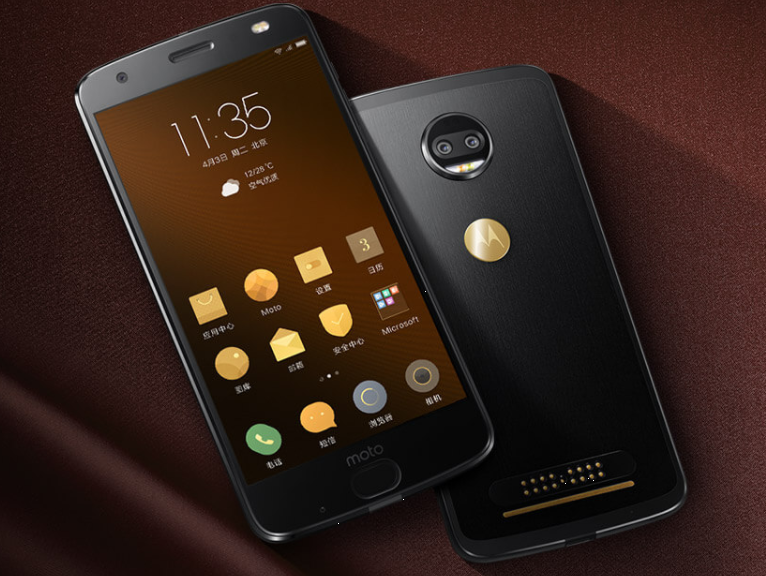
In the second quarter of 2017, several smartphone OEMs such as HTC, Xiaomi, and OnePlus are expected to launch their Snapdragon 835 chip driven flagship phones. Lenovo-owned Motorola too is expected to launch a successor model for Moto Z flagship from last year. A new tweet from the reputable tipster, Evan Blass has revealed the moniker for the upcoming Motorola flagship.
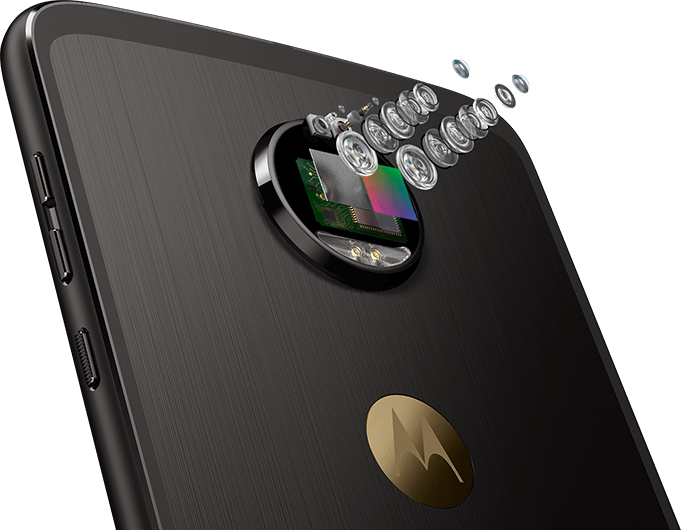
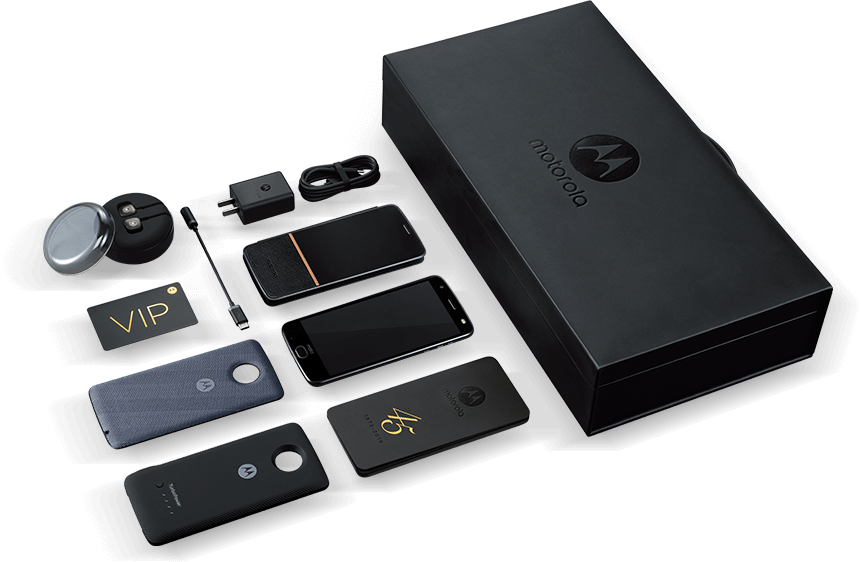
The Moto Z is one of the best flagship smartphones from 2016. Its support for Moto Mods accessories is the USP of the phone. It allows users to attach various kinds of accessories such as extra battery backup or external speakers to the set of pins available on the rear side of the phone. The idea of letting users attach new Moto Mods has turned out to be so successful for Motorola that it has confirmed that for at least three years it will be retaining the Moto Mods projects.
It means that the Moto Mods made for Moto Z (2016) will also be compatible with Moto Z from this year. Also, the company plans to make the Moto Z phone available on other carriers in the U.S. rather than being exclusive to Verizon. So, what would be the upcoming Moto Z phone called? The new tweet from Blass reveals that the Moto Z (2017) will be arriving with a Moto Z2 moniker. He has not revealed any details on the specs of the rumored Moto Z2.
The Moto Z was launched in June last year and it was made available for purchase by September. Hence, it is likely that the Moto Z2 may get unveiled in June this year. Motorola is also expected to launch Moto Z2 Play and Moto Z2 Force smartphones alongside the Moto Z2.
The new flagships from Samsung, the Galaxy S8 and Galaxy S8+, appear quite premium and aesthetically pleasing compared to predecessor Galaxy S series smartphones. Both the phones are flanked with glass panels on the front and rear sides. Their dual-edge curved screens occupy maximum portion of their front side. A Samsung Galaxy S8 drop test has been created by the folks at TechRax to reveal its durability. The same video also reveals the durability of the Red iPhone 7.
At the beginning of the video, a Red iPhone 7 is dropped from a height of 5 feet for a side-drop test. The iPhone was not damaged even though the screen of the iPhone had hit the ground. However, the red color at the bottom left corners of the phone was chipped off. Next, the Galaxy S8 is dropped from the same height for side-drop test. One of the top corners of the phone hit the floor very hard, but the Galaxy S8 did not receive any scratch on its front and rear sides. However, there was a slight discoloration on the corner of the phone that touched the ground first.
The front-facing drop test for the Red iPhone 7 cracked its screen. Also, the device could not start. The same frontal test for the Galaxy S8 caused damage to the screen. There are cracks on both the top corners of the phone. Its screen is not completely shattered, but the fall did result in the formation of spider web sort of lines on it. However, the phone did not switch off and its touchscreen worked fine.
Samsung is selling a wide range of protective cover and cases for the Galaxy S8 such as silicone cover, clear cover, keyboard cover, alcantara cover and the ugly 2Piece cover. These accessories can help in protecting the screen of the Galaxy S8 from occasional drops. Hence, we suggest our readers that if they are planning to purchase the Galaxy S8 and S8+, it is advisable to invest on a protective gear to shield the front and rear glass panels of both phones.
Chinese tech giant Qihoo 360 has quietly listed a new smartphone dubbed 360 F5 on its website. The device looks very much like the 360 Mobiles phone which was certified by TENAA weeks back. This is also coming on the heels of the launch of the 360 N5 with 6GB of RAM but this model comes with just a 2GB RAM.
According to the website listing, the 360 F5 sports a 5-inch IPS display with HD resolution. The screen has a 2.5D arc glass over it. The device is powered by a 1.3GHz Quad-core processor which is backed by 2GB of RAM. There is also 16GB of storage which is believed to be expandable.
As far as the camera aspect go, the 360 F5 packs an 8MP rear camera with LED flash while up front, there is a 5MP shooter. The device is kept on by a modest 2,000mAh battery and there is a fingerprint sensor onboard. The fingerprint sensor isn’t a rear-mounted one but is located on the home button. The F5 presents itself in a slim build, measuring 144.1mm x 71.7mm x 8.3mm and weighing in at 135g.
Xiaomi’s CEO steered the hornet’s nest when he confirmed that the Mi 6 would be launched this more. Since then, we have been inundated with rumours and leaks about the upcoming flagship. The latest leak is said to be sample image of the Mi 6 camera.
The Xiaomi Mi 6 is expected to come with a dual camera setup at the rear with the main shooter being a SONY IMX400 sensor, thus giving the prospect of a great camera. Even though we cannot verify the authenticity of the leaked image, it is still worth giving a shot. The image clearly indicates that it was shot on the Mi 6 with 5X optical zoom which shows the camera might have watermark effect. As for the picture quality, it comes out clear with a great attention to details even at 5X zoom.
Apart from a powerful camera sensor, the Mi 6 is expected with an equally powerful Snapdragon 835 processor backed by 6GB of RAM which would also assist the camera. The sample image might just be an attestation to the power of the camera which we dare not say is of DSLR quality until we see more official images. By the way, the Baidu post where the sample image was leaked is said to have been pulled off.
Today, LeEco started sending out invitations an event on April 11. The event is expected to be the launch of a new phone with dual cameras and a powerful AI system.
The dual cameras on LeEco’s new device are expected to work in a monochrome + RGB format. This will allow the cameras take better pictures under low light conditions. For the AI system, LeEco’s new phone will be able to work via voice alone. Just by speaking a command, you will be able to carry out functions like making a call. That sounds basic but it is also said that the assistant learns over time, increases its level of integration with the phone and even includes 3rd party apps functionality.
Just when we thought things were beginning to look up for financially troubled LeEco following the investment of $2.18 billion USD by Sunac Holdings, fresh facts have emerged that the Chinese tech giant delayed in paying the salary of its staff in the US March salary.
The Chinese company made a formal entry into the US market last year and since then it is reported to have in its employ over 500 staffs. Usually, LeEco is said to pay its US employees on the 15th and last day of every month but instead of paying on March 31st, the company inform employees that their paycheck would be delayed. A staff who declined to be identified hinted that they were informed that the delay was due to issues with moving money from China. However, a company spokeswoman disclosed that payment was later made on April 4.
Apart from the delay in payment of employee emoluments, some suppliers claim LeEco was behind on payments both in the US and China. Recall, the company was stripped of its broadcast rights for English Premiership games due to default in the payment of its subscription to the broadcast rights holder. There has also been an exodus of several high-profile executives in the last few months and the company was said to be thinking of sell its Silicon Valley property where it hoped to site its North America headquarters.
Despite all these, CEO Jia Yueting is still confident the company will bounce back and head right back to the top and we really hope they do, soon.
We all saw this coming. The Honor 8 Pro is now official and for those who have been following the news, it is the same device as the Honor V9 in China.
The Honor 8 Pro sports a 5.7-inch QHD display. That display is not for waste as one of the phone’s USP is its VR capabilities. Honor is pushing this by bundling the phone with a pair of cardboard VR glasses in the box and a VR game called Galaxy on Fire.
There is 6GB of RAM, 64GB of storage and a Kirin 960 SoC under the hood. The Honor 8 Pro has dual 12MP cameras and a fingerprint scanner on the back. The rear cameras have the same pixel count as that of the Honor 8 last year but have ditched the glass front and back for metal. The Honor 8 Pro is also missing the Honor 8’s Smart Key.
The camera up front is an 8MP sensor with an f/2.0 aperture. There is a 4000mAh battery that supplies power and Honor says you should be able to get 2 days from regular use or 1.44 days of heavy use. Even with the big battery, the Honor 8 Pro is just 6.97mm thick and weighs 183g.
A new report has revealed that Samsung Electronics and LG Electronics have together spent more than $11 billion in promotional efforts in the previous year. Among the two South Korean companies, Samsung has spent a whopping amount of around $10.2 billion whereas LG has spent around $1.1 billion on marketing in 2016.
Compared to the investment that Samsung did on advertising in 2015, it has spent 15 percent more in marketing in 2016. On the other hand, LG’s year-on-year expenditure on advertising has increased by 21.4 percent. Industry experts are of the view that the increased expenditure could have happened because of several reasons like Samsung’s increased focus on smartphone business and LG’s effort to market home electronics.
In 2016, Samsung ended up investing a lot in promoting the Galaxy S7 and Galaxy S7 Edge smartphones. It had to invest even more in the marketing of these 2016 flagships after the discontinuation of Galaxy Note 7. The Note 7 was launched in August last year. Since then Samsung had to carry out two recalls as issues about its explosion started surfacing from various regions of the world. Finally, the phablet was discontinued in October. Hence, Samsung had to invest more in in maintaining its brand reputation after the debacle of the infamous Galaxy Note 7. Also, competition from rival brands from domestic and global markets also made Samsung to input more money in advertising.
As far as LG’s expenditure is concerned, its spokesperson has said that the company has increased expenditure on advertising to boost its strategy on premium products. Industry experts believe that both companies will continue to aggressively market their products in this year. After poor sales record of LG G5 and LG G4, the company aims to cover lost ground with the release of LG G6. It will be available for purchase in the Western markets in this week. In the same way, Samsung is aiming to build trust with the much Galaxy S8 and Galaxy S8+ smartphones. These phones will be arriving to the global markets on April 21.
5G network is the next big thing and so many companies want to be at the forefront of this new technology. The new network standard is expected to bring a number of improvements to the way we communicate, one of which is hologram video calls.
American network carrier, Verizon, and Korean Network, KT on Monday made the world’s first hologram video call. The call originated from an employee at KT’s headquarters in Gwanghwamum to another employee at Verizon, New Jersey. The Verizon employee appeared as a holographic image on a monitor and not like the display-free hologram we see in movies. Sorry to disappoint Star Wars fans, we are not yet at that level of hologram calls.
Verizon CEO Lowell McAdam (left) and KT CEO Hwang Chang-gyu demonstrate a hologram video call via a tablet PC at the KT headquarters in Gwanghwamun.
KT is developing the hologram live call as one of the immersive media services it will offer when it launches its 5G network. It is also developing other services such as Sync View, 360° Live VR and Omni-view services. 360° Live VR is expected to be available during the 2018 Pyeongchang Winter Games and will allow people watch the sporting event live in VR.
Xiaomi has once again teased the launch of its 74th MIJIA Smart home product. The company released a poster this morning on the MIJIA Smart home Weibo page which indicates that the product would launch on April 6 by 10 AM.
The poster that was teased contains the photo of some bamboo stems and leaves and the post had some keywords such as “dampness” and “breathable”. This is perhaps, an indication that the product is one which improves the air we breathe by reducing dampness and moistures from the air. This points at the likelihood of a Dehumidifier.
A dehumidifier is generally a household appliance which reduces the level of humidity in the air, usually for health or comfort reasons, or to eliminate musty odour. There are large dehumidifiers used in commercial buildings such as indoor ice rinks to control the humidity level but this one is expected to be a small portable one for use in the home. It is also likely to be a Smart gadget that might be able to detect the level of humidity and get to work automatically. We’ll get to find out about that tomorrow at 10 Am so, keep a date.
Gizmochina along with NO.1 official is conducting a D7 smart watch as Giveaway gift to one of our lucky readers. Like always, you just have to follow the steps mentioned on the Gleam widget to get a chance to win this amazing phone.
Here is the main features of NO.1 D7 smart watch:
Display: 1.3 inch round screen Feature: GPS support Battery: 5 days standby time NFC: NFC support
More details about NO.1 D7 smart watch, please click here
How to entry this giveaway? Just follow these steps via Gleam widget:
Visit NO.1’s Facebook and like it;
Share this article to your Facebook, Twitter, Google+ or other social media;
Watch NO.1 official video on Youtube;
Terms & Conditions:
1. The giveaway is an international giveaway.
2. We are not responsible for lost shipments.
3. We are not responsible for any duties, import taxes that you may incur.
4. We reserve all rights to make any changes to this giveaway.
5. The prize will ship when it is available to purchase.
Just follow the steps mentioned in the Gleam widget to participate in the giveaway.
Once again, happy new year everyone and good luck.
Xiaomi has also launched a new Mi Panoramic camera which is capable of taking 360° panoramic photos today. The Mi 360° Panoramic camera comes with 23.88MP sensor and is capable of recording 3.5K video. It comes on the heels of the unveiling of the Mi Pad 3.
Taking a look at the features, the Mi Panoramic camera comes with a square shape and is designed with a fisheye lens at the front and back which guarantees a 360-degree view. The camera can also be used as an ordinary camera and it comes with four modes.
The Mi Panoramic has an IP67 waterproof and dustproof rating and also features a 6-axis electronic anti-shake function. The photos can be edited via an independent app. The camera is priced at 1699 Yuan (~$246) and would be available for purchase from April 6 on Xiaomi Mall, Mi Mall, Xiaomi’s official flagship store on Lynx, Jingdong, Suning, all at the same time.
Cubot is known for producing cheap smartphones and the Rainbow 2 is one of their latest models. The phone costs just about $70 but it offers a dual-camera setup and decent design for the price. Learn more in the full review.
The Rainbow 2 ships with all the usual stuff and some extras include a soft TPU case.
DESIGN and DISPLAY
When it comes to the design, the phone looks pretty good and it is well-built but it uses mainly plastic in the construction. It is quite comfortable to hold and manage the phone in one hand since it sports only a 5” 720p display.
The display is definitely not the sharpest out there but it is pretty good for a cheap phone. We have a 5MP front-facing camera that even has a flash for night selfies.
The star of the show is the dual-camera setup, which is designed to take pictures with bokeh effect. We have a combo of 13MP/2MP camera sensors to do that trick.
The backplate is glossy and it attracts fingerprints very quickly. You can easily remove it and underneath it, you will find 2 SIM card slots, a microSD card slot and a 2350mAh battery.
The loudspeaker is placed on the bottom, which is great but the sound quality is quite terrible like on most of the cheap phones.
Cubot Rainbow 2 in pictures:
HARDWARE and PERFORMANCE
As for hardware, Cubot Rainbow 2 has low-end specs that include a quad-core MTK6580A chip, just 1GB of RAM and 16GB of expandable storage.
Unsurprisingly, the gaming performance is kind of mediocre but it is still possible to enjoy some 3D games like Asphalt 8 on the medium graphics with just a bit stutter and some skipped frames.
USER INTERFACE
It is pretty cool to get Android 7.0 out of the box in a $70 phone. The Rainbow 2 will provide you with pretty much stock Android experience, with just a few added features. For example, you can use some gesture and motion controls. Some of them work pretty well while others are kind of slow to respond.
In general, the the user interface is fast and responsive and I didn’t have major lag or stutter.
IMAGE QUALITY
As for image quality, that dual-camera setup can take some awesome-looking photos with the shallow depth of field effect. Obviously, you can’t compare the quality with some more expensive handsets but I’m quite impressed with the results from the $70 phone. As for regular photos, you can’t expect much from any super cheap phones but you can still take some pretty good-looking pictures that are usable for social media.
However, the quality decreases quite dramatically in lower-lit situations.
The selfie image quality is not so great and the front-firing flash does not really help in low-light.
The video quality does not impress like on most of the cheap phones.
CONNECTIVITY
As for connectivity, the call quality and signal reception are decent. Unfortunately, the phone does not support 4G and the GPS lock speed are kind of slow at times.
BATTERY LIFE
2350mAh battery performs quite well but don’t expect wonders. I could get up to 4 hours of screen-on time but your mileage may vary, depending on the usage.
CONCLUSIONS
Cubot Rainbow 2 is another cheap device from China that aims to deliver a lot of value for the price. Well, you get some nice features like a dual-camera setup and a pretty good overall performance for the price of $70 but as always, there are some drawbacks that are common to all cheap phones that you need to consider before buying.
In a celebration of 44 years of cellular mobility, Moto USA has added a new video on its YouTube channel. Right at the start of the video, it showcases several Motorola phones from its oldest flip phones to the latest Moto G5 smartphone. One of the Motorola phones that shows its glimpse for a split-second is the alleged Moto X (2017).
The alleged blue-colored phone resembles Moto G5, but the appearance of the antenna bands as it will as its front side appears quite similar to the Moto X (2017) images that have appeared recently. However, the rear-facing camera spotted in leaked photos of Moto X (2017) has a dual camera setup, but the phone that has been spotted in the video seems to house a single camera. Also, a rear-facing speaker grille on Moto X (2017) seen in the video is absent on the previously seen leaked images of the phone.
Recent rumors have revealed that the upcoming Moto X (2017) would be coming with a 5.5-inch display and it will be driven by Snapdragon 625 chipset. It is expected to come in RAM versions like 3 GB and 4 GB. The phone is also rumored to be available in storage choices like 32 GB and 64 GB.
Its dual camera snapper is speculated to feature a pair of 13-megapixel sensors. Leaked shots suggest that the selfie camera of the phone is accompanied with a selfie snapper. The rumored Moto X (2017) does not feature pins for connecting Moto Mods accessories. According to popular leakster, Roland Quandt, the phone is codenamed as Sanders and its model number is XT180x.
Motorola Moto "X 2017" XT180x codename "Sanders": Snapdragon 625, 3/4GB RAM, 32/64GB ROM. 13MP camera (don't know if second cam sensor same)
A mysterious white colored Moto phone has been also spotted in the video. Its back panel seems to sport rear-facing speakers. Speculations have it that it could be “Albus” phone that is speculated to come with specs like Snapdragon 625, 3 GB / 4 GB RAM and 32 GB / 64 GB ROM.
We have had a couple of leaked details about the Xiaomi Mi Pad 3 including the likely specifications and design over the past couple of weeks. Now, Xiaomi seems to have officially launched the Mi Pad 3 today and the device will be going on sale as from tomorrow on various channels. This is another quiet launch and it seems we will be having more of such this year. Read on for the specifications of the Mi Pad 3.
The Xiaomi Mi Pad is powered by a high-performance MediaTek processor with a clock frequency of 2.1GHz. The tablet comes with a 7.9-inch retinal display with 2048 x 1536 pixels resolution and PPI of up to 326. At the rear, there is a 13MP rear shooter while up front, you get a 5MP selfie camera.
Further, the Mi Pad 3 features 4GB of RAM as well as a 64GB storage. It uses the USB Type-C charging interface and supports WiFi 802.11ac dual antenna band. The Pad 3 also comes with support for low-power Bluetooth 4.1 technology. Keeping the lights on is said to be a large 6600mAh battery which supports 5V/2A fast charging. The tablet device gets its interface from the MIUI 8.
On the design aspect, the Mi Pad 3 is made from a metal alloy material which gives its appearance a tough but slightly textured look. The metallic body is polished using a sandblasting process which doesn’t remove the texture but also gives it a comfortable feel when held.
The Xiaomi Mi Pad 3 carries a price tag of just 1499 Yuan (~$217) and is billed to go on sale at 6 AM on April 6 on Xiaomi Mall, Lynx, Jingdong, Suning and Mi Home.
The rumor mill has been revealing details of the upcoming LeEco Le X850 smartphone since a past few months, but its original name was not known. Now, fresh photos of the smartphone have surfaced to reveal its design from angles along with its “Le Max 3” moniker.
The fresh photos of the Le X850 matches with its photo that surfaced through TENAA listing. The new photos show that the phone features metal unibody design. Above the display, an earpiece can be seen separating two round-shaped features. One of them is the selfie camera and there is no confirmation on what the other feature is. The display is narrow bezels on its left and right sides.
The bottom side of the phone has a USB Type-C port that separates the two external speakers. There is no 3.5mm audio jack on the phone. The major feature of the phone, the dual rear camera placed in a circular housing is present on the backside. It is coupled with dual-LED flash. Below it is the fingerprint scanner.
The top and bottom edges of the phone at the rear features the antennae bands. The right side of the phone has volume controllers and power button whereas the left side does not feature any physical button, but it seems to house a SIM tray. One of the snapshots that reveals the About Phone screen of the phone shows the model number of the phone has Le X850 and the name of the device as Le Max 3.
The Le Max 3 is preloaded with Android 6.0.1 Marshmallow OS and EUI 5.9. It is powered by the Snapdragon 821 chipset. Previous rumors have revealed that the Le X850 has a 5.7-inch quad HD resolution supporting display. It is likely to arrive in RAM variants like 4 GB and 6 GB. for storage, it is expected to include UFS 2.0 storage choices like 32 GB, 64 GB and 128 GB. Rumors have it that these models will be costing 1,799 ($260), 2,099 ($3030 and 2,499 ($361), respectively.
The dual rear camera is expected to include 13-megapixel lenses whereas the frontal camera is of 16-megapixel. It is poised to feature a 4,000 mAh battery that supports Quick Charge 3.0. The Le Max 3 may get unveiled on April 11.
Words out of South Korea has now come out to further lend some level of credibility to talks of a 6GB + 128GB version of the Galaxy S8+. According to etnews, the Samsung Galaxy S8+ will have a 6GB RAM version that would be exclusive to China and would retail for a staggering KRW 1,155,000 (~$1,030, 7099 Yuan).
Furthermore, the report claims the Galaxy S8+ (6GB+128GB ) will come in Midnight Black and there will be a free Samsung DeX dock worth KRW 160,000 (~$140) with each pre-order. This is different from the free Gear VR headset with a controller and a set of games which is being offered with the International version. We must point out, though, that nothing is certain at this point until Samsung officially confirms it. But Samsung would be meaning to compete favorably with other Chinese OEMs who seem to be shifting to 6GB RAM onboard their smartphones.
We use cookies on our website to give you the most relevant experience by remembering your preferences and repeat visits. By clicking “Accept”, you consent to the use of ALL the cookies.
This website uses cookies to improve your experience while you navigate through the website. Out of these, the cookies that are categorized as necessary are stored on your browser as they are essential for the working of basic functionalities of the website. We also use third-party cookies that help us analyze and understand how you use this website. These cookies will be stored in your browser only with your consent. You also have the option to opt-out of these cookies. But opting out of some of these cookies may affect your browsing experience.
Necessary cookies are absolutely essential for the website to function properly. This category only includes cookies that ensures basic functionalities and security features of the website. These cookies do not store any personal information.
Any cookies that may not be particularly necessary for the website to function and is used specifically to collect user personal data via analytics, ads, other embedded contents are termed as non-necessary cookies. It is mandatory to procure user consent prior to running these cookies on your website.