BBK subsidiary, OPPO may really have laid the Find series to rest for now, since the R-series is recording huge successes for the company. The R9 started the journey and was followed by the R9S and R9S Plus released last year. OPPO looks set to release a new R11 model in China soon. While the Find 9 remains elusive, the OPPO R11 has severally been popping in and out of leaks.
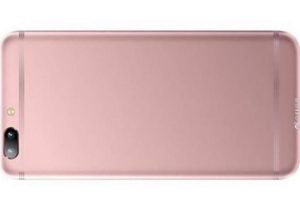
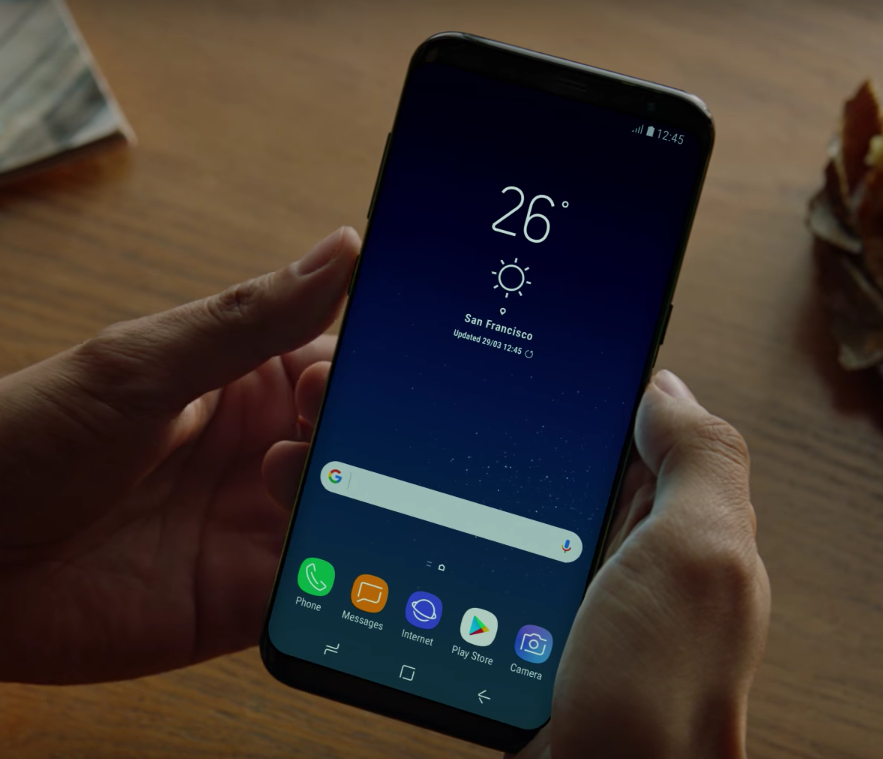
Images of the OPPO R11 has appeared again, this time said to have been grabbed from a TV commercial in China. The pictures show the device in the hands of Chinese pop singer and Actor, Wang Junkai. OPPO and Wang Junkai have a long standing relationship beginning from the R9 days. The Chinese superstar was one of the celebrities who endorsed the R9.
One feature that can easily be grabbed from the photos is that the R11 will come with dual rear cameras. The dual camera setup is located at the top left corner of the device, arranged in a horizontal plane, with the LED flash located next to it. The camera bump is slightly protruded out of the body of the phone.
The OPPO R11 model also received Radio frequency approval recently and it reveal that OPPO will be coming out with four different models namely, OPPO R11t, OPPO R11 Plus, OPPO R11 Plust, and R11 Plusk. All four models come with entire network function and are likely to vary in RAM and storage. While all versions will be powered by a Snapdragon 660 processor, there will be a 4GB and 6GB RAM versions. The models will also run on Android 7.1.1 OS with Color OS. Apart from dual rear cameras, there may be front dual cameras as well.
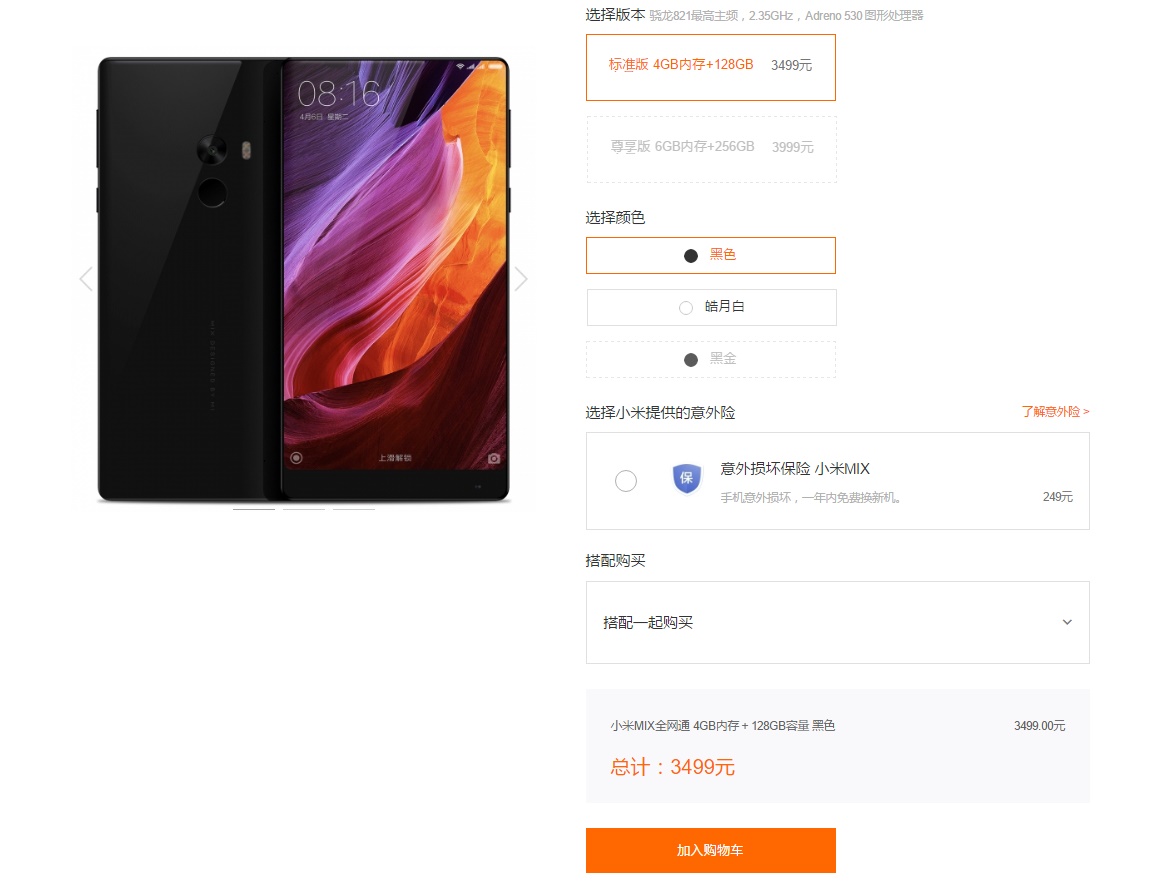
The Xiaomi Mi MIX may have spawned multiple clones and imitations but none can hold a candle to it. The Snapdragon 821 powered tri-bezel-less phone was released alongside the Mi Note 2 but has been plagued by shortages arising from the difficulty associated with the production of its ceramic back.
New report says the short supply will soon become a thing of the past as Xiaomi will now able to meet up with demand. An insider has revealed that Xiaomi has taken stock of all three color variants. The possible explanation is that the challenges with the production of the ceramic body have been resolved. We do not know if this is as a result of the recent ¥8.7 billion investment in ceramic production by Changying Prescision but whichever way, this is good news for fans of the Mi MIX.
The official Xiaomi website has the Mi MIX in stock. There is the black variant, the pearl white version unveiled at CES 2017, and the exclusive black gold version with gold plated rings around the camera and fingerprint sensor. The black gold and pearl white models are still out of stock at the moment but hopefully that should change soon.
The Meizu E2 is scheduled for an April 26 launch. That’s just two days away. In the past week we have seen multiple images said to be of the device. And every single one of them sports a different camera and LED flash design.
First, there was the leaked image that showed the Meizu E2 would have a ring camera flash like that of the Nexus 6. It was followed by another image that had the camera sitting on the top left corner with the LED flash missing. Twenty-four hours later, a new image surfaced. This one had a design similar to a dual camera setup but is actually a single camera positioned beneath the antenna line. Fast forward to Friday and a fresh image with a new camera and LED flash design was released again.
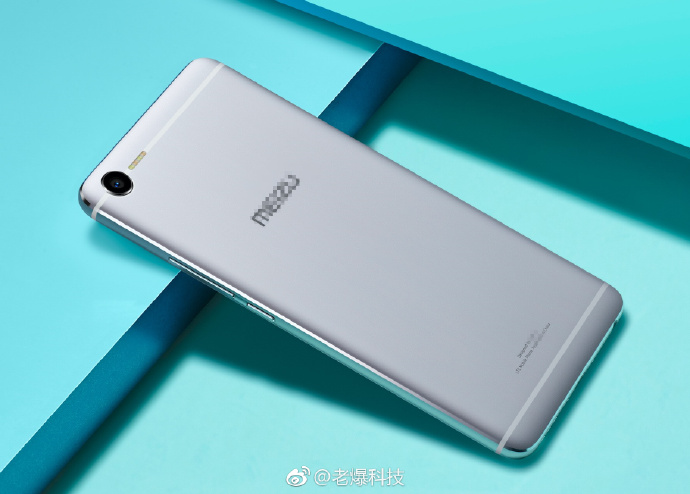
We want to believe the last leaked image is the one Meizu is sticking to for the E2 as a leaked press image on Weibo by @Old Technology has the same design. In the new image, the camera sits on the same line as the antenna line.
The interesting part of the design is the LED flash which is integrated on the antenna band like jewels lining a cloth. It is a new take on the way the LED flash is designed but it looks really good. Zoom in on the image and you can see there are about four LEDs, all a mixture of white and amber. That’s a lot of light for a camera. The rest of the design is typical Meizu.
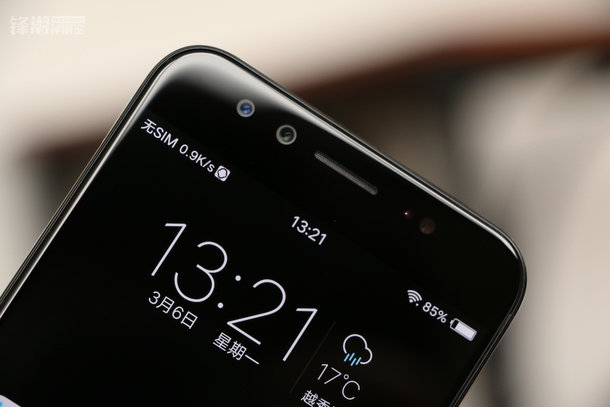
The Vivo X-Series is one series that pioneered dual selfie camera and also has a premium build that envelopes its mid-ranger position. The series which is made up of the X9 and X9 Plus is set to get another sibling dubbed X9S Plus.
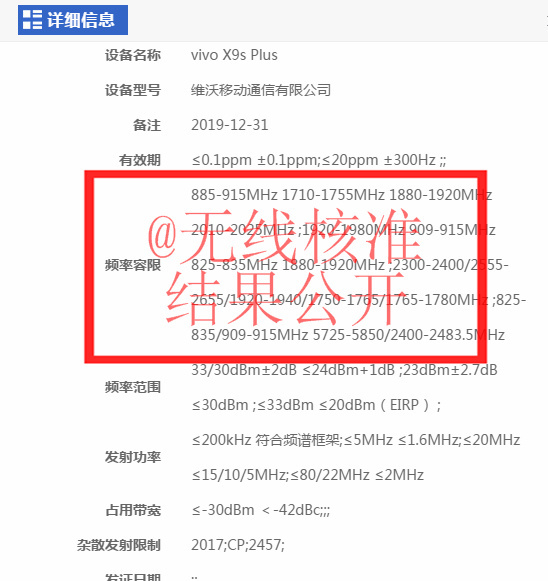
The X9S Plus is coming barely half a year after the X9 was announced and a recent leak on the internet indicate that the Vivo X9S Plus has received Radio frequency certification in China. That shows the device is a step closer to being released but we don’t know how soon.
From the details made available, the X9S Plus will likely be the first Snapdragon 660-powered phone. The SD 660 is a new chipset, still unannounced, which uses the 14nm process and integrates an Octa-core Kyro CPU. The SD 660 comes with an Adreno 512 GPU and support dual-channel LPDDR4X memory, UFS 2.1 storage, and X10 LTE baseband.
The Vivo X9S Plus is also expected to come with a dual selfie camera setup and Vivo may decide to take things a bit further by including a dual camera at the rear. If this happens, the X9S will join the likes of Alcatel Flash featuring four cameras.
According to the schedule announced by Xiaomi, the Mi 6 flagship will go up for its first flash sale on April 28 at 10 am, which is just four days away. Going by latest details, the flash sale is likely going to leave many persons disappointed because, like previous Xiaomi phones, the Mi 6 units may still come out scarce.
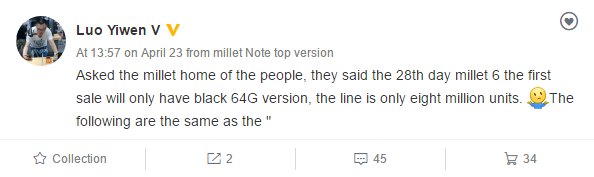
Recently, popular Chinese tech blogger Lu Yiwen V leaked a photo which showed the first batch of Xiaomi Mi 6 has been packaged, awaiting shipment. The number of units of the very first batch of the Mi 6 wasn’t revealed then but now, the blogger has in another Weibo post revealed that the first batch is made up of just 80,000 units. Also, that only the black colored 64GB storage version will be up for grabs in the first flash sale.
Presently, the Xiaomi Mi 6 is said to have already amassed over 800,000 reservations on Jingdong (JD.com). Statistics of the reservations on the other channels are not known right now but that figure would likely double when reservations on all the sales channels are collated. In addition, Xiaomi had also indicated that the Mi 6 will go on sale in its Mi Home stores across China on April 28. Reservations for the Mi Home sales will open on April 27 and will require payment for the device. An ID card entitles the owner to just one unit which will be more than assured if booking is successful than getting the device via the flash sale. So, are we looking at another shortage situation here? Or Xiaomi has it all covered by making more units of the flagship ready before the first flash sale? We expect demand to far outweigh supply for the Mi 6 during this first sale, but in line with Xiaomi’s aggressive sales drive this year, the device will likely become available in large stock as time goes on.
Xiaomi has released an official theme song for its recently launched Mi 6 flagship phone. The name of the song is ‘Only One’ and it is composed by Jiang Han, a singer from China. The lyrics of the song is based on the description of the flagship phone.
It is said that the theme song has been released to make the people of the world know that it is an international product, even though it is now being sold solely in China. The lyrics of the song are beautiful that highlight the premium features of the Xiaomi Mi 6 such as its marvelous ceramic body and glass design.
The Xiaomi Mi 6 was introduced on April 19 and it will be hitting the market by April 28 in the home country. Fresh information suggests that over 600,000 people have registered for Xiaomi Mi 6 on JD.com, an online retailer from China. It will be also available through other Chinese online retailers. Speculations indicate that Xiaomi Mi 6 registrations across other Chinese retailers may cross 2 million mark.
The Xiaomi Mi 6 has a 5.15-inch IPS LCD display that supports full HD resolution of 1,920 x 1,080 pixels. The SoC of the phone is Snapdragon 835. Its 64 GB and 128 GB storage models have 6 GB of RAM. There is no microSD card slot available on the Mi 6.
It has a 12-megapixel dual rear camera and 8-megapixel frontal camera. it is running on Android 7.1.1 Nougat OS overlaid MIUI 8 skin. It has a front-mounted fingerprint scanner and a USB Type-C port. It is packed with Quick Charge 3.0 enabled 3,350mAh battery. The rumor mill had been talking about a larger Mi 6 Plus smartphone. However, it was not unveiled alongside Mi 6. Fresh news suggest that it may be launching in the next two months.
The Xiaomi Mi 6 will be available in color choices such as Black, White and Blue. A recent TENAA listing has revealed that the Xiaomi Mi 6 would be arriving in several more colors. The 64 Xiaomi Mi 6 is selling at $365 whereas its 128 GB variant is priced at $420 in China. The special edition of Xiaomi MI 6 featuring ceramic chassis is available for $435.
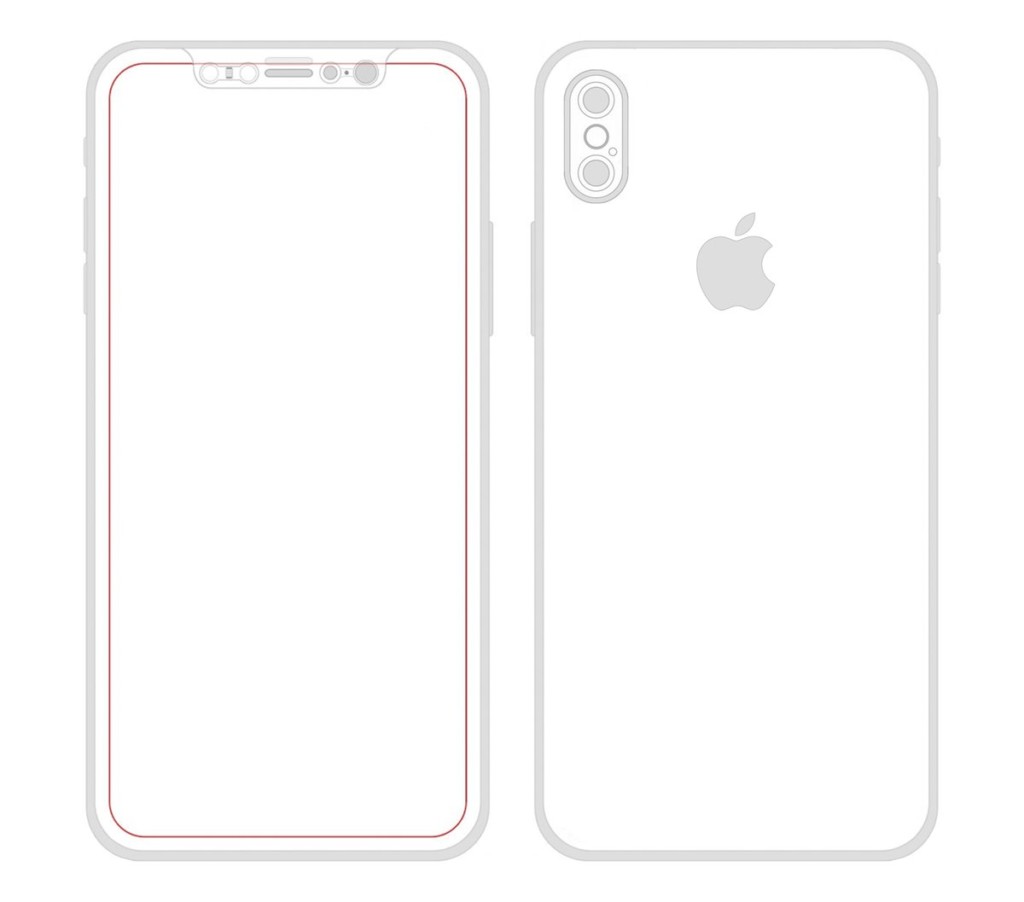
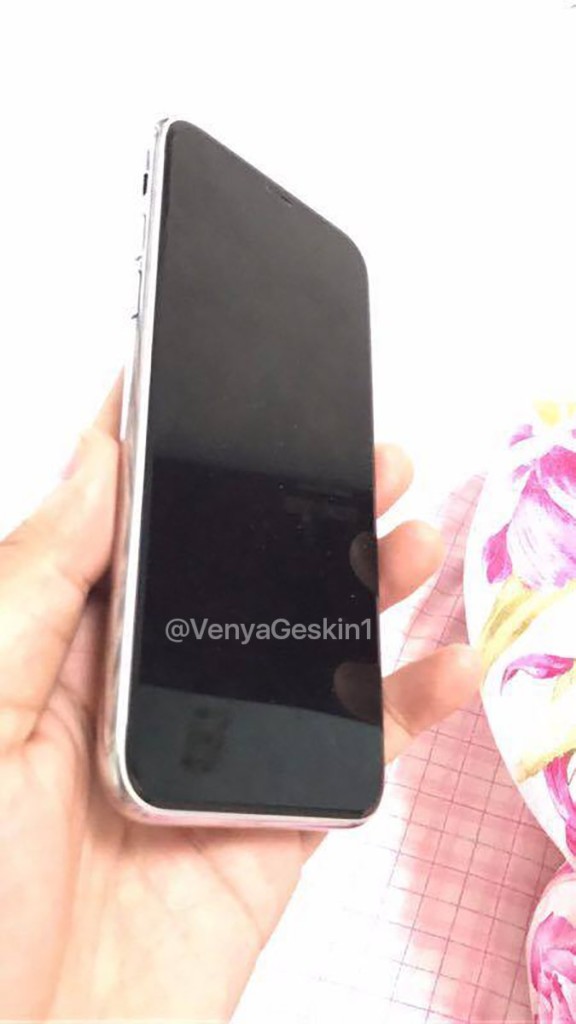
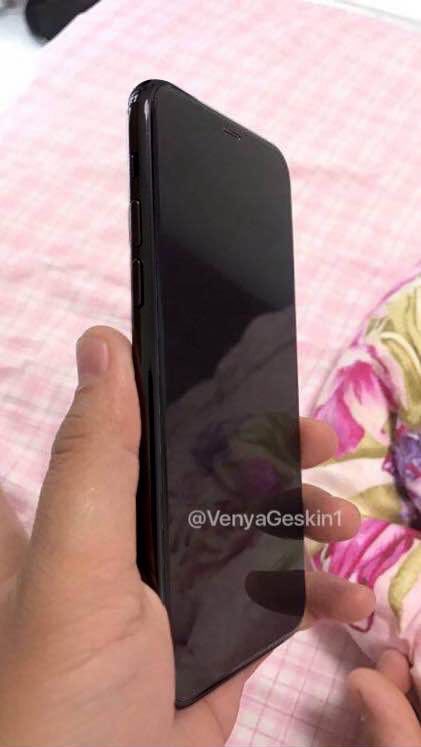
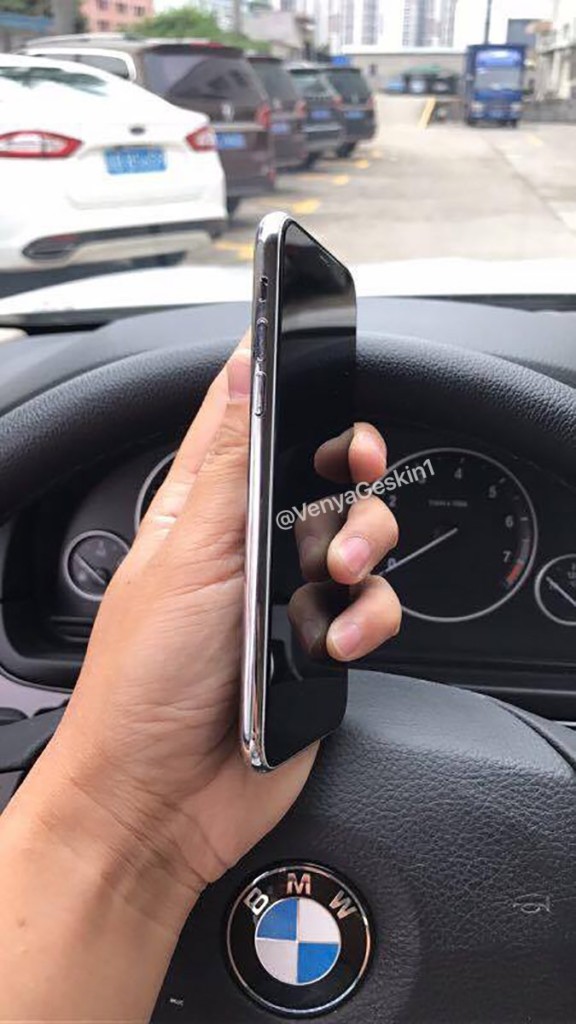
in the past few months, the rumor mill has been speculating only on the specifications and features of iPhone 8 which is rumored to be releasing to celebrate the 10th anniversary of iPhones. However, recently a leaked schematic of the alleged iPhone 8 had surfaced showcasing its features like full glass design and vertically positioned dual rear camera. Now, Benjanim Geskin, designer of concept phones who had recently revealed an iPhone 8 schematic has now come with up fresh photos of a dummy unit of iPhone 8.
Apple has been using metal unibody design of Apple iPhones starting from iPhone 5 in 2012. The iPhone 4 and 4S smartphones that were launched earlier had glass panels on front and rear sides flanked with a metallic frame in between. The iPhone 8 rumors have been claiming that Apple would be bringing back glass design on it.
According to Geskin, the iPhone 8 would be coming with 2.5D curved glass on the front as well as on the back with a stainless-steel frame running along its edges. The new photos of the purported iPhone 8 dummy unit show the smartphone featuring a display that covers the entire front. Since a physical Touch ID Home cannot be seen, it can be guessed that the biometric recognition will be present underneath the display.
It will continue to sport slim bezels of up to 4mm and it is also features a Lightning port on the left which also houses the volume controllers. The right side features an elongated Power button along with a SIM tray. The thickness of the iPhone 8 is speculated as 7.1mm. The iPhone 7 has the same thickness.
In the camera department, the iPhone 8 seems to feature a dual camera setup that is arranged in a vertical design. Both the snappers are separated by an LED flash. Geskin claims that the iPhone 8 would also be featuring dual cameras on the front.
Other sources have claimed that the iPhone 8 would be housing a 5.8-inch OLED display. Like the iPhone 7, the iPhone 8 would continue to sport IP68 certified chassis. Other rumored features include wireless charging, iris scanner and 3D facial recognition.
Jens Heithecker, IFA Executive Director said in a press meet in Lisbon that the IFA tech tradeshow (usually held in September) is an ideal place for Samsung to introduce the Galaxy Note 8. It means that the Galaxy Note 8 may launch in September to rival against the next-generation iPhones as well as the rumored iPhone 8/X flagship.
Since 2011, Samsung has used the pre-IFA platform to launch the first Note phablet, Note 2, Note 3 and Note 4. However, in 2015 and 2016, the South Korean tech giant did not launch the Galaxy Note 5 and Note 7 at IFA tech tradeshow, but they were launched through unveil events in New York. in the month of August.
Speculations have it that Samsung wanted to avoid clashing of Galaxy Note’s launch with its best rival, the iPhone. Hence, it chose to unleash the Galaxy Note 5 and Note 7 in August for better sales result. The Galaxy Note 5 did achieve better sales but as we all know the Note 7 met with a premature death because of its faulty battery.
Heithicker wants Samsung to return to IFA this year to debut the Galaxy Note 8. The South Korean company is expected to hold the biggest presentation at the upcoming IFA 2017. As of this writing, there is no confirmation on whether the company will be unveiling smart TVs, other home appliances or the Galaxy Note 8.
Hethicker said during the recent press conference that the journalists and media from across the globe will be coming to Berlin where the IFA tradeshow is regularly held. It is not possible to gather media and journalists in other cities in August, he added.This year, the IFA 2017 will be held between Sept. 1 to 6.
The rumor mill is slowly picking up pace on revealing leaked information of Galaxy Note 8. Recently, a prototype of Galaxy S8+ was spotted with vertically arranged dual rear camera setup. Speculations suggest that this device could end up releasing as Galaxy Note 8.
Also, KGI Securities analyst, Ming-Chi Kuo has revealed key information on the specs of Galaxy Note 8. According to Kuo, the 12-megapixel + 13-megapixel dual rear camera setup will be on par with the twin rear camera of iPhone 8. The rear is also pegged to sport fingerprint scanner like the Galaxy S8 duo. The phablet would probably include a 6.4-inch display that will support QHD+ resolution. It will be driven by Snapdragon 835 and Exynos 8895 in different markets.
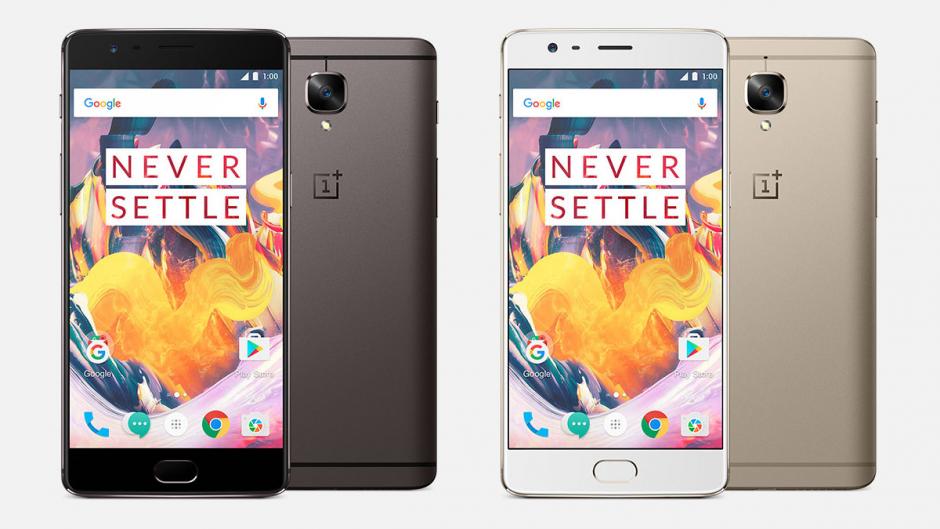
The OnePlus 3 and OnePlus 3T are OnePlus’ most treasured devices at the moment. OnePlus just released a new beta build for both devices that brings lots of features and fixes some known bugs from the previous build.
The new build called OxygenOS Open Beta 5 (Open Beta 14 for OnePlus 3) fixes issues like system reboot when setting wallpaper, occasional launcher crash, and wallpaper settings not working. They have also fixed the bug that prevents the auto night mode from turning off and changed the default sunrise time from 8 a.m. to 6 a.m. .
Other improvements includes Bluetooth optimization(car bluetooth fixes, battery usage optimizations and auto connection issues), GPS optimization (improved accuracy and lesser likelihood of dropped connections). The community app has also been updated to version 1.8.
The Xiaomi Mi 6 was officially launched last Wednesday and pre-orders have already begun. Jingdong Mall, one of the official retailers has recorded over 600,000 pre-orders ahead of the first flash sale on Friday, 28th of April. Xiaomi too is hard at work in its factories, trying to ensure that there are enough units available for purchase.
Chinese blogger @Luo Yiwen yesterday shared an image of factory workers in front of the first batch of Mi 6 ready for shipment. The picture was taken at 20:13hrs, on April 21 2017. We don’t know how many units have been produced so far but Xiaomi has just five days left before the phone goes on sale. Will it be able to meet up with demand? We hope so.
Part of Xiaomi’s focus for this year is to meet up with the high demand for its phones. Last year, it recorded less sales due to supply issues and its over reliance on using online sales only. Xiaomi didn’t mention if the Mi 6 will be available in physical stores come Friday but it will be unwise if they are repeating the same mistakes from last year.
Samsung is already facing supply issues with orders for the Samsung Galaxy S8 and S8+ in its home country. Early pre-orders started on the 7th of April and by the 18th, it had crossed the 1 million mark (highest record for a new phone), leading Samsung to extend the registration period.
Both phones went on sale on the 21st of April (including the US too) and reports say there are already shortages with supply. Samsung says the reason for the shortages is due to “an imbalance of color or model at retail stores”. The Midnight Black model is said to be in short supply already and the Orchid Gray is also running low.
There is no report yet if the shortage is limited to South Korea or it extends to other markets. However, we advise you prepare your minds to receive your shiny brand new phone a little late.
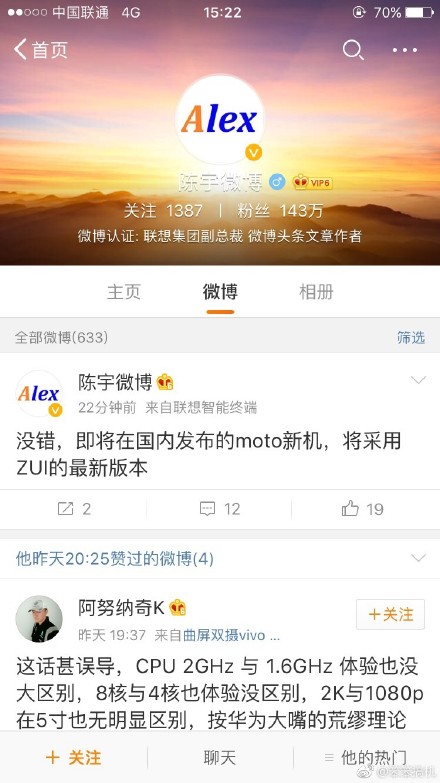
Apparently, in a bid to revive the ailing Moto brand, Lenovo has disclosed that the upcoming Moto smartphones would feature the intuitive ZUI which is used on its ZUK brand. This disclosure is credited to have been made by Lenovo’s Vice-President Alex Chen Yu via his Weibo account*.
Before now, the Moto brand basically runs on native Android OS right from when Google acquired Motorola and even after the brand was purchased by Lenovo. With such setup, competing in a market where custom ROM like the MIUI, Flyme, EMUI, and others exist will be a minus on its part. Thus, the latest move could be a last dash effort to tweak things for the Moto brand and make it more appealing and competitive in the market.
The VP didn’t give details as to whether the ZUI will be on all Moto smartphones or on the flagship models.This year, we are already expecting the low-end Moto E as well as Moto C. Also, the next generation Moto Z flagship models are expected to be launched soon and if at all the ZUI will feature in a Moto smartphone, they are more likely candidates. We had seen render and leaks of Moto Z2, Z2 Play and Z2 Force, with the possibility of all making their debut this year and it will be more exciting if they come with top end specs in addition to the ZUI. The ZUI will likely be the latest ZUI v2.5.
(*Footnote: We couldn’t locate the post on Lenovo VP Chen Yu’s official Weibo page. We can’t say why but it is possible the post may have been deleted from his account or perhaps, this information isn’t actually from him)
Earlier this week, there were reports from owners of the Huawei P10 and P10 Plus about the different flash memory speeds on their devices. While some recorded read and write speeds for UFS 2.1, others got speeds for UFS 2.0 and the rest recorded eMMC 5.1 speeds.
Huawei later issued an official statement regarding the matter, explaining that flash memory is sourced from different suppliers, all of which are tested to ensure they meet up with standards. Then the CEO spoke on the matter via his Weibo account and revealed that shortages in supply led to the use of eMMC flash memory in some units. He also added that he didn’t notice any difference in performance while using the Huawei Mate 9 with a UFS 2.1 storage and the Huawei P10 Plus with an eMMC 5.1 storage.
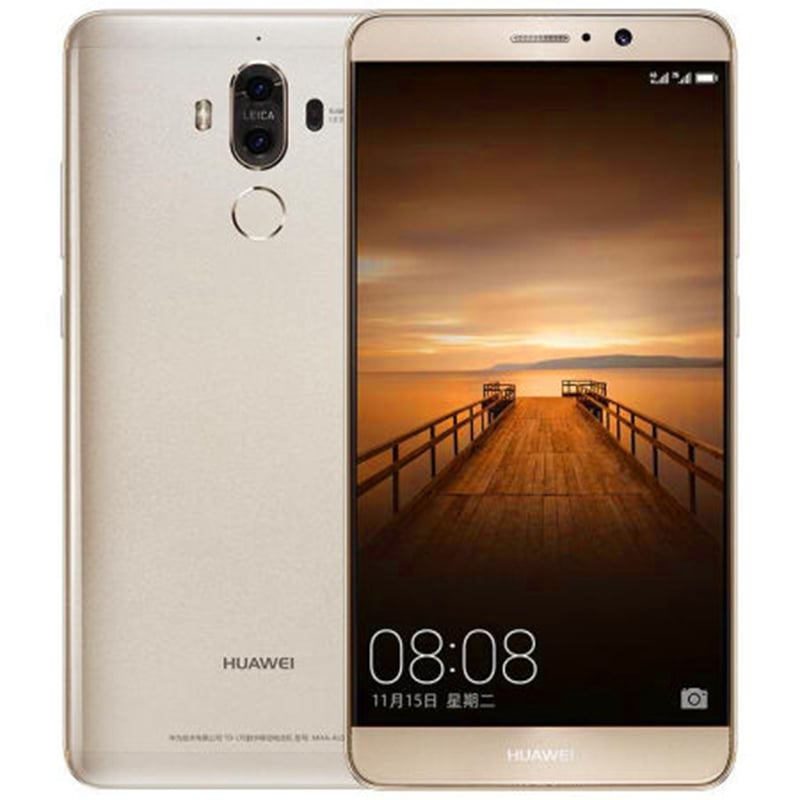
The latest twist regarding the matter is Huawei has modified the info on the Huawei Mate 9′ page and removed the part that says there is a UFS 2.1 storage in the device. Weird right? Why modify the page for the Mate 9 when the affected devices in question are the Huawei P10 and Huawei P10 Plus? Does it mean that there are units of the Mate 9 that don’t have UFS 2.1 flash memories? Or is it a precautionary move for new units of the Mate 9 that won’t ship with UFS 2.1 flash storage? Turns out that there are units of the Mate 9 with UFS 2.0. flash storage and Tweeter user (@yao_yunfan) has provided evidence.
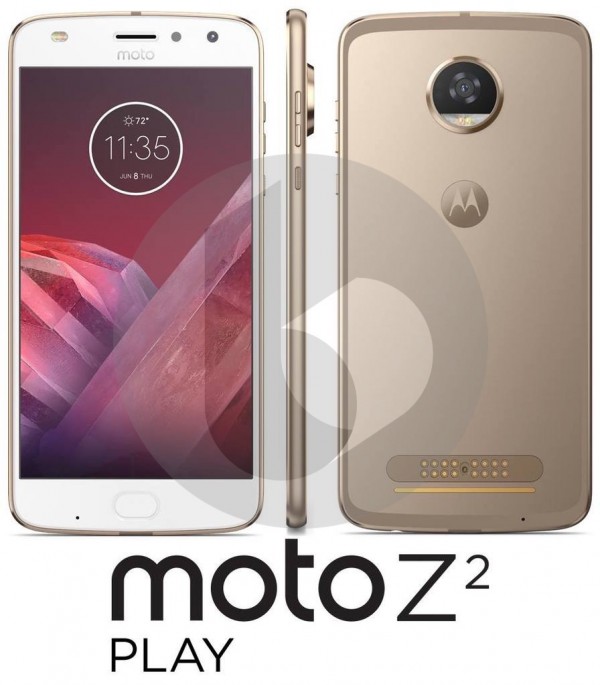
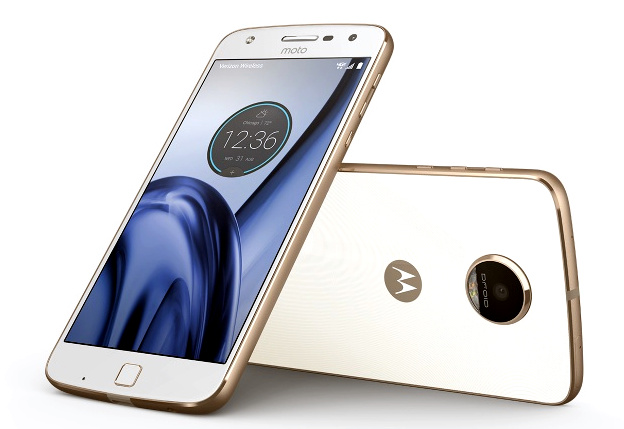
Lenovo/Motorola is gearing up to refresh the Moto Z line. A week ago, we saw leaked images of the Moto Z2 Force. Quick on its heels is a press render of the Moto Z2 Play obtained by TechnoBuffalo.
On first look, the design doesn’t look to be different from that of the Moto Z Play released last year. The camera hump is still there and you have the Moto batwing logo and moto mod connector gracing the rest of the back plate. The front looks almost the same too. The position of the front flash, earpiece, light sensor and front camera are exactly as they were on the Moto Z Play. So what then is different?
Moto Z2 PlayMoto Z Play
First, the fingerprint scanner has been changed to a pill-shaped one. Then they swapped the shape of the front LED flash with that of the light sensor. The Moto Z2 Play also appears to be thinner in this press render, however that will be confirmed when the dimensions become known.
The visible changes on the rear include the new antenna line that runs along the entire border; the redesign of the moto mod connector pins; and the new sensor for the camera.
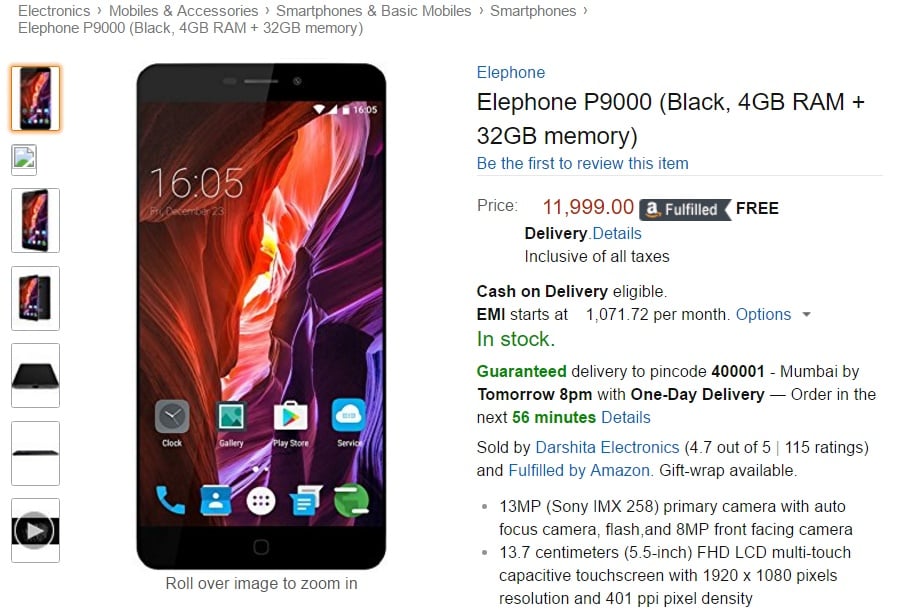
A few days ago, the Elephone P9000 got a stable Android Nougat update. Today, its on sale on Amazon India and the asking price is Rs.11,999 (~$186).
For that price, you get a 4GB RAM phone with 32GB of built-in storage and a 5.5-inch 1080p LCD display. The camera is a Sony IMX 258 13MP sensor and there is an 8MP camera up front for selfies. The P9000 uses Mediatek’s MT6755M octa-core chipset and is powered by a 3000mAh battery.
Amazon will let you pay on delivery for this order but each customer can only purchase one unit. If you are interested in purchasing the Elephone P9000, just click on this link.
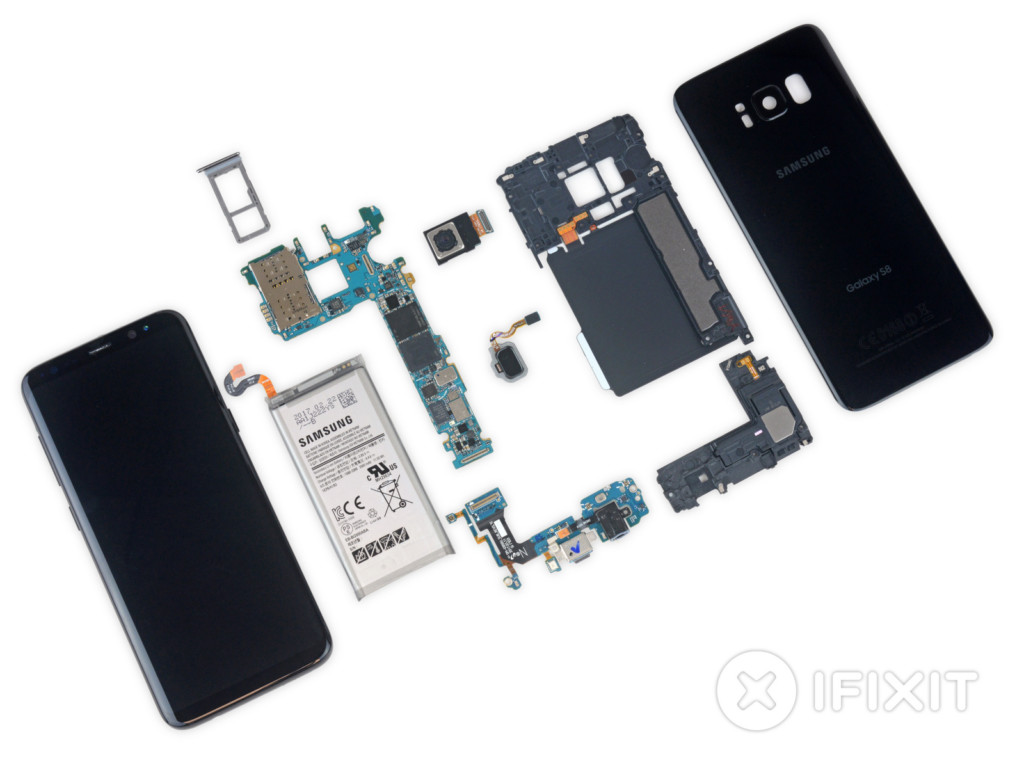
The Samsung Galaxy S8 and S8 Plus went on sale in some markets yesterday. The new flagships cost more than the Galaxy S7 and Galaxy S7 Edge but those prices are justified. The Galaxy S8 and Galaxy S8 Plus cost more to manufacture hence the reason for their high prices.
A report by IHS Markit has revealed the bill of materials of the 64GB Galaxy S8. It costs Samsung $307.50 to put together the 5.8-inch device. Of that amount, only $5.9 makes up manufacturing expenses. The rest is the cost of materials. That makes the Galaxy S8 $43.34 and $36.29 more expensive in terms of production than the Galaxy S7 and Galaxy S7 Edge respectively.
There is no breakdown of the cost of each individual component but the report says the 3000mAh battery costs $4.50 while the sum of the NAND flash memory and DRAM is $41.50.
You might wonder why Samsung is selling it for more than double the cost of production then. The cheapest price you can get the Galaxy S8 is $720 and that is a $412.50 difference. To be fair to Samsung, they also have to bear the cost of shipping, marketing, and import taxes to destination countries. Retailers and carriers also get their cut and some is also set aside for research and development. There is also administrative costs which includes the salaries of executives and managers.
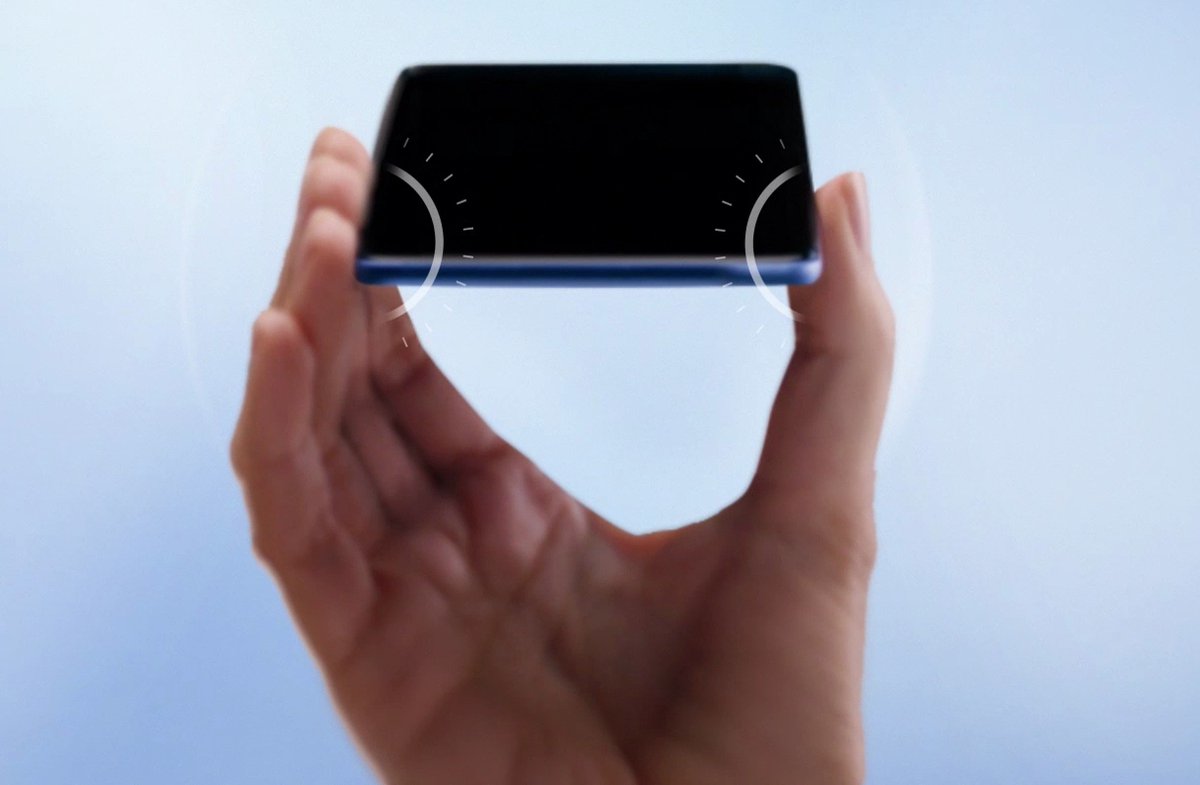
HTC has announced that their next flagship will be unveiled on the 11th of May. Previous reports had revealed that the phone will be launched as the HTC U (HTC Ocean) but a tweet by Venturebeat owner, Evan Blass revealed otherwise. The HTC U will now launch as HTC U 11.
The new name was chosen as a way to merge the former and the new naming schemes. The HTC Ocean will be the eleventh flagship device from HTC, succeeding the HTC 10 hence the addition of the “11” suffix to the name. Thinking of it now, HTC Ocean 11 sounds like a much better name. But only if wishes were horses….
For the colors, the HTC U 11 will come in black, blue, red, white and silver. All phones will have the same liquid surface design as the HTC U Ultra. However, color variants will be region specific.
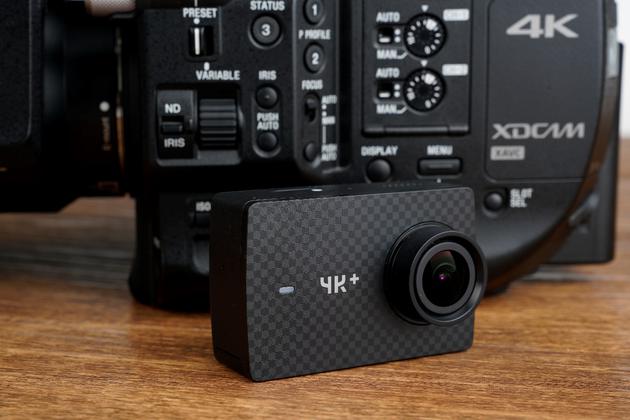
Xiaomi’s former partner Xiaoyi, now known as Yi has officially launched its latest 4K+ Action camera in China. The Yi 4K+ Action Camera was first showcased at CES 2017 but the device was never made officially available since then until now when it is launched.
The YI 4K+ Action camera is reputed as the world’s first camera capable of capturing 4K video at 60 frames per second and it is said to be double of what the action-packed Go Pro Hero 5 Black is capable of shooting. That is not only where the YI Action cam comes first, but also in the aspect of the processor, it packs. The YI 4K+ Action Camera is also the first to feature an Ambarella H2 System-on-Chip processor which offers a maximum bit rate of 120Mbps and improvements in power consumption.
The Action camera sports a SONY IMX377 12MP image sensor, 7 glass lens and a 2.2-inch retina touchscreen display at the back. It also features electronic image stabilization (EIS), live streaming capability, well filtered audio output in outdoors and also support for Virtual Reality (VR). The Smart camera also comes with USB 3.0 and USB Type-C interface and other features like 3-axis gyroscope, accelerometer. The camera also packs a 1400mAh battery which can last up to 71 minutes when shooting at 60FPS and if the quality is reduced to 30FPS the battery can last up to 109 minutes of continuous shooting. Yi promises that firmware update will soon bring in voice command on the smart camera.
It’s amazing that despite the well-packed features, the YI 4K+ Action Camera and the previous gen 4K Action camera all have the same size and design. Thus the accessories like tripod and others for the 4K action camera can be used for this one. However, the Yi 4K+ Action camera is priced at 1999 Yuan (~$290) and will go on sale on April 27.
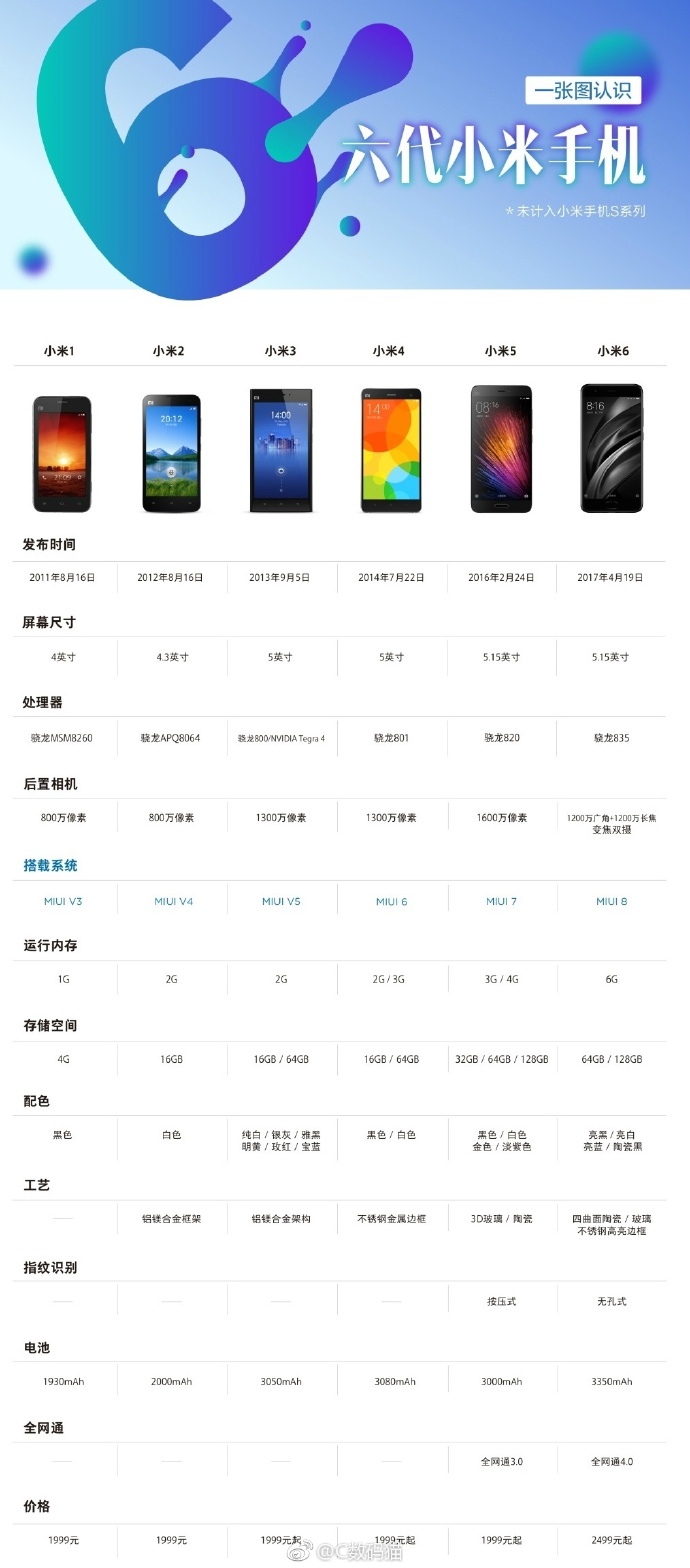
While Xiaomi was teasing the April 19 launch of the Mi 6 which has finally launched, one caption that kept recurring is “You waited 203 days, we waited 7 years”. The company apparently was referring to the period since its inception until now and perhaps, looking back at the evolution of the Mi-series which is Xiaomi’s flagship series, the Mi 6 seems to be the perfect flagship both in design and specs, the best in the pack so far. How true is that? Only a comprehensive review and time will give a definite answer to that. But we’ll take a look at the six generation of Mi-series flagship to see how the line has evolved right from the Mi 1 till the Mi 6.
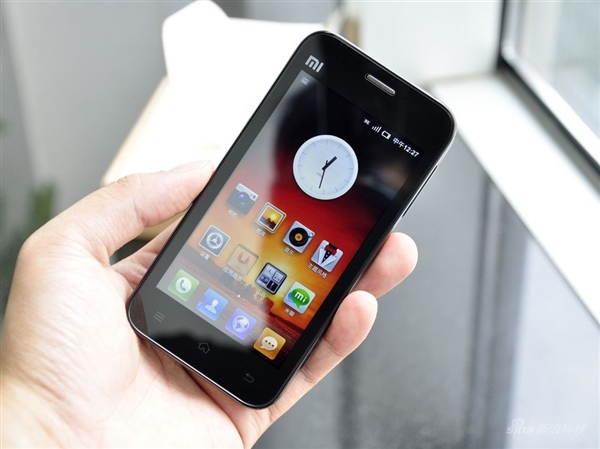
Xiaomi Mi 1
The Xiaomi Mi 1 happens to be the first of Xiaomi’s Mi-series smartphones and indeed the company’s very first phone. The device was launched on August 16, 2011, and went up for sale in October of the same year. It comes with a Qualcomm MSM8260 (Snapdragon S2) processor with 1GB RAM backing it up. The Mi 1 features a 4-inch display with 854 x 480p resolution and runs MIUI 3 based on Android 2.3.5 Gingerbread OS.Xiaomi launched a refreshed version called Mi 1s a while later with a slightly faster processor and MIUI ROM based on Android 4.0 Ice Cream Sandwich. Further, the Mi 1 packs an 8MP rear camera and a 1930mAh battery. It launched with a price of 1,999 Yuan (~$217), a price tag Xiaomi will maintain for successive devices until the Mi 6.
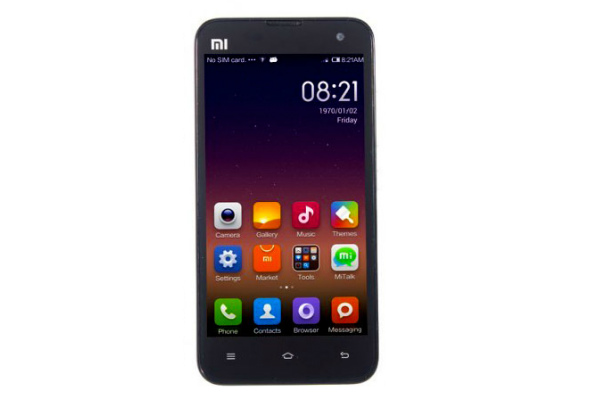
Xiaomi Mi 2
The Xiaomi Mi 2 came a year later, precisely on August 16, 2012. The Mi 2 came with a slightly larger and powerful 4.3-inch HD display. It also features a Qualcomm APQ8064 (Snapdragon S4 Pro) Quad core processor backed by 2GB of RAM. The Mi 2 sports an 8MP camera but runs MIUI 4 based on Android 4.1 Jelly Bean. The battery was slightly upgraded to 2000mAh capacity. The Mi 2S was later released the following year with a slightly faster processor and 32GB storage variant with a 13MP rear camera. Despite the upgrade over the Mi 1, the Mi 2 still started at 1999 Yuan.
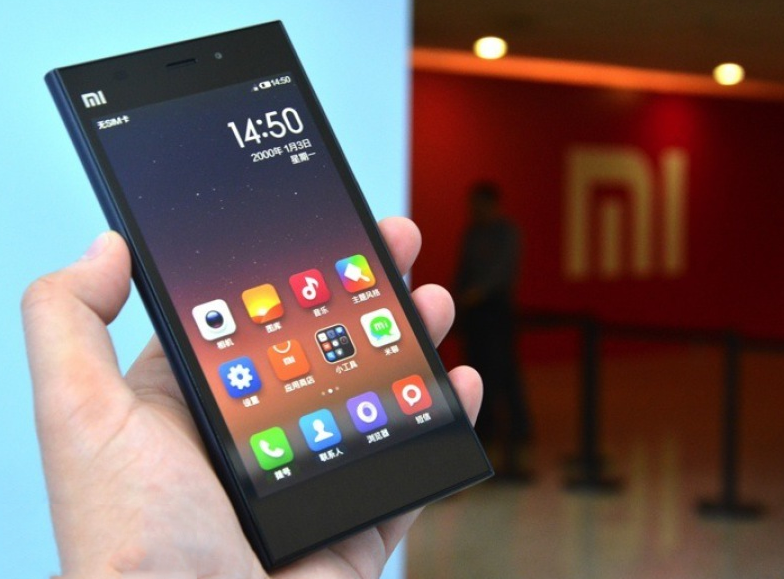
The third-gen Mi 3 joined the party in September 2013 with the same 1999 Yuan price and a more sophisticated hardware lineup. It sported a slightly larger 5-inch display with Full HD resolution (1080p) and the display came with a Corning Gorilla Glass 3 protection. The Mi 3 packs Qualcomm’s flagship Snapdragon 800 quad-core processor paired with 2GB of RAM. There is 16GB and 64GB onboard storage options, as well as a 13MP rear sensor with dual LED flash. There is also a larger 3,050mAh battery with fast charging support. It ran on MIUI 5 ROM based on Android 4.3 Jelly Bean OS, and since then has received upgrades to successive MIUI-based Android OS till the Android N.
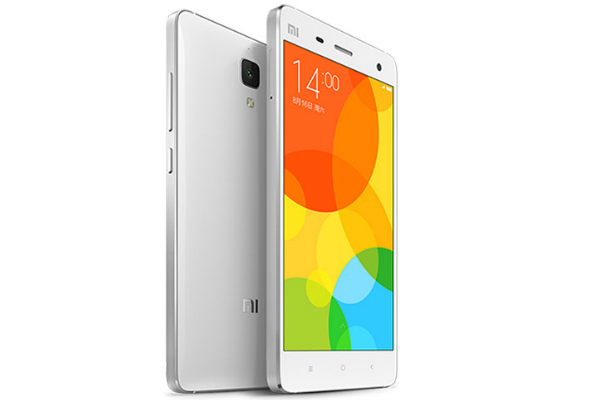
The Xaiomi Mi 4 was unveiled on 22 July 2014 and was a major departure from previous Xiaomi smartphones. The Mi 4 came with a metal unibody design along with the latest hardware on board. It sports a 5-inch Full HD (1080p) display with Gorilla Glass protection. There is also a Snapdragon 801 quad-core processor, 3GB of RAM, and 16GB and 64GB onboard storage options onboard.The camera aspect is taken care of by a 13MP rear camera with 4K video recording capabilities, while there is an 8-megapixel selfie camera. The Mi 4 packs a 3,080mAh battery with Quick Charge 2.0 support.
On the software front, it ran on KitKat-based MIUI 5, and has since received the upgrade to MIUI 8 based on Android N. The Xiaomi Mi 4 is also one of the first smartphones to officially support Windows Phone 10 ROM.
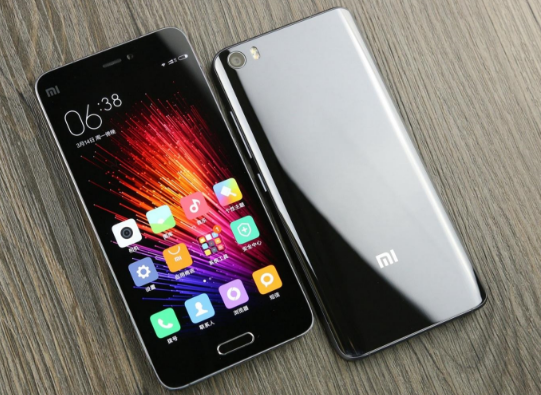
The cycle of release was broken by the Mi 5 which took two years from the Mi 4 to come. The Xiaomi Mi 5 was released 24 February 2016 with a host of changes on the design and hardware front. The Mi 5 sports a 3D front and back glass encased in a metal, thus adding to its premium look and feel. There is also a variant with 3D Ceramic body which, however, was scarce due to the slow production process.
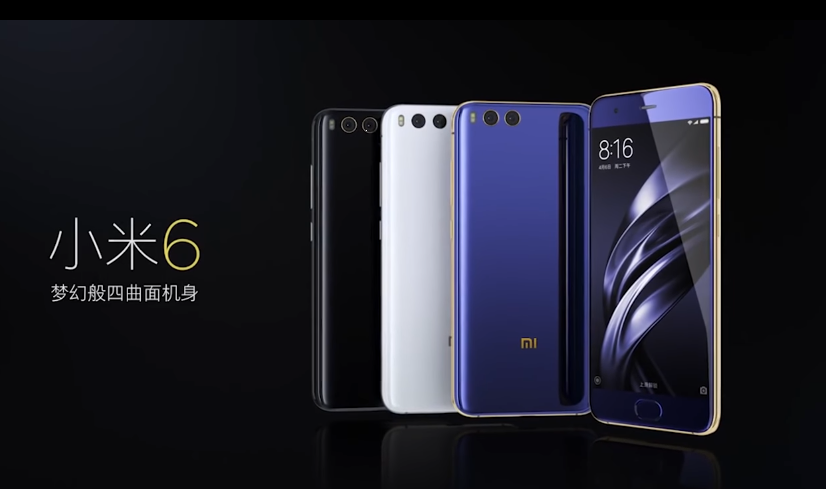
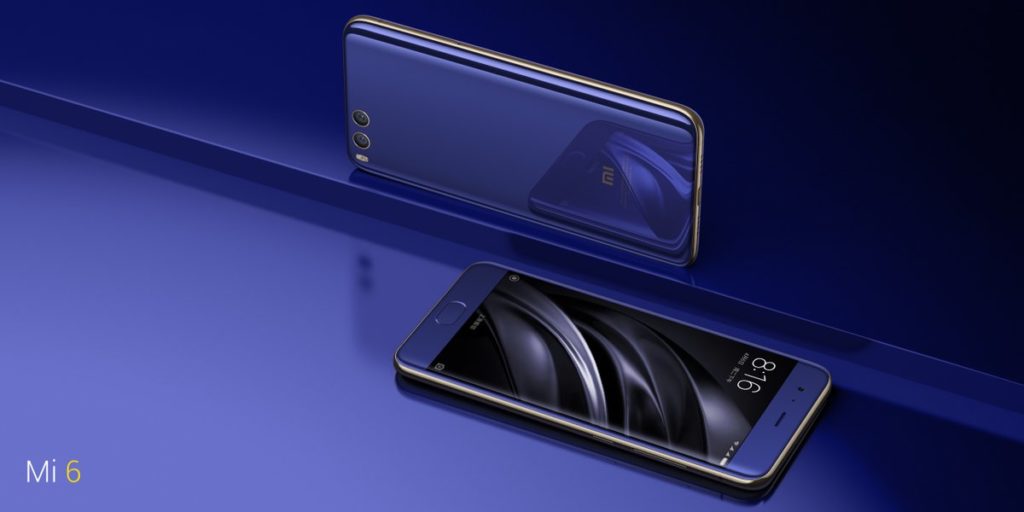
The Mi 6 is the latest in the flagship series and it comes with a top notch design as well as a well-studded specs lineup. The Mi 6 features a 5.15-inch 1080p display and is powered by Qualcomm’s latest Snapdragon 835 chipset backed by just 6GB of RAM on all versions. The Mi 6 uses a curved glass body with metal fuselage. The device also comes with an anti-splash body and the display has an oleophobic coating. The base storage has 64GB of space while the top end version has 128GB storage. The Mi 6 also comes with a dual camera setup at the rear consisting of a 12MP main sensor and 12MP telephoto sensor. It runs MIUI 8 based on Android 7.0 Nougat and has a 3350mAh battery under its hood. The device is available in Blue, Black, White, Silver and Ceramic options.
The Mi 6 comes with a much different 2499 Yuan price tag for the 6GB + 64GB model. Despite the difference, the price tag is still well suited to leave Xiaomi as the “king of cheap flagship” phones. Right or wrong?
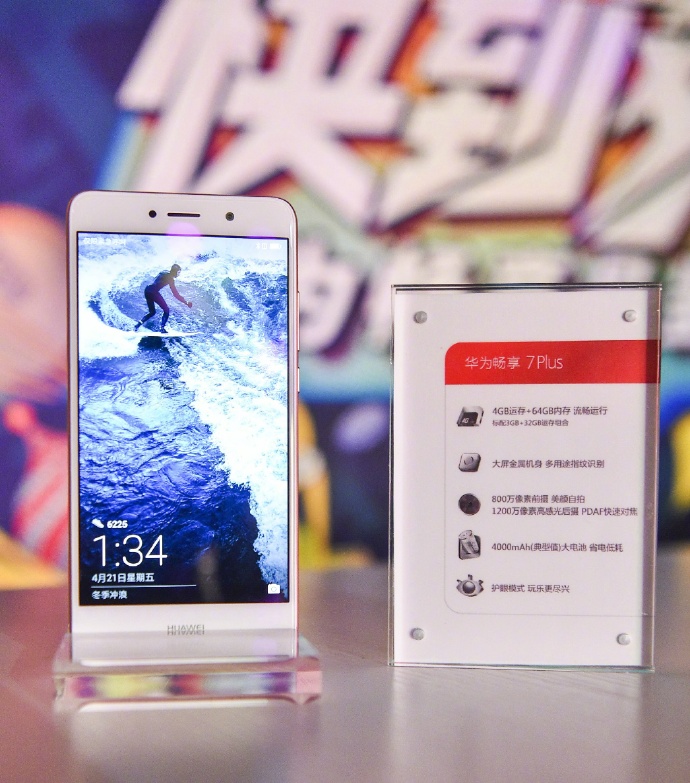
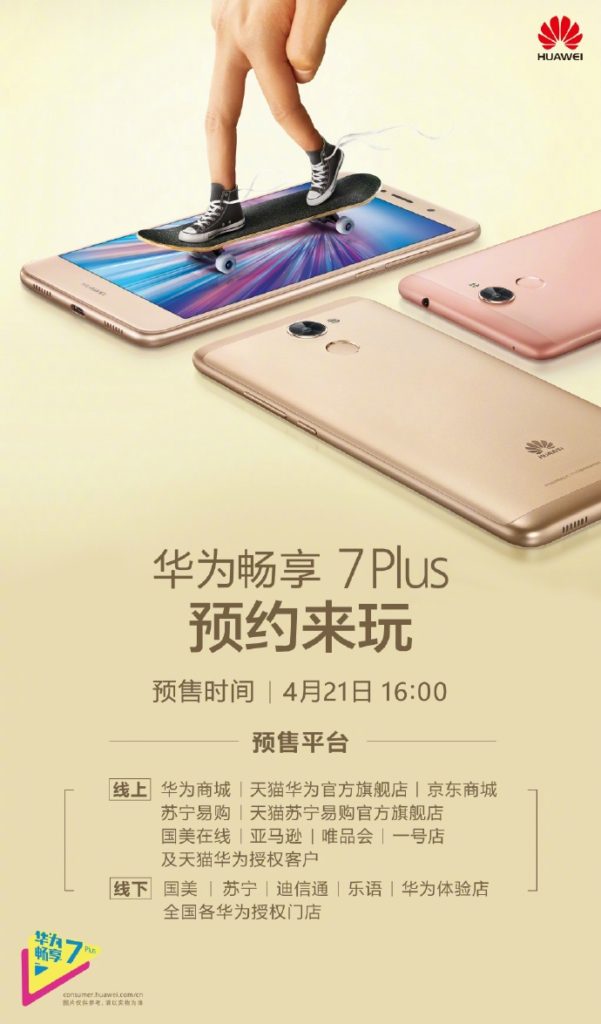
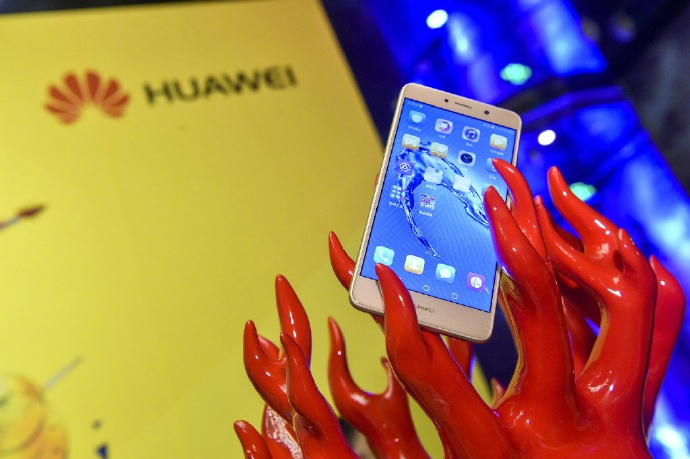
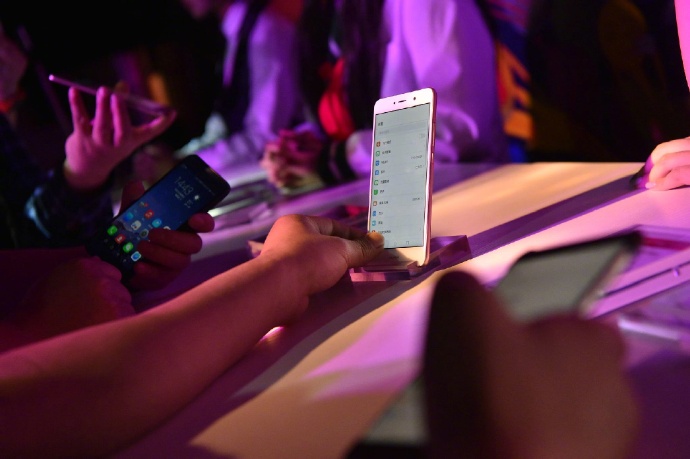
Away from the flagship segment, Huawei has officially announced a new mid-range smartphone in the Enjoy series dubbed Enjoy 7 Plus. The Huawei Enjoy 7 Plus comes with a decent specs lineup for a mid-ranger but the design isn’t very much different from its predecessor, the Enjoy 6S.
Huawei Enjoy 7 Plus Specifications & Features
The Huawei Enjoy 7 Plus comes with a 5.5-inch IPS display with a 2.5D curved glass protecting the display from scratch. The display has a resolution of 1280x 720 pixels and also comes with eye protection mode. The device is fired up by an octa-core Qualcomm MSM8940 chip which is the Snapdragon 435 process, a little upgrade over the SD 430 which the Enjoy 6S uses. The CPU is clocked at 1.1GHz while in the memory aspect, there are two versions. There is a high-end version with 4GB of RAM and 64GB storage and also another version with 3GB of RAM and 32GB storage. Both storage versions are expandable up to an additional 128GB. The Enjoy 7 Plus comes in seven attractive colours which include Gold, Champagne Gold, Blue, Black, Silver, Gray and Pink colours.
For photography, the beautiful device packs a 12MP main camera at its rear with LED flash and PDAF which has its focusing speed increased to 0.3s.The camera also has a large individual pixel size of 1.25um and more photosensitive area. The Enjoy 7 Plus equally crams a large 4,000mAh battery under its hood which is sure going to provide up to a day’s use. Huawei touts that the battery can play high-definition video up to 20 hours and will sustain 4G internet browsing for up to 15 hours. The large battery also has reverse charging function. Surprisingly, the device has a thin build despite the large battery crammed inside.
Huawei Enjoy 7 Plus Price & Availability
The Huawei Enjoy 7 Plus runs Android 7.0 Nougat based on EMUI 5.1 with its simple but interactive interface. The device comes with a price tag of 1499 Yuan (~$217 USD) for the 3GB + 32GB version and 1699 Yuan (~$246 USD) for the 4GB + 64GB version. Both versions will go up for sale on April 28 at 10.00 hours (GMT+8) across various e-commerce platforms but registrations for its first flash sale has started today.
We use cookies on our website to give you the most relevant experience by remembering your preferences and repeat visits. By clicking “Accept”, you consent to the use of ALL the cookies.
This website uses cookies to improve your experience while you navigate through the website. Out of these, the cookies that are categorized as necessary are stored on your browser as they are essential for the working of basic functionalities of the website. We also use third-party cookies that help us analyze and understand how you use this website. These cookies will be stored in your browser only with your consent. You also have the option to opt-out of these cookies. But opting out of some of these cookies may affect your browsing experience.
Necessary cookies are absolutely essential for the website to function properly. This category only includes cookies that ensures basic functionalities and security features of the website. These cookies do not store any personal information.
Any cookies that may not be particularly necessary for the website to function and is used specifically to collect user personal data via analytics, ads, other embedded contents are termed as non-necessary cookies. It is mandatory to procure user consent prior to running these cookies on your website.