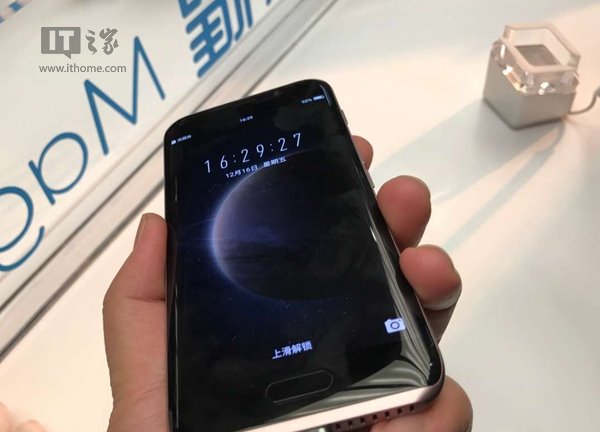
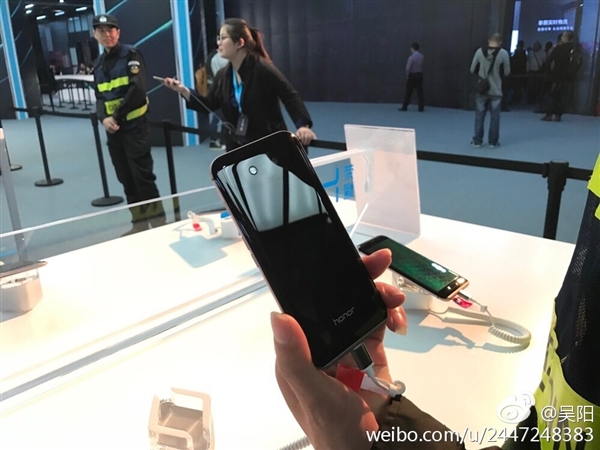
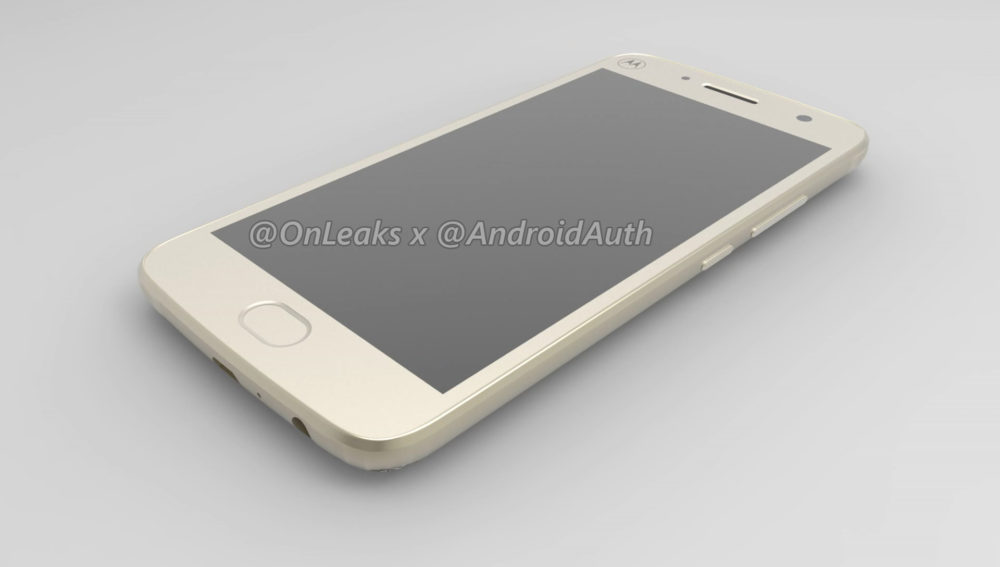
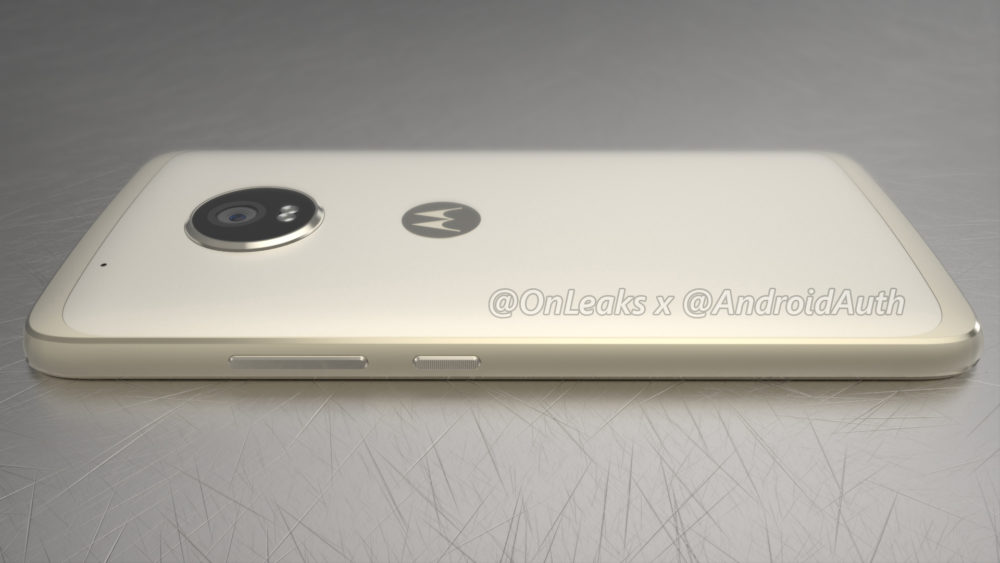
We all know that Huawei is all ready to announce it flagship P9 at the event in London on 6th of april. As the news came before, this device will use dual rear cameras. Also, the company had announced a partnership with Leica to boost its camera performance and we may see something exciting in the optics department of the device.
Today evening, three of Huawei executives on the microblogging site (weibo) posted the same line, “later, 9 Lai” (translated). Obviously, this is implied in the upcoming Huawei P9, and “Lai” word is probably hinting at “Leica.”
Specs-wise, the phone is supposed to come with powerful features. In fact, it is said that the P9 will come in four different variants, namely P9 standard edition, P9 Lite, P9 Premium and P9 Max as per the recent rumor. All the details about the different variants of the P9 can be found here.
Now that the Xiaomi Mi 5 and it’s less popular sibling, the Mi 4S are announced, it’s time to focus on the other upcoming smartphones from the company. Yesterday, we reported that we spotted four new models, probably from the Redmi series on the 3C certification website with the following model numbers: 2015810, 2015817, 2015818, and 2015819. At that time, we said that there was a good chance that these models could of the Redmi 4, or variants of the existing Redmi 3.
Thanks to the TENAA listing of two of these models, namely the 2015810 and 2015817, we can be sure that at least these two are variants of the Redmi 3. TENAA reveals that 2015817 model comes with an 8.5mm body and 3000mAh battery, while the 2015810 model features a larger 4000mAh battery inside a same sized body. Both feature 5-inch displays. Considering these specs, its almost confirmed that they are some kind of variants of the existing Redmi 3 which also features similar specs. So, what could these new variants bring to the table?
The Redmi 3 was already a great budget device, but it lacked one common feature that is usually found in most mid-range and flagship smartphones in the market today — Fingerprint sensor. And now, we might have the first glimpse of the Redmi 3 with Fingerprint ID.
So, from this image, it looks like the new variants add a fingerprint sensor to the Redmi 3. We don’t know whether there are any new additions, but the company will probably reveal them in the coming days.
So, what do you think? Will Xiaomi price the Redmi 3 with fingerprint ID at just 699 Yuan ($107)? Or will it retail at a higher price tag?
Xiaomi Mi 4C was released last year as the Chinese variant of the Mi 4i. But the Mi 4C featured much better specs as compared to the latter, making it a pretty good mid-range smartphone. While the phone used to retail for more than $250 on various third party sellers, now OPPOMART is selling the Xiaomi Mi 4C smartphone at just $189.99. Considering the specs that the phone features, the Mi 4C is actually a pretty powerful smartphone and at this price, it’s a good deal.
To recap, the Xiaomi Mi 4C comes with a compact 5-inch Sharp/ JDI display with 1920 x 1080 pixel resolution. Under the hood, the phone comes with the capable Snapdragon 808 hexa-core processor. This particular chipset powered many flagships of 2015, so its powerful enough for your day to day needs.
So, for $189.99 you get the 2GB RAM variant. If you are looking to buy the 3GB variant, you will have to shell out $50 more. There’s 16GB / 32GB / 64GB storage options available. At the back, the phone features a 13MP sensor with dual tone flash while up front, you get a 5MP front shooter. The Mi 4C supports 4G LTE networks and should support most European networks. The supported LTE bands include 1800 / 2100 / 2600.
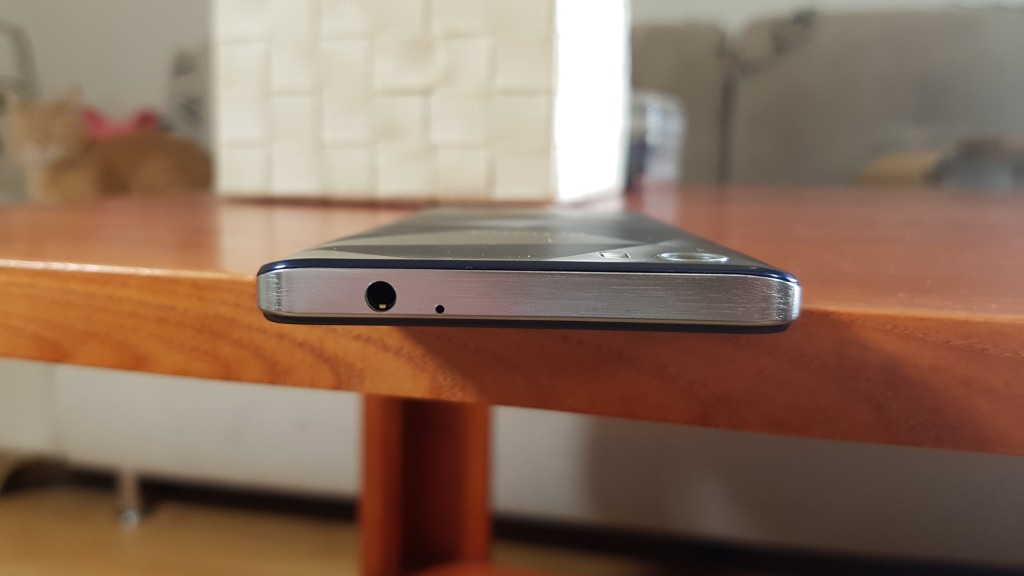
Inside, you get a 3000mAh battery, which is decent considering the phone comes with a small 5-inch display. It supports dual SIM dual standby and measures 7.8mm in thickness. The phone runs on MIUI 7.
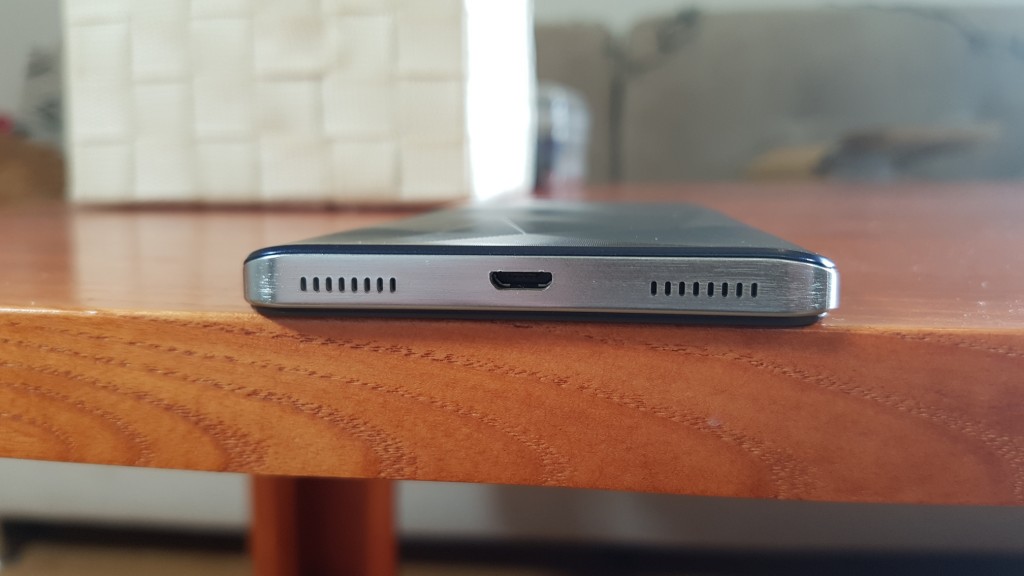
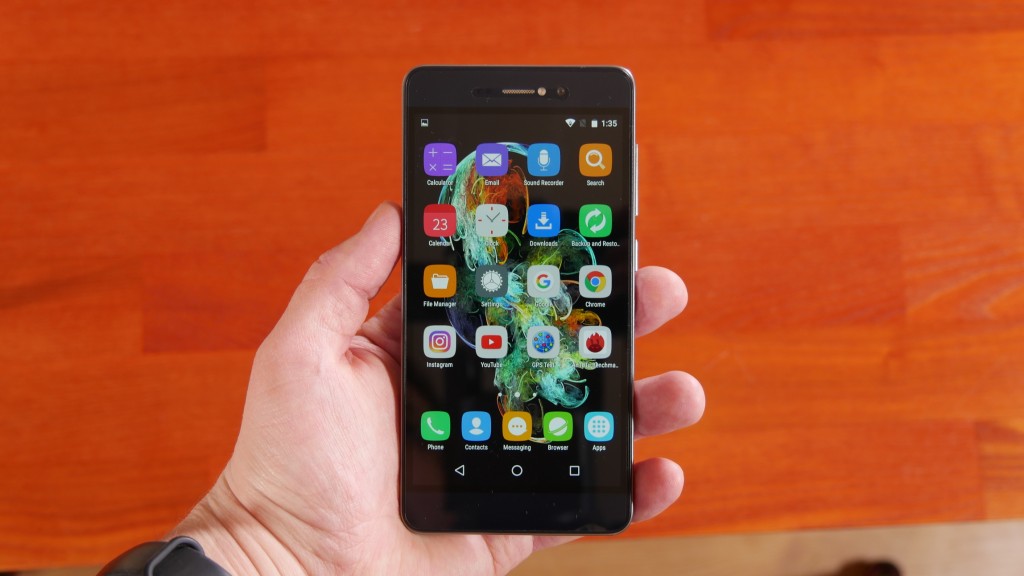
Overall, the Xiaomi Mi 4C is an all around mid-ranger and for $189.99, this is not a bad deal at all. There are two color options available, white and black and both the versions seem to be in stock right now. You can check out more details from the link given below.
With the advancement of mobile phone camera technology, home video cameras (camcorders) have pretty much become a thing of the past.
These days we all have a device in our pockets that is capable of capturing video almost instantly, but whilst we can all record videos on our phones it is not always the case that the video will look great.
The big differences between amateur looking recordings and more professional ones has a lot to do with how steady the recorder can be held.
For big professional video cameras a weighted and balanced rig is used, this ensures the camera is not affected by every small movement of the operator.
Some newer phones such as the Xiaomi Mi5 come with 4 Axis optical image stabilization, a system that compensates for user motion to give a much smother less jumpy recording.
The Gizcam Redfox has been designed to work with mobile phones and action cams to give you the steady recording that can make your videos look great.
Gizcam Redfox is available in 2 variants for Smartphones And Action Cameras
The mobile phone version of the Gizcam Redfox weighs in at around 430 grams, whilst the action cam version comes in at just under 100 grams less at 338 grams).
Part of that weight is made up of a 3,000mAh battery, that has enough juice to run the Gizcam Redfox for around 10 hours, the Redfox can also function as a power bank to keep your phone or action camera charged up.
Gizcam Redfox features three different modes
Pan following mode-
Locks tilt and roll axes – The camera pans to follow the handles direction.
Locking mode –
Pan – Roll – Tilt are all lockable
Pan and tilt following mode
Locks the roll axis the camera follows the pan and tilt motion of the handle.
Degrees of movement
Construction
The Gizcam Redfox is made from light weight aluminium
Gizcam Redfox smartphone compatibility list, the following phones are confirmed working by the manufacturer, but it should also work with the vast majority of android phones available.
iPhone 5s
iPhone 6s
iPhone 6s Plus
And is currently on sale at just $220.99 available from Amazon here
Gizcam Redfox action camera is confirmed to work with the following action cams, but it is likely that it will also work with many other similarly styled action cams available from china.
And is currently on sale at just $230.99 available from Amazon here
So what do you think? are you looking to make great movies or home videos? can you see the benefits of the Gizcam Redfox? I am hoping to receive one soon to do a full product review.
Not a day goes by without news about the upcoming OPPO R9 and the R9 Plus smartphones. Earlier, we reported that the upcoming OPPO smartphones could be quite costly in China, and now, the larger model in the lineup, namely the OPPO R9 Plus has been spotted on the benchmarking website AnTuTu. Thanks to the listing, we can once again confirm the specs of the device. Earlier, TENAA listing had revealed the internals of the device.
The model number as given by AnTuTu is R9 Plustm A, which indicates that this is the larger and more powerful variant. The listing further confirms that the OPPO R9 Plus will come with Qualcomm Snapdragon 652 octa-core chip. While this chip isn’t as powerful as SD820, it’s still powerful enough to drive a flagship smartphone. Further, the Adreno 510 GPU will ensure that the phone’s graphics performance is up to the mark.
Other features are just as revealed by TENAA. So, there is 4GB of RAM on board along with 64GB of internal storage. While AnTuTu doesn’t reveal the display size, TENAA confirmed a 6-inch 1080p screen on the device. Another interesting information revealed by the listing is the camera up front. As you can see in the listing, the R9 Plus will feature a 16MP front-facing shooter, which should capture great selfies. The rear camera will also be the same 16MP sensor.
While these look like pretty decent specs for a 6-inch phablet, what we are really concerned about is the software on board. Android 5.1.1 on a 2016 flagship? We don’t think so. OPPO may not be so frequent with their Android updates, but we hope that the retail version of the OPPO R9 Plus ships with the latest Android 6.0 Marshmallow on board.
With these specs, the phone managed to score about 70K on AnTuTu, which is pretty decent. But it’s still below the deca-core Helio X20 which gets around 85K.
Now, coming to the pricing, a recent leak said that the phone could be priced at around 3499 Yuan which is a lot for such a device. It comes to around $537. That’s way more than the official $354 (2699 Yuan) price of the Xiaomi Mi 5 Pro.
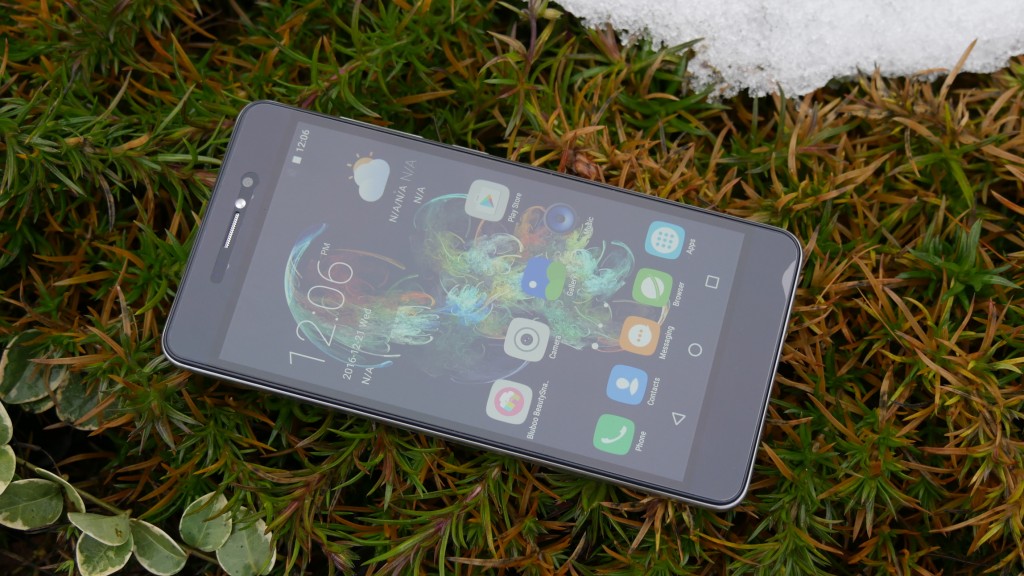
Cubot has released quite a few new devices lately and Note S is one of them. It is a very cheap (below $80) phone that actually has pretty good specs and design for the price. Find out more in our unboxing and first impressions article.
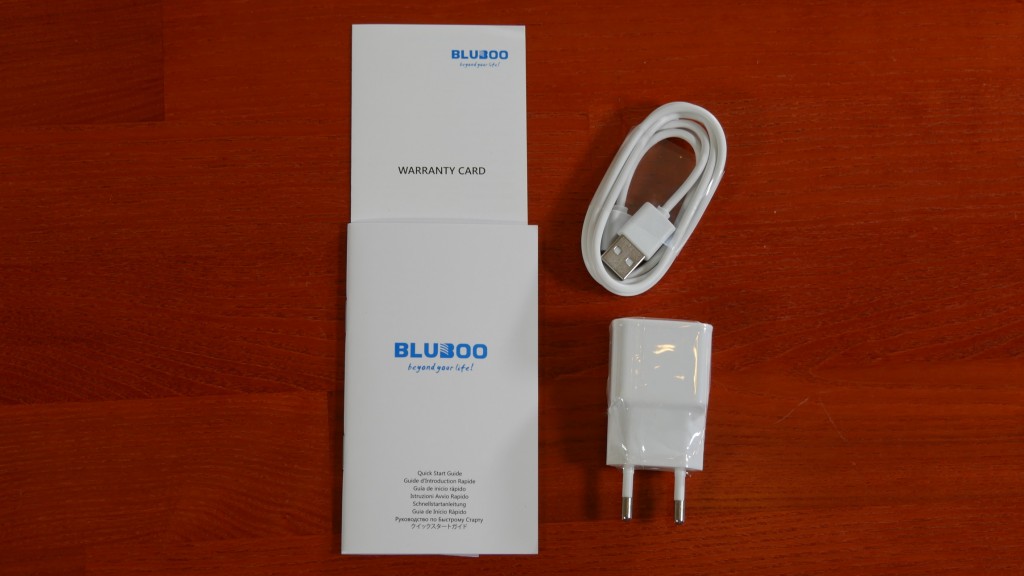
Cubot Note S comes with the USB cable, charging plug and instruction manuals.
Also, Cubot included a nice soft TPU case to protect your device.
Cubot Note S: DESIGN and FIRST IMPRESSIONS
When we first took the phone out of the box, we immediately noticed its plasticky build. The frame, that is going around the device imitates plastic and it makes the phone look cheap.
Well, it is a cheap device after all and the build quality is not bad at all for such a low price.
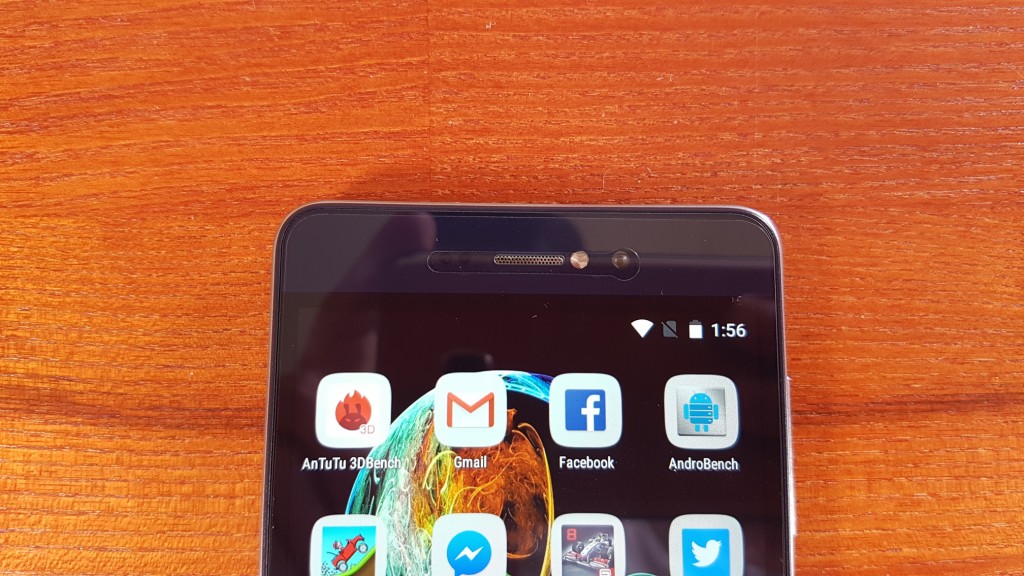
On the front we have a 2MP camera with other usual stuff.
On the bottom there are 3 capacitive buttons, which do not have a backlight.
The backplate is made of plastic and it is easy to remove it. Under the hood you can find a removable large 4150mAh battery, two SIM card slots and the microSD card slot. The phone supports dual-SIM dual standby mode (2G: GSM 850/900/1800/1900MHz; 3G: WCDMA 900/1900/2100MHz). Unfortunately, there is no 4G support.
As for optics, we have an 8Mp shooter with a single LED. On the bottom, there is just a speaker grill.
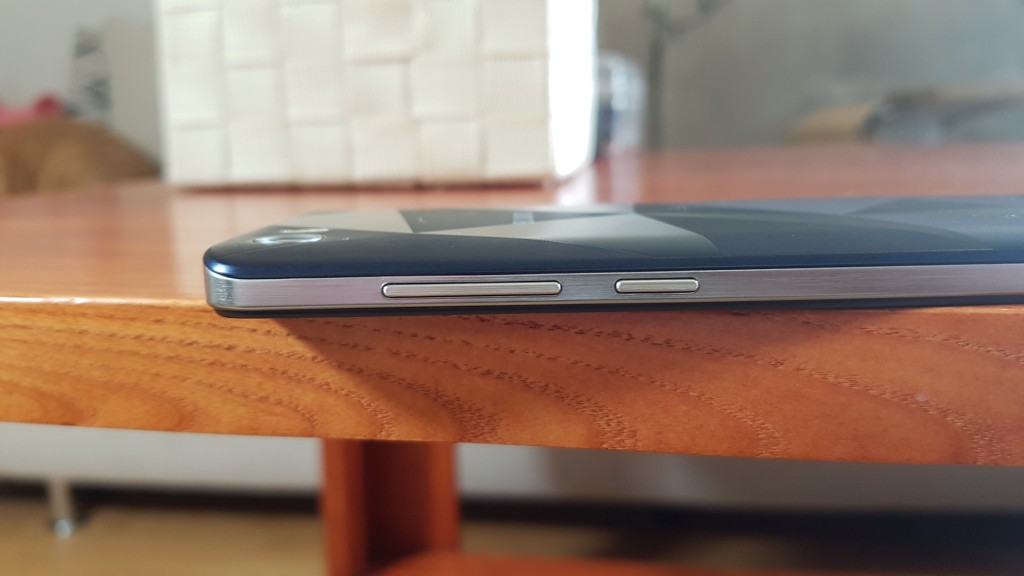
All the buttons are on the right and they have a good tactile feedback although they feel cheap.
On the top we have a headset jack and the micro USB port.
Overall, the phone does not sport any premium materials but it is actually well built considering a low price of it.
The 5.5″ display has only 720p resolution but it is nice to look at it it gets very bright at the maximum brightness settings.
Also, the UI seems to be working very fast so far.
However, we need to spend more time with the device to test all the features of it. Stay tuned to Gizmochina for a full review.
Google updated their Android Distribution Data for the month of March. The latest Android v6.0(Marshmallow) has some how managed to crawl past 2%, although it is growing, but not as expected.
According to the data Android v6.0(Marshmallow) is now running on 2.3% active Android devices. Interestingly, the level of distribution has doubled up from the February’s figure of 1.2%.
Finally, Android Lollipop v5.X’s market has managed to top the chart after 16 months of its initial release. Android Lollipop holds total share of around 36.1%(Android 5.0 and 5.1 Lollipop running on 16.9% and 19.2% respectively). While, the devices running Android KitKat v4.4 have dropped down to 34.3% this month from 35.5% last month.
The Android 4.1.x – 4.3 (Jelly Bean) has now combined share of 22.3% compared to 23.9% last month and Android ICS v4.0.x has around 2.3% with 0.2% decrease from last month’s data.
Honeycomb has no place in the list, Android Gingerbread v2.3.3-2.3.3 and Android Froyo v2.2 has distribution shares around 2.6% and 0.1% respectively.
It is worth mentioning that Android 6.0 version market share is surely going to level up as numerous OEM’s releasing Android 6.0 updates. But, Google will be demonstrating Android 7.0 at Google I/O developer conference, which is expected to happen soon. With this, some manufacturers may not follow v6.0, which is not a good practice.
QiKu will release a number of handset this year and we have already seen one of the possible devices, thanks to an early AnTuTu listing. Now, another device from the company, this time featuring mid-range specs was spotted on the AnTuTu app, revealing much of the specs and performance of the device.
The new QiKu device with the model number QK1503-M02 comes with less powerful specs than the QK1509-A02 model that was spotted on the same benchmarking app yesterday. The new model will feature MT6797 Helio X20 deca-core chipset inside with Mali-T880 GPU. Like yesterday’s model, this one too will come with a 1920 x 1080p display but the screen size is not known.
There will be 3GB of RAM on board along with 32GB of internal storage. As for the camera, instead of a dual camera 13MP setup at the back, you will find a single 13MP sensor on the device. Up front, there will be a 5MP shooter. As for software, the phone runs on the new Android 6.0 Marshmallow version.
MT6797 hasn’t really impressed us with its initial performance figures, despite featuring 10 cores inside. Even this particular model is said to score only about 80K on AnTuTu which is quite low. In comparison, the Snapdragon 820 powered QiKu device could score about 125K in the same test. In fact, Xiaomi Mi 5 with similar specs was able to break the 130K mark on the benchmarking app which means even the QiKu device with similar specs has some room for improvement.
Since both these models have visited AnTuTu benchmark, we can expect to get more information about them in the coming days. QiKu had launched its three smartphones back in August. So, if the company is to follow the same release period, then there’s still a few months left for the new phones to launch.
OPPO R9 and its elder sibling, the OPPO R9 Plus are all set to launch on March 17. However, the company is not waiting for the launch day to reveal some of the features of the device. For example, yesterday, we saw that the OPPO R9 will come with thin bezels and thin black borders around the display.
Now, OPPO has revealed a portion of the back of the upcoming R9 flagship, and it confirms the design seen in the earlier TENAA listing. The company adds that the phone will come with a slim metal body that fits in your palm perfectly. Despite being made out of metal, the phone seems to be featuring a non-glossy texture. So, this matte texture could help provide a better grip to the user holding the device.
Apart from the back and the front, we also got an idea about the possible pricing of both the R9 and the R9 Plus yesterday evening. Thanks to a local OPPO store, it looks like the OPPO R9 will be priced at 2999 Yuan ($460) while the OPPO R9 Plus will retail for 3499 Yuan ($537).
For this price, the OPPO R9 will reportedly offer you a 5.5-inch 1080p display, octa-core chipset with 4GB of RAM and 32GB of internal storage. At the back, you will get a 16MP camera and a 2850mAh battery with the company’s trademark VOOC fast charging tech. We still don’t know whether the Super VOOC fast charge technology which was showcased at MWC 2016 will make it to the device.
As for the OPPO R9 Plus, the phone will be larger than the R9 featuring a 6-inch display with an octa-core chipset as well, but it’s the Snapdragon 652. Remember what the analyst had said a few days back? Many flagships this year would be using the Snapdragon 652 due to its lower cost. It seems like OPPO is following this trend. Other specs include 4GB of RAM, 64GB of storage, 16MP camera, VOOC fast charge and a large 4120mAh battery.
Why I like a front fingerprint scanner? The answer is simple. Because it’s in the ideal position where my thumb would naturally rest!
2. Metal unibody design & quality build
Despite having a better camera and a bigger battery, the UMi TOUCH looks more svelte than before. That’s partly because UMi TOUCH has implanted the golden ratio R criterion curve from iPhone 6s and the seamless metal unibody design from Xiaomi note 3.
The combination of iPhone 6s and Xiaomi Note3, UMi TOUCH is an exceptionally good-looking phone, and it comes in 3 very nice colors too.
3. The battery’s massive – 4,000mAh
Not only is the battery much bigger than the one in the UMi IRON PRO – it’s a 4,000 mAh model.
The bigger battery plus the various optimization that Android Marshmallow brings – the UMi TOUCH ships with Marshmallow 6. – means the UMi TOUCH should have exceptional battery life compared with its predecessors and rival devices.
4. You Get A Great Sony Exmor Camera
The UMI Touch has 13 M-pixel camera with quality Sony’s Exmor R IMX328 sensor, support Panorama mode/ live 3D mode/ Gif mode / motion track mode.
While its frontal camera is a 5 M-pixel Hynix Hi553 with a flashing for better selfies.
5. Dual SIM dual standby, MicroSD support up to 128GB
For those of us who like to shoot full-res photos, make home movies and install as many apps as we like, no amount of built-in storage is ever enough, so UMi TOUCH makes us very happy because it gives us 128 GB of extra storage.
For those who like to have two SIM cards, one for private and one for business, UMi TOUCH does not let us down because it gives us two slots for two different SIM cards!
6. Android 6.0 the latest from Google
UMi TOUCH comes with Android 6.0 right out of the box. This is not it as the phone supports up to 5 different customs ROMs which is just as easy as one tap installation via ROOTJOY, a pc manager tool for all UMi smart phone developed by UMi.
7. Decent Price at $179.99
UMi TOUCH is arriving at the global market on 20 March. You can make a pre-order on a new smartphone in silver or dark grey color already with a nice extra – free delivery. The UMI Touch will be priced in retail just at USD 179.
Overall UMi TOUCH is a value for money smartphone as it comes with Octa-core CPU, 3GB RAM, 4000mAh big battery, premium metal unibody, ideal front fingerprint scanner, 128GB expandable memory, Sony camera and the latest Android 6.0. Not a bad device, for $179!
Just after announcing its flagship Mi 5 and mid-range Mi 4s, the company seems to be working on a new phone. Four new models 2015810,2015817,2015818 and 2,015,819 were spotted on the 3C certification website recently. They could be variants of the same phone.
These models are found using charger MDY-08-EF, output specifications for the 5V / 2A. Given that the charger is just 5V 2A which is generally used by the budget Redmi lineup, there’s a good chance that these phones might be associated with the Redmi series. The Mi series now comes standard with fast charge support.
However, the Redmi Note series has been updated three times within a few months. The company’s last device in the series was the Redmi Note 3 Pro which was launched back in January with snapdragon 650 processor. So, it’s likely that this could be an updated model of the low-budget Redmi 3. But we are not quite sure of anything at the moment. Redmi 3 was also announced just a couple of months back. So, will Xiaomi release an update so soon?
We will have to wait and watch. Stay tuned for more details.
A few weeks back, Apple launched its Apple Pay mobile payment service in China, which is one of its important markets outside of US. Now, joining the club, Huawei has announced its own mobile payment service in China called as the Huawei Pay. At an event today, Bank of China and Huawei signed an official cooperation agreement for the same.
This news is not really surprising, given that, after Apple Pay was launched in the country, there was a new report that said that most Chinese manufacturers like Xiaomi, Huawei, ZTE etc were planning to release a payment service of their own. So, it looks like Huawei will be the first one to release such a service this year. The company could soon be followed by other smartphone makers in the country.
It actually makes sense for the company to release a mobile payment service like Huawei Pay in China. The company is doing well in the smartphone market, selling over 109 million units last year alone. This year, the company plans to sell even more devices, with a major focus outside of China. Despite the increased focus internationally, Huawei sold around 58% of smartphones in China alone. Also, considering the growing number of users who rely on their smartphones for payments, this is actually a great move for consumers as it will make paying for goods and services easier than before.
However, at this point, Huawei is yet to reveal any specific details about the Huawei Pay service. Bank of China currently seems to be the only partner, but we can expect more tie-ups soon.
UPDATE: Xiaomi has officially denied any plans for a European release. The said website is not official and unfortunately, the company won’t be releasing its devices in Europe anytime soon.
The Xiaomi Mi 5 has been getting a lot of attention ever since its launch at MWC 2016. The device is truly a flagship according to its specs. Alongside the flagship, we also got the Mi 4s which is also good, considering its specification and value for money.
Now news has surfaced about a Polish version of the Xiaomi website, providing proof that the company is working on international availability. As the company is expanding in all the markets to compete with its competitor, this can be seen as the first step, by heading to Poland.The web page informs that the Xiaomi Mi 5 and Mi 4s will be coming to the Polish market soon.
We do know that all three models of the Xiaomi Mi 5 will be available in Poland. All three share the same base specifications, including a 5.15-inch 1080p display, Snapdragon 820 SoC, a 16-megapixel camera, NFC, a USB Type-C port, etc. The variants are simply the 32GB or 64GB internal storage options and a Pro model which throws in 128GB of internal storage and an extra GB of RAM, bringing the total up to 4GB. The Pro version also gets a faster-clocked chip.
The Mi 4s is more of an upper mid-range handset, with a 5-inch 1080p display, Snapdragon 808 processor, 3GB of RAM, 64GB of internal storage and a 13-megapixel rear camera.
Huawei was expected to launch its flagship P9 smartphone sometime in April this year. Today, the company has sent out invites for an event which is scheduled for 6th April in London. According to our expectations, the two circles on top of the invite probably hints at the dual rear camera setup that the phone is rumored to come with.
To boost the camera quality on its phones, the company tied partnership with Leica last month and we may see the result of the partnership on the upcoming P9.
Specs-wise, the phone is supposed to come with powerful features. In fact, it is said that the P9 will come in four different variants, namely P9 standard edition, P9 Lite, P9 Premium and P9 Max as per the recent rumors. The standard variant is expected to be powered by Kirin 950 SoC, packing 3GB of RAM and 32GB of internal storage, while the high-end could be powered by Kirin 955 SoC, packing 4GB of RAM and 64GB of internal storage.The final model in the series is expected to be the large screen Huawei P9 Max sporting a 6-inch 2K display, Kirin 955, 4GB RAM and 64GB ROM.
Huawei is working hard to surpass its competitor Apple and Samsung in the coming years, so we can expect this device to be a beast and these rumors prove the same.
Although Le Max Pro was the first smartphone with Snapdragon 820 chipset on board, users haven’t been able to get hold of the device even after nearly two months of its release. This naturally turned our attention to something that we can expect to see soon, the Le 2. The company officials have confirmed that the phone exists and will debut soon in the market.
Now, new renders of the Le 2 have emerged and for the first time we can see the rebranded LeEco logo on the back of the device. From the images, we can see that the Le 2 will feature a similar design as its predecessors. However, when it comes to the materials used for the body, it looks like the company is going to go with a double sided glass design. So, it looks like for the first time, LeEco is going to use glass instead of metal on its smartphones.
This is even more evident from the back of the handset. We can see that the phone features a single piece of glass at the back with a cut out for the fingerprint sensor. Another interesting aspect of the phone is the new LeEco logo at the back. So, this could be the real deal.
As for the specs, it is said that the Le 2 will come in two versions, one with Snapdragon 820 on board and the other with Helio X20 deca-core chip. You can expect a 5.7-inch 2K display up front with 4GB of RAM and 64GB of storage under the hood. The camera could be similar to the Le Max Pro, with a 21MP shooter at the back and a 4MP ultrapixel sensor up front. Other possible features of the device include Quick Charging, Fingerprint Sensor at the back etc.
Considering that LeEco sold the first batch of Le Max Pro smartphones at just 1999 Yuan, the Le 2 could retail for even cheaper. With the company opting for a negative profit strategy, wherein it sells its smartphones for less than cost price, we hope that LeEco Le 2 is priced aggressively at launch. Somewhere around 1799 Yuan, which comes to $276 would be perfect.
So, what do you think about these leaked images of the Le 2? Prefer the metal body or the double sided glass design?
Xiaomi has just added a new powerbank to its large range of accessories, called as the Mi Powerbank Pro. Like the name suggests, this will be an upgrade to the existing large capacity powerbank available in the market. The new powerbank comes with a number of additional tech like faster charging speeds and the new age reversible USB Type-C port.
Like the other powerbanks in the market from Xiaomi, the Mi Powerbank Pro will also be made out of aliminum and will sport a similar look. The measurements of the device are as follows 128.5 x 75 x 12.6mm and it weighs just about 223 grams. The Powerbank Pro comes with nine layers of circuit protection to ensure that your devices are safe when they are plugged into it for charging.
The powerbank comes with a total capacity of 10,000mAh and supports fast charging at 5V / 2A, 9V / 2A, and 12V / 1.5A, taking the maximum wattage to 18W. With the provided powerful charger, Xiaomi claims that the Powerbank Pro can charge from 0% to 100% in a matter of just three and a half hours. In comparison, the last gen, 10,500mAh Mi Powerbank took around 7 hours, twice as much as time as the new gen, to charge to 100%.
Like tradition, Xiaomi has priced the Mi Powerbank Pro aggressively. It will go on sale in China for a price tag of 149 Yuan which comes to around $22-$23. Not at all bad, since it comes with faster charging speeds and supports the new age USB Type-C. We still have no idea when the powerbank will hit international markets, but it seems like a good accessory for your smartphone and other gadgets.
Last year, in August, Qihoo 360 and Coolpad entered a joint venture to unveil a new smartphone brand called as QiKu. The company soon released three new smartphone in its first lineup featuring dual camera setup and powerful specifications. But that was last year, and now, its time for its next generation models to debut in the market.
Earlier today, a new QiKu model namely QK1509-A02 was spotted on the AnTuTu benchmarking website. Like tradition, AnTuTu listing revealed a few details about the upcoming QiKu device. The benchmarking app revealed that the new QiKu device will feature very powerful specs, with Snapdragon 820 chipset under the hood and 4GB of RAM. There will be ample storage on board featuring 128GB, which is kind of becoming a standard among top-end flagships this year.
As for the other specs, the phone will feature a 1920 x 1080p display, however the exact screen size of the device has not been revealed. Another interesting thing revealed by the listing is that the phone will continue to use a dual camera setup, 13MP + 13MP sensor, much like the earlier released QiKu models. Finally, for software, the phone runs on Android 6.0.1.
With these specs, we can expect the phone to post a competitive score on the benchmarking app. And according to AnTuTu, it did, posting around 125,000. Given that the specs are similar to the Xiaomi Mi 5, we can expect the final scores to be quite good.
According to AnTuTu, there could be other models in the lineup with mid-range specifications. We can expect their specs and scores tomorrow. It could come with a slower processor like the Helio X20, but at the moment, we can’t be sure of the specs.
Stay tuned to gizmochina for more details in the coming days.
OPPO has been teasing its OPPO R9 flagship for the past few weeks. The phone is scheduled to release on March 17 in Beijing, and the company is continuing the tradition of revealing more information about the handset every day. The latest teaser from OPPO confirms that the phone will feature narrow bezels.
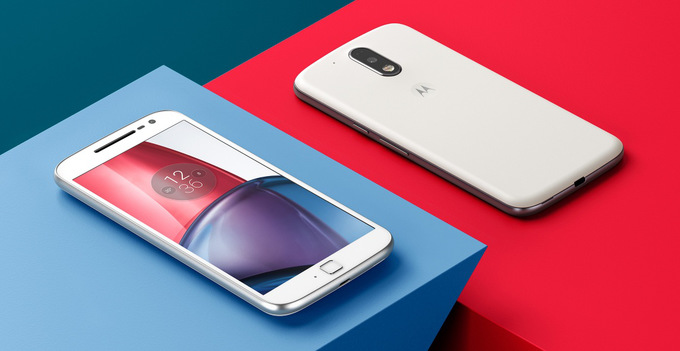

As you can see in the picture above, the OPPO R9 will come with super thin bezels on the sides, which will make the display stand out. While we had seen the front of the device via its TENAA listing a few days back, this further confirms the thin side bezels on the flagship. However, we will have to wait and see how thick are the standard black borders around the screen. If they are too big, then it will definitely stand out when the display is turned on, especially on the white colored model.
As for the specs, the previous TENAA listing revealed most of it. The OPPO R9 is said to come with a thinner 6.5mm body and a 2850mAh battery. The phone will most likely be powered by the octa-core Helio X10 chipset with 4GB RAM and 32GB storage. At the back, there will be a 16MP dual LED flash camera. The display will be a 5.5-inch 1080p panel.
Coming to the larger sibling, the OPPO R9 Plus, the phone will come with a 6-inch display with 1080p resolution. Even this device will come with an octa-core chip but it will most likely be from the Snapdragon 652. It’s thicker with a 7.4mm body and comes with a larger 4120mAh battery as well.
From the pictures, the OPPO R9 seems to be a good looking flagship. We will get all the official details on March 17, when the company unveils the device in Beijing, China.
Let’s be honest, most of us were pretty excited when Xiaomi announced the long-awaited Mi5. Also, it was a significant event for the company not only for the fact that they released the upgrade to their flagship smartphones’ portfolio, but also it was the first MWC Xiaomi’s product launch in Barcelona.
We have just received our Xiaomi Mi5 review unit and we are very glad to get it so early.
Honestly, Xiaomi Mi5 carries a very similar high-quality build and it sits very comfortably in the hand.
We have a curved glass on the back, which makes the Mi5 sit very comfortably in the hand and adds a lot of character to the design.
We have a 4MP Ultrapixel shooter, customizable LED light and some other usual stuff on the front.
The home button is very tactile and it also doubles as a fingerprint scanner. So far, it seems to be very fast and accurate.
Our review unit (3GB RAM, 32GB ROM) comes in a white colour. As usual to all glass back panels, it is prone to fingerprints and smudges.
We have a 16MP shooter on the back with a dual LED flash. We can’t wait to see how it performs in various lighting conditions and we are also going to put it against Samsung Galaxy S7 and Galaxy S7 Edge.
On the top we have a headset jack and the IR blaster.
The USB-type C, loudspeaker and the mic are on the bottom.
Overall, we were really impressed with the Xiaomi Mi5. It is well built, it has a brilliant looking display, a fast fingerprint scanner and the phone is compact. Also, the MIUI has been running very fast and fluid so far.
I have already used the phone for half a day and I will work hard to provide you with a full review as soon as possible. Stay tuned to Gizmochina.
OPPO has confirmed that it will launch its OPPO R9 flagship at an event in China on March 17. The company has been teasing the phone’s release for the past few weeks and the latest teaser reveals some more design aspect of the device.
The company confirmed that the phone will come with curved corners as seen in the image above. The teaser further reveals the power and SIM card slots will be located on the right side of the phone. Also, we can confirm that the phone will come in a silver colored variant.
But this is not the only glimpse of the device we have got till now. We actually got to see both, the OPPO R9 and the R9 Plus at their TENAA listings a few days back. Apart from the design, the certification also revealed the specs of the devices.
The OPPO R9 features a 5.5-inch AMOLED display with 1080p resolution. The OPPO R9 Plus is a larger sized version of the R9, with a 6-inch display. Despite being from the same series, the R9 comes with an octa-core chip clocked at 1.95GHZ probably the Helio X10 and the R9 Plus features a 1.8GHz octa-core chip which could be from the Snapdragon 600 series. But on the memory side, both the devices are quite strong. Both come with 4GB RAM and then there are 32GB and 64GB internal storages on the R9 and R9 Plus respectively.
There will be a 16MP shooter on both the models with dual LED flash. OPPO R9 is slimmer featuring a 6.5mm body and because of this, it only comes with a 2850mAh battery. On the other hand, the R9 Plus features a much larger 4120mAh battery, thanks to its 7.4mm body.
Don’t expect these phones to retail for cheap. So, they could be somewhere between $300 to $400 or even more. But we can only get the pricing confirmed after OPPO officially announces it on March 17.
We use cookies on our website to give you the most relevant experience by remembering your preferences and repeat visits. By clicking “Accept”, you consent to the use of ALL the cookies.
This website uses cookies to improve your experience while you navigate through the website. Out of these, the cookies that are categorized as necessary are stored on your browser as they are essential for the working of basic functionalities of the website. We also use third-party cookies that help us analyze and understand how you use this website. These cookies will be stored in your browser only with your consent. You also have the option to opt-out of these cookies. But opting out of some of these cookies may affect your browsing experience.
Necessary cookies are absolutely essential for the website to function properly. This category only includes cookies that ensures basic functionalities and security features of the website. These cookies do not store any personal information.
Any cookies that may not be particularly necessary for the website to function and is used specifically to collect user personal data via analytics, ads, other embedded contents are termed as non-necessary cookies. It is mandatory to procure user consent prior to running these cookies on your website.