Advertisement

Eufy Security Video Doorbell Add-On Chime alerts you when motion is detected without the need for an app

Eufy has unveiled a new wireless chime for its Smart Video Doorbell E340. The Eufy Security Video Doorbell Add-On chime can notify you of visitors when it detects motion. This eliminates the need to receive updates via the app. Apart from the Smart Video Doorbell E340, the new Add-On chime is compatible with all upcoming Eufy video doorbells. The older models are not compatible with the new Add-On chime.

Eufy Add-on Chime

The New Add-on Chime is compatible with the Eufy Video Doorbell E340 & subsequent models

The new Add-On chime helps to notify you of visitors without relying on the app. T is also known as the MiniBase Chime and the sound can be triggered by ringing the doorbell or when motion around the device is detected. There are 8 different chime sounds to choose from as well as adjust the volume to your taste. The video doorbell can capture up to 128GB of footage that is stored on a microSD card inside the device.

The dimensions of the Eufy MiniBase Chime for the Video Doorbell E340 are 3.74 x 1.97 x 1.77 inches. The gadget comes in a white plastic housing but several alternatives are also available in the market. There are a few products under the Anker sub-brand, as well as devices that support Google Assistant or Amazon’s Alexa.

Eufy Video doorbell
Eufy Video Doorbell E340

Pricing & Availability

The Eufy Chime for Video Doorbell E340 is priced at $39.99 or equivalently €39.99 in the EU and £35.99 in the UK. There are no details at this time of the availability of the new Eufy Add-On chime in other markets outside North America and the EU/ UK. Although the product can be purchased via Amazon, it is unavailable for delivery to several countries and regions at this time.

RELATED:

Niu RQi electric motorcycle released in Europe, four years after the concept was unveiled

The Niu RQi electric motorcycle has now transitioned from a concept EV to a commercial product. This is coming about four years after Niu unveiled the RQi concept but the delivery remains impressive. The Niu RQi was unveiled at CES 2020 and was greeted with hope. Its specs at the CES event included a 40HP output and a top speed of 161km/h (100mph). Niu was however unable to meet its targets and had revised the specs of the model within the period. In 2022, the model was showcased with a similar power output as a 125cc motorcycle. The downgrading of the RQi’s power capabilities was seen as a move by Niu to cater to beginner riders in Europe with an A1 license.

NIU RQi

The new Niu RQi comes with a 7,500W electric motor with an output of about 11Hp, far below its original 40HP capacity. It has a maximum torque of 450Nm which is quite impressive. The RQi has a top speed of 110km/h (below its original rating of 161km/h) and can go from 0-50km/h in 2.9 seconds. Two 72V, 36Ah batteries provide the needed range for the RQi, taking it to about 200km on a single charge. The electric motorcycle also comes with Pirelli tires, dual-channel ABS, and a Brembo radial caliper at the front.

NIU RQi

The inclusion of a traction control system for the Niu RQi ensures that the high-torque motorcycle is kept under control. Other features in the RQi are full LED lighting, keyless start, front and rear-mounted cameras, and GPS tracking. Overall, the Niu RQi comes with sufficient safety features and decent power output for urban movement.

Pricing & Availability

The Niu RQi is scheduled to enter the European market in the second quarter of 2024. Four color options namely gray, green, red, and blue will be available for the RQi. The Niu RQi will retail in Europe for €7,999 ($8,780) but this price is not cast in stone.

RELATED:

Roborock A20 series vacuum cleaners with FlatReach technology now available in China

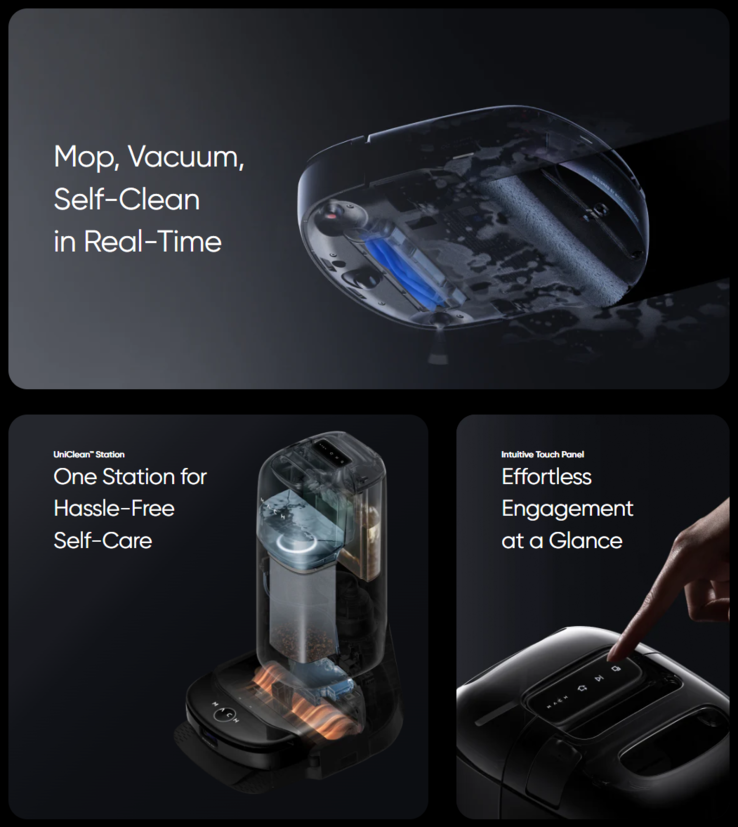
The Roborock A20 series wet and dry vacuum cleaners with the new FlatReach technology are now available in China. The new Roborock A20 series takes over from the A10 which was launched in July this year. The new model is designed to make cleaning difficult and unreachable areas very easy. The new A20 series Roborock vacuum cleaners are the A20 and the A20 Pro. Both models offer up to 17kPa suction power and docking station with self-cleaning capability. The innovative A20 series could well be part of Roborock’s lineup at CES 2024.

Roborock A20

Features

The FlatReach technology is a new feature present in the A20 series vacuum cleaners. It allows the vacuum cleaner’s body to be parallel to the floor and makes it easier to clean under the furniture or sofa without moving the furniture. Both models have a constant pressure brush and a comp to help pick up hair particles. The docking station delivers 60ºC high-temperature washing and a sterilization rate of 99.9%. The drying mechanism helps to efficiently dry the vacuum within 5 minutes and keep bacteria away.

The Roborock A20 Pro has AI two-way power-assisted wheels for a more efficient cleaning exercise. It has a holding weight capacity of 635g and its LED lights help the user to see dust. The AI dirt-sensing mechanism allows the vacuum to intelligently adjust the settings for deeper cleaning. Both the A20 and A20 Pro have a 4,000mAh battery that yields a run time of 40 minutes on a full charge. The A20 series comes with an integrated screen for controlling the power, water volume, and speed of the vacuum cleaner. The companion app provides additional commands and configurations.

Roborock A20 series vacuum cleaners

Pricing & Availability

The Roborock A20 and A20 Pro vacuum cleaners can now be pre-ordered by customers in China. The models are currently being offered at discounted prices of 2,499 yuan ($351) and 2,999 yuan ($422) respectively. The pre-order deposit required for either of the products is 100 yuan ($14). There is no global availability and pricing information yet for the new Roborock A20 series vacuum cleaners.

RELATED:

Dell unveils UltraSharp 40 monitor (U4025QW) with 5K 120Hz IPS Black panel

Dell has unveiled the U4025QW monitor ahead of CES 2024. This 40-inch monitor boasts a curved display and as per Dell, it is the world’s first 5K monitor with eye comfort certification.

The monitor is priced at $2,399 in the US and $3,289 in Canada, and it is scheduled for release on February 27th. Let’s check out the key specs of this monitor.

Dell UltraSharp 40 U4025QW

Dell UltraSharp 40 (U4025QW) Specifications:

Dell U4025QW features an advanced LG IPS Black panel for improved color contrast and deeper blacks, enhancing its display quality. It boasts a 5K resolution of 5120 x 2160 along with a 120Hz refresh rate, making it ideal for gaming and fast-paced content.

In terms of color accuracy and range, the monitor covers 99% of the DCI-P3 color gamut. It’s also certified with VESA DisplayHDR 600 and features a 2,000:1 contrast ratio, ensuring high dynamic range performance for improved brightness and contrast. This makes it a suitable choice for professional color work and high-quality visual content.

In terms of connectivity, the Dell U4025QW is well-equipped. It features a Thunderbolt 4 hub with a variety of ports, including one Type-A and two Type-C ports, HDMI 2.1, and DisplayPort 1.4 outputs.

This wide range of connectivity options ensures that the monitor can easily be integrated into most setups. The monitor also supports 140W power delivery via its Thunderbolt 4 port, allowing it to charge compatible devices efficiently. Furthermore, the monitor includes a 2.5 GbE Ethernet LAN port, providing high-speed wired network connectivity.

Dell UltraSharp 40 U4025QW

The monitor is certified for 5-star Eye Comfort, making it an excellent choice for extended use without causing eye strain.

Earlier today, Dell has also announced UltraSharp 34 curved monitor (U3425WE), a trimmed-down version of the 40-inch version.

Dell has also announced a refreshed XPS laptop lineup, including 13, 14, and 16-inch models with premium design features, Intel Core Ultra processors, and a unique Copilot Key.

RELATED:

OpenAI Set to Launch GPT Store for AI Enthusiasts Next Week

The use of artificial intelligence is increasing day by day. Nowadays, it’s possible to encounter AI technologies in almost every industry. Moreover, ChatGPT, which initiated all this chaos, encourages people to develop custom AI models in different fields, further accelerating this process. Now, OpenAI’s plans go beyond that. The company plans to launch a store for GPTs and custom apps based on its text generating AI models sometime in the coming week. Here are the details…

OpenAI’s App Store for GPTs Will Launch Next Week

A short while ago, OpenAI sent an email to subscribed developers, announcing that the new application store will open next week. The email contained the following statement: “Dear GPT Builder, We want to inform you that we will be launching the GPT Store next week. If you are interested in featuring your GPT in the store, you will need to:

ChatGPT vs iflytek spark-3-0
  • Review out updated usage policies and GPT brand guidelines to ensure that you GP is compliant
  • Verify your biulder profile (settings > builder profile > enable you name or a verified website)
  • Publish you GPT as ‘Public’ (GPT’s with ‘Anyone with a link’ selected will not be shown in the store)

Thank you for investing time to build a GPT – ChatGPT Team”

The opening of the store is part of OpenAI’s efforts to make GPT available to a wider user base. OpenAI is striving to ensure the responsible and safe use of GPT. As part of these efforts, the store will take various measures to prevent the misuse of GPT. The opening of the store signifies a significant advancement in the field of artificial intelligence. This development indicates that artificial intelligence is beginning to play a greater role in our daily lives.

RELATED:

(via)

MSI TITAN 18 HX gaming laptop with Core i9-14900HX & RTX 4090 & 4K 120Hz display unveiled

MSI is set to release the TITAN 18 HX laptop, targeting the enthusiast-class gaming laptop segment with a focus on feature-rich design and high performance.

MSI TITAN 18 HX specs:

MSI has officially confirmed a 400W power supply for the TITAN 18 HX, reflecting the robust power requirements of this gaming laptop. The 18-inch 4K+ Mini-LED display features a 120Hz refresh rate, 1000 nits peak brightness, and VESA DisplayHDR 1000 certification. Additional features include a 6-speaker Dynaudio audio system and an RGB backlight mechanical keyboard by Cherry MX.

The TITAN 18 HX will be powered by the Intel 14th Gen Core-HX processor, featuring a 24-core Core i9-14900HX processor with a boost clock of up to 5.8 GHz. It will be available in two variants, one with a GeForce RTX 4090 and the other with a GeForce RTX 4080.

A notable upgrade on this year’s model is the introduction of a new 270W TDP mode for combined CPU and GPU power, offering a significant 40W power increase compared to its predecessor. This upgrade allows the CPU to sustain higher clock speeds during extended gaming sessions.

Additional specifications include support for up to 128 GB of DDR5 RAM, Wi-Fi 7, up to 4 TB storage, a 99.9 Wh battery, two Thunderbolt ports, and a 400W power supply included in the box. The MSI TITAN 18 HX will likely be unveiled for the global market at CES 2024.

RELATED:

(Source, via)

JLab JBuds ANC 3 TWS earbuds with Smart ANC & 42 hours battery life launched

JLab, a well-known brand in the audio industry has launched a couple of new audio products in the market right before CES 2024. We recently covered the launch of the JBuds Lux ANC headphones that promise premium audio at an affordable price. The brand has also launched the JBuds ANC 3 True Wireless Earbuds with smart ANC. Here’s everything you need to know about these earbuds.

JBuds ANC 3 earbuds specs:

The JBuds ANC 3 is the latest addition to JLab’s popular line of true wireless earbuds. They build on the success of the previous models by adding ANC, which can help to block out ambient noise and improve your listening experience.

The JBuds ANC 3 also have a longer battery life than their predecessors, with up to 42 hours of playtime on a single charge.

Key Features

  • Active noise cancellation (ANC): The JBuds ANC 3 have three ANC modes: ANC On, ANC Off, and Be Aware. Be Aware mode allows you to hear some ambient noise, which can be helpful for safety when you’re running or biking.
  • Long battery life: Up to 42 hours of playtime on a single charge.
  • Customizable sound: The JBuds ANC 3 have three EQ presets: JLab Signature, Balanced, and Bass Boost. You can also use the JLab app to create your own custom EQ profile.
  • IP55 sweatproof: The JBuds ANC 3 are sweatproof and water-resistant, so you can wear them to the gym or for a run without worry.
  • Bluetooth Multipoint: The JBuds ANC 3 can connect to two devices at the same time, so you can easily switch between your phone and your computer.
  • Movie Mode: This low-latency setting helps to ensure that the audio from your TV is synchronized with the JBuds ANC 3, so you can enjoy a lag-free movie-watching experience.

Pricing and Availability

The JBuds ANC 3 is available now for $59.99. They come in a variety of colors, including black, white, and blue.

RELATED:

Asus ROG Phone 8 series confirmed to launch on January 8 in India

Asus is gearing up for the global debut of the ROG Phone 8 series at CES 2024. The launch date is set for January 8. Now, Asus India has also confirmed that the device will be launching on the same day in India.

Asus ROG Phone 8 Pro launch countdown

Other than the global market, the ROG Phone 8 series will be launching on January 16 in China. The device will be going head-to-head with the likes of the Red Magic 9 Pro, which recently went on sale in the global market. Here’s what you can expect from the Asus ROG Phone 8 Pro.

Asus ROG Phone 8 Pro specs:

The leaked specifications for the Asus ROG Phone 8 Pro suggest a 6.78-inch AMOLED display delivering Full HD+ resolution and an impressive 120Hz refresh rate, promising an engaging gaming experience. Powering the device is expected to be the Snapdragon 8 Gen 3 SoC, a detail substantiated by a prior Geekbench listing. Potential configurations may offer a choice between 16GB or 24GB of RAM, along with varying storage capacities ranging from 512GB to 1TB.

Further speculations indicate a triple-camera setup for the smartphone, including a 50MP primary camera utilizing a Sony IMX890 sensor, a 13MP ultra-wide lens, and a 32MP telephoto lens. The front is anticipated to house a 32MP camera for capturing selfies. The device is projected to house a robust 5,500mAh battery supporting 65W fast charging.

Additional features expected on the gaming phone encompass an in-display fingerprint sensor, a 3.5mm audio jack, a 5-magnet speaker system, along with connectivity features like Wi-Fi 6E, Bluetooth 5.3, and NFC. Notably, the device is rumored to boast an RGB-lit rear logo and incorporate Gorilla Glass Victus 2 for display protection. Moreover, it is speculated to feature an IP68-rated chassis, enhancing its resistance to water and dust.

RELATED:

Indian space agency and SpaceX forge historic partnership for GSAT-20 Satellite launch

The Indian Space Research Organisation (ISRO), has joined forces with Elon Musk’s SpaceX for the upcoming launch of the GSAT-20 communications satellite. NewSpace India Limited (NSIL), ISRO’s commercial arm, made the historic announcement, marking the first collaboration between India and SpaceX.

The GSAT-20 mission, scheduled for the second quarter of 2024, aims to address India’s communication needs, particularly in remote and unconnected regions. Weighing 4,700 kg, GSAT-20 surpasses ISRO’s current highest spacecraft launching capacity of 4,000 kg, highlighting the satellite’s significance in enhancing broadband communication across the country.

This partnership underscores Elon Musk’s growing interest in expanding his businesses in India, with discussions underway for a potential investment proposal from Tesla to establish an electric vehicle factory in the country. While facing some resistance from the domestic industry, Musk’s ambitious plans also include introducing the Starlink satellite broadband service to India.

The GSAT-20 satellite will ride into space aboard SpaceX’s Falcon 9 rocket, known for its reusable design. Falcon 9 holds the title of the world’s first orbital-class reusable rocket, boasting an impressive track record of 285 launches, 217 re-flights, and 243 landings. The launch service contract between NSIL and SpaceX solidifies the collaborative effort, showcasing the potential for future cooperation between the two space exploration entities.

GSAT-20 represents ISRO’s second ‘demand-driven satellite mission,’ following the successful launch of GSAT-24 in June 2022. Tata Play secured the capacity of GSAT-24, marking a significant step in meeting India’s growing communication demands.

The high-throughput satellite GSAT-20, fully owned, operated, and funded by NSIL, is set to provide a capacity of 48 gigabits per second. The mission’s focus on cost-effective Ka-Ka band HTS capacity aims to meet the broadband, IFMC, and cellular backhaul service needs of the country.

As India and SpaceX embark on this historic mission, experts anticipate a potential shift in India’s satellite launch capabilities, even as some suggest that ISRO may still need to develop rockets capable of carrying heavier payloads into space. The GSAT-20 collaboration opens a new chapter in the global space exploration narrative, emphasizing the synergy between established space agencies and private players in advancing space technology for the benefit of nations.

Related:

(via)

Intel launches Articul8 AI: Revolutionizing enterprise AI with cutting-edge generative tech

Intel, the global technology leader, is making waves in the artificial intelligence (AI) landscape by establishing Articul8 AI, a new independent company dedicated to advancing generative AI. In collaboration with DigitalBridge Group, a digital-focused asset manager, and several prominent investors, Intel is set to revolutionize the enterprise AI sector.

While the financial intricacies of the deal, including the valuation and Intel’s retained stake, remain undisclosed, the establishment of Articul8 AI signals a strategic move by Intel to consolidate its focus on AI software development. The venture, born out of a fruitful two-year research collaboration with Boston Consulting Group (BCG), boasts a generative AI system capable of processing text and images, developed using Intel’s powerful supercomputer and a combination of open-source and proprietary technology.

A key player in Intel’s enterprise AI ambitions, Articul8 AI is strategically positioned to address the challenges of transitioning generative AI from proof of concept to production safely and cost-effectively. Arun Subramaniyan, former Intel vice president with a wealth of experience in the data center and AI domain, takes the helm as the CEO of Articul8, emphasizing the company’s commitment to overcoming obstacles in the rapidly evolving AI landscape.

The generative AI system, now ready for deployment, is tailored to meet the diverse needs of enterprise customers in sectors such as financial services, aerospace, semiconductors, and telecommunications. Operating within BCG’s data centers, the platform prioritizes privacy and security, offering a compelling solution to concerns raised by potential customers reluctant to entrust their data to large cloud computing companies.

Intel’s strategic approach involves attracting external capital, following a model similar to its successful spin-off of Mobileye Global and its plans for an eventual IPO for its programmable chip unit. Notable investors in Articul8 include DigitalBridge Group, Fin Capital, Mindset Ventures, Communitas Capital, GiantLeap Capital, GS Futures, and Zain Group.

Despite its ambitious goals, Articul8 faces challenges tied to ethical considerations, transparency, accountability, and the evolving definition of responsible AI development. However, with Intel’s vast resources, experienced leadership, and a robust generative AI system ready for deployment, Articul8 AI is poised to make a significant impact in the realm of enterprise AI, competing with industry giants such as Nvidia, OpenAI, Google, Stability AI, and Anthropic. 

Related:

(via)

Realme 12 Pro render leaks out revealing three color options

Rumors about the Realme 12 series smartphones have been floating around since September 2023. There are rumors that we might see the device launch by the end of January. Ahead of the launch, tipster DCS has revealed the renders of the Realme 12 Pro.

Realme 12 Pro render

The leaked images showcase the design of the upcoming Realme 12 Pro, revealing a curved display with minimal bezels and a centrally located punch hole on the front. The rear panel is equipped with a circular camera module housing four cutouts and an LED flash. The Realme 12 Pro is anticipated to be available in three color variants: Black, Orange, and White. Notably, the Orange and White options seem reminiscent of those seen in the Realme 11 series, suggesting a continuation of the vegan leather finish found in the 11 series. In contrast, the Black variant is likely to feature a glass-back finish.

The design in the renders matches the one revealed by the TENAA listing from a few days ago. As far as specifications are concerned, the Realme 12 Pro Plus is tipped to be powered by a Qualcomm Snapdragon 6 Gen 1 chipset, which is present inside smartphones such as Vivo Y100i Power, the iQOO Z8x, and the Honor X50. The device will likely have a 6.7-inch AMOLED FHD+ 120Hz display with a 16-megapixel camera in the front.

On the back, it is said to feature a 50-megapixel main sensor, paired with an 8-megapixel ultrawide sensor and a 32-megapixel telephoto camera which is expected to be capable of 2x optical zoom. The TENAA certification reveals that the Realme 12 Pro series will arrive in China with up to 16 GB of RAM and up to 1 TB of storage. It is also said to have a 5,000mAh battery pack with 100W fast charging support.

RELATED:

Epic Kicks Off 2024 With Free Games! Get Today’s Free Game Now!

Epic Games Store, the biggest competitor of Steam, continues to give away free games to its users. As you know, the company usually offers one or two free games every Thursday, but for the new year, they have something special planned. To bid farewell to 2023 in a beautiful way, Epic will be giving away 17 free games until January 4. While the identities of these mysterious games remain unknown, today’s free game is Marvel’s Guardians of the Galaxy Here are the details…

Marvel’s Guardians of the Galaxy Free on Epic Games Store

Epic Games Store continues its New Year’s gifts at full speed. Following yesterday’s gift of A Plague Tale: Innocence, the platform is now presenting Marvel’s Guardians of the Galaxy today. This action-adventure game, developed by Eidos-Montréal, brings beloved Marvel characters to your computer. The studio describes the game as: “You are Star-Lord. The destiny of the galaxy and the Guardians rests in your hands. It’s time to demonstrate your abilities to the universe. You can do this. Most likely.” You can view it and add it to your library by clicking here.

Marvel’s Guardians of the Galaxy System Requirements:

ComponentMinimumRecommended
OSWindows 10 64-bit (Build 1803)Windows 10 64-bit (Build 1803)
ProcessorAMD Ryzen 5 1400 or Intel Core i5-4460AMD Ryzen 5 1600 or Intel Core i7-4790
Memory8 GB RAM16 GB RAM
GraphicsNVIDIA GeForce GTX 1060 or AMD Radeon RX 570NVIDIA GeForce GTX 1660 Super or AMD Radeon RX 590
DirectXVersion 12Version 12
Storage150 GB available space150 GB available space
  • December 13 – Destiny 2: Legacy Collection
  • December 20 – DNF Duel
  • December 21 – Melvor Idle
  • December 22 – Art of Rally
  • December 23 – Fallout 3: GOTY Edition
  • December 24 – Ghostwire: Tokyo
  • December 25 – The Outer Worlds: Spacer’s Choice Edition
  • December 26 – Human Resource Machine
  • December 27 – Cursed to Golf
  • December 28 – Cat Quest
  • December 29 – Snakebird Complete
  • December 30 – Saints Row
  • December 31 – Ghostrunner
  • January 1 – Escape Academy
  • January 2 – 20 Minutes Till Dawn
  • January 3 – A Plague Tale: Innocence
  • January 4 – Marvel’s Guardians of the Galaxy

RELATED:

Apple settles Lawsuit over iTunes Gift Card scam: Consumer Protection in the Spotlight

Tech giant Apple has chosen to settle a lawsuit filed against it over alleged complicity in iTunes gift card scams. The settlement terms, detailed in a filing submitted to a federal court in San Jose, California, are currently awaiting preliminary approval from US District Judge Edward Davila.

The lawsuit revolves around Apple’s purported involvement in allowing scammers to exploit iTunes gift cards. The scam, employing panic-inducing tactics, coerced victims into purchasing Apple gift cards for fabricated reasons such as taxes, medical bills, bail, or debt collection. Despite explicit warnings against it, victims were then instructed to disclose card codes.

Apple faces accusations of depositing 70% of the stolen funds into fraudsters’ bank accounts while retaining 30% as a “commission” for knowingly converting stolen codes into monetary assets. The financial impact of the scam is estimated to have caused victims to lose “hundreds of millions of dollars,” according to the lawsuit.

The lawsuit, covering individuals in the United States who purchased gift cards redeemable on iTunes or the App Store between 2015 and July 31, 2020, alleges that these individuals provided codes to fraudsters and did not receive refunds from Apple.

Legal proceedings gained traction in June 2022 when Judge Davila rejected Apple’s attempt to dismiss the case. The judge deemed Apple’s disavowal of liability, even after victims reported being scammed, as unconscionable.

This legal development underscores the growing importance of holding tech giants accountable for consumer protection and financial security. It also serves as a warning about potential risks associated with digital transactions and the usage of gift cards.

While Apple and lawyers for the plaintiffs have not immediately responded to requests for comment, the mediation process played a crucial role in reaching settlement terms. The formal settlement is now in the drafting stage, awaiting preliminary approval by the judge, marking a crucial step in addressing the aftermath of the iTunes gift card scam.

Related:

(via)

Cherry launches MX3.1 mechanical keyboard with MX2A switches in China for 899 Yuan ($126)

Cherry is a reputable company known for its high-quality input devices. Their products include mechanical keyboards, key switches, and other input peripherals. Cherry is recognized for producing reliable and durable solutions for both professional and casual users, earning a solid reputation in the industry.

Cherry MX3.1 Keyboard Specifications:

Earlier today, the company launched a new mechanical keyboard called MX3.1 in the Chinese market, which is now available for 899 Yuan ($126) at the Tmall store. Let’s check out the key specs of this keyboard.

Cherry MX3.1 Keyboard

The MX3.1 keyboard features Cherry’s new MX2A switches, offering a choice between Red or Brown switches. Additionally, it is available in three color options: White, Pink, and Black.

The keyboard boasts a 108-key layout and is designed with full anti-ghosting capabilities, ensuring that every key press is registered even when multiple keys are pressed simultaneously.

Cherry MX3.1 Keyboard

Each key is built to withstand up to 100 million keystrokes. The keycaps are made of high-quality ABS material, ensuring longevity and maintaining their tactile feel over time. It is also equipped with dual independent lighting effects, adding to its aesthetic appeal.

The keyboard features a sturdy one-piece aluminum bottom shell frame for durability. It incorporates a dual silencing structure to minimize typing noise. The keyboard also offers RGB backlighting and includes a side RGB module.

The keyboard’s connectivity is facilitated through a USB-C detachable braided cable. The MX2A switches used in this keyboard are designed for stability and high quality, featuring gold crosspoint contact technology and a new barrel-shaped noise-suppressing spring structure.

Cherry MX3.1 Keyboard

For those interested in the specific switch types, the MX2A Red Switch is known for its direct up and down feel with low actuation force, making it ideal for extended use. The MX2A Brown Switch, on the other hand, offers a soft and gentle feel, providing a comfortable typing experience.

Cherry includes Cherry Utility Software with the MX3.1, which allows users to customize lighting and key settings. Additionally, the MX3.1 comes with a two-year warranty period.

RELATED:

Baidu Joins Tech Philanthropy Wave by Donating Quantum Computing Facility to State Lab

Chinese search engine powerhouse Baidu has announced its decision to donate its quantum computing research facility to the Beijing Academy of Quantum Information Sciences (BAQIS). This donation follows the growing trend of tech giants contributing to state-backed initiatives, particularly in the rapidly evolving field of quantum computing.

The Baidu Institute of Quantum Computing was established in 2018

Baidu’s journey in this domain began in early 2018 with the establishment of the Baidu Institute for Quantum Computing. Their mission was ambitious: to position themselves as a leading global player in quantum computing research, focusing on areas such as quantum AI, algorithms, and architecture. This vision took a collaborative turn in March last year when Baidu and BAQIS formed China’s first quantum computing intellectual property (IP) alliance, aiming to streamline IP cross-licensing and foster innovation in the industry.

Baidu

Quantum computing stands at the forefront of scientific advancement, leveraging fundamental physics to tackle problems beyond the reach of traditional computers. Its ability to perform multiple calculations simultaneously offers unprecedented speed in solving complex statistical problems, though it’s not intended to replace conventional computing.

The donation of Baidu’s facility to BAQIS marks a significant moment in the tech world. It’s not just a gesture of corporate generosity but a strategic alignment with national priorities. China, alongside the US, is fiercely competing in the quantum computing race, an area only recently recognized as a national priority by Beijing. Such partnerships could accelerate breakthroughs in quantum computing, eventually benefiting sectors beyond technology, including healthcare and agriculture.

While the path to large-scale commercialization of quantum computing remains elusive in the long run, the rapid spread of generative AI technologies like OpenAI’s ChatGPT demonstrates the potential of cutting-edge tech to reshape our world. Baidu’s move could be a stepping stone towards more such collaborative efforts, only time will tell if it is lucrative or not.

RELATED:

(Via)

A $400 Nintendo Switch 2 may be on the Horizon for This Year, Predictions State

Nintendo fans should be gushing with excitement as 2024 is here, with people eagerly anticipating the release of the rumoured Nintendo Switch 2. If industry experts are correct, this new console could hit the shelves later this year, priced at around $400. Dr. Serkan Toto, a respected Nintendo analyst, shared his views with GamesIndustry.biz, predicting a 2024 release for the Switch 2 (as it was previously reported). Interestingly, Toto also confirmed the existence of a previously rumored Switch Pro model, indicating that it was in development but ultimately shelved.

A Switch Pro variant may be launched alongside as well

The gaming community is curious about what the Switch 2 will bring to the table. Toto suggests it will be more of an upgrade than a complete overhaul, keeping the beloved portability feature that has become synonymous with the Nintendo brand, especially given the popularity of Pokémon games. This approach is reminiscent of the Nintendo 3DS, which enhanced the DS with better hardware and new features while maintaining the core experience.

Nintendo Switch 2

Piers Harding-Rolls, an analyst from Ampere Analysis, predicts a slight upturn in the console market, attributing it partly to the anticipated launch of the Switch 2. This new console has been a topic of discussion since 2023, following a demonstration at Gamescom that showcased its expected capabilities, including advanced DLSS technology.

One of the biggest questions from fans is whether the new console will support backward compatibility, allowing them to play their existing Switch games on the new device. This feature is highly sought after and could be a decisive factor for many potential buyers.

While Nintendo has not yet officially announced the Switch 2, fans are hoping for some clues during the company’s February Direct event, which typically outlines Nintendo’s plans for the year. Until then, the current Switch continues to thrive, with developers still actively pushing out updates for the platform’s titles. That’s a win in itself!

RELATED:

(Via)

SpaceX Unveils Starlink’s Game-Changing ‘Cellphone Towers’ in Space

Elon Musk aims to change how we connect to the internet with Starlink. This service, launched a few years back, offers an accessible internet option for underserved regions via satellites orbiting Earth. However, the term “easy” here is relative because it still requires antennas and some equipment to transmit the incoming signal to your devices. Fortunately, this situation is changing because Starlink is launching the first ‘cellphone towers in space’ designed for use with smartphones.

Elon Musk’s Starlink and the Future of Internet Access

SpaceX (which at this point operates as a taxi service between space and Earth) announced the the launch of 21 new Starlink satellites. Of course, this news isn’t too surprising, considering both companies are owned by Elon Musk, and this is essentially what allowed Starlink to exist in the first place. However, six of these new satellites serve a rather unique purpose “to destroy major mobile network companies”.

Actually, these are the initial steps of Elon Musk’s ambitious project, which is currently in the testing phase. Satellites capable of reaching a maximum speed of 7 Mbps will likely serve in specific regions like North America and be used for tasks requiring low internet speeds, such as transmitting text messages. However, if you recall, Musk initially announced Starlink in 2019 promising affordable unlimited internet, unlimited phone calls, and unlimited internet access. Therefore, it’s possible that this will evolve significantly in the future.

SpaceX CEO Elon Musk mentioned that the satellites would enable mobile phone connectivity globally. However, he pointed out a substantial bandwidth limitation, stating, “This only supports around 7Mb per beam, and the beams are quite large.” Musk clarified that although this offers an excellent solution for areas without cellular service, it doesn’t significantly compete with current land-based cellular networks.

RELATED:

(via)

HarmonyOS to overtake Apple iOS in China, however, global prospects remain uncertain

HarmonyOS from Huawei is poised to overtake Apple’s iOS as China’s second-most popular smartphone operating system by 2024, according to a report by TechInsights. This optimistic outlook stems from Huawei’s triumphant reentry into the 5G market with the Mate 60 series, overcoming supply challenges, and generating enthusiasm for the Mate 60 Pro, the pioneering 5G phone featuring Huawei’s Kirin 9000 chipset, defying US sanctions.

The success of HarmonyOS is bolstered by strategic software upgrades. HarmonyOS Next, scheduled for a 2024 debut, is tailored for native apps, eliminating the Android codebase. Key players in the Chinese tech scene, such as Alipay, JD.com, NetEase, and McDonald’s China, are actively contributing to the development of native apps, fortifying the platform’s ecosystem.

Current metrics highlight HarmonyOS’s momentum, boasting over 700 million devices and engaging more than 2.2 million third-party developers. Huawei’s CEO, Richard Yu Chengdong, acknowledges the platform’s strides in China while recognizing global challenges.

Despite the optimistic outlook, global uncertainties persist for HarmonyOS. The dominance of Android and iOS worldwide prompts questions about the adoption of HarmonyOS by other phone makers, potentially restricting its influence beyond Huawei’s devices.

Key milestones for HarmonyOS include powering all Huawei smartphones since its August 2019 launch. HarmonyOS Next, set for 2024, will not support Android-based apps, signaling a pivotal shift in Huawei’s software strategy. Major Chinese corporations, such as McDonald’s China, adopting HarmonyOS could influence other smartphone manufacturers.

While HarmonyOS thrives in China, its global status as a default operating system for smartphones, laptops, and cars remains uncertain. The tech community keenly watches how HarmonyOS will shape the future of the mobile operating system landscape.

Related:

(via)

Red Magic 9 Pro goes on sale globally with a starting price of $649

Last month, the Nubia Red Magic 9 Pro was launched globally, recently going on pre-orders. It is now available to purchase directly from Red Magic’s global website with an enticing price tag.

Red Magic 9 Pro

Red Magic 9 Pro pricing & availability

The Red Magic 9 Pro is available in three variants. The first variant comes with 12 GB of RAM and 256 GB of internal memory, priced at $649. For those seeking higher specifications, the 16 GB RAM and 512GB storage version is available for $799. The latter variant offers a choice between two colors, Cyclone and Snowfall.

Red Magic 9 Pro specs:

The Red Magic 9 Pro features a 6.8-inch Full HD+ OLED display with a 120Hz refresh rate and touch response of up to 960Hz. The display supports a 10-bit color depth, covering 100% DCI-P3 color gamut, and reaches a brightness of up to 1600 nits. It includes an in-display fingerprint sensor. The phone runs on an Octa-Core Snapdragon 8 Gen 3 processor and Adreno 750 GPU.

The device offers various RAM and storage options, utilizing UFS 4.0 technology. Running on Android 14 with Redmagic OS 9.0, it supports dual SIM cards and features a camera setup with a 50MP main camera, a 50MP ultra-wide lens, and a 16MP under-display front-facing camera.

Audio features comprise a 3.5mm audio jack, dual speakers, and DTS:X Ultra support, along with three microphones. The phone has dimensions of 163.98×76.35×8.9mm and weighs 229g. Connectivity options include 5G support, Wi-Fi 6E, Bluetooth 5.4, USB Type-C, and NFC. It houses a 6500mAh battery with 80W charging.

RELATED:

JLab JBuds Lux ANC headphone with 40mm drivers, Smart Active Noise Canceling launched for $80

JLab has entered the higher-end headphone market with the unveiling of JBuds Lux ANC Wireless Headphones. These headphones aim to provide a premium listening experience without the premium price tag.

JLab JBuds Lux ANC Wireless headphones

Key features of the JBuds Lux ANC headphones include Immersive lab-quality sound, smart active noise canceling, spatial audio support, and Bluetooth Multipoint and Bluetooth LE audio capabilities. The 40mm drivers promise expansive sound, accompanied by an impressive 70 hours of playback time.

These headphones prioritize uncompromising audio quality with 40mm drivers. It is claimed to match the audio quality of industry leaders like Sony and Bose, offering high-fidelity playback to stay true to the artist’s intentions.

JLab JBuds Lux ANC Wireless headphones

The Smart Active Noise Canceling (ANC) technology enhances the listening experience by effectively filtering external noises for clear audio playback and minimizing unwanted noise during calls.

Customization is available through the JLab App, allowing users to fine-tune their experience with features like Safe Hearing Mode and a set of EQ controls, including three default settings: JLab Signature, Balanced, and Bass Boost.

Designed for prolonged use, the JBuds Lux ANC Wireless Headphones feature a foldable design, Cloud Foam Earcups, and a headband for comfort. Bluetooth Multi-Point capability allows seamless connections to two devices.

JBuds Lux ANC Wireless Headphones

In a market where quality often comes at a premium, JLab’s JBuds Lux ANC Wireless Headphones offer advanced features at a more accessible price point. Priced at $79.99, pre-orders are open with estimated ship dates in late February for cloud white, graphite, and sage, and late March for mauve.

RELATED: