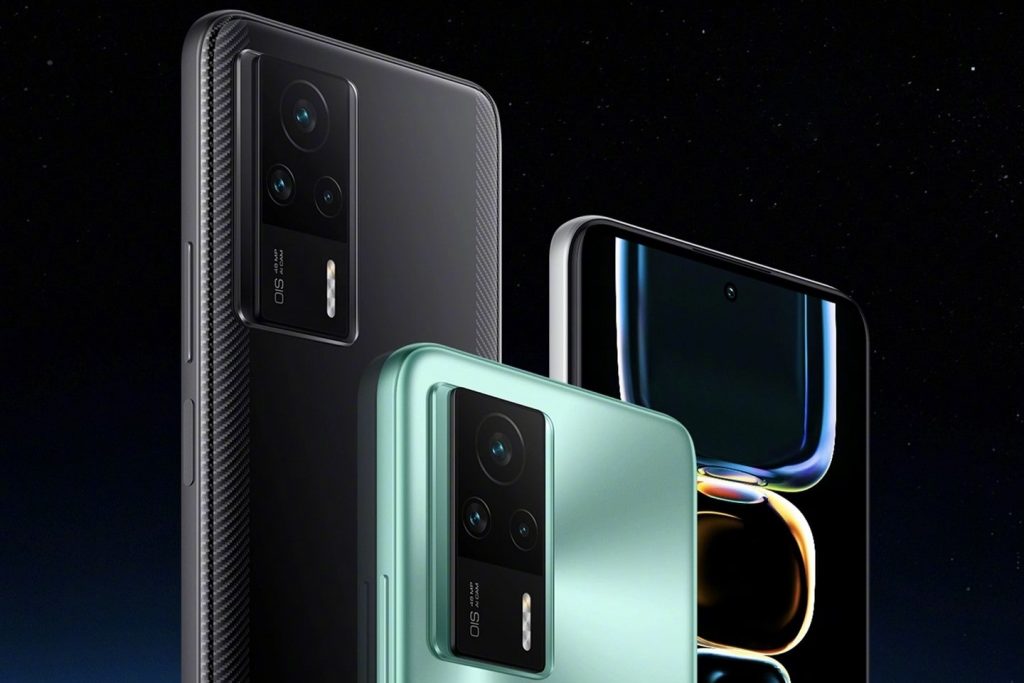
Last week, ZTE‘s sub-brand Nubia confirmed that its next flagship smartphone called the Nubia Z50S Pro will be launching on July 20 in China. The device has already made appearances on Geekbench and 3C certification revealing key features like the Snapdragon 8 Gen 2 processor and 80W fast charging. Now, the brand has officially revealed images of the smartphone along with some other key specifications.
The images of the Nubia Z50S Pro showcase a boxy design with a double-textured rear panel. It has a leather pattern finish layered with AG glass for protection. The back of the phone prominently displays a circular camera module housing three camera lenses. Interestingly, the inscriptions on the camera island mention a 35mm lens. On the side of the device, there are three buttons positioned on the right side: a power button, a volume rocker, and what seems to be a dedicated button specifically for the camera shutter. These design elements strongly suggest that the Nubia Z50S Pro will offer a camera-centric experience.
Moving on, the brand has confirmed that the device will feature a 6.78-inch 1.5K super-retina-level eye-protecting display with 1200nits peak brightness and 452 ppi pixel density. The display will have a small punch hole in the top center and slim bezels giving the device an impressive screen-to-body ratio of 93.89%. The display will also have 2160Hz high-frequency PWM dimming, Global DC dimming, AI intelligent brightness adjustment, and more. The display will have a peak touch sampling rate of 1000Hz and will cover 100% of the DCI P3 color gamut.
Furthermore, the manufacturer has verified that the phone does, in fact, incorporate the Snapdragon 8 Gen 2 processor. According to the brand, the device has achieved an astonishing benchmark score of 1,676,933 points on AnTuTu. Regarding the battery, it has been officially confirmed to possess a capacity of 5100mAh and supports fast charging of up to 80W. Further details are likely to be confirmed as we move closer to the July 20 launch date, so stay tuned.
The digital age has brought us many conveniences, but the cost to our planet is significant. The electronics industry, specifically the production of smartphones, significantly contributes to climate change and environmental degradation. Each smartphone, consisting of over 60 different elements, many mined in harmful ways, leaves a substantial carbon footprint.
Furthermore, the incessant demand for the latest models leads to an average smartphone lifespan of just 2-3 years, resulting in millions of phones discarded annually, winding up in landfills or being recycled improperly. Fortunately, the rise of ecofriendly phones aims to mitigate these harmful impacts.
What are Ecofriendly Phones?
Ecofriendly phones embody sustainability and environmental consciousness. They are often constructed from recycled or sustainably sourced materials, engineered to consume less energy and designed for easy repairability. For instance, a phone like the Fairphone 4 features a body made from recycled aluminum and a back cover made from 100% recycled plastic.
Ecofriendly phones also capitalize on energy efficiency through elements like power-saving modes, energy-efficient components, and optimized software. A defining characteristic of these phones is their repairability, being modularly designed for easy part replacement and accompanied by spare parts and repair guides.
Popular Brands that Make Ecofriendly Phones
Several brands are at the forefront of creating ecofriendly phones.
Fairphone 4
The Fairphone 4 is a 5G smartphone that is made from recycled materials and sustainably sourced components. It is also designed to be easy to repair.
PinePhone
The PinePhone is a Linux-based smartphone that is designed to be open source and repairable.
Shiftphone
The Shiftphone is a modular smartphone that is made from recycled materials.
Teracube 2E
The Teracube 2E is a rugged smartphone that is made from recycled materials and has a long battery life.
A Closer Look at What Fairphone Does and How is it Different?
Among ecofriendly phone manufacturers, Dutch company Fairphone shines for its commitment to sustainability and social responsibility. With an aim to create a smartphone that is “better for people and planet,” Fairphone’s production is based on recycled materials and responsibly sourced components.
Fairphone focuses on environmental responsibility, and the wellbeing of workers involved in production. The company ensures that its suppliers pay a living wage and provide safe working conditions, enhancing the ethical value of their phones. So environment focused brands focus more than just repairable and recycled smartphones.
Fairphone 4 has a removable battery
Their latest model, the Fairphone 4, continues this philosophy, with a body of recycled aluminum, a back cover of 100% recycled plastic, and a battery composed of responsibly sourced cobalt and lithium. Apart from its sustainable features, it offers good technical specifications like a Snapdragon 750G processor, a 6.3-inch Full HD+ display, and an advanced camera system, making it a viable contender in the competitive smartphone market.
If you are in the lookout for a smartphone that’s environment friendly with fair production practices, Fairphones are a popular option right now.
Fairphone vs. Regular Smartphones
While comparing sustainable smartphones with regular smartphones, the devices might be comparable in functionality, but there is a significant difference when it comes to their environmental footprints. Smartphones like Fairphone shines through its use of recycled materials, ethical manufacturing processes, repairability, and extended lifespan, stark contrasts against typical industry practices.
Comparison Aspects
Fairphone
Regular Smartphones
Use of Recycled Materials
Yes
Partial/Limited
Ethical Manufacturing
Yes
Limited
Repairability
Yes
No
Lifespan
Long (5 Years)
Short (2-3 Years)
How Mainstream Smartphone Brands are Moving Towards Sustainable Smartphones
Even Mainstream brands like Apple, Google, Samsung, and Lenovo are making small but meaningful strides towards sustainability.
Apple
Apple has been forging ahead in the journey towards eco-friendly phone production, evidenced by the environmental initiatives in its iPhone 14 series. The company now utilizes 100% recycled gold in the wiring of all its cameras and the plating of multiple printed circuit boards, showing a commitment to resource efficiency and reduction of environmental harm.
The packaging for Apple products has also evolved, now being 94% fiber-based as the company has worked diligently to eliminate plastic from its packages. Further demonstrating a commitment to the environment, all of the wood fiber used is either recycled or responsibly sourced.
Apple’s environmental efforts extend to energy use as well, with over 25% of the electricity used in the manufacturing of the iPhone 14 series being sourced from clean energy projects initiated by their suppliers.
Moreover, the iPhone 14 series has made strides in removing harmful materials from its devices. Its phones are designed with arsenic-free glass, and they’re free from mercury, brominated flame retardants, PVC, and beryllium, showcasing Apple’s intention to create products that are not just user-friendly but also eco-friendly.
Google
Google has been intensifying its efforts to enhance the sustainability of the Pixel 7 series. One of the primary initiatives involves increasing the use of recycled materials. Approximately 30% of all materials used in Google’s new products launched in 2022 were recycled content, spanning across components made of aluminum, stainless steel, rare earth magnet, glass and plastic. In particular, 48% of the plastic materials came from recycled content.
The carbon footprint of product manufacturing is also significantly reduced with recycled materials. For instance, the aluminum in the phone enclosures of Pixel 7 and 7 Pro is made with 100 percent recycled content, leading to a reduction in carbon footprint by over 35% compared to primary aluminum use.
In addition to sourcing materials, Google has partnered with iFixit to provide genuine Pixel spare parts, tools, and repair documentation for models as far back as Pixel 2, enhancing repairability and prolonging device lifespan.
Google’s commitment to sustainability also extends to its product packaging. With a goal to eliminate plastic from its hardware product packaging by 2025, the packaging for Pixel 7 already uses 99% plastic-free materials. This effort led to a 97% reduction in Pixel packaging plastic in 2022, along with a 54% decrease in package volume and over 50% reduction in weight compared to the first Pixel phone.
Samsung
Samsung’s recent push for eco-friendly smartphone production with the S23 series is represented through a wide array of sustainable practices in its manufacturing process. The company now incorporates recycled plastics with 5% repurposed fishing nets and 15% recycled water barrels in the construction of its bottom speaker module lower. The top speaker module, volume keys, and power keys also utilize recycled plastics, with a composition of 20% recycled water barrels.
Furthermore, Samsung’s use of recycled materials extends to the deco film for the back glass, with 80% recycled PET bottles and 10% recycled plastic applied to the front case.
Pre-consumer recycled aluminum, accounting for 30% of recovered scrap from the manufacturing process, is employed in the construction of volume keys, the side key, and the SIM tray. Corning® Gorilla® Glass Victus® 2 with an average of 22% pre-consumer recycled glass is incorporated into the front screen and back cover.
In an effort to minimize waste, 100% recycled paper is used for the packaging box paper, front and back cover protector. Samsung’s commitment to lowering carbon emissions has also been recognized with the Carbon Trust’s certified ‘Carbon Footprint’ label, showing a dedication to environmentally friendly production practices.
Other brands like Xiaomi, Huawei, Lenovo etc are also working towards making smartphone manufacturing and packaging sustainable with biodegradable packing and recycled materials in their products.
The Role of Authorities in Promoting Sustainable Smartphones
The journey to sustainable smartphones is not a solitary venture. Government bodies and international organizations worldwide are slowly stepping up, enforcing stringent environmental regulations and guidelines.
The European Union, the United States, and other countries have set targets to reduce the environmental impact of smartphones, such as increasing the use of recycled materials and making smartphones easier to repair.
Global organizations like the United Nations have published detailed reports and guidelines to make smartphones more sustainable.
Additionally, numerous non-profit organizations are working tirelessly to advocate for sustainable smartphones. For example, Greenpeace has conducted several campaigns and published reports on the environmental impact of smartphones.
Stepping into the Era of Sustainable Smartphones
We live in an age where our reliance on smartphones is a fundamental part of life, dictating everything from communication to productivity. This digital necessity, however, comes with an environmental price tag. Hence, the shift to sustainable smartphones is not just a viable option, but a critical necessity.
Apple has filed a patent for a device with a rollable or scrollable display, suggesting that future products such as iPhone, iPad, televisions, desktop displays, and vehicle dashboards could feature this innovation. The US Patent & Trademark Office recently published the patent application, which continues Apple’s exploration of expandable displays that began in 2014.
Apple Explores Rollable Displays
The invention refers to a device with a display that can shift between a rolled-up state for storage and an unrolled state for viewing. In the unrolled state, the display would be planar, while in the rolled state, it would bend around an axis onto a roller for storage. The display could have a pixel array for image production and a transparent protective layer, which may include a layer of locally thinned glass to aid bending.
The outward-facing surface of the protective layer would bear potential exposure to objects causing scratches. However, the inward-facing surface would be protected and likely have fewer surface irregularities. Apple plans to prevent glass layer cracking by configuring the display to roll such that the outward-facing surface receives compressive stress. This would help prevent any scratches from causing damage to the display when rolled.
Several companies, like LG, OPPO, and Motorola, have already been actively exploring the rollable sector. LG has produced multiple purchasable rollable TVs and had also announced plans for a rollable phone. Although LG’s rollable phone never reached the market, a video leak suggests that the concept phone was actually real featuring a motorized screen extension.
The patent filing by Apple does not necessarily mean that a rollable iPhone is imminent. The company might apply the rollable display technology to other products as well. Although the rollable screen products might be far from now but according to rumors Apple is actually working on a foldable MacBook which is expected to launch in 2026.
Xiaomi is set to launch the Redmi 12 in the Indian market soon. But before its official announcement, the company released yet another teaser to showcase one of its upcoming color options.
Redmi 12 to launch in Pastel Blue with a Crystal Glass finish
The Chinese tech giant had previously announced that the device would be sold in a Jade Black color option. Apart from this, the device was also confirmed to arrive in a Moonstone Silver option as well. Now, the latest teaser from Xiaomi has revealed that a Pastel Blue color option for the Redmi 12 will also be available in India.
Furthermore, these three color options will also come with a Crystal Glass finish. This will add to their aesthetic and make them feel more premium despite the device being a budget grade handset. In India, the Redmi 12 will be unveiled on the 1st of August 2023. However, this model has already been released in Thailand. So while the Indian variant’s specs are still unclear, the global version of the same model offers us a glimpse at its hardware.
The global variant sports a tall 6.79-inch Full HD+ LCD panel that has a 90Hz refresh rate. The rear features a 50-megapixel triple camera setup, while the front houses an 8-megapixel selfie shooter. Under the hood, the device is equipped with a MediaTek Helio G88 SoC and is powered by a large 5,000mAh battery pack that supports 18W fast charging. So stick around, as we will be covering the launch event next month.
Infinix is expected to launch the Infinix GT 10 series soon. These devices will feature a similar rear design as the Nothing smartphones. A recent leak revealed the specs and features of the Infinix GT 10 Pro+. Now, a fresh report from GSMArena has now unveiled the first look and details of the Infinix GT 10 Pro. Check out the details below.
According to the images shared in the report, the Infinix GT 10 Pro features a striking back design that resembles the semi-transparent aesthetic popularized by Nothing phones. The intricate details on the back panel clearly take inspiration from the distinctive style of Nothing phones.
On the rear of the Infinix GT 10 Pro, you’ll find a camera module housing three camera sensors, accompanied by a ring-shaped LED flash. Notably, the primary sensor is expected to offer an impressive 108 MP resolution, as indicated by the inscription on the camera island.
According to the report, the Infinix GT 10 Pro will be powered by a Dimensity chipset, offering a powerful performance that is optimized for popular games like PUBG, MLBB, and Free Fire. An intriguing feature of the device is its unique box, which can be transformed into an audio amplifier once the phone is removed.
The Infinix GT 10 Pro is expected to be available in at least two colors, including a darker shade and a white variant. It will run on XOS 13, based on Android 13. The user experience is said to be close to stock Android, and the phone will receive one major Android update along with two years of security updates. According to the report, the Infinix GT 10 Pro is set to make its debut in India in August, with launches in other regions anticipated shortly afterward.
Volkswagen Commercial Vehicles made a big announcement on July 17 about their self-driving cars. They’ve made great progress, and now the Volkswagen ID. Buzz AD self-driving car is ready for mass production. Soon, it will be tested on the road for the first time. The company will invite important people from politics, business, and media to see how well it can be controlled.
These new cars will be equipped with both Radar and Lidar technology
Volkswagen also started an autonomous driving test program in Austin, Texas, USA. They’re working hard to use this technology for commercial purposes in European and North American cities, especially for shared mobility solutions and transportation services. Christian Senger, in charge of developing autonomous driving at Volkswagen Commercial Vehicles, is excited about the expansion of their self-driving program to North America. It’s the result of a long-term investment to shape the future of transportation.
Previously, Volkswagen wanted to use another company’s technology for their self-driving ID Buzz. But now, they’re doing it themselves, working with their partner, Mobileye. Over the next three years, they’ll test these self-driving cars in Austin and four other U.S. cities. They hope to launch a driverless taxi service by 2026. The three-row ID Buzz will be available in the U.S. in 2024.
All the self-driving cars will follow safety standards and have advanced cameras, radar, and lidar technology. During testing, there will be people onboard for safety, and the cars will fit four passengers. Once they’re ready for production, the company plans to ramp up their numbers to meet the growing needs of customers. Volkswagen’s efforts are encouraging a safer and more efficient future for getting around. It will be exciting to see how it all unfolds!
The Amazon Prime Day sales and Flipkart Big Saving Days sales have kicked off in India, bringing a number of notable discounts for electronic products like smartphones. One of the more notable deals is for the Apple iPhone 13, which is currently on sale on Flipkart. So here are all the details.
Apple iPhone 13 Flipkart Saving Days Sale Pricing
The Apple iPhone 13 is currently listed on the popular e-retailer platform for 57,999 INR for its 128GB storage configuration. However, the website is offering a 1,000 INR discount with an Axis Bank credit card, which brings down its price tag to just 56,999 INR. Although, you can slash the pricing even further by pairing the deal with a Flipkart Axis Bank credit card to help bring down the cost by another 2,900 INR. So the effective starting price of the iPhone 13 on Flipkart is 55,099 INR.
Talking about the smartphone itself, the iPhone 13 sports a 6.1-inch Super Retina XDR display that has a resolution of 2532 x 1170 pixels. It is equipped with an Apple iPhone 15 Bionic chipset that is paired with 4GB of RAM and up to 512GB of internal storage. The rear packs a 12-megapixel dual camera setup, while the front houses a 12-megapixel selfie shooter. The device is powered by a 3227mAh battery pack that supports 20W wired fast charging and 15W wireless fast charging.
This week, leaks signaled the ubiquitous tech giant Samsung has the intention to elevate user experience in the upcoming Galaxy series with faster charging. OnePlus, not to be outdone, was embroiled in anticipation and speculation around its newest flagship, the OnePlus 12. Not to be left behind, Infinix is setting the stage for its gaming-centric GT series, while Xiaomi is inching closer to an automotive breakthrough, preparing to make a debut in the electric vehicle market. Honor also launched a bunch of products including a super thin foldable smartphone.
Honor Magic V2
In the midst of these advancements, the tech cold war between Russia and the U.S. marked a significant shift, with Russia placing a ban on Apple products for official use.
In our weekly review, we’ll delve into these developments and their wider implications, bringing you the highlights and the nuances that define the ever-evolving tech landscape.
Samsung’s Exynos 2400 chipset aims to compete against Qualcomm’s Snapdragon and Apple’s M2. The new chipset, expected to feature a 10-core CPU configuration, will be optimized for various tasks. Despite initial plans to use the Fo-WLP packaging method, it will reportedly use the I-Cube process. With Samsung set to launch the Exynos 2400 with the Galaxy S24 series, the chip is expected to significantly enhance its performance reputation, potentially nearing the benchmark scores of the Apple M2.
Defying the impact of the U.S. ban, Huawei plans to return to the 5G smartphone industry. The company aims to sidestep U.S. restrictions by utilizing its semiconductor design tools and partnering with China’s Semiconductor Manufacturing International Co (SMIC) to produce 5G chips domestically. Despite potential production challenges, Huawei is poised to overcome these and regain its place in the competitive 5G market. The move marks a significant turning point in the company’s journey, potentially re-establishing its position in the smartphone industry.
Honor recently launched several products: the Magic V2, acclaimed as the thinnest foldable smartphone to date; the MagicPad 13, a high-end tablet featuring the Snapdragon 888 processor; the Smart Screen 5 TV, a premium 4K smart TV with a 144Hz refresh rate and MagicOS; and the Honor Watch 4, equipped with eSIM support and a 10-day battery life. These launches signify Honor’s ambition to extend its product portfolio across multiple tech domains.
Russian authorities have banned the use of Apple devices for official state purposes, aiming to reduce dependence on foreign-made technology. The ban, enforced by the trade ministry, applies to all government employees across various agencies, although personal use is still permitted. The decision comes following allegations by Russia’s Federal Security Service that Apple devices were used in a large-scale “spying operation by US intelligence agencies.” While Apple denies these claims, this move aligns with Russia’s broader efforts to transition to domestically developed software by 2025. The implications of this ban on US-Russia tech relations remain to be seen.
Huawei has revealed its self-developed AI model running on AI-powered processors, hoping to rival services like ChatGPT and alleviate China’s shortage of computing power amidst sanctions and restrictions. The new Pangu AI model, unveiled at the Cloud Developer Conference, targets broad industrial applications. It leverages the Ascend AI processors and MindSpore AI framework, intending to provide an alternative to the Nvidia graphics option and cut lead times. Despite similarities, Huawei clarifies that the Pangu AI model is not a competitor to ChatGPT, focusing more on enterprise clients. The move is seen as a significant relief for Chinese tech firms grappling with U.S. sanctions.
Tata Group is on track to purchase Wistron Corp’s Karnataka factory, the assembly plant for the iPhone 14. Upon successful acquisition, Tata will be the first Indian company manufacturing iPhones for both local and global markets. This move aligns with India’s efforts to become a dominant player in hardware manufacturing.
MediaTek expands its 6000 series with the launch of the Dimensity 6100+ SoC. Distinguished by its remarkable power efficiency, the Dimensity 6100+ SoC leverages a 4nm-based manufacturing process. The chipset offers impressive features, including support for vibrant displays, high frame rates, AI-powered camera technologies, and reliable Sub-6 5G connectivity.
Samsung’s next-generation Galaxy S24 series is rumored to feature significantly improved charging speeds, according to a tip from RGcloudS. Current Samsung Galaxy S23+ and S23 Ultra models support a 45W charging speed, but the Galaxy S24 series could potentially reach up to 65W, utilizing stacked battery technology found in electric vehicles.
Rumor suggests that OnePlus will launch its latest flagship, the OnePlus 12, in China in December 2023, with a global launch in early 2024. The phone is expected to feature 150W wired and 50W wireless fast charging capabilities, a 2K curved OLED display, and a Snapdragon 8 Gen 3 chipset. In addition, OnePlus is reportedly developing its first foldable phone, the OnePlus Open.
Infinix is reportedly developing a new series of gaming-focused smartphones, the GT 10 Pro and GT 10 Pro+, for the Indian market. Live images shared online reveal the Pro+ model to feature a transparent back, similar to Nothing’s Phone (2), and random orange patterns. More details in the original article.
Top specials & opinion pieces from last week below:
North American Electric Vehicles is a popular Canadian company specializing in restoration and conversion of classic automobiles into upgraded electric vehicles. Their expertise lies in seamlessly integrating Tesla-powered electric powertrains, infotainment systems, and modern interiors, while preserving the timeless charm of vintage cars. Their latest launch, the Tesla-powered 1991 AM General Humvee EV, has been turning heads and generating buzz among car enthusiasts.
The dual-motor powertrain delivers 600 horsepower to the vehicle
Originally designed as a military vehicle, this classic Humvee has undergone a remarkable transformation, now boasting a dual-motor powertrain that delivers an impressive 600 horsepower. The conversion goes beyond raw power, as the Humvee EV has received extensive interior and exterior modifications to offer a blend of vintage charm and modern comfort.
Inside, a sleek infotainment system has been seamlessly integrated, accompanied by a sophisticated black vinyl interior that exudes elegance. For those seeking luxury, North American EVs provides an option of a full leather interior at an additional cost of $6,000.
The Humvee EV also incorporates a GPS Speedometer and Level 2 charge system, catering to tech-savvy users. The pricing for this electrifying beauty starts at $98,600, and the standard battery offers a decent range of 150 miles per charge. However, for those with an adventurous spirit and a desire for an extended driving experience, an optional $20,000 upgrade allows for an impressive 300 miles per charge.
The transformation process for each North American EVs project follows a meticulous approach. It begins with the complete disassembly of the donor car, followed by media blasting and essential metal repairs. The restoration process includes body and paintwork, as well as the incorporation of carefully curated modifications. Once the reassembly is complete, wiring and upholstery upgrades ensure a seamless fusion of modern amenities with classic aesthetics. Each vehicle then undergoes meticulous buffing and rigorous road testing to ensure optimal performance and quality.
Previous conversion projects by North American EVs have garnered a lot of admiration, including the restoration of iconic classics such as the 1965 Porsche 356C, the 1967 Ford Mustang, and the 1964 Mercedes 230 SL. Interestingly, the classic Humvee EV is competitively priced at par with the new GMC Hummer EV. While the latter boasts cutting-edge technology and speed, the Humvee EV offers a nostalgic charm that appeals to a different audience. The question of preference arises: a converted original with raw power or “the world’s first super truck”?
In May, Realme introduced the Realme 11 series in China, which included the Realme 11, 11 Pro, and 11 Pro+ models. The Pro and Pro+ versions were subsequently released in various international markets. Now, it appears that the standard Realme 11 5G will soon be available worldwide, as it has recently surfaced on the TDRA certification website.
The TDRA listing of the Realme 11 5G with model number RMX3780 indicates that it will soon be launching in the UAE. The listing does not reveal any specifications, however, we already know all about it from its Chinese launch.
Realme 11 5G specs
The Realme 11 5G has a 6.43-inch Super AMOLED display with a 90Hz refresh rate and a peak brightness of 1000 nits. It offers a resolution of 1080 x 2400 pixels and a 20:9 aspect ratio.
The device is powered by a MediaTek Dimensity 6020 chipset built on a 7nm process. It offers different memory and storage options, with up to 8 GB of RAM and up to 256 GB of storage. You can also expand the storage using a microSD card. On the software front, it runs Android 13-based Realme UI 4.0 out of the box.
In terms of cameras, the Realme 11 5G features a dual-camera setup on the back. The main camera has a 64 MP sensor with an f/1.8 aperture. There’s also a 2 MP depth sensor for capturing bokeh effects. On the front, there’s an 8 MP selfie camera with an f/2.1 aperture.
Additional features include a loudspeaker, a 3.5mm headphone jack, and an under-display optical fingerprint sensor for security. The phone is equipped with a non-removable 5000 mAh battery that supports 33W wired charging, ensuring you stay powered throughout the day. It is available in black and orange colors.
Longer has launched its highly anticipated Mid-Year Sale, bringing you an incredible opportunity to save big on its Longer has launched its highly anticipated Mid-Year Sale, presenting an incredible opportunity for customers to enjoy massive discounts on their laser engravers. Till 24th July, you can save up to $400 on these high-quality machines.
That’s not all! As an added bonus, Longer is also offering free gifts with your purchase. Don’t miss out on this chance to upgrade your engraving capabilities while maximizing your savings. Take advantage of this limited-time offer and visit Longer’s store today to explore their range of laser engravers and unlock extraordinary discounts and free gifts.
Longer RAY5 10W Laser Engraver
Retail Price: $529.99 Discounted Price: $359.99
The Ray5 10W Laser Engraver is a powerful cutter and engraver that can be used on wood, acrylic, stainless steel, leather, silver, and more.
The laser comes with dual beam technology and has a 10W intense laser that easily cuts through hard materials like wood. It can easily cut a 0.8”/20mm thick wood board and 1.2”/30mm acrylic material. The device can also be used for engraving at a max 10000mm/min engraving speed.
Ray5 can be used for beautiful and delicate engraving art, as it features the latest compressed laser technology that generates an ultra-fine laser spot which is two times thinner than ordinary lasers available in the market. This means the device gives you ultra-fine cutting and engraving which is precise, consistent, and crystal clear with thinner lines and delicate texture.
The Ray5 comes with a thermal sensor that detects accidental flames and automatically stops the laser and starts a buzzing alarm to inform you of the same. Moreover for your safety, the device comes with a flame-resistant acrylic laser protective cover. Other interesting features include a 3.5” touch screen, multiple data transfer options, multiple machine control options, wide software compatibility, etc.
The Ray5 20W Laser Engraver is a highly efficient device that can both cut and engrave a variety of materials such as wood, acrylic, stainless steel, leather, and even silver. It is considered to be one of the most reasonably priced engravers currently available in the market.
Equipped with dual beam technology, the device boasts a formidable 20W laser and 120W electric power that can effortlessly slice through tough materials such as wood and metal. With a single pass, it can easily carve through a 0.59”/50mm pine wood board and a 0.31”/8mm acrylic material. The device is also capable of cutting 0.002”/0.05mm stainless steel. Moreover, it can be utilized for engraving at a maximum speed of 10,000mm per minute.
The Ray5 20W is capable of producing intricate and delicate engraving due to its advanced compressed laser technology, which generates a laser spot that is twice as thin as regular lasers available in the market. This results in ultra-fine cutting and engraving with precise and clear texture, featuring thinner lines and delicate details.
The Ray5 20W laser cum cutter comes with a 3.5” smart color screen which can be used to complete various DIY projects. The device comes with multiple data transfer options like Wi-Fi, USB cable, TF card, etc. It also comes with wide software compatibility which makes sit easy to use the device anytime and anywhere across the globe.
The device has safety features such as a thermal sensor, emergency stop button, flame-resistant acrylic cover, and panoramic filter glass for eye protection. Other interesting features include a brand new protective lens case and dust-proof hood that protect the laser lens from smoke and improve the service life of the module.
Laser B1 30W, is a cutting-edge device that unlocks limitless creative possibilities for your projects. With its powerful 6-core laser head, this versatile machine effortlessly cuts and engraves over 1000 different materials, from wood and stainless steel to leather, acrylic, and more.
Equipped with state-of-the-art technology, the Laser B1 boasts an ultra-high power output of 33W, delivering a concentrated laser beam that enhances cutting capability by over 20%. It can effortlessly slice through materials like paulownia wood, black acrylic, and even stainless steel, while its multi-pass ability conquers thicker materials with ease.
The Laser B1 offers a large working area, providing a significant 23.75% increase in size compared to other options. With its expanded dimensions, it accommodates A3 panels and allows for greater flexibility and productivity in various applications.
Speed is not compromised with Laser B1. Its innovative 32-bit motherboard enables engraving speeds of up to 36,000mm/min, four times faster than ordinary machines. The incorporation of TMC2209 silent drivers ensures a smooth and quiet operation, enhancing the overall user experience.
Safety is a top priority with the Laser B1. It features eight comprehensive safety protection features, including automatic laser shutdown, flame detection, and data disconnection. The panoramic filter glass provides an additional layer of protection, filtering out 99.8% of the laser for a safer operating experience.
Laser B1 also features a replaceable protective lens that prevents smoke contamination, ensuring optimal performance and longevity. With multiple data transfer options like Wi-Fi, USB cable, APP, and TF cards, seamless offline operations are possible.
The Longer Laser B1 20W is a game-changing laser engraver with advanced quad-core technology and a powerful 20W optical output. Its exceptional cutting ability effortlessly slices through various materials, including 15mm pine, 8mm black acrylic, and 0.05mm stainless steel.
With cutting-edge laser coupling technology, it offers a 20% increase in cutting capacity compared to other 20W lasers. The Laser B1 has an expanded working area of 17.72×17.32 inches, ideal for A3-sized panels. It boasts a 32-bit motherboard for high-speed operation, reaching up to 30,000mm/min, four times faster than ordinary machines.
Safety features include automatic laser shutdown, zeroing, and panoramic filter glass. The Laser B1 ensures accuracy with limit switches and stability with its aluminum frame. It supports various file formats and offers multiple data transmission options.
As the trend of growth in electric vehicles keeps booming, China’s plug-in electric car market also experienced remarkable growth, especially in the month of May. This is solidifying its position as a global leader in the electric vehicle (EV) industry. According to data from EV Volumes, an impressive 614,361 new passenger plug-in electric cars were registered in China during May, marking a staggering 54 per cent increase from the previous year.
BYD is clearly emerging at the top of the Electric Vehicle Industry, especially in China
What’s even more astounding is that plug-in electric cars now represent over a third of the total car market in the country. Rechargeable cars accounted for approximately 35 per cent of all new passenger car sales in May, surpassing the figures seen in Europe and the United States. China’s dominance in the global plug-in car market is undeniable. The nation contributed to a remarkable 60 per cent of the total global plug-in car registrations for the month of May alone.
The data also reveals that Battery Electric Vehicles (BEVs) are the preferred choice among Chinese consumers, outselling Plug-In Hybrid Electric Vehicles (PHEVs) by more than 2:1. In May, BEV sales exceeded 400,000, capturing a significant 24 percent share of the total market.
The year-to-date results further reinforce China’s EV prowess, with over 2.5 million new plug-in electric cars registered in the country so far. This accounts for approximately 35 percent of the total volume and represents an impressive 41 percent increase compared to the previous year. BYD, a Chinese automaker, emerged as the clear winner in the electric vehicle market. The BYD Qin Plus family of BEV and PHEV versions dominated the top-selling models list for May, followed closely by the BYD Song Plug plug-in family. Tesla’s Model Y ranked as the most popular all-electric car in the country.
BYD’s exceptional performance extended to the brand level, as it emerged as the most popular brand and automotive group in China’s EV market. With a share of 36.0 percent, BYD surpassed its competitors, including Tesla, GAC Aion, SAIC-GM-Wuling, and Li Auto.
Back in May, Oppo launched the K11x smartphone in China which closely resembles the OnePlus Nord CE 3 Lite. The brand is now preparing to debut the Oppo K11, which is quite similar to the recently launched OnePlus Nord CE 3. This device has now been spotted on Geekbench revealing key specs and performance details.
According to the Geekbench test result, the upcoming OPPO K11 (PJC110) will be powered by the Snapdragon 782G processor. It will have a base clock speed of 1.80GHz and a maximum clock speed of 2.71GHz. The phone will offer up to 12GB of RAM and will run on Android 13. In the benchmark test, it scored 1126 and 2924 points in the single-core and multi-core tests respectively.
The device has previously cleared TENAA and 3C certifications revealing some other key specifications. In addition to that, a recent report by DSC also leaked what the device will look like. Check out the details below.
Oppo K11 specs (rumored)
Certification details from TENAA and 3C reveal that the OPPO K11 sports a 6.7-inch 120Hz FHD+ AMOLED display with a centered hole-punch design and an under-display fingerprint sensor. Its front camera has a resolution of 16MP, while the rear setup consists of a 50MP + 8MP + 2MP configuration. The 50MP primary sensor is said to be the Sony IMX890, which is a flagship-grade sensor used in devices like the OnePlus 11 and OnePlus 11R.
In terms of dimensions, the OPPO K11 measures approximately 8.23mm thick and weighs around 184g. It is fueled by an octa-core processor clocked at 2.7GHz, potentially featuring the Snapdragon 782G chipset, although confirmation is pending.
The device houses a substantial 4,870mAh battery with a typical capacity of 5,000mAh and offers support for 100W fast charging. The OPPO K11 is expected to be exclusive to the Chinese market.
Infinix has recently introduced the Hot 30 5G smartphone in the Indian market. This device offers an array of appealing features at a price below ₹15,000. Noteworthy features include a new chipset with 5G capabilities, a high-resolution display with a high refresh rate, and generous storage. With its presence on the TDRA certification website, it seems that Infinix intends to expand the availability of this budget-friendly smartphone to additional regions.
The Infinix Hot 30 5G, identified by its model number X6832, has been sighted on the TDRA certification website. While no detailed information is disclosed in the listing, the presence of the smartphone on the website strongly suggests that it will soon be launched in the UAE. That being said, the device is also expected to start popping up on many other regional certification databases soon. Let’s take a look at its specifications and features.
Infinix Hot 30 5G specs
The Infinix Hot 30 5G features a large 6.78-inch Full HD+ LCD display with a resolution of 2460 × 1080 pixels. It offers crisp and vibrant visuals with a peak brightness of 580 nits, a 120Hz refresh rate, and a 240Hz touch sampling rate.
Powered by the Octa-Core MediaTek Dimensity 6020 7nm processor, the device comes in 4GB or 8GB RAM variants with 128GB of internal storage, expandable up to 1TB via a microSD card. Running on XOS 13 based on Android 13, it offers a feature-rich user experience.
In the camera department, the Infinix Hot 30 5G boasts a 50MP primary camera with an f/1.6 aperture and quad-LED flash for capturing high-quality photos. For selfies and video calls, it includes an 8MP front camera with an f/2.0 aperture and dual LED flash. The device also features a side-mounted fingerprint sensor, a 3.5mm audio jack, and stereo speakers for an enhanced audio experience. With an IP53 rating, it provides dust and water resistance.
In terms of connectivity, the Hot 30 5G supports 5G SA/NSA networks with multiple bands and also offers dual 4G VoLTE, Wi-Fi 802.11 ac, Bluetooth 5.1, and GPS/GLONASS/QZSS. It includes a USB Type-C port for charging and data transfer. The smartphone is equipped with a 5000mAh battery that supports 18W fast charging, ensuring long-lasting usage and quick charging capabilities.
After a long series of setbacks and delays, Tesla‘s highly anticipated Cybertruck seems to be finally on its way to becoming a reality for consumers. In a tweet on an early Saturday morning, Tesla proudly displayed an image of the Cybertruck, fresh off the Giga Texas assembly line in Austin, marking a major milestone in the vehicle’s production. The vehicle is expected to be on the roads later this year. Given the uber-unique design of the vehicle, everyone seems to be talking about it.
Elon Musk had previously predicted that Cybertruck production will commence in 2024
Electrek, a renowned news outlet covering electric transportation, speculated that the vehicle showcased in the tweet is likely a production intent model, indicating Tesla’s efforts to streamline the manufacturing process and achieve scalability efficiently. This development comes as Elon Musk, Tesla’s CEO, strives to meet the most recent timeline he set for the long-delayed pickup truck.
Earlier this year, Musk confidently predicted that volume manufacturing of the Cybertruck would commence in 2024, with limited production potentially starting “sometime this summer.” Moreover, he announced plans for a grand Cybertruck delivery event scheduled for the third quarter of 2023. Musk emphasized the complexity of the Cybertruck’s production, explaining that the vehicle’s distinctive stainless-steel frame requires unique manufacturing techniques, setting it apart from traditional car production methods. Additionally, Tesla has faced repeated bottlenecks with its next-generation 4680 battery, adding to the challenges in bringing the Cybertruck to market.
Originally, Tesla had set an ambitious release date of 2021 for the Cybertruck, with the single-motor variant priced at $39,900 and the three-motor model at $70,000. However, due to unforeseen circumstances such as supply chain shortages and economic fluctuations, the automaker has yet to finalize pricing for the Cybertruck. Tesla’s cautious approach suggests a commitment to delivering the Cybertruck at a fair and accessible price point for consumers.
As the first Tesla vehicle to delve into the pickup truck segment, the Cybertruck has generated immense excitement and curiosity from enthusiasts worldwide. Its bold, futuristic design and promises of exceptional performance have attracted a special kind of following. With the Cybertruck edging closer to production (and the news reports that the truck might have bidirectional charging), Tesla’s ability to overcome the unique hurdles will likely set the tone for the electric pickup truck market as a whole in the coming years.
Earlier this month, the Honor Pad X9 tablet was launched in the EU and UK. The tablet is designed to meet multimedia requirements on a budget as it offers a vibrant 11.5” FHD+ IPS LCD with 100% sRGB coverage. Now, it looks like the brand is preparing to launch a dedicated keyboard for the tablet as indicated by a recently spotted TDRA certification.
Image via TheTechOutlook
The certification confirms that the Honor Pad X9 Smart Bluetooth Keyboard, known as the Eileen-keyboard with registration number ER22349/23, will include Bluetooth connectivity. While additional information is not provided in the listing, it can be assumed that the keyboard will be wireless and not require physical attachment to the tablet for usage.
Honor Pad X9 specs
The Honor Pad X9 boasts an 11.5-inch FullView Display with a 120Hz refresh rate, 2000×1200 pixel resolution, and an 86% screen-to-body ratio. With a thickness of only 6.9mm and a weight of 495g, it is quite portable.
Underneath the sleek design, the Honor Pad X9 is powered by the Qualcomm Snapdragon 685 SoC, accompanied by 4GB of RAM and 128GB of internal storage. It also stands out with its six speakers, delivering immersive 360° sound. The tablet is equipped with a 7250mAh battery, likely supporting 22.5W fast charging.
For cameras, the tablet features a 5MP rear shooter and another 5MP sensor on the front for selfies and video calls. The Honor Pad X9 runs on the latest MagicOS 7.1, based on Android 13, and includes smart features like HONOR Connect.
In an unexpected tweet on Saturday, Elon Musk, the billionaire CEO of Twitter, openly admitted that the company is still grappling with negative cash flow issues. The revelation sheds light on the social media giant’s ongoing financial challenges, as it continues to spend more money than it generates. Musk attributed the problem to a sharp decline of approximately 50 percent in advertising revenue, coupled with a hefty debt burden that Twitter has been carrying.
Elon Musk stated that the 50-per cent decline in advertising revenue is to be blamed for the state of Twitter
The timing of Musk’s tweet is particularly significant, as it coincides with the commencement of Twitter’s ad-revenue sharing program paying out some content creators, including controversial far-right influencers. This move, though intended to bolster user engagement and attract advertisers, has been met with mixed reactions from the public.
Despite the setbacks, Musk seems to be optimistic about the platform’s potential. He claimed that Twitter could potentially witness an “all-time high device user seconds usage” in the coming week, indicating a strong user base. Moreover, Musk pointed out that many advertisers who had initially abandoned the platform following his takeover in October have either returned or expressed intentions to do so, signifying a potential resurgence in advertiser interest.
However, the numbers don’t paint an entirely positive picture for Twitter’s financial situation. A research firm, Sensor Tower, estimated that advertising spending on the platform experienced a staggering 89 per cent decline to a mere $7.6 million over a two-month period earlier in the year. Adding to the financial strain are the substantial annual interest payments of around $1.5 billion, resulting from the debt that Twitter accrued when Musk took the company private for $44 billion.
With these challenges on the table, Twitter’s newly appointed CEO, Linda Yaccarino, faces an uphill battle to rebuild the platform’s advertising base and steer the company towards a positive cash flow. Her leadership and strategic decisions in the coming months will be closely scrutinized as the company seeks to overcome its financial hurdles.
Apple has been working on its next-generation Apple Silicon chips, and now it looks like the Cupertino-based tech giant is all set to release devices powered by the new Apple M3 chip in the coming months.
According to the latest report from Mark Gurman in his Power On newsletter for Bloomberg, he says that Apple could launch new Mac devices powered by the M3 chip in October this year.
He adds that Apple could launch the new iMac and 13-inch MacBook Air, and MacBook Pro, all powered by the M3 processor. It may seem that M3-powered devices are coming too soon, especially with M2 Ultra-powered devices getting launched last month. If the speculations are correct, the M2 lineup of chips got delayed because of supply chain issues.
As for the Apple Silicon M3 processor, the chip is expected to have similar core counts as its predecessor but with enhanced performance and efficiency as the chipset is reportedly being manufactured using the new 3-nanometer (3nm) fabrication process.
It is not yet confirmed if the company plans to hold a launch event for the new M3 chip and devices powered by it or if the company will make an announcement thorugh a press release. Whatever the case, we should know about it in the coming weeks.
Meanwhile, Apple is gearing up for its upcoming flagship smartphones and smartwatch in the month of September. The company will launch Apple iPhone 15 and iPhone 15 Pro lineup along with the Apple Watch Series 9.
In a recent move, Russian authorities have taken a significant step towards reducing their dependence on foreign-made technology by banning the use of Apple devices for official state purposes. As reported by the Financial Times, the country’s trade ministry implemented the prohibition on iPhones and all other Apple products for “work purposes” starting from Monday. This decision applies to government employees across various agencies, including Russia’s telecommunications and mass media ministry, with some agencies already enforcing the mandate while others plan to follow suit shortly. However, officials are still allowed to use Apple devices for personal use, as long as they avoid accessing work-related communication on them.
Apple has already stopped Apple Pay for Russian users
The ban comes in the wake of serious allegations made by Russia’s Federal Security Service (FSB) in early June. The FSB claimed to have discovered a large-scale “spying operation by US intelligence agencies” involving Apple devices. According to the FSB, numerous iPhones, including those used by Russian diplomatic missions in NATO countries, were allegedly infected with monitoring software. Furthermore, the FSB accused Apple of collaborating closely with US signal intelligence to provide agents with an extensive range of control tools. Apple swiftly denied these allegations, emphasizing its commitment to user privacy and asserting that it has never cooperated with any government to create backdoors in its products.
This latest move by the Russian government also aligns with a broader effort to decrease reliance on foreign technology. In line with this objective, President Vladimir Putin issued a decree last year, mandating institutions involved in “critical information infrastructure” to transition to domestically developed software by 2025.
This ban follows a series of actions that have strained Apple’s relationship with Russia. Following Russia’s invasion of Ukraine in the past year, Apple had already cut off access to Apple Pay and halted product sales in the country as a symbolic gesture of solidarity with those affected by the conflict.
As of now, Apple has not issued an official response to the ban. The decision marks a significant development in the ongoing tech tensions between Russia and the United States, potentially further splitting Russian government employees from the global technology ecosystem. The implications of this ban on bilateral tech relations remain to be seen as a public statement is awaited.
Honor debuted as a sub-brand of Huawei in 2013. It entered the Indian market in 2014 and soon gained popularity because of its affordable pricing and value-for-money devices. In 2020, when it wrapped up its smartphone business in India, it launched a couple of phones, such as the Honor 9X Pro, Honor 9A, and Honor 9S. Due to the restrictions placed on Huawei by the United States government, Huawei sold Honor later that year to a consortium of Chinese companies. The brand has been active in China and some global markets. It did not completely disappear from the Indian market, as it has launched fitness trackers and tablets in recent years. A recent report revealed that the brand is planning to relaunch itself in the Indian market. It appears that the brand will announce a new phone in August.
According to a report that surfaced last month, Madhav Sheth, the former CEO of Realme, will be leading the Honor brand in India. In a new development, reliable tipster Mukul Sharma shared the following image of a trademark. As can be seen in the image below, the company has trademarked “Honor for Knights.”
Honor India trademark
The description of the listing reveals that it is associated with mobile phones and accessories. Interestingly, it even mentions Madhav Sheth as the proprietor. Furthermore, on platforms like Twitter and LinkedIn, Sheth’s social media accounts feature a cryptic question that reads, “When is the KNIGHT coming?” This intriguing question has sparked curiosity among followers, raising speculation about the possible launch of a new Honor device.
Madhav Sheth’s Twitter account
According to tipster Sharma, Honor is set to make a comeback in the Indian market with a new phone in August. However, there is currently no information available regarding the specific model that the brand will introduce for its comeback.
We use cookies on our website to give you the most relevant experience by remembering your preferences and repeat visits. By clicking “Accept”, you consent to the use of ALL the cookies.
This website uses cookies to improve your experience while you navigate through the website. Out of these, the cookies that are categorized as necessary are stored on your browser as they are essential for the working of basic functionalities of the website. We also use third-party cookies that help us analyze and understand how you use this website. These cookies will be stored in your browser only with your consent. You also have the option to opt-out of these cookies. But opting out of some of these cookies may affect your browsing experience.
Necessary cookies are absolutely essential for the website to function properly. This category only includes cookies that ensures basic functionalities and security features of the website. These cookies do not store any personal information.
Any cookies that may not be particularly necessary for the website to function and is used specifically to collect user personal data via analytics, ads, other embedded contents are termed as non-necessary cookies. It is mandatory to procure user consent prior to running these cookies on your website.