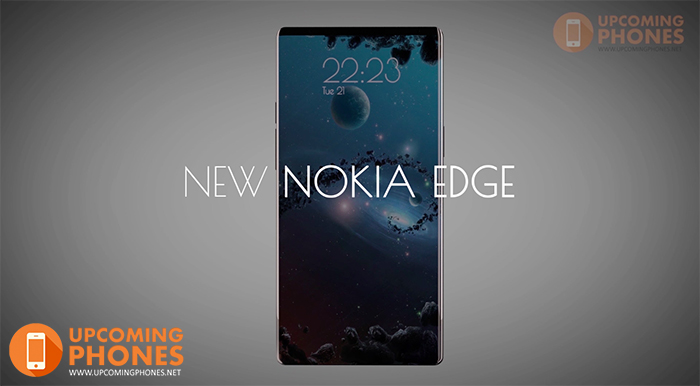
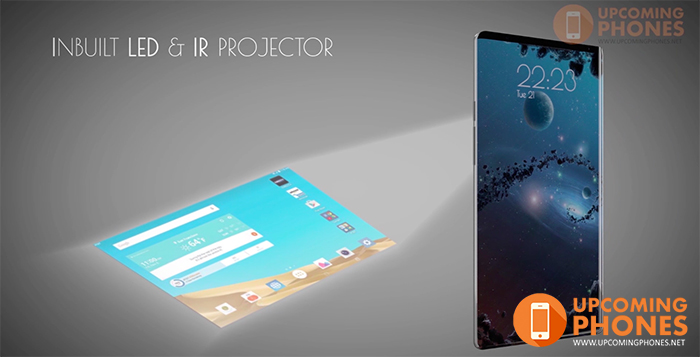
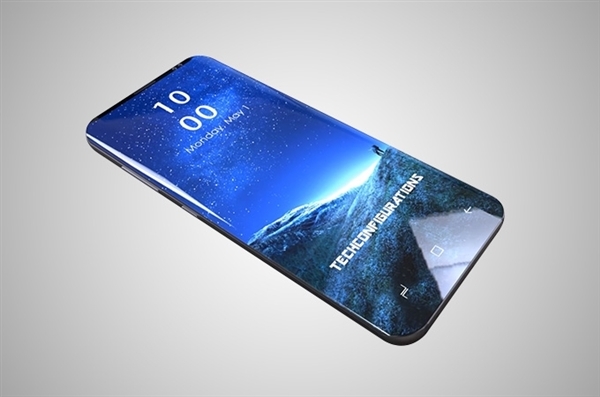
Since HMD Global has unveiled the Nokia 7 upper mid-range phone recently, Nokia fans are waiting for the arrival of the rumored Nokia 9 flagship phone. There are mixed rumors about the arrival of the smartphone. Some sources claim that it will be unveiled before the end of this year. However, there are other sources that claim that it will be unveiled during the Mobile World Congress (MWC) 2018 that is scheduled to take place next year in February. Upcoming Phones that is known for creating concept renders of forthcoming smartphones has also created a concept model of the unannounced Nokia 9 Edge phone. The design of the phone revealed through the new renders suggests that it is a better-looking version of Samsung Galaxy Note 8.
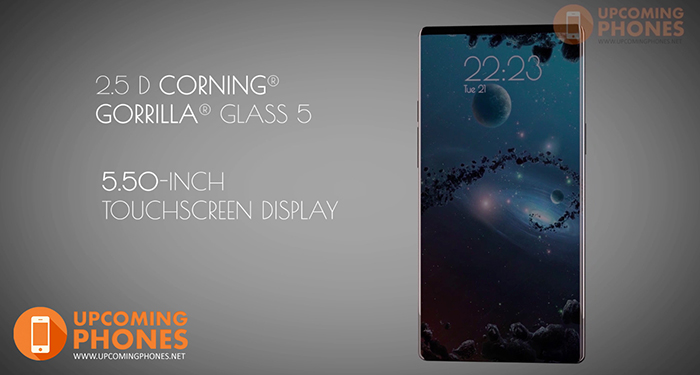
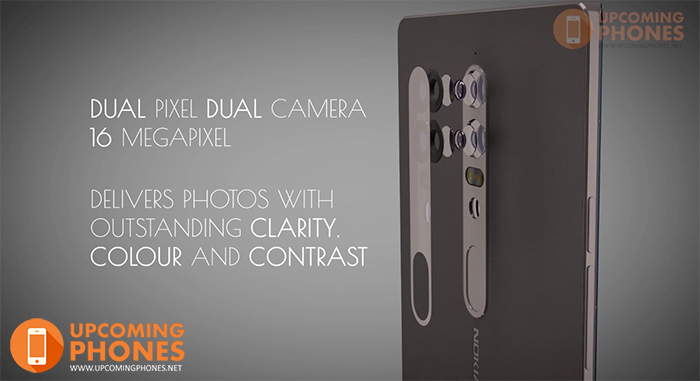
Featuring a 5.5-inch curved display panel and a full screen design, the Nokia 9 Edge boasts a sleek and premium appeal. The rear side of the phone is fitted with a pair of 16-megapixel sensors that are arranged vertically along with a dual-LED flash. An interesting feature that can be seen on the back panel of the Nokia 9 Edge is the presence of an infrared projector that is capable of mirroring the display of the phone.
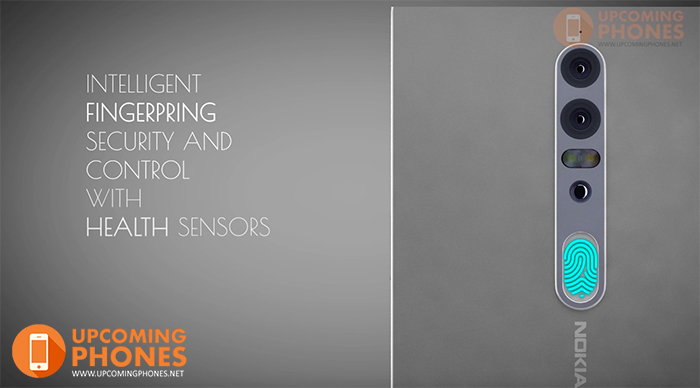
The fingerprint scanner is also found on the backside of the concept phone. It is equipped with health sensors. For shooting selfies, it features an 8-megapixel selfie camera. There is no information about the chipset that drives the Nokia 9 concept phone. However, Upcoming Phones states that it will be coming in two models. The base model has 6 GB of RAM and 64 GB of storage and the advanced model has 8 GB of RAM and 128 GB of storage.
HMD Global is rumored to be working on Nokia 9, but rumors suggest that the design of the phone may be based on Nokia 8 and it may arrive with super-slim bezels and a larger display. The Nokia 8 was released in the market in the previous month. Launching the Nokia 9 so early can negatively impact the sales of Nokia 8 phone.
Just like 18:9 displays, facial recognition is one of the features manufacturers are adding to phones this year. While the tech has gained popularity in the past few months, it’s worth mentioning that facial recognition has been found on smartphones for years.
The iPhone X may have made it popular but it has been available on Android debuting with Android 4.0 Ice Cream Sandwich, though not as advanced and secure as that of the iPhone X.
Facial Recognition on Android
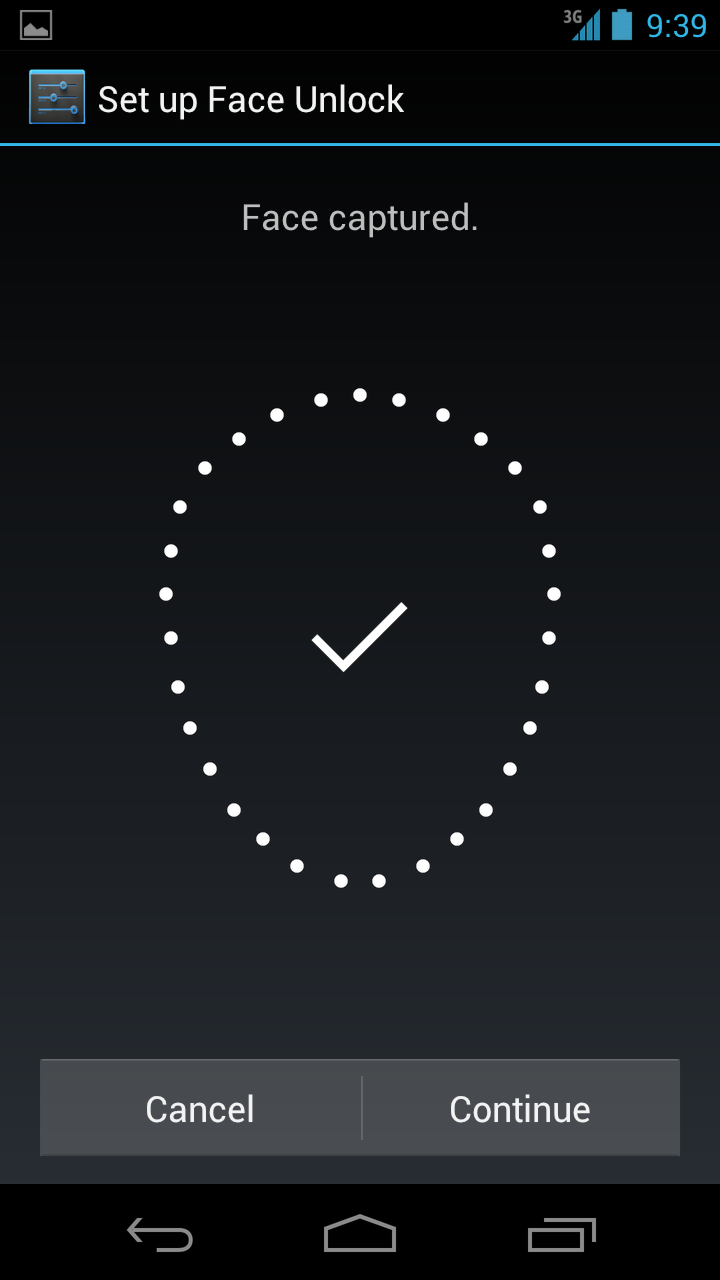
Setting up face unlock on Android back then was fairly simple. After accessing the menu under settings, you will be required to set up your face by positioning it within a dotted circle and the front facing camera would capture your facial details. To increase accuracy, you will be required to try it under different lighting conditions and under different conditions (glasses on/off, hat on etc).
There was a caveat though, Google knew it wasn’t secure enough, so you were asked to set up an alternative security lock. And now, most manufacturers don’t even bother to include the feature anymore, ever since fingerprint scanners have become mainstream.
On my OnePlus 3T, all you have is swipe, pattern, PIN, and password, in addition to fingerprint recognition. The Zoji Z6, which acts as my secondary phone, adds voice unlock along with the above mentioned security features.
Iris Recognition
But that wasn’t the end of face unlock. While it took a break, manufacturers branched into something else – Iris Recognition.
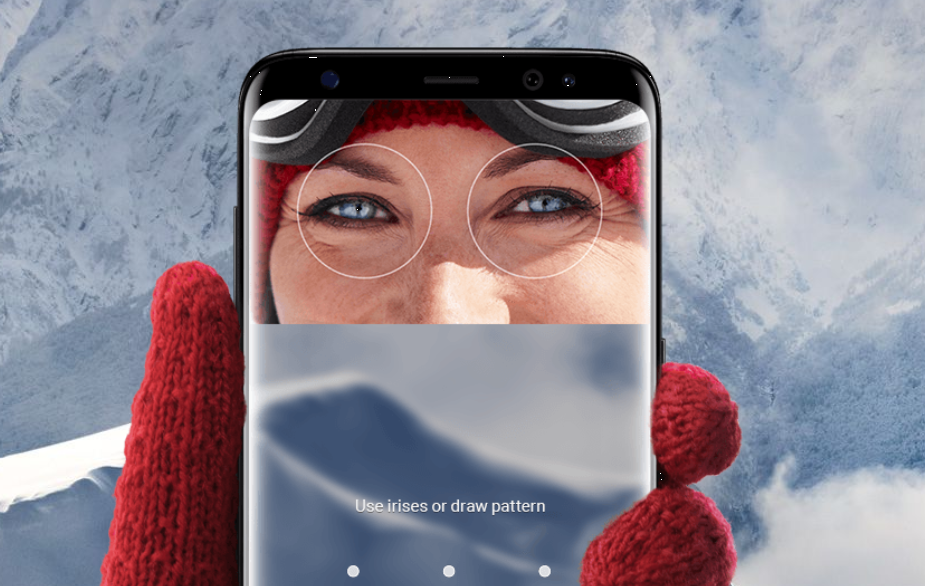
The first phone to come with an iris scanner was the Fujitsu ARROWS NX-F04G. It was released in 2015 and made use of an IR LED for illuminating the pattern of the iris, which according to research doesn’t change after the age of two years; and an IR camera for capturing the pattern.
The image is then stored in the database and used to compare against that of the person who wants to unlock the phone. At the end of 2015, Microsoft released the Lumia 950 and Lumia 950 XL, joining Fujitsu, as smartphones with Iris scanners.
Nearly a year later, Samsung joined the short list with the ill-fated Galaxy Note7. This year, Samsung launched the Galaxy S8 and S8+ and both of them have iris scanners. Samsung touted them as being airtight and you could even use it for payment, just the way you used the fingerprint scanner.
However, the guys at Chaos Computer Club (CCC), a European hacker association didn’t like the way Samsung bragged about its security and decided to disprove their claim. They were able to fool the scanner.
How they did it was actually pretty simple.
All they had to do was take a picture of the owner’s eye using a 200mm lens from 15 feet away. Then they had it printed out on paper and covered it with wet contact lens to imitate the curvature of real eyes. After pointing the phone towards it, it unlocked the device.
CCC in its official article says it will be even easier to unlock with the tons of high resolution selfies on the internet, so you might not need to even take a picture of the owner of the phone. Their suggestion is to use a PIN as it is more secure than biometric scanners.
Windows Hello Facial Recognition
Back to Facial Recognition. Microsoft announced Windows Hello the same year as the company announced the Lumia 950 and 950 XL, which is a windows 10 biometric technology system that includes the iris scanner on the Lumia 950 and 950 XL, the fingerprint reader on windows 10 laptops, and facial recognition on the Surface Book laptop and the Surface Pro 4.
https://www.youtube.com/watch?v=uJ3W2YABZzo
Both the surface book and laptop feature a near IR sensor that does the capturing and is more effective under varying light conditions.
So how does Windows Hello face recognition work?
Using an algorithm, the face is detected in the camera stream. Facial landmark points such as the nose, eyes, and mouth are located. The algorithm also ensures that the user is facing the device at an angle of ±15 degrees.
The algorithm then uses the landmarks as anchor points and takes several samples of the face to build a representation. The result is a histogram representing the light and dark differences around specific areas. So, the image of the user is actually never stored.
Microsoft says the representation of the user in front of the PC is then compared to the one enrolled. And before it accepts it as a match, it has to cross a certain machine-learned threshold. This threshold increases if there are multiple users enrolled on the device.
Microsoft measures the accuracy of its facial recognition in three ways:
1. False positive – also called false acception rate (FAR), this is the likelihood of a random person who gains physical access to your PC being recognized as you. This number should be as low as possible and for Windows Hello, it is less than 0.001 or 1/100,000 FAR.
2. True positive – this is the likelihood of you being correctly matched to your enrolled profile. This number should be high and Windows Hello scores 95% for a single enrolled user.
3. False negative – is the likelihood of you being denied access even though your profile is enrolled and Microsoft says it is 5% for a single enrolled user.
Windows Hello works pretty well judging from the tons of videos on the internet. It cant be fooled by a photograph, it won’t unlock if your face is partially covered and it unlocks fast in the dark thanks to the near IR sensor.
Apple Face ID
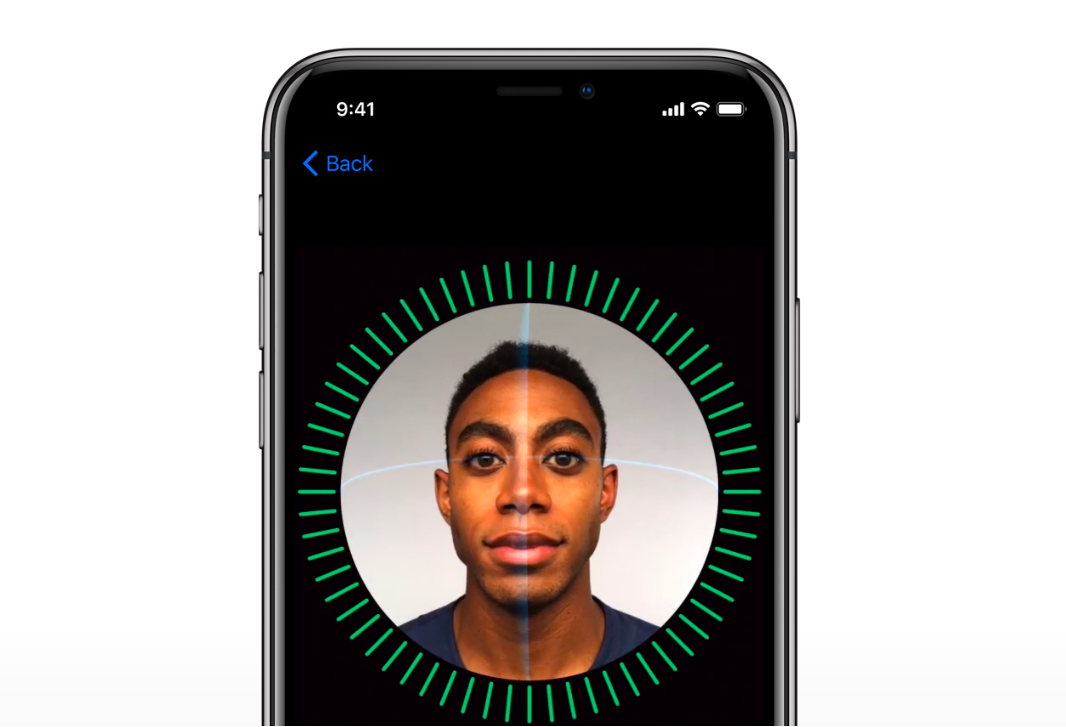
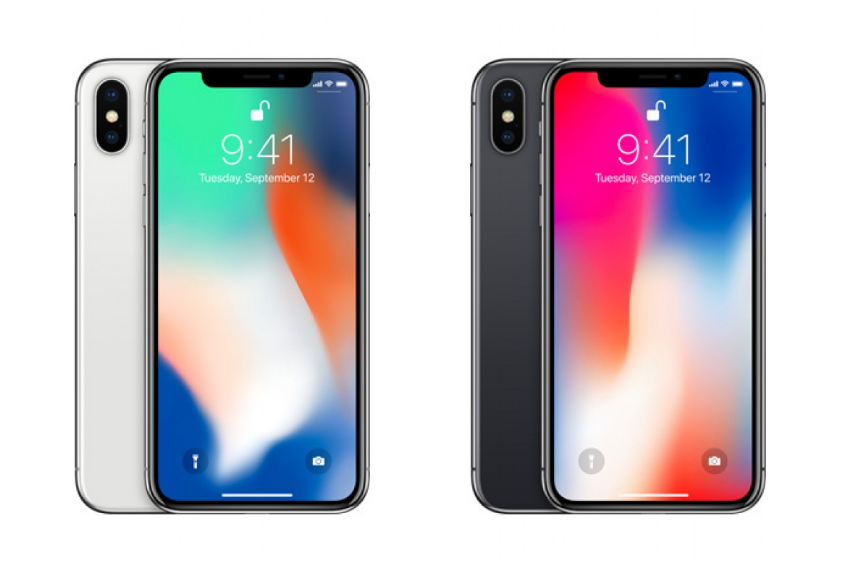
Apple joined the facial recognition train this year with its iPhone X. The iPhone X doesn’t have Touch ID due to its bezel-less design and Apple didn’t want to put it on the back of the phone like a number of Android manufacturers do. Instead, it came up with Face ID, a facial recognition system it claims is more secure than TouchID.
source: apple.com
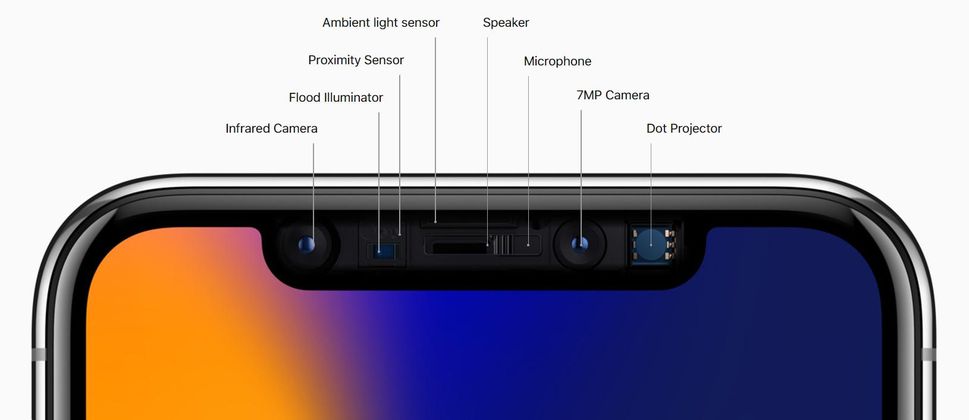
Face ID captures your face with the aid of light projector and a bunch of sensors — Apple collectively refers to it as the TrueDepth Camera System.
source: apple.com
The process the TrueDepth system uses to capture a 3D map of your face is explained below:
1.The proximity sensor and ambient light sensor help to determine the amount of illumination needed for face recognition.
2.The flood illuminator produces IR light to illuminate your face. The IR light is not visible to the human eye and and works effectively in poorly illuminated or even bright areas (outdoors).
3. The dot projector produces tens of thousands dots of IR light to create a 3D map of your face.
4. The infrared camera captures images of the dot pattern and the IR light reflected back by your face.
The recognition process is similar to that of other biometric ones – compare the stored template against the presented pattern (verification image) and see if it is a match. The stored template and verification image won’t be the same since the capture conditions will always be different, so it uses a threshold to grant access.
The threshold score is said to be between 0 and 1. If the score is closer to 1 then it is the same face (or biometric) and if it is closer to 0, then it is not the same person.
Apple explains the step for verification:
1. IR images are sent from the camera to the phone’s neural engine to build a 3D map of the face.
2. The map is compared against the stored template.
3. The processor calculates if the verification and stored templates match based on a comparison score of the similarity between your images.
4. Phone unlocks if the comparison score is higher than a certain threshold value.
So what happens if your facial appearance changes, say you grow a beard, shave your moustache, or apply makeup?
Apple says that FaceID continually updates the stored model by occasionally saving images from successful login maps. So it kind of a continuous enrollment.
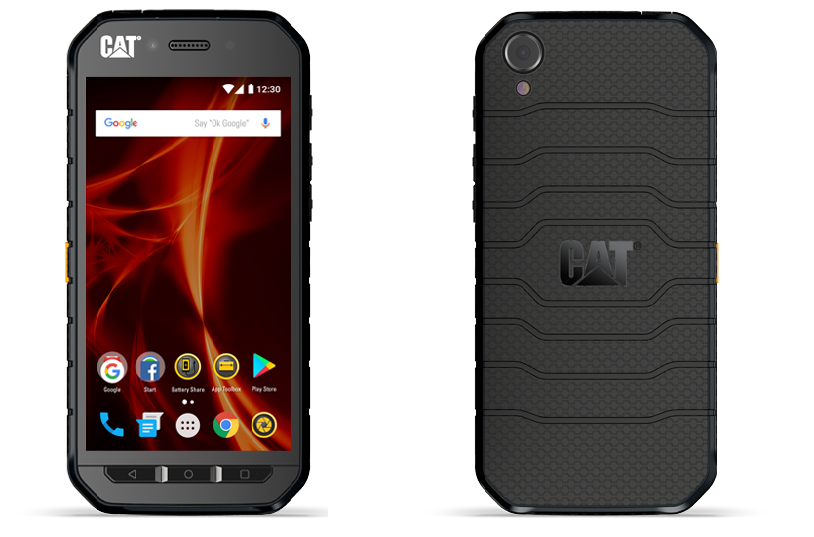
CAT may be known as a construction equipment manufacturer but it also makes smartphones and tablets. These devices are actually rugged and designed to survive tough conditions. Its latest smartphone is the CAT S41 and it packs some pretty impressive features.
CAT S41 Design
The octagonal design already gives it away as a super rugged phone. There are physical buttons beneath the display for navigation and the frame has a sort of caterpillar track design. Apart from the volume rocker and power button, there is also a programmable key that can be assigned to the torch, camera, Push to Talk, or SOS (Lone worker app).
CAT S41 Specs
The CAT S41 has a 5” FHD screen with Gorilla Glass 5 protection. This is a rugged device for those who work outdoors so the display works well with wet hands or gloves.
There is 3GB of RAM, 32GB of expandable storage and a Helio P20 SoC on board. A 13MP camera with PDAF and LED flash grace the back and an 8MP serves as the front facing camera. Both cameras work under water too. This should come in handy if your job requires to take a dive.
The highlight of the CAT S41 is the 5000mAh battery and its Battery Share which allows you to charge other devices. There is MediaTek’s Pump Express 2.0 for fast charging. You also get a micro USB slot, nano SIM slot (dual and single SIM variants), and a 3.5mm audio jack.
The CAT S41 is beyond IP68 certified as it can survive under 2m of water for up to 1 hour. It is MIL SPEC 810G certified and can survive drops of up to 1.8m on concrete. CAT also says it can survive thermal shocks and salt mist spray.
CAT S41 Price
The CAT S41 is priced at £399.00/$449 and is available for purchase on the offcial website, Amazon, eBay, B&H, and Home Depot.
Qualcomm is expected to launch its next-generation processor — Snapdragon 845 sooner than anticipated. As per the new reports, the company could launch the Snapdragon 845 chipset as early as in December this year.
An image of an event poster has been leaked which suggests that the company is holding an event named Snapdragon Technology Summit from December 4 to December 8, where it is expected to announce this next-generation processor.
While the specific date for the launch announcement is not known, reports suggest that the new processor could be announced on the very first day of the event. However, the company may not start the mass production for this chipset until the end of this year or in early 2018.
The Snapdragon 845 will be manufactured through 10nm Low Power Early (LPE) FinFET process. As per the rumours, it will have four ARM Cortex-A75 cores and four ARM Cortex-A53 cores. It will be paired with the Adreno 630 GPU for added graphical performance.
The Adreno 630 is expected to deliver significantly improved graphics performance compared to the Adreno 540. It is also expected to be optimized for AR, VR and XR. The processor is also speculated to arrive with updated Kryo cores.
On top of that, the upcoming chipset is also expected to feature the X20 connectivity modem which can provide downlink speeds of 1.2Gbps.
On the other hand, there are reports which suggest that Xiaomi Mi 7 will be the first device to be powered by Qualcomm Snapdragon 845 process. Xiaomi is also said to be working with Qualcomm to optimize the chipset Snapdragon 845 v2 for Mi 7.
Meanwhile, there are reports suggesting that Qualcomm has already started working on Snapdragon 855 processor that is likely to power flagship smartphones in 2019. The SD 855 is said to be a 7nm chipset and will be manufactured by Taiwan-based TSMC. It is expected to get announced in late 2018.
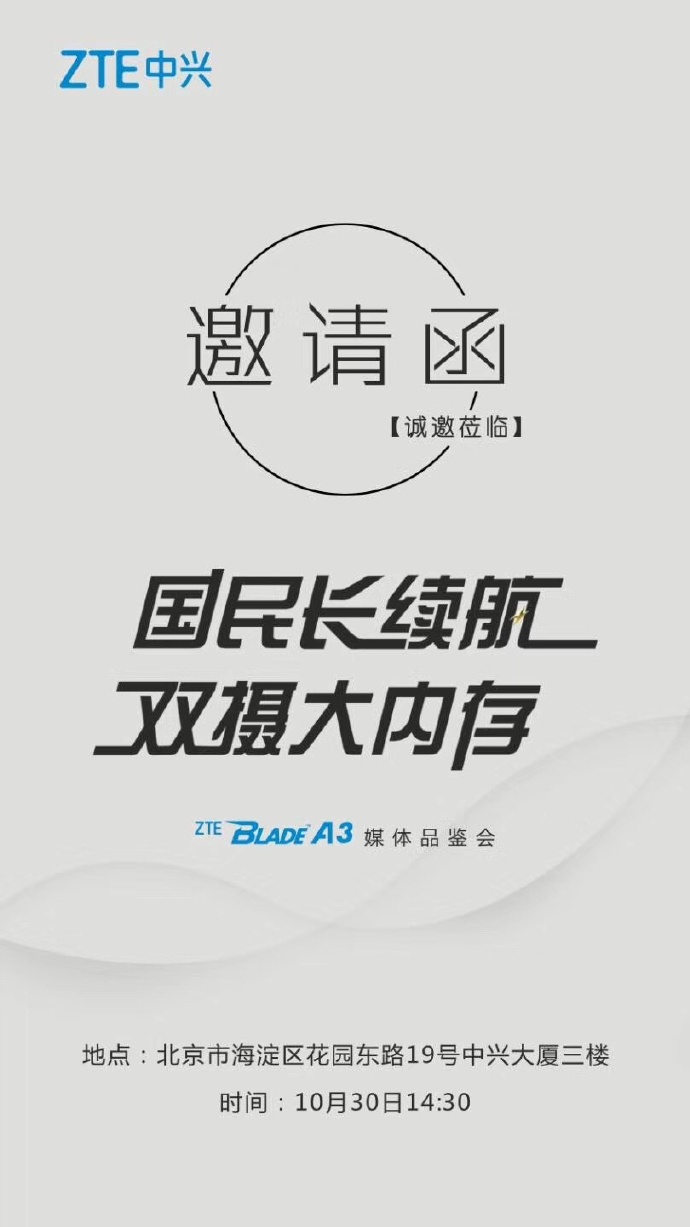
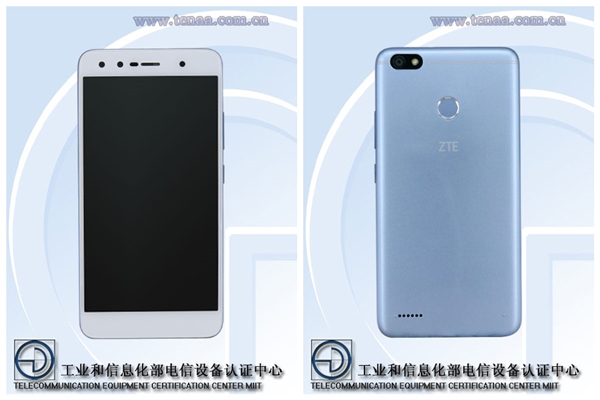
ZTE has taken to Weibo to announce that the Blade A2 will be getting a successor tomorrow. The Blade A3 comes after the Blade A2S (Blade V7 Plus) released a few month ago, and is believed to be the ZTE A0616 seen on TENAA weeks ago.
ZTE seems to be going the route of Xiaomi with the Redmi 4A and one of its successor, the Redmi Note 5A. The ZTE A3 (or A0616) gets a bigger 5.5” display compared to the A2’s 5” screen but keeps the resolution at 720p. This is surprising since the A2S has a FHD display albeit a 5.2” one.
The processor is a 1.45GHz quad-core SoC with either 2GB RAM + 16GB ROM or 3GB RAM + 32GB ROM. There is a MicroSD card slot for up to an additional 128GB.
The highlights of the ZTE A0616 are the dual front facing cameras with flash (5MP + 2MP) and the 3,900mAh battery, a significant increase from the Blade A2’s 2500mAh capacity. Rear camera is still a 13MP sensor that now sits at the top left corner.
Huawei has moved from being a Chinese company to a global brand. Its smartphones are now officially available in several countries outside of Asia. This has pushed it into the top three major smartphone companies in the world.
At this year’s edition of Huawei’s eco-CONNECT Europe held in Berlin, the company announced that its mobile services ecosystem will be coming to Europe. It also announced a bunch of partnerships with content providers for the launch of the Huawei AppStore and Huawei Video Service next year.
The president of Huawei’s Consumer Business Group, Walter Ji likened the decision to bring its mobile services into Europe as a sort of digital age Silk Road legacy. Below is his official statement:
“The Silk Road was significant for bringing prosperity to East and West. Huawei Consumer Business Group, the world’s number three smartphone vendor, already has several million users in China and Europe. With this strong customer base we are determined to extend the legacy of the Silk Road into the digital age. We will do this by growing the European market together with partners, collaborating on AI and content first as well as extending our global reach” said Walter Ji, President of Consumer Business Group, Huawei Western Europe.”
Huawei says the apps and games on its store have an average of 4.3 – 5 star ratings and they are vigorously tested before they are added to the store.
The video service on the other hand will feature local and global content and they will be ad-free. The service will be integrated with the Huawei Video Player app and will have various movie and TV series genres. Beginning in Q1 2018, all Honor and Huawei phones will come with the AppStore and Huawei Video Service.
Some of the app content providers Huawei has partnered with include MobiSystem, Skoobe, VizEat, APUS Group, NLL Apps, Sygic, Tribuna Digital, Vodafone Spain FOundation, BTC.com, Goodgame Studios etc. For videos it has partnered with Under The Milky Way and Spain’s ATRESMEDIA.
Huawei also announced it will add paid themes to the Themes Store in 2018. With over 160 million active users and 40 million downloads every month, local designers and brands will make money from selling their designs on the AppStore.
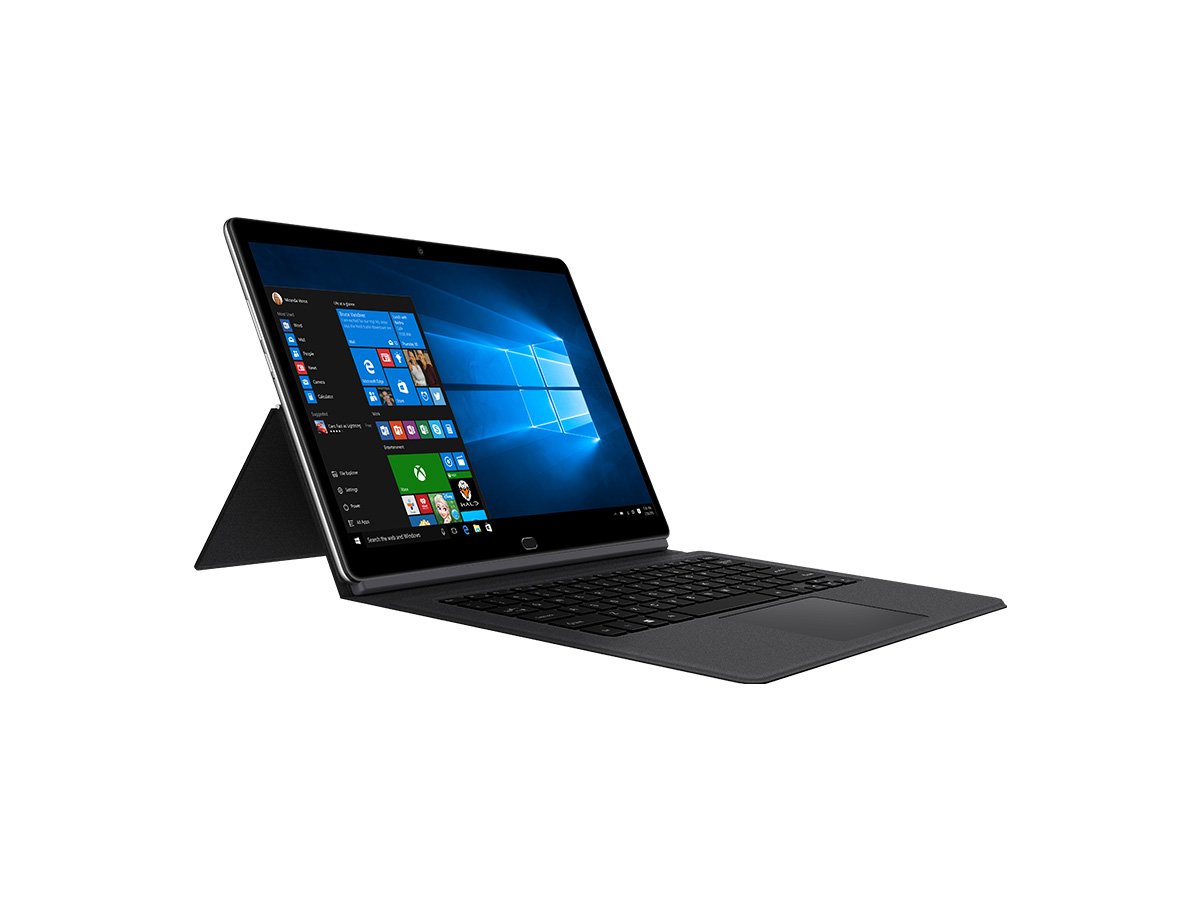
CHUWI SurBook IndieGoGo campaign had received tremendous response by the audience. Since the Chinese manufacturer managed to raise more 1 million dollars, the it is making a second attempt at IndieGoGo by creating a crowdfunding campaign for CoreBook 2-in-1 tablet.
The IndieGoGo campaign for CHUWI CoreBook is going to begin in mid-November. The company has confirmed that the device is powered by Core M3 7Y30 processor. It is the first device from the company to use the processor. With 6 GB of RAM onboard, the company aims to deliver smooth performance on CoreBook. It also includes 128 GB eMMC 5.1 storage.
The Corebook features a 13.3-inch full HD display with 2.5D glass on it. Since the company has used full lamination technology on CoreBook, the display of the device delivers impressive viewing experience and vibrant colors even under bright sunlight.
The company says that the 2-in-1 CoreBook is a tablet and also a notebook. The keyboard of the device can be folded to the backside of the device to use it as a tablet. Below the display is a fingerprint scanner.
Before starting the new IndieGoGo campaign for CoreBook, CHUWI is providing an opportunity to allow its fans to avail a huge discount on it by simply subscribing to their newsletter. During the IndieGoGo campaign for SurBook, it had provided 100 units at super early bird price. This time it will be offering 300 units for the upcoming CoreBook campaign on IndieGoGo at a heavily discounted price.
The Chinese manufacturer is also providing a big bonus through an ongoing giveaway that will be coming to an end on Nov. 10. Here is the link from CHUWI’s site that contains all the information about the crowdfunding campaign for CoreBook as well as its giveaway.
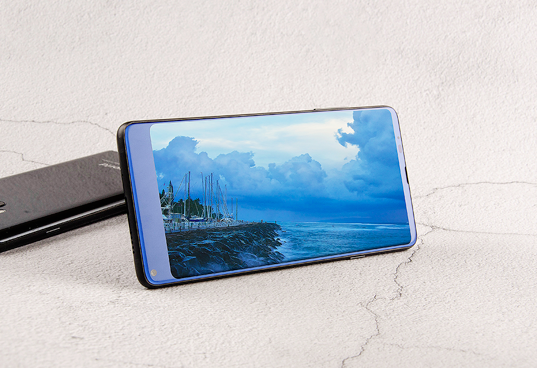
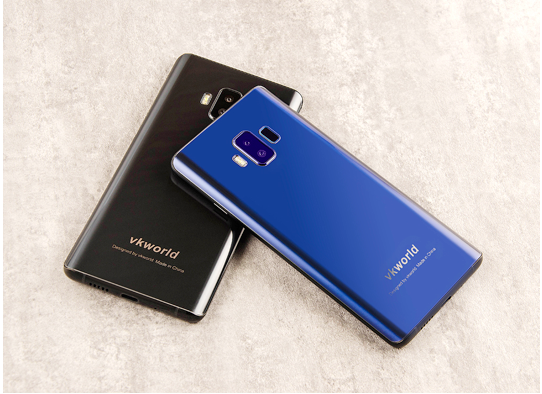
VKWorld S8 is now available for buying in the market. There are many smartphones with full screen design in the market, but the VKWorld S8 is the only one among them that houses a mammoth battery of 5,500mAh capacity. Since the display on the full screen phones occupy major portion of the front panel, their displays can break if the build quality of the phone is not good. VKWorld is not only providing an attractive full screen design on the S8, but also it has ensured that it has a very strong chassis.
Titanium is a stronger metal than aluminum and the Chinese manufacturer has used it as a frame on the VKWorld S8. With a titanium frame onboard, the S8 phone will remain well-protected from dents. In order to protect the display of the S8, VKWorld has applied a layer of tempered Corning Gorilla Glass 4 on it
Moreover, the company has also used tempered Gorilla Glass 4 on the back panel of the smartphone. Beneath the rear glass, the company has included a metal plate that reinforces the build of the phone and provides more resistance to the glass.
The company claims that the body of VKWorld S8 is so strong that it can be used for cracking walnuts. Here is a video that shows how strong the device is:
The retail price of VKWorld S8 is $229.99, but the phone is being made available with a price tag of just $169.99 during the pre-orders. At such a low price, the VKWorld S8 features a 5.99-inch IPS display from LG that carries support for FHD+ resolution of 2160 x 1080 pixels. It is powered by MediaTek MT6750T chipset and 4 GB of RAM. It has an internal storage of 64 GB. The rear-mounted dual cameras include 16-megapixel + 5-megapixel sensors. It has a selfie camera of 13-megapixel. Other features of the phone include Android Nougat OS and AAC speaker.
Earlier this week, Brooke Amelia Peterson who is a daughter of a former Apple engineer had uploaded a hands-on video of the Apple iPhone X on YouTube. The Cupertino-based company not only asked Brooke to take down the YouTube video, but also her father has been removed from job.
Brooke’s hands-on video had already gone viral before it was removed. Some may feel that firing of an engineer is a harsh move by Apple, but the video clip revealed some confidential information of the iPhone X. It also revealed some codenames of forthcoming products from the company through the Notes app. Also, the video contained some sensitive QR codes that are meant for internal purposes.
After the iPhone X hands-on video by Brooke was removed, she made a follow-up video. She claims that she was clueless about the fact that the video she had shot at Apple’s cafeteria violated the company’s rules. Brooke has also said that her father has taken the entire responsibility of giving her access to the iPhone X. Since she had no subscribers when she had added the video on YouTube, it seems that she may have shot the video just for fun.
In the past too, Apple had reportedly fired an Apple engineer when he had shown an iPad 3G for a few minutes to Apple co-founder Steve Wozniak in 2010.
The pre-orders of the iPhone X have started on Oct. 27 in more than 55 countries across the globe. The entire stock of iPhone X was sold out in less than 10 minutes. The 64 iPhone X is priced at $999 and its 256 GB costs $1,149. The shipments of the pre-ordered units are expected to start from Nov. 3.
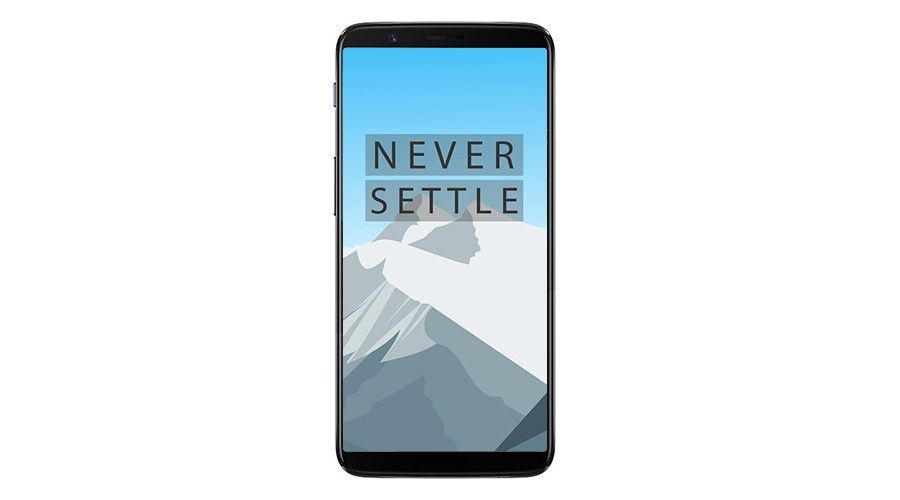
OnePlus 5 is no longer available for purchase and multiple sources have claimed that the company would be unveiling OnePlus 5T very soon as its enhanced version. Through recent tweets, the company seems to be teasing the features of the upcoming OP5T. OnePlus CEO Pete Lau has released a tweet to reveal what could be an upcoming feature of OnePlus 5T.
OLED helps us build thinner devices and better display experiences. Samsung's display technology is currently the best for Optic AMOLED. 👌
The above Twitter post by Lau has been retweeted by OnePlus co-founder Carl Pei. In the above tweet, Lau can be seen praising Samsung’s AMOLED screen. Through the tweet, Lau could be trying to hint that OnePlus 5T may feature an AMOLED panel.
Samsung provides its OLED panels to multiple smartphone makers. It has even provided OLED panels for the previous handsets from OnePlus. The South Korean company has also supplied its OLED panels for Apple’s iPhone X. Since the rumor mill is speculating that OnePlus 5T would be coming with an 18:9 display, there is a possibility that the handset may feature a screen that is similar to the Galaxy S8.
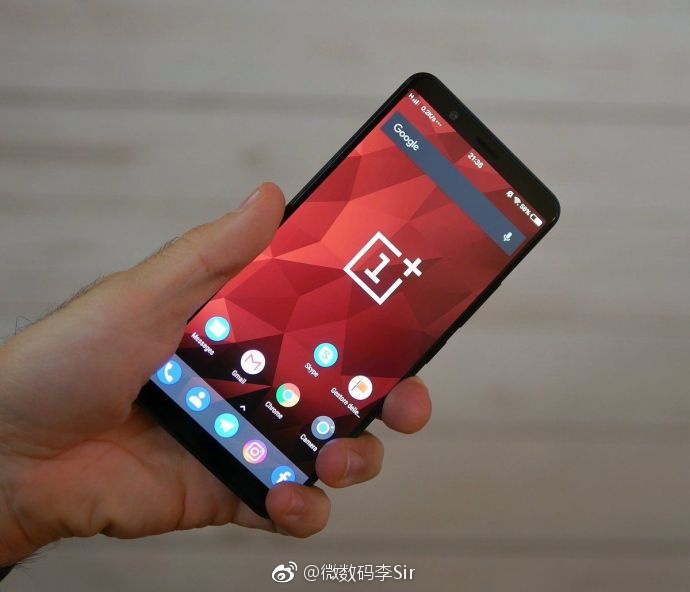
A recently leaked hands-on image of the rumored OnePlus 5T shows that it has slimmer bezels around the display. It is expected to house a 6-inch Samsung OLED panel that carry support for FHD+ resolution of 2160 x 1080 pixels. OP5T could be the first phone from the company to feature a rear-mounted fingerprint scanner.
Pete Lau and Carl Pei have also recently shared camera samples that were shot using unnamed phone. It is likely that the OnePlus head honchos could be teasing the camera prowess of OnePlus 5T. It is rumored to house a 20-megapixel selfie snapper and rear-facing dual cameras featuring a pair of 20-megapixel sensors. It is likely to house a 3,450mAh battery. A leaked teaser of OnePlus 5T reveals that its launch event will be held on Nov. 16.
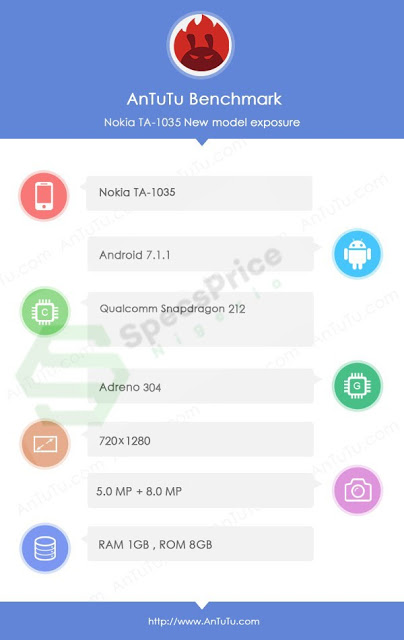
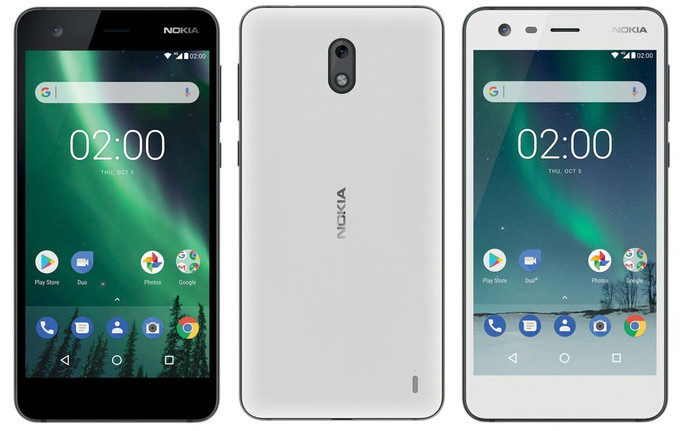
The unannounced Nokia 2 entry-level phone was recently found listed on B&H, a U.S. retailer site. Its press images and specifications have also been leaked through multiple sources in the recent past. However, the HMD Global has not confirmed on when it will be unveiling the Nokia 2 phone. The key specs of a Nokia phone with model number TA-1035 have also appeared on AnTuTu benchmarking site. The low-end specs of the TA-1035 indicates that it could be the Nokia 2 phone.
According to AnTuTu listing, the Nokia TA-1035 is preinstalled with Android 7.1.1 Nougat. The Snapdragon 212 chipset that features Adreno 304 powers the handset. The SoC is supported by 1 GB of RAM and 8 GB of internal storage. For photography, it has 8-megapixel rear camera and a frontal shooter of 5-megapixel.
The screen carries support for HD resolution of 720 x 1280 pixels. However, the exact size of the display has not been revealed through AnTuTu listing. It is speculated that it may feature 4.5-inch or 4.7-inch display as the Nokia 3 phone houses a 5-inch HD display.
Previous reports have revealed that the Nokia 2 would be housing a 4,000mAh battery. Its listing on B&H had revealed that the Nokia 2 would be priced at $99. Some reports have claimed that there will be another Nokia 2 variant driven by MediaTek chipset will be also made available.
Nokia 2’s appearance on B&H retailer site has revealed that it would be priced at $99 in the U.S. HMD Global has recently confirmed that it will be holding a launch event on Oct. 31 in India, but it is not confirmed whether the company will be unveiling Nokia 2 through it. HMD Global has recently launched the Nokia 2 phone in China. Since it is not available outside of China, there is a possibility that the Finnish firm may debut it at the upcoming launch event.
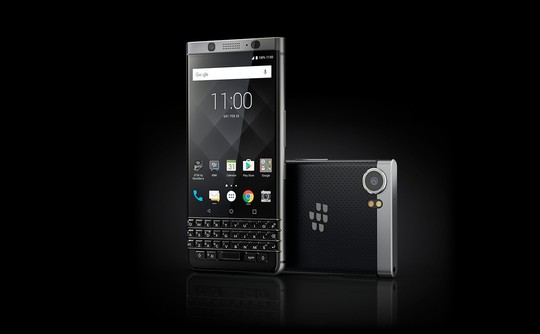
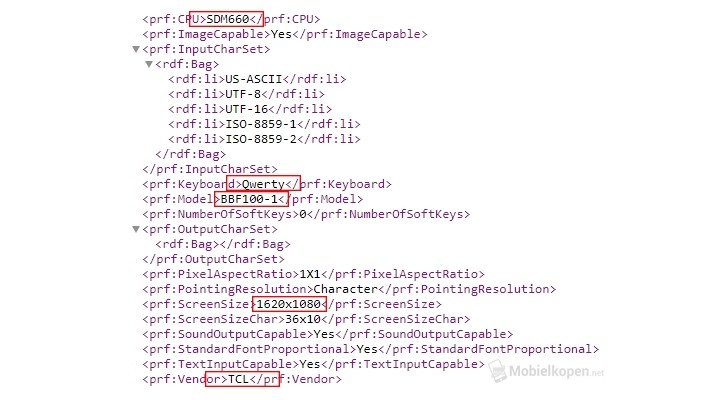
The BlackBerry KEYone is about six months old, so it doesn’t come as a surprise that TCL is already working on a successor. A user agent profile seen on TCL’s website has revealed details of the successor.
The phone’s official name is currently unknown but it’s model number is BBF100-1. This is similar to that of the KEYone which is BBB100-1. It will have a QWERTY keyboard, the same 1620 x 1080 screen resolution as its predecessor, and swap the Snapdragon 625 mobile platform for a Snapdragon 660.
The processor seems to be the main upgrade and it is nice to see TCL go for a more powerful chip and not the Snapdragon 626. Other specs that may get upgraded include the cameras and possibly battery. Features like RAM and storage may remain the same.
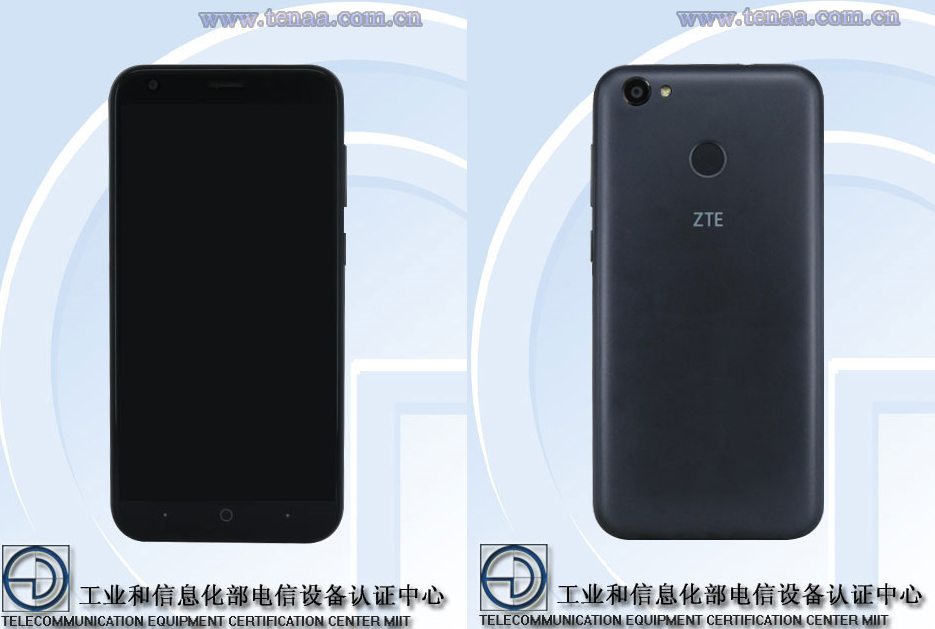
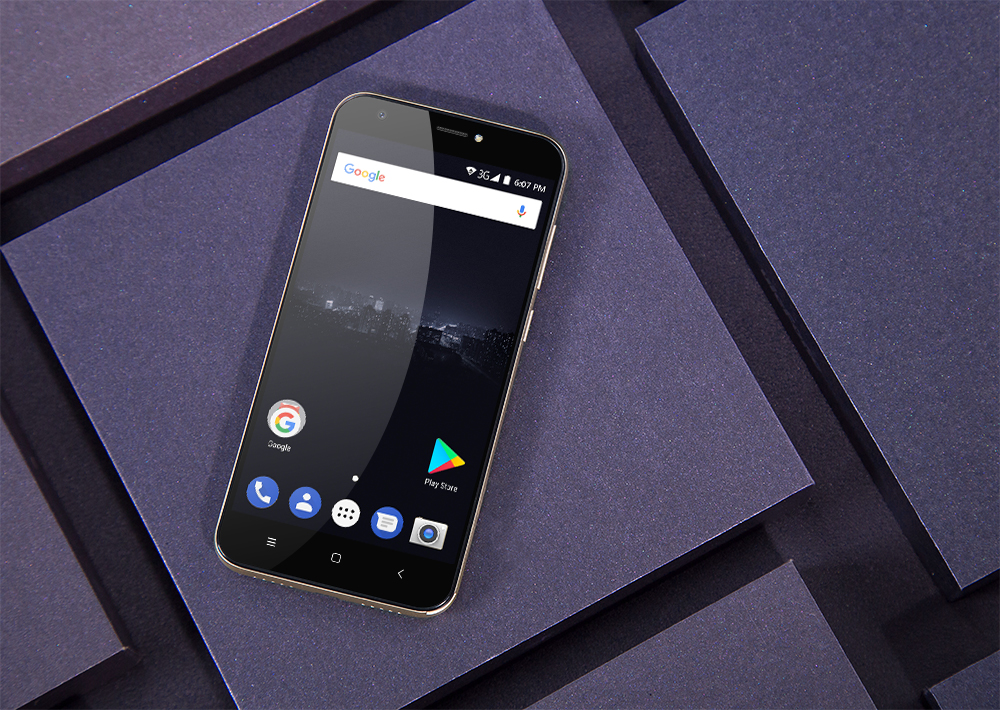
Following the launch of the foldable dual-screen Axon M, ZTE is going with a single screen for its next mobile phone. The ZTE A0620 has been seen on TENAA and the specs put it in the mid-range category.
The A0620 has a 5.2” HD display. There is a 1.4GHz octa-core processor on board paired with 4GB or 3GB of RAM. Depending on the variant, you either get 32GB or 64GB. Fortunately, both models have a MicroSD card slot for expansion.
The ZTE A0620 may not have dual displays like the Axon M, but it beats it with a massive 4,870mAh battery. That should see you through close to two days of moderate usage.
There is a 13MP rear camera gracing the back and a 5MP selfie camera. It also features a rear-mounted fingerprint scanner. It runs Android 7.1.1 and will come in black, gold, and silver.
The ZTE A0620 measures 147 x 71 x 8.5 mm and thanks to its massive battery, it comes in a bit heavy at 160g.
There is nothing spectacular about the design. The body appears to be made of polycarbonate reinforcing the point that this will be an affordable device. The rear camera sits at the top left corner and there is the ZTE branding below the fingerprint scanner.
Gizmochina along with Ulefone is conducting a Uelfone S7 phone as giveaway gift to one of our lucky readers. Like always, you just have to follow the steps mentioned on the Gleam widget to get a chance to win this budget phone.
How to entry this giveaway? Just follow these steps via Gleam widget
1. The giveaway is an international giveaway.
2. We are not responsible for lost shipments.
3. We are not responsible for any duties, import taxes that you may incur.
4. We reserve all rights to make any changes to this giveaway.
5. The prize will be shipped in a week when the giveaway end.
Just follow the steps mentioned in the Gleam widget to participate in the giveaway.
Once again, good luck.
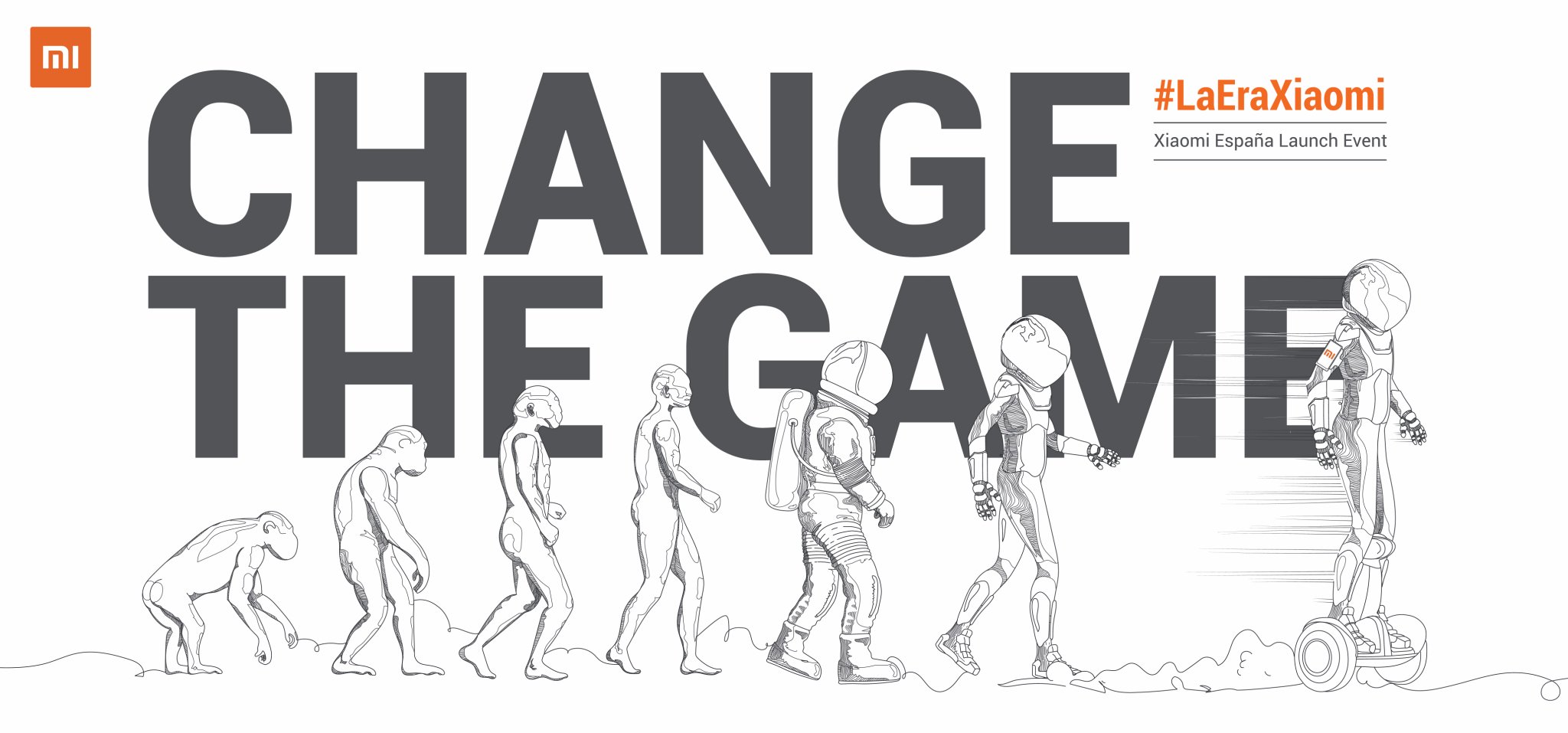
Chinese innovative tech company Xiaomi has perfected plans to launch its products in the Western Europe market. The company’s Senior VP Wang Xiang officially disclosed via his Twitter handle that it would be launching in Spain on November 7, signalling its entry into Western Europe.
Already, the company has got a dedicated Twitter handle for its Mi Espana arm and it is believed that an online Mi store for the market would be unveiled after the launch. The launch event would hold on November 7 in the Spanish capital city of Madrid. They left off without revealing the pilot products that would be unveiled in the market. If we are to go by the teaser poster which contains the Xiaomi Ninebot Self-balancing scooter, Spain may likely get more than just smartphones. However, the company may take things slowly by introducing just a few products.
Heading to #WesternEurope with @Espana_Xiaomi as our first stop!
We’ll have to wait until the launch to know the sales channels Xiaomi would employ to sell its products. No doubt, the success of the brand in Spain would determine how soon the company would enter other countries in Western Europe like France, Netherlands, U.K, Belgium and others. It could be recalled that Xiaomi made its foray into the Eastern part of Europe earlier this year with its launch in Russia.
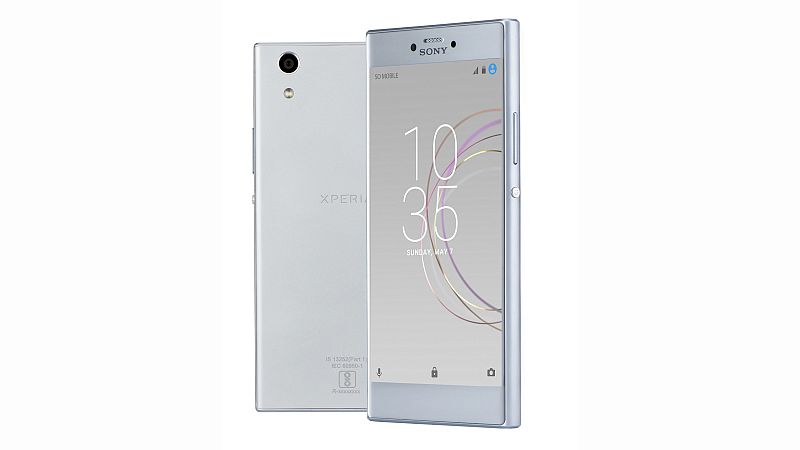
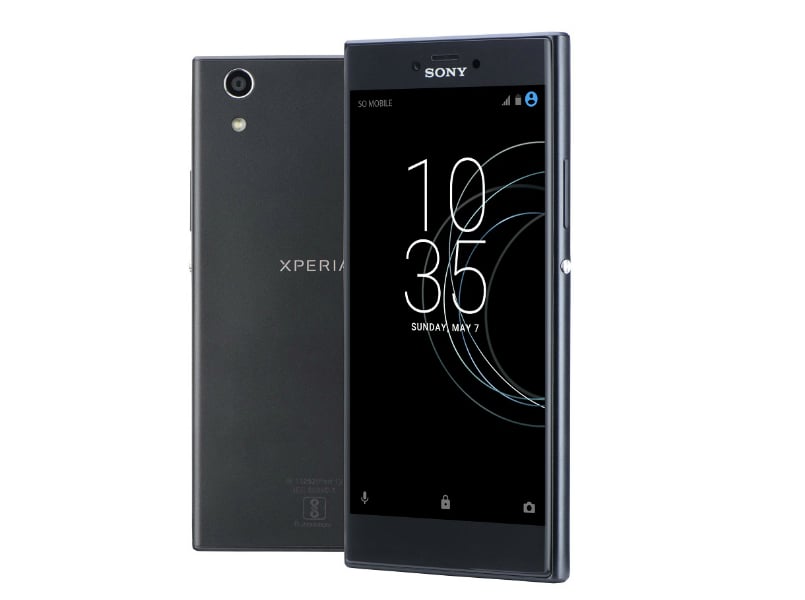
Sony is making a comeback in the mid-range smartphone segment and has announced two new smartphones for the Indian market — Xperia R1 and Xperia R1 Plus.
According to the company, the smartphones are designed exclusively for the Indian market and will be manufactured locally at Sri City facility in Andhra Pradesh.
This is an unexpected step from Sony as it had decided to exit the mid-range smartphone segment last year and said that it will only offer premium Xperia handset to ensure better profitability.
The Sony Xperia R1 features a 5.2-inch TFT LCD display with a screen resolution of 1280 x 720 pixels. It is powered by Qualcomm Snapdragon 430 processor with 2GB of RAM and 16GB of expandable storage. It has a microSD card slot for expanding storage.
As of imaging, the phone comes with a 13-megapixel camera on the back with LED Flash and Sony‘s own Predictive Hybrid Autofocus which uses object tracking and motion prediction to focus on moving objects. On the front, there is an 8-megapixel camera that also has the same Predictive Hybrid focusing system.
On the other hand, the Sony Xperia R1 Plus comes with the same set of specs except for the RAM and storage. It packs 3GB of RAM and 32GB of internal storage. All the other specs, including display, processor and camera sensors remains same.
The devices are running on Android 7.0 Nougat operating system but the company has promised an upgrade to Android 8.0 Oreo. The smartphones are powered by a 2,620mAh battery.
Both the smartphones support Dual SIM, Wi-Fi, Bluetooth 4.2, GPS and 4G VoLTE. It comes with a USB Type-C port for charging and data transfer.
The Xperia R1 and R1 Plus are priced at Rs 12,990 (~ $200) and Rs 14,990 (~ $231) respectively. Sony is offering two color options for both devices — Black and Silver. They will be available starting November 10 across all Sony Center, major mobile stores and e-commerce platforms like Amazon and Flipkart.
Several rumours have been making the rounds that Samsung may be working on an optical fingerprint recognition technology which would enable the company to integrate a fingerprint sensor into the display of its phones. Samsung was earlier tipped to utilise the technology on the Galaxy S8 but that never came to fruition. Now, with the sighting of a patent application which Samsung had filed back in April 2016 for a fingerprint technology integrated into the display, speculations of its inclusion on the Galaxy S9 became rife.
Samsung Galaxy S9 Render
However, a new rumour out of China has emerged, stating that the next-generation Galaxy S9 would not feature the optical fingerprint technology where the sensor would be on the display. The report was short of stating why the tech giant would choose to stay put on that for the Galaxy S9. So, we may likely see a repeat of the rear-mounted fingerprint design as used on the Galaxy S8 and Galaxy Note 8 or one embedded on the home button. It must be noted that Samsung’s decision to relocate the fingerprint sensor to the back was not met with accolades rather, a whole lot of fans were left disappointed.
100% sure, Galaxy S9 no screen fingerprint recognition
Samsung isn’t the only company rumoured to be working on the optical fingerprint technology. U.S. chipmaker Qualcomm showcased its under-display fingerprint technology a few months back at the Shanghai Asian Mobile World Congress held in June. The technology was demonstrated onboard a prototype Vivo smartphone that looked like the XPlay 6. Subsequently, the Vivo XPlay 7 is tipped to come with the technology. For sure, this won’t be the last we’d be hearing about t the Galaxy S9’s fingerprint sensor.
Xiaomi has revealed that it would be releasing the MIUI 9 Global ROM in the Indian market on November 2. The company made the announcement via the newly created MIUI India Twitter handle. The launch is a response to the yearnings of numerous Mi fans in the fast-growing Indian market.
We listened to your requests. Global MIUI 9 is coming to India on 2nd Nov. Are you excited? #LightningFast ⚡ 500 RT & we'll reveal more. pic.twitter.com/FCdpM286Zv
The MIUI 9 Global ROM has gone through the beta testing stage so we expect the company to start rolling out the Stable ROM even though there was no indication as to which ROM would be released. The tech giant was discovered to have started pushing MIUI 9 Stable ROM updates to select Mi users in China but is yet to disclose when the ROM would be released fully in China. There are speculations, though, that the release would take place before the end of this October. This disclosure of a November 2 launch date in India also elicit suggestions that its launch in China is close by. Xiaomi may likely push updates in China before doing same in India.
Xiaomi has already scheduled a launch event for India on November 2. An earlier teaser from the Redmi India Twitter account had tipped that the tech giant would be unveiling a new series which seems to be geared towards taking on OPPO. The teaser hints of a selfie-focused model as it also contained the hashtag #YourBestSelfie. After India, we do hope the tech giant push the MIUI 9 Global Stable ROM updates to other regions where Mi users are located as soon as possible.
One of the leading names in display technology is Chinese firm – BOE display technology. The company has always dedicated itself to advancing innovation in semiconductor display technologies such as TFT-LCD and AMOLED, for the purpose of providing quality display products and services. Manufacturing LCD panels have been BOE’s stronghold where it utilises its proprietary (Advanced Super Dimension Switch (ADSDS) technology for liquid-crystal (LCD) panels. This technology is characterized by ultra-high definition, ultra-slim bezel, high contrast-ratio, ultra-thinness, integrated touch solution, great energy efficiency, and environmental friendliness but is restricted to LCD panels.
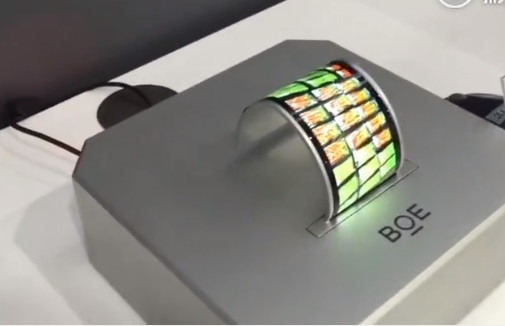
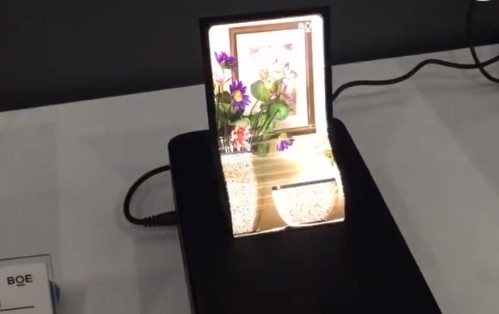
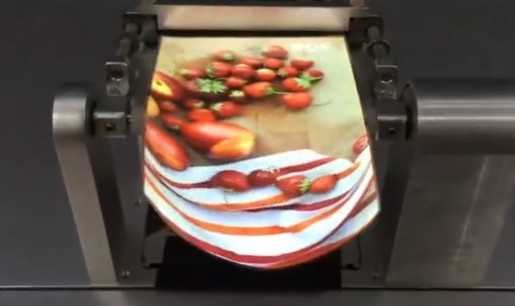
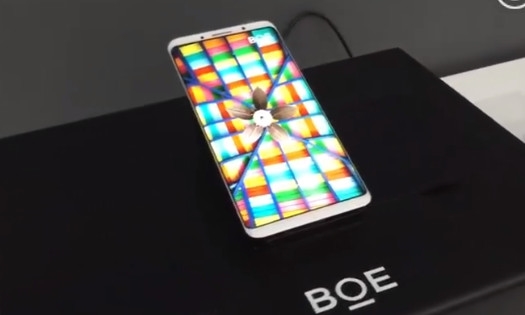
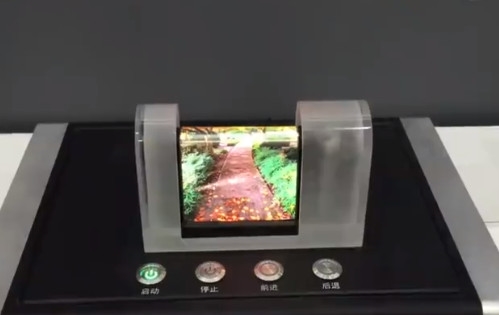
However, in an industry where there is a rapid shift to OLED displays, BOE has unveiled its sixth generation of flexible AMOLED production line in a ceremony held in Chengdu, China. The production line is the wold’s second production line for flexible AMOLED panels and China’s first. The line is expected to break the monopoly enjoyed by Korean companies Samsung, LG and others. Already, there are indications that Huawei, Xiaomi, OPPO, Vivo and other OEMs are showing interests in patronizing the BOE AMOLED display.
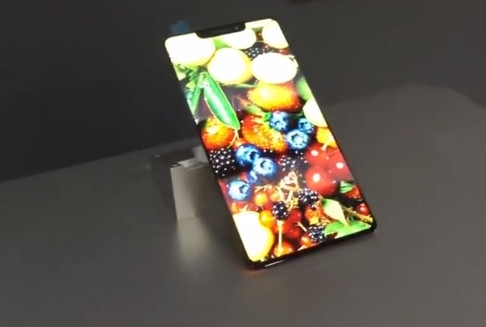
The company showcased a wide variety of flexible AMOLED panel designs at the ceremony and there is even a video showing all the samples they’ve got. As you’d expected OLED panels with 18:9 aspect ratio where included, as well as thin, paper-like foldable screens. There was even a display exhibited which looked like the iPhone X display. With this development, Samsung is likely going to be the hardest hit since it enjoys a large share of patronage.
Those conversant with the recent happenings in the tech industry would be aware of the display problems that have been encountered on the Pixel 2 XL, Google’s latest flagship model. A number of users have reported issues with viewing angles and display burn-in. For a phone with such high price tag, the snag experienced were not expected.
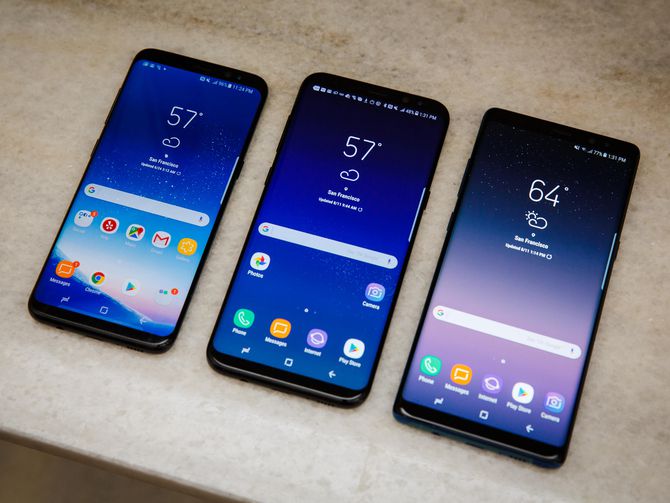
Samsung seems to have seen this as a perfect opportunity to project its own flagship models. The tech giant recently released a video which is basically a compendium of positive reviews the display of its latest phones had received from different reviewers. Samsung is a leader in OLED displays and apart from using its displays on its models, their displays are supplied to other OEMs including Apple who utilises Samsung OLED panels on the latest iPhone X. The video is a short 30 seconds clip but it features some of the top tech reviewers that you find on YouTube. The clips were taken from their reviews of the Galaxy S8, S8 Plus and the latest Galaxy Note 8.
Samsung’s latest flagships all come with the company’s display technology. Most importantly, they use a full-screen design with an infinity display. This has placed the Galaxy S8 and Note 8 some steps ahead of the competition in terms of display. Despite that, Samsung isn’t lying low while the competition tries to gain ground especially with Google’s latest drive in hardware.
We use cookies on our website to give you the most relevant experience by remembering your preferences and repeat visits. By clicking “Accept”, you consent to the use of ALL the cookies.
This website uses cookies to improve your experience while you navigate through the website. Out of these, the cookies that are categorized as necessary are stored on your browser as they are essential for the working of basic functionalities of the website. We also use third-party cookies that help us analyze and understand how you use this website. These cookies will be stored in your browser only with your consent. You also have the option to opt-out of these cookies. But opting out of some of these cookies may affect your browsing experience.
Necessary cookies are absolutely essential for the website to function properly. This category only includes cookies that ensures basic functionalities and security features of the website. These cookies do not store any personal information.
Any cookies that may not be particularly necessary for the website to function and is used specifically to collect user personal data via analytics, ads, other embedded contents are termed as non-necessary cookies. It is mandatory to procure user consent prior to running these cookies on your website.