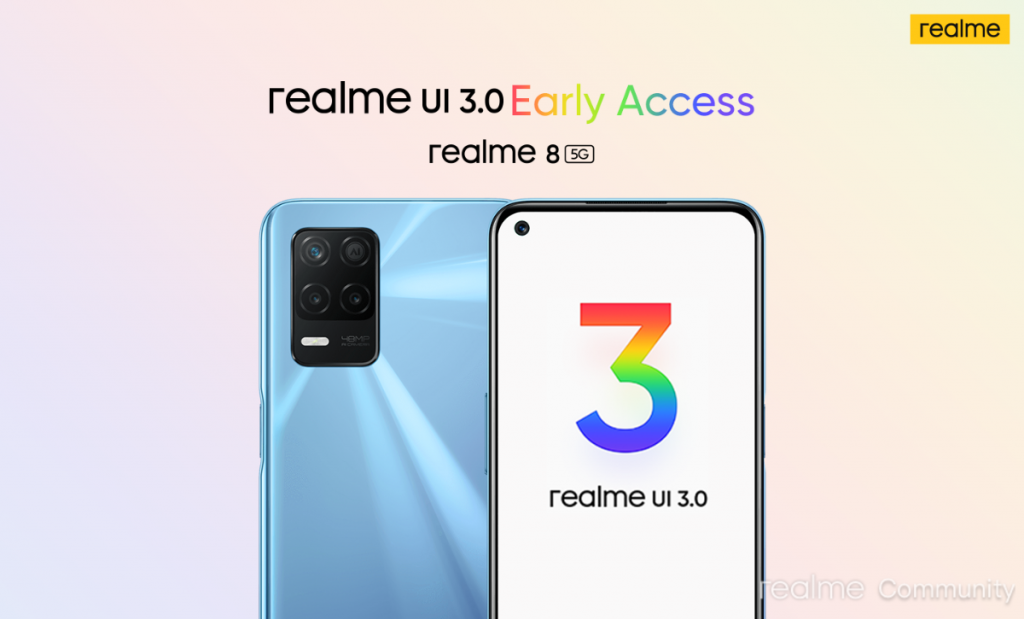
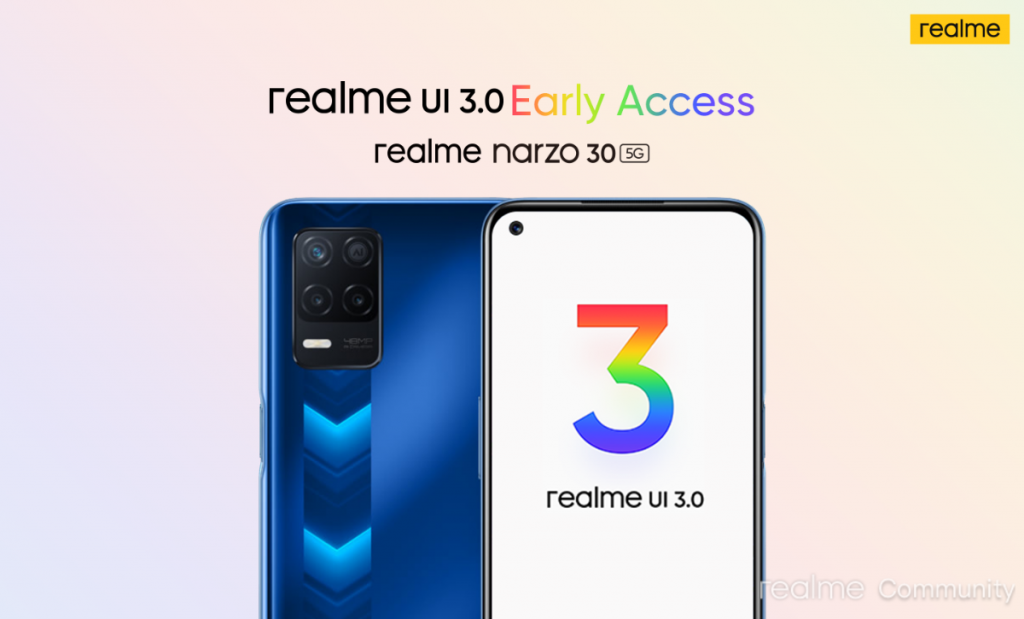
It’s been a while since the Android 12 was released and almost all the major smartphone market players are don’t updating their recent high-end devices with the latest operating system.
The focus has shifted to mid-rangers and budget smartphones, and now, Realme has announced Android 12 ‘Early Access’ for the Realme 8 5G and the Realme Narzo 30 5G. The Early Access program is something Realme calls its beta program, so these aforementioned devices are basically getting beta builds to be tested in a closed beta phase.
The entry to the program was opened on the 26th of April and 1000 users were selected for the closed beta testing for both the Realme 8 5G and the Narzo 30 5G. Although this round has been closed, readers who are interested in testing out the Android 12-based realme UI 3.0 beta can participate in the second round of beta testing.
A few key points to keep in mind before trying out the beta build are mentioned below:
Please make sure your phone is not rooted.
To prevent data loss, please backup your personal data before proceeding.
Some third-party application versions might not be compatible with Android 12 yet, after updating these applications might not be available or crash on your device. Therefore, it is recommended to update all your applications to the latest version available on the Play Store before your update.
The Early Access versions may have an unpredictable impact on your phone and effect daily use.
Please ensure that the available phone storage is more than 10 GB. Otherwise, there will be a risk of update failure (To check the phone storage head to Settings > Additional Settings > Storage).
Users also need to make sure that their Realme 8 5G is updated to version RMX3241_11.A.14 and the Narzo 30 5G is updated to RMX3242_11.A.14.
As for the stable realme UI 3.0 rollout on these devices, as the closed beta has begun, we expect the stable update to start rolling out in late May to early June.
Microsoft has tried many ways of swaying consumers to use their Edge browser. Some of their recent methods even sparked controversy like the tech giant making it hard to switch the default browser in Windows 11.
Now, the company is trying a new method to inspire more consumers to use the Microsoft Edge browser by introducing a free inbuilt VPN service codenamed “Edge Secure Network”.
According to a report by The Verge, Microsoft is currently testing the Cloudflare powered Edge Secure Network VPN service which will soon be rolling out to the public as a part of a security upgrade.
The new feature will encrypt the user’s web traffic safeguarding the information they want to keep private from ISPs (Internet service providers). The Edge Secure Network function can also be used to hide your location while browsing the web or even access area restricted content like Netflix or Hulu shows.
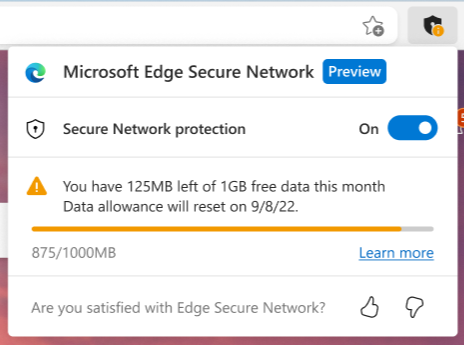
The kicker is that this free service will only allow a data use limit of 1GB per month, and users will have to be logged in to a Microsoft account so the company can track the usage.
On the issue of privacy, while using this feature, Microsoft has said that although Cloudflare will collect support and diagnostic information from the service, the company will purge the data every 25 hours.
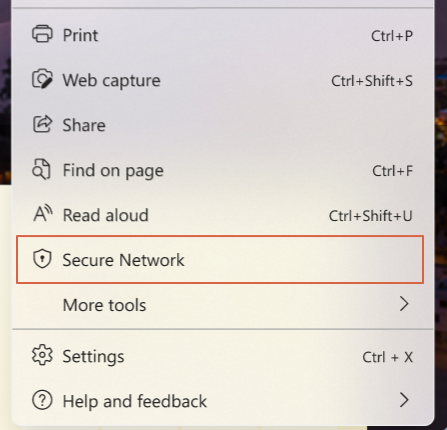
The feature is still under development and will likely be made available to Microsoft Edge Insider members first. Once it’s been made available, users will be able to activate the VPN by clicking on the three dots drop-down on the top right and navigating to the secure network option. Once the connection has been secured, a shield icon will appear in the browser frame. And once you finish browsing and close Edge, the VPN session will also end.
The new feature might help Edge stand out from the majority of other web browsers as only Opera offers a similar free VPN service while Mozilla and Google Chrome only provide paid VPN services.
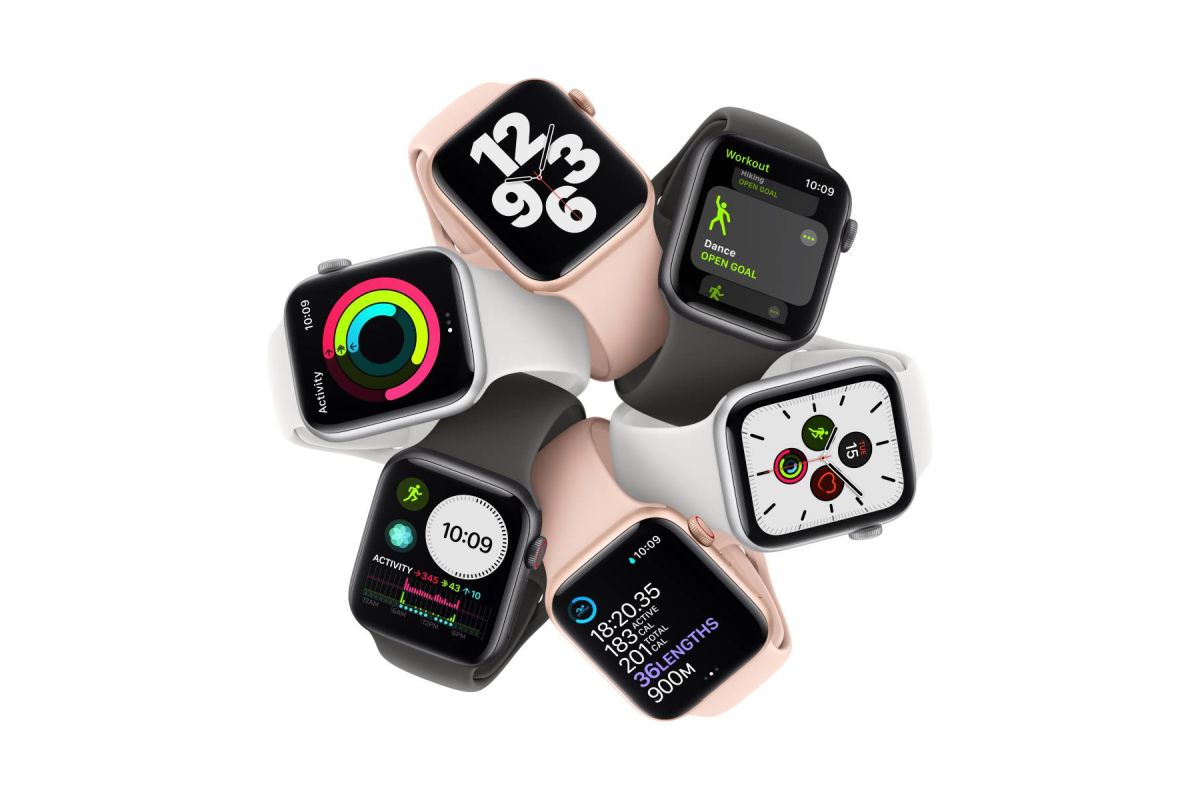
Apple was considering shipping the Apple Watch Series 7 with body temperature measurement features, but it couldn’t optimize the algorithm. Now it appears that the Apple Watch Series 8 could feature this sensor.
According to esteemed analyst Ming-Chi Kuo, Apple dropped the body temperature measurement feature for the Apple Watch 7 last year because the algorithm failed to qualify before starting the EVT stage. Kuo believes that the Apple Watch 8 will be able to take body temperature in 2H22 if the algorithm meets Apple’s stringent requirements before mass production.
(2/3) The challenge in implementing precise body temperature measurement is that skin temperature quickly varies depending on outside environments. A smartwatch can't support core temperature measurement in terms of hardware, so it needs an excellent algorithm to work together.
Kuo’s report is not the first to reveal this, both the Wall Street Journal and Bloomberg also reported that Apple’s upcoming watch may incorporate a body-temperature sensor.
Kuo further explained that the problem with adopting exact body temperature measurement is that skin temperature varies rapidly based on external stimuli. In terms of hardware, a wristwatch cannot enable core temperature monitoring, thus it must rely on a good algorithm to get precise temperature.
Samsung is also facing the same dilemma as Apple. Some previous reports claimed that the Galaxy watch 5 could be launched with a thermometer, but Kuo believes otherwise. He says that the South Korean tech giant is still far behind with its algorithm, and thus it’s unlikely that its next watch, which is expected to be launched in the second half of the year, will include this feature.
Apart from body temperature measurement, the Apple Watch Series 8 could come with a new S8 SoC and better sleep tracking features, including the ability to detect advanced sleep patterns and sleep apnea. The new Apple Watch is expected to have the same screen size as its predecessor.
Telegram is one of the most popular messaging apps. The app often comes into the discussion for its robust online privacy and security. Like every other app or service, Telegram also needs to monetize itself to keep the platform up and running. The messaging app recently started an ad platform for public one-to-many channels, and now it appears that the company will launch a Premium version with extra features that users will have to pay for.
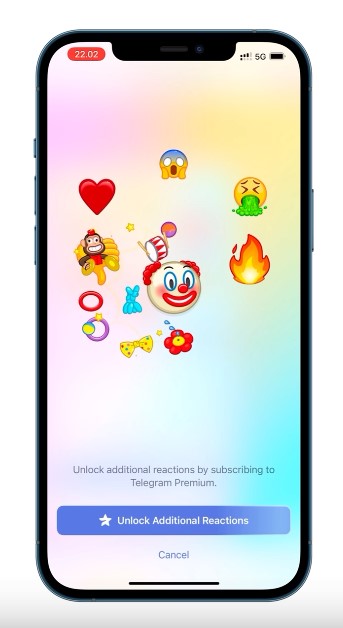
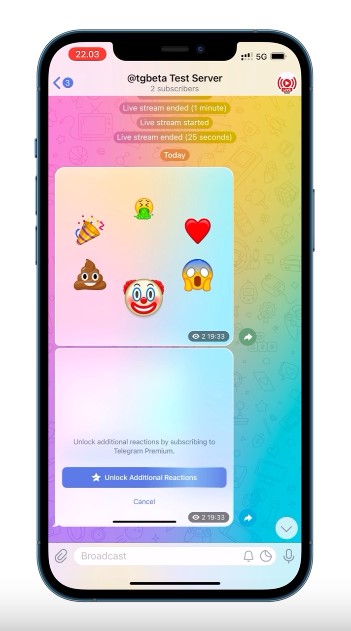
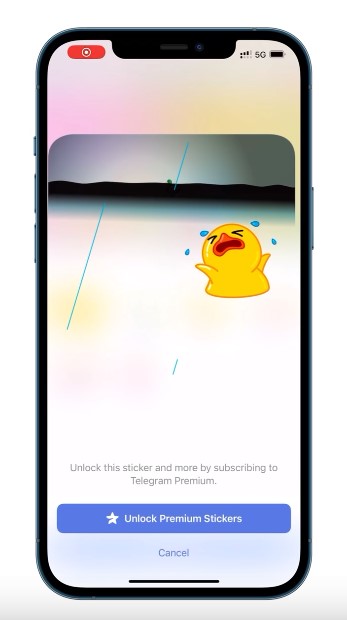
Recently while testing the latest beta version 8.7.2 of the Telegram iOS app, the Telegram Beta channel discovered a variety of reaction emojis and stickers that have been labeled as Telegram Premium exclusives. If users select these stickers and emojis, they will be asked to register for the paid service.
source: @tgbeta
Free users are barred from viewing the premium stickers in a conversation thread, and they’ll also be prompted to subscribe to the premium service. The premium users will also get a gradient star icon next to their username.
Currently, these premium features are only available in tests and more details regarding the pricing and how the users will be able to sign up are yet to be known.
Another feature known as the Avatar creator has been detected by the r/telegram subreddit. Apparently, this feature will let users combine gradients with emoji, stickers, or a monogram to create simple or patterned avatars. This was found in the macOS beta.
The appearance of Telegram premium in beta indicates that a paid subscription of the messaging app might be close. Telegram is yet to make an official statement regarding the same.
What are your thoughts about the Telegram premium? Will you put your money into it, or you are happy with the free version? Let us know in the comments.
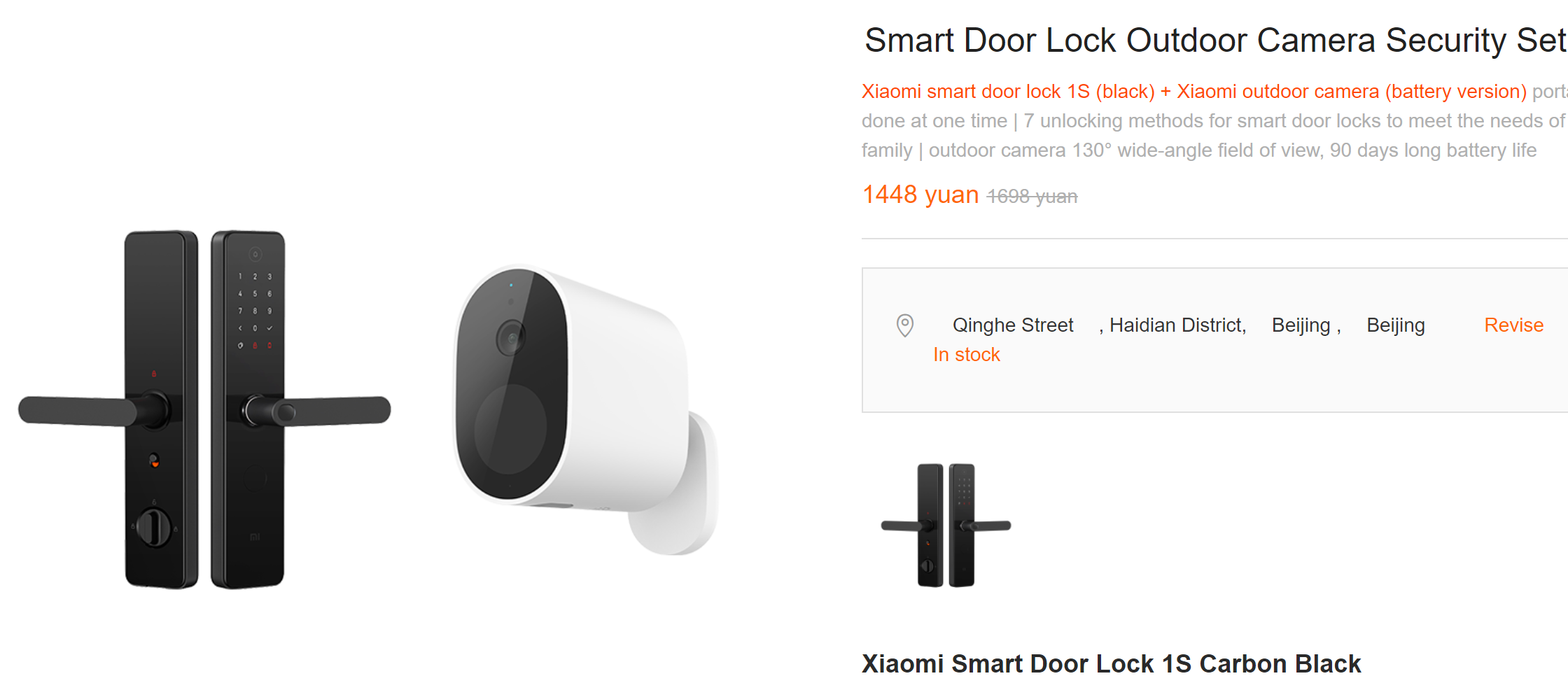
Xiaomi has listed a new smart door lock outdoor camera security kit on its online mall in China. The kit is a combination of two existing products – the Mi Smart Door Lock 1S and the Mi Outdoor camera (battery version).
The kit is priced at 1568 yuan (~$237) which is a fair reduction in the prices of the products if they are to be purchased individually.For reference, the Mi Smart Door Lock 1S and the Mi Outdoor camera (battery version) are priced at 1299 yuan and 399 yuan respectively. Thus, this combo kit is 130 yuan cheaper than buying the two products separately.
The Mi Smart Door Lock 1S adopts a straight-in lock cylinder design with the lock cylinder running through the lock body. Thus, even if the front panel is damaged, it is still a safe mechanical lock. It adopts the C-level lock cylinder with the highest security level in the industry.
The door lock provides 7 lock methods including fingerprint unlocking, password unlocking, temporary password unlocking, Bluetooth unlocking, HomeKit unlocking, NFC unlocking, and key unlocking.
It is worth mentioning that, compared with the first generation, the Xiaomi smart door lock 1S upgrade supports both Mijia app and Apple HomeKit.
As for the battery version of the Xiaomi Outdoor Camera, this is Xiaomi’s first outdoor wireless camera. It adopts an independent body design and can be installed without connecting a network cable or power cable. It has a 130° wide viewing angle, and 1080p resolution, and supports WDR technology.
In addition, the battery version of the Xiaomi Outdoor Camera has a long-distance night vision of up to 7 meters, built-in humanoid detection, and intercom voice change. It also supports IP65 dustproof and waterproof, and has a long battery life of up to 90 days.
Earlier this year, Xiaomi’s Redmi launched the Redmi Note 11 4G smartphone in the Indian market. The smartphone comes with a 90Hz AMOLED panel and has 33W fast charging. Usually, the phone sells for Rs. 12,999 on Amazon and for that price, it is a good deal. However, now, Amazon is offering a coupon discount on the phone making the price go lower. Additionally, buyers also get card offers.
The Redmi Note 11 4G is priced at Rs. 12,999 4GB RAM + 64GB storage variant. On the Amazon India website, the phone is listed with a coupon discount of Rs. 1250. After the discount, the phone’s price goes to Rs. 11,750.
In addition to this, buyers with ICICI, Kotak, and RBL cards will get up to Rs. 1,000 additional discount on EMI transactions. The coupon combined with this offer makes the phone retail for as low as Rs. 10,749. Do note that the bank discount is valid till May 3, so hurry up.
The Redmi Note 11 4G can be purchased in three color options – Horizon Blue, Space Black, and Stardust White color options.
The Redmi Note 11 4G comes with a 6.43-inch AMOLED display with a Full-HD+ resolution. It has a 90Hz refresh rate screen and Gorilla Glass 5 protection. The device has a quad-camera system with a 50MP main lens, an 8MP ultra-wide sensor, and two 2MP auxiliary units. It is powered by the Qualcomm Snapdragon 680 SoC and packs a 5,000mAh battery. It has a 33W fast charging support and boots on MIUI 13 based on Android 11 out of the box.
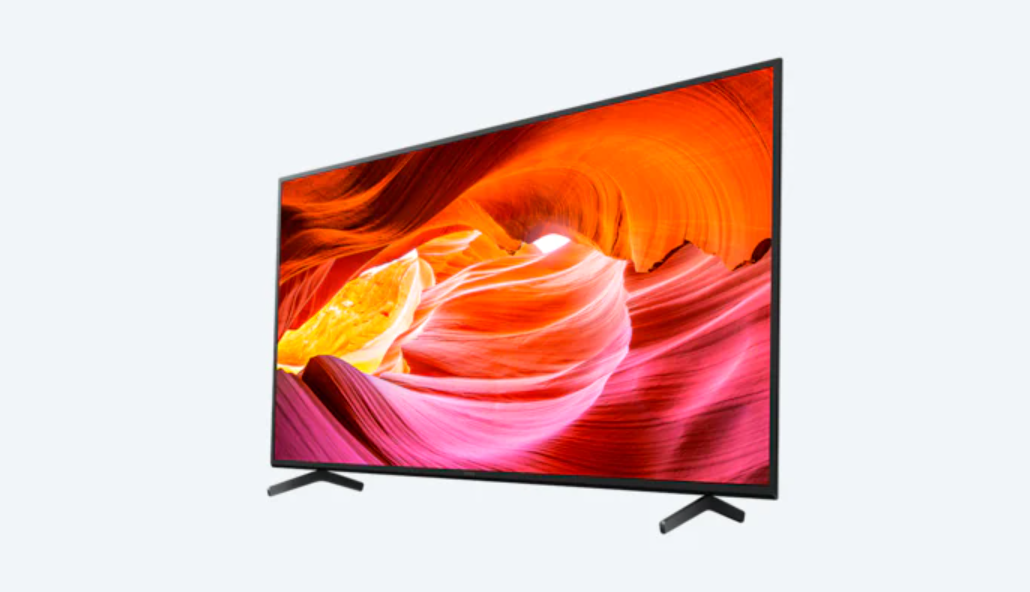
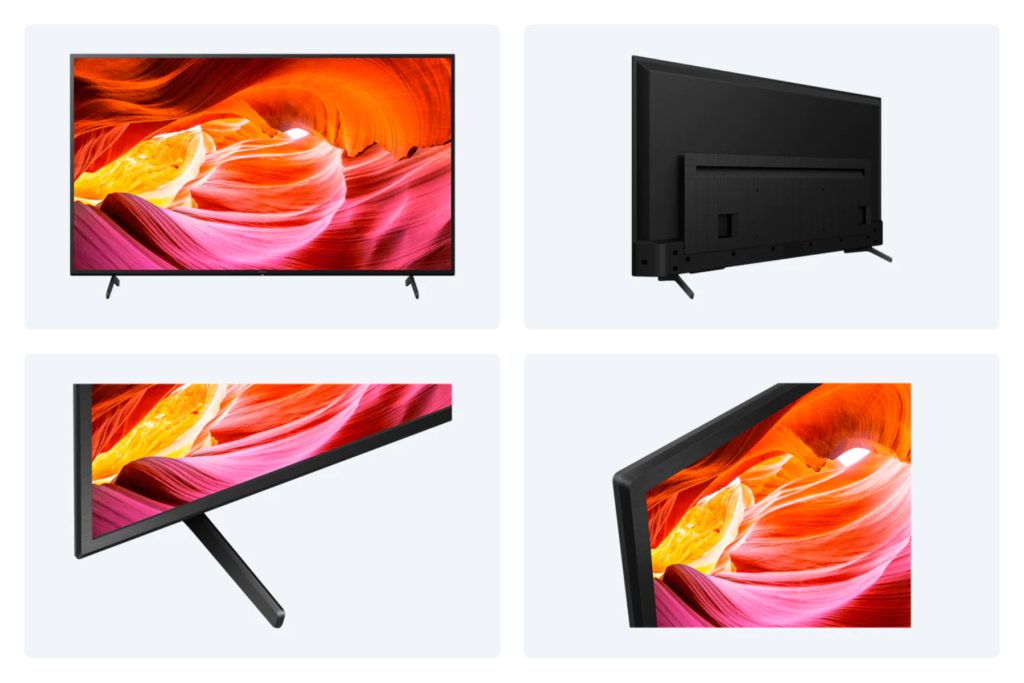
Sony has launched the new BRAVIA X75K smart TV in India. The premium television comes with a stunning 4K panel capable of displaying rich and lifelike visuals, so let’s take a closer look at all the specs and features packed into it.
Sony BRAVIA X75K specs & features
The Bravia X75K is offered in four screen sizes – 43, 50, 55, and 65-inches. It has a slim frame and thin bezels going around the screen.
Its display is an LED panel that has a 4K (2160×3840 pixels) resolution with HDR10 support. The display has Live Color technology which produces more smooth and vivid colors and Motionflow XR technology which keeps the details smooth and sharp even during fast-moving sequences. The BRAVIA X75K also uses the X-Reality PRO technology to upscale 2K and even 1080p up to near 4K resolution.
The smart TV has powerful Bass Reflex speakers that utilize Dolby Audio and clear phase technology to provide a high-quality audio experience.
At its heart is a 4K Processor X1 chip, paired with 16GB of onboard storage. It operates on Android TV OS which gives it access to the Google Play store, voice assistant support, and more. It also features a built-in Chrome cast letting users stream their favorite videos, games, and apps from their smartphone or tablet straight to their TV.
Another interesting feature offered with the X75K smart TV is the “Display Off Mode” which turns the display off without putting the TV into standby mode to save energy. The TV can still play Audio while in “Display Off Mode” so users can even use this mode to turn their TV into a speaker for occasions.
Other than that, the smart TV has many connectivity options like Wi-Fi 5, Bluetooth 5.0, three HDMI ports, two USB ports, an RF port, an Ethernet port, and more.
Sony BRAVIA X75K Pricing and availability
The smart TV is priced at Rs. 55,990 for the 43-inch model and Rs. 66,990 for the 50-inch model. It is available to purchase from all Sony Centers, major electronic stores, and e-commerce sites in India. The price tags of the 55-inch and 65-inch models will be announced soon so stay tuned.
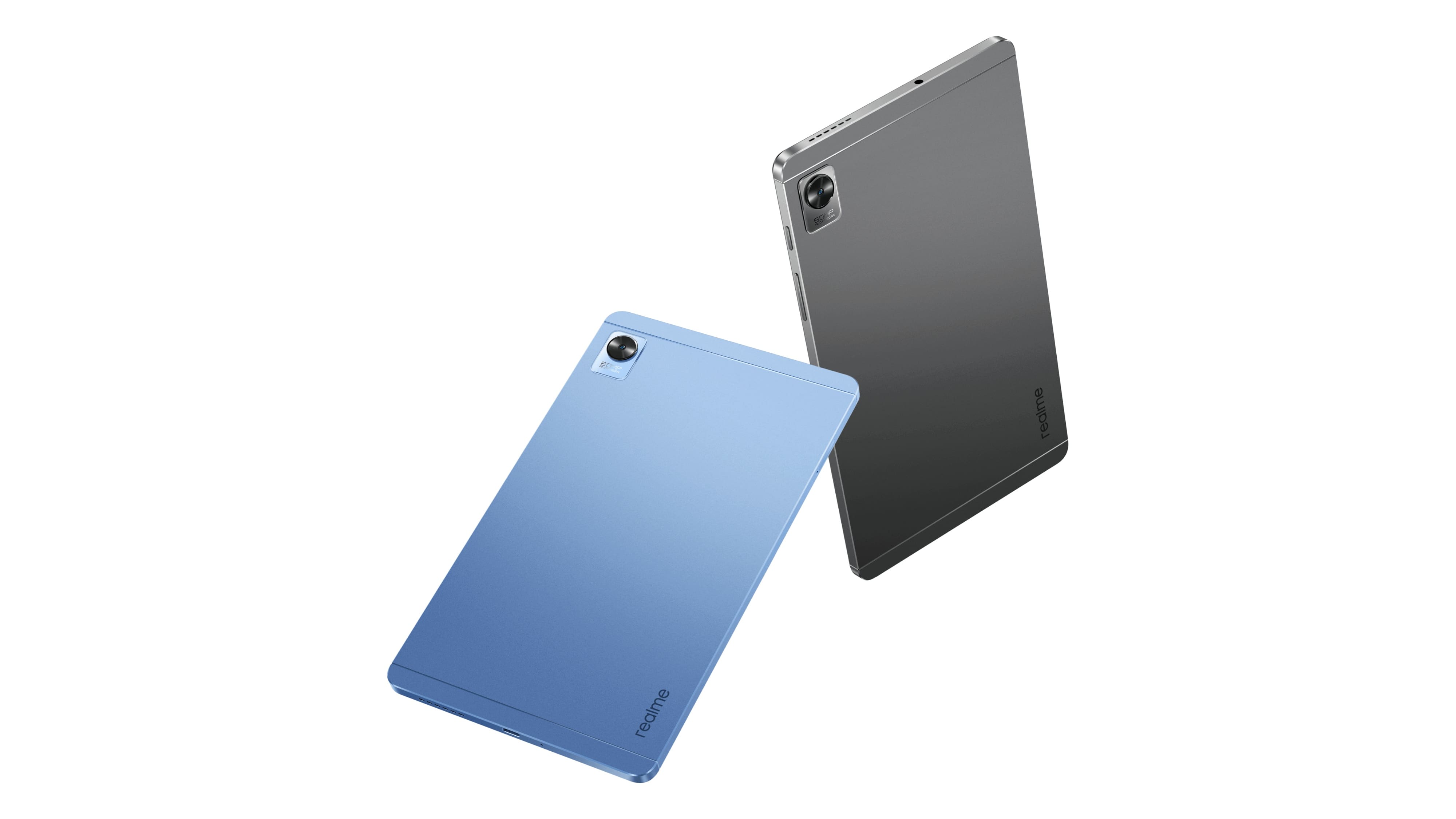
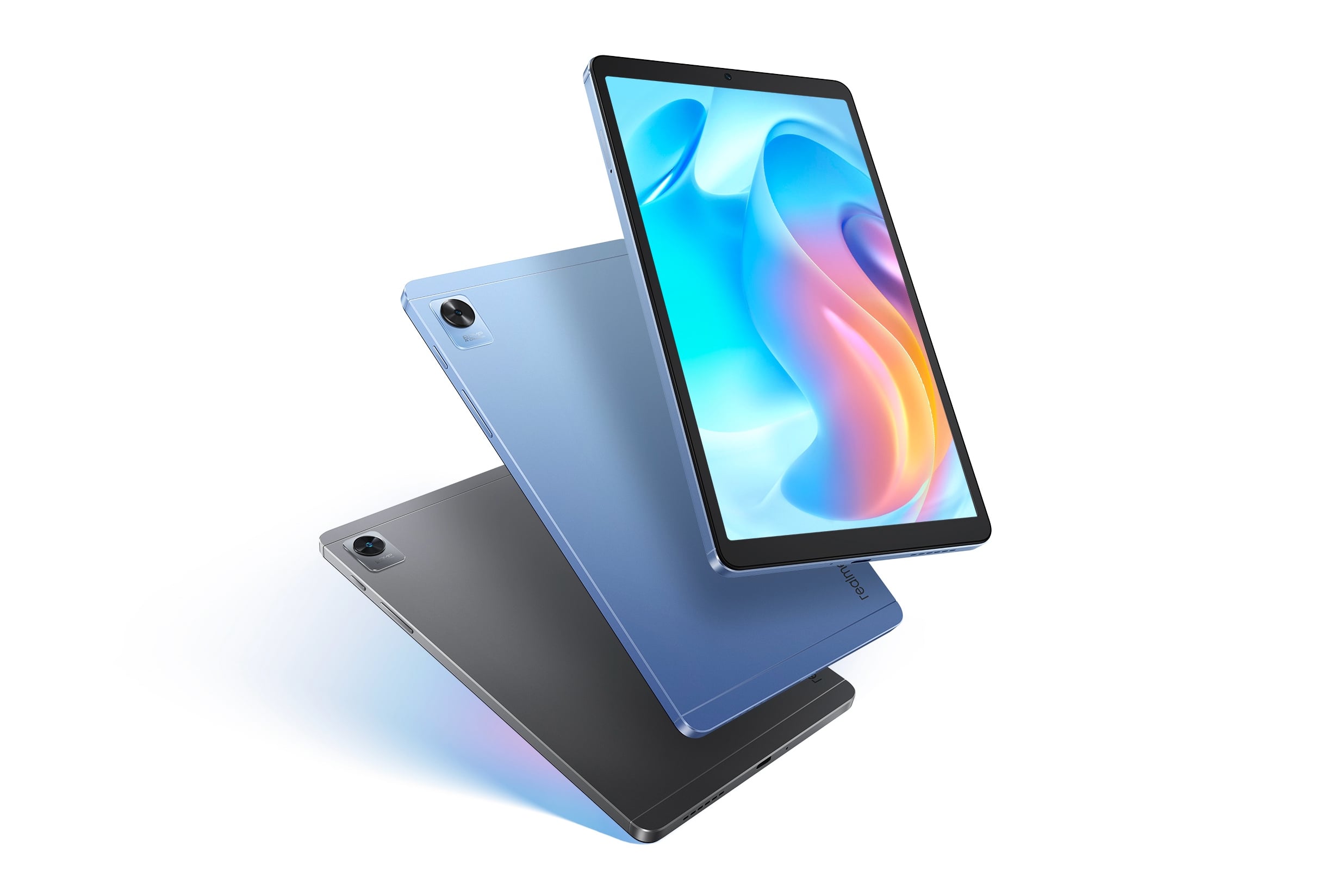
Last week, Realme launched the Realme Pad Mini tablet in the Indian market. It is the smaller version of the original Realme Pad. It brings an 8.7-inch screen, single cameras, and has WiFi/LTE models. Starting today, the tablet has gone on sale in the country.
Realme Pad Mini Pricing and Colors
The Realme Pad Mini (Wi-Fi-only) comes at a starting price of Rs. 10,999/$144 for the 3GB + 32GB variant and Rs. 12,999/$170 for the 4GB + 64GB variant.
The (Wi-Fi + LTE) model is priced at Rs. 12,999/$170 for the 3GB + 32GB variant and Rs. 14,999/$196 for the 4GB + 64GB variant.
The tablet comes in Blue and Grey color options and can be purchased from Flipkart.
Realme Pad Mini Specifications
The Realme Pad Mini comes with an 8.7-inch LCD display. It has a 1340 x 800 pixels resolution, 16.7 million colors, and an 84.59% screen-to-body ratio. The tablet has a UNISOC T616 chipset paired with up to 4GB of RAM and 64GB of internal storage.
Realme Pad Mini
It houses a 6,400mAh battery with support for 18W fast charging. The tablet has an 8MP single camera at the rear and a 5MP selfie camera at the front.
It comes with dual-band Wi-Fi, Bluetooth v5.0, GNSS, and LTE (optional) support. It has a 3.5mm headphone jack for audio and a USB Type-C port at the bottom. The tablet has dual stereo speakers and boots on Android 11 out of the box.
Oppo is the only OEM known for sharing its monthly software update plan. With the start of the new month, the company is back again with a new schedule. The latest timeline revealed by the firm details the smartphones that will be receiving the ColorOS 12 beta/stable update in the month of May 2022.
According to the plans shared by the Chinese and the global wings of Oppo, a total of 26 devices will get access to the Android 12-based ColorOS 12 update in May. Out of these, 9 phones will get beta builds, while the remaining 17 handsets will receive stable builds.
Some of the notable smartphones in the list include Oppo Reno 10x Zoom, Oppo Reno Ace, Oppo Reno 7 Pro 5G, and Oppo F19. With that out of the day, let’s take a look a the schedule.
ColorOS 12 Beta Update Timeline May 2022
From May 16
Oppo A36
China
Oppo A76
India
From May 17
Oppo Reno 10x Zoom
China
India
Oppo Reno FC Barcelona Edition
China
Oppo Reno Ace
China
Oppo Reno Ace Gundam Edition
China
From May 18
Oppo K9s 5G
China
Oppo K9x 5G
China
Oppo Reno 7 5G
India
ColorOS 12 Sable Update Timeline May 2022
From May 10
Oppo Reno 7 Pro 5G
China
India
Oppo Reno 7 Pro 5G League of Legends Limited Edition
China
Oppo Reno 7 SE
China
From May 19
Oppo K7x
China
From May 24
Oppo Reno 3 5G
China
Oppo F19
India
Oppo F19s
India
Oppo A74
Indonesia
Oppo A95
Indonesia
From May 26
Oppo A73
Vietnam
Oppo F17
India
Oppo Reno 3 Pro
India
Oppo Reno 3
Indonesia
From May 30
Oppo A53 5G
China
Oppo A53
India
Oppo Find X2 Neo
Switzerland
Oppo Find X2 Lite
Switzerland
We will be updating whenever the aforementioned Oppo phones get access to ColorOS 12 update based on Android 12. So stay tuned.
After having a bucketful of launches last month, we have officially entered May. This month, we are expected to see phone launches from brands like Sony, Samsung, Vivo, OnePlus, and others. Apart from the regular phones, we’ll also see the launch of flagship phones like the Vivo X80 and Xperia 1 IV. So without further ado let’s take a look at all the upcoming smartphones in May 2022.
Upcoming Smartphones in May 2022
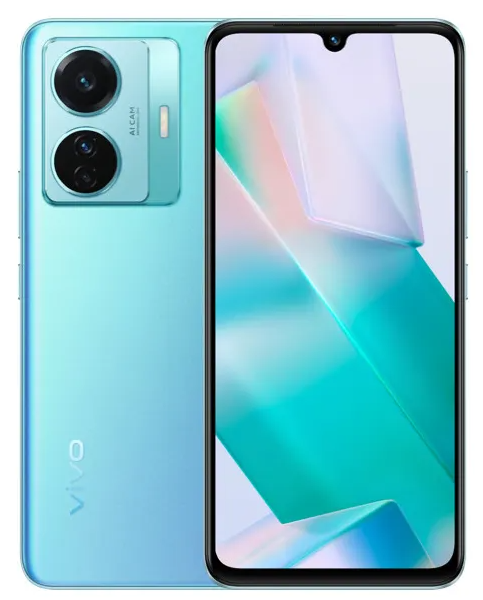
1. Vivo T1 Pro/T1 44W
Vivo has already launched the Vivo T1 series in India and it includes the vanilla Vivo T1 5G. Now, the brand will release two more devices dubbed Vivo T1 Pro 5G and Vivo T1 44W version on May 4 in India.
The Vivo T1 Pro 5G will come with an AMOLED panel featuring 1300 nits of peak brightness. It will have a 64MP main lens and will be powered by the Snapdragon 778G SoC. The device will have up to 8GB of RAM and 128GB of internal storage. The phone’s battery capacity is unknown, but we do know that it will come with a 66W fast charging support. It will also have an 8-layer liquid cooling system and boot on Android 12 OS.
On the other hand, the Vivo T1 44W will be a 4G smartphone. It will come with an AMOLED panel and will be powered by the Snapdragon 680 SoC. The device will pack a 5,000mAh battery with support for 18W fast charging support. Lastly, it will run on Android 12 OS out of the box.
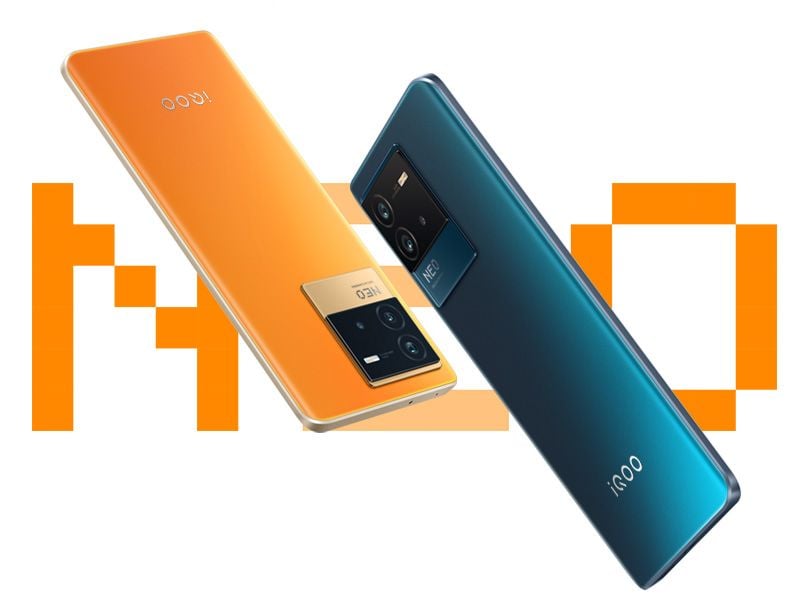
2. iQOO Neo6 SE
iQOO Neo6 SE has been scheduled to launch on May 6 in China. The smartphone is expected to come with a 6.62-inch punch-hole display featuring a Full-HD+ resolution. It will be an OLED panel with a 120Hz refresh rate, 1200Hz touch sampling rate, and HD10+ certification.
iQOO Neo6 SE
The smartphone will come with a 64MP primary camera with OIS support. It will be powered by the Qualcomm Snapdragon 870 SoC and pack a 4,700mAh battery. The battery will have 80W fast charging technology.
3. ZTE Axon 40
Next up we have ZTE whose launch is set for May 9 in China. The company is expected to launch the Axon 40, Axon 40 Pro, and Axon 40 Ultra. The series will come with an independent security chip for hardware-level protection.
The Axon 40 Pro will come with a 100-megapixel camera setup, while the Axon 40 Ultra will feature a 64MP triple camera system. On the front, the Ultra is expected to come with a 16MP under-display camera having 2.24μm pixel fusion technology. The series will come with Qualcomm’s Snapdragon Sound and dtsX Ultrasound technology. As for performance, it will be powered by the Qualcomm Snapdragon 8 Gen 1 SoC.
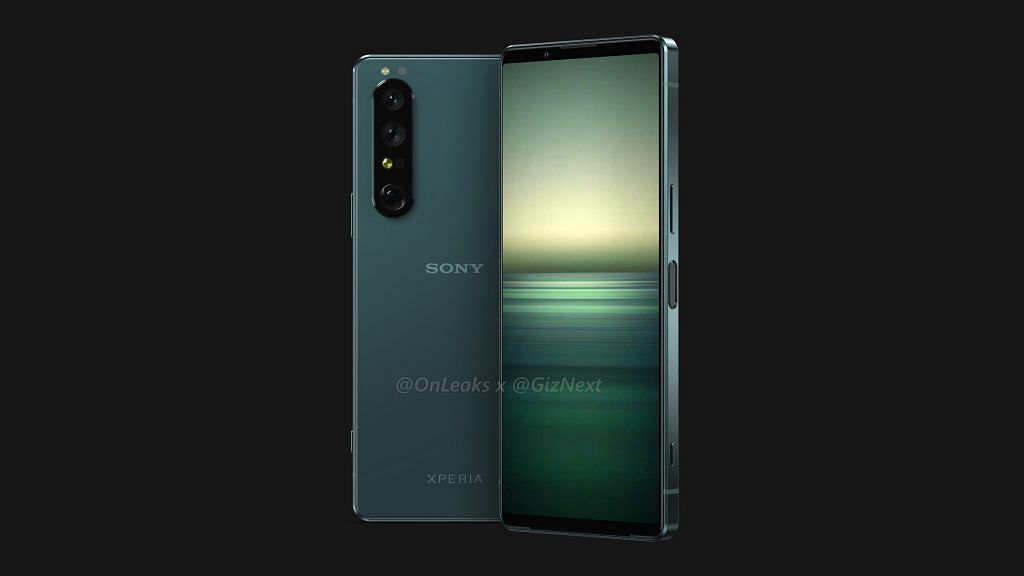
4. Sony Xperia 1 IV
Sony has scheduled a launch event for May 11 where it is expected to launch the Xperia 1 IV. The smartphone is expected to come with a 6.5-inch display with 4K resolution and a 120Hz refresh rate. It will have Corning Gorilla Glass Victus protection and HDR support.
The device will come powered by the Qualcomm Snapdragon 8 Gen 1 SoC paired with 12GB of RAM. It is expected to come with a big 5,000mAh battery with 45W fast charging support. The camera details of the phone are scarce, however, it is expected to come with a ZEISS branded triple camera system.
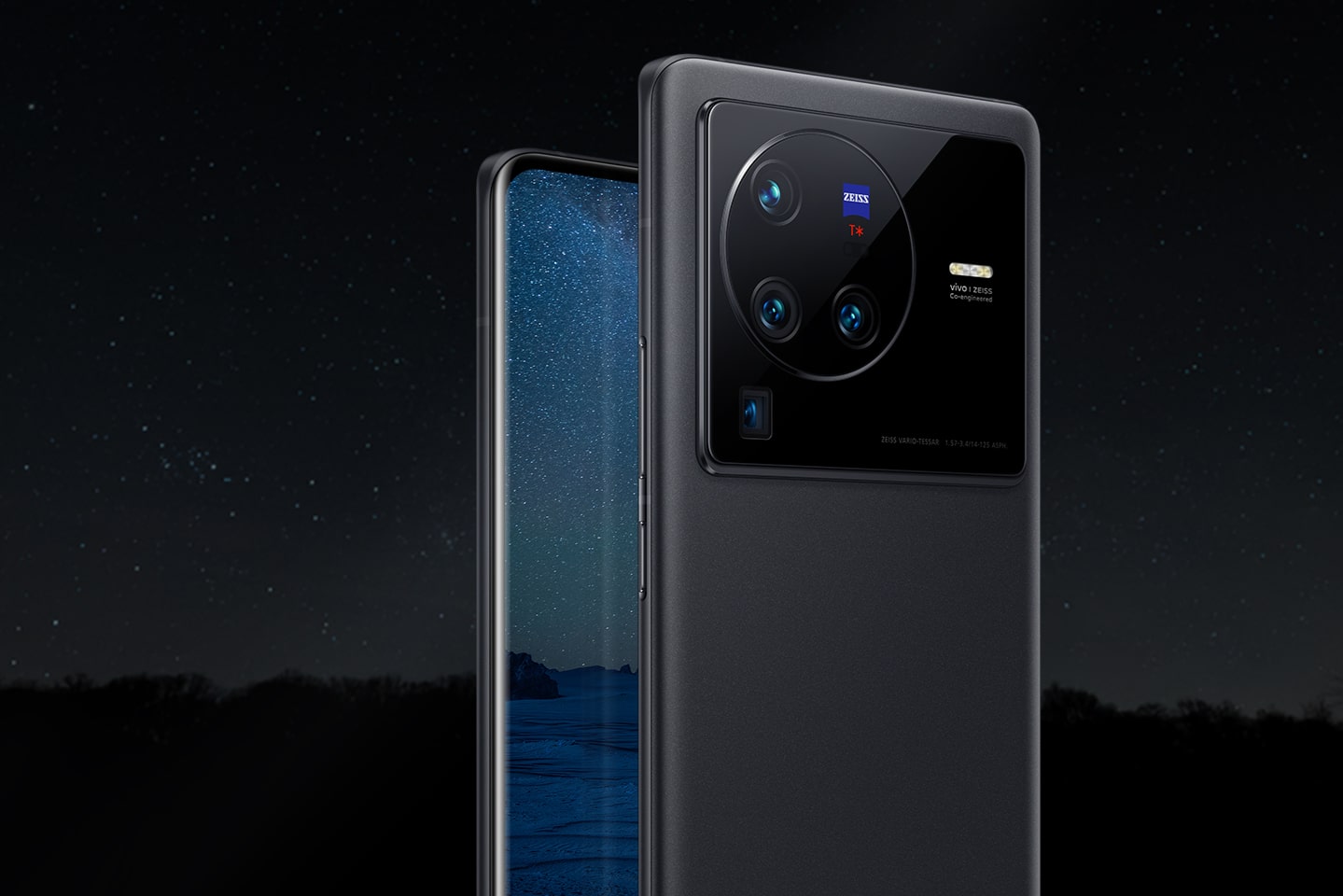
5. Vivo X80
Vivo has already launched the X80 series in China. Now, the series will go official in Malaysia on May 8 and in India on May 18. The series comprises the Vivo X80 and Vivo X80 Pro.
The Vivo X80 and X80 Pro come with a similar design. The phones feature a 6.78-inch E5 AMOLED display with a 120Hz refresh rate, 1500 nits of peak brightness, and 100% P3 color gamut. The vanilla X80 has an FHD+ resolution screen, whereas, the X80 Pro sports a QHD+ resolution panel.
The X80 has a 50MP IMX866 + 12MP + 12MP triple camera system, whereas, the X80 Pro features a 50MP GNV 1G + 48MP + 12MP + 8MP quad-camera system. Both have 32MP selfie snappers. The X80 is powered by the Dimensity 9000 SoC and houses a 4,500mAh battery, while the X80 Pro packs the Snapdragon 8 Gen 1 SoC with a 4,700mAh cell. The duo has an 80W fast charging support and runs on Android 12 OS out of the box.
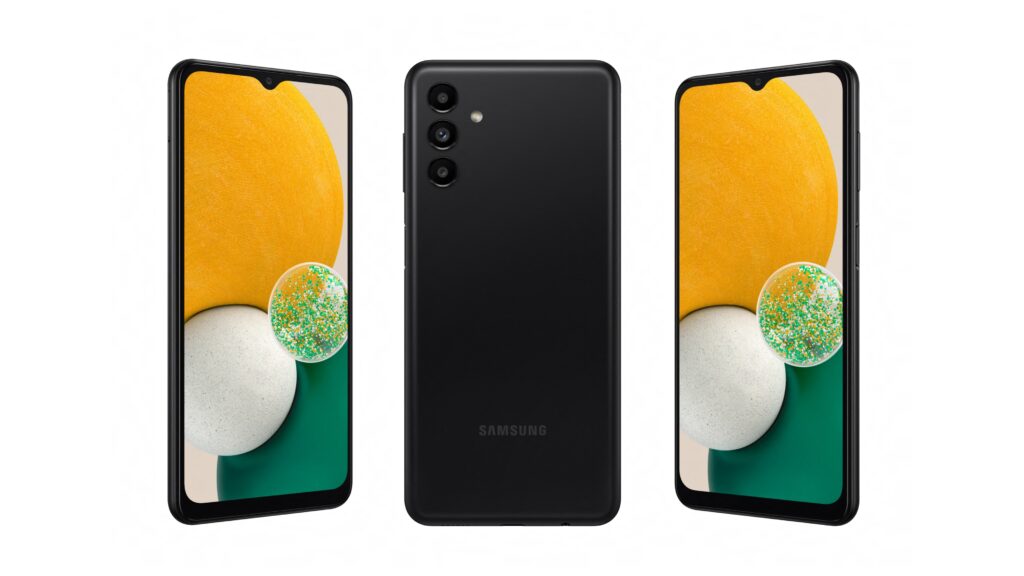
6. Samsung Galaxy A13 5G
Samsung’s Galaxy A13 5G has bagged several certifications and its launch is expected as early as this month. The phone’s support page is also live on Samsung’s official website.
Samsung Galaxy A13 5G
The Samsung Galaxy A13 5G carries the model number SM-A136B and will feature a 6.5-inch PLS LCD display. It will have a 90Hz refresh rate and an HD+ resolution. The smartphone will come with a 50MP triple camera system and will be powered by the MediaTek Dimensity 700 SoC. The device will come in a 4GB RAM + 64GB configuration and will boot on Android 12 OS.
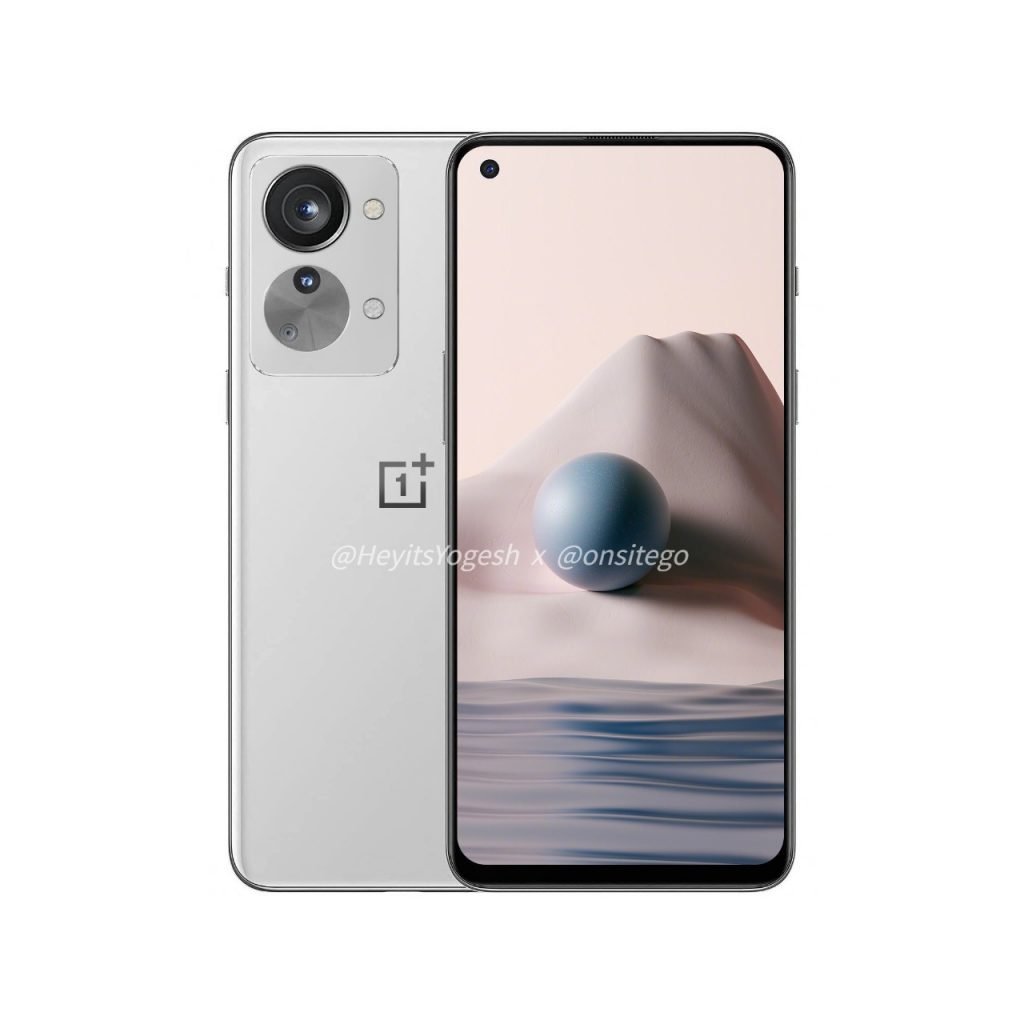
7. OnePlus Nord 2T
Although OnePlus has released multiple phones in different regions last month, the brand still has a few more phones in the pipeline. One such phone expected to arrive this month is the OnePlus Nord 2T. The smartphone will succeed the Nord 2 and is expected to come with some upgraded features.
The smartphone was spotted on a few certifications recently. The device is expected to come with a 50MP primary camera having an aperture of f/1.9. It will have Electronic Image Stabilization (EIS) support. The main lens will be accompanied by an 8MP ultra-wide and a 2MP depth shooter. On the front, it will have a 32MP selfie snapper.
It is expected to come with MediaTek’s Dimensity 1300 SoC paired with up to 12GB of LPDDR4x RAM and 256GB of UFS 3.1 internal storage. It is expected to come with a 4,500mAh battery with support for 80W fast charging technology.
8. Redmi Note 12
Redmi has started teasing the forthcoming Redmi Note 12 series. The series will likely have the Note 12 and Note 12 Pro. Although the company hasn’t revealed the release date of the series, CEO Lu Weibing has hinted the announcement to happen soon. We expect it to launch as early as this month in China considering the launch trends of the Note series.
Source: Redmi CEO via Weibo
This time around, the Note 12 series is said to offer a significant performance jump over its predecessor. However, there’s no detail as to what chipset the phones would board. The design and the camera details are also yet to be known. But, since we are already in May, we expect the series’ teasers to drop in the coming days.
9. Samsung Galaxy A04s
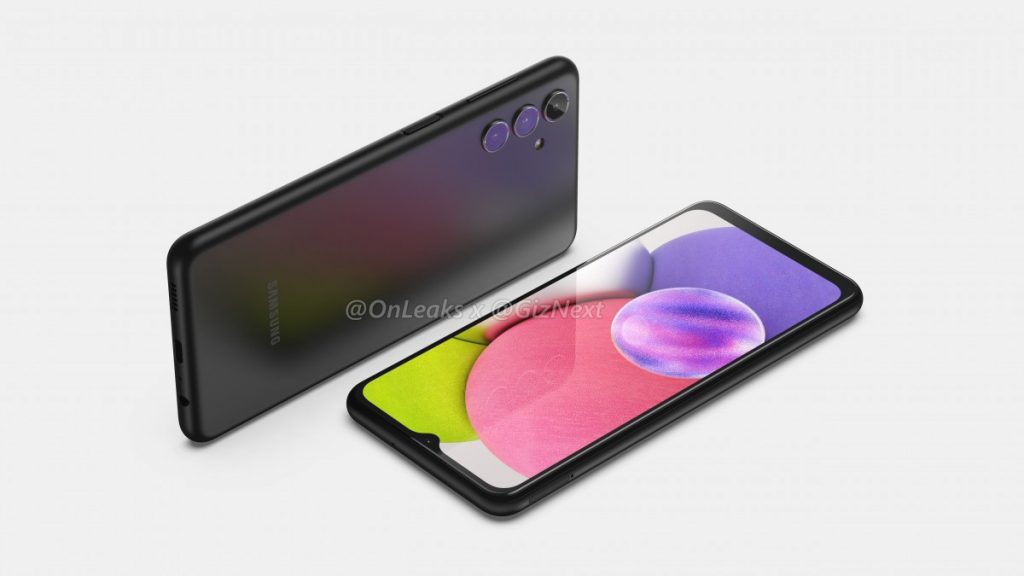
Samsung is expected to launch the Galaxy A04s this month. The smartphone’s renders have already surfaced on the Internet. The device will be an upgrade to the Galaxy A03s and will have an improved design and specs sheet.
Samsung Galaxy A04s CAD renders by Steve Hemmerstoffer / GizNext
The Samsung Galaxy A04s will come with a new design on the rear while having the same waterdrop notch screen on the front. The smartphone will feature a 6.5-inch display with an HD+ resolution. It will come with a triple camera system on the back is expected to be powered by an entry-level chipset. It will have a 3.5mm headphone jack and is expected to boot on the Android 12 OS.
These are some of the smartphones launching in May. Which device are you most excited about? Do let us know in the comments below.
Apple Watch SE 2022 is speculated to launch this year. The original Watch SE, which debuted in September 2022, is yet to receive an upgrade. However, the 2022 Apple Watch SE may break cover alongside the iPhone 14 lineup in September this year. A new report by iDropNews has revealed the key features that could be present on Apple’s upcoming affordable smartwatch.
Apple Watch SE 2022 design
According to the report, the Apple Watch 2022 will look identical to the 2020 edition. However, there could be some differences that may not be immediately noticeable. Like the original model, it is likely to arrive in two sizes: 40mm and 44mm. The device is expected to feature an aluminum build.
Apple Watch SE 2022 specifications, features (rumored)
Apple Watch SE 2020
While there won’t be any major changes in the design of the Watch SE 2022, it is expected to come with a couple of improvements in the hardware department. It is expected to carry support for always-on display technology and a sensor for measuring ECG. However, it is unlikely to feature a blood oxygen sensor.
The older Watch SE is powered by the S5 chipset. The report claims that its 2022 edition will feature a faster S7 processor. The same chip powers the Watch Series 7. It is also tipped to feature a new speaker.
The Watch SE 2022 is likely to offer the same 18-hour battery life as the 2022 model. However, it is expected to carry support for the same fast charging that is available on the Watch Series 7.
Apple Watch SE 2022 price (rumored)
The Watch SE 2022 will be costlier than the original model, which was announced for $279. The report claims that the successor model will be priced at $299. It also states that the Cupertino-based firm is not expecting a production delay. Hence, it is likely to be available with a normal shipping schedule.
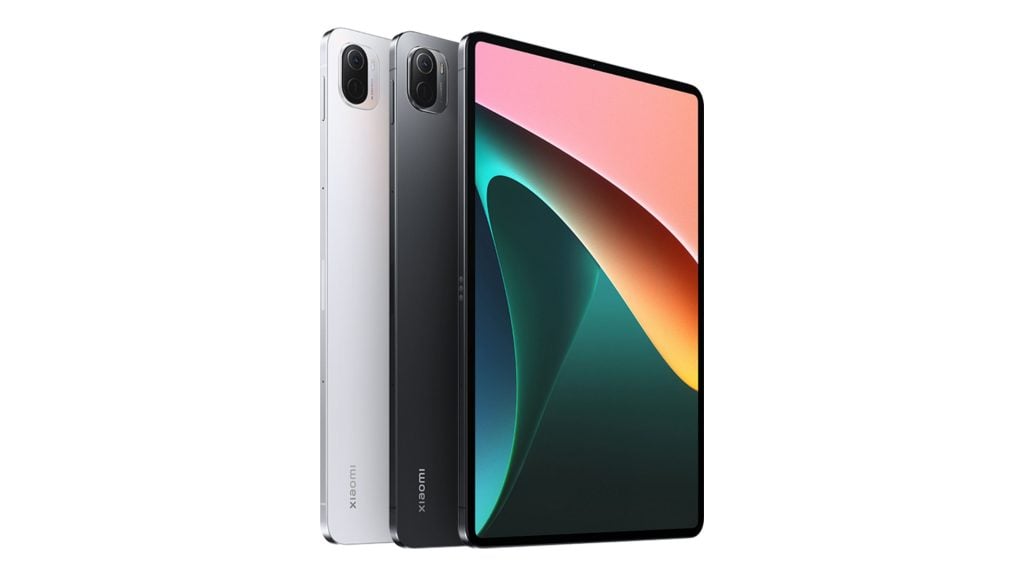
Last week, Xiaomi Pad 5 was launched in India with a 10.95-inch WQHD+ and the Snapdragon 860 SoC. Now, its sub-brand Redmi which is rumored to be working on a tablet as well might debut the device in India soon.
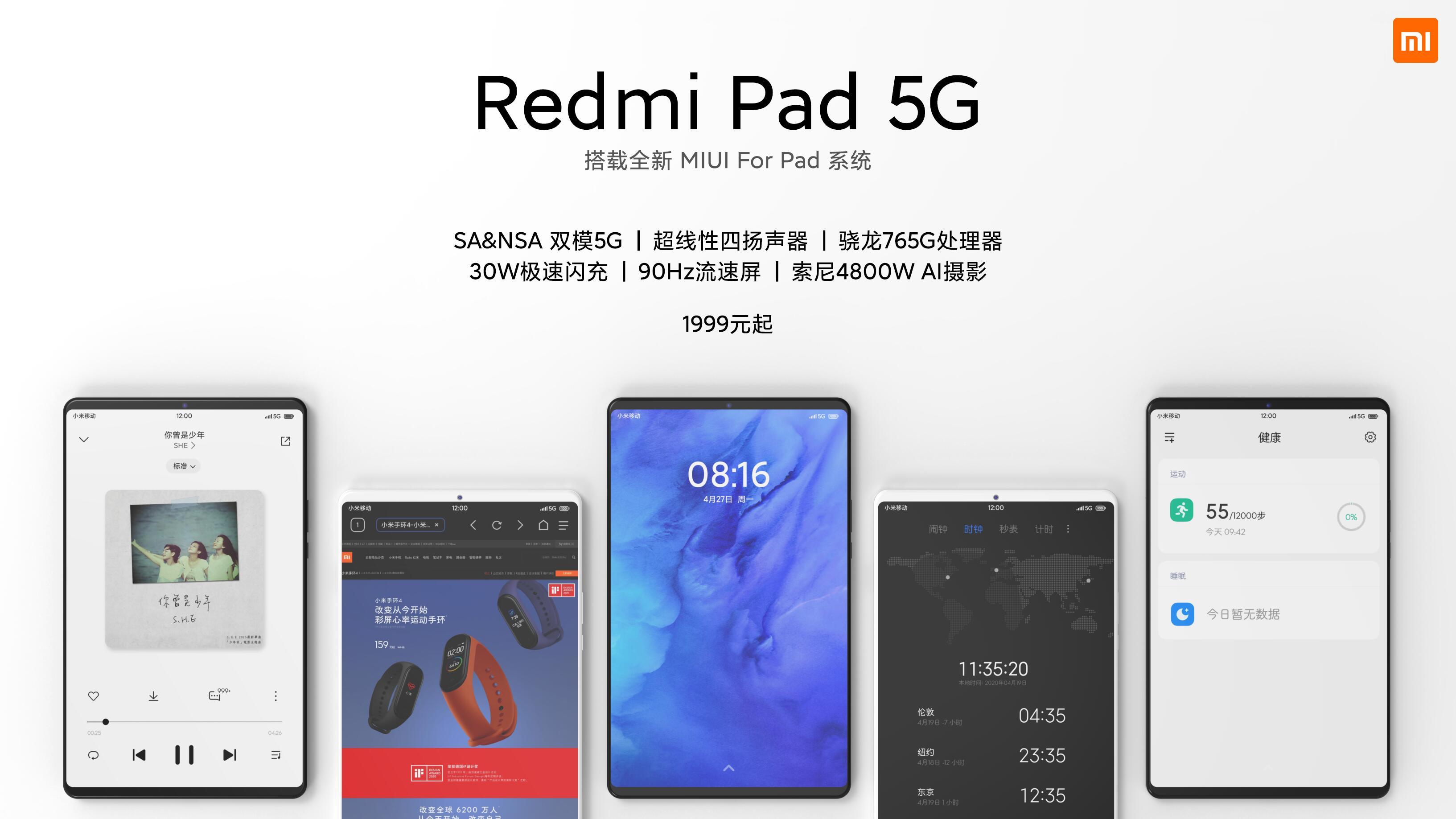
According to noted tipster Mukul Sharma, the upcoming tablet dubbed the Redmi Pad 5G will be made available in India. The tipster does not mention an expected launch timeline, so we will likely have to wait a while for more info on the tablet. Interestingly, the tablet was previously tipped back in April 2020 with the same name.
According to the previous report, Redmi Pad 5G features a Snapdragon 765 chipset and a 90Hz refresh rate panel. The device has 30W fast charging support and a 48-megapixel Sony camera on its rear. The previous report also mentions that the device was expected to debut in China for 1,999 Yuan ($302), however, reports on the tablet went cold afterward.
Currently, it is unclear if the Redmi Pad 5G is the same device rumored back in 2020 or a new tablet altogether. We expect to learn more about it in the coming days.
For now, Xiaomi Pad 5 remains a good deal at a price point below ₹30,000 in India. The tablet has a 10.95-inch 2560 x 1600 pixels LCD display with 120Hz refresh rate, 275 PPI pixel density, and 650 nits peak brightness. The screen offers Smart Pen stylus support and incorporates DCI-P3 color gamut and Dolby Vision HDR standard.
Powering the tablet is a Snapdragon 860 chipset with 6GB of LPDDR4x RAM and up to 256GB of UFS 3.1 storage. The device has a large 8,720mAh battery capable of 33W fast charging and operates in Android 11-based MIUI 13.
For optics, it has a 13MP rear camera and an 8MP front-facing camera. Audio is taken care of by a set of quad speakers with support for Dolby Atmos, Hi-Res Audio, and Hi-Res Audio Wireless. The device, however, omits the 3.5mm headphone jack, MicroSD card slot, and fingerprint sensor.
The Xiaomi Pad 5 has a starting price of ₹26,999 ($352) in India, but it can be bought for ₹24,999 till May 7th.
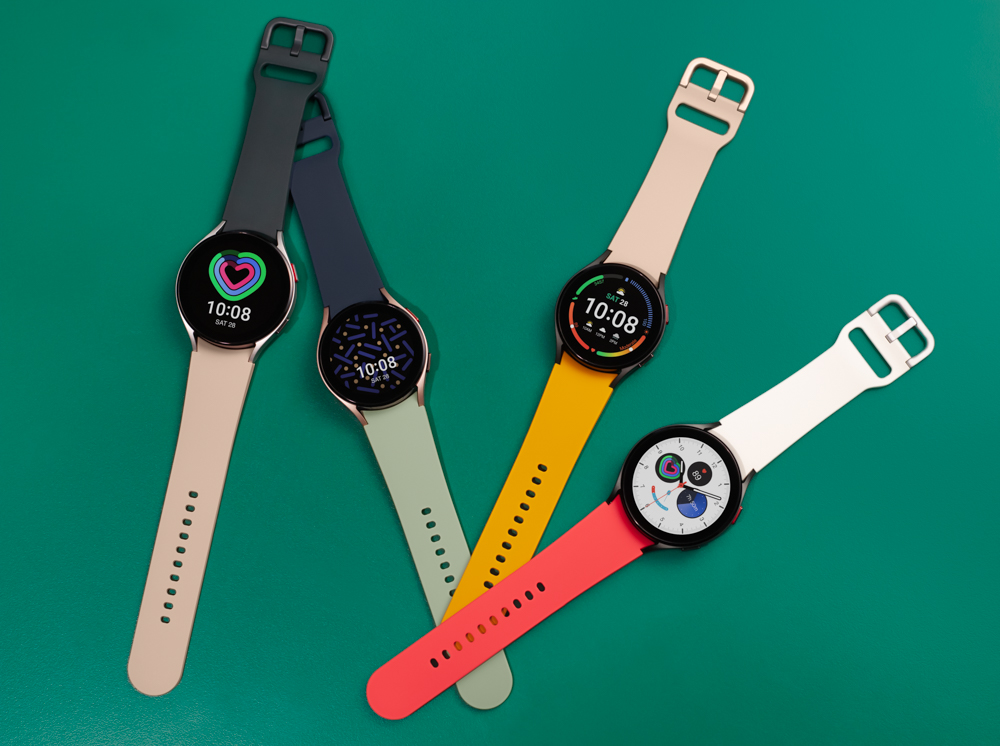
Other than the Galaxy Buds Pro, Samsung is also offering an insane discount on the Galaxy Watch 4 in India. The South Korean electronics giant has reduced the price of the 44mm Bluetooth-only variant of the smartwatch by a whopping ₹12,009. Additionally, customers can further lower the price by clubbing other offers.
The Samsung Galaxy Watch 4 44mm Bluetooth model debuted in India at ₹26,999 in late August 2022. Less than a year after its release, the company is now providing this smartwatch at only ₹14,990 on its website and Flipkart. The offer is available for all three colors, namely Black, Silver, and Green.
Purchasing from the Samsung Shop app will get you the best deal. Because customers can apply a ₹500 discount coupon, referral code, and also avail of a 10% instant cashback on almost all debit and credit cards.
Hence, the effective price of the wearable drops down to ₹12,824.15 from ₹14,990. The final price includes a ₹500 coupon discount, a ₹240.95 referral bonus, and a ₹1,424.90 cashback on card transaction.
However, on Flipkart, buyers can only get a ₹1250 discount on SBI credit cards. Hence, the effective price there is higher at ₹13,740.
The Samsung Galaxy Watch 4 is currently the only smartwatch in the market with the latest Wear OS 3. It also comes with other interesting features like body composition measurement, sleep coaching, and contactless payment to name a few.
Xioami had launched the Redmi K50 and Redmi K50 Pro smartphones in the Chinese market last month. Now, just a few weeks after the phones were made available for purchase in China, they have received a price cut.
Both the Redmi K50 and K50 Pro have received a 50 yuan price cut, similar to the Redmi K40S smartphone. With this, the base model of the Redmi K50 with 8GB RAM and 128GB storage now starts at 2,349 yuan, which is around $355.
Similarly, the 8GB RAM and 256GB storage model now costs 2,449 yuan (~$371) and the 12GB RAM with 256GB internal storage is priced at 2,649 yuan (~$401).
On the other hand, the Redmi K50 Pro has also received a 50 yuan price cut in China, bringing down the cost of the base model with 8GB RAM and 128GB internal storage to 2,949 yuan (~$445). The 8GB RAM and 256GB internal storage model is now available for 3,149 yuan, which is about $477.
The 12GB RAM and 256GB storage model of the Redmi K50 Pro is now priced at 3,449 yuan (~$522) while the 12GB RAM and 512GB internal storage model costs 3,849 yuan, which is approximately $582.
Both the smartphones feature a 6.67-inch AMOLED QHD+ 120Hz screen. While the K50 is powered by the MediaTek Dimensity 8100 SoC, the Pro model is powered by the Dimensity 9000 SoC, both of which have LPDDR5 RAM and UFS 3.1 storage.
The devices are running the latest Android 12 operating system out-of-the-box with the company’s own MIUI 13 custom user interface on top. The K50 is powered by a 5,500mAh battery with 67W fast charging while the K50 Pro is powered by a 5,000mAh battery with support for 120W fast charging.
Last week, the Xiaomi 12 Pro made its Indian debut featuring the latest Snapdragon 8 Gen 1 SoC and a 50-megapixel triple camera setup. The device has gone on live sale starting today so let’s check out its price and offers.
Xiaomi 12 Pro Indian price & offers
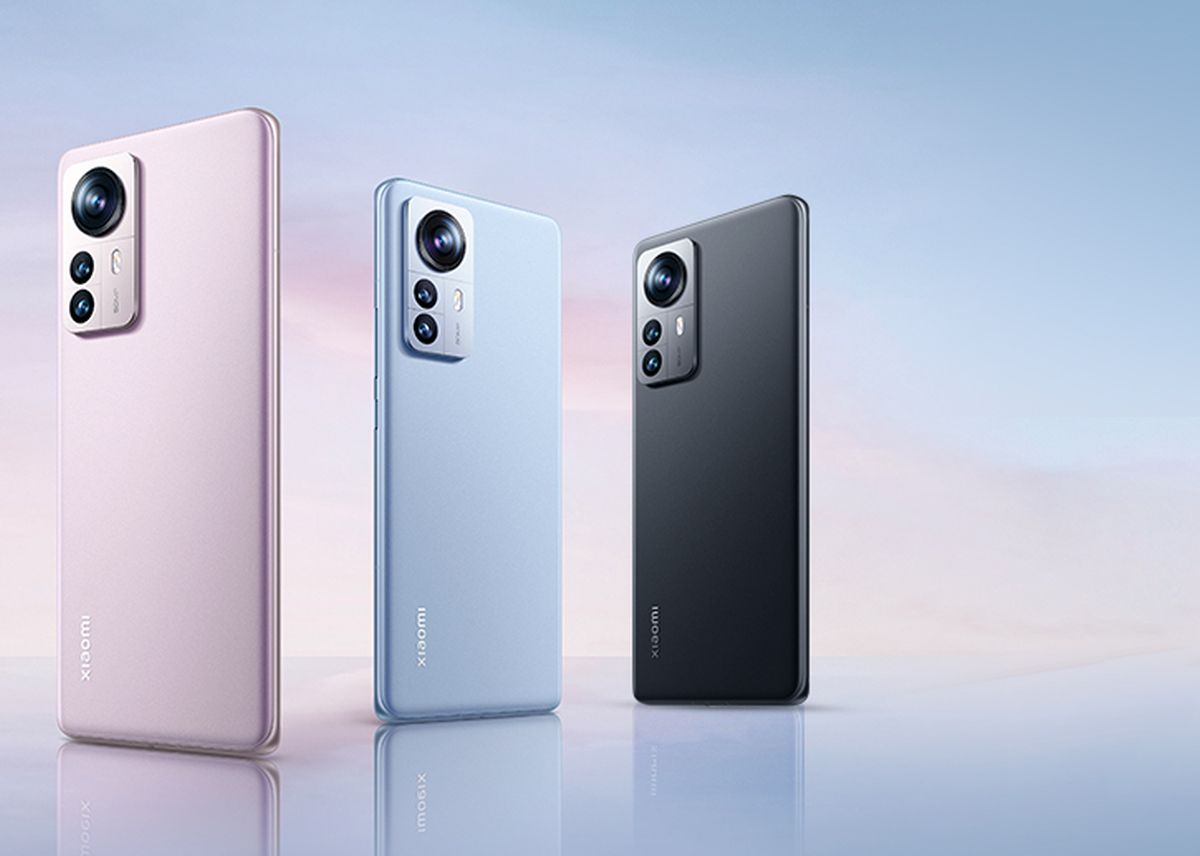
The 12 Pro is available in two variants in the sub-continent. The 8GB RAM + 256GB storage configuration has a price tag of ₹62,999 while the top-spec 12GB RAM + 256GB configuration is priced at ₹66,999. The device is offered in three different colors – Couture Blue, Noir Black, and Olive Mauve.
Coming to offers, customers using an ICICI Bank card are eligible for an instant discount of ₹6,000 on the purchase of the Xiaomi 12 Pro. The brand is also offering an introductory discount of ₹4,000 for a limited time period.
Other than that, users of older Xiaomi and Redmi Note devices can exchange their smartphones for a discount of up to ₹20,000 on a new Xiaomi 12 Pro. You can find out more about the eligible devices for exchange by reading our previous coverage.
The Xiaomi 12 Pro is available for purchase via Mi.com and Amazon India.
Xiaomi 12 Pro specs & features
The latest Xiaomi flagship has a 6.78-inch LTPO E5 AMOLED screen with a 2K (QHD+) resolution, 120Hz refresh rate, HDR10+, Dolby Vision, and a peak brightness of 1500nits. It has a punch hole for the front camera and an in-screen fingerprint scanner for security.
Powering the device is a Snapdragon 8 Gen 1 SoC paired with up to 12GB of LPDDR5 RAM and up to 256GB of UFS 3.1 storage. The device operates on Android 12-based MIUI 13 out of the box and features lightning-fast 120W fast charging for its 4,600mAh capacity battery.
The device features an interesting 50-megapixel triple camera setup with a Sony IMX707 primary camera, a 50-megapixel ultrawide lens, and a 50-megapixel portrait camera. On the front, the device houses a 32-megapixel shooter for selfies and video calls.
iQOO will be announcing the iQOO Neo6 SE on May 6 in China. The smartphone is now listed for pre-orders in the home market. The company has been gradually revealing the specifications and key features of the Neo6 SE. Today, tipster Yogesh Brar shared all the main specs of the device to reveal what sets it apart from the Neo6, which debuted in China last month.
iQOO Neo6 SE specifications (rumored)
To begin with, the iQOO Neo6 SE houses a 6.62-inch OLED screen that offers an FHD+ resolution and a 120Hz refresh rate. It will be an AMOLED E4 panel that offers 10-bit colors, a 1200Hz touch sampling rate, 1,300 nits of brightness, and HDR10+ support. As far as the display design is concerned, it features a centrally positioned punch-hole.
iQOO Neo6 SE
The Snapdragon 870 is confirmed to power the device. The device is expected to arrive with 8 GB / 12 GB of RAM and 128 GB / 256 GB of built-in storage. It will come preinstalled with the Android 12 OS and OriginOS Ocean UI. For security, the device is equipped with an in-screen fingerprint sensor.
The Neo6 SE will be packed with a 4,700mAh battery with 80W rapid charging support. It has a 16-megapixel front camera and a 64-megapixel (main, with OIS) + 12-megapixel (ultrawide) + 2-megapixel depth assist lens. It will also feature an X-axis linear motor.
The new leak reveals that the Neo6 and Neo6 SE have identical specs, and they mainly differ in the chipset department. The Neo6 features the latest Snapdragon 8 Gen 1, whereas the Neo6 SE has the SD870, which was announced in May 2021. As far as design goes, the official renders that were released last week show that the Neo6 SE will look a lot like the iQOO Neo6 in terms of how it looks.
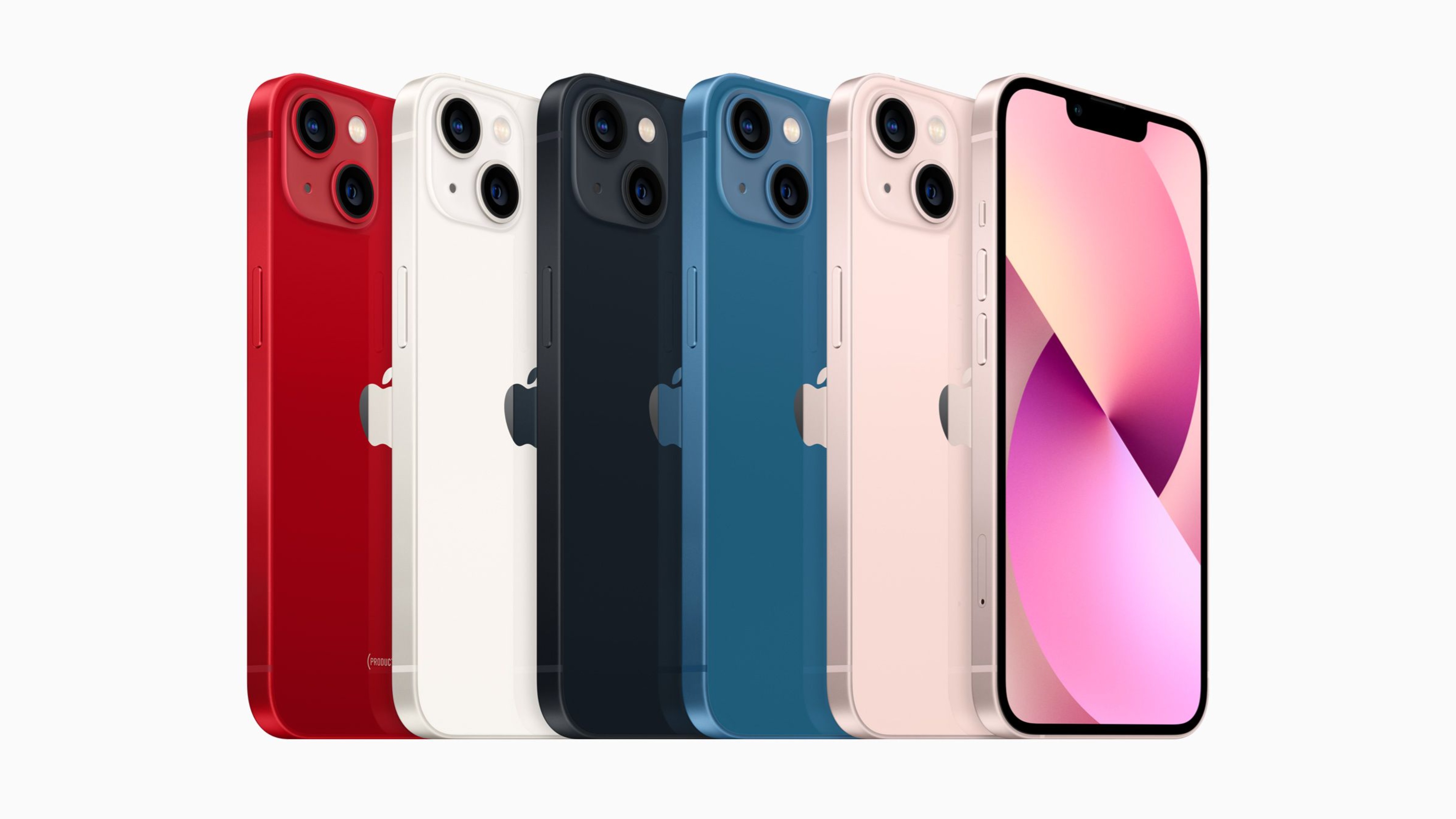
Apple iPhone 13 is available to purchase at the lowest price yet in India. The device made its Indian debut on September 14, 2021, for the starting price of ₹79900.
Now, the iPhone 13 vanilla variant is available to purchase for a starting price of ₹70,900 (128GB model) with the Amazon Summer Sale countdown deal. The offer is available for the next 4 days, after which the price of the device will come back to normal.
The other storage variants of the iPhone 13 are also on sale right now as the 256GB model is being offered with a discount of ₹10,000, bringing its price down to ₹79,900. On the other hand, the top-spec 512GB iPhone 13 which usually retails for ₹1,09,900 in India is currently available for ₹1,03,990.
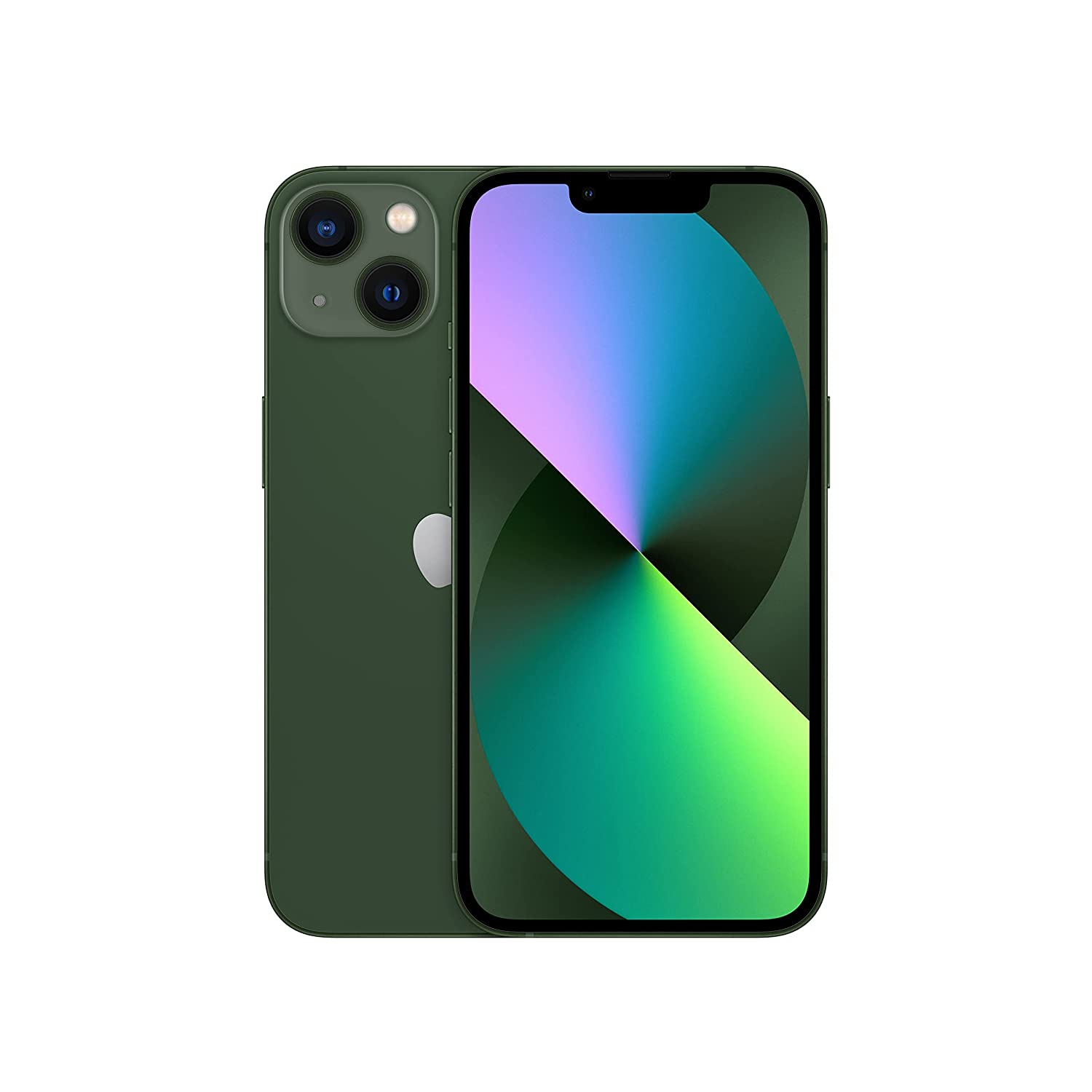
These offers are available on all the color variants of the iPhone 13, including the Dark Green color option that Apple debuted in March. We would like to remind our readers that iPhone 13 series come without a charging brick included in the box, so if you are a first-time iPhone buyer, you will likely have to shell out an additional ₹1,899 for the Apple 20W USB-C Power Adapter.
The iPhone 13 comes with a 6.1-inch Super Retina XDR OLED screen with 2532×1170p resolution and 460ppi pixel density. It pairs 4GB RAM with the A15 Bionic chipset and is available in 128GB, 256GB, and 512GB storage variants. It has a 3,240mAh battery which is said to provide up to 19 hours of video playback.
The device has two 12-megapixel cameras working as the primary and ultrawide lens and on the front, it has another 12-megapixel sensor for selfies and FaceTime.
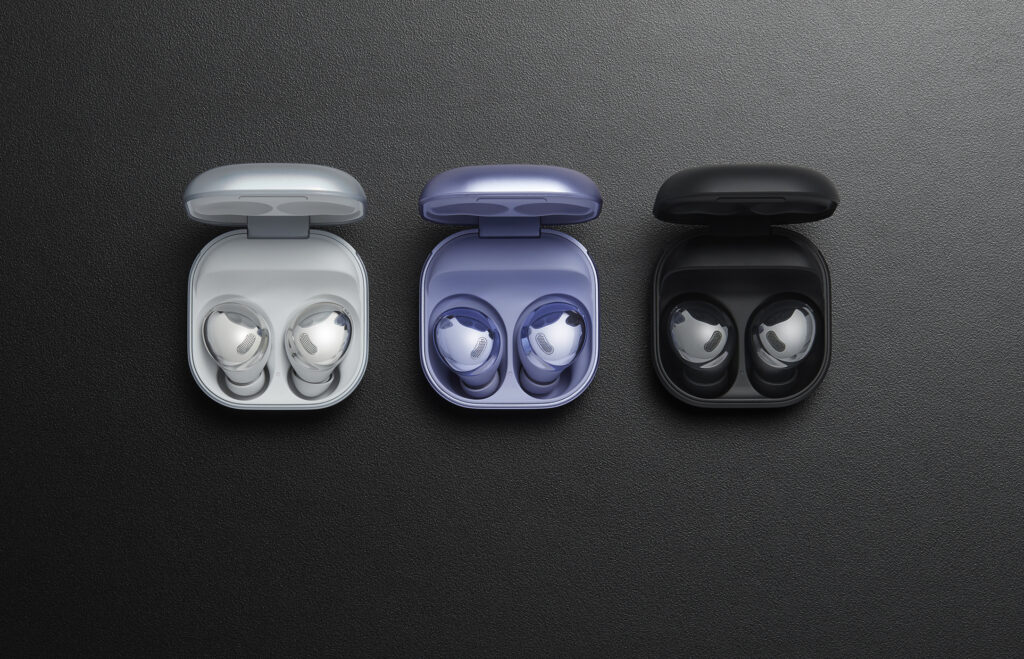
Samsung launched the Galaxy Buds Pro alongside the Galaxy S21 series in early 2021. The premium truly wireless earphones from the company were introduced at ₹15,990 in India. A little over a year after its release, the audio accessory is now available at a whopping 61% discount in the country.
Samsung has listed the Galaxy Buds Pro at only ₹6,990 on its website as well as on Amazon in India. Additionally, the American eCommerce giant is offering an instant 10% discount on multiple cards. Hence, the effective price of the high-end Samsung TWS comes down to ₹6,291.
The flat 10% discount (₹699 off) is available on transactions via credit cards issued by ICICI Bank, RBL Bank, and Kotak Bank. At the same time, a ₹500 discount is also available on Kotak Bank debit card transactions.
This offer is applicable to all three colors, such as Black, Silver, and Violet. Most importantly, this is the lowest price for Galaxy Buds Pro to date in India. Hence, if you were planning to buy this product, then now is the right time to make your move.
Being a high-end offering, the Samsung Galaxy Buds Pro (review) comes with almost all the features one could ask for. They offer dual drivers, intelligent ANC, 360 Audio, auto switch, up to 28-hour battery life (wit ANC turned off), IPX7 rating, and Qi wireless charging. You can learn more about them here.
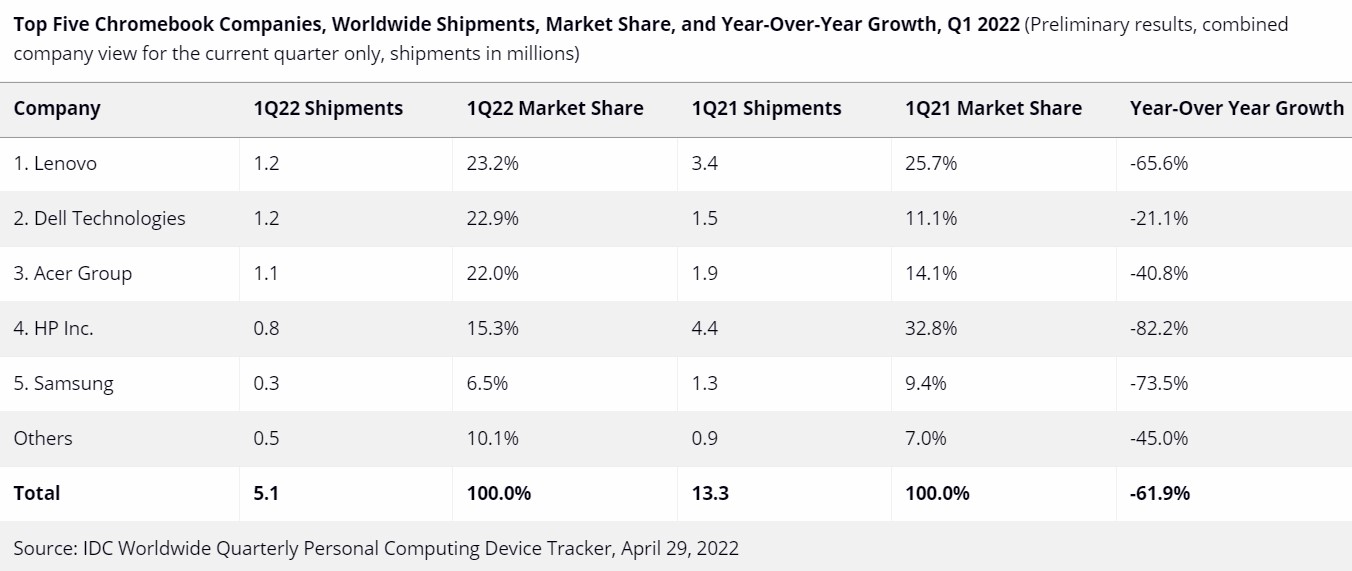
2020 and 2021 were the golden years for tablets and Chromebooks, with record shipments in both years. It was because the pandemic pushed people more toward tablet and Chromebook purchases for work, studying at home, and entertainment. However, now with the pandemic situation stabilizing, the shipments of these devices are also declining, according to data from the IDC.
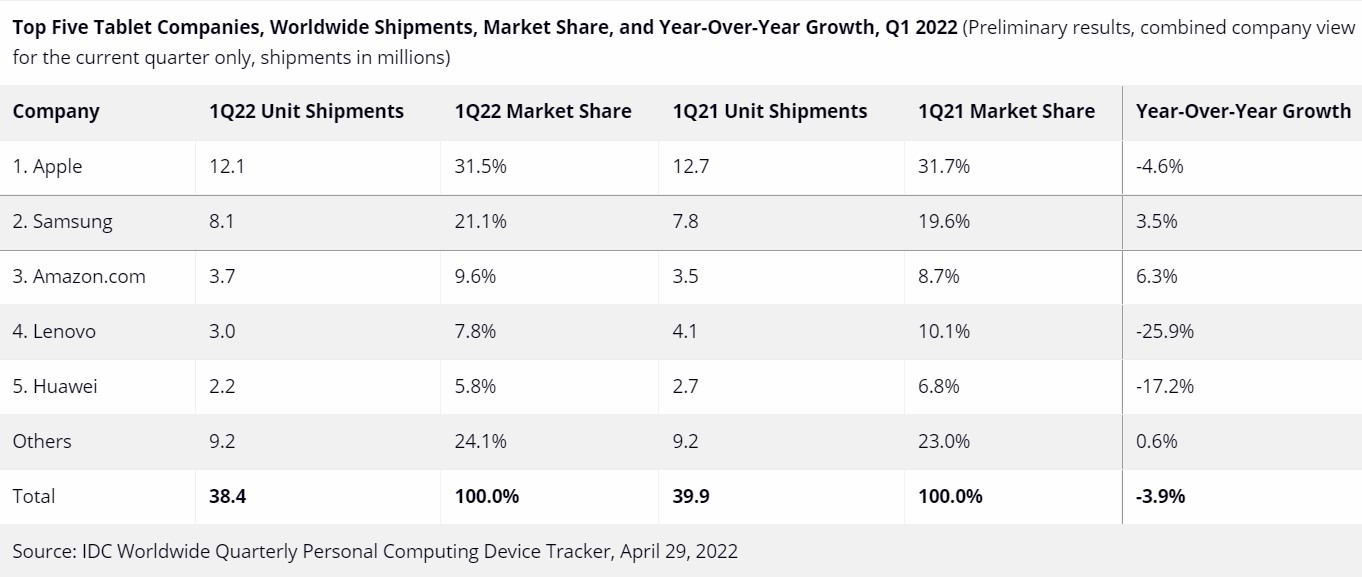
As per the report, global tablet shipments hit 38.4 million units in the first quarter of 2022, a 3.9 percent decrease year-on-year as demand declined. Shipments of tablets are still higher than the pre-pandemic level, however, growth has slowed down, indicating that the market is rebounding to normal seasonality. Furthermore, the intensive device purchases in 2020 and 2021 caused many customers to hold on to their freshly purchased tablets.
Chromebooks are not untouched by this trend and witnessed a 61.9% decline in shipments in Q1 of 2022. The decline in Chromebooks is unsurprising considering the building of inventories owing to lower demand over the previous three quarters, revealed Jitesh Ubrani, research manager with IDC.
While the global market contracted due to saturation in established markets, Asia/Pacific (excluding Japan and China) witnessed growth in the quarter due to many substantial investments in digital education in the area.
The report also mentions that several new players like Realme, OPPO, and Xiaomi have also entered this emerging segment. However, their volumes are not significant enough to move the market as of now.
Coming to the companies, Apple is dominating the tablet market with over 31.5% market share and shipments of 12.1 million units. However, the Cupertino company’s shipments of iPads have dropped by 4.6%.
Lenovo is leading the Chromebook segment with a 23.2% market share and shipments of 1.2 million units. However, the Chinese company is facing a sharp decline of 65.6% in Q1 of 2022.
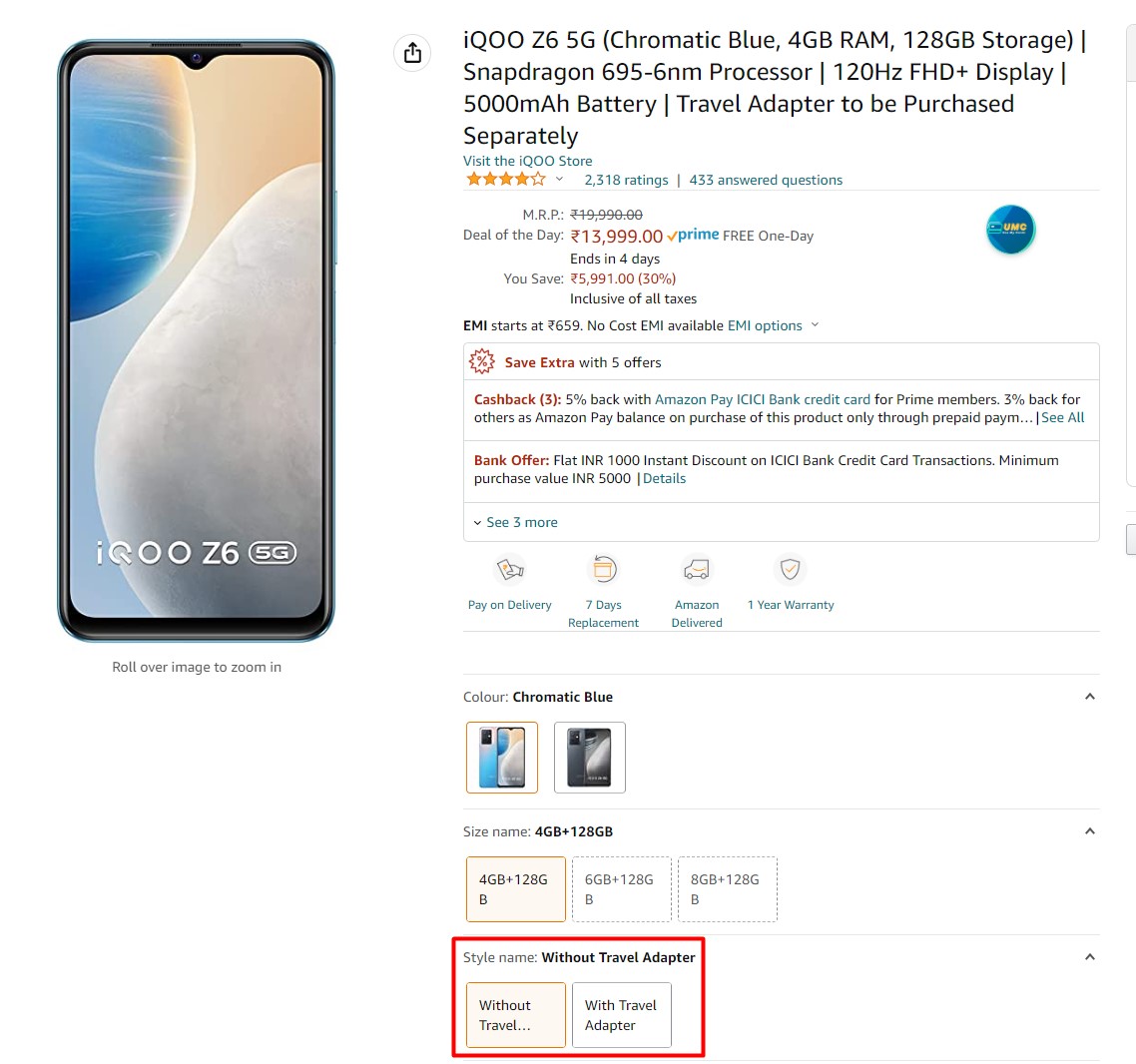
In March, iQOO announced the iQOO Z6 5G with a starting price of Rs 15,999 (~$209). Since launch, the handset has been available with an in-box charger. However, as revealed by tipster Sudhanshu Ambhore, the company is now providing users an option to purchase it without an in-box charger. The variant that comes without a charger costs Rs 1,500 (~$20) less than its regular version.
It is unclear when the company started offering the iQOO Z6 5G without a charger. To recall, the iQOO Z6 5G that ships with an 18W travel charger come in three configurations, such as 4 GB RAM + 128 GB storage, 6 GB RAM + 128 GB storage, and 8 GB RAM + 128 GB storage. They are priced at Rs 15,999 (~$209), Rs 16,999 (~$222), and Rs 17,999 (~$235), respectively. The base model is now available with a Rs 500 (~$7) discount on Amazon India, while the other two configurations have a Rs 1,000 (~$13) discount.
As can be seen in the screenshot, only the base model (4GB+128GB) of the Z6 5G is available without a travel charger. It is listed with a price tag of Rs 13,999 (~$183). While the smartphone is also available through iQOO India’s website, it is not yet offering the variant that comes without a travel charger.
Apple and Samsung were the first brands to sell their flagship phones without a charger. Starting in March this year, Samsung started offering Galaxy A and M series phones without in-box chargers. The recently unveiled Realme Narzo 50A Prime does not come with a charger. Now that iQOO has started offering the iQOO Z6 5G in a new non-charger variant, it seems that some of the upcoming iQOO phones may come without a charger. There is a possibility that selling phones without a charger may soon become the new normal in the smartphone industry.
Should companies sell midrange phones without an in-box charger? Share us your thoughts by posting your comments below.
We use cookies on our website to give you the most relevant experience by remembering your preferences and repeat visits. By clicking “Accept”, you consent to the use of ALL the cookies.
This website uses cookies to improve your experience while you navigate through the website. Out of these, the cookies that are categorized as necessary are stored on your browser as they are essential for the working of basic functionalities of the website. We also use third-party cookies that help us analyze and understand how you use this website. These cookies will be stored in your browser only with your consent. You also have the option to opt-out of these cookies. But opting out of some of these cookies may affect your browsing experience.
Necessary cookies are absolutely essential for the website to function properly. This category only includes cookies that ensures basic functionalities and security features of the website. These cookies do not store any personal information.
Any cookies that may not be particularly necessary for the website to function and is used specifically to collect user personal data via analytics, ads, other embedded contents are termed as non-necessary cookies. It is mandatory to procure user consent prior to running these cookies on your website.






 The smartphone was spotted on a few certifications recently. The device is expected to come with a 50MP primary camera having an aperture of f/1.9. It will have Electronic Image Stabilization (EIS) support. The main lens will be accompanied by an 8MP ultra-wide and a 2MP depth shooter. On the front, it will have a 32MP selfie snapper.