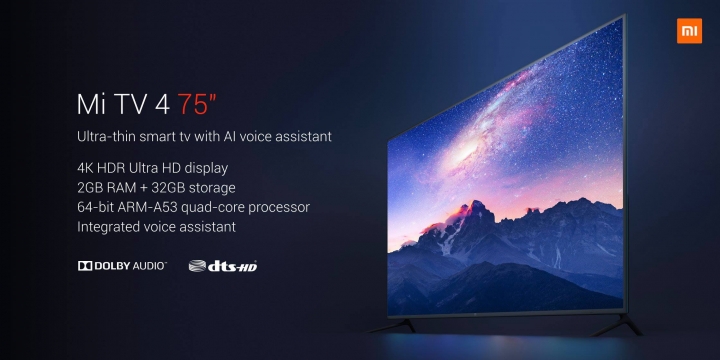
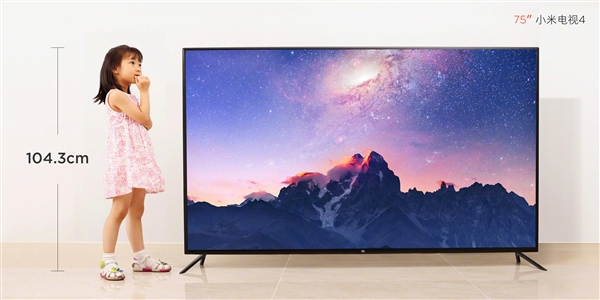
What is a Xiaomi launch without a new TV? At today’s event, Xiaomi announced a new Mi TV 4 with a large 75-inch display. This is the company’s largest LED TV to date.
The Mi TV 4 75” as it is officially known not only comes with a large screen but also packs some impressive specs and smart features.
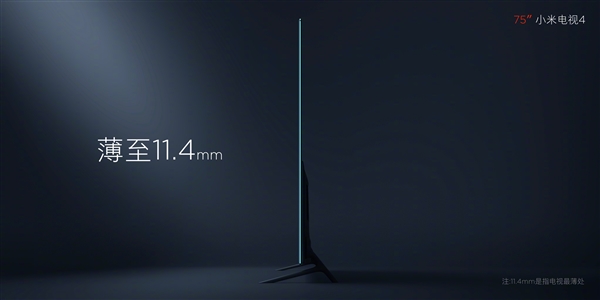
Speaking of design, the TV follows the ultra-thin tradition of its predecessors. It is just 11.4mm thick and measures 104.3cm tall. The screen itself is a 4K HDR LCD panel.
Powering the Mi TV 4 75” is Amlogic’s 6th gen quad-core processor clocked at 1.8GHz. It also has a Mali-T830 GPU, 2GB of RAM, and 32GB of built-in storage. It also has support for Dolby audio and DTS-HD audio, dual-band Wi-Fi, and Bluetooth Low Energy. The TV also comes with an AI voice assistant.
At a launch event in Shenzhen, China, Xiaomi has today launched its flagship smartphone — Mi 8, Mi 8 SE, as well as the latest version of its operating system, MIUI 10. Along with that, the China-based manufacturer has also launched its next-generation fitness tracker — Mi Band 3.
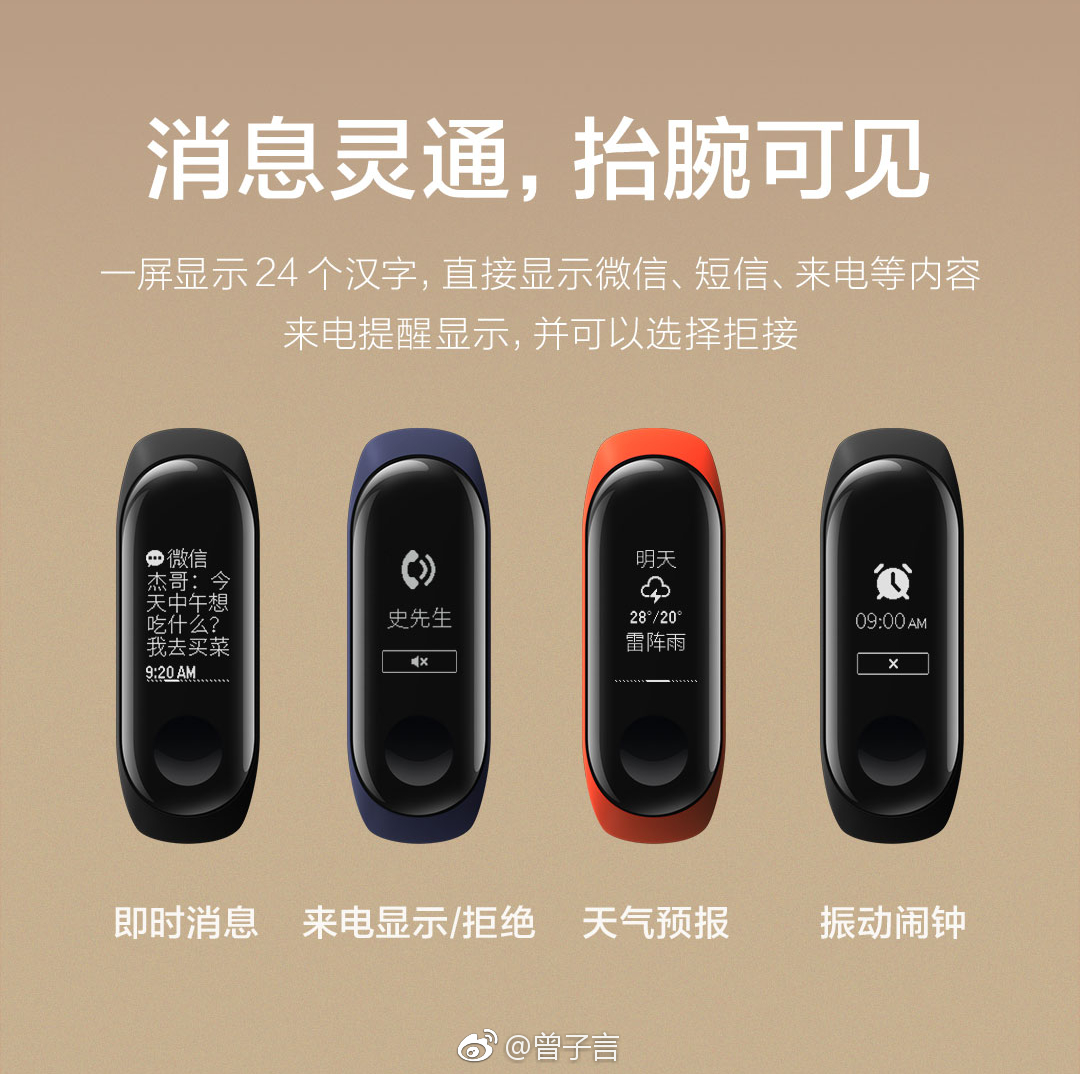
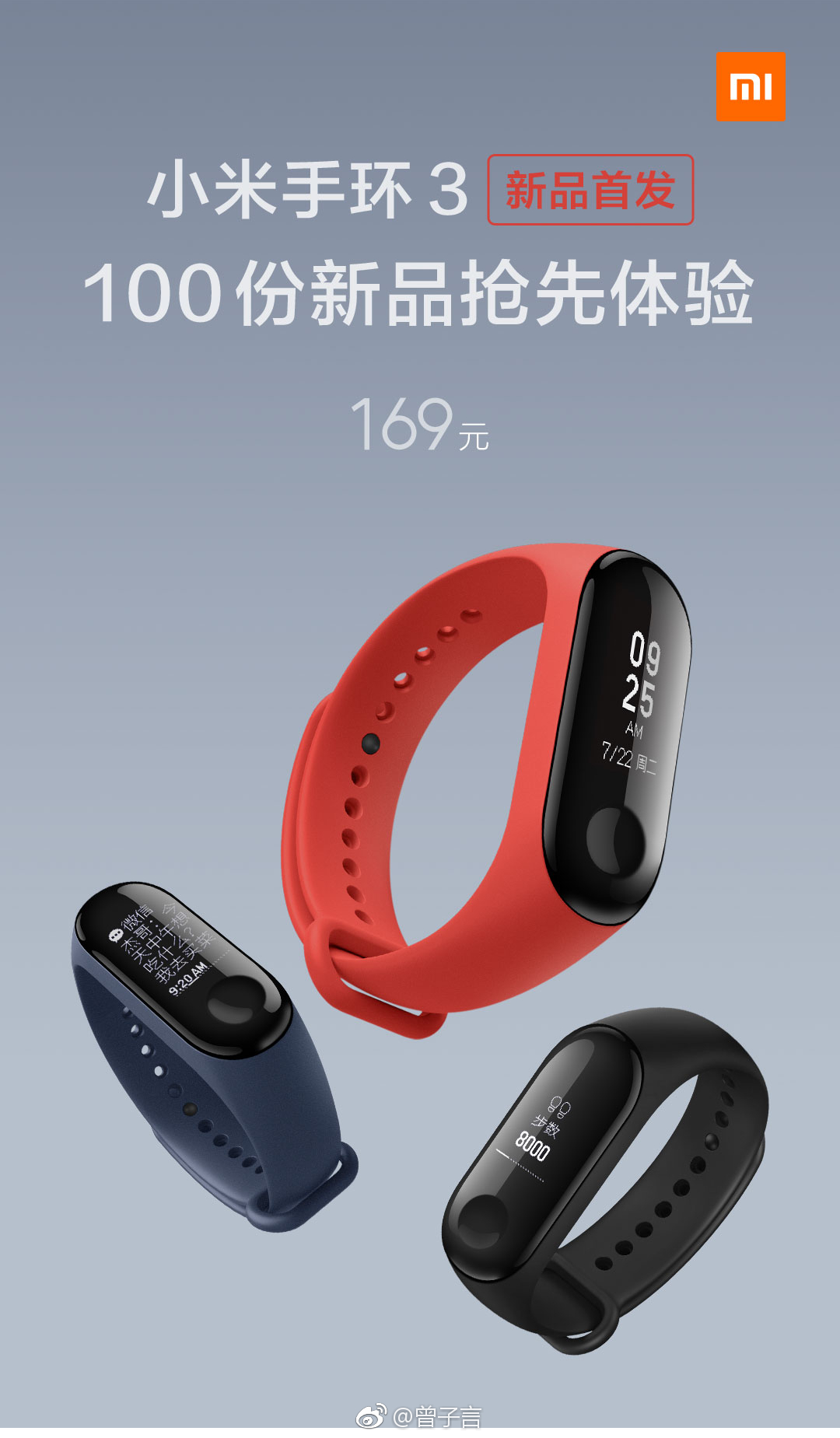
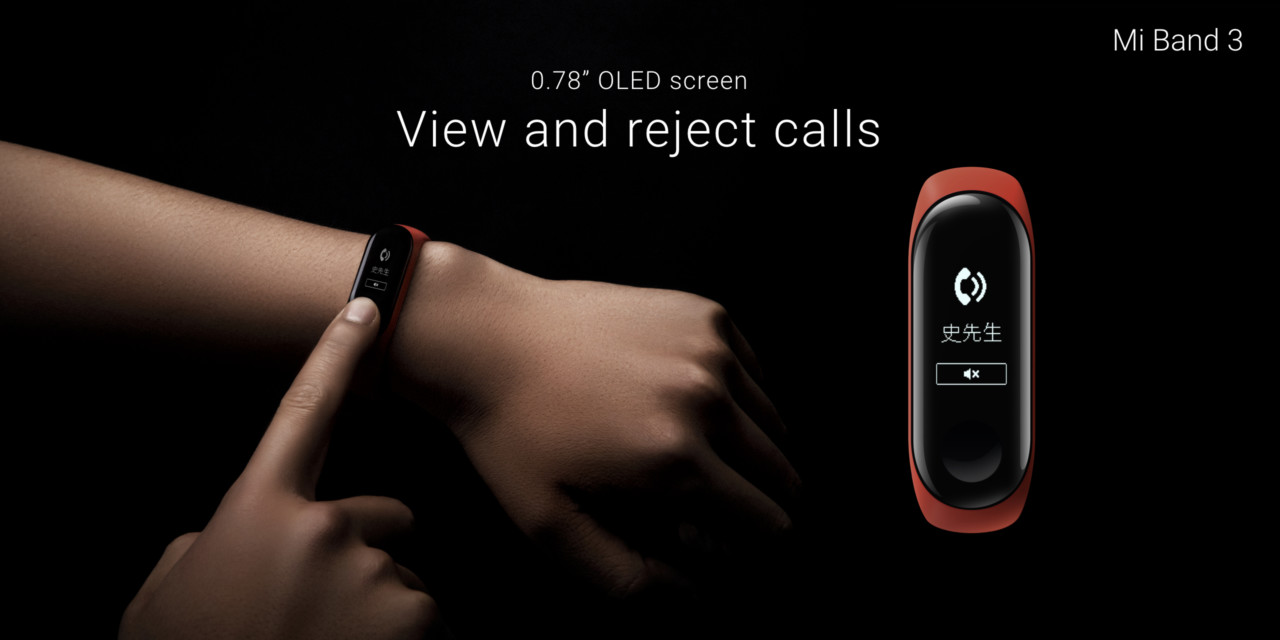
The Mi Band 3 comes with a 0.78-inch OLED capacitive touchscreen. The company says that the display is designed with an aim to offer a better experience for viewing / rejecting calls and messages.
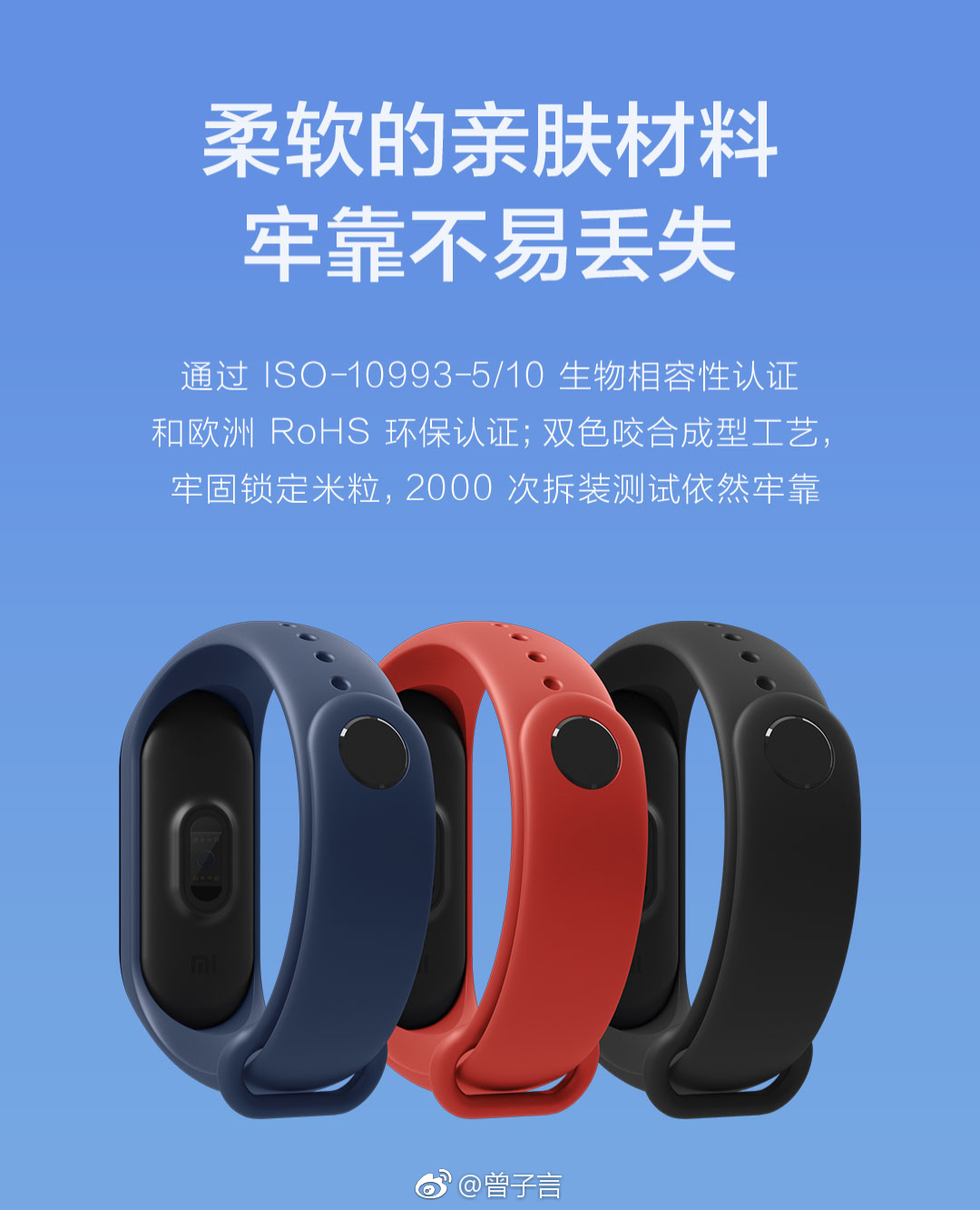
Earlier, Xiaomi’s CEO Lei Jun had said that the wristband of Mi Band 3 has been redesigned to ensure that the tracker doesn’t fall off from the strap, which a lot of users complained about for its predecessor.
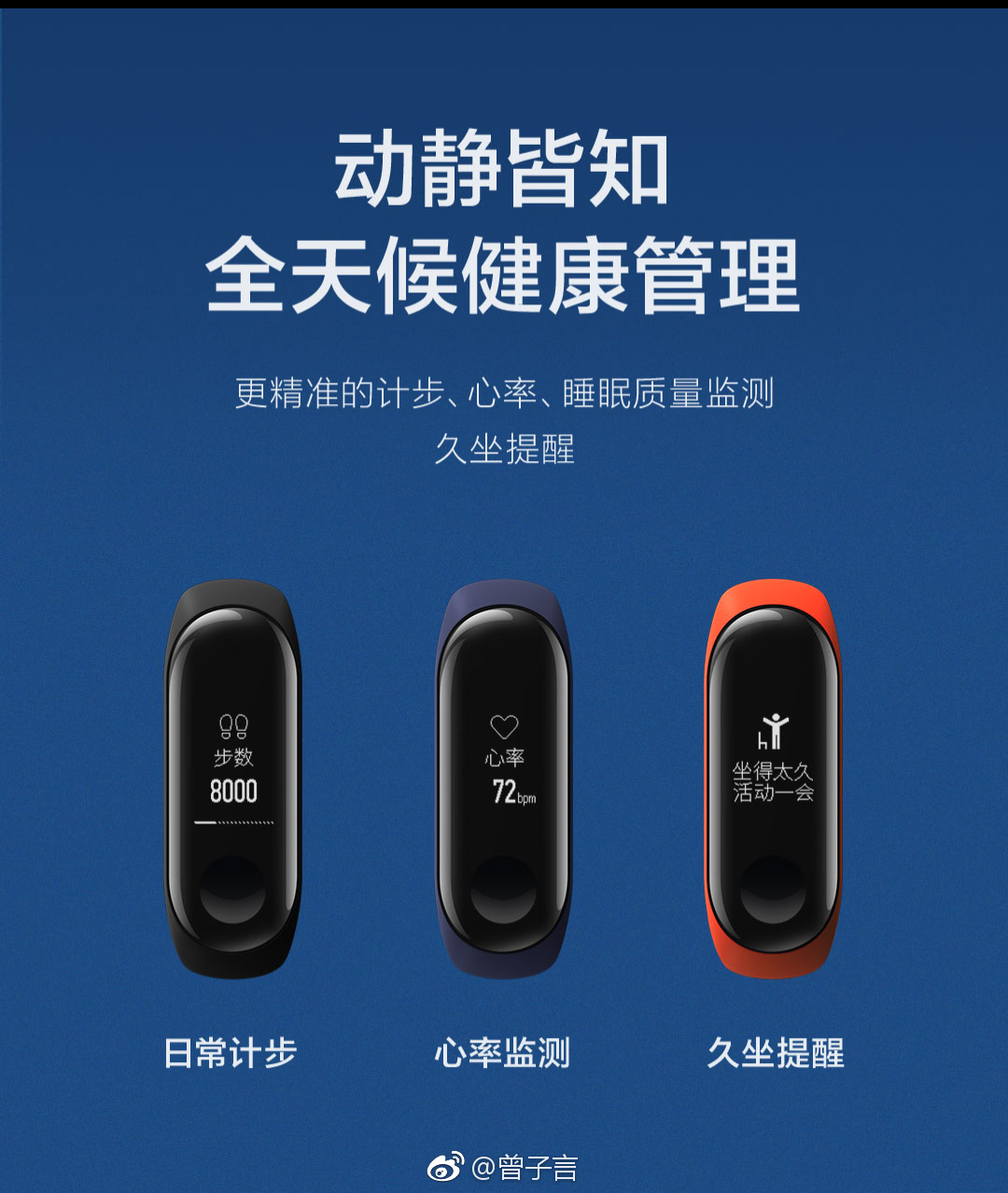
The device supports many new functions compared to the Mi Band 2. Along with the addition of viewing messages and call view/ reject feature, it can also provide weather forecast as well as an alarm clock, which can be turned off from the touchscreen. Other features include heart rate monitor, daily steps count and sedentary reminder as a part of the health management functions.
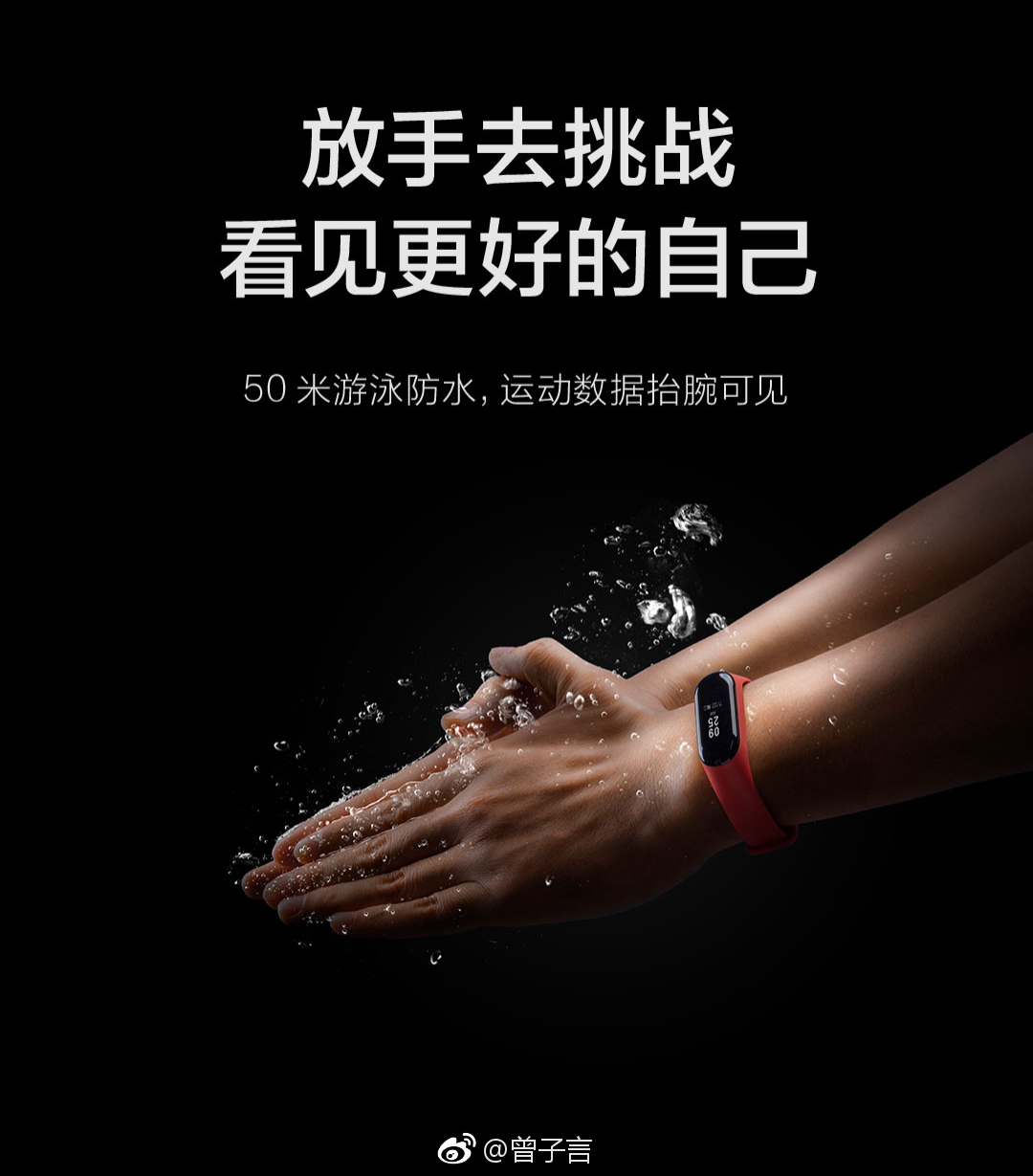
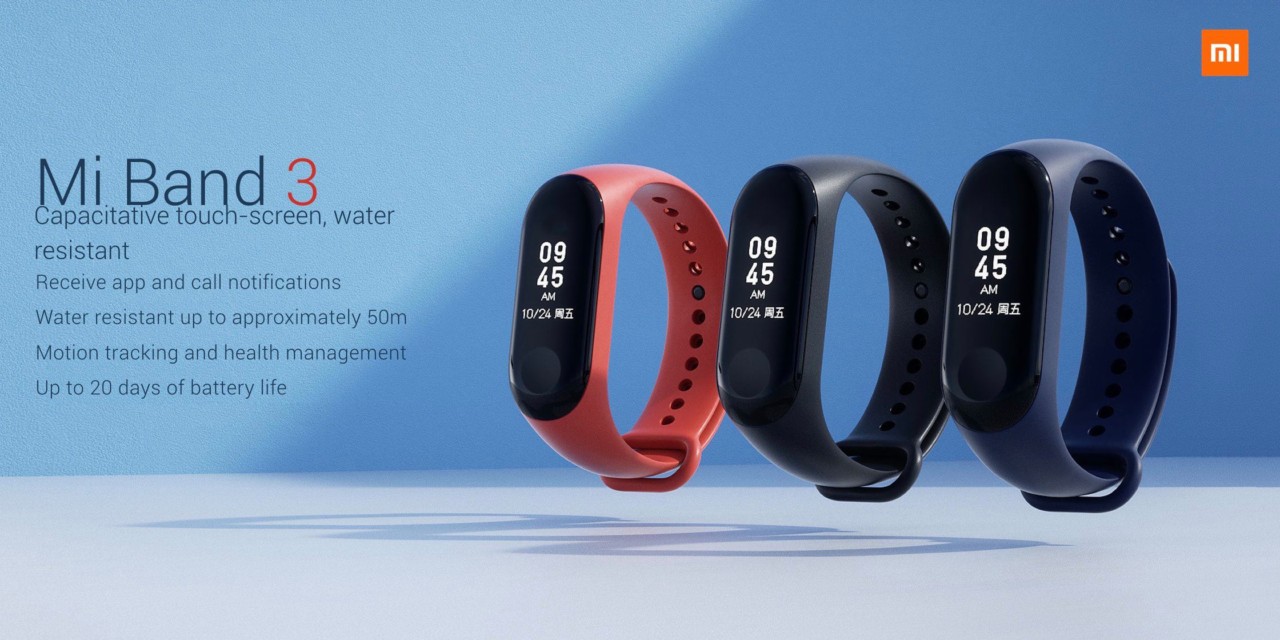
The Mi Band 3 comes with water and dust resistance, and is completely waterproof for up to 50 meters, ensuring that it works perfectly even when the user is swimming. The company has also announced another variant of the fitness tracker which comes with NFC support.
Earlier, there were reports suggesting that the Mi Band 3 will come with support for a tilt-to-wake feature. However, it is not yet confirmed if the device indeed supports such functionality.
One of the crucial thing for a wearable device is the battery life. The Xiaomi’s newly launched Mi Band 3 comes with an improved battery, which the company claims can last for up to 20 days on a single charge.
The Xiaomi Mi Band 3 has been priced at 169 Yuan, which roughly converts to $26. The NFC variant of the fitness tracker, which is named Mi Band 3 (NFC) is priced at 199 Yuan, which is roughly $31. It will be available in three color options — Black, Red, and Blue.
While the company has not revealed when the device will go on sale, we expect it to be available in China in the coming days. Currently, there is no information about Mi Band 3’s availability in other regions.
After weeks of teasers and leaks, Xiaomi has kicked off its 8th Anniversary event by making MIUI 10 official. Xiaomi has made some changes in the UI visually, to make it look cleaner and more optimised for full screen usage. The company also reveals that the OS is being used by over 190 million users worldwide.
Here are the notable updates in the new MIUI 10 OS:
New Recent Apps Menu
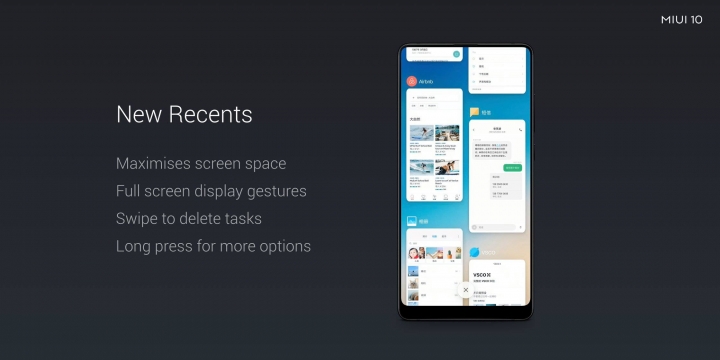
The new recent apps menu is designed to better utilise the full screen design on newer Xiaomi devices. Instead of arranging recent apps like a stack of cards, the app cards lie side by side on the screen. This enables you to see as much as six recent apps on the screen at one time. The company states that this provides more information to the users and also enables gesture friendly actions for a improved user experience. You can swipe to delete the app or long press for more actions.
AI
AI has become an important part of smartphones this year, and Xiaomi is making sure that its MUI 10 OS integrates this technology at the core level. Some of the highlighted advantages of AI in MIUI 10 is “up to zero” loading times by studying your app usage behaviour and anticipating actions. Another advantage is that MIUI 10 brings single camera bokeh mode to old Xiaomi smartphones including Xiaomi Mi 5 and Xiaomi Mi Note 2. So, after updating to the new OS, these old phones will be capable of capturing bokeh photos with its front and back cameras.
Portrait from Mi 5
New Driving Mode
MIUI 10 also brings a new driving mode which relies on voice commands to avoid distractions. Users will be able to easily use maps for navigation and attend phone calls, all with the help of simple voice commands in this mode.
Smart Home Manager
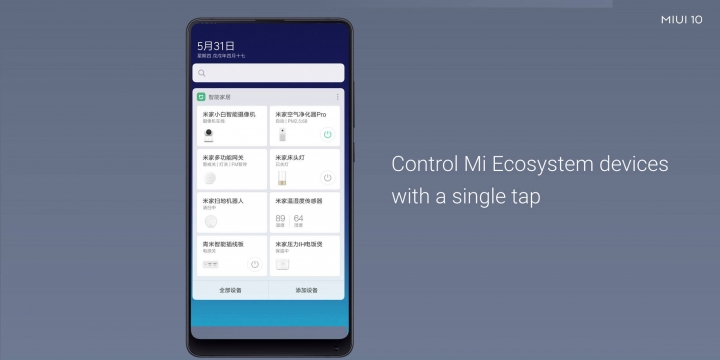
You can now easily control all your connected smart home gadgets right from the MIUI 10 interface. The controls for each smart home device is on its respective widget on the home screen. This makes it extremely easy to access and control each of the devices without having to open up the Mi Home app. There are over 590 brands that’ll support MIUI 10 and the company promises more additions.
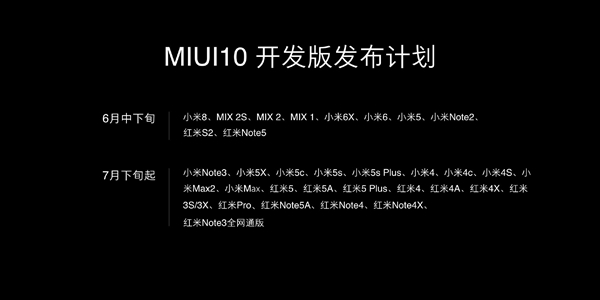
The MIUI 10 developer ROM will be available to download to over 33 Xiaomi smartphones. The first batch of Xiaomi devices including the Xiaomi Mi 8 will get the ROM in June and the second batch will get it in July.
A basic summary of the new features on MIUI 10 are shown in this video below.
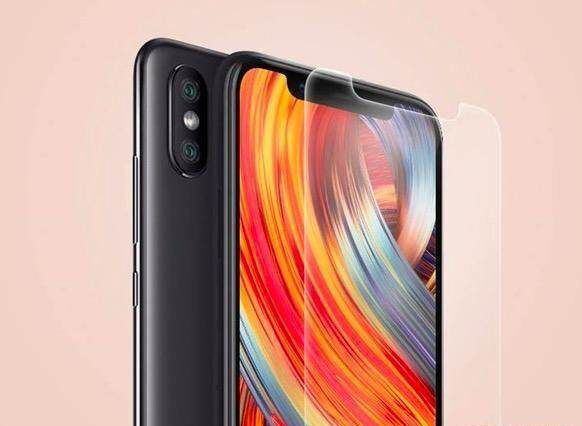
Through the 8th annual product launch event today, Xiaomi has introduced the Xiaomi Mi 8 as the 8th anniversary flagship phone to succeed the Mi 6 phone from last year. The Mi 8 has arrived as the most powerful Snapdragon 845. Also, it is blessed with amazing dual rear cameras and a display that offers a huge screen space. The Chinese manufacturer has also launched the advanced Xiaomi Mi 8 Explorer Edition and Xiaomi Mi SE alongside the Xiaomi Mi 8.
Design and Display
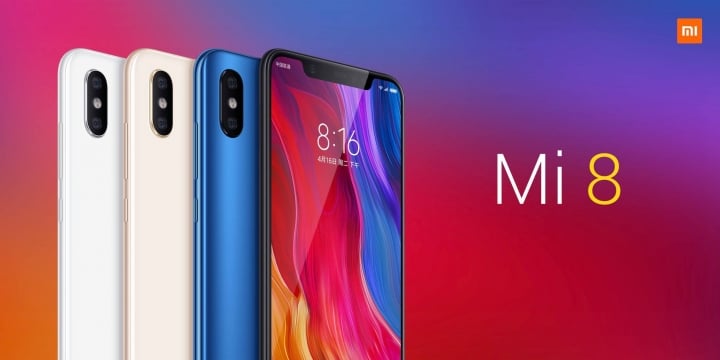
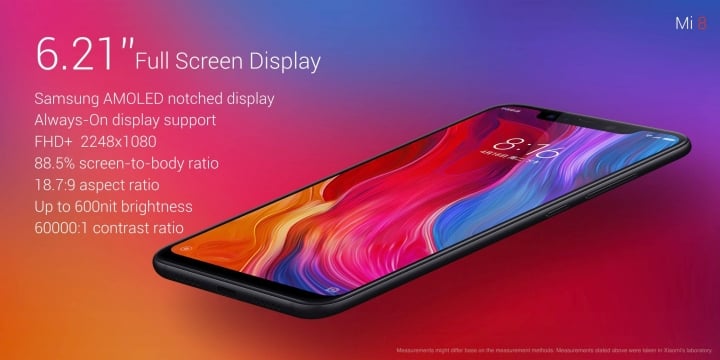
The Xiaomi Mi 8 is the first phone from the company to feature a notched display that offers an aspect ratio of 18.7:9. The backside of the phone is made out of glass that has a unique “water drop arc” design. It features a 7000-series aluminum frame. The device measures 154.9 x 74.8 x 7.6mm. The dimensions of the phone are equivalent to a 5.5-inch smartphone which makes it suitable for one-handed use. The color variants of the Xiaomi Mi 8 include Black, Blue, White and Gold.
The Mi 8 is fitted with an S-AMOLED screen that produces Full HD+ resolution of 2248 x 1080 pixels. It delivers a screen-to-body ratio of 88.5 percent. The AMOLED display is equipped with features like support for DCI-P3 color gamut, 60000:1 contrast ratio, up to 600nits brightness, HDR support, Eye protection mode, and Always-On Display.
Infrared Face Unlock and Fingerprint Scanner
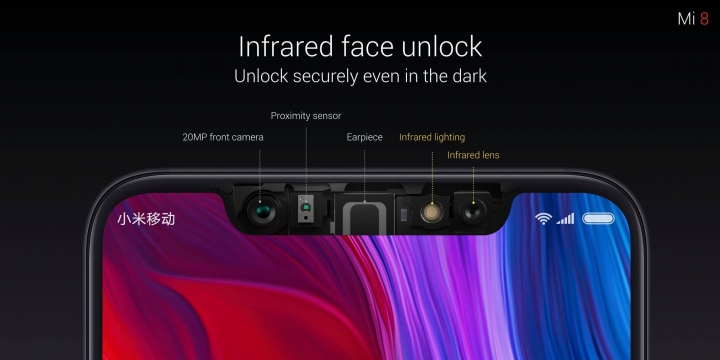
The notch present at the top of the display comprises of a 20-megapixel front-facing camera, proximity sensor, earpiece, infrared lighting and infrared lens. The advanced facial recognition feature has been dubbed as Infrared Face Unlock which indicates that it will offer better facial recognition than other Android phones with face unlock feature.
However, it is not as advanced as the Face ID feature on the Xiaomi Mi 8 Explorer Edition and iPhone X’s Face ID that offer 3D facial scanning. Hence, the Xiaomi Mi 8 also features a rear-mounted fingerprint scanner for added security.
Performance and Variants
The Snapdragon 845 chipset powered Xiaomi Mi 8 is the first smartphone to break average benchmarking score of 300,000 on AnTuTu. The handset recorded a stunning score of 301,472 on AnTuTu. The 64 GB, 128 GB and 256 GB storage editions of the phone respectively feature 6 GB of RAM. The handset receives power from 3,400mAh battery enabled with Quick Charge 4+ fast charging. The handset is preinstalled with Android 8.1 Oreo that is skinned with the latest MIUI 10.
Cameras and Connectivity Features
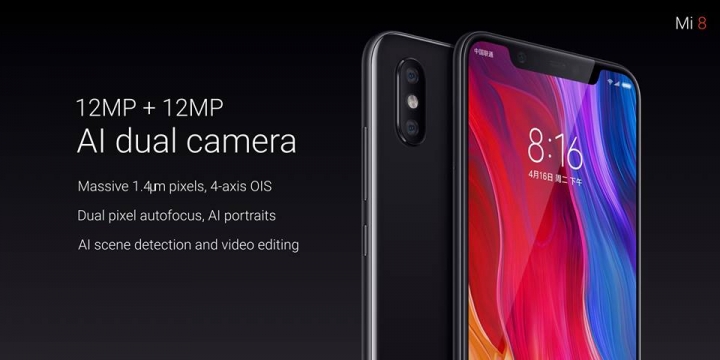
In terms of photography, the Xiaomi Mi 8 features a wide-angle Sony IMX363 12-megapixel primary sensor with f/1.8 aperture and 1.4micron pixel size and a secondary 12-megapixel S5K3M3 sensor with f/2.4 aperture and 1micron pixel size. The dual cameras offer features like 4-axis optical image stabilization, optical zoom and dual pixel autofocus.
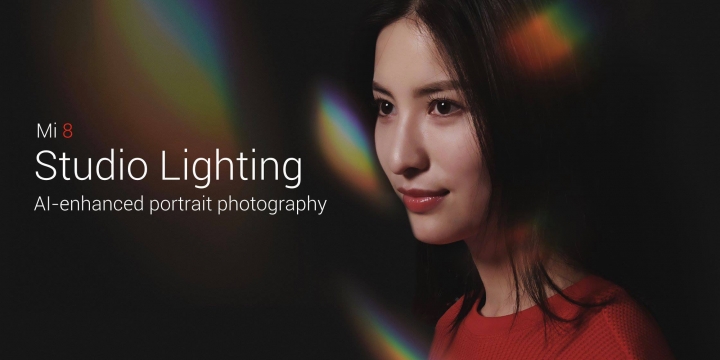
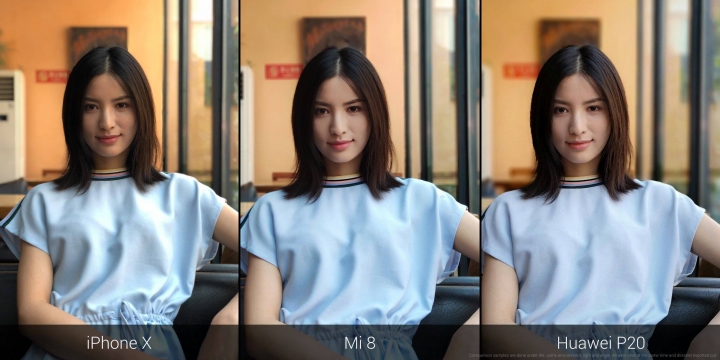
It is packed with some exciting AI features for photography. The Studio lighting portrait photography which enhances the appeal of the subject to appear like a celebrity. The dual rear cameras also offer AI scene detection and video editing. In DxOMark mobile photography platform, the Mi 8 has salvaged highest score of 105 for photo shooting and its overall DxOMark score is 99. Here are some camera samples that were shown at the unveil event:
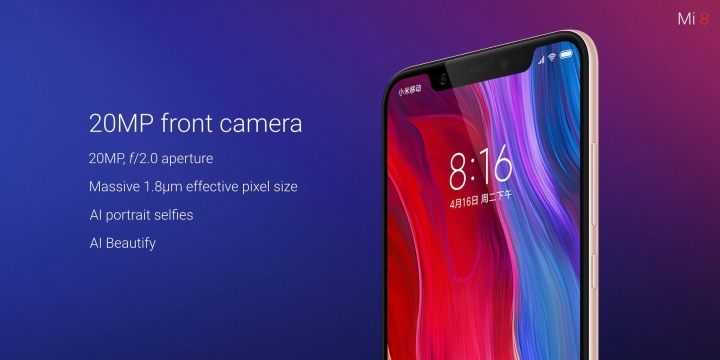
Coming to the front camera of the Mi 8, it includes a 20-megapixel sensor with f/2.0 aperture with a massive pixel size of 1.8micron. It supports AI portrait selfies and AI Beauty.
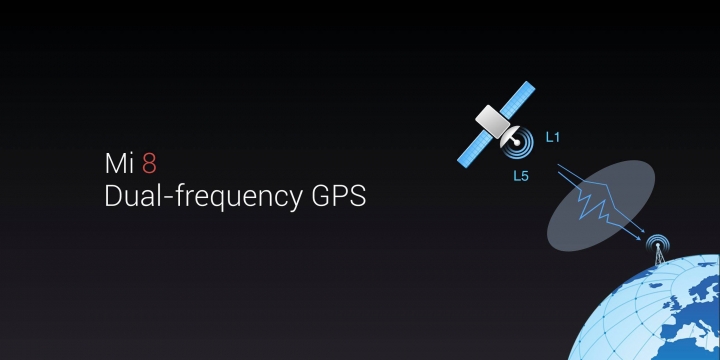
The Xiaomi Mi 8 is the world’s first smartphone to come with dual-frequency GPS. This helps in reducing inaccuracies in GPS tracking caused due to interfaces like buildings and signal delays. The other features of the Mi 8 include dual-SIM support, 4G VoLTE, Wi-Fi 802.11ac NFC, Bluetooth 5.0 and 3.5mm audio jack.
Pricing and Availability
The 64 GB, 128 GB and 256 GB editions of the Xiaomi Mi 8 are respectively priced at 2,699 Yuan (~$421), 2,999 Yuan (~$468) and 3,299 Yuan (~$515). The pre-orders of the black and white editions of the smartphone will start today at 6 PM (local time) in China with a deposit of 100 Yuan (~$16). Its shipment will begin from June 4.
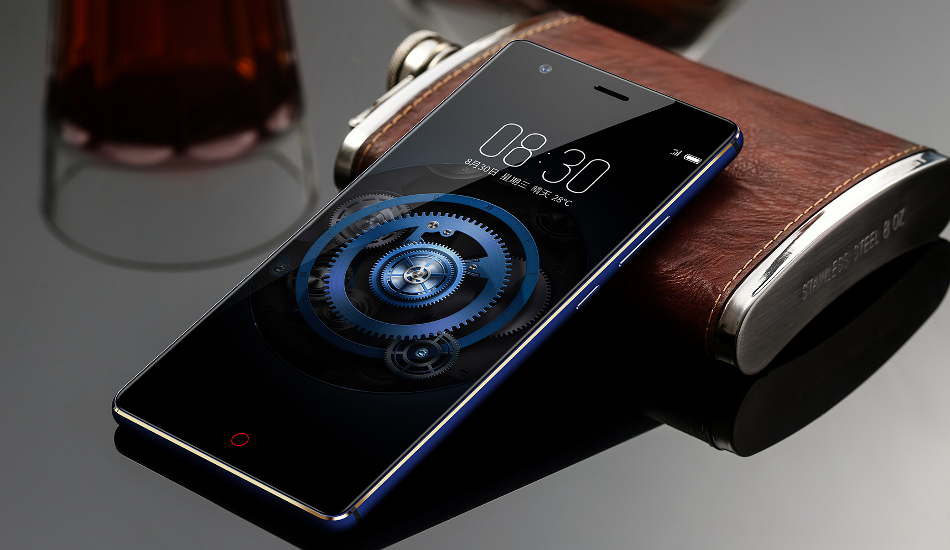
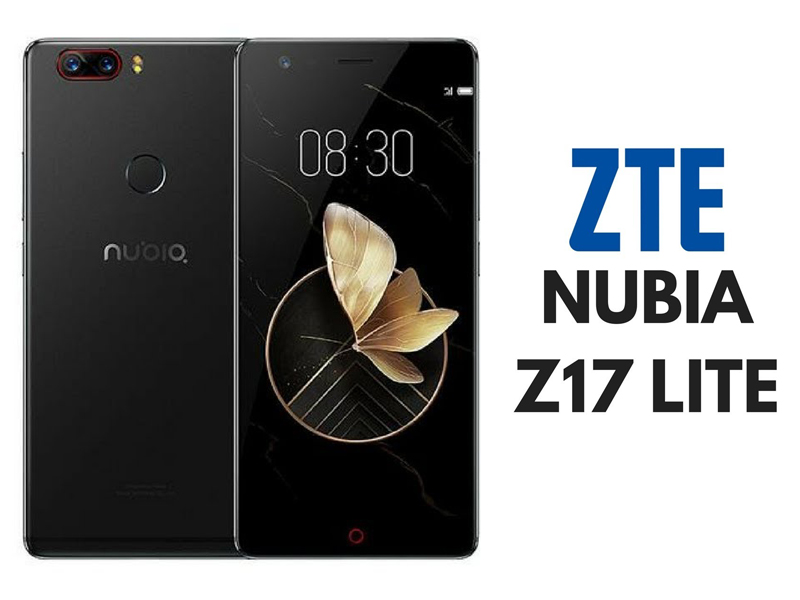
The ZTE Nubia Z17 Lite was made available to the public in September last year. As expected, the phone garnered huge popularity among smartphone enthusiasts who were restlessly waiting to get their hands on a big screen smartphone without breaking the bank.
Bearing that in mind, Banggood is offering a noteworthy 40% off on the global version of the Nubia Z17 Lite smartphone. As a result, you can now preorder the well-received phone by shelling out just $199.99.
Banggood normally sells the black-gold and blue color versions of the Nubia Z17 Lite smartphone for $333.97. As part of its latest promotion, the Chinese online store that guarantees the best bang for your buck is giving cost-conscious buyers an opportunity to preorder the phone without burning a hole in their pocket.
But if you’re on a tight budget and aren’t willing to spend even that kind of money on a smartphone, we’ll explain how you can get an additional discount on the phone’s already lowered retail price. You can save an extra $30 simply by applying discount coupon ‘BGNZ17L’ at the time of checking out.
In other words, you can reduce your grand total to only $169.99 just by using the aforesaid coupon code while checking out. Note that the coupon code is valid for both black-gold as well as the blue color versions of the smartphone.
The ZTE Nubia Z17 Lite is quite a bargain at just $169.99, given that it boasts a broad range of awe-inspiring specs and features. The phone sports a big 5.5 inches IPS LCD capacitive touchscreen with a screen resolution of 1080 x 1920 pixels, an aspect ratio of 16:9 and Corning Gorilla glass for added protection.
The phone packs a powerful Qualcomm MSM8976 Pro Snapdragon 653 processor along with an equally robust Adreno 510 GPU, under the hood. The global version of the Nubia Z17 Lite smartphone comes with 6GB of RAM and 64GB of non-expandable onboard storage.
On the photography front, the Nubia Z17 Lite smartphone houses a 13-megapixel + 13-megapixel dual camera setup with the 5-element lens, PDAF, Sapphire Glass lens, and ƒ/2.2 aperture on the back. Apart from that, there’s a 16-megapixel front shooter for selfies and face-to-face video chatting.
The Nubia Z17 Lite runs Nubia UI 5.0 based on Android 7.1 Nougat operating system and draws its juices from a 3200mAh, Lithium-ion polymer battery. The phone’s dimensions are 152.75mm X 72.55mm X 7.60mm and it weighs in at 168 grams.
You can follow this link if you’d like to check out the full specification and take advantage of the discount before it ends. Note that the coupon code is also likely to expire soon.
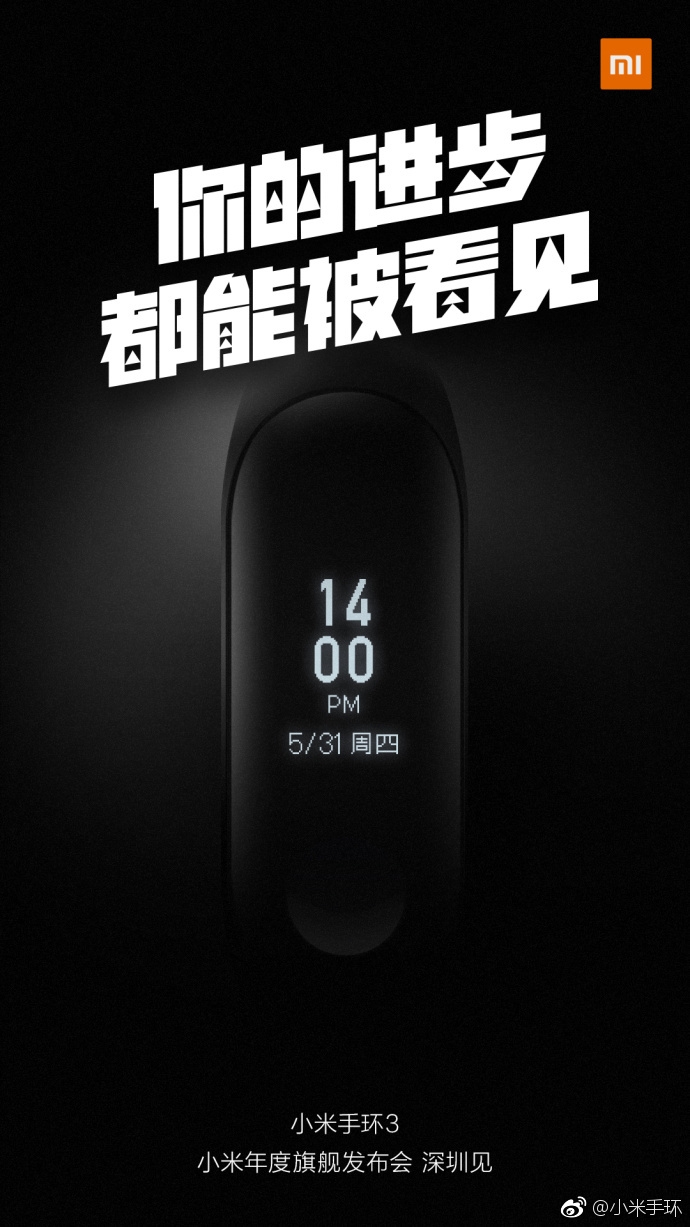
In just a few hours, Xiaomi will launch its flagship smartphone Mi 8, along with Mi 8 SE, MIUI 10, and Mi Band 3. Now, ahead of this official launch, the Mi Band 3’s poster has surfaced online, revealing the design of the fitness tracker and hinting at its features.
From the looks of the fitness tracker, it seems similar to its predecessor. However, the company’s CEO Lei Jun had previously revealed that the wristband of Mi Band 3 has been redesigned to ensure that the tracker doesn’t fall off from the strap, which a lot of users complained about for its predecessor.
The poster has a headline that reads “Your progress can be seen”, hinting about the information that can be available on the screen of this new fitness tracker. Just like the Mi Band 2, its successor is also expected to come with an OLED display and is also reported to support touchscreen. The display is about 0.78-inch and has a convex shape.
Recently, a few posters of the device were leaked online, revealing some of the features of the fitness tracker. Along with displaying the health and fitness related information, such as sleep and heart rate, the device is also expected to come with improved tracking for sports activities.
Further, it is also expected to provide notifications and other functions once the device is connected to a smartphone. It will allow users to read instant messages, see the Caller ID and get the option of muting the call, among others. There are reports indicating that the wearable device will also come equipped with a new Tilt to Wake feature.
The wearable device will have a waterproof build that can withstand being submerged under a 50m water depth. The fitness tracker also said to come with an improved 20 days battery life which can stay on for up to 20 days.
The Xiaomi Mi Band 3 will be priced at 169 Yuan, which roughly converts to $26. The pricing of the fitness tracker is a tad bit higher than its predecessor, which was priced at 149 Yuan (approx. $23).
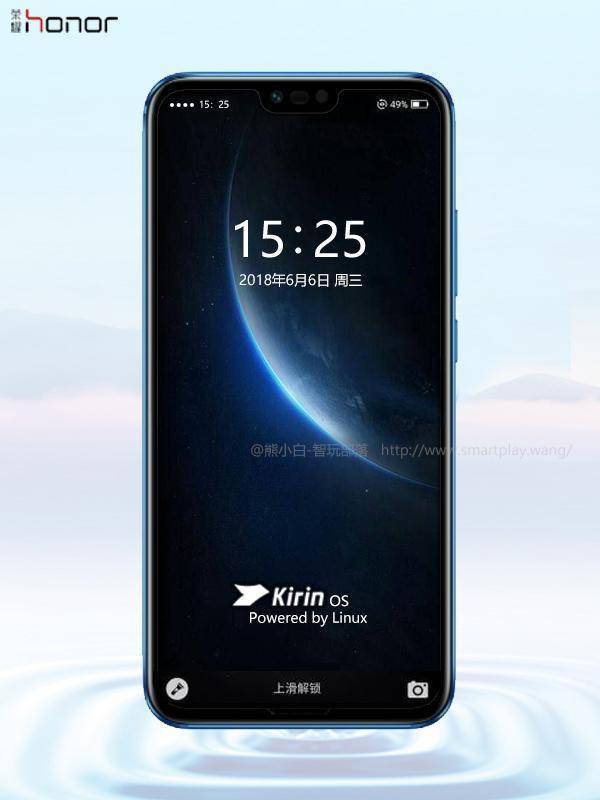
Huawei’s sub-brand Honor has confirmed that it will be launching the Honor Play smartphone on June 6. It is said to be technologically advanced phone that promises to deliver groundbreaking experience. However, the company is yet to confirm on what sort of advanced features will it be offering on it. It is speculated that the smartphone will offer AI-based 4D gaming and AI camera features. Huawei’s chairman Yu Chengdong has described the speed of the Honor Play by using the metaphor “flying in the sky.” New images that surfaced on suggest that the Kirin SoC of the phone will be assisted by Kirin OS.
Following the recently imposed 7-year ban on ZTE that prevents the Chinese firm from exporting components and software from the U.S., Huawei has been working on its own operating system claims the tipster who has shared the below images. There is no confirmation on whether the smartphone shown below is the Honor Play phone. The smartphone can be seen sporting a notched display. Also, the June 6 date present on the screen happens to be the launch date of Honor Play. Its mentioned at the bottom of its screen that it is running on Kirin OS that is powered by Linux.
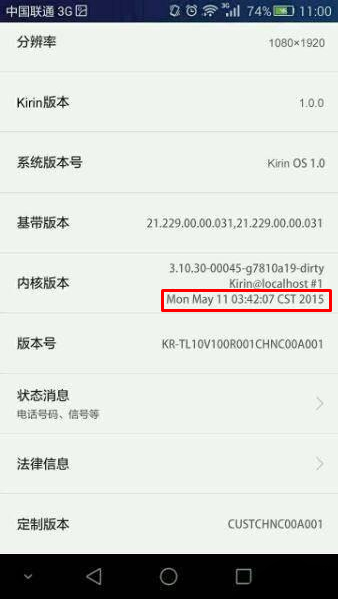
The other image reveals that the handset supports Full HD resolution of 1920 x 1080 pixels which is quite odd considering the smartphone shown above has a notched display. The version of the operating system that is loaded on the phone is mentioned as Kirin OS 1.0. It seems to be an old screenshot as the date 2015 is mentioned in the kernel version.
Nothing much is known on the specs and features of the Honor Play. Rumors have it that it could be equipped with a 5G modem. Its launch event will be held at Beijing University Gymnasium. The very same platform will be also used another upper mid-range phone called Honor 9i.
The Honor 9i is expected to arrive with a notched display design that will support an aspect ratio of 19:9. It will be featuring 5.84-inch screen that will support FHD+ resolution. It is speculated to be fueled by the Kirin 960 chipset.
It is expected to arrive in storage models like 32 GB, 64 GB and 128 GB and all of them are likely to feature 4 GB of RAM. For more storage, it will feature a microSD card. The handset will be loaded with Android 8.1 Oreo and EMUI 8 skin. It will be fueled by 2,900mAh battery. For photography, it features 13-megapixel + 2-megapixel dual camera setup and a frontal shooter of 16-megapixel.
Tencent has teamed up with Epic Games and other collaborators like 3Lateral, Cubic Motion and Vicon to unveil a digital human which is christened Siren. The digital piece of technology is a high-fidelity, real-time virtual “human,” that is designed as a more effective, timesaving alternative for creating hyperrealistic video game characters. The character was first unveiled at the Game Developers Conference (GDC) in March but just got showcased in China.
This is different from digital simulations which are noticeably fake, in that with ‘Siren’, the collaborators hope to bridge the gap between CGI and real life to produce models so lifelike, you might not be able to tell the difference. Siren is modelled after Chinese actress Bingjie Jiang and has the ability to mimic even the slightest of body and finger movements, including facial expressions. It moves in sync with the person wearing the motion capture body suit at 60 frames per second.
Interestingly, the character looks so real facially. ‘Siren’ even has beauty “imperfections” like pimples and visible pores. As a result, it is difficult to differentiate the character from the real actress from whom it was created. Indeed the technology holds huge potential. Just imagine future television shows using ‘Siren’-like models in place of actual actors. Yes, that sounds awesome but if the technology lands in the wrong hands, it could spur a whole, uncanny generation of fake news. Check out the demo from the video below.
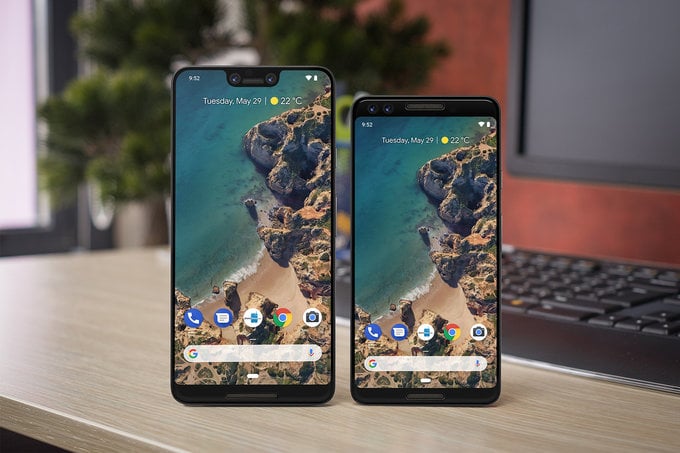
For the first time, Google’s hardware partner for its smartphone will not be a “popular manufacturer”. Instead, it will be working with Foxconn‘s FIH Mobile for the Pixel 3 and Pixel 3 XL. The info comes from documents made available to Winfuture.de.
Google’s first hardware partner was HTC and they worked on multiple devices including last year’s Pixel 2. Google also worked with Samsung, LG, ASUS, Motorola, and Huawei during its run with the Nexus line.
When Google launched the first Pixel, it no longer put the name of the hardware partner on the device. This time – it was made by Google. The same thing happened last year for the 2nd gen Pixel phones and will be the tradition going forward.
The documents not only reveal info about the hardware partner but also about the devices. The Pixel 3 and Pixel 3 XL will be powered by Qualcomm’s Snapdragon 845 processor. The larger model which was referred to as Google GB1 is said to have a “new display hardware”, new cameras, and sensors. The Pixel 3, referred to as Google GC1 will most likely come with specs present in other flagships.
A leaked photo from yesterday showed the tempered glass for both phones and revealed that the Pixel 3 XL will come with a notch. This may be the “new display hardware” referred to in the document. Other specs are still unknown.
Xiaomi Mi Band 3’s full specifications and pictures have just appeared on China’s Weibo showing us the entire package right before it is launched. Xiaomi is expected to unveil the Mi Band 3 alongside the Mi 8 and Mi 8SE on Thursday (May 31) which is just a couple of hours away.
The leaked official posters feature the design as well as the configuration of the Mi Band 3, giving us a quick preview of the fitness band. The Mi Band 3 is confirmed as coming with an OLED display which has a convex shape. It looks quite curved and fuses perfectly with the strap. The display is a 0.78-inch one. Talking of the straps, it seems buyers will get the various colours options right from the go. The Band 3 will come with Black, Blue, Pink.
The Mi Band 3 display is a touchscreen display and this brings more functions onboard the device. The Mi Band 3 will let users rear instant messages, see the Caller ID and get the option of muting the call. Other functions include Weather forecast, alarm clock which can be turned off from the touchscreen. The Band 3 feature also include heart rate monitor, daily steps count and sedentary reminder which are all features of the Mi Band 2.
Further, the wearable device will feature a waterproof build that can withstand being submerged under a 50m water depth (5 ATM). The fitness tracker also comes with an improved 20 days battery life which can stay on for up to 20 days.
The device will eventually be sold for 169 yuan (~$26). Of course, that will be its price in China but it is still impressive considering that it is just a tad higher than the Mi Band 2’s price.
A few days ago, we reported that Snapdragon 845-powered Windows 10 on ARM devices were coming soon. There was even a Geekbench listing that showed the chipset was clocked higher than the regular SD845. New reports say that chipset is actually the Snapdragon 850.
According to Winfuture.de, Qualcomm will release the Snapdragon 850 early but there is a catch. The SD850 chipset is just a higher clocked Snapdragon 845 (just the way the SD821 is a higher clocked version of the 820) but one that will be used for Windows 10 devices powered by ARM.
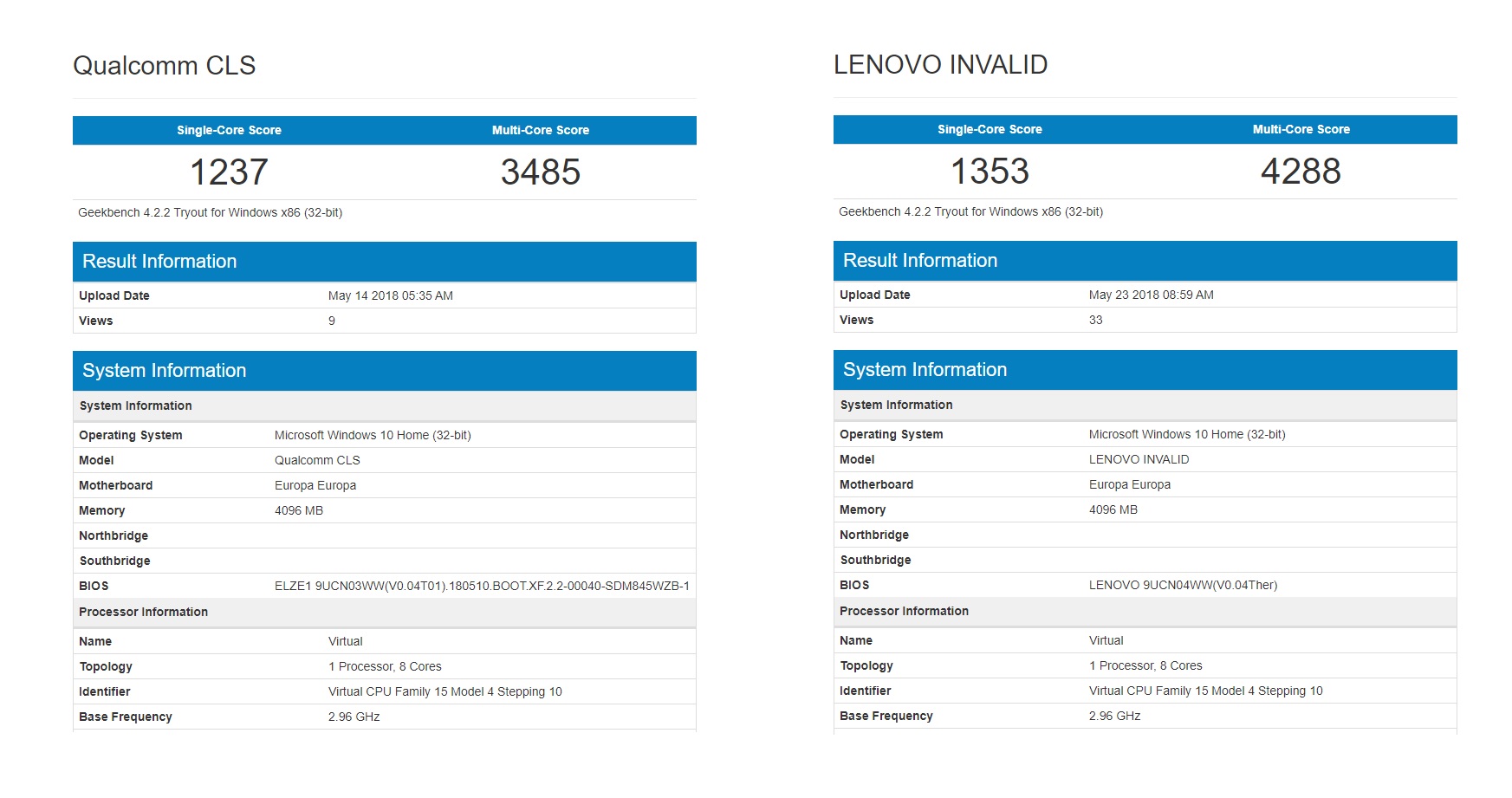
Although the chipset will be clocked higher, it will come with the same X20 modem and offer Gigabit LTE. Below are Geekbench results of a test device from Qualcomm and one from Lenovo.
New Devices That Will Be Powered By The Snapdragon 850 Chipset
Winfuture.de was able to get info on the devices in development that will come with the new chipset. HP is said to be working on its second device which is codenamed Chimera 2. The Snapdragon 835-powered HP Envy X2 was codenamed Chimera. Production for the Chimera 2 will be handled by Taiwan’s Quanta.
Lenovo is also working on a new device codenamed ELZE1. Its first ARM PC, the Lenovo Miix 630 is still listed as coming soon. Taiwanese ODM, Compal, is said to be handling production for Lenovo. ASUS is also working on a new device codenamed Thanos.
While the aforementioned manufacturers are returning for the second-gen models, a new player is joining the game. It has been reported that Dell is also making a Windows 10 on ARM device.
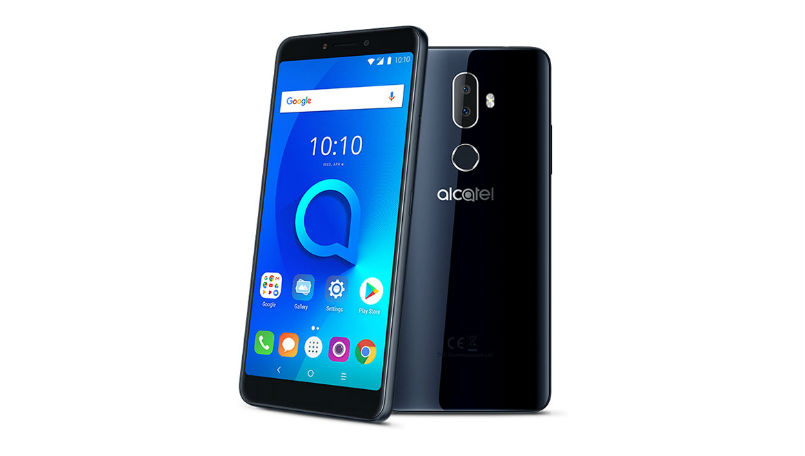
Alcatel has launched its new smartphone — Alcatel 3V in India at a launch event in New Delhi. The smartphone was originally unveiled at Consumer Electronics Show (CES) 2018 in Las Vegas and were launched at Mobile World Congress 2018 in Barcelona.
The Alcatel 3V will be available for purchase in India exclusively through online marketplace Flipkart and will go on sale from Thursday, i.e. 31st May. The smartphone has been priced at Rs. 9,999, which roughly converts to $148.
The smartphone features a 6-inch Full-HD+ IPS display with screen resolution of 2160 x 1080 pixels, 18:9 aspect ratio, and 2.5D curved glass on top. Under the hood, the device is powered by MediaTek MT8735A processor, coupled with 3GB of RAM. It’s noteworthy that the global variant comes with 2GB RAM.
It packs 32GB of inbuilt storage while the global variant comes with 16GB of internal storage. There’s also a microSD card slot, which enables users to further expand the phone’s storage capacity up to 128GB. It also has a fingerprint sensor on the back panel.
The Alcatel 3V sports a dual camera setup at the back, consisting of a 16-megapixel primary sensor and a 5-megapixel secondary camera sensor, along with an LED flash. On the front side, there’s an 8-megapixel snapper with LED flash for taking selfies and video calling. The camera comes with various features, such as Bokeh, EIS, PDAF, ZSL, Face Beauty, a Social Mode, and Instant Collage, amongst other features.
The smartphone also supports Face Key, which is the company’s name for face recognition based phone unlocking. Connectivity options on the Alcatel 3V include 4G VoLTE, Wi-Fi 802.11 a/b/g/n, Bluetooth v4.2, GPS/ A-GPS, Micro-USB 2.0, and 3.5mm headphone jack. Running on Android 8.0 Oreo operating system out of the box, the smartphone is powered by a 3,000mAh battery.
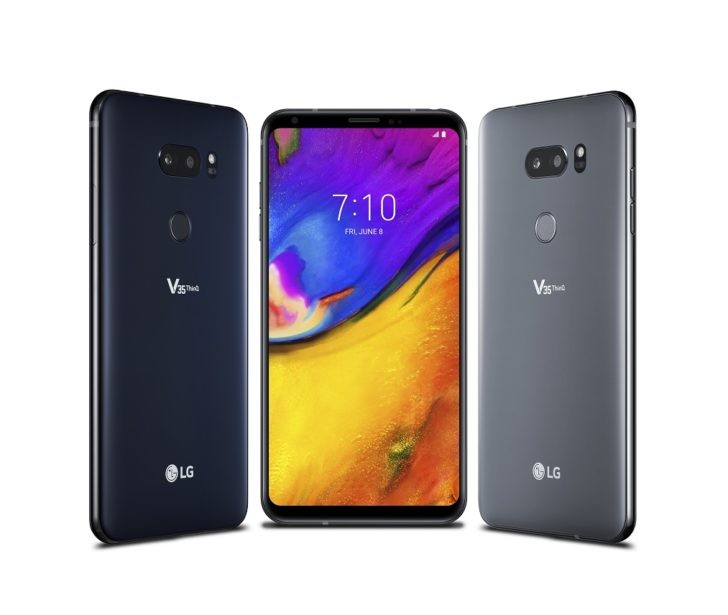
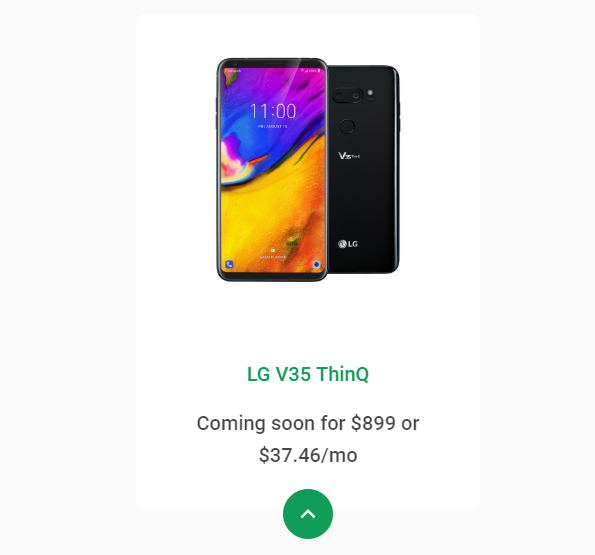
We don’t know what is going on at LG but its new release schedule seems like a bad idea. After launching the LG V30S ThinQ at MWC this year and following it with the G7 ThinQ earlier this month, LG has announced yet another flagship – the LG V35 ThinQ.
Releasing three flagships phones in 5 months doesn’t seem to be the right way to go if you say you plan to launch phones “when it is needed”. Nevertheless, if you are undecided about LG’s other two flagships, then you should read on and see if the V35 ThinQ ticks your boxes.
LG V35 ThinQ Design
When it comes to design, the V35 ThinQ shares a striking resemblance to the V30S ThinQ. There really isn’t any physical difference that sets them apart. You could simply say the V35 ThinQ is the V30S ThinQ with a Snapdragon 845 processor.
LG V35 ThinQ Specs
The V35 ThinQ has a 6-inch OLED QHD+ display with HDR. If you hate the notch on the LG G7 ThinQ, it is missing here. If you like it….. Since this is available on AT&T, this should be great for the network’s DirecTV service.
Inside the device is Qualcomm’s Snapdragon 845 mobile platform and it is paired with 6GB of RAM and 64GB of expandable storage. There are two 16MP cameras on the rear. One is a super wide-angle sensor with a f/1.9 aperture, and the other is a standard sensor with a f/1.6 aperture. At the top left corner of the display is an 8MP wide-angle selfie camera.
The LG V35 ThinQ has AI features baked into its camera software. So you get all the AI features of the other two flagships such as scene recognition, Google Lens, and Super Bright Camera mode.
The phone runs Android 8.0 Oreo, has a Hi-Fi Quad DAC, 3D surround sound, face recognition, a rear-mounted fingerprint scanner, wireless charging support, and an IP68 rating. It is also MIL-STD 810G compliant. It draws juice from a 3,300mAh battery with Quick Charge 3.0 support.
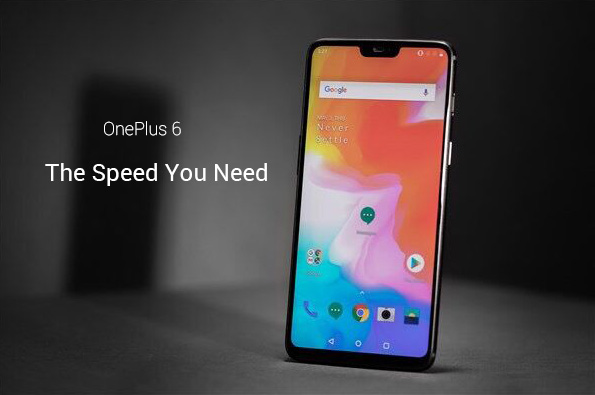
OnePlus first introduced the Face Unlock feature on last year’s OnePlus 5T. The phone lacked depth sensing and 3D face mapping so OnePlus utilized a custom solution developed by a Chinese security company called SenseTime which has a pedigree in facial recognition.
The OnePlus 5T’s Face Unlock feature was discovered to be unsecure as it was discovered to lack the ability to differentiate a real face from a printed photo despite being capable of unlocking the device in record time. Some users were able to register a face from a printed photo but not actually unlock the device. The feature was thus included on the OnePlus 6 and it seems the flaw still lingers and is even worse.
A Twitter user @rikvduijn posted a video on Tuesday which showed the OnePlus 6 being unlocked with a paper cutout of his face. Interestingly, the method apparently works with a black and white photo as well. The video captures one of the user’s friends holding a photo of his face and showing it to the OnePlus 6. This instantly granted the user access to the OS, meaning the Face Unlock feature can be fooled.
OnePlus is quick to respond to this flaw and the response is really not different from what we know about Face Unlock. The statement released by the company stated thus; “We designed Face Unlock around convenience, and while we took corresponding measures to optimise its security we always recommended you use a password/PIN/fingerprint for security. For this reason, Face Unlock is not enabled for any secure apps such as banking or payments. We’re constantly working to improve all of our technology, including Face Unlock.”
Ahead of the release of the Mi 8 (and Mi 8 SE) tomorrow, Xiaomi’s CEO Lei Jun has released camera samples of the phone. The photos are of the same location (probably Beijing Skyline) but at different times of the day.
The first photo was taken during the day and highlights the HDR feature of the camera. The second was taken at sunset and the third which was taken at night shows us how the camera fares in low-light.
[envira-gallery id=”193887″]
The Xiaomi Mi 8 will come with dual rear cameras and is reported to be Xiaomi’s best camera phone to date. A hands-on review will confirm if that statement is true. The cameras will have AI features that will help improve performance and fine-tune settings for the best results.
OnePlus managed to carve a niche for itself with its “flagship killer” smartphones. In the year 2015, the company branched out and launched a mid-range smartphone named OnePlus X. However, in 2016, the company said that it’s done making mid-range smartphone and won’t be releasing the successor of the OnePlus X.
As a result, the company has been launching only flagship smartphones from last few years. Since the company launched OnePlus 3, it has been launching two “flagship killer” smartphones every year. After OnePlus 3, the company launched OnePlus 3T, OP5, OP5T and most recently, it launched the OnePlus 6.
Now, Pete Lau, CEO of OnePlus has confirmed that the company will stick to its current plan of launching only flagship smartphones and has no plan to launch a mid-range smartphone at least until 2021. So, for the next three year, there won’t be a successor of the OnePlus X or any other mid-range phone from the China-based company.
OnePlus has decided to focus on its flagship phones and attempts to shift any/all remaining stock ahead of the next release. The company is avoiding having old handsets be sold alongside its new ones, as the demand for the older devices isn’t high enough to warrant them to continue making along with its newer ones.
Sticking with its policy of just one smartphone at a time, the company is obviously limiting its growth but the overall strategy seems to be working for the Chinese manufacturer. OnePlus was the best-selling premium smartphone brand in India in the first quarter of this year. The OnePlus 5T was placed second in terms of flagship shipments in India, only behind the combined shipments of Galaxy S9 and S9 Plus from Samsung.
Even by the company’s internal metrics, the OnePlus 5T was a big success, says Pete Lau. OnePlus, like many other manufacturers, uses the net promoter score (NPS) to measure consumer satisfaction for a product. The OnePlus 5T had an NPS of 78, the highest for any OnePlus smartphone so far.
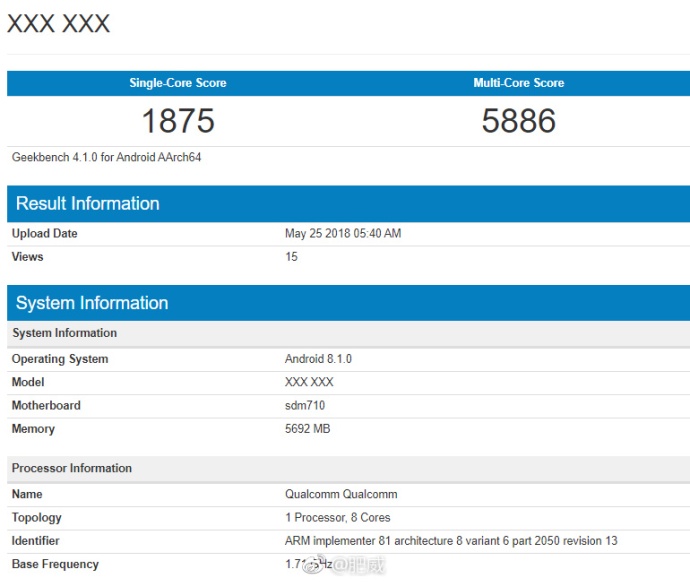
Recently, the Mi 8 SE was tipped to launch with a Snapdragon 710 chipset as well as the Vivo NEX. Not much is known about the Qualcomm processor but it is a midrange chipset which is obviously more powerful than the SD 660 chipset.
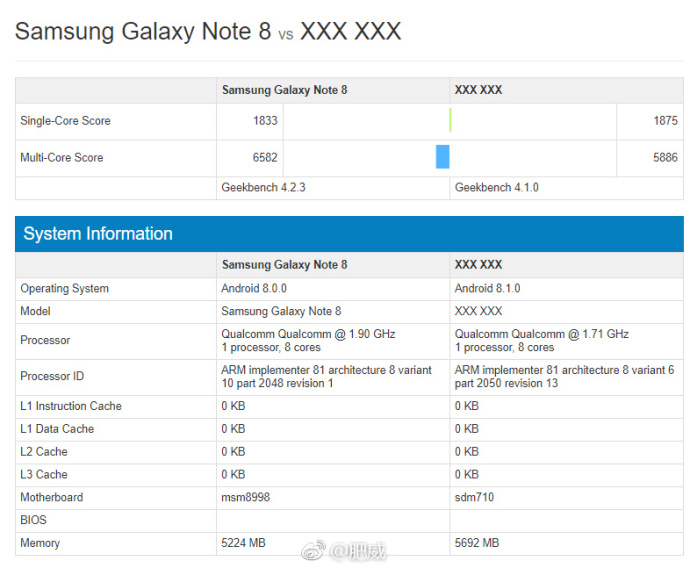
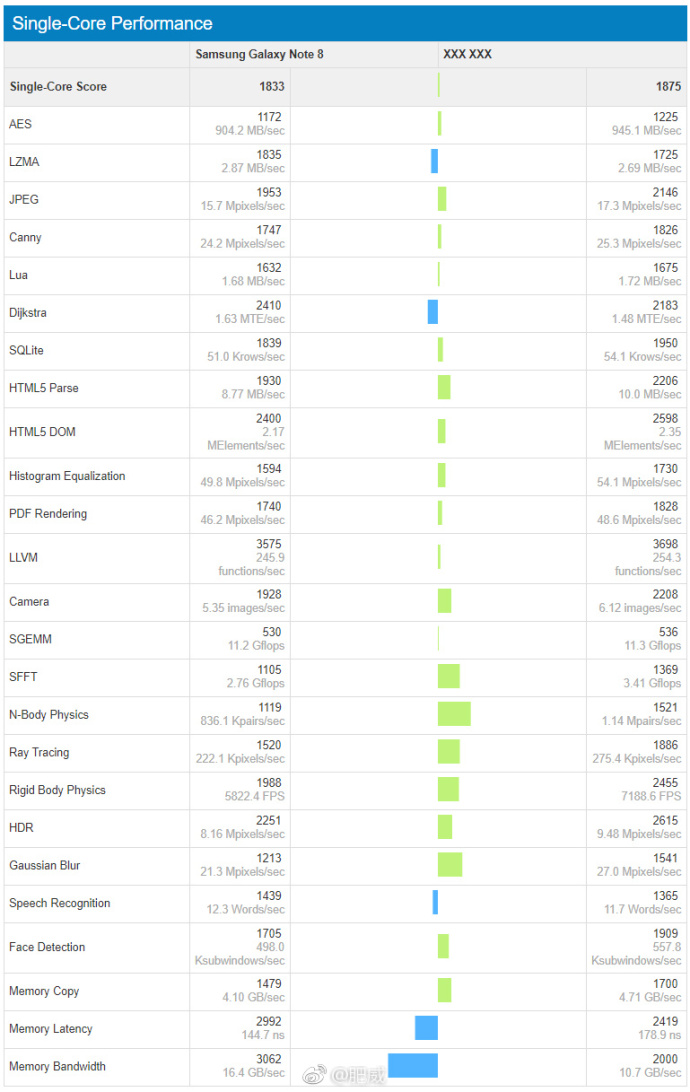
The Snapdragon 710 chipset has now been spotted on the database of benchmark website GeekBench. The chipset scores a single core test score of 1875 and a multi core test score of 5886 points. The SDM710 chip was compared with the Exynos 8995 chipset used on the Galaxy Note 8. The result shows the midrange chipset coming with a powerful performance which is on par with the Exynos 8895 chipset. The Snapdragon 710 mobile platform is a 10nm chipset that offers two fold better AI performance than the Snapdragon 660 and borrows some features from Snapdragon 845 flagship chipset.
The Snapdragon 710 chipset includes two cores of Kryo 360 Cortex A75 that clocks at 2.2 GHz and six cores of Kryo 360 Cortex A55 that offers a processing speed of 1.7 GHz. The octa-core processor is coupled with Adreno 616 graphics that promises 35 percent better rendering of graphics.
Chinese electronics maker, Hisense, appears to have a new phone coming soon, one that takes a few design inspirations from the iPhone X. The phone has appeared on TENAA as the Hisense HLTE510T.
The Hisense HLTE510T has a 5.84-inch display with a resolution of 1080 x 2280 resolution. The resolution shows that the phone sports a notch though it isn’t visible in the images provided.
The phone is powered by an octa-core processor clocked at 1.8GHz. It also has 6GB of RAM and will come in 64GB and 128GB models. For optics, there is a 12MP+5MP combo arranged vertically on the rear. It also has a 20MP front-facing camera.
[envira-gallery id=”193855″]
The Hisense HLTE510T runs Android 8.1 Oreo, has a 2920mAh battery and a rear-mounted fingerprint scanner. It measures 148.59 × 71.22 × 7.93 mm and weighs 148.9 grams. When it launches, it will come in Delicate Gold and Magic Blue.
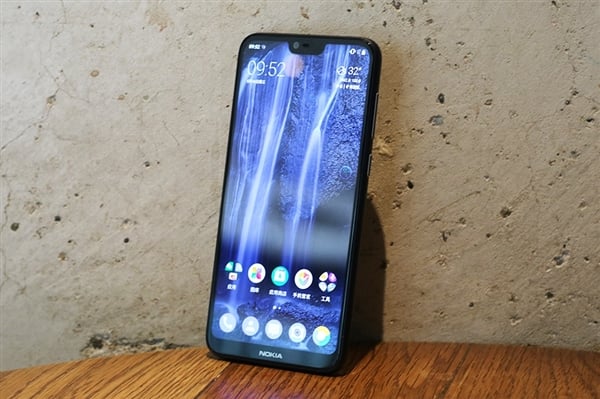
Today, HMD Global launched three new smartphones — Nokia 5.1, Nokia 3.1, and Nokia 2.1. Prior to the launch, Neil Broadley, the company’s global marketing manager, confirmed that the latest major version of Android — Android P, will come to the entire Nokia portfolio.
He confirmed that the upcoming Android P version will be rolled out to every Nokia smartphone, including the newly launched three phones. He added that this is the part of company’s commitment to the “pure, secure, and up-to-date” mantra.
All of the Nokia devices running Android One, which includes the Nokia 8 Sirocco, Nokia 7 Plus, Nokia 6.1, Nokia 5.1, and Nokia 3.1 — are all within the two-year guarantee period that Google demands for flagship updates. The company had previously promised that the first generation of Nokia phones — the Nokia 3, 5, 6, and 8 — will all be updated to the Android P version.
This covers all the smartphone from the company except three — the Nokia 2 and the Android Go edition phones — Nokia 1 and the recently launched Nokia 2.1. However, HMD Global has confirmed that all three will get the latest OS upgrade, and the Android Go edition will get the streamlined version of the OS.
HMD Global is one of the leading manufacturers when it comes to providing the latest Android update to its users. Nokia is usually among the first manufacturers to roll out Android version update for its portfolio devices as well as security patches.
With Android fragmentation still a broader concern, it’s great that Finland-based HMD Global is fully committed to providing timely updates for its entire portfolio. The company’s Nokia 7 Plus is also one of a small number of phones that is compatible with the Android P Beta.
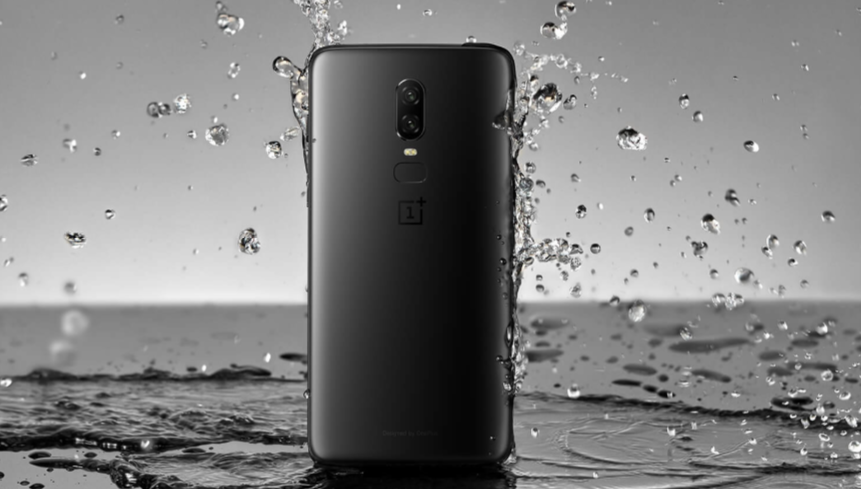
The OnePlus 6 is the first device from OnePlus to have water resistance. However, OnePlus doesn’t state the degree of protection though they do warn on the official website not to take it for a swim.
The statement from OnePlus means the OnePlus 6 is splash resistant at best. Nevertheless, there is no harm in seeing the protection OnePlus has put in the device. Teardown and device test expert JerryRigEverything, decided to rip apart the OP6 to confirm its protection level.
In the six-minute long video, it is revealed that there are water-resistant meshes covering microphone holes and ports. However, there is no way of telling if these meshes will keep water out if the water has a much higher pressure.
OnePlus has put water damage indicators inside the phone to tell if you submerged your device in water or any liquid. The indicators are white and turn red when in contact with water.
We use cookies on our website to give you the most relevant experience by remembering your preferences and repeat visits. By clicking “Accept”, you consent to the use of ALL the cookies.
This website uses cookies to improve your experience while you navigate through the website. Out of these, the cookies that are categorized as necessary are stored on your browser as they are essential for the working of basic functionalities of the website. We also use third-party cookies that help us analyze and understand how you use this website. These cookies will be stored in your browser only with your consent. You also have the option to opt-out of these cookies. But opting out of some of these cookies may affect your browsing experience.
Necessary cookies are absolutely essential for the website to function properly. This category only includes cookies that ensures basic functionalities and security features of the website. These cookies do not store any personal information.
Any cookies that may not be particularly necessary for the website to function and is used specifically to collect user personal data via analytics, ads, other embedded contents are termed as non-necessary cookies. It is mandatory to procure user consent prior to running these cookies on your website.




 The ZTE Nubia Z17 Lite was made available to the public in September last year. As expected, the phone garnered huge popularity among smartphone enthusiasts who were restlessly waiting to get their hands on a big screen smartphone without breaking the bank.