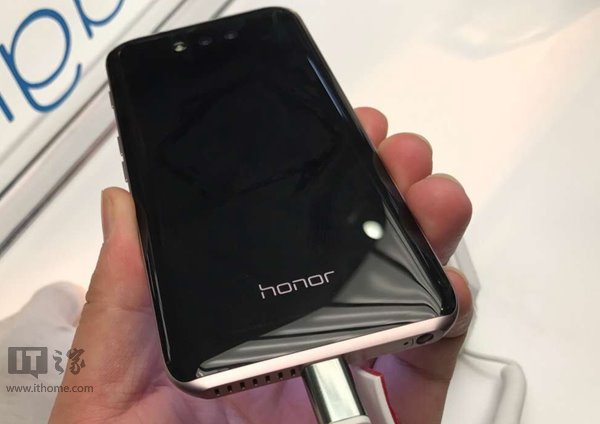
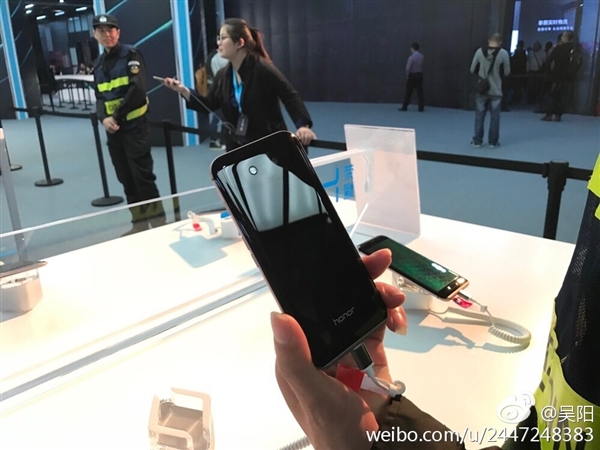
While some manufacturers release just a few phones per year, there are some who release tens of phones to cover the different categories. Huawei belongs to the latter and it seems its Honor sub-brand, even after just launching the Honor Magic a few days ago already has two new devices codenamed Honor Prague in the works.
Although the two devices go by the codename Prague (PRA-LX1 and PRA-LX3), there is a possibility that they may bear different names when they finally launch as Huawei is not new to using the name of cities as aliases for their devices. If you remember the Mate 9 was codenamed Manhattan.
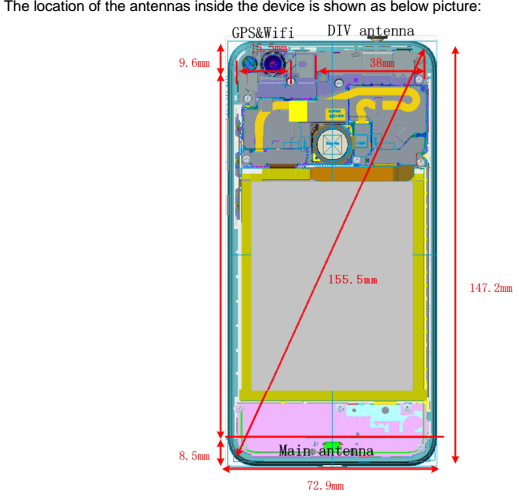
Both devices have made it to the FCC for their certifications. The FCC listing doesn’t reveal much but they are each expected to have 3GB of RAM, a 2900mAh battery, and Bluetooth 4.2. A document seen on the FCC site also says they might launch with Android Nougat.
The FCC listing says the PRA-LX1 model has a length of 147.22mm and width of 72.9mm. The phone will also come with a fingerprint scanner, a single rear camera with the LED flash flanking it on the left.
Do you remember those rendered videos of bezel-less and transparent iPhones that flooded the internet when a new iPhone was close to launching? We still don’t have them yet. Or do we?
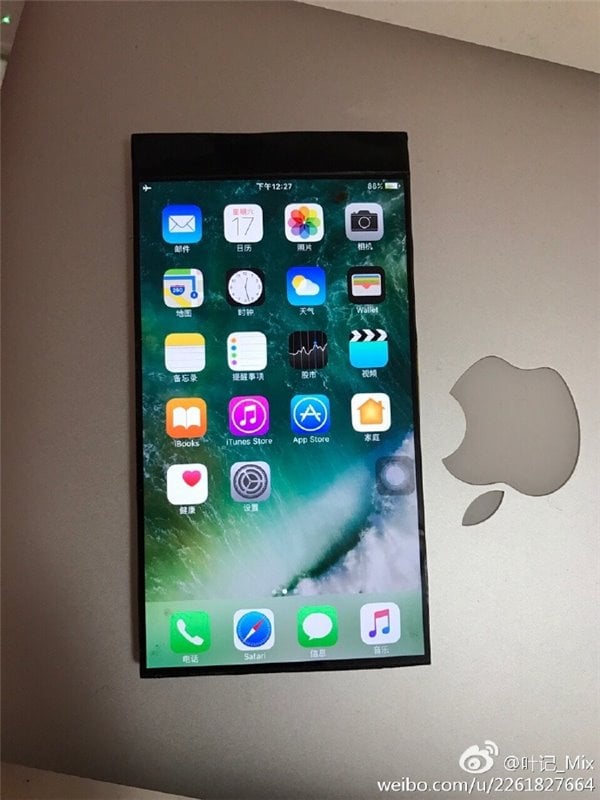
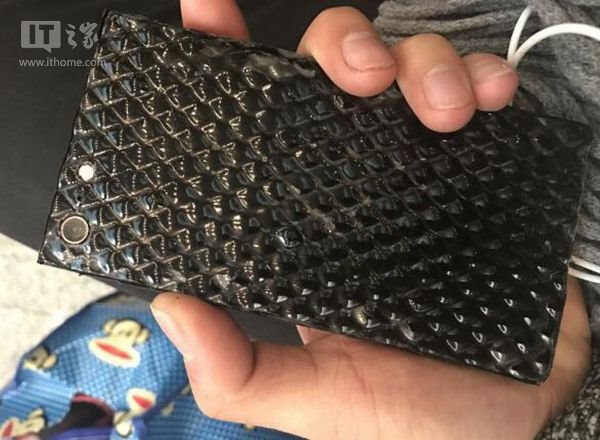
While the leaks of the next iPhone have been pouring in, there has been no mention of it being bezel-less and it seems some Apple fans are not happy about it seeing as you already have bezel-less android phones like the Xiaomi Mi MIX. So what do you do when what you want is not available? You make it yourself, as seen from a video uploaded on YouTube of someone who repurposed his iPhone 6S Plus into a Xiaomi Mi MIX.
The video which shows the procedure was uploaded by Weibo user @Ye Ji-MIX. Although the final product looks a little unrefined we can’t help but praise his skills and ingenuity.
Xiaomi’s crowdfunding platform is where the company releases all of its household items. Known for releasing at least one product every week, this week will be no different as the company’s (Mijia) account on Weibo has teased a new product which appears to be an electric toothbrush judging from the poster.
The accompanying text on the poster loosely translates into how plaque forms on the teeth and how it can only be removed via mechanical means.
This will not be Xiaomi’s first electric toothbrush though. Earlier this year, they launched the Soocare X3 sonic electric toothbrush for 229 yuan ($34). The Soocare comes with a 1000mAh battery and can last for up to 25 days on a single charge. Xiaomi also launched a Soocare mini for toddlers.
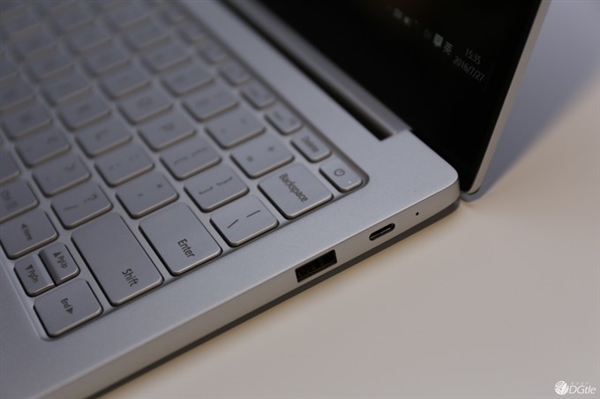
Xiaomi entered into the personal computer market this year with its Mi Notebook Air. Available in two sizes: a 12.5-inch model and a 13-inch model, which also sport different internals; the Mi Notebook Air has been praised for its design and build quality. Although we can’t ignore how it shares similarities to Apple’s MacBook Air, something Xiaomi is not even ashamed of hiding as it is evident in even the naming.
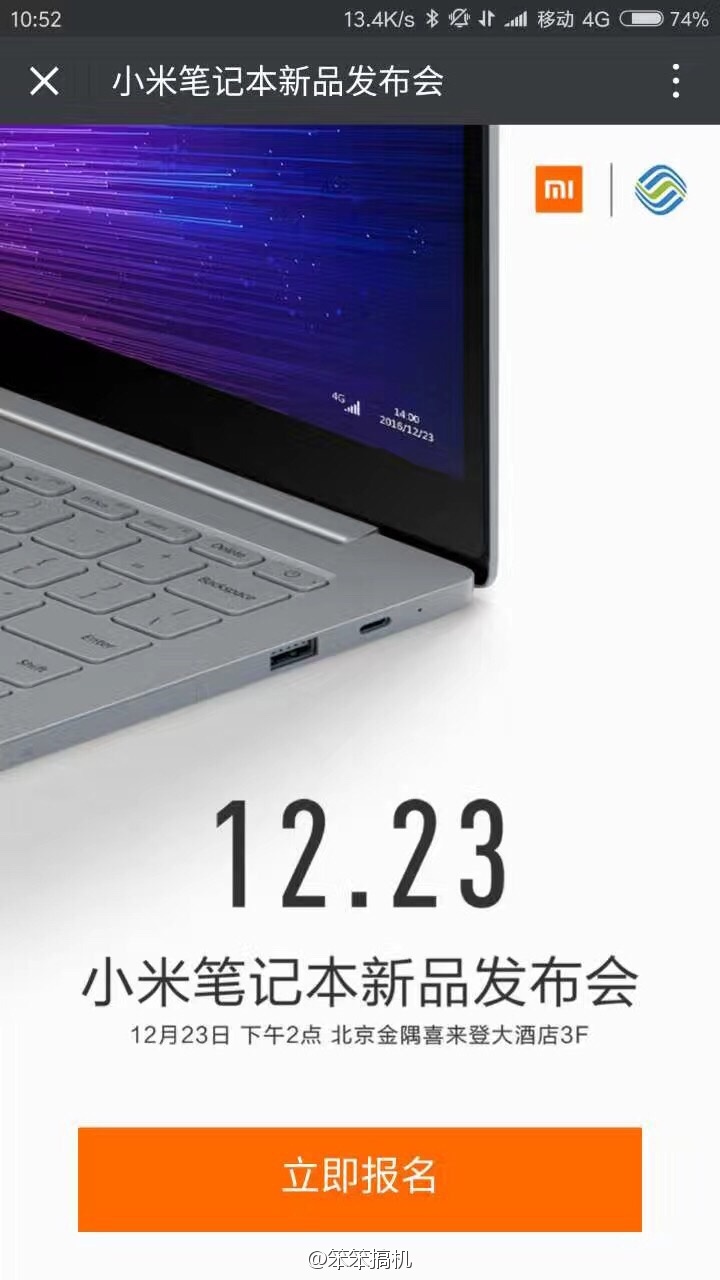
You might have thought we wouldn’t be hearing of a new Mi Notebook Air not until next year, but Xiaomi thinks differently as they have a new model launching in Beijing on Friday, 23rd of December.
Original Xiaomi Mi Notebook Air
The invitation to the event shows the right side of a computer similar to the Mi Notebook Air, however this one seems to have a 4G module as there is a 4G network signal in the lower right corner of the screen. The invitation also has Xiaomi’s logo and China Mobile’s logo on it. Sources say there is a chance this is just a 4G version of the original Mi Notebook Air and nothing more. We however don’t want to rule out the fact that it might feature some additional changes.
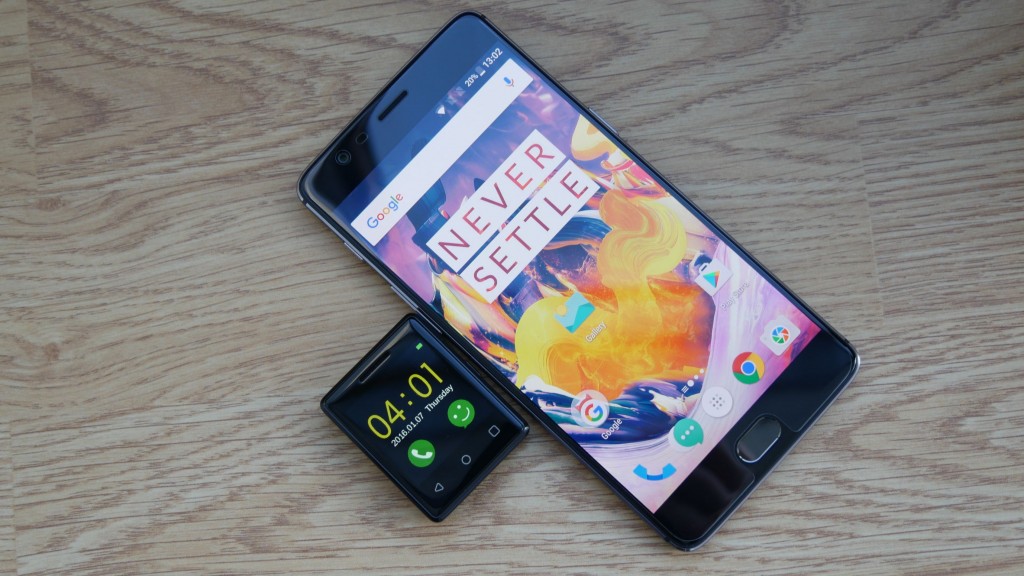
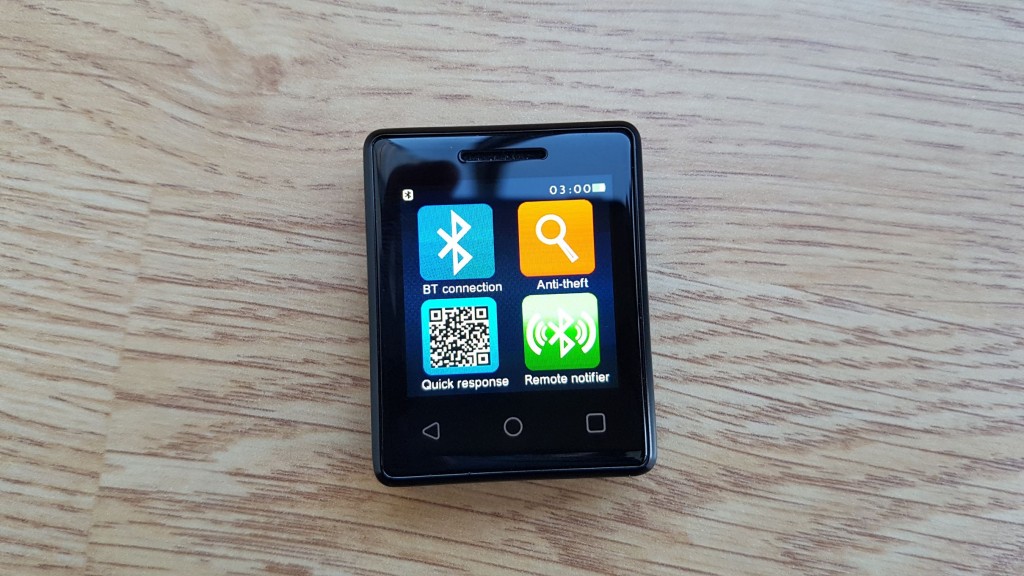
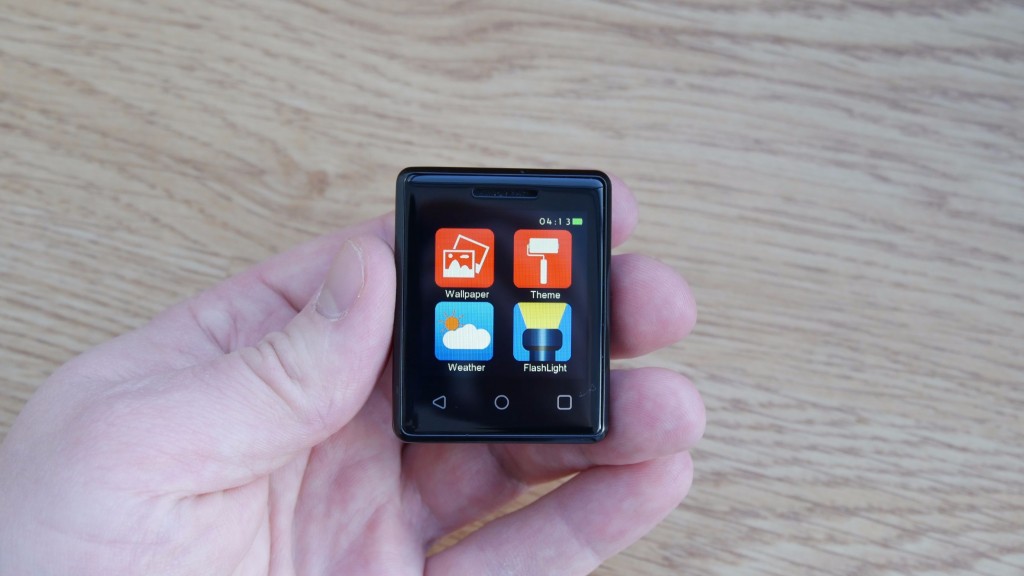
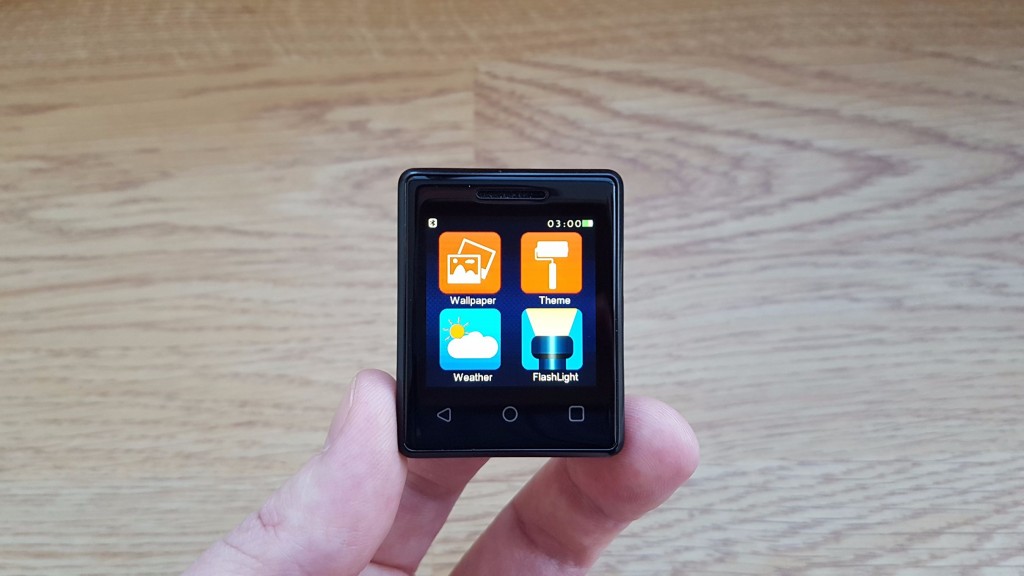
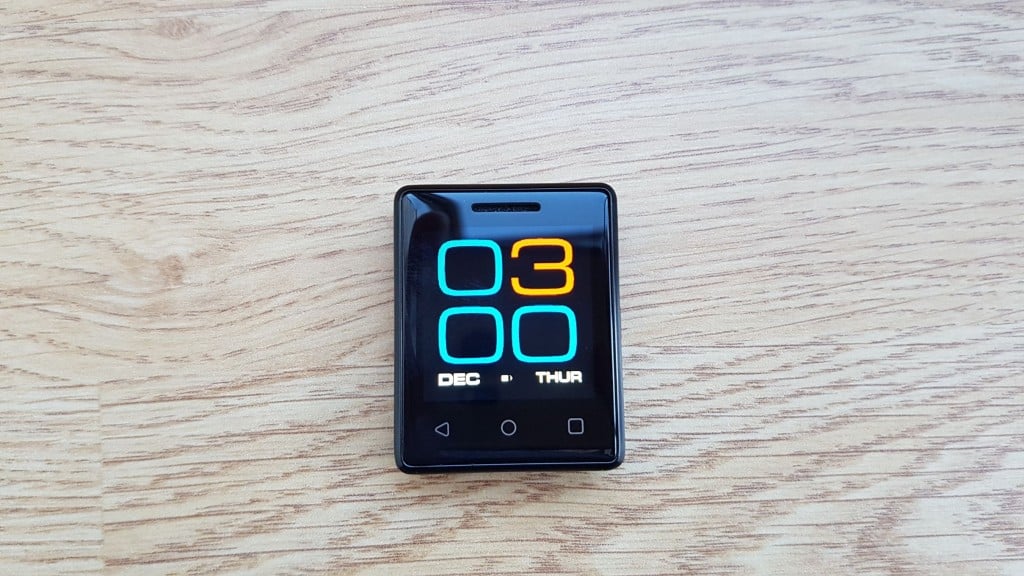
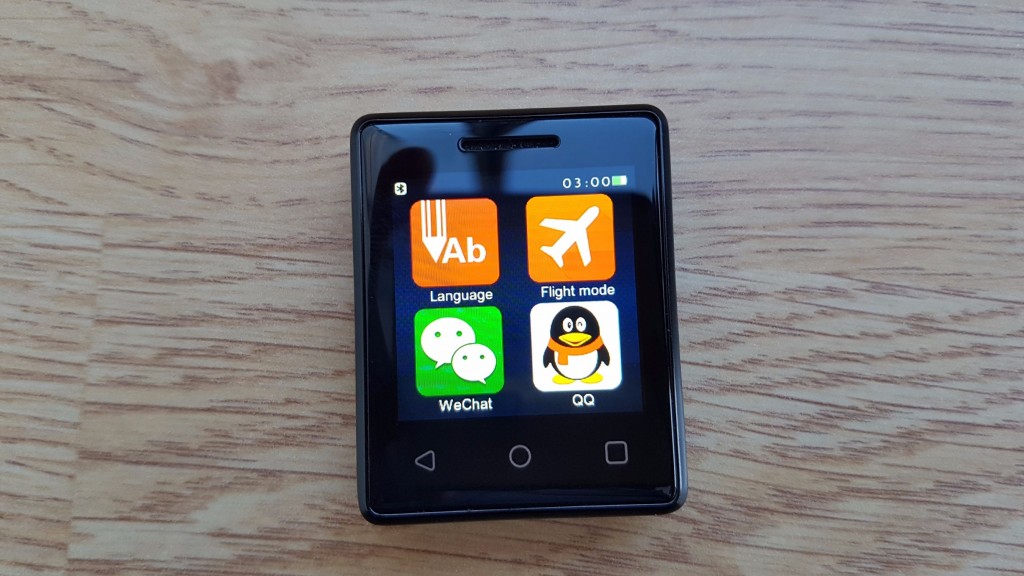
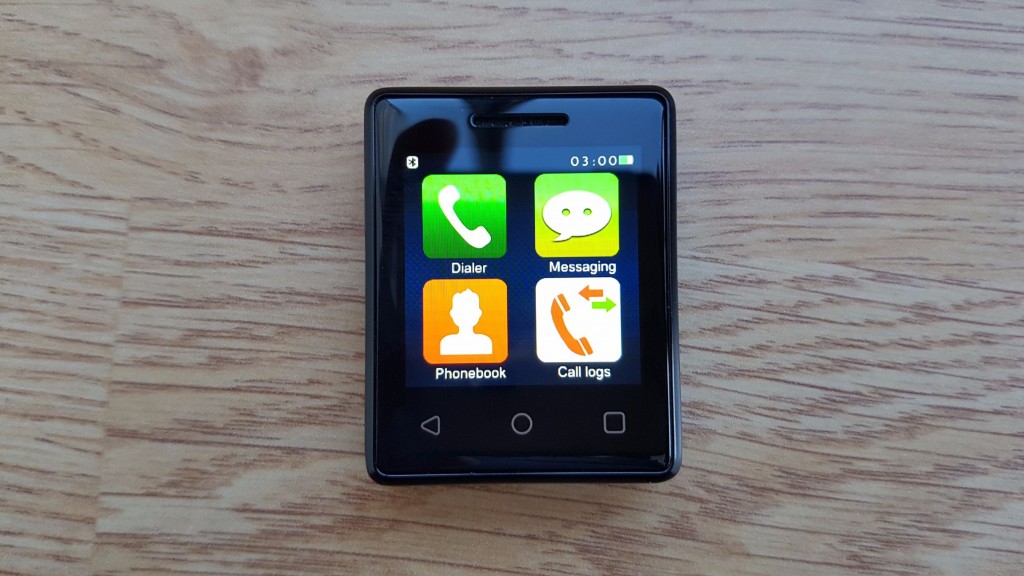
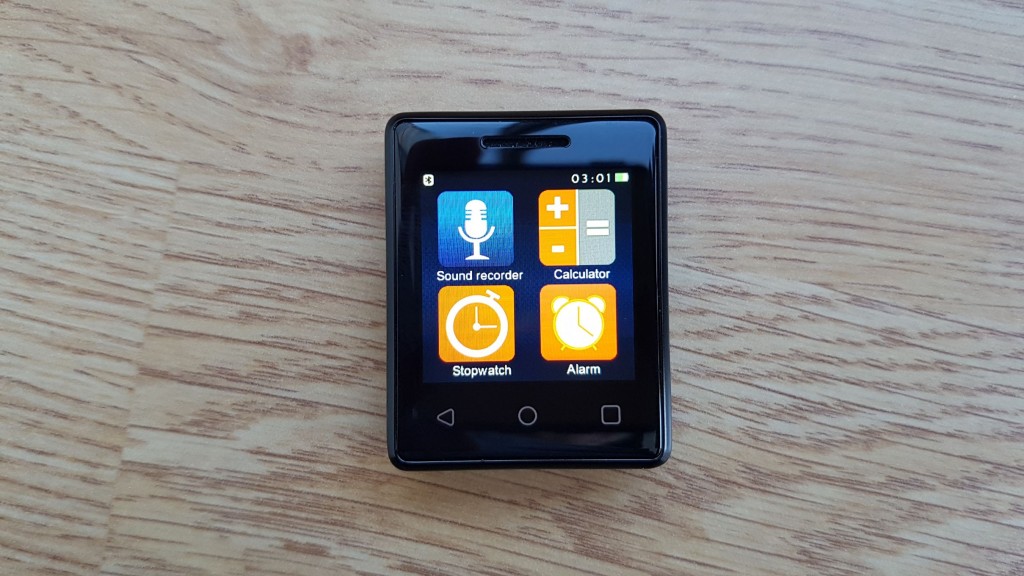
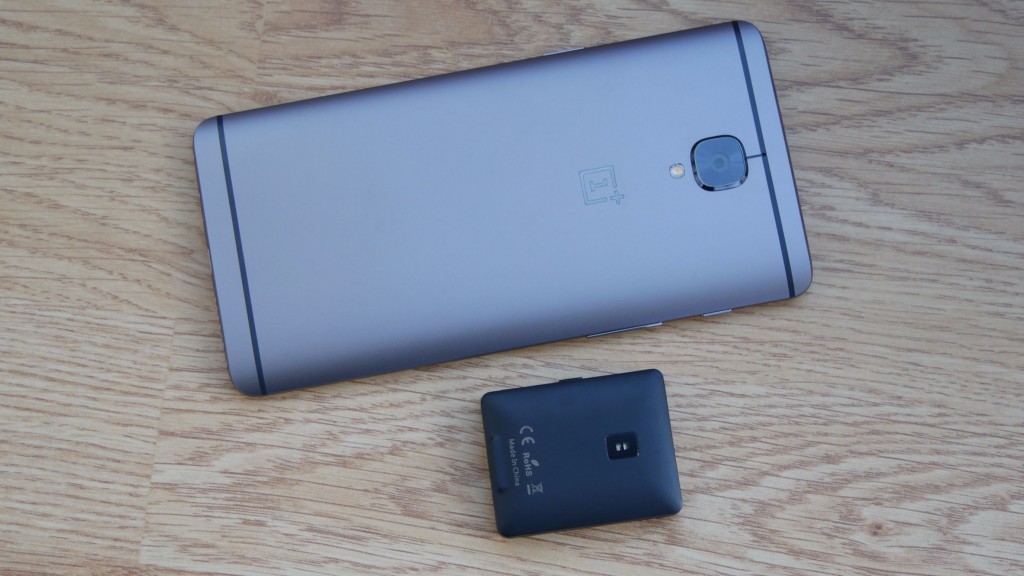
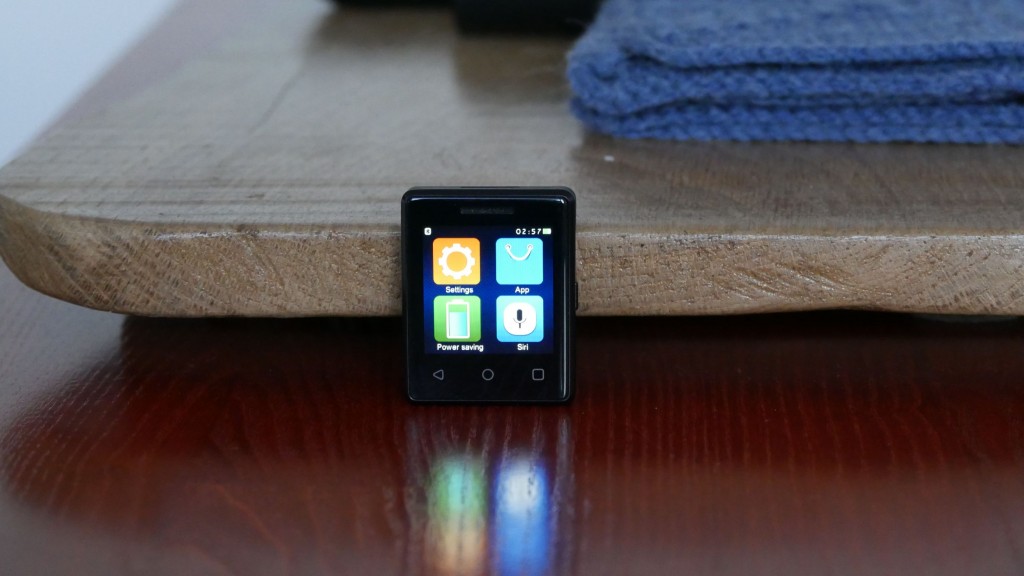
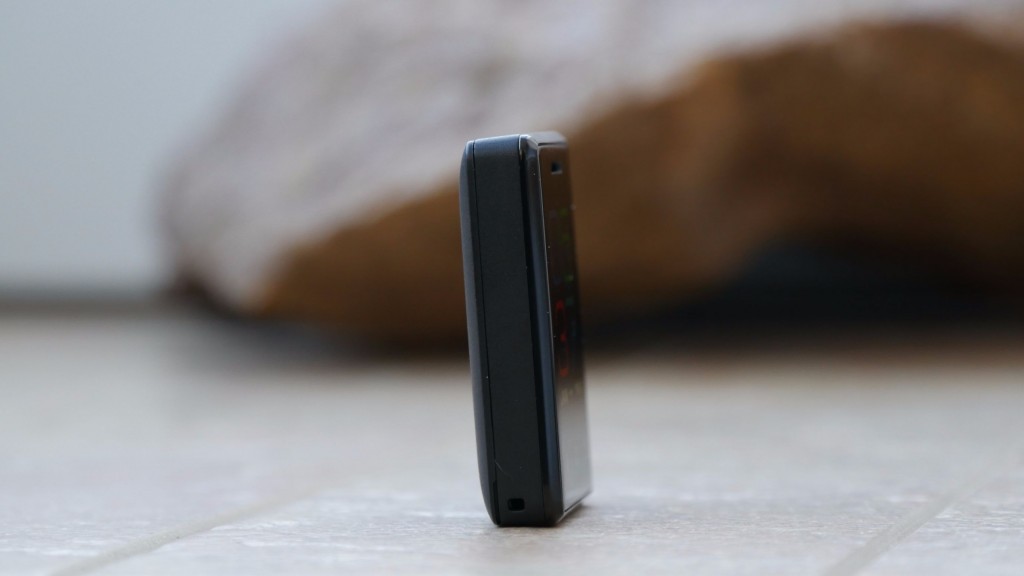
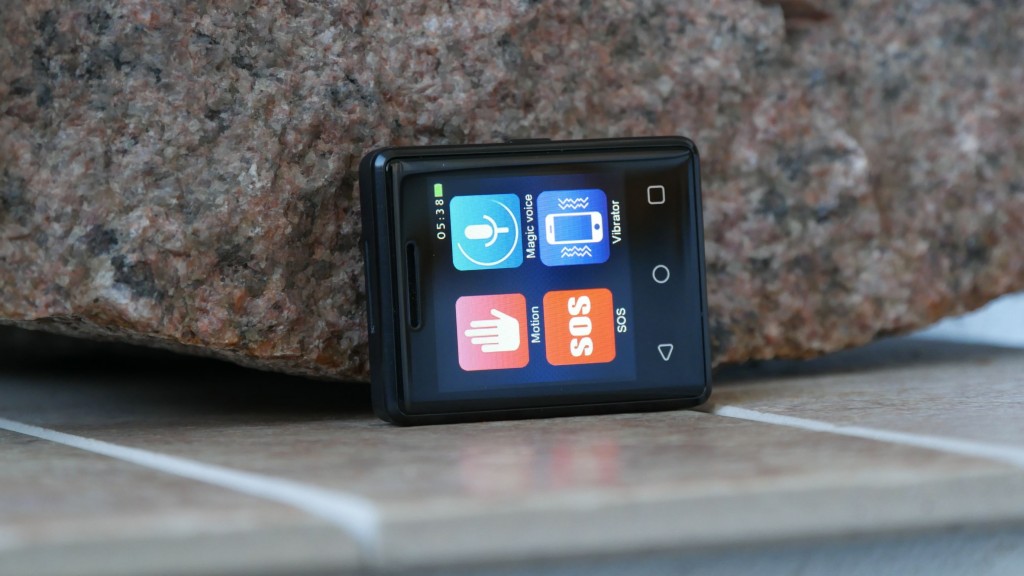
Once we think of smartphones these days, we think of some big and bulky devices with huge displays. Some of those phones can’t even fit into the pocket. Meet the Vphone S8, the smallest smartphone in the world. Is this $28 little device worth your attention? Stay tuned to find out.
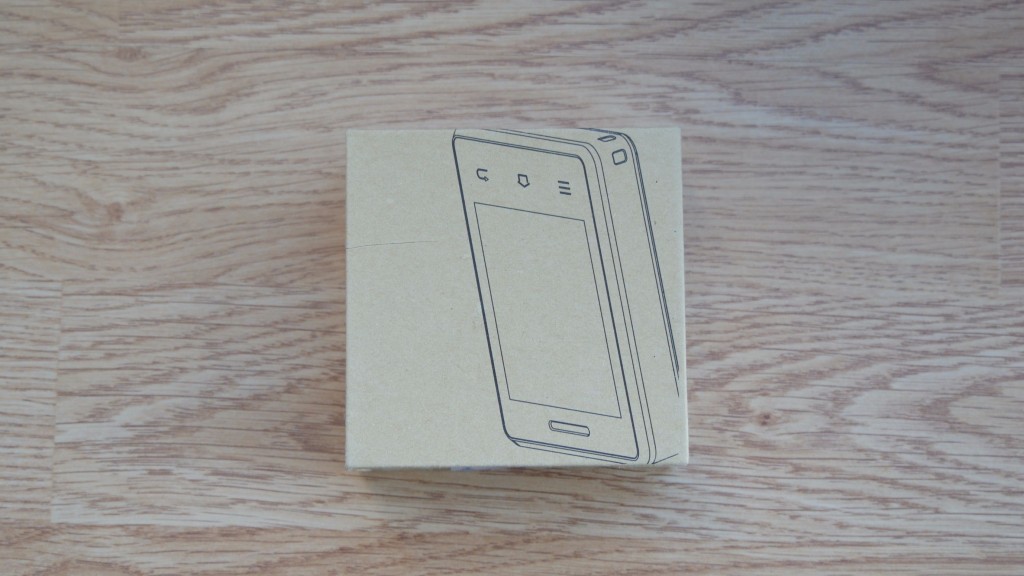
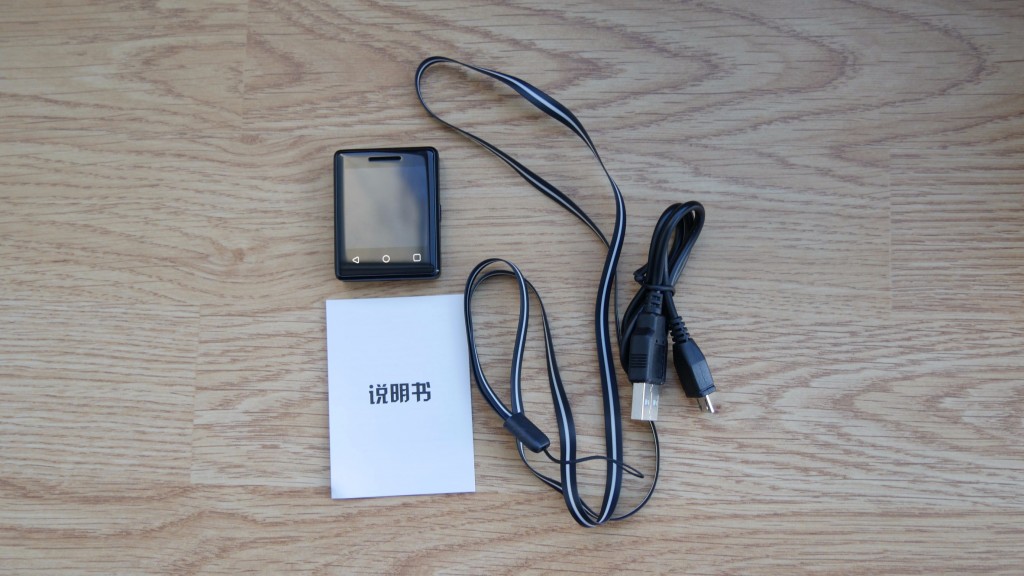
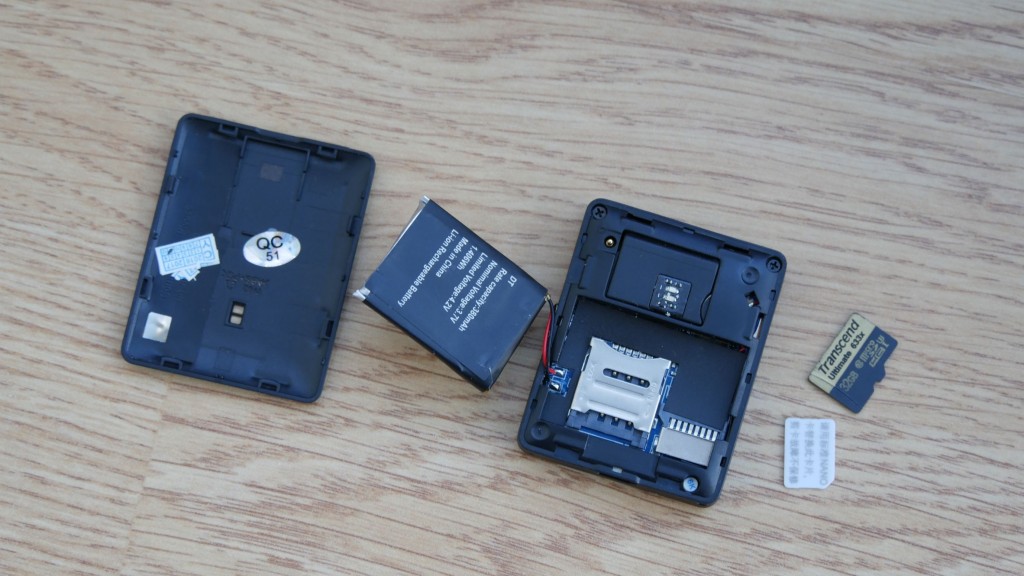
The device ships with the USB cable, a strap and some paperwork.
DESIGN AND FEATURES
Honestly, this thing doesn’t even look like a smartphone and it reminds me of a smartwatch… without a strap.
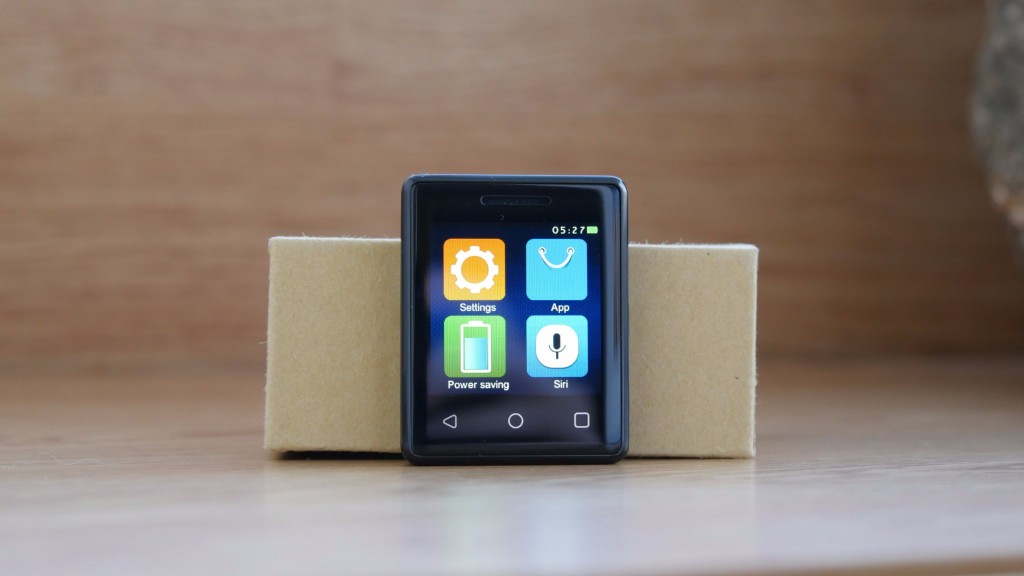
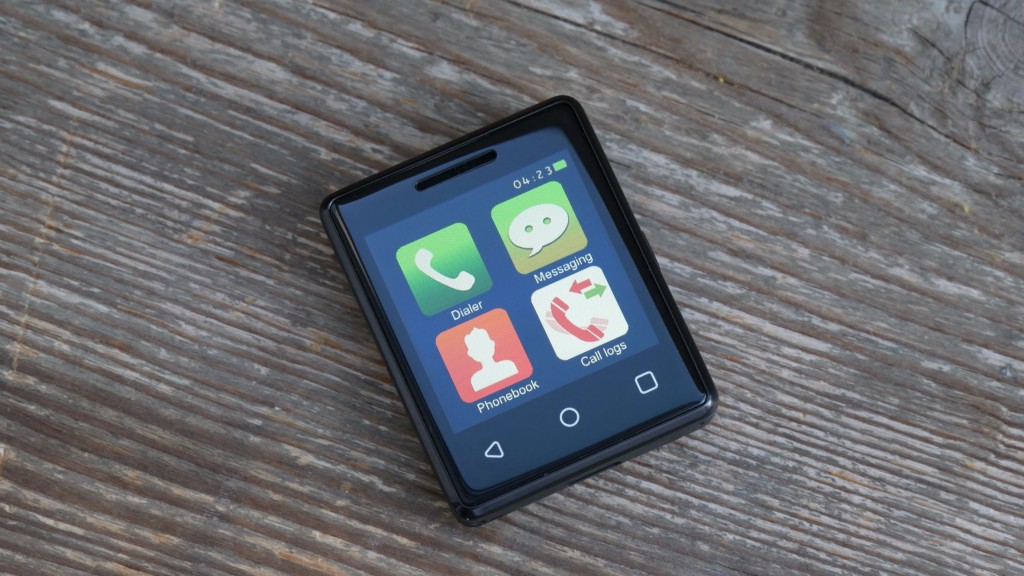
We have a 1.54” display, which does not sport the highest resolution but it is pretty good for a $28 device.
The phone takes 1 SIM card and 1 microSD card for storage expansion as the internal storage is just 128MB.
We have just a power button and non-backlit capacitive keys to control the device.
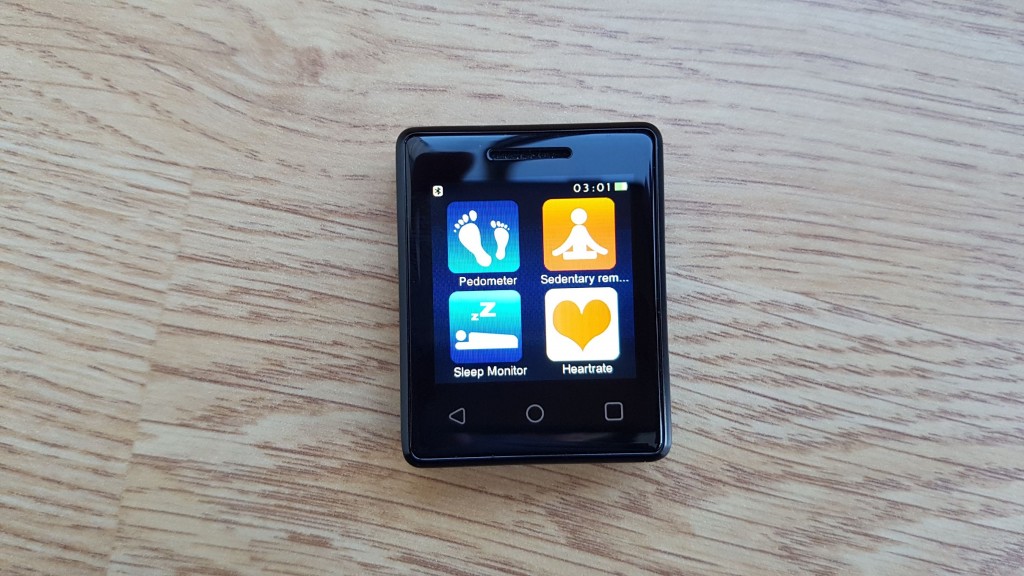
On the back, there is a heart rate monitor, which measures your heart rate pretty accurately. Not sure why I thought I needed to put it on my wrist as it works with the fingertip too.
USER INTERFACE
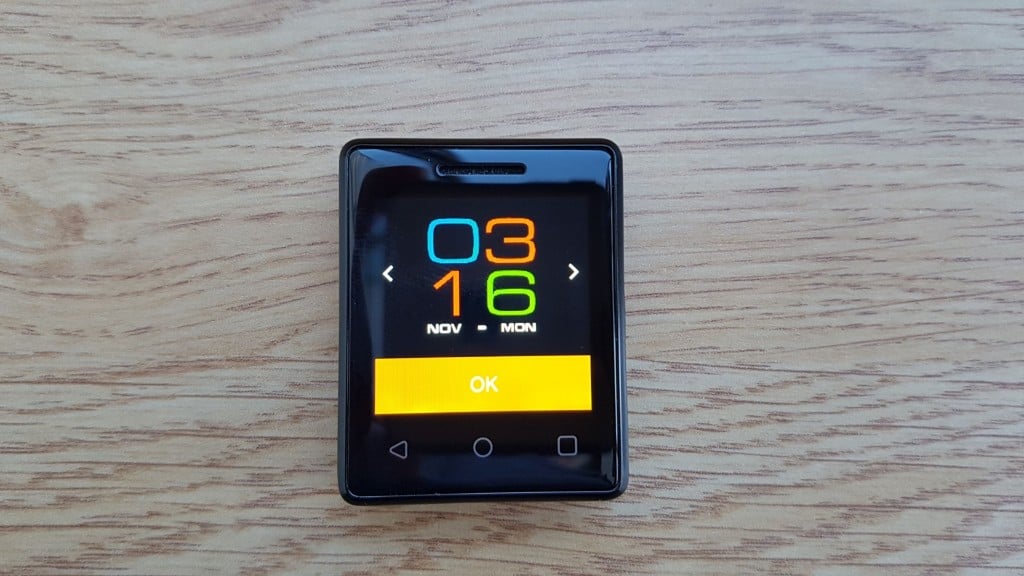
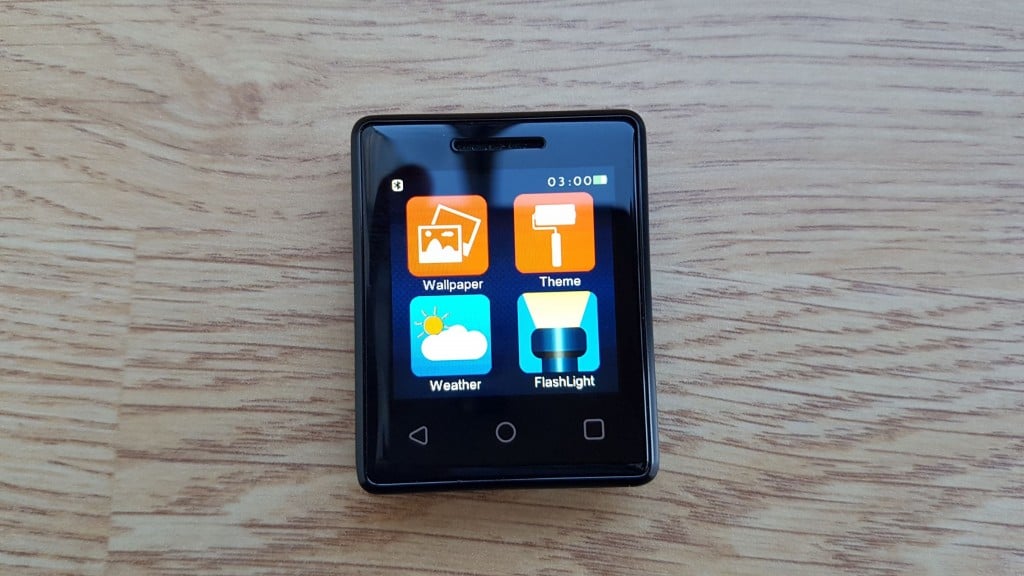
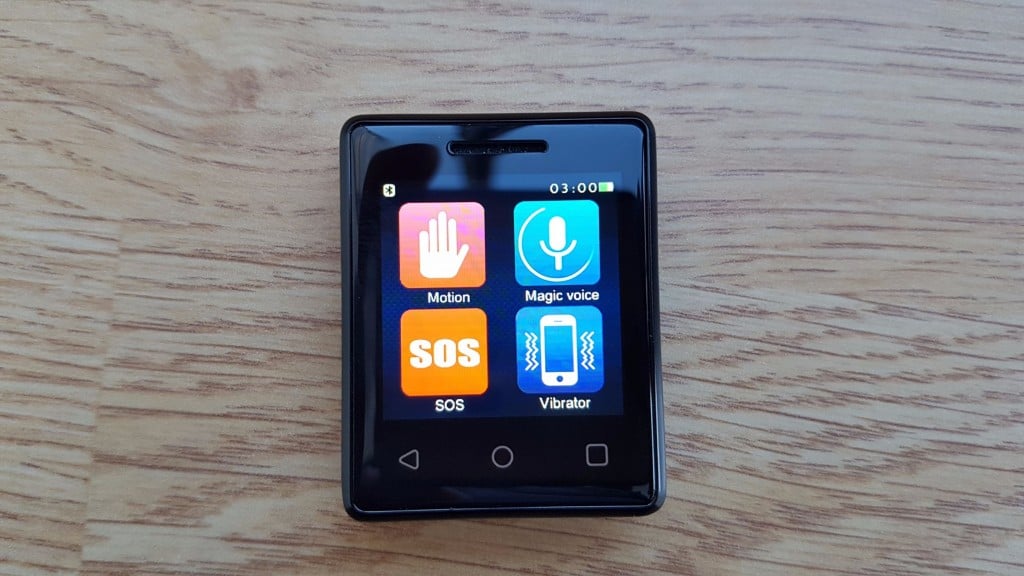
As for user interface, you have your basic phone features. You can call someone, write messages and so on.
The call quality is not very impressive but you can definitely make a clear conversation.
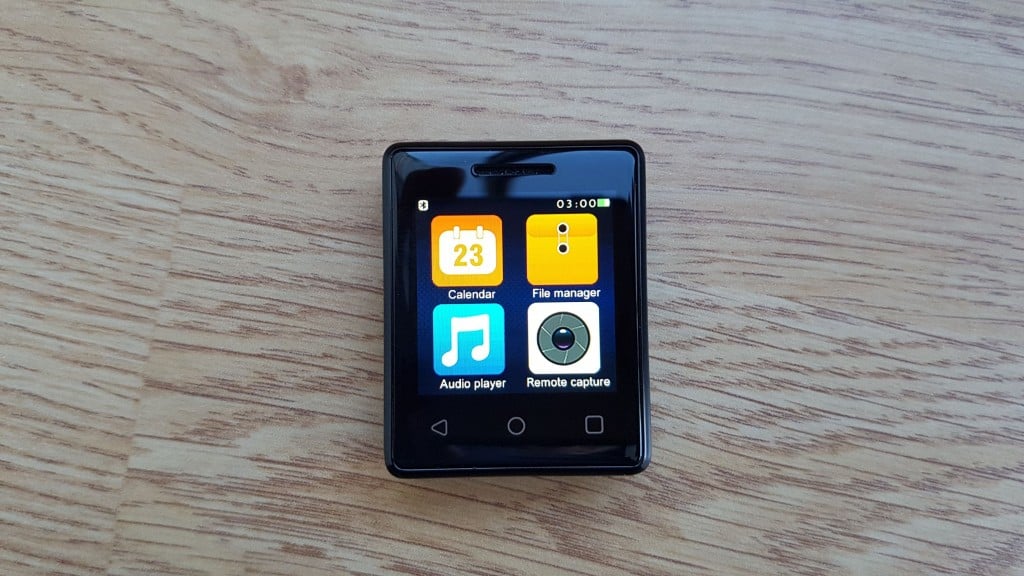
There are also some basic apps like calculator, calendar, stopwatch etc. Besides the heart rate monitor, you can track your fitness routines using the built-in pedometer, which is pretty accurate or use sedentary reminder to reminds you to move a little.
You can also connect the Vphone S8 to your phone using the FundoWear app to track your fitness routines in detail, receive most of the notifications, use this little device as a remote dialer or as a remote controller for your main phone’s camera.
BATTERY LIFE
As for battery life, the Vphone S8 will get you through the day if you use it quite intensively. You may get a few days out of it if you are a light user.
CONCLUSIONS
So, there you have it, the smallest smartphone in the world, that costs just $28.
It’s definitely not the smartest smartphone out there but it’s definitely fun to use it. Also, it comes with all the basic phone and fitness tracker features, and a simple user interface that does not lag.
The phone may come handy if you just need to use another SIM card for calls.
At the end of the day, the Vphone S8 is not something Ireally need for everyday use but it’s definitely a fun little device that works quite well and it is actually very cheap for what it has to offer.
You know how you get presented with interests and location-based ads on social media and the internet at large. Now imagine if you had to see ads related to your personal health staring you in the face when surfing that site or going through your feed or timeline. Not very private anymore right?
It appears that might be happening soon as there is a chance that pharmaceutical companies and advertisers who are interested in data about your personal health will soon have access to it.
According to a report jointly published by the Center for Digital Democracy (CDD) and American University, there is virtually no privacy measure in place to protect consumer health data, and companies who need such data are aware and plan to take advantage of it.
The report first lists the advantage there is to having a connected-health system such as personalized health insurance policies and better emergency services but states the system can also be taken advantage of. It goes on to say that since a lot of the health monitoring devices we wear are already being integrated into a growing Big Data digital health and marketing ecosystem, which is focused on gathering and monetizing personal health data in order to influence consumer behavior. If the system is allowed to grow and evolve without privacy checks in place, the nature and extent of data collected will be unprecedented.
CDD wants actions to be carried out to protect consumer health data abuse. They are requesting for collaborative efforts to develop a comprehensive approach to health privacy and consumer protection, using:
Clear, enforceable standards for both the collection and use of information;
Formal processes for assessing the benefits and risks of data use; and
Stronger regulation of direct-to-consumer marketing by pharmaceutical companies.
While a number of people might not realize it yet, maybe due to the fact that only a small percentage of the world’s population uses a health monitoring device compared to smartphones but the earlier these protective measures are there, the better for the whole lot of us.
Car startup, Faraday Future, has been in the news a number of times over the past year. After boasting of revolutionizing the car industry and failing to launch their game-changing car at this year’s CES, the company started having issues with funding. They also had to deal with top executives and workers leaving and a lawsuit from one of its suppliers.
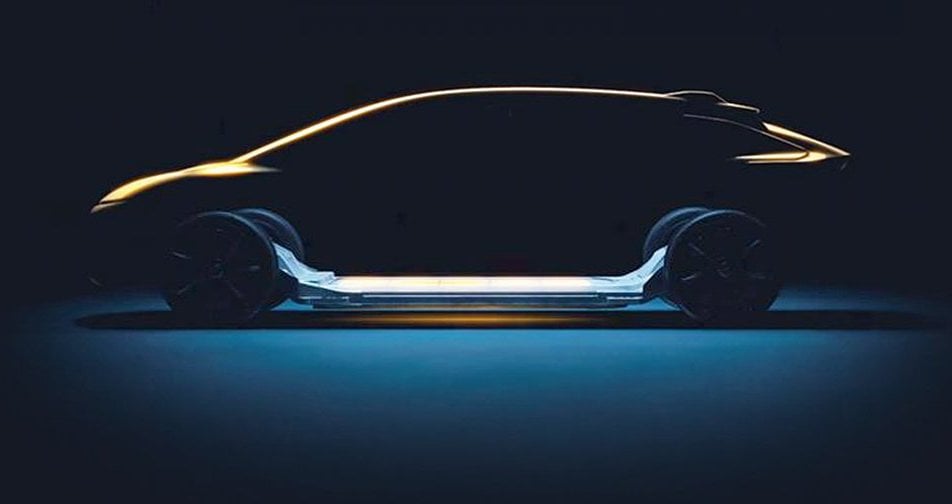
Amidst all the controversies, the company in a recent announcement, mentioned that their electric vehicle, an unnamed SUV, will finally be unveiled on the 3rd of January at the Consumer Electronics Show. If you head to their website there’s even a countdown timer to the event.
Over the course of the car’s production, the company has teased the vehicle a couple of times and it appears they are not done yet. In a new video, we see the vehicle, cloaked in black with just the windscreen bare, compete in a drag race with Tesla’s Model X and a couple of other super cars.
In the 45-second video, the Faraday car is raced against one of its major competitors when it eventually launches, Tesla’s Model X. Although the Faraday car apparently wins the drag race, its important to mention that the Model X is no slouch either. The Tesla is able to go from o to 60 MPH in just 2.9 seconds which is one of its unique selling points. Now imagine your selling point being challenged, that’s what Faraday Future is doing.
The video also shows the car raced against a Bentley Bentagya and a Ferarri 488 GTB.
The Faraday car is expected to be priced within the $100,000 range. If you have that kind of money sitting in your account and you want to splurge, you can head to the official website and create an account to allow you be notified when reservations start.
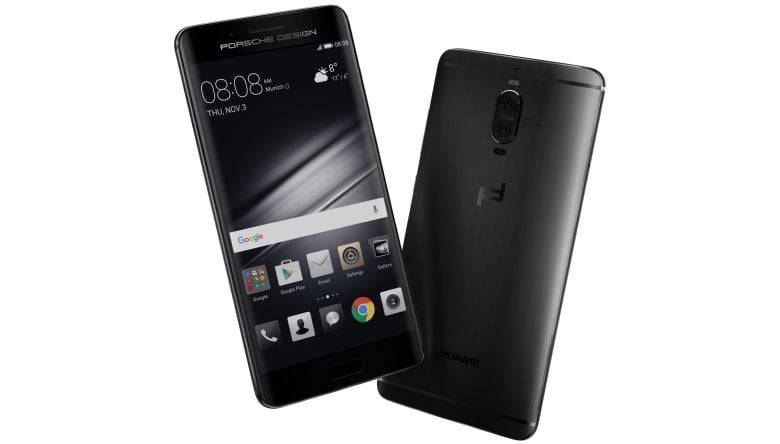
When Huawei released the Mate 9, they announced a premium edition called the Mate 9 Porsche Design which is basically the Mate 9 Pro with a more sophisticated design. That extra design makes the phone cost a lot more than the Mate Pro. And that is not where it ends, if you break your Mate 9 Pro Porsche Design you will be spending a fortune to fix it.
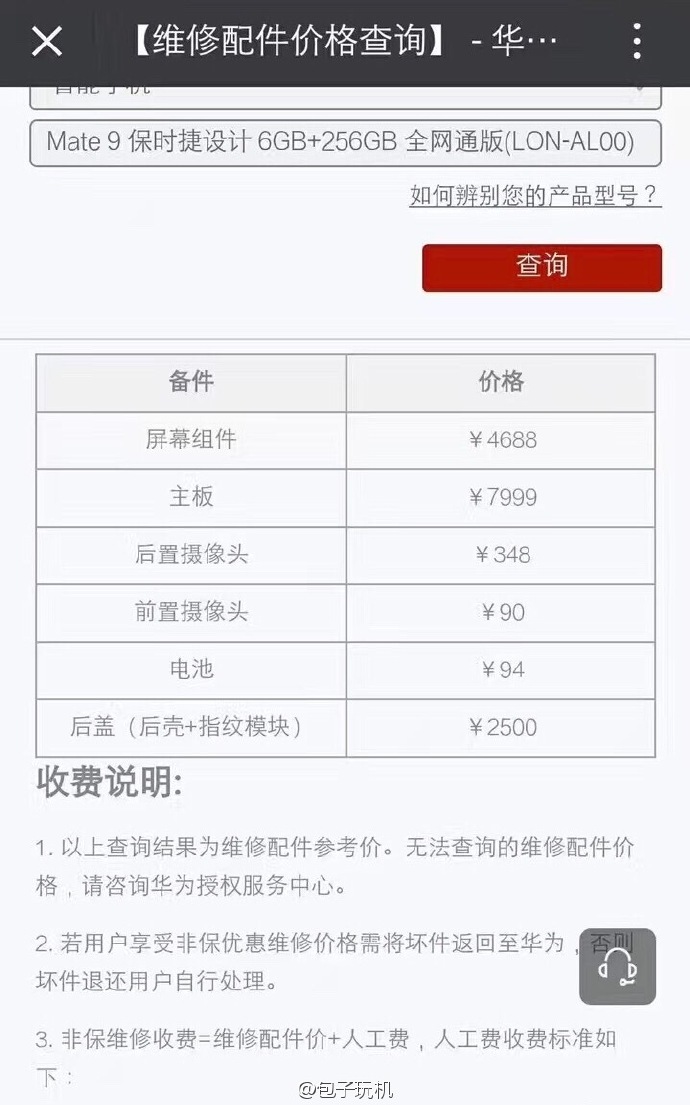
According to a post on Weibo, the parts of the Mate 9 Porsche Design are so expensive with some costing as much as a brand new phone. Below is the price list of the parts and their corresponding equivalent in USD:
Screen = 4688 Yuan ($674)
Motherboard = 7999 Yuan ($1149)
Rear Camera = 348 Yuan ($50)
Front Camera = 90 Yuan ($13)
Battery = 94 Yuan ($14)
Back Plate with Fingerprint Scanner = 2500 Yuan ($359)
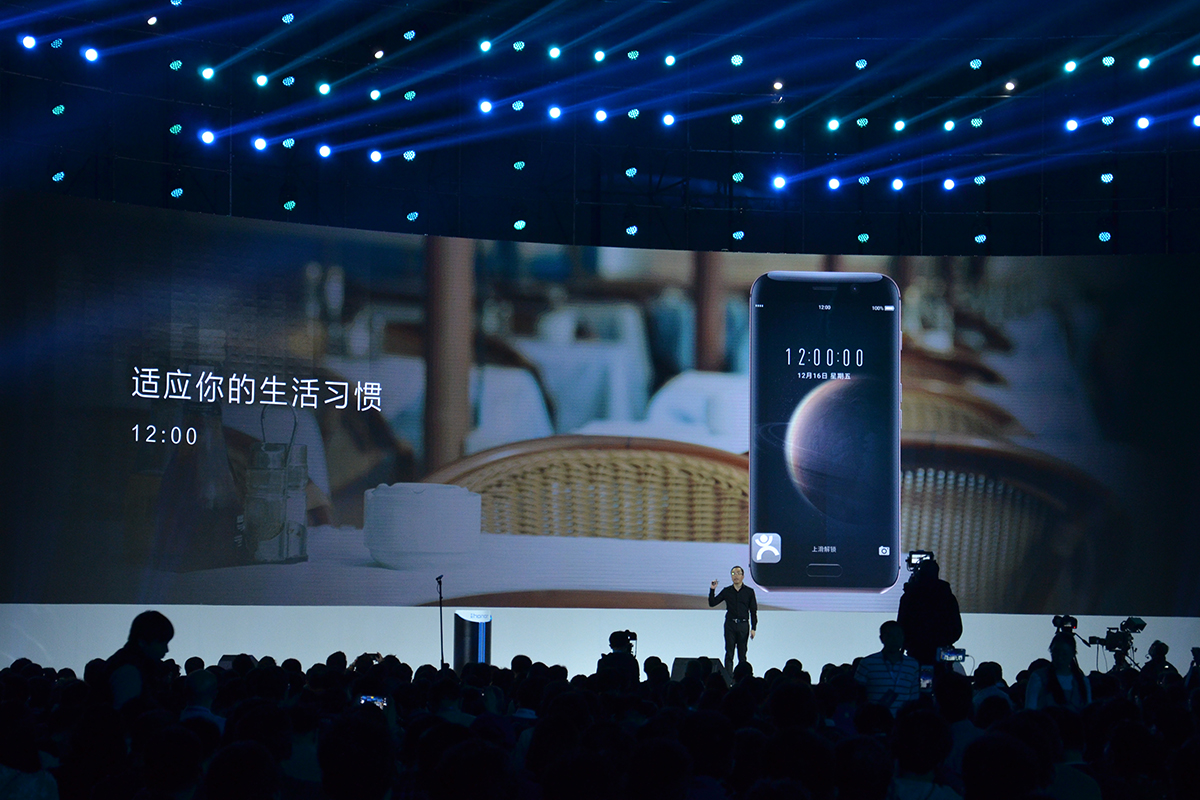
Yesterday was a big day for Huawei sub-brand, Honor, as they launched their new phone called the Honor Magic and also celebrated their third year anniversary.
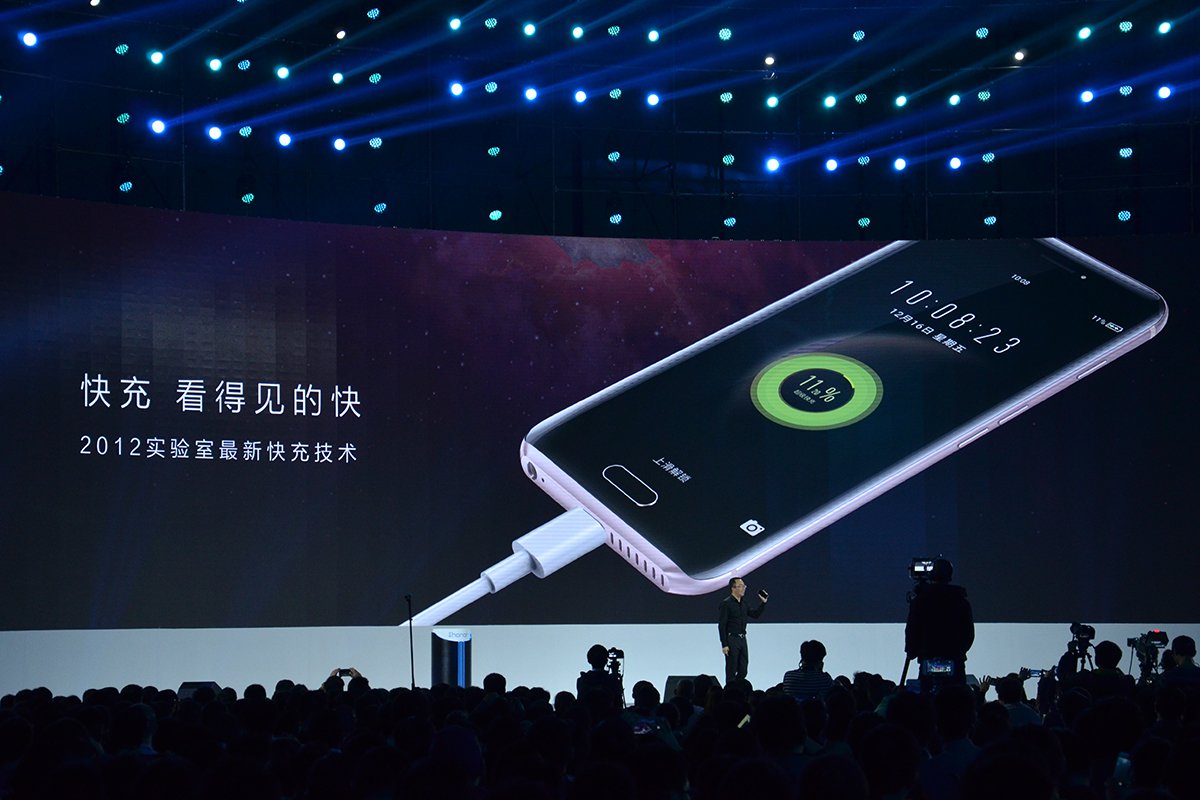
The Honor Magic has been receiving positive reviews following its announcement. The design stands out and the build quality is great. It also packs some powerful hardware specs even though they are not the latest in the market right now. One of its strong points is its battery and fast charge technology which was first announced a while back. During the launch, it was mentioned that the Honor Magic’s 2900mAh battery can charge from 0 to 90% in just 30 minutes with its accompanying 5V/8A (40W) charger. Trust that someone had to confirm that claim.
The charge test was carried out by Pan Jiutang and the results are as follows:
5 minutes of charge = 24% battery level
10 minutes of charge = 43% battery level
20 minutes of charge = 70% battery level
30 minutes of charge = 89% battery level
Impressive right? Yes it is. Pan Jiutang says even during the charging process, the phone only got a little warm.
According to Honor, the charger, the cable, and the phone have a built-in smart IC chip that controls the charging temperature and provides an end-to-end protection to allow for fast and safe charging.
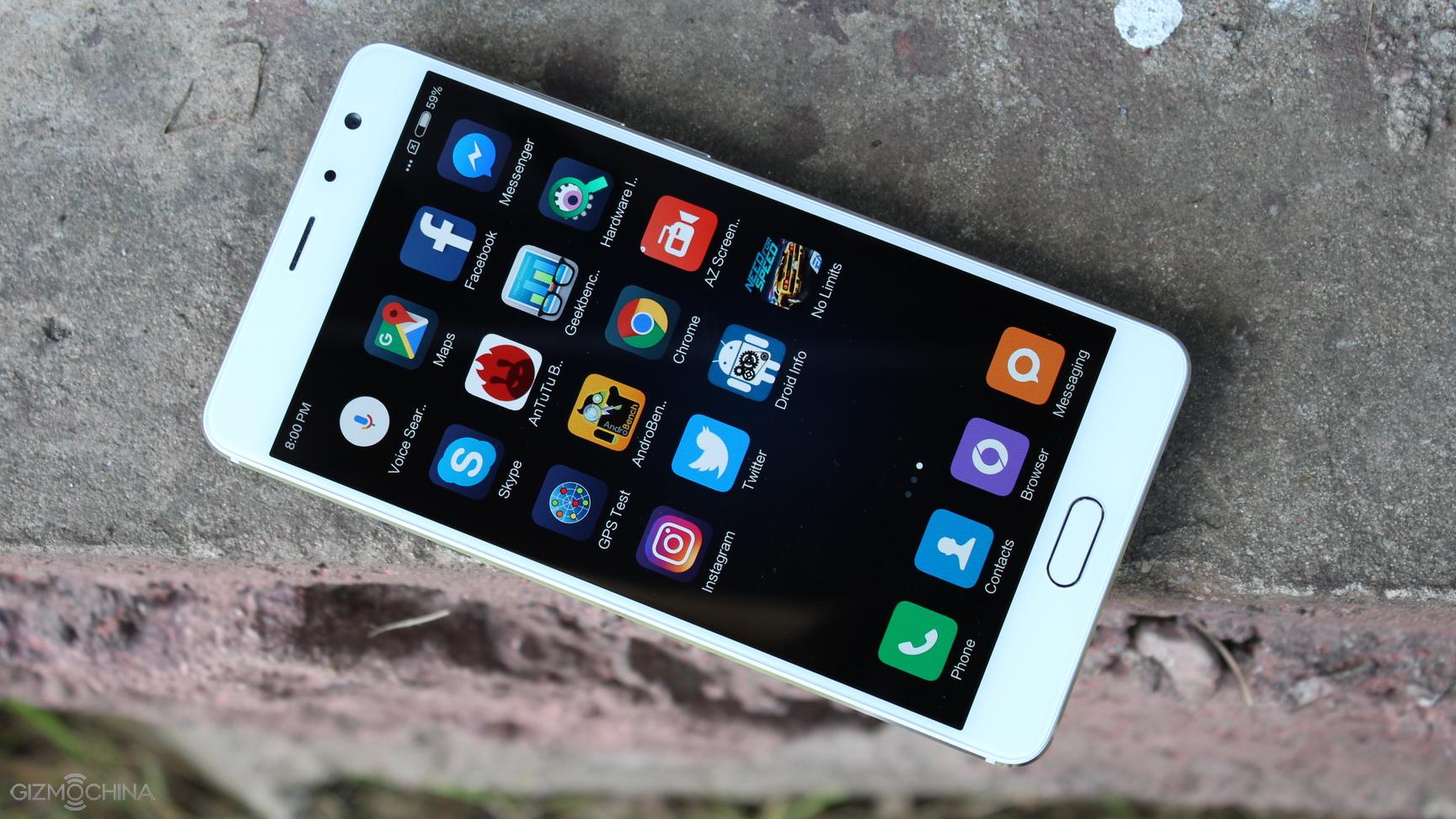
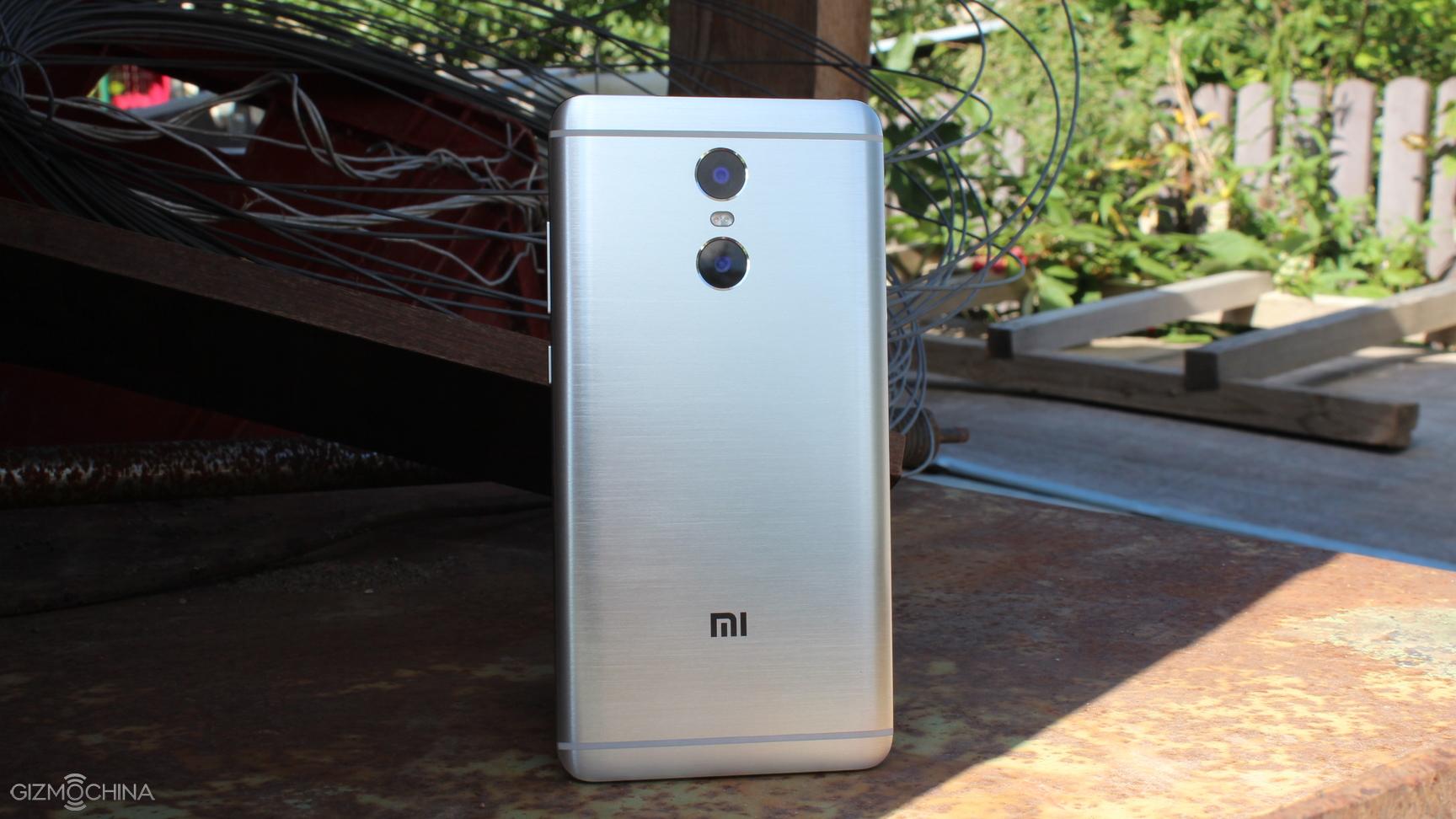
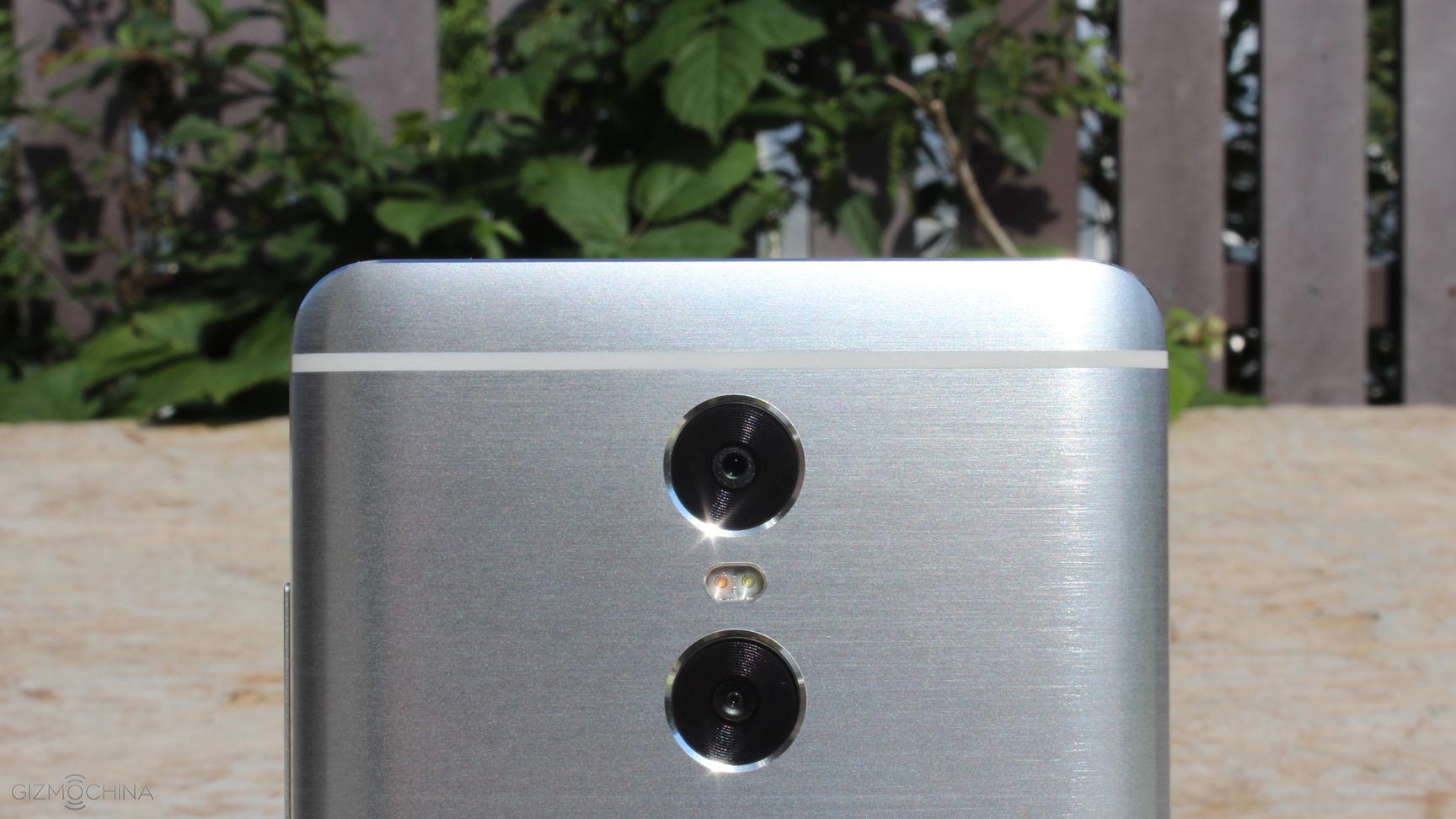
The Xiaomi Redmi Pro is made entirely of metal (even top and bottom parts are made of metal). I really love the brushed aluminum look.
One of the key selling points of this device is, of course, its dual camera setup, which is supposed to give you a hardware-based shallow depth of field effect. The main camera has 13MP, f/2.0 aperture and PDAF. The secondary camera has 5MP. Also, the cameras are accompanied with a dual-tone dual led flash.
The Redmi Pro sports a 5.5” 1080p display. A standard edition of the Redmi Pro has a deca-core Mediatek Helio X20 chip with the max. clock speeds of 2.1GHz, 3GB of RAM and 64GB of storage, which is also expandable via the microSD card slot. Finally, the phone ships with a beefy 4050mAh battery that will keep the lights on for a long time.
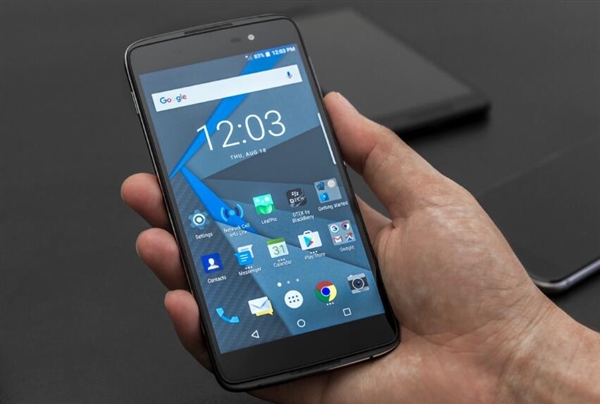
Just when the days of Blackberry smartphones look like they were numbered, a ray of hope has emerged which could see the ailing brand returning back to store shelves and users’ hands globally. This is because Chinese smartphone maker TCL, owner of the Alcatel brand, has signed an agreement with Blackberry which would see TCL use the Blackberry brand name in the production and sales of mobile phones globally.
Reuters reports that the agreement was announced Thursday and the license covers the global production and sale of Blackberry branded mobile phones in all countries except India, Sri Lanka, Nepal, Bangladesh and Indonesia.Indonesia is the largest market for BlackBerry phones and in September Blackberry signed an agreement with Indonesia’s BB Merah Putih, which licenses it to produce and sell and BlackBerry phones locally.
Blackberry, owned by Research in Motion (RIM), had announced in September that it is discontinuing it smobile phones production division, instead would become a purely software company. Also recall that Blackberry had returned tried to revive the brand by producing Android phones and that led to the launch of the DTEK 50 which was closely followed by the DTEK 60. It is interesting to note that both Blackberry DTEK phones were produced by TCL for the Canadian company. The phones were in fact earlier released under the Alcatel Idol brand in China before they are outed as Blackberry phones in the international market.
It seems likely, though, that Blackberry would still still be involved in the design and manufacturing process so that it meets its standard. What lies ahead for this new license agreement is unknown but it is hoped that we’ll start seeing a resurgence of the highly revered Blackberry brand sometime soon.
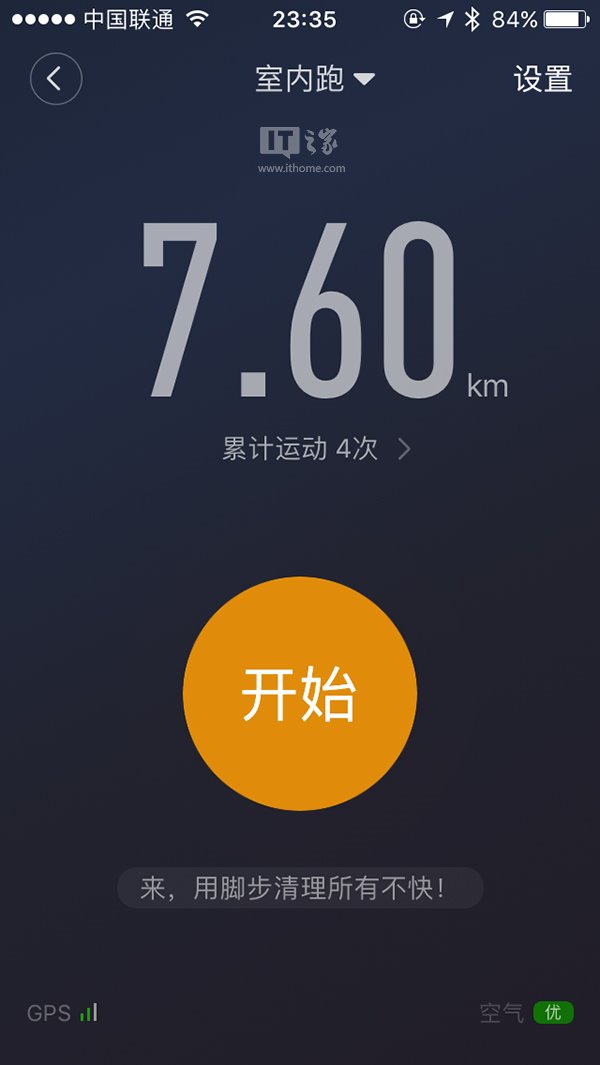
Xiaomi has added a new feature to the Mi Band 2 smart wearable which lets users monitor their fitness routine indoors. The new mode called Indoor Run mode can be selected on the running icon on the home page whenever the running is taking place indoors (treadmills et al) so that distance covered would be recorded.
The Mi band was designed to work only in the monitoring of running activities in the outdoors. However, for those who may not fancy working out in the outdoors, you can now use the gadgets while running indoors especially in the treadmill. This new feature seems aimed at keeping users of the Smart wearable going even in winter or other unfavorable climatic conditions which makes outdoor sporting impossible. So, If you own the Mi Band 2, you may need to put your ears down in other to know when the upgrade will hit your Smart gadget.
As a reminder, the Xiaomi Mi Band 2 features a 0.42-inch OLED display and there are a scratch-resistant glass and anti-fingerprint coating. It weighs only 78g and comes with high-end features which help you to monitor your health without breaking a sweat and keep a record of it. Further, this fitness band comes with IP67 waterproof certification so that yo do not have to worry about it getting splashed with water.
Further, the Mi Band 2 features Bluetooth v4.0 which enables it to get synced with Android and iOS smartphones. It is fueled by a 70mAh battery which provides it 20 days of standby time. Due to its unique features and cheap price, the Mi Band 2 is a hot selling device and is often in short supply.
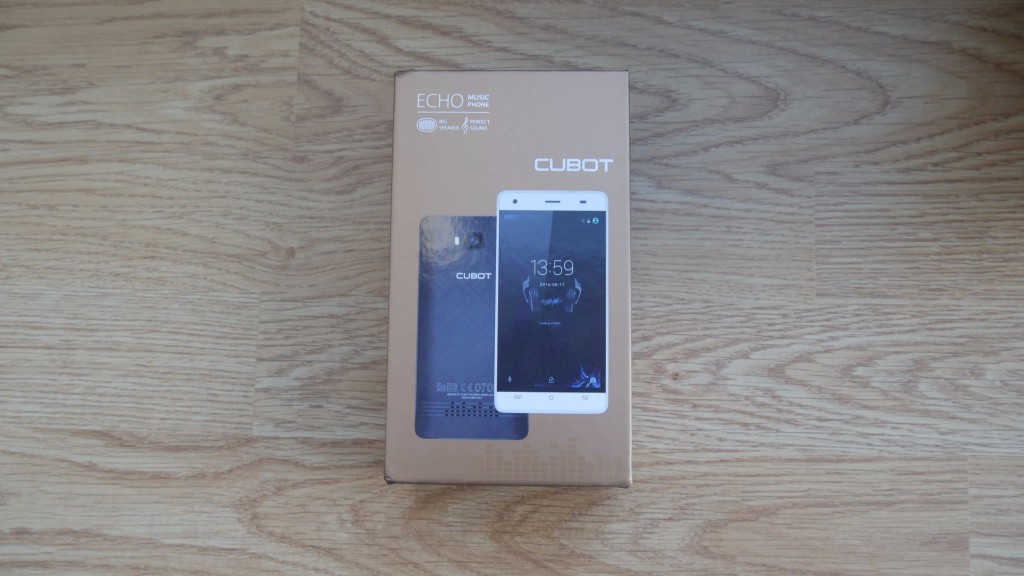
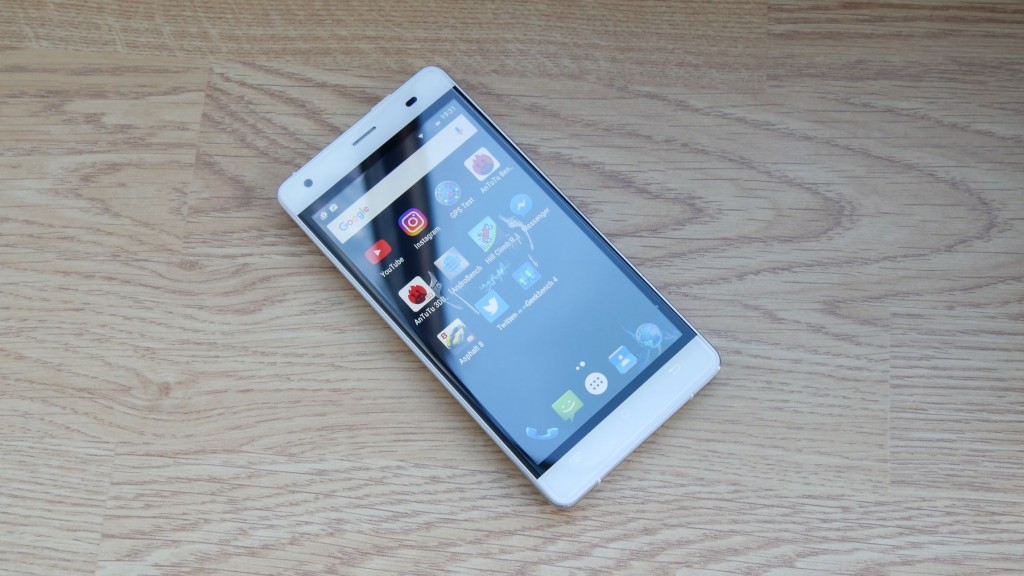
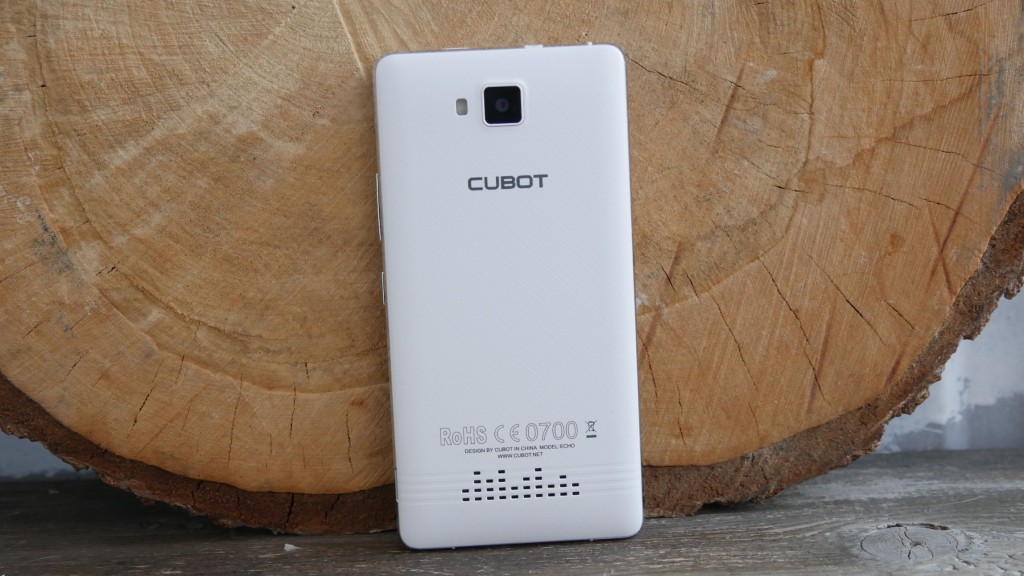
The market is flooded with cheap smartphones from China and I just came across a cheap Cubot Echo device that gets most of the basics right for the low price of $85. Learn more in the full review.
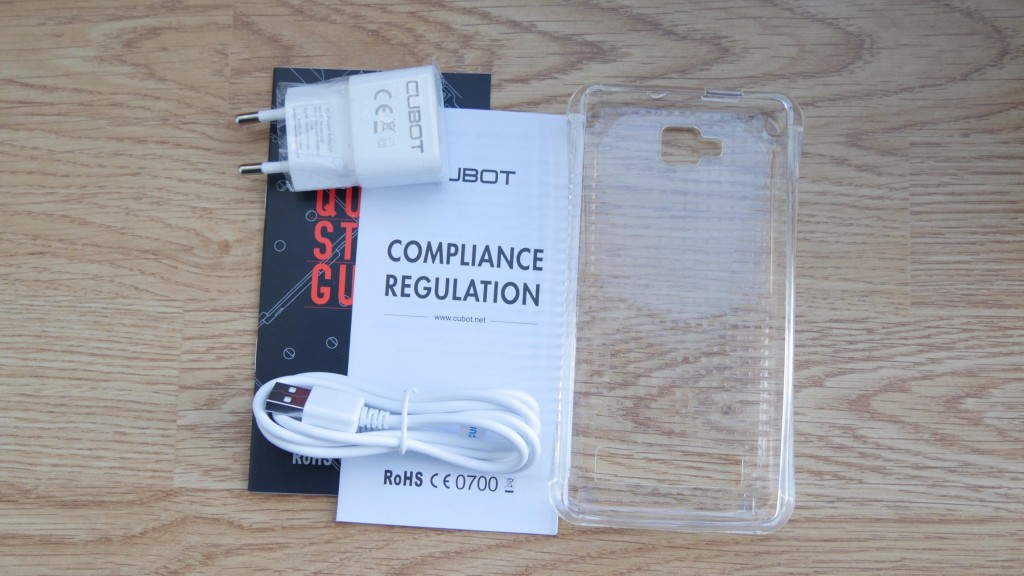
The phone ships with all the usual stuff and some extras include a high-quality TPU case.
DESIGN
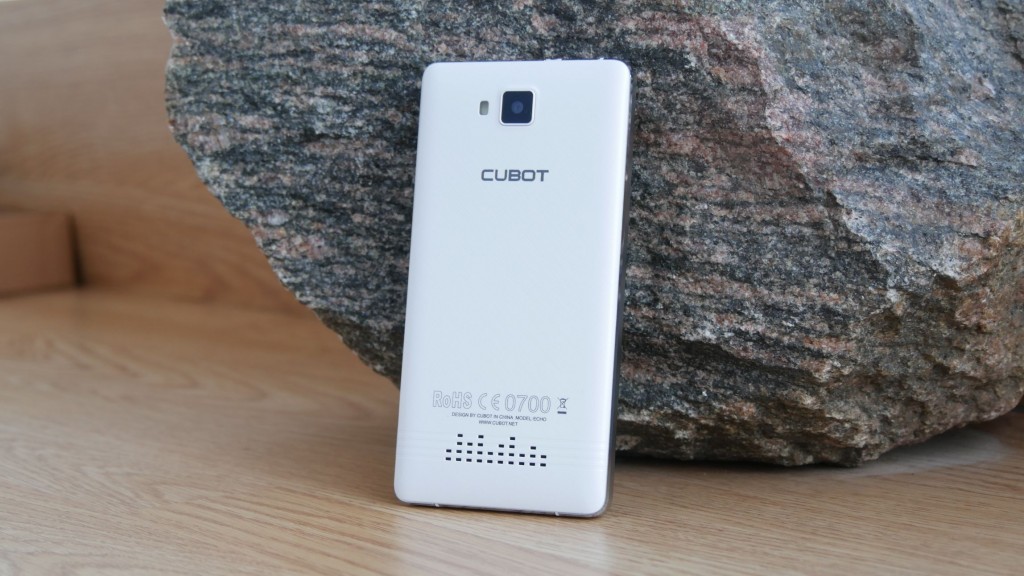
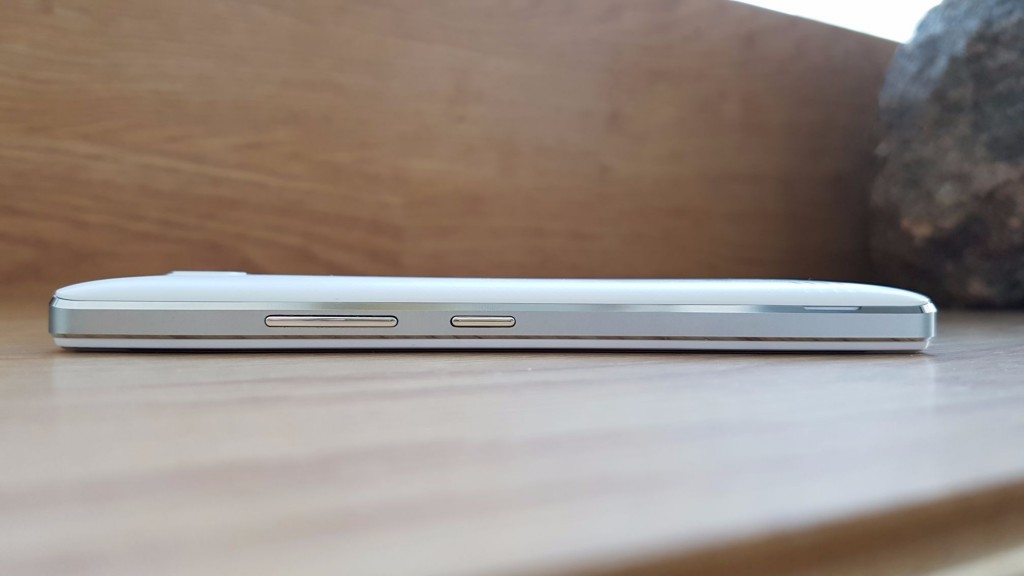
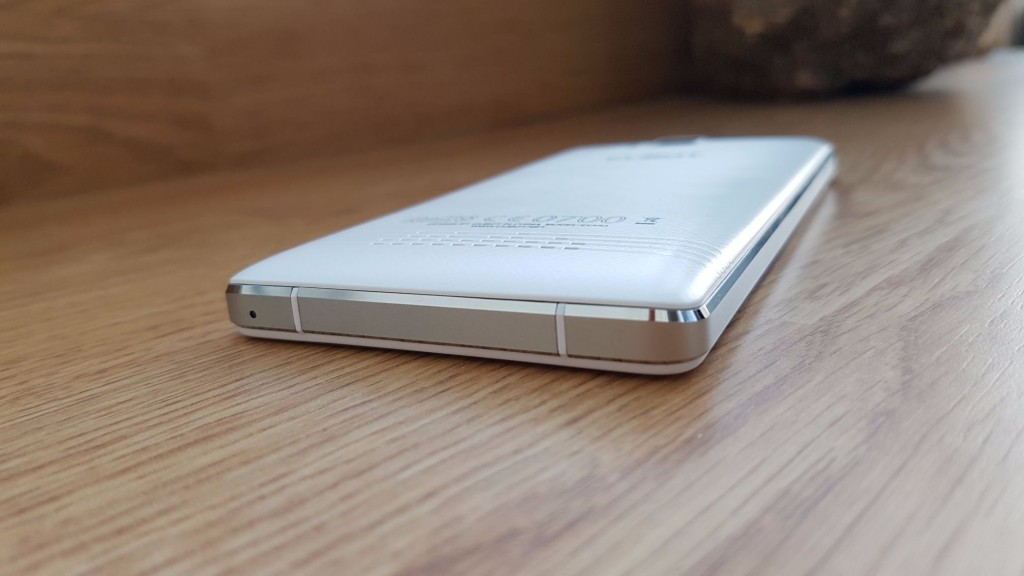
The Cubot Echo does not sport exceptional looks but it is a very well made phone as it has a solid metal frame that goes all around the device. The buttons, however, are plasticky and they feel cheap.
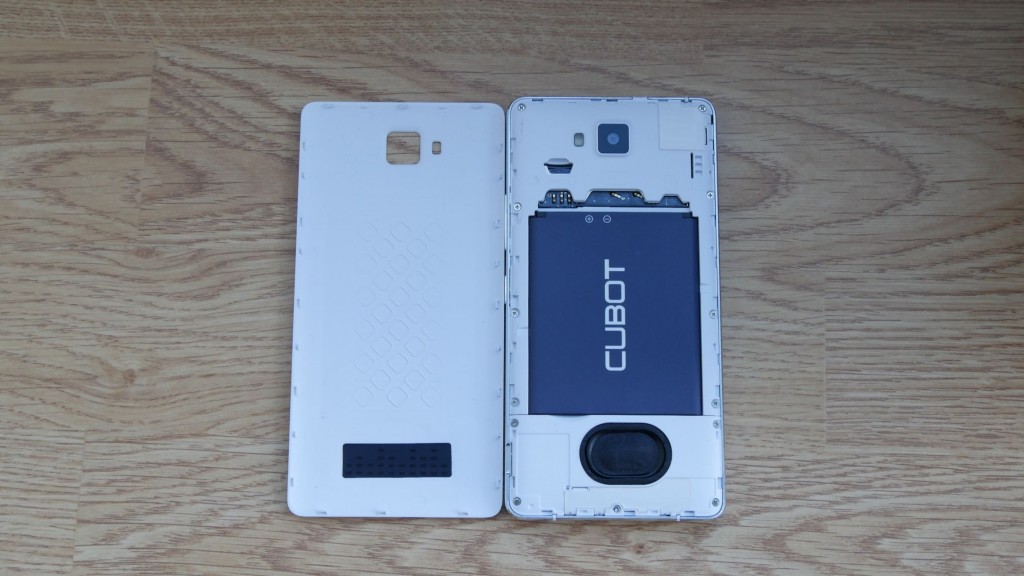
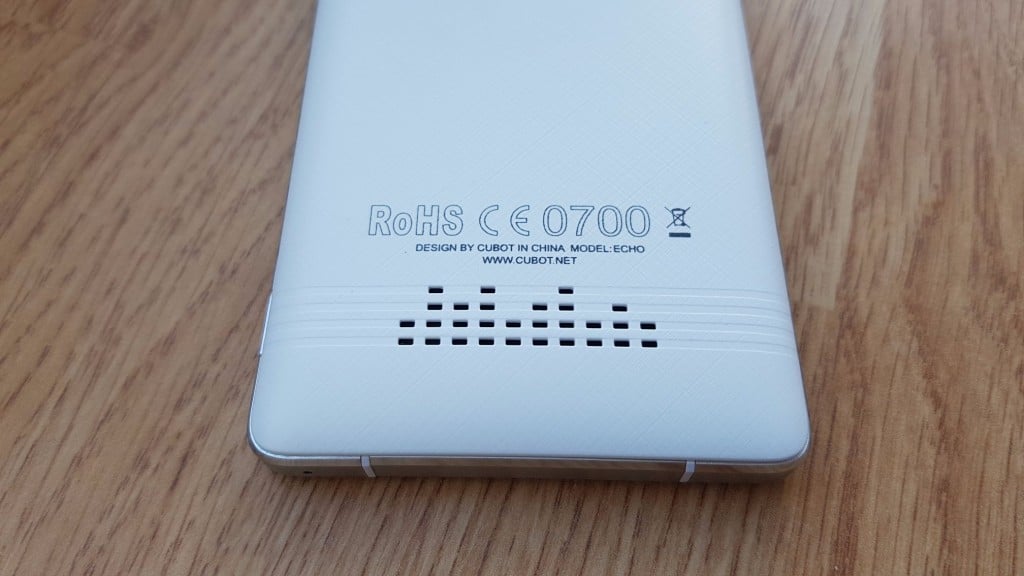
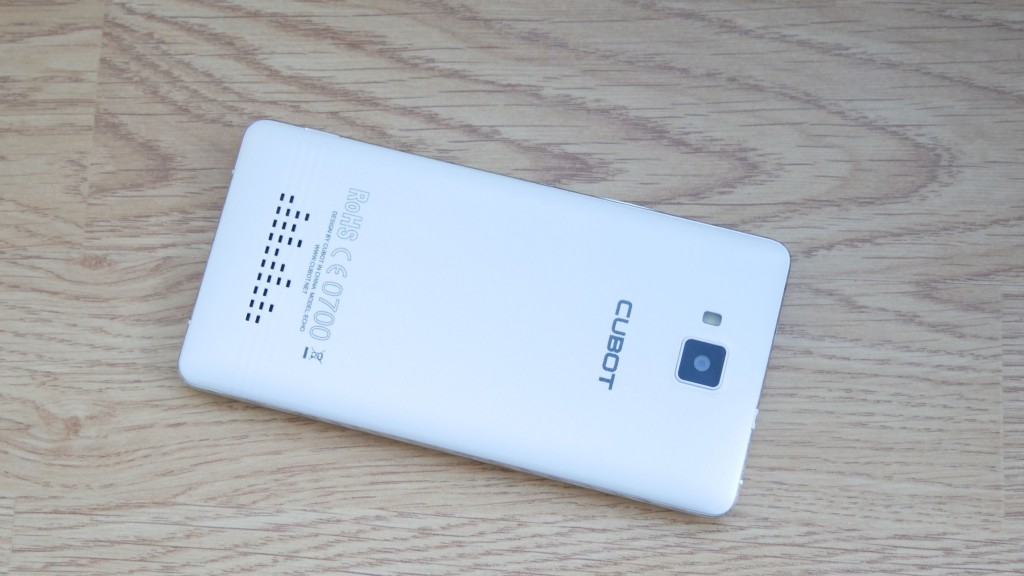
One thing you are going to notice is that the phone is very thick, measuring at 11cm. That is not only due to a pretty large 3000mAh removable battery but also due to the fact that the phone has an enormous speaker built-in.
The speaker can get really loud and the sound quality is pretty good for a cheap phone. However, the sound may get distorted at the highest volume settings.
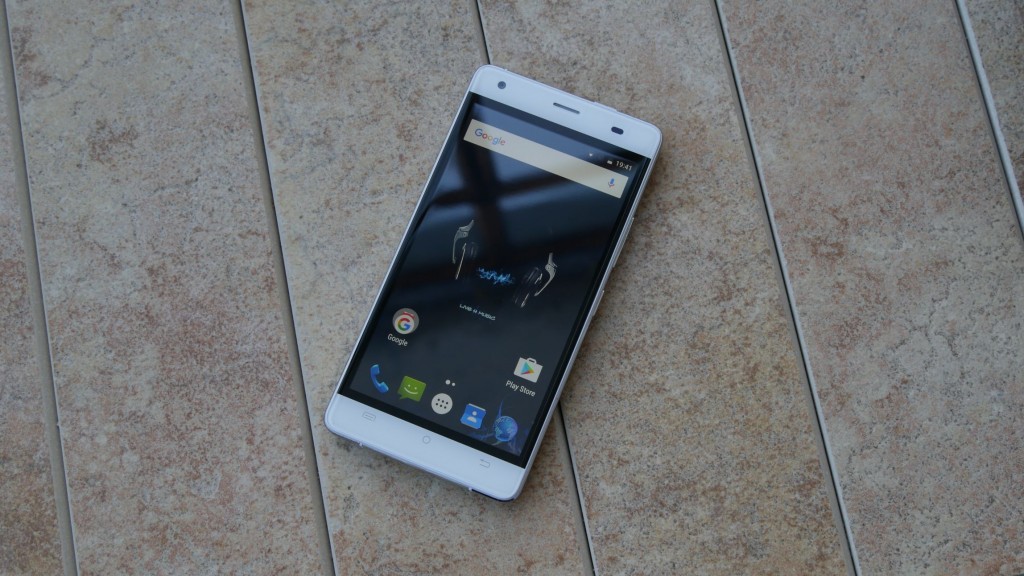
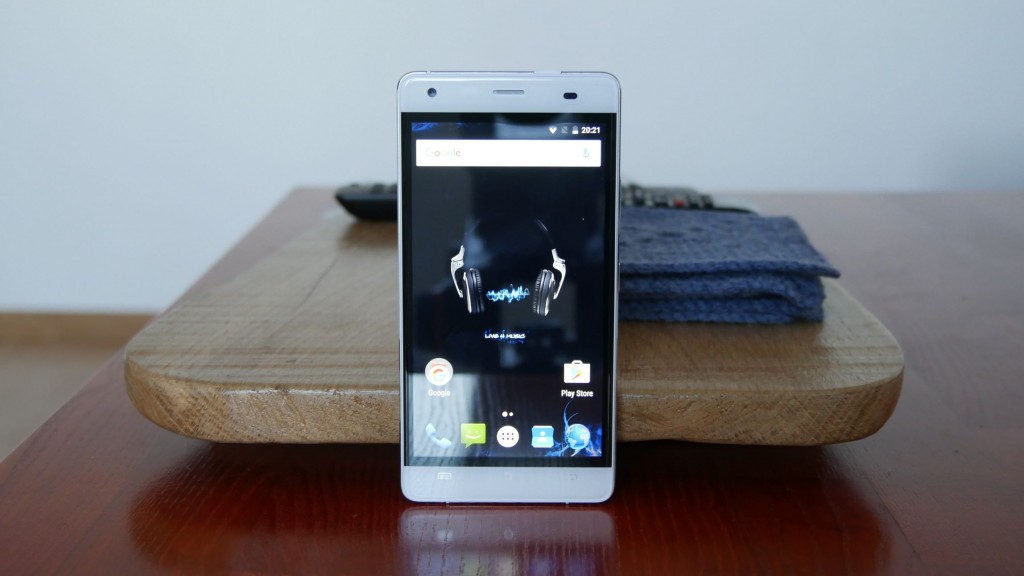
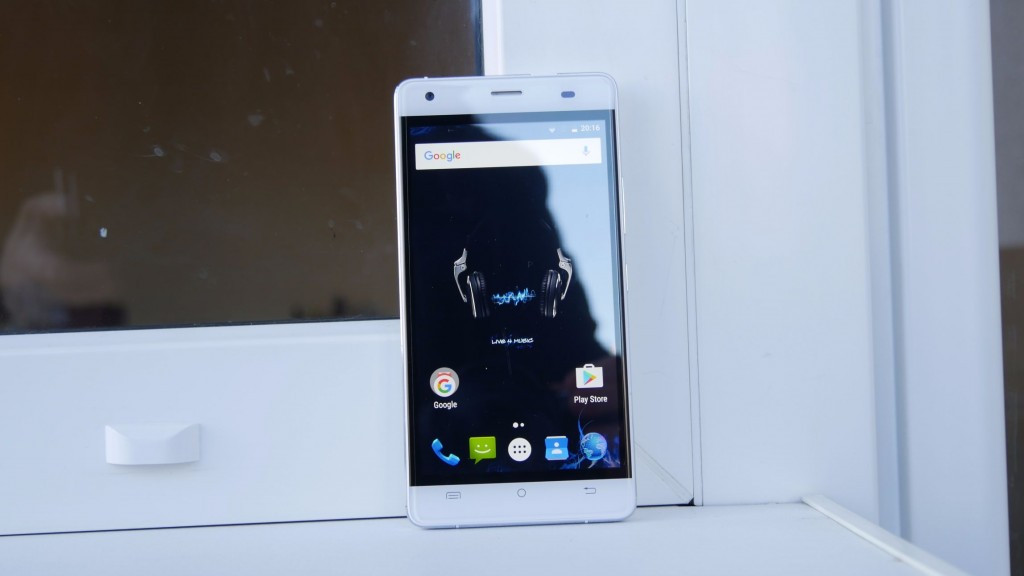
Speaking of the display, the 5” 720p panel is pretty sharp and bright for a cheap phone but we have those enormous bezels on each side.
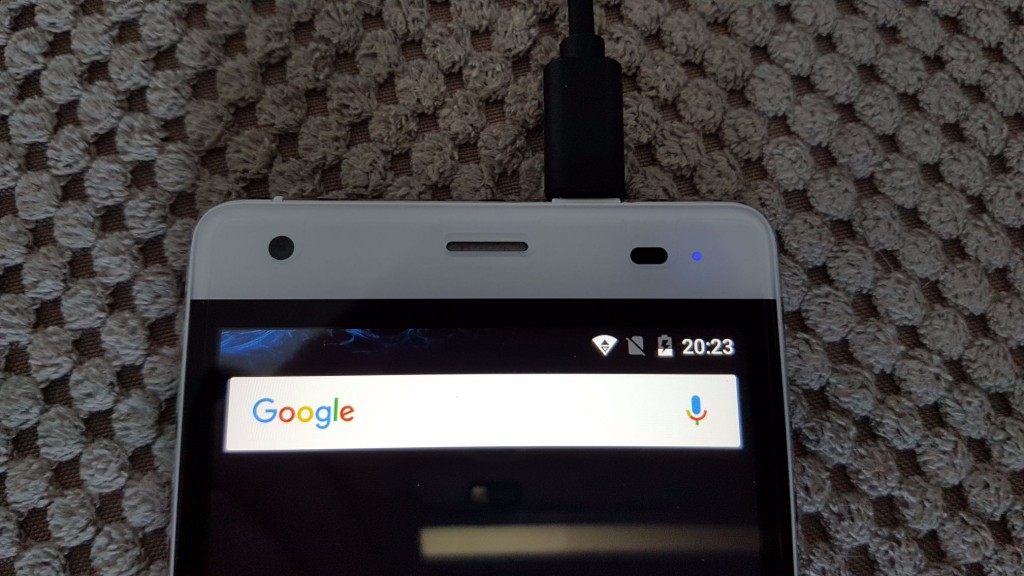
It’s great that we have a 5MP front facing camera and the LED notification light but the capacitive buttons are not backlit.
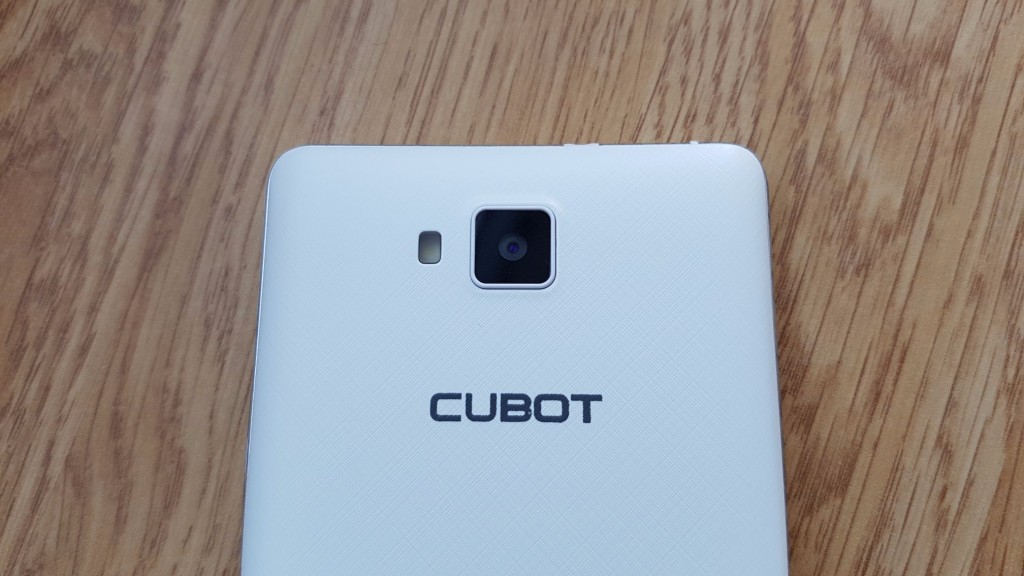
As for the main camera, there is a 13MP shooter.
HARDWARE
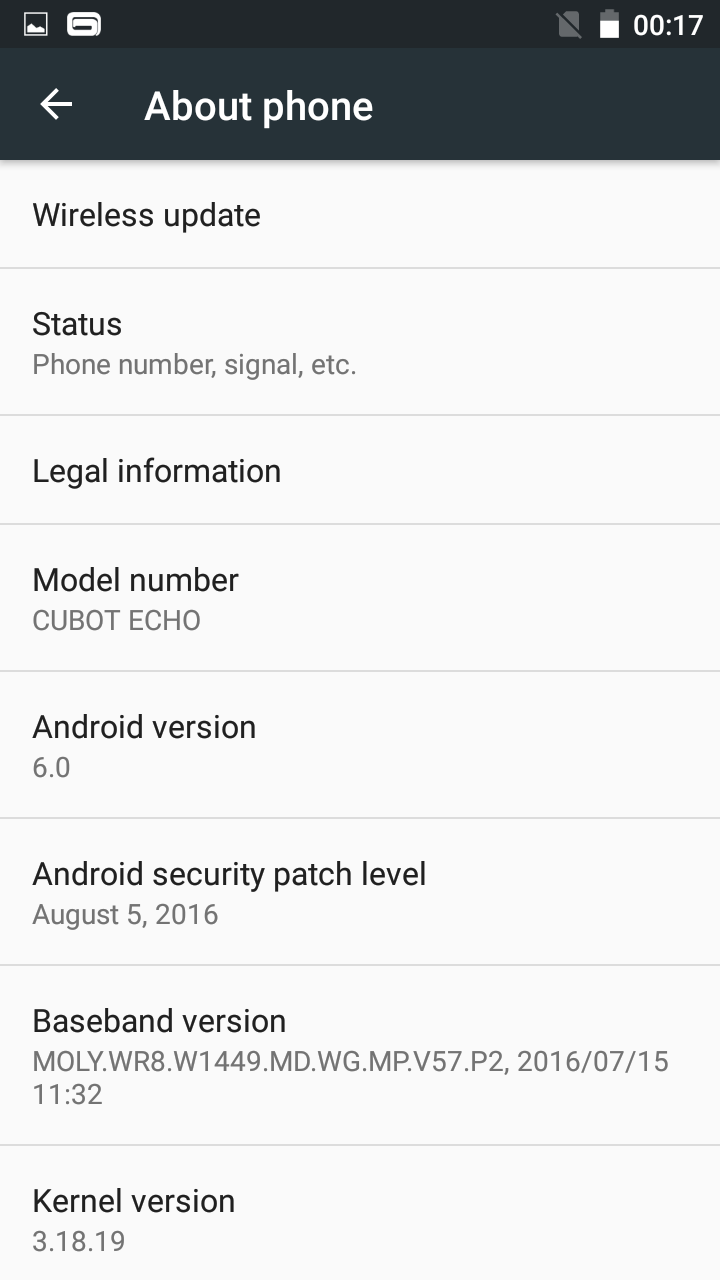
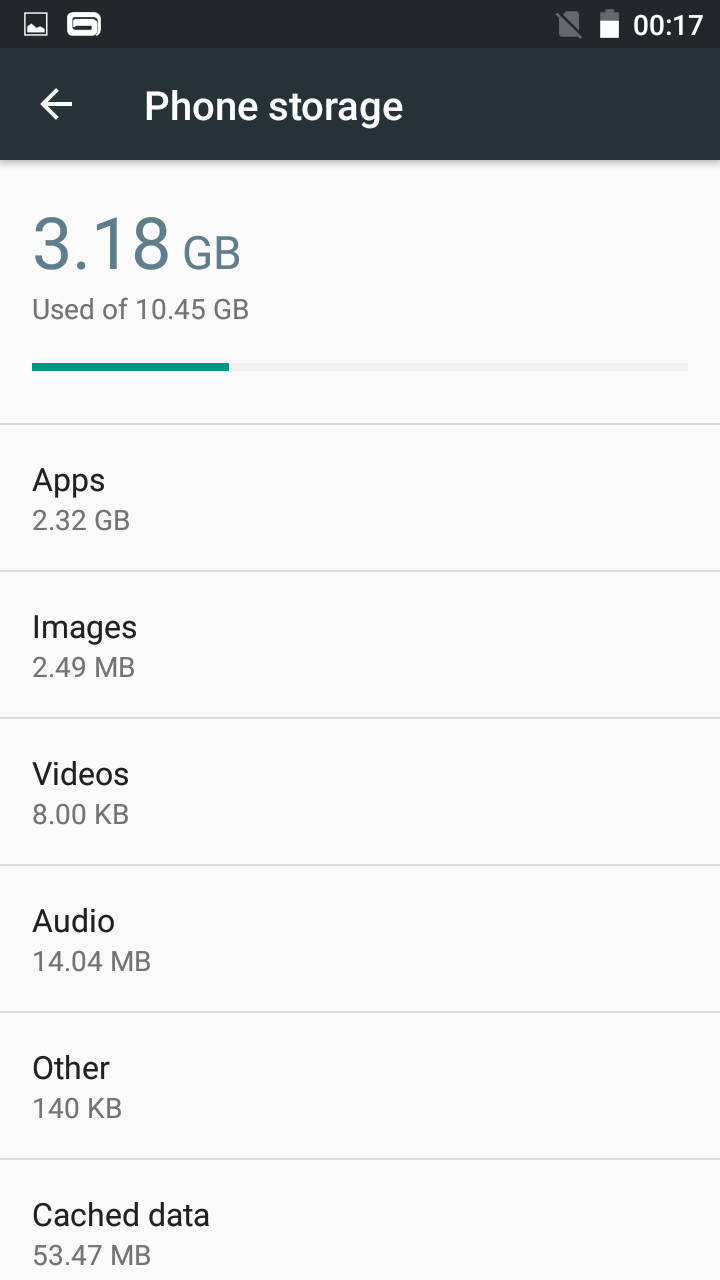
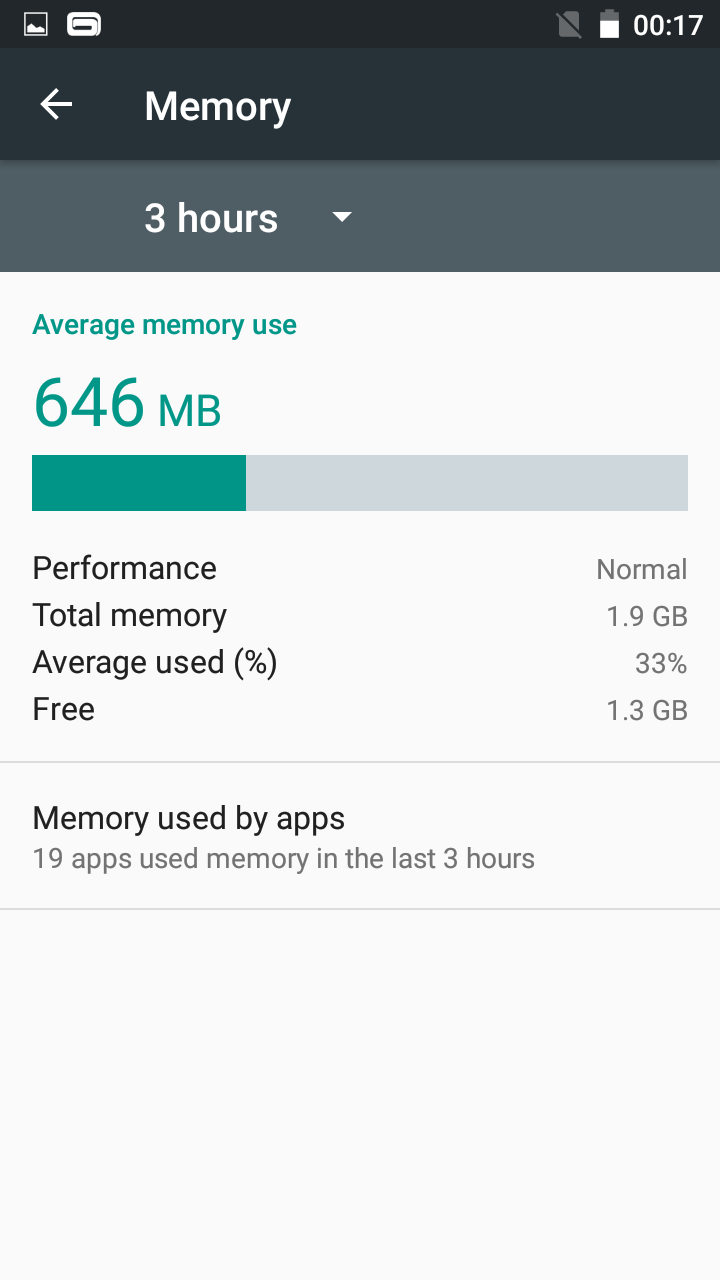
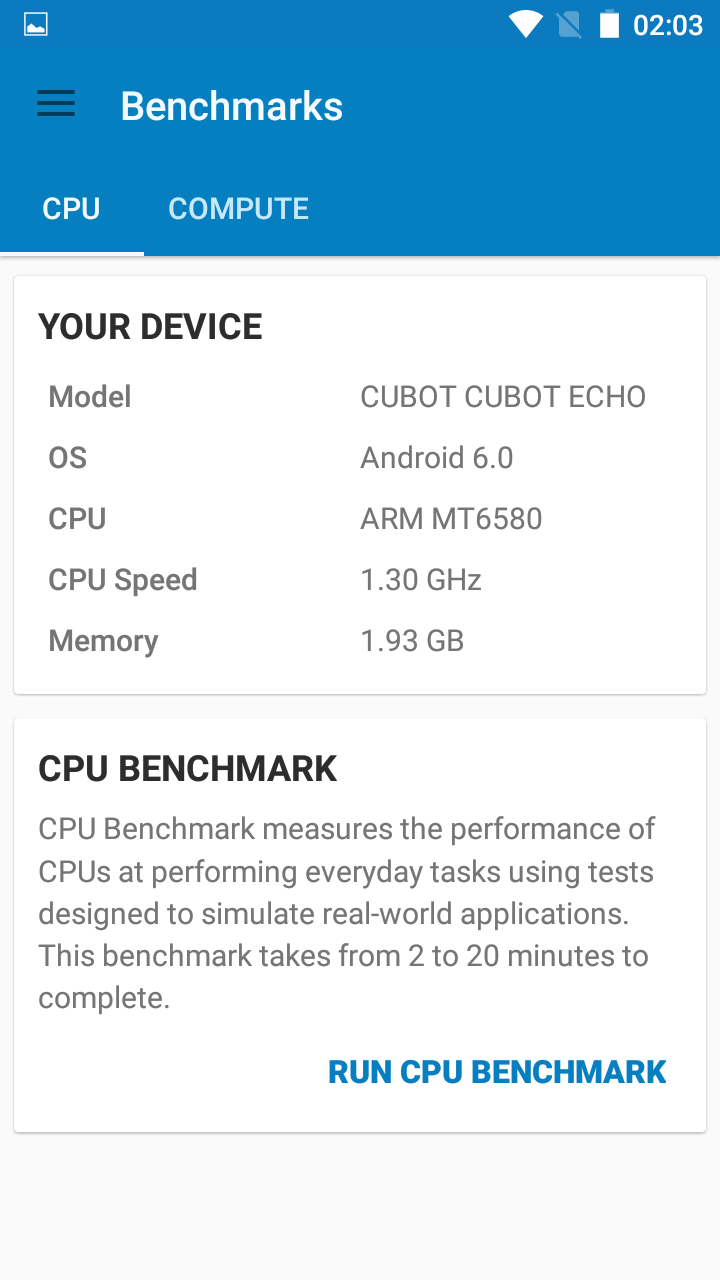
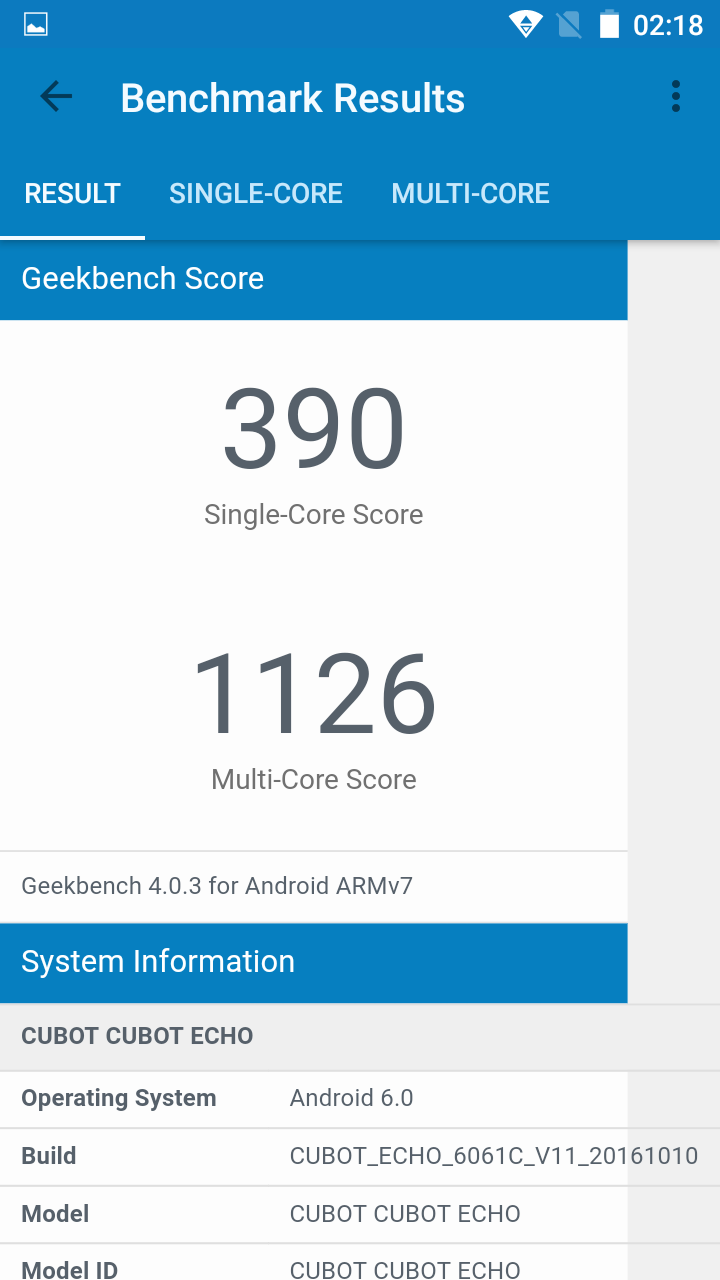
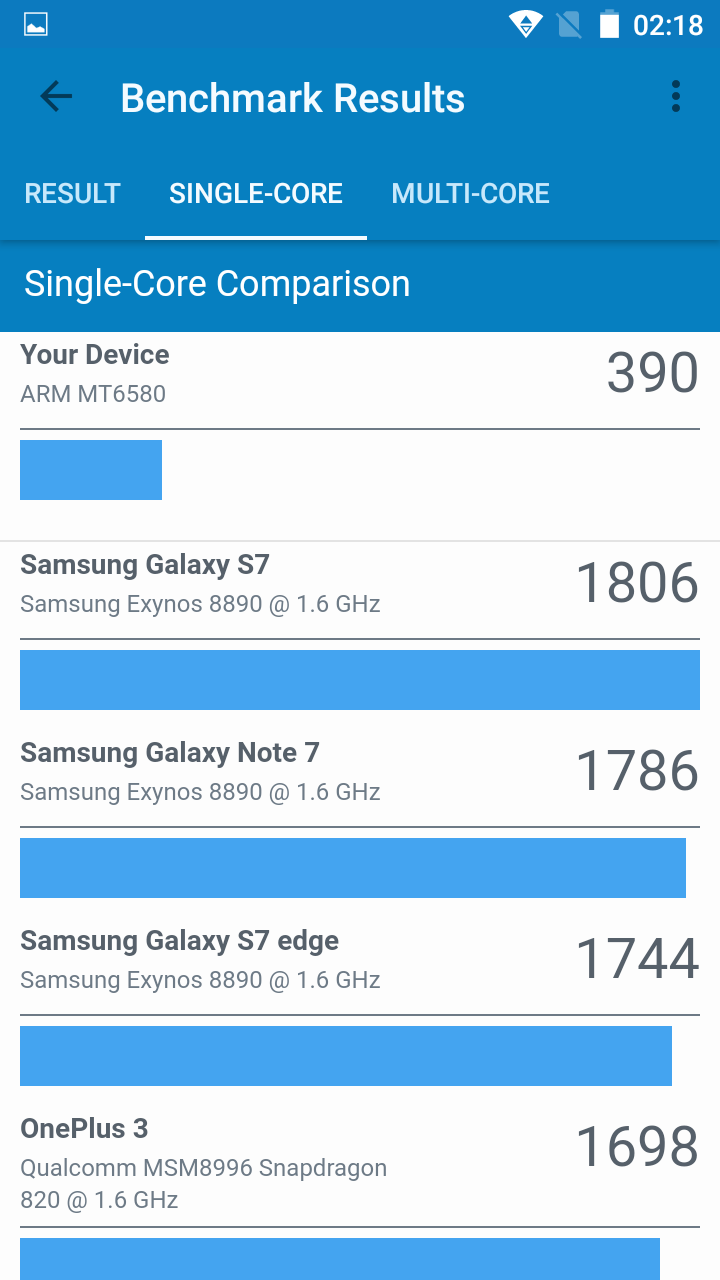
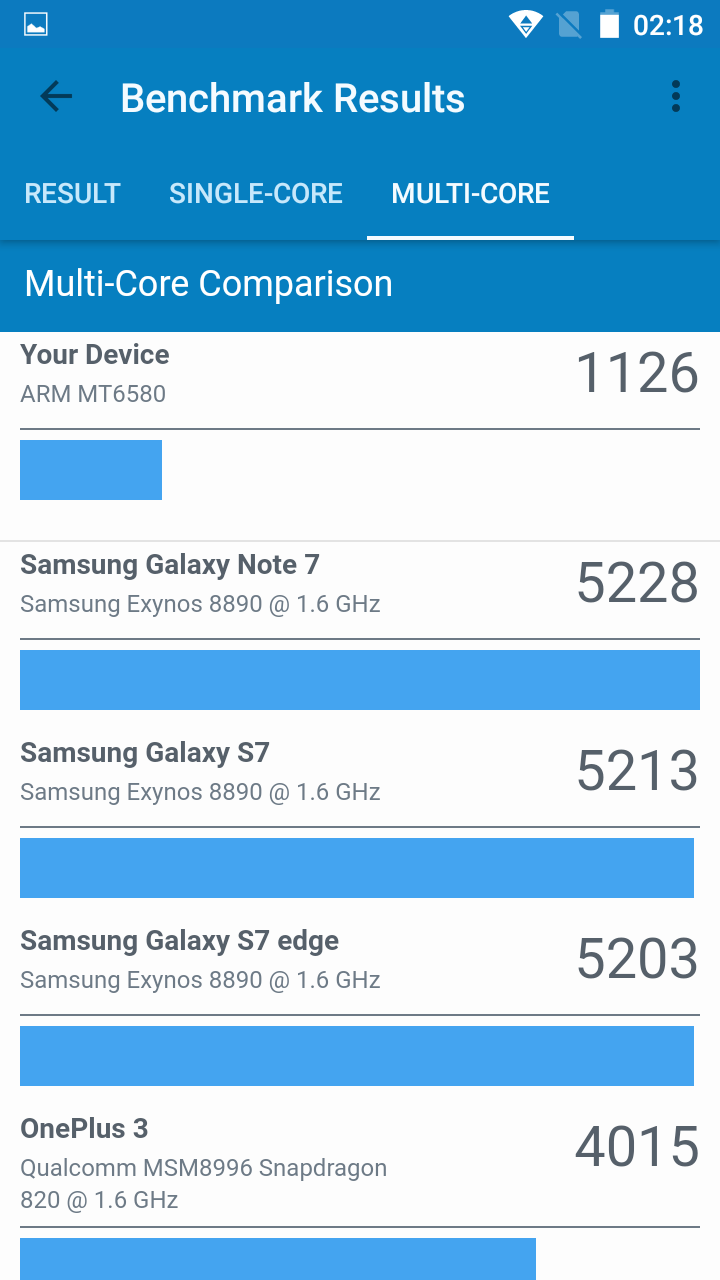
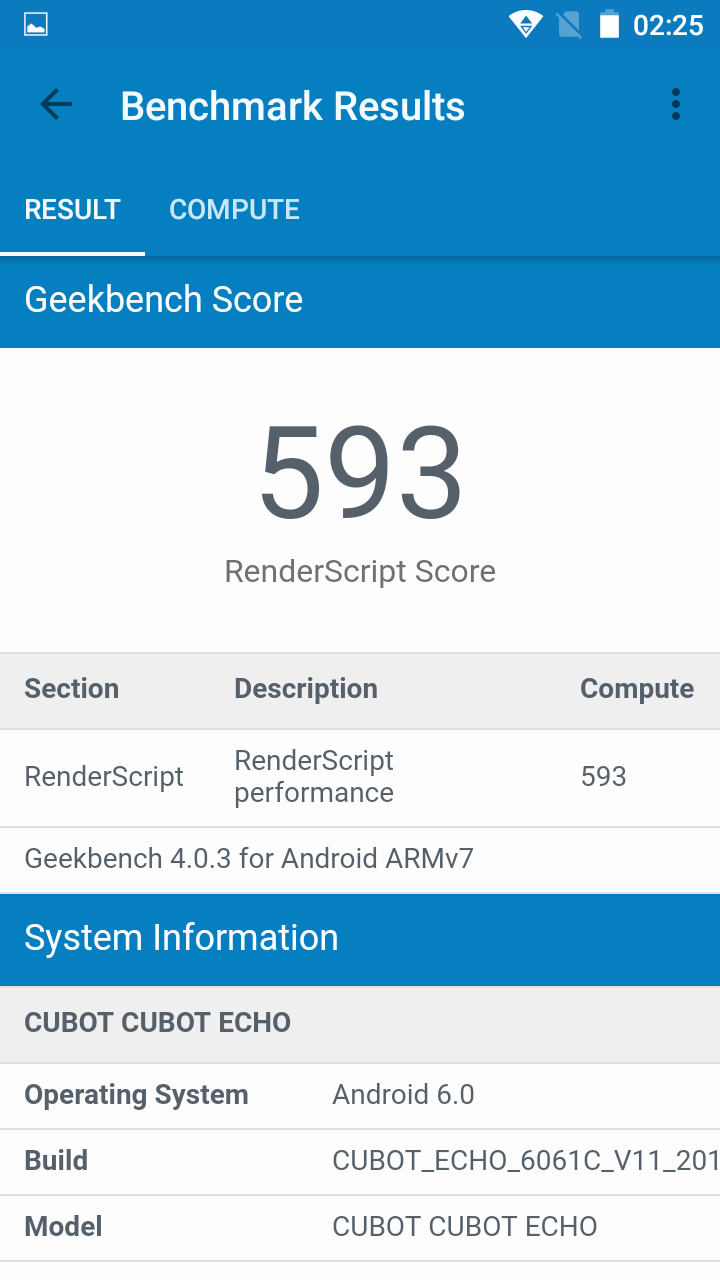
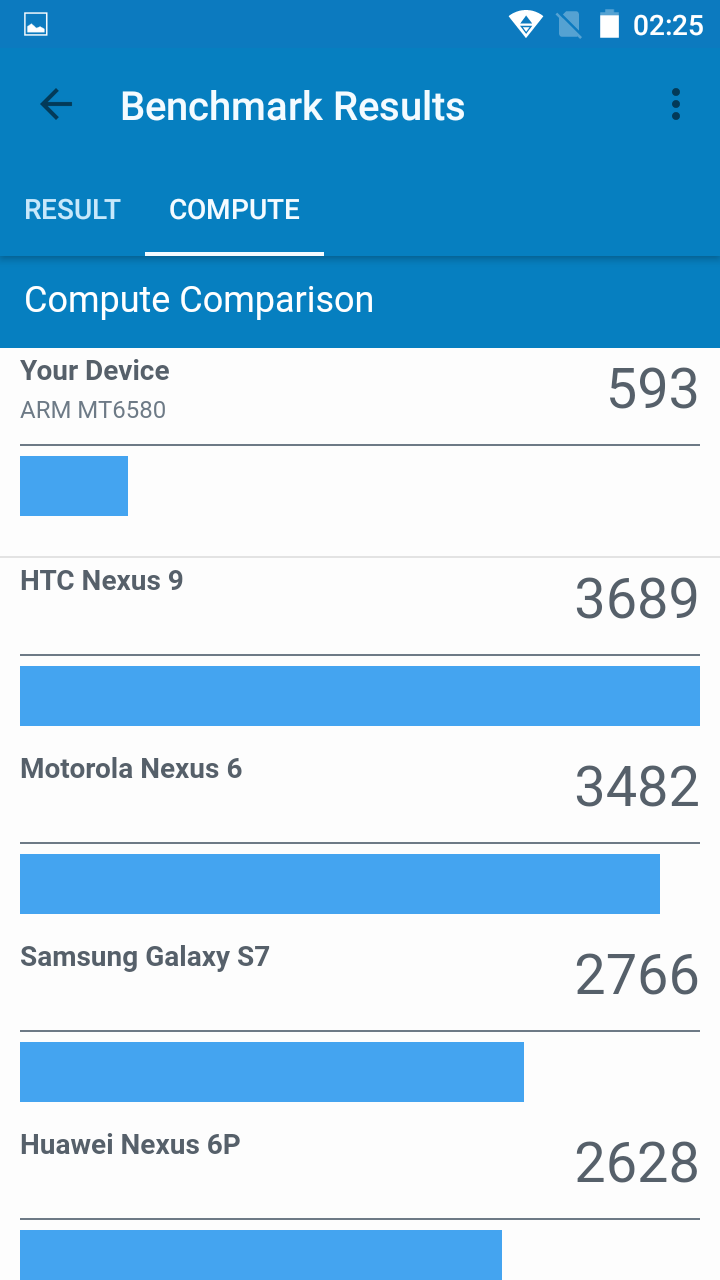
The Cubot Echo runs on a little outdated Mediatek 6580 chip with the clock speeds of 1.3GHz. Also, the phone has 2GB of RAM and 16GB of expandable storage.
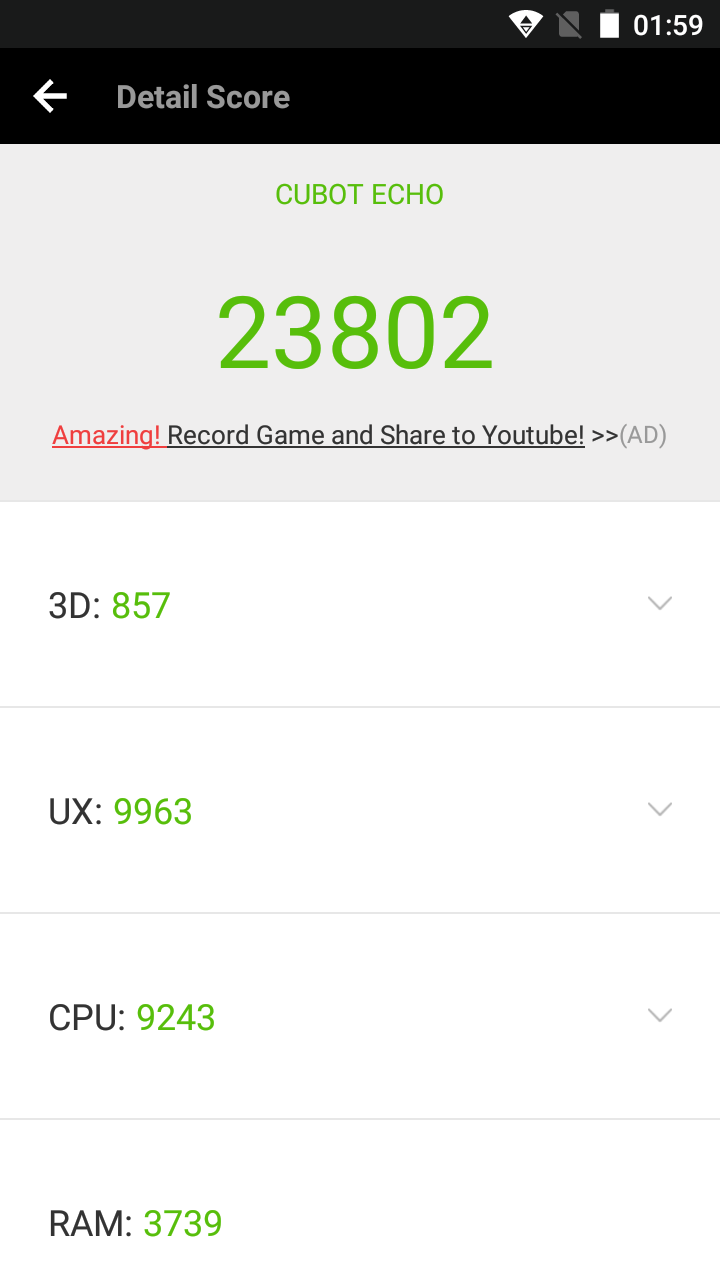
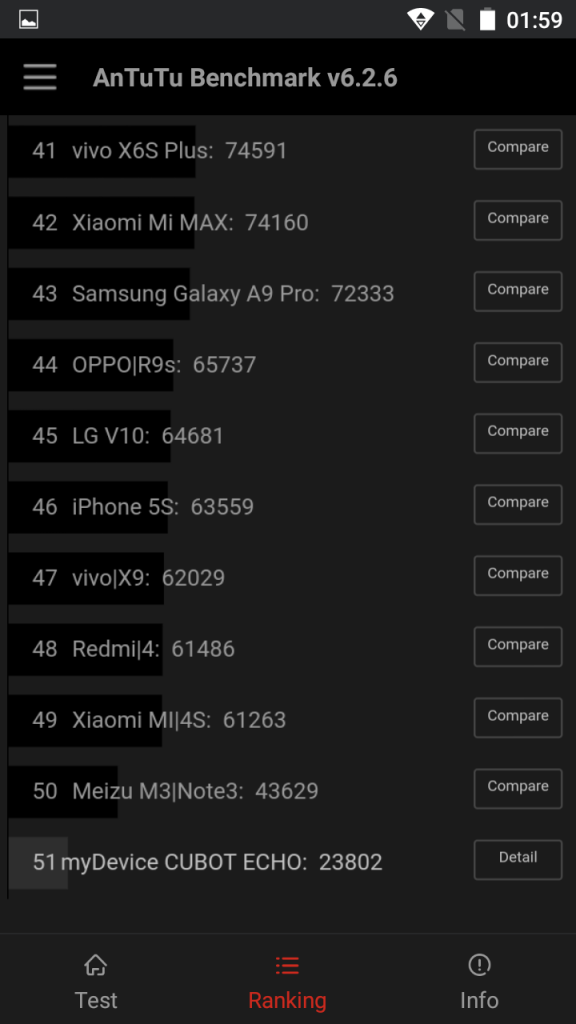
Honestly, the spec sheet does not really impress but some 3D games like Asphalt 8 run absolutely fine on medium graphics.
USER INTERFACE
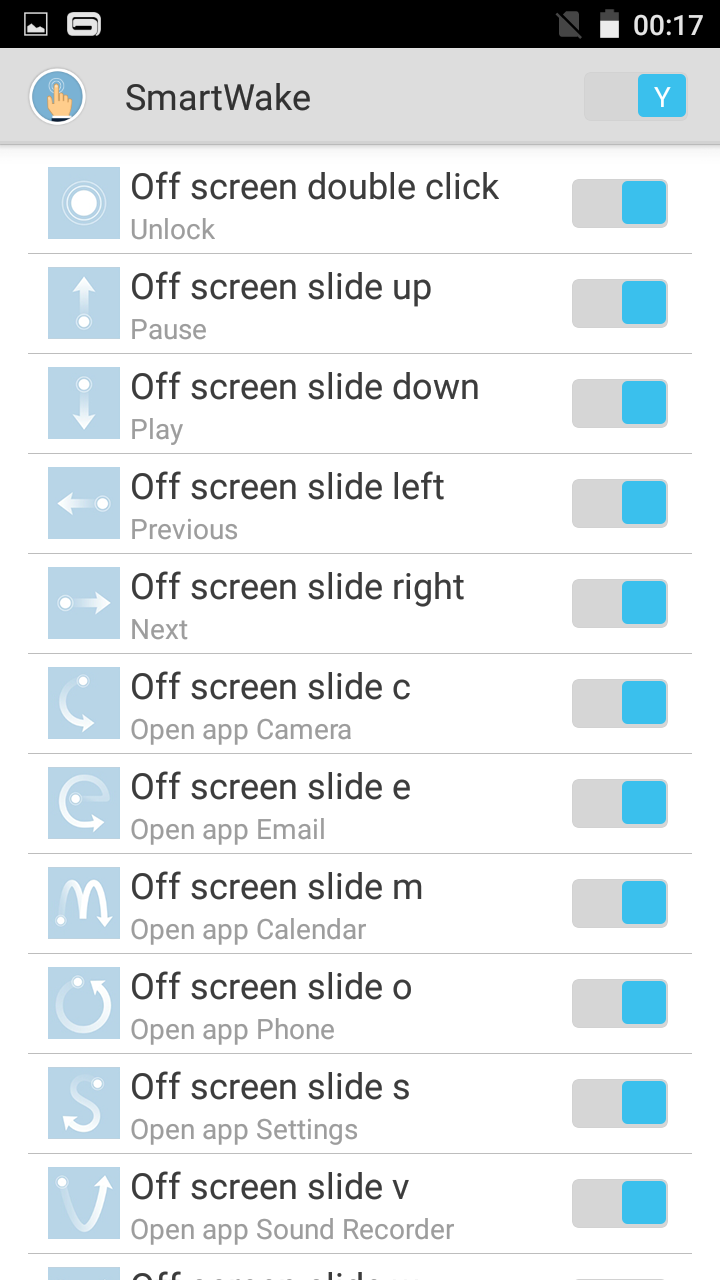
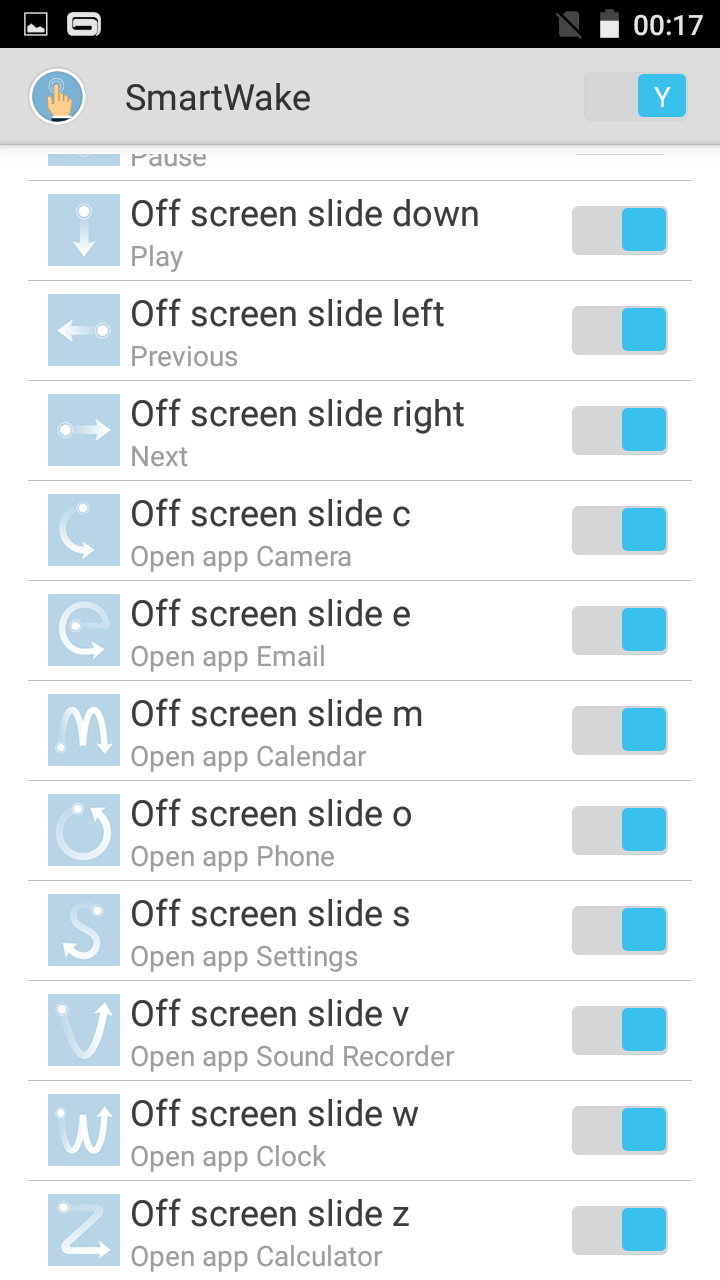
The phone ships with the Android 6.0 but we have a few added features by Cubot. Some of the extra features include a variety of gesture and motion controls. Some of them work well but others are very slow to respond.
In general, the UI performance is good. I didn’t have lag or stutter on the daily basis and I think that’s the most important thing for a cheap phone.
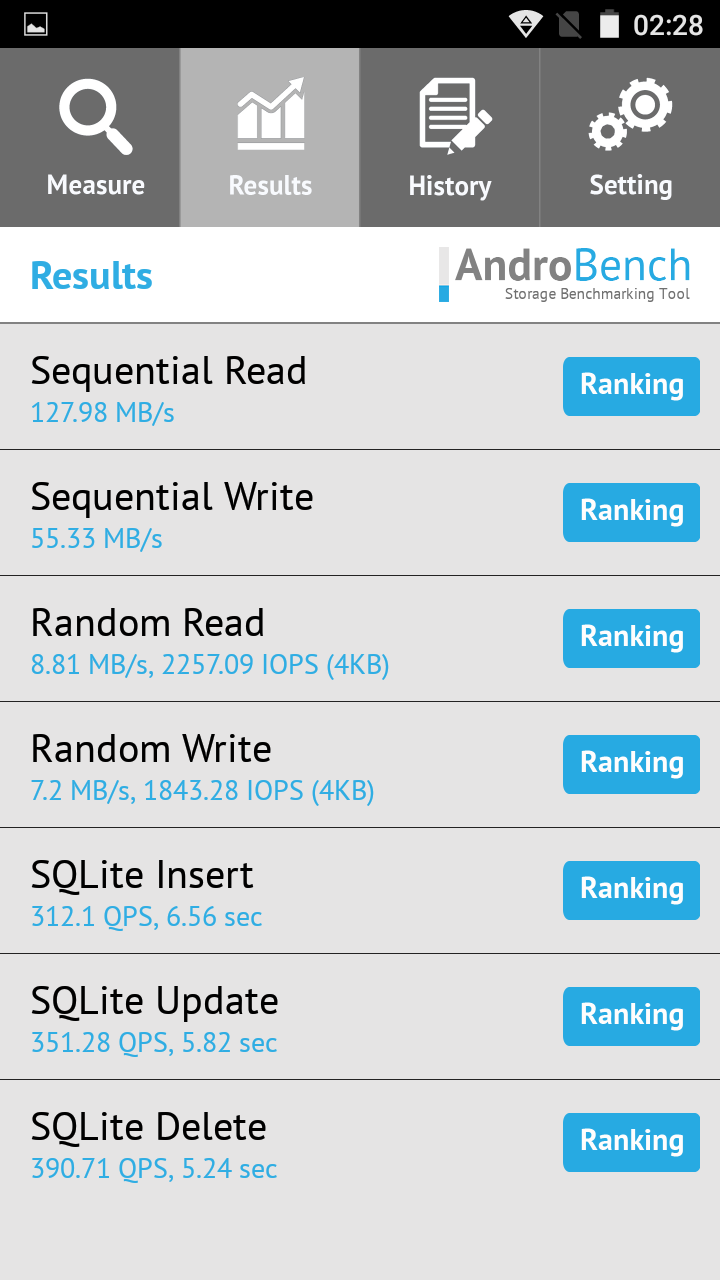
BENCHMARKS
IMAGE QUALITY
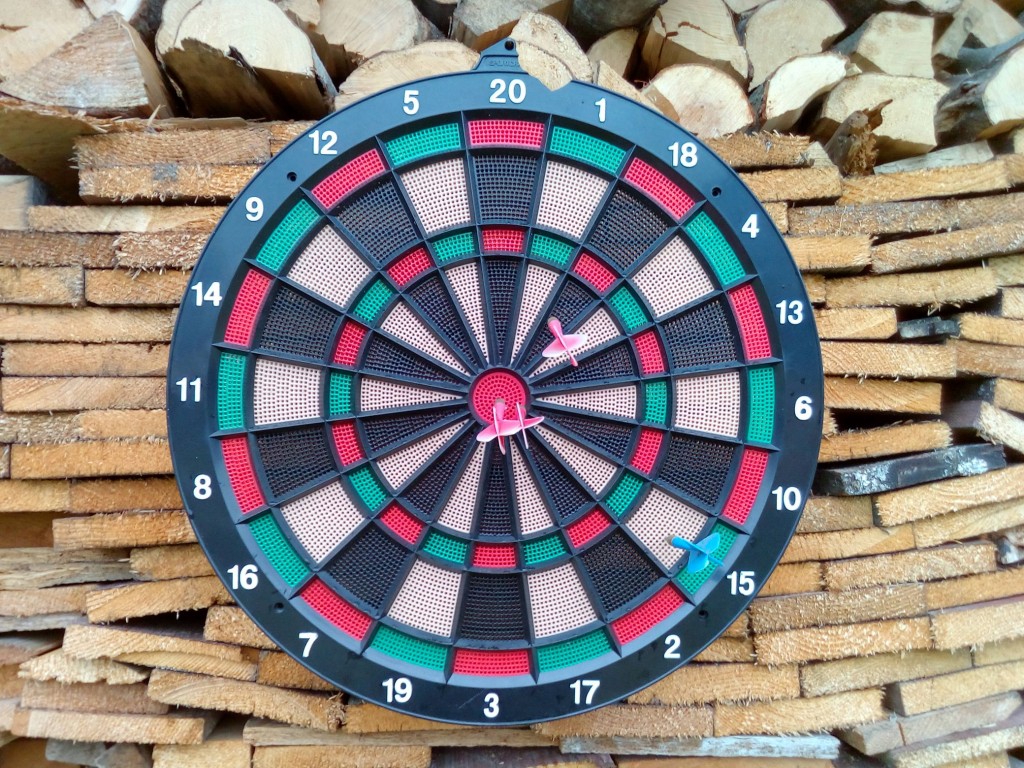
You should never expect any miracles from the cameras of budget phones but the Cubot Echo can take some pretty nice daylight photos for the phone this cheap.
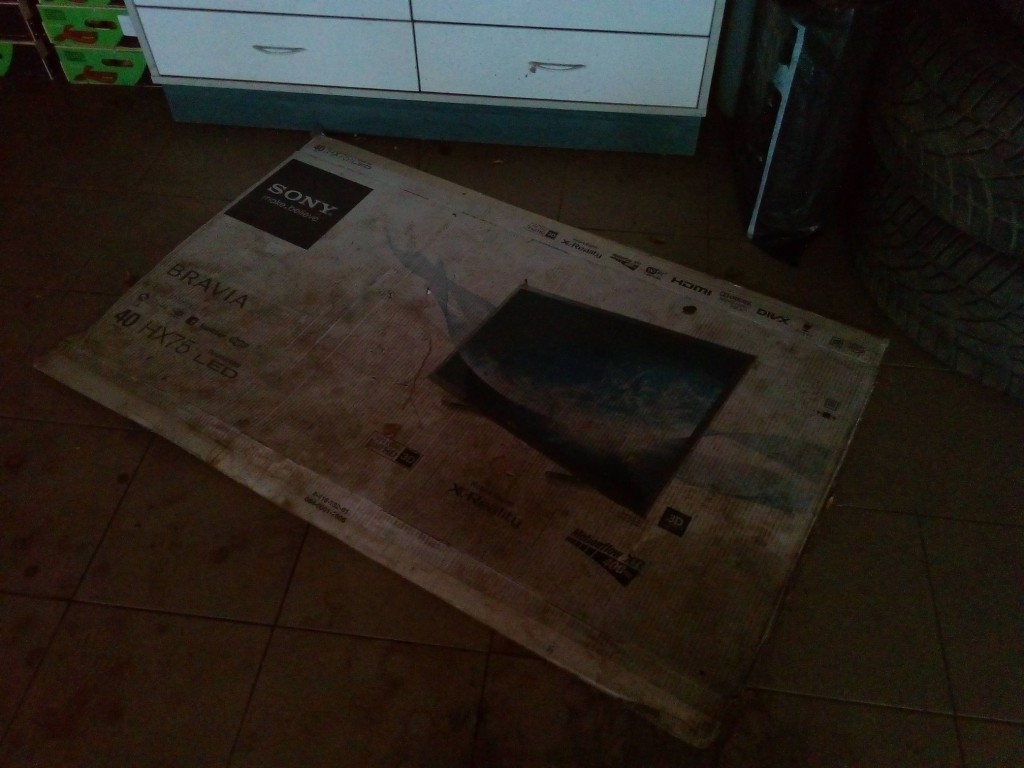
Obviously, the quality decreases in lower-lit situations as on all cheap phones.
The selfies won’t look as sharp as you may expect but it may be enough for social media.
As for video, the quality of the footage is kind of poor like on most of the cheap phones.
CONNECTIVITY
When it comes to connectivity, the phone does everything quite well. The GPS lock speeds are fast but it could be more accurate when you use it with navigation apps.
BATTERY LIFE
The 3000mAh battery performs great. I could get about 1.5 days of usage out of this phone, which is a good result.
CONCLUSIONS
Cubot Echo is not going to be your next powerhouse device but it gets the basics right.
We don’t have any exceptionallooks but the phone is well made, it has a metal frame, it is compact to carry around and stock Android is what the cheap phones need.
You can also take some okay looking photos and the battery life is great thanks to a pretty large capacity.
However, the processor is a little outdated if you are a spec head, the capacitive buttons are not backlit and there are those huge black bezels that a lot of people hate.
At the end of the day, Cubot Echo may not be the only cheap device out there but it gets all the basics right and it is a pretty fast phone on the daily basis. However, you have to consider if the previously mentioned shortcomings are important to you or not.
The Huawei Honor Magic is still making waves mostly because of its eight curved surfaces which is just magical. The smartphone is touted as a phone of the future coming with many innovative features. It has now been revealed that most of the innovative technology on the Honor Magic could find its way into future Huawei phones if they actually prove successful.
According to Yu Chengdong, Huawei’s Senior Vice-President of reviews , the Honor Magic is a concept phone mean’t to test the innovative technology the company has in its arsenal. Some of the innovative technology on the Magic include the eight surface design, high current fast charge, intelligent operating system and other smart features. Some of these features may find their way into future flagships in the near future and that would be a welcome development.
Huawei earlier today unveiled its latest flagship Honor Magic in a ceremony held in China. The Huawei Honor Magic features a spectacular design which is nothing like we have seen in the past. It is just beyond stunning. The device went up on its first flash sale in China and we can tell you that the Honor magic was sold out immediately it went up on sale.
There is no specific figure about the amount Huawei did put up for sale but the flagship device is reported to have sold out even faster than the Xiaomi Mi Mix. In all sincerity, the Honor Magic flooors the Mi Mix in design and features it packs on board.
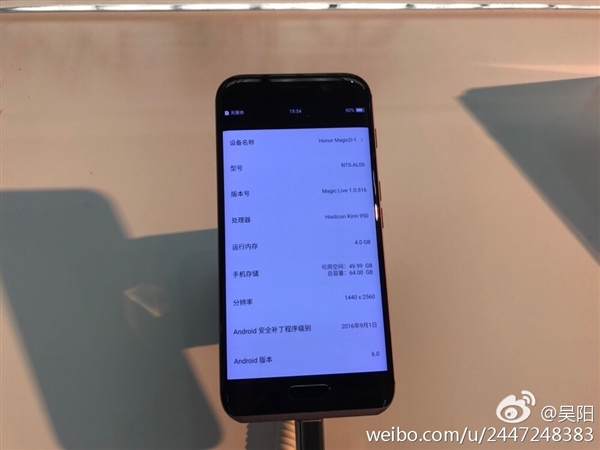
For the avoidance of doubt, the Honor Magic sports a 5.09-inch AMOLED display with 2K resolution. The display is curved on all sides up front as well as at the back, giving the Honor Magic a unique look. The device also tag along the Kirin 950 chipset as well as 4GB RAM and 64GB of storage.The device supports NFC and has a fingerprint sensor embedded under the home button. There is a dual camera setup at the back sitting horizontally with the LED flash at the side. The device crams a 2900mAh battery onboard which is touted as being capable of achieving 90% charge in just 30 minutes.
The 3,699 Yuan price tag didn’t even deter the device from being sold out in seconds. It is not known when the device will go on its second flash sale but we’ll keep you updated, as always, on that.
A Xiaomi official has revealed the company’s plans as regards rolling out Android 7.0 Nougat upgrades to its smartphones. If indeed the company starts upgrading to Android 7.0, it won’t be coming late to the party as the latest Google OS are mostly available on recently launched flagships. Companies like Huawei and Lenovo had already started rolling out Android N to some of their smartphones anyway.
The Lenovo ZUK series seems to be the fastest in terms of pace to get the Android N upgrade. Huawei also launched the Android N on its latest Mate 9 and a good number of its models are already testing the Beta version. The Xiaomi Mi 5 was reported to have gotten an Android 7.0 Beta ROM based on MIUI 8.
According to Xiaomi’s MIUI Operations manager, the Xiaomi 4C, Xiaomi 4S and Xiaomi Note will see the upgrade soon. The oficial didn’t reveal the fate of the Redmi series phones concerning the upgrades but we hope the upgrade will hit other Xiaomi phones like the Mi 5S, Mi Note 2, Mi Mix and others soon as well.
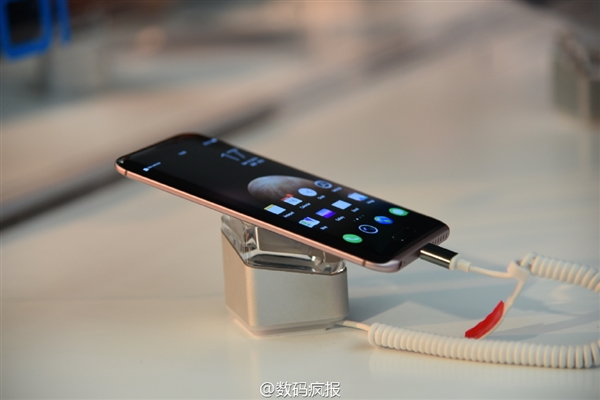
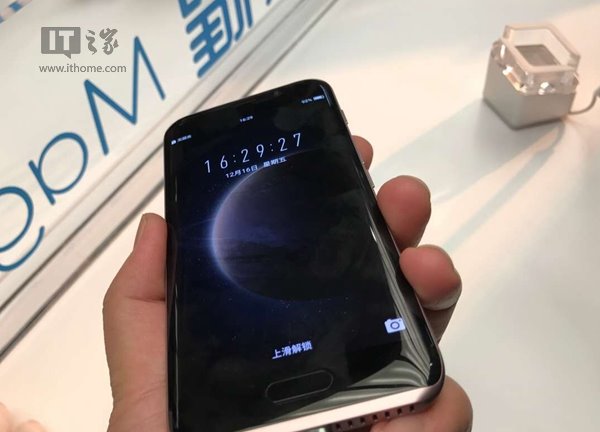
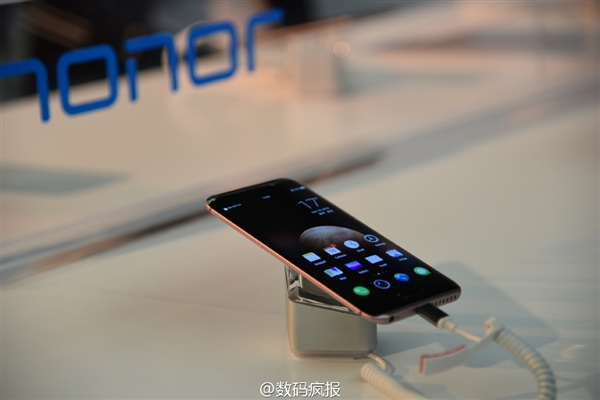
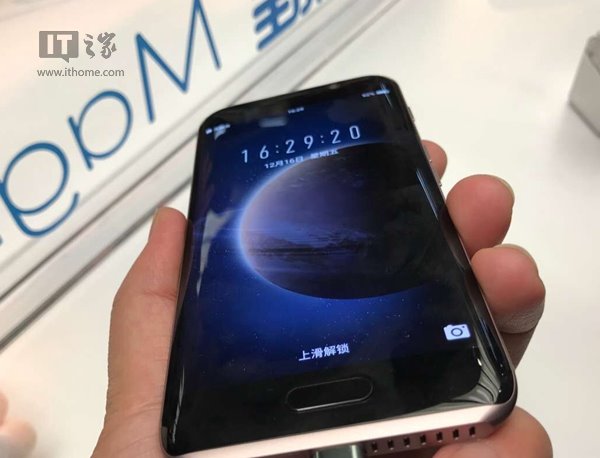
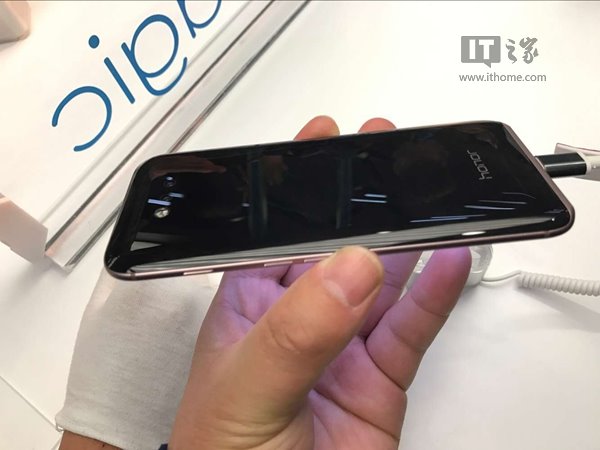
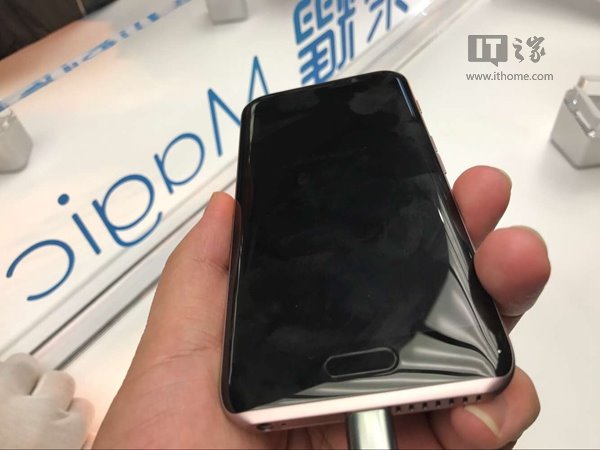
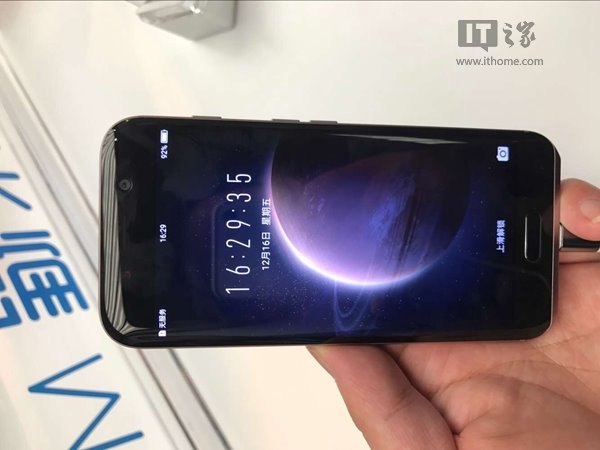
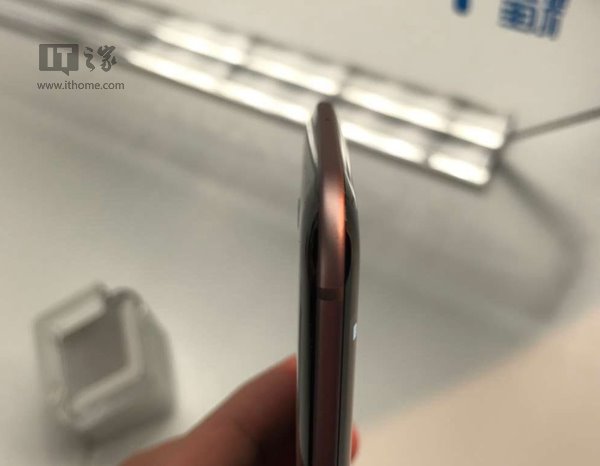
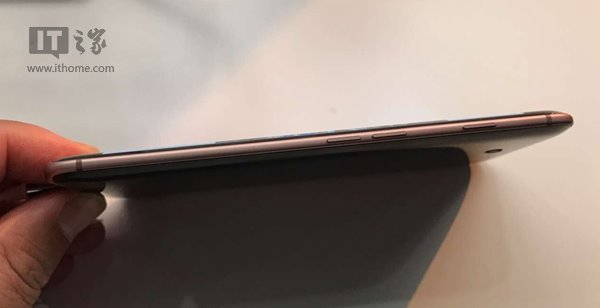
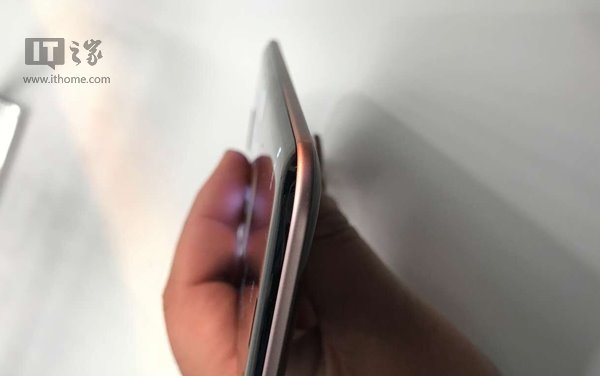
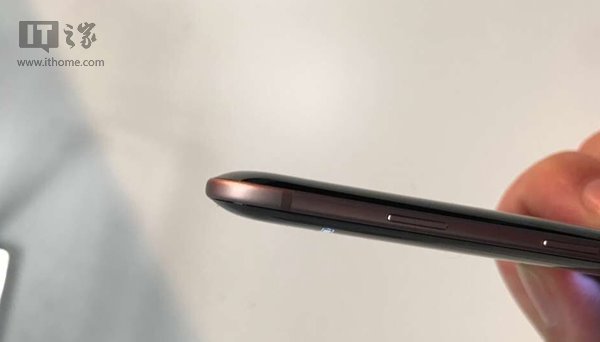
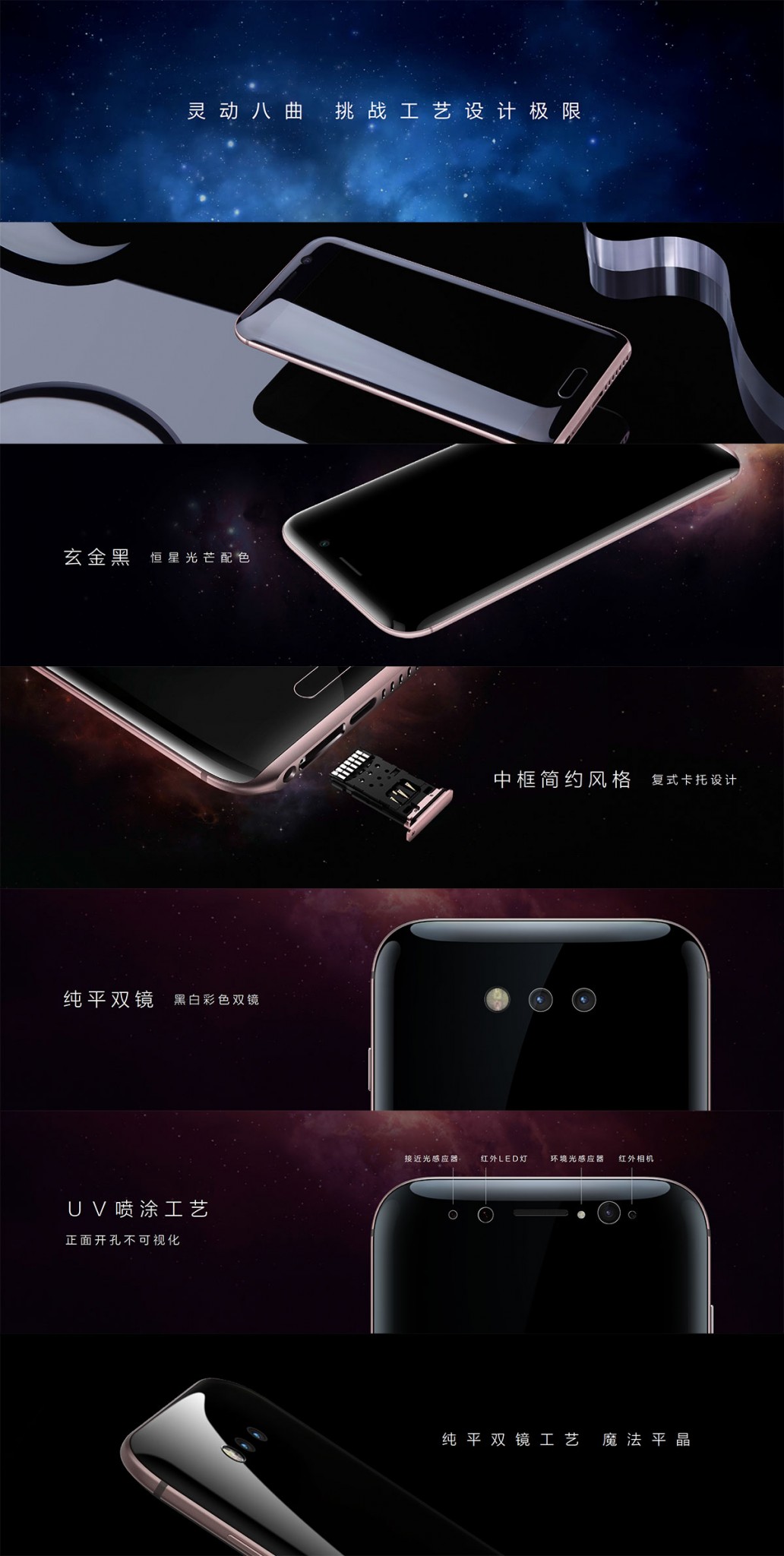
Huawei unveiled one of the most interesting smartphones this year –the Huawei Honor Magic. While the company has given less importance on the specifications of the handset, it made sure that the overall experience that you get using the device is top notch. This, of course, starts with the phone’s design which features a unique eight curved design. Like it says, the phone is curved on all the eight sides, including the back, bringing perfect symmetry to the design.
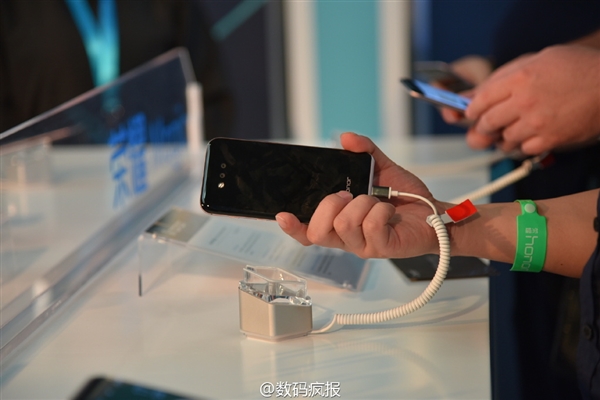
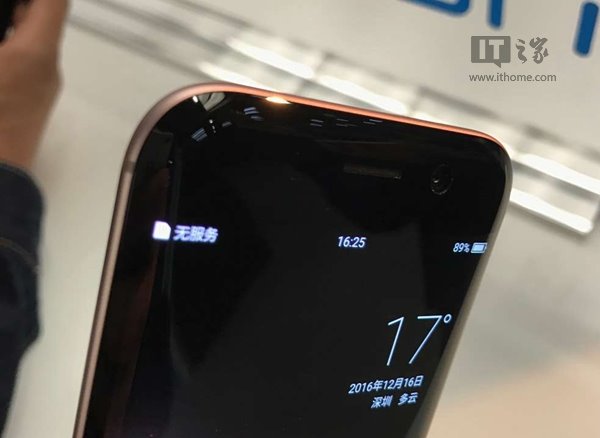
The placement of the dual 12MP camera sensors at the back are also pretty unique, with a bit of a spacing between the two and placed flat on the back. So, there are no protruding parts on the back, which is something that the company is proud of. Even in the front, there is a special UV coating to ensure that the camera and sensors are hidden into the overall black design of the Honor Magic. So, Huawei seems to have focused on making the design as simple and elegant as possible.
The front features an infrared+ color camera while at the back, you have a monochrome + color 12MP dual cameras. The AMOLED screen is of 5.09-inches with 2K resolution. For hardware, there’s Kirin 950, 4GB RAM and 64GB of storage.
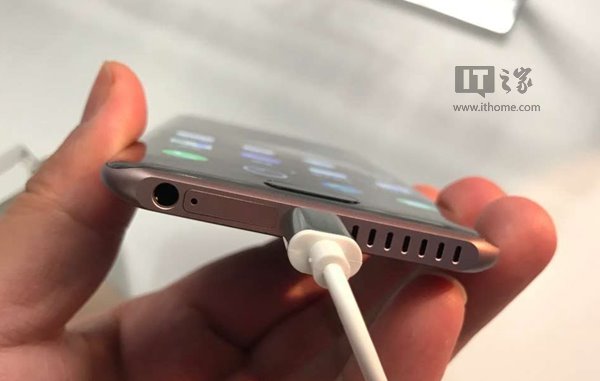
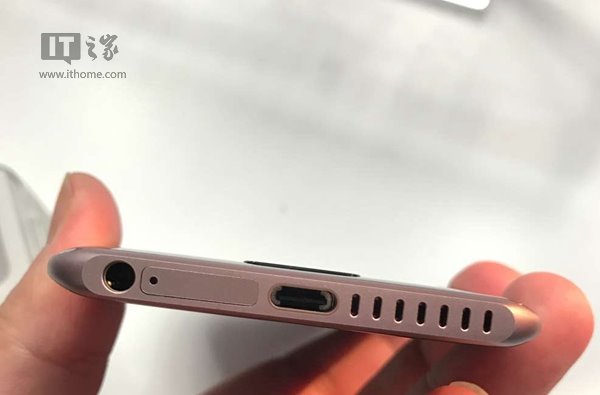
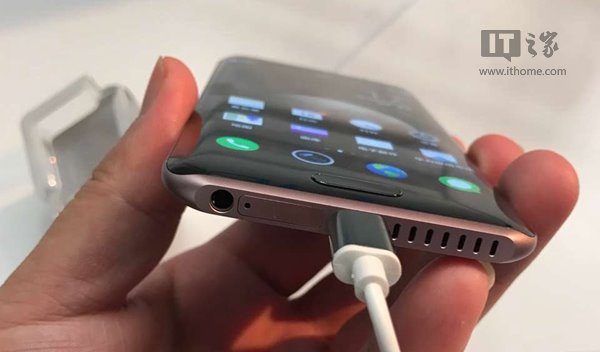
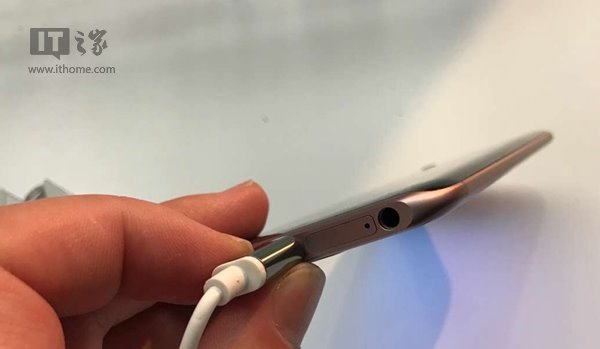
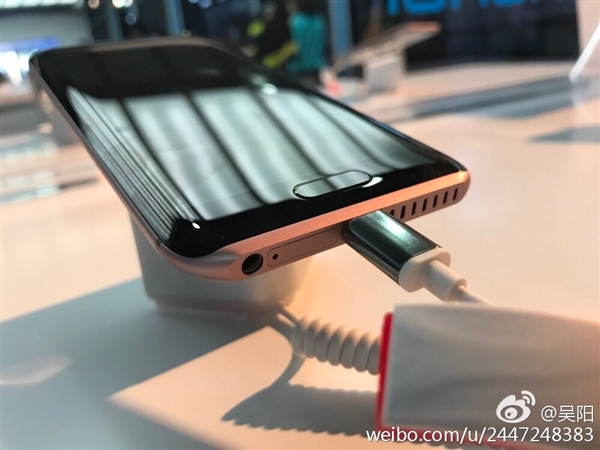
All the ports are located at the bottom, and yes, in case you are wondering, there is a traditional 3.5mm headphone jack.
Check out the images of the Huawei Honor Magic below, courtesy of IThome.
Huawei has just launched its most innovative smartphone yet, the Huawei Honor Magic. The phone comes with a unique design as well as some great features, read on to find out more about the device.
The Huawei Honor Magic comes with a special design that’s curved on all the eight sides. Usually, we have seen dual curved smartphones that feature a curved display on the left and right side of the screen. This phone features a similar display, but the company has ensured that all the other six sides, including the ones on the back continue with a curved design, following a true symmetry.
The phone seems to be inspired from space, hence the deep black color along with a rose gold metal frame going around the body. Symmetry is an important aspect of the device and hence the SIM card slot, speakers, microphone as well as the charging ports are located at the bottom of the smartphone. So, rest of the body looks flawless. The company notes that incorporating a dual SIM card slot at the bottom of the Honor Magic was not easy but the phone has managed that feat.
On the topside of the front, which is curved as well, you have a camera sensor. There are a few other sensors as well like the infrared camera, ambient light sensor, and infrared LED light. There seems to be a special UV coating on the phone to make sure that these sensors remain relatively hidden. At the back, the camera on board is a standard 12MP monochrome + black & white sensor module (probably similar to the Honor 8), however, what’s really interesting is the camera design. First of all, Huawei boasts that the camera is completely flat, so it goes well with the overall design. The two sensors are placed a few centimeters apart in horizontal symmetry. Besides the two sensors, you have the standard dual LED flash.
But the innovation is not just in the design department. The main highlight of the Honor Magic is in its user-friendly software experience dubbed as the Magic Live. Some of the amazing features of the Honor Magic Live system are given below:
When you have the phone in your hand, it will make a note of this and whenever you get a call, it will just vibrate and not ring.
The phone can automatically light up the screen when you look at it as the Honor Magic can keep a track of your eyes.
The Honor Magic can recognize its owner. So, if there’s a new message, you can see the details of the message, but if anyone else takes a look at it, the phone will not reveal the details on the screen.
If you are in the dark, the Honor Magic will sense this automatically and recommend flashlight app on the screen.
Magic Live can bring up some useful information even while you are chatting. For example, if you someone asks you, where are you? the phone will offer the option to share your current location. Similarly, if you are chatting about your current weather, details about the same will be provided to you. Even if you talk about the weather of a different city, for example Beijing or Shenzhen, the Honor Magic’s Live system is smart enough to bring you details about the same.
Booking a movie ticket is super easy with its smart software. The magic live system can intelligently recommend current movies, if you are talking about movies in the chat. Also, if you are talking about booking, it can bring up relevant information as well as help in booking the ticket.
If you have an unknown number calling you, the software is smart enough to bring you details about its previous history, if any.
The smart software can also classify unread mails as promotions / advertisements / bills / meetings etc, based on the content of the mail. It can also create smart schedules for events that pop up via SMS or WeChat.
The Magic Live is also a smart shopper. When you are about to shop on your smartphone, the phone will automatically show you the lowest price along with price comparisons among different shopping platforms. After you shop, it will smartly help you to store the tracking information in your ‘My Favorites’ page.
If you want to get details about a particular travel destination, the Magic Live helps in that as well, by bringing you relevant pictures, reviews, weather etc. And you won’t have to type a single thing as the assistant analyses specific keywords such as ‘how about we travel to xx place’ to sense that relevant travel information has to be brought up on the screen.
There’s even a Magic Auto which is in development (evolutionary version only) which will simplying using the phone while driving your car.
Finally, it learns from you as you use it and becomes smarter at helping around in your daily tasks.
Note that there are two Magic Live systems available — Magic Live Stable and Magic Live Evolutionary version (sort of a beta version). The stable version comes with monthly upgrade cycle while the evolutionary version updates every two weeks. You can switch between the two versions easily and Huawei has even launched a dedicated phone support number for Honor Magic users.
Well, analyzing chats, reading your messages and providing you with relevant information is all well and good, but this brings the big issue of privacy. Huawei seems to have thought about this as well, because the Honor Magic Live system reportedly processes all data locally. Plus, there’s an encryption chip onboard and everything works after proper authorization from you. I am assuming that these features only pop up when you, the owner, has used his/ her fingerprint to access the device.
Well, this was all about the software. Let’s check out some of the other features of the Honor Magic.
Like expected the Huawei Honor Magic comes with the super fast charging technology which charges the phone up to 90% in just 30 minutes of charging.
Then there’s the Magic Touch home button which incorporates multiple gestures like single click for home, double click for multi-task panel and swiping for back. The phone comes with Kirin 950 chipset inside with 4GB RAM and 64GB of internal storage. The display seems to be of 5-inches with 2K resolution. That chip and memory combinations are not really flagship grade, at least not according to today’s standards, but it’s still decent enough. I guess the long development cycle, especially perfecting the assistant and software features (probably after finalizing the hardware) did push the specifications a generation behind.
Unlike the special features, Huawei did not reveal much about the core specs of the phone, so we will have to rely on the specs sheet that crops up a few hours later for these details. But until then, digest the information that’s given above.
As for the pricing, the Huawei Honor Magic is priced at 3699 Yuan (~$533). To be honest, I’m surprised it’s under 4000 Yuan, but this pricing definitely makes the unique Magic smartphone worth checking out.
The phone goes on sale via Vmall, JD.com, Lynx and Suning from 20:00 December 16 i.e. today.
Before Huawei ended the conference, it also confirmed that Android 7 Update for Honor V8 and Honor 8 rolls out today. The Honor Note 8 gets the update early next year.
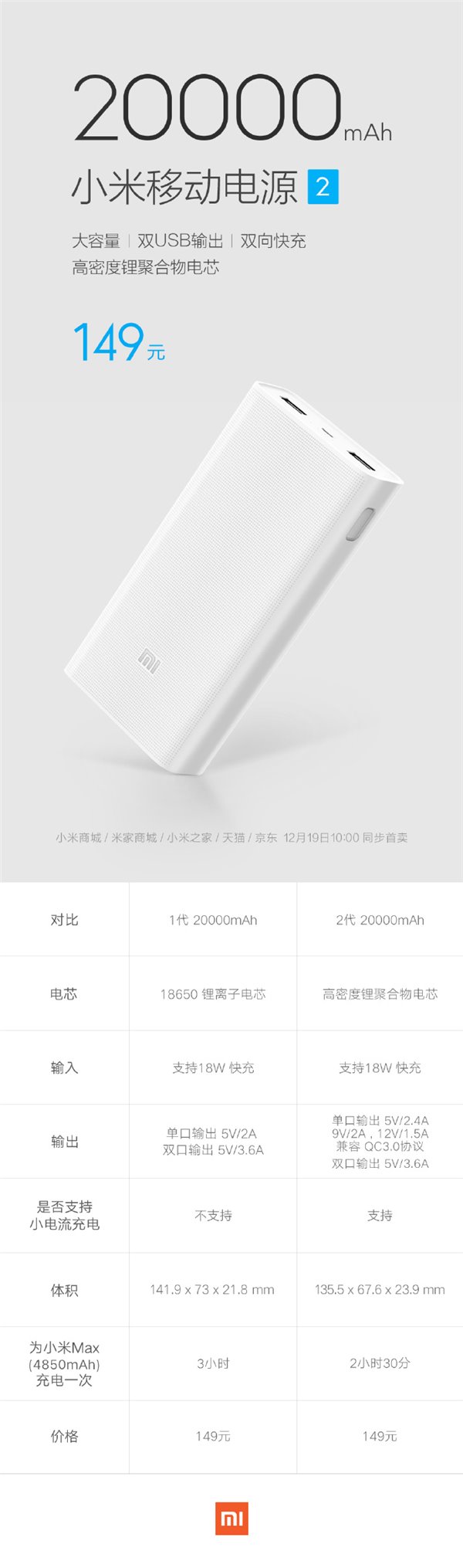
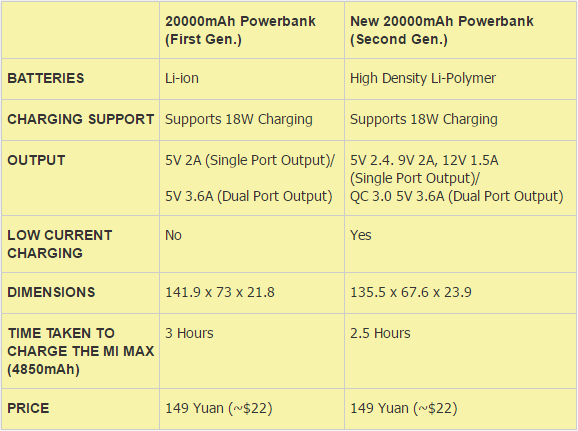
Xiaomi first released its largest capacity Mi mobile Power bank around November last year with a capacity of 20,000mAh. Now, just a little over a year later, the Chinese company has released a second gen version of the 20000mAh power bank – the Mi mobile Power Bank 2.
The latest Mi Power Bank 2 has an appearance which very similar to the first gen-20,000mAh Pwer bank but with a shorter and more narrow build. It comes with a slightly increased thickness of 2.1mm and also has surface bumps which prevents the device from slipping off the hands. It also comes in white color only.
Also, the 20,000mAh Mi Power Bank 2 uses high density lithium-polymer batteries and performance has also been significantly improved. The device also comes with support for Qualcomm Quick Charge 3.0. The single port output of 5V / 2A has been raised to 5V / 2.4A. There are also output ratings of 9V/2A and 12V / 1.5A. The device is touted to be capable of delivering full charge to the 4,850mAh battery packing Xiaomi Max in just 2.5 hours. The dual-port output still maintains 5V / 3.6A rating and is compatible with most mobile phones, tablets and the latest Apple MacBook. The latest power bank can also be used to charge the Mi Band 2 and other gadgets that require minimal current charge.
The 20,000mAh Xiaomi Mi mobile Power Bank 2 still carries the same 149 Yuan (around $22) price tag as its predecessor and would go on its first sale next week, precisely on December 19 which is Monday.
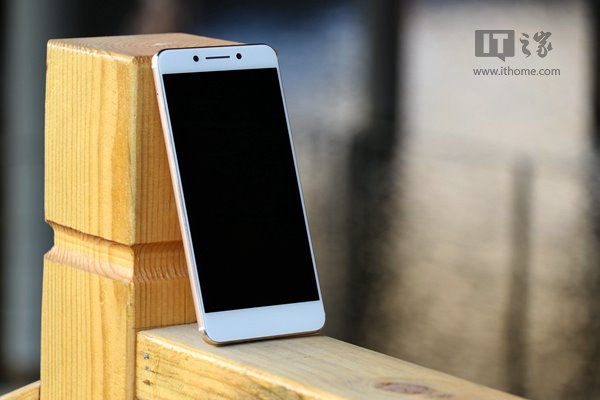
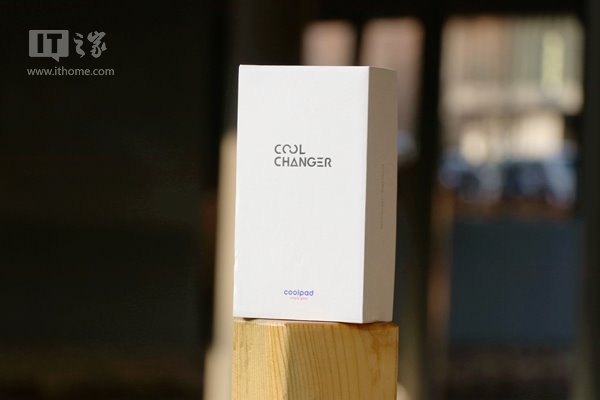
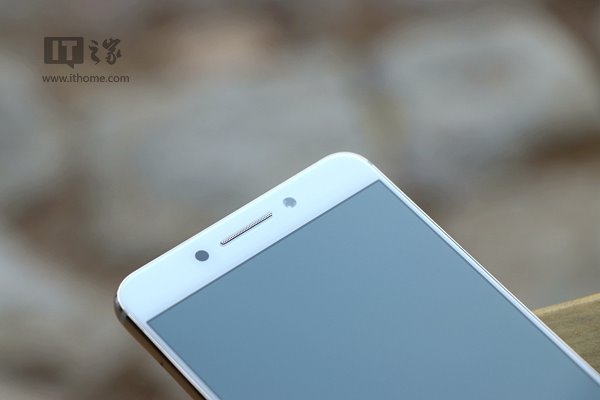
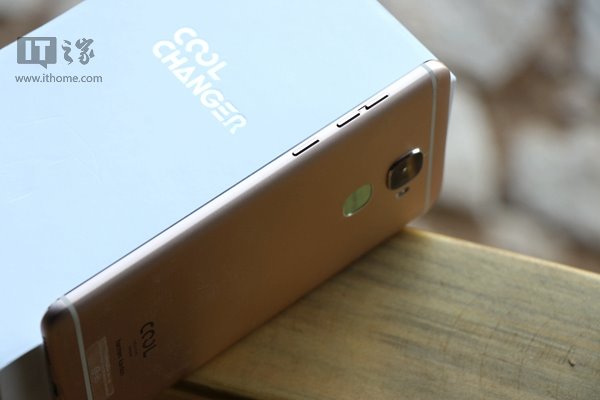
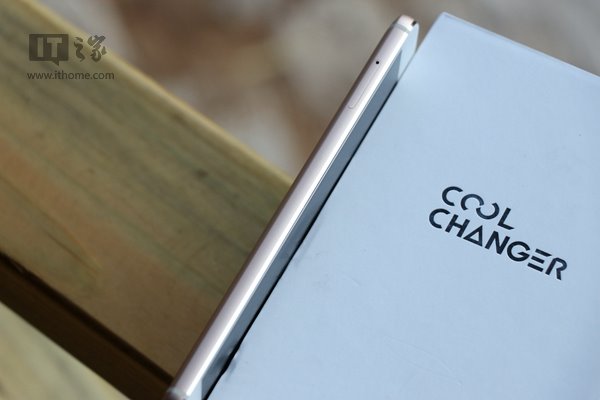
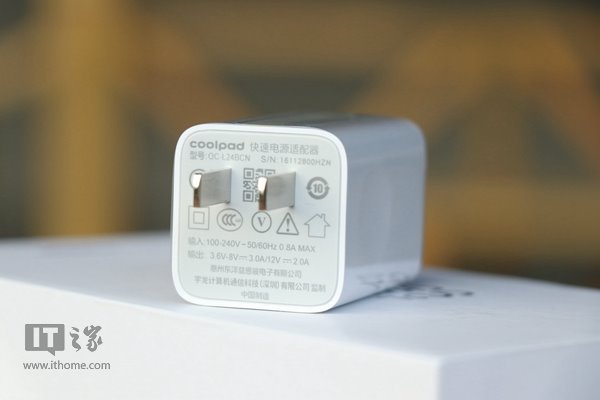
The Coolpad Cool Changer S1 was launched yesterday by LeEco’s owned Coolpad and sure the device comes with a premium design. The device is a flagship and is powered by a Qualcomm Snapdargon 821 chipset which is backed by 4GB RAM or 6GB RAM, depending on the version. Now you get the chance to see the Cool Changer S1 in all its beauty and features courtesy of these hands on images from IT Home.
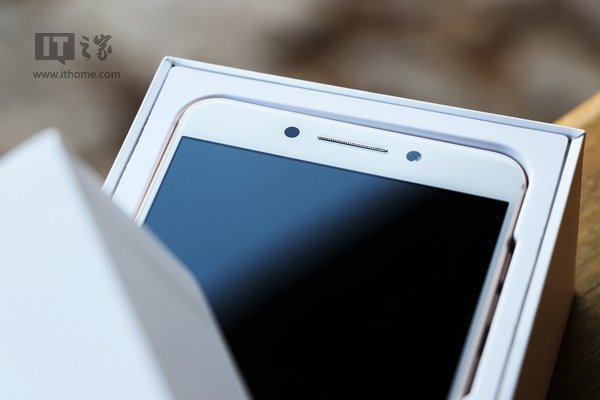
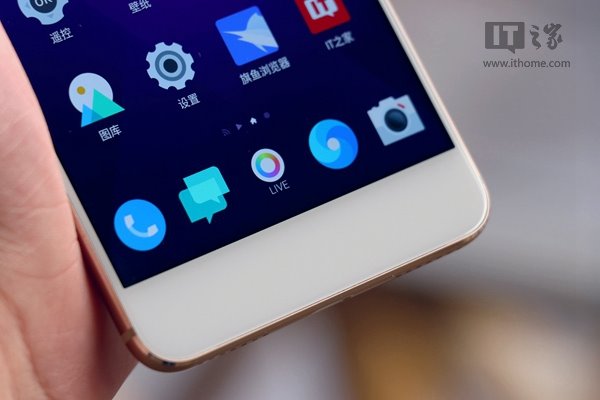
The Cool Changer S1 has a 5.5-inch IPS display and utilizes a design with very narrow bezels at the sides. Despite the narrow bezels, there are very tiny black borders on the display which is even unnoticeable despite the white screen.
It should be noted that the Coolpad Cool Changer S1 looks very similar in design to the earlier released Cool1 Dual but without any logo at the back. There is also no physical button on the screen up front but there are three virtual capacitive keys which can only be identified when the display LED comes on. It retains the front white styling on all color variants.
The flagship utilizes an all-metal casing at the back infused with an antenna design said to have been constructed by injection molding process. There is a large near square rear camera at the top centre which has a large 16MP Sony IMX298 sensor onboard. The camera seems to protrude slightly out of the metal body. Just by the side of the camera is the dual LED flash and directly under he camera sits the fingerprint sensor.
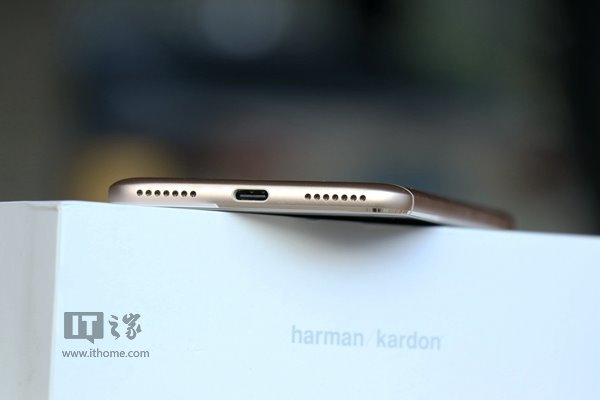
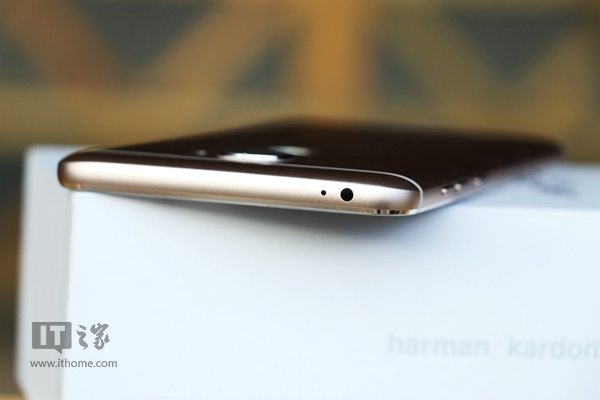
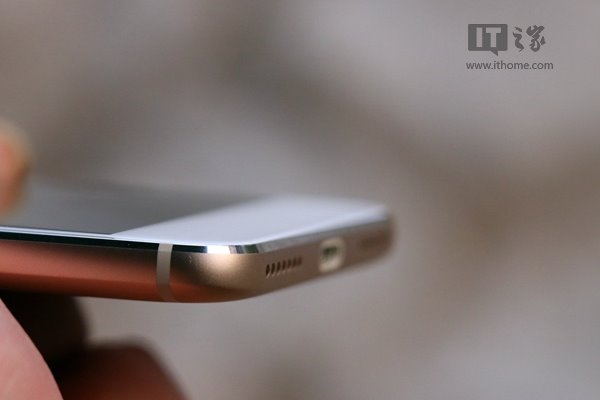
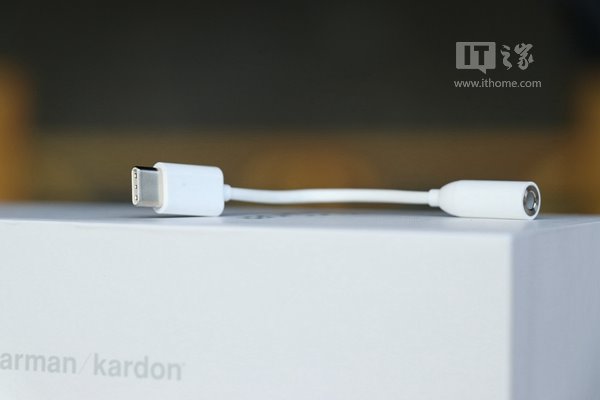
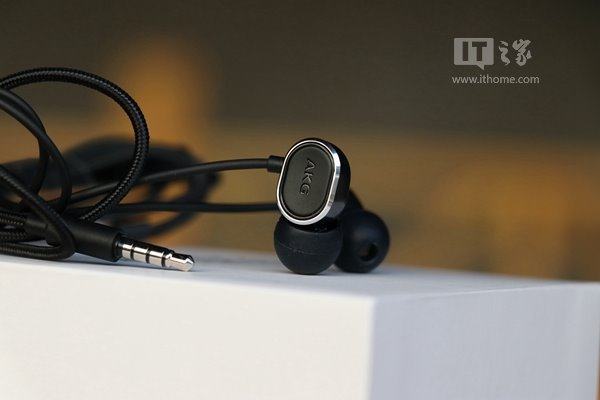
The Cool S1 does not have a 3.5mm audio jack onboard instead it uses the USB Type-C interface both for charging and for connecting with the headphone. There is a Harman AKG headset with 3.5mm head which comes with the phone, though. That shouldn’t be a problem as Coolpad did include an adapter that lets owners still use their 3.5mm jack packing headphones.
There is also said to be a powerful Harman Kardon audio stereo system onboard and although we can’t see that, the beautiful audio grills at both sides of the USB port is enough to get us excited about the potential output of the audio system onboard.
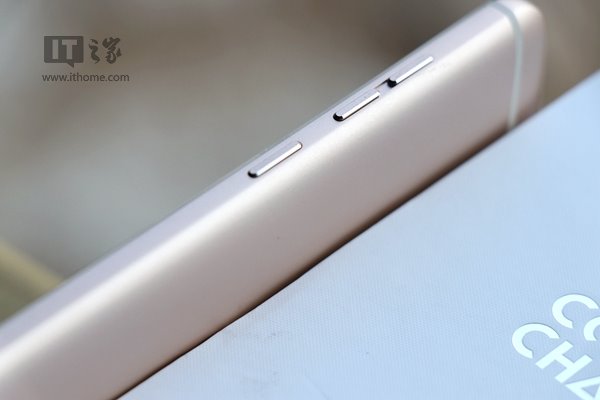
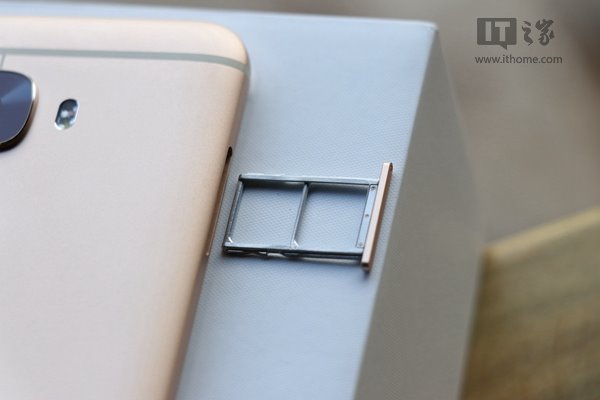
The SIM slots are located at the left side of the device while there are the usual capacitive keys like the power button and volume rocker at the right side of the device. The edges were not left without a touch of class as the Cool Changer S1 has well chamfered edges which should aid one-handed operation. And then at 7.5mm thick, it sure is an easy one to hold with one hand. If you still haven’t got an idea of the Coolpad Cool Changer S1 price, check out our launch post for price details.
We use cookies on our website to give you the most relevant experience by remembering your preferences and repeat visits. By clicking “Accept”, you consent to the use of ALL the cookies.
This website uses cookies to improve your experience while you navigate through the website. Out of these, the cookies that are categorized as necessary are stored on your browser as they are essential for the working of basic functionalities of the website. We also use third-party cookies that help us analyze and understand how you use this website. These cookies will be stored in your browser only with your consent. You also have the option to opt-out of these cookies. But opting out of some of these cookies may affect your browsing experience.
Necessary cookies are absolutely essential for the website to function properly. This category only includes cookies that ensures basic functionalities and security features of the website. These cookies do not store any personal information.
Any cookies that may not be particularly necessary for the website to function and is used specifically to collect user personal data via analytics, ads, other embedded contents are termed as non-necessary cookies. It is mandatory to procure user consent prior to running these cookies on your website.