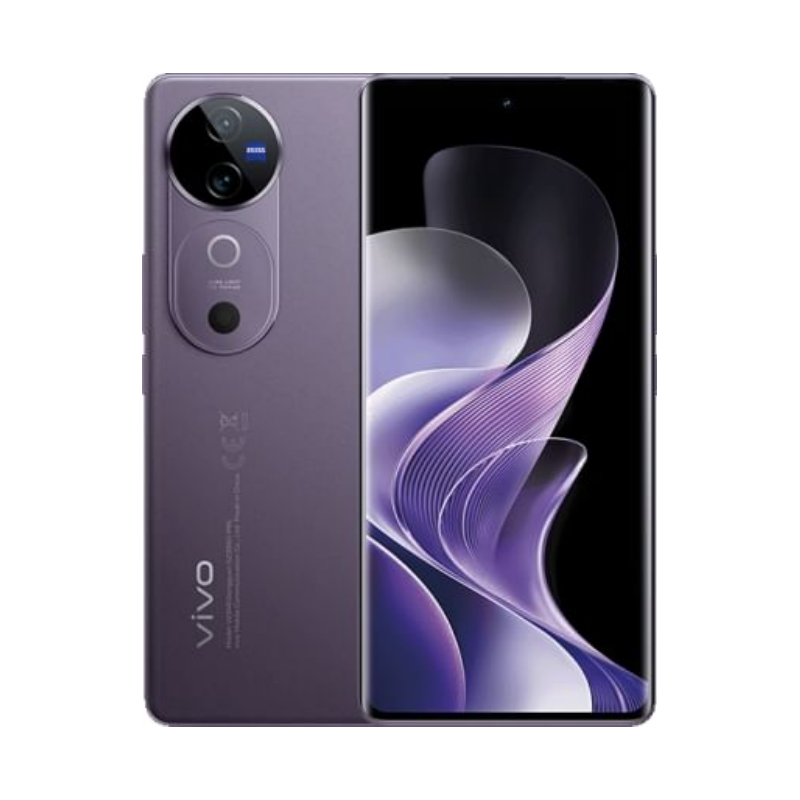
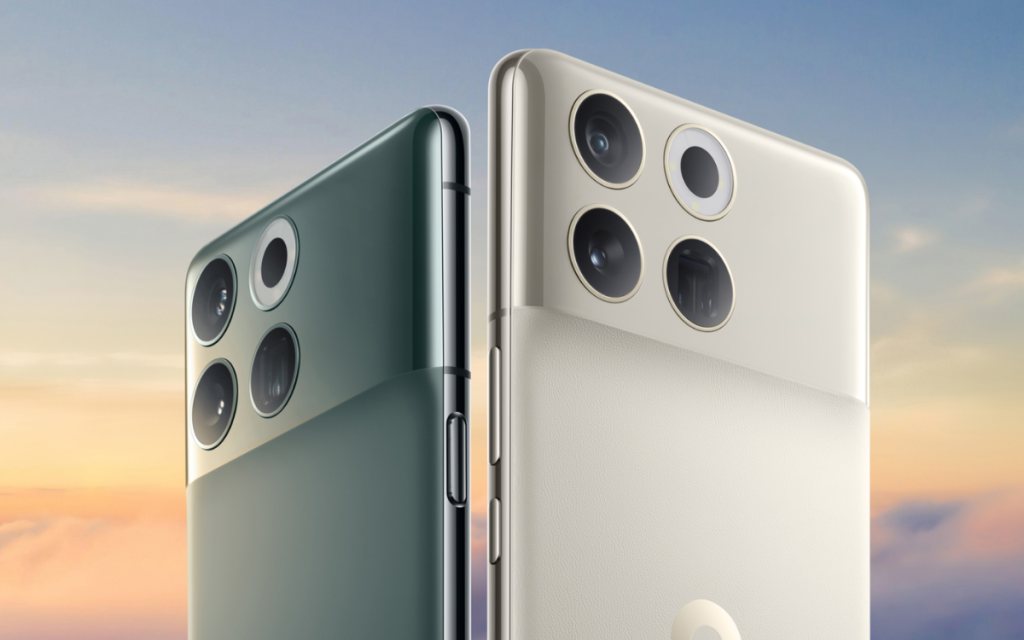
The Vivo V40 series Indian launch appears imminent. The vanilla V40 model was spotted on the Bureau of Indian Standards (BIS) website last month, and now, the Vivo V40 Pro has also made an appearance on the certification website. This follows rumors of an August debut for both the V40 and V40 Pro in India, with the V40 already available in Europe.
Recent reports by 91mobiles identified the Vivo V40 Pro on the BIS website, listed under model number V2347. While details are scarce, the BIS certification strongly suggests a forthcoming Indian launch.
Possible Rebrand with High-End Specs
There is speculation that the Vivo V40 Pro might be a rebranded version of the Vivo S19 Pro, which was launched in China in May. If this is the case, the V40 Pro could feature a 6.78-inch AMOLED display with a 120Hz refresh rate, a MediaTek Dimensity 9200+ SoC, and a 5,500mAh battery with 80W fast charging and IP68 water resistance.
Vivo V40
The V40 Pro’s camera setup is expected to include a 50MP Sony IMX921 main sensor, an 8MP ultrawide sensor, and a 50MP telephoto lens. The front camera could also feature a 50MP sensor. Both V40 models are rumored to use ZEISS optics for improved photography.
In related news, Lenovo has recently introduced the Legion gaming tablet in India. This device features an 8.8-inch 2.5K display with a 144Hz refresh rate, and is powered by a Qualcomm Snapdragon 8+ Gen 1 processor with 12GB of RAM. It offers 256GB of storage, expandable up to 1TB, and a 6550mAh battery with 45W fast charging. The tablet includes a 13MP main camera, a 2MP macro camera, and an 8MP front camera. It also supports Bluetooth 5.3, Wi-Fi 6E, and DisplayPort 1.4.
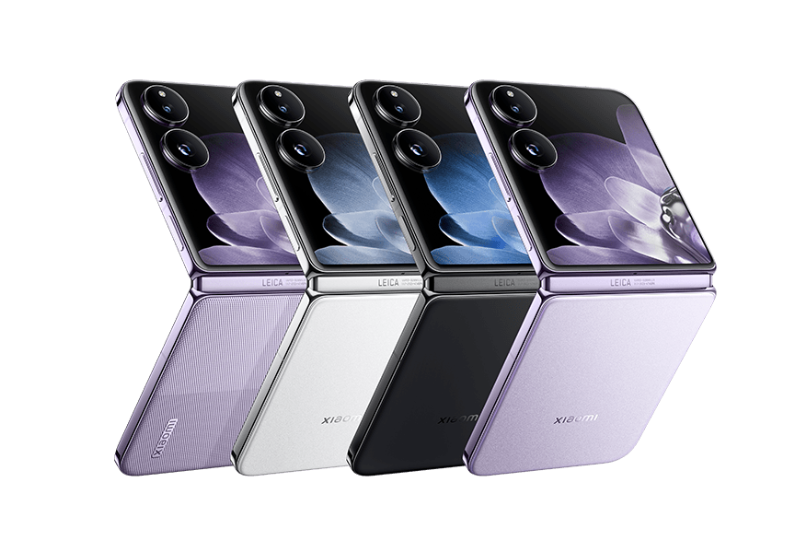
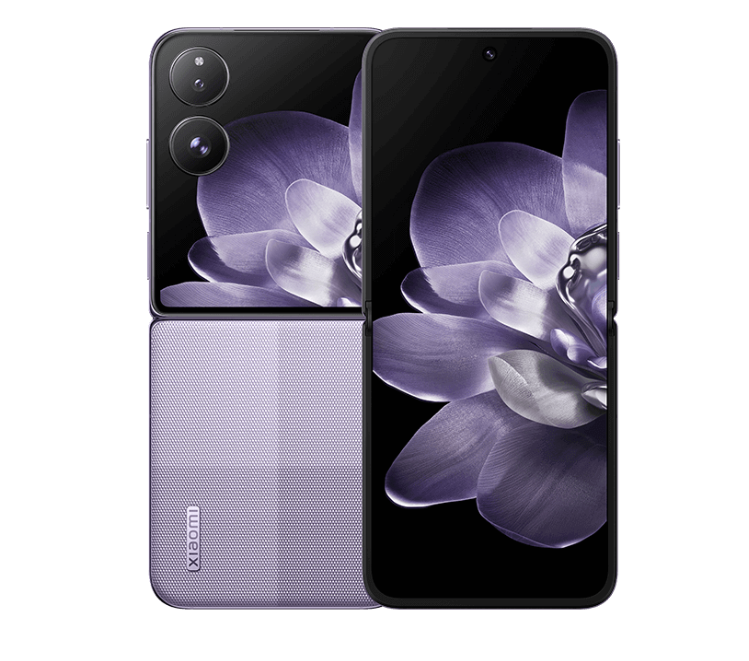
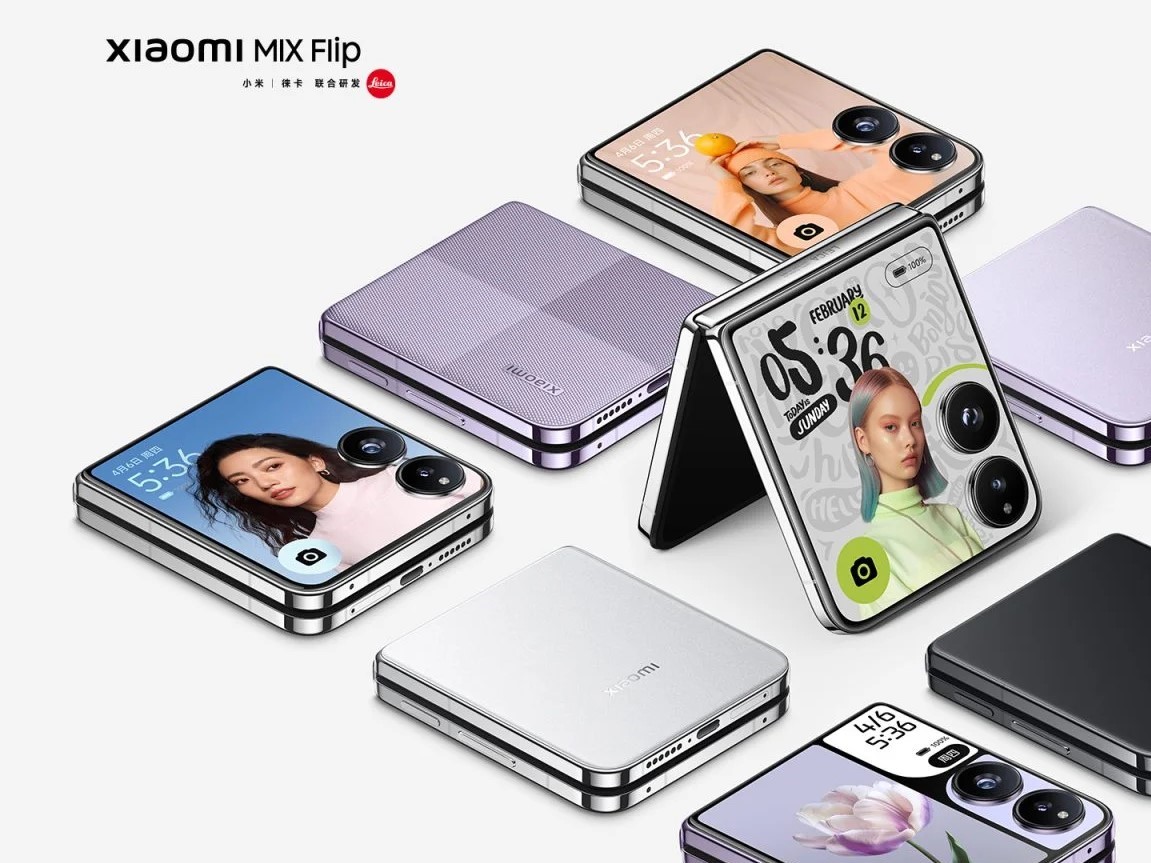
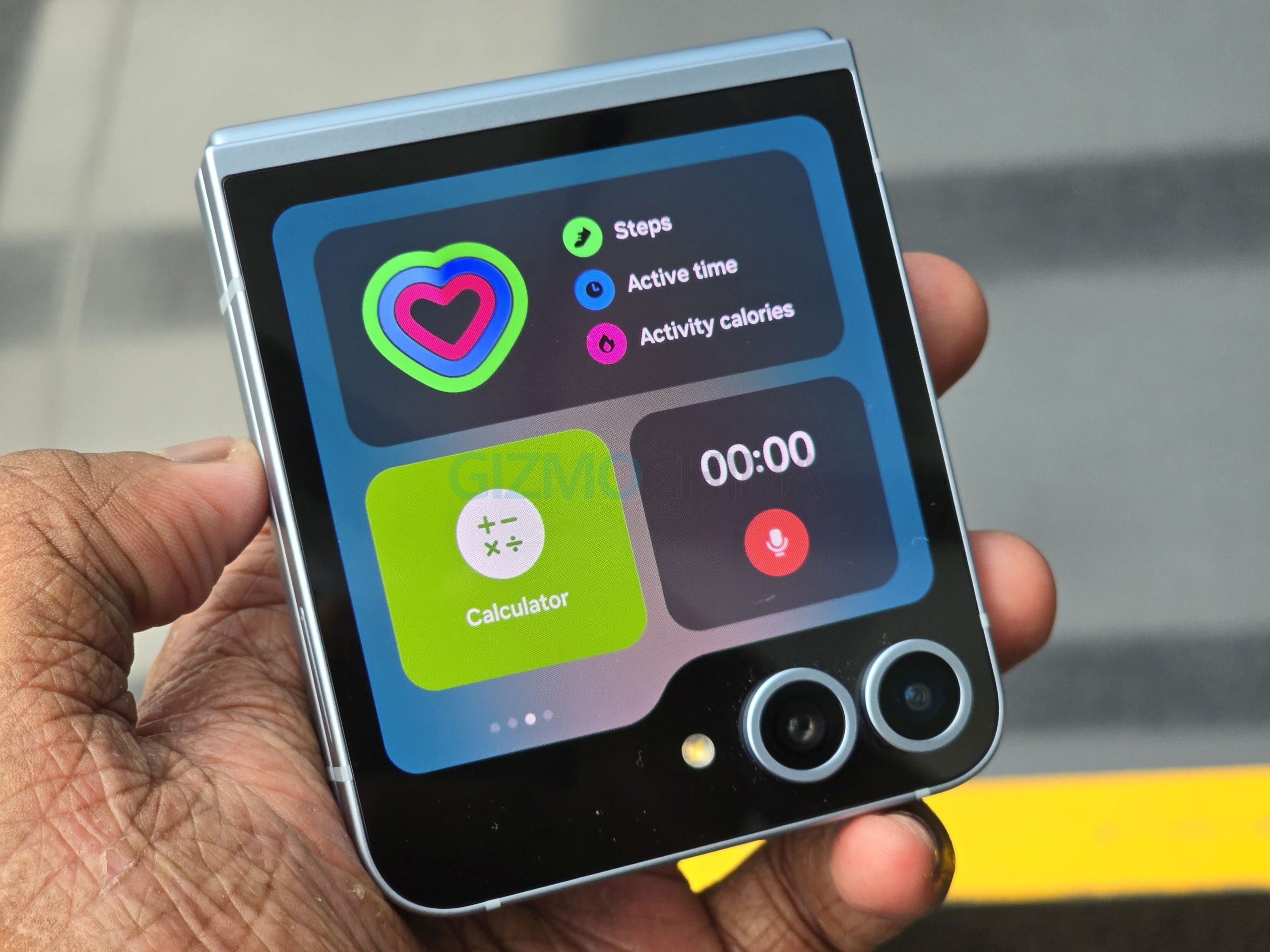
The Xiaomi Mix Flip features a stunning 6.86-inch AMOLED inner display and a convenient 4.01-inch AMOLED outer display, providing users with a versatile and immersive viewing experience. You can now buy Xiaomi Mix Flip for a starting price of $999 on Giztop.
At the heart of the Xiaomi Mix Flip is the powerful Qualcomm Snapdragon 8 Gen 3 octa-core processor, paired with either 12GB or 16GB of LPDDR5X RAM. This combination ensures exceptional performance, allowing for smooth multitasking, rapid application launches, and seamless navigation through menus and home screens.
Running on Hyper OS, based on the latest Android 14, the Xiaomi Mix Flip offers a fresh and fast platform that keeps you connected and productive on the go. The system supports multiple languages, including Chinese and English, catering to a global audience.
The foldable design of the Xiaomi Mix Flip is complemented by its advanced display technology. The inner 6.78-inch E6 AMOLED screen boasts a 120Hz refresh rate, delivering vibrant colors and sharp details. The outer 4.01-inch AMOLED display provides quick access to notifications and essential functions without unfolding the device.
Storage options for the Xiaomi Mix Flip are generous, with configurations available in 256GB, 512GB, and even 1TB of UFS 4.0 internal memory. This ample storage space ensures you have plenty of room for your contacts, music, photos, apps, and more.
Photography enthusiasts will appreciate the dual rear cameras on the Xiaomi Mix Flip. The device features a 50MP Sony IMX890 primary camera and a 50MP Sony IMX355 ultra-wide lens, capturing stunning images with rich detail and clarity. The 32MP Sony IMX709 front camera is perfect for high-quality selfies and video calls.
Battery life is a key strength of the Xiaomi Mix Flip, thanks to its 4780mAh battery. The device supports 67W wired fast charging, allowing you to quickly recharge and get back to using your phone. Additionally, the Ultra Power Saving mode ensures your phone stays powered for longer periods when you need it most.
Xiaomi Mix Flip offers a unique blend of cutting-edge technology and practical features. Its foldable AMOLED screens, powerful processor, ample storage options, advanced camera system, and robust battery life make it an exceptional choice for users seeking innovation and performance in a smartphone.
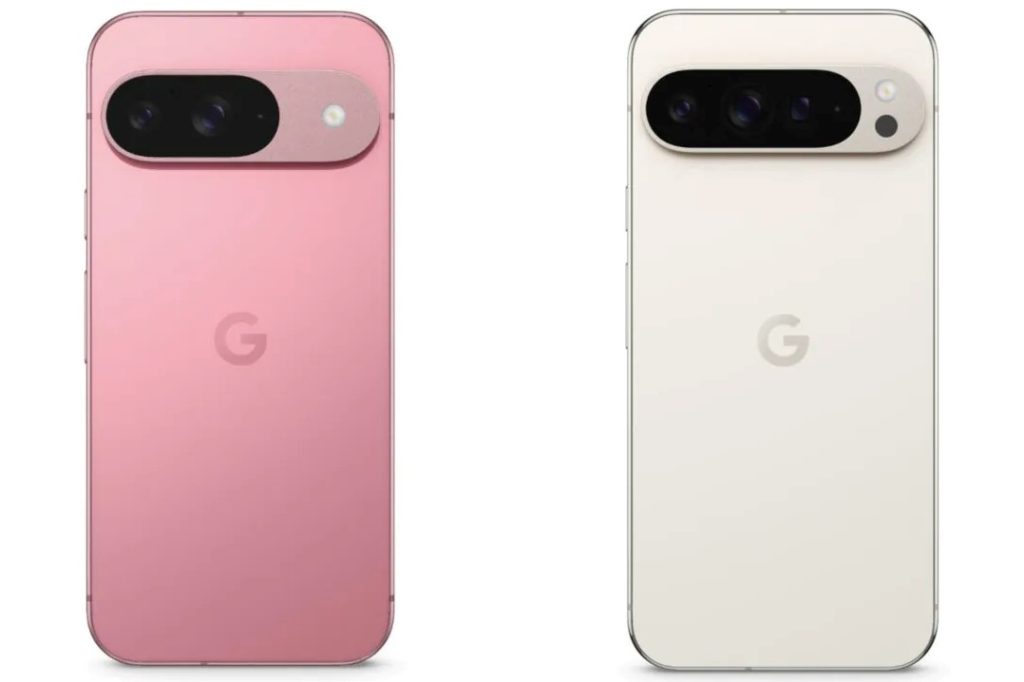
Google is gearing up to unveil the next-generation Pixel smartphones and smartwatch on August 13 which is quite earlier than its traditional launch timeline. Leaks and rumors have been gathering pace about the search giant’s upcoming hardware offerings. Now, a new clear render of the Pixel 9 and Pixel 9 Pro XL shared by tipster Sudhanshu Ambhore gives us a look at both devices in two shades.
Pixel 9, Pixel 9 Pro XL new leaked render
The Pixel 9 was spotted in a leaked live image earlier this month revealing the device in a Pink color. The latest render gives us a much better look in the same shade. The shade on the horizontal camera island is slightly different from the rest of the back panel. The Pink color option on the Pixel 9 is a welcome move from the mainstream Black, Blue, and Green found on most smartphones today.
Meanwhile, the Pixel 9 Pro XL is seen in Porcelain color which is not any different from the last year’s Pixel 8 Pro. We could spot a periscope lens housed inside the pill-shaped island. There is also a temperature sensor placed beneath the LED flash unit.
The key design difference between last year’s Pixel 8 series and the upcoming Pixel 9 lineup is that the latter is set to feature a boxy design with a flat frame as per leaked renders. The horizontal camera bridge has been trimmed from the sides. Apart from this, the Pixel 9 series is rumoured to be powered by a Tensor G4 chipset and up to 16GB RAM.
Leaked prices suggest that the Pixel 9 and 9 Pro may start at EUR 899 and EUR 1,099 for the base 128GB model respectively. The Pixel 9 Pro XL is tipped to carry a starting price tag of EUR 1,199 for the same base variant as its other siblings.
Nowadays, lots of companies love slapping ‘AI’ to the branding of their new products, and Meizu is no exception. Meizu 20 AI was launched in China for about $190. The phone provides enough performance for everyday basic tasks and offers a few extra AI features.
The phone comes in two configurations: 6GB+128GB and 8GB+128GB, priced at around $190 and $220, respectively. The Meizu 20 AI is available in three colors: Moonlight White, Obsidian Black, and Luminous Purple. It features the UNISOC T765 chipset and a 6.5-inch 90 Hz display. On the back, it has a 50 MP main camera and an 8 MP selfie shooter on the front. Additionally, the Meizu 20 AI packs a 5000 mAh battery.
Meizu 20 AI
Meizu 20 AI offers several AI features that we see from other manufacturers. The phone can generate and expand images with AI, provide instant AI-generated replies to messages, and offer AI assistance while typing. Moreover, Meizu uses AI to detect phishing messages and suspected calls to warn users and prevent fraud.
Nio’s Vice President Bai Jian has officially announced the launch of its highly anticipated second-generation smartphone, the Nio Phone 2, on July 27th at the Nio Innovation and Technology Day. The new phone promises significant upgrades, including integration with large AI models, enhanced system fluidity, and deeper connectivity with Nio’s electric vehicle ecosystem.
Nio Phone
The Nio Phone 2 aims to provide a seamless and convenient driving experience by allowing users to control various car functions directly from their phones, such as unlocking/locking, starting the vehicle, adjusting settings, and accessing the car’s infotainment system. The phone’s integration with AI will further enhance its capabilities, enabling smarter interactions and potentially more advanced applications in the future.
Under the hood, the Nio Phone 2 is rumored to be powered by Qualcomm’s latest and most powerful chip, the Snapdragon 8 Gen 3, which will significantly boost the phone’s AI and computational capabilities. There’s also a possibility that the phone will feature the overclocked version of the Snapdragon Gen 3. This will not only improve the overall performance but also enable the phone to support more demanding applications and features.
The phone was spotted on China’s 3C certification platform recently. The device is expected to feature a 5000mAh battery and a 100W charger. The exact fast charging capability remains uncertain at this point.
Nio’s venture into the smartphone market is seen as a defensive strategy in response to Huawei and Xiaomi’s entry into the electric car market. By creating a phone that deeply integrates with its vehicles, Nio aims to provide a unique and superior user experience for its customers, setting it apart from its competitors.
Looking back at Nio’s smartphone journey, the company launched its first phone, the Nio Phone, in September 2023. The phone came with an overclocked 3.36GHz Snapdragon 8 Gen 2 chipset, a 6.81-inch 2K AMOLED display with a 120Hz refresh rate, a triple camera system featuring a 50MP main sensor, and a 5,200mAh battery.
A recent report revealed that Xiaomi is planning on releasing the Mix Flip foldable phone in Southeast Asia and Europe. Considering how we’ve already compared flip phones like the Motorola Razr 50 Ultra and the Samsung Galaxy Z Flip 6, let’s see how well the Xiaomi Mix Flip takes both of these devices.
The Samsung Galaxy Z Flip 6 disappointed with its 3.4-inch Super AMOLED cover display, but its primary screen was a more respectable 6.7-inch Dynamic LTPO AMOLED 2X panel. Meanwhile, both the Razr 50 Ultra and the Xiaomi Mix Flip offer taller primary and external displays.
Please Note: When you buy something using the links in our articles, we may earn a small commission at no cost to you.
Xiaomi offers a 4.01-inch panel, while the internal panel has a 6.86-inch display. On the other hand, the Razr 50 Ultra sports a 6.9-inch primary screen and a 4-inch secondary display. So while all three models are quite comparable in the display department, Xiaomi and Motorola’s cover displays have a clear edge.
2. Flagship Chips
Samsung Galaxy Z Flip 6
Xiaomi’s Mix Flip is a flagship grade foldable phone that is equipped with the Snapdragon 8 Gen 3 SoC. This is Qualcomm’s top end mobile processor that powers various ultra premium phones. Samsung also equips the same processor on its Galaxy Z Flip 6. In other words, the two devices have comparable performance. But this is where Motorola falls behind slightly. The Razr 50 Ultra is equipped with the Snapdragon 8s Gen 3, which is often seen in flagship killer/affordable flagship phones.
3. Camera
Both Xiaomi and Motorola again offer near-identical camera setup. The Razr 50 Ultra and the Mix Flip sport a 50-megapixel primary camera along with a 50-megapixel telephoto shooter on the rear, and a 32-megapixel selfie sensor on the front. Samsung did upgrade the rear camera on the Galaxy Z Flip 6 with a 50-megapixel main camera, but this is paired with a 12-megapixel ultra wide angle lens. Meanwhile, the front houses a 10-megapixel selfie shooter.
4. Battery Pack & Charging
Motorola Razr 50 Ultra
Flip phones aren’t known to pack a big battery and this is one area where they are often lackluster. However, Xiaomi’s new Mix Flip has a robust 4,780mAh battery pack that supports 67W wired fast charging. This is noticeably larger than the 4,000mAh cell that powers both the Razr 50 Ultra and Galaxy Z Flip 6. Motorola brings a 45W wired fast charging, compared to the 25W on the Z Flip 6. Although, the Samsung phone has support for wireless charging as well.
5. Pricing
Samsung’s Galaxy Z Flip 6 is the most expensive foldable phone out of these three devices with a starting price tag of 1,099 US Dollars. At the same time, the Motorola Razr 50 Ultra starts from 999 US Dollars, and the Xiaomi Mix Flip will reportedly cost 100 US Dollars less than the Galaxy Z Flip 6. This means that we can expect it to be around the 900 to 1000 US Dollar price range. With the Galaxy Z Flip 6 being its main rival, it offers competitive specs and a slightly more affordable price tag. If it does release in the global market like Europe and other Asian countries, then this could be a worthy flip phone to look out for.
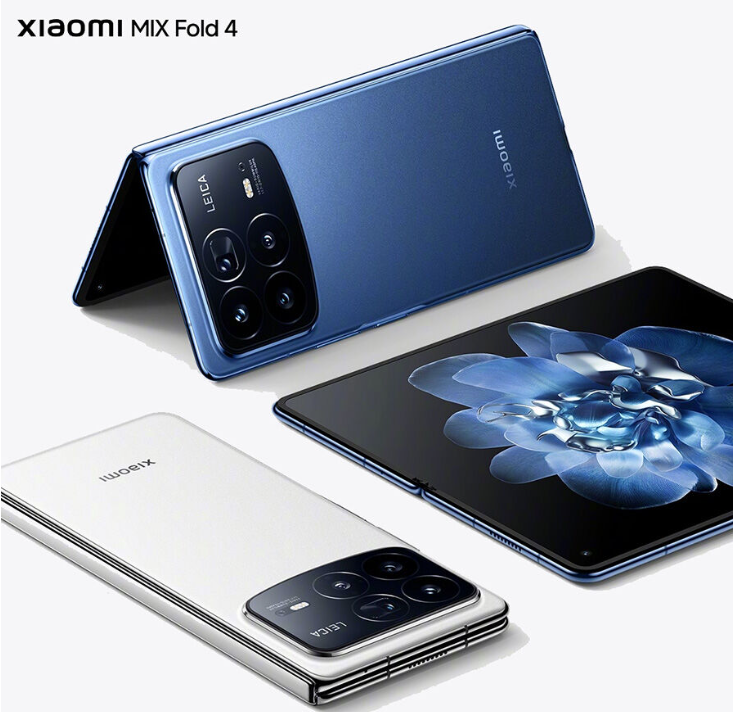
The Xiaomi Mix Fold 4 features a dual-display design. The inner screen boasts a stunning 7.98-inch 2K+ AMOLED display, perfect for immersive viewing experiences with its ultra-high-definition visuals and a peak brightness of 3000 nits. The outer screen is equally impressive, with a 6.56-inch FHD+ AMOLED display, providing crystal-clear images and smooth performance with a 120Hz refresh rate and 240Hz touch sampling rate. Both screens support HDR10+, Dolby Vision, and a remarkable contrast ratio 8,000,000:1, ensuring vibrant colors and deep blacks.
Powering the Xiaomi Mix Fold 4 is the latest Qualcomm Snapdragon 8 Gen 3 processor, an octa-core powerhouse clocked at 3.7 GHz. Paired with up to 16GB of LPDDR5X RAM, this foldable device delivers seamless multitasking and rapid application performance. Storage options range up to 1TB of UFS 4.0 memory, providing ample space for apps, photos, music, and more.
The Xiaomi Mix Fold 4 shines in photography with its Leica Quad Camera setup. It features a 50MP Leica Prime Camera with a Light Hunter 800 sensor and optical image stabilization for sharp, detailed images. The 50MP Leica Floating Telephoto and 10MP Carter Write Telephoto lenses offer superior zoom capabilities, while the 12MP Ultra Wide-Angle lens captures expansive scenes with a 120° field of view. For selfies, a 16MP front camera ensures high-quality photos.
Battery life is robust, thanks to the 5100mAh battery, which supports 67W fast wired charging and charges the device fully in just 37 minutes. It also offers versatile charging options of 50W wireless charging, Quick Charge 4+, and Power Delivery 3.0. The device is designed for durability with an IPX8 waterproof rating and a thinner, more ergonomic body.
Security and connectivity are top-notch with a side-mounted fingerprint scanner for quick and secure unlocking. The Mix Fold 4 supports advanced WiFi standards, including WiFi 7, ensuring fast and reliable internet connectivity.
With multi-language support (English and Chinese), the Xiaomi Mix Fold 4 is accessible to a broad audience. Pre-orders are now available on Giztop, with shipping starting on July 24. This innovative device redefines what a smartphone can be, combining cutting-edge technology, powerful performance, and exceptional design.
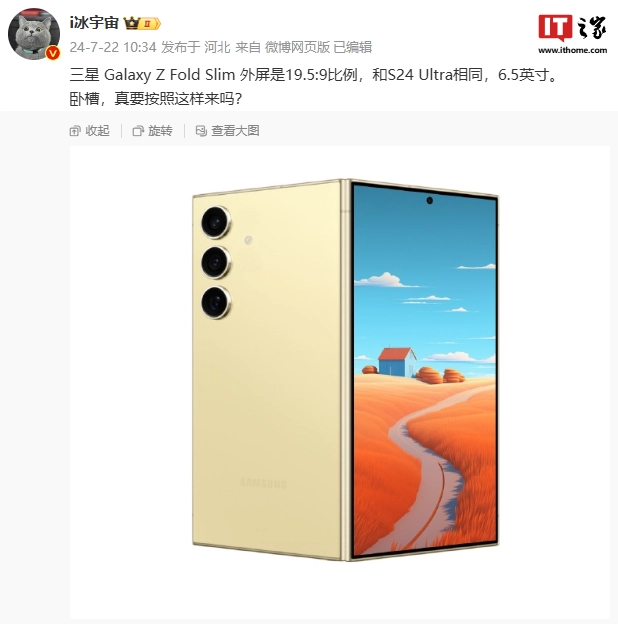
The Galaxy Z Fold 6 Slim might share the same screen aspect ratio as the S24 Ultra. There are plenty of foldable devices on the market, each with its own unique form factor. While users can pick the device that best fits their needs, foldable devices are generally harder to use compared to regular smartphones.
Galaxy Z Fold 6, introduced this year, features a 22:9 screen aspect ratio, which is quite different from Samsung’s previous foldables. The Z Fold 6’s outer display is narrower and taller, making it actually harder to reach the top of the screen with one hand due to the taller screen.
Galaxy Z Fold 6 Slim
According to a recent report by ITHome, Galaxy Z Fold 6 Slim might have the same screen aspect ratio as the Galaxy S24 Ultra. This is great news, as many foldables come with different form factors than the regular phones. Having an outer display similar to a regular smartphone is a big plus. If Samsung can achieve a truly compact body with the upcoming Galaxy Z Fold 6 Slim, Samsung fans might prefer buying foldable models even more.
ASUS has launched a new all-in-one desktop PC in India. The ASUS M3702 AIO packs powerful specifications and comes at a premium price tag. It is ideal for both home and office usage. The machine also offers a minimalistic design for those who want a clutter-free desk space. Read on to know what the M3702 AiO has in store for us
ASUS M3702 AIO specifications
The ASUS M3702 AIO PC has a sleek design. The monitor features a 27-inch IPS screen bearing an FHD+ resolution and a 75Hz refresh rate. The display is surrounded by thin bezels on all three sides and offers a 91 percent screen-to-body ratio. It also offers a 100 percent sRGB color gamut and 178-degree wide-view. The AIO PC comes with a wireless keyboard and a mouse.
The ASUS M3702 is equipped with dual speakers and Dolby Atmos producing a sound output of 3W. There is also AI noise-cancellation technology onboard. The device features a 1080p webcam with a privacy shutter.
Under the hood, the ASUS M3702 AIO PC is equipped with a AMD Ryzen 5 7520 processor along with AMD Radeon graphics. The machine packs 16GB LPDDR5 RAM and 512GB SSD storage. It comes with a 90W power adapter. Software-wise, the device ships with Windows 11 OS and Microsoft Office Home & Student 2021 subscription.
Connectivity options on the ASUS M3702 include three USB 3.2 Gen 1 ports, WiFi-6E, Bluetooth 5.3, HDMI ports, Ethernet port, and an SD card reader. There is also a built-in Kensington lock slot.
The ASUS M3702 AIO PC carries a price tag of Rs 60,990. It can be purchased starting today from ASUS online and offline stores, Amazon, Flipkart, and retail stores.
Xiaomi has been working on its XiaoAI for quite a while. The company registered over 100 million active monthly users as early as August 2021. Eventually, the company added some generative AI features to XiaoAI. The latest news is about XiaoAI V6.126, which reportedly supports object removal from images and many other features.
XiaoAI now supports a number of generative AI based image editing features
The company officially announced today that they have added an AI image editing functionality to XiaoAI. It includes a total of five features including picture background conversion style conversion, and passerby elimination.
The image background conversion feature lets users to upload pictures to XiaoAI and make changes to the elements in the background of a photo. You can get an idea of this functionality from the image below. Notably, this is not an entirely new feature from Xiaomi. Older Xiaomi phones also have the ability to change the sky and overall lighting effect of the image. Nonetheless, the effect is expected to get better with the latest developments.
Another interesting ability of the company’s latest image model is that it can answer questions based on images shared with it. The image shared by the company suggests that the model is capable of generating recipes based on just an image of the available ingredients shared with it. Users apparently can also ask for recipes that help them meet certain goals such as losing fat.
The latest development also lets you change the style of your pictures. You can see a demonstration of this in the image below. You can choose between a number of styles such as anime.
As previously mentioned, another feature of the latest version of XiaoAI is the ability to remove unwanted people or pedestrians from your images. This looks similar to what Google offers with its Pixel devices.
There is also a feature that lets you expand the image to change the aspect ratio without cropping in. Take a look at the image below to get a better idea of how it works.
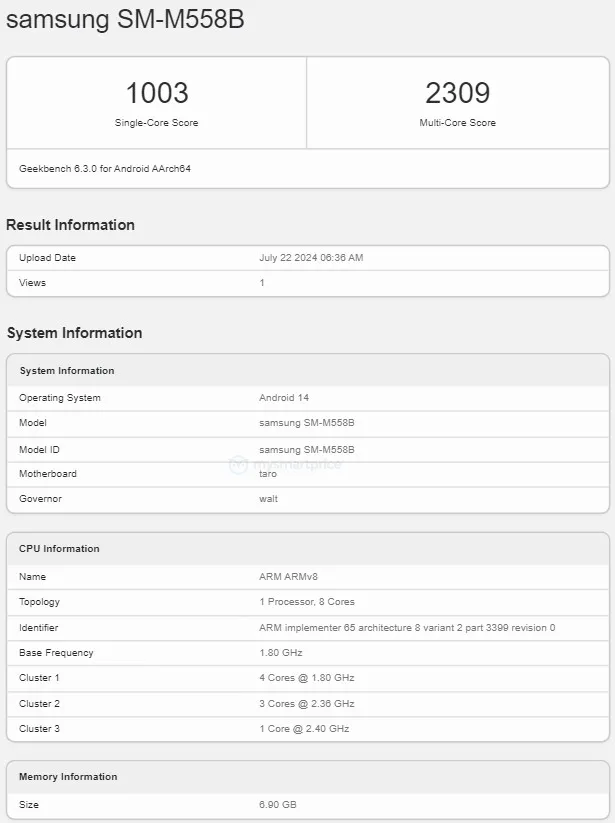
Samsung launched the Galaxy M55 5G (first impressions) earlier this year. Now, the South Korean brand seems to be working on a new model of the device if the latest report is anything to go by. The upcoming offering reportedly dubbed as the Galaxy M55s has been spotted on the Geekbench (via) benchmarking platform after it previously bagged WiFi Alliance certification.
Samsung Galaxy M55s Geekbench
The Samsung Galaxy M55s carries a model number SM-M558B on the Geekbench database. It is listed with a motherboard codenamed taro and the setup comprises of four cores clocked at 1.8GHz, three cores ticking at 2.36GHz, and a primary core at 2.4GHz. There is an Adreno 644 GPU onboard. This suggests that the device will be equipped with a Snapdragon 7 Gen 1 chipset. As per the listing, the smartphone will pack 8GB RAM and we can expect more options at launch. Software-wise, it will run on Android 14 OS out of the box.
The Samsung Galaxy M55s scores 1,033 and 2,309 points in the Geekbench’s single-core and multi-core test results respectively. The rest of the details about the smartphone remain under wraps for now.
To recall, the Galaxy M55 is also powered by a Snapdragon 7 Gen 1 coupled with 8GB RAM and 256GB storage. It features a 6.7-inch AMOLED display bearing an FHD+ resolution and a 120Hz refresh rate. The device is backed by a 5,000mAh battery unit with support for 45W charging. On the optics front, the smartphone has 50MP OIS main camera, an 8MP ultra-wide-angle lens, and a 2MP macro unit. There is a 50MP front-facing selfie snapper.
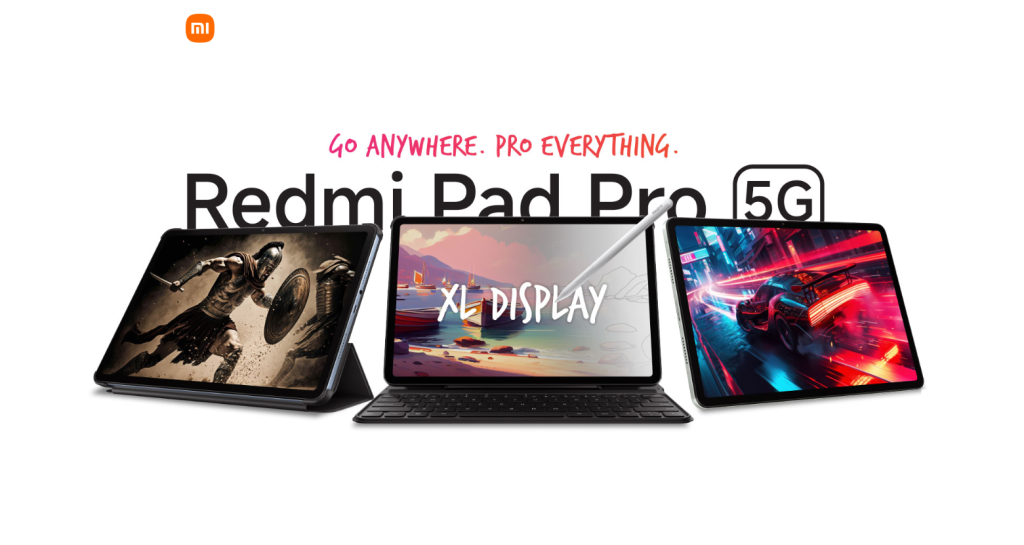
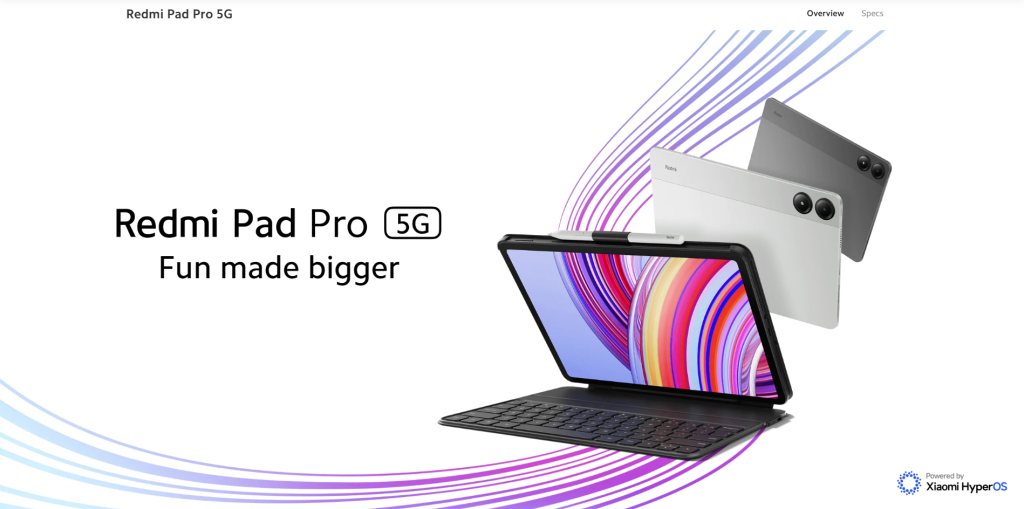
Xiaomi is set to launch the Redmi Pad Pro 5G in India on July 29th. The global launch of this tablet was teased earlier this month, and it is already available in the Chinese market. The Indian launch will also include the Redmi Pad SE 4G. Here’s what you need to know about the Redmi Pad Pro 5G.
Redmi Pad Pro 5G specs:
The tablet features a 12.1-inch 2.5K LCD screen with a resolution of 2560 × 1600 pixels, a 120Hz refresh rate, and a 180Hz touch sampling rate. The display can reach up to 600 nits of brightness, supports Dolby Vision, and is protected by Corning Gorilla Glass 3.
Powered by an Octa-Core Snapdragon 7s Gen 2 processor with a clock speed of up to 2.4GHz and an Adreno 710 GPU, the device will likely offer 6GB or 8GB of LPDDR4X RAM and 128GB or 256GB of UFS 2.2 storage, expandable up to 1.5TB via microSD. It runs on Android 14-based HyperOS.
Like its Chinese counterpart, the tablet will most likely include an 8MP rear camera and an 8MP front camera. For connectivity, it is expected to offer 5G support with dual SIMs. We can also expect a Wi-Fi 6 (802.11 ac) on 2.4GHz and 5GHz bands, Bluetooth 5.2, and USB Type-C 2.0. It is confirmed to draw power from a massive 10,000mAh battery, paired with 33W fast charging. For audio, it will have a quad-speaker setup with Dolby Atmos support.
In related news, Lenovo has recently launched the Legion gaming tablet in India, featuring an 8.8-inch 2.5K display with a 144Hz refresh rate, powered by a Qualcomm Snapdragon 8+ Gen 1 processor, and 12GB RAM. It offers 256GB storage, expandable up to 1TB, and a 6550mAh battery with 45W fast charging. The tablet includes a 13MP main camera, 2MP macro camera, and 8MP front camera, and supports Bluetooth 5.3, Wi-Fi 6E, and DisplayPort 1.4.
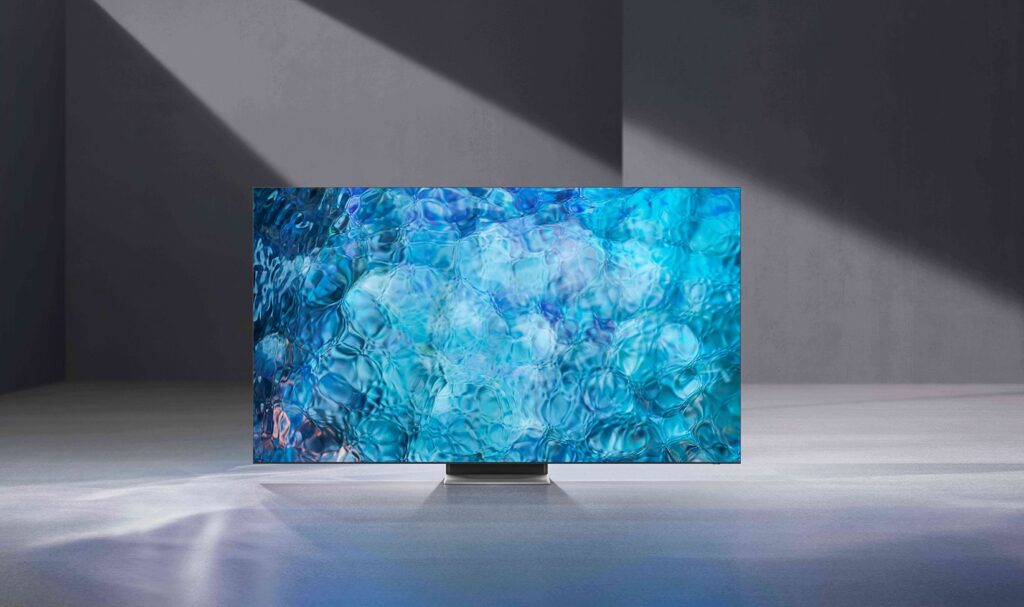
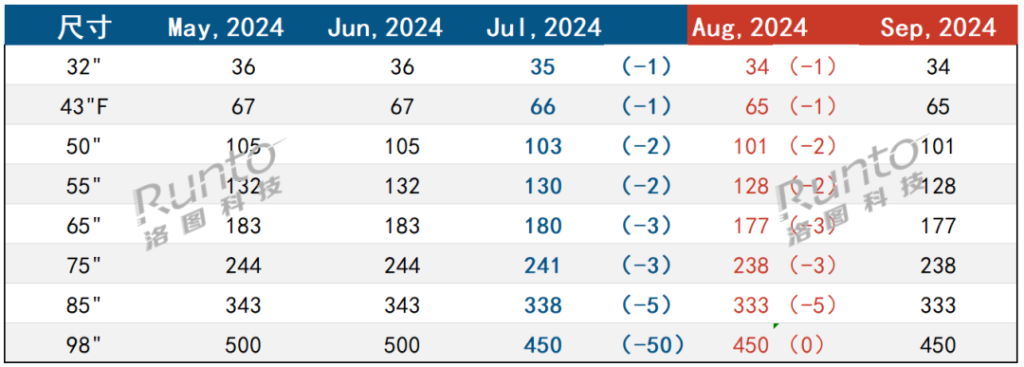
The TV market slump continues, with panel prices finally succumbing to weak demand. According to Runto Technology, July saw a universal decline in LCD TV panel pricing, signaling a potential shift after a period of artificial stability.
This news comes after a disappointing first half of 2023 for the TV industry. Global TV brand shipments hit a ten-year low, and despite hopes for a rebound, 2024 has seen minimal improvement. Sales remain sluggish, with the Chinese market, a crucial sector, experiencing a year-on-year decline of 4.2%.
Ten-Year Low Shipments Dampen Demand: Panel Prices Under Pressure
While TV manufacturers haven’t yet accumulated high inventory levels, sluggish retail sales are causing buyer hesitancy. This reluctance to place new orders is putting pressure on panel prices. However, the situation is a double-edged sword. Panel manufacturers themselves are apprehensive about lowering prices. Significant price cuts might stimulate demand, but there’s a risk of triggering an uncontrollable downward spiral.
Analysts believe the previous “price control” strategy, which temporarily stabilized key panel sizes for two months, ultimately couldn’t defy market forces. Weak demand in the TV market seems to be the driving factor behind the price decline. This suggests a return to a more market-driven pricing structure for TV panels.
The current situation presents a complex challenge for both TV manufacturers and panel producers. Striking a balance between managing inventory levels and stimulating consumer demand through strategic pricing will be crucial for navigating this difficult market environment.
Experts are cautiously optimistic about a potential future upswing. Technological advancements like advancements in OLED or MicroLED displays, coupled with features like improved picture quality or innovative functionalities, could reignite consumer interest. However, the industry needs to weather the current storm before it can focus on reigniting growth.
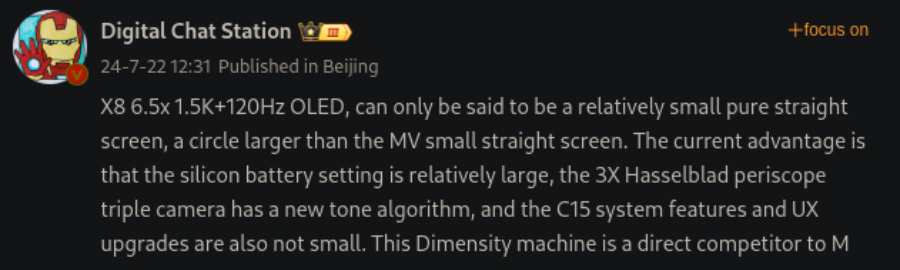
Industry insider Digital Chat Station (DCS) has shared new details about the upcoming Oppo Find X8. According to the tipster, the device will feature a 6.5-inch OLED display with a 1.5K resolution and a 120Hz refresh rate. It is said to be a flat panel, a shift from the curved displays of its predecessor.
A key highlight of the Find X8 is said to be its battery, which will use silicon battery technology for a larger capacity. While DCS didn’t specify the exact size, it is expected to range between 5100mAh and 5500mAh.
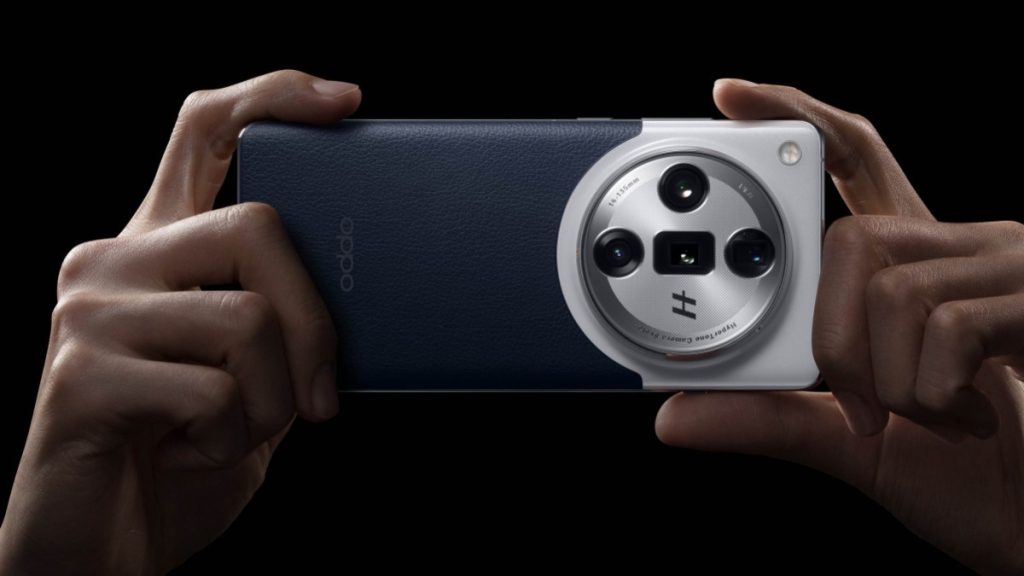
The phone is also rumored to include a triple camera system with a 3X periscope telephoto lens and Hasselblad tuning. The main camera is likely to be a 50MP Sony sensor with a large 1/1.4″ size. Oppo is said to be introducing new image-processing algorithms to improve camera performance.
On the software side, the Find X8 is expected to come with ColorOS 15, which DCS says will offer significant improvements in terms of user experience.
Additionally, previous reports suggest that the phone will be powered by MediaTek’s upcoming Dimensity 9400 processor. The SoC is expected to feature one Cortex-X5 super core clocked at 3.4GHz, three Cortex-X4 super cores, and four Cortex-A7 series large cores.
While they are largely performance-focused cores, the SoC is still rumored to offer a 34% reduction in power consumption while maintaining the same speed and complexity, and an 18% increase in performance at the same power.
We previously reported that the Oppo Find X8 series could come with a total of three models, one more than the Find X7 series. The Find X8 and X8 Pro are expected to launch sometime in October, while the top-of-the-line Find X8 Ultra will launch separately in Q1 2025.
Oppo has officially announced the launch date for the Oppo K12x smartphone model in India. This device was first announced in China back in May 2024 and is finally making its way to the Indian market later this month. So let’s check it out.
Oppo K12x India launch date
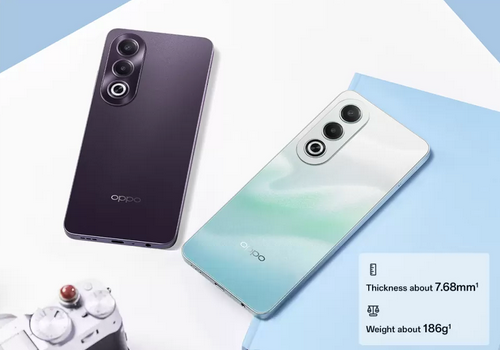
The Chinese smartphone maker teased the Oppo K12x’s India launch yesterday (21st July 2024) on a Flipkart microsite. Now, Oppo has revealed the 29th July 2024 launch date for this new device. We also get a proper look at the upcoming smartphone, showcasing its entire design. This model appears quite similar to the OnePlus Nord CE 4, which was also released in the region back in April 2024.
Oppo K12x in Midnight Violet and Breeze Blue
So there’s a chance that it could be a rebranded version of the Nord CE 4. To recall, the Nord CE 4 is also a rebranded version of the Oppo K12 5G (Chinese variant). Although this is still just speculation so take this with a pinch of salt for now. Unfortunately, Oppo did not reveal any other details of the K12x like its specs and pricing. But it is confirmed to launch in two color options, namely Breeze Blue and Midnight Violet. This model will measure 7.68mm ultra slim body and weighs just 186 grams.
The OnePlus Nord CE 4 was announced with the Snapdragon 7 Gen 3 SoC. The rear packs a 50-megapixel dual camera setup on the rear and a 16-megapixel selfie shooter on the front. It sports a tall 6.7-inch AMOLED display that offers a Full HD+ resolution and a 120Hz refresh rate. A large 5,500mAh battery pack that supports 100W wired fast charging. Other notable features include Bluetooth 5.4, an in display fingerprint scanner, stereo speakers, and a microSDXC SIM slot.
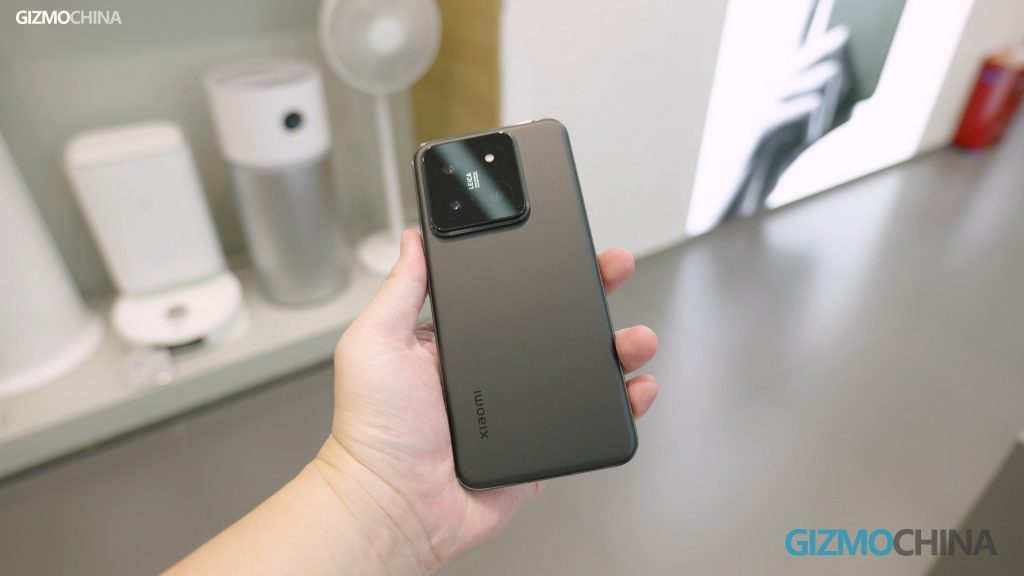
Xiaomi is expected to launch the Xiaomi 15 series in China in Q4 2024. Ahead of the launch, we have already come across several leaks and rumors about the series, the latest of which reaffirms that the phone will come with a similar design language as its predecessor.
Xiaomi 14
The phone will come with a familiar back design
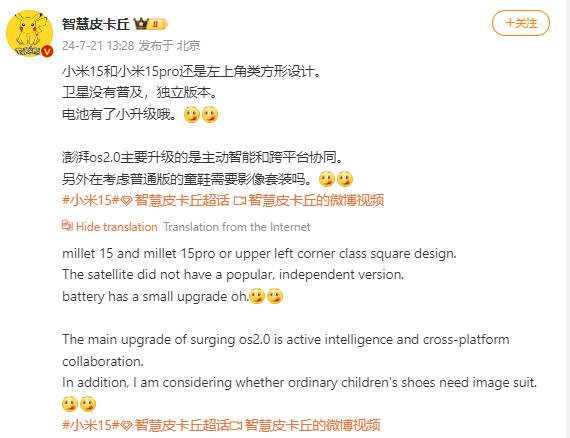
The news comes from Weibo tipster 智慧皮卡丘, who claims that the Xiaomi 15 and Xiaomi 15 Pro will have a similar square camera module on the top left of the back of the device. He also noted that the phones will come with a slightly better battery backup than the Xiaomi 14 series. Speaking of connectivity, there will reportedly be a satellite communication edition.
It was previously reported that the Xiaomi 15 and 15 Pro could be the first to come installed with HyperOS 2.0 out of the box. The tipster speculates that the phones will get better at cross-platform collaboration with the second generation of HyperOS. He also highlights that Xiaomi has focused on adding more AI features.
Speaking of the performance, the company’s new flagships will be powered by the Snapdragon 8 Gen 4 chipset, which according to Qualcomm, will be unveiled from October 21 to October 23 at this year’s Snapdragon Summit. We can expect the Xiaomi 15 series to launch in China soon after Qualcomm launches the new chip. Snapdragon 8 Gen 4 mobile platform will use TSMC’s advanced N3E node 3nm process, adopt Qualcomm’s own Oryon CPU core, and be equipped with a new Adreno GPU, which may be Adreno 830. According to previous news, the AnTuTu running score of the Snapdragon 8 Gen 4 chipset may exceed 3 million points.
According to a recent leak, the company will launch the Xiaomi 15 and 15 Ultra globally in Q1 2025. However, the Pro model is expected to remain exclusive to China.
Samsung’s upcoming Galaxy Tab S10 Ultra has just appeared on the Geekbench benchmarking platform and it clears up any uncertainty about its processor choice.
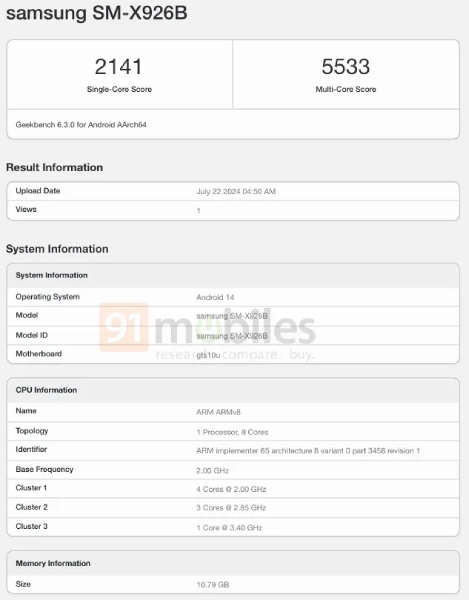
The Geekbench listing shows that the Galaxy Tab S10 Ultra, with the model number SM-X926B, will feature the MediaTek Dimensity 9300+ processor.
But there was still a lingering possibility that the top-of-the-line Tab S10 Ultra might feature the Snapdragon 8 Gen 3. However, this new benchmark listing confirms otherwise.
The Geekbench listing shows the Tab S10 Ultra with a familiar configuration for the Dimensity 9300+. This includes a cluster of four cores operating at 2.0GHz, three cores at 2.85GHz, and a single high-performance core clocked at 3.40GHz. The graphics duties will be handled by the Mali-G720-Immortalis MC12 GPU.
Performance-wise, the Tab S10 Ultra scored 2,141 points in the single-core test and 5,533 points in the multi-core test. The benchmarked device was equipped with 12GB of RAM and ran on the Android 14 operating system.
While performance benchmarks shed light on the Galaxy Tab S10 Ultra’s capabilities, details about other aspects of the tablet are still under wraps.
However, based on previous leaks, the tablet is expected to keep a similar look to its predecessor, including its dimensions and front camera placement. It will also likely retain the 14.6-inch display.
Samsung is likely to unveil the Galaxy Tab S10 series, including the Ultra model, in early 2025, alongside the Galaxy S25 series. Further details regarding pricing, availability, and additional features will likely come out closer to the official launch date.
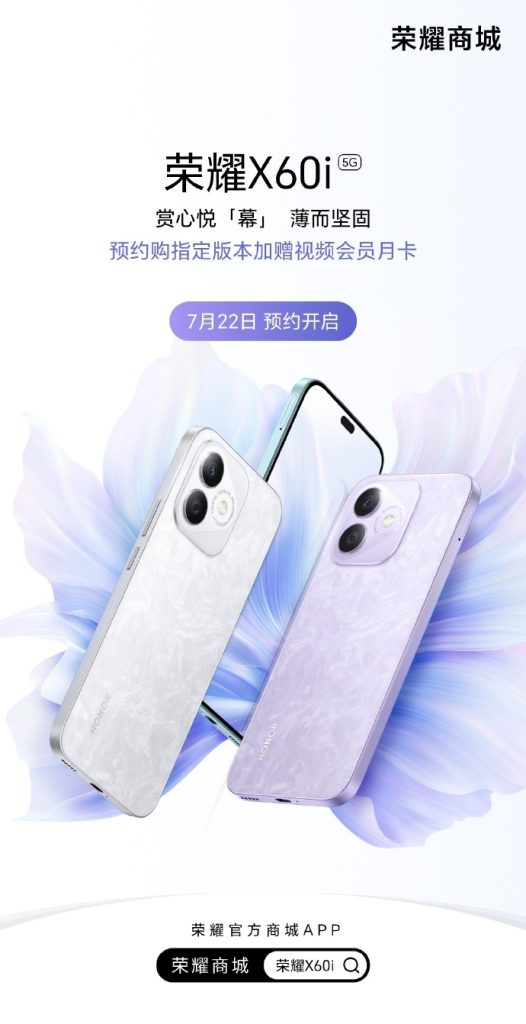
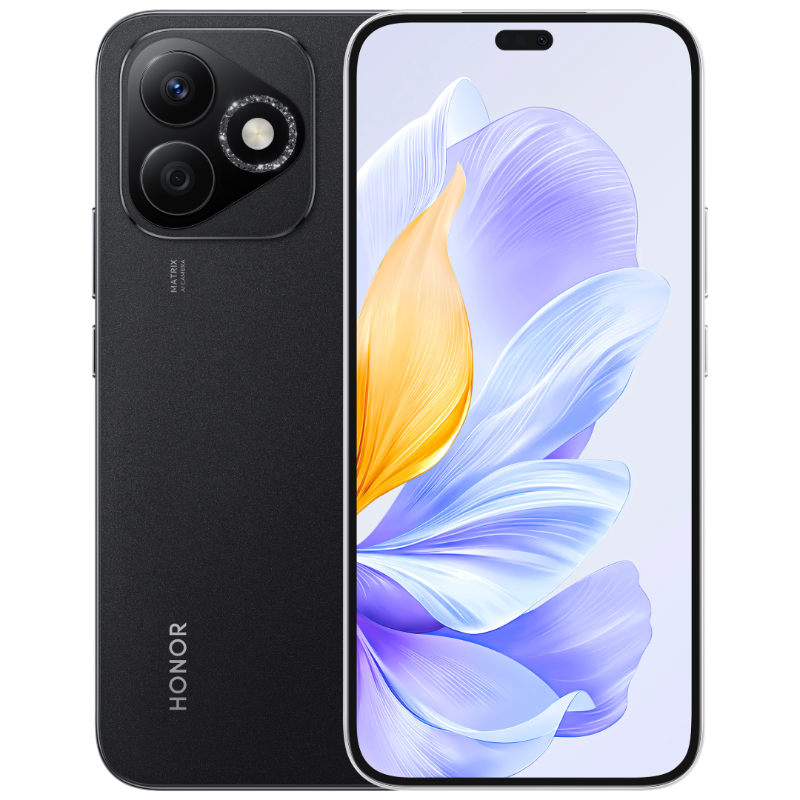
The specs of Honor X60i have been leaked earlier, and the phone was even spotted in the TENAA certification. Now, Honor has officially started pre-orders for Honor X60i, with the phone set to arrive on July 26.
Honor X60i
While Honor hasn’t announced the price of the Honor X60i on their official website yet, they have revealed the color options. If you want to get your hands on the phone early, you’ll need to register with your Honor account. The phone comes in Phantom Black, Coral Purple, Moon White, and Cloud Blue.
Honor X60i color options
Honor X60i comes with a design similar to the iPhone, featuring boxy curved edges and the selfie camera notch. Although the official website hasn’t released the full specs, previous leaks indicated the phone might be 7.18mm thick, which is even thinner than the 7.8mm iPhone 15. It’s great to see a phone that thin with 5000 mAh battery and 35W charging.
Honor X60i will feature the MediaTek Dimensity 6080 chipset. It’s expected to come in three configurations: 8GB+256GB, 12GB+256GB, and 12GB+512GB. The phone also boasts a 6.7-inch FHD IPS display. It will have a dual-camera setup with 50MP and 2MP sensors, and an 8MP selfie shooter on the front. Previous pricing leaks suggested that the starting price of Honor X60i will be $235 USD.
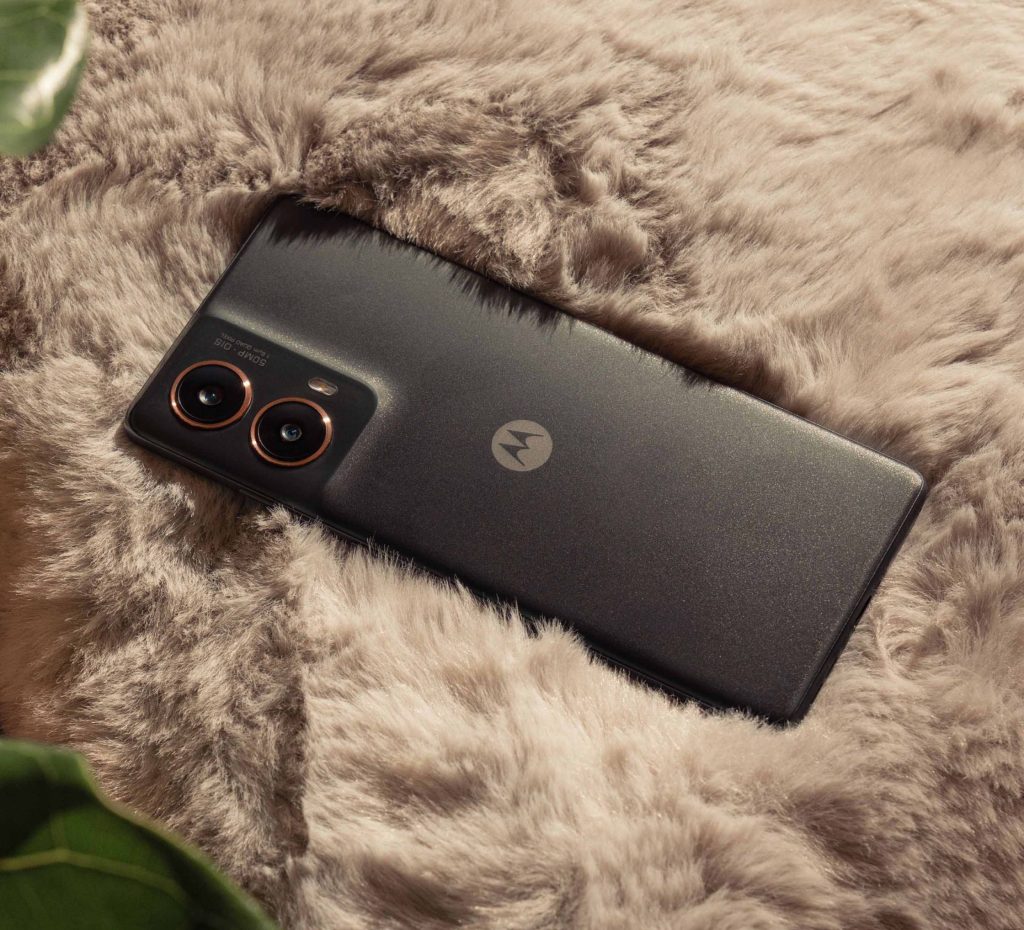
Motorola has released the Moto G85 5G in India on July 10th. This mid-range smartphone includes features like a 50MP camera with optical image stabilization (OIS) and a Snapdragon 6s Gen 3 processor.
Moto G85 5G pricing & availability
The Moto G85 5G is available in three colors: Cobalt Blue, Olive Green, and Urban Grey. There are two versions: one with 8GB RAM and 128GB storage for Rs. 17,999, and another with 12GB RAM and 256GB storage for Rs. 19,999.
An introductory offer reduces the base model’s price to Rs. 16,999 with a Rs. 1,000 discount for Axis Bank credit cardholders. Buyers can also get up to 9 months of no-cost EMI on Axis Bank credit cards. The phone can be bought on Motorola India’s website, Flipkart, and other retail stores.
Moto G85 5G specs:
The Moto G85 5G features a 6.67-inch pOLED 10-bit display with curved edges, offering FHD+ resolution, a 120Hz refresh rate, and a peak brightness of 1,600 nits. The display includes a fingerprint scanner and is protected by Gorilla Glass 5. The phone has a slim design and comes in three colors with a vegan leather back panel. The rear houses a slightly elevated square camera module.
For photography, the Moto G85 5G is equipped with a 50MP Sony LYT-600 main sensor with OIS support and an 8MP ultra-wide-angle lens that also functions for macro shots. It has a 32MP front-facing camera for selfies.
Powered by the Snapdragon 6s Gen 3 processor, the Moto G85 5G offers up to 12GB of RAM and 256GB of storage. It has a 5,000mAh battery with 30W charging support and runs on Android 14, with two years of OS updates guaranteed.
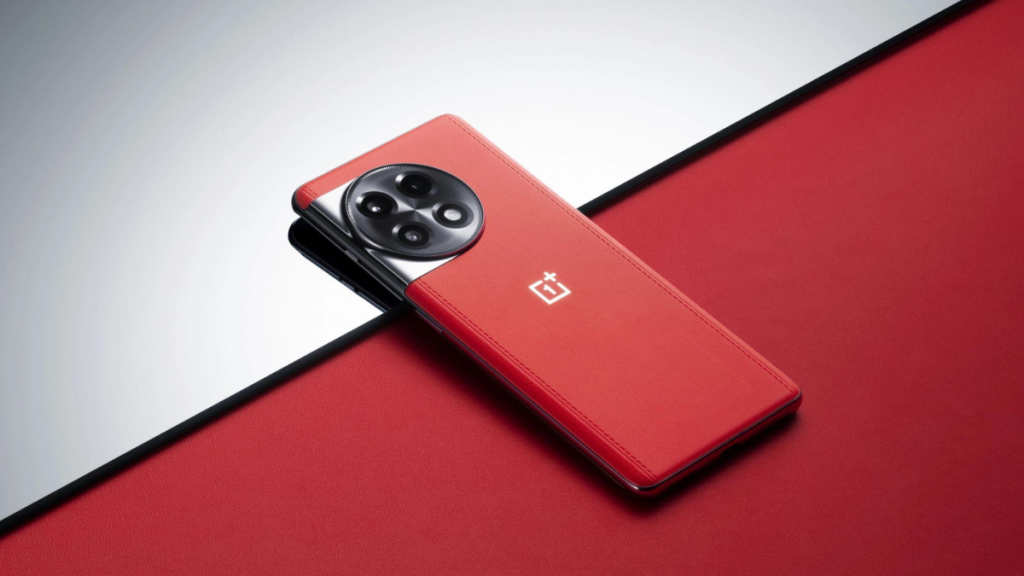
OnePlus 11R is a popular mid-range smartphone that’s currently available for just under Rs. 30,000. It looks good on the spec sheet. However, several brands are offering very competitive smartphones at similar pricing.
If you’re looking to purchase the OnePlus 11R, make sure to check out these four best alternatives to make a better purchase decision.
Let’s quickly recall the OnePlus 11R via the spec sheet below:
OnePlus 11R
Body
163.4 x 74.3 x 8.7 mm 163.4 x 74.3 x 8.7 mm (Solar Red) 204 g 202 g (Solar Red)
Display
6.74″ 120Hz Super Fluid AMOLED 1240 x 2772 pixels resolution 450 PPI, HDR10+, 1450 nits (peak)
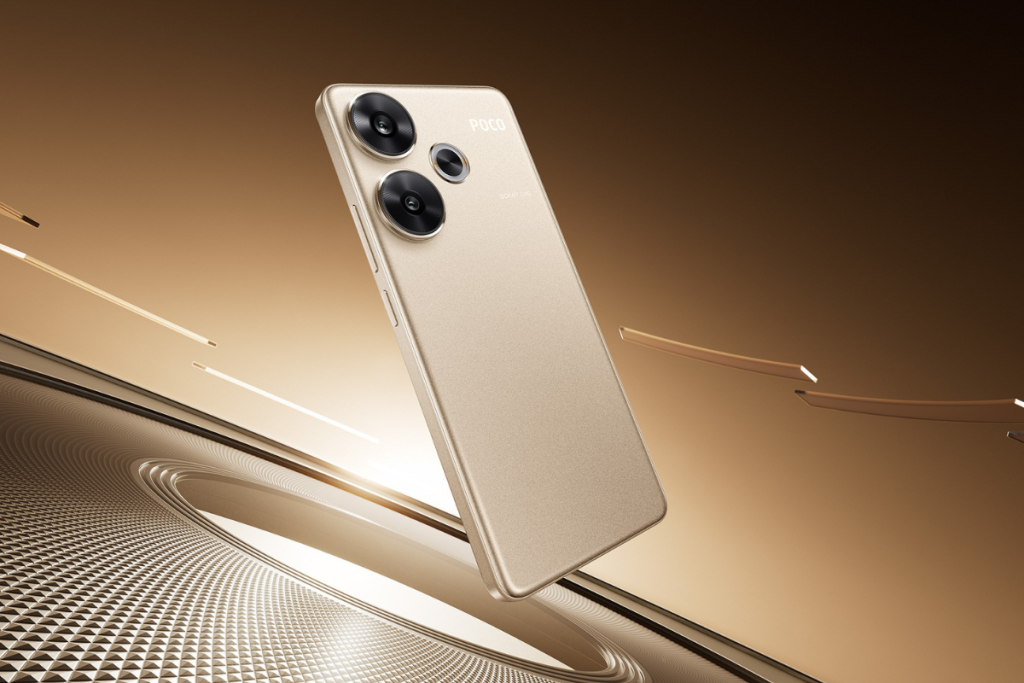
Poco F6 is much superior to the OnePlus 11R in terms of performance, thanks to the flagship Snapdragon 8s Gen 3 chip. In fact, it’s the only phone in the Rs. 30-35K price range to feature this powerful chip.
The Poco F6 has a 6.67-inch AMOLED screen with a 1.5K resolution and 120Hz refresh rate support. It supports 68 billion colors, HDR10+, and a peak brightness of 2400 nits. Compared to the OnePlus 11R, the Poco phone has a slightly smaller screen but 68 times more colors and a higher peak brightness for better visibility outdoors. Plus, it has Gorilla Glass Victus protection.
Both smartphones have a 50MP primary camera, but the OnePlus 11R has a newer Sony IMX890 sensor (vs. IMX882 on the Poco F6). The OnePlus phone may output better photos and videos. Both phones also have an 8MP ultrawide lens. However, the OnePlus 11R also has an additional 2MP macro shooter.
Both the OnePlus 11R and Poco F6 can record up to 4K videos at up to 60 frames per second (fps). There’s a 20MP selfie camera on the Poco F6 for selfies and video calls, whereas the OnePlus 11R has a 16MP camera.
Both phones can record up to 1080p video with its selfie camera, but the Poco F6 supports higher fps.
The Poco F6 and OnePlus 11R have the same set of connectivity features, except for a newer Bluetooth standard on the Poco F6. The batteries inside them have the same 5,000mAh capacity. However, the OnePlus phone has a little faster wired charging support.
In short, the Poco F6 has a better display and performance than the OnePlus 11R. However, the camera setup is slightly better on the OnePlus 11R, but the Poco F6 can also take good shots.
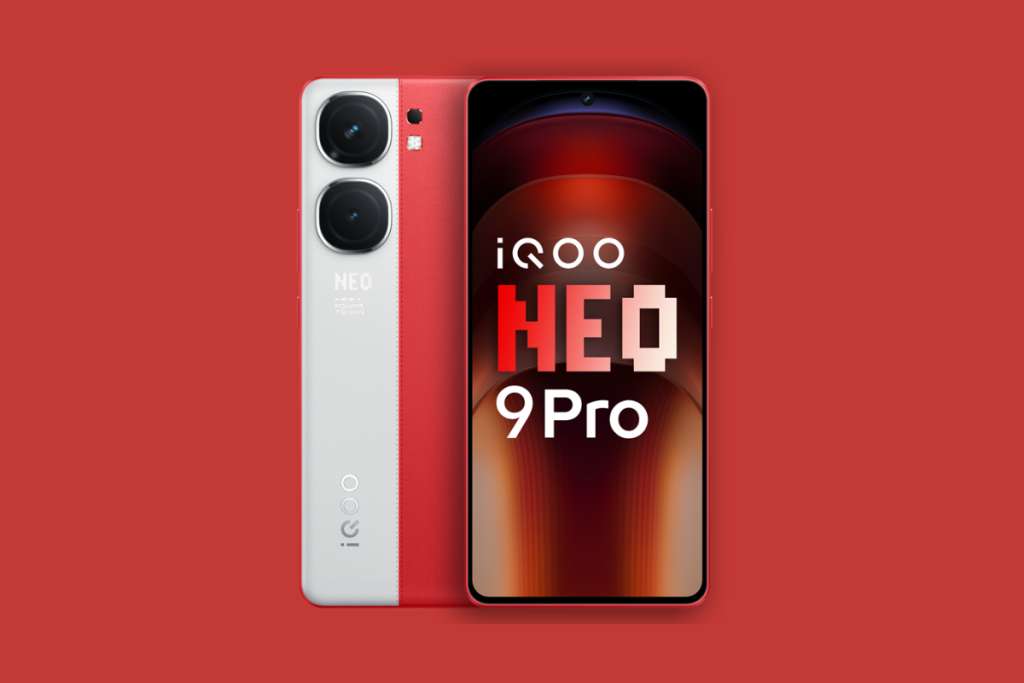
The iQOO Neo 9 Pro is another excellent alternative to the OnePlus 11R, featuring a Snapdragon 8 Gen 2 chip. It’s more powerful than the Snapdragon 8+ Gen 1-powered OnePlus 11R. So, the performance is better on the Neo 9 Pro.
The OnePlus 11R and iQOO Neo 9 Pro have nearly the same screen size, although they differ greatly. For instance, the iQOO phone has a higher screen refresh rate, peak brightness, and more pixels. Notably, it has an LTPO panel that automatically adjusts the refresh rate to offer maximum smoothness while saving the battery. iQOO Neo 9 Pro takes the lead here, again.
Both smartphones feature a 50MP primary camera on the back, but the iQOO Neo 9 has a better Sony IMX sensor than the OnePlus 11R. They also have an 8MP ultrawide sensor. However, there’s an additional 2MP macro camera on the OnePlus 11R.
The iQOO Neo 9 Pro can record up to 8K videos but is limited to 4K on the OnePlus phone. Both phones have a 16MP sensor for selfies and video calls that can record up to 1080p videos.
The iQOO Neo 9 Pro has a slightly larger battery with support for faster-wired charging compared to the OnePlus 11R. Hence, more screen time and less charging time on the iQOO phone.
This iQOO phone starts at around Rs. 38,000, slightly costlier than the OnePlus 11R. If it goes out of your budget, consider checking out the iQOO Neo 7 Pro.
3. Realme GT 6T
Realme GT 6T
Display
6.78″ 120Hz LTPO AMOLED 1264 x 2780 pixels resolution 6000 nits (peak) Gorilla Glass Victus 2
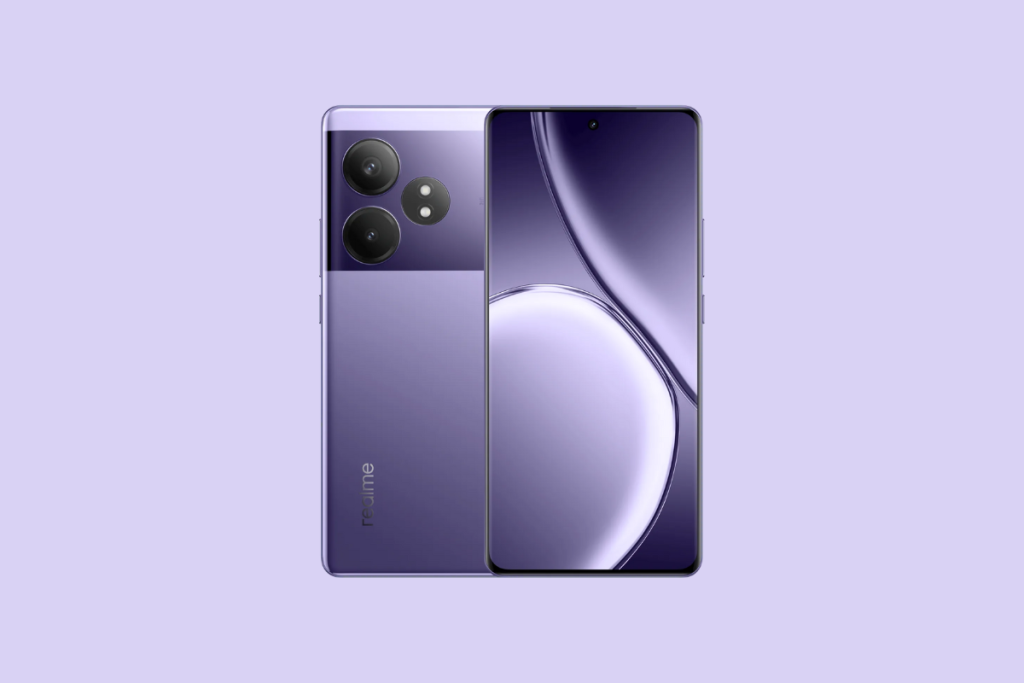
Realme GT 6T is better than the OnePlus 11R in many ways. Firstly, it has the benefit of an LTPO panel and a peak brightness of 6000 nits (vs. 1450 nits on the OnePlus 11R).
The Realme GT 6T phone is powered by a Snapdragon 7+ Gen 3 chip. At first, it might seem like a downgrade to the Snapdragon 8+ Gen 1-powered OnePlus 11R, but that’s not true, thanks to Qualcomm for a confusing naming scheme. The Snapdragon 7+ Gen 3 actually performs better than the Snapdragon 8+ Gen 1 because of better CPU cores.
The Adreno 732 GPU in the SD 7+ Gen 3 is also better than the Adreno 730 inside the SD 8+ Gen 1. The combination of a faster CPU and GPU makes the Realme GT 6T a good choice over the OnePlus 11R for performance-friendly people.
Both the OnePlus 11R and Realme GT 6T have a 50MP primary rear camera, although they use different sensors. For example, the OnePlus phone uses the Sony IMX890, and the Realme GT 6G has a Sony LYT-600 sensor. They also feature an 8MP ultrawide sensor. However, the OnePlus 11R also has an additional 2MP macro camera.
The 32MP selfie camera (2X resolution of the OnePlus 11R) can record up to 4K videos but is limited to 1080p on the OnePlus 11R. The Realme GT 6T has the advantage of a bigger battery with faster wired charging support.
For those who want to remain loyal to OnePlus and prioritize battery and performance over camera, the OnePlus Nord 4 can be a good choice over the OnePlus 11R.
The display is largely the same on both phones except for a higher peak brightness on the Nord 4.
The OnePlus Nord 4 has a Snapdragon 7+ Gen 3 SoC, which is more powerful than the Snapdragon 8+ Gen 1 used in the OnePlus 11R.
Both smartphones have a 50MP primary camera + 8MP ultrawide camera on the rear side. However, the OnePlus 11R has an additional 2MP macro shooter. The phones also have a 16MP selfie camera.
The OnePlus Nord 4 has a bigger battery than the OnePlus 11R, although the charging speed remains unchanged.
The connectivity features are the same on both phones except for a newer Bluetooth standard on the Nord 4. However, there’s a big difference in the software update policy. The OnePlus 11R ships with Android 13 and is promised three years of Android updates and four years of security updates. The Nord 4, on the other hand, comes with Android 14 and will get four years of Android updates and six years of security updates.
Please Note: When you buy something using the links in our articles, we may earn a small commission at no cost to you.
Which one of these phones is the best alternative to the OnePlus 11R? And, what are the three most important factors you consider when purchasing a phone? Share your thoughts in the comments below.
We use cookies on our website to give you the most relevant experience by remembering your preferences and repeat visits. By clicking “Accept”, you consent to the use of ALL the cookies.
This website uses cookies to improve your experience while you navigate through the website. Out of these, the cookies that are categorized as necessary are stored on your browser as they are essential for the working of basic functionalities of the website. We also use third-party cookies that help us analyze and understand how you use this website. These cookies will be stored in your browser only with your consent. You also have the option to opt-out of these cookies. But opting out of some of these cookies may affect your browsing experience.
Necessary cookies are absolutely essential for the website to function properly. This category only includes cookies that ensures basic functionalities and security features of the website. These cookies do not store any personal information.
Any cookies that may not be particularly necessary for the website to function and is used specifically to collect user personal data via analytics, ads, other embedded contents are termed as non-necessary cookies. It is mandatory to procure user consent prior to running these cookies on your website.