Advertisement

Honor X9b 5G is cheaper than ever in India

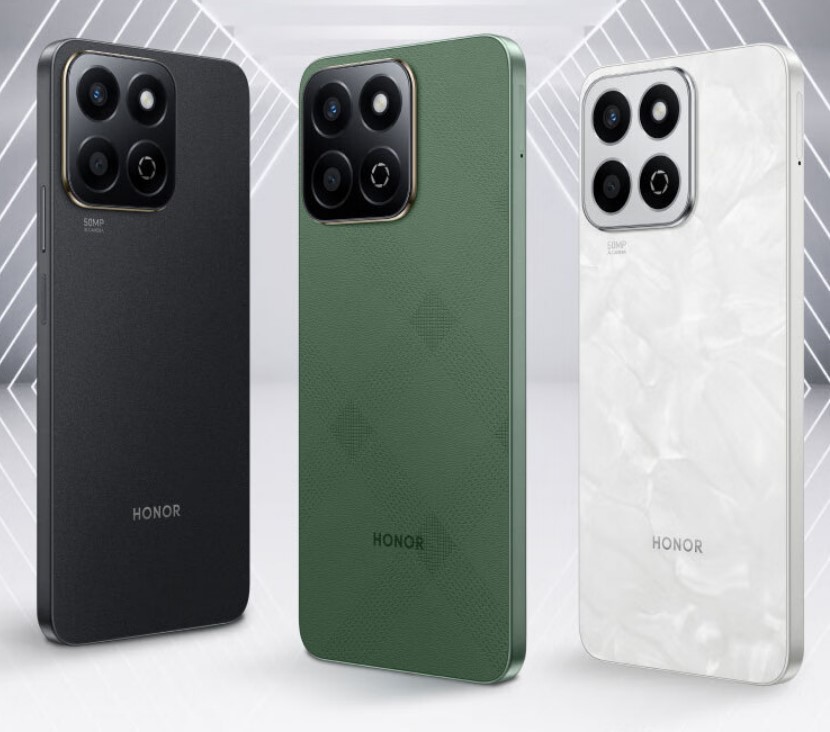
Honor reentered late last year in India and introduced some new smartphones, including the Honor X9b 5G. The smartphone usually retails in India at the price of Rs 25,999 without any bank discount, and now, you can grab it for the price of Rs 24,999. If the user includes the Bank Offers, then the smartphone can be yours at the price of Rs 22,999.

Honor is also offering an additional exchange bonus of Rs 4000 on all smartphones. Apart from the discounts the Violet Htech 30W charger can be yours for Rs 699. There’s also an option of no cost EMI on certain credit and debit cards.

Grab Honor X9b 5G at a Cheaper price from Amazon

Honor X9b specifications:

Honor X9b comes with Qualcomm Snapdragon 6 Gen 1 SoC and packs LPDDR4x RAM and UFS 3.1 storage. It houses a 6.78-inch punch-hole curved OLED display which offers 2652 x 1200 pixels resolution, 120Hz refresh rate, 1920Hz PWM dimming, and 1200 nits peak brightness. It is a 10-bit panel that offers a 1.5K resolution with 429-pixel density.

Honor X9b equips a 5-star SGS-certified drop resistance rating and offers a giant circular ring on the rear side. Built with vegan leather finishes, the smartphone weighs 185 grams.

In connectivity, there’s WiFi 5, Bluetooth 5.1, and a USB 2.0 Type-C port. There’s also an in-screen fingerprint scanner for quick authentication.

The smartphone hosts a tripel-rear camera module in the camera section with a 108MP primary sensor, a 5MP ultrawide sensor, and a 2MP macro sensor. A 16MP selfie camera sits on the front for selfies. Further, it bundles a 5800 mAh battery and supports 35W wired charging. It was launched at the price of Rs 25,999, and with the recent discount, you can grab it for Rs 22,999.

Please Note: When you buy something using the links in our articles, we may earn a small commission at no cost to you.

Related:

Motorola Edge 50 Pro: 5 compelling reasons to choose this phone

Earlier this month, Motorola announced the Motorola Edge 50 Pro in India with a starting price of Rs 31,999 (~$380). This pricing allows the device to compete with some of the recent smartphones, such as the Realme 12 Pro+ 5G, Redmi Note 13 Pro+ 5G, iQOO Neo 9 Pro 5G, OPPO Reno 11 Pro 5G, Vivo V30 5G, Samsung Galaxy A35 5G, and so on. While some of these phones may beat the Edge 50 Pro in some areas, like the iQOO phone offering a better Snapdragon 8 Gen 2 chip, the Edge 50 Pro packs some interesting specs that provide an “edge” over other devices. Here is a look at the five major highlights of the device.

1. Design

Motorola Edge 50 Pro

The Motorola Edge 50 Pro’s front features a curved-edge AMOLED display with slim bezels. For durability, the device features a metal frame and an IP68-rated chassis, which protects it from dust and water damage. It comes in three shades, such as Black Beauty, Moonlight Pearl, and Luxe Lavender. While black and lavender have silicone vegan leather back, the white variant sports a handmade design. While Motorola has not advertised it much, each color variant ships with color-matching case.

2. Pantone Validated Display

Motorola Edge 50 Pro

The 6.7-inch P-OLED curve-edge display of the Motorola Edge 50 Pro is the world’s first and only True Color display, validated by Pantone, claims the company. It ensures real-world, true-to-life colors with Pantone skin tone validation for a wide range of human skin tones. The screen supports a 1.5K resolution, a 144Hz refresh rate, 10-bit billion colors, a peak brightness of 2000nits and HDR10+ support. Additionally, the display incorporates SGS Eye Protection technology for comfortable extended use.

3. Versatile Camera Setup

Motorola Edge 50 Pro

The Motorola Edge 50 Pro has a versatile camera setup comprising an OIS-assisted 50-megapixel camera with an f/1.4 aperture. Complementing this primary camera is a 13-megapixel ultrawide, which doubles up as a macro camera. Additionally, a 10-megapixel telephoto camera brings support for 3x optical zoom and a 30X hybrid zoom. On the front, the Edge 50 Pro sports a 50-megapixel selfie camera with autofocus and an improved aperture of f/1.9. The front and rear cameras support 4K video recording.

For a better photography experience, the Edge 50 Pro incorporates a couple of intelligent camera features. The AI Photo Enhancement Engine enhances image quality with advanced dynamic range, finer details, software-based bokeh, and noise reduction, all without requiring any expertise from the user. By dynamically adjusting stabilization levels to compensate for movement while filming, AI Adaptive Stabilization ensures shake-free videos. Tilt Shift Mode enables creative portraits with multiple points of focus, while Intelligent Auto Focus Tracking keeps subjects sharp and in focus, even as they move through the frame.

4. Blazing fast 125W charging

Motorola Edge 50 Pro being charged using 68W TurboCharger

The Edge 50 Pro comes in two variants. The retail package of the 12 GB RAM + 256 GB storage includes a 125W fast charger. On the other hand, the retail box of the 8 GB RAM + 256 GB storage variant includes a 68W charger. Both models are backed by a 4,500mAh battery.

My Edge 50 Pro review unit took around 21 minutes to achieve a full charge using the ultra-fast 125W charger. Additionally, the device supports 50W wireless charging and 10W reverse wireless charging.

In terms of performance, the Edge 50 Pro has the Snapdragon 7 Gen 3, which also powers the likes of the OnePlus Nord CE 4 and the Vivo V30 5G. The device is equipped with LPDDR4x RAM and UFS 2.2 storage.

5. Clutter-free UI experience

Motorola Edge 50 Pro

The Edge 50 Pro ships with Android 14 and is the first Motorola phone to ship with the new Hello UI instead of MyUX. The Lenovo-owned company has confirmed that the Edge 50 Pro will receive Android 15, 16, and 17 upgrades, as well as three years of security patches. Apart from multiple apps from Google and a few Motorola apps, there are only a few third-party apps.

The new software packs Moto Gestures for controlling the device without touching the screen, Thickhead security, Moto Connect for wirelessly connecting the phone to a TV or PC for work or play, and AI-generated wallpapers.

Motorola Edge 50 Pro price in India

The Motorola Edge 50 Pro’s base variant, which offers an 8GB+256GB configuration with 68W fast charging support, is priced at Rs 31,999 (~$380). On the other hand, the 12GB+256GB edition of the device with 125W fast charging support costs Rs 35,999 (~$430). The phone can be purchased through Flipkart and Motorola India’s website.

The Edge 50 Pro is also available for purchase in Europe. It is priced at £599 in the UK and €699 in rest of the Europe. It is also expected to release in other Asian markets, Latin America, and Oceania. The promo offer in Europe allows buyers of the Edge 50 Pro to get the Moto Buds Plus TWS earbuds for free.  

Unlike Huawei Pura 70 Pro models, the standard Pura 70 doesn’t support Huawei NearLink

Huawei Pura 70 series phones arrived on the market yesterday and are seeing a high demand. Just like the Huawei Mate 60 series, all the models of the new phones also match “the level of 5G”. However, the Pro models such as the Pura 70 Pro, Pura 70 Pro+, and the Pura 70 Ultra have one networking feature as compared to the standard Pura 70. This is Huawei NearLink, a relatively new wireless technology, noted as “far ahead of Bluetooth”.

Huawei Pura 70 Ultra

Huawei NearLink integrates the advantages of both Bluetooth and Wi-Fi

Last year, Huawei launched a new generation of NearLink technology, which integrates the advantages of both Bluetooth and Wi-Fi and offers significantly stronger and also more efficient connectivity. It works with a set of HarmonyOS powered devices.

Compared with traditional wireless connections, Huawei NearLink has the advantages of 60% lower power consumption, 6 times higher speed, 1/30 delay, and 10 times higher number of network connections.

Huawei’s official website shows that currently Huawei Mate 60 series, Huawei Pocket 2, Pura 70 Pro, Pura 70 Pro+, and Pura 70 Ultra support this NearLink function. So the standard Pura 70 does not have the connectivity advantage here.

While answering some questions, Huawei terminal customer service also confirmed that the Huawei Pura 70 standard version mobile phone does not support this advanced connectivity feature. “HUAWEI Pura 70 does not support Star Flash; HUAWEI Pura 70 Pro, Huawei Pura 70 Pro+, and HUAWEI Pura 70 Ultra support Star Flash,” (translated from Chinese).

The standard Huawei Pura 70 is said to be powered by the Kirin 9000S1, an underclocked version of the existing Kirin 9000S chipset. Other than that, the phone offers a 6.6-inch 2760 × 1256 pixel OLED screen, which supports a 1-120Hz LTPO adaptive refresh rate. The phone has a total of three rear cameras. These include a 50MP main camera, a 12MP periscope telephoto with 5x optical zoom (both have OIS), and a 13MP ultrawide. There is also a 13MP camera for selfies.

Related:

Vivo Y200i 5G launch date confirmed, here’s what we know so far

Vivo has officially announced the launch date for its upcoming Y200i 5G smartphone. The smartphone will hit the Chinese market on April 20th. The Y200i has, however, already made its appearance on China Telecom’s site revealing everything there is to know about the device. 

Furthermore, Vivo revealed the design and color choices of the smartphones in a teaser today. As per the official poster, the Vivo Y200i 5G will come in three colors: Glacier White, Starry Night Black, and Haohai Blue.

In terms of design, the phone boasts flat frames with a circular camera module on the back, housing two cameras (a 50MP main camera and a 2MP macro camera) along with an LED flash. The fingerprint sensor seems to be placed on the side of the phone.

On the front, the Y200i 5G features a large 6.72-inch IPS LCD display with a punch-hole design for the 8MP front camera. While the listing confirms a Full HD+ resolution, details regarding a high refresh rate are yet to be revealed. 

Under the hood, the Y200i 5G is powered by the Snapdragon 4 Gen 2 processor, paired with OriginOS 4, based on the latest Android 14 operating system. 

Memory-wise, you will have three configurations: 8GB RAM with 256GB storage, 12GB RAM with 256GB storage, and a top-of-the-line option with 12GB RAM paired with 512GB of storage.

Keeping the phone running all day is a massive 6,000mAh battery with support for 44W fast charging. The smartphone also has an IP64 rating. 

Pricing and Availability

The Vivo Y200i 5G comes in three variants starting at an estimated 1,299 CNY (approximately $180 USD) for the 8GB RAM + 256GB storage option. 

The 12GB RAM + 256GB storage variant is expected to cost around 1,599 CNY (approximately $220 USD), while the top-tier 12GB RAM + 512GB storage model might reach 1,799 CNY (approximately $250 USD).

Related:

World’s most affordable IP69 smartphone with Dimensity 7050, 12GB of RAM on sale for first time for under $300

Oppo recently launched the A3 Pro smartphone in China. It stands out as the first budget smartphone in recent times to gain IP69, IP68, and IP66 certifications.

According to the company, the Oppo A3 Pro can withstand everything from soaking water, and strong water spray to even dip in hot water. The smartphone is now officially going on sale in mainland China starting today. 

Pricing and Availability

The Oppo A3 Pro has been launched in China with three memory configurations: 8GB+128GB, 12GB+256GB, and 12GB+512GB. They are priced at 1,999 Yuan ($275), 2,199 Yuan ($300), and 2,499 Yuan (~$345) respectively.

It’s available in three shades: Azure (with a glass back), Mountain Blue (sporting a leather back), and Yunjin Pink (also with a leather back). As of now, there’s no information on whether it will hit the global market.

Oppo A3 Pro Specifications

What sets the A3 Pro apart is its exceptional durability. Alongside its IP69 rating, it’s the first smartphone to achieve the Swiss SGS Gold Label 5-star drop resistance certification and has cleared a stringent national military standard impact resistance test in China. 

To top it all off, the phone is protected by Oppo’s Crystal Glass on both the front and back. 

The phone features a 6.7-inch AMOLED display with a smooth 120Hz refresh rate. It runs the latest Android 14 with ColorOS 14 on top and is powered by a mid-range Dimensity 7050 chip. 

It comes in variants with 8GB or 12GB of RAM and 256GB or 512GB of storage, with expandable virtual RAM for multitasking. The 5000mAh battery with 67W fast charging ensures long usage time and quick refills.

On the camera side, it offers an 8MP front camera and a dual rear camera system with a 64MP main sensor and a 2MP depth sensor. It can record videos in FHD at 30fps on the front and 4K at 30fps on the rear. 

Other features include dual SIM support, 5G connectivity, Wi-Fi 6, Bluetooth 5.3, and a USB-C port.

Related:

GC Daily: We go hands on with Huawei Pura, HMD has a ‘Boring’ phone

Yesterday, Huawei released its new Pura series lineup, and we had to rush to the stores to ensure that we got hold of a unit. After visiting 5 different stores, we managed to buy a Huawei Pura 70 Ultra for review.

The Ultra variant costs around $1400 in China, and it was officially sold out in a minute once it went on sale. The unit we got is the new color, featuring a leather like back cover with starburst patterns. The camera module is of course, the biggest selling point of the device, and is definitely a conversation starter.

One of the reasons why the module is so huge is because the main camera features a huge 1-inch sensor with retractable lens! Yes, you heard it right, the lens retracts according to need, and you also get variable aperture with this, making the Pura 70 Ultra one of the most advanced camera smartphones in the market right now.

Our initial hands on showed that the Kirin 9010 chip is a slightly upgraded version of the 9000s from last year. So no significant upgrades in that department. But overall, we like the device and you can watch our initial impressions and hands-on experience in this video.

Nothing announced the Ear and Ear (a) TWS earphones in the global markets yesterday. The Ear is a premium offering whereas the Ear (a) is a stripped-down affordable version, just like the Phone (2a).

It is worth adding that Nothing has changed its naming strategy by ditching the numbers on its new products. More details about the earbuds here.

We previously told you that the Xiaomi 14 Ultra used 5.5G technology to achieve 5 Gbps mobile data speeds. However, 5.5G was only available in limited commercial usage. But now, Xiaomi has rolled out an update for its 14 Ultra bringing 5.5G capabilities to the flagship model. The update is of 527 MB bearing the OS version number 1.0.9.0 UMACNXM.

In case you are wondering how 5.5G is better than existing 5G, we have explained the technology in this article.

⚠️ DEAL ALERT: The 7-port Anker 525 Charging Station is Only $36 on Amazon Right Now

Blast from the past?

HMD has collaborated with Heineken and Bodega to create a retro styled phone called the Boring Phone. The brand is collaborating with a prominent beer company and street culture fashion curators to create a unique feature phone with a design that is everything from ‘boring’. The announcement comes only days after Nokia unveiled the new 6310, 230, and 5310 feature phones.

Would you be interested in getting a phone that can only send texts and receive calls in 2024?

The OnePlus 11R base model is getting a bright red makeover in India. OnePlus teased the model earlier this week and now its officially going on sale in the region.

To recall, the Solar Red color option was limited to the highest 512GB storage option. But now, the base 8GB + 128GB variant is also arriving in this fresh color.


🔥 More Headlines Worth Reading!

OnePlus Ace 3 Pro design, specifications leaked well before launch

Shot from our Ace 3 vs Nothing Phone 2a comparison

Among the OnePlus Ace 2 series phones launched last year, the Ace 2 Pro, was the most powerful smartphone. Now that the brand has already launched the Ace 3 and Ace 3V phones in China this year, it appears that the company is working on the Ace 3 Pro as well. Yesterday, Tipster Digital Chat Station shared details about the design and specifications of the device.


Apple’s Upcoming 12.9-inch iPad Air might Feature a Mini-LED Display

It seems like Apple is all set to equip the upcoming 12.9-inch iPad Air with a significant display upgrade, according to display analyst Ross Young. This move brings the iPad Air closer to the high-end 12.9-inch iPad Pro in terms of display technology.

Huawei Pura 70 Ultra vs. Huawei P60 Art: What Are the Upgrades?

Huawei has shaken things up with the launch of the Pura 70 series, their successor to the long-standing P series. The top-of-the-line Pura 70 Ultra boasts some impressive upgrades over the previous-gen Huawei P60 Art.

We check out the key differences.


Realme C65 5G Confirmed, To Be The Fastest Entry-Level 5G Phone Under Rs 10,000

After launching the Realme P1 5G (first impressions) series smartphones in India last week, the brand is set to announce the Narzo 70x on April 24. However, that’s not all.

Realme has confirmed the arrival of a C-series smartphone, although the exact date remains unknown at the moment and it will be the fastest entry level 5G smartphone in India. 


Xiaomi 15 series’ next internal testing begins this month, reveals tipster

Xiaomi 14 (Review)

Last year, Xiaomi launched the Xiaomi 14 and 14 Pro as the world’s first phones equipped with the Snapdragon 8 Gen 3 chip. There have been reports that this year, OnePlus may launch the OnePlus 13 as the first-ever phone equipped with the Snapdragon 8 Gen 4 chip.

Now, a new development has revealed that the next internal testing of the Xiaomi 15 series will soon in China. So the fight for the first Gen 4 smartphone should begin soon.


Redmi Pad Pro global launch fast approaching, bags another key certification

Redmi Pad Pro will soon launch in the global market. The global variant of the tablet was recently spotted in the databases of the Google Play Console and the FCC. Now, the device has received certification from Singapore’s IMDA authority. With multiple certifications in tow, it appears that the Pad Pro will soon be released to the global market.

Redmi Pad Pro IMDA certified

Redmi Pad Pro IMDA certified in Singapore

As can be seen above, the Redmi Pad Pro bearing the 2405CRPFDG model number has appeared in IMDA’s database. The listing suggests that it will be a Wi-Fi-only variant, meaning it may not have support for cellular connectivity, like its Chinese variant.

The IMDA listing contains no additional information about the device’s specifications. However, it appears that it will pack the same specs as its Chinese counterpart.

Redmi Pad Pro specifications

Redmi Pad Pro
Redmi Pad Pro

The Redmi Pad Pro has a 12.1-inch IPS LCD panel that offers a 2.5K resolution and a 120Hz refresh rate. The device runs Android 14, with a layer of HyperOS on top. In China, the device is available with up to 8 GB of LPDDR4x RAM and up to 256 GB of UFS 2.2 storage.

Under the hood, the Redmi Pad Pro has the Snapdragon 7s Gen 2 chip and a 10,000mAh battery with 33W rapid charging support. On the front, there is an 8-megapixel camera for video calls. The back panel of the device features an 8-megapixel camera with an LED flash.

Reports have revealed that a rebranded version of the same tablet, the Poco Pad, will also hit the global market in the coming days. Additionally, there are rumors of a 5G version of the Redmi Pad Pro. This model is expected to be released in the Indian market in the near future.

RELATED:

(via)

OnePlus Ace 3 Pro design, specifications leaked well before launch

Among the OnePlus Ace 2 series phones launched last year, the Ace 2 Pro, which debuted in August, was the most powerful smartphone. Now that the brand has already launched the Ace 3 and Ace 3V phones in China this year, it appears that the company is working on the Ace 3 Pro. Today, tipster Digital Chat Station shared details about the design and specifications of the device.

OnePlus Ace 3 Pro design (rumored)

OnePlus Ace 3 Pro key specs, design
DCS leaks OnePlus Ace 3 Pro’s design and specs

In terms of design, the OnePlus Ace 3 Pro will have a curved-edge OLED panel on the front, a metal middle frame, and a glass back. What’s interesting is that the new leak claims that it will have a different rear design as compared to existing OnePlus flagships.

OnePlus Ace 3 Pro specifications (rumored)

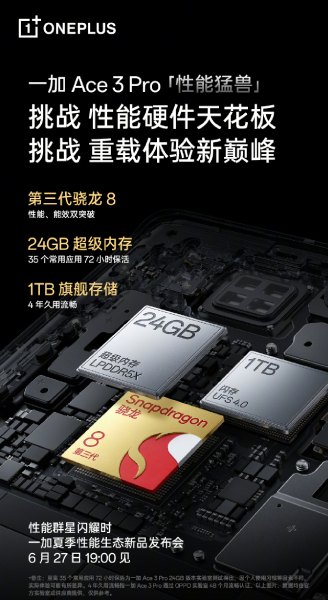
DCS revealed that the OnePlus Ace 3 Pro will have a 1.5K resolution OLED panel. Under the hood, the device will feature the Snapdragon 8 Gen 3 chip, 16 GB of RAM, 1 TB of storage, and a big battery. On the back, it will have a 50-megapixel primary snapper, but there’s no clarity on whether the camera setup will include a 2x telephoto camera. The primary lens could be the same IMX890 camera sensor that’s available on the OnePlus Ace 3 / 12R.

In a previous Weibo post, DCS claimed that the Ace 3 Pro may also have a 24 GB LPDDR5x RAM variant. Reports suggest that the device could include a 6,000mAh dual-cell battery capable of 100W fast charging.

The Ace 3 is rebranded as the OnePlus 12R in India. It is speculated that the Ace 3V may get rebranded as the OnePlus Nord 4 in the global market. However, since the Ace 2 Pro remained exclusive to the Chinese market, there is no certainty about the global release of the Ace 3 Pro.

RELATED:

Apple’s Upcoming 12.9-inch iPad Air might Feature a Mini-LED Display, Rumors State

It seems like Apple is all set to equip the upcoming 12.9-inch iPad Air with a significant display upgrade, according to display analyst Ross Young. This move brings the iPad Air closer to the high-end 12.9-inch iPad Pro in terms of display technology.

The current 10.9-inch iPad Air has an LCD panel

Currently, the standard 10.9-inch iPad Air uses a traditional LCD panel. The new model is expected to adopt Mini-LED technology, boasting increased brightness for HDR content, deeper blacks for improved contrast, and lower power consumption for enhanced battery life. This mirrors the technology currently used in Apple’s top-tier 12.9-inch iPad Pro models and MacBook Pro laptops.

Apple iPad lineup refresh 2024

Specific details on the 12.9-inch iPad Air’s display haven’t been confirmed, but it could potentially match the current 12.9-inch iPad Pro’s specs: a 2D backlight system with full-array local dimming zones, a resolution of 2732 x 2048 (264 ppi), support for ProMotion adaptive refresh rate technology, and a peak brightness of 1,600 nits for HDR content.

While the iPad Air gets a Mini-LED upgrade, rumors suggest Apple might be reserving the next-generation OLED display technology for the upcoming iPad Pro. These new iPad Pro models are also expected to be powered by the M3 chip and potentially accompanied by a new Apple Pencil 3.

Apple is reportedly planning a quiet launch for these new tablets, likely in the second week of May, without a dedicated press conference.

RELATED:

(Via)

The 7-port Anker 525 Charging Station is Only $36 on Amazon Right Now

If you’re looking to upgrade your workspace with more power outlets, the Anker 525 Charging Station is a great choice. And what’s more, it’s available for a neat little price right now! This versatile power strip, currently discounted on Amazon, offers a powerful and organized charging solution for all essential devices.

There are 3 AC outlets located on the back of the charging station

The Anker 525 Charging Station boasts a total of seven ports, strategically placed to handle a variety of devices simultaneously. Two USB-A and two USB-C ports sit conveniently on the front for easy access to fast charging your phone, tablet, earbuds, and more. Three AC outlets located on the back provide ample power for laptops, monitors, and other larger electronics.

Anker Charging 525

Originally priced at $66, Amazon has slashed the price of the Anker 525 Charging Station to a fantastic $36. The original price is $66, and the discounted price is $46. Once users apply the additional $10 coupon at checkout, the price comes down to $36.

With a 65W output, the Anker 525 Charging Station delivers enough power to juice up most devices efficiently. More importantly, it prioritizes safety with built-in temperature monitoring that prevents your electronics from overheating during charging.

A quality power strip like the Anker 525 Charging Station is more than just a collection of outlets. It helps you declutter your desk, reduces the risk of tangled cords, and provides peace of mind with its safety features. At its current discounted price, it’s a smart investment to keep your electronics organized and powered up! You can buy the Anker 525 Charging Station here.

RELATED:

(Via)

Razer Unveils Two New Mobile Game Controllers: Kishi Ultra and Kishi V2 USB-C

Razer has launched two new mobile game controllers to upgrade on-the-go gaming experience: the feature-packed Kishi Ultra and the budget-friendly Kishi V2 USB-C.

The Kishi Ultra is for serious mobile gamers, while the Kishi V2 USB-C is for budget gamers

The Kishi Ultra caters to serious mobile gamers with its full-size design, ergonomic layout, and compatibility with both Android and iOS devices (phones and tablets up to 8 inches). It boasts mechanical tactile buttons, an 8-way directional pad, and full-size Hall effect triggers for precise control. A 3.5mm headphone jack keeps you wired in, while 15W pass-through charging ensures your phone stays powered during extended gaming sessions.

Razer Handheld Controller

Adding to the immersion, the Kishi Ultra features dual Razer Chroma RGB lighting zones that are customizable with millions of colors. It also offers a virtual controller mode (currently only for Android) that maps touchscreen controls to the controller for a more familiar console-like experience. For additional customization, the Kishi Ultra allows you to adjust the dead zone for optimal responsiveness. This premium controller comes with a price tag of 1,199 yuan.

For those seeking a more affordable option, the Kishi V2 USB-C offers a traditional mobile gamepad design. It prioritizes cloud or local game streaming services and also supports touchscreen mapping. While it lacks the full-size format and some features of the Kishi Ultra (like tablet compatibility), the Kishi V2 USB-C retains the 15W pass-through charging and comes in at a more budget-friendly price of 799 yuan.

RELATED:

(Via)

Vivo V30e official teasers out, launch imminent

Earlier this year, Vivo announced the Vivo V30 and V30 Pro smartphones in India. The brand is now gearing up to launch a new V30-series phone dubbed the Vivo V30e in the country. The launch seems imminent as the microsite of the phone has gone live on Vivo India’s website.

Vivo V30e - Silk Blue
Vivo V30e – Silk Blue

As can be seen in the official images, the Vivo V30e will sport a different rear design as compared to the Vivo V30 and V30 Pro. It has a round camera module housing two cameras and a ring LED flash. It is confirmed to arrive in two shades, such as Silk Blue and Velvet Red.

Vivo is yet to confirm the launch date of the Vivo V30e. The device may likely go official before the end of this month. Recently, tipster Sudhanshu Ambhore released an X post to reveal almost everything about the V30e. Here is a look at what to expect from the device.

Vivo V30e specifications (rumored)

Vivo V30e - Velvet Red
Vivo V30e – Velvet Red

The Vivo V30e will have a 6.78-inch AMOLED display with curved edges. It will offer an FHD+ resolution and a 120Hz refresh rate. It will have an IP64-rated chassis with a slim profile of 7.69mm.

The Vivo V30e will have a 50-megapixel camera on the front. Its rear panel will have a Sony IMX882 50-megapixel primary camera and an 8-megapixel ultrawide lens.

Despite sporting a thin design, the Vivo V30e will house a 5,500mAh battery with 44W fast charging support. it will be driven by the Snapdragon 6 Gen 1 chipset. The device is expected to run on the FunTouch OS 14-based Android 14. It is expected to come in 8GB+128GB and 8GB+256GB variants and will be priced at under Rs 30,000 (~$360).

RELATED:

Xiaomi 14 Ultra Breaks 5Gbps Barrier with 5.5G Update

Mobile connectivity technologies are advancing rapidly, making it a challenge for many to keep pace with the latest developments. For instance, while 5G has yet to achieve widespread adoption in many countries, smartphone manufacturers are already working towards the next generation of connectivity. In line with this, the Xiaomi 14 Ultra has become the first phone to support 5.5G (5G-A). Here are the details…

Xiaomi 14 Ultra Among First Phones to Support 5.5G

For those unfamiliar, 5.5G is a significant upgrade to 5G. It offers benefits like dramatically faster download speeds, reduced latency, and the ability to connect many more devices. The Xiaomi 14 Ultra now supports 5.5G after a recent beta update (version 1.0.9.0.UNACNXM, 527 MB).

Xiaomi 14 Ultra Titanium Special Edition

In China Mobile’s tests, the Xiaomi 14 Ultra achieved a download speed of up to 5 Gbps with 5.5G technology, making it one of the fastest speeds seen on a mobile connection to date. The company plans to expand its 5.5G network to cover over 300 cities by the end of this year. It is expected to have more than 20 million 5.5G subscribers by 2025.

What does 5.5G offer?

Up to 300% faster speeds, with speeds reaching up to 10 Gbps Low latency More capacity, allowing connectivity for up to 100 billion IoT devices China Mobile plans to expand its 5.5G network to cover more than 300 cities by the end of this year. It is expected to have over 20 million 5.5G subscribers by 2025.

You can read more about what is 5.5g in our explainer story.

RELATED:

Huawei launches Portable WiFi 5: Faster speeds, more devices, pocket-sized design

Huawei has launched its latest mobile hotspot solution, the Portable WiFi 5. This compact device boasts impressive features for users on the go, including high-speed internet, long battery life, and multi-device support.

The introductory price in China starts at 229 yuan (approximately $32). Data plans are also available, with a monthly option offering 2000GB of data for 99 yuan ($14) and a yearly plan providing the same data allowance for 599 yuan ($82).

Huawei Portable WiFi 5 Specifications:

It supports 4G network connectivity, delivering download speeds of up to 195Mbps – a 30% improvement over the previous generation. This translates to smoother video conferencing, faster downloads, and a more enjoyable online experience. Additionally, upload speeds have seen a significant boost, reaching 105Mbps, making live streaming and sharing large files a breeze.

Huawei hasn’t compromised on battery life either. The Portable WiFi 5 packs a 2400mAh battery, offering up to 8-9 hours of continuous usage. This ensures you can stay connected throughout the workday, a weekend getaway, or even a long commute.

The Portable WiFi 5 prioritizes portability with a sleek and lightweight design. It’s 15.4% thinner than its predecessor, measuring just 13.7mm in thickness and weighing a mere 96g. This allows you to easily slip it into your pocket or backpack without adding any bulk.

It can simultaneously support up to 16 devices, making it perfect for group projects, family outings, or even impromptu gaming sessions with friends. The device boasts a stylish design as well. It comes in three classic colors – Black, White, and Blue – featuring a frosted finish that delivers a smooth and delicate feel.

The portable wifi device integrates seamlessly with the Huawei Smart Life app. This app allows you to monitor your data usage, set limits, manage connected devices, and even create a separate guest Wi-Fi network. Additionally, the app offers online protection features, reducing the risk of Wi-Fi password leakage and ensuring a secure internet experience.

RELATED:

Xiaomi 11T Pro finally gets HyperOS update

Xiaomi‘s new Android interface, HyperOS, is finally out for the Xiaomi 11T Pro. HyperOS comes with a brand-new user interface and improved animations, along with iOS-inspired elements such as universal blur effect and new lockscreen customization features, making it a highly welcomed update.

Xiaomi 11T Pro meets HyperOS

Xiaomi 11T Pro was already running on MIUI 14 based on Android 13 and is now receiving the Android 14-based HyperOS update. It’s worth noting that this will be the final update for the Xiaomi 11T Pro, as the device has already received its 3rd Android update, the 11T Pro initially came out with Android 11.

Previously, we shared with you that the Redmi K40 and K40 Plus will receive the HyperOS update, and now the 11T Pro is finally getting HyperOS. The system update released by Xiaomi for the 11T Pro is 5.2GB in size and includes the April 2024 security patch. The update is coming with the version number OS 1.0.1.0 UKDEUXM.

The update has started rolling out to European devices and it may take some time to be released to different regions. Before this, Mi 11 series received the HyperOS update, and now it’s being rolled out to the Mi 11T Pro. This marks the final update for the Mi 11 series, but Xiaomi has managed to keep its devices up to date, with 4 user interface updated and 3 major Android updates. The image was shared by Nightlake.

Related:

Chinese UNISOC Unveils 12nm 7861 Chip Designed for the For the Future of Finance

China is gradually reducing its dependency on foreign technology. In this context, companies like Huawei and BYD are frequently mentioned, while companies like UNISOC emerge as unsung heroes. The company, which has long been producing chipsets for mobile devices, had recently made headlines with its T765 5G chip. Now, UNISOC unveils the 7861 chip for POS machines.

UNISOC 7861 for Secure, Multi-Functional Payment Terminals

When you are shopping it’s often easier to pay with cards instead of cash. Many people, including myself, hardly ever use cash anymore. This means more businesses need machines to take card payments. Recognizing this, Unisoc has announced the launch of the UNISOC 7861 chip, created for these card payment machines.

Unisoc 7861

Based on the 12nm process technology, the UNISOC 786, adopts a dual high-performance big core Arm Cortex-A75 at 1.6GHz and six energy-efficient cores Cortex-A55 at 1.6GHz, and is equipped with a Mali G57 GPU core. The processor also supports dual-band Wi-Fi 5, Bluetooth 5.0, GNSS positioning services, USB Hub and other features.

It supports LPDDR4x memory and provides UFS 2.2 and eMMC5.1 storage interfaces, and FHD+ display output. The UNISOC 7861 processor currently supports the Android 12 Go system and Android 14 system optimized for small memory (1GB + 8GB).

RELATED:

Huawei Pura 70 Pro vs P60 Pro: What are the upgrades?

Huawei recently introduced an entirely new Pura lineup to replace the long-standing P series. The Pura line emphasizes style, cutting-edge technology, and fashion, according to the company.

The company today took the wraps off of its new Pura 70 series smartphones, consisting of Pura 70, 70 Pro, 70 Pro Plus, and 70 Ultra. 

The all-new Pura 70 Pro stands as the successor to the P60 Pro, offering an upgrade in design, display, and some key functionalities. So let’s delve into the specifics of both phones to understand how they compare.

Huawei Pura 70 Pro vs Huawei P60 Pro

1. Design and Display

The Pura 70 Pro features a larger 6.8-inch OLED display with a slightly higher resolution compared to the P60 Pro’s 6.67-inch panel. Both offer a smooth 120Hz refresh rate and high peak brightness. 

However, the Pura 70 Pro pulls ahead with its 1440Hz high-frequency PWM dimming, which should reduce eye strain. Both phones use Kunlun glass for better drop resistance. But the Pura 70 Pro steps it up with second-generation Kulun protection, offering even better resistance to drops.

The design has also been revamped since the P60. The Pura 70 sports a new triangular module on the back versus the P60’s rectangular camera setup. 

Another subtle yet noticeable difference is in the display: the P60 Pro has a quad-curved screen, while the Pura 70 opts for a flat panel. However, both phones feature smaller punch-holes for the selfie camera or equally slim screen bezels.

But we do have to say that the raised angular design on the back gives the Pura 70 Pro a look unique of its own. As for colors, the P60 Pro comes in Black, Green, Violet, and Rococo Pearl, while the Pura 70 Pro offers Black, White, and Purple options.

2. Performance: The Biggest Difference

Performance is where there are significant differences between the two models. The P60 Pro runs on the Qualcomm Snapdragon 8 Gen 1, while the Pura 70 Pro opts for Huawei’s in-house Kirin 9010 chipset. Initial benchmarks of the Kirin 9010 show respectable performance. 

Additionally, the Snapdragon 8 Gen 1 on the P60 Pro only supports 4G, while the Kirin 9010 in the Pura 70 Pro adds 5G connectivity.

The Pura 70 Pro also shines with its larger 5050mAh battery and faster charging speeds. It supports 100W wired charging, faster than the P60 Pro’s 88W. Both phones offer wireless charging, with the Pura 70 Pro supporting higher wattages at 80W compared to the P60 Pro’s 50W.

3. Camera and Other Features

Both phones also have powerful triple-camera systems. The P60 Pro features a 48MP primary sensor, a 13MP ultrawide sensor, and a 48MP periscope zoom lens with 5x optical zoom.

In contrast, the Pura 70 Pro takes a different approach, offering a 50MP main sensor with a variable aperture, a 48MP macro telephoto lens with impressive 35x super macro capabilities, and a 12.5MP ultrawide sensor.

Moreover, the smartphone comes pre-installed with HarmonyOS, with the Pura 70 Pro running a slightly newer iteration (Harmony OS 4.2) out of the box. Notably, both integrate satellite communication for two-way SMS functionality.

4. Verdict

All in all, with the Pura 70 Pro, Huawei has addressed some of the shortcomings of the P60 Pro. Most importantly, the phone now has an in-house Kirin chip with 5G support. Connectivity could be a big deciding factor to purchase a phone in 2024. 

Apart from this, there are subtle but significant changes in design, display, camera, and even battery and charging. So the Huawei Pura 70 Pro appears to be a worthwhile upgrade over its predecessor.

Related:

Huawei Pura 70 Ultra vs Huawei P60 Art: What are the Upgrades?

Huawei has shaken things up with the launch of the Pura 70 series, their successor to the long-standing P series. The top-of-the-line Pura 70 Ultra (Check out the unboxing of 70 Ultra) boasts some impressive upgrades over the previous-gen Huawei P60 Art. Let’s delve into the key differences.

Huawei Pura 70 Ultra

1. Design and Display:

The Pura 70 series sports a fresh look with a distinct triangular camera module. The standard version retains a flat design, while the Pro models like the Ultra have slightly curved edges. In contrast, the P60 Art also introduced a distinct camera module, though it opted for a more traditional rectangular shape. Both phones stand out for their innovative camera module designs.

Both phones come with large OLED displays. The Pura 70 Ultra boasts a slightly bigger 6.8-inch screen compared to the P60 Art’s 6.67-inch display. However, both offer a smooth 120Hz refresh rate.

2. Performance:

The performance disparity between the Huawei Pura 70 Ultra and Huawei P60 Art hinges on their chipsets. The Pura 70 Ultra ditches the Qualcomm Snapdragon 8+ Gen 1 found in the P60 Art and introduces Huawei’s own Kirin 9010. Benchmarks suggest a significant performance leap for the Pura 70 Ultra. While details about the Kirin 9010’s manufacturing process remain unknown, its 12-core CPU with a 4+6+2 architecture boasts slightly higher clock speeds compared to the Kirin 9000s in the Mate 60 series. This translates to smoother performance and better multitasking capabilities.

Given what we know about the Kirin 9010, the Snapdragon 8+ Gen 1 in the P60 Art still holds up as a strong performer. However, as newer chipset generations emerge, it is increasingly seen as outdated.

3. Camera:

Here’s where things get interesting. Both phones have a triple-camera setup on the rear, but the Pura 70 Ultra steals the show with its innovative 1-inch retractable main sensor. This allows for superior optical zoom and greater control over depth of field with its variable aperture. Huawei claims the retractable mechanism is incredibly durable, rated to retract and expand up to 300,000 times. The P60 Art’s main camera uses a more conventional 48MP sensor.

The Pura 70 Ultra also boasts a 50MP telephoto lens with 3.5x optical zoom and a dedicated 40MP ultrawide sensor. The P60 Art counters with a 48MP telephoto lens (also with 3.5x zoom) and a 40MP ultrawide sensor.

The Pura 70 Ultra’s telephoto lens allows for macro shots from a mere 5cm distance, a significant improvement over the P60 Art’s 10cm minimum focus distance.

4. Software:

Both phones run on Huawei’s HarmonyOS operating system. However, the Pura 70 Ultra comes with the newer HarmonyOS 4.2 version, which might offer some additional features and optimizations compared to the HarmonyOS 3.1 on the P60 Art.

5. Battery and Charging:

The Pura 70 Ultra packs a slightly larger 5200mAh battery compared to the P60 Art’s 5100mAh. However, both offer impressive fast charging capabilities. The Pura 70 Ultra boasts 100W wired charging and 80W wireless charging, while the P60 Art offers 88W wired and 50W wireless charging.
6. Other Features:

The Pura 70 Ultra boasts a few additional features missing in the P60 Art. This includes dual satellite connectivity for sending messages and calls even in remote areas and the latest generation Kunlun glass for improved scratch resistance.

7. Pricing

The Huawei Pura 70 Ultra starts at a steeper price point compared to the P60 Art. The base model with 512GB storage starts at 9999 yuan ($1381), while the P60 Art with the same storage starts at 8988 yuan ($1,241).

RELATED:

Are This Week’s Free Games on Epic Games Worth It? You Might Be Surprised by the Answer

Epic Games continues its tradition of weekly free games! While recent offerings like The Outer Worlds, Ghostrunner, and Thief were major hits, there’s still a chance to discover something fun. This week, the platform is now offering The Big Con and Town of Salem 2 for free. Here are the details…

The Big Con and Town of Salem 2 Now Free on Epic Games Store

Tired of massive open-world AAA games that feel the same and eat up your time? Epic Games has a refreshing change of pace for you. You can get The Big Con and Town of Salem 2 for free and dive into something different.

Town of Salem 2 engages you in thrilling social deception, challenging you to root out hidden killers and protect innocent townsfolk. On the other hand, The Big Con offers a hilarious single-player adventure where you pull off outrageous scams in a vibrant 1970s world.

Both games offer unique, enjoyable experiences and run smoothly on modest systems. If you’re interested, you can check out The Big Con by clicking here, and Town of Salem 2 by clicking here.

The Big Con Minimum System Requirements


Minimum
Recommended
OSWindows 7 64-bitWindows 10 64-bit
ProcessorAMD FX-4350 or Intel Pentium G4500Intel Core i7-3770K or AMD Ryzen 3 1200
Memory4 GB8 GB
Storage3 GB4 GB
Direct XDirect X 11Direct X 11
GraphicsAMD Radeon HD 7770 or dedicated equivalentnVidia GeForce GTX 1050 Ti or AMD Radeon RX 480

Town of Salem 2 Minimum System Requirements


Minimum
Recommended
OS versionRequires a 64-bit processor and operating systemRequires a 64-bit processor and operating system
CPU2 Ghz3+ Ghz
Memory8 GB RAM16 GB RAM
GPUDX10 capable GPUs 2gb+ VRAMDX10, DX11, DX12 capable GPUs 2gb+ VRAM
DirectXDirectX 10DirectX 12

RELATED:

GPT-4 Outperformed Junior & Trainee Eye Doctors on a Mock Exam

A new study suggests large language models (LLMs) like GPT-4 may have a future in ophthalmology, but limitations and risks remain. Researchers from Cambridge University tested GPT-4, along with other LLMs, against human ophthalmologists on a mock exam.

GPT-4 answered 60 out of 87 questions correctly in the exam

The results were intriguing. GPT-4 answered 60 out of 87 questions correctly, exceeding the performance of trainee doctors (average: 59.7) and junior doctors (average: 37). However, it fell short of the average score achieved by expert ophthalmologists (66.4). Other LLMs, like PaLM 2 and GPT-3.5, performed less impressively.

ChatGPT

While these findings hint at potential benefits, researchers highlight significant risks. The study’s limited question pool raises concerns about generalizability. More importantly, LLMs are prone to “hallucinating,” fabricating information that could lead to misdiagnosis of serious conditions like cataracts or cancer. Additionally, the lack of nuance inherent in LLMs could exacerbate inaccuracies.

The study clearly emphasizes the need for further research and development before LLMs can be considered reliable tools for medical diagnosis. Since there is a lot of risk involved in anything concerning medical diagnoses, we might have to wait for a long time before LLMs are incorporated in mainstream medical situations.

RELATED:

(Via)