Vivo is expected to unveil the Vivo S17 series of smartphones in May in China. The lineup will have three models, such as the Vivo S17e, S17, and S17 Pro. As a report that surfaced in March, these devices have respective model numbers, such as V2283A, V2284A, and V2285A. Now, the Vivo S17e (V2285A) has surfaced in the database of 3C certification to give a hint about its fast charging capabilities.
The Vivo V2285 handset has been spotted with a Vivo charger with model number V8073L0A0-CN/ V8073L0D0-CN at the 3C certification. The charging supports up to 80W rapid charging. While the battery size of the V2285A is not known yet, it appears that it will offer 80W fast charging.
Vivo S17e 3C listing
Popular Chinese tipsters like Panda is Bald and Digital Chat Station have claimed that the Snapdragon 778G (or 782G) and Dimensity 8200 chipsets, respectively, power the Vivo S17 and Vivo S17 Pro.
The V2285A model was recently spotted at Geekbench. The listing revealed that it is powered by the Dimensity 7200, 8 GB of RAM, and Android 13 OS. However, while the device is expected to debut as the Vivo S17e, it appears that it was incorrectly thought to be the S17 Pro. As mentioned above, the S17 Pro is expected to feature the Dimensity 8200. Hence, it is likely that the V2285A featuring the D7200 chip will most likely be dubbed the Vivo S17e when it arrives in the Chinese market.
It is believed that the Vivo S17e will arrive with an AMOLED screen with curved edges and an under-display fingerprint scanner. It will have a color changing rear panel. The S17e is expected to arrive with 12 GB of RAM. The primary camera of the device is likely to support optical image stabilization (OIS). The other details of the smartphone are yet to be revealed.
Vivo is reportedly preparing to launch a new smartphone in its Y series. The most recent addition to this lineup was the Vivo Y78+, which was recently released in China, boasting a premium design, OLED display, and other impressive features. The upcoming smartphone is rumored to be named Vivo Y36 4G and is expected to be launched in May as an affordable option. While we await an official announcement, the device has surfaced on the Geekbench website, revealing some key details.
Vivo Y36 will be a mid-range smartphone
The Vivo Y36 4G, with the model number V2247, has been discovered on the Geekbench website. The phone features a processor with a motherboard codenamed “Bengal” and is equipped with four cores clocked at 2.4GHz and four cores clocked at 1.9GHz. It is accompanied by an Adreno 610 GPU. These specifications suggest that the device will be powered by the Qualcomm Snapdragon 680 SoC.
The listed variant of the Y36 4G comes with 8GB of RAM, but it’s possible that the brand may announce additional storage options during the launch. In terms of benchmark scores, the Y36 4G achieved 410 and 1343 in Geekbench’s single-core and multi-core tests, respectively. The phone will be running Android 13 out of the box.
A recent report revealed the smartphone will be launched in India with a price range of Rs 18,000 to Rs 20,000. It is said to get a large 6.8-inch LCD display likely with a 90Hz refresh rate and a side-mounted fingerprint scanner. The upcoming Vivo Y36 4G is expected to sport a 50MP primary camera on the rear with a 5,000mAh battery that supports 44W fast charging.
Lenovo continues to expand its product lineup. Recently, the company introduced new gaming laptops named Legion Y9000P and Y9000X. These two models, which caught users’ attention and proved to be quite successful, have once again demonstrated the tech giant’s product development prowess. According to the latest information, Lenovo is preparing to launch a white edition of its popular Legion Y9000P and Y9000X 2023 laptops. Here are the details…
White Edition Legion Y9000P and Y9000X 2023 Laptops Soon to Hit the Market
Lenovo is preparing to launch a white edition of its popular Legion Y9000P and Y9000X 2023 laptops. According to an announcement from Lenovo, the release of the white edition is just around the corner. Introduced in March this year, the Legion Y9000P 2023 comes equipped with a 13th-generation Intel Core HX processor and offers the option of an RTX 4070 graphics card. Both the new Legion Y9000P and the Y9000P Supreme Edition sport a 16-inch 2.5K 240Hz screen with 500-nit brightness, 10-bit color depth, 100% sRGB color gamut, and a 3ms response time.
While the Legion Y9000X 2023 is yet to be released in China, it is anticipated to feature an i9-13900H processor and the option of an RTX 4070 graphics card, delivering up to 140W of performance. The upcoming 9000X model will provide a choice of up to 32GB 5600MHz DDR5 memory and either a 2K 240Hz VRR 500nit panel or a 3.2K 165Hz VRR 430nit panel for the display.
The competition between Android and iOS continues at full speed. On one hand, there’s Apple, and on the other, there are other manufacturers including Samsung, Xiaomi, and Oppo, all fiercely competing to capture the highest market share. Following this intense battle brings excitement to many technology enthusiasts. However, according to Canalys’ latest report, things are not going well for both sides. In the first quarter of 2023, Apple Inc and its Android competitors experienced a decline in sales in China. Here are the details…
Q1 Smartphone Sales in China Decline for Apple and Android Competitors
China is the world’s most populous country. As a result, securing a leading position in such a massive market is the dream of every smartphone manufacturer. Both Apple and other Android smartphone manufacturers are working diligently to sell more devices in the country. However, looking at the situation in the first quarter of 2023, both Apple and Android brands experienced a decline.
Apple, the top-selling brand in the first quarter, secured a 20% market share. However, its overall shipments in China fell to 13.3 million units, a 3% decrease compared to the same period in 2022. Other leading brands in the market also saw a decline in sales, causing total smartphone shipments to drop by 11% year-on-year, amounting to 67.2 million units. This marked the lowest quarterly total since 2013.
Although Apple remained the best-selling brand during this period, its total market share fell by 3 percentage points compared to the previous year. Android brands Oppo and Vivo, which follow Apple as the second and third best-selling brands, experienced shipment reductions of 10% and 7%, respectively.
Honor and Xiaomi Corp, companies that specialize in more affordable phone models, faced even more significant declines in their sales. Shipments for these companies dropped by 35% and 20%, respectively, suggesting that consumers were hesitant to make phone purchases, even at lower price points.
China’s GDP grew by 4.5% in the first quarter, surpassing expectations. Policymakers in Beijing are currently working on strategies to further stimulate demand. Despite this, economists anticipate that the majority of Chinese consumers and businesses will continue to spend cautiously throughout the year.
German security company Nitrokey recently released a report claiming that it has discovered an unrecorded feature in Qualcomm Snapdragon chips that collects and transmits user information directly to Qualcomm servers.
The feature is not dependent on the Android operating system, which means that the data is transmitted even if the operating system is not involved. Nitrokey installed a Google-free version of Android on a Sony Xperia XA2 phone equipped with a Qualcomm Snapdragon 630 chip and found that the data was being transmitted to the izatcloud.net server, which belongs to Qualcomm.
According to the report, Qualcomm chips collect and transmit user information, including the unique smartphone identifier, chip name, chip serial number, XTRA software version, mobile country code and mobile network code, type, and version of the carrier or operating system, device manufacturer and model, program list on the device, IP address, and other data. The data is transmitted via the insecure HTTP protocol without any additional encryption, making it accessible to virtually anyone who can read the unique identifier data sent to Izat Cloud.
Unencrypted data transmission from Qualcomm chips
This feature affects approximately 30% of phones worldwide, including Android phones and iPhones that use Qualcomm communication modules. Nitrokey’s conclusion in the blog post is that Qualcomm’s customized AMSS firmware takes priority over any operating system and, because it uses the HTTP protocol, a unique device signature can be created based on the collected data, which can be accessed by third parties.
Qualcomm responded to the report, stating that the data transmission is in compliance with the privacy policy of the XTRA service, which actually allows the company to collect the aforementioned user data. However, the fact that the data is transmitted via the insecure HTTP protocol has raised concerns about the privacy and security of user information.
This report highlights the importance of ensuring that user data is transmitted securely and in compliance with privacy policies. It also underscores the need for greater transparency from tech companies regarding the data they collect and how it is used. As more devices become connected and collect more data, it is important that users are aware of how their information is being used and have the ability to control it. Google’s recent update for developers mandates that all Android apps must now include a feature allowing users to delete their accounts and data, reflecting the increasing focus on user privacy.
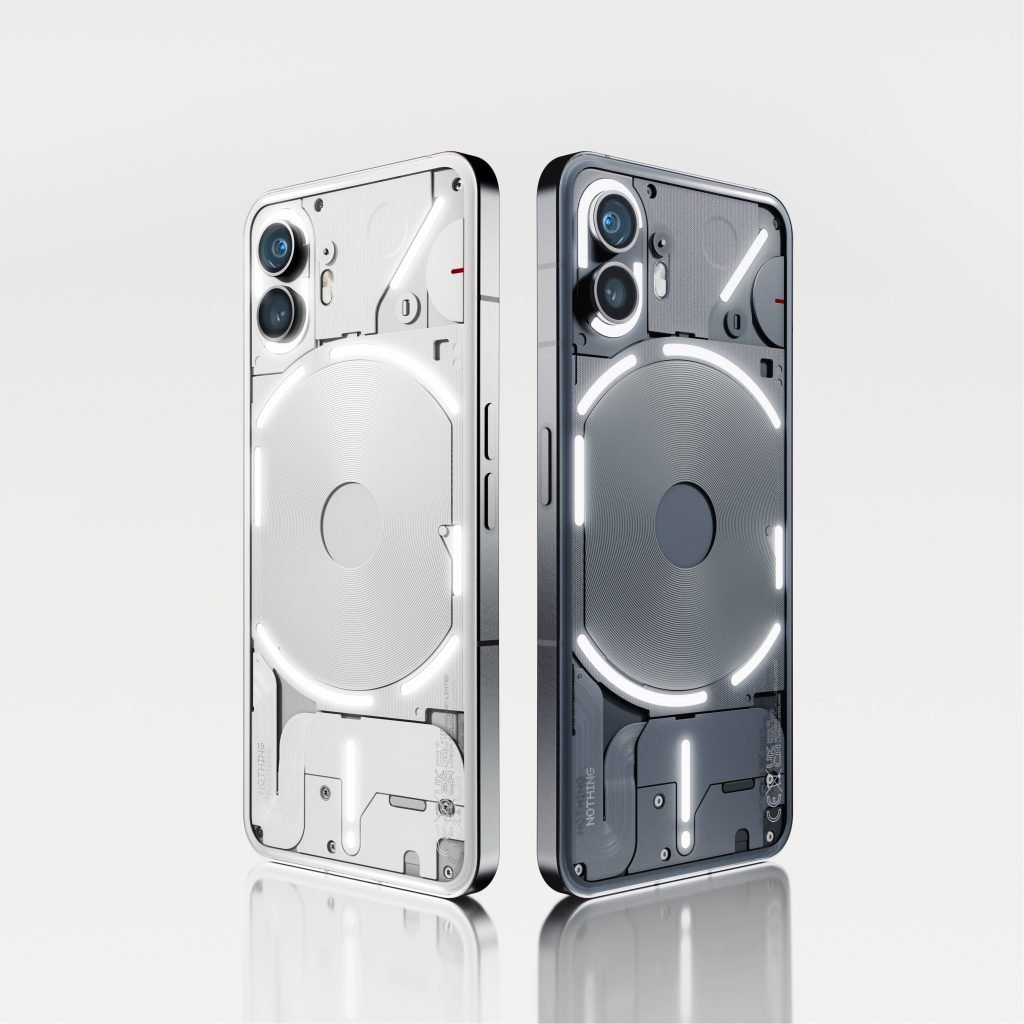
Nothing has put in significant effort to refine the software on its sole smartphone, the Phone (1). It was introduced with Android 12 and Nothing OS pre-installed, and following months of testing, the company subsequently released a stable Android 13 update. Excitingly, the Carl Pei-led startup has now confirmed that the Phone (1) will be eligible to participate in the upcoming Android 14 Beta 1 program in the coming weeks. Currently, only Google’s Pixel phones have the privilege of receiving the beta update.
Phone (1) to be first non-Google device to get Android 14 Beta
Carl Pei took to Twitter to announce that Nothing has early access to the new Android 14 Beta 1 upgrade. It’s currently unclear when the beta build will be released for the Nothing Phone (1). However, with the Pixel series already seeding the Android 14 Beta to eligible devices, the smartphone will be one of the first non-Google devices to get an independent preview phase.
The Nothing Phone (1) currently runs on Android 13 with its company’s proprietary skin overlay. Notably, the software experience on the smartphone is exceptionally smooth, with minimal customizations. Nothing has made interesting additions, including the dot-matrix design and over a dozen ringtones and notification sounds that are coordinated with the Glyph interface on the back.
Notably, the Android 14 beta introduces several new features and improvements. For one, it brings an enhanced back navigation gesture, improving the overall navigation experience. Additionally, the beta version includes an improved share sheet, making data sharing across different applications more convenient and seamless. Another noteworthy addition is the introduction of separate ringtone and notification volume sliders, allowing users to have finer control over their device’s audio settings.
Google is highly anticipated to launch the Pixel Fold at the upcoming annual I/O Developer conference that begins May 10th. Although the search giant has been tight-lipped about its first foldable phone, it has been subject to a lot of rumors and leaks in the past. Now the upcoming offering has appeared in official-looking photos shared by tipster Evan Blass (via The Verge) ahead of launch.
Google Pixel Fold leaked marketing images
The official-looking images confirm the front and rear design of the Google Pixel Fold. They also corroborate past leaked renders. The device is seen with a compact form factor, however, the front and the back sides seem to have a wider aspect ratio. The main display has a center-aligned punch hole cutout and narrow bezels on all sides. The foldable phone has curved edges on all four sides. The power and volume rocker buttons are located at the right edge.
The official-looking images of the Google Pixel Fold show it in a Grey color which may be called Obsidian. The back panel has a horizontal camera module similar to the previous flagship Pixel generations, but it does not stretch from one end to another. The camera island houses two sensors in a pill-shaped cutout and a third lens on the outside along with an LED flash unit.
Apart from this, the official-looking images do not reveal more about the Pixel Fold. A leaked live video that surfaced last week revealed thick bezels on the foldable phone’s interior display.
As for the core specifications, the Google Pixel Fold is expected to come with 5.8 and 7.6-inch interior and exterior displays with a 120Hz refresh rate. The foldable phone is tipped to be powered by a Tensor G2 SoC paired with 12GB RAM. It is reported to carry a starting price tag of $1,799. According to reports, Google is said to offer a free Pixel Watch to Pixel Fold buyers.
Hisense has unveiled a new range of televisions, with the E7KQ PRO 4K 144Hz TV taking center stage. Available in 55-inch, 65-inch, and 75-inch models, this QLED TV boasts impressive features such as Quantum Dot technology, which covers 90% of the DCI-P3 color gamut, and UHD upscaling for unparalleled picture quality.
The E7KQ PRO is designed with a bezel-less display, allowing for an immersive viewing experience from any angle, with a wide 178° viewing angle and 9ms panel response time. The TV supports Dolby Vision IQ, HLG, and HDR10+, providing superior color accuracy and contrast.
In addition, the E7KQ PRO has a native 120Hz refresh rate, with Game Mode Pro increasing it to 144Hz for an incredibly smooth gaming experience. This is complemented by two HDMI 2.1 ports for connecting game consoles, and a game bar for easy access to settings.
The TV also comes with a built-in 50W 2.1 channel sound system with a subwoofer that is compatible with Dolby Atmos, ensuring that the audio quality is as impressive as the visuals. The E7KQ PRO is powered by a Quad Core MT9618 processor, making it easy to stream content from popular apps such as Netflix, Disney+, and Prime Video.
With Bluetooth 5.1 and Wi-Fi connectivity, the E7KQ PRO allows for wireless casting of content from mobile devices via Anyview. The TV also has USB 2.0, USB 3.0, and audio ports, making it easy to connect to other gadgets.
While Hisense has not yet announced pricing for the E7KQ PRO, it is clear that this TV series will be a hit with anyone looking for an exceptional viewing experience. It remains to be seen whether the E7KQ PRO will be available in other markets, but for now, it’s certainly a TV to watch out for.
Hisense has also made headlines with the announcement of the world’s first 8K full-color laser projector, and you can find all the information about it here.
Xiaomi 13 Ultra (check out our review of the Xiaomi 13 Ultra), the highly anticipated smartphone model, has been making headlines again with new updates on its color options. While the initial release only showcased three color variants, recent reports suggest that Xiaomi may be planning to launch three additional color options in the near future.
Rumors of these new color options began circulating shortly after the Xiaomi 13 Ultra launch event. Netizens discovered that the device recognition feature on QQ showed six different color options for the phone, despite only three being released at the time.
Xiaomi 13 Ultra’s new color options
Many speculated that the additional color options were abandoned during the development process, but recent developments suggest otherwise. Several netizens have reportedly extracted new color options from the Xiaomi 13 Ultra firmware, revealing Orange, Yellow, and Blue options.
These new color options may be released as limited edition customization options for Xiaomi 13 Ultra. Lei Jun, Founder and CEO of Xiaomi, has also been promoting the limited edition customization feature on his Weibo account, hinting at the possibility of these new color options becoming available in the future.
The release of these new color options will undoubtedly cater to the different preferences of Xiaomi 13 Ultra users, allowing them to showcase the phone’s unique design without a protective case. However, it is worth noting that using the phone without a protective case may result in screen damage from accidental drops.
Screen repairs for the Xiaomi 13 Ultra can be costly, with a price tag of 1360 yuan and an additional 40 yuan for labor. As such, users should take caution when handling their phones and consider investing in a protective case to avoid potential damage.
Xiaomi 13 Ultra specifications
The Xiaomi 13 Ultra is a feature-packed flagship smartphone with impressive specifications. It sports a 6.73-inch Quad HD+ AMOLED HDR10+ display with a 120Hz refresh rate, 240Hz touch sampling rate, and Corning Gorilla Glass Victus protection. The device is powered by the Octa-Core Snapdragon 8 Gen 2 4nm chipset, coupled with up to 16GB LPPDDR5X RAM and 1TB UFS 4.0 storage.
The Xiaomi 13 Ultra features a versatile quad-camera setup with a 50MP main sensor, a 50MP ultrawide angle lens, 50MP telephoto lens, and a 50MP periscope telephoto lens. The camera system boasts Leica Summicron optics and supports 8K video recording and Dolby Vision HDR video recording. A 32MP front-facing camera takes care of selfies and video calls.
Security features include an in-display fingerprint sensor with heart rate monitoring and an infrared sensor. The phone also offers Hi-Res audio, dual speakers, Dolby Atmos, and USB Type-C audio. It is dust and water-resistant with an IP68 rating.
The Xiaomi 13 Ultra measures 163.18 x 74.64 x 9.06mm and weighs 227 grams. It supports 5G SA/NSA, Dual 4G VoLTE, Wi-Fi 6E, Bluetooth 5.3, GPS, NavIC, USB Type-C, and NFC. The device is powered by a 5000mAh battery with 90W wired fast charging, 50W wireless charging, and reverse wireless charging capabilities.
ASUS is all set to launch its gaming handheld, the ASUS ROG Ally, on May 11, and we have been learning more details about the device through various leaks ahead of its official launch. Recently, pricing details of the Extreme model were revealed, and now, pricing leaks have also surfaced for the base model of the ROG Ally with an AMD Z1 processor courtesy of SnoppyTech.
Asus ROG Ally handheld console price
According to the leak, the base model of the ASUS ROG Ally will be priced at $599.99, which will come with 16GB of LPDDR5 RAM and 256GB of NVMe M.2 SSD storage.
The ASUS ROG Ally will come in two different SoC variants, and the base model will be powered by an AMD Ryzen Z1 processor. It is also expected to feature a 7-inch display with a 120Hz refresh rate, 1920 x 1080 pixel resolution, 16:9 aspect ratio, and 500nits peak brightness. Additionally, the device will boot the Windows 11 OS and will be compatible with popular gaming platforms such as EA apps, Epic Games, Steam, and Xbox game pass. The ASUS ROG Ally is also said to feature a dedicated microSD card slot, a USB Type-C port, and a 65W fast charging capability.
In terms of other specifications, the device is rumored to come with a side-mounted fingerprint sensor and Dolby Atmos audio support for superior sound quality. It may also come with several accessories, such as the ASUS ROG Raikiri Pro Controller, ASUS ROG Cetra Earbuds (TWS), and a Travel Case. Furthermore, the device will have a heat pipe with two-element heat sinks, a connection port for ASUS XG Mobile external GPU, shoulder buttons, and a 3.5mm audio jack. The ASUS ROG Ally is shaping up to be a powerful gaming handheld device, and with the base variant’s competitive pricing, it is sure to attract a lot of attention in the market.
With Google‘s I/O event approaching, it is expected that the Pixel 7a midrange smartphone will be unveiled. Prior to the launch, almost all details, including specifications, design, and pricing, have already been leaked. The only aspect that has yet to be confirmed is the device’s performance. However, a recent listing on Geekbench has now revealed this information.
Google Pixel 7a Geekbench listing
The performance details of the upcoming Pixel 7a smartphone have been revealed through a recent Geekbench listing. The device is powered by a Tensor G2 SoC with a peak clock speed of 2.85GHz, comprising two cores clocked at 2.35GHz and four cores clocked at 1.8GHz. It also features a Mali-G710 GPU.
In Geekbench’s single-core and multi-core tests, the Pixel 7a scored 1380 and 3071, respectively. The listed variant on Geekbench comes with 8GB of RAM, and it is likely that the phone will have a minimum storage capacity of 128GB upon its release. Additionally, the listing confirms that the Pixel 7a will come equipped with Android 13 straight out of the box.
The performance of the Pixel 7a appears to be impressive for a mid-range smartphone, indicating that the device can smoothly handle various tasks, including gaming. Let’s take a look at the other specifications of the Pixel 7a.
Google Pixel 7a specs
The highly anticipated Google Pixel 7a is set to boast a range of impressive features. It is anticipated to have a 6.1-inch FHD+ OLED display with a 90Hz refresh rate, powered by Google’s in-house Tensor G2 chipset, along with 8GB of LPDDR5 RAM and 128GB of onboard storage. The smartphone is predicted to feature a 64MP rear camera with OIS and a 12MP ultra-wide camera, as well as a 10.8MP front-facing camera.
The Pixel 7a is also expected to have a 4,400mAh battery with 20W wired and wireless charging support. With Android 13 as its operating system, the Pixel 7a is shaping up to be an outstanding mid-range option. As the May 10 launch date for the device draws closer, it is expected that more leaks will surface, so it’s worth keeping an eye out for further details.
Ninebot, a leading brand in personal transportation devices, has announced the pre-sale of their latest product, the Ninebot L8 Ultraman Custom Edition self-balancing scooter. This special edition scooter is the result of a collaboration with the popular Ultraman franchise and is available at an introductory price of 1799 yuan($260), while its regular price is set at 1999 yuan ($289).
The Ninebot L8 Ultraman Custom Edition features a distinctive paint job inspired by the Ultraman series, as well as exclusive Ultraman-themed stickers, and transformation glasses. Additionally, the mobile app for the scooter has a unique Ultraman page, providing an enhanced user experience for fans of the franchise.
One of the highlights of the Ultraman Custom Edition is the inclusion of easter eggs that can be triggered by performing specific movements while riding the scooter. These easter eggs unlock various sound effects, further enhancing the rider’s experience.
At the core of the Ninebot L8 Ultraman Custom Edition is the Ninebot Integrated Control System 2.0, which is supported by intelligent self-learning algorithms, precise sensors covering the entire scooter, and Leansteer control technology. These features ensure a safe and stable ride with 15 levels of safety protection, making it easy to use and difficult to fall off.
The scooter is powered by a high-safety lithium battery, allowing for a maximum riding distance of approximately 12 kilometers and a top speed of 14 kilometers per hour.
The battery is protected with an innovative plastic sealing process, which ensures superior waterproofing capabilities – it can withstand being submerged in 30 centimeters of water for up to 30 minutes. Moreover, the 10.5-inch high-resilience off-road tires offer excellent grip and stability during rides.
Samsung is reportedly planning to launch its upcoming foldable smartphones, the Galaxy Z Fold 5 and Galaxy Z Flip 5, earlier than expected. This move is believed to be a strategic effort to beat other competitors, including Google’s Pixel Fold, to market and avoid being overshadowed by Apple’s next iPhone release.
Galaxy Z Fold 4 and Galaxy Z Flip 4
Industry analysts predict high demand for Galaxy Z Flip 5
Industry analyst Ross Young has revealed that production estimates for the Galaxy Z Flip 5 in July 2023 are twice as much as the previous model’s production in 2022. While the Galaxy Z Fold 5 wasn’t mentioned, it’s not surprising considering the Galaxy Z Flip line is more affordable, stylish, and sells in higher quantities than the Galaxy Z Fold lineup.
Given that the production estimates for the Z Flip 5 for July 2023 are about double that of the Z Flip 4 in 2022, it is very likely that they are launching earlier this year which would be a good move to create distance with the iPhone 15 launch.
Samsung is doubling down on its efforts to sell more foldable smartphones in the second half of the year, as confirmed by the company in its earnings report. The report also revealed a sharp decline in Samsung’s profits, making the success of the foldable lineup more critical.
The South Korean tech giant is also considering holding the next Galaxy Unpacked event in its home country to promote its bid for World Expo 2023. Although Samsung has not yet determined the exact location for the event, the company may still opt to hold it in the United States.
The recent leak comes from a tipster, who shared details on Twitter about the Galaxy Z Fold 5’s potential specifications. This high-end foldable is expected to feature a 7.6-inch AMOLED primary display, a 6.2-inch AMOLED external screen, both with a 120Hz refresh rate, a Qualcomm Snapdragon 8 Gen 2 SoC, options for 256GB, 512GB, or 1TB of UFS 4.0 storage, a triple camera setup, and numerous design improvements.
Samsung is aggressively pursuing its foldable smartphone strategy and intends to stay ahead of the competition in the market. The Galaxy Z Fold 5 and Galaxy Z Flip 5 are expected to make a significant impact in the tech industry and pave the way for more advanced foldable devices in the future.
Huawei is rolling out a new software update, HarmonyOS 3.1.0.151, for its flagship P60 series in China. The update focuses on improving camera performance and delivering more authentic colors in captured photographs. In addition, the firmware upgrade optimizes system performance, providing users with a smoother user experience while scrolling and swiping on the screen.
What’s fixed in this new update?
The new update also enhances the stability of the system, making it more efficient for users. The camera preview has also undergone certain optimizations, which will appear on the recent tasks screen in some situations. The improvements made to the system and camera will provide new capabilities for the Huawei P60 series.
Users had reported color degradation and casting issues in the previous version, and this new upgrade fixes those issues improving the overall picture quality of the camera.
A closer look at Huawei P60 series camera specs
Huawei’s P60 series boasts impressive camera features, with triple rear cameras that include a 48MP super-spotting main camera with F1.4-F4.0 ten steps variable physical aperture. The P60 and P60 Pro feature a 13MP ultra-wide lens, while the P60 Art has a 40MP ultra-wide lens. Additionally, the P60 has a 12MP 5x optical zoom RYYB camera with a 100x zoom range.
The P60 Pro and P60 Art also feature a 48MP super-concentrating multi-lens group telephoto module with a super large aperture of F2.1 and a three-axis sensor for stabilization. This module offers a 3.5x optical zoom range and a 100x digital zoom range, along with the ability to shoot macro through the telephoto lens.
The update is currently available in the Chinese market, and Huawei is preparing to launch the P60 series globally in May. Huawei has been committed to providing regular updates to its devices, ensuring that users receive the latest features and improvements.
Noise has launched a new smartwatch in India. It is the Noise Colorfit Ultra 3 and it arrives as the successor to the last year’s Ultra 2. The latest offering packs a host of impressive specifications and features. Read on to know what it offers out of the box.
Noise Colorfit Ultra 3 specifications and features
Right off the bat, the Noise Colorfit Ultra 3 sports an Apple Watch-like design with a fully functional rotating crown at the top right side and an additional button below. The device has a metallic finish and it comes in three strap options – metal, leather, and silicon.
The Noise Colorfit Ultra 3 features a large 1.96-inch AMOLED display with thinner bezels and Always-on display mode. Users can wake up the device with a single tap and turn off the display by placing their hands on the screen.
In terms of health, the Noise Colorfit Ultra 3 is equipped with a heart-rate monitor, SpO2 sensor, and a menstrual cycle tracker. It is also capable of monitoring sleep patterns and stress levels. There is breathing sessions onboard. The wearable device packs support for more than 100 sports modes along with auto-detection for a few workouts.
The Noise Colorfit Ultra 3 comes with a built-in speaker and microphone that offers stable connectivity, a longer range, and easier pairing for Bluetooth calling. The smartwatch packs convenient features like weather alerts, stock updates, a calculator, music control, reminders, notification display, and more. The device is claimed to offer up to 7 days battery life.
The Noise Colorfit Ultra 3 carries a price tag of Rs 4,499. It is offered in Jet Black, Teal Blue, Classic Black, Classic Tan Brown, Classic Dark Brown, Black Elite Edition, Silver Elite Edition color options. The smartwatch can be purchased from the brand’s website and Amazon starting May 2nd.
Microsoft has recently announced its plans to halt feature updates for Windows 10, allowing the tech giant to concentrate its efforts on enhancing the performance and security of Windows 11 and future iterations such as “Windows 12.” During the BlueHat IL 2023 conference, David Weston, Microsoft’s Corporate Vice President of Enterprise and Operating System Security, revealed plans to rewrite the Windows 11 kernel using Rust, a programming language known for its memory safety and efficiency.
Rewriting Windows 11 kernel with Rust
The switch from C++ to Rust aims to make the kernel more concise, secure, and efficient. Microsoft has already added a significant 36,000 lines of Rust code to the kernel, which has led to the elimination of many unsafe subroutines that previously existed. The Rust language provides improved memory safety and better performance, as evidenced by the minimal performance loss after porting Office applications to Rust.
Most benchmark tests demonstrated only slight differences between the Rust and C++ kernels, with Rust outperforming the C++ kernel in certain cases. The success of this transition was further highlighted when the Win32k Graphics Device Interface (GDI) was ported to Rust and successfully passed all Windows boot tests.
Microsoft anticipates that the Rust kernel could be implemented in Windows 11 systems within the next few weeks or months, providing users with enhanced security and performance. This significant change reflects Microsoft’s commitment to developing a more secure and reliable operating system for its customers.
Xiaomi relaunched their tablet line last year. At that time, we did have great expectations for it, while the Xiaomi Pad 5 series doesn’t have any particular strengths compared to other rivals. So actually we had quite a few alternatives such as Lenovo’s Pad series, OPPO Pads and Vivo Pads, but that said, it’s still a good deal as a gaming tablet.
Today we got the new Xiaomi Pad 6 Pro, which is still as affordable as its predecessor while having many upgrades. I made some complaints about MIUI For Pad in my review last year, so today we will see how this Xiaomi Pad 6 Pro performs and if the system has really got better.
Design
Let’s start with the design as usual. If we put Xiaomi’s three recent Pad models and flagship phones together, we can easily find a pattern that the design of the new generation Pad is basically an enlarged version of the latest flagship phone.
By using a camera Deco similar to the phone, Xiaomi has managed to link the Pad and phone lines together.
The Camera module also looks delicate on the Pad, but I think Xiaomi could move it to the middle of the back cover, because we usually use the Pad to scan documents instead of capturing landscapes, and if the camera is in a corner position, we have to adjust our posture to scan the documents or books in front of us.
In terms of body built, Xiaomi Pad 6 Pro has a great improvement. The tablet’s back cover and frame are both made of integrated aluminum, which provides better cooling effect and makes the Pad more durable.
And of course, it looks much more premium. Its thickness and weight are pretty impressive as they got better controlled compared to its predecessor.
At the $400 price point, you’d be really hard pressed to find a better build quality than the Xiaomi Pad 6 Pro, and the only complaint I can have here is that they still haven’t removed the plastic screen bracket making the tablet look cheap.
Display & Speaker
The Xiaomi Pad 6 Pro has a higher resolution screen of up to 2.8K. And inside the same 11-inch area, images and text are sharper; colors are vivid and now more accurate.
Thanks to professional color management, you can now get an almost identical visual experience on Xiaomi’s latest tablets, phones and TVs.
But here’s also bad news if you like to watch movies or listen to music on the Xiaomi Pad 6 Pro. Compared to its predecessor, it has only half the number of speaker units, but still got 4. And my feeling is that it does sound less detailed, which I don’t know if that’s acceptable to you.
Stylus
To enhance the writing and drawing experience, the second-generation Xiaomi stylus was also released as a best partner. As Xiaomi claims, it does have significantly lower latency and better battery life, but unfortunately it’s still not good enough compared to the Apple Pencil and S Pen.
At the moment you can’t write directly on the screen with the stylus while the tablet is locked, which for me is really a big problem, so I hope Xiaomi will provide support for this feature in the future. Lighting-up the tablet and then writing is really a pointless step.
Once you unlock the Pad, the Quick Notes interaction is still strange. You can activate Quick Notes by pressing the button on the stylus, but the note interface will cover the entire screen.
If you want to make some notes while having other activities like browsing web pages or writing documents, you can only swipe up from the bottom of the screen and drag the notes app as a floating window, which is very unreasonable. Most of the time, what I need is just a little sticky note.
Performance
For a Xiaomi product, there’s no need to worry about its performance in the same price range. Powered by the Snapdragon 8+ Gen1 platform, the Xiaomi Pad 6 Pro is perhaps the best Android gaming tablet, or at least, one of the best in the following months.
From these Benchmarks we can see that compared to tablets with Snapdragon 870 and Dimensity 9000, it has an obvious lead. And more importantly, the better power efficiency of Snapdragon 8+ Gen1 brings more stable performance in games and heavy loading.
For example, in Genshin Impact, the Xiaomi Pad 6 Pro achieves an almost flat frame rate, which is even better than many Snapdragon 8 Gen 2 phones thanks to the good cooling. Except for the game loading at the very beginning, you hardly feel any lag, and the perceivable heat during the game is concentrated in a very small area in the upper right corner of the tablet, so you can get a very good gaming experience.
I believe that if Xiaomi could launch a mini pad with an 8-inch screen, it would be a better gaming device than the iPad mini, just like the Lenovo’s Y700 gaming tablet.
MIUI 14 For Pad
MIUI has got upgraded for years to Xiaomi phones, but when it comes to a tablet, the limited user base led to a different story. Unfortunately, MIUI 14 For Pad running on this Xiaomi Pad 6 Pro still requires optimization.
But, first of all, I have to say, its performance has been significantly improved, when you launch apps and switch between multiple apps, it’s much more responsive than its predecessor. But compared to MIUI on phones, its animation is still relatively laggy.
In terms of multitasking, you can now create a set of multitasking windows by swiping three fingers inward from the edge of the screen, which is more efficient than dragging out an app from the Dock. So, I pretty appreciated these enhancements.
But in terms of convenience, Xiaomi’s engineers really haven’t learned how to make better use of a big screen, and I find it hard to believe that in 2023, they still haven’t integrated the notification center and the control center together. When you swipe down from the top of the screen, you’ll be shocked to see that 2/3 of the screen is wasted. So why is that, Xiaomi?
The big folder on the homescreen is also a joke, they could have put a 3X3 folder on a big screen, but they just don’t do it. All you have is this stupid 2X2 folder and what’s even crazier is that you can directly open only three of them.
You want to swipe on the folder to see other apps? sorry, there is no such operation, you can only go to the secondary page and open the app inside. Putting the App folder on the Dock is also not allowed.
Some problems that we experienced on the Xiaomi Pad 5 still remain in the more basic interactions. If you want to go back to the home screen, you can only swipe up from the center area at the bottom of the screen, and the only function of the both sides of the interaction bar is to call out the Dock. It’s really ridiculous that we even have to complain it again in 2023.
And two years later, Xiaomi still doesn’t know how to get their tablets to correctly identify the direction and humanely swap the volume buttons according to the changes of direction.
Verdict
So this is the Xiaomi Pad 6 Pro, no one can deny that it is the best and most affordable Android gaming tablet on the market, but that’s about all it has going for it.
If you want to buy a tablet for efficient activities like study or creativity, I don’t recommend it because Xiaomi really has a lot of room for improvement in terms of software, and I doubt Xiaomi is serious about making a tablet at least until now, so we’ll keep nitpicking it until it really gets good enough.
The highly anticipated Dimensity 9200+ processor has been making headlines recently, as it achieved a groundbreaking performance on Geekbench V6. According to a Digital Chat Station, the Dimensity 9200+ reached a single-core score of 2121 points and a multi-core score of 5655 points, surpassing all previous Android CPU performance records.
Dimensity 9200+ specifications (rumored)
This impressive result, combined with the outstanding performance of the Dimensity 9200+ on AnTuTu, has established the Dimensity 9200+ as a powerful chipset. The Dimensity 9200+ features an octa-core architecture, with a 3.35GHz Cortex-X3 super large core, three 3.0GHz A175 large cores, and four A510 small cores. It also features the immortalis-G715MC11 core for its GPU. The large core’s power of 3.0GHz is one of the reasons for the processor’s strong performance.
According to MediaTek’s official announcement, the Dimensity 9200+ will be launched on May 10th. Judging from the “strength depends on flagship+” poster, the Dimensity 9200+ has not disappointed in terms of performance. Moreover, considering MediaTek’s trend of launching “Plus” versions of its flagship processors every six months, the flagship smartphone market is about to heat up again. According to benchmark listings, the iQOO Neo 8 Pro is expected to be the first smartphone to feature the Dimensity 9200+ processor.
Other major players in the industry, such as Qualcomm, are also working on new processors. Qualcomm’s upcoming Snapdragon Gen 3 is expected to feature a new architecture and a powerful 3.7GHz prime core, which would potentially outperform the Dimensity 9200+ in terms of performance.
It will be interesting to see how these two processors compare and which one will come out on top. Nonetheless, with its impressive benchmark scores and promised performance capabilities, the Dimensity 9200+ is poised to be a major player in the high-end smartphone market.
Samsung, the South Korean tech giant, has recently been granted a patent by the World Intellectual Property Organization (WIPO) for a new mobile phone with four different modes. The patent, roughly translating to “Recommended Forms for Scroll Phones,” is an innovative solution to meet the needs of different scenarios.
The Four Modes are Designed to Suit the User’s Daily Needs
The four modes are called “Band,” “Phone,” “Phablet,” and “Tablet.” Each mode is designed to offer a unique experience to the user. For example, the “Band” mode is perfect for those who need to use their phone while on the go. In this mode, the screen will shrink to a minimum size, allowing users to use the phone with just one hand. This is ideal for situations where users need to hold the phone while walking or doing other activities.
The second mode, “Phone,” is a regular mobile phone mode that most of us are familiar with. This mode is perfect for making phone calls, sending text messages, and other basic tasks.
The third mode, “Phablet,” is a new concept that Samsung has introduced. In this mode, the screen will stretch out on the left side, making it easier to use with both hands. This mode is ideal for those who need to use their phone for longer periods, such as when reading e-books or browsing the internet.
Finally, the fourth mode, “Tablet,” is designed for those who prefer to use their phone in a more stationary setting. In this mode, the screen will stretch out on both sides, making it easier to use with both hands. This mode is perfect for watching movies, playing games, and other similar activities.
The patent for this new mobile phone is a testament to Samsung’s commitment to innovation and meeting the needs of its customers. With this new device, users will have the flexibility to use their phone in different ways depending on their needs and preferences.
It remains to be seen when Samsung will launch this new mobile phone or if it will ever see the light of day. However, this patent is an exciting development that showcases the company’s dedication to staying ahead of the curve in the competitive world of mobile phones.
Apple, one of the world’s most valuable and innovative companies, has been defrauded out of over $17 million by one of its own employees. Dhirendra Prasad, a former buyer in Apple’s Global Service Supply Chain department, has been sentenced to three years in prison and ordered to repay his ill-gotten gains to the tech giant.
Prasad Used His Knowledge of Apple’s Fraud Detection Practices to Evade Arrest
According to the US Attorney’s Office for the Northern District of California, Prasad conspired with two vendors to conduct fraud against Apple by “taking kickbacks, stealing parts, inflating invoices and causing Apple to pay for items and services it never received.” Prasad used his knowledge of Apple’s fraud detection practices to avoid getting caught for years.
While Prasad was able to evade detection for a while, his schemes were eventually uncovered. He pleaded guilty to charges of conspiracy to commit mail fraud and conspiracy to defraud the United States in November of last year. Two charges of conspiracy to commit money laundering were dismissed during his sentencing.
Prasad’s sentence of three years in prison, followed by three years of supervised release, sends a clear message that defrauding companies, especially ones as prominent as Apple, will not be tolerated. The US government has already seized $5.5 million worth of assets from Prasad, and he has been ordered to pay an additional forfeiture money judgment of $8.1 million, on top of the $17.4 million he defrauded from Apple. He also must pay $1.9 million to the Internal Revenue Service for not paying taxes on the proceeds of his schemes.
The case of Dhirendra Prasad serves as a cautionary tale for other employees who may consider engaging in fraudulent behavior. Companies like Apple rely on the honesty and integrity of their employees, and any violation of that trust is taken very seriously. It is important for individuals to remember that the consequences of fraudulent behavior can be severe, and they will eventually be held accountable for their actions.
We use cookies on our website to give you the most relevant experience by remembering your preferences and repeat visits. By clicking “Accept”, you consent to the use of ALL the cookies.
This website uses cookies to improve your experience while you navigate through the website. Out of these, the cookies that are categorized as necessary are stored on your browser as they are essential for the working of basic functionalities of the website. We also use third-party cookies that help us analyze and understand how you use this website. These cookies will be stored in your browser only with your consent. You also have the option to opt-out of these cookies. But opting out of some of these cookies may affect your browsing experience.
Necessary cookies are absolutely essential for the website to function properly. This category only includes cookies that ensures basic functionalities and security features of the website. These cookies do not store any personal information.
Any cookies that may not be particularly necessary for the website to function and is used specifically to collect user personal data via analytics, ads, other embedded contents are termed as non-necessary cookies. It is mandatory to procure user consent prior to running these cookies on your website.