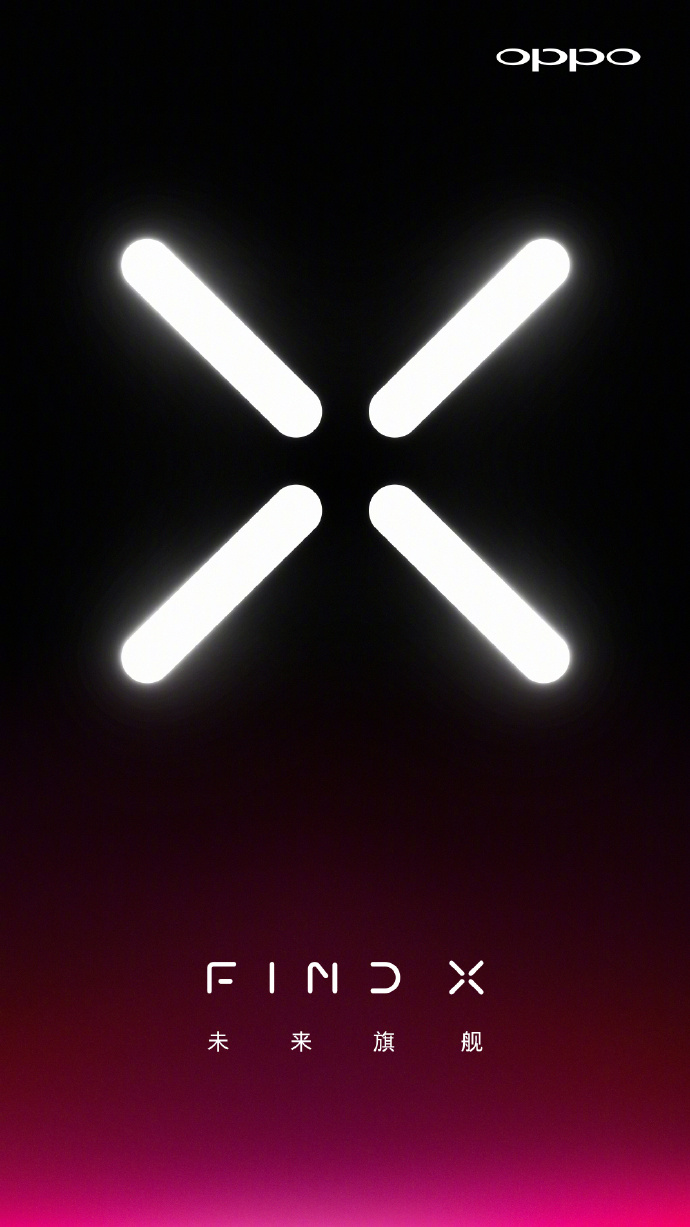
The OPPO Find 7 that was launched in 2014 is the last flagship phone from the company. It was speculated that OPPO may launch the OPPO Find 9 or Find 11 to succeed it. However, the company has not released any flagship phone after Find 7. Hence, it seemed that the Chinese manufacturer would never launch a Find series flagship phone as changed its mobile business strategy and concentrated on releasing low budget, mid-range and upper mid-range phones. Today suddenly, OPPO has just confirmed through its Weibo account that it will be launching a new Find series smartphone called Find X.
Shown above is the official Find X poster released by OPPO on its Weibo account. The Weibo post that accompanies it says, “Hi, waited for a long time” which suggests that the company is well aware of the fact that its fans have been eagerly waiting to see a new flagship phone. OPPO has also changed the its Weibo profile logo to Find X which confirms it will be the next major smartphone from the company. The announcement on the existence of the Find X smartphone has come just after the launch of Xiaomi Mi 8 and Mi 8 Explorer Edition.
At the beginning of the previous month, OPPO had trademarked the OPPO Find X moniker which suggested that it could be an upcoming flagship phone from the company. Also, a leaked render of the smartphone that had appeared in May revealed that it will be equipped with a notched display and a triple camera setup on its rear. As of this writing, there is no information on the specifications of the Find X smartphone.
The image also revealed that the smartphone does not feature a fingerprint scanner. Since the company was recently granted a patent for in-screen fingerprint scanner, it is speculated that this advanced biometric recognition feature might be made available on the OPPO Find X.
Rumors have it that it could be equipped structured light 3D module like Apple iPhone X and Xiaomi Mi 8 Explorer Edition for 3D facial recognition. Some of the other features that are expected to arrive on the Find X smartphone include super-fast 15-minute flash charge, 5x lossless zoom and support for 5G connectivity.
Do you think that the OPPO Find X will be an ultimate flagship phone? Share us your views by posting your comments below.
Huawei’s Honor brand has announced a price cut on a number of its products to mark the June 1 Children’s Day celebration in China. The affected products are Honor’s Weighing scale, Bluetooth headset and the Honor A2 Smartband. The eye-popping price cut was perhaps received by the Honor A2 which had over 50% off its initial price. The smartband has an original price tag of 199 Yuan but that has been slashed by 100 Yuan so the device is now available for just 99 Yuan ($15) on Vmall.
The Honor A2 was launched in May last year as the successor to 2016’s Honor A1 released last year. The Honor A2 has a 0.96-inches OLED display and rubber strap which is available in red, white, black and yellow.
The Honor A2 smartband boasts a couple of interesting features. It has a continuous heart rate monitor that is able to differentiate when you are performing a variety of exercises. There is a calorie counter that keeps track of calories burnt, and a pedometer that counts your steps and that can even tell when you are cycling. The smart wearable also has a sedentary reminder, a sleep monitor, and will also provide notification alerts. There is also a find-my-phone feature for those moments when you can’t remember where you dropped your device. The device can also pair with smartphones (both Android and iOS) using Bluetooth 4.2. It has an IP67 rating and packs a 95mAh battery that should offer up to 9-days of battery life.
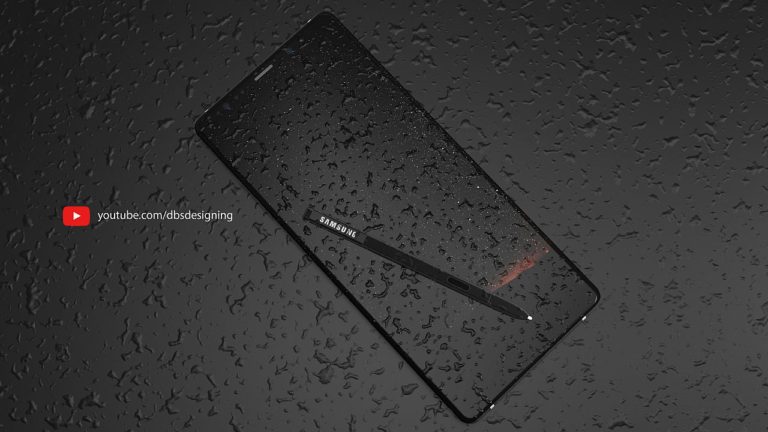
It was reported recently that Samsung will launch the Galaxy Note 9 flagship in July this year. That rumour seems to have some substance but a fresh rumour has emerged, stating that the Galaxy Note 9 launch date has been shifted by two weeks.
While the initial rumour tips the device to drop in July, a second one stated July 29. So with the two weeks shift, the launch may now fall in August. Two weeks is a short time to get disappointed anyway. Besides, it is all for good as the report revealed that Samsun postponed the launch due to a last-minute design change. The report hinted that Samsung’s Vice Chairman Lee Jan-Yong visited a number of local stores in Shenzhen to check out competing smartphones and, upon doing so, the Chairman is said to have realized that other smartphones offer an increased feeling of grip. In light of this, Lee Jan-Yong reportedly spoke to Samsung’s engineers in the hope fixing this issue by reducing the thickness of the Galaxy Note 9’s display glass by 0.5mm, a decision that has ultimately led to a delay of two weeks.
The Galaxy Note 9 is expected to come as a slight upgrade of the Galaxy Note 8. One of the top features will be a minimal increase in display size. The Galaxy Note 8 sports a 6.32-inch panel, whereas the Note 9 is set to feature a 6.38-inch display. On a hardware note, Samsung’s Exynos 9810 will power the device in all markets except the US, where the Snapdragon 845 by Qualcomm will be employed. The processor will be backed by 6GB of RAM and 128GB of internal storage. There are rumours of a 8GB + 512GB variant but that isn’t confirmed.
With this latest development. the Galaxy Note 9 is expected to drop sometime in August with sales commencing before the end of the month.
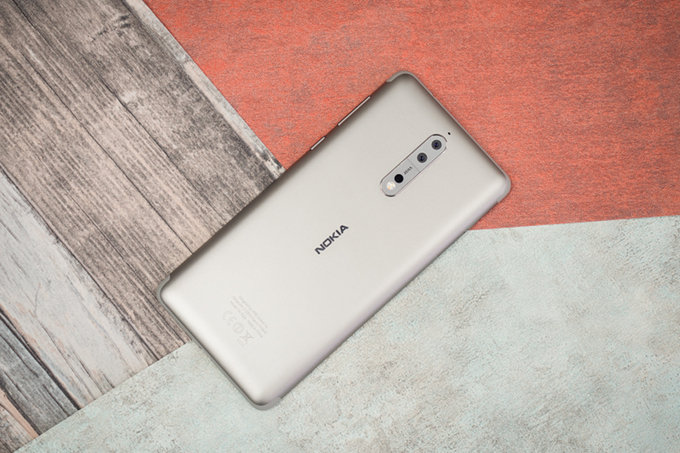
HMD Global sure looks to be heading in the right direction in terms of designs of its smartphones and software support via regular updates. The company announced a couple of months back that the Nokia 8 will in the near future receive some major camera improvements. That position was reiterated about two weeks ago when the Finnish company said an update for the high-end smartphone will be available very soon.
HMD has now announced that the rollout of the Pro Camera mode. In a tweet, HMD’s CPO Juho Sarvikas disclosed that the Pro Camera mode is now available via an update. He also disclosed that the update is now rolling out to all Nokia 8 units around the world. Although this might take some time before it reaches all devices, it is impressive that the company is keeping its word.
The update has a size of 600MB which is quite big but it looks to be worth it. The Pro Camera mode brings some enhancements to the user interface and some improvements to the system stability. This new camera mode lets you adjust the white balance, manually focus the photo, adjust the ISO of the image, set a manual shutter speed, adjust the exposure of the photo and several other features.
ARM has announced a new CPU core that will power the next generation of processors. The Cortex-A76 was unveiled at an event in San Francisco today.
The A76 brings a significant improvement in performance – up to 35% according to ARM. It will also be 40% more efficient and provide up to 4 times the current performance in Machine Learning.
These increase in performance and efficiency should be transferred to custom chips made by Qualcomm and Apple. Both manufacturers build their own custom cores based on ARM’s CPU architecture. But as we all know, Apple’s own cores are significantly powerful than those of Qualcomm.
ARM also says the new core offers up to 2x improvement in performance for laptops i.e. Windows on ARM notebooks. However, it is important to note that that jump in performance is because the new CPU core is compared to the Cortex-A73 which the Snapdragon 835 is based on and not the more powerful Cortex A-75 of the Snapdragon 845.
Huawei’s Honor sub-brand has an event scheduled for June 6 and on that day it is expected to release a game-changing phone called the Honor Play. There are have been rumors on what features to expect but we haven’t heard anything about the pricing until now.
A photo has surfaced on the web and it shows a hand-drawn poster in a Chinese gadget store. From the poster, we can make out the name – Honor Play, the launch date which is June 6, and a price tag – ¥3299 (~$514).
While we advise that you take the above price with a grain of salt, it actually isn’t outrageous. Most affordable flagship phones are priced around that range.
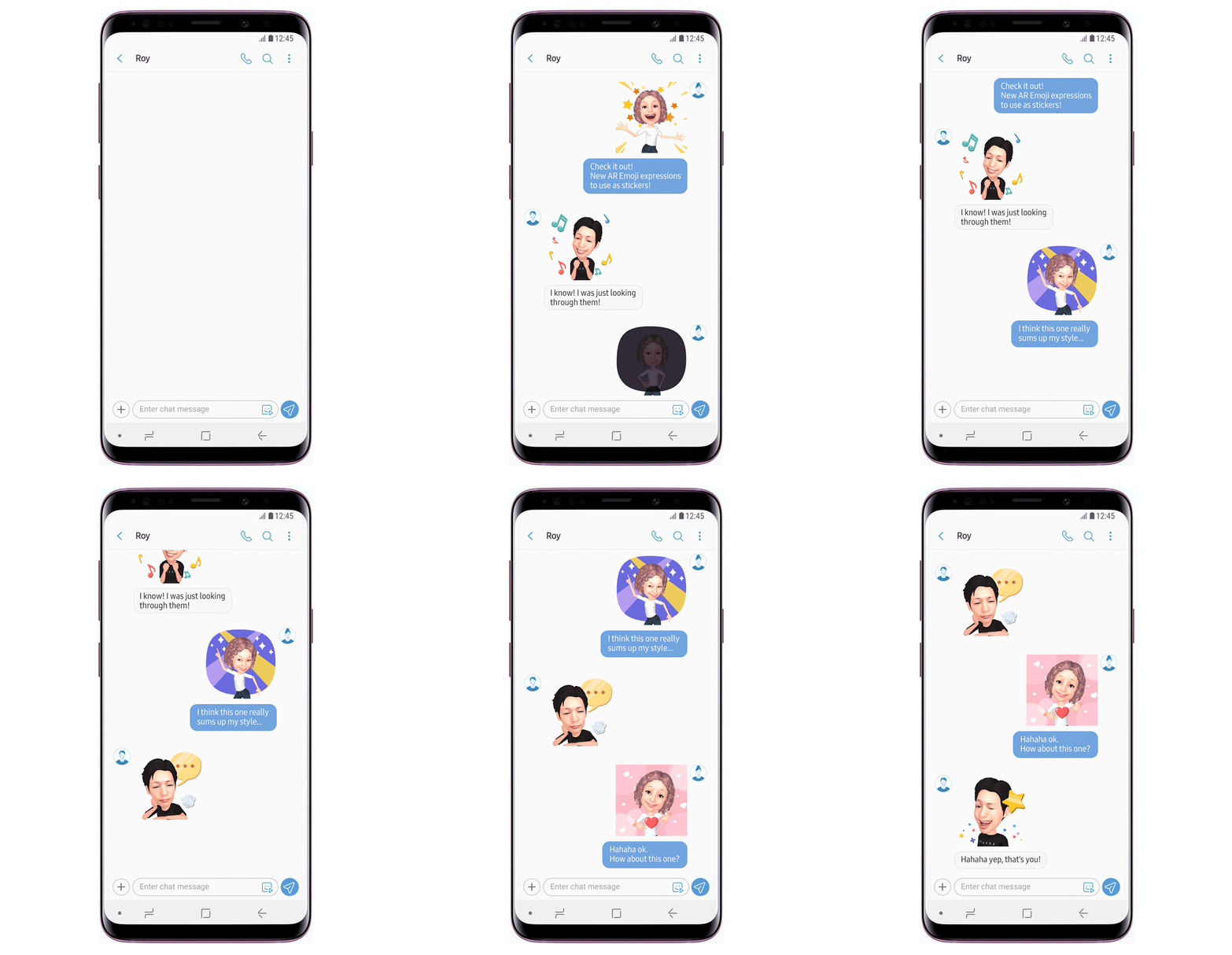
Samsung has announced the update to its camera app which brings 18 new stickers to the AR Emoji feature available on the Samsung Galaxy S9 and Galaxy S9+. The tech giant made this disclosure via a post on its official website. The announcement detailed that update to the camera app, which contains the new stickers will be available in the Galaxy Apps Store under the “My apps” section.
The additional 18 new stickers, AR Emoji users now have brings the total number of available AR Emojis to 36. Samsung even disclosed that an additional 18 new stickers will be added in the coming months. That means by the end of this year, a total of 54 AR Emojis will be available later this year.
The AR Emoji stickers are programmed to automatically appear when an AR Emoji is created. This can be activated by selecting “AR Emoji mode” in the camera app, then tapping on “Create My Emoji.” The phone does all other work including the creation of the AR Emoji (which can be tweaked by you), and the creation of the stickers. The stickers can be added to a message directly from the handset’s QWERTY keyboard, or by using ‘copy and paste’ to place them into a message.
In addition, the feature also allows users to create AR Emoji of certain Disney characters such as Mickey Mouse, Minnie Mouse, and Donald Duck. Last week, Samsung added The Incredibles to the list of Disney characters that can be created.
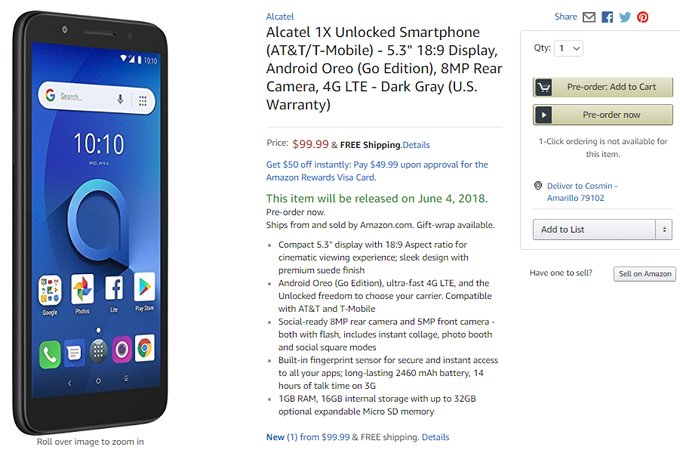
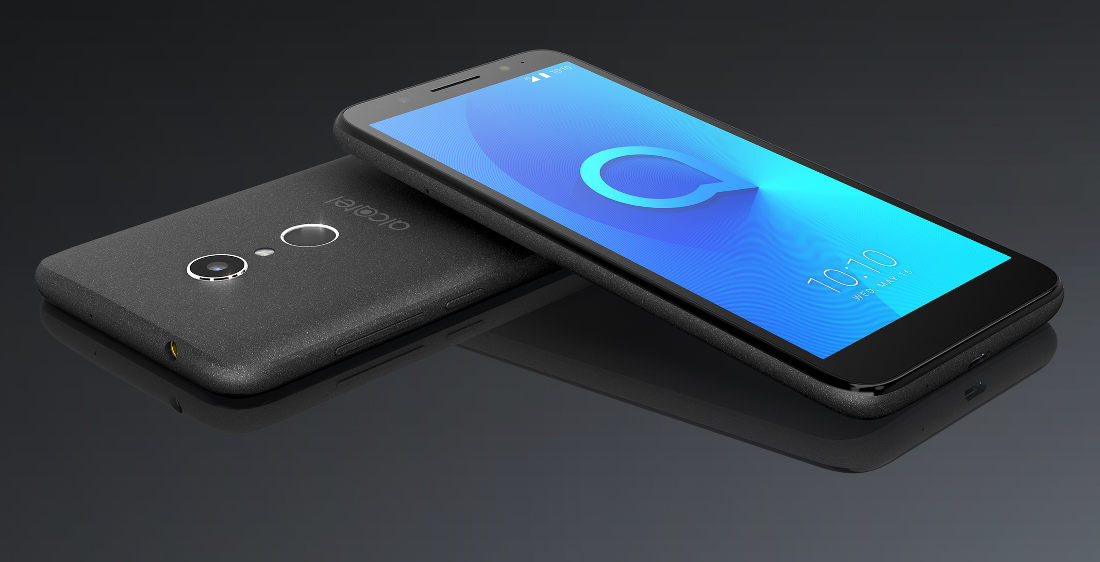
Alcatel has unveiled the 1X smartphone in the U.S. The Alcatel 1X was first unveiled at MWC 2018 in Barcelona and later on in India with the device coming out as the world’s first Android Go smartphone. It also enters the U.S market as the first Android Go phone that will be sold there. The device is already available for preorder on Amazon and will go on sale from June 4.
Specs wise, Alcatel 1X features a 5.3-inch display that supports a low resolution of 960 x 480 pixels but with an aspect ratio of 18:9. Since it is a low-end phone, it is driven by MediaTek MT6739 chipset featuring a quad-core processor. The processor is paired with 1GB of RAM while there is 8GB of storage onboard. There s a second variant with 2GB of RAM and 32GB of storage.
The 1X packs an 8MP camera at the rear with LED flash. It supports full HD video shooting and is enabled with support for Electronic Image Stabilization (EIS). At the front, there is a 5MP selfie camera also with LED flash. The front camera has a face recognition functionality called Face Key. Fuelling the device is a 2,460mAh battery. While the interface is provided by stock Android 8.1 Oreo (Android Go edition).
The Alcatel 1X will work unlocked with GSM carriers in the US such as AT&T and T-Mobile. The device comes with a $99 price tag which is quite pricey for a budget phone.
There is no doubt that mobile phone photography is sweeping through the industry presently as a result of improvements to the sensors mounted on the present day smartphones. That doesn’t in anyway undermine the capabilities of digital cameras. As a result of the delicate nature of these cameras, it is imperative to get a carry bag that not only gives you some level of convenience but also protects the camera from damage due to trauma or water. Xiaomi has just launched a camera bag under the Youpin crowdfunding platform which performs these and other functions.
The light leisure single camera bag is manufactured by Shanghai Runmi Technology Co., Ltd. and comes with a price tag of 239 yuan (~$37). The camera bag is crafted using a combination of ultra-fibre material and fabric. The fabric is splash resistant and can effectively withstand daily rain and accidental spills. The carry bag also comes with a shoulder strap which can be adapted for handheld or shoulder use.
In addition, the internal compartment has a 10mm hidden foam which acts as protection for the camera is the bag is compressed. There are also two small pockets at the front which can be used to store different items. The design also includes a pair of symmetrical pockets on both sides with zippers. The side pockets can house the camera charger, lens cap, and other small items. There is also a pocket at the back with anti-theft zipper and which can accommodate the bus card, ATMcard and personal wallet.
The new camera bag comes in three attractive and lively colours namely; Military Green, Yellow and Dark Blue color options. There is no word yet on its availability.
DXOMark is fast gaining a reputation as a worthy benchmark for cameras with its test results being projected whenever a new flagship phone is released. So it is not out of place if the firm’s opinion is sought regarding smartphone photography. AndroidHeadlines recently caught up with DxOMark Marketing VP Nicolas Touchard who categorically hinted that the adoption of Quadruple-camera setups on smartphones is not a question of “if” but “when,”.
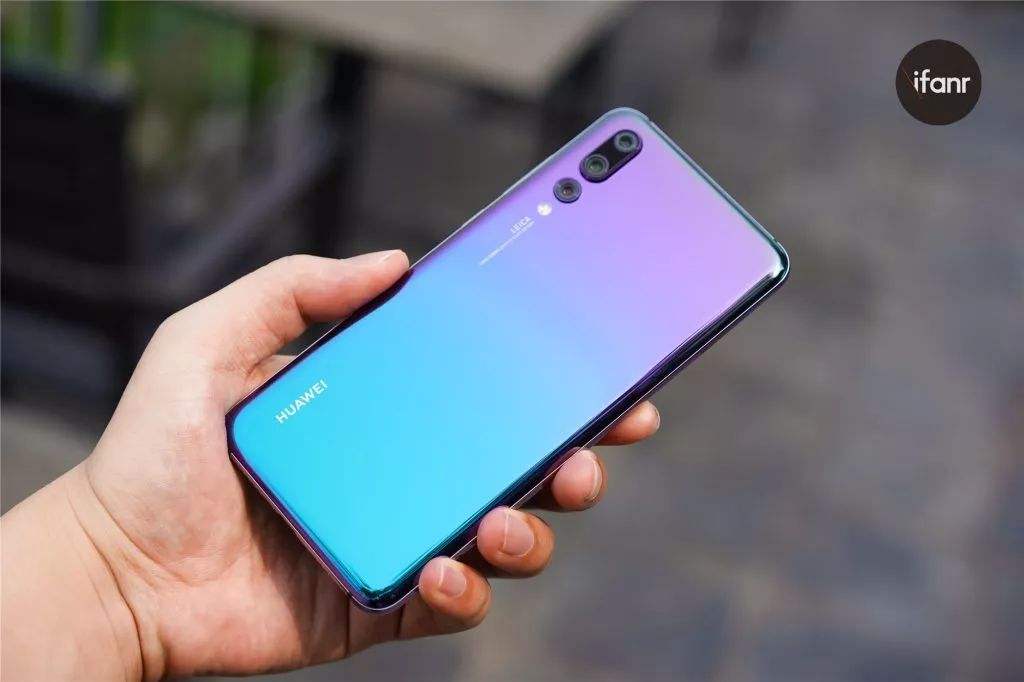
The firm’s VP Nicolas Touchard disclosed that the present imaging systems which consist of the use of multiple cameras are a logical method of evading the physical limitations of handsets such as their inability to house large sensors and still retain a thin build. As a result of this impediment, DXOMark exec expects triple-camera setups like the ones implemented on the Huawei P20 Pro to become much more prevalent in the industry soon, as early as next year. Mr Touchard cited both their natural advantages over attempts to implement larger sensors into handsets and echoes from the mobile industry to back his prediction. The DXOMark VP’s prediction that triple camera setup has come to stay was given a boost recently when it emerged earlier this week when reports emerged that at least one model from Apple’s upcoming iPhone 9 series will feature three lenses on its back.
Recall that Huawei beat others to emerge with the world’s first smartphone with a triple rear-camera setup. Huawei had argued that setups taking advantage of three or more cameras can deliver better image quality and superior zoom to their more traditional counterparts without requiring any compromises on the size of the final product. Indeed, the triple-camera packing Huawei P20 Pro is rated as DXOMark’s best mobile camera ever, beating the Galaxy S9 Plus, Pixel 2 XL and iPhone X.
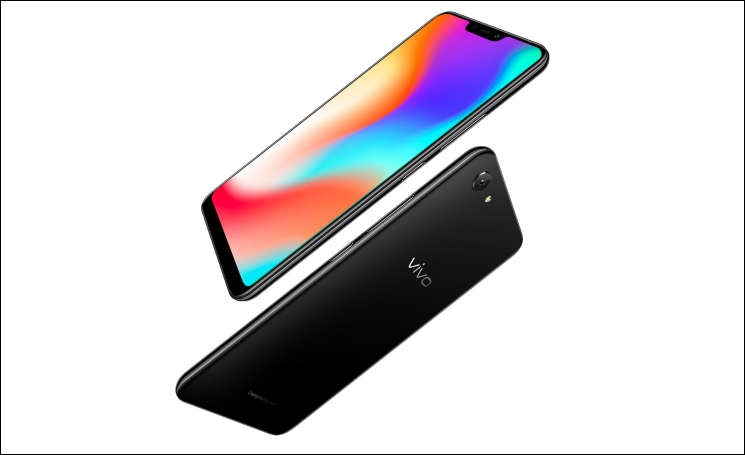
Expanding its portfolio in India, Vivo has quietly launched a new smartphone in the Indian market — Vivo Y83. The smartphone was originally launched in China last week.
The Vivo Y83 is now available for purchase in India for a price of Rs. 14,990 from select retail stores across the nation. Currently, the phone has not been listed on eCommerce platform but we expect that it will soon be available via major online marketplaces in India.
The smartphone comes with a premium design and bringing the full-screen display to Vivo’s mid-range segment. It features a 6.22-inch HD+ display with screen resolution of 1520 x 720 pixels, 19:9 aspect ratio, and a notch on top of the display.
Under the hood, it is powered by MediaTek’s Helio P22 octa-core processor clocked at up to 2.0 GHz with an IMG PowerVR GE8320 GPU clocked at 650 MHz. The chip features Mediatek’s Neuropilot tech which comes with support for TensorFlow, TF Lite, Caffe, and Caffe2.
The phone packs 4GB RAM and 32GB of internal storage. There’s also a microSD card slot, which enables users to further expand the phone’s storage capacity up to 256GB.
In the camera department, the Vivo Y83 features a 13-megapixel rear camera with an LED flash and f/2.2 aperture. On the front side, there’s an 8-megapixel snapper integrated with artificial intelligence and face recognition algorithm.
The front-facing camera supports features such as AI Makeup and customized beauty effects. The company says that the AI Beauty technology will get better at enhancing selfies as it learns more about the preferences with usage. Instead of the fingerprint sensor, the company decided to offer Face Unlock feature called Face Access 2.0.
Connectivity options on the device include Wi-Fi 802.11 b/g/n, Bluetooth 4.2 Low Energy, GPS with A-GPS, GLONASS, BeiDou, FM radio, and 4G VoLTE. The smartphone runs on Android 8.1 Oreo operating system out of the box with company’s own FunTouch OS 4.0 custom interface on top. The phone is fuelled by a 3,260mAh battery.
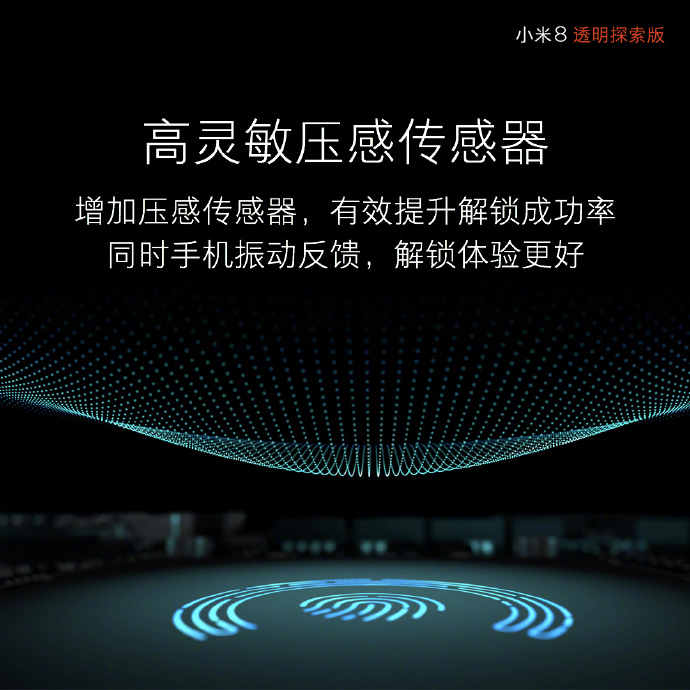
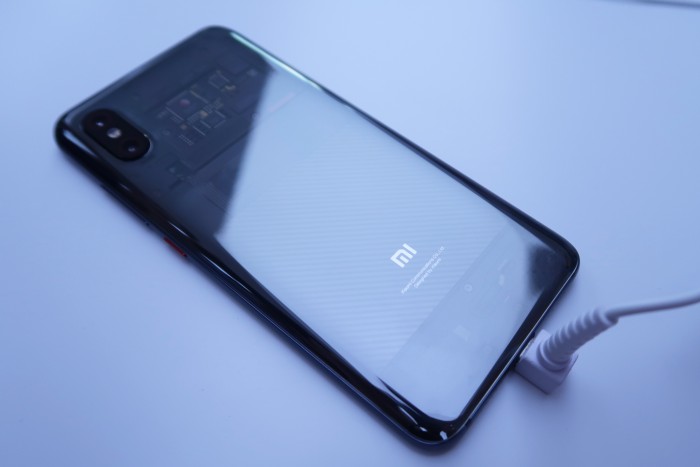
The Mi 8 Explorer Edition (EE) is the first Xiaomi phone to come with an in-display fingerprint scanner. It is also the first smartphone in the world to use a pressure sensitive in-display fingerprint scanner. Reports have revealed that the scanner is Synaptics Clear ID FS9500.
The Clear ID FS9500 was announced in December by Synaptics Inc. When it was announced, it was reported that Synaptics was working with one of the top five smartphone manufacturers. Synaptics itself later revealed that it was shipping the scanners to Vivo. That scanner is what is used in the Vivo X21 UD.
Although Vivo is the first manufacturer in the world to release a phone with an in-display fingerprint scanner, Xiaomi’s Mi 8 EE has an edge over it. Apart from the Synaptics scanner, it also has a dedicated pressure-sensitive sensor that makes unlocking faster.
The sensor has a high sensitivity that immediately detects when the finger is placed on the display and “wakes the main scanner up”. This allows the Mi 8 EE unlock faster than the Vivo X21 UD even though they both use Synaptics Clear ID FS9500 sensor.
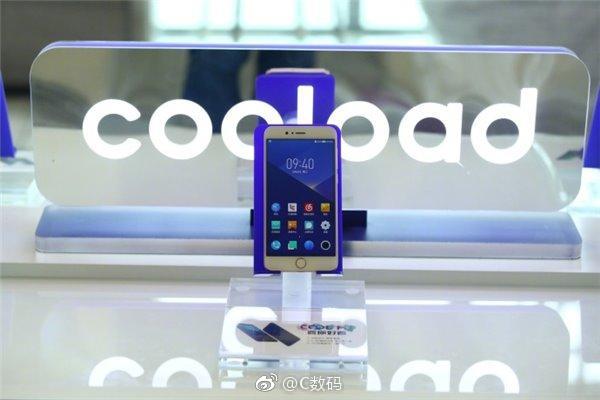
Recently, Coolpad filed a lawsuit against Xiaomi in China accusing the latter of infringing on a couple of its patent. The case was filed through Coolpad’s subsidiary Yulong Computer Technology before a Shenzhen court. A spokesperson for the Shenzhen-based smartphone maker has now insisted that Xiaomi has to immediately stop selling and manufacturing devices that infringe upon many of its patents in order to put an end to the legal tussle.
In an interview as reported by IANS, Coolpad’s Global Chief Patent Officer, Nancy Zhang stated that Coolpad was hopeful of Xiaomi putting an end to patent infringement. She stated that her company is ready to actively co-operate with them to promote industrial progress but the infringement has to stop. The smartphone maker is looking forward to work with Xiaomi to find a better solution, strengthen intellectual property protection and create a good business environment.
Coolpad also disclosed that one of the patents involves its award-winning dual-SIM-card-dual-standby technology. The three patents which Xiaomi is alleged to have infringed upon include system interaction or UI type patents, involving interface, applications and icon configuration technologies, whose features are more visible and identifiable on the infringing mobile phones. Cooldpad also hinted that it has filed for customs protection for two patents, which are “method of mobile telecommunication device collaboration and its interface system” and “implementation method for multi-model mobile device call history interface system”.
Recall that Coolpad is also demanding a ban on the specific Xiaomi phones which infringe on the said patents. The phones that could get banned include the Mi Mix, Redmi Note 4X, Mi 6, Mi Max 2, Mi Note 3, Redmi Note 5, Redmi 5 Plus and Mi 5X. Coolpad is also seeking compensation from Xiaomi for economic losses.
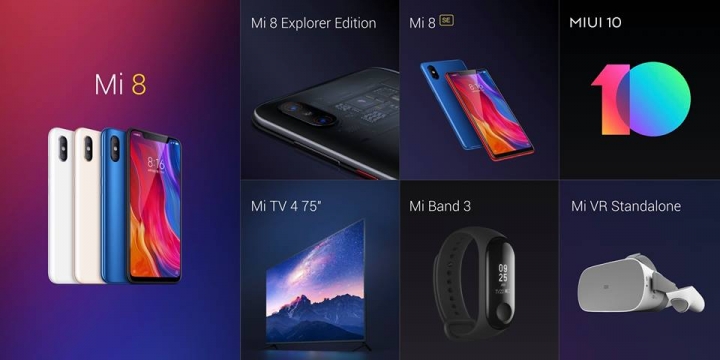
Xiaomi had a blast announcing not one or two but a total of 7 new products at its 8th Anniversary event in Shenzhen earlier today. The products ranged from smartphones, VR headsets, Mi TVs, and even fitness trackers. Overall, it was a feast for Xiaomi fans and now we want to know which was your favourite Xiaomi product from the event today.
Out of the 7 products announced at the event, there were three smartphones, a new generation of its OS, a large screen Mi TV, a fitness tracker, and finally a VR headset for China.
We take a look at the key details of each of the products announced today in this post, and let us know which is your favourite among these.
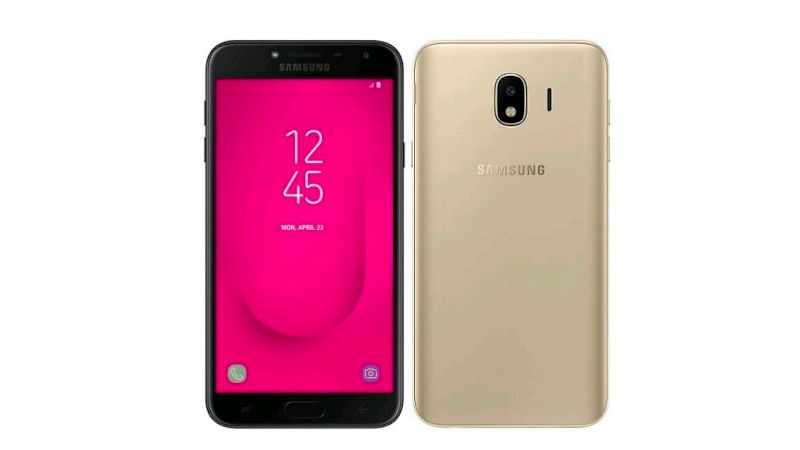
Earlier this month, Samsung introduced a new smartphone in its J-series — Samsung Galaxy J4. Now, the South Korea-based company has silently launched Galaxy J4 (SM-J400) in India for a price of Rs. 9,990 which roughly converts to $148.
The smartphone comes with a 5.5-inch HD Super AMOLED display with screen resolution of 1280 x 720 pixels. It is powered by 1.4GHz Exynos 7570 octa-core 14nm processor along with Mali-T720 MP1 graphics processor. The performance of Exynos 7570 is said to be on-par with that of Qualcomm Snapdragon 425 SoC.
It comes in two variants — one with 2GB RAM and 16GB of internal storage and another with 3GB RAM and 32GB onboard storage. The phone also has a microSD card slot which enables users to further expand the phone’s storage capacity up to 256GB.
Coming to the camera department, it comes with a 13-megapixel rear camera along with an LED flash and f/1.9 aperture. On the front side, there’s a 5-megapixel snapper with an LED flash and f/2.2 aperture.
As of the software, the device runs on Android 8.0 Oreo operating system out of the box with Samsung Experience custom interface on top. To enhance the user experience, the company has added Advanced Memory Management, Dual Apps, App Pair and Adaptive Wi-Fi, among others.
Connectivity options on the smartphone include 4G VoLTE, Wi-Fi b/g/n, Bluetooth 4.2 LE, GPS, FM Radio, and 3.5mm headphone jack. There is no fingerprint sensor but the phone comes with support for Face Unlock feature. The phone is fuelled by a 3,000mAh battery.
The Samsung Galaxy J4 is priced at Rs. 9,990 (approx. $148) for the 2GB RAM model. Pricing for the 3GB RAM model is not yet known. The smartphone is now available for purchase in India in three colors options — Blue, Blue, and Gold through offline stores across the country.
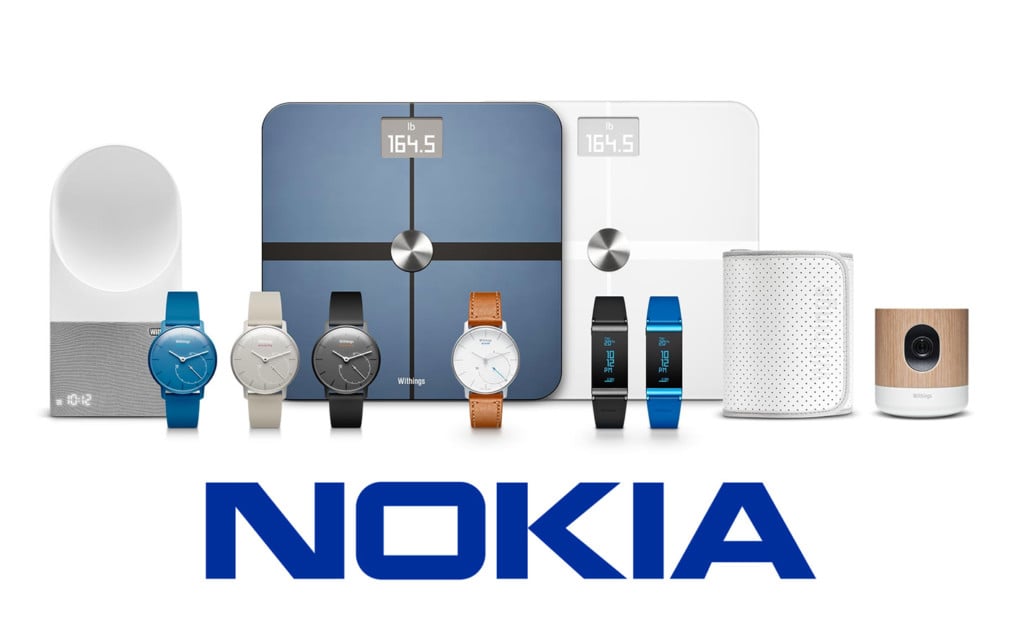
Two years after purchasing Withings, Nokia has sold it back to Withings co-founder Éric Careel. Mr. Careel was one of the interested buyers when Nokia decided to put up the health tech division for sale.
Nokia purchased the French company for about $190 million in 2016. It later rebranded it Nokia Health along with existing products. However, the business was struggling and Nokia announced a strategic review of the arm in February of this year.
When Nokia announced it was going to sell the business, a number of big names were linked to the deal. Google’s Nest was one of the interested buyers alongside Samsung. There were also two other French bidders including Éric Careel who eventually sealed the deal with Nokia.
Xiaomi unveiled the latest MIUI 10 custom UI along with the Mi 8, Mi 8SE and Mi 8 in addition to the Mi Band 3. The new version comes preloaded on the new flagship phones and we expect that updates will soon roll out to Xiaomi’s flagship models like the Mi Mix 2s, Mi 6 and others. Xiaomi has now revealed the list of its Redmi models that will get MIUI 10 update.
The disclosure was made via a Weibo post on the Redmi series official handle detailed the models (13 in total) that will get updated to MIUI 10 in mainland China. The models include the Redmi Note 5, Redmi S2, Redmi 5, Redmi 5 Plus, Redmi 5A, Redmi Note 5A, Redmi 4X, Redmi Note 4X, Redmi 4A, Redmi 4, Redmi Note 4. Others include the Xiaomi Redmi Pro, Redmi 3S, Redmi 3X, and the Redmi Note 3 Full Network version which was released on January 17, 2016.
As to the timeline, the Redmi Note 5 and Redmi S2 will be eligible to get the MIUI 10 Developer ROM in late June. The other models will have to wait till the end of July to get MIUI 10 Developer ROM. As stated, this is for the China ROM and there is no timeline for the Global ROM rollout right now.
MIUI 10 Custom ROM is based on Android 8.1 Oreo and it has as its biggest upgrade the AI technology. The AI technology on MIUI 10 brings deep learning and thus reduces the loading time of apps by studying your app usage behaviour and anticipating actions. Another advantage is that MIUI 10 brings single camera bokeh mode to old Xiaomi smartphones including Xiaomi Mi 5 and Xiaomi Mi Note 2. The custom ROM also comes with a new driving mode, smart home gadgets manager and other features in addition to the existing features of MIUI 9.
Samsung has launched several affordable devices in the past few months and the Galaxy A9 Star will be the next one, alongside its Lite sibling. A leaked poster has just surfaced online and it confirms the launch of both the devices in China, as well as the design and info about the price tag. According to the poster, they will launch in China on June 7. Both will have a totally different design from the standard A9, and they will also be different from every Samsung midrange device. The handsets will feature a glass back and a metal frame, with a dual camera in a vertical configuration placed in the same position of iPhone X’s dual setup.
Besides the dual cameras, there is a fingerprint reader, while the power key is placed on the right side of the phone, and the volume controls will be on the left. Samsung Galaxy A9 Star will have a battery with a capacity of 3700 mAh which is expected to be a long-lasting battery as the phone will sport an efficient AMOLED display. The screen will have a size of 6.28 inches, an 18.5:9 aspect ratio and a Full HD+ resolution of 1080 x 2220 pixels. There will be no notch, but bezels will be narrow thanks to the wide aspect ratio.
Samsung Galaxy A9 Star will come with 4 GB of RAM and 64 GB of internal storage, while we still do not know the memory configuration of its Lite variant. According to the poster, A9 Star will cost 3499 Yuan, which roughly translates into €467 or $546. The flash sales are expected to start on June 15 in China, but we still do not have official info about the availability of Galaxy A9 Star and A9 Star Lite outside of China. According to reports, the mid-rangers will also be launched in Indonesia, Malaysia, Singapore, Thailand and Vietnam.
Xiaomi Mi 8 has just been unveiled alongside its smaller sibling Mi 8 SE, but it has already been tested and reviewed by DxOMark, which has defined it one of the top 5 camera phones ever released. In the official DxOMark test, the new Mi flagship has obtained a whopping score of 105 points in regards to photo quality and 88 points in video recording. The overall score obtained by the flagship is 99 points which brings it at the same level of Samsung Galaxy S9+, according to DxOMark. To be accurate, the score related to the photo quality is even higher than Galaxy S9+, but the lower score obtained in the video recording test made its overall score lower.
DxOMark stated that Xiaomi Mi 8 is able to capture vivid photos with a good dynamic range in various scenarios, including low-light conditions, as well as an accurate exposure and white balance. There is a very low amount of noise in every light condition and a fast autofocus. However, just like every other camera phones, there are some weak points, such as color fringing, minor inconsistencies with autofocus, white balance and depth detection, a loss of detail in broad daylight and in really dark environments.
When it comes to video recording, the camera shows a very fast autofocus, a wide dynamic range, a great focus tracking and low noise. But there are some inconsistencies here as well with exposure, white balance, and detail. On its rear glass, Xiaomi Mi 8 boasts a dual camera setup with resolutions of 12 MP, f/1.8 and f/2.4 apertures. It supports dual pixel PDAF and 2x optical zoom thanks to its secondary telephoto lens. Xiaomi Mi 8 has managed to do even better than iPhone X’s dual camera, but according to DxOMark it is still far from Huawei P20 Pro and its triple camera which has scored 109 points in total.
When it comes to the price range under $200 or €200, you’ll probably end up buying a Xiaomi phone in the current market standing. But Meizu is putting a lot of efforts in this price range and to some extent, the company’s devices have started to get attention. This week, the company announced the new Meizu M6T, a device which will cost around €100 and is expected to affect the sales of Xiaomi Redmi 5. Here’s an in-depth comparison between the Meizu M6T vs Xiaomi Redmi 5.
Dual 13 + 2 MP f/2.2 + f/2.4
8 MP f/2.0 front camera
12 MP f/2.2
5 MP front camera
BATTERY
3300 mAh
33000 mAh
Fast charging 5V / 2A
ADDITIONAL FEATURES
Hybrid Dual SIM slot
Hybrid Dual SIM slot
Design
Despite the fact that it was launched in elegant shades, Meizu M6T is not really the best phone that you can get when it comes to aesthetics and build quality. It has a cheap plastic design, but this will hopefully make the signal stronger. Xiaomi Redmi 5 has a higher quality metal back, it is more compact and even thinner, even though displays come with the same size. However, Meizu M6T is the only one among the two coming with a comfortable mBack fingerprint reader which can help you navigate in the UI through gestures.
Display
Two 5.7-inch panels with an HD+ resolution and the IPS technology. With these specs, do not expect to see a noticeable difference between the viewing quality of these two panels. HD is the minimum resolution you can get in this price range, but it is also rare to find a Full HD phone under $120. Further, the low resolution helps a lot with the energy consumption.
Hardware/Software
There is nothing to compare when it comes to hardware: Xiaomi Redmi 5 wins. It sports an octa-core Snapdragon 450 SoC by Qualcomm which can run at a max frequency of 1.8 GHz. And it is a much better processor than the octa-core Mediatek MT6750T present on the Meizu M6T. It is faster and way more powerful. On the other hand, note that Meizu M6T has a variant with 64 GB of internal storage which is not available with the Redmi 5. Both phones come with Android Nougat out of the box, but given that they are heavily customized with Xiaomi’s and Meizu’s own user interfaces it does not have a strong impact. Both these devices are full of additional features and when we talk about software it is all about individual tastes, even though we prefer MIUI as its a bit more functional and user-friendly.
Camera
Given that these are devices sold for less than $150 we can not define them camera phones, but Meizu M6T has a camera which seems very interesting for this price range. It is a dual setup with 13 + 2 MP resolution which can calculate depth for the portrait mode. Further, it has a good 8 MP selfie camera with a decently-bright f/2.0 aperture. We believe Meizu M6T is a better camera phone than its opponent.
Battery
3300 mAh batteries in each case, so we will have to test them to know exactly which one will last more. However, we are kinda sure that, just like Xiaomi Redmi 5, Meizu M6T will provide a great battery life. It has low-energy hardware components and an above-average battery capacity which should allow it to last up to 2 days with a low/moderate use, just as Xiaomi Redmi 5 does. Note that only Xiaomi Redmi 5 supports fast charging technology, so you will probably have to wait for a bit more in order for the Meizu M6T to charge to 100%.
Price
Price is not really the element which establishes the winner as they are very similar.
In China, Meizu M6T starts from €108/$125 for the base configuration, while Xiaomi Redmi 5 starts from €103/$120. You should go for the Meizu M6T if camera and selfies are your main concern. Otherwise, Xiaomi Redmi 5 is a better choice. For now, the availability of Meizu M6T has been announced only in China and we do not know if and when it will be available outside the country. So it looks like the Redmi 5 is the only choice if you do not live in China.
We use cookies on our website to give you the most relevant experience by remembering your preferences and repeat visits. By clicking “Accept”, you consent to the use of ALL the cookies.
This website uses cookies to improve your experience while you navigate through the website. Out of these, the cookies that are categorized as necessary are stored on your browser as they are essential for the working of basic functionalities of the website. We also use third-party cookies that help us analyze and understand how you use this website. These cookies will be stored in your browser only with your consent. You also have the option to opt-out of these cookies. But opting out of some of these cookies may affect your browsing experience.
Necessary cookies are absolutely essential for the website to function properly. This category only includes cookies that ensures basic functionalities and security features of the website. These cookies do not store any personal information.
Any cookies that may not be particularly necessary for the website to function and is used specifically to collect user personal data via analytics, ads, other embedded contents are termed as non-necessary cookies. It is mandatory to procure user consent prior to running these cookies on your website.