In the last few weeks, there have been a steady stream of leaks related to ASUS’ Zenfone 5 series. The latest is the most exciting so far, as it not only gives us our first official look at one of the phones in the Zenfone 5 series but also mentions some key specs.
The new leak is courtesy of Evan Blass (@evleaks) and is an official render of the Zenfone 5 Lite. We actually think this is the Zenfone 5 Selfie Lite which succeeds the Zenfone 4 Selfie Lite as there is no Zenfone 4 Lite. However, we can’t be too sure ASUS hasn’t messed up the naming scheme again, so we’ll refer to it as the Zenfone 5 Lite.
The phone is shown in white, though we believe there will be other color variants. Its bezels are smaller and it doesn’t have a home button on the chin. At the top, we can make out two camera lens on opposite sides, a LED flash, earpiece, and the proximity/light sensor.
The back is also home to dual cameras stacked on top of each other and in a design that reminds us of the Honor 6X. There is a LED flash flanking the setup on the left and a fingerprint scanner beneath it. We can also make out a USB port flanked by speaker grilles on the bottom.
According to @evleaks, the Zenfone 5 Lite has a FHD+ resolution. The display size isn’t specified but we presume its between 5.7” to 5.9”.
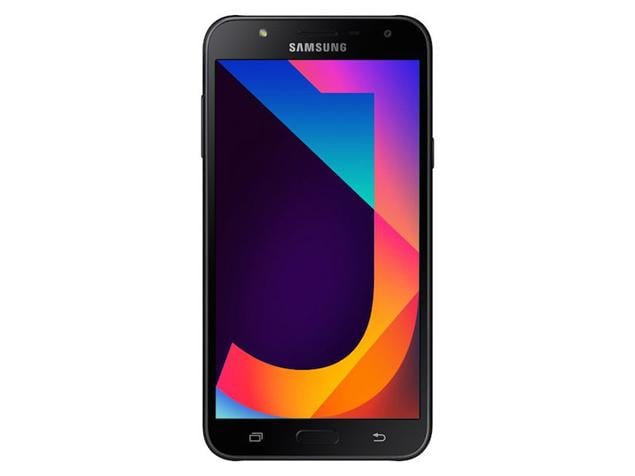
Prepare to discover two new budget devices by Samsung, as two monikers have just been trademarked by the Korean leader of the smartphones market: Samsung Galaxy J7 Star and Galaxy J3 Star. We define them budget phones because the J series is the cheapest one by Samsung, while the A is the series of the high-end phones and the S series is the flagship one. The patent has been filed at the US Patent and Trademark Office, so it is confirmed that two phones with these names will be released, and it may happen this year.
Samsung Galaxy J7 Star and J3 Star are not the only variants of the J3 and J7 handsets. Besides these ones, there are the Pro, Prime, Max, Ace and Nxt variants. Each one differs in some specs, and some of them are exclusive to just some markets. Samsung Galaxy J7 Star and J3 Star should be better than the above-mentioned variants and they should be sold with a higher price tag, even though they will obviously remain affordable devices. The Samsung Galaxy J3 Star should be the most entry-level phone and it will be a low-end device.
The J7 Star instead will be a midrange device. Sadly, nothing is actually known about their specs. The latest standard variant of the J7 released (Samsung Galaxy J7 2017) has a 5.5-inch display with a Full HD resolution of 1920 x 1080 pixels. It is equipped with an octa-core Samsung Exynos 7870 SoC, 3 GB of RAM and 16 GB of internal storage which is possible to expand with a micro SD up to 256 GB. It sports pretty nice 13 MP cameras and a big battery with a 3600 mAh capacity. The J3 (2017) instead is a compact device with a 5-inch HD panel, 2 GB of RAM, a 13 MP rear camera and a 2400 mAh battery.
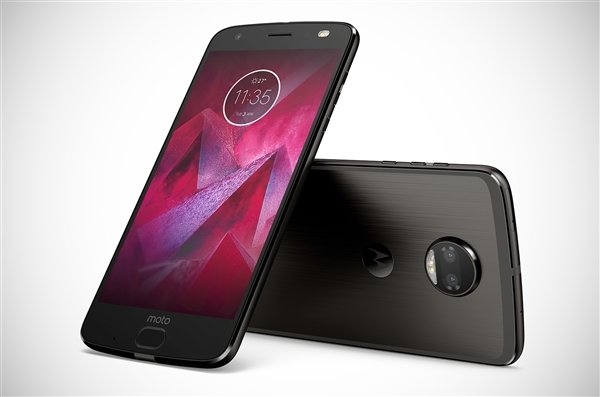
After almost eight months since its official announcement, Motorola is going to launch Moto Z2 Force in India. The U.S. tech giant acquired by Lenovo will hold a live event on YouTube at 12:00 a.m. on February 15 in which it will unveil all the details about the pricing and availability of its latest flagship in the Indian market. In the U.S. the starting price of the handset is $799, which roughly translates into Rs. 51,460.
Together with the flagship, Motorola will launch the Moto TurboPower Pack MotoMod which will be possible to connect on the back of the device, through its dedicated pins. It is just a battery pack and it provides 3500 mAh of additional capacity to prolong the battery life of Moto Z2 Force. It also supports fast charging thanks to its 15W output, so, even though the capacity is high, it will not take much time to charge the MotoMod. There is a chance that Motorola Moto Z2 Force will be sold in a bundle with the Moto TurboPower Pack MotoMod in India.
The flagship distinguishes from the competition for its great build quality: its body is made of 7000 series aluminum and its display has the ShatterShield technology which makes it very resistant (but apparently not peel resistant). The display has a size of 5.5 inches and a QHD resolution (with bezels). Under the hood, there is a Snapdragon 835 SoC paired with 6 GB of RAM and 64 or 128 GB of expandable storage, while on the back there is a dual camera configuration composed of two Sony IMX836 sensors with a resolution of 12 MP (the secondary sensor is monochromatic).
Ever since Windows 10 Mobile existed, many people’s dream was to transcend this operating system’s limitation and install the full desktop version of the OS. Now that the Mobile OS is dead and Microsoft announced that there will be no more feature updates and no more builds for Insiders, the desire to install the desktop operating system is even stronger for those who still own a Windows mobile handset.
A hacker who is identified on Twitter with the nickname Blaze_CW has just installed the recently announced Windows 10 for ARM on a Microsoft Lumia 950: now, he can enjoy a full desktop experience on his almost obsolete mobile device. This has made people hopeful for the old Microsoft Lumia devices in becoming useful again. Unfortunately, at this moment we do not know whether the operating system ported on the Lumia 950 is usable or whether it is too unstable. The version of the OS installed on the Lumia 950 is Windows 10.0.16299.15 for ARM.
Some are already speculating that, maybe, when Microsoft will launch Windows Core OS, Lumia devices will be given new life with a brand new and useful operating system. At this moment the Windows 10 Mobile situation is critical: with no updates and with developers losing interest for an abandoned platform, it can be defined a dead operating system.
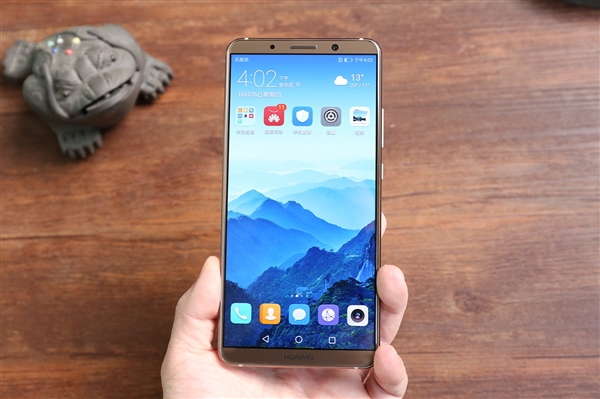
We labelled the Huawei Mate 10 Pro “the ultimate winter flagship” after the device was shown in a couple of tests to have survived inside a deep freezer operating at sub-zero (-24) degrees temperature for four hours. The flagship was later shown to be functional even inside a frozen lake with a video still playing while inside rock-solid ice. Now, here is yet another compilation of tests to prove the durability of the Mate 10 Pro conducted by popular YouTuber Zack Jerry also known by his YouTube channel JerryRigEverything.
The Mate 10 Pro isn’t relatively a new smartphone having been launched last year but the device was recently unveiled at CES 2018 in Las Vegas for the U.S market. The device is currently up for pre-order in the U.S. If you are still undecided if the device is the right flagship for you or if it is as good as the iPhone X or Galaxy S8+, this test places a stamp of quality on the Mate 10 Pro. The device doesn’t disappoint on the scratch, burn and bend tests and you can check that out on the video below.
Huawei Mate 10 Pro comes with a solid display which shouldn’t scratch easily. The rear glass also can’t be scratched easily as well as the rear camera and Huawei logos which bot sit under the glass panel. However, the fingerprint sensor has a plastic coating that can easily be scratched with a razor blade. But despite the scratch, the fingerprint scanner still reads well. On the burn test, the display manages to withstand an open flame for a whopping 40 seconds without any damage, matching Samsung’s Galaxy S8 in this regard. Unfortunately though, because the Mate 10 Pro uses an OLED touchscreen, its pixels don’t recover once you’ve stopped applying the flame, unlike some LCDs.
In the crucial bend test, the Mate 10 Pro continues from where the Mate 9 pro left off as it survives with flying colors. The device doesn’t flex almost at all when it is bent either from the front or the back. The bend action doesn’t do any damage to the glass screen or the glass rear panel, and there isn’t even a crinkle near the metal power button.
The Sharp Aquos S2 shares a striking resemblance to the Essential PH-1, thanks to the notch in the display. The similarity in the design even prompted a statement from Andy Rubin who expressed his disappointment in Foxconn’s CEO. Foxconn owns Sharp and is also owns a stake in Essential. For the Aquos S3, Sharp has ditched the design of the Essential Phone and embraced that of the iPhone X.
[envira-gallery id=”172509″]
Live images of the unreleased phone has surfaced again, giving us a look at the successor to the Aquos S2 which by the way is just six months old.
These live photos of the Sharp Aquos S3 correspond to previous leaks. Within the notch is a camera on the left and a grille for the earpiece in the middle. There is a sensor too but it is not visible.
Unlike last year’s model which has its fingerprint scanner buried beneath the home button, the Aquos S3 has its own on the rear. The dual rear cameras are still vertically positioned and there is a secondary mic above it and a LED flash below.
It appears the back is made of glass but it could also be a NCVM coating like that of the 360 N6 Pro. Whichever one it is, we are sure it is not brushed metal like that of the Aquos S2, though this will be a fingerprint magnet.
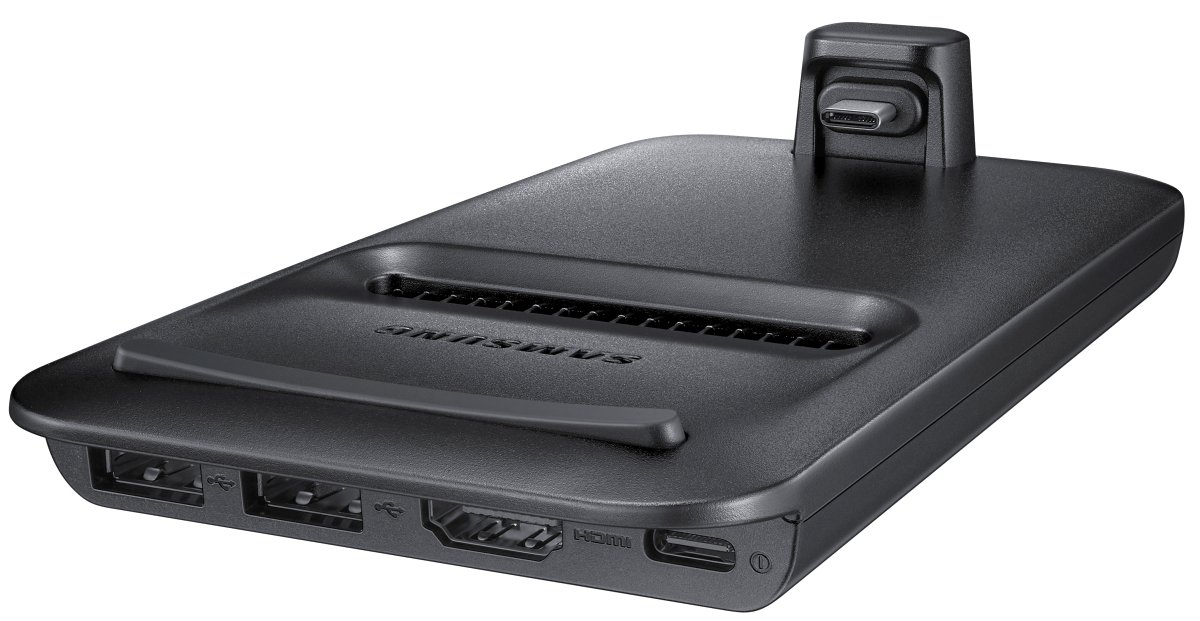
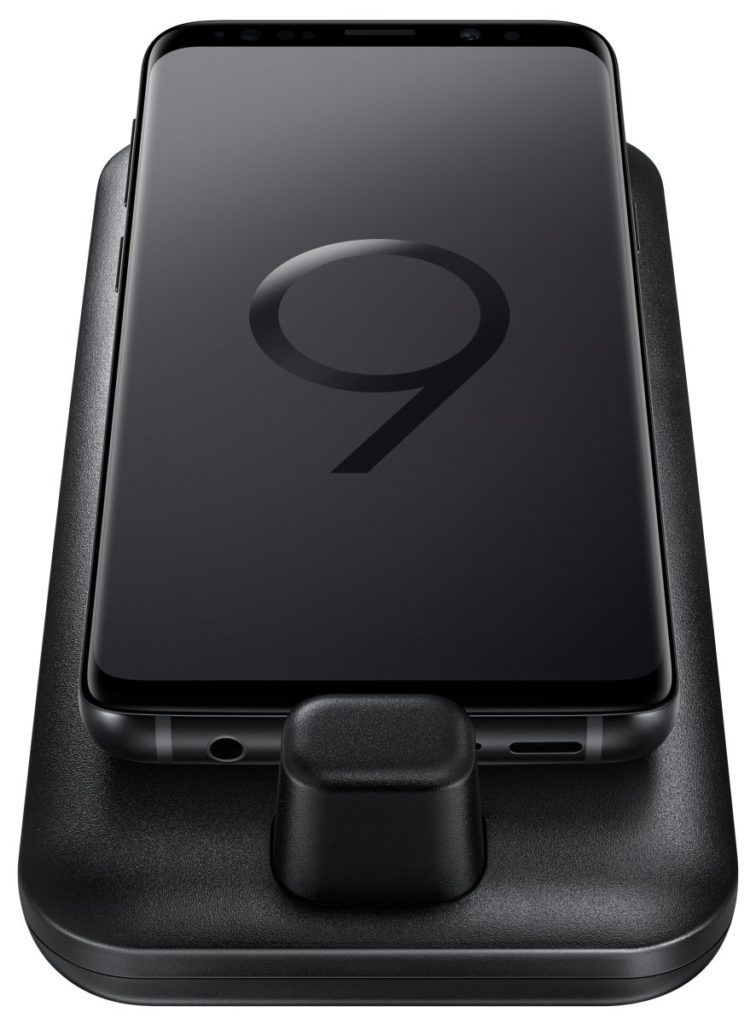
Samsung will announce a new dock for the Galaxy S9 and Galaxy S9+. The new dock will be called the DeX Pad and it will be much different from last year’s Dex Station.
Renders of the DeX Pad have been leaked by Evan Blass and one photo even shows the Galaxy S9 docked on it. Unlike last year’s dock which allowed the phone sort of “stand”, the DeX Pad lets the phone completely lay flat. The reason for this is because Samsung wants the phone to double as a touchpad.
The DeX Pad is rectangular with a part that sticks out at the bottom. This is where the USB-C connector is. There is also a vent which hints at a cooling fan inside the dock. For connectivity, there are two USB-A ports, a HDMI output port, and a USB-C input port for power.
The DeX Pad will most probably be announced alongside the Galaxy S9 and S9+. It will also work with the Galaxy Note 9 scheduled for release later in the year.
Samsung’s Dex Pad is a docking system that allows you use your phone as a desktop PC when connected to an external display. Huawei offers a similar experience with its Mate 10 Pro but that requires only a cable.
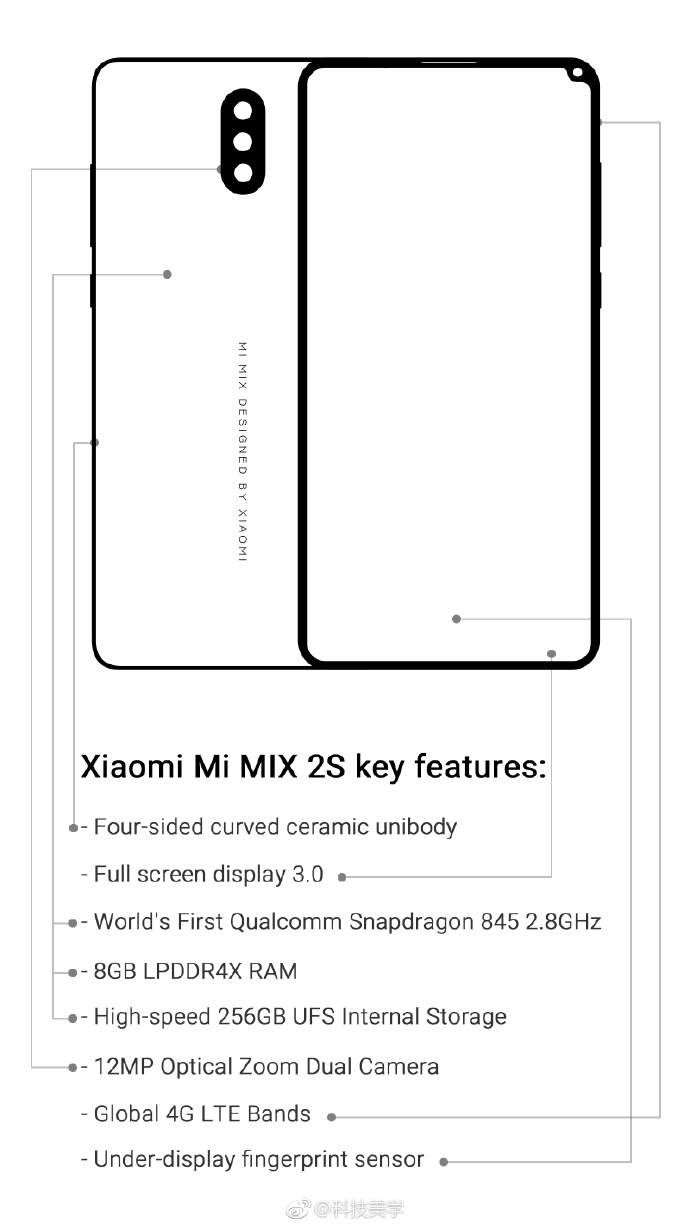
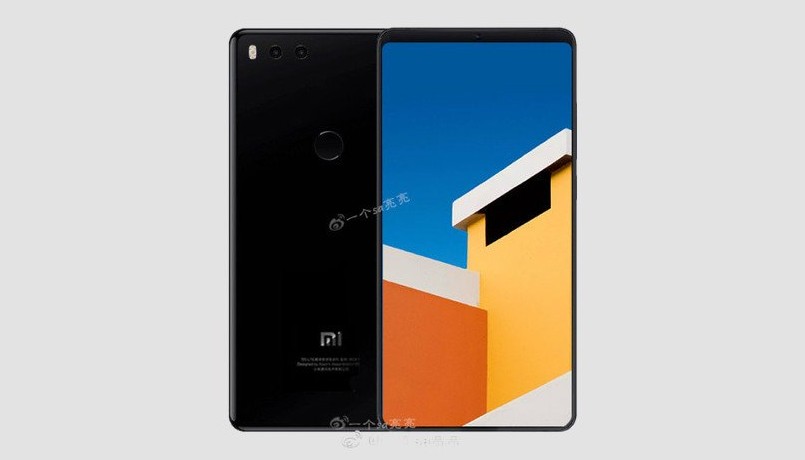
The Xiaomi Mi MIX 2’s full screen design was advertised by the company as Full Screen 2.0. The leaked specs sheet indicates that the Mi MIX 2S would be coming with Full Screen 3.0 design. It could mean that it will offer a higher screen-to-body ratio than the Mi MIX 2. The outline image of Mi MIX 2S suggests that it will be sporting slimmer bezels than the predecessor phone.
The Xiaomi Mi MIX 2 has the front camera located at the bottom-right corner. The Full Screen 3.0 design of the Mi MIX 2S repositions its selfie camera to the top-right corner. The upper bezel houses a thin-shaped earpiece. The exact size of the screen is not mentioned, but the specs sheet reveals that it will be featuring an under-display fingerprint scanner.
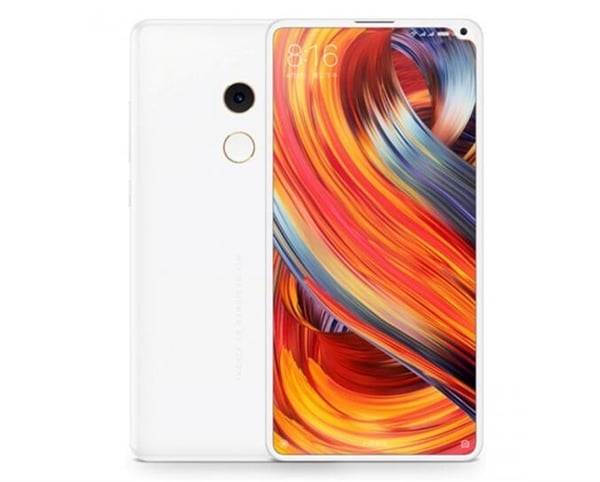
As far as the rear design of the phone is concerned, it will be coming with a four-sided curved ceramic unibody. The front design of the phone appears similar to one of the renders of Mi MIX 2S (show below) that have surfaced recently.
The specs sheet claims that Mi MIX 2S will be the world’s first Snapdragon 845 mobile platform driven smartphone. The SoC is expected to be coupled with 8 GB of LPDDR4X RAM. It may arrive with 25GB GB high-speed UFS internal storage. Like the Mi MIX 2, the Mi MIX 2s is pegged to carry support for global 4G LTE bands. The specs sheet also mentions that it features 12-megapixel dual cameras with optical zoom.
The authenticity of the specs sheet is debatable since some of the information does not match with the leaked specs of the Mi MIX 2S that have been spotted in the past few weeks. None of the Mi MIX 2S rumors that have surfaced so far have claimed that it will be coming with dual rear cameras and in-screen fingerprint sensor. Some of the leaked photos of the Mi MIX 2S that had appeared few months ago have revealed that it would be arriving with an iPhone X like notch. As it can be seen in the image that accompanies the specs sheet, the Mi MIX 2S does not feature a notch.
We recommend our readers to take this report with a pinch of salt because of the contradictory information present in it. What do you think about the leaked specs and design? Share us your thoughts by commenting below.
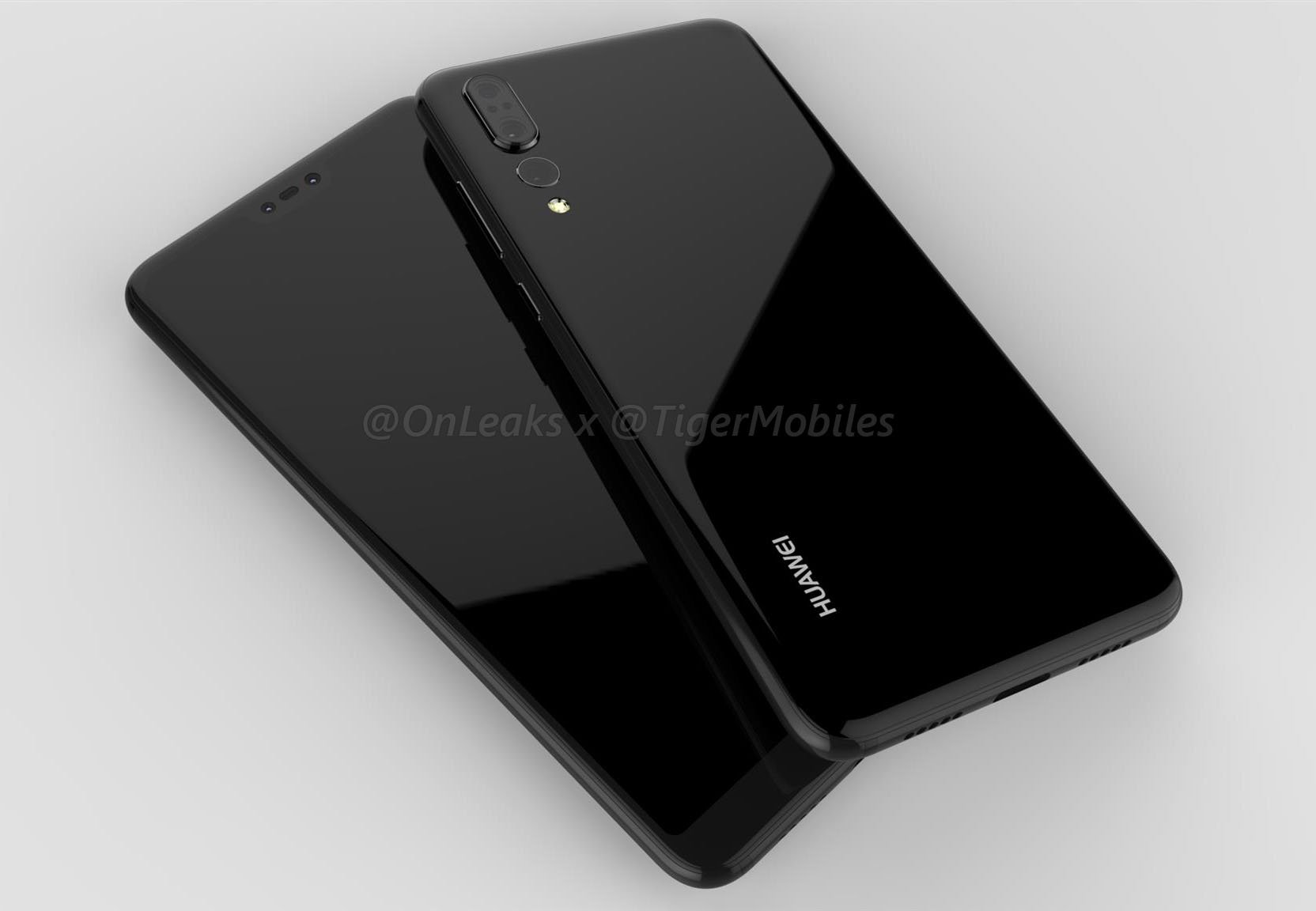
Yesterday, we got a look at 3D renders of the Huawei P20 Lite which gave us an idea of what to expect. Today, it has been followed by 3D renders of the high-end P20 Plus.
According to @OnLeaks, Huawei has two prototypes of the Huawei P20 and Huawei P20 Plus. One prototype of each phone has a home button/fingerprint scanner while the other doesn’t have a fingerprint scanner in front or on the rear. This 3D render of the Huawei P20 Plus belongs to the latter category.
The Huawei P20 Plus is said to have a 6.0-inch screen (approx.) and measures 155.3 x 74.2 x 7.7mm (9.8mm including camera bump).
Just like the P20 Lite from yesterday, the P20 Plus has a notch in the display too and houses the same front camera, earpiece, and sensor trio. It also has a thicker lower bezel.
The rear is where things get more exciting. Huawei is using the same iPhone-X style camera for the P20 Plus but unlike the iPhone which has its LED flash between the two sensors, Huawei has put what appears to be a laser focus module between the two sensors.
Outside the dual camera setup is a third camera lens which is quite bigger than the other two. This is the rumored third sensor Huawei’s next flagship will come with. There is also a LED flash below the third sensor.
The back of the phone is made of glass and at the bottom left corner is Huawei’s branding. The right side of the phone is home to the buttons. The top is home to a secondary microphone and a second hole that OnLeaks says is too small to be an audio jack. At the bottom is a USB-C port flanked on both sides by speaker grilles.
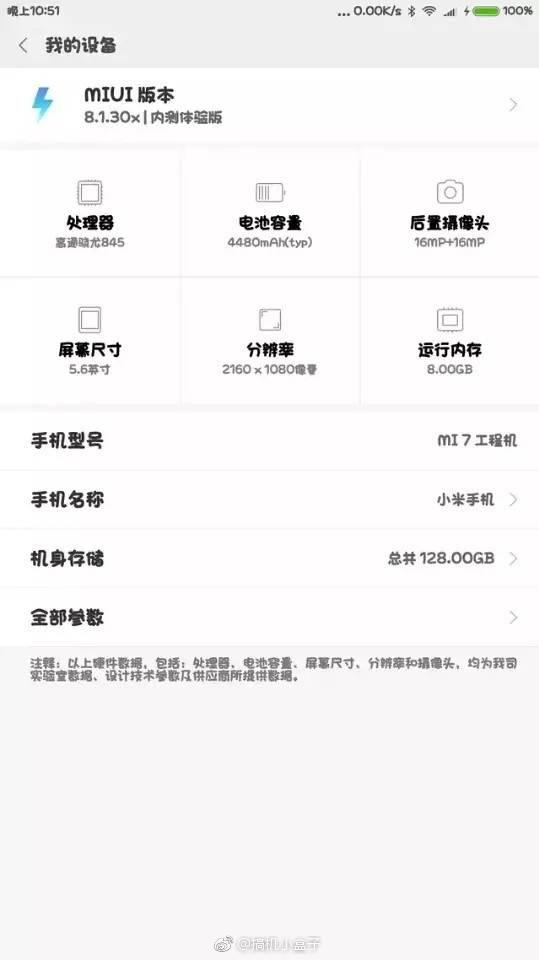
Recent leaks have claimed that Mi MIX 2S powered by Snapdragon 845 will be unveiled by Xiaomi at Mobile World Congress (MWC) 2018. On the other side, the Xiaomi Mi 7 is speculated to debut in early second quarter this year. Today, a screenshot showing the key specs of the Mi 7 smartphone has appeared.
As it can be seen in the above screenshot, the Mi 7 features a 5.6-inch display that supports FHD+ resolution of 2160 x 1080 pixels. Hence, the display will be supporting an aspect ratio of 18:9.
The Snapdragon 845 is present under the hood of the Mi 7. It is accompanied by 8 GB of RAM. By this it could become the first Mi series phone to arrive with 8 GB of RAM. The screenshot also reveals that it has an inbuilt storage of 128 GB.
This suggests that it could be higher configuration model and there could be a lower configuration variant featuring 6 GB of RAM and 64 GB of storage. It includes a huge battery of 4,480mAh battery and it is loaded with MIUI 9 Developer ROM version 8.1.30x. At launch, it is expected to arrive with the stable edition of MIUI 9 flavored Android Nougat.
The Mi 6 came with a 3,350 battery. The inclusion of a 4,480mAh battery on its successor model sounds too good to be true. Hence, the information revealed by the above screenshot cannot be blindly trusted.
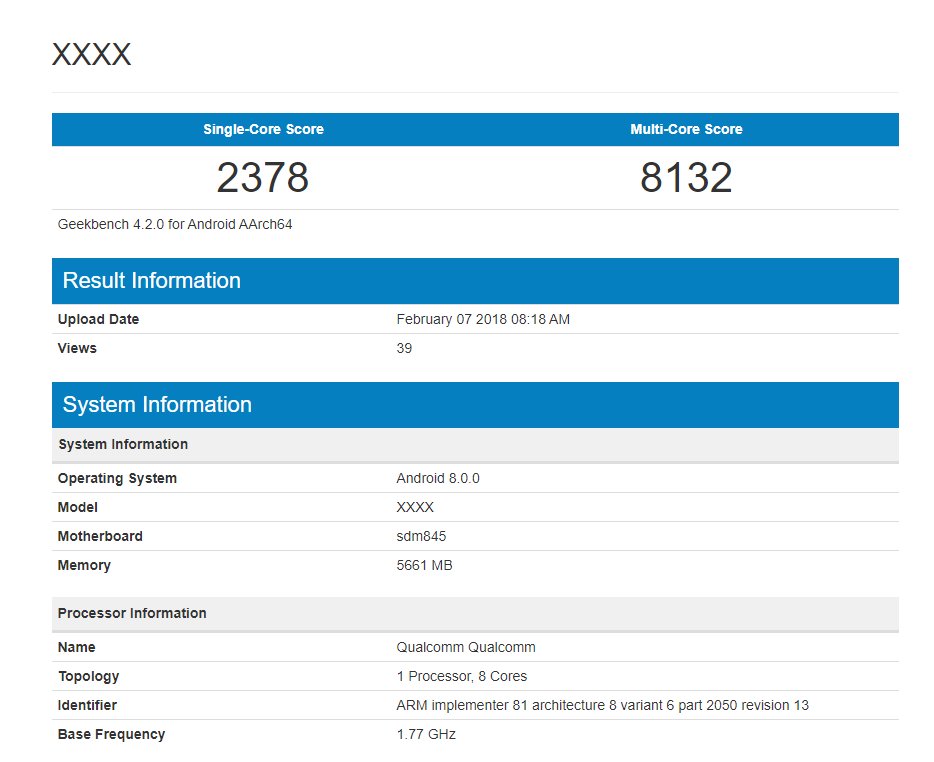
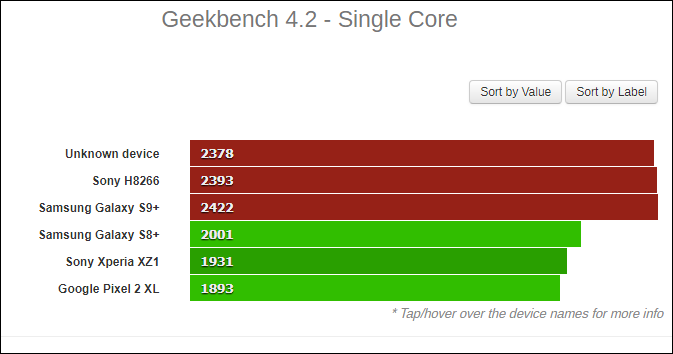
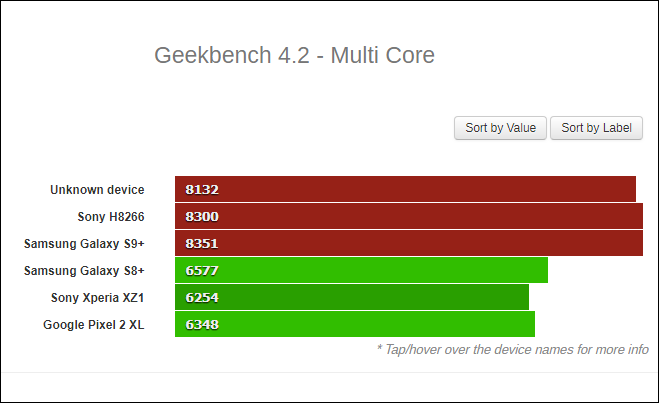
Qualcomm‘s next-gen chipset- Snapdragon 845 is expected to be super powerful and we are just about finding out how powerful that chipset is. A recently leaked AnTuTu benchmark for the Xiaomi Mi Mix 2 showed that the device would pack a Snapdragon 845 chipset and the benchmark score shows it would be powerful. A new Geekbench listing for an unknown Snapdragon 845 running device has again appeared, pointing at a super powerful chip.
The listing was spotted on Geekbench 4 and this benchmark makes it easier to directly compare with other flagship models running SD 835 and downwards. Due to a major upgrade of the grading system on AnTuTu, such comparison wasn’t easy to accomplish.
The unknown Snapdragon 845 device in question had onboard the Android 8.0 Oreo operating system paired with 6GB of RAM. The device also scored slightly lower on the single core and multi-core tests compared to the Galaxy S9+ and Sony Xperia XZ2 but they all fall in this same range. Unfortunately, there is no way to tell if this is the Mi Mix 2s or Galaxy S9 but the unknown device is tipped to be the Samsung Galaxy S9. This sounds logical considering that the Galaxy S9 is usually clocked a little lower than the Galaxy S9+. However, it fared way better than the Galaxy S8+, Xperia XZ1 and Google Pixel 2 XL which all run on Snapdragon 835 chipsets, both in the single core and multi-core tests.
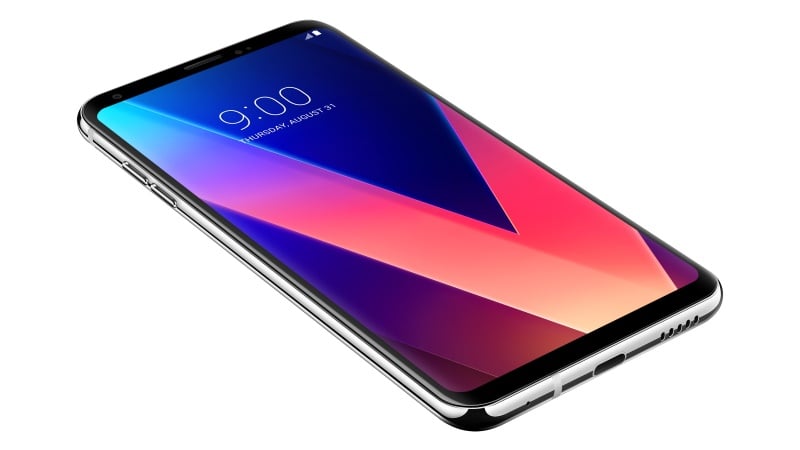
Previous reports have claimed that LG would be launching an advanced version of the LG V30 at the Mobile World Congress (MWC) 2018. Fresh information reveals that the rumored smartphone would be launching with LG V30s moniker and it will be available for buying from early next month in South Korea.
LG is expected to announce the LG V30s smartphone at MWC 2018 on Feb. 26 at 11:30 AM. In South Korea, it is expected to be available through all the three major mobile operators such as SK Telecom, LG Uplus and KT Corporation. It is likely to carry a price tag of 1 million won (~$920). It is speculated that the LG V30s and Samsung Galaxy S9 will be hitting the South Korean market on the same date of March 9.
The LG V30 and V30+ models that were released last year respectively feature 64 GB and 128 GB internal storage. However, the upcoming LG V30s will be coming with 256 GB native storage. As far as the appearance of the smartphone is concerned, it will be identical to the LG V30. The rest of the specs of the LG V30s will be same as that of the V30. Hence, it will be coming with 6-inch FullVision OLED display with QHD+ resolution, Snapdragon 835 chipset, 16-megapixel dual rear cameras, 5-megapixel selfie camera, 3,300mAh battery.
What sets the LG V30s from V30 and V30+ is the inclusion of LG Lens function. In fact, the LG V30s will be the first smartphone from the company to feature it. It brings AI capabilities to the camera of the phone. It will function like the Bixby Vision on Samsung Galaxy S8 and Galaxy Note 8 phones and Google Lens on Google Pixel 2 and Pixel 2 XL phones.
If a user takes a photo of a product through the LG V30s with LG Lens enabled, it will be able to reveal details of that item available online. Once the image is recognized, it will be able to find similar products and other items with similar pricing. LG Lens will support bar-code recognition and QR code identification. It also includes support for foreign language translation. When a user takes a photo of English text using V30s LG Lens enabled camera, the text will be automatically translated in preferred language.
Through GPS, it will be able to calculate real-time location of the user and provide information on the surrounding places depending on the direction and angle of the camera. Augmented Reality will recommend users with fastest route for destination and it will also display information on popular restaurants.
Apple is known for adding “s” to the name of an iPhone when it is launched as an upgraded version of a flagship iPhone from the previous year. LG will be also using the same strategy to launch the upgraded version of the V30 as V30s. There is a possibility that it will also launch LG G7s as an upgraded version for the upcoming LG G7 and LG V40s as an enhanced version of LG V40 that will be launching in the second half of this year.
The Snapdragon X50 5G NR modem has been designed by Qualcomm to support 5G networks. Today, Qualcomm has confirmed that at least 18 different smartphone manufacturing companies will be launching Snapdragon X50 5G modem enabled smartphones. Moreover, the U.S.-based chip maker has confirmed that various telecom service providers from across the world will be starting the trail run of 5G networks soon.
The Snapdragon X50 5G NR (New Radio) mobile modem chipset can attain download speeds of several gigabits. In October 2017, Qualcomm had unveiled the new 5G modem and confirmed that it would be commercially available during the first half of 2019. Now that Qualcomm has released press releases for the carriers and smartphone manufacturers that will be supporting and releasing 5G smartphones featuring Snapdragon X50 modem, it seems that the company is well on track of fulfilling the promise of making 5G phones available in 2019.
The smartphone OEMs that are working with Qualcomm to launch phones with Snapdragon X50 5G modem next year are Asus, Fujitsu Limited, Fujitsu Connected Technologies Limited, HMD Global (Nokia), HTC, Inseego/Novatel Wireless, LG, NetComm Wireless, NETGEAR, OPPO, Sharp Corporation, Sierra Wireless, Sony Mobile, Telit, vivo, Wingtech, WNC, Xiaomi and ZTE.
Two of the major smartphone manufacturing companies namely, Apple and Huawei are missing from the list. Samsung has signed a separate cross-license partnership with Qualcomm recently which may also include plans to launch 5G enabled Samsung phones soon. Lenovo too is absent from the list.
The list of select global mobile operators that will conducing live and OTA mobile 5G NR trials include AT&T, British Telecom, China Telecom, China Mobile, China Unicom, Deutsche Telekom, KDDI, KT Corporation, LG Uplus, NTT DOCOMO, Orange, Singtel, SK Telecom, Sprint, Telstra, TIM, Verizon and Vodafone Group.
Which smartphone company will be releasing the first 5G smartphone next year? OPPO CEO Tony Chen had confirmed in the previous month that it will be among the first manufacturers to release a 5G smartphone. ZTE CEO Lixin Cheng has recently claimed that a 5G ZTE phone would be launching at the end of 2018 or early 2019. Two months ago, Huawei CEO Yu Richard said that a 5G Huawei smartphone would be releasing in the second half of 2019.
5G smartphones featuring Snapdragon X50 will allow users to connect to public Wi-Fi without login. Such phones will offer ultrafast downloads, high-speed internet browsing, topnotch quality video and voice calls, lag free streaming of 360-degreee video and instant cloud access. Qualcomm will be also bringing 5G connectivity on other devices like Always Connected PCs, VR and AR.
Qualcomm has already launched the Snapdragon 845 flagship chipset in December last year. It is expected to power smartphones like Samsung Galaxy S9, Galaxy S9+, Xiaomi Mi MIX 2S, Sony Xperia XZ Pro, Xperia XZ2 and Nokia 8 Sirocco. Previous reports have revealed that the upper mid-range Snapdragon 670 SoC will be launched soon as a successor for Snapdragon 660 from last year. Well-known tipster Roland Quandt has revealed key details of the Snapdragon 670.
According to Quandt, the Snapdragon 670 will be a 10nm chipset that will not be based on the classic big.LITTLE architecture. Instead of four low-end and four high-end CPU cores, the Snapdragon 670 will be featuring a combination of low-end hexa-core processor and dual-core high-end processor.
The low-end cores called Kryo 300 Silver will deliver a maximum clocking speed of 2.6 GHz. The Kryo 300 Silver is nothing but an adapted edition of ARM Cortex A55. The high-performance cores are dubbed as Kryo 300 Gold, a custom version of ARM Cortex A75. The Kryo Gold will be able to churn out a max processing of 1.7 GHz. This shows that the smartphones driven by this new chipset will be able to deliver stellar performance.
Each of the cores has 32KB L1 cache and each cluster gets 128KB L2 cache. For the entire chipset, there is 1MB of L3 cache. The SoC also includes Adreno 615 that works at 430 MHz or 650 MHz and it can even reach 700 MHz dynamically.
The Snapdragon 670 will support up to WQHD display resolution, but the exact information on it is yet to surface. The Snapdragon X2X modem will be able to produce maximum download speeds of 1 Gbps. When it comes to memory, the SD670 offers support UFS 2.1 and eMMC 5.1.
The specialized image processor packed inside the Snapdragon 670 allows its Adreno 615 graphics to support dual camera configuration. As of this writing, there is no information available on the maximum camera resolution supported by this chipset. However, it has been found that the reference design hardware includes 13-megapixel + 23-megapixel dual camera setup.
As of this writing, there is no information available on the launch date of the new chipset. However, it is likely that the company may unveil it at the Mobile World Congress (MWC) 2018 event later this month in Barcelona, Spain. It is also speculated that the Snapdragon 670 powered smartphones would be arriving in the market soon.
Even though most of the most important smartphone manufacturers have already updated their main devices to Android Oreo or released at least one smartphone with the latest version of the operating system, we still haven’t seen any Samsung device running Android Oreo. But we are almost in the time frame in which Samsung usually updates its main flagships, so no more waiting to see Android Oreo on Samsung Galaxy S8 and S8 Plus. According to a new certification, the Active variant of these devices will be updated as well, and it might happen very soon.
Samsung Galaxy S8 Active is the rugged version of the S8 series, which is actually the best flagship phone to sport a rugged design. The device, running Android Oreo, has been certified by the Wi-Fi Alliance in two versions: one identified by the code SM-G892U and another with the code SM-G892A. The first is the version launched by the U.S. carrier T-Mobile, while the second one is the Sprint version. This certification makes us think that Samsung Galaxy S8 Active may be updated to Android Oreo even before the Galaxy S8 and S8 Plus. Soon, Samsung Galaxy S9 and S9+ will be released as well: they will be showcased at MWC 2018 in an event that will be held on February 25 in Barcelona.
After these devices, the Galaxy S9 Active should be released as well. Some XML files found in a beta firmware of Android Oreo for the Galaxy Note 8 have confirmed the existence of the new rugged device, which is identified by the code name astarqlte. While the letter “A” may stand for active, the letter “Q” hints at the presence of a Qualcomm SoC. This means that it is the U.S. version as it is expected to have the Snapdragon 845, while the EU version of the S9 has a Samsung Exynos 9810.
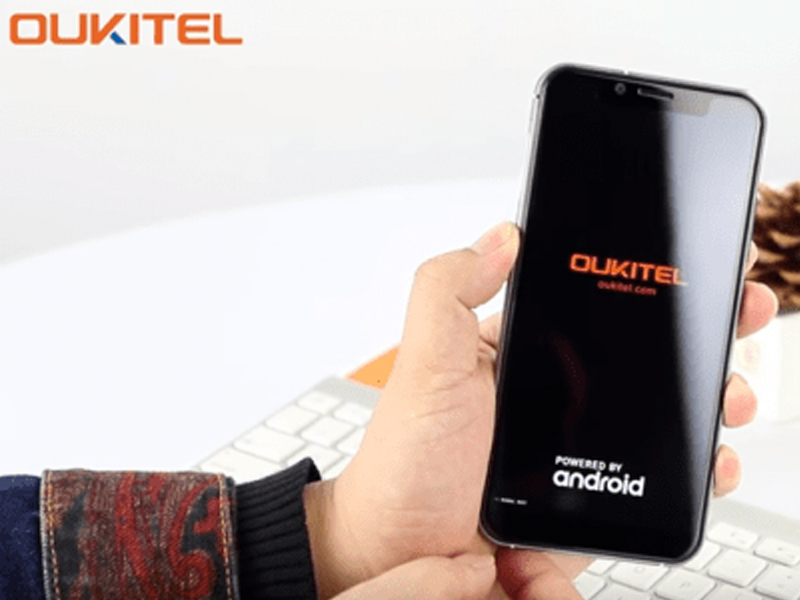
The Oukitel U18 4G smartphone garnered considerable popularity among smartphone enthusiasts after hitting the store shelves in January 2018. You now have an opportunity to get your hands on the mid-budget smartphone at a discounted price. Let’s delve straight into the details.
Banggood is currently offering 11% off on the original $179.99 asking price of the U18, bringing it down to only $159.99. This is a big reduction in the already reasonable selling price of the phone.
Despite bearing a low price, the Oukitel U18 smartphone is brimming with awe-inspiring specs and features. Here’s a brief glimpse of what the 4G smartphone has to offer in terms of specifications.
The U18 sports a massive 5.85 inches IPS, LCD capacitive touchscreen display with a screen resolution of 1440 x 720 pixels at a pixel density of 275 PPI (pixels per inch). Under the hood, it packs a powerful MediaTek MT6750T processor, coupled with 4GB of RAM and 64GB ROM.
On the photography front, the dual-SIM handset sports a 13.0MP+2MP twofold camera setup at the back and a 13.0MP front shooter for selfie addicts. Moreover, the Oukitel U18 is backed by a massive 4000mAh (built-in) battery.
You can take advantage of the discount by heading straight to this link before it comes to an end. It’s also worth noting that there were only 85 pieces left at the time of writing.
The VKworld S8 4G phablet was launched in October 2017 and as expected, it propelled straight to popularity among smartphone lovers. If you have been waiting to get your hands on the well-received device without burning a hole in your pocket, we have good news for you.
The black and blue versions of the S8 4G phablet are currently up for grabs on GearBest at a discounted price of $179.99 and $175.99, respectively. Let’s check out the details.
As part of its Flash Sale, GearBest is currently offering a considerable 11% discount on the original selling price of the blue version of VKworld S8 phablet. Likewise, the site is giving 9% off on the phone’s black version for a limited period of time.
You can get an additional discount on the blue version of the S8 4G phablet by using coupon code ‘GBFEB149’ at the time of checking out. After applying the aforesaid coupon code, your subtotal drops down to only $171.99. Here’s what you can expect to get by shelling out that much money.
As a phablet, the S8 offers 4GB of RAM and 64GB of onboard storage. It sports a massive 5.99 inches IPS, FHD+ display with a screen resolution of 2160 x 1080 pixels.
Under the hood, the S8 packs a powerful MediaTek MT6750T, 64-bit processor, paired with ARM Mali-T860 MP2, 650MHz, 2-Cores GPU (graphics processing unit). The dual-SIM phablet is backed by a robust 5,500 mAh Lithium-ion Polymer battery.
On the photography front, the S8 sports a 16 Megapixels + 5 Megapixels dual camera setup at the back and a 13 Megapixel front shooter for selfies. It runs on Android 7.0 Nougat operating system.
The Flash Sale is slated to end in 3 days. On top of that, there were only 111 pieces of the blue version left at the time of writing. You can head straight to this link to take advantage of the discount and use the coupon code before it expires.
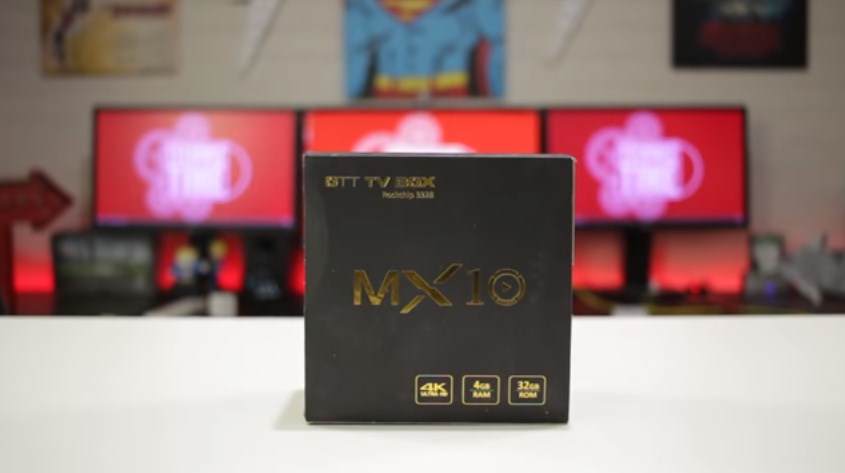
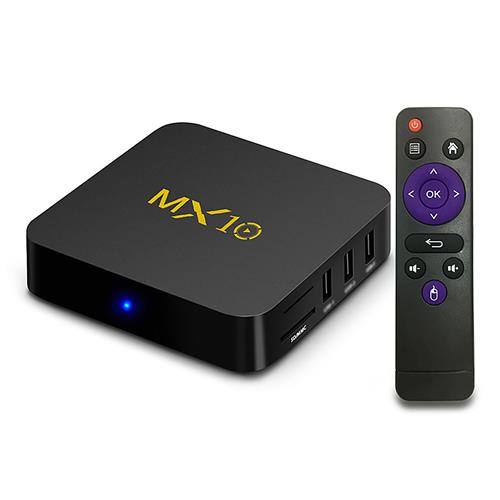
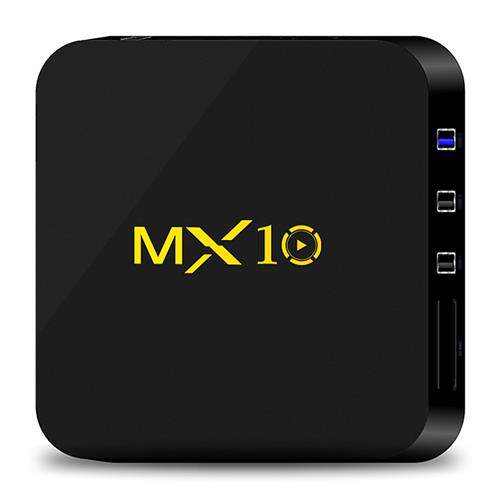
Touted as one of the first TV Boxes that runs on Android 7.1.2 operating system, the MX10 boasts an array of jaw-dropping features, enhanced stability, and delivers outstanding performance. On top of that, you can now get your hands on the coveted device without shelling out a fortune.
LightInTheBox is currently offering a massive 53% discount on the original $119.99 asking price of the MX10 TV Box as part of its Lightning Sale. As a result, you can buy the well-received TV Box for only $56.99. But if that doesn’t impress you much, you can use coupon code ‘MX10LITB3’ at the time of checking out and get an additional $8.70 discount. This brings your grand total down to just $48.29. It’s also worth noting that the aforesaid coupon code is slated to expire on February 25.Similarly, it is imperative for you to bear in mind that the Lightning Sale will end soon. There were only 42 pieces remaining for Lightning Sale at the time of writing. You can click here to take advantage of the discount before the promo comes to an end.
Huami has officially been listed on the New York Stock Exchange on Thursday and would trade under the ticker symbol “HMI”. The smart wearable manufacturer reputed to be the world’s largest wearable company also announced the price details of its IPO. Huami plans to raise $110 million by offering 10 million ADSs at a price range of $10 to $12. In this context, ADSs stand for American depositary shares and they are U.S. dollar-denominated equity shares of a foreign-based company available for purchase on an American stock exchange.
Huami’s initial public offering consists of 10,000,000 American depositary shares (“ADSs”) at US$11.00 per ADS for a total offering size of approximately US$110.0 million, assuming the underwriters do not exercise their over-allotment option to purchase additional ADSs. Each ADS represents four Class A ordinary shares of the Company. The ADSs are already being traded on the New York Stock Exchange.
In a situation where there are over-allotments, Huami and the selling shareholders have granted the underwriters an option to purchase up to an aggregate of 1,500,000 additional ADSs to cover over-allotments and this is exercisable within 30 days from the date of the final prospectus. Credit Suisse Securities (USA) LLC, Citigroup Global Markets Inc. and China Renaissance Securities (Hong Kong) Limited are acting as joint bookrunners for the offering. A registration statement related to these securities has been filed with and declared effective by, the United States Securities and Exchange Commission.
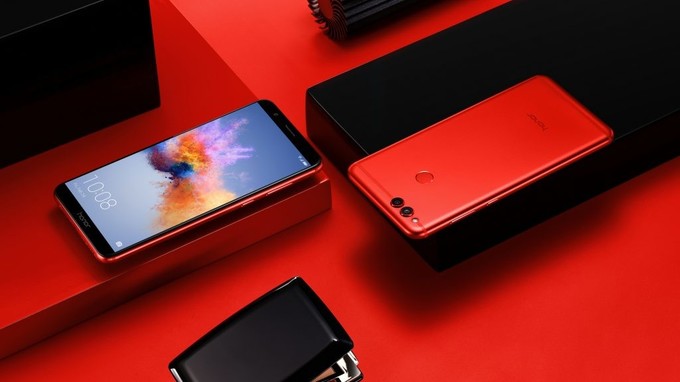
Honor 7X was launched in India a couple of months ago as an online-exclusive devive. Now, the China-based company has announced that the phone will be available through online retail stores as well. The Honor 7X will now be available from the company’s authorized stores and resellers starting February 9 and will be priced at Rs 15,999.
The 64GB storage variant will be available through offline stores and not the 32GB internal storage model. Also, the limited edition — Honor 7X Red Edition, which was listed on Amazon India for Rs. 12,999, will go on sale in the country from 9th February at 1:00 PM.
The phone features a 5.93-inch Full HD+ full-screen display with narrow bezels and 18:9 aspect ratio with 1080 x 2160 pixels screen resolution and 2.5D curved screen on top. Under the hood, this device is powered by the company’s own octa-core Hisilicon Kirin 659 chipset — the same processor that powers Honor 9i.
The device packs Mali T830-MP2 GPU and 4GB RAM. The phone was launched in three variants based on internal storage — 32GB, 64GB, and 128GB. However, in India, the device is available in only two storage models — 32GB and 64GB. The smartphone also supports storage expansion through microSD card up to 256GB.
It comes with dual-camera setup, featuring a 16-megapixel and 2-megapixel sensors on the rear and an 8-megapixel camera sensor on the front. The smartphone packs a 3,340mAh battery and runs on Android 7.0 Nougat operating system based company’s own EMUI 5.1 custom skin.
However, the company has confirmed that the phone will soon receive Android 8.0 Oreo update. Connectivity options on the device include 4G VoLTE, Wi-Fi 802.11 b/g/n, Bluetooth 4.1, and GPS/GLONASS. There is also a fingerprint sensor on the back panel.
The Honor 7X Red Edition comes, which packs 4GB RAM and 32GB onboard storage, is priced at Rs. 12,999 in India. On the other hand, the standard edition with 4GB RAM and 64GB storage will be available through offline stores for Rs. 15,999 — same as the online pricing.
We use cookies on our website to give you the most relevant experience by remembering your preferences and repeat visits. By clicking “Accept”, you consent to the use of ALL the cookies.
This website uses cookies to improve your experience while you navigate through the website. Out of these, the cookies that are categorized as necessary are stored on your browser as they are essential for the working of basic functionalities of the website. We also use third-party cookies that help us analyze and understand how you use this website. These cookies will be stored in your browser only with your consent. You also have the option to opt-out of these cookies. But opting out of some of these cookies may affect your browsing experience.
Necessary cookies are absolutely essential for the website to function properly. This category only includes cookies that ensures basic functionalities and security features of the website. These cookies do not store any personal information.
Any cookies that may not be particularly necessary for the website to function and is used specifically to collect user personal data via analytics, ads, other embedded contents are termed as non-necessary cookies. It is mandatory to procure user consent prior to running these cookies on your website.








 But if that doesn’t impress you much, you can use coupon code ‘MX10LITB3’ at the time of checking out and get an additional $8.70 discount. This brings your grand total down to just $48.29. It’s also worth noting that the aforesaid coupon code is slated to expire on February 25.
 Similarly, it is imperative for you to bear in mind that the Lightning Sale will end soon. There were only 42 pieces remaining for Lightning Sale at the time of writing. You can