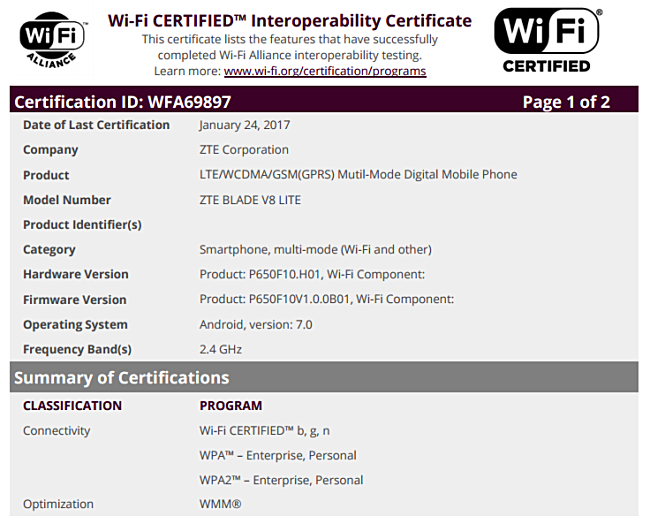
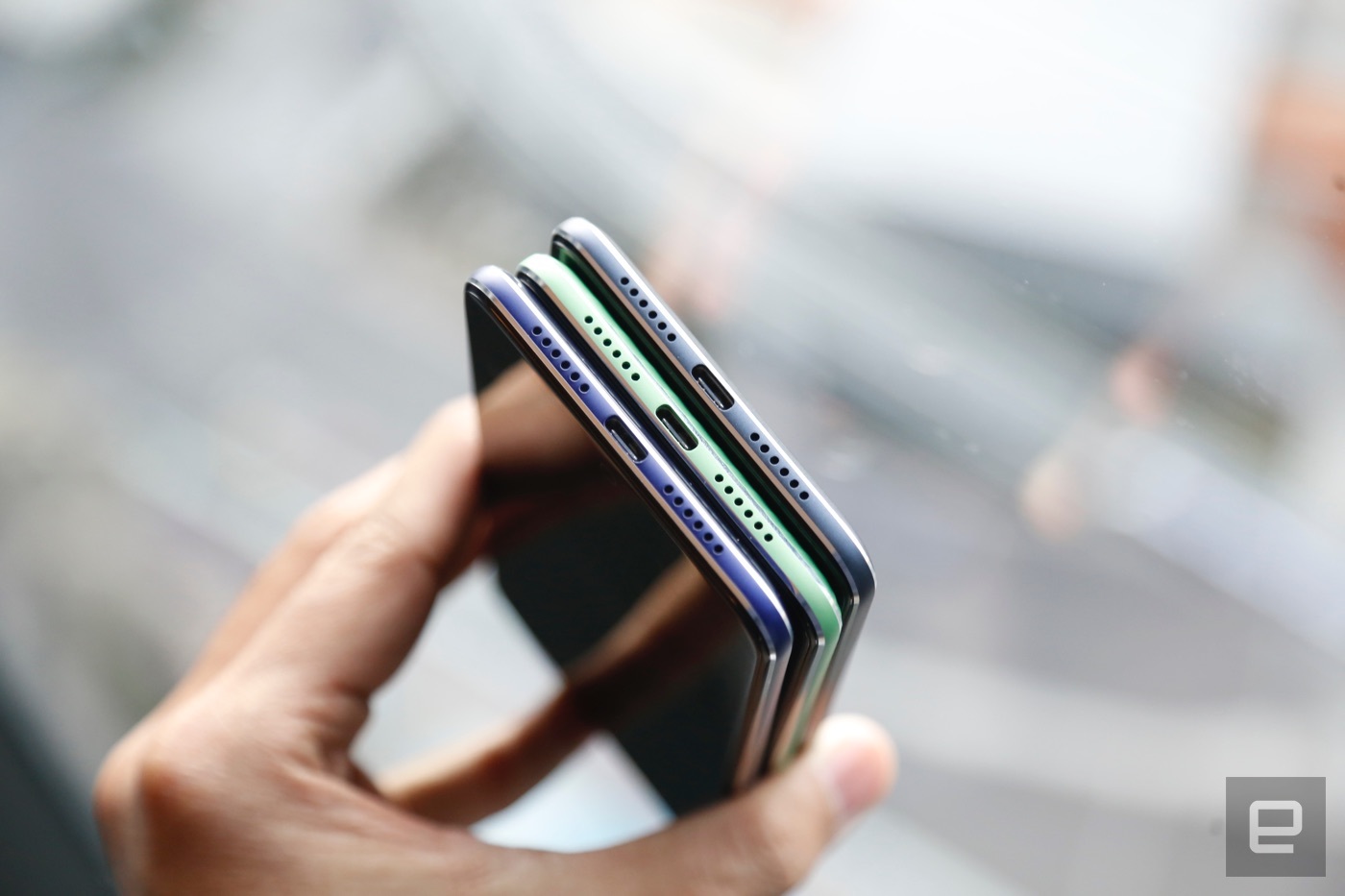
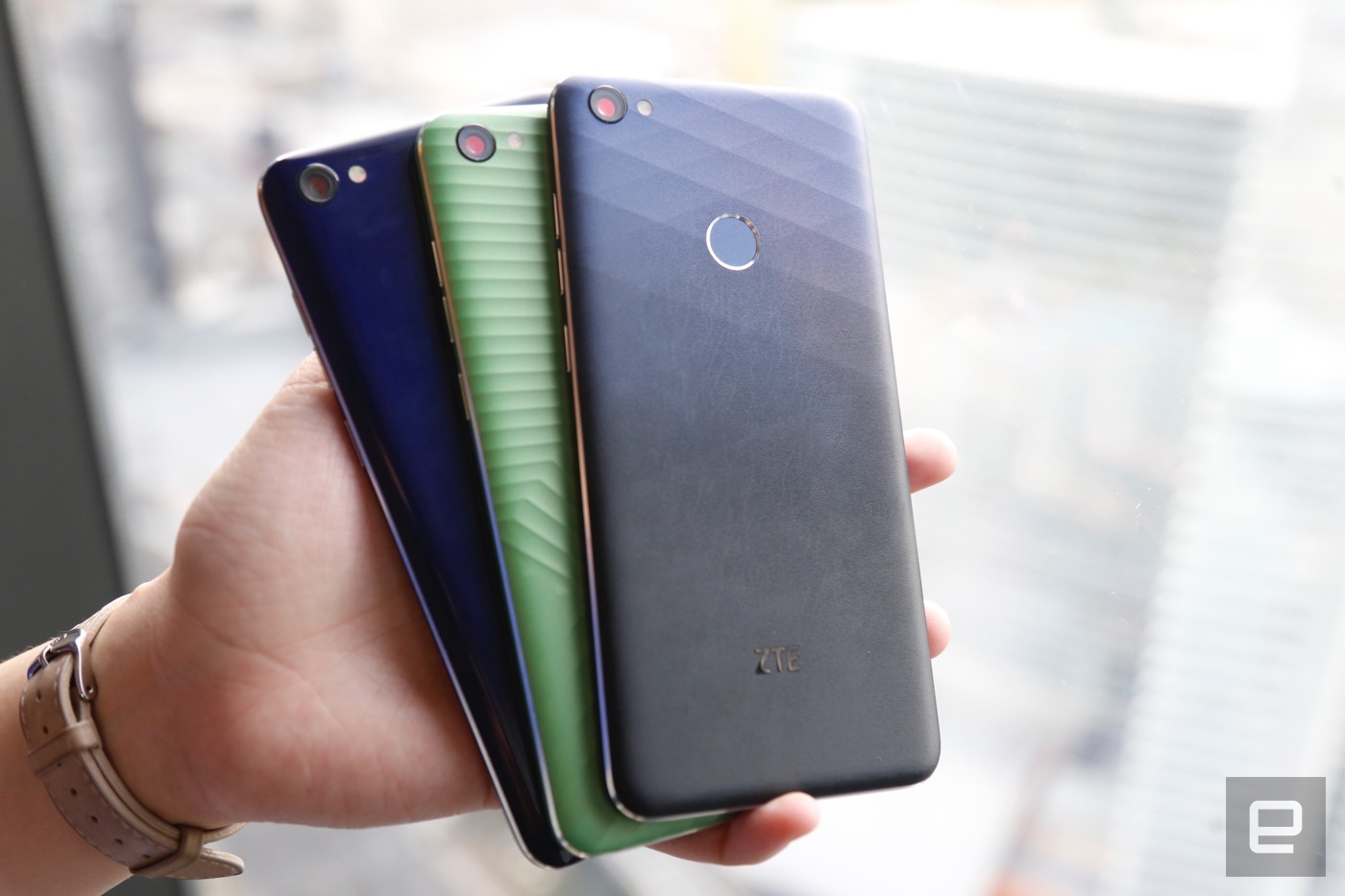
It appears the ZTE Blade V8 family is bigger than we expected. We already know the Blade V8 Pro and the Blade V8 but it appears there is a new member called the Blade V8 Lite.
The Blade V8 Lite was seen on the official website of the WiFi Alliance getting certified. The certification which was issued yesterday lists the device as running Android 7.0 just like the Blade V8, and having support for just the 2.4GHz WiFi band. No other details were provided.
While we all know that the “Lite” means watered-down specs, we presume it should have at least 2GB of RAM, a HD display, and probably the same 5.2-inch display or a smaller 5-inch one.
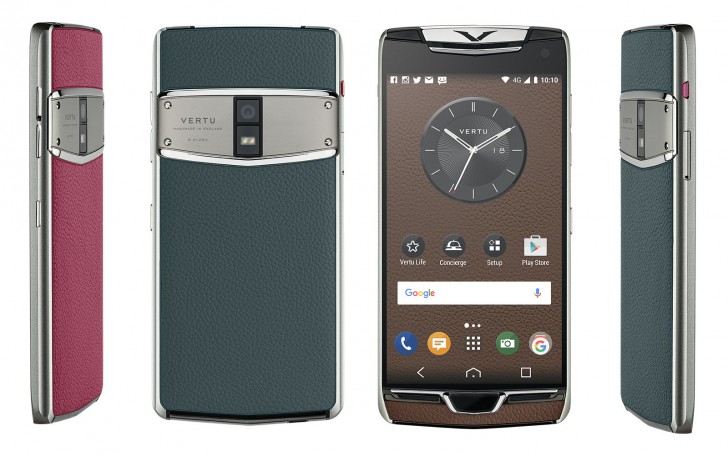
Luxury phone maker Vertu released a new phone yesterday. The new device called Constellation (not to be mistaken for the 2011 model) actually sports high-end specs which we believe might be a way to justify whatever price tag the company decides to slam on it.
The Vertu Constellation is a 5.5-inch phone with a QHD AMOLED display which Vertu says is protected by a 140 carat sixth-generation sapphire crystal. There is 4GB of RAM, 128GB of storage and the option to further expand it via SD card.
The rear camera is a 12MP sensor with 1.55um pixel size that can record in 4K. However, there is no information on the front camera. The Vertu Constellation has a front-mounted fingerprint scanner and also sports dual SIM slots which is a first for a Vertu phone
The device however disappoints in its choice of OS and processor. The Constellation ships with Android 6.0 Marshmallow and has a Snapdragon 820 processor. There is no mention of a Nougat update and we would have liked the device a bit more if it came with a Snapdragon 821 processor instead.
Vertu however makes up for the shortcomings by throwing in a NFC chip and dual-front facing speakers with “exceptional acoustic performance achieved with Dolby Digital Plus virtual surround sound processing”. You also get a 3220mAh battery with support for wireless charging.
The Vertu Constellation is hand-crafted in England. It features a combination of anodized aluminium and leather “sourced from a specialist family-run tannery in Italy”. The signature 24-hour concierge service is available on the Constellation and can be accessed via the inset ruby button positioned above the SIM tray.
Meizu is all set to continue its retinue of smartphone releases this year and to that end, a leaked poster of what is perhaps an upcoming Meizu smartphone has surfaced. The poster is for the Meizu M5S which is billed as the first Meizu device to be launched this year and once again we get to see some of its key specs.
According to the leak, the Meizu M5S will feature a 5.2-inch IPS display as well as dualSIM/ dual Standby support. Other details include 4G, Meizu mCharge fast charging technology, as well as Meizu’s mTouch fingerprint identification technology. The M5S is also teased as coming with an octa-core next generation CPU but there is no doubt that isn’t a Qualcomm chip onboard unless Meizu decides to spring us a surprise. The chip is likely a MediaTek MT6753 octa-core processor. In addition, the M5S is listed as coming with a cheap 999 yuan ($145) price tag.
The rest of the M5s’ specifications had earlier been revealed when it hit TENAA and the listings include 2GB, 3GB, and 4GB RAM options as well as storage options of 16GB, 32GB, and 64GB respectively.The device is also said to pack a 13MP rear camera, a 5MP front-facing camera, a 2,930mAh battery, and Android 6.0 Marshmallow. An earlier rumor tipped the Meizu M5S to launch on January 27, just two days away. That is unlikely anyway, but we’ll wait to see how that pans out.
Huawei P10 flagship smartphone is pegged to get unveiled at the MWC (Mobile World Congress) 2017 event in Barcelona, Spain on Feb. 26. Fresh rumors indicate the Chinese tech giant would also unleash a new smartwatch that will carry support for cellular connectivity.
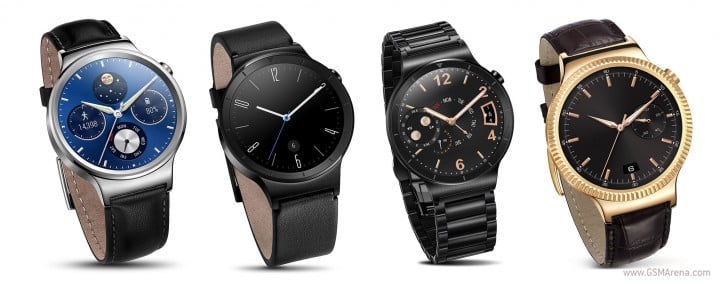
The first-generation Huawei Watch was launched on March 1, 2015. Its successor is now speculated to arrive almost exactly after two years after its release. Compared to the original model, the newer smartwatch is expected to come with a sportier design.
The Huawei Watch 2 is rumored as a 42 mm watch that will feature a 1.4-inch screen. It will be running on Android Wear 2.0. It is expected to be available in strap options like leather and stainless steel.
EROne of the versions of the Huawei Watch 2 is expected to come with eSIM support. With cellular connectivity onboard, Huawei Watch 2 owners will be able to access data even when there no Wi-Fi networks available. Also, it will allow its users to make and receive phone calls even when it is not paired to a smartphone. As of this writing, there is no confirmation whether the smartwatch will support both 4G LTE and 3G networks.
The Android Wear 2.0 is slated to get released through the launch of LG Watch Sport and LG Watch Style on Feb. 9. Both the smartwatches have been built by Google and LG. The Android Wear 2.0 will include support for Google Assistant.
Apart Huawei and LG, HTC too is expected to be working on its smartwatch that is codenamed as Halfbreak. Rumors have it that the Taiwanese company has teamed up with Under Armour to build its upcoming smartwatch.
As of this writing, there is no confirmation on its launch date. Even though it was spotted with Android Wear 1.3, it is pegged to launch with Android Wear 2.0 if it is unveiled at MWC 2017 or later.
The rumor mill has been talking about the Samsung Galaxy S8 since several months. As its release date is nearing, newer information are surfacing. The Guardian has revealed in-depth information on some of the specifications and features that will arrive on Galaxy S8. It has reported that the information on the next-generation flagship phones from Samsung have come from a reliable source.
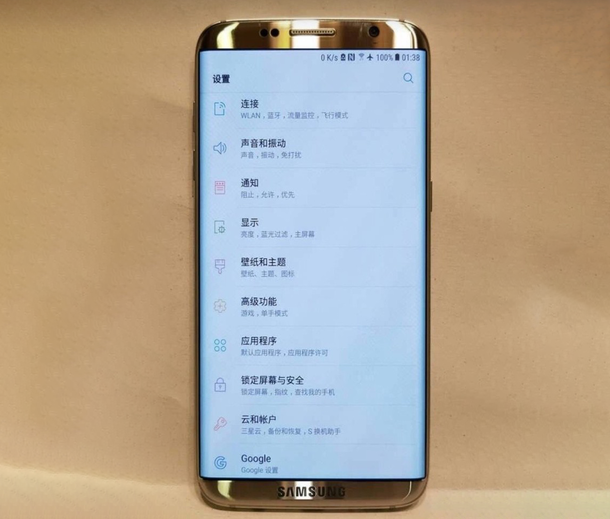
According to the publication, Samsung will be coming in two models. The Galaxy S8 is expected to feature a 5-inch display and its larger sibling is speculated to house a 6-inch screen. Both the smartphones will be featuring dual-edge curved screen like the one present on Galaxy S7 Edge. These phones are codenamed as Dream and Dream 2. Other sources have suggested that these models will launch as Galaxy S8 and Galaxy S8 Plus.
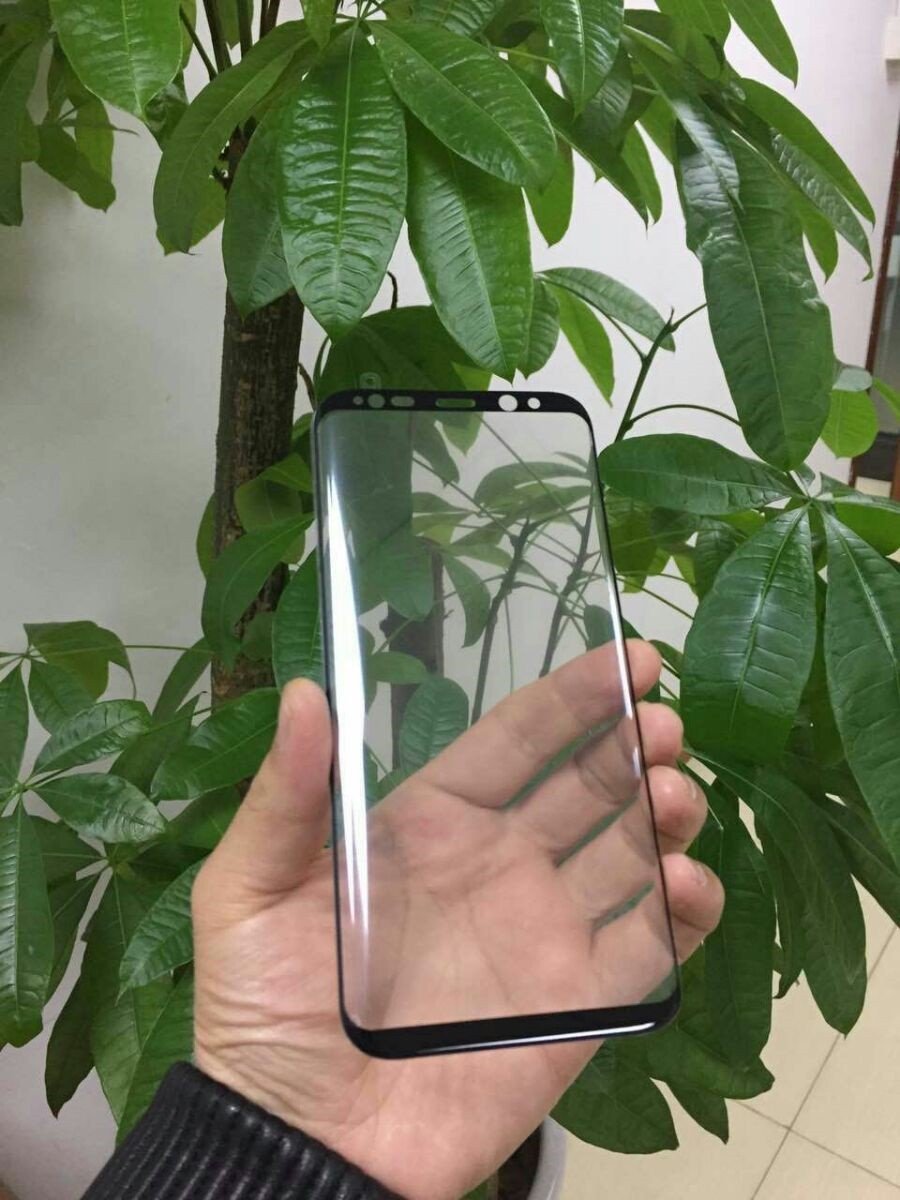
In terms of size, the Galaxy S8 will be similar to Galaxy S7, but it will include such a large screen that there will not be any space left on the front side of the screen to add company’s logo. This kind of screen is dubbed as “infinity display” by Samsung. In other words, it will be sporting slimmer on bezels on top and bottom. Moreover, it will be arriving with a bezel-less design.
Previous rumors have claimed that the fingerprint scanner will be embedded under the screen of Galaxy S8. However, fresh information suggest that it will be placed on the rear side of the phone. For robust security, the Galaxy S8 will be also featuring an iris scanner. It is the same iris reader that was included in Galaxy Note 7.
Samsung Galaxy S8 will not be coming with a dual-camera setup. It is expected to sport an improved version of the same “duo pixel” camera that is available on Galaxy S7. Hence, it would be featuring a faster camera that would be able to snap better images and take stunning shots in dim-light conditions. It is also expected to come with an object recognition feature that will function like Google Goggles.
As expected, the Snapdragon 835 SoC will be powering the Galaxy S8 models. Its native storage will be 64 GB and it would be support a microSD card of up to 256 GB. Even though some rumors have stated that the 3.5 mm audio jack will be axed on Galaxy S8, the publication has reported that the feature will remain intact. The S8 will be also equipped with a USB Type-C port. It will sport a new version of Gear VR and Gear 360 camera.
The Galaxy S8 will also feature its own digital personal assistant. The rumor mill has claimed that the AI assistant will be called Bixby, but the publication could not confirm its name. The AI assistant will be to carry different kinds of tasks such as identifying object through the camera of the phone. The South Korean company has entered contracts with several third-party companies to provide data sources for the digital personal assistant.
Samsung Galaxy S8 will also come with new accessories. One of them is a dock that will allow users to connect the Galaxy S8 to an external screen, a keyboard and other peripherals to use it as an Android desktop. This function is similar to Continuum feature of Windows 10. This feature will be called DeX.
The publication has added the exact release date of Galaxy S8 has not been confirmed yet. However, Samsung is expected to announce the Galaxy S8 in late March and begin its sales on or around April 21.
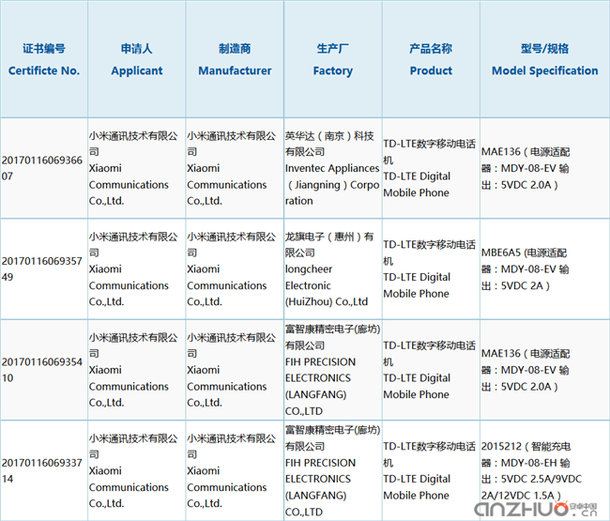
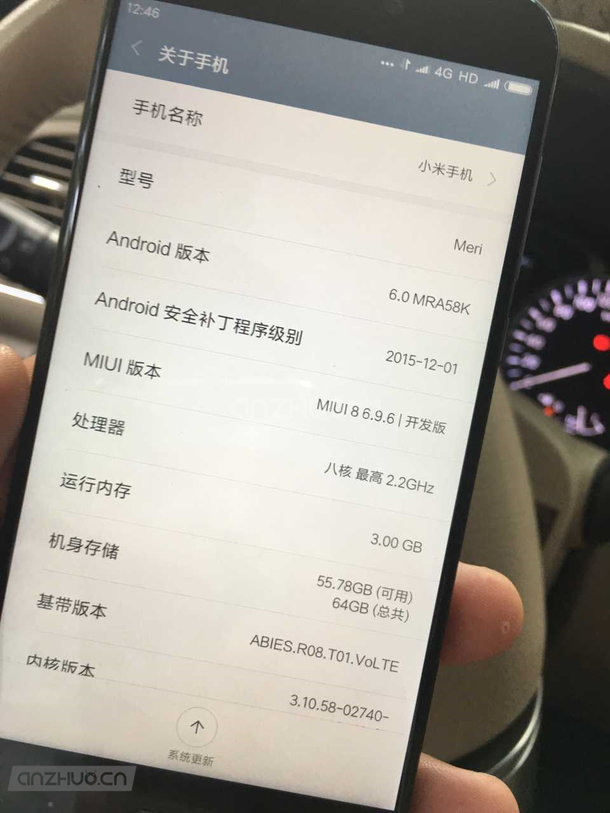
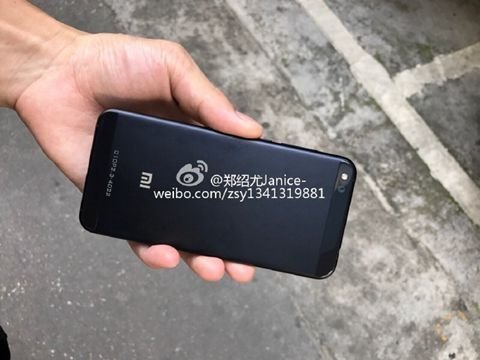
Xiaomi Mi 5C has been popping in and out of the news for quite some time now and it is still not been launched. The Mi 5C has once again appeared on another certification portal, the time on the website of China Quality Certification centre (CCC or 3C).
According to the source, five different Xiaomi new models were said to have gone through the certification. The models were listed with the following model numbers; 2105212, 2016089, 2016101, MAE136 and MBE6A5. Of the five models, the one listed as MAE136 is said to be the Mi 5C, also code-named Meri.
The listing for the Mi 5C aka Xiaomi Meri shows that the device will use a 5V/2A power adapter and thus does not support the current high voltage fast charge technology. The Mi 5C comes with ultra-narrow bezels around the display and a sleek design overall. The device is also tipped to launch with Xiaomi’s own Pinecone processor and it did post a score on AnTuTu similar to the Snapdragon 625 capabilities. Other likely specs of the Mi 5C includes a 5.5-inch display with 2.5D curved glass, 3GB of RAM, 64GB of internal storage, a 12MP rear camera and 8MP front-facing selfie shooter. The device will run on MIUI 8 based on Android Marshmallow. The Mi 5C is said to have gotten a February release date, we just hope it turns out to be true.
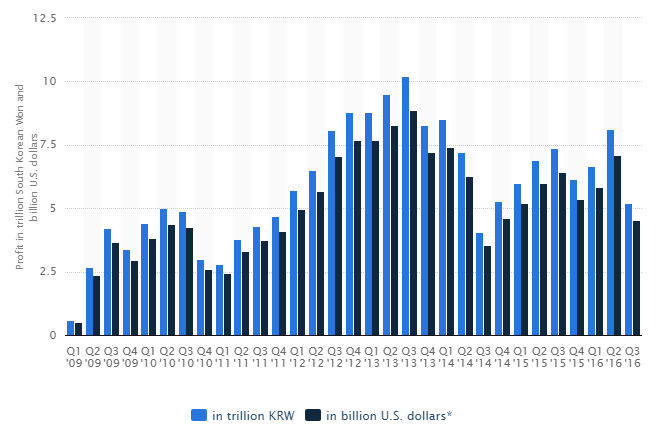
Samsung had one of its worst incidence relating to the Galaxy Note 7 battery issue during the fourth quarter of last year but that did not affect the company’s showing during the period, the company’s financial report has shown. The Korean tech giant recently published its financial report for Q4 2016 as well as its full year report revealing its earnings last year.
One spectacular showing on the report is the record figure achieved in Q4 last year, which is said to be the company’s best when compared to results of the past three years. The results were boosted by sales from its display and memory chip divisions.
A profit of $7.92 billion was made in the fourth quarter of 2016, while a total of $45.4 billion in revenue was recording in the entire year, indicating an increase of up to 50% year-on-year. The huge demands for its OLED display panels and memory chip was enough to offset the loss made from the Note 7 debacle. The company even projects an increase in demand for value-added flexible display panel this year as a result of innovations in the industry.
The mobile division wasn’t left out, as it is reported to have posted a year-on-year profit increase to $2 billion, and is expected to do even better in the next few months as sales of the new A and J series commence. The results reveal that the company no longer relies on the flagship Galaxy S-series for its profit as other arms of its business actually accounts for two thirds of its profits now.
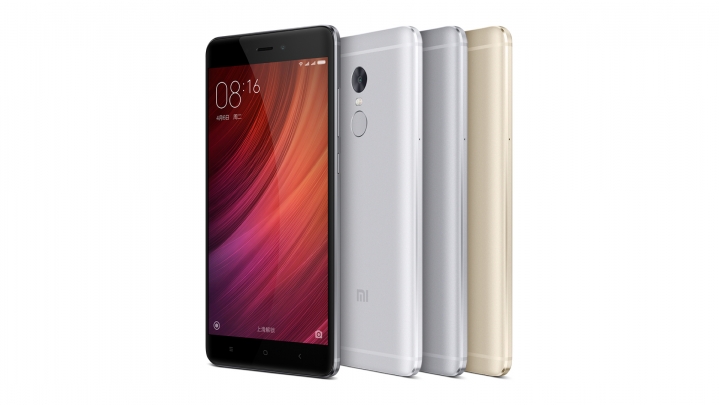
Chinese smartphone maker, Xiaomi released the Redmi Note 4 in India last week. It went on sale yesterday and in just 10 minutes it had sold 250,000 units on Flipkart and the company’s official site Mi.com.
According to Xiaomi, the flash sale of the Redmi Note 4 is said to be the biggest-ever online only smartphone launch in the country. In 2016, an IDC report said Xiaomi also set a record with the Redmi Note 3 as the most shipped smartphone sold online in a given quarter.
The Redmi Note 4 launched in India is different from the one released in China last year as this model features a Snapdragon 625 processor and not a Helio X20 chip. It also varies in the memory configuration. There is a 2GB RAM+32GB ROM variant alongside a 3GB+32GB model and a 4GB+64GB model.
The Redmi Note 4 has a 5.5-inch Full HD display, a 13MP rear camera with f/2.0 aperture, dual LED flash, and PDAF. Up front is a 5MP camera with the same aperture as the rear camera. There is a 4100mAh battery and a fingerprint scanner on the rear, and it comes bundled with MIUI 8 based on Android 6.0 Marshmallow.
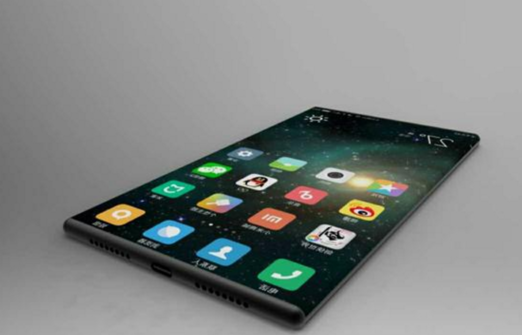
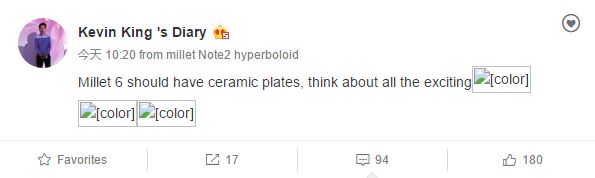
The rumors surrounding the Xiaomi Mi 6 keep pilling up and the mill will remain agog until Xiaomi finally unveils the device. The latest is from popular analyst and IHS director Kevin Wang who hinted that the Mi 6 may come with ceramic body.
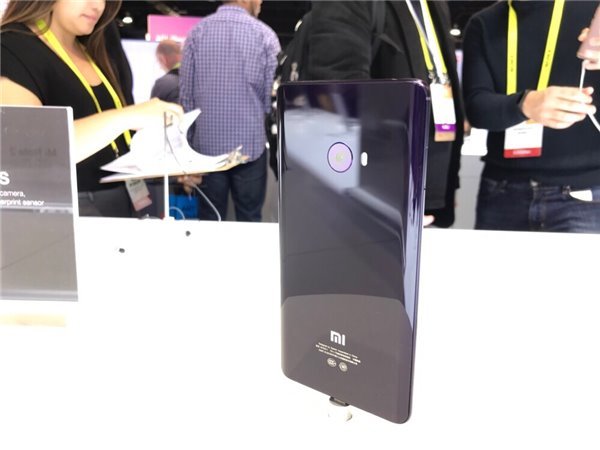
The Mi 6 had earlier been tipped to launch with Qualcomm’s latest Snapdragon 835 chipset as well as pack an OLED display. A ceramic glass body is the latest high-end feature the device is being tipped to come with. Its predecessor, the Xiaomi Mi 5 had a version with ceramic body but Xiaomi did pull the plug off the production of that version last year because of its low yield and high production cost.
This would probably be on one version, perhaps the high-end version of the flagship in order for the device not to be flagued with issues of slow production. The Mi Mix which is the latest Xiaomi flagship with ceramic body is being bedeviled by low availability due to slow production output. Peradventure the rumored ceramic version of the Mi 6 also comes with an OLED display and the SD 835 onboard, it promises to be nothing short of a sleek beast. Do recall that there is said to be a lower version with 4GB RAM and Helio X30 chip in the works as well.
In a related news, the analyst also hinted that Xiaomi may announce its 2016 sales results this week.There are suggestions that Xiaomi did record up to 50 million units in sales last year which was a decline from the previous year. Xiaomi CEO Lei Jun did acknowledge, though, that the worst time has passed and the company holds high expectations for this year 2017.
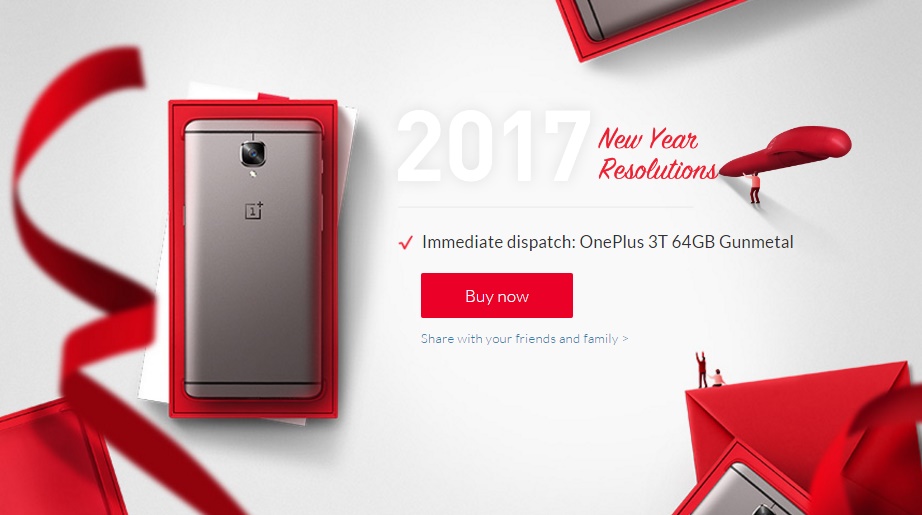
The team at OnePlus wants to make this year better as they have announced that starting today all new batches of the OnePlus 3T Gunmetal 64GB variant in Europe and North America will be shipped immediately.
The message which was posted on the official OnePlus forum goes on to state that they cannot guarantee for now if the new shipping arrangement will be permanent, though it is one of their goals.
The decision is part of an improvement plan to make up for what happened last year with shipment delays caused by insufficient stock.
OnePlus recorded massive success with it’s flagship the OnePlus 3, a couple of months later, it released a newer model with the more powerful Snapdragon 821 processor, an upgraded front camera, a bigger battery and a new color and storage variant.
Samsung just signed an agreement with Imint, an organisation that develops real-time video enhancements that is used in defense, aeronautics and industries. In 2012, the company decided to get into the mobile industry after a new CEO was appointed.
The agreement borders on a software called Vidhance which is present in the Huawei Mate 9 Porsche Design and whose codes are present in Huawei’s own EMUI 5.0 in case the company plans on enabling it in any other device.
What is surprising is that Samsung’s agreement doesn’t include its use in smartphones which begs the question “what products will have the feature?”. Possible answers include a new Samsung Gear 360 camera, or maybe a new product like an action camera or a drone. So sadly, this enhancement won’t be coming to the Galaxy S8.
Samsung Galaxy Note 8 rumors have started swirling after Koh Dong-jin, President of Mobile at Samsung Electronics confirmed that the company would be releasing a better, safer and innovative Note 8 in this year.
The Galaxy Note 7 was unveiled to the world with much hype in August 2016. However, Samsung had to discontinue the phablet in October because its faulty batteries caused it to explode.
When Samsung discontinued the Note 7, reports started swirling that the company may axe the Note lineup. However, Koh seems to have debunked these rumors as he revealed in a recent interview to CNET that, “I will bring back a better, safer and very innovative Note 8.”
He further added that, “we found through the investigative process, we knew there are lots and lots of loyal Note customers.” Moreover, Tim Baxter, President and COO of Samsung Electronics America has also stated that there are many Galaxy Note 4 and Note 5 customers that are waiting for Samsung to release an upgraded Note phablet.
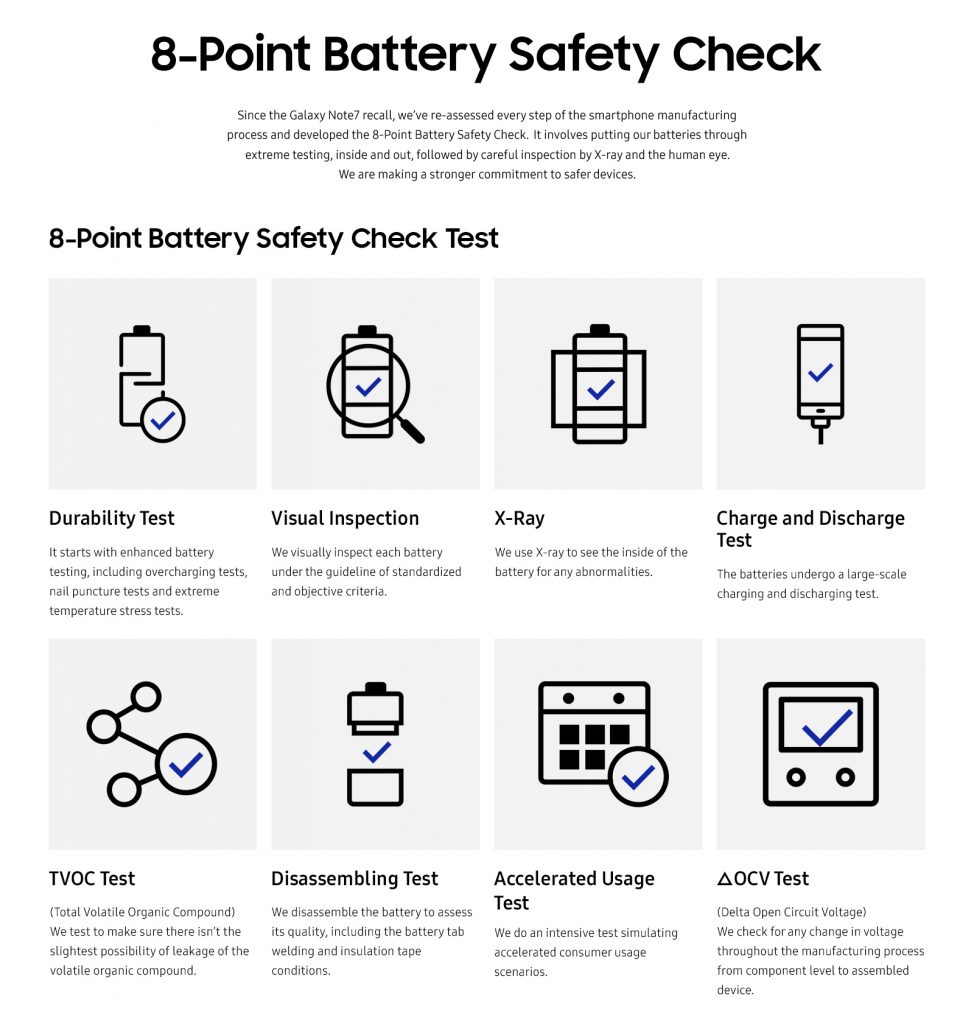
A press release dated Jan. 23 reveals that the root of cause of Galaxy Note 7 explosion were the two kinds of faulty batteries the phablet featured. In the future devices like the Galaxy Note 8, Samsung will be incorporating 8-point battery safety check system that includes various kinds of inspections such as durability test, visual examination, x-ray inspection, charging and discharging tests and more.
There is not many information available on the features that will arrive on Galaxy Note 8. However, Samsung is expected to release it in the second half of the year. At present, the South Korean company is concentrating on announcing on the release of Galaxy S8 and Galaxy S8 Plus smartphones.
Fresh speculations suggest that the Galaxy S8 and S8 Plus would be launched on March 29 in the U.S. and Europe. It is expected to available for buying in the week that starts from April 24 in these markets. However, it would be coming to South Korean markets on April 14.
The rumor mill has consistently stated that the Snapdragon 835 will be powering the LG G6 flagship smartphone. However, fresh information indicates that since Galaxy S8 needs the entire initial supply of Snapdragon 835, the LG G6 won’t be featuring the SD 835 chip. Instead, it will be powered by the Snapdragon 821 SoC.
The LG G6 is slated to get announced in the next month at the MWC (Mobile World Congress) 2017 exhibition. However, unlike previous rumors, the SD 835 chip will not be powering it. According to Forbes, the Snapdragon 835 will be available in large quantities quite later after April and the Galaxy S8 smartphones will be hitting the South Korean markets on April 14.
Since Samsung Galaxy S8 will be running on Snapdragon 835, Qualcomm would be driving the entire initial supply to Samsung to ensure that the company does not encounter supply shortages for its upcoming S8 and S8 Plus flagships.
However, this move by the U.S. chip maker will make the Snapdragon 835 unavailable to flagship phones from other manufacturers. Like the LG G6, all the other high-end smartphones that are expected to release before April will come powered by other processors.
Rumors have it that HTC may have encountered the same problem because of which the recently announced HTC U Ultra arrived with Snapdragon 821 chipset. The SD 821 is a very potent SoC, but it is no competition to its successor. The SD 835 is so powerful that it can run a full version of Windows 10.
Even though LG G6 is unlikely to feature Snapdragon 835, LG has claimed that the LG G6 would be an “ideal smartphone” that will come with desirable features like a larger display that offers a resolution of 1,440 x 2,880 pixels and a water-resistant chassis. It is expected to feature a battery that can withstand very high temperatures. The LG G5 failed because of its modular design as customers were not spending huge amounts of money on the smartphone and additional accessories.
What do you think will be the fate of LG G6? Do share us your thoughts by posting your comments.
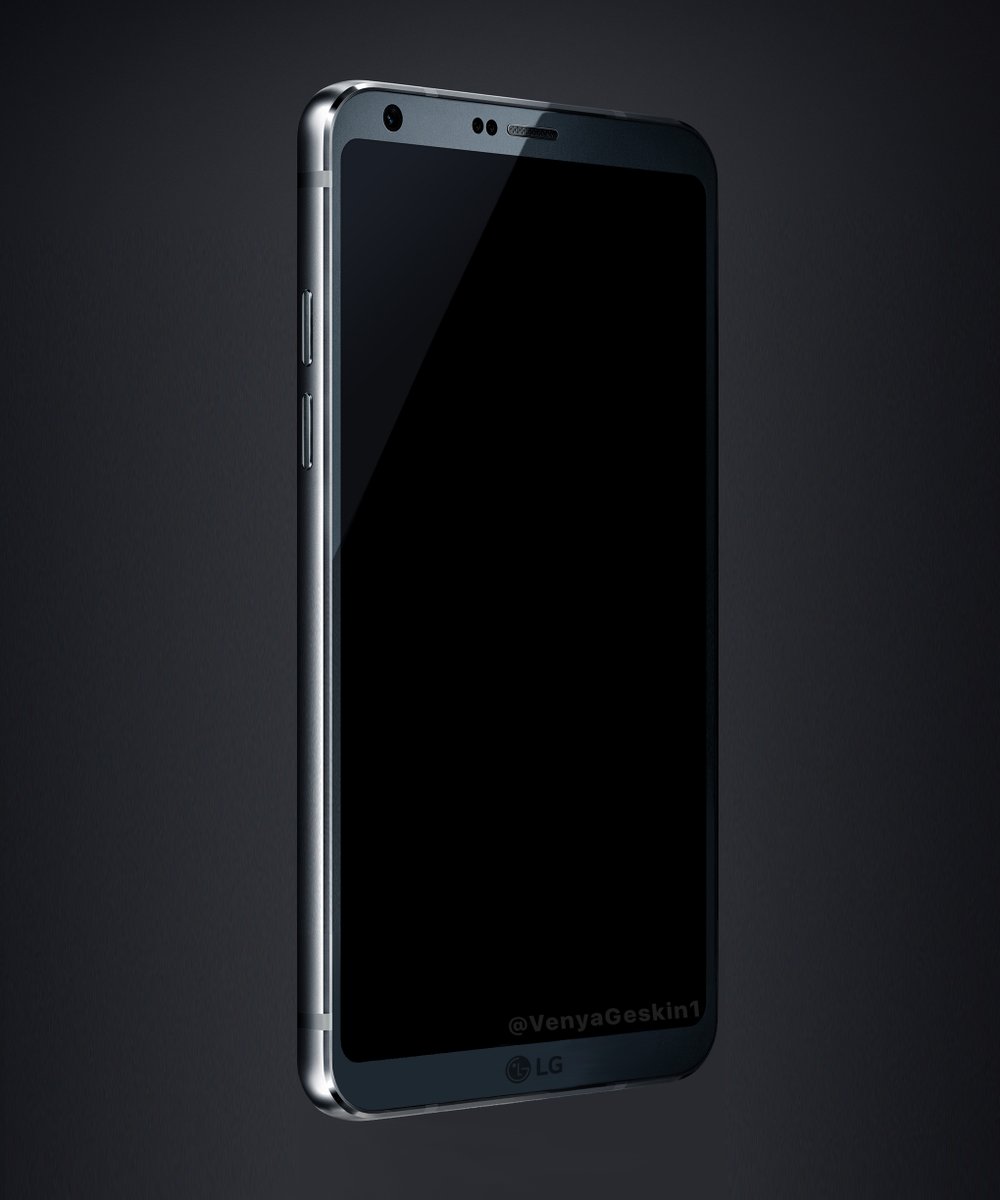
LG is expected to launch its next-generation LG G6 flagship at the Mobile World Congress next month. Already, the Korean company has sent out invitations to a launch event holding on February 26. Ahead of the official unveiling, a real live render purported to be that of LG G6 has been spotted online and it reveals a device with a top-notch design. It looks sleeker than the one leaked earlier by a case manufacturer.
The Xiaomi Mi Mix premiered a new era of smartphones with an exceptional screen to body ratio and recently Xiaomi CEO Lei Jun hinted that the competition this year would be in the aspect of displays. Seems like we’ll really be seeing a fierce competition in that aspect because the LG G6 features a design with minimal bezels around the sides. Recall that Samsung is rumored to be towing on the same line with its Galaxy S8. The screen to bezel ratio on the G6 is said to be more than 90%.
The LG G6 flagship is also expected with an all-metal body as well as a 5.7-inch display with 2:1 aspect ratio. Only the front of the device is shown and it is markedly noticed to be without a front screen button. That is an indication that the device might use onscreen buttons. The volume rockers are located on the left side of the device and it can be noticed that the G6 will use the fused antenna band design.
Earlier rumors had tipped the G6 as coming with a headphone jack and would be water resistant. The device was also said to be powered by a Snapdragon 835 chipset but a recent rumor appeared on Weibo suggesting that the G6 (later confirmed by Forbes in a new report) would be powered by a Snapdragon 821 chipset. We are not sure about the authenticity of the source but if it turns out to be true, LG would leave a large number of its fans disappointed.
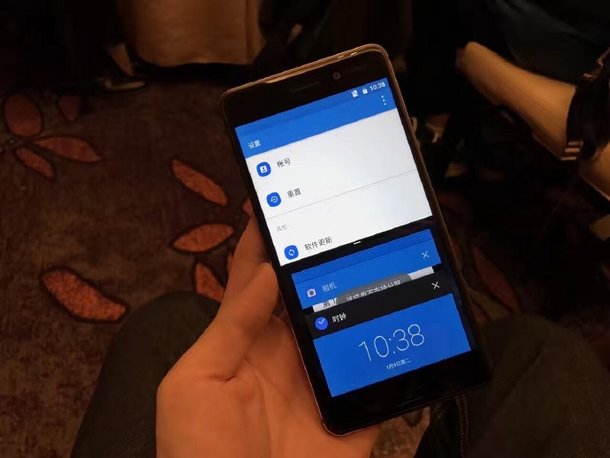
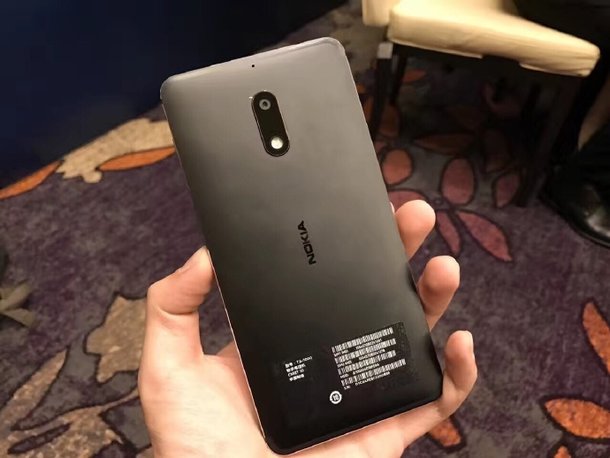
Nokia 6 was finally up for its first flash sale last week and the results reported was monumental. The device was said to have sold out in one minute but we never got to find out the number of units that were up for grabs. It has now emerged that only 10,000 units were available during its first flash sale, thus explaining why it was all sold out in 60 seconds.
The budget smartphone has been scheduled to go on another round of flash sale on January 26 which is just two days away. This would be its second flash sale and we would likely see more and more flash sales. Already, reports have it that up to 1.37 million persons have so far registered for the flash sale. Apparently, this figure should comprise those who registered but couldn’t grab one during the first round of sales.
Nokia 6 is still sold exclusively on Jingdong and the price is yet to change, hanging on to 1,699 yuan. For this price, you get a device with a 5.5-inch 1080p display which is fired up by a Snapdragon 430 chipset, backed by a huge 4GB of RAM. There is also 64GB of storage onboard with the option of expanding it further via microSD. On the camera end, the device packs a 16MP rear camera with a single LED flash lying just underneath it, as well as an 8MP front-facing camera for sleek selfies. There is an ample 3,000mAh battery crammed inside the smartphone as well.
Samsung mobile chief Koh Dong-jin has recently said that the Galaxy S8 flagship smartphone won’t be announced at the MWC (Mobile World Congress) 2017 event that will be held in February. Fresh rumors indicate that Samsung has decided to carry out official launch of Galaxy S8 on March 29 in the U.S. and Europe.
On Jan. 16, a leakster with Twitter account @Ricciolo1 revealed that the Galaxy S8 will be present at MWC 2017, but it won’t be showcased to the public or press. He stated that the smartphone would be revealed to partners and investors.
@Ricciolo1 also stated that the Samsung would be officially unveiling the Galaxy S8 on March 29 and it would be available for purchase with a pricing of $849 in the 17th week of the year. It means that people would be able to buy it the week that runs from April 24 to 30. Now, the leakster has tweeted new information on the Samsung Galaxy S8 launch date.
As the tweet suggests, the South Korean tech giant will be organizing multiple-city unveil events in the U.S. and Europe. Speculations suggest as Samsung has done it before, the Galaxy S8 launch events will be held in cities like New York, U.S. and London, U.K. The Galaxy S8 will be unveiled through a mega launch event as the leakster says Samsung will carry out a “record breaking marketing campaign.”
The Samsung Galaxy S8 and Galaxy S8 Plus are expected to house dual-edge curved screens. The S8 is rumored to feature a 5-inch screen whereas the Galaxy S8 Plus is speculated to be fitted with a 6-inch screen.
Both the devices are pegged to be powered by Snapdragon 835 SoC and 6 or 8 GB of RAM. The Galaxy S8 models would be coming with a fingerprint sensor that will be embedded under the screen. The S8 phones are rumored to feature autofocus enabled selfie cameras and they will be featuring non-protruding rear cameras.
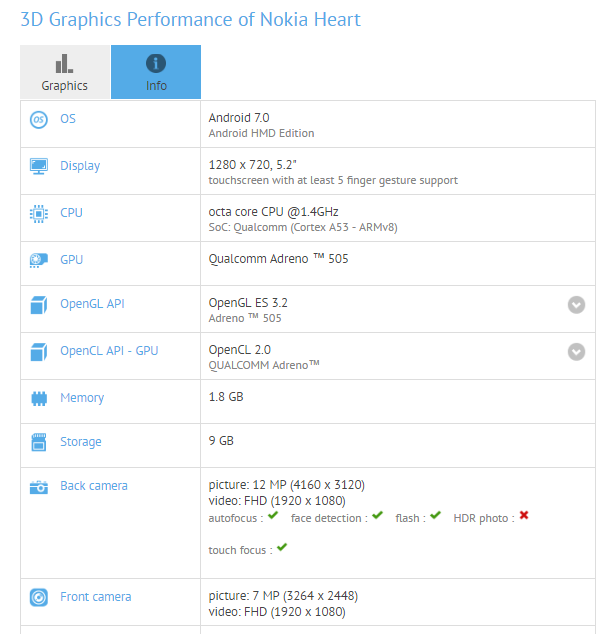
A new Nokia phone has appeared on GFXBench benchmarking platform with midrange specs. It indicates that Nokia may be prepping a lower end version of the recently announced Nokia 6 smartphone.
Nokia 6 is immensely popular in China as it went out of stock within a minute in its first flash sale. Recent rumors have suggested that Nokia will be releasing 6-7 smartphones in this year. One of them seems to have appeared on GFXBench with a codename of Nokia Heart.
According to GFXBench listing, the Nokia Heart will be coming with a 5.2-inch display. It supports an HD resolution of 720 x 1280 pixels. The Nokia 6 is powered by Snapdragon 430 SoC. The Nokia Heart is expected to include the same chipset. It features a 1.4 GHz octa-core processor and Adreno 505 graphics.
Its SoC will be supported by 2 GB of RAM and it will include a native storage of 16 GB. These specs indicate that it may be a low-end version of Nokia 6 that comes with 4 GB of RAM and 64 GB of native storage.
Nokia Heart will come preinstalled with Android 7.0 Nougat OS. The listing on GFXBench says that Android HMD Edition will be running on the device which indicates that a customized version of Nougat OS will be preloaded on the device.
GFXBench listing shows that it will feature a 12-megpixel rear camera and a front-facing camera of 7-megapixel. However, the smartphone may feature 13-megapixel rear snapper and an 8-megapixel selfie camera.
Apart from aforementioned details, no other information is available on the device. The Nokia 6 is available with a pricing of $245 in China. Hence, the Nokia Heart is pegged to be priced around $150 to $200.
Nokia will be present at the upcoming MWC (Mobile World Congress) 2017 in the next month. As of this writing, there is no confirmation on whether it will be announcing the Nokia Heart smartphone or any other device. Speculations hint that the company may announce a flagship device.
Up until last year, Huawei’s Mate series was considered to be the flagship phone lineup and its sibling, the Huawei P-series hardly received any attention. That was not surprising, given that the Huawei P8 models were decent but nothing out of the ordinary. But things have changed with the Huawei P9, and it is heard that the phone is selling very well, thanks to the powerful Kirin processor inside as well as the Leica certified dual 12MP cameras at the back.
Naturally, the next generation model in the P-series, most likely called as the Huawei P10 should come with better specs. Even the dual Leica branded cameras on the phone is expected to be upgraded. The upgraded specs would probably call for an increase in the price tag, but as of now, we are clueless about any exact figures.
In case you are preparing to get hold of the Huawei P10 when it launches at MWC 2017, then it’s worth mentioning that a new rumor states that the P10 will be quite costly. In fact, Ricciolo, who leaked this information says that the Huawei P10 will be the most expensive P-series phone till date. But he adds that it would be cheaper than the exorbitantly priced Huawei Porsche Design model (~$1500). Well, that was kind of obvious, wasn’t it? Even after hearing this, I still hope that the base model starts at less than $800. In case you are wondering, the current Huawei P9 32GB model starts at around $650.
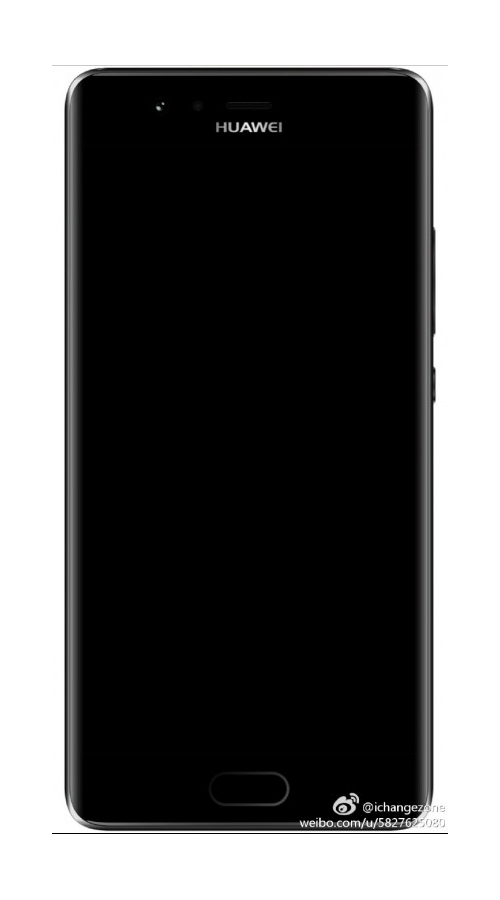
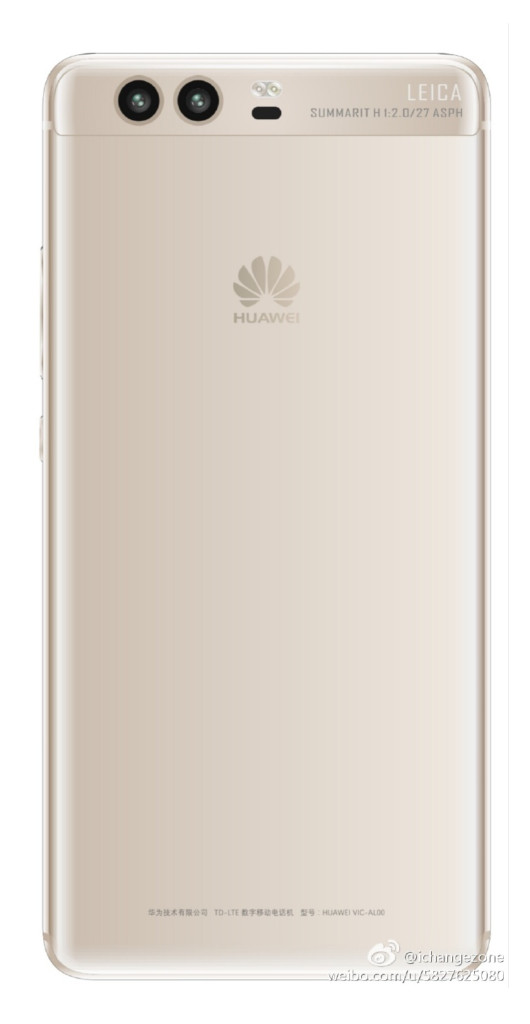
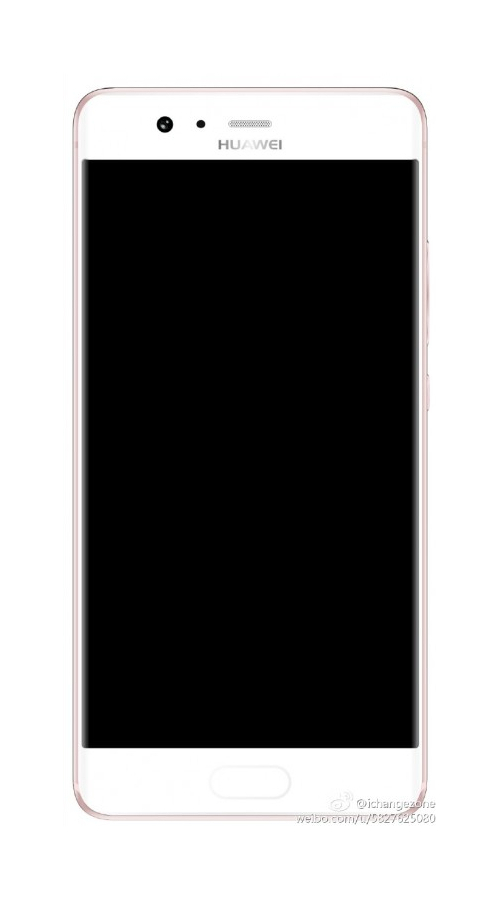
Specs wise, the Huawei P10 is expected to come with a 5.5-inch display with 2K resolution. The phone’s design is reported to be similar to the existing P9 and we did see a couple of new renders of the upcoming flagship a couple of days back (added at the end of this article).
ZTE embarked on its latest Project CSX from which the Hawkeye smartphone was born, in an attempt to get input from the public on a crowdfunded smartphone. Unfortunately the company seem not to have done the analysis of the public’s opinion thoroughly hence the innovative smartphone with a somewhat disappointing specs lineup unveiled at CES 2017.
No doubt the ZTE Hawkeye came with some cool innovative features like the adhesive back panel which allows the device to stick to any surface, and then there is the eye-tracking software which lets users operate the phone by eye movement. As innovative as these two features may be, putting them on a mid-range smartphone met with lots of disapproval from pundits and many of its fans. Some had expressed hope that such features would have been on a high-end smartphone, which is what they actually yearn for.
Since the ZTE Hawkeye was showcased at CES 2017, it had been up for pre-order via Kickstarter but unfortunately, the response has been very disappointing. Presently, ZTE has been able to amass less than 7% of its projected goal on the crowd-sourcing platform. The project has barely gotten the backing of just 182 persons, and it is just 26 days left before the product was supposed to ship.
So, in order to get more support for the project, ZTE has once again gone public, apologizing for its mistake and asking for input and suggestions on ways to salvage the device from becoming a failed project. The Hawkeye already has a $199 price tag of Kickstarter and that cannot be changed. So it is impossible to transform the specs on the device to a flagship one. The only option is to ramp up one or two of the specs and to this end, the company has opened a poll on its Z-Community to get the opinion of the public on the preferred specs that should be beefed up.
As should be expected majority of respondent so far prefers a change to Snapdragon 835 from the current Snapdragon 625 onboard. Some others prefer that the operating system should be Stock Android with added software for eye tracking. There are also those who prefer a ramped up battery capacity and also a increase in the RAM size. Unfortunately, the response has been poor signifying a likely bleak future for the Hawkeye. At most, ZTE might decide to scrap the project and refund those who have contributed so far.
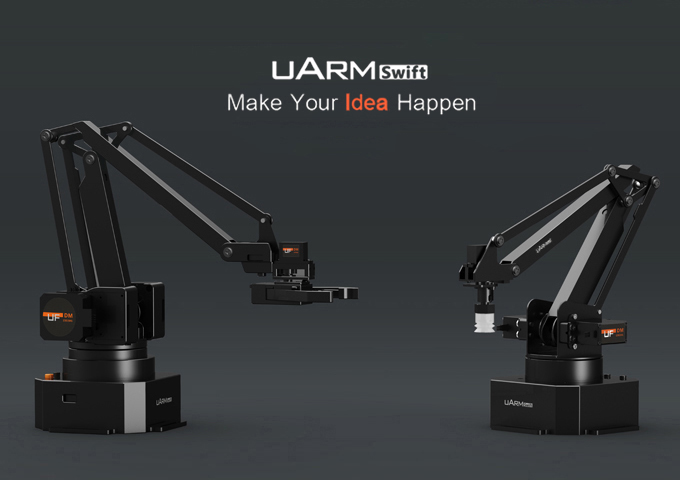
A technology startup called UFACTORY based in Shenzhen, China wants to put miniature robotic arms in your homes. Their product called the uArm Swift is not just a regular robotic arm that is already pre-programmed from the UFACTORY but one that can learn new tasks.
The uArm Swift is not the company’s first product actually, some of you might have heard of them back in 2014 when they launched the uArm Acrylic. Their new product has been in the works since 2015 and is expected to ship this year.
What is the uArm Swift and what can it do?
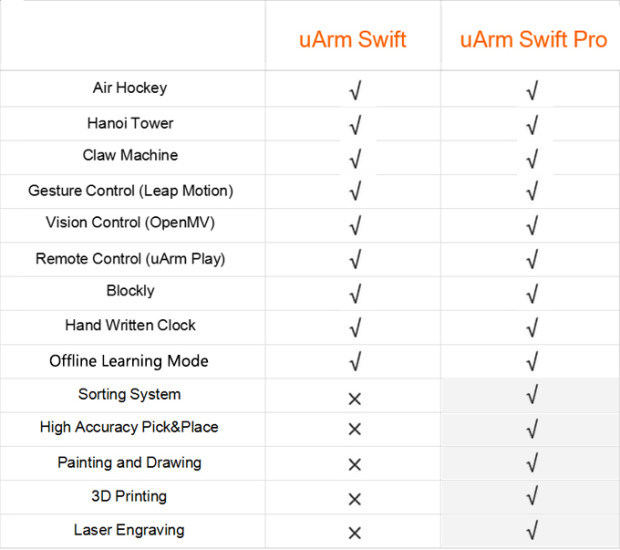
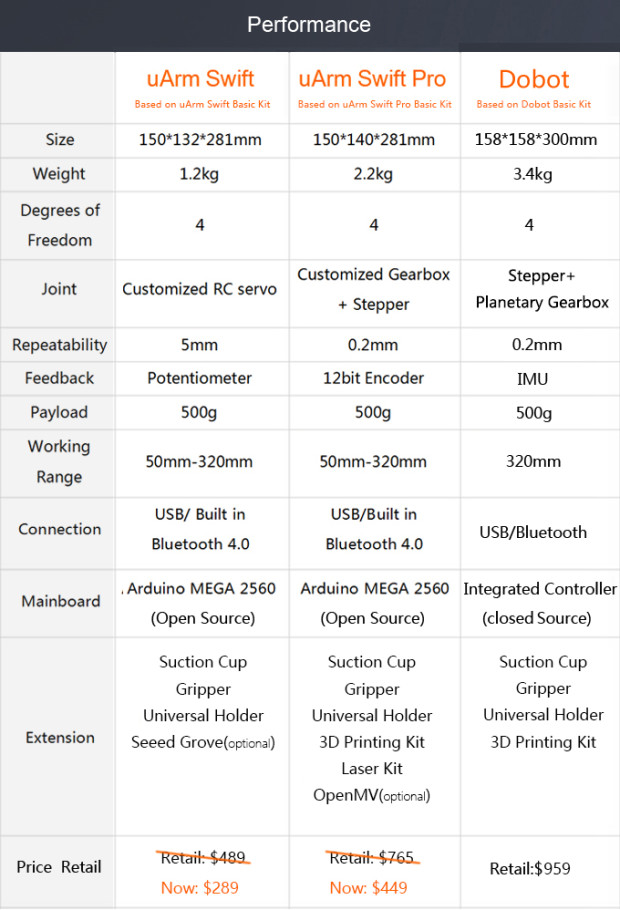
The uArm Swift is an open sourced Arduino-based desktop robotic arm “whose capabilities depends on your creativity”. Available in two variants: the uArm swift and uArm Swift Pro, both versions are made from square aluminum alloys and have a 4-axis parallel-mechanism structure. The uArm Swift can be programmed to do a number of tasks from light painting to laser engraving to 3D printing and even to pick up drinks and serve to guests.
You can also teach the robots new tasks in a different number of ways:
There is an offline mode where you guide the robot’s arm to do what you want and it records it to memory. Or the gesture mode where the robot mimics your hand movements to perform tasks.
There is also the uArm Studio, a Blocky-based graphical program that you can use to control the robot.
If you are wondering what the differences between the Swift and Swift Pro are, you should take a look at the images below:
We use cookies on our website to give you the most relevant experience by remembering your preferences and repeat visits. By clicking “Accept”, you consent to the use of ALL the cookies.
This website uses cookies to improve your experience while you navigate through the website. Out of these, the cookies that are categorized as necessary are stored on your browser as they are essential for the working of basic functionalities of the website. We also use third-party cookies that help us analyze and understand how you use this website. These cookies will be stored in your browser only with your consent. You also have the option to opt-out of these cookies. But opting out of some of these cookies may affect your browsing experience.
Necessary cookies are absolutely essential for the website to function properly. This category only includes cookies that ensures basic functionalities and security features of the website. These cookies do not store any personal information.
Any cookies that may not be particularly necessary for the website to function and is used specifically to collect user personal data via analytics, ads, other embedded contents are termed as non-necessary cookies. It is mandatory to procure user consent prior to running these cookies on your website.