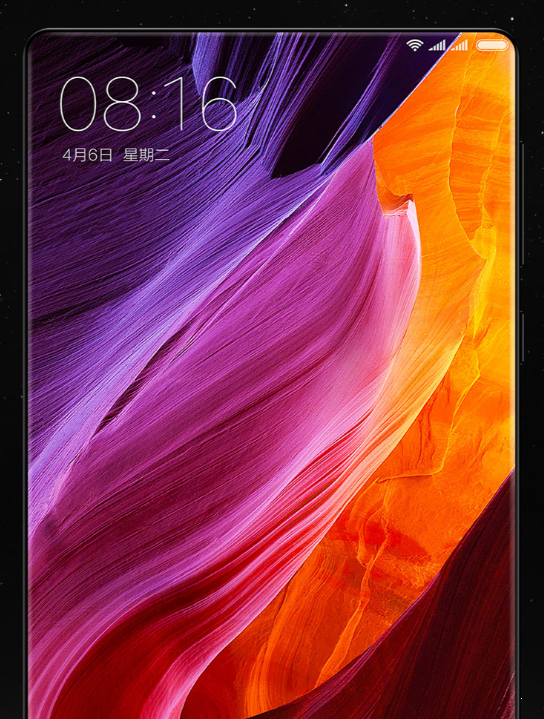
Gearbest has been known for its competitive prices and a great amount of different gadgets they sell. The company is having their 2nd-anniversary celebration and thus you can grab some pretty good deals.
In order to say thanks to the customers, Gearbest has partnered with two global giants – Paypal and Intel, and wants to share with you its 5 Birthday treats:
Treat #1: Special GearBest Diet with Top Product Prices Slimmed Down
Treat #4: Get up to an EXTRA 5% OFF with our Special PayPal Discount
Treat #5: Tons of Hot Brand Promos + Cool Category Deals
Gearbest will ensure promo products are in stock and shipped a soon as possible.
Make sure to check out various competitions like a Lucky Draw to get the best deals possible.
Besides all the deals shown in the main deals page, you should definitely check out separate product page categories as there will be some great deals all over the Gearbest’s website for the next few days, where you can get products for as low as $0.01.
Just yesterday we spotted the Meizu Pro 6 flagship with the brand new Helio X25 chip on the benchmarking website, Geekbench. Now, the same phone has reached another benchmarking app, namely AnTuTu. So, apart from the impressive scores posted by the phone, we also have a good idea about the specs of the device.
According to the first AnTuTu benchmark results of the Helio X25 inside the Pro 6 flagship, the phone managed a score of nearly 100K points. That’s pretty impressive. To be exact, Meizu Pro 6 posted 99,948 points on AnTuTu.
Now, if we are to compare the scores of the Helio X25 with other rival chipsets like Kirin 950, Snapdragon 820 and Exynos 8890, there are mixed results. For example, the Helio X25 seems to be better than the octa-core Kirin chipset, which was also evident from its Geekbench scores. In the AnTuTu test, the best scores we have seen from Kirin 950 is only about 95K. So, for now, it looks like the deca-core Helio X25 is better than Huawei’s Kirin 950 chip.

Meizu pro 6 render
Coming to the Snapdragon 820 and Exynos 8890 chips, when we compare the scores, Helio X25 is still quite far behind. Both the chips score anywhere between 120K to 135K, which is far higher than the 100K score posted by the Helio X25. The difference could be mainly because of the slower GPU in the Mediatek chip.
Now, coming back to the Meizu Pro 6, the phone will reportedly feature MediaTek’s MT6797T octa-core processor with 3GB of RAM and 32GB of internal storage. The screen size is unknown but the resolution will be 1080p. As for the cameras, there will be a 21MP sensor at the back and a 5MP shooter up front. The phone will be running on Android 6.0 Marshmallow OS.
In case you missed, the latest Geekbench score of the Pro 6 flagship is quite impressive, even comparable to Exynos 8890. While we see a drop in the single-core score to 1981, the multi-core score has increased to 6401, thanks to the increased clock speed to 2GHz.
So, it looks like the Helio X25 will indeed be a capable chipset for flagship level smartphones.
Although Ulefone had announced its Ulefone Future bezel-less smartphone a few weeks back, the phone is not yet available for purchase. Considering the complicated design of incorporating a bezel-less display on a smartphone, we guess it would take still a few weeks for the device to hit the markets.
However, to keep their fans busy, Ulefone has just revealed the CNC Unibody of the Ulefone Future. The company reveals that the Future will have a metal unibody with a single piece making the back cover and frame.
To further explain the manufacturing process, the company reveals that the phone is made from a whole block of aluminum titanium-alloy ingot and is subjected to CNC cutting machine. This helps the phone get its premium look and at the same time, reduces the thickness and the weight of the device to a bare minimum.
The lines that you see on the top and the bottom at the back are for the antenna. The company uses nano injection moulding to make sure that the plastic for the antennas are evenly filled into the grooves of the metal body. From the overall design of the back, it looks like the company is going for a design like the iPhone series for its Ulefone Future.
To recap, the Ulefone Future will come with a 2GHz Helio P10 octa-core chipset with 4GB RAM and a 2.5D display. There will be a side-mounted fingerprint scanner and Samsung’s 16MP camera sensor at the back. The phone will also feature gyroscope which the company claims will support VR functions.
Ulefone Future vs Galaxy s7 Edge
The company is yet to reveal an exact release date or price of the Ulefone Future. But you can expect the release sometime in April this year. Stay tuned for more details.
For the past few months, we have been patiently waiting for the next Find series smartphone, namely the OPPO Find 9. However, the company hasn’t revealed anything regarding the Find series, and instead, has released new models in its OPPO R series lineup, namely the R9 and the R9 Plus.
While we thought that the company might have scrapped the lineup, a new OPPO device, namely OPPO X9009 model has just passed Taiwanese Certification agency (NCC). Given that the Find 7 had the model number X9006, it’s highly likely that the X9009 is the OPPO Find 9.
The new OPPO R9 and R9 Plus seems to have skipped OPPO’s latest tech like chip scale image stabilization. Even the hardware is not comparable to other high-end flagships like Galaxy S7 with Snapdragon 820. So, it’s likely that the Find 9 is going to be the true flagship smartphone for the company.
According to rumors, the phone is expected to come with a bezel-less design, a 5.9-inch 2K display, Snapdragon 820, Wireless Charging and 4GB/ 6GB RAM. There’s still time for the phone’s release, as it is said that the flagship will meet us in June.
However, it’s good to see that there’s still hope for Find series lovers. In case you remember, the OPPO Find 9 model was also certified in Indonesia, and China a couple of months back.
Like always, the company is yet to confirm the presence of the device but expect more details soon.
So, what do you think? Will OPPO unveil the Find 9 flagship later this year?
The phone comes with a some documentation, a power plug, USB cable and a nice soft TPU case to protect your phone.
Cubot Note S Review: DESIGN and DISPLAY
Cubot Note S is not a small phone as it has a 5.5” 720p display, which is actually not bad at all. It is bright, sharp and you simply cannot ask more for a price.
The phone is built entirely of plastic, which is okay considering a low price but the problem is that the backplate makes a lot of wobbling noises when pressed. Speaking of which, the back cover can be easily removed and underneath it you can find a removable huge 4150mAh battery, two SIM card slots with only 3G support and the microSD card slot.
On the front we have a 5MP shooter and non-backlit capacitive buttons. Unfortunately, there is no notification LED light.
The main camera has 8MP and it is accompanied by a single LED flash.
The buttons have a good tactile feedback but they feel a bit cheap.
Overall, Cubot Note S has a decent build quality but that back cover, which makes some wobbling noises when pressed reminds you that this is a cheap phone after all.
Cubot Note S Review: HARDWARE and PERFORMANCE
As you may have already guessed it, Cubot Note S is not a high-end device. It sports a quad-core MTK6580 chip with the clock of speeds of up to 1GHz, 2GB of RAM and 16GB of storage.
The 3D gaming performance is possible but you have to expect occasional stutter and skipped frames.
Cubot Note S Review: BENCHMARKS
Cubot Note S Review: UI
The phone ships with near stock looking user interface, which is built on top of Android 5.1. There are not too many features to talk about. The phone has just some basic apps and no bloatware at all. Thus, the performance of the UI is fast, fluid and responsive on a daily basis.
Cubot Note S Review: MULTIMEDIA
The rear-mounted speaker provides an average quality sound. It is a bit tiny and lacks depth but this is what you have to expect when you are buying a cheap phone.
Cubot Note S Review: CAMERA
Cubot Note S Review: IMAGE QUALITY
The daylight picture quality is pretty good for the price. Of course, we can’t expect much from an $80 phone but you can take some nice looking images that can be usable for social media.
Naturally, the image quality decreases with a lower amount of light. The pictures become grainy, have less detail and more noise.
As for selfie shooter, it could be better as I mainly got blurry self portraits.
The video quality is not really impressive as there is a low amount of detail and the footage looks shaky. See a video review for a video sample.
Cubot Note S Review: CONNECTIVITY
A call quality is okay but the earpiece could be louder. Other connectivity options work great but I found that the GPS is not always reliable. Sometimes it works fine, sometimes it is a pain when using Google Maps navigation.
Cubot Note S Review: BATTERY LIFE
4150mAh battery is definitely a strong selling point of the Cubot Note S and it performs great in real life. I could get 4-5 hours of screen-on time depending on the usage with auto-brightness setting on.
Cubot Note S Review: CONCLUSIONS
Cubot Note S is an $80 phone, which does most of the things very well.
The display looks nice for the phone this cheap, the UI is running fast, camera can take some decent looking daylight images and a battery life is great.
However, you have to keep in mind that the phone is made entirely of plastic, which is okay taking into account a low price of the phone but the wobbling noises when you press the device will remind you that this is a cheap phone after all.
Other cons that you have to know are that the earpiece could be louder and the GPS is not always accurate.
All in all, Cubot Note S is a decent phone for such a low price but you have to take all the shortcomings into consideration before making a purchase.
Remember Vernee, the new kid in the market from Shenzen, China, who got quite the attention from the media because of its 6GB RAM smartphone, the Vernee Apollo?
Well, it looks like this high-tech company is not just working on its flagship product, the Apollo. The company is also working on a mid-range smartphone called as the Vernee Thor, and it’s going to be a unique device because it will be a Uber-featured smartphone.
According to the latest information, Vernee and Uber have reportedly entered into some kind of cooperation to release a brand new “Uber-featured” smartphone. Now, we are not entirely sure how Uber comes into this picture, but it is said that the phone will deliver smooth experience as fast as lightning (hence the name THOR) which is synonymous with Uber’s service and reliability.
As for the phone itself, the Vernee Thor will feature mid-range specs with software optimizations. The phone will feature a sleek, smooth and curved design with rubber paint. The first renders of the device are already included in the post.
As for the specs, the Vernee Thor is said to come with a 5-inch HD On-cell display with Mediatek’s MT6753 octa-core chipset under the hood. There will be 3GB of RAM inside with 16GB of internal storage, further expandable up to 128GB via MicroSD card slot.
At the back, the Vernee Thor will feature a 13MP camera while up front, a 5MP Shooter. Detailed information about the camera specs are not yet available. Finally, inside, the phone will come with a 2800mAh battery, which should be fine, considering the Cortex A53 powered processor and the low-power consuming 5-inch 720p screen.
Vernee is yet to specify an exact release date for the Vernee Thor, but expect a launch sometime in April. Since its partnership with Uber, you can expect the app to come pre-installed with the device. But we are not yet sure about the specifics of the agreement, so we better wait for more details from the company.
Flip phones were once the popular choice of customers. But ever since the advent of the touchscreen smartphones, flip phones have lost their charm. Or has it? Gionee thinks that there is still a market for flip smartphones which is why it is all set to unveil its super high-end and powerful Gionee W909 flip phone by the end of this month.
Till now, the company had been pretty subtle when it came to the teasers for the phone’s release. However, earlier today, the company jumped the guns and revealed a few interesting specs of the upcoming flip phone.
First of all, the Gionee W909 is confirmed to get 4GB of RAM on board. This will make it the first flip phone with such massive amount of RAM, which usually only flagship smartphones can boast of. Further, the phone will feature 64GB of internal storage, which should be enough for all your files.
If you are a photo freak, Gionee has got that covered for you as well. The W909 will come with a 16MP high-definition camera, which is once again flagship worthy specs. So, it looks like, Gionee is going to market this as a powerful piece of tech, in the form of a clamshell design. The company has also confirmed a fingerprint sensor on the device.
Clearly, Gionee W909 is made for someone who loves flip phones, but don’t want to sacrifice on the specs. Although the above-mentioned hardware are quite powerful, we will have to wait and see what kind of chip powers the phone (probably Helio P10). Also, the display quality and battery life are some of the other areas which the company hopefully won’t let us down.
There is a huge market of affordable action cameras and it may not be easy to choose one. TEC.BEAN EX5000 is one of the better offerings as it costs just under $76 on Amazon. Learn more in a full review.
TEC.BEAN EX5000 Sports Action Camera Review: VIDEO
TEC.BEAN EX5000 Sports Action Camera Review: UNBOXING
The camera comes in a simple box with a lot of accessories. There are all sorts of mounts, cradles, adhesive pads, zip ties, velcro straps and so on. Basically, you can mount the camera wherever you want.
A few notable accessories would be a waterproof case, which has tactile buttons and it allows you to use the camera up to 30m under water. The case does its job well as I left the camera under water for 20 mins during my test.
The other accessory that I love using is a cradle that I mounted on my bike and it keeps the camera in place.
Also, there are two batteries included, which is really great.
TEC.BEAN EX5000 Sports Action Camera Review: DESIGN
Let’s be honest, the TEC.BEAN camera looks like a GoPro. Anyway, most of the cheap action cameras does.
Most importantly, it is very well built and it uses mainly rubberised plastic in the construction.
As for optics, we have a 14MP Panasonic CMOS sensor, which can shoot videos up to 1080p and it has 170 degrees wide angle lens. Right next to it there is a power/mode button.
The display has 2 inches and while it is not even HD, it’s really convenient for a viewfinder.
There is a shutter or “OK” button on the top along with the LED light.
On one side you can find a microSD card slot, micro USB and HDMI ports and a mic. On the right, you can find your up/down buttons to help you navigate in the UI of the camera.
Next to the buttons there is little speaker grill.
Finally, the battery door, as well as the battery itself, are very easy to remove.
TEC.BEAN EX5000 Sports Action Camera Review: UI
When it comes to the UI, it is pretty much straightforward. You can select from a picture taking, video recording and gallery modes.
Also, there are quite a few settings to play with but I simply used auto-mode for all the pictures I took and the videos I shot.
The camera has a built-in Wifi, which is supposed to let you easily share images with your smartphone but unfortunately, I could not make it work.
The proprietary app simply could not find the camera. Anyway, I don’t really need this feature since the camera has a display.
TEC.BEAN EX5000 Sports Action Camera Review: IMAGE AND VIDEO QUALITY
As for still image quality, it is pretty good for a cheap action camera. However, I would love to see a bit more details in some images and some of the shots came out slightly underexposed.
As for 1080p video, it is good but not great. I shot the video side by side with the Xiaomi YI camera, which is one of the best budget action cameras around. The quality is similar but the footage has slightly less detail and the video stabilisation could be better. On the other hand, the colour reproduction is more accurate but the colours look too cold.
Still, the quality of footage is great for cheap action camera and you simply can’t expect anything better at this price range.
TEC.BEAN EX5000 Sports Action Camera Review: BATTERY LIFE
The 900mAh battery performs great knowing the fact that the camera has a 2” display. I could get 1:20 h of 1080p video and around 3 hours of total usage per charge.
TEC.BEAN EX5000 Sports Action Camera Review: CONCLUSIONS
All in all, the TEC.BEAN action camera is a great choice for those who don’t want to spend hundreds for a GoPro but still want to have a small device that can shoot videos or take pictures.
Also, it has 2” screen, lots of settings, the battery life is good and this cheap camera comes with lots of accessories. For a price of just below $76, it is a great bang for your buck.
Qihoo 360 just entered the smartphone industry last year, but the company hasn’t really managed to get the attention of the crowd with its high-end segment. This is probably why QiKU, now called as 360 Mobile, released its brand new smartphone called as the 360 F4 which costs just 599 Yuan, coming around $92. At this price, the phone offers a lot of good hardware under the hood, as well as a great design, making it a true all rounder.
In the past few days, we had seen some renders of the 360 F4 and they were quite good looking. Now that the phone is official, we can confirm those renders were bang on target. The company seems to have paid special attention to the phone’s design, which is something that most budget smartphones tend to oversee.
In fact, everything on the phone is proportional and symmetric, giving it a premium feeling. So, it’s no surprise that the 360 Mobile is emphasizing that the 360 F4 smartphone is “Sleek and Stylish“. The edges are smooth and the back is gently curved for better ergonomics. Unlike the Redmi 3, which comes with a metal body, the 360 F4 features a plastic back. What’s more, you get five color options for the device, namely white, black, blue, gold and rose gold.
Coming to the specs, they are pretty impressive as well. Under the hood, the 360 F4 comes with the Mediatek MT6753 octa-core processor with Mali-T720MP3 GPU. There are two memory variants available, the standard variant featuring 2GB RAM + 16GB storage while the high-end model sporting 3GB RAM and 32GB storage. You can further expand this storage via MicroSD card.
Coming to the screen, its pretty compact, sporting a 5-inch display with 720p HD resolution. At the back, the phone comes with a 13MP f/2.0 camera with PDAF and ISOCell pixel isolation tech, while up front, you get a decent 5MP shooter.
What’s more, the phone supports 4G VoLTE and comes with a fingerprint sensor at the back as well. You can reportedly unlock the device in 0.4 seconds with this fingerprint ID. The F4 comes with dual-SIM support and features a 2500mAh battery. As for software, the phone runs on 360 OS which includes a number of inbuilt apps for apps and storage management.
Coming to the best part of the device, i.e. the pricing. The 360 F4 standard edition will retail for just 599 Yuan ($92) which is amazing. If you want something a bit more powerful, get the 3GB RAM + 32GB high-end edition for 799 Yuan ($123) which is still amazing!
The phone goes on sale in China on March 25. No details about an international release yet.
Xiaomi’s Mi TV lineup is popular in China because it offers a large screen and smart features at a very competitive price tag. The company has some pretty large screen TVs (40-inch / 60-inch) in the market, and now, Xiaomi is all set to add a curved TV to its lineup.
The company has been teasing the release of its first Curved Mi TV for the past few days. However, till now, the teasers would only hint that the TV was going to be curved. Now, Xiaomi’s TV division has released a new teaser which confirms that upcoming Mi TV will be “Curved and Thin“. So, no more guessing games.
We knew that new Mi TVs were coming soon, thanks to their certification on the 3C Quality Control website in China. Two models were revealed in the website’s listing, a 65-inch model which is probably the upcoming Curved Mi TV and a 43-inch model, possibly the successor to the existing 40-inch variant.
Now, that the Curved Mi TV is officially confirmed, the company’s new product will have to directly compete with LeTV (now LeEco) Super 4 Max65 Curved Commemorative Engineering Edition. This is basically a giant curved TV offering from the rival LeEco featuring Samsung’s 4K Ultra-thin curved panel and retailing for $1075.
Given that even Xiaomi is focusing on curved and thin, the upcoming curved Mi TV could feature the same Samsung 4K ultra-thin panel. But we will have to wait for an official confirmation. You can also expect a capable processor with 3GB/ 4GB RAM inside along with other ‘smart’ specs.
As for the release, Xiaomi will announce the device on March 23, which is just two days away. Pricing should be competitive, but anywhere below 6999 Yuan ($1075) would be impressive.
For the past few months, ZTE’s Nubia smartphone division has been quiet. We haven’t heard any new announcements from the company recently. It’s been more than a year since Nubia released a new model in it’s Z series but it looks like the next generation smartphones in the series are on their way.
Recently, a new ZTE model (NX529J) was spotted on the Chinese network certification website, TENAA, revealing its full specs and design. The new phone is said to be the next gen ZTE Nubia Z11 Mini, which, if true, would mean other models in the lineup, namely the Z11 Max and Z11 flagship could all soon be announced.
Design wise, there seems to be very little change in the new Z11 Mini model as compared to the Z9 Mini. So, the phone features 2.5D glass on both, the front as well as the back, along with a metal frame that goes around the body. Up front, you have the trademark red-colored Nubia home button (capacitive), but at the back, there’s an interesting addition, a fingerprint sensor.
Coming to the Nubia Z11 Mini’s specs, the phone features a 1.2GHz / 1.5GHz octa-core processor, which could be the Snapdragon 616 / 617 chip. It sports a 5-inch FHD 1080p display with 3GB of RAM and 32GB of internal storage. At the back, the Z11 Mini has a 16MP camera while up front, there is an 8MP selfie shooter. Under the hood, there is a 2750mAh battery to power all these specs.
It’s not super thin by today’s standards, but still it’s pretty sleek featuring an 8mm body. The phone is lightweight, weighing about 138 grams. Unfortunately, despite being a 2016 device, the phone will reportedly run on the old Android 5.1.1 Lollipop version. There are two color options available, namely black and white.
In case you remember, we had reported that a ZTE Nubia Z9 Max Elite and Z9 Mini Elite versions with fingerprint sensors were in the works. These specs are quite similar to the leaked info that we got 5 months ago. So, it is possible that the Elite version has been upgraded a bit (larger storage and better processor) and is going to be announced as the Z11 Mini.
Nubia is yet to reveal any official events for any product announcements but stay tuned for more details.
1byone has produced a lot of gadgets and accessories and we have reviewed plenty of them. If you have several USB devices but do not have enough ports on your laptop (which is common nowadays), USB hub is probably the best solution. Now 1byone is holding a giveaway, where you can win a few high-quality USB hubs.
The first is a 3-Port USB-C to USB 3.0 aluminum hub with 1-Port ethernet for Apple MacBook (12-Inch), Google ChromeBook Pixel (2015) and other USB Type-C devices. It features an all-metal build and super fast data transfer speeds, which can be achieved using aUSB 3.0 standard ($27.99 retail value).
Another giveaway item is a USB 3.0 4-port hub, which sports the same high-quality metal design and it assures fast data transfer speeds ($12.99 retail value).
Upon winning of one of the 1byone Bluetooth 4.1 Wireless In-Ear Headphones, 1byone would love for you to leave them a review of their products to let them know what you think of it!
Keep in mind that this giveaway is the U.S. only. The winner will be given 100% Amazon US discount codes to purchase the products.
The giveaway rules are simple: just follow 1byone and TechLineHD on Twitter and Facebook and, if possible, share the giveaway on your social networks. The winners will be announced on March 29th.
A few months back, Elephone unveiled a brand new series of high-end smartphones powered by Mediatek’s MT6755 Helio P10 processors. One of the highlights of the lineup was the Elephone P9000 flagship featuring pretty powerful specifications. Now, there’s another Helio P10 powered flagship in town, namely the OPPO R9, so it’s time for a Elephone P9000 vs OPPO R9 specs comparison. Both are similar in many ways, but differ in terms of some specification. Pricing will be it’s biggest difference, which we will elaborate more in the later sections.
Design & Build:
OPPO R9 comes with an all metal design, while the P9000 features a plastic body. Looks wise, we would have to say that the R9 is much better than the Elephone model. In fact, OPPO boasts that the R9’s body features up to 98% metal. Even the build seems to be better on the R9, but it’s going to be a personal choice. So, we better leave that for you guys to decide.
Now let’s look at what we can actually compare between the two devices i.e. specs.
Elephone P9000 vs OPPO R9: Specs
So, in this department, both feature pretty similar hardware. Both the models are powered by the new Helio P10 MT6755 octa-core chip with Mali-T860 GPU. Both come with 4GB of RAM on board, but the OPPO has an edge when it comes to storage, because it features 64GB internal memory rather than 32GB on the P9000.
Both models come with a 5.5-inch FHD 1080p display with narrow borders. In fact, according to official specs, the OPPO R9 comes with 1.66mm border while the Elephone P9000 features a 1.6mm border around the screen. In terms of battery as well, P9000 has an edge, thanks to its 3080mAh capacity battery instead of 2850mAh on the R9. But the R9 does have the super fast VOOC charging. The P9000 can boast of wireless charging.
Coming to the camera department, both models have 13MP rear cameras, but P9000 adds Laser Autofocus. But we can’t really judge the camera performance of both the devices without an official review.
The front camera is definitely going to be the deciding factor. The OPPO R9 comes with a powerful 16MP sensor with the company’s self perfection technology as well as beauty 4.0 software. On the other hand, the P9000 features a decent 8MP shooter.
Other features common in both include 4G LTE support and fingerprint sensor. However, you get NFC on the P9000 model which is absent on the R9.
PRICE:
Finally, coming on the price, the OPPO R9 is officially priced at around $420, while the Elephone P9000 currently retails for around $269. Considering the specs on board, the P9000 is not a bad deal.
Back at MWC 2016, Ulefone had revealed that it was working on a smartphone targeted at audiophiles, called as the Ulefone Alpha. Later, the company renamed it to Ulefone Vienna and now, it has officially announced the device, revealing its full specifications. Given that this is an audio centric device, lets first take a look at the hardware inside the device. The Ulefone Vienna comes with an independent Hi-Fi chip called NXP Smart Audio PA which features both DAC and operational amplifier. The phone supports frequency response range from 20Hz to 20KHz.
As for the main specs of the Ulefone Vienna, it comes with the tried and tested MT6753 octa-core 64-bit processor with 3GB of RAM on board and 32GB of internal storage. It’s good to see that the company is offering 32GB as default on the device, as 16GB would have been just too low to store all your high quality audio files. At the back, the phone features a Panasonic MN34172 13MP rear camera with dual LED flash. As for the display, you get a 5.5-inch 1080p LTPS screen from Sharp. Finally there’s a decent 3250mAh battery on board to power all these specs.
The Ulefone Vienna comes with a unibody design measuring 8.6mm in thickness. It weighs 156 grams. In case you are wondering, the phone does feature a MicroSD card slot along with dual SIM slots.
To top things off, the phone features a fingerprint sensor as well. As you can see in the image above, the sensor will be located at the back. There will be an IR blaster as well. The phone will come in four colors namely, grey, white, black and pink.
Ulefone is yet to reveal release and availability details, but you can expect more information pretty soon.
For the past few days, we have been hearing a lot about the Meizu Pro 6 smartphone, which will be the company flagship device for the year 2016. The company went ahead and confirmed that the Pro 6 will feature the newly announced Helio X25 chipset. The chip will be exclusive to the device for several months, after which probably we will see other smartphones use it.
Now, new renders of the Meizu Pro 6 handset have emerged online, and they are in line with what Meizu VP, Li Nan had revealed yesterday. The new renders show that the phone will feature a similar antenna design to the iPhone 7.
Traditionally, antenna lines are seen on the back of a smartphone which features a metallic body. However, with the Meizu Pro 6, the antenna is going to be at the bottom of the device, making it one of the first ones to use such a design. From the image, it looks like the company has continued with most of the design from last year’s Meizu Pro 5 handset.
So, the back is flawless and the front seems to come with 2.5D glass. The display seems to be nearly bezelless and we hope that the phone does not feature those ugly thick black borders on the sides of the screen. One important thing to note here is that the phone does not come with an antenna line on top. Finally, the company seems to be using a front facing fingerprint sensor embedded into the home button, much like its previous generation devices.
As for the specs, it is said that the Meizu Pro 6 will come with Helio X25 chip clocked at 2.5GHz with 4GB of RAM, 5.5-inch 1080p display, 21MP rear camera, 64GB ROM and a pressure sensitive display. However, at this moment, apart from the processor, no other specs have been confirmed.
In a couple of days time, 360 Mobile formerly known as QiKU will unveil a new range of smartphones in China. To recap, QiKU is a partnership between Coolpad and Qihoo 360 to manufacture and market powerful yet affordable phones targeted at the young generation. The new smartphone called as the QiKU F4 or now 360 F4 (we can confirm the name only after the announcement) recently passed through the Chinese network certification website, TENAA, which helped us get a close look at the phone’s design.
If you had seen our previous coverage on the phone, we had said that the QiKU F4 features a symmetrical design which was also evident on the front of the phone. The ear piece was circular and the sensors were placed besides it neatly. Even the portion about and below the display seems to be proportional.
While it seemed like a brand new design from the company, in reality, this QiKU F4 model could very well be a rebranded Coolpad Dazen smartphone. A few weeks back, a new Dazen phone passed through TENAA which featured this exact same design. Given the relation of QiKU with Coolpad, it’s not unlikely that the company has decided to use a similar design for their next phone.
The Dazen phone came with a 5-inch HD screen, 2GB RAM and 16GB of storage. At the back, it had a 13MP camera while up front a 5MP shooter. Under the hood, the phone featured an octa-core processor clocked at 1.3GHz. As you can see these are pretty low-end specs, which is not what we have heard about the QiKU F4.
In fact, QiKU F4 is expected to be an upper mid-range device, featuring the deca-core Helio X20 chip, a 5-inch FHD display and 2500mAh battery. Of course, these specs are yet to be confirmed. But given the renders and the rumors till now, the phone seems to be a premium offering. So, it’s unlikely that it will end up with less than impressive specs.
Anyways, the 360 Mobile event is just around the corner, on March 21 (same day as Apple iPhone SE is launching!), so stay tuned for more details.
Xiaomi is known to release a number of smartphones in a year. The company now has all the segments covered, right from the super low end (Redmi 2A) to the top (Mi Note/ Mi 5). From the previous reports, we came to know that the company was all set to release a few variants of the Redmi 3 model, but now, thanks to their TENAA certification, we have a pretty good idea of what to expect from each of the devices.
So, there are four major variants of the Redmi 3 that have been certified now, namely 2015810, 2015817, 2015818, and 2015819. From the naming scheme, we can see that the 2015810 is a bit different than the other three models. And the difference is justified because it’s probably the new Redmi 3A variant, that will rule the super cheap low-end segment taking over from Redmi 2A. The other three are basically variants of the Redmi 3S, with only minor differences.
Redmi 3S variants (Above: 2015818 Below: 2015819)
But before we move on to the differences, let’s see what they all have in common. All the four models are powered by an octa-core processor clocked at 1.5GHz and feature 13MP rear and 5MP front cameras. So, the difference is basically in the RAM/ ROM variants and battery on board. Although the Redmi 3A is said to feature an octa-core chip, it probably won’t be Snapdragon 616. But we will have to wait for an official announcement to confirm this.
So, the Redmi 3A, namely 2015810 comes with 2GB of RAM, 16GB ROM and a 4000mAh battery. Like the image suggests, it won’t feature a fingerprint sensor. Also, it lacks the plaid design seen on the other models (as well as the existing Redmi 3 version). The phone support dual SIM cards.
Coming to the Redmi 3S variants, all three feature plaid design at the back with a metal body and a rear placed fingerprint sensor. The 2015817 model has 2GB / 3GB RAM variants but comes with just a 3000mAh battery. On the other hand, the 2015818 comes with the same specs (2GB RAM only), but with a larger 4000mAh battery. Finally, 2015819 model features all the specs as the earlier version (again only 2GB RAM) but adds support for full network connectivity (supports all three carriers in China).
Considering the minute differences in the four devices, they could be priced progressively with a difference of around 100 Yuan. This is what the company has traditionally practiced, so it might continue with the same pricing strategy for the 3A and 3S variants as well. So, the 2015810 (Redmi 3A), 2915817/818/819 variants could be priced at 599 Yuan ($92), 699 Yuan (108), 799 Yuan ($123) and 899 Yuan ($138) respectively. Actually, if we look closely, there are five variants. The 2015817 model also comes with 3GB RAM + 32GB ROM version. It could be priced under 899 Yuan ($138) with the trade-off being a smaller 3000mAh battery.
So, which one of these five versions will you choose?
A couple of weeks back, an anayst from China said that many flagships this year will be powered by the Snapdragon 652 chip instead of the top-end Snapdragon 820. There were two major reasons for this, one being SD652 is powerful enough for the upper mid-range market. The second reason was that SD820 is very costly, which made sense for the cheaper SD652 chip to be used in more devices for keeping the price low.
At that time, we wondered what could be the approximate price tag of SD820. Now, we may have a figure. According to new information, the Snapdragon 820 chip is priced around $70. In comparison, Mediatek’s top-end chip, namely the Helio X20 costs less than half of this figure. The wholesale price of X20 is reportedly only around $30.
We knew that the Helio X20 was cheap, but being less than 2x cheaper than SD820, it makes sense for manufacturers to include this chip inside upper mid-range flagships. According to initial benchmark results of the X20, it manages to reach around 90K on AnTuTu which is pretty good considering its cheap price tag. So, the Helio X20 could be ideal for affordable flagships. No wonder, LeEco decided to use this chip inside one of its upcoming Le 2 variants.
Now, things make better sense. MTK has Helio X20 for upper mid-range flagship and if you are looking for something even powerful, then there’s the newly announced Helio X25 chip. And if you want the best performance and are willing to shell out a few hundred bucks more, you can get a Snapdragon 820 based smartphone. To remind you, it is said that Le 2 does have a SD820 version.
So, what do you think? Will you go with a Helio X20 powered flagship or will you be ready to shell out more for SD820?
After nearly a month of rumors and leaks, OPPO has finally unveiled the new OPPO R9 and R9 Plus flagships in China. The company announced these two devices at its special conference in Beijing a few minutes back.
Given that we still have no word on the OPPO Find 7, the R series seems to be driving the company’s flagship lineup. Hence, both the devices are pretty important for the company.
The OPPO R9 and the R9 Plus feature a similar design, with the R9 sporting a larger display. Both the devices are made out of a metal body. In fact, the company claims that up to 98.02% of the phone’s body is made out of metal. The phone features smooth curves around the edges and the body is subjected to zircon sanding to give it a premium look. The company decided to put the fingerprint sensor up front, so that the remained smooth and flawless.
Coming to the front, the OPPO R9 and R9 Plus both come with a fingerprint sensor embedded into the home button. As revealed in one of its earlier teasers, the R9 will come with narrow 1.66mm borders around the display. This makes sure that the display covers a major portion of the front.
The OPPO R9 measures 151.8 x 74.3 x 6.5mm. Yes, it that slim! As for the R9, it comes with the measurements 163 x 80.8 x 7.4mm. Now, compared to the R9, you might feel that this is thick, however, let me inform you that there’s a large 4120mAh battery under its hood, which is pretty impressive. As for the R9, it comes with a 2850mAh battery. This coupled with the company’s super fast VOOC charging will ensure that you don’t have to worry about the charging the device during the day.
Coming to the specs, the OPPO R9 sports a 5.5-inch FHD 1080p display while the Plus variant features a 6-inch 1080p display. The R9 comes with the Mediatek Helio P10 processor while the R9 Plus has the Snapdragon 652 chipset under the hood. Both chips are clocked at 2GHz. There will be 4GB RAM + 64GB storage on both the models, with an option to upgrade to 128GB.
Coming to the camera department, the R9 comes with a 16MP 1/3 inch sensor up front, with the company’s independently developed “self perfection technology”. The company explains that this improves sensitivity and tolerance to light and noise to a great extent. Further, you get the new beauty 4.0 software to enhance your selfies. If you think this isn’t impressive, the R9 series phones now come with panorama mode up front. The phone can automatically capture and stitch together three different photos to create a wide angle image. So, if you think getting everyone in one shot for a groufie is tough, OPPO R9 has got your back.
Up front, the OPPO R9 features a 13MP sensor with 1/3.06 inch CMOS sensor. The setup comes with a dual drive hybrid AF system which includes traditional focus as well as a contrast phase focusing. Further, it features anti-shake 2.0 to capture blur free images.
Coming to the R9 Plus, the phone features 16MP cameras on both the back and the front. This is Sony IMX298 1/2.8 sensor with f/2.0 aperture. At the moment, it seems like the phone doesn’t come with OIS. But there’s EIS i.e. Electronic Image Stabilization to help reduce camera shake.
As for software, the phone comes with the company’s own Color OS 3.0 on top of Android 5.1.1. As mentioned above, you also get a fingerprint sensor up front, which can unlock the device in just 0.2 seconds. The fingerprint sensor improves with time and also supports mobile payments.
Now, coming to the most important part of today’s launch, i.e. the pricing. Both the phones are a bit cheaper than expected. The OPPO R9 will retail for a price tag of 2799 Yuan ($430) while the R9 Plus will be priced at 3299 Yuan ($507).
The OPPO R9 goes on sale on March 24 in China, while the R9 Plus will be available on April 12. There will be two color options available, gold and rose gold. We still have no idea about international availability but hopefully, the company will reveal more details pretty soon.
Although there’s still like six months left for the launch of the next generation Apple iPhone 7, leaks have already started to come in. The latest iPhone 7 leak shows off a unique antenna design, wherein the phone sports a metal body but there’s a single antenna line at the bottom. If you remember, usually, metal phones have dual antenna line at the back.
While Apple fans were pretty happy to see that the upcoming iPhone 7 was going to sport a slightly different look, Meizu VP Li Nan claims that the pictures which were leaked yesterday are actually of the upcoming Meizu Pro 6 flagship. Don’t trust him? Well, he has actually posted a picture of the real Meizu Pro 6 sporting this design.
He further adds that the factory staff who leaked this image most likely made a mistake. The company has been working on this design for quite some time and wanted to surprise fans at the conference.
Well, when he had said that Meizu Pro 6 was going to be an “iPhone 7 killer” we thought he was being optimistic. But after this leak, it looks like both the phones could have a very similar design.
As for the specs, Meizu has also confirmed that the Pro 6 flagship will be the first phone to feature the newly announced Helio X25 chipset. In fact, the chip will be exclusive to the phone for several months. This leak confirms a metal body on the design with unique antenna lines. Other rumored features of the phone include FHD 1080p resolution 5.5-inch display, 4GB RAM, 32GB ROM and a home button embedded fingerprint sensor.
So, in short, it looks like we are going to see two very similar looking smartphones in the coming months, one running on Android and the other on iOS. While Li Nan claims that the images are of the Pro 6, it’s possible that the iPhone 7 prototype looks very much similar to the Pro 6. If true, then Li Nan did a pretty good job of revealing Pro 6’s design quite early!
We use cookies on our website to give you the most relevant experience by remembering your preferences and repeat visits. By clicking “Accept”, you consent to the use of ALL the cookies.
This website uses cookies to improve your experience while you navigate through the website. Out of these, the cookies that are categorized as necessary are stored on your browser as they are essential for the working of basic functionalities of the website. We also use third-party cookies that help us analyze and understand how you use this website. These cookies will be stored in your browser only with your consent. You also have the option to opt-out of these cookies. But opting out of some of these cookies may affect your browsing experience.
Necessary cookies are absolutely essential for the website to function properly. This category only includes cookies that ensures basic functionalities and security features of the website. These cookies do not store any personal information.
Any cookies that may not be particularly necessary for the website to function and is used specifically to collect user personal data via analytics, ads, other embedded contents are termed as non-necessary cookies. It is mandatory to procure user consent prior to running these cookies on your website.