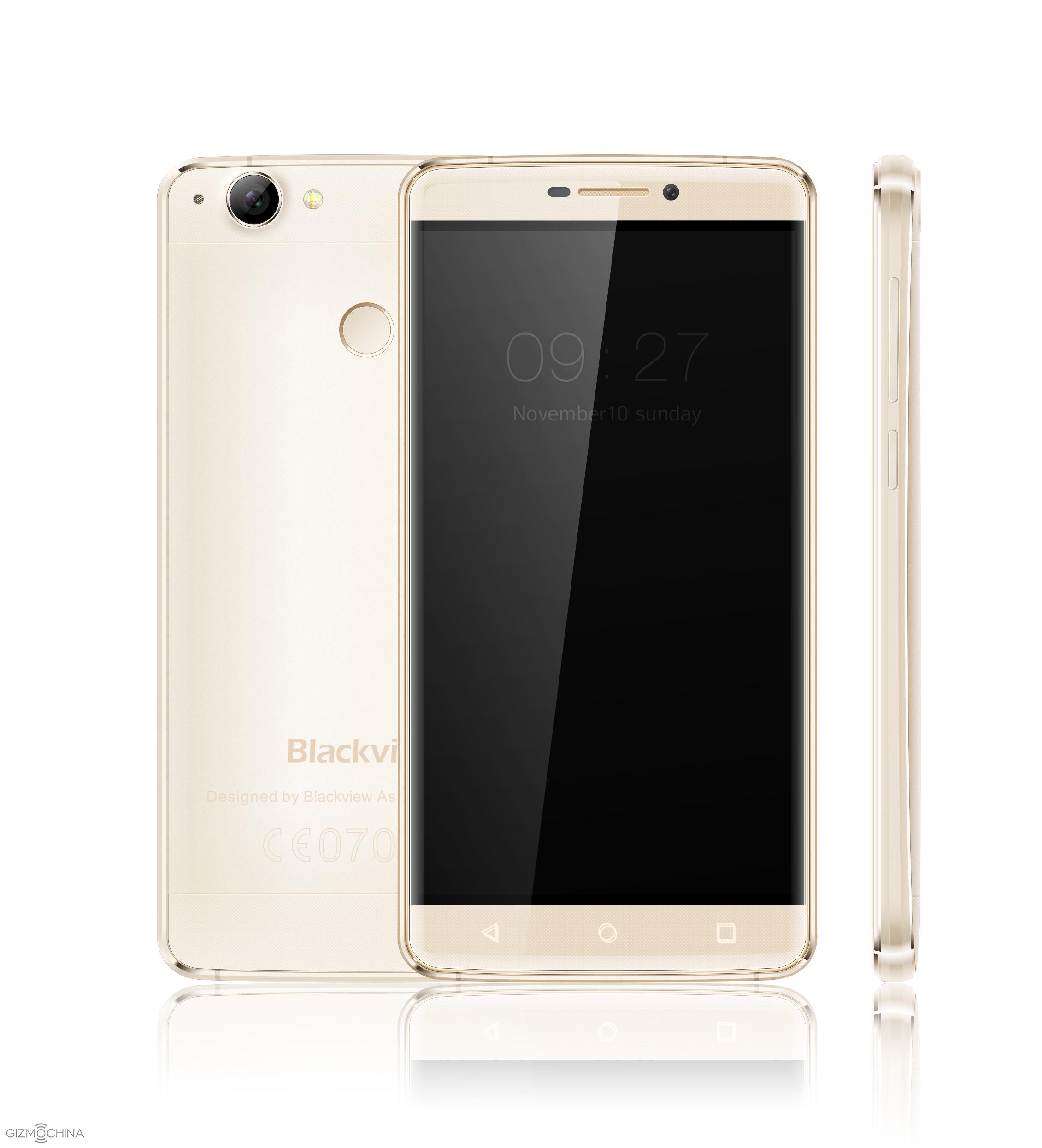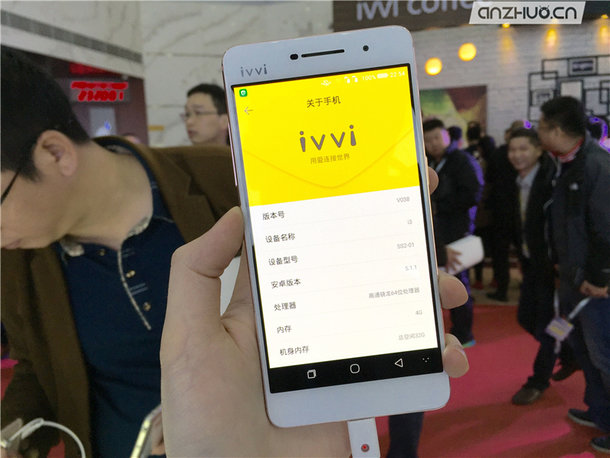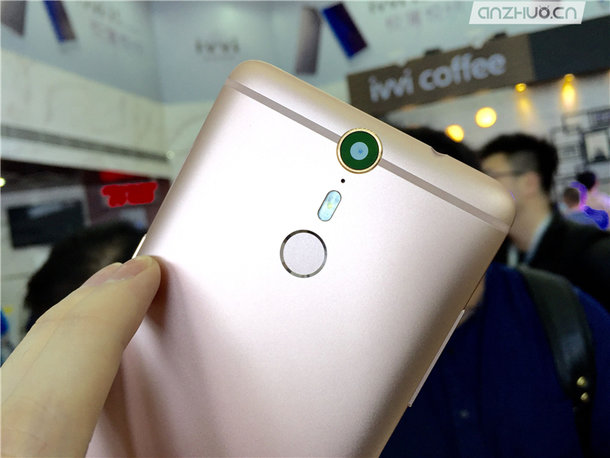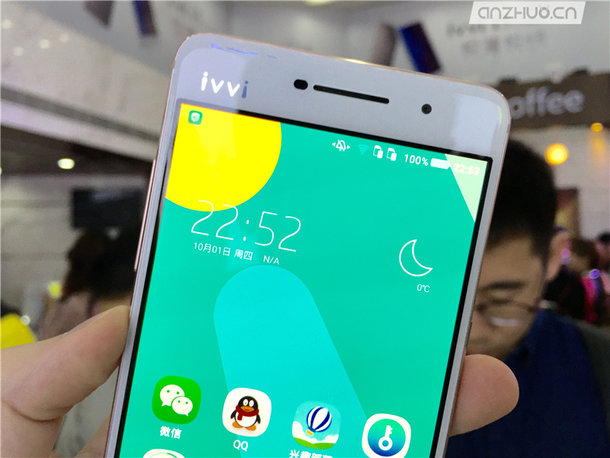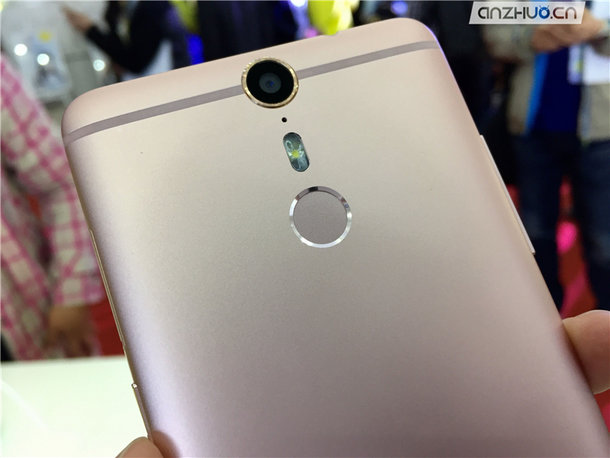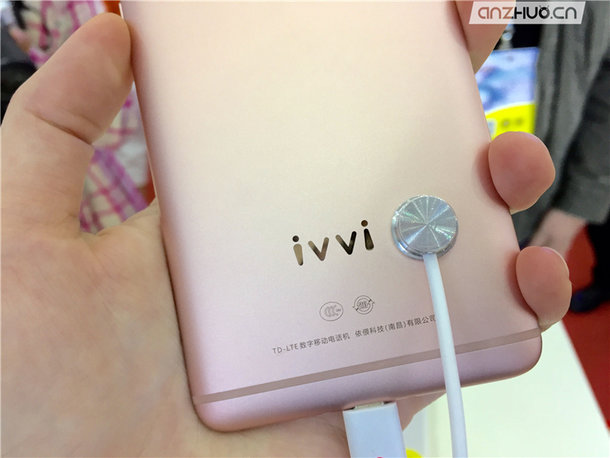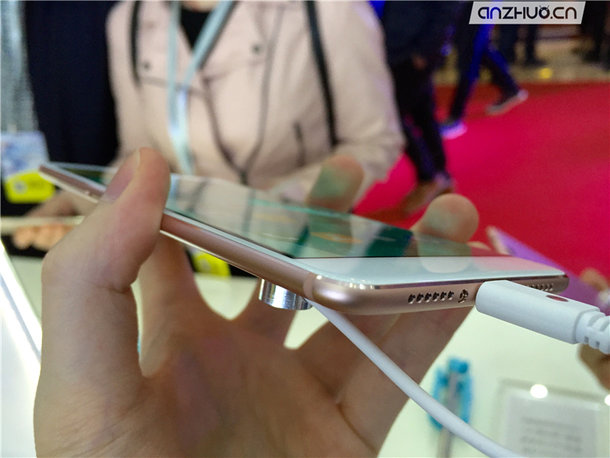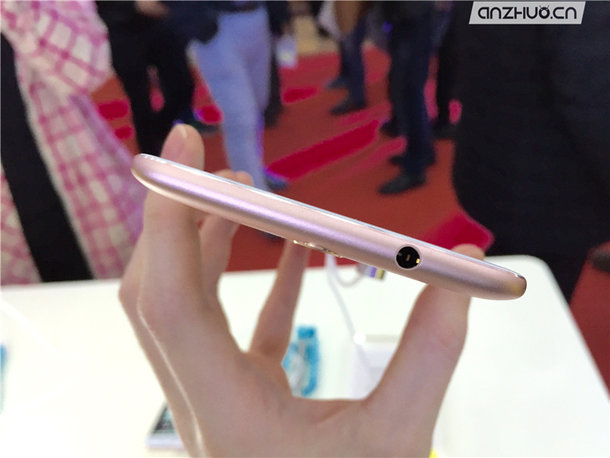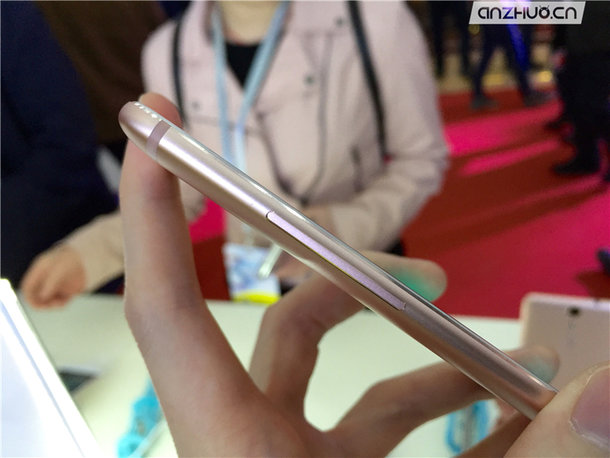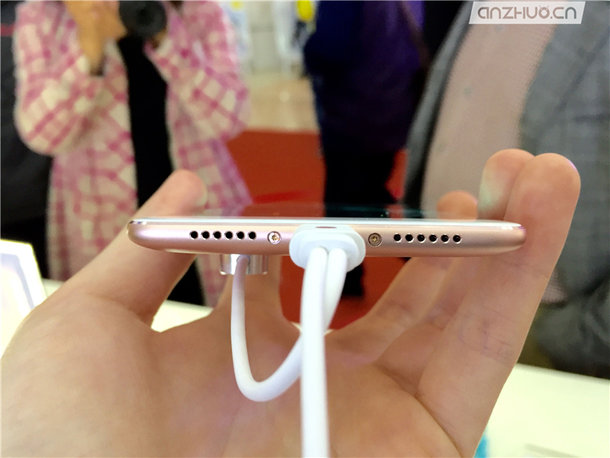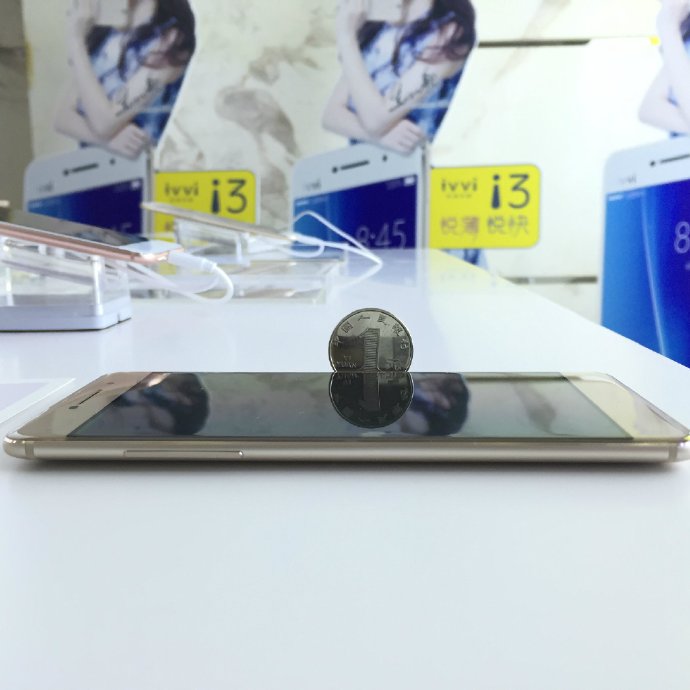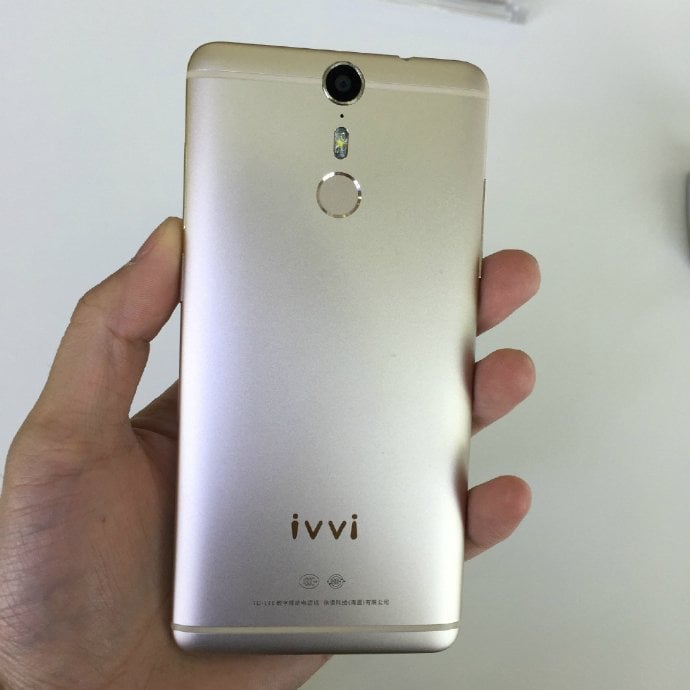
Recently, Gionee released an upgraded version of the Gionee V188 called the Gionee V188S. Unexpectedly, this phone is being sold at the same price as the original, 1499 RMB (244.76 USD).
So, what is the difference between the two? The original version has support for a single SIM card while this version has support for dual-SIM and dual-standby. This phone has support for TD-LTE (China Mobile 4G), TD-SCDMA, and GSM.
Another interesting feature about the Gionee V188S is its battery. It uses a 5200mAh Samsung battery and can be charged via OTG. Although the rear cover can be taken off, the battery cannot be changed.
As for its other specs, the Gionee V188S has the MT6582 and MT6290 chips, 1G RAM, 8G ROM (can be expanded to 128G), a 5-inch 720p OGS screen, and a 2mp/8mp dual-camera. Its OS is the Android 4.4-based Amigo, and it has support for an e-compass and Hotknot.
Recently, Lenovo released a low-end version of the Lenovo Golden Warrior A8. Its model number is “Lenovo A808T-i. This phone went on sale a few days ago.
The original version had 2G RAM and 16GB ROM. This version saw its memory cut by half. As a result, the Lenovo A808T-I only has 1GB RAM and 8GB ROM. This is basically the main difference between the two.
The CPU, display screen, etc. have not changed. The Lenovo A808T-I still has the 1.7GHz MTK6592 octa-core chipset, a 5-inch IPS display screen with a 720p resolution, a 5mp/13mp dual-camera, a 2500mAh battery, and support for 4G, 3G, and GSM internet.
The Lenovo A808T-I costs at least 830 RMB (135.52 USD) in some stores while, at most, it costs about 900 RMB (146.95 USD).
Today, OPPO released more news about their upcoming OPPO N3 phone (due to be released on October 29). According to the company, the OPPO N3 will sport a 16mp camera with 1 2/3in digital camera sensor. They even posted an exploded view photo of it. However, some netizens think there is something else about the photo. Many netizens point out what appears to be a fingerprint scanner on the back of the OPPO N3. As the photo shows, like many Android phones with fingerprint scanners, the OPPO N3’s fingerprint scanner is located on the back of the cellphone, and like the iPhone 6, you have to press it not rub it with your finger. The OPPO N3 will also have an electronically-controlled rotating camera (16mp) and VOOC rapid charging technology. It will also have a 5.5-in FHD screen and the Qualcomm Snapdragon 801 processor.
Recently, Philips released a new cellphone that uses the just-released YunOS 3.0. It is called the Philips Aurora I966, and it looks like this smartphone comes some of the best hardware around such as the Qualcomm Snapdragon 801 quad-core processor (8974AC, quad core, 2.5GHz), a 5.5-in 2K UltraHD screen, and a 20.7mp camera. It also has 3GB LPDDR3 and 32GB ROM. It is a shame that it does not support expanded memory cards. Many netizens have also focused on the phone’s design. Below is our review of this new phone.
Parameters
Philips Aurora I966 parameters
CPU
Qualcomm Snapdragon 801 8974AC, quad-core, 2.5GHz
RAM
3GB LPDDR3
ROM
32GB
Display
5.5-inch, 2560 x 1440
Camera
8mp wide-angle/20.7mp, dual-LED
OS
YunOS 3.0
Battery
3000mAh (undetachable)
Internet
TDD-LTE, FDD-LTE, TD-SCDMA,GSM, WCMA, 5 modes and 13 frequencies
Unboxing
Front and appearance
The Philips Aurora I966 sports a very good-looking appearance due to the big changes Philips did, such as the round design.
This phone is the first smartphone to sport a curved 3D glass screen.
Above the screen is the phone’s 8mp front-facing camera with a 28mm wide-angle lens, so you can have more people join you in your selfie.
At the bottom of the front side are the return, Home, and menu buttons. There is also a background light so that you can use your phone at night. The screen is not too touch-sensitive which is good.
On the top are the 3.5mm earphone jack and secondary noise-cancelling microphone.
On the base are the primary microphone and Micro USB port which are neatly placed.
The Philips Aurora I966’s frame and body are black. It has a thickness of 8.2mm and it does not disappoint. The volume and lock screen buttons are placed on both sides.
Back cover
The surface of the back is flows well with the front. It feels very slippery and sleek.
It also sports a 20.7mp Sony Exmor RS camera with F1.8 lens. It also comes with dual-LED light.
The cellphone’s battery is built-in and the rear cover cannot be taken off. As a result, the Micro SIM card tray is lookated at the side. This phone has support for TD-LTE Band38/39/40, FDD LTE Band7/3, TD-SCDMA Band34/39,WCDMA Band1/2/5, and GSM Band2/3/8.
Display screen
As stated earlier, the Philips Aurora I966 has a 2K screen (2560 x 1440). Its resolution 1.64 times that of the iPhone 6. It is also covered by Gorilla Glass 3. It also has a high scratch-resistance and is very durable.
This phone also enjoys a very high brightness (over 500cd/m2). Theoretically, this is 30% higher than that of a regular FHD screen. Even when you use it outside during a bright sunny day, the quality will still be good. Here are some samples.
With a size of 5.5 in and a resolution of 2560 x 1440, we can estimate that this phone has a pixel density of 534ppi, which already surpasses the standard for a Retina display screen.
YunOS 3.0
Here are some pictures of the user interface of the YunOS 3.0 which was launched along with the Philips Aurora I966 which uses this OS.
From the pictures, you can see that the rectangular icons have a similar style. Everything is organized neatly. The colors are also pleasing to the eye.
It also has a voice assistant like Siri. Even when you are offline, you can still use it to make calls or send a text.
The YunOS 3.0 also allows users to do type in different ways such as typing by voice.
This phone is also NFC-supported.
Camera interface and sample photos
The Philips Aurora I966 has an 8mp front-facing camera with a 28mm wide-angle lens which is good for taking group selfies. Its main camera is also a 20.7mp Sony Exmor RS camera (IMX220). It also comes with dual-LED lights.
There are many things you can do with this phone’s camera. Features include taking videos, panorama shots, etc.
Hardware and performance
The Philips Aurora I966 has some of the most advanced hardware right now. It has the Qualcomm Snapdragon 801 80974AC quad-core processor (2.5GHz) and Adreno 330 GPU. Its RAM is 3GB (LPDDR3) while its ROM is 32GB. It does not support expanded memory cards, however.
One way of grading its performance is by looking at its benchmark scores:
Dalushi: 42408
Antutu: 38979
Linpack: 417.081;699.862
Quadrant Advanced(10802)
Vellamo: 1763;1191
Multitouch tester: 10
Nenamark 1: 59.5fps
Nenamark 2.4: 59.4fps
Battery life
Like its predecessors, one of the biggest features of the Philips Aurora I966 is its battery endurance.
With the use of L&CABC stand-by technology, theoretically, the power used by the background light can be reduced by 60%. This goes well with Philips’ main standby technology (Smart Power Technology). It can also lower power consumption for gaming and net surfing. This phone also has support for the new QuickCharge 2.0 technology which can fully charge your phone faster.
Even when you close “power conservation mode”, you can still use WIFI and the screen at maximum brightness without any problems. It’s even better of course, when you turn it on. You can end up using the phone for about a day and a half.
Conclusion
The Philips I966 is a big improvement from its predecessors when it comes to design and hardware. Its use of the YunOS 3.0 has personalized this phone even further, enough to match its rivals.
What’s up guys, good news here. Meizu’s official dustributor just send me a lot of $105 Coupons, I can’t tell their domain here cause Meizu does not allow their international distributors to price Meizu MX4 under $449. But I can email it to you about where to buy Meizu MX4 for $344. Time is limited, I promise you you can’t get any phones better than Meizu MX4 at $344. Just Join the activity below, leave your email in the comment below, I will send the coupon code to your email one by one in a few days. Be sure to use every coupon in 24 hours. You can email me, if you didn’t get the coupon.


Oppo Find7 had captured people’s attention from the time it get leaked, it’s more than 1 year now. But it’s still Oppo’s flagship phone right now. Maybe it’s because the launch date of Oppo N3 is coming, the lauch of Xiaomi Mi4, IUNI U3, Meizu MX4,Zoppo ZP999 made Oppo decide to get a $30 price cut on Oppo Find7. And Oppomart priced the Oppo Find7 at $569
Let’s feel the charm from the wearable technology, feel the change of our lives from the wearable technology in advance. Many people consider that smart wearable products are far away from their lives, but you who are fashion and smart, get our smart bracelet.
Main Features: Music: Users can play the built-in music of device. Rec: Can operate the function of record / check record / play record / delete record and so on. Massage: Startup the massage function, the bracelet will vibrate so as to achieve the result of massage. Time: Hourly chime function. Start up this function, it will vibrate you any time. SMS: It can sync message with your mobile phone. But this function is only supported by pairing with Android 4.1 mobile system or above. Users need to install a software named smart bracelet in the mobile. Remote camera: Works as a remote camera shutter to control your smartphone back camera. This feature only supports Android system, you need to install the APP. Calls: You can check the call data in bracelet, like missed calls / dialed calls / received calls / all calls. Contacts: Users can check the mobile phone book in the bracelet, can also choose the phone NO and call it in the bracelet. Setting: You can set time and data, language, hand free on or off, set on or off, set reset and so on. Mobile sync music player: Connect with smart bracelet and mobile phone, then play music in mobile, the music will sync in.
These days, it is not just cellphone manufacturers that are producing third-party operating systems. Even non-cellphone companies are doing it too. Take, for example, the new Freeme OS. An OS can be evaluated based on aesthetics and its functions, that is, whether it looks good or whether it is practical. Here we will evaluate the Freeme OS by comparing it to another influential third-party OS, the MIUI (we will use the latest versions for both, the MIUI 6 and Freeme 4.0).
Interface
Since the release of the iOS7, many re-customized operating systems have been copying Apple by adopting a “flat” design. The MIUI 6 and Freeme are no exceptions. Furthermore, both only have a one-level menu. The MIUI 6’s interface is similar to its predecessor, the MIUI V5, with its simpler-looking icons. The Freeme OS has already reached been upgraded to its fourth version.
Regarding their settings menu, both OS have a white background with a black font. The MIUI 6 uses a bold font. Furthermore, the MIUI 6’s settings bard is divided into blocks. You can change from one part of the settings menu to another by just touching its block. The Freeme OS, on the other hand, uses a similar design to the Meizu Flyme. You can change the text describing each tab by scrolling your finger left to right. Furthermore, the Freeme OS has the settings menu divided into two blocks. On the left side is the basic Settings menu, while on the right side is the expanded menu.
On appearance, the design of the newcomer, the Freeme OS, is not as exquisite-looking as the experienced MIUI, but it still looks good. If it makes some improvements later in things such as the font in the menus, then, it would probably become more beautiful.
The MIUI usually offers more services. The MIUI 6, for example, promotes many internet services such as Xiaomi events or yellow book functions. The webpage version is filled with all kinds of services.
Through its partnership with Cheetah Mobile, Xiaomi also added new upgrades with the MIUI by adding a trash bin, internet assistant, power management center, etc.
The Freeme is not without its strengths as well. One of Freeme OS’ best features is its letting its multi-task menu floating over the interface, similar to iPhone’s Assistive Touch. In the screen, there is a small white circle that you can click to open the multi-task function. However, unlike with the iPhone, the multi-task bar shows apps such as the calculator and video player. It’s very practical.
Conclusion: After several years since it was first launch, the MIUI has changed and improved a lot over the years, while the newcomer, the Freeme OS, still has a lot of catching up to do. Still, it’s not off at a bad start and may still improve over time.
It’s official One Plus One finally plans to shift to pre-order system.
You can pre-order OPO starting from October 27 at 15:00 GMT . Unfortunately, you will just have one hour time window to place an order for the OnePlus One. The pre-order system will not completely swap ongoing invites system, both runs homologous.
Carl Pei, director of OnePlus Global, earlier in his blog mention that,
“During a limited time window, you will be able to place an order for the OnePlus One. If we have the items in stock, we’ll ship immediately. If we don’t, it will automatically become a pre-order. No matter what, we’ll always tell you our best approximation for when it will ship before you submit the payment authorization (we’ll reserve the payment and charge you when we ship).
There’s a time limit, but no limit on the amount of orders that can be made. If we get a lot of pre-orders, we’ll simply show you a longer shipping estimation date. Any time after the pre-order time window closes, you’ll be able to forfeit your place in line, cancel the order, and release the payment reserve if you don’t wish to wait any longer. If you receive an invite while waiting for a pre-order to ship, you can apply it to skip the pre-order queue and have your order shipped immediately.”
So this move is going to be a quite big bet for the company, though this might just be a small step towards availability from mainstream consumer electronics, with already fan base all over the world this would surely bump up its share and shipment. They have pre planned in such a way that there will be no mess created between supply and demand.
Not just this, OPO accessories will be sold at special offered prices when added to your order only during pre-order period.
What’s up guys, this is Frank here. As the guy who had known almost every phone in China, I’d love to help those people who are still confused whether to buy a cheap smartphone from China or how to choose between the devices. I will answer every question on the comment below in 12 hours!
And I will keep updating valuable tips in this article.
[socialpoll id=”2228303″]
This afternoon, Alibaba formally launched the new YunOS 3.0. This operating system’s biggest feature is that it includes CloudCard service where the apps are presented in the screen as a bunch of cards. You would not have to go download the apps that you need.
Also, if you want to watch a movie or eat out, you can click on the cards that say so and you may book reservations at a restaurant or buy movie tickets.
Below are photos of the new OS’ user interface. What do you think?
The first cellphone to use the YunOS 3.0, the Philips Aurora I966, was launched along with the OS. This device has the kind of specifications that you would see in a flagship device. Right now, those interested can pre-order the phone in YunOS’ official website even though they have not yet announced the price. The Philips Aurora I966 has a 5.5-inch curved 2K 3d screen, 3G RAM, a 20.7mp camera, and fingerprint sensor.
You can also pre-order the phone at the Yun Mobile specialty store. Here, the promotional price for the Philips Aurora I966 is 3999 RMB (652.92 USD). This is not too bad but if you look at the pre-order page, it says that the market price is close to 8999 RMB making it one of China’s most expensive cellphones.
Hopefully, there’s a more affordable price as it is set to go on sale on November 1.
Vsun mobile has been releasing a lot of new products overseas lately. In their official English website, they posted information on their H smartphone series. One of those phones is the Vsun H3.
The Vsun H3’s design is something else. There are spaces below and above the front screen. Together with the space that has the receiver and buttons, this design makes the phone look longer and slimmer. This rendering also shows that the Vsun H3 has an incredibly thin frame. This could be considered one of the slimmest phones around.
As for its specs, the Vsun H3 will use a quad-core chipset. It has a 5-inch 720p screen, 1G RAM, 4G ROM, a 2mp/8mp dual-camera, and a 2500mAh battery. It also supports dual-SIM cards and 3G networks and its operating system is the Android 4.4. kitkat.
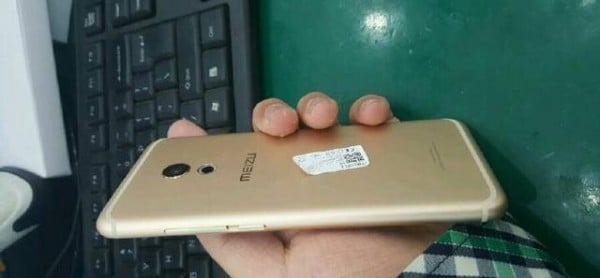
A manager at Meizu recently posted some photos of a new version of the Meizu MX4 with a different look. He also said that he did not know how many Meizu MX4 will be manufactured and when it will be manufactured.
From the pictures, it looks like the rear cover of this Meizu MX4 is made of the same material as the MX3’s. Other than that, it looks pretty much the same as the MX4 that has already been released. This actually looks really good and it would be a shame if they did not release it.
This afternoon, the YunOS 3.0 will be launched in Beijing, and along with it, the first device to use it. Here are some pictures of the new Philips Aurora i966. The phone’s body appears straight and it also sports a so-called 3D screen (as previously reported). It is 5.5 inches and has a 2K resolution. It also has the Qualcomm Snapdragon 801 and 3GB RAM.
This device also comes with a 20.7mp Sony rear-facing camera and 8mp front-facing camera. It also has support for dual-4G and a fingerprint sensor.
Huawei’s Honor subsidiary recently posted four posters in their Weibo account showing the number “4” and the letter “X.” They are obviously promoting the upcoming Huawei Honor 4X. They also have slogans such as “Transparency that cannot be found anywhere else”, “Irresistible”, “Very affordable”, and even “highly intelligent.”
The “transparency” must refer to how this phone supports all bands and that the user can surf the web everywhere. The “irresistibility” probably means that this phone has a very beautiful and exquisite appearance, as well as support for dual-SIM and powerful camera specifications. The “very affordable” obviously refers to the price, while the “intelligent” part implies that it will use a powerful processor. Many believe that the Huawei Honor 4X is the recently-leaked Honor Che1-CL20 which supports a 6-mode network, and TD-LTE, LTE-FDD, TD-SCDMA, WCDMA, CDMA (1x, EVDO), and GSM.
A low-end version of the Voto X6 octa-core cellphone is soon to hit the market, called the Voto X6 Youth. Not surprisingly, its core specs are weaker than the original’s. Its RAM and ROM have been lowered from 2G and 32G, respectively, to 1G and 8G. Its rear-facing camera (OV CMOS) still has 8mp but its front-facing camera’s pixels were lowered from 13mp to 2mp.
Other than that, the other specifications are the same. The Voto X6 Youth still has a 5.5-inch 1080p screen, 2300mAh battery, the 1.7GHz MTK6592 octa-core chipset, and support for WCDMA and GSM dual-SIM.
The design of the Voto X6 Youth is like the original, and is available in black and white. This version goes on sale on October 23 and is 500 RMB cheaper than the original, costing 999 RMB.
It looks like Huawei has gotten hooked on big-screen devices since the release of the Huawei Mate 7. Recently, the Ministry of Information and Industry Technology website release information on a new device from Huawei.
This device has the model number Huawei SC-CL00 and received its network license on October 15. It is said to have support for GSM, CDMA 1X, CDMA 2000, FDD LTE, TD-LTE dual-SIM. This is most likely the China Telecom version.
A further look at its MIIT entry shows that its dimensions are 161 x 84.5 x 9.5mm and that it weight 173g. As for its specifications, it has a 6-inch screen with 1280 x 720 resolution, a 1.4GHz quad-core processor, 1GB RAM, 8GB ROM, 2mp/8mp dual-camera and support for micro-SD expansion cards. It runs on the Android 4.4.2 OS.
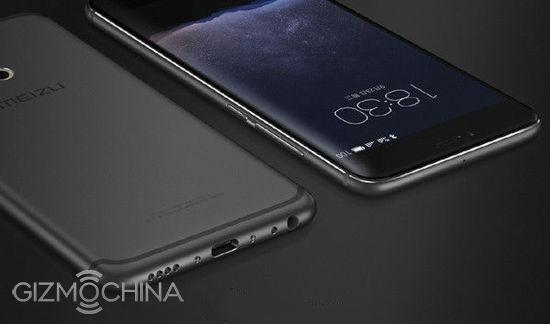
Everyone knows that the Meizu MX4 Pro will have a fingerprint scanner. Now, some reports say that it will continue to use the oval Home button that was sported by the Meizu M8. A rendering of the phone was recently posted online seemingly confirming this. The rendering also shows that it has a gold frame that looks exquisitely made.
According to Meizu, the Meizu MX4 Pro’s fingerprint scanner will not be located at the back but, as many leaked photos show, on the front and will be integrated with the Home button. It is not known what solution they will use as of now.
The launch of the Meizu MX4 Pro was still postponed, but nevertheless, it looks a phone that is worth waiting for.
It was recently reported that the first cellphone to use the new YunOS 3.0 OS will use a curved 3D display. Many cellphones in China use curved 2.5D screens, but this is the first Chinese phone to use a 3D one. It will also have a fingerprint scanner that is compatible with the YunOS 3.0’s security features. It will also have support for payment by fingerprint recognition, as well as 5 modes and 13 bands. It will also use a more powerful charger.
What could this phone be? It is none other than the Philips Aurora I966. This phone also sports a 5.5-inch 2K screen and a 20.7mp main camera. It also has 3GB RAM, and its processor is said to be either the MTK6595 or the Snapdragon 801.
The Philips I966 will make its debut at the YunOS 3.0’s launch and will go on sale on October 21.
We use cookies on our website to give you the most relevant experience by remembering your preferences and repeat visits. By clicking “Accept”, you consent to the use of ALL the cookies.
This website uses cookies to improve your experience while you navigate through the website. Out of these, the cookies that are categorized as necessary are stored on your browser as they are essential for the working of basic functionalities of the website. We also use third-party cookies that help us analyze and understand how you use this website. These cookies will be stored in your browser only with your consent. You also have the option to opt-out of these cookies. But opting out of some of these cookies may affect your browsing experience.
Necessary cookies are absolutely essential for the website to function properly. This category only includes cookies that ensures basic functionalities and security features of the website. These cookies do not store any personal information.
Any cookies that may not be particularly necessary for the website to function and is used specifically to collect user personal data via analytics, ads, other embedded contents are termed as non-necessary cookies. It is mandatory to procure user consent prior to running these cookies on your website.