Advertisement

Mi 2 will also have MIUI 6 OS

The Mi 2/S is the most sold cellphone from Xiaomi and has sold up to 15,000,000 to date. Unfortunately, there had not been any plans to let owners of the Mi 2 upgrade their OS to the new MIUI 6…until now.


MIUI 6 upgrades are already available for the Mi 3 (China Unicom/China Mobile) and Mi 4 open edition although the China Mobile edition of the Mi 3 is still undergoing closed beta tests. The next step is to include an update for the Mi 2 and it looks like it is finally happening.


Yesterday afternoon, MIUI announced in their official Weibo account, @MIUI_ROM, “MIUI 6 for the Mi 2 will undergo closed beta tests at the end of the month.” In addition to the Mi 2, the MIUI 6 should be tested for the Mi 2S and Mi 2A.


Closed beta testing should go on for two weeks and we can expect an open edition to come out in October.


s_acc30f23003c469389a005c80a079f2f

Meizu MX4 vs Xiaomi Mi4: War of the affordable flagships

5370897_8000-600-1_thumb


xiaomi-mi4


After months of rumors and speculations, Meizu MX4 is finally official. The company unveiled the device yesterday in a specialevent. 

With MX4 in the picture, things get more confusing for consumers who are looking to buy an affordable flagship device. Xiaomi Mi4 is probably MX4’s biggest competitor, given the similar specifications and pricetag, so we decided to compare both these devices in several areas to see which one comes out as a winner atleast on paper.

Design

To be frank, this is an area where we cannot simply pick out a winner. Both the devices are well built, with a solid metal design and both deserve the flagship title with its premium design. But, some like the new Meizu MX4’s design over Xiaomi’s Mi4, so it depends from person to person. That’s why we leave it up to you to decide which one you like on the basis of its design.

www.xiaomishop.com_1406028641

2014090217283142851


MX4 measures 144 x 75.2 x 7.9mm while the Xiaomi Mi4 measures 139.2 x 68.5 x 8.9 mm. As you can see the dimensions are almost the same with both the devices weighing around 148 grams.

Screen

Meizu’s MX4 comes with a slightly larger 5.36 inch display as compared to the 5 inch IPS panel found on Xiaomi’s Mi4. MX4 sports a resolution of 1920 x 1152 pixels while the Mi4 comes with a 1920 x 1080 pixel resolution. The smaller display gives Mi4 an edge over MX4 as the former has a pixel density of 441 PPI as compared to 418 PPI on the Meizu’s flagship. But personally we don’t think that makes much of a difference in clarity and sharpness.

The thin bezels on both the devices are a plus given that it makes operating the device much easier.

So, it all boils down to your screen size preference.

Hardware

Both the devices are extremely snappy and packed in with powerful hardware. Meizu’s MX4 comes with MediaTek 6595 eight core processor along with 2GB RAM. On the other hand, Mi4 comes with Qualcomm Snpdragon 801 processor with 3GB RAM. The 801 Soc with an extra gig of RAM gives Mi4 a slight edge over the MX4. However, Mediatek’s eight core chipset has shown promise and we would have to get our hands on the device to check whether its as fast and responsive as the Mi4.

As for the GPU, Meizu went with PowerVR G6200 as compared to the Adreno 330 found on Xiaomi’s flagship.

For now, Xiaomi’s Mi4 looks better than the MX4 in hardware, but we expect the actual performance to be more or less the same.

To be frank, we were quite surprised to see that Meizu went with Mediatek on their flagship device rather than experimenting with a low tier model first. So, we are looking forward to play with the device to see whether this was a good decision or not.

Camera

While Mi4 looked better when it came to hardware, camera is one area where MX4 is miles ahead. Meizu has incorporated a 20.7 MP Sony rear camera on the device with f/2.2 aperture and dual tone dual LED flash. On the other hand, Mi4 only comes with a 13MP shooter. So, MX4 would naturally capture better pictures with true colors (thanks to the true tone flash) as compared to Mi4.

But when it comes to front camera, the 8MP shooter on Mi4 easily outdoes the 2MP Sony sensor on MX4.

Connectivity and Battery

Both the devices offer Bluetooth 4.0, Wi-Fi ac, GPS, A-GPS and LTE network support. MX4 comes with a slightly larger 3100 mAh battery while the Mi4 comes with a 3080 one. The larger screen should reduce the battery life on the MX4, but we don’t think that the difference would be significant.

Software

Mi4 runs Xiaomi’s MIUI 5.0 OS on Android, while MX4 comes with the latest Flyme 4.0 OS based on Android 4.4. Both are different UIs with their own set of positives and negatives, so we cant really comment on which one’s better.

Xiaomi’s MIUI is much more popular than Flyme but Meizu has incorporated a lot of new security and special features on its new OS and even offers 40TB of cloud storage with the device.

So, we leave it up to you to decide which one’s better.

Pricing

Meizu has smartly priced MX4 below Mi4, which should make the already crowded market even more competitive. The device retails for $293 for the 16 GB, $325 for the 32 GB, and $390 for the 64 GB which is around $10-$20 less than what you have to pay for different storage variants of Xiaomi’s flagship.

Conclusion

We think both the devices are equally good and given its pricetag, these devices offer much more value for money than what you get from other flagships.

Xiaomi’s Mi4 managed to slightly outdo MX4 in hardware and software categories, but the latter was much better when it came to the camera and pricing.

But end of the day, the differences are trivial and we don’t think it will be fair to pick one as the winner of this comparison as both are equally good.

So which would would you pick, Xiaomi Mi4 or the newly announced Meizu MX4?


Buy Meizu MX4 now for $317

Google to add GPS feature in their Android Smartwatches

Android smartwatches to soon have GPS

Google has a lot of updates slated in its Android wear software which will be released by the end of 2014. Google’s Director of Android Wear, Mr David Singleton, said that the wearable android devices would support thousands of the nearly 1 million programs on Play Store. These apps could be downloaded by the users on to their Android Wear.
Google also has several updates in store for Android Wear like its ability to be paired with a Bluetooth headset. GPS feature will also be enabled in these watches so that one can track their fitness sessions by geolocation. Thus, if one is planning to go on a run then all they need to do is put a few songs in their watch which can be played through a Bluetooth headset and the run can be tracked by the GPS feature.

The market of wearables especially the smartwatch section is set to gain a lot of momentum. Already three devices in this range have been announced i.e. Moto 360 ($250), LG G Watch ($230) and Samsung’s Gear Live ($200). Some companies are expected to launch new products in the wearable range at the IFA trade show in Berlin. Even Apple might reveal a wearable device at the launch of the latest iPhone on 9th September. The market of wearables is still in its nascent stage and there is loads of scope for new products, new technologies and new platforms in this arena. Only time will tell, how many mobile phone manufacturers will find this a lucrative investment and would launch new android enabled wearable products.

ZTE announces to launch more mid-segment handsets in the range of $100 to $200

ZTE to launch new phones in mid-segment

As mobile phone manufacturers are trying their best to drop their prices, ZTE wants to focus on ‘value for money’. The Chinese Manufacturer has said that they want to focus on devices priced in the range of $100 – 200 which is equivalent to INR 6000-12000. They would use phones priced in the above mentioned range to drive their sales in India and form a place for them in the Indian smartphone market.

CEO of ZTE India, Mr Yuan Kang also said that India was a huge market and they were confident that their range of phones would definitely suit the Indian customer mind set. He added that they were planning to launch around 5 handsets online and 3-4 models offline.

ZTE has recently launched their new model, the V5 to be sold online on Snapdeal.com. This phone is priced at INR 10,999. The ZTE V5 has a 5 inch screen and is powered by a 1.2 Ghz quad core processor. They prime feature of this handset is the 13 mega pixel rear camera and the 5 mega pixel front camera. Other features include 4 GB internal storage (expandable upto 32 GB) and a 2,400 mAh battery.

Sale of smartphones in India has grown by almost three-fold to reach around 44 million in 2013 due to the availability of pocket friendly devices brought out by firms like Micromax and Karbonn. India’s market is led by Samsung and companies like Micromax, Karbon and LAVA also have significant shares. Google is also going to launch its budget handset in India soo which will further intensify the competition.

ZTE launches RedBull V5 in India at $180

ZTE launched its latest smartphone, the V5 in India at a price of INR 10999. The company is expanding its smartphone base in India. The phone will be available on Snapdeal.com. However, there are no reports confirming the physical sale of the phone at retail stores. The e-commerce site, Snapdeal.com is also offering 1GB data per month for the first three months with the purchase of this handset for prepaid subscribers of Aircel.

ZTE Redbull V5
ZTE Redbull V5 in India

ZTE V5 is the company’s first Andoid KitKat powered smartphone in India. The newly launched phone has the following key features –

  • 5-inch, 720 x 1280 pixels HD display protected with Dragontrail Glass.
  • Powered be a quad – core Qualcomm Snapdragon 400 processor
  • 1GB RAM
  • Android KitKat 4.4 with Nubia 2.0 UI
  • 4GB in – built storage which is expandable upto 32 GB with micro SD card support
  • 13 – megapixel rear camera with LED flash
  • 5 – megapixel front camera
  • Rear camera has autofocus, special effects, Panorama, and face detection features.
  • Connectivity options like 3G, Wi-Fi, Micro-USB and GPS
  • 3.5mm audio jack and FM radio
  • Fuelled by a 2400mAh battery which give up to 6 hours of talk time and 300 hours of standby time
  • Dual sim support

The ZTE V5 is currently available in White colour only. The ultimate selling point of this phone is its high end camera specifications. This smartphone might face competition from two phones launched recently in the same price range – Karbonn Titanium S19 and Lava Iris Pro 30+.

Lenovo launches A536 with Android 4.4 KitKat and 5-inch screen

Lenovo A536
Lenovo A536

Lenovo is known for its classy range of products. The new smartphone launched by Lenovo is an economic phone. Lenovo A536 is the new sensation in the market. This smartphone is making use of KitKat version of Android. The most captivating thing about the Lenovo A536 is its price. The smartphone is available in market in just Rs. 8,999. The phone was launched in India via the online store of the Lenovo, i.e., Do store and all other physical outlets of the Lenovo. The android smartphone was launched in Indian market on Tuesday. The phone has all the exclusive and premium features and specs. This device is going to be blockbuster and real profit for the Lenovo. The smartphone is a dual-SIM device. The exclusive trait of the phone is to run on the latest version of the android. Some important specs of Lenovo A536 are listed below.

Specifications

Screen display- 5-inch Full Wide Video Graphics Array

Processor- 1.3GHz quad-core MediaTek processor together with 1GB RAM.
Storage-   8GB internal memory storage, expandable up to 32GB

Camera-   5 mega pixel rear camera with autofocus and LED flash; 2 mega pixel front camera.

Battery- 2000mAh Li-ion battery and can deliver up to 15 h usage time and up to 300 h standby time.

The phone is available in black and white variants. Lenovo is using 4.4 KitKat version of Android for its S series of smartphones like S820, S650, S930, S920 and S660. Lenovo has also announced some new smartphones for the IFA, Berlin event. The major and eye-catching device amongst the new launch of Lenovo is its new smartphone, Vibe X2.

ASUS unveils its Android Wear ZenWatch at IFA 2014

ASUS ZenWatch
ASUS ZenWatch

ASUS has finally unveiled its Android wear Zen Watch at IFA, Berlin and they have priced it at just $250 which makes it cheaper that many other available smartwatches.

The news has been revealed by the CEO of the company, Jerry Shen. This new smartwatch, ZenWatch, is an Android based wearable and claimed to be the cheapest smartwatch available in the market. The company has set the price of ZenWatch at $250. Earlier rumours suggested it to cost at $200.

The craze of android wearable is spreading amongst all the nations like a viral fever. The youth is very much interested in this new technology and are considering it to be a cool gadget for them. No company is shirking away from participating in the race of new android wearable. The name of new participant in this race is Asus.

Analysts of smartphone market are predicting it to be a highly economical and tough competition of LG G Watch and Pebble Steel. There are other sound competitors of the ZenWatch in the market like Samsung, Apple, etc. But this tag of cheapest smartwatch is definitely going to help Zenwatch to capture a major share of the smartwatch market. Reports suggest that the smartwatch will be available in the US market around the month of October.

Asus launches 64-bit Quad-core MeMO Pad 7

Asus Memo Pad 7
Asus Memo Pad 7

Asus is launching new devices at a drastic speed. Asus has just now announced its new MeMo Pad 7. Asus MeMo Pad 7 is fully loaded with some latest technologies. MeMo Pad 7 is a stylish device, which will be a status symbol amongst the youth. The MeMo Pad 7 from Asus has all premium features like CPU of Intel, a 64-bit quad-core Z3560 (1.83 GHz),   high definition screen display with an increased resolution of 1920 x 1080. The forerunner of this device was having the screen resolution of 1280 x 800. The MeMo Pad 7 resembles with “wallets and clutch bags” because of its artistic and highly visual design. The frame of memo Pad 7 is made up duralumin.

The MeMo Pad 7 has some elite and finest features which are listed below:

  • RAM- 2 GB
  • Internal storage- 16 GB, this can be expanded up to 64 GB with microSD card
  • Camera- 5 mega pixel primary camera and 2 mega pixel secondary camera for the smart selfies.

Asus has also revealed about the user friendly and economical price of this new and innovative device. The price has been set at $ 260 or €199. The MeMo Pad 7 is available in stylish color range including – black, red and golden. We have rumours that soon the company will also launch the LTE version of this device. The smartwatch by Asus has already grasped so much of attention by the fans from all around the world. Let’s see how much does this device rule the electronics market.


Lightest Windows Phone smartphone is available for pre-order

Xolo’s first Windows Phone smartphone, the Win Q900s is now available in India for just 166$. The smartphone was initially launched in the month of June and is now available for retail and is in stage of pre-order at e-commerce retailer Snapdeal.com.untitled(4)

Win Q900s runs on Windows 8.1 OS. This phone weighs just 100 grams, making it as the lightest Windows Phone smartphones available. It has a 4.7-inch HD IPS OGS display and is powered by a 1.2GHz quad-core Qualcomm Snapdragon 200 processor coupled with 1GB of RAM.

The Xolo Win Q900s has a dual-SIM (GSM+GSM) with dual standby support, GPRS/ EDGE, 3G, Wi-Fi, Bluetooth, GPS and USB connectivity options. It offer a 8 MP rear camera and a 2 MP front camera. It has 8GB of inbuilt storage expandable up to 32GB via microSD card slot.

The smartphone is powered by an 1800mAh battery, which claims to delivers up to 14 hours of talk time and up to 246 hours of standby time on 3G network.

Lenovo unveils 64-bit processor Tab

Lenovo unveiled new slate to market and this could prove to be a gem in the crown, named TAB S8. Company claims that TAB S8 is for consumers who are looking for a stylish, slim and affordable Android tablet starting at just $199.

This tab offers a 8-inches 1920×1200 resolution display  which is said to be sharper than FHD. It is equipped with  a front 1.6-megapixel HD camera and an 8-megapixel rear-facing camera.

The Lenovo TAB S8 marks Lenovo’s first 8-inch Android tablet powered by an Intel processor. It is endowed with  Intel Atom Z3745 Processor with Intel® Burst Performance Technology, the TAB S8. The TAB S8 is just 0.65 pounds and 0.31 inches thin. Other features include optional high-speed LTE (4G) connectivity (based on Intel® XMMTM 7160) and Wi-Fi for data connectivity, up to seven hours of battery life to keep users cord-free, and 64-bit technology compatibility. The TAB S8 runs Android 4.4 KitKat, includes 2GB of RAM, 16GB of storage, Bluetooth 4.0 and Dolby®-enhanced dual front speakers.

This will be showcased in IFA Berlin and will be updated with more info soon.

lenovo_tab_s8_1

Huawei Mate 7 to use Kirin 925 chipset

A recent snapshot posted by Weibo user @DOSPY-山雨独酌 shows that the Huawei Mate 7’s processor is the Kirin 926. Based on the fact that this device has 3GB RAM and 32GB ROM, this must be the high-end version of the Mate 7.


So, what upgrades were made for the Kirin 925? It is bound to have a stronger GPU than the Kirin 920. Instead of the Kirin 920’s Mali-T628MP4 GPU, it should have the stronger Mali-T628MP6 GPU.


Although the Kirin 920 is a pretty good processor, its GPU is not very strong. If the Kirin 925 has stronger GPU then it should have better power consumption.

s_360cb605bdf3444d89b0393195ccac22

Haier to release a 3G tablet called the G782, has 7.85-inch screen and octa-core chipset, costs 1299 RMB (211.51 USD)

Surprising news! Famous Chinese electronic appliance brand Haier will release a 3G tablet, the G782. Not only will it support 3G internet, its specs are not bad. Its selling price is 1299 RMB.


The most interesting thing about the Haier G782 is its 7.85-inch OGS display screen. It has a 2048 x 1536 resolution and 326 ppi making it one of the few Chinese tablets that use MTK processors to have such a resolution.


The G782’s processor is the MTK6592 octa-core chipset. As for memory, it has 2GB DDR3 RAM and 16GB ROM. It also has a 5mp camera and a 5150mAh battery. It supports WCDMA/GSM internet and its OS is the Android 4.4.2. It also supports dual-frequency WiFi.

1-140Z3092542V0 1-140Z3092520431

Dakele Spring 4G phone launched; has 5.5-inch qHD screen and 1GB RAM, costs 699 RMB (113.82 USD)

This afternoon, Dakele formally launched their first 4G cell phone, the Dakele Spring.

1-140Z3164241364 1-140Z3164222336


The launch confirmed much of what was reported about the Dakele Spring before. It was done in collaboration with Aliyun and uses the new Yun 2.9 OS which boasts good security settings. It also has anti-theft settings and the user can lock the phone from a distance. The new Cloud OS allows the user to personalize their phone more by letting them do things like letting them search their contacts by typing a letter or hid their phone record.

The Dakele Spring has a very simple round design. Many will be interested to know that it sports a 5.5-inch screen with qHD resolution (960 x 540). Its processor is the MSM8926 quad-core chipset. It has 1GB RAM and 4GB ROM as well as a 2mp/8mp dual-camera. It is powered by a 2300mAh battery and supports TD-LTE, TD-SCDMA, and GSM dual-SIM


The Dakele Spring costs 699 RMB and is already on sale at Juhuasuan. Users can pick up their orders on September 9.

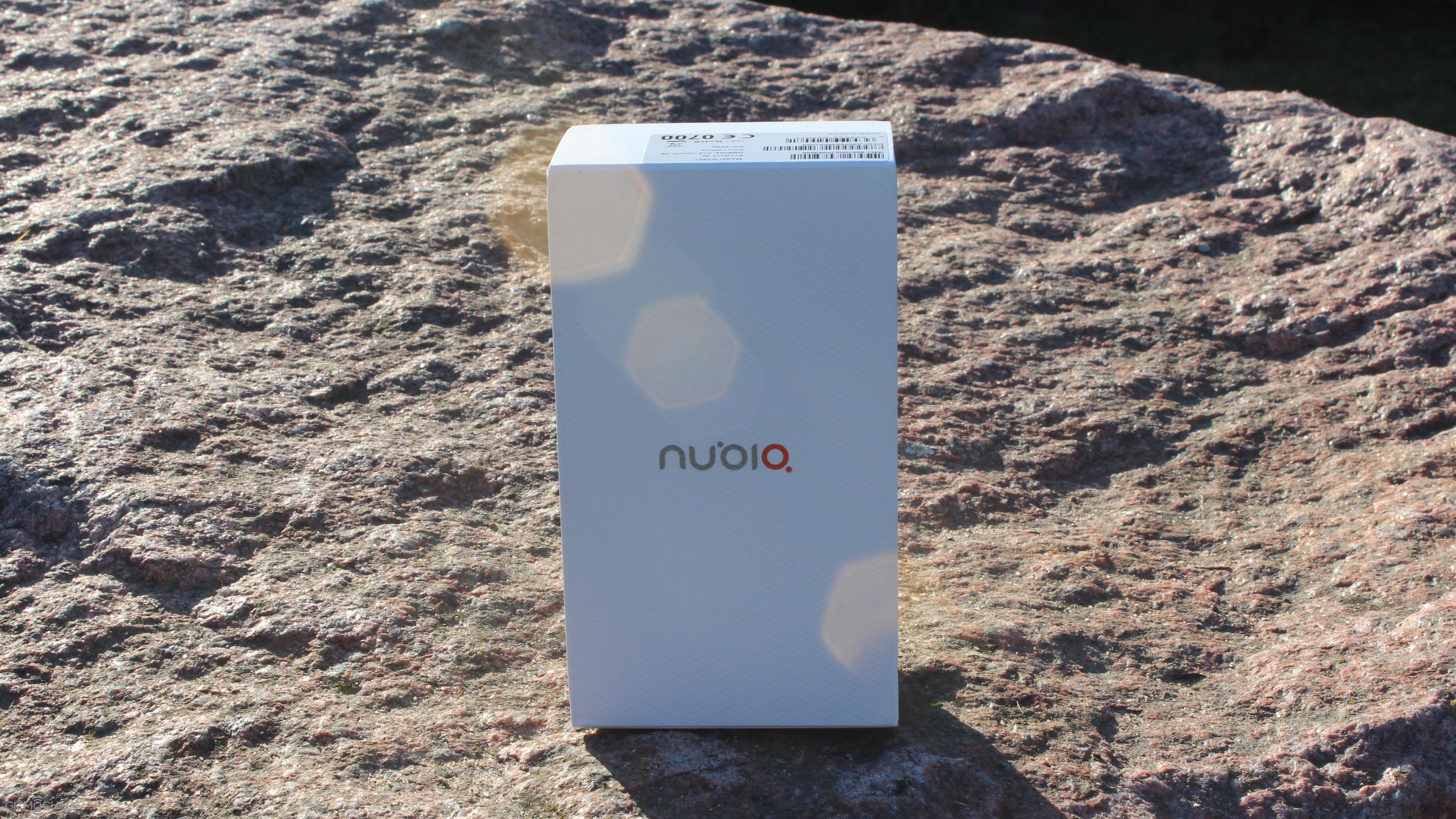
Unboxed: Meizu MX4

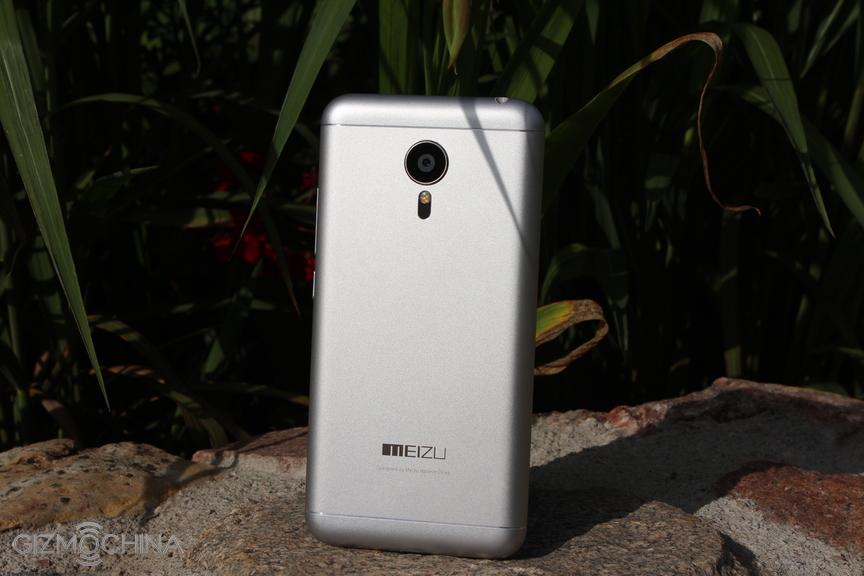
Yesterday, the Meizu MX4 was finally launched and its 1799 RMB (292.93 USD) price is insane. We have already reviewed this phone. Now, here are photos of the MX4 unboxed.


The MX4’s design looks very similar to the MX3 with its round shape. The difference though is that its frame is made of magnalium. The rear shell has been furnished and polished instead of painted.


At the same, the size of the Meizu MX4’s screen was increased from 5.4 inches to 5.36 inches. The phone’s width was also increased. Considering how its weight has increased by 5g, the phone’s width has made it slimmer.


In addition to the MX4’s 5.36-inch screen, it has the world’s narrowest frame (2.6mm) increasing its screen ratio to 80%. This should provide great video quality. This phone also sports a 20.7mp Sony camera (IMX 220). Many people should be pleased to know that the lens does not point out too much and is only at almost the same level as the phone’s body and rear case. It also has a dual-LED light.


That said, enjoy the photos.

s_df17c564acba4815be1f46f7322d78fa s_c929bba01dec493f8fc6e064f5e9a24e s_4be273ef69ee41d38eb9427d8d8ff8f7 s_cc575d2ef57c4970ab036ba0507b4548 s_d6dad8a6f610493db44688fe29d685db s_cf60d15dc0144823899b5c55672002a1 s_68318a1aeeb4475f9043059c28bf81e5 s_4f72ad3597bb4b17ba41fb9efa47f932 s_a891a152c70347738abd4349e6a1da06 s_7357e50c5ddb43d3b60ae64b88d5a0c2 s_c64b9b7051a64fecbc7d12ab5254adc1 s_2ffe3906b46e4067b4a6fa5e87c45916 s_7013eda1994c4ee6809d985c84d319a9 s_450b5c4bb863488fa51b8eba343fd7bd s_6af85a4c3ba44301b8e36e6d57fdf744 s_7d1ec82c35de4f92b95cca6bfd2d9583 s_c358378c27f941f095d6fa566f7667f8 s_aba9dd45a87b4ec08d58ffbe11fe3226 s_87d7e6481fc847eabd1999f6bde0b403 s_a8116439410c4091a959b8e2be4f4c6d s_0d3acbb3f71b4349afc84f4ab0b7848b s_640426a5621e4bb8bc2283ae8c0d60d8 s_a7c146eb66b143bbad832635e914f5ff s_98970e8e6f5e40eeb97c7d9698d4eb3d s_dd10b1b62ab741d39637d212dcf2cc6f s_47be87df244a422e89c27d125f7714d6 s_d33e9ddb874346459016f3c153610cfe s_dc58ad6b43d545d294328c1c9a5d3144 s_c7e879c8b36f43eba549ad89d395da0a s_ac18677d578a4f5ab4aa8539df911da3 s_edd8d17c24114479b103bbd61be88bbd s_58cff3c928f7485f9127761c985b5bf9


BIRD L108 4G phone goes on sale; has MT6582+MT6290 dual-chipset and costs 688 RMB (112.03 USD)

BIRD’s latest release is the 4G L108 phone which has just gone on sale.

1-140Z3162445147 1-140Z316242W25 1-140Z316262c44


The Bird L108’s design is not that different from many devices with round, curvy shapes. This phone stands out more for its colors and adornments. For example, there is a gold plate in the right side.


Like most of Bird’s L phones, the L108 is China Mobile-customized. It supports China Mobile TD-LTE 4G internet (single SIM card). It uses a MT6582+MT6290 dual chipset. Other than that, its specs are just so-so. It sports a 4.5-inch display screen with FWVGA resolution and a 2mp/5mp dual-camera, and has 512Mb RAM and 4Gb ROM. It is powered by a 1750mAh battery and its OS is the Android 4.42. Many will be surprised that a cellphone that costs less than 1000 RMB has a noice-cancelling microphone.


As an entry-level 4G phone, it costs at least 688 RMB.

Alcatel OneTouch Flash launched, has MT6592M chipset and 5.5-inch HD screen

Recently, TCL-affiliate Alcatel hosted an event in Thailand where they launched their newest device, the OneTouch Flash. This fashionable smartphone sports a 5.5-inch screen and uses an octa-core processor. According to ads, this is actually the TCL Momoda which had been released in China a while ago.


The Alcatel OneTouch Flash’s main specs are the same as the S270’s. Its processor is the 1.4Ghz MT6592M octa-core chipset. It sports a 5.5-inch display screen with HD resolution (1280 x 720). It has 1GB RAM and 8GB ROM (expandable) as well as a 5mp/13mp camera. It is powered by a 3200mAh battery and its OS is the Android 4.42.


Like the Momoda, the Alcatel OneTouch Flash is HotKnot-supported. Both phones support P2P data transfer.


No price has been announced

Lenovo A606 goes on sale, uses MTK6582 processor, has 512Mb, and costs 799 RMB (130.03 USD)

On August, Lenovo, together with China Unicom, launched four 4G phones, one of which is targeted at the entry-level market. It is called the Lenovo A606. Like the A806 and A916, the A606 will also use a LTE processor from MTK. Now, it is on sale in China Unicom official stores.


The best thing about the A606 is its internet settings. It uses the MTK6582 (1.3GHz) and MT6290 processors and supports TD-LTE and FDD-LTE 4G internet. It is also compatible with WCDMA and GSM networks. It only has one SIM card slot.


The Lenovo A606 sports a 5-inch IPS display screen with FWVGA resolution. It has 512Mb RAM and 4Gb ROM and also sports a .3/5mp dual-camera. It is powered by a 2000mAh battery and its OS is the Android 4.42-based VIBE UI.


The Lenovo A606 (contract edition) costs about 799 RMB.

1-140Z3110JW01 1-140Z3110PC10

The Koobee S2 has infrared sensor, costs 1399 RMB (227.70 USD)

This year Koobee introduced four new flagship series: the MAX series, M series, H series, and the Star series. Based on the information about the first in the Star series, the S1, this line seems to be targeted at the mid- and low-end markets. The newest phone in the Star series is called the Koobee S2 and will soon be sold in the market for 1399 RMB.

1-140Z3151916347


Unlike the S1, the S2 does not use HotKnot technology. Instead, it has an infrared sensor and can serve as an infrared controller that users could use to watch TV or turn on the air conditioning.


The Koobee S2 is shaped like the S1 but its rear case is made of leather giving it a different texture than the S1’s. This phone is available in many colors like black, white, blue, and red. Its measurements are 142 x 71.8 x 8.9mm.


A 4G cellphone, the Koobee S2 uses a dual-chip LTE processor (MT6582 + MT6290) that supports TD-LTE (China Mobile 4G), TD-SCDMA and GSM networks. Its other specs are similar to the S1’s. It sports a 5-inch qHD display screen and 2mp/8mp camera, has 1GB RAM and 8GB ROM, and is fueled by a 2000mAh battery. Its OS is the Android 4.42-based DIDO OS 4.0. It also supports OTG and an electric compass.

Smartisan phone to have 4G edition, 16GB and 32GB versions to cost 3500 RMB (488.28 USD) and 3650 RMB (594.08 USD) respectively

The 4G edition of the Smartisan phone has just received certification from the Ministry of Industry and Information Technology.


According to MIIT’s website, the Smartisan 4G phone’s model number is SM705 and sports a 5-inch 1080p display screen. Its processor is the Snapdragon 801 quad-core chipset (2.5GHz). It has 2GB RAM and its OS is the Android 4.4.2-based Smartisan OS. The Smartisan 4G phone also sports a 5mp/13mp camera and supports TD-LTE/TD-SCDMA/WCDMA/GSM networks.


The 16GB version will cost 3500 RMB while the 32GB edition will cost 3650 RMB (594.08 USD).

s_3a7660f9f2e04e0fac1130b1a8b38743 s_3082d0b741e74ef59a42c06a412bdcbe s_fe72401910f248eeb5a131962da0cf4f 55b7aab98b944475868bcf64e5d73dda 9cfa4b63d4bc47ff9eeb9634b3cc76bc cb345ab523c24d9384ae40392cdc0661 cdde40924c364f34ab1c541934987dff

Review: The Meizu MX4 is a dream come true

Now that Meizu has released the Mx4, how does their flagship phone fare?

The Meizu MX4

CPU

MT6595 octa-core processor

GPU

PowerVR G6200,quad-core 600MHz

RAM

2GB

ROM

16GB/32GB/64GB

Display screen

5.36-inch Sharp/JDI screen 1920×1152(FHD+)79% screen ratio

camera

Rear 20.7mp(SonyIMX220 1/2.3 image sensor)
Front 2mp camera with dual-LED flashlight

Operating System

Flyme4.0 (Based on Android 4.4)

SIM

Single Micro SIM

Measurements and weight

75.2×144×8.9mm 147g

battery

3100mAh(undetachable)

Internet

TD-LTE/FDD LTE/TD-SCDMA/WCDMA/GSM

Price

1799RMB(292.62 USD, 16GB)/1999RMB(325.15 USD, 32GB)/2399RMB(390.21 USD, 64GB)

Design and Texture:


Again, Meizu has not made any compromises on their new phone’s design and texture. It continues to use the first-gen MX phone’s design but has a bigger screen and has a detachable plastic rear case. The mid-frame is made of magnalium to make it harder.

5370897_DSC06681_thumb 5370897_DSC06682_thumb 5370897_DSC06675_thumb


The MX4’s magnalium mid-frame was cut using a CNC process.

5370897_DSC06695_thumb 5370897_DSC06691_thumb 5370897_DSC06693_thumb 5370897_DSC06694_thumb 5370897_DSC06683_thumb


The MX4’s metal mid-frame and sandblast architecture, gives the phone a more comfortable feeling when handling it and stronger friction force. It does go as far as making the phone slippery because of how slim it is. It basically removes the scratchy metallic feeling from the MX3 Silver Edition.

5370897_DSC06697_thumb

The MX4’s large area using a metallic mid-frame can keep the phone more intact. That way, when it falls, it will not add a lot of pressure on the screen.


The MX4 sports a 5.36-inch 1920 x 1152 display screen. It still has a 15:9 screen aspect ratio and 79% screen ratio. It is surrounded by a 2.6mm frame. This, along with the phone’s rear case, makes it easier for users to use the MX4 single-handedly. These upgrades not only put an end to the complaints regarding the MX4’s resolution but also solve the power-consumption problems faced by 2K screens.

5370897_DSC06679_thumb 5370897_3-20140902171114_thumb


The MX4’s slimmer curved plastic rear case goes well with the metal mid-frame. Furthermore, users can just insert a card in the slot underneath the phone.

5370897_DSC06700_thumb 5370897_DSC06699_thumb 5370897_DSC06698_thumb 5370897_DSC06688_thumb


The MX4 sports a 20.7mp Sony IMX220 camera with 5P lens. The lens provides the camera with a blue coating. The camera is surrounded by a more tightly held Fresnel lens which smoothens the phone’s rear surface.

5370897_DSC06696_thumb


Overall, Meizu has pulled all the stops to ensure that the MX4’s design is more compact. The metal mid-frame and screen rubber-suspension technology decreases any accidental damage done to the screen.

Benchmark test


The MX4 uses MTK’s new octa-core 4G chip, the MT6595. Its biggest feature is that it uses ARM technology (Big.Little), and is composed by four Cortex-A17 cores and four Cortex-A7 cores. The Cortex-A17 cores have a frequency of 2.2GHz. All eight cores are turned on at the same time.

5370897_6595-1_thumb


The MT6595 uses Imagination Technologies’ PowerVR Series6 GPU which provides the phone with excellent graphics and many multimedia functions. This chip also has a LTE modem that supports 5 modes and over 30 frequencies. It is compatible with FDD/TD-LTE networks in China.

5370897_800-600-3_thumb 5370897_800-600-4_thumb

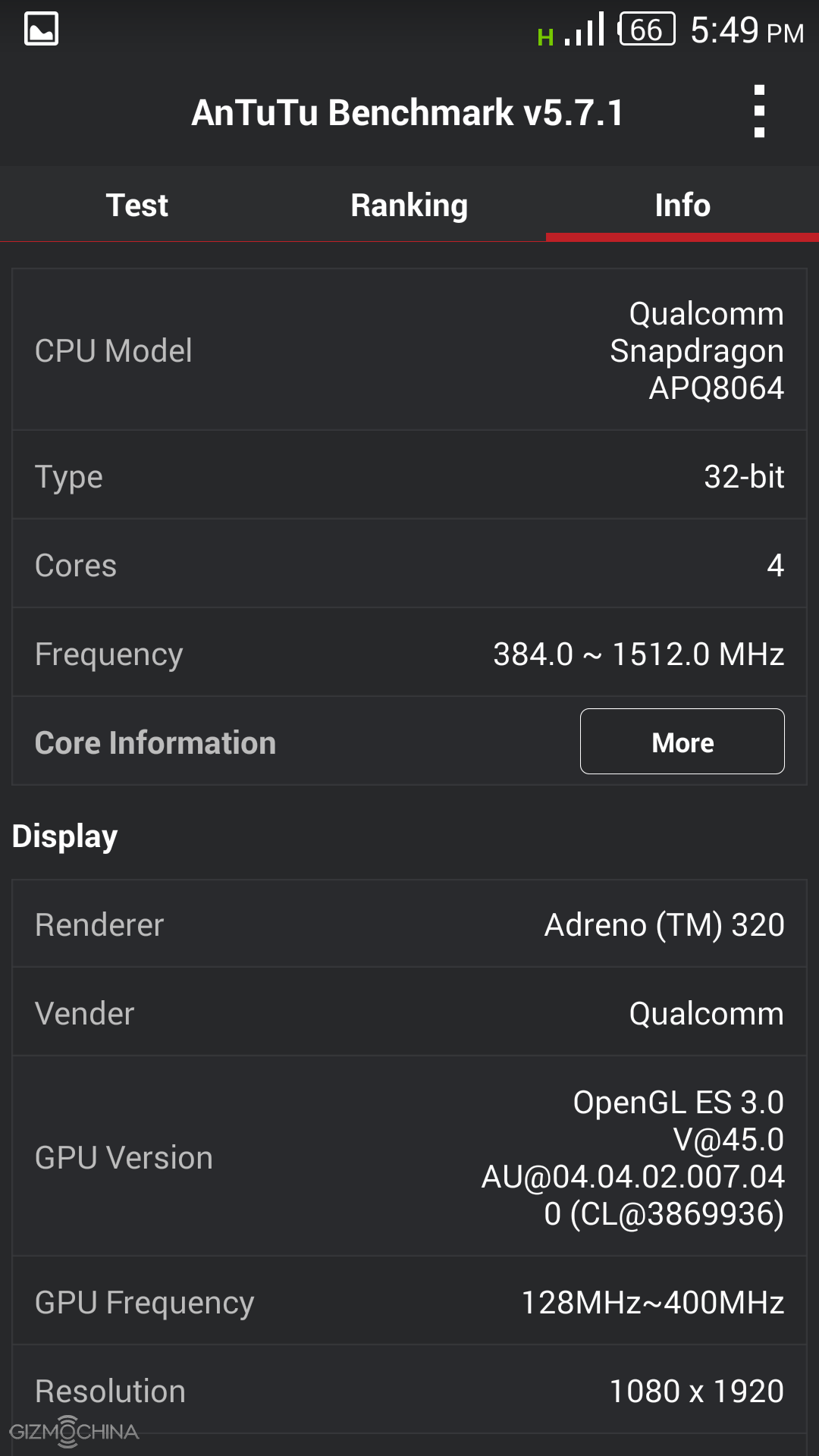
The MX4 is the first phone to use this chip and has scored 49943 in the Antutu benchmark test.

5370897_800-600-2_thumb 5370897_800-600-1_thumb 5370897_800-600-5_thumb


Operating System

5373167_mx40_thumb


       The MX4’s operating system is the Flyme 4.0 which was also introduced at the launch. This OS follows a flattened design but some improvements were made with the tabs which are more connected to each other than in the Flyme 3.0. The Flyme 4.0 comes with many tabs as well as App notification tabs, and tabs for third-party apps.


5373167_1001_thumb 5373167_1005_thumb

Top: MX3’s UI; Bottom: MX4’s UI


Regarding the camera app, there is a “smart bar” at the bottom. As the photo shows, the tabs for the video camera and photo camera are bigger and the positions for the photo app and the camera app were changed. Many other changes were made in the menu.

5373167_100010_thumb 5373167_10002_thumb

Top: MX3’s camera interface; Bottom: MX4’s camera interface


The tabs at the scroll-down menu are rounder and bigger including the tab that shows the time.

5373167_1000101_thumb 5373167_1000_thumb


Top: MX3’s scroll-down menu; Bottom: MX4’s scroll down menu


The Flyme 4.0 is based on the Android 4.4. From the screenshots above, we can see that the colors of the smart bar at the bottom and the task bar at the top were changed to clean up the entire user interface and more integrated. The size of the navigation bar on the left is also bigger now making easier for users to select it.

5373167_S40902-165417_thumb 5373167_100101_thumb

Overall, the Flyme 4.0 follows a similar design to the Flyme 3.0. Some basic improvements were made and its UI is more flexible now.


Camera


The MX4 is said to sport the best camera out of the entire MX series to date. What’s so great about it? The camera has 20.7mp and has a 1/2.3-inch image sensor. As a result, the area covered by the sensor has increased to 90% and a single pixel covers 1.2um x 1.2um leading to great photo quality. The MX4 also uses a .3sc TDK Closeloop focus motor which can greatly increase the speed of the camera’s focus.

5370897_DSC06689_thumb


The MX4 uses a stand-alone ISP that supports 4×1.5Gbps and can handle 10mp. As a result, the camera can take up to 25 photos per second as well as take 4K videos at 30 frames per second. This phone also comes with a dual-LED flash which can add brightness when taking photos at darker places.

5373557_p40827-165935-23_thumb 5373557_wo001_thumb 5373557_p40104-104447_thumb


These photos which were taken using the MX4 and were posted on Meizu’s official website show that the quality of photos taken with the MX4’s camera has greatly improved. Each photo has up to 8Mb, and when enlarged, still look just as good. In addition, as you can see from the photos taken at night, they are very clear. The colors are brighter and more transparent.
5370897_8000-600-1_thumb


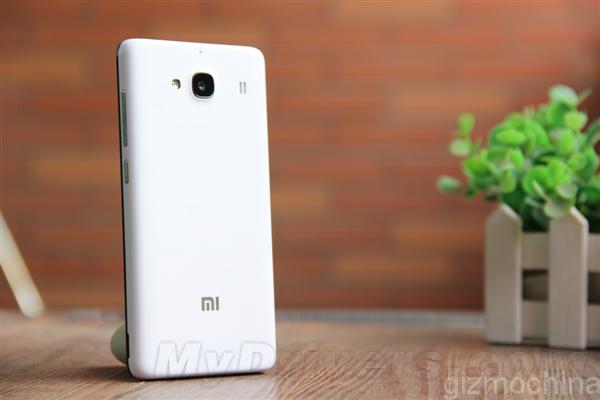
In conclusion, the Meizu MX4 is a great device that is smoother and easier to use. This phone will be Meizu’s main artillery when facing the 4G wave and the harsh competition. With its 1799 RMB price (292.62 USD), great design, and the Flyme 4.0 OS, the MX4 will be a force to be reckoned with. Companies can take it as an example of how dreams can come true.