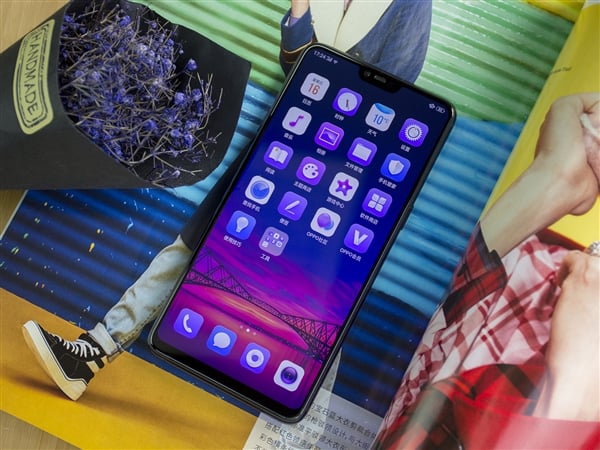
OPPO officially held a ceremony in China where it officially unveiled the OPPO R15 premium midranger. The smartphone will go on sale on April 1 in China. The OPPO R15 comes pre-instaled with Color OS5.0 which is based on Android Oreo.
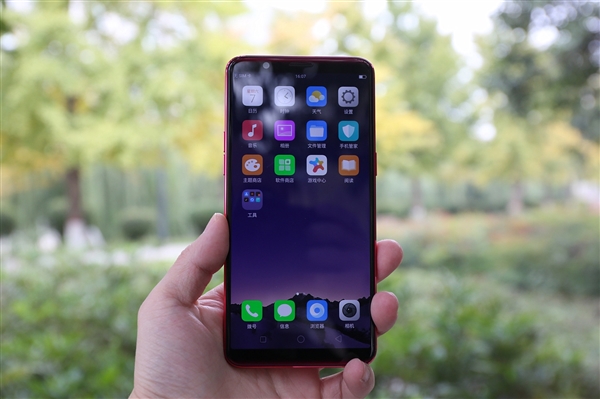
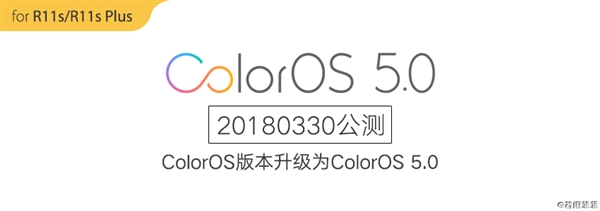
Now, older OPPO models like the R11s and R11s Plus will soon have the opportunity of running Android Oreo-based Color OS 5.0. Presently, OPPO has officially started pushing Color OS 5.0 public beta update to OPPO R11s and R11s Plus users. Adaptability of the new custom ROM on the R11s shouldn’t be difficult as both models equally come with a full-screen design except for the notch design which highlights the R15’s display.
The OPPO R11s and R11s Plus were launched late last year with a full-screen design. The models run on Android Nougat -based ColorOS 3.2 at launch. The new ColorOS 5.0 operating system adds a new system theme, and the desktop content is completely new. The control center is merged with the notification center. The bottom of the screen slides out and the shortcut switch operation is easier to use. The Android security patch was also updated to February 5, 2018 to enhance system security.
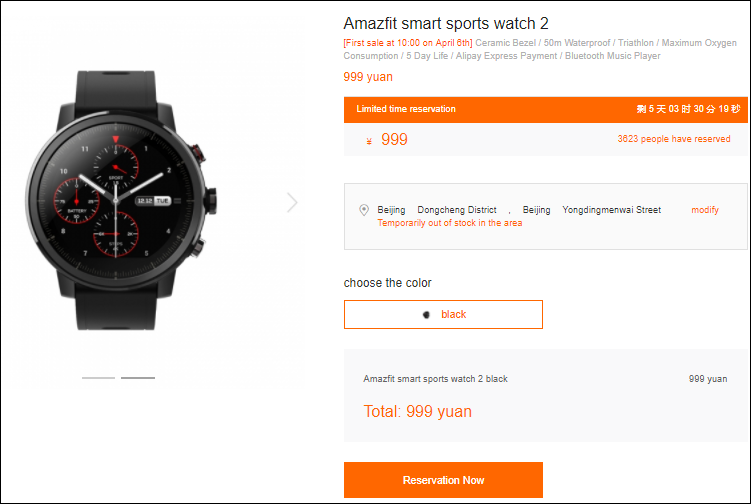
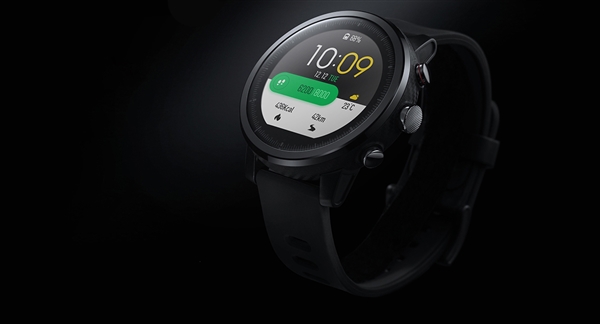
Huami’s Amazfit Sports Watch 2 was first launched in December 2017 along with the Watch 2S and the device is pretty much available to buy already even outside China via GearBest, Geekbuying and others. However, Huami’s partner Xiaomi has officially launched the Amazfit Watch 2 on its Mi Home website. The smartwatch is presently available for reservation and would officially go on sale from April 6 at 10 AM UTC+8.
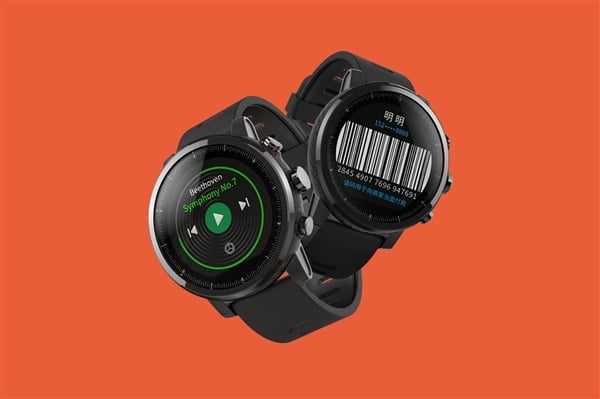
The Amazfit Sports Smartwatch 2 adopts an entirely changed outlook compared to that of the first generation model. There is a change in the design as this new versions both come with a more sporty and rugged look. This new design is a true representation of the numerous sports features the smartwatch comes with. It features different modes for various sporting activities including swimming.
On the display aspect, it adorns a 2.5D tempered glass with hand-polished ceramic bezels. The buttons, as well as the charging, are made from 316L stainless steel. The watch body also comes with a 3D laser carbon fibre body as well as a glass-reinforced polycarbonate case. The Huami Amazfit Sports Smartwatch 2 comes with GPS and a long battery life. The smartwatch can last up to 35 hours even with the GPS-tracking feature turned on. As such, it can easily be used to track athletes during cross-country races.
There is also 24-hour heart rate monitoring feature. The watch 2 also supports the new Amazfit Watch app 2.0, Yue Run circle and other third-party APP. It can also be used to control Xiaomi’s smart home devices. It also supports Alipay offline payment and can control the Music player via Bluetooth. Furthermore, you can view call alerts, set alarm, monitor your sleep pattern and check the weather via the app.
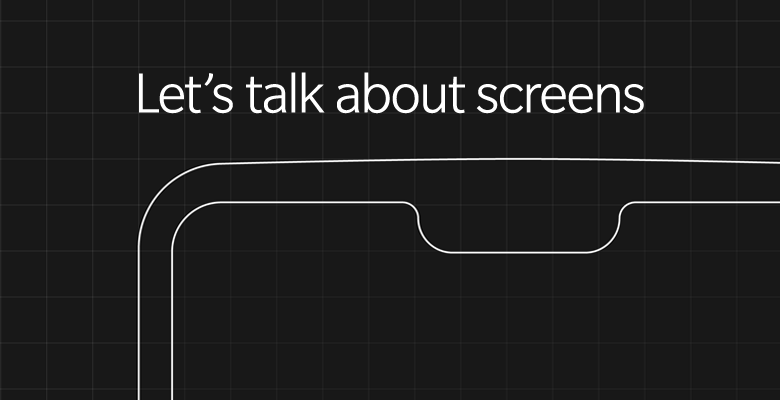
OnePlus CEO, Pete Lau is known for his vocal nature but the Chief exec was forced to delete his tweet a few days back which seem to have confirmed the OnePlus 6 display will have a notch. The CEO has now shared a post on the OnePlus forum which explains why the OP6 will need to have a cut out on top of the display.
The first paragraph of the post states thus, “By now, most of you are aware that our next device will feature a cut-out near the top of the display, popularly known as a “notch”. The CEO noted that a fiery debate had sparked online and so it was necessary to explain the rationale behind this product design decision.
The OnePlus CEO explains that one of the company’s biggest challenges as a smartphone manufacturer was to make the most out of every square inch of its device. And since the components on its smartphones no longer require the entire width of a top bezel, the company is making effort to maximize the amount of screen available. In effect, OnePlus feels the notch design offers more screen without compromising on hardware.
Pete Lau also added that the central placement is optimal for the front-facing camera since the angle of the camera isn’t affected. Moving the camera elsewhere would have made it harder to orient the camera and take photos quickly. He also added that such a move would also compromise the speed and reliability of OnePlus’ industry-leading Face Unlock feature. Other options considered include a smaller module which would have reduced the quality and a pop-up design which is still in its infancy and holds no guarantee of durability and quality. To further placate angry fans, the CEO revealed the notch is just 19.616mm by 7.687mm and occupies a minimal amount of space in the top-center part of the display.
So, if you are a fan of OnePlus and you don’t want a device with a notch, you may have to look somewhere else other than the OnePlus 6 or better still, get used to the growing trend.
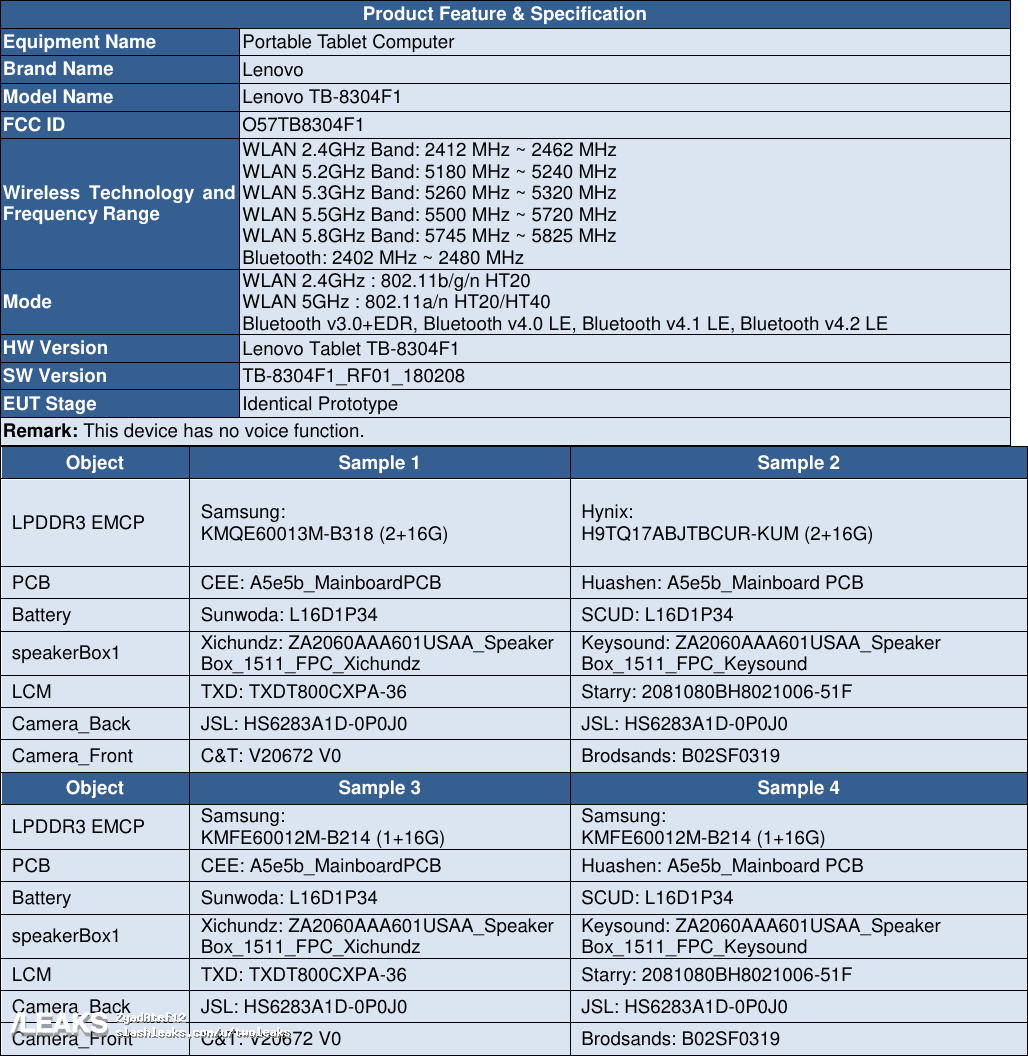
When it comes to laptops and tablets, Lenovo has got a strong market. The company is only second to HP in the laptop market in the U.S. The Chinese company is presently working on a new tablet which has now gotten the nod of the US Federal Communications Commission (FCC).
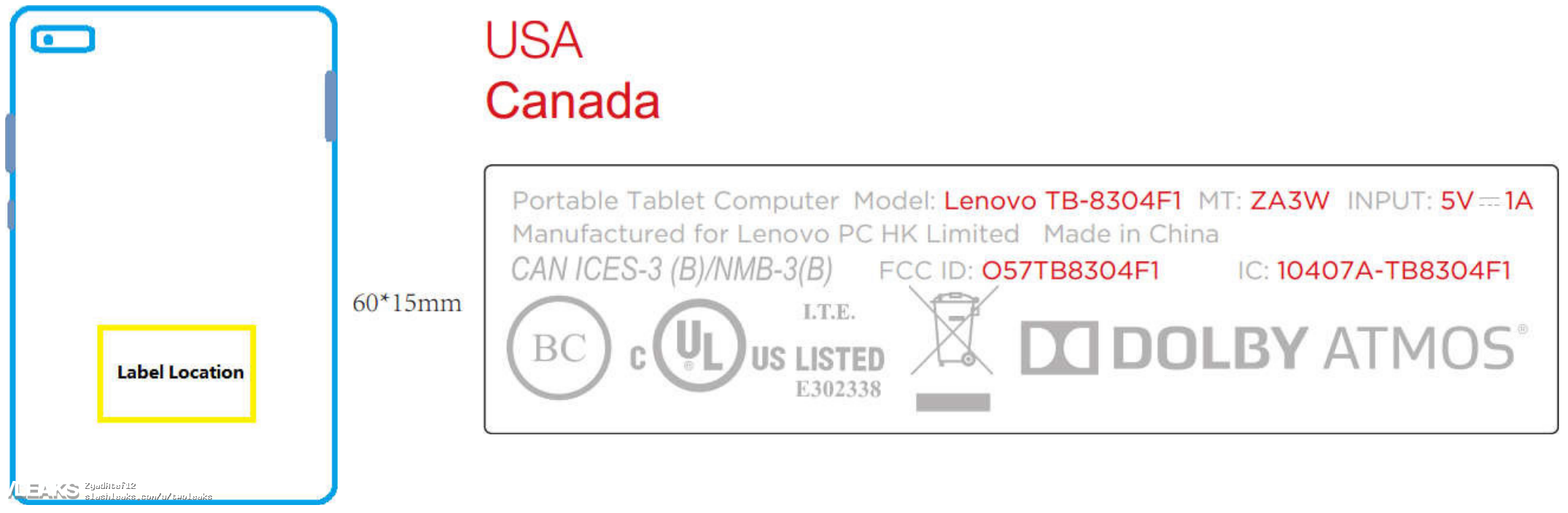
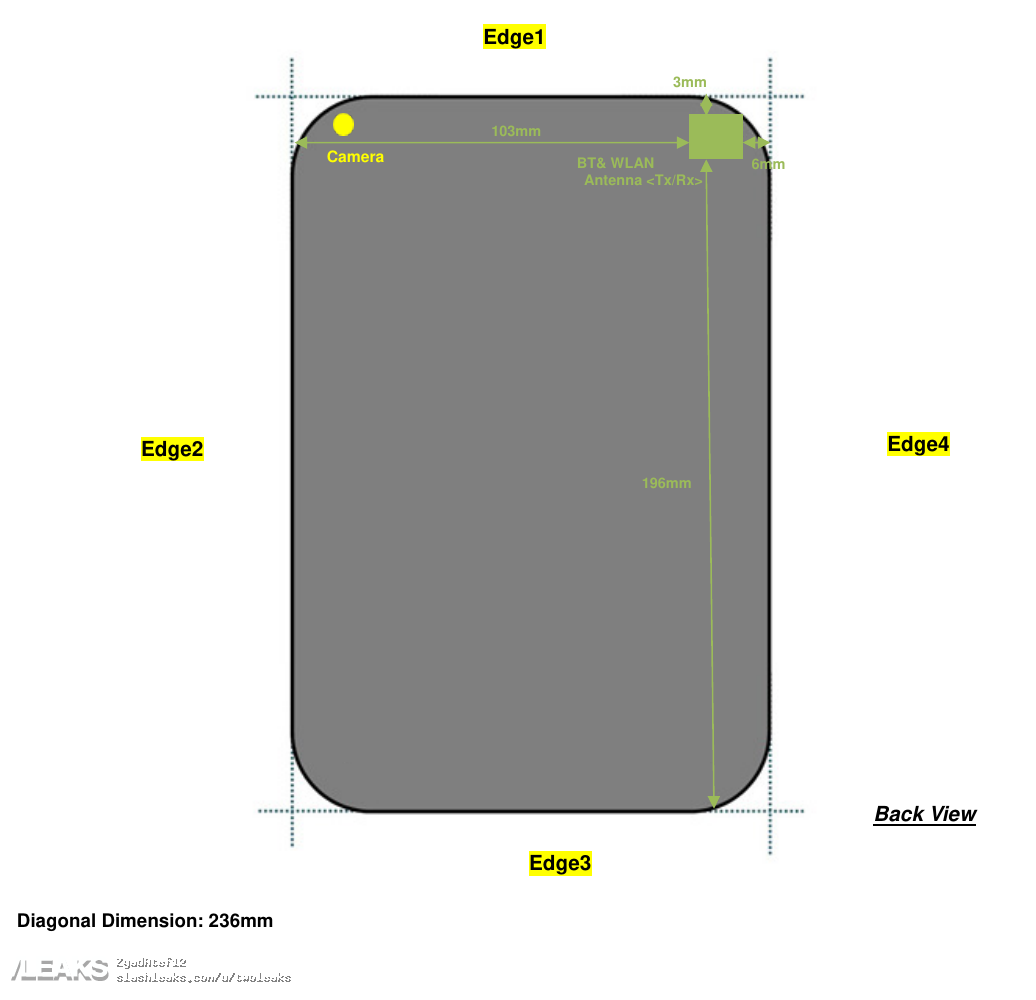
The Lenovo tablet comes with the model number TB-8304F1 and will likely be a cheap product as it is listed to have a power input rating of 5V/1A meaning there is no fast charge. It will, however, come with a Dolby Atmos sound. The design of the Lenovo tablet is also revealed to include well-chamfered, rounded edges and a rear camera tilted to the upper left corner. The diagonal dimension is given as 236mm.
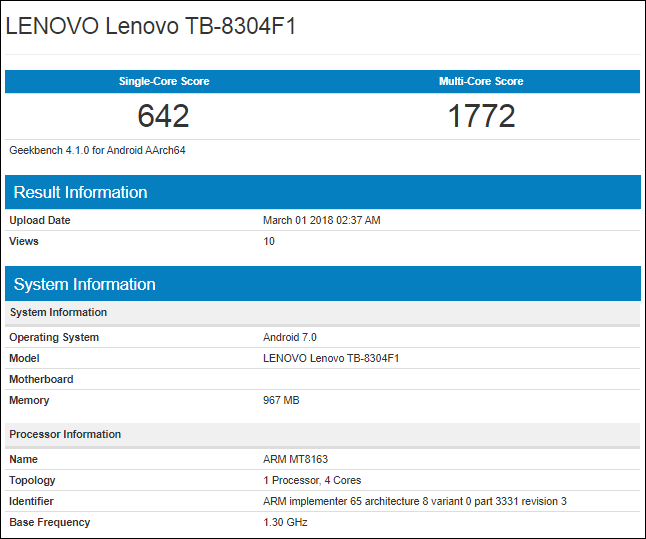
The product specifications include the presence of 2GB RAM and 16GB of storage. There is also Bluetooth 4.1 support, as well as WiFi 802.11/b/g/n. In addition, the GeekBench score of the Lenovo tablet with the same model number was spotted recently even though it has been uploaded since March 1. The GeekBench data did not contain the processor name that the device runs on but from the score we can deduce it isn’t too powerful. The device will boot Android 7.0 Nougat out of the box.
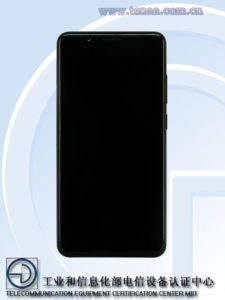
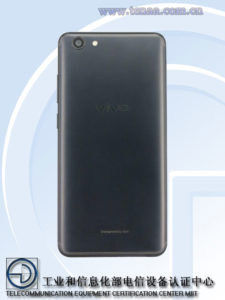
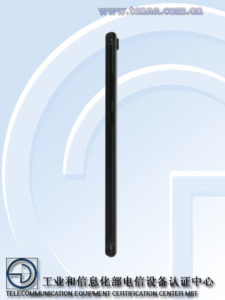
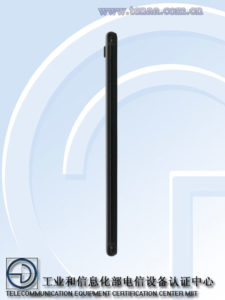
Vivo Y71 and Y71 A were spotted on the website of the Chinese Telecoms Regulatory Agency (TENAA) about two weeks back. The devices were certified but the page didn’t include the pictures of the models. The Vivo Y71 and Y71A pictures have now been uploaded on TENAA, revealing what both devices truly look like.
From the pictures, the Vivo Y71 is no different from the Y71A in terms of the design. The Y71A may likely be a network variant of the Y71 for China Mobile as even the specifications are no different. A render of the Y71A showing the device from all angle was said to have been leaked on China Mobile’s website fueling speculation the Y71A is destined for the Chinese carrier. Both models sport a 5.99-inch 720 x 1440 display. There is 3GB of RAM and 32GB of storage that can be expanded via a MicroSD card slot. A 1.4GHz quad-core processor is at the helm of affairs.
The Vivo Y71 and Y71A also feature a single 13MP rear camera and a 5MP front-facing camera. Both models also pack a 3285mAh battery and run Android 8.1 Oreo. Their dimensions are also similar at 155.87 × 75.74 × 7.8 (mm) and weighing in at 150g.
The Vivo Y71 and Y71A will come in Rose Gold according to TENAA but the pictures we have are of the Black variants.
Despite the stiff opposition which is being mounted at the instance of the US government, Huawei’s CEO Richard Yu insists the Chinese tech giant isn’t leaving the U.S market soon. Mr Yu who is the head of Consumer Business at Huawei made this disclosure in an email to CNET.
Huawei CEO RIchard Yu Announcing The Kirin 970
The CEO stated that the company is committed to the US market and to earning the trust of US consumers by staying focused on delivering world-class products and innovation. The Huawei Exec also added that his company will never compromise that trust, a virtue that is in the heart of the company’s present predicament.
The US government says Huawei and ZTE are not to be trusted because of the propensity of data from private citizens being leaked to the Chinese government. Heads of the CIA, FBI and NSA bluntly advised all Americans not to purchase or use Huawei products and services during open Congressional testimony in February, out of concerns that Huawei products are used to spy on Americans. Huawei has repeatedly denied any of such insinuations. Richard Yu also talked on that in the email, insisting that the security risk concerns are based on groundless suspicions and are quite frankly unfair. He also stated that Huawei welcomes an open and transparent discussion if it is based on facts. He added that Huawei works with 46 of the 50 global operators and have maintained a very strong security record because security is one of the company’s top priorities.
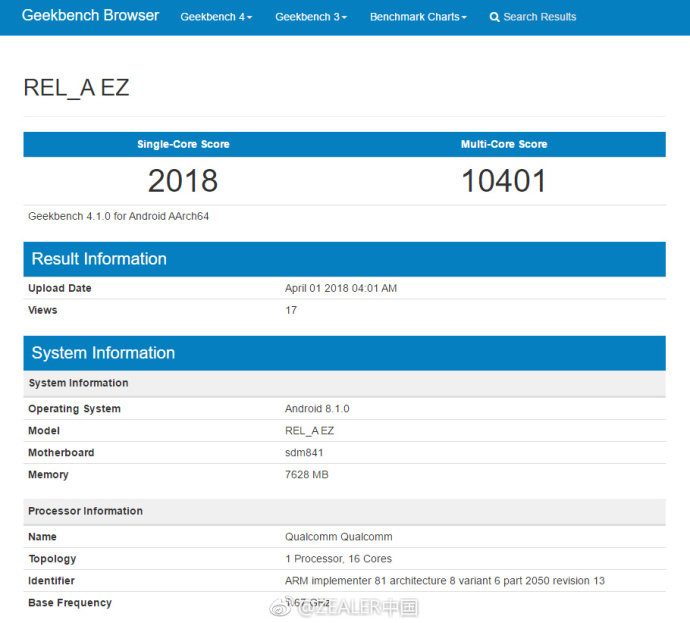
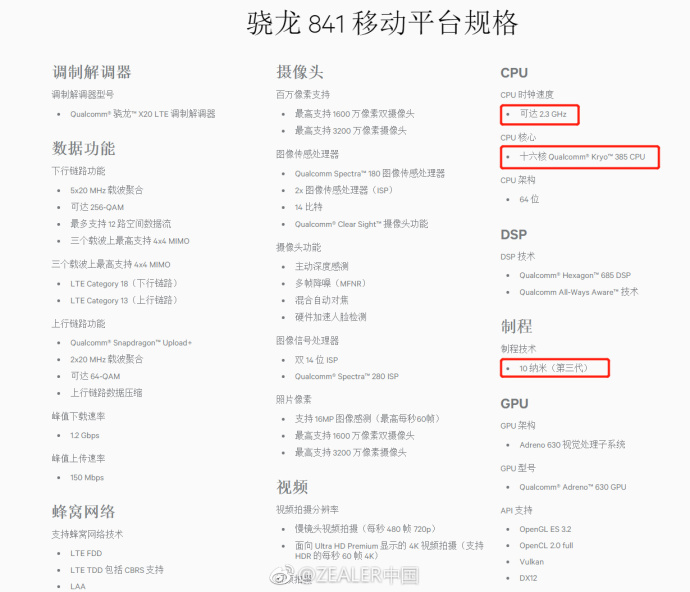
Qualcomm’s Snapdragon 845 mobile platform just got featured on a couple of flagship models including the Samsung Galaxy S9 / S9+ and Xiaomi Mi Mix 2s. While we await more high-end mobile phones powered by the latest Qualcomm chip, a relatively unknown Snapdragon 841 chipset has appeared online. Details of the SDM 841 chipset as well as a picture of its GeekBench score were spotted today on Weibo.
The Weibo post quotes an inside source that would prefer to keep his identity secret to have revealed the details in an exclusive message. The leak shows that the Qualcomm Snapdragon 841 chip has a 16-core architecture and this is the first Qualcomm chip with such architecture. Th CPU is capable of achieving an optimum clock speed of 2.3GHz which is lower than the 2.8GHz maximum clock frequency of the SD 845 chipset. The processor is still powerful. The chipset also incorporates an Adreno 630 GPU.
The leak also includes the GeekBench score of a device running on SDM 841 chipset. The device scored 10401 on the multi-core test which is surprisingly higher than the multicore test score of the SD 845-powered Galaxy Note 9 which hit GeekBench recently. The SDM 841 also score 2018 points on the single core test which is also impressive. We’ll have to wait for more details to emerge before taking this very seriously.
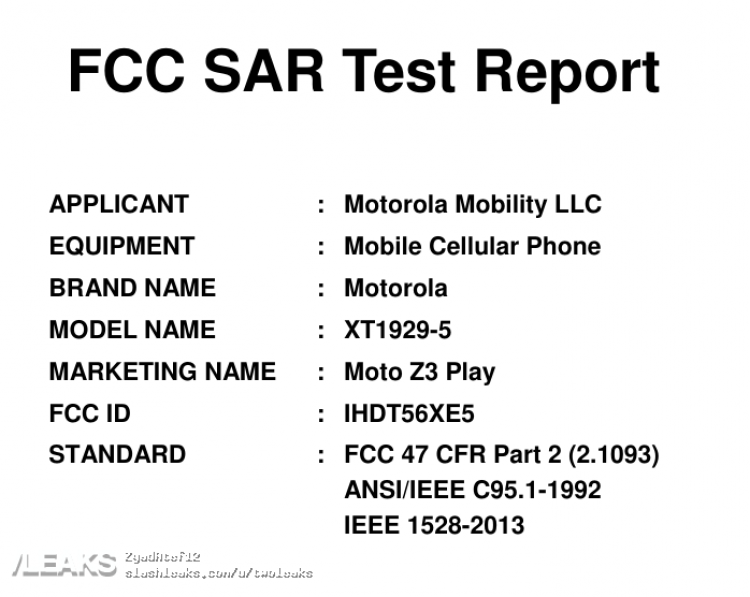
Lenovo-owned Motorola brand is expected to launch the Moto Z3 Play smartphone this year. The device has popped up online on several leaks showing some details as well as the renders of the device.
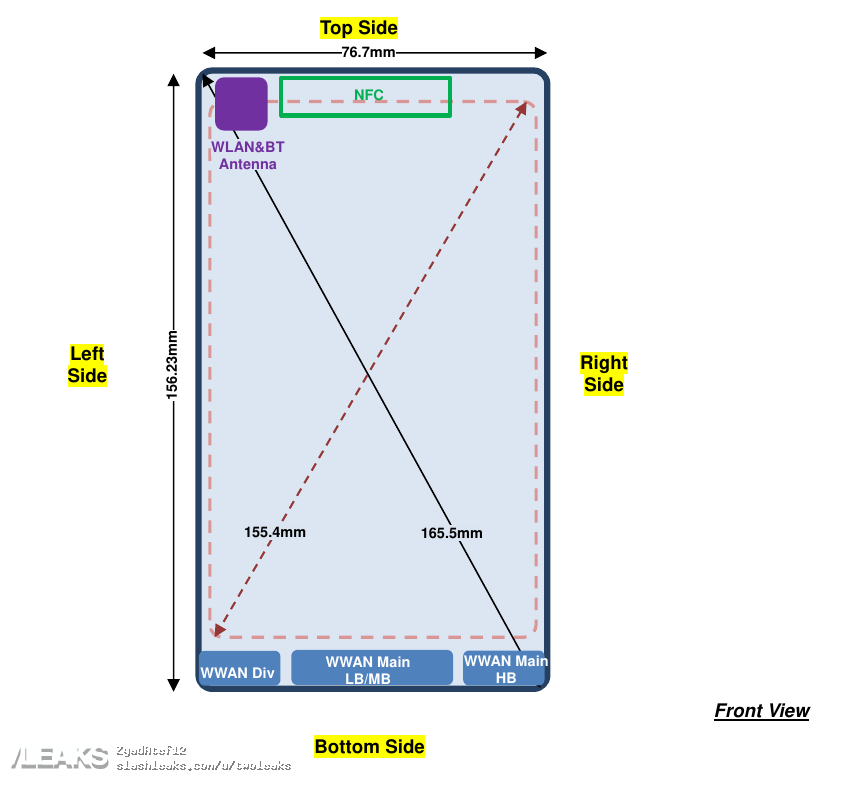
The Moto Z3 Play has now been spotted on the website of the US FCC and in the process, the moniker, as well as its dimension, have now been confirmed. Since this is the first official data we are seeing which features the Moto Z3 Play name, we can now confirm that a smartphone that goes by that name is indeed in existence. The device comes with a dimension of 156.23 x 76.7 mm. The FCC schematics also shows the device will have NFC.
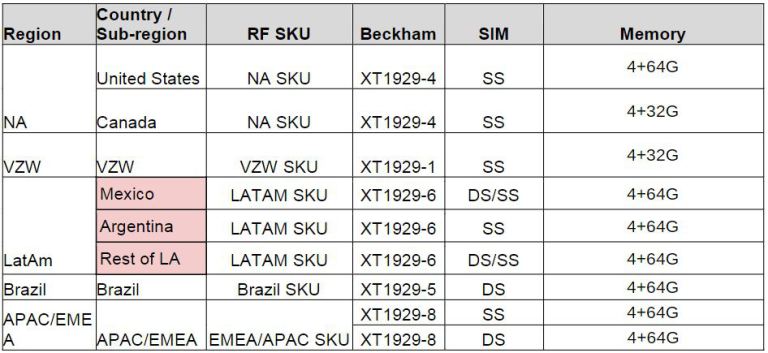
The Moto Z3 Play is rumoured to feature a 6-inch display capable of delivering a Full HD+ resolution of 1080 x 2220 pixels and an aspect ratio of 18:9. The phone had earlier made an appearance at FCC confirming the presence of a model number XT-1929, which revealed that it is powered by Qualcomm Snapdragon 636 processor, along with 4GB RAM. The device will also be available in 32Gb and 64GB storage variants.
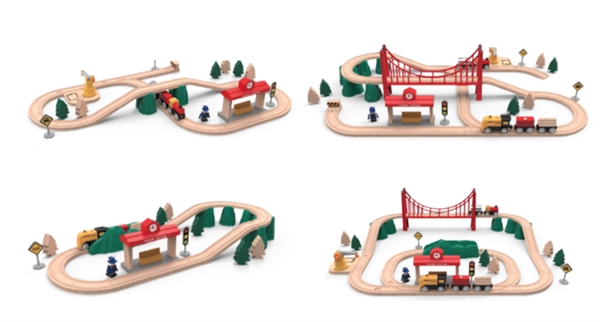
Xiaomi has a longstanding reputation for quality products and this cuts across several categories. Coming in from the toys section is a new Rabbit Track Buiding blocks. The building blocks consist of several highly recognizable scene props including an electric train, train tracks, railways, signs, mountains, trees, railway stations, freight stations, suspension bridges and others.
The product is manufactured by Xiaomi’s Ecological chain enterprise Mi Sugar Culture Creative company and is priced at 299 Yuan ($47). The toys in the package are all manufactured using European Class A Eucalyptus wood and coated with environmental protection paint. The manufacturing process saw the product going through 80 stringent processes and the result is a high-end, safe and playable track building block / electric train. The product is comparable to those of renowned wooden toy manufacturing firms like Brio and Hape but is far cheaper than their’s which is up to 1000 Yuan. So, you get a product of similar quality for one-third the price.
The Rabbit Track Building Blocks / electric train also adopts a simple design and are coated with bright colours that are attractive to Children. The Building block, apart from being a plaything also helps in the Child’s brain development as they will need to assemble the parts themselves. The electric train is also easy to operate after the track has been built.With just a press or push the train will start moving and with a push, it can be brought to a stop. The tracks can be arranged in different styles to create different scenes. There is an actual loading bay that can be used to load cargo onto the train wagon and it rotates 360 degrees. Different wagons can be attached to the train as a result of a magnetic point at its back.
There is no word yet as to when the product will be available to buy but we expect it to be available via online retailers like GearBest soon.
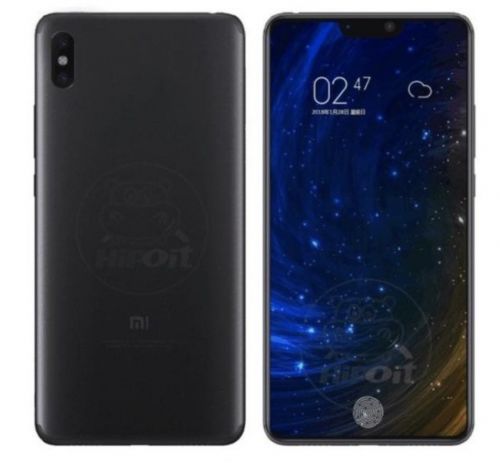
In an unusual move, Xiaomi’s first flagship for this year is not the main Mi series but a Mi MIX phone. The Mi MIX 2S is actually a more powerful version of the Mi MIX 2 with all the features we expect to find in the Mi 7 when it launches. A new render of the Mi 7 has surfaced online showing off a new design for the series.
In this render, the Mi 7 is shown with a notched display. This has not been confirmed but we won’t be surprised if Xiaomi goes through with it. The MIX series has kept to having its camera at the bottom right corner. If the Mi 7 will have a full-screen display too, adding a notch will make it different from the Mi MIX series and will result in the front camera returning to the top.
The render also shows that the phone has an in-display fingerprint scanner as there isn’t a scanner on the back of the device. We presume it will also have support for Face Unlock.
On the rear, the Mi 7 has dual cameras in the same design as that of the Mi MIX 2s. Surprisingly, the back of the device is metal and not glass. Xiaomi switched to glass starting with the Mi 5 and we don’t see it going back to metal. Plus if the Mi 7 is going to support wireless charging like the Mi MIX 2s, it will either have a glass or ceramic back.
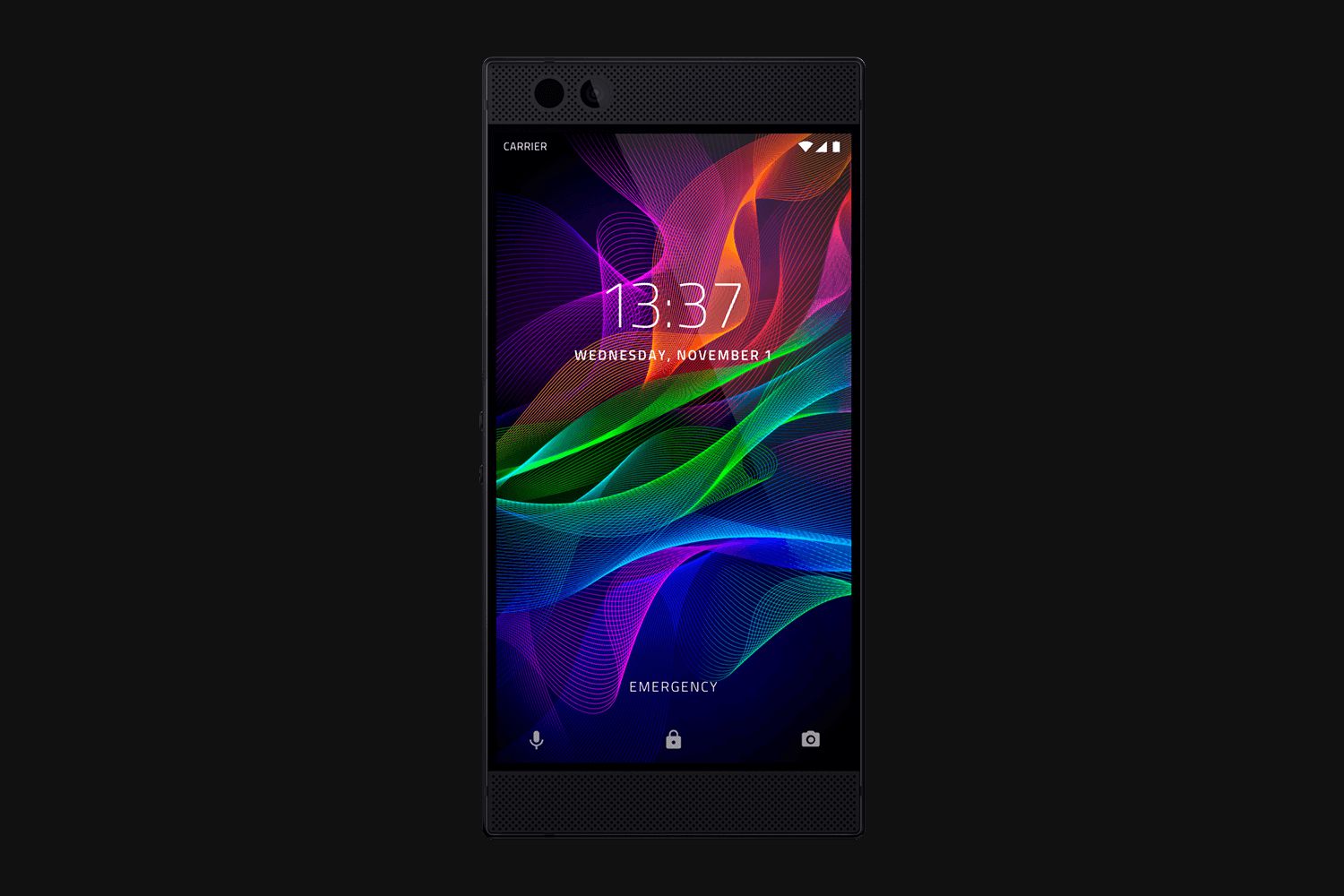
Gaming PC and peripherals manufacturer, Razer, released its first smartphone, the Razer Phone last November. It ran Android 7.1.1 Nougat out of the box with a promise to Oreo in Q1 2018. Sadly, Razer didn’t keep its promise.
With the second quarter beginning tomorrow, Razer announced via Twitter on Thursday that they will be updating the phone straight to Android 8.1 Oreo instead of 8.0. This may sound familiar and that is because this is the same decision Essential, another manufacturer that launched its first phone last year, took for the Essential PH-1.
Razer has also said that the update should arrive between mid to late April, 2018. If you can’t wait that long, you can download the developer review and try out the new features Android 8.1 brings.
Attention Razer Phone owners! We’re making the jump straight to Android 8.1 Oreo and we’re pleased to announce that the update will be coming to you mid to late April 2018.
The Razer Phone has a 5.7” IGZO LCD display with a 1440 x 2560 resolution. One of its key features is the display which has a 120Hz refresh rate. This makes it super responsive and great for gaming.
It is powered by a Snapdragon 835 processor paired with 8GB of RAM and 64GB of expandable storage. Dual 12MP cameras grace the aluminium back and an 8MP sensor sits at the front.
The U.S market is considered a highly lucrative one and almost all Chinese manufacturing sector eye an entry into the market. The phone industry is no exception as several Chinese phone makers have indicated interest to enter the lucrative market. LeEco had made a brief stint in the market before its financial debacle stifled it and forced the company to close shop. Xiaomi has also made a miniature entry into the U.S with its Mi TV Box. Huawei and ZTE are perhaps the most successful in this regard. Well, until recently when the U.S government’s sledgehammer fell on both companies whose products the security agencies warn buyers not to patronise for security reasons.
OPPO’s latest R15 midrange flagship
It has now emerged that other Chinese manufacturers like OPPO are also interested in bringing their products directly to buyers in the U.S. OPPO is another heavyweight in the smartphone industry as it is ranked among the top 5 manufacturers globally. The company’s growth is a rather interesting one as it is only present in 31 markets globally and this does not include Europe and North America. The reason for this has now been revealed to be the ongoing saga involving Huawei and the U.S government. Android Headlines reports OPPO to have hinted that it won’t be coming to the US while the Trump administration is still in power. However, the BBK-controlled company still plans to enter Europe this year 2018.
It could be recalled that recently the US security agencies CIA, FBI and NSA, as well as the director of national intelligence, had advised private citizens in the U.S. not to buy phones from two major Chinese smartphone and telecommunication equipment manufacturers, Huawei and ZTE. This was preceded by a last-minute change by AT&T which had earlier reached an agreement to sell Huawei’s flagship models like the Mate 10 and Mate 10 Pro in the carrier-dependent US market. Huawei’s phones then became available only on Best Buy but that too has been stopped by the U.S retail giant. Huawei has repeatedly insisted its smartphones possesses no threat to users’ privacy more than those of other manufacturers.
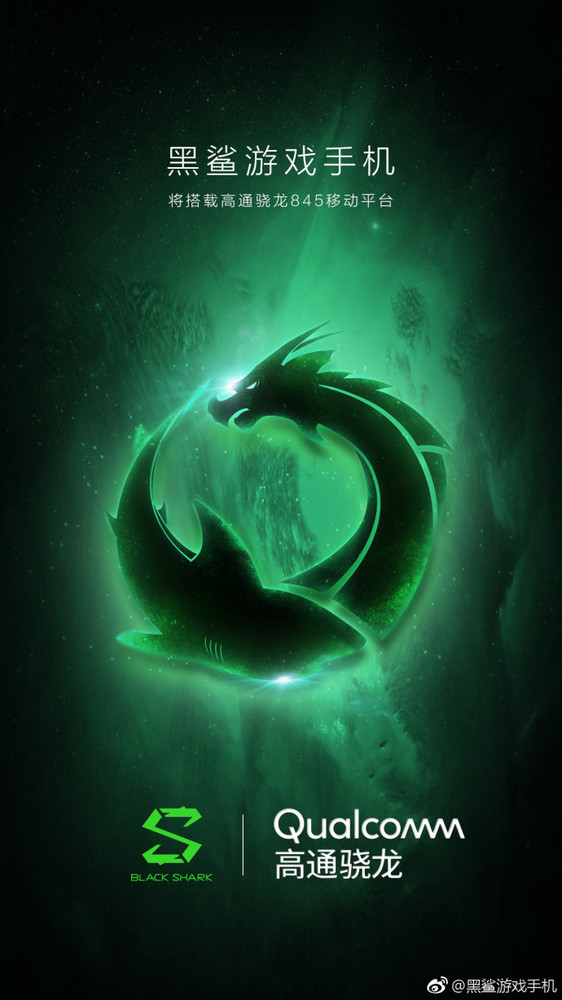
Black Shark Technologies, a newly formed smartphone manufacturing company, funded by Xiaomi, is soon going to launch a gaming smartphone. Now, the phone’s specifications have been leaked online, which is in line with the previous leak.
The smartphone will be available in three memory configurations — 6GB RAM with 128GB internal storage, 8GB RAM with 128GB onboard storage and 8GB RAM with 256GB internal storage. The company has already confirmed that the phone will be powered by Qualcomm‘s Snapdragon 845 processor, which powers most of the flagship smartphones launched this year so far.
Further, the report suggests that the phone will also support Qualcomm’s Quick Charge 3.0 fast charging technology. Specifications-wise, the smartphone seems very much similar to the Xiaomi Mi MIX 2S launched earlier this week. On the back of the phone, the company’s Black Shark branding will be there.
The device is expected to be running on Android 8.0 (Oreo) operating system out-of-the-box. While there is no more information available at this time regarding the phone’s display, the phone might come with a 120Hz display in order to compete with the Razer Phone that was released last year.
As of the phone’s launch, the phone is expected to get launched ahead of Xiaomi’s upcoming flagship smartphone — Mi 7. The phone, which will go on sale in the first half of this year, could get launched next month.
Last week, the company had revealed that the phone will come with “Shark Space” — a feature that is similar to the Game Center feature. Recently, Black Shark’s chief executive officer announced a lucky draw contest in which the company will select 3 lucky winners on 30th March who will then receive Black Shark gaming smartphone.
The company recently signed a cooperation agreement with JD.com for sales and promotions. Apart from Black Shark, ASUS and ZTE’s Nubia is also expected to launch a gaming smartphone.
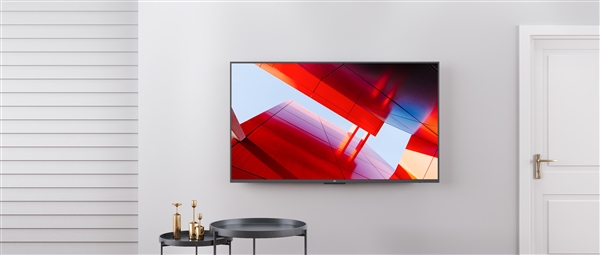
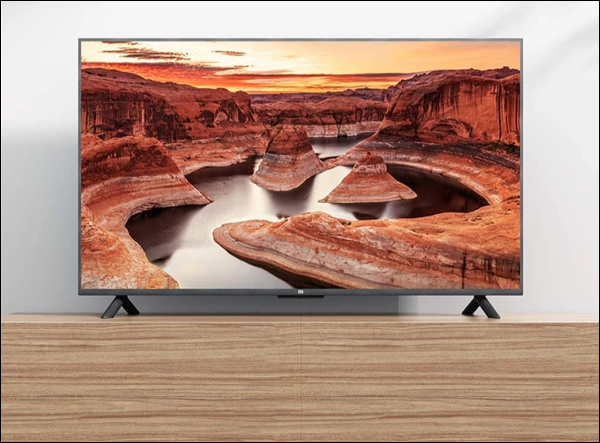
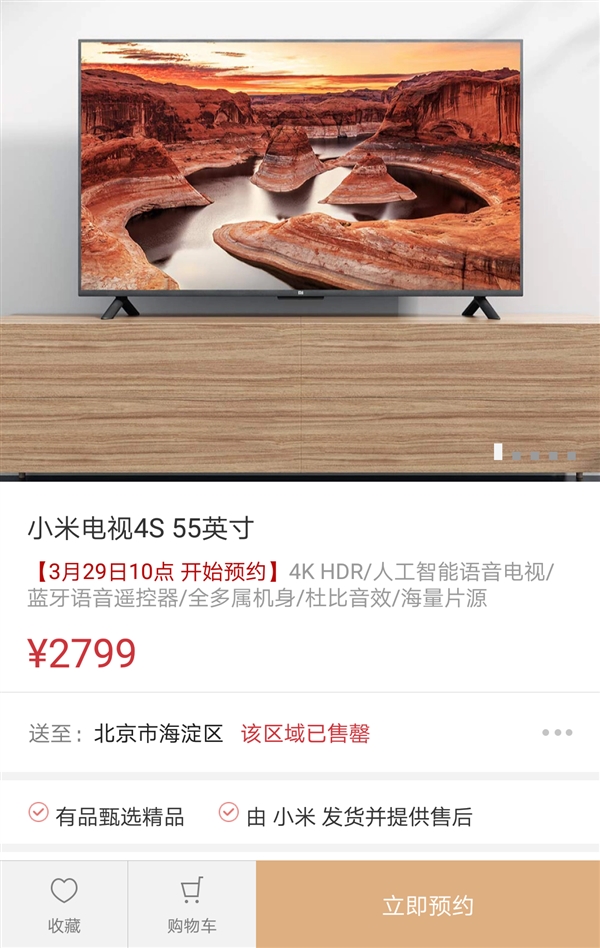
Xiaomi Mi TV 4 series include the Mi TV 4, Mi TV 4A and Mi TV 4C. Now, Xiaomi has added a new Mi Tv 4S model to the pack. The Xiaomi Mi TV 4S was launched alongside the 50-inch Mi TV 4C and comes sporting a 55-inch display screen. The new TV 4S also comes with a 2,999 Yuan ($477) price tag.
A number of Xiaomi products usually come with an “S” variant like the Mi Mix 2S and this signifies a close identity with the initial model, in this case, the Mi TV 4 but with some slight improvement in design and hardware. The Xiaomi Mi TV 4S 55-inch comes with a 4K screen resolution with a direct-lit backlight just like the Mi TV 4A. The device also comes with an 8ms dynamic response which is higher than the 6ms response time of the Mi TV 4A. The device also comes with an all-metal body.
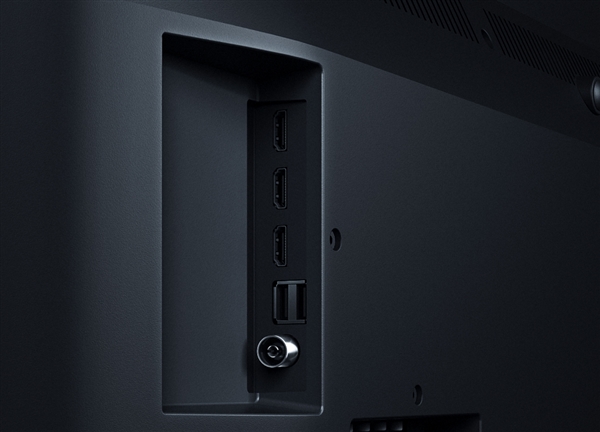
The Mi TV 4S also utilise the Amlogic T962 processor equipped with a quad-core A53 architecture clocked at 1.5GHz while the graphics is powered by a Mali-450 MP5 (450MHz) GPU. The processor is paired with 2GB of RAM and there is 8GB of storage onboard. This is similar to the hardware configuration of the Mi TV 4A. However, the interface on the TV 4S is located at the side. This interface includes three HDMI ports, two USB ports, one network ports, etc. The smart TV also supports HDR, Dolby sound and has a 28W speaker output (4A is 6W). There is also a standard Bluetooth remote control, PatchWall artificial intelligence voice system, and many more.
The XIaomi Mi TV 4S will go on sale from April 3 but is already open for reservation on Mi.com. The rice one again is 2,999 Yuan ($477), including shipping and this is 400 Yuan higher than the Mi TV 4A (55 inches) priced at 2599 Yuan ($413). The major difference is the metal body, the repositioned interface location and a more powerful speaker.
We all will have to begin saying goodbye to goo.gl as Google has revealed that it will be turning down support for the URL shortener starting from March 30, 2018. The tech giant also disclosed that from April 13, 2018, the goo.gl console will only be open to existing users to create short links. Existing users will also be able to view your analytics data and download your short link information in CSV format for up to one year, until March 30, 2019, when the service will be fully discontinued.
Not to worry though, previously created links will continue to redirect to their intended destination. Google suggests creating FDLs from now on or using other shortening services like Bitly and Ow.ly. FDLs are smart URLs that allow you to send existing and potential users to any location within an iOS, Android or web app.
Google URL Shortener, also known as goo.gl, is a URL shortening service which was launched in December 2009. The service was initially used for Google Toolbar and Feedburner but Google later launched a separate website goo.gl which was opened up to the public in September 2010.
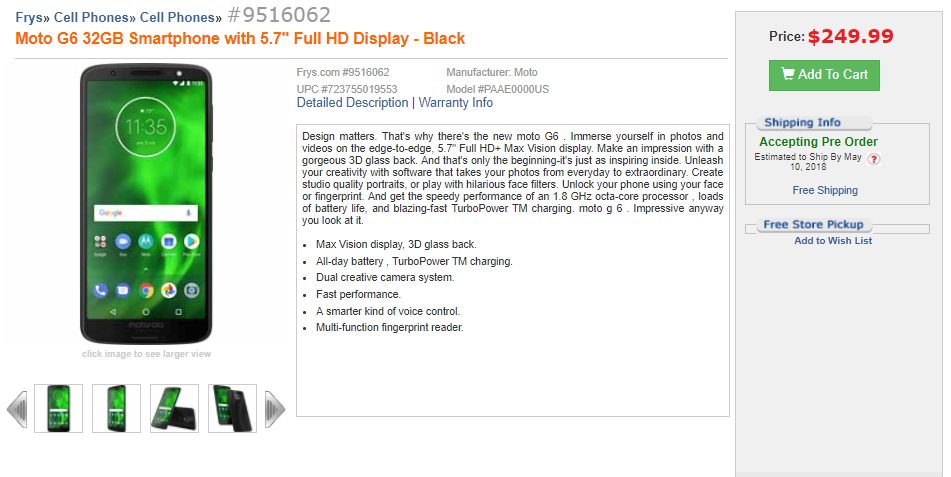
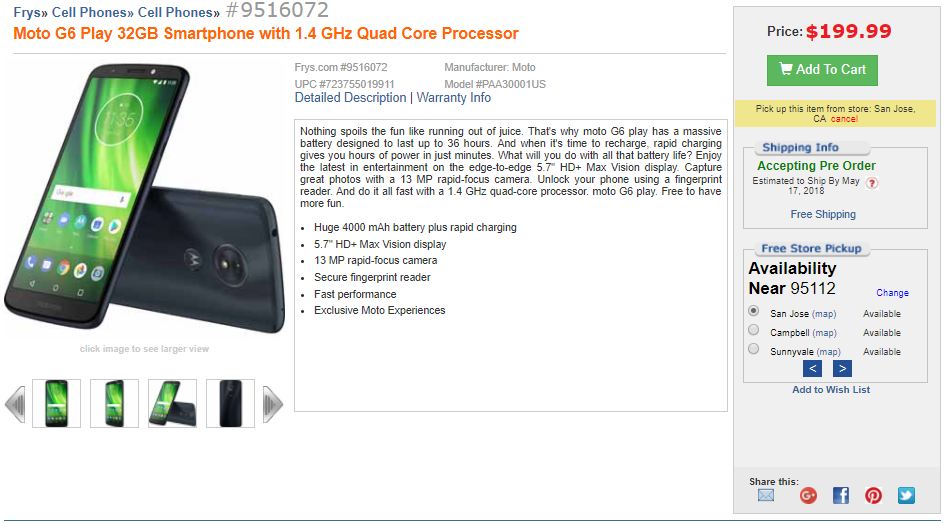
Lenovo owned Motorola should announce the new Moto series in Q2 2018. There have been lots of leaks in the last 2 months and we already have an idea of what to expect. However, American online store, Frys, already has the Moto G6 and Moto G6 Play listed with lots of new information about both devices.
Moto G6
For the 6th-gen Moto G, Lenovo is switching to the trending 18:9 display and it has dubbed it Max Vision. The one on the G6 is 5.7” with a Full HD+ display with Gorilla Glass protection.
The back of the G6 has also gotten a redesign. Gone is the metal back and in its place is 3D glass. But not all has changed in the new Moto G6. For instance, it still comes with the series’ signature water-repellent coating.
The Moto G6 packs dual rear cameras but Frys doesn’t mention the pixel count for the sensors. It does say the front camera is an 8MP sensor with its own flash and also goes into detail about the new features of the camera software.
Selective focus and selective black and white are some of the old features that make a comeback but the new features are cool too. You can now add face filters in real time or pick a single color to pop while the others are black and white after taking a picture.
The camera also supports landmark recognition, object recognition, text scanning, and active photos which is just like live photos on iPhones. It also has support for Face Unlock.
The Moto G6 still has its fingerprint scanner in front and it does more than just unlock your phone. You can set it to unlock apps and also access websites with passwords on your laptop using a feature called Moto Key.
Motorola also says the fingerprint scanner can be used for navigation. Swiping to the left takes you back, a right swipe takes you to recent apps, a tap takes you home, and a long press locks the phone.
We all know Motorola phones run near stock Android with the addition of some pretty useful features. The famous Moto Actions are still there which lets you twist your wrist twice to unlock the camera or chop twice to turn on the flashlight.
But there is also Moto Display which lets you see new notifications or reply to messages without unlocking the phone. The Moto G6 will also never turn off the display as long as it senses that you are still looking at it. There is also a built-in blue light filter.
Frys doesn’t mention some key specs like the processor type and RAM but says it is a 1.8GHz octa core chip with 32GB of storage. This variant likely has 3GB of RAM.
The Moto G6 has a 3000mAh battery with support for TurboPower fast charging. It also has a FM radio, Dolby Audio, and a MicroSD card slot.
Frys says the Moto G6 is $249.99 and is expected to ship May 10. This means a launch should be scheduled for April.
Moto G6 Play
Lenovo is releasing a Play variant of the Moto G6 this year. It has a 5.7” 18:9 Max Vision display like the G6 but with a 1440 x 720 (HD+) resolution.
It has a 5MP front camera with LED flash and a beauty mode, while a 13MP sensor sits on the rear. Sadly, there is no mention of all the cool features of the Moto G6 like live filters, object and landmark recognition, portrait mode, and active photos.
The Moto G6 Play’s selling point is its 4,000mAh battery which Motorola boasts should last 36 hours on a single charge. The phone also has a fingerprint scanner, a microSD card slot, Dolby Audio, and supports Moto Experiences (Moto Display and Moto Actions). There is also a new voice assistant that lets you use your phone hands-free.
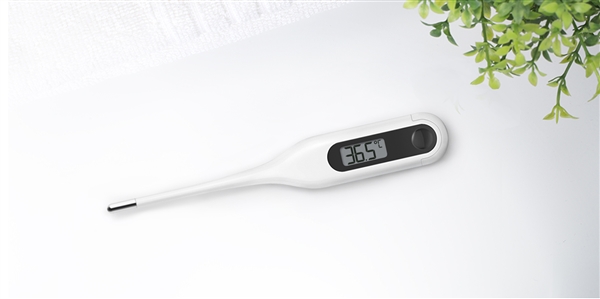
Xiaomi is known for its wide range of home products including thermometers, Hygrometers and others. Some of the products are released under its crowdfunding platform but are designed to meet Xiaomi’s quality standard. The Chinese tech giant has released yet another thermometer but this time it is an ultra-cheap product dubbed Seconds-test medical electronic thermometer Mijia custom version. The product comes at just 19.9 Yuan (~$3) which is considerably cheaper than other models with similar specification priced between 20 – 200 Yuan.
Compared to the traditional mercury clinical thermometer, the new Mi digital thermometer does not contain mercury, it is entirely digital. Thus, there won’t be any need for users to bother about damage caused by glass breakage or mercury leakage. The gadget is also manufactured using medical grade materials and has undergone stringent bio-compatibility tests. All these are to ensure that the materials are safe and harmless to the human body.
Talking about the design, the Mi Digital Thermometer comes with an 18.8mm LCD screen where the temperature reading is displayed boldly. This makes it easy for both the elderly and Children to easily read the temperature reading. The device also comes with a replaceable battery. The thermometer uses a high-precision thermistor and analog-digital conversion module giving it a measurement accuracy of ± 0.1 (35 °C -39 °C). The measurement accuracy is CFDA certified. The MIJIA custom thermometercan be used for subgingival and oral temperature measurement.
The gadget will be on sale from April 3 on Xiaomi Mall, YouPin, Jingdong, Suning and Mi Home.
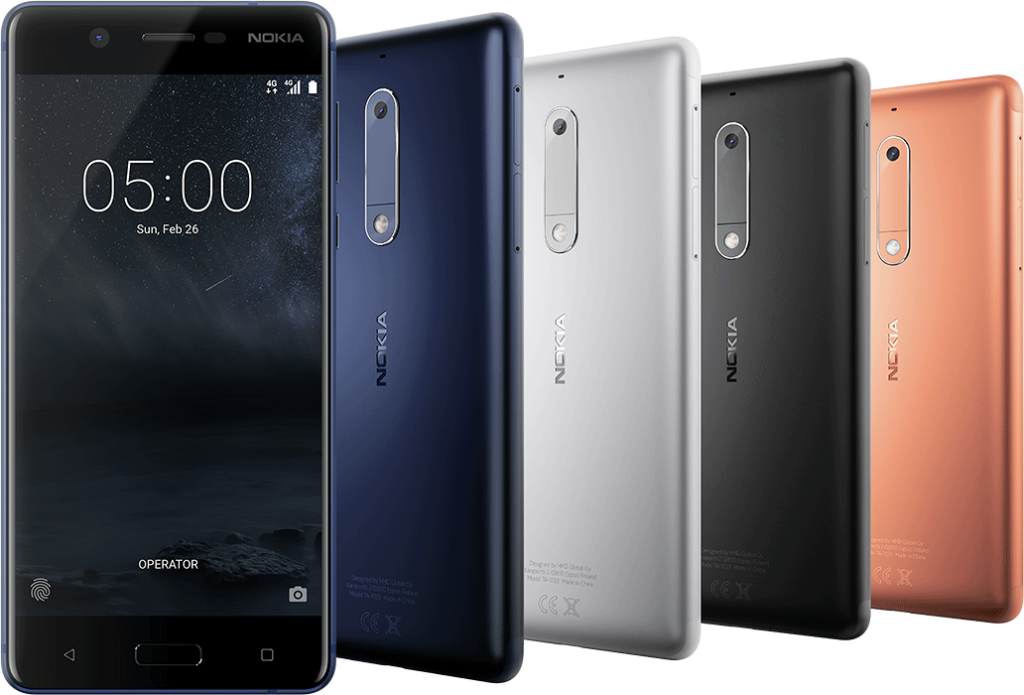
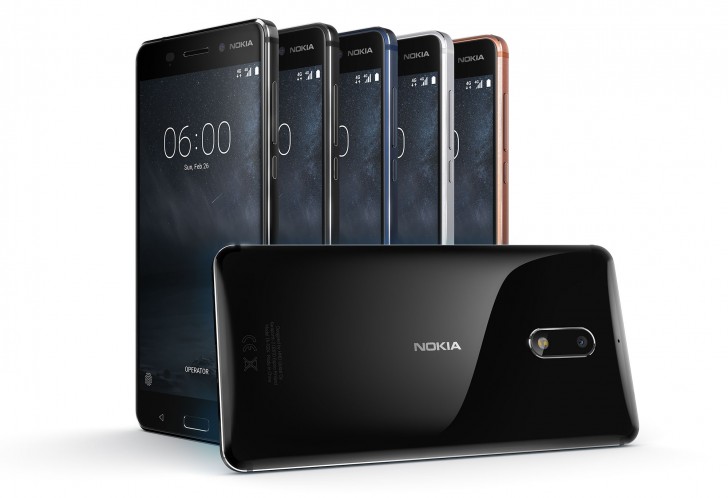
After rolling out Android 8.1 Oreo update last month, HMD Global has now started rolling out the update for the new version of Android Oreo for the Nokia 5 and Nokia 6.
Both the smartphones — Nokia 5 and Nokia 6, were upgraded to the Android 8.0 Oreo update earlier this year in January. Earlier this month, both devices received the March security patch update in select markets.
Currently, the update is rolling out to the Nokia 5 in India, Tunisia, and Indonesia. On the other hand, the update for the original Nokia 6 is only available in India at the moment. However, we expect more markets to get this new software update in the next few days.
The Nokia 5 Android 8.1 Oreo update is about 866.7MB in size, while the Nokia 6’s update is 933.8MB. The update package is downloadable only through an active Wi-Fi connection. You can check the availability of the update on your Nokia 5 and Nokia 6 by going to Settings > System updates.
The official changelog for the update suggests that it comes with battery saving navigation buttons, a revamped power menu, new settings menu, and Bluetooth battery percentage. It also brings the March security patches to the handsets.
Further, the update also comes with several core Android features such as Neural Networks API, Autofill framework updates, and a shared memory API. Besides, users can expect performance improvements and bug fixes, including a corrected hamburger emoji.
The Nokia 5 was launched last year in February and comes with a 5.2-inch HD display. The phone is powered by a Qualcomm Snapdragon 430 processor, coupled with 2GB/3GB of RAM and 16GB of inbuilt storage. The phone is backed by a 3,000mAh battery.
On the other hand, the Nokia 6 features a 5.5-inch Full-HD IPS display and is powered by Qualcomm Snapdragon 430 processor. It packs 3GB/4GB RAM and 32GB/64GB of inbuilt storage and is powered by a 3,000mAh battery.
HMD Global has scheduled a launch event in India on 4th April, where the company is expected to launch Nokia 7 Plus and Nokia 8 Sirocco in India. Both the phones were unveiled last month at Mobile World Congress.
Lava has launched a new budget smartphone in the Indian market under its Z-series. Dubbed as Lava Z91, the smartphone is priced at Rs. 9,999, which roughly converts to $154.
The company has revealed that the Lava Z91 will come with a 2-year warranty and one-time free screen replacement offer. Further, buyers of the smartphone can also avail cashback worth Rs. 2,000 from Airtel.
The phone comes with a 5.7-inch HD+ display with screen resolution of 1440 x 720 pixels and a 2.5D curved glass on top. The phone features a full-screen display with 18:9 aspect ratio, in line with the current trend.
Under the hood, the budget smartphone is powered by a MediaTek MTK6739 processor along with 3GB RAM. It packs 32GB internal storage and comes with a microSD card slot, which enables users to further expand the phone’s storage capacity up to 128GB.
In the photography department, the smartphone comes with a 13-megapixel rear camera with f/2.0 aperture and an LED flash. While it does not feature a dual-camera setup, it offers a Bokeh mode. On the front side, there’s an 8-megapixel camera with a f/2.2 aperture for taking selfies and video calling.
The phone comes with a fingerprint sensor, placed on the back panel. It also comes with a Face Unlock feature for added security. The fingerprint sensor on the device can also be used as a shortcut to open applications.
The device is running Android 7.1 Nougat operating system out-of-the-box with the company’s Star OS custom user interface on top. The phone is powered by a 3,000mAh battery, which should be enough to last an entire day on a single charge.
Earlier this week, Lava launched its first Android Go edition smartphone — Lava Z50, which became the first Android Oreo (Go Edition) smartphone to go on sale in India. It is priced at Rs. 4,400 (approximately $68) in India and is available through offline as well as online stores.
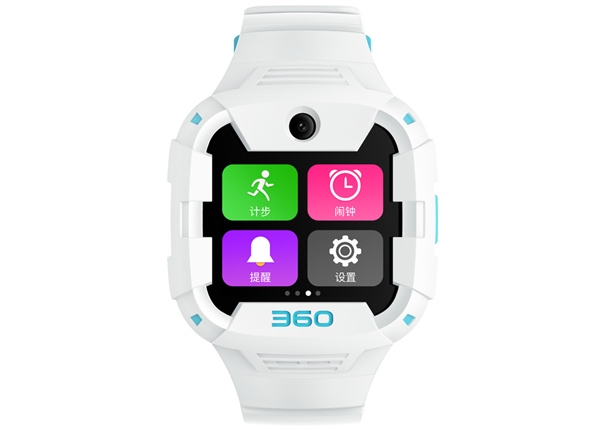
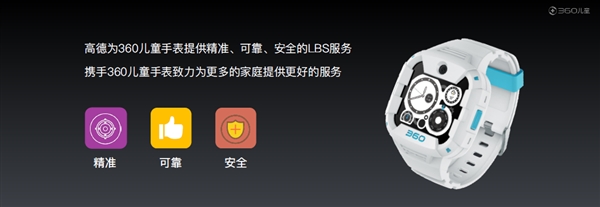
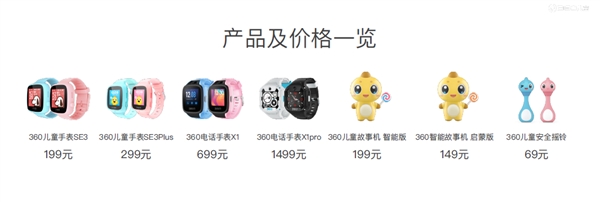
360 Mobiles is a company with many parts. Apart from its stride in the smartphone industry, the company is into software and antivirus sales and also has its line of smartwatches among other concerns. The Chinese company has not launched a total of seven new smartwatches under different series. The watches include X-series models for kids as well as SE series for Children, early education series and its main flagship 360 smartwatch X1 Pro. The prices for the watches range from 69 Yuan to 1499 Yuan.
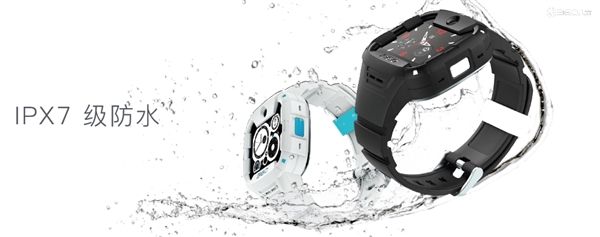
The stand out product is obviously the 360 Watch X1 Pro which comes with a 1,499 Yuan (~$238) price tag. The watch comes with an attractive square-shaped design with curved edges. The frame comes with a ceramic texture and the wristband is made from original TPU material manufactured by Bayer, Germany. The smartwatch also comes with an IPX7 waterproof and dustproof build as well as several sports functions.
Specs wise, the 360 Smartwatch X1 Pro is equipped with an AMOLED display screen with a resolution of 340 x 272 pixels. The smartwatch is powered by a Qualcomm Snapdragon wearable device custom chips. The device also comes with a 4GB flash memory. There is also a 2MP camera and 4G Network support. It wasn’t stated if the watch runs on Android OS but we don’t think so.
The 360 X1 Pro smartwatch also supports wireless Bluetooth music. Thus, it can be connected to a Bluetooth headset and can also be used to listen to songs, and supports various communication modes such as video calling and voice chat.
The 360 Watch SE3 comes with a 199 Yuan price tag while the SE3 Plus is priced at 299 Yuan. The prices of the other watch models are also revealed with the lowest being 69 Yuan. The products are presently open for reservation and will go on sale at 10 AM on April 3.
We use cookies on our website to give you the most relevant experience by remembering your preferences and repeat visits. By clicking “Accept”, you consent to the use of ALL the cookies.
This website uses cookies to improve your experience while you navigate through the website. Out of these, the cookies that are categorized as necessary are stored on your browser as they are essential for the working of basic functionalities of the website. We also use third-party cookies that help us analyze and understand how you use this website. These cookies will be stored in your browser only with your consent. You also have the option to opt-out of these cookies. But opting out of some of these cookies may affect your browsing experience.
Necessary cookies are absolutely essential for the website to function properly. This category only includes cookies that ensures basic functionalities and security features of the website. These cookies do not store any personal information.
Any cookies that may not be particularly necessary for the website to function and is used specifically to collect user personal data via analytics, ads, other embedded contents are termed as non-necessary cookies. It is mandatory to procure user consent prior to running these cookies on your website.