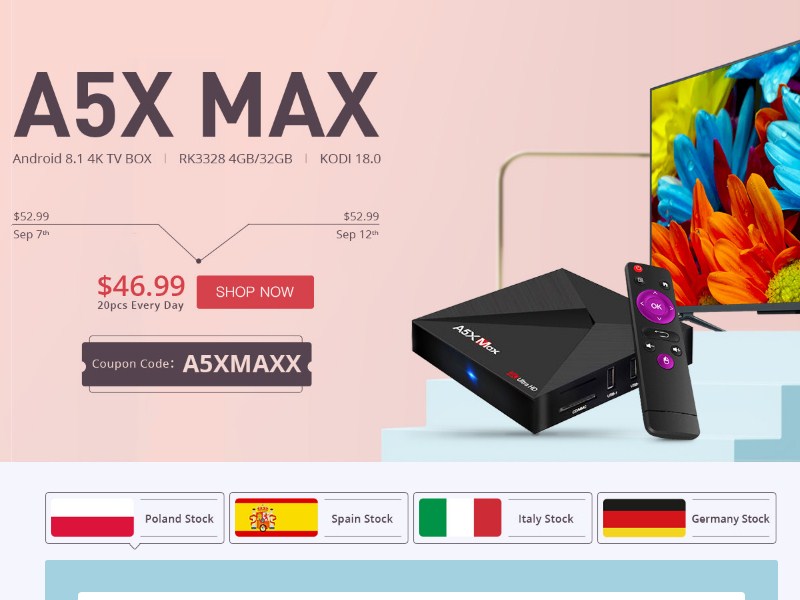
If you’re in the market for an RK3328 SoC-equipped Android TV box, you’ve come to the right place. We’ll shed light on an unmissable deal that you can avail on the A5X Max 4K TV Box on GeekBuying.
Moreover, we’ll show how you can avail additional discounts on a wide selection of other high-end TV boxes that are currently available bearing discounted prices on GeekBuying. The TV boxes have been split into multiple categories including Poland Stock, Spain Stock, Italy Stock, and Germany Stock.
The above-mentioned section comes with specifically assigned coupon codes that you can use to save a extra money at the time of checking out. For instance, under the Poland Stock section, you can use a $5 off coupon if your grand total exceeds $100 and $2 off coupon if you spend more than $45.
Similarly, you can avail an extra $5 off coupon for over $80 and $4 off coupon when your order value is more than $70, under the Spain Stock category. The Italy Stock section, on the other hand, features a $4 off coupon for every $70 spent and a $6 off discount coupon which will be valid for those who spend more than $90.
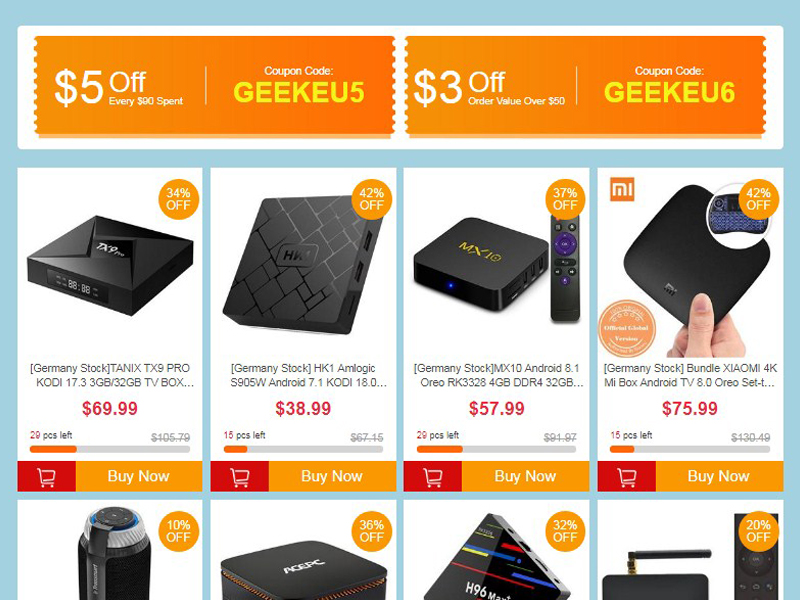
The Germany Stock segment is crammed with a slew of well-received TV boxes that are currently available at a considerably lowered price. On top of that, buyers who spend over $90 can use coupon code GEEKEU5 to save an extra $5 and those who spend above $50 can apply coupon code GEEKEU6 to get an extra $3 off.
It is worth noting that the above-mentioned discount on the A5X MAX TV Box will be valid for just 1 day. Only first 20 buyers daily will be able to take advantage of this discount, which you can check out by visiting the promotion page.
To get extra discounts on a slew of other TV boxes, follow this link without wasting time.
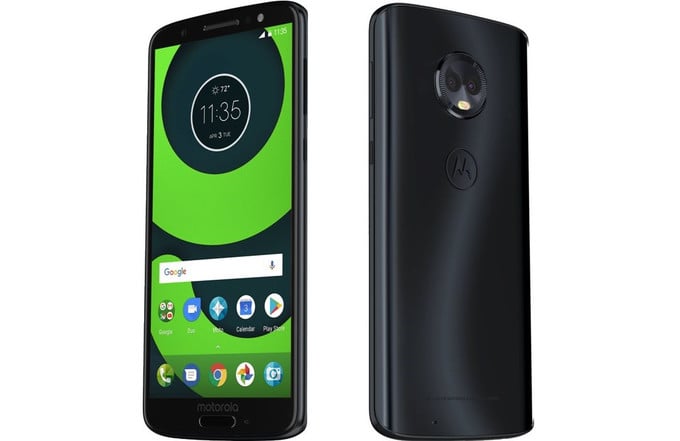
The Moto G6 Plus comes with a larger 5.9-inch MAX Vision Full HD+ IPS display with 2160 x 1080 pixels screen resolution, 18:9 aspect ratio and Gorilla Glass 3 protection. The glass on the back panel is also protected by a layer of Gorilla Glass, ensuring safety from the minor scratches.
Under the hood, the device is powered by Qualcomm‘s Snapdragon 630 octa-core processor clocked at 2.2GHz along with Adreno graphics processor. It comes in two variants — 4GB RAM with 64GB internal storage and 6GB RAM with 128GB internal storage. In India, the company has launched only the 6GB RAM variant. There’s also a microSD card support for up to 128GB of storage expansion.
Coming to the optics, there’s a 12-megapixel primary sensor with f/1.7 aperture and a 5-megapixel secondary sensor on the back, with support for Dual Autofocus Pixel technology. There’s a 16-megapixel front-facing snapper, instead of the 8MP snapper on the global variant. It comes with an LED flash and supports group selfie mode, beautification mode, manual mode, and face filter.
There’s a fingerprint sensor on the front side, placed on the bottom chin just below the display, even though Moto G6 Plus supports the Face Unlock feature. Connectivity options include dual-SIM card slots, Bluetooth, Wi-Fi, GPS and a USB Type-C port for charging and data transfer, and 3.5mm headphone jack. Thanks to the nano water-resistant coating, the device comes with protections against water splash.
The smartphone runs on Android 8.1 Oreo operating system out-of-the-box with some value-added Moto apps. The company has also said that the phone could receive Android Pie update in a couple of months. The device is powered by a 3,200mAh battery with support for Motorola’s TurboPower that claims to deliver 7 hours of usage on a charge of 15 minutes.
The Moto G6 Plus is priced at Rs. 22,499 (approximately $310) and comes in Deep Indigo color. It’ll be available for purchase from today on Amazon and Moto hub offline retail stores. At this price point, it will compete against the likes of Xiaomi POCO F1, which comes with far better specifications compared to G6 Plus.
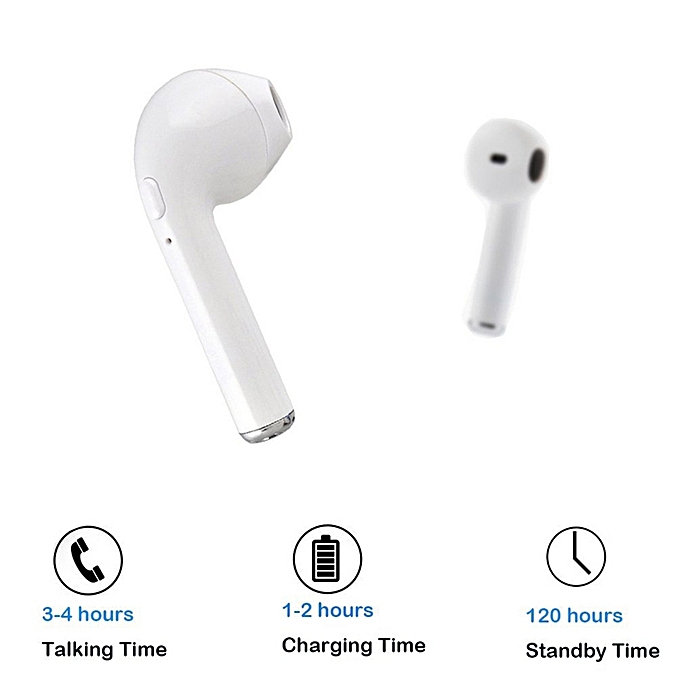
Unlike most regular headphones, newfangled wireless headphones work with larger ranges as the adopt radio frequency or infrared to broadcast the sound. If you fancy running or working out to your favorite music, you might the OLLLY I7TWS wireless earphone can prove to be an ideal companion.
If you’re on a tight budget and aren’t willing to spend a lot of money on a wireless earphone, the OLLLY I7TWS will not set you back a pretty penny either since it is now available at a lowered price on GearBest. The wireless earphone usually carries a steep price tag, but you can now buy it at a dropped price of just $10.69.
Compatible with popular brands such as Samsung, HTC, Nokia, BlackBerry, LG, Sony, iPod, iPad, iPhone and lots more, the stylish OLLLY I7TWS wireless earphone is the best choice for you. It delivers an unparalleled sound quality, breathing new life into your favorite music and movies.
Moreover, it features a built-in CVC6.0 noise elimination technology that delivers unhampered sound. Aside from that, it boasts true wireless stereo for a flawless left and right channel separation. The OLLLY I7TWS wireless earphone comes with iOS system real-time power display that shows information at just a glance. The device has dual-mode Bluetooth V4.2 pairing which offers freedom of movement while working out.
The device houses a multifunction button, mic, charging port and an aluminum mesh. The multifunction button can be used to answer incoming calls, reject unwanted calls, play and pause music and switch it off.
Weighing in at just 4g, the OLLLY I7TWS wireless earphone comes with an easily visible indicator light, which is further augmented with an eye-catching streamline plastic design. Moreover, it adopts a state-of-the-art Bluetooth chip audio decoding technology.
Regrettably, the 12% reduction in the device’s original asking price will only be valid for 6 days. Although you can choose from black, white, red, gold and rose gold color options, there were only limited pieces remaining for the Flash Sale at the time of writing. In order to take advantage of the discount, just follow this link before the promotion ends.
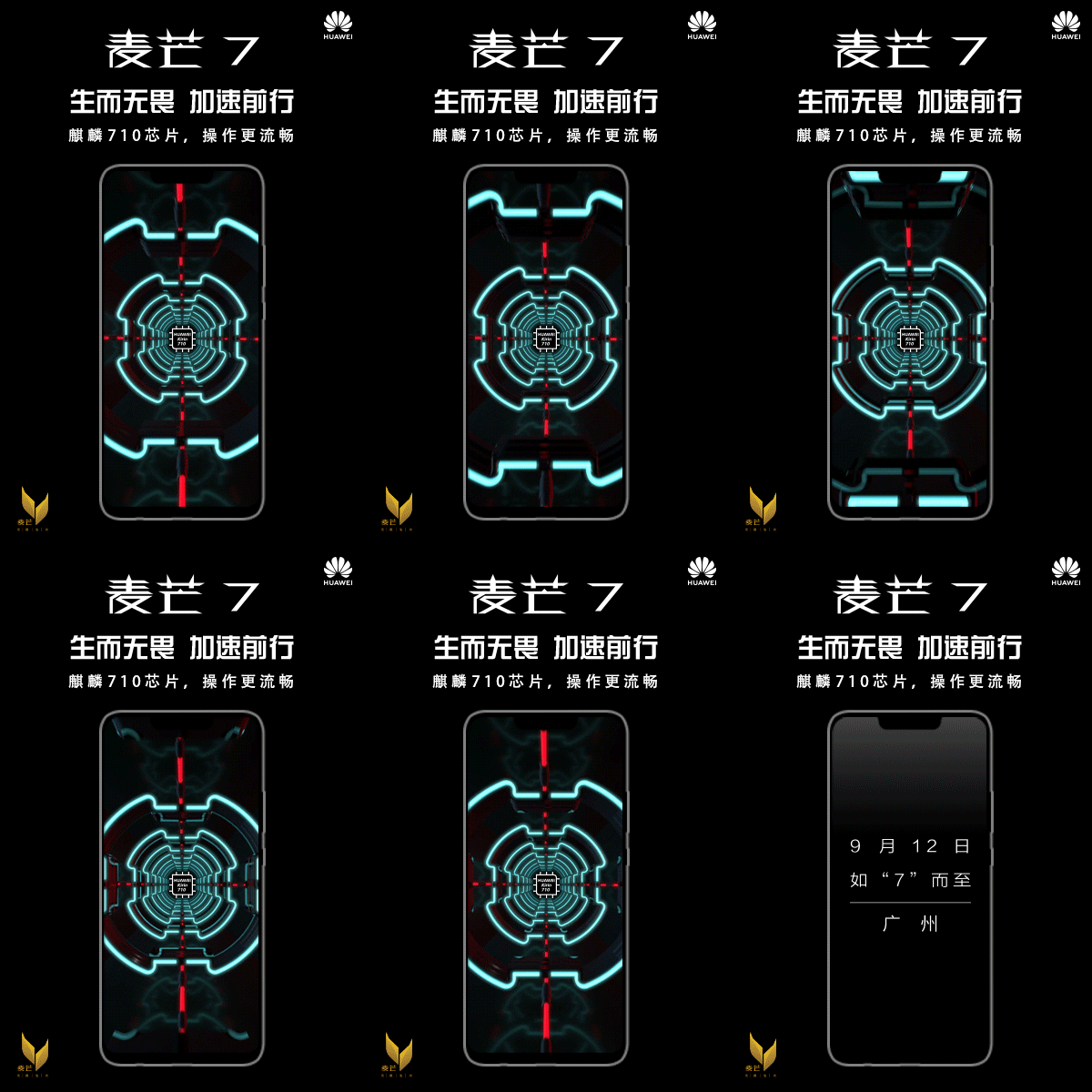
Last year, in the month of September, Huawei launched its first full-screen smartphone, Maimang 6. Its successor, Huawei Maimang 7 is confirmed to feature Kirin 710 with Turbo GPU. Few days ago, Huawei announced that they are bringing the successor of Huawei Maimang 6 and will launch the phone at an event in Guangzhou on September 12. A poster was included along with the announcement, below, you can have a look at it . It will carry mid-range specs with a design similar to Huawei Mate 10 series.
Huawei seems to be on the launching spree as it has launched multiple devices in the past few weeks. Recently, Huawei announced Honor 8X and Honor 8X max under its Honor brand.
Today morning, Huawei officially confirmed that they will bring the powerful Kirin 710 along with the Maimang 7. In order to boost the gaming performance, Huawei will add Turbo GPU to the device. Other details of the device are not yet confirmed, but we expect it would be similar to the specs that were leaked in numerous rumors.
Huawei Maimang 7 specs
As per the leaks, Huawei Maimang 7 will carry 6.3 inch of screen having resolution of 2340 × 1080 pixels with 12:5:9 aspect ratio. It will come in 6/64 Gb storage variant along with Kirin 710 on board.
Huawei Maimang 7 teaser Kirin 710
In order to make it more gaming compatible, Huawei has added GPU Turbo for enhanced graphics performance. Interestingly, it will improve the graphics performance by 60% and will increase battery efficiency upto 30 percent. The fingerprint sensor will be available on the back of the device. You can also expect the device to carry a microSD card slot for memory expansion.
The major feature that Huawei is advertising for the Maimang 7 is its dual camera setups on both the front and the back side. It will carry dual 20 megapixel + 2 megapixel camera on the back side and 24 megapixel + 2 megapixel dual camera on the front side. The phone is said to be coming with 3650 mAh battery with fast charging capabilities. Read more about the Maimang 7 aka Mate 20 Lite’s specs here.
Maimang 7 pricing and availability details are not yet available. Last year, Maimang 6 was available for 2,399 Yuan (~$350) and we hope for similar pricing for the Maimang 7.
Xiaomi is rolling new MIUI 10 8.9.7 ROM based on Android Pie 9.0 for Mi Mix 2S. As per the users on various forums, the latest public beta developer version 8.9.7 is now available for the Xiaomi Mi Mix 2S. This makes Mi Mix 2S one of the first Xiaomi devices to taste the stable Android Pie 9.0 update. Currently, Xiaomi is testing the beta build of the Mi Mix 2S ROM, it will take few weeks more to get the stable build out of it.
[envira-gallery id=”210787″]
In the month of August, Xiaomi started the beta testing of Android Pie 9.0 for Xiaomi Mi Mix 2S. The Chinese electronics giant initiated alpha testing and then after some time moved to a beta build. There were many bugs that have been rectified or fixed during the alpha and beta stages. Now, it seems the final build is few weeks ahead, as beta build are in its final stages. Those users who are not well experienced in manually updating your phone, we suggest you guys to wait for the official Mi Mix 2S update via OTA.
The new update brings the latest September Android security patches and updates the baseband version as well. Further, it improves the fluency of the device in general and removes lag from the camera menu.
Xiaomi Mi Mix 2S is a high-end device running with Snapdragon 845 on the board with Adreno 630 GPU and 6 GB of RAM. It carriers 64 GB UFS 2.1 storage and it is not expandable via any SD card. There’s another high end version of the device which carries 8GB of RAM with 128 GB of internal storage. There’s 5.99 inch of IPS LCD panel with resolution of 2160 x 1080 pixel having the aspect ratio of 18:9.
In the camera department, there’s a 12+12 MP camera on the rear side and 5 MP shooter on the front. Xiaomi has incorporated camera with AI technology having 2X optical zoom. In connectivity, device have a Wi-Fi 802.11 a/b/g/n/ac dual-band, Bluetooth 5.0 with LE, GPS with A-GPS, a Type-C USB 2.0.
Update: Xiaomi Mi Mix 2S is having compatibility issues between Android P and third party apps and games after the new MIUI 10 8.9.7 update. We suggest you to hold the update or get more information about the whole issue before installing it.
While HTC has been going through rough times as the company recently reported a 53 percent year-on-year drop in revenues. However, that is not stopping the company and the Taiwanese manufacturer is reportedly working on its next flagship smartphone.
HTC’s Senior RF designer Kevin Duo has revealed through his LinkedIn profile that the company is still powering ahead and is working on an upcoming flagship smartphone that’s powered by Qualcomm‘s Snapdragon 855 processor.
The company is currently sampling the Snapdragon 855 SoC, which is expected to bring impressive performance and efficiency improvements over the current Snapdragon 845. While X24 LTE modem defaults on SD855 SoC, the company could opt for the X50 modem, making the smartphone 5G-compatible.
Qualcomm, which is dominating the mobile chipset market, is currently working on its next-generation flagship processor which the company has already confirmed will be manufactured using 7nm design process. According to the reports, Taiwan-based TSMC will begin the mass production of Qualcomm’s 7nm chipset in the fourth quarter of this year.
Recent reports suggest that Qualcomm could change the naming scheme of its processors with the upcoming chipset. The Snapdragon 855 (SDM855) codenamed “Hena” is now being referred to as the SM8150, which will measure 12.4 x 12.4 mm. It’ll be on par with the recently launched Kirin 980 chipset and the upcoming Apple’s A12 chipset.
Some manufacturers have received samples of the upcoming 7nm chipset, for testing and building new phones powered by the upcoming SoC. We recently reported that Xiaomi and Lenovo could be working on a 5G smartphone powered by Qualcomm chipset.
However, do keep in mind that it’s still a long time before we hear something substantial about the mystery HTC smartphone powered by Snapdragon 855. Smartphones powered by the Qualcomm Snapdragon 855 processor are expected to make its way into the market by the middle of next year.
It seems that HTC has no plans of leaving the smartphone market anytime soon but the company could shift its focus towards flagship smartphones only for higher profit margin instead of mid-range or low-end devices. But much of the company’s future will depend on its upcoming flagship smartphone.
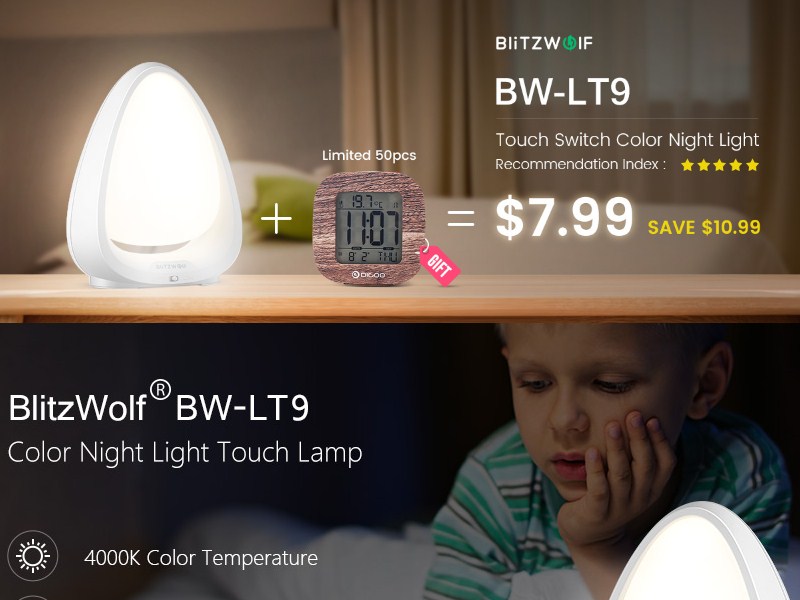
With the right lighting, you can create a comfortable ambiance that helps you feel relaxed. That’s exactly what the BW-LT9 Color Night Light Touch Lamp is designed to conceive without emptying your pocket.
BlitzWolf has a reputation for producing a wide selection of inspiring products that surpasses cultures, customs, and geography. Staying true to its notoriety, the company is now offering a noteworthy discount on its feature-laden BW-LT9 touch switch color night light on Banggood.
While the BlitzWolf BW-LT9 would normally set you back $11.99 on online as well as offline stores, you can now buy it at a dropped price of just $7.99 on Banggood. This is a significant 33% reduction in the device’s original asking price.
An absolute bargain at this price, the BlitzWolf BW-LT9 is packed with an impressive array of features. It adopts a 4000K color temperature to create non-dazzling, cozy light while protecting your eyes and reducing eye fatigue.
Moreover, it can easily switch between a white and colored mode that allows the BW-LT9 to create standard lighting and engaging colored ambiance. Aside from that, it features a smart light mode that reduces brightness as battery level drops.
In order to switch the light from white light mode to the color cycle mode all you need to do is to long touch the top of the night light. You can select your favorite light color by tapping the top and return to the color cycle mode by tapping again. To go back to white light mode, you can long touch the top again.
If you’re interested in checking out more details about the BW-LT9 and avail the discount, click here to visit the promotion page. It is worth noting that the promotion sale is slated to end on September 15th.
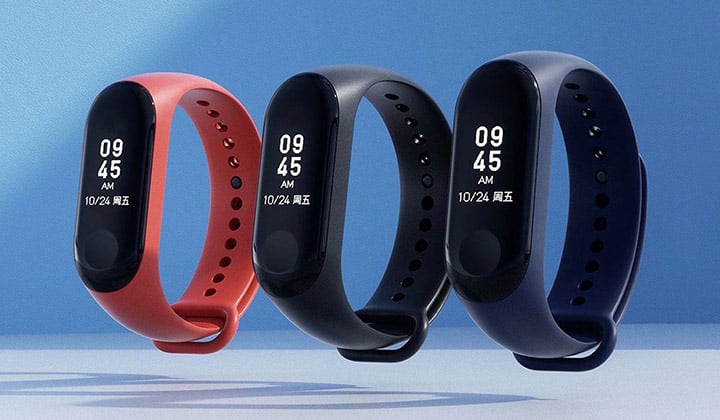
A few months ago, Xiaomi launched its third-generation of Mi Band in two variants — one standard Mi Band 3 and another Mi Band 3 NFC version. While the standard version is already available for purchase in China, the NFC version is yet to go on sale.
The company recently posted a video on its Weibo account showcasing the Mi Band 3 NFC version and hinting that the device could soon be available in the market for purchase. Now, Huang Wang, CEO of Huami posted on Weibo that Mi Band 3 NFC version has passed three tests and is almost ready to go on sale. The company had earlier revealed that the Mi Band 3 NFC variant will be available from September but no specific date has been announced yet.
The NFC variant of the Xiaomi’s new third-generation activity tracker comes with support for contactless payments using Mi Pay. It also supports City Bus Card payments that work for over 167 cities in China, including Beijing, Shanghai, Guangzhou, Shenzhen, Wuhan, Tianjin, Shijiazhuang, Suzhou, Hefei, Xi’an, and Jilin among others.
The Mi Band 3 comes with a 0.78-inch OLED capacitive touchscreen. According to the company, the display is designed with an aim to offer a better experience for viewing / rejecting calls and messages. It has been redesigned to ensure that the tracker doesn’t fall off from the strap, which a lot of users complained about for its predecessor.
Along with the addition of viewing messages and call view/ reject feature, the Mi Band 3 can also provide weather forecast as well as an alarm clock, which can be turned off from the touchscreen. Other features include heart rate monitor, daily steps count and sedentary reminder as a part of the health management functions.
Further, the Mi Band 3 comes with water and dust resistance, and is completely waterproof for up to 50 meters, ensuring that it works perfectly even when the user is swimming. One of the crucial thing for a wearable device is the battery life and Xiaomi has taken care of the battery department. The newly launched Mi Band 3 comes with an improved battery, which the company claims can last for up to 20 days on a single charge.
The NFC variant of the Xiaomi Mi Band 3 is priced at 199 Yuan, which roughly converts to $31 and is expected to go on sale by the end of this month. On the other hand, the standard edition of the Mi Band 3, priced at 169 Yuan (approximately $26), is now available in China through open sales.
If you’re looking for the best electronic gadgets online at low prices, GearBest is a name to reckon with. Staying true to its reputation, the Chinese online store includes heavily discounted mobile phones, sporting goods and a slew of smart home appliances.
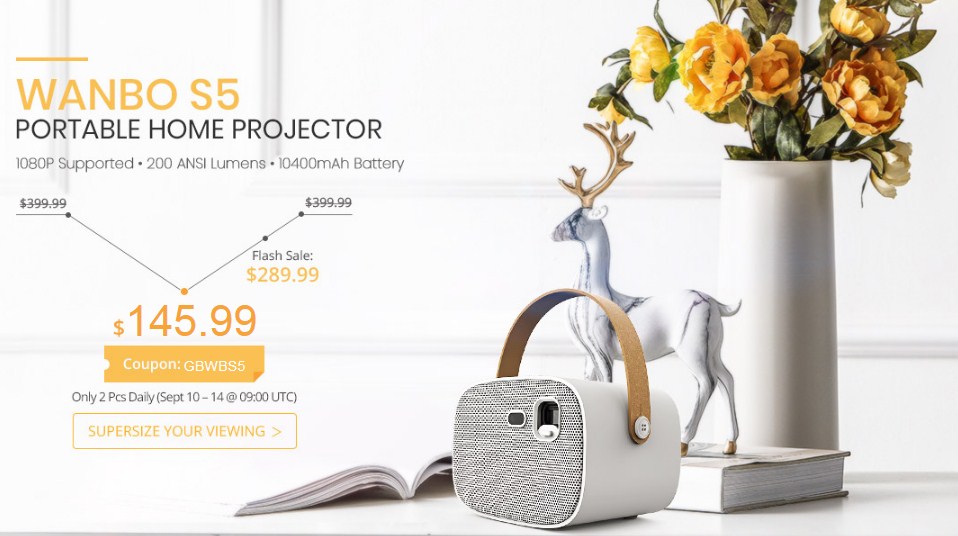
If you’re in the market for a DLP projector, you’re highly likely to have come across multiple design options. While most of these devices usually carry steep price tags, GearBest is giving its buyers an opportunity to get their hands on the Wanbo S5 HD DLP Home Theater Projector at a considerably lowered price.
The Wanbo S5 would normally set you back a pretty penny on online and offline stores, but you can now buy it at a reduced price of just $289.99 on GearBest. This is a significant 23% reduction in the device’s retail price of $399.99.
In addition to taking advantage of the aforesaid discount, you can apply coupon code GBWBS5 to bring your already discounted grand total further down to just $145.99. The coupon can only be used for 2 pieces daily until September 14th at 21:29:59.
With just 200 pieces left for the Flash Sale price, the promo is slated to end in 6 days. You can visit the promotion page by clicking here to avail the discount and use the coupon before it expires.
Cinema Home Special Promo
If you’re interested in checking out other cost-effective alternatives to the Wanbo S5 projector, you can check out GearBest’s Cinema Home Special promotion. The recently kicked-off promo features a wide selection of laser and smart projectors that you can buy without emptying your pocket.
As part of the promotion, you can avail a 21% off on the Wemax One 700 lm laser projector that normally sells for $2384.33. Thanks to the aforesaid discount, you can now buy it at a snap-up price of just $1949 on GearBest.
The XGIMI Z6 smart projector is available at a reduced price of just $539.99. This is a 21% off on the device’s $678.56 price tag and it will be valid for the remaining 50 pieces until the promo ends today.
Alternatively, you can go for the XGIMI H1 DLP Projector, which is currently up for grabs at a discounted price of $769.99 on GearBest. Note that the projector would normally set you back $926.51.
You can even get a considerable discount on the wowoto A5 Pro DLP Portable Projector and a slew of other projectors that have been split into multiple categories in order to aid the search process. You can follow this link to check out the rest of the devices and avail the discounts before the promo ends.
Chinese smartphone giant Xiaomi has started rolling out the MIUI 10 Stable ROM for some smartphones. Xiaomi is rolling out the new MIUI 10 Stable ROM update to the devices such as Xiaomi 8 SE, Xiaomi Mi MIX2, Xiaomi Mi MIX, Xiaomi Mi 6, Xiaomi Mi 6X, Xiaomi Note 2 and 6 other devices. MIUI 10 is based on Android Oreo 8.1.
Devices getting MIUI 10 Stable update
The update is rolling out to the 12 Xiaomi devices – Xiaomi 8SE, Xiaomi MIX 2, Xiaomi MIX, Xiaomi 6, Xiaomi 6X, Xiaomi Note 2, Xiaomi 5, Redmi 6 Pro, Redmi 6 and Redmi 6A, Redmi Note 5 and Redmi S2. The testing for other devices like Mi 8, MiX 2S is not yet over as the soak tests are pending for them.
MIUI 10 Stable update is now rolling out via OTA (Over-the-Air) method to the devices. Users can directly go to the settings menu, then to system upgrades to manually check for the updates by clicking the “Upgrade Now” button. Users, who have installed the MIUI development version on their devices can also upgrade to MIUI 10 by following proper upgrade guide.
It is already available for Redmi Note 5, Mi Note 3, Mi 8 SE and Mix 2.
Xiaomi MIUI 10 Stable features
There are many changes that can be seen in the MIUI 10. It includes features such as a new UI with more vibrant and crisp colors, support for AI (Artificial Intelligence) and Internet of Things, new ringtones with more natural and pleasant sounds. The new UI is specially designed for the devices which comes with the full view display having display notch. There are some new swipe gestures for home, back and recent apps. As like vanilla Android 9.0, it also carries vertical volume slider rather than the traditional horizontal ones.
There are some performance improvements than the MIUI 9 version in the latest build.
The Android Oreo update for MIUI is now rolling out to the compatible devices. The update will gradually arrive on all the listed devices but will take some time to reach every unit.
Xiaomi is very aggressive when it comes to product launches and almost every month we see something new from this Chinese company. Now Xiaomi has confirmed yet another event in China, to be held in the famous city of Chengdu. In case you don’t know, this city is famous for its giant pandas, thanks to the Giant Panda Breeding Research Base where tourist can get access and interact with these cute creatures.
Xiaomi Mi 8 Youth event teaser
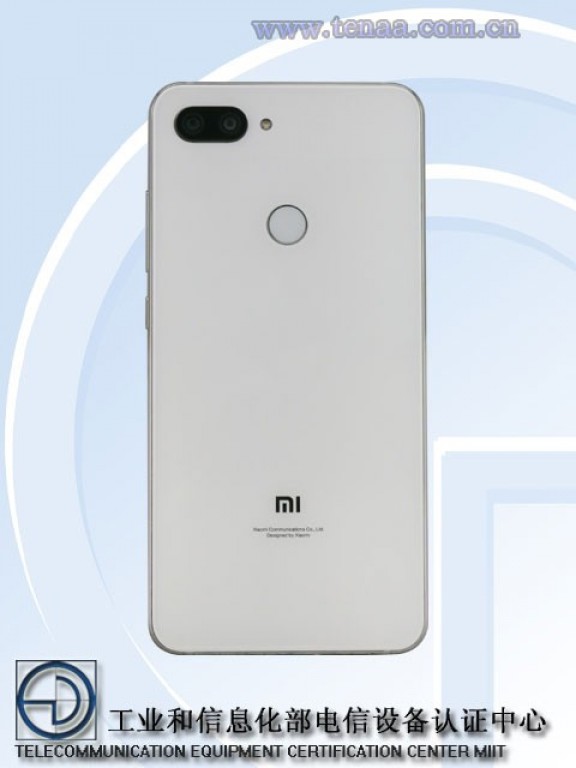
The company released a new poster an hour ago via its weibo handle to confirm the event at Chengdu but failed to give out any specific details. However, the teaser poster kind of confirms that the event is for the Xiaomi Mi 8 Youth Edition. If you look closely at the picture, there’s a smartphone in the pot down below. We can see that the phone has dual cameras arranged horizontally, which is identical to the design of the Xiaomi Mi 8 Youth edition that we saw in TENAA images a couple of days back.
Xiaomi Mi 8 Youth TENAA
The Xiaomi Mi 8 Youth edition is said to come with a 6.26-inch 2280 x 1080 pixel resolution display and Snapdragon 710 chipset inside. There should be 6GB of RAM and 64GB of internal storage along with a 3350mAh battery on board. As for the cameras, there should be a 12+5MP sensor at the back and a large 24MP sensor up front for selfies.
These specs are very similar to the Mi 8 SE. So, it would be interesting to see how Xiaomi places this new model alongside the existing Mi 8 SE with SD710 onboard.
Electricity is a vital part of our daily lives. We rely on it to power various electronic items we use at home, office, school etc. On the downside, using more electricity leads to higher electricity bills.
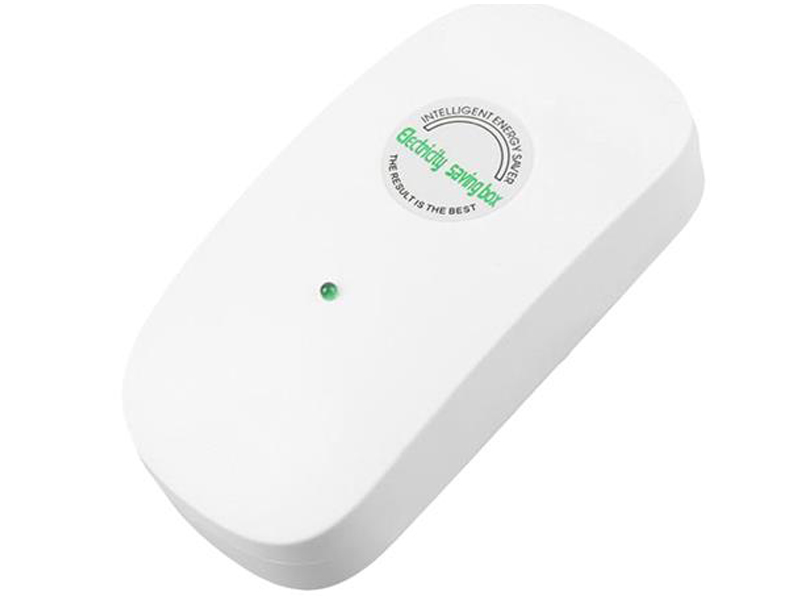
If you’re looking for an efficient energy-saving strategy that can help you save money and energy without burning a hole in your pocket, look no further. The Electricity Saving Bax will not only save energy, stabilize the voltage, balance the current source but also guard your device against any sort of harm.
More importantly, you can get this electricity saving device at a lowered price on GeekBuying. While it usually sells for $17.89 on online stores, the Home Intelligent Digital Power Electricity Saving Box is currently up for grabs at a discounted price of just $7.99.
But if that doesn’t rouse your interest, we’ll show how you can save a considerable amount of more money without breaking much of a sweat. Before placing your order, just apply coupon code CLMXSPIO to get an additional $2 off and bring your already lowered grand total further down to just $5.99.
Sporting a sleek, eye-catching design, the Electricity Saving Box comes with LED lights that indicate operation. Moreover, the easy-to-use device helps you save money by extending the life of your electrical appliances.
The Electricity Saving Box reduces and saves energy by keeping the voltage steady and therefore, reducing the peak power demand. As a result, there’s relatively less misuse of low efficient power.
You can click here to visit the promotion page if you’re interested in checking out more details and avail the discount. Note that the aforesaid coupon is expected to expire soon.
If you’ve restlessly been waiting to get your hands on a high-end smartphone that doesn’t empty your pocket, we got good news for you. The feature-laden S7 smartphone from Elephone is currently available at a reduced price on Banggood.
While the budget-friendly mobile company is currently offering a noteworthy 21% off on its well-received S7 smartphone on Banggood, it is worth noting that the promo is on the verge of wrapping up. This Elephone-branded phone would normally set you back $139.99 on online stores, but you can buy it at a dropped price of just $109.99 on Banggood.
An absolute bargain at this price, the S7 is the lastest Elephone smartphone which sports 5.5 inches FHD JDI LCD display with a screen resolution of 1920 x 1080 pixels. For added protection, the phone comes with Corning Gorilla Glass 3.
Powered by the Helio X25 Deca Core processor, the S7 packs an ARM Mali T880MP4 GPU, under the hood. Moreover, the phone offers 4GB of RAM 64GB of expandable onboard storage (up to 128GB) so that you never run out of space to store your favorite content.
On the photography front, there’s a 13.0MP rear-mounted camera and a 5.0MP selfie snapper. Furthermore, it runs on Android 6.0 Marshmallow operating system and draws its juices from a built-in 3000mAh battery.
On the downside, the promotion sale wherein you can avail the big discount is slated to end today and there were only 17 pieces left at the time of writing. You can visit the promotion page by clicking here and take advantage of the discount, which will be valid for the black, blue and gold color versions of the S7 smartphone.
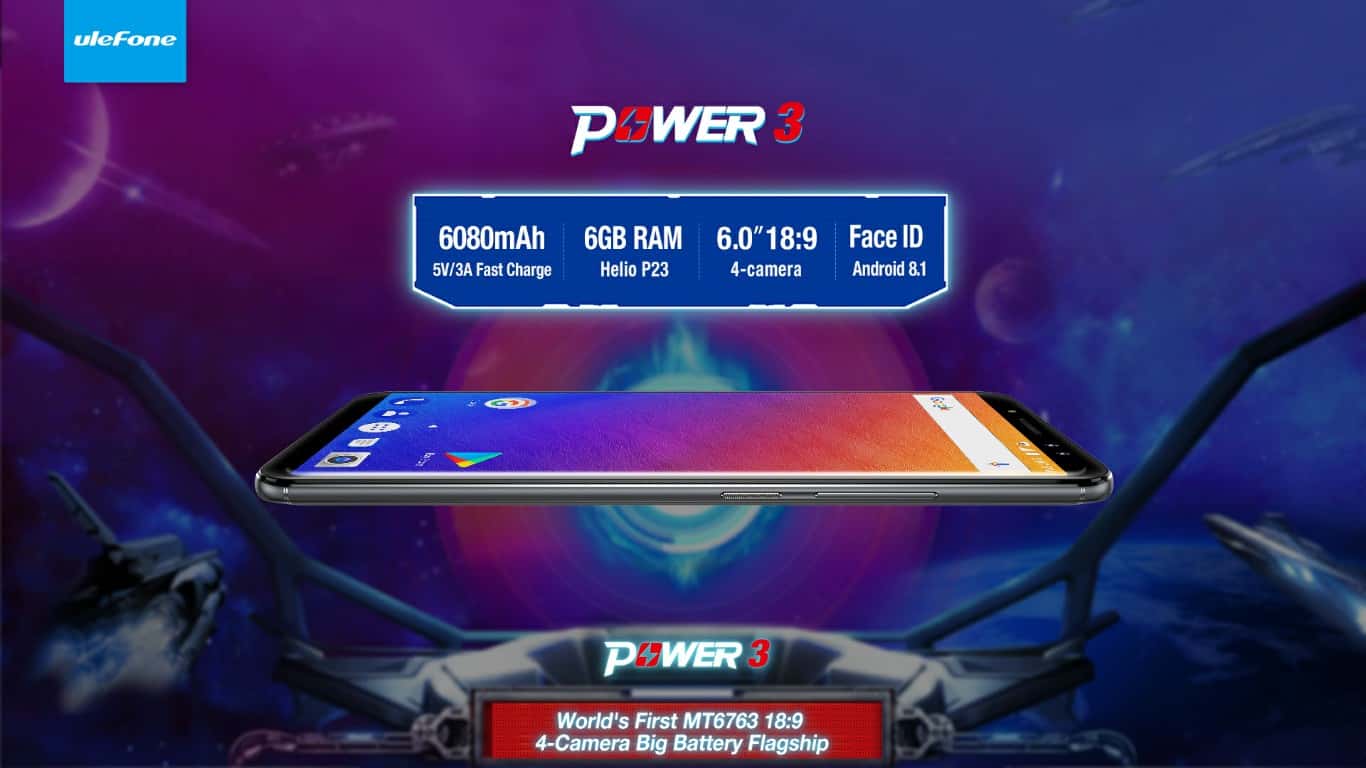
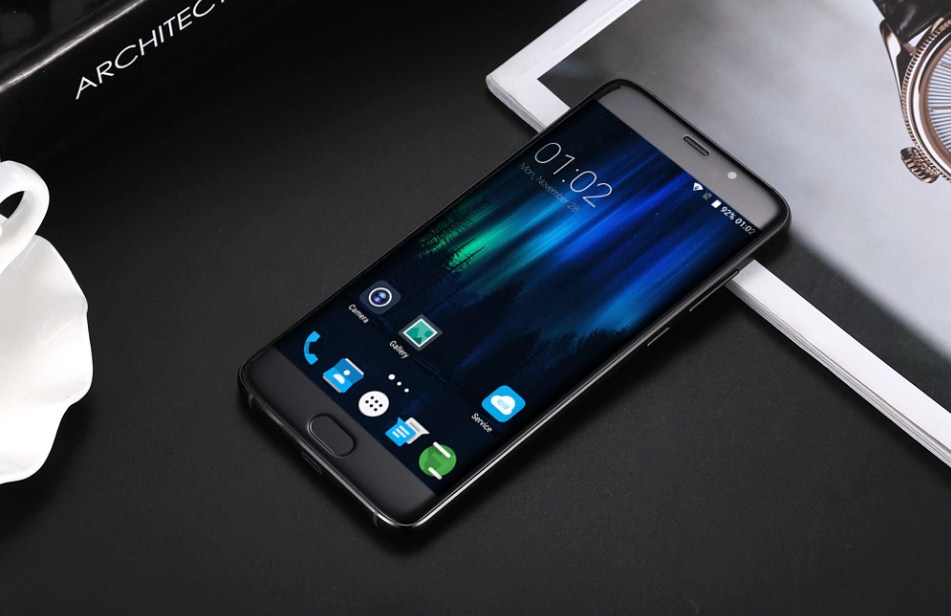
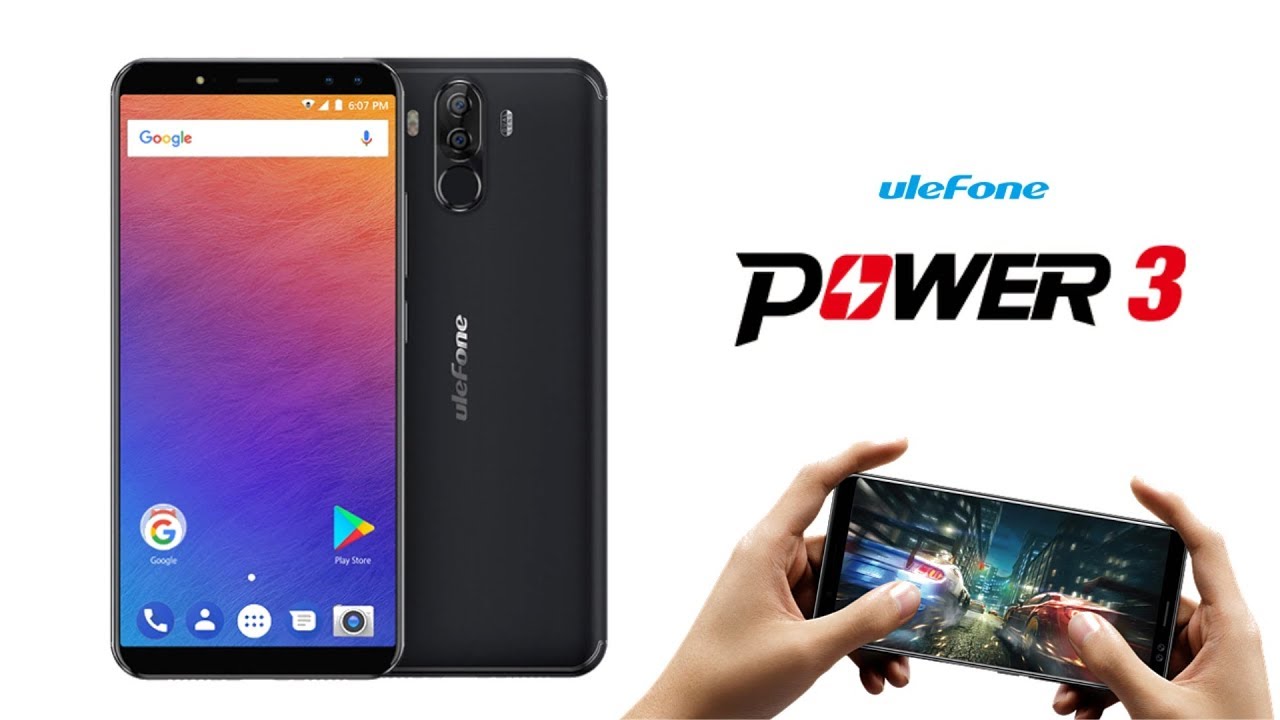
Even nearly one year after hitting the store shelves, the Power 3 smartphone continues to garner popularity among smartphone lovers. Bearing its skyrocketing popularity in mind, Ulefone has now made the phone available to cost-conscious buyers on efox.
While the feature-laden Ulefone Power 3 would normally set you back a pretty penny on online stores, efox is currently doling out a noteworthy discount on the phone’s steep retail price. We’ll not only shed light on the aforesaid but also show how you can save more money at the time of checking out.
While you’d usually end up shelling out €279.99 to buy the Power 3 smartphone, you can now buy it at a dropped price of just €204.99 on efox. This is a noteworthy 27% reduction in the phone’s original asking price and it will be valid for the gold as well as the black color versions of the phone.
On top of that, you can apply coupon code LFBP3 to get an extra €2 off at the time of checking out. This will help you bring your already discounted grand total further down to just €202.99 without breaking much of a sweat.
Marketed as the world’s first MediaTek MT6763 CPU-equipped smartphone, the Ulefone Power 3 is quite a bargain at this lowered price. The phone comes with a big 6.0 inches IPS, FHD+, In-cell display with a screen resolution of 1080 x 2160 pixels.
Under the hood, it packs a powerful GPU coupled with 6GB of RAM to breathe new life into your videos and photos. Aside from that, it offers a hearty 64GB onboard storage (expandable up to 256GB) so that you never run out of storage space to store your favorite content.
On the photography front, it houses a 16MP+5MP dual camera setup on the back and a 13MP+5MP front shooter for selfies and face-to-face video chatting. Moreover, the Power 3 smartphone runs on Android 7.1 Nougat OS and is backed by a robust 6080mAh battery which supports 5V 3A.
You can head straight to this link to check out the full specification and take advantage of the discount which will only be valid for a limited period of time. Note that the aforesaid coupon is also likely to expire soon.
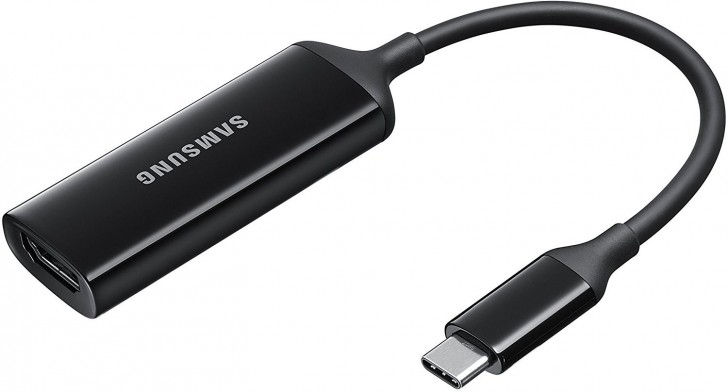
Samsung Galaxy Note 9 is definitely one of the best smartphones for productivity. It further gets additional points in this area as it can be turned into a PC thanks to a feature called DeX. Unlike its predecessor, this flagship is the first and only device that can turn into a PC without the aid of a physical dock. It can be done thanks to a simple USB-C to HDMI adapter which is now finally available to purchase on Amazon U.S. Thanks to this adapter, you can connect your phablet to a TV and make the Samsung Experience user interface transform into a desktop-like environment, in order to use your phone as a personal computer.
After connecting Samsung Galaxy Note 9 to a TV or an external monitor, you can then connect a wireless mouse or a keyboard to complete your workstation. The new adapter supports monitors with a resolution up to UHD with a refresh rate of 60 Hz. The standards supported are HDMI 2.0 and DisplayPort 1.2.
Samsung Galaxy Note 9 has been launched as one of the most expensive Android handset ever, but we are already seeing price drops. Indeed, it is actually possible to get it for less than $900 right now. It offers a glass + metal design with the IP68 certification and a 6.4-inch display with a Quad HD+ resolution of 1440 x 2960 pixels.
It includes a brand new S Pen with Bluetooth connectivity which can remotely control the phone and perform interesting actions such as shooting photos. Samsung Galaxy Note 9 is equipped with an octa-core Qualcomm Snapdragon 845 chipset in the U.S. version and an octa-core Samsung Exynos 9810 in the European one, paired with 6 or 8 GB of RAM and 128 or 512 GB of internal storage. On the rear side, it sports a dual camera with 12 MP resolutions and a variable aperture (f/1.5 and f/2.4).
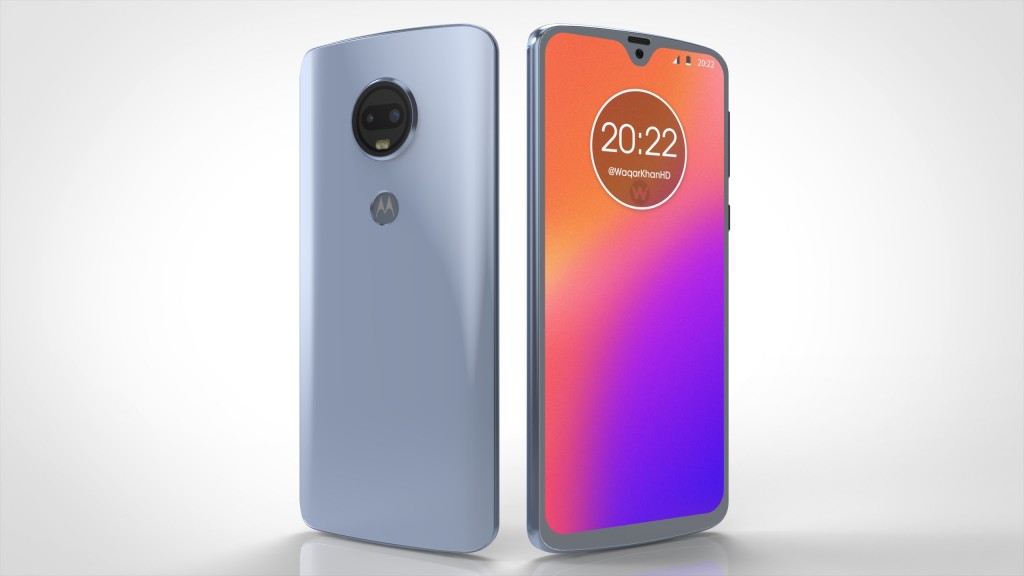
This year we have already seen various phones with new design concepts created to minimize the bezels around the display. Now, the designer Waqar Khan has published a new video and new concept renders, trying to imagine the upcoming Motorola Moto G7 that is surely among the most awaited midrange phones. And according to these renders, the device will adopt the most used method to reduce the bezels created in 2018: the tri-borderless design with waterdrop notch. The renders you can see below are not just a result of imagination, but they are based on important leaks surfaced until now.
So there is a high chance that the upcoming Motorola Moto G7 will really look similar to this. The device shows a front panel with a waterdrop notch containing the front camera only, as well as very narrow bezels with a slightly thicker chin. The rear panel is made of glass as expected, while the frame is made of metal. The back side does not differ so much from the Moto G6 and it sports a dual camera setup together with a dual LED flash. Under the rear cameras, there is a circular fingerprint reader which embeds the company’s logo.
The SIM tray is placed on the upper side, while the volume rocker and the power key are placed on the right of the phone. Even though the overall design does not differ in a consistent way from its predecessor, this Motorola Moto G7 still represents a solid upgrade due to its waterdrop notch. According to the most reliable hypotheses, Motorola Moto G7 will be officially announced in April 2019, and it will hit the shelves with price tags starting from $250 in the U.S. and €219 in Europe. Given that it will be a mid-ranger, we expect it to pack a Snapdragon chipset from the 600 series.
Microsoft confirmed through a teaser that it will hold a new event on October 2. The event will take place in the same location in which Google Pixel 3 and Pixel 3 XL will be unveiled a week later: New York City, at 4 PM Eastern Time.
Sadly, the teaser does not give any information about the specs of the devices which will be announced at the event, and we do not even know which devices from the Microsoft Surface line-up will be announced. If we base on previous announcements, we should see one of the following devices:
In case you do not know, the first case we are talking about is the successor of the first ultrabook from the Redmond giant. The second would be an All-in-One PC for productivity and graphics, while the third would definitely be the most awaited device from the company as it is its next 2-in-1. At last, the fourth device would be an even higher-end detachable laptop. Which devices do you expect to see at the event?
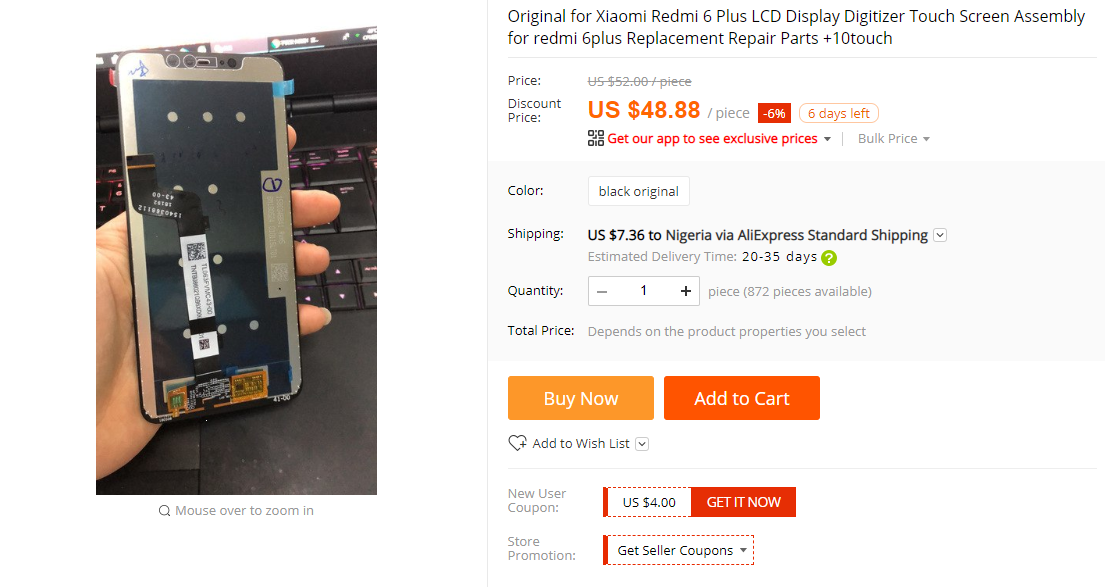
It has been reported that Xiaomi is working on the Redmi Note 6, a successor to the Redmi Note 5. The phone is supposed to be announced later this year and will join the already released Redmi 6A, Redmi 6, and Redmi 6 Pro. Ahead of the release, a live photo of the phone’s display assembly has leaked online.
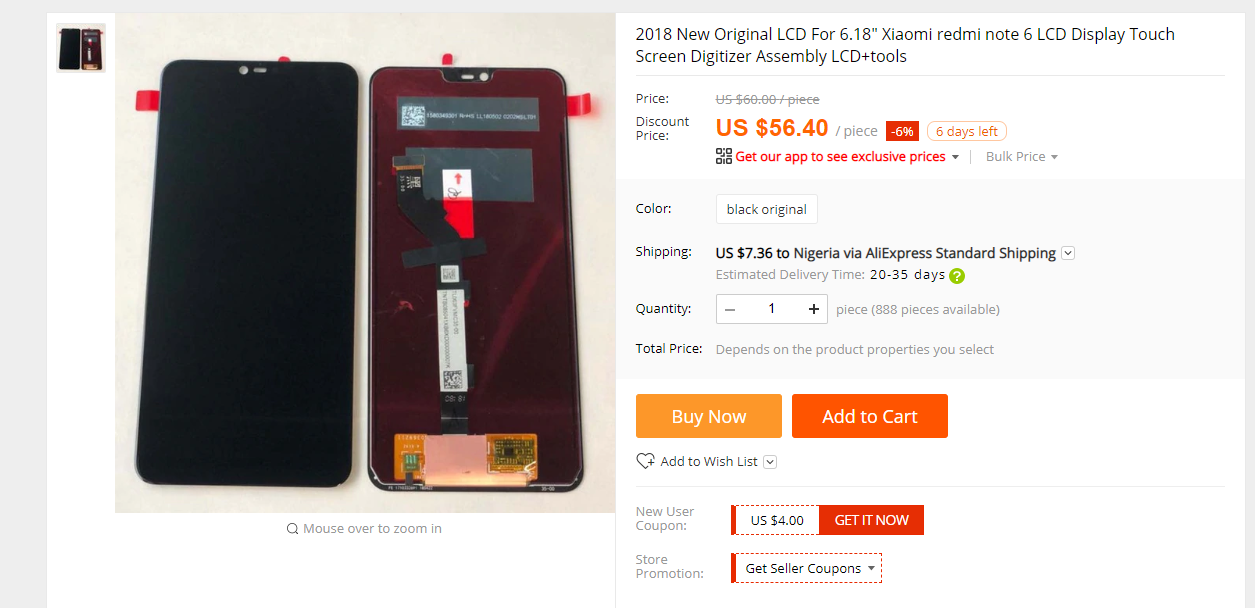
The image source is a store on the online shopping site, AliExpress. The images uploaded show the screen has a small notch at the top, about the same size as that of the Redmi 6 Pro. The notch has three cut-outs for the sensor, earpiece, and front-facing camera.
The item description says the screen is 6.18” in size and has a resolution of 1080 x 2246. The display is also the LCD type which shouldn’t be a surprise since the Redmi series are supposed to be affordable. However, the price of the screen isn’t that cheap as the seller has slapped a $60 (excluding shipping) price tag on it. However, an on-going promotion will let you pick it up for $56.40.
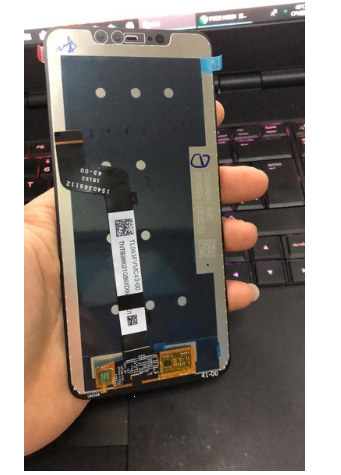
While doing some digging around on the store, we stumbled upon the display of another unreleased phone – the Redmi 6 Plus. Yes, it appears there is going to be a Redmi 6 Plus and its screen is also listed for sale by the same seller. This listing is the first time we are hearing about the device.
According to the item description, the Redmi 6 Plus’ screen is 5.99-inches with a 1080 x 2160 resolution just like that of the Redmi 5 Plus (Redmi Note 5 in India) but the screen size is where the similarities end. The photo of the display assembly provided by the seller shows it has a notch and it is much bigger than that of the Redmi Note 6. It also has five cut-outs in total.
Two of the cut-outs seem to be for cameras which means it will pack dual front-facing cameras, one is for the speaker, another for the sensors and the last one is most likely for an LED flash. The Redmi 5 Plus has a single front-facing camera and a LED flash, so this is definitely a big upgrade if this listing is genuine. The price for the screen is $52 but it can be purchased for $48.88 for a limited time.
The dust has barely settled following the launch of the Vivo X23 but Vivo seems to have another new phone on the horizon. The phone whose model number is given as V1730EA has been spotted on TENAA.
The Vivo V1730EA has a 6.26-inch OLED screen. Its 2280 x 1080 resolution confirms it has a notch but its the larger type like that of the Vivo V9. There is a 2.2GHz octa-core chipset which should be either the Snapdragon 710 or the Snapdragon 660 mobile platform. The phone has just 4GB of RAM with either 32GB or 64GB of storage. There is support for storage expansion via a MicroSD card slot.
[envira-gallery id=”210680″]
The dual rear cameras are a 16MP sensor and a 2MP sensor while the front-facing camera is a 16MP sensor. There is a fingerprint scanner positioned in the middle of the phone.
The Vivo V1730EA runs Android 8.1 Oreo but we expect it to come with the newer FunTouchOS 4.5. The battery capacity is given as 3,180mAh. When the phone launches, it will be available in Champagne Gold, Rose Gold, and Matte Black.
More often than not, companies have to play dirty in the race to the top. We have seen plenty of cases where a company was busted doing something really stupid just to get an edge over its competitor. Things like false advertisements, false specs by even established companies are not unheard of, but today let’s talk about something that Huawei was caught doing — benchmark cheating aka benchmark optimisation.
Huawei’s Benchmark Cheating Scandal
Huawei was recently caught by AnandTech optimising some of their smartphones like Huawei P20 to over perform in a specific benchmarking app, 3DMark. We have already talked about this here but the story in short is that Huawei P20 and a few other top flagships from the company were identifying benchmarking apps to extensively increase their performance with the primary goal of scoring way higher than in a traditional use case scenario.
In this age of AI, it’s not uncommon for smartphones to identify specific type of apps to boost performance. For example, new age phones can often detect gaming apps and switch to peak performance mode for the best user experience. However, what’s really the big issue here is that Huawei had tweaked its newer flagships to detect specific benchmarking apps (3DMark in this case) to run the phone at an unrealistic performance level. Apart from issues like overheating, such a level of performance decreases efficiency significantly, making the whole experience impractical for daily usage.
Another issue with this type of performance optimisation is the motive. The big reason why companies like to optimise their smartphones for benchmark is to score higher than the competition. That’s not really a good enough reason to push your smartphones beyond its limits.
Our Obsession With Benchmark Scores
That being said, I can’t personally crucify Huawei for trying to score high on benchmarks. History has shown us that almost every manufacturer has been found tweaking their smartphones for better benchmark scores. This list includes the big names such as Samsung, LG, Asus, HTC, Meizu, and even OnePlus. So, the only reason why this was made such a big deal is because Huawei didn’t seem to get the memo that this was unacceptable, even in 2018.
Given the number of companies that have tried tweaking their scores for benchmark, the fundamental question is why they are doing this, even now.
The answer directly points to our needless obsession with benchmarks.
I get why benchmarks are so popular. It’s really hard to quantify the performance of a smartphone in any other way. Benchmarks give us a figure which we can compare to determine which one’s better than the other. It kind of makes sense. But then, it doesn’t. Because, getting this figure involves the app running a few resource intensive tasks to get a final score. The process isn’t fool proof and now you know that the results aren’t either.
We must start giving less importance to benchmarks and more importance to the phone’s actual user experience.
The Right Way To Evaluate A Phone’s Performance With A Benchmark App
Whilst a higher benchmark score in general doesn’t necessarily mean that the phone is better than others, users need to start understanding the scores in the right way.
Instead of obsessing over a particular score, we should start to evaluate a smartphone on the basis of levels of performance.
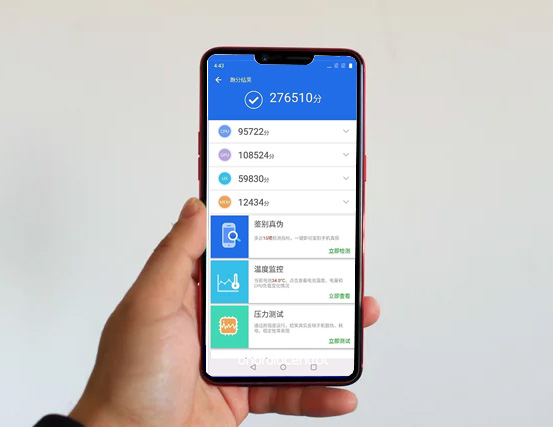
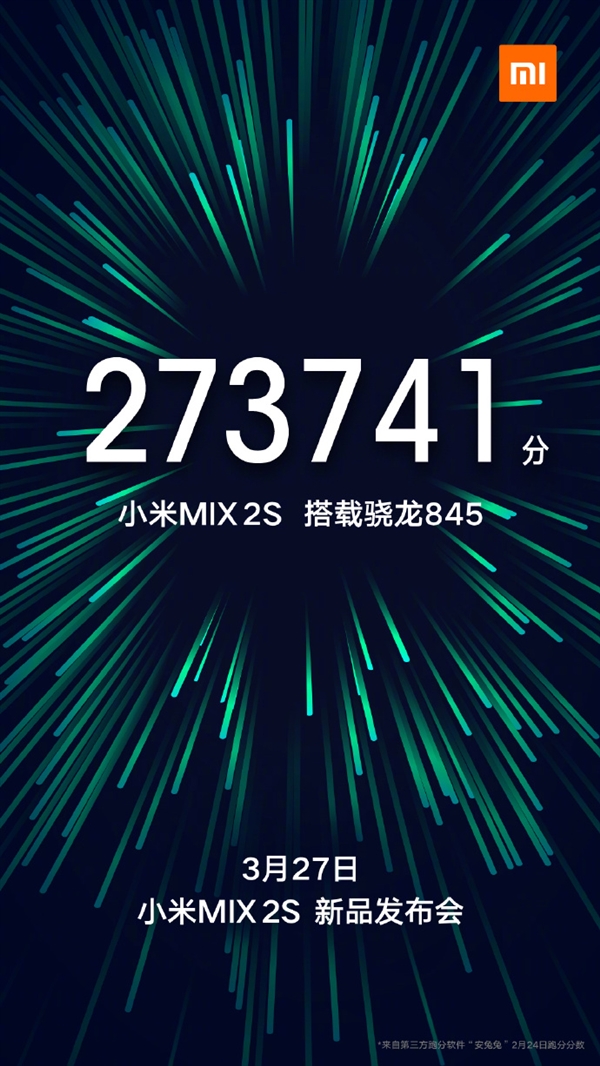
For example, take a very simple benchmarking app like AnTuTu. If a smartphone scores above a certain figure, for example 250K, its already established that the phone has a very powerful processor inside that can handle any task that you throw at it. Understanding that once a phone crosses a particular threshold, it doesn’t really matter whether the phone scores 290K or 261K on the app, is very important. What we need to realise is the simple fact that a score of 291K doesn’t necessarily mean that its better than a phone that scored 273K. In real life, the lower scoring phone could offer a much better experience than the other.
Xiaomi markets Mi Mix 2S’ high score just before its launch
I know as enthusiasts, it’s really hard to ignore specific benchmark figures, but once we learn to stop this practice, we will start seeing the real picture. A SD835 smartphone with great optimisation is hundred times better than a SD845 phone with a bad optimisation. After all, would you be happy with a phone that scores 280K on AnTuTu but has a crappy UI or a phone which scores 240K on the same app, but handles everything with butter smoothness?
Let’s start giving less importance to individual benchmark figures and more importance to their real life performance and we would no longer have to worry companies optimising / cheating on these apps. After all, figures do lie!
I know, its easier said than done. It’s really tempting to see higher and better benchmark figures on flagship devices every year, but as consumers, if we start giving importance to the right things, in the long term the industry will benefit as a whole.
That’s cool but does it perform well in real life?
So the next time you see a company marketing a very high benchmark score for its flagship, just say — that’s pretty cool but how does it perform in real life?
We use cookies on our website to give you the most relevant experience by remembering your preferences and repeat visits. By clicking “Accept”, you consent to the use of ALL the cookies.
This website uses cookies to improve your experience while you navigate through the website. Out of these, the cookies that are categorized as necessary are stored on your browser as they are essential for the working of basic functionalities of the website. We also use third-party cookies that help us analyze and understand how you use this website. These cookies will be stored in your browser only with your consent. You also have the option to opt-out of these cookies. But opting out of some of these cookies may affect your browsing experience.
Necessary cookies are absolutely essential for the website to function properly. This category only includes cookies that ensures basic functionalities and security features of the website. These cookies do not store any personal information.
Any cookies that may not be particularly necessary for the website to function and is used specifically to collect user personal data via analytics, ads, other embedded contents are termed as non-necessary cookies. It is mandatory to procure user consent prior to running these cookies on your website.

 Unlike most regular headphones, newfangled wireless headphones work with larger ranges as the adopt radio frequency or infrared to broadcast the sound. If you fancy running or working out to your favorite music, you might the OLLLY I7TWS wireless earphone can prove to be an ideal companion.
 The OLLLY I7TWS wireless earphone comes with iOS system real-time power display that shows information at just a glance. The device has dual-mode Bluetooth V4.2 pairing which offers freedom of movement while working out.





 Electricity is a vital part of our daily lives. We rely on it to power various electronic items we use at home, office, school etc. On the downside, using more electricity leads to higher electricity bills.

 Even nearly one year after hitting the store shelves, the Power 3 smartphone continues to garner popularity among smartphone lovers. Bearing its skyrocketing popularity in mind, Ulefone has now made the phone available to cost-conscious buyers on efox.