OPPO Find N2 Flip price in India will be confirmed on March 13 in India. Ahead of the official announcement, a new leak, courtesy of Sudhanshu Ambhore, has shared key information on the price and first sale date of the device.
According to the tipster, the OPPO Find N2 Flip will arrive in a single configuration that offers 8 GB of RAM and 256 GB of storage. The tipster claimed that the device will be priced above Rs 80,000. He added that the first sale of the device will take place on March 16.
OPPO Find N2 Flip will launch in India🇮🇳 only in 8GB+256GB storage option, that will cost above ₹80,000
Astral Black♠️ Moonlit Purple💜 4yrs Major ColorOS updates⬆️
The device will be available in two colors, such as Astral Black and Moonlit Purple. The device will be treated to four years of major OS updates. As usual, readers are advised to digest the leak with a pinch of salt.
The Find N2 Flip is already available for purchase on the European market. In the UK, the 8GB+256GB edition of the device is priced at £849 (~$1,000; ~Rs 83,015).
OPPO Find N2 Flip specifications
The Find N2 Flip houses a 6.8-inch foldable E6 AMOLED display with a punch-hole. It offers an FHD+ resolution of 1080 x 2520 pixels and a 120Hz refresh rate. The display punch-hole houses a 32-megapixel Sony IMX709 front-facing camera.
On the back, the Find N2 Flip has a 3.26-inch OLED cover display that offers 382 x 720 pixels. It has a 50-megapixel Sony IMX890 primary camera with OIS, an 8-megapixel ultra-wide lens, and an LED flash unit. The device runs on Android 13 OS and ColorOS 13.
The Find N2 Flip is powered by the Dimensity 9000 Plus chipset. It is equipped with LPDDR5 RAM, UFS 3.1 storage, and a 4,300mAh battery with 44W fast charging.
Last month, OnePlus launched the OnePlus TV 65 Q2 Pro in the Indian market and the device was up for pre-orders a few days ago. Now the newly launched Smart TV from the company is available to purchase through open sale in India.
The OnePlus TV 65 Q2 Pro, which is priced at ₹99,999 (~$1,219) in India, comes with several offers to entice potential customers. The company is offering ₹5,000 discount for ICICI Bank customers, and there’s also 18 months of No-Cost EMI option for all major banks. There’s also free panel replacement within one year of purchase and two years of warranty.
OnePlus TV 65 Q2 Pro
As the name of the product indicates, it comes with a 65-inch QLED panel, offering a 4K screen resolution, a 120Hz of refresh rate, and 1,200 nits peak brightness. Along with providing ALLM and MEMC technology support, there’s also DCI-P3 97% wide color gamut and Gamma Engine Ultra.
It supports a full array of 120 local dimming zones to enhance visuals with deep contrasts. The company claims that the seven-speaker setup on the device, which includes a 30W subwoofer, can produce 70W sound output. Also, the sound on the TV is tuned by Dynaudio, and it comes with support for Dolby Atmos.
Underneath, the device is powered by an MT9617 processor, coupled with 3GB of RAM and 32GB of internal storage. In the software department, it runs the Android 11 operating system with Google TV and OxygenPlay 2.0. It also comes with support for features like voice commands, Google Assistant, Chromecast, and Alexa.
The IOQO Z7 5G is scheduled to launch on March 21 in India. In an interview with a publication, iQOO India CEO, Nipun Maurya, confirmed some of the key features of the device. Around the same time, Trakin Tech, an Indian YouTube channel, released a hands-on video of the Z7 to reveal its design in real life.
The iQOO Z7 5G can be seen in the Norway Blue shade in the hands-on video. The device has flat edges and a thickness of 7.8mm. It is a lightweight device, weighing 173.4 grams.
iQOO Z7 live shot | Source: YouTube / Trakin Tech
On the front, the iQOO Z7 has a waterdrop notch display. While the predecessor model, the iQOO Z6 5G, featuring an LCD panel, the Z7 features an AMOLED display, which is embedded with a fingerprint scanner. The display is quite bright, offering a peak brightness of 1,300 nits.
The iQOO Z7 is a performance-driven phone powered by the Dimensity 920 chipset. The back panel of the device has an OIS-ready 64-megapixel main camera that supports 30fps 4K video recording.
iQOO Z7 live shot | Source: YouTube / Trakin Tech
Other reports have claimed that the iQOO Z7 5G has a 6.38-inch AMOLED FHD+ 90Hz display, a 16-megapixel front-facing camera, and a 4,500mAh battery with 44W fast charging. It will come preloaded with Android 13 OS and FunTouch OS 13. The device is expected to offer 128 GB of native storage.
Coming to the price, it is officially confirmed that the iQOO Z7 will be priced under Rs 20,000 in the Indian market. To recall, the iQOO Z6 5G was made available at a starting price of Rs 16,999 last year. Apart from blue, the iQOO Z7 will also come in a black variant.
Yesterday, Tecno officially announced the Spark 10 5G, Spark 10, Spark 10 C, and Spark 10 Pro. The company also confirmed that these devices will soon be heading to markets such as sub-Saharan Africa, Southeast Asia, South Asia, South America, the Middle East, and some European countries. At present, the company has only confirmed the specifications of the Spark 10 Pro. In a new leak, PassionateGeekz shared the live shots of the Spark 10 5G to showcase its front and rear designs. In addition, it also revealed the key specifications of the device.
As can be seen in the images, the alleged Spark 10 5G’s display has a waterdrop notch. On the back of the device, you can see that the cameras are set up in a unique way. The top-left corner of the device has two camera rings arranged diagonally. The upper one is large and seems to house the primary camera. Below it is a pill-shaped LED flash unit. The second camera ring seems to include a single camera.
The Spark 10 Pro comes equipped with a glass back. The reflective appeal of the Spark 10 5G’s rear shell suggests that it could also be sporting a glass back.
Tecno Spark 10 5G specifications, price (rumored)
As per the report, the Tecno Spark 10 5G houses a 6.6-inch IPS LCD panel that offers an FHD+ resolution of 1080 x 2460 pixels and a 20.5:9 aspect ratio. On the front, the device features a 16-megapixel selfie camera. The back panel of the phone has a 50-megapixel primary camera, a 2-megapixel depth sensor, and an LED flash.
The leak claims that the device is powered by a MediaTek chipset, which is likely to be assisted by 8 GB of RAM and 8 GB of virtual RAM. The device has 128 GB of built-in storage and packs a 5,000mAh battery with 18W charging. It will have other features like dual SIM, NFC, and a 3.5mm audio jack.
The report further states that the Spark 10 5G will be priced at Rs 13,000 in India. The report states that the device will launch this month in the country.
Hyundai has revamped the Kona EV with greater room and a longer range. The original Kona EV was a compact electric crossover but came with a shorter range. The new model seems to have restored the appeal of the Kona with its improved range and more room inside the EV.
The new entry Kona EV will expectedly compete favorably with some of the models that had displaced the original Kona such as the Ioniq 5. This comes after several months of peeks into the model. The revamped Kona EV has a sleeker design than its predecessor. There are improvements in the powertrain as well as interior innovations. The model has a 65.4kWh battery option that delivers a range of 304 miles via the WLTP testing cycle. Although the EPA testing range will be more conservative, it will be significantly higher than the 258 miles from the gen-1 Kona EV.
The revamped Hyundai Kona EV has a larger interior space than the current model. It also has more storage (up to 17 cubic feet of trunk space) and features a front trunk and several in-cabin tech features. It has an optional heads-up display but this will not be available in North America. There are, however, dual 12.3-inch screens and OTA software updates, as well as NFC-based digital key support.
The new Kona EV features battery preconditioning for improved charging times and cold weather range. The model’s vehicle-to-load support lets you power devices both inside and outside of the EV. The car also features the i-Pedal one-pedal driving but the model lacks the 800W architecture currently in some of its competition. It will therefore take 41 minutes to charge the battery from 10% to 80%.
Hyundai has not released the pricing details for the Kona EV but says the ICE and hybrid versions of the Kona will continue to exist with the EV. The Kona EV will berth in the US by the third quarter of this year.
Huawei Chief Executive Richard Yu has shared a photo allegedly from the yet-to-be-released Huawei P60 Pro. Although the random photo was highlighted as coming from an unnamed upcoming phone, it is rumored to be the P60 Pro. This is a silver lining amid an extended period of turbulence for the formerly global-leading tech powerhouse.
Huawei has continued to recover from the debilitating sanction regime by the United States which almost destroyed the company. The illuminating image is believed to have emanated from the telephoto camera of the P60 Pro. This was indicated in the Weibo post that signposted the photo. It also comes after the release of a batch of images from the same smartphone last week.
The released photos point to an imminent launch of the Huawei P60 Pro. The smartphone’s camera reportedly features a 64MP OmniVision OV64B sensor and a 3.5x magnification lens. The sensor has an RYYB color filter which is common with Huawei smartphones. The P60 Pro will also feature dual 50MP sensors for the main and ultra-wide cameras. It is also rumored that the smartphone will have a 6.6-inch QHD” display with a high refresh rate of 120Hz. The phone will come with a 5,000mAh battery with 100W charging.
As expected, the Huawei P60 Pro will run on Huawei’s HarmonyOS 3.0 and is rated IP68. It was earlier reported that the phone will be powered by the Snapdragon 8+ Gen 1 chipset. Subsequent rumors however point to a Snapdragon 8+ Gen 2. The model will be restricted to 4G, as Huawei still lacks access to 5G chips.
The camera shot shared by Huawei’s CEO has an impressive outlook. The phone had a sufficient dynamic range that covered both the artificially lit building on a pitch-black background and also captured the detail of the moon. The Huawei P60 series will be unveiled later this month. The lineup will include a vanilla model, as well as the Pro model.
Smartphone charging technologies continue evolving and brands keep on pushing the envelope further. Realme recently introduced its groundbreaking 240W charging technology with the latest GT 3 smartphone. Taking things to a new level, Infinix has today unveiled its new 260W wired and 110W wireless charging tech. The company has also confirmed that the new charging solution will debut with an upcoming Infinix Note smartphone this year. Here are the details.
According to the company, the 260W wired charging solution can fill a battery from 0 to 25% in only one minute and can reach 100% in just 8 minutes. The new technology involves a single 12C battery with a 4-pump circuit design that can identify power requirements and allocate the number of charge pumps accordingly. The charging efficiency is said to be 98.5% and a 4,400 mAh battery used in the test was able to retain 90% of its initial capacity after 1,000 cycles.
The charging technology employs an adaptor that utilizes both GaN material and AHB circuit infrastructure to achieve high power density and small size. The cable is also custom-made to carry a current of up to 13A to ensure blazing-fast 260W charging.
The 110W wireless charging solution developed by Infinix is also quite impressive as we normally don’t see wireless charging going above 50W. The technology utilized in this charging solution involves custom-made, small, sensitive coils with varying architectures. There are fewer but wider coils in the same space, resulting in lower internal resistance. This, in turn, reduces the amount of heat generated by the phone when charging.
In addition to wired and wireless charging, the new standard also supports reverse charging, bypass charging, and multi-protocol charging. It is compatible with other protocols, including Power Delivery 3.0.
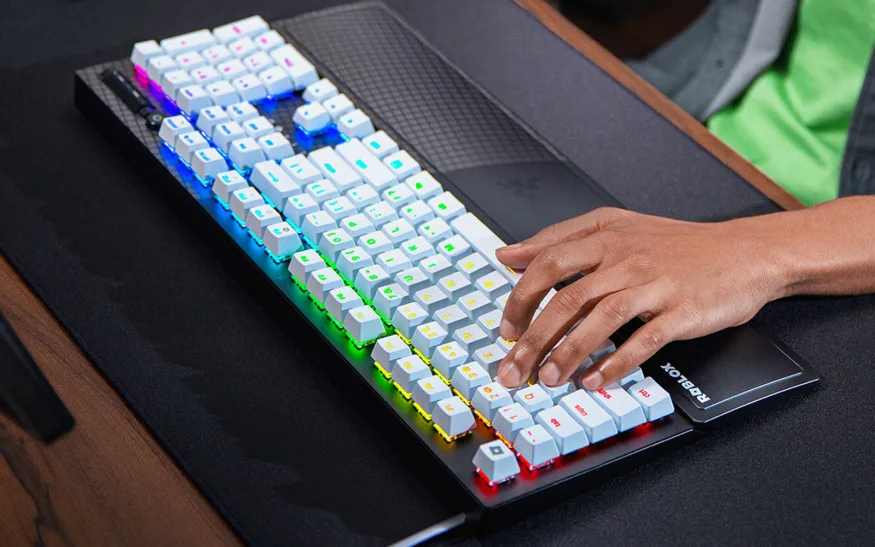
Keychron has unveiled the Q11 customized mechanical keyboard in China. The Q11 is a unique split mechanical keyboard with a two-in-one split-type arrangement. The keyboard’s placement angle and spacing are easily adjustable for a versatile operation. The split design allows the keyboard to have greater freedom of placement and the user can easily make adjustments.
The mechanical keyboard market has seen several innovations in terms of design and customization. The Q11 customized split design helps to minimize fatigue on the shoulders and arms. The keyboard is engraved with all-aluminum CNC and has a newly designed double knob. It supports the open-source key change and is compatible with both Windows and MacOS systems. The keyboard switch body is Jiadalong G Pro switch with red, brown, and green color options available. The switch also supports hot swapping.
The Keychron Q11 customized mechanical keyboard is sold in China at a launch price of 799 yuan (~$115). The keyboard is a wired device and does not support Bluetooth or Wi-Fi connectivity. The split design of the keyboard seems to be one of its biggest selling points.
It remains to be seen whether the Keychron Q11 will get a decent reception in the Chinese market. The level of saturation and competition in the market is quite high, with competitive pricing also in the mix. There are no details yet at this time on whether the product will be available in other markets.
OnePlus launched the latest version of its custom Android skin— OxygenOS 13— late in 2022 and has already updated the majority of the devices in its portfolio. This includes the flagship number series models and affordable Nord-branded smartphones. In the latest development, OnePlus has started releasing stable Android 13-based OxygenOS 13 update to the OnePlus Nord CE. Here are the details.
As per the announcement on the brand’s community forum, the OnePlus Nord CE is receiving the OxyegenOS 13 update with firmware version EB2103_11_F.04. The update is currently being seeded to global units only. It brings all the new features introduced by Google with Android 13 and also some OnePlus-exclusive goodies.
The update brings a new sidebar toolbox that lets users open an app in a floating window on top of another app. It also includes many security, privacy, and productivity features. To recall, OnePlus Nord CE debuted back in 2021 with Android 11 OS. The handset should only receive 2 major OS updates, meaning OxygenOS 13 will be its endgame.
Changelog
Aquamorphic Design
• Adds Aquamorphic Design theme colors for enhanced visual comfort.
• Applies the Aquamorphic Design philosophy to animations to make them natural and vivid.
• Adds Shadow-Reflective Clock, with shadow simulating the orientation of the sun and moon.
• Adds a Home screen world clock widget to show the time in different time zones.
• Optimizes UI layers for a clearer and neater visual experience.
• Adapts responsive layouts to accommodate different screen sizes to improve readability.
• Optimizes the widget design to make information easier and quicker to find.
• Optimizes fonts for better readability.
• Optimizes system icons by using the latest color scheme to make the icons easier to recognize.
• Enriches and optimizes illustrations for features by incorporating multicultural and inclusive elements.
Efficiency
• Adds large folders to the Home screen. You can now open an app in an enlarged folder with just one tap and turn pages in the folder with a swipe.
• Adds media playback control, and optimizes the Quick Settings experience.
• Adds more markup tools for screenshot editing.
• Adds support for adding widgets to the Home screen, making information display more personalized.
• Adds Sidebar Toolbox. You can open floating windows inside apps for smooth operation.
• Upgrades Doodle in Notes. You can now draw on graphics to take notes more efficiently.
• Optimizes Shelf. Swiping down on the Home screen will bring up Shelf by default. You can search content online and on your device.
Seamless interconnection
• Optimizes Screencast, with cast content automatically adapting to the target screen.
Personalization
• Optimizes Bitmoji to offer more Always-On Display animations.
• Adds Omoji to let you fully express yourself with customized avatars.
• Optimizes Insight Always-On Display, with more personalized Always-On Display settings available.
• Optimizes Portrait Silhouette Always-On Display, with more drawing tools and line colors available.
Security & privacy
• Adds an automatic pixelation feature for chat screenshots. The system can identify and automatically pixelate profile pictures and display names in a chat screenshot to protect your privacy.
• Adds regular clearing of clipboard data for privacy protection.
• Optimizes Private Safe. The Advanced Encryption Standard (AES) is used to encrypt all files for enhanced security of private files.
Health & Digital wellbeing
• Adds Kid Space. When in Kid Space, your browser app automatically switches to Kids mode to create a child-friendly space.
• Adds distance-from-phone, ambient light, and sitting posture reminders in Kid Space.
• Adds Eye comfort in Kid Space to protect children’s vision.
Gaming experience
• Upgrades to HyperBoost GPA 4.0 to stabilize the frame rate and balance the performance and power consumption in key scenarios.
Communication
• Improves the stability of mobile network connections.
Apps
• Fixes an issue where you are unable to make voice or video calls with WhatsApp in certain scenarios.
Realme C55 is the brand’s latest mid-range smartphone and it is already official in Indonesia. At first glance, the handset appears to be a typical device with a standard appearance when the screen is turned off. However, upon powering it on, you will discover an interesting feature, called Mini Capsule. It is Realme’s version of Dynamic Island, which apple introduced with iPhone 14 Pro models.
After launching it in Indonesia, Realme has now started teasing Realme C55 in India, hinting at an imminent launch. The brand did not reveal any details about the handset’s launch in the country but says it’s coming soon. We know the smartphone will bring a flat display with a punch hole cutout on the top center. There will be a double-camera setup on the rear.
The handset’s specifications are also all out since it’s already official in Indonesia. Before we lay down the specs, let’s talk a little more about the Mini Capsule. Realme has claimed that this user-friendly feature can provide notifications for low battery levels, charging status, and data usage on the phone. Additionally, it can display daily step counts and walking distance. However, the step count and data usage features will not be immediately available and will be rolled out later through an update.
Talking about the hardware specs, the Realme C55 has a 6.72-inch FullHD+ 90Hz screen with a peak brightness of 680 nits. Under the hood, it has the Helio G88 SoC with up to 8GB RAM and 256GB storage. It runs Android 13-based Realme UI 4.0 out of the box. For photography, the device gets a 64MP primary sensor on the back accompanied by a depth shooter. The front houses an 8MP shooter. Fueled by a 5000mAh battery, the smartphone supports 33W SuperVOOC charging.
Salcomp, one of the iPhone power brick suppliers in India is entering the EV charger space. The company has announced that it is moving into alternative areas including the supply of components for solar and hydro-powered electricity generation. It is also going into the production of electric vehicle power chargers.
Salcomp had previously supplied the 5W power chargers for iPhones shipped from India. The company plans to double its manufacturing workforce in India to meet its production goals by 2026. Salcomp has blossomed beyond its Swedish roots to establish manufacturing centers in India, Brazil, and China. It was also part of the early phone accessories manufacturers since the 1980s. The company also produced chargers for the iPhone 6 series and other similar models.
Salcomp continues to make solid investments in India and projects up to $3 billion in revenue from its Indian operations by 2026. Salcomp will increase its current workforce in India with an additional 13,000 personnel. This means it hopes to have more than doubled its workforce by 2026. The workers will be involved in the manufacture of hydropower electronics equipment and components, as well as solar micro converters and electric vehicle accessories.
Salcomp has not mentioned any details of its clients in the new product line. The outlook of the Indian EV market remains very promising. There has been a conscious strategy both at the national and regional levels to stimulate EV manufacturing. Therefore, Salcomp’s entry into the market is another milestone in the Indian EV market.
Renowned Japanese brand Panasonic has launched the new LZ950 OLED TV in India. The new television is claimed to provide a better viewing experience, color accuracy, and detail, and will be available in two size options— 55” and 65”. It runs Android OS and features Dolby Atmos, DTS Studio Sound, and a home theatre built-in with tweeters. The TV has slim bezels and flaunts a sleek design with a stylish chrome stand. Let’s have a better look at the details.
Panasonic says the TV is manufactured locally in India and features the latest technology in a stylish profile. Design-wise Panasonic LZ950 looks quite premium with an ultra-slim screen measuring only 4.5mm. There are no bezels on the screen. The OLED TV is offered in screen sizes of 55” and 65” and is equipped with a high-quality image processor – 4K Studio Colour Engine.
It has a 4K Up Converter that helps in upscaling low-quality content to 4K levels. The Television is equipped with Micro Dimming technology that improves the contrast and smoothness of fast-paced content. This feature optimizes the overall performance of the TV and enhances the viewing experience.
Panasonic OLED Television – LZ950 runs Android OS on the software front and is enabled with technologies such as Hexa Chrome Drive, Dolby Vision, and Atmos. Panasonic’s MirAIe platform, along with support for voice assistants like Google Assistant and Alexa, enables seamless connectivity for the TV. This IoT-enabled platform allows users to control their TV through various smart devices, making it easier and more convenient to use.
The price of Panasonic OLED LZ950 starts from Rs. 199,990. It will be available for purchase at Panasonic stores, dealer networks, and popular e-commerce platforms in the near future.
Smartphone manufacturer itel has unveiled the A60 smartphone in India. The itel A60 comes with a 6.6-inch HD display and a 5,000mAh battery. It is being propped as a first-in-segment smartphone with exquisite features that guarantee an excellent user experience.
The new itel smartphone comes with a 2.5D curved design while the HD display has a water drop notch. The itel A60 has a screen resolution of 1612 x 720 pixels and a touch sampling rate of 120Hz. Other features of the itel A60 are OTG support and AI Power Master.
The itel A60 has a long-lasting 5,000mAh battery which delivers up to 750 hours of standby. The smartphone has dual security via its fingerprint sensor and facial recognition. The launch of the A60 is coming on the heels of the earlier release of the itel Pad 1 earlier this month.
The A60 comes with a dual 8MP rear camera and a 5MP front camera. This enables the capturing of high-quality photos and videos. The smartphone has 2GB of RAM and 32GB of storage which affords a decent repository of media content.
The itel A60 is powered by the SC9832E chipset and runs on the Android 12 Go edition for fast and responsive functionality. The smartphone offers a 1-year warranty and can be purchased in the subcontinent for Rs. 5,999 (~$73). It can be purchased from both offline and online channels or directly from the itel store. The affordable smartphone is also on sale online on Jumia Ghana for GHS 774 ($63) and in Nigeria for NGN 48,350 ($105).
Artificial Intelligence (AI) has taken the world by storm, and companies are finding new ways to incorporate it into their products and services. One of the best examples of this is OpenAI’s ChatGPT, a language model that has been trained on a massive amount of data. This tool can revolutionize the way we work and communicate. Now, Apple users can experience the power of ChatGPT with the help of two new apps – MacGPT and watchGPT. Here are the details…
MacGPT and watchGPT: Bringing ChatGPT AI to Apple’s Ecosystem
MacGPT is a simple and free native app for macOS that allows users to access ChatGPT quickly from their menu bar. With MacGPT, you can log in to your OpenAI account and start a conversation with ChatGPT without leaving your desktop. The app loads the ChatGPT chat interface in a web browser, so you can ask questions, get answers, and generate longer messages with ease.
You can even assign a keyboard shortcut to activate the app, making it even more convenient to use. If you like the app, you can support the developer by paying whatever you think is fair for it. WatchGPT is an app for Apple Watch that lets you interact with ChatGPT right from your wrist. With watchGPT, you can quickly get answers to your questions or generate longer messages without typing. You can also share the outcome of your interaction with others via text, email, or social media.
The app is easy to access and can even be set as a complication, meaning you can use it with just a quick glance at your wrist. It costs $4.99 on the App Store. These two apps bring the power of AI to Apple’s ecosystem in a convenient and accessible way. Whether you need quick answers or want to generate longer messages, MacGPT and watchGPT make it easy for you to access ChatGPT without needing any special training or knowledge. As AI becomes more prevalent in our daily lives, apps like MacGPT and watchGPT are sure to become even more popular.
Samsung unveiled the Galaxy S23 Ultra last month. It is the brand’s strongest smartphone equipped with an armour aluminium frame and Gorilla Glass Victus 2 on both the front and rear. A comprehensive durability test by JerryRigEverything rendered the smartphone structurally sound. Now, another YouTuber PhoneBuff has stacked the Galaxy S23 Ultra against the iPhone 14 Pro Max in a drop test. For those unaware, the latter features a ceramic shield glass and stainless steel frame.
The test by PhoneBuff has four rounds of drop tests. In the first round both the Samsung Galaxy S23 Ultra and iPhone 14 Pro Max were dropped flat on their backs. It shattered the rear glass of the back panel completely and a dent was also seen on its rear camera lens. Meanwhile, the S23 Ultra suffered slight cracks around two corners. In round two’s corner drop test, the iPhone 14 Pro Max performed better as the stainless steel frame received minor scratches. In comparison, the S23 Ultra’s aluminium frame suffered more damage. The third round included both phones falling on the concrete floor flat on their front. The screens on both devices were shattered but we could notice it to be more on the S23 Ultra. The Face ID on iPhone and the ultrasonic fingerprint scanner on the Ultra were working perfectly fine.
In the fourth and final bonus test, the Samsung Galaxy S23 Ultra and iPhone 14 Pro Max were dropped face-down on a metal surface and that too from a higher height than the previous rounds. The iPhone 14 Pro Max suffered significant damage with parts of its protective glass missing. Additionally, both the front and rear cameras showed some light flares.
After grading across all four rounds the Samsung Galaxy S23 Ultra scored 38 points, two more than the iPhone 14 Pro winning the test by a narrow margin.
Back in August 2022, Xiaomi launched the Xiaomi Buds 4 Pro in China. The brand took some time but it finally unveiled the Xiaomi Buds 4 Pro on the global stage at MWC 2023. Although the earbuds haven’t made it to market shelves yet, and the brand has also not announced when we can expect them to be available, the earbuds have now appeared on certification websites hinting that it could happen sooner rather than later.
The Xiaomi Buds 4 Pro has been spotted on Bluetooth SIG with the model number M2126E1. It reveals that the device uses Bluetooth 5.3 for connectivity. The listing does not disclose any other features, however, we already know all there is to know about these upcoming earbuds as Xiaomi has officially disclosed all the details.
Xiaomi Buds 4 Pro specs
The Xiaomi Buds 4 Pro earbuds incorporate active noise cancellation (ANC) technology, which can reduce noise levels by up to 48 dB. Additionally, they feature dimensional audio capabilities, which detect head movements and adjust the sound for a more precise and realistic audio experience.
The earbuds are stored in a secure case, which resembles a “space capsule.” They come with soft LSR-made ear tips in three different sizes, ensuring a comfortable fit. The “Intelligent Fit Monitoring” feature enhances comfort further. These earbuds can connect to two devices at once and offer up to 9 hours of battery life without the case. The charging case can provide a total of up to 38 hours of battery life.
Bluetooth 5.3 provides reliable connectivity, while SBC/AAC/LHDC 4.0 codecs and 11mm dual-magnetic dynamic drivers ensure high-quality audio. The earbuds are dust and water-resistant (IP54) and have a 3Mic+ bone voiceprint sensor, making voice calls clear. There are also three transparency modes for ambient sound listening. The ear handle supports pressure-sensitive operation for switching between noise reduction modes, music, and call control.
The Xiaomi Buds 4 Pro earbuds retail for 1,099 yuan (~$163) in China and £249 in the UK.
The wearables market has been experiencing a steady rise for a few years with tech giants like Apple, Xiaomi, Huawei, Samsung, and Google pushing the boundaries of what these devices can do. However, Canalys’ report reveals a significant decline in wearables shipments during Q4 of 2022, which is the largest since data has been analyzed. Here are the details…
Canalys reports that only 50 million wearables units were shipped between October and December 2022, marking an 18% decline from the previous year. This decline affected all five major companies. Though Apple saw annual growth for the full calendar year, it was not immune to the Q4 slump. The report attributes the decline to a challenging macroeconomic environment in Q4, which could be attributed to several factors like supply chain disruptions, inflation, and consumer spending habits.
Apple retained its position as the market leader due to its popularity among iPhone users. Google took second place with the Pixel Watch despite a 25% decline in Fitbit devices. Xiaomi, Huawei, and Samsung all experienced YoY declines in shipments during the holiday period. Canalys categorizes wearables into basic bands, basic watches, and smartwatches. However, the differences between these categories are becoming increasingly blurry with every new device release.
Canalys predicts that smartwatches will continue to grow at around 10%, but the decline in interest for basic bands will set the total wearables market at a modest 2% rise. The wearables market has been a hotly contested space in the tech industry, with major players constantly vying for dominance. However, the Q4 slump shows that even the biggest players are not immune to market fluctuations. It will be interesting to see how these companies adapt to the changing market conditions and continue to innovate in the coming years.
Huawei may have done a technological breakthrough in the battery field, revealing that it will be upgrading the battery of its upcoming foldable smartphone, which is rumored to be the Mate X3. According to Digital Chat Station, a well-known tipster, Huawei will use high-silicon anode material to enhance the battery capacity to 5060mAh (typical value).
The new foldable smartphone will feature a larger screen, which will require a better battery life. Currently, the industry is facing limitations in terms of improving the cathode material energy density of mobile phone batteries. Huawei’s breakthrough in the battery field will offer better energy density and a larger battery capacity.
Huawei Mate X2
However, the high-silicon anode batteries used in Huawei’s new mobile phone presented some technical difficulties. They have a large volume expansion coefficient, low first charge and discharge efficiency, and high resistivity. Huawei has overcome these challenges by using carbon-coated structures and innovative flexible polymer binders to inhibit expansion and shedding.
In addition, Huawei has incorporated the use of lithium foil to supplement lithium, which has increased the efficiency of the first charge and discharge by 26%. The company has also utilized carbon nanotube technology in silicon anode batteries, which has improved the conductivity by four times and enhanced the performance of the silicon anode batteries.
The use of high-silicon anode batteries in the upcoming folding screen mobile phone will result in higher energy density, larger battery capacity, and a 21% increase in energy density compared to traditional graphite anode materials. Huawei has also incorporated AI parallel power management, 15-layer security protection, and intelligent charging management to ensure higher charging efficiency and safer charging.
Microsoft has just announced that it has achieved a notable milestone with its proprietary web search engine, Bing. The company revealed that its daily active users number on Bing has crossed 100 million.
According to Yusuf Mehdi, Microsoft’s VP for Modern Life, Search and Devices, the news arrives just a month after the company had rolled out its AI Chatbot. The senior official stated that the brand is aware that is still a “small, low, single digit share player” but it is still a big deal considering that Bing wasn’t even a notable player in the market. However, following the release of the latest build, the company saw its one third of its daily active users being new to the search engine.
According to the Vice President, “We see this appeal of the new Bing as a validation of our view that search is due for a reinvention and of the unique value proposition of combining Search + Answers + Chat + Creation in one experience.” Interestingly enough, the new boost in users also include a number of people that used the platform but not for its search engine.
In other words, a third of Bing’s daily preview users have been using its chat AI for their queries everyday. Furthermore, Microsoft is seeing three chats per session with over 45 million chats. Out of these, 15 percent of all chats include users that have been using it to create new content. Notably, a big part of the boost is also likely thanks to the launch of Bing’s AI Chatbot on mobile.
China saw a sharp fall in its semiconductor imports in the first two months of 2023. According to the data published by the Chinese customs department, the country’s chip imports fell by 27% in January and February 2023. It is unsurprising that imports have declined, considering that China experienced a 15% decrease in semiconductor imports last year, the first drop of this magnitude in two decades.
According to data published by the General Administration of customs, China imported 67.6 billion Integrated Circuits (IC) in the last two months which is 26.5% less than the imports for the same period in the previous year. The total value of imports also fell from $68.8 billion to $47.8 billion, which is a 30.5 % fall. Even though the global chip prices are falling, China is not able to take the advantage of the competitive pricing as it is facing major restrictions on trade from the US.
The ongoing US-China Trade War:
Last year the US banned the sale of advanced chips used for artificial intelligence and cloud computing to China. The Biden administration not only banned the sale of chips but also the sale of semiconductor technology, manufacturing equipment, and personnel. The US has not only banned its companies from exporting semiconductors and related technology to China but also roped in allies like Japan, Netherlands, Taiwan, and South Korea to stop their companies from exporting semiconductors to China.
The sanctions and curbs have limited China’s options for import as major semiconductor companies like Nvidia, ASML, Tokyo Electronics, and more are now barred from selling their advanced technology and products to China. To make matters worse, Washington is now planning to limit the use of semiconductors manufactured within China by foreign companies that use US technology. This means companies like Samsung and SK Hynix which have their fabrication units in China may not be allowed to manufacture and sell chips made in China.
Effects of US sanctions on the Chinese Semiconductor Industry:
The US-China trade war started in 2018 when then-president Donald Trump imposed sanctions and tariffs on exports to China in order to stop alleged unfair trade practices and intellectual property thefts.
The US has already added Chinese tech giants Huawei and ZTE to the infamous entity list. The list has more than 639 Chinese or China-related businesses and individuals on the trade blacklist. Companies on the entity list are banned from receiving US-origin goods, services, and technology.
China’s biggest chipmaker SMIC is also on the entity list. This has hindered the expansion plans of SMIC as the mass production at SMIC Jingcheng is postponed by a couple of quarters due to a delay in getting bottleneck equipment from foreign companies.
China is the world’s largest semiconductor market and accounts for almost one-third of global sales. The semiconductor industry plays a vital role in the country’s technology sector and accounts for almost 30% of the GDP. However, the country is not self-sufficient in this field, as it is heavily dependent on foreign nations for advanced technology and equipment.
Though the semiconductor imports have declined in 2023, other manufacturing industries have revived and grown in the last two months after China withdrew its zero-covid policy in December 2023.
We use cookies on our website to give you the most relevant experience by remembering your preferences and repeat visits. By clicking “Accept”, you consent to the use of ALL the cookies.
This website uses cookies to improve your experience while you navigate through the website. Out of these, the cookies that are categorized as necessary are stored on your browser as they are essential for the working of basic functionalities of the website. We also use third-party cookies that help us analyze and understand how you use this website. These cookies will be stored in your browser only with your consent. You also have the option to opt-out of these cookies. But opting out of some of these cookies may affect your browsing experience.
Necessary cookies are absolutely essential for the website to function properly. This category only includes cookies that ensures basic functionalities and security features of the website. These cookies do not store any personal information.
Any cookies that may not be particularly necessary for the website to function and is used specifically to collect user personal data via analytics, ads, other embedded contents are termed as non-necessary cookies. It is mandatory to procure user consent prior to running these cookies on your website.