The Xiaomi Mi 6 is the trending device at the moment. After its launch two days ago, there have been tens of articles on its design, features and camera capabilities. This article adds to the list but will definitely not be the last.
Early reviews of the Mi 6 shows that MIUI now allows fingerprints for payments in the WeChat app. This makes the Xiaomi Mi 6 the first phone to do so. Now users can authorize payments with only their fingerprints on Mi Pay, AliPay, and WeChat.
During the launch, Xiaomi’s CEO, Lei Jun talked about the new features of their new flagship such as the new NFC technology that speeds up communication between channels by up to 50% coupled with the advanced NXP PN80T chip that allows for more secure payments.
There are indications that Huawei will be going official with a new smartphone in China today. The device is said to be called the Enjoy 7 Plus and will take over from the Enjoy 6S released last year.
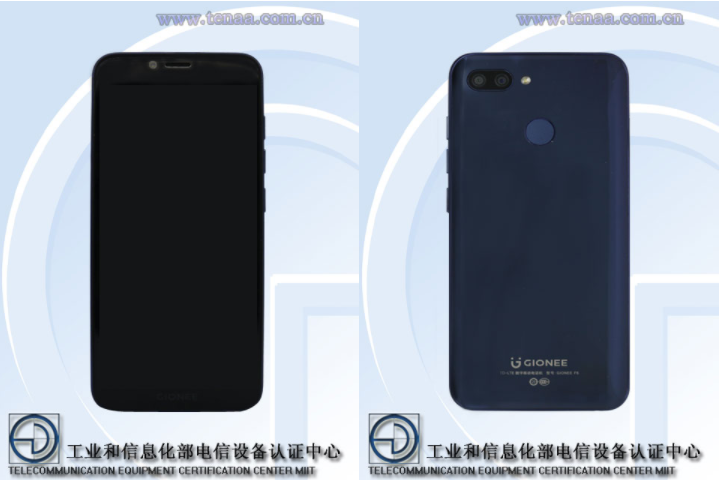
The Huawei Enjoy 7 Plus appeared on TENAA on March 30 with the model number Huawei TRT-AL00A. The TENAA listing not only gave us the specs of the device but also the images were captured. From the photos, the device doesn’t offer much change from its predecessor on the front. Same design with the physical home button absent and Huawei’s name written where there should be a virtual button while at the top lies the front camera, earpiece and ambient light sensor. At the rear, the device sports a single camera with LED flash and under the camera is the fingerprint sensor.
TheTENAA listed specification indicates the Enjoy 7 Plus sports a 5.5-inch HD display and is powered by an octa-core processor clocked at 1.4GHz. The memory combination consists of two versions, one with 4GB RAM + 64GB of storage and another with 3GB RAM + 32GB storage. Keeping the lights on is a 3900mAh battery. The rear camera is a 12MP sensor and for selfies, there is an 8MP shooter. It also runs Android 7.0 Nougat.
Xiaomi just released the new generation tablet a few weeks ago, it’s a great replacement of iPad mini but base on Android OS. The Xiaomi Mi Pad 3 is already available on international online shops. Now you can get the Xiaomi Mi Pad 3 at $259.99 on Gearbest with this coupon code: MiPad3. It’s listing price is $334.23 with free shipping.
Xiaomi Mi Pad 3 come with a 7.9-inch touch screens, along with 4GB RAM 64GB ROM, 6600mAh big battery, and installs the latest MIUI 8 software.
Hurry up, don’t miss the chance to get your tablet from Gearbest.
Meizu has a new smartphone scheduled to launch on the 26th of April. The new device is called the Meizu E2 and has a design that deviates from the one Meizu is known for. The major change is in the rear camera design which appears to look like it’s a dual-camera setup but which is in fact a single camera setup.
An image showing part of the specs of the Meizu E2 and its price leaked yesterday. The phone will feature a 5.5-inch display wit 2.5D glass and will be powered by an unspecified 64-bit processor. It will also have mCharge fast charge and a mTouch fingerprint scanner. The rumor is that the Meizu E2 will be powered by the Helio P10 processor but since VP Li Nan already said the upcoming Meizu phone won’t be released with the old chip, we will take his word for it.
The LG V20 had the honour of being the first smartphone to run on Android 7.0 Nougat when it was launched last year. The device also came with a rich specs lineup which included a dual lens setup at the rear and a 32-bit Hi-Fi Quad DAC chip which helps reduce ambient noise levels by up to 50%, thus offering a better sound output. If the V20 was an amazing device, early rumours about the LG V30 brings the prospect of a more stunning device.
LG V20
According to the latest leak, the LG V30 would come with a curved OLED display. Recall that LG display was said to have supplied Xiaomi the curved OLED used on the Mi Note 2. That display was not only curved, but the panel was flexible. However, due to the difficulty in mass producing the flexible OLED panel, availability of the Mi Note 2 became an issue. But according to news from South Korea, LG has gotten a better production technique and would now be able to mass produce the flexible OLED panels. Apart from the V30, the LG will also supply the new generation of OLED panels to the next generation Mi Note series device which is expected to be the Mi Note 3.
LG Curved OLED Display Prototype
LG V30 is expected to launch in the second half of the year and would use a narrow frame design similar to the one on the recently released LG G6. In addition, the V30 is rumoured to come with a Snapdragon 835 flagship chip as well as a 4GB RAM, while some rumours say 6GB of RAM. The flagship is also expected with a Quad DAC audio decoder chip and rear dual camera setup. The device is also likely to come with a dual-lens camera at the front.
On April 19, Xiaomi had announced its flagship smartphone, the Xiaomi Mi 6. The phone will be on sale in China starting from April 28. The Chinese firm has made the smartphone available in color choices in blue, silver white and black options. The latest TENAA listing of Xiaomi Mi 6 has revealed that it would be coming in as many as 11 colors.
Apart from the four colors that were showcased at the launch event of Xiaomi Mi 6, the TENAA listing suggest that the phone will be available in additional colors like Gold, Gray, Dark Gray, Pink, Champagne Gold, Frosted Black, and Cherry Pink. It is likely that some of these color variants will be exclusively available in the home country of China.
Also, there is a possibility that these some of them will be produced in limited quantities. All the new color options may not be available at the same time, but they get introduced in the due course of time. Xiaomi is yet to confirm on the additional color variants for Xiaomi Mi 6.
Xiaomi was rumored to launch Mi 6 and Mi 6 Plus at the April 19 launch event. However, the Chinese firm had only unveiled the Mi 6 phone at the unveil event. Since a smartphone with model number MDE40 has received 3C certification, it seems that the Mi 6 Plus will soon become a reality. The 3C listing does not reveal any information on the specs of the phone or its release date. However, well-known analyst from China, Pan Jiutang claims that the Mi 6 Plus may get announced in around two months.
Speculations have it that the Xiaomi Mi 6 Plus would be packed with a 5.7-inch screen that will produce a full HD resolution of 1,920 x 1,080 pixels. The Snapdragon 835 SoC is expected to power the phablet with 6 GB of RAM. It is pegged to come in two options like 64 GB and 128 GB. For photography, it may include 12-megapixel dual rear camera and 8-megapixel frontal camera. It is rumored to include a 4,500 mAh battery.
HTC has sent out media invites for its May 16 event that will most likely introduce its upcoming flagship phone, HTC U which is codenamed as HTC Ocean. The media invite does not directly mention the unveiling of HTC U, but carries the text which reads “Squeeze for the Brilliant” and the date of the event.
According to the media invite, the May 16 launch event will be held at Taipei at 2 PM, at 2 AM in New York and at 7 AM in London. Speculations have it that the HTC U is third phone in the new U series smartphones from the company which includes the HTC U Ultra and U Play.
The official Twitter account of HTC features a teaser video clip that shows the alleged HTC U responding to the press on its left and right edges. Also, the large U is squished from both sides which again teases touch-sensitive frame of the phone.
At the start of this year, popular leakster Evan Blass had revealed one of the leaked promotional videos of the alleged HTC U phone. The video clearly shows the capacitive sensors placed on its edges that are allegedly called Edge Sensors in action.
https://www.youtube.com/watch?v=iK-0I3oVGc8
As it can be seen, the HTC U’s Edge Sensors can recognize the grips and gestures of the users. It allows users to perform wide range of actions such as scrolling through the list of apps or launching a particular app.
Leaked information have revealed that the HTC U flagship phone will be coming with a 5.5-inch display that will be sporting a quad HD resolution of 2,560 x 1,440 pixels. The Snapdragon 835 chipset Is present under the hood of the phone. Its 64 GB model is expected to come with 4 GB of RAM whereas the 128 GB variant has 6 GB of RAM. One of the leaked photos shows that the Home button on the chin of the device houses its fingerprint reader.
It is preloaded with Android 7.1 Nougat OS that is customized with HTC Sense 9 UI. For photography, it is expected to come with a 12-megapixel rear snapper and its selfie camera is rumored to be of 16-megapixel. it will be coming with a 3,000 mAh battery that carries support for Quick Charge 3.0.
A lawsuit has been filed against Bose for secretly acquiring personal data from customers and selling it to advertisers. Earlier this week, Kyle Zak from Chicago has sued Bose for disregarding the privacy of its users.
According to Zak, he had purchased Bose QuietComfort 35 headphones by paying $350 and then installed the Bose Connect app on his phone to “get the most out of your headphones.” Hence, he entered his details like name, email ID and the serial number of the headphone on the Connect app.
Through Bose Connect app, users can adjust some audio settings like noise cancellation and perform firmware updates. This app can be used with wide range of Bose audio systems such as SoundSport Wireless, SoundSport Pulse Wireless, QuietControl 30, SoundLink Around-Ear WIreless II headphones, SoundLink Color II, SoundLink Revolve and SoundLink Revolve+.
Zak found that the app maintains a record of all the songs and podcast he listened. This data is apparently sold to third-party companies like Segment.io, an analytics firm.
Zak’s lawyer, Christopher Dore has said that people make use of headphones considering it as private, but the company has been providing user details to third parties which should not be shared. He added that generally users do not read the privacy agreements of the app, and there is no information available on collection of data in the privacy agreement of the Connect app,
Dore is a partner of Edelson PC, a company that specializes in filing lawsuit against tech firms for violating privacy of the users. Zak claims that the user information that is collected and sold by Bose can provide insight on the behavior of the customer as well as their religious and political views.
Bose whose annual sales is $3.5 billion has not responded yet on the lawsuit which mainly claims that the company is disregarding the privacy rights of the consumers. Zak wants Bose to stop collecting user data through the Connect app and he is also demanding $5 million in damages for customers of aforementioned Bose audio devices.
The elusive Essential Android smartphone has been allegedly spotted in a new ad from Michelin. A mysterious phone pops up in the ad at 0:07 and is visible only for a second.
The still shot that we have here shows the mysterious phone with a huge display. Some may speculate that it may be the Xiaomi Mi MIX concept phone. The smartphone in the Michelin ad has only top corners rounded. However, Mi MIX concept phone has all the four corners rounded.
Also, it is not the Sharp Aquos Crystal or the Doogee Mix because the chin of the mysterious device does not feature any button. The Aquos Crystal as well as the Doogee Mix feature large-sized chin with a Home key on it. Hence, it is speculated that it may be the Essential Android phone from Andy Rubin.
The frontside of the phone is mainly occupied by its display and it has a slim button-less chin. The phone sports ultra-slim bezels. The protective case that the phone is wearing has three cutouts which could be for a USB Type-C port, a headphone jack and an external speaker.
Andy Rubin who is known as the father of Android is heavily rumored to be working on a flagship smartphone that is speculated to come with modular capabilities. Rubin has already released a teaser image that only shows a small part of the phone. However, the image does reveal that it features very slim bezels and it probably suggests that the screen occupies major portion of the frontside of the phone. Rumors have it that the phone features a pressure-sensitive display like the one present on recent iPhones.
Recently, the Essential FIH-PM1 smartphone was found listed on GFXBench benchmarks. The listing revealed that the Essential Android smartphone has a 5.5-inch screen that supports a resolution of 2,560 x 1,312 pixels and it is powered by Snapdragon 835 and 4 GB of RAM. The native storage of the phone is 16 GB. Its rear-facing camera is of 12-megapixel and its selfie shooter is of 8-megapixel. On Geekbench, the Essential FIH-PM1 phone has recorded 1,844 on single-core test and 5,426 on multi-core test.
Rubin is expected to launch the smartphone through his company called Essential Products, Inc. It is expected to debut in the second half of 2017. Here is the Michelin ad:
Oleophobic coating in now becoming a norm that is included on the screen of almost all smartphones, perhaps, except the cheap devices. In case you don’t know what an Oleophobic coating is, it is an anti-fingerprint (anti-smudge) coating on glass and ceramic surfaces which create an oil resistant surface that keeps dirt, dust, oils, and water. It doesn’t make it fingerprint proof, though, but keeps the grease at bay, not allowing it to adhere to the glass.
The coating is the reason why a simple wipe with a soft cloth will often leave the smartphone looking brand new, without the use of any extra cleaning solutions. Usually, if any normal glass has fingerprints on it, trying to wipe it with nothing but a cloth will only make the grease to spread across the surface without coming off completely. In that case, you may require some kind of cleaning solution to completely clean off the greasy screen surface. But the presence of an Oleophobic screen takes that away. Also, note that devices with Corning Gorilla Glass protection have their own coating.
The Mi 6 comes with an Oleophobic coating over its curved screen surface and that surface is put to test in this short video. One sure way to know if the display is still oleophobic is to sprinkle tiny water droplets on the display and if the coating is there, the water gathers into balls and rolls off the screen entirely. That is exactly what is done in this test and the result proves the Mi 6 has a functional oleophobic coating. The Oleophobic coating isn’t a permanent thing, though, as it wears off over time and the duration depends on the manner of usage. The good thing is that it can be recoated and it is something you can do yourself at home. You can check out the Weibo video post from here.
The Elephone P9000 was released more than a year ago alongside a curved variant called the P9000 Edge and a lower specced version called the P9000 Lite. Seven months ago, Elephone announced the P9000 was going to get updated to Nougat.
A beta version was made available two months after the announcement but it was buggy. Today, Elephone has released a stable version which can now be installed by anyone and that fixes the bugs in the November beta update.
The update comes with March’s security patch and the changelog says the fingerprint sensor has been optimized. The update is not available as an OTA yet so you will have to manually flash it for now. The update comes in at over 1GB in size.
Xiaomi finally launched the Mi 6 yesterday and it still is one of the hottest topics in the tech world at present. One issue that continues to prop up is the lack of an OLED display on the flagship. The Xiaomi Mi 6 uses an LCD display, thus drawing a comparison with the Mi Note 2 which featured an OLED display. That apparently has given rise to talks about the Mi Note 3 which would likely be Xiaomi’s next device with an OLED display.
Xiaomi launched the Mi Note 2 flagship in October last year, the same day with the Mi MIX launch. There is no doubt that the Mi Note 2 is an awesome device, with a curved edge design which gave Samsung a run for its money. Xiaomi was earlier rumoured to be working on a successor to the Mi Note 2 dubbed Mi Note 3. A new rumour emanating from a Weibo tipster is now making the rounds that the Mi Note 3 will be launching in the third quarter (Q3) of this year and would use an OLED display.
Since the Mi Note 2 was released together with the Mi Mix, are we looking at a joint release of the Mi Note 3 and the Mi Mix 2? We really can’t say but it promises to be an interesting year for Xiaomi. The Mi Note 3 is expected to feature a Snapdragon 835 chip in addition to a curved edge display and other stunning features.
If you have not been following the news then the name Hafury probably sounds strange to you. Hafury is a sub-brand of Chinese smartphone maker, Cubot. Their first phone, the Hafury Umax is now on sale.
The Hafury Umax is a 6-inch smartphone with a HD resolution. It packs 2GB of RAM, 16GB of storage and runs Android 7.0 Nougat. The rear camera is a 13MP sensor and there is a 5MP shooter with soft light for selfies. The specs are pretty modest until you find out that this phablet comes with a 4500mAh battery and sells for juts $69.99.
That big battery paired with a large screen will let you listen to songs for 32 hours, talk for 20 hours, watch videos for 8 hours or play games for 7 hours on a single charge.
The Global Sources Electronics Show is the largest electronics sourcing show and its second phase, Mobile Electronics is the biggest trade show in the world. Held twice every year (April and October) at the AsiaWorld-Expo in Hong Kong, the show brings together lots of manufacturers and suppliers of electronics. This year’s edition has Chinese manufacturer, Leagoo present at the event and they have seized the opportunity to announce a new phone, the Leagoo M5 Edge.
Leagoo says the M5 Edge is their first bezel-less smartphone. It has what they call a 3D Edgeless display which has received several patents. From the promotional images provided, one can see that the M5 Edge’ display is curved on both sides like that of the Samsung S7 Edge. The back is made of metal and cut using the CNC technique giving it perfect round edges at the corners.
Leagoo M5 Edge Specs
The M5 Edge has a 5-inch 720p display with an 80% screen-to-body ratio and a ppi of 294. There is a Mediatek MT6737 quad-core processor under the hood. The RAM is 2GB and storage is 16GB but can be expanded via a MicroSD card (128GB max).
There is a 13MP f/2.0 shooter on the back and an 8MP f/2.4 77.9° wide-angle sensor for selfies. Powering the Leagoo M5 Edge is a modest 2000mAh battery. There is dual SIM support, LTE, and Bluetooth 4.0 and the phone runs Android Marshmallow with Leagoo’s Freeme OS 6.0 on top.
The M5 Edge is available in Champagne Gold and Obsidian Black. However, Leagoo has not yet revealed the price neither have they announced a date of release.
If you are at the AsiaWorld-Expo, you can check out the Leagoo M5 Edge and other Leagoo products at Hall 5 Stand 5E18. Leagoo says it will be announcing its flagship later but have not specified if it will also be announced at the event or at a separate one.
Following the release of the Xiaomi Mi MIX, we have seen quite a number of manufacturers announce their own versions. Despite that, Xiaomi is also working on a successor for the original variant. While the launch is still far away, online re-seller Gearbest has the Mi MIX 2 listed on its site.
There are multiple listings of the phone with various prices and the specs are a mash-up of that of the Mi MIX with a few major changes like the processor, camera, RAM, and battery capacity.
Huawei’s CEO Richard Yu, also known as Yu Chengdong has come all out to defend his company over the Huawei P10 and P10 Plus flash memory controversy that erupted recently. The Huawei P10 was recently revealed to have some discrepancies in the flash storage installed on several of the units in China. This led to varying results in Androbench benchmark test where some of the storage were noticed to be faster than others thus fueling speculations that Huawei used UFS 2.1 storage, UFS 2.0 and even eMMC 5.1 storage on different units.
The CEO in two lengthy Weibo posts threw more light on the circumstances surrounding the controversial flash memory issue and also talked about the P10’s lack of an Oleophobic coating over the screen. Mr Yu hinted that the main reason why both UFS and eMMC storages were used on different batches of the P10 was due to supply shortage. Apparently, the company ran out of supply of the faster UFS storage and so had to use the eMMC models. The CEO, however, insisted that using either of the two flash storage did not hamper the performance of the P10 as the optimization of both the phone’s hardware and software was able to ensure that even with an eMMC flash memory the device still delivers seamlessly.
The CEO further stated that he has personally been using the P10 Plus with an eMMC storage as well as a Mate 9 (the two posts were shown to have been posted from the P10 Plus and Mate 9) and has not noticed any difference in performance caused by the inferior flash storage. The question still arises if the company was justified to use a lower flash memory and still offer such units with eMMC flash memory at the same price with those using UFS 2.1 storage. The last may likely not have been heard about this issue.
Lenovo’s Moto brand is expected to launch its budget Moto E4 and perhaps the E4 Plus any moment from now and we expect it will have a very cheap price tag. The E4 will take over from the E3, which itself is a big bargain in terms of price. Ahead of its official launch, the Moto E4 has appeared on Geekbench.
From the listing, we could grab that the E4 would come with a quad-core MediaTek MT6737 chipset clocked at 1.25GHz. The MT6737 chip is an entry level chip announced by MediaTek early last year. The processor is backed by 2GB of RAM and the device will run Android 7.0 Nougat. That is about all regarding the specs but the SoC used implies the E4 can’t have a screen resolution bigger than 720p, and a rear camera with a resolution higher than 13 MP. The benchmark score further confirms that the E4 will be a low-end device, with a 551 single core test score and 1514 on the multi-core test.
The Moto E4 is also expected to come with a metallic body, dual SIM / dual standby support, 4G LTE, 16GB storage and a 2800 mAh battery among other features. We don’t know yet when the device will drop but we are sure that isn’t far away.
Xiaomi yesterday unveiled the Mi 6 flagship with its many colour offerings. As was rumoured, many were still waiting of the Xiaomi Mi 6 Plus to be unveiled along with it but that never happened. The company ended the launch event without saying anything about a possible Mi 6 Plus. So, what happened? Does that mean that the Mi 6 Plus really didn’t exist?
We really can’t say why Xiaomi didn’t announce the Plus-size version with this one but according to a Weibo post by the well-known industry analyst, Pan Jiutang, the Mi 6 Plus is real. The trusted analyst, while responding to a Weibo post by Xiaomi phone official account, the analyst among other things hinted that the Mi 6 Plus may likely be released in two months time.
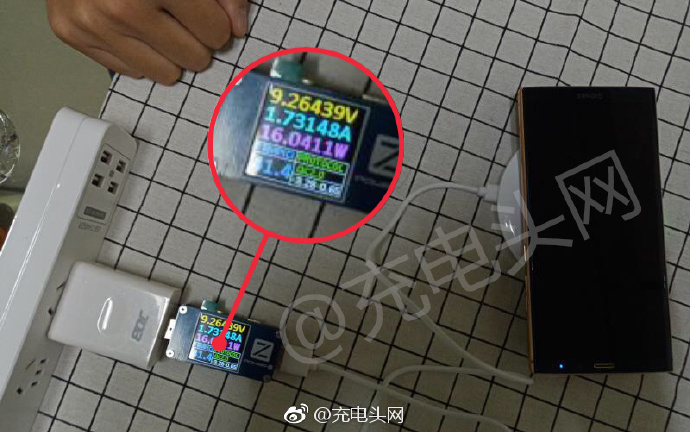
The Mi 6 Plus is expected to come with a bigger 5.7-inch display and the analyst also affirmed that. Earlier rumours had tipped the Xiaomi Mi 6 Plus to come with 6GB of RAM, 64GB / 128GB storage versions, Sony IMX362 12MP main camera, and an 8MP front camera (Ultrapixel) as well as a large 4,500mAh battery. The device may likely use the same 18W fast charger which was certified by China’s 3C. The Mi 6 Plus may also come with a different design from the Mi 6, especially the display. The Mi 6 Plus had earlier been rumoured to have a display similar to the Mi Mix, with narrower bezels. We’ll have to wait to see how this pans out.
Samsung Galaxy S8 and Galaxy S8+ smartphones are available in South Korea from April 17 and it is releasing in various markets in this week. Guys at iFixit have already done a teardown of the Samsung Galaxy S8+ to reveal its innards and also how easy is it to repair.
The Samsung Galaxy S8+ has glass panels on its front and rear sides. Samsung has used a strong adhesive to keep these glass panels in their place. However, since the phone sports a dual-edge curved screen, it is almost impossible to replace the front glass without causing damage to it. The usage of the tough adhesive does increase the resilience of the phone.
The other component that is extremely difficult to remove is the non-removable battery. The usage of strong adhesive to firmly attach it to glass panel of the phone makes it very difficult to replace it. Hence, iFixit has given a repairability score of 4 to Galaxy S8 and S8+. The Galaxy Note 7 had received a repairability score of 4 whereas the Galaxy S7 Edge had got scored 3 on repairability score. iFixit has also claimed that the battery voltage, capacity and design tolerances of the battery of Galaxy S8 is almost similar to the Galaxy Note 7.
The internals of the Galaxy S8+ is found to be resemble the innards of Galaxy Note 7. Both Galaxy S8 and S8+ are equipped with a heat pipe which helps in cooling the device. In January, after concluding the investigation on Note 7 explosions that were caused by faulty batteries, Samsung announced that its new eight-step battery quality check will ensure that the batteries of the upcoming devices are safe and will not explode.
The Galaxy S8 duo are packed with several modular components such as fingerprint scanner, headphone jack, UBS Type-C connector and so on, which means they can be replaced easily. As far as specifications are concerned, they were found to be the same as what’s mentioned on the official specs sheet of Galaxy S8 and S8+.
Several images of Galaxy S8 and Galaxy S8+ have surfaced on social sites that show that their screens have an easy noticeable red tint. Samsung did release a statement on it by saying that it is not caused because of a quality issue and it can be fixed by the user on the phone. Samsung has also revealed how to fix the issue by navigating to the color optimization settings for the screen. If the red tint cannot be fixed, the South Korean company has advised its customers to approach its service centers for further assistance.
The issue became viral on April 17, the day when the Galaxy S8 duo debuted in South Korea. Curious users uploaded Images of Galaxy S8 with red tint on social media websites. Since Samsung has revealed how to fix the problem, it is does not seem to be a very serious issue. However, speculations are rife that it may be a manufacturing defect associated with faulty chips present on the device that results in the failure of its GPU. Other claims that the 18.5:9 aspect ratio available on the S8 duo has resulted in stability issues with the screen.
According to Raymond Soneria from DisplayMate, the red tint issue on Galaxy S8 could have been caused because of miscalibration and it is something that can be fixed through the settings of the phone. Soneira added that his two Galaxy S8 phones are correctly calibrated and there is no red tint on both of them as the display settings are set to the Factory Defaults.
In order to get rid of the red tint on Galaxy S8 and Galaxy S8+, one can adjust the White Point and Color Balance controls present inside Display Settings that respectively allow the users to make the display reddish or bluish. Even the Night Shift Blue Light Filter control available in Display Settings can make the screen appear red.
Soniera has further said that the issue can be caused by defect in the OLED panels, misadjusted screens at the manufacturing facility or software bugs. However, he feels the most likely way to fix the issue is by accessing the Color Balance settings. This can be done by going to Settings > Display > Screen Mode > Color Balance.
We use cookies on our website to give you the most relevant experience by remembering your preferences and repeat visits. By clicking “Accept”, you consent to the use of ALL the cookies.
This website uses cookies to improve your experience while you navigate through the website. Out of these, the cookies that are categorized as necessary are stored on your browser as they are essential for the working of basic functionalities of the website. We also use third-party cookies that help us analyze and understand how you use this website. These cookies will be stored in your browser only with your consent. You also have the option to opt-out of these cookies. But opting out of some of these cookies may affect your browsing experience.
Necessary cookies are absolutely essential for the website to function properly. This category only includes cookies that ensures basic functionalities and security features of the website. These cookies do not store any personal information.
Any cookies that may not be particularly necessary for the website to function and is used specifically to collect user personal data via analytics, ads, other embedded contents are termed as non-necessary cookies. It is mandatory to procure user consent prior to running these cookies on your website.