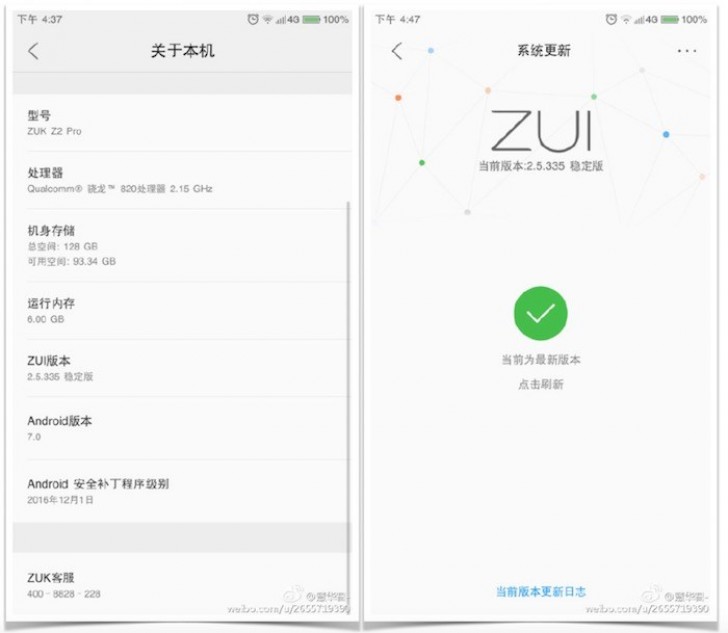
If you own a ZUK Z2 Pro you should look forward to receiving the Android Nougat update today as some owners have started receiving it.
The Lenovo owned company had announced last month that it was planning a Nougat update for the ZUK Z2 Pro and ZUK Z1. The update was scheduled to start rolling out before the beginning of the Spring Festival next week. And true to their words, the update has started already.
The update comes as a ZUI 2.5.335 update based on Android Nougat. It will bring new features, security patches and bug fixes. The changelog is listed below:
System optimization or system stability
System security patches
Split screen experience
Fix system silent problem
Repair off screen after a period of time to open the screen, WeChat “network connection is not available” problem
Repair specific scenarios even accidental loud speaker problem
Repair the occasional system color reversal problem
A small tool to optimize the file manager performance
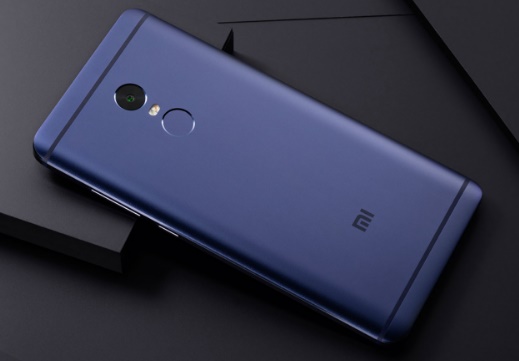
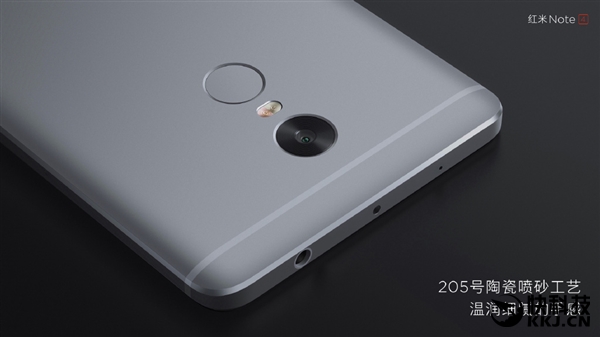
Xiaomi has launched a new version of the Redmi Note 4 in India, infusing a new Snapdragon 625 chip into the smartphone. The Xiaomi Redmi Note 4 was first unveiled in China in August last year sporting a MediaTek Helio X20 chipset and really the device didn’t fare very well when compared to the Redmi Note 3 which it took over the baton from.
The launch is coming in India, a market where Xiaomi had fared pretty well last year, especially with its Redmi series. The launch in India could also indicate that the smartphone will go global, hitting other continents and countries in the near future. The main selling point of the Redmi Note 4 is definitely the Qualcomm Snapdragon 625 chipset onboard which many would prefer over the Helio X20 on the India version. The new chipset also brings into the mix a more efficient battery management than the Redmi Note 3.
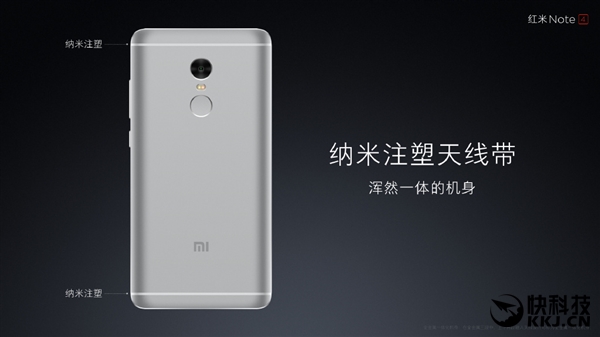
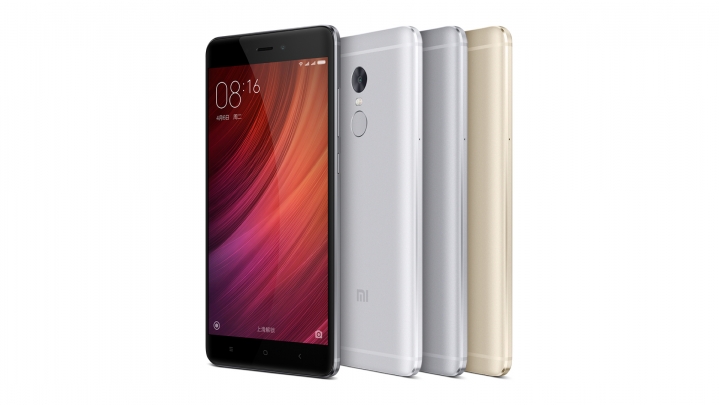
Basically, the Redmi Note 4 adopts the same design as the Helio X20-powered version, sporting an aluminum unibody and a 5.5-inch IPS LCD display with 2.5D curved glass on top. The device comes in three memory variants, a base variant with 2GB RAM + 32GB storage, another with 3GB RAM + 32GB of storage and a top model with 4GB RAM + 64GB of internal storage. There is also a large 4,100mAh battery crammed inside the smartphone.
The camera remains the same 13MP rear sensor with phase detection autofocus (PDAF) and LED flash, as well as a 5MP selfie shotter up front. The SD 625-powered Redmi Note 4 version also retains the dual SIM capability, rear-mounted fingerprint sensor, 4G VoLTE and runs on MIUI 8 based on Android 6.0 Marshmallow. It is worthy of note that MIUI-8 based on Android Nougat is currently in beta testing and should be available on the Redmi Note 4 whenever the stable ROM is available.
Pricing & Availability
Coming to the price, the Xiaomi Redmi Note 4 with 2GB + 32GB will sell for 9,999 Rupees ($146), while the 3GB + 32GB goes for 10,999 Rupees ($161), and the 4GB RAM + 64GB for 12,999 Rupees ($190). The Redmi Note 4 comes in gold, dark gray, and black color variants and will be available from January 23 at 12 noon via Mi.com and Flipkart. Also note that a blue variant was recently added to the lineup in China but it is not clear if that one will be available on this global edition.
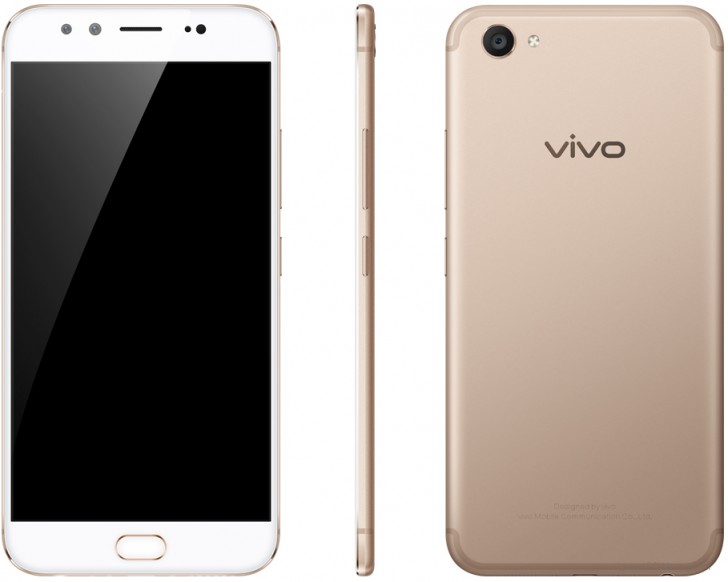
Vivo, yesterday officially launched the Vivo V5 Plus. If you remember, the Chinese phone maker launched the Vivo V5 back in November but the V5 Plus is actually the device you want to look at.
The unique selling point of the Vivo V5 Plus is its dual front-facing cameras. The combo is a 20MP Sony IMX376 sensor with f/2.0 aperture and 5P lens, while the second camera is an 8MP f/2.0 shooter. The cameras work the same way the iPhone 7 Plus’ cameras work. The larger sensor takes the image while the 8MP camera captures depth information. There is also a selfie softlight flash in front in case you need to take shots in poorly lit places.
The Vivo V5 Plus is a phone first before a camera, so there is a 5.5-inch full HD screen with 2.5D Gorilla Glass 5, 4GB of RAM, 64GB of storage, and a Snapdragon 625 processor under the hood. The rear camera is a 16MP f/2.0 sensor that can record 4K videos and there is a 3160mAh battery that supplies juice.
Vivo has opted for a front-mounted fingerprint scanner and has put the same custom-made AK4376 Hi-Fi audio chip present in the Vivo V5 in it. The Vivo V5 Plus with its wonderful features actually disappoints by shipping with Vivo’s FunTouch OS 3.0 which is based on Android 6.0 Marshmallow. We had hoped the delay in the launch will see it coming with Android Nougat instead.
South Korean electronics manufacturer LG has started sending out invites for an event slated for February 26. The event which will hold during MWC 2017 in Barcelona at noon (local time) is said to be the launch of the LG G6.
The LG G6 is the company’s flagship for the year and LG intends to do things differently this year. First the new flagship will not be modular like its predecessor, the LG G5. It will not feature a removable battery and has also been teased to be waterproof.
The G6 will have a new design: its body will be smaller and will be made out of metal and glass. Last week, the company’s display arm announced a new 5.7-inch display with a Quad HD+ resolution and an aspect ratio of 18:9. It has been said that the LG G6 will be the first phone to sport the display. We deduce that the words ”See More” hints at the large display.
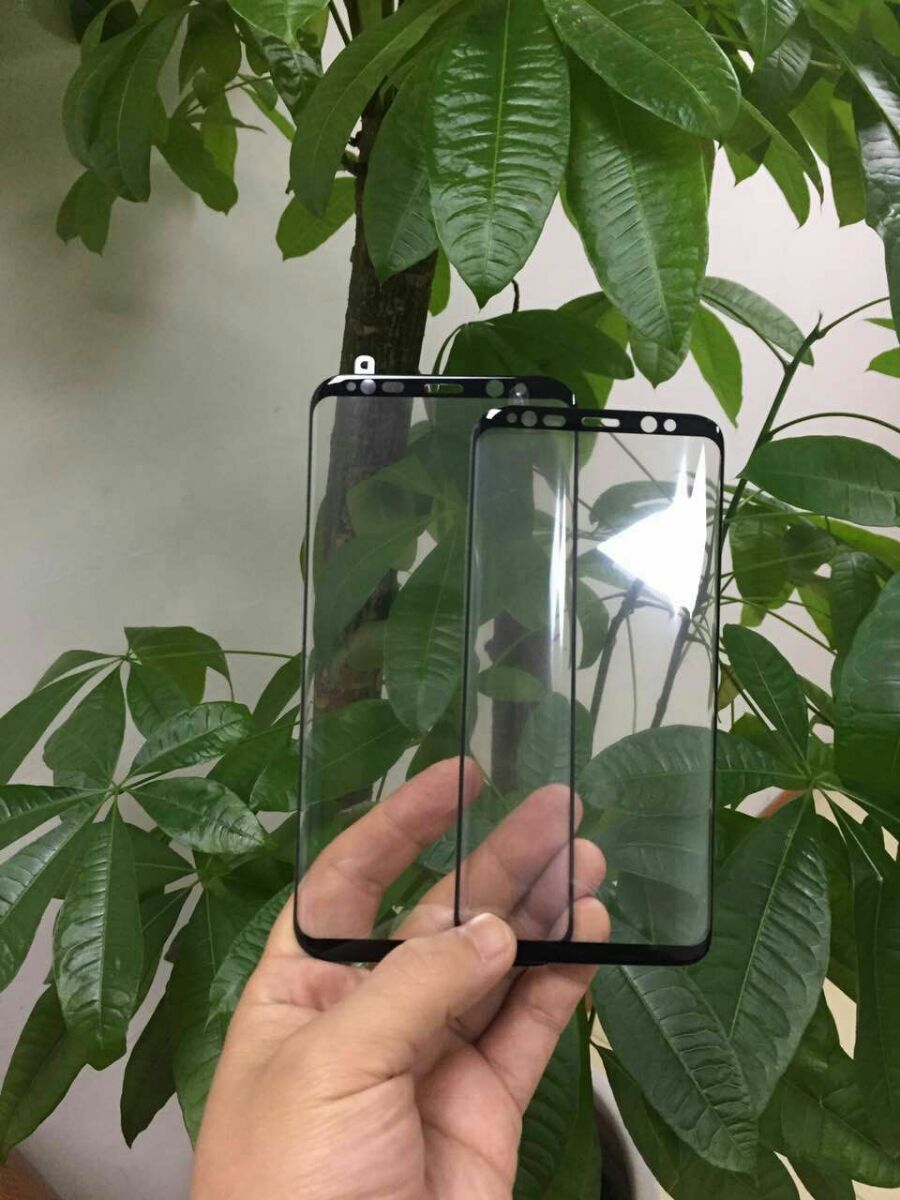
Samsung Galaxy S8 is said to come in two version, one of which is a Plus version with a 6-inch display. This assertion seems to be corroborated by a new leaked photo said to contain the Galaxy S8 and S8 Plus displays. The photo surfaced on Twitter a few days back, apparently from a Polish speaking poster who claims that the source of the leaked photos was an unnamed screen protector supplier in China, with a 100% authenticity track record.
As a way of further fueling speculations of two versions, the display panels which is held side by side on the photo comes in two different sizes with one obviously larger than the other. One other thing worthy of note is that the displays seems to have curved edges at the sides. We cannot say for sure, though, if this is actually the Galaxy S8’s displays.
However, the Samsung Galaxy S8 is expected with a premium look and a design language different from what Samsung had done in the past. The leaked display panels reflects some of the features, such as the absence of a physical home button and a very high screen-to-body ratio, with the display occupying almost the entire screen. The Galaxy S8 is expected with a 5.7-inch WQHD (2560 x 1440) Super AMOLED display, with the Qualcomm Snapdragon 835 SoC inside. The device is also expected to run on Android Nougat out of the box. The Galaxy S8 Plus, on the other hand, is expected as a 6.2-inch phablet.
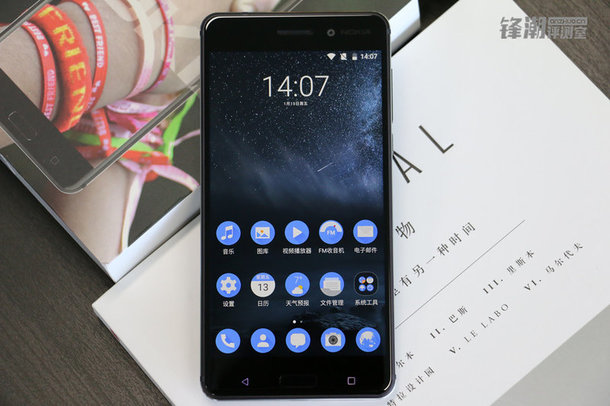
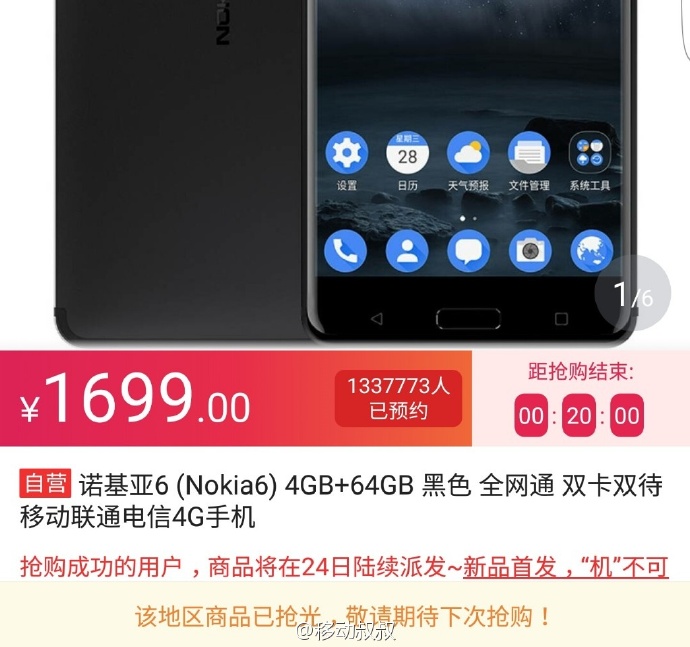
The much awaited Nokia 6 mid-range smartphone today went on its first flash sales in China and as was expected, the device was sold out in just a minute. The Nokia 6 was already headed to being a hot selling smartphone, considering the over 1 million persons that registered their intention to have the 1699 yuan smartphone.
As we hinted earlier, the Nokia 6 is on sale in China exclusively on e-commerce platform Jingdong (JD.com). The 1699 yuan price tag might be considered as expensive for some, considering the smartphone packs a lowly Snapdragon 430 chip onboard. However, such perceived deficiency is made up for by the premium, rugged build the device featured. The smartphone also comes with a large 4GB RAM, which could ensure it doesn’t lag when apps are installed. The smartphone is expected to go on a second round of flash sales in the coming days but Jingdong is yet to announce a date for that. However, the number of units sold on the first flash sale is noy yet disclosed, but we hope Nokia has enough units in stock.
As a reminder, the Nokia 6 sports a 5.5-inch display with 1080 pixels resolution. It is fired up by a Snapdragon 430 chipset which is backed by a huge 4GB of RAM. There is also 64GB of storage onboard with the option of expanding it further via microSD. On the camera end, the device packs a 16MP rear camera with a single LED flash lying just underneath it, as well as an 8MP front-facing camera for sleek selfies. There is an ample 3,000mAh battery crammed inside the smartphone as well.
With the entry of Chinese companies into the smartphone industry, we have to agree that the market has become more interesting with plenty of different options available to consumers. While this may not be good news for existing companies (as cutthroat competition would mean less profits for them), consumers are definitely the ones benefiting from this.
So, we are conducting a poll to check out which brand smartphone are you using right now as your daily driver. We know many of you may have more than one smartphone (that could be a different brand as well) but here we are looking for phones that you use every day from making calls, watching videos to checking e-mails and messages.
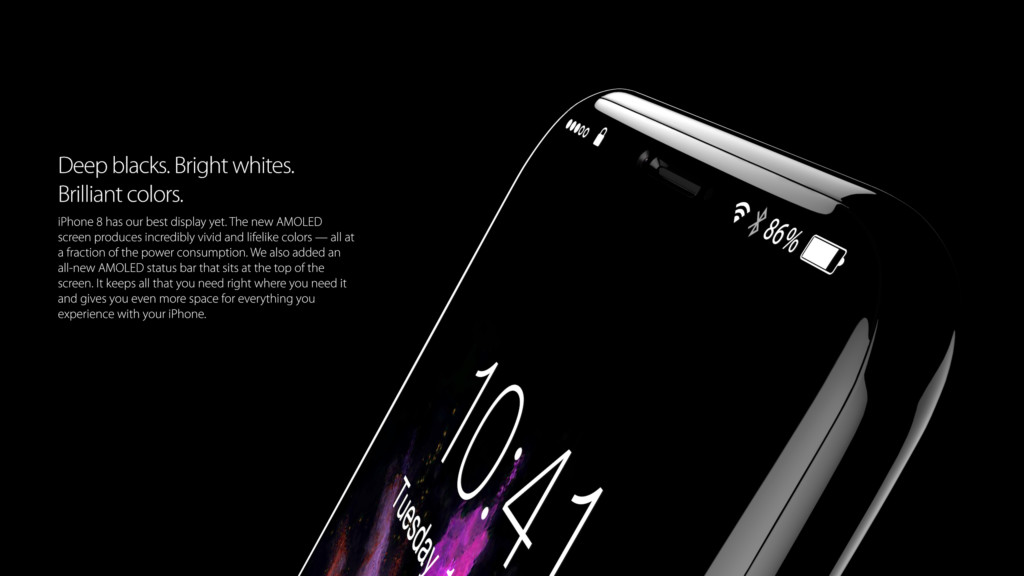
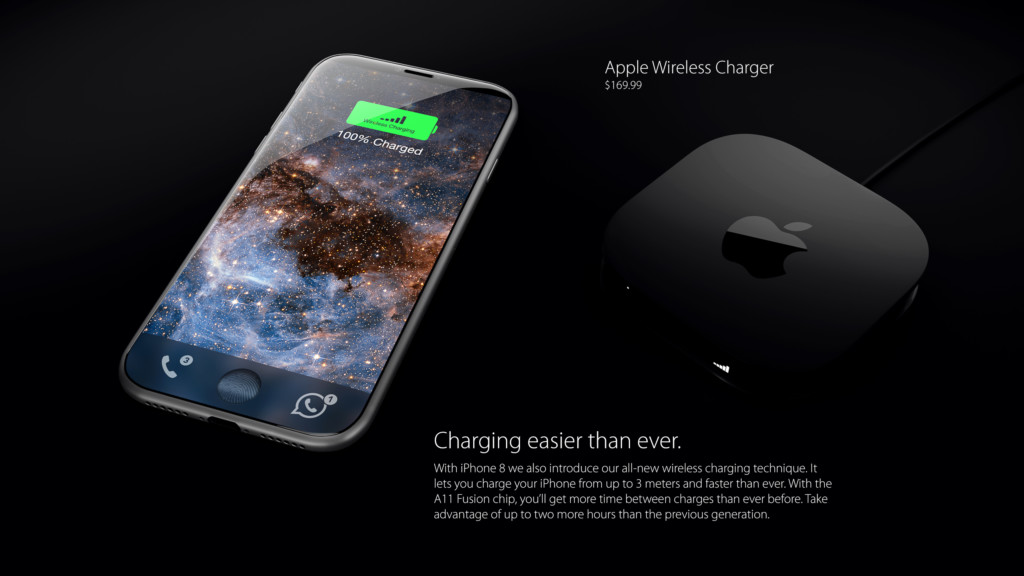
After releasing iPhone 6, iPhone 6S and iPhone 7 with almost same design, Apple is expected to launch iPhone 8 with overhaul changes to its design. Handy Abovergleich, a Dutch company has reveal concept model of iPhone 8 based on all the rumors surrounding it.
The iPhone 8 concept model features an AMOLED display. There is an AMOLED status bar at the top that shows all the notifications and helps in providing ample screen space to the users.
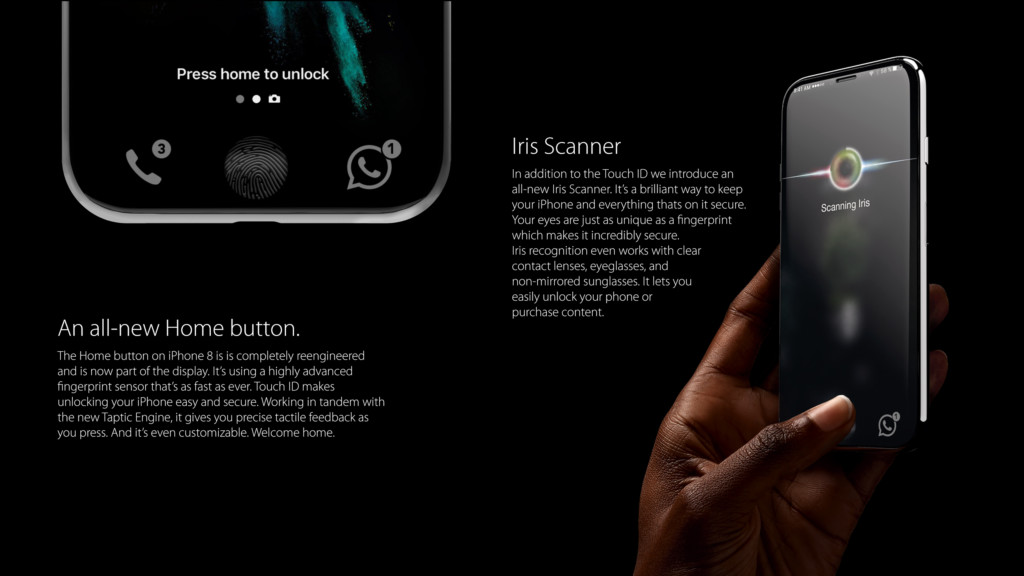
The bottom features a Touch ID fingerprint sensor enabled virtual haptic Home button. There are two virtual shortcut keys on the left and right side of the Home button. The iris scanner is also present on the device for added security. It can seamlessly scan iris even when the user is wearing contact lenses, spectacles and sunglasses.
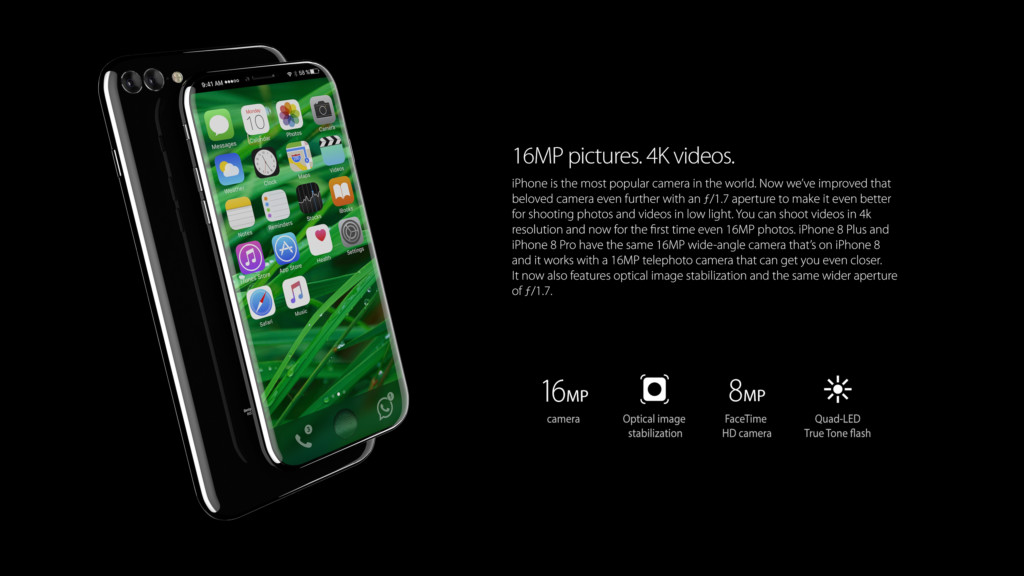
The iPhone 8 concept model sports dual camera sensors on its back panel. The 16-megapixel camera is equipped with an f/1.7 aperture that can shoot stunning photos in dim lighting conditions. It carries support 4K resolution video shooting. The images show that the iPhone 8 will be the first Apple iPhone to feature a USB Type-C port.
The concept images also reveal that the iPhone 8 will also get the much-awaited wireless charging feature. The iPhone 8 concept phone is powered by Apple A11 Fusion chipset.
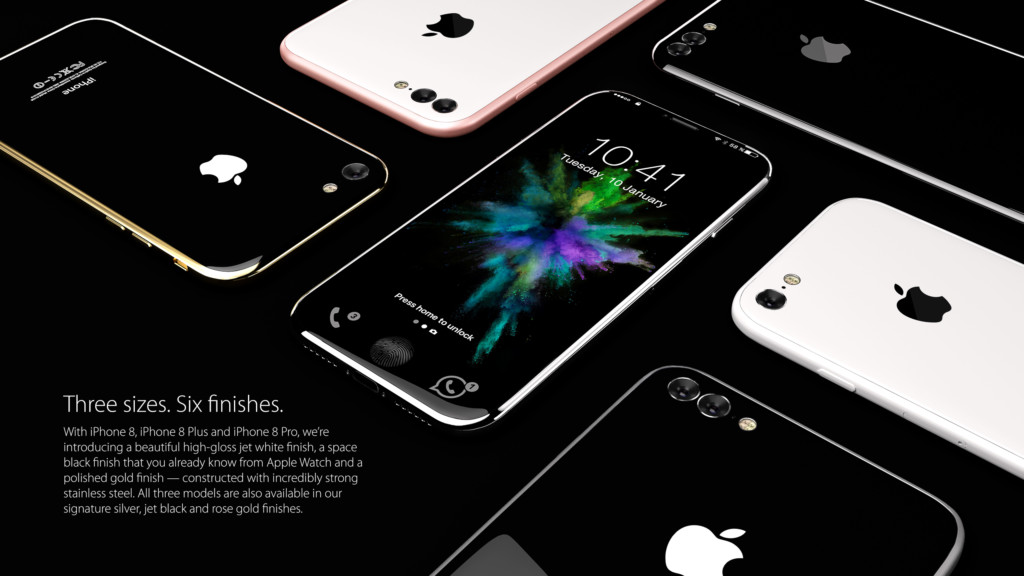
According to Handy Abovergleich, the iPhone 8 would be arriving in three models, the iPhone 8, iPhone 8 Plus and iPhone 8 Pro. These devices will be available in six finishes such as glossy white, space black, stainless steel gold, silver, jet black and rose gold.
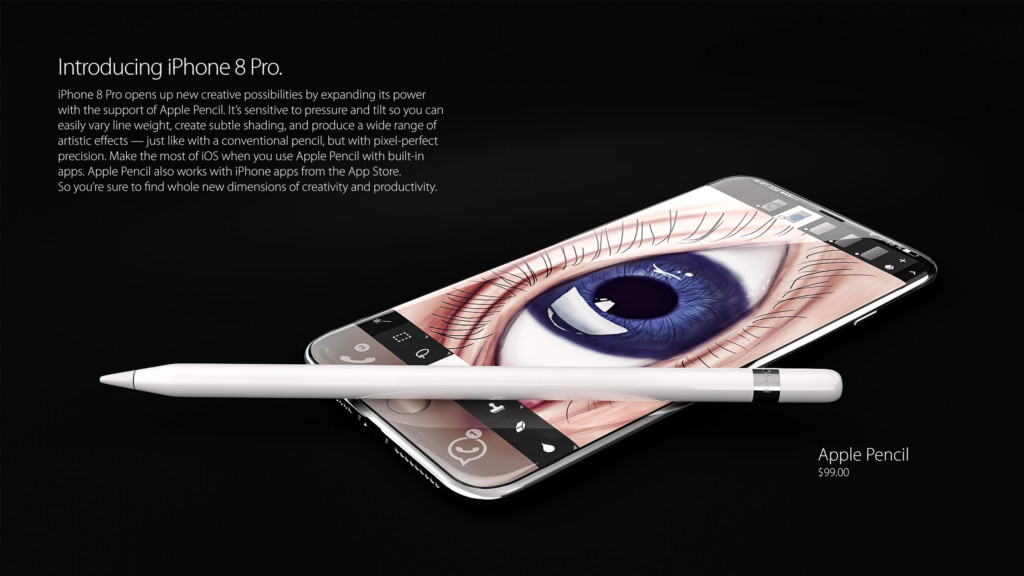
The iPhone 8 Pro is expected to arrive with support for Apple Pencil stylus. The pressure-sensitive stylus will allow users to do everything that can be done through a conventional pencil.
As far as design is concerned, the iPhone 8 concept model features ultra-thin bezels and rounded edges. As iPhone 8 rumors have stated, it features a glass-on-glass design available on iPhone 4 and 4S and its frame is made up of stainless steel.
Several smartphone manufacturers have started rolling out Nougat update. Apart from Galaxy S7 and S7 Edge, none of the Samsung smartphones have receive Android Nougat. Sam Mobile has compiled a list of Samsung smartphones that would be getting the latest Android software.
Samsung Galaxy S7, S7 Edge, S7 Active
Users of Galaxy S7 and Galaxy S7 Edge in the U.S., the U.K and China are now able to update to Android 7.0. The update is gradually reaching other users of the world. Samsung is also expected to release Android N update for Galaxy S7 Active.
Samsung Galaxy A (2017)
The South Korean company announced new Galaxy A series smartphones at the start of this year. The Galaxy A3 (2017), Galaxy A5 (2017) and Galaxy A7 (2017) have arrived with Marshmallow OS pre-installed. However, these devices will be soon getting the Android N upgrade.
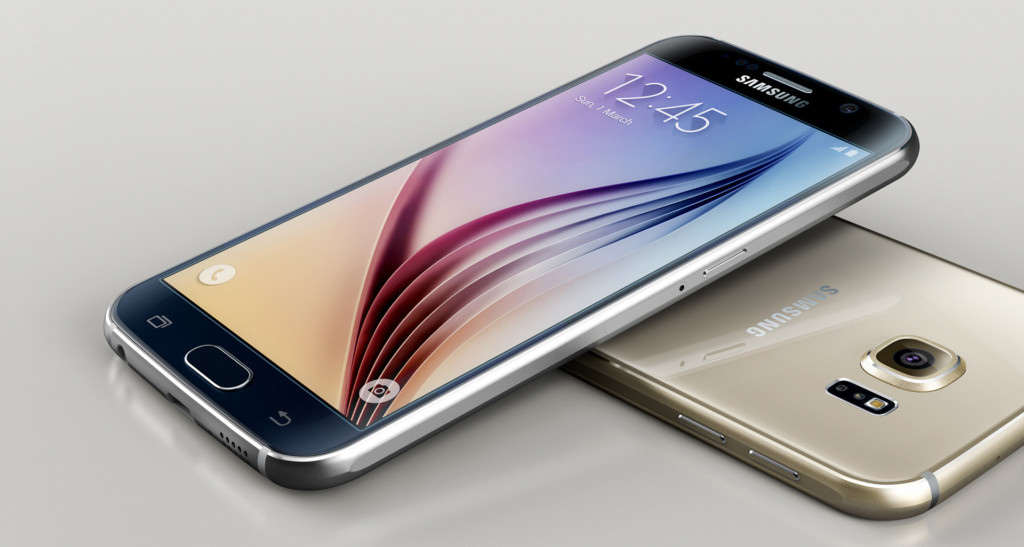
The Samsung Galaxy S6, Galaxy S6 Edge and Galaxy Note 5 were all found being tested with Android Nougat in the last quarter of 2016. Speculations suggest all the five devices will get Android N by the end of Q1 or in Q2 after the launch of Galaxy S8 and Galaxy S8 Plus in April.
In December 2016, rumors had started swirling that the 2016 versions of Galaxy A smartphones would be getting the Android 7.0 Nougat update. Hence, smartphones like Galaxy A3 (2016), Galaxy A5 (2016), Galaxy A7 (2016), Galaxy A8 (2016), Galaxy A9 (2016) and Galaxy A9 Pro (2016) are eligible to get Android N upgrade. These devices are expected the latest Android version after 2017 Galaxy A smartphones receives it.
Samsung Galaxy J (2016)
The Galaxy J5 (2016) and Galaxy J7 (2016) are the only two Galaxy J series smartphones to get Android N. It seems that the update for these smartphones would be arriving after all the above-mentioned devices get Android N.
Samsung Galaxy Tab S2, Tab A
The Samsung Galaxy Tab S2 and Galaxy Tab A are the only tablets that are rumored to receive Android Nougat update.
Huawei announced a new Emotion UI version 5.0 based on Android Nougat around November last year and the new user interface made its debut onboard the Huawei Mate 9 flagship. As usual other Huawei smartphones are expected to get upgrades to the new interface as time goes on.
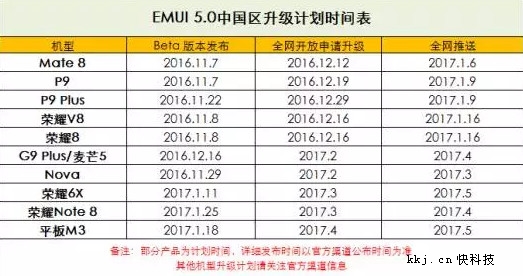
Huawei did recently release a time table that shows when it will push upgrades to EMUI 5.0 in China. The time-table shows earlier models like the Mate 8, P9, P9 Plus and others had started receiving upgrades to the beta version since November last year. While the full upgrade should have started rolling from January 6, 2017. Some models like the G9 Plus, Huawei Nova, Honor 6X, Honor Note 8 and M3 tablet would start getting their full upgrades between March and May 2017, according to the schedule.
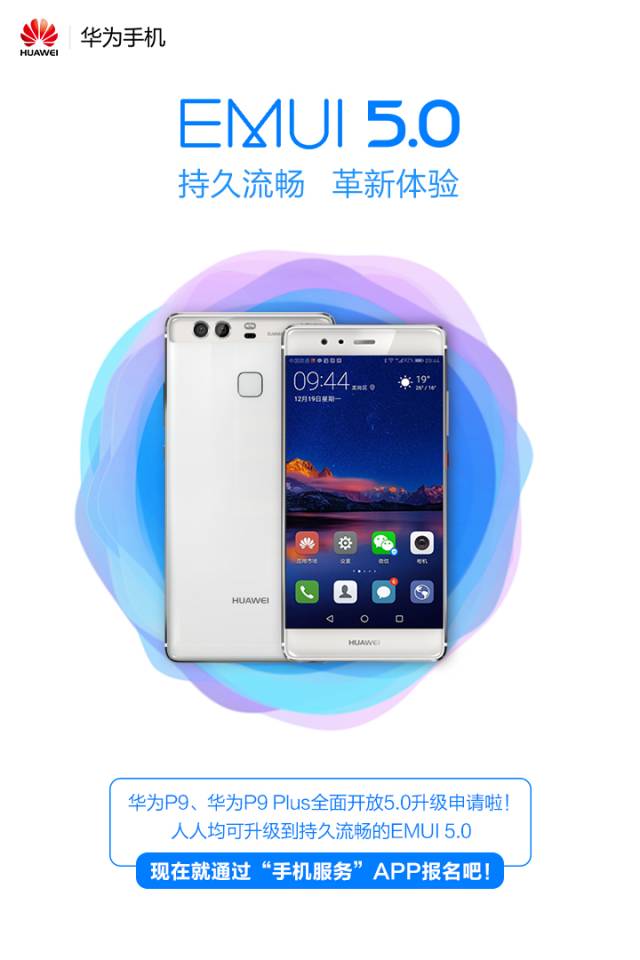
Huawei recently released a poster on its EMUI Weibo page that announces that the Huawei P9 and P9 Plus will receive full upgrades to EMUI 5.0 before the Spring Festival which is just few days away. The Huawei P9 and P9 Plus have already started receiving beta upgrades since November which is usually for a few beta testers. But with this latest teaser, all owners of the P9 and P9 Plus would get the upgrade pushed to their smartphones before the Spring Festival. The company also hinted those who want to be among the first to get the upgrade can do so directly via the Mobile phone service app which has now been renamed Member Services app.
Unconfirmed reports from China say that Huawei has arrested six of is mid-level and top executives in the consumer business division for allegedly leaking sensitive internal information to LeEco. Those arrested are said to include some of Huawei’s product designers. The exact information leaked to LeEco wasn’t stated, but it may interest you to know that the six executives arrested were said to no longer work with the company as at the time of their arrest.
In a swift manner, LeEco whose name is mentioned in the debacle has responded that it did not receive any information from the arrested individuals but admitted that there are some patent disputes between both companies. LeEco has also issued a notice of its intention to take legal actions. The cause of the dispute is said to likely be related to two recent LeEco patent filings, one for children’s smartwatch and another for an antenna design which Huawei considered as an infringement of its patent. But LeEco claims the six individuals upon leaving Huawei, did not carry along any documents or drawings. Perhaps the accused executives cross-carpeted to LeEco from Huawei, but we are not sure about that.
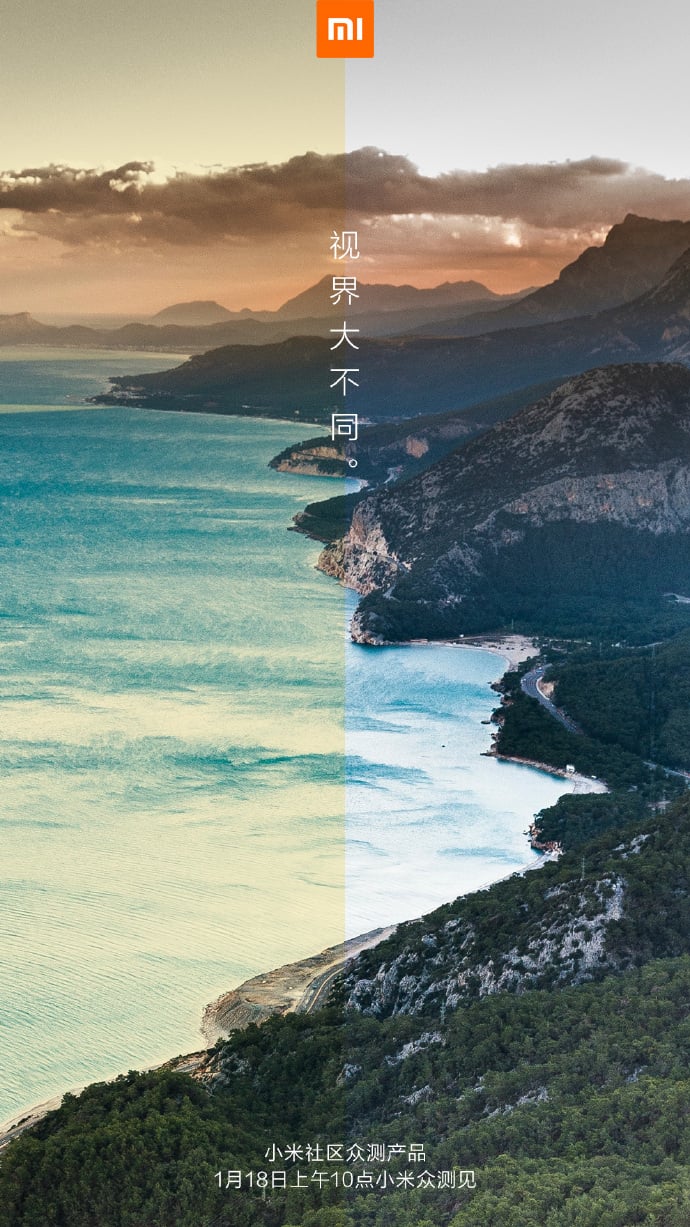
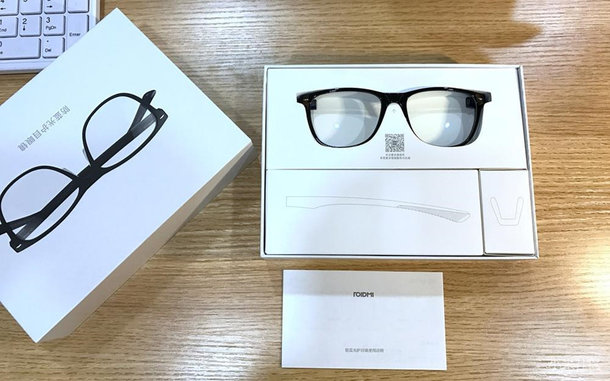
Remember the teaser image (below) Xiaomi released a few days ago? Turns out it was actually hinting at a pair of eyeglasses. The company took the wraps off the product today. The glasses is released under the Roidmi brand which is the same brand Xiaomi uses for its car charger line.
The Roidmi Glasses is not just your a fancy pair of glasses as its main function is to protect your eyes from ultraviolet rays from the sun. According to the product detail, the Roidmi Glasses can block 99.99% of UV rays. Overexposure to ultraviolet rays are said to be the cause of eye problems like cataracts and retinal damage.
Xiaomi has designed the glasses in a way that it appeals to the younger generation. The glasses comes in a white box which when opened reveals three separate compartments. One holds the frame, another holds the temples, and a third holds the nose pads. Sadly, there is no glass case in the box.
There are two pairs of temples in the box and both have the Roidmi name on it and the same applies to the nose pads as well. It seems you will not need a screwdriver to fix the temples as they clip into the frame easily. After fixing the temple and the nose pad, the weight of the glasses is just 21g.
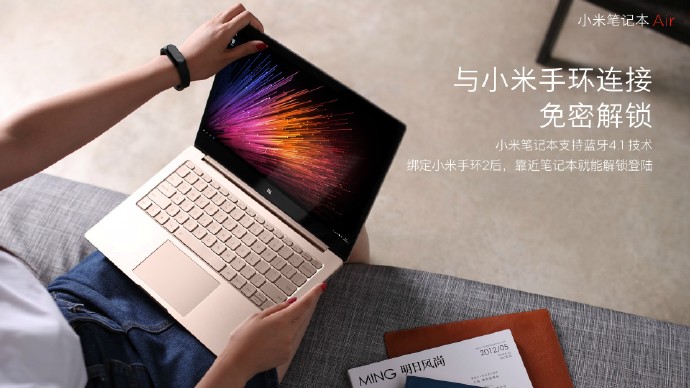
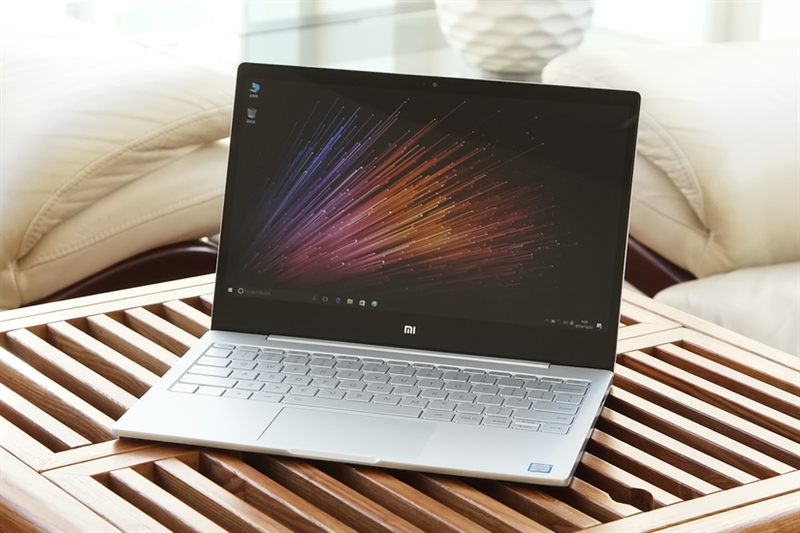
Xiaomi announced its first Notebook laptop – the Mi Notebook Air, around the middle of last year and the laptop received lots of positive reviews from fans and pundits alike. The company later added a 4G LTE version of the Mi Notebook Air recently, exclusive to China mobile but with the same design. There are indications that the innovative tech company is already working on a second generation Mi Notebook 2 model.
Reports emanating from Taiwan quotes IDC vice-president as saying that they Mi Notebook Air came out with a good momentum and that sales reached 110,000 units in the third quarter alone, representing 2% of the market share. That share figure was said to have increased to 4% by the fourth quarter. The identified the Mi Notebook Air’s core selling points as its cost-effectiveness, good quality and the influence of the brand name.
Mr Wang Jiping also hinted that the second generation Mi Notebook Air’s production will kick-off in April this year. The IDC vice-president is further credited to have stated that the next gen. Mi Notebook Air 2 will feature the same thin build as its predecessor. The body will be manufactured using higher lithium-magnesium alloy which would bring down the weight of the device to jjst a quarter of an aluminum alloy. The Notebook PC will be manufactured in a more cost effective manner than its predecessor, but it is uncertain if that would make it cheaper than the Mi Notebook Air.
Huawei is proud of its P9 flagship and according to recent news it has sold more than 10 million units. The company’s focus now is on the Huawei P10 which is expected to launch during Mobile World Congress next month.
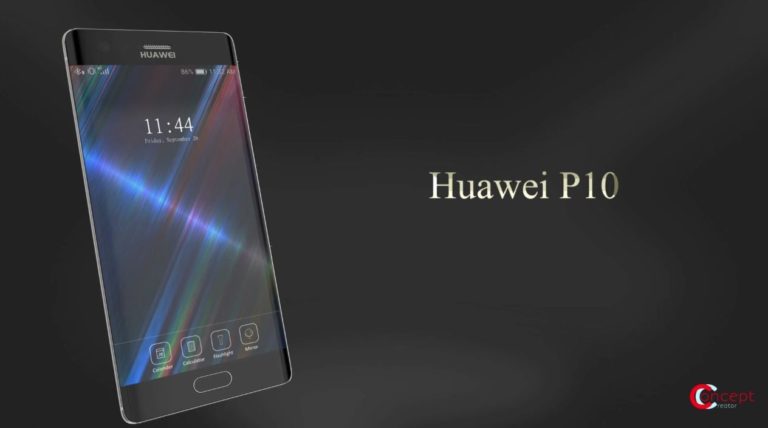
New renders of the upcoming phone made by Concept Creator have been posted online and while the pictures do show more details they still share a similar design to the renders that were posted online last week.
From the images, we can see that the Huawei P10 has a very slim profile. The back of the phone and the dual-curved display are symmetrical with their curves meeting at the middle frame. The Huawei P10 is not focused on bezels and you can see that the top and bottom bezels look no different from that of the P9. Though the lower bezel can be excused for housing what appears to be an ultrasonic fingerprint scanner.
The P10 in this render has its audio jack at the bottom just before the USB Type-C port and speaker grille. There is also an antenna line on the side of the frame.
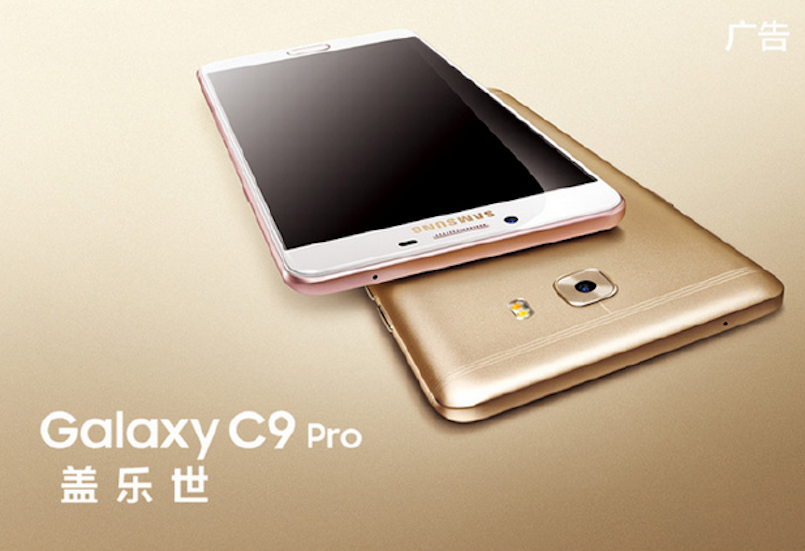
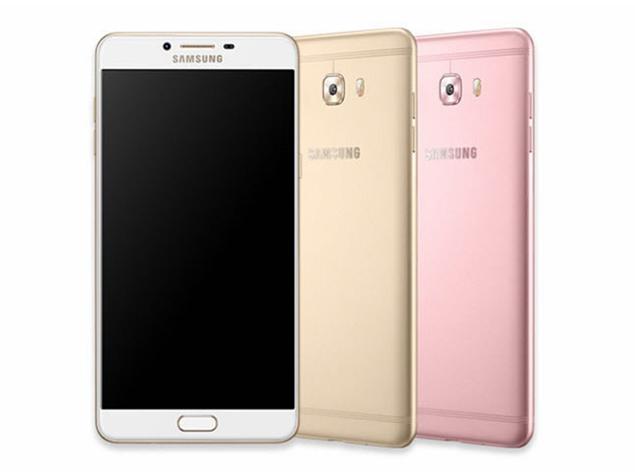
Samsung has gone official with its mid-range Galaxy C9 Pro smartphone in India. The Samsung Galaxy C9 Pro is the company’s first smartphone with 6GB of RAM and was launched in China back in October 2016.
Basically, the specifications and design are consistent with the one released in China but the price tags differ slightly. The Galaxy C9 Pro arrived in Chian with a 3,199 yuan price tag (around Rs. 31,700, $470) but in India the smartphone starts at RS 36,900. The device will become available for pre-order or reservations from January 27 via select stores and online e-commerce websites. While it will be available for purchase towards the end of February 2017.
To refresh our memories, the Samsung Galaxy C9 Pro features a 6-inch 1080p AMOLED display and is powered by the Qualcomm Snapdragon 653 processor accompanied by 6GB of RAM. The smartphone also comes with 64GB of internal memory which can be expanded further via microSD slot. The C9 Pro sports a 16MP rear camera as well as a 16MP sensor up front which both promise better picture qualities. It is a dual SIM phone with support for 4G LTE connectivity. The Galaxy C9 pro also runs TouchWiz UI based on Android Marshmallow OS. Other features include a 4,000mAh battery with fast charge support, a front-mounted fingerprint sensor and USB Type-C data and charging port.
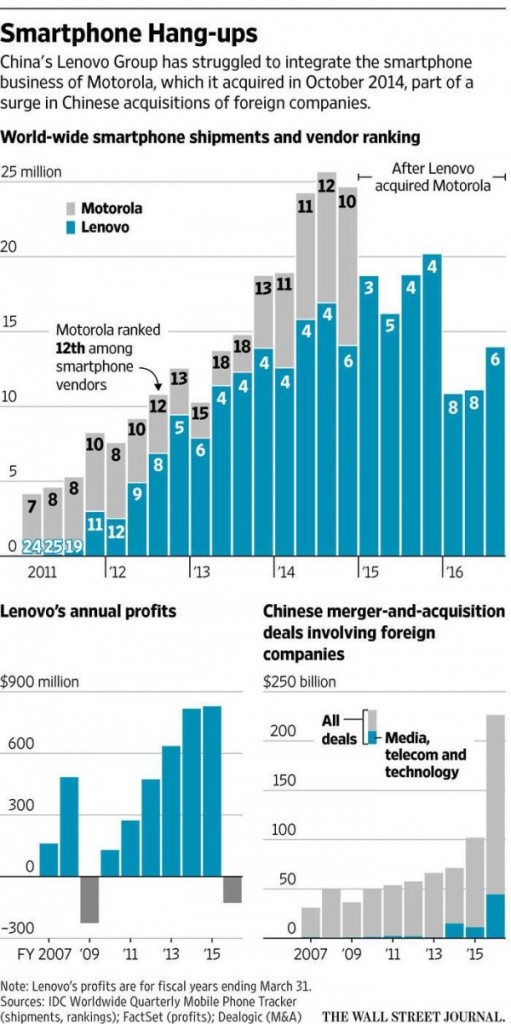
In an interview, Lenovo CEO Yan Yuanqing said that it underestimated the difficulty of reviving Motorola.
Motorola Mobility along with its smartphone series such as Moto X, Moto G, Moto E and Droid were acquired by The Lenovo Group in October 2014. Since then Motorola has been operating as a subsidiary of the Chinese company with its headquarters based in Chicago.
Motorola was acquired with its nearly 3,500 workers from all the overall the world. At that time, it was the world’s third largest smartphone manufacturer. In 2011, Google had acquired Motorola Mobility for $12.5 billion and the search engine sold the company to Lenovo for $2.91 billion in 2014.
Back to the present, Lenovo has lost its top 3 global ranking. It went down to eighth position in Q2 2016. It has axed around 3,000 jobs and it is recorded its first financial loss since 2009. Hence, Yuanqing has said in an interview to Wall Street Journal, “we underestimated the differences of the culture and the business model.”
Lenovo’s successful acquisition of IBM created “a certain aura of invincibility” that resulted in the company making several miscalculated decisions. One of its major mistakes was selling Moto branded devices in China in 2015, but it failed to achieve impressive sales as the Chinese market was already saturated with affordable smartphones from various brands.
The Moto X carried a pricing of around $600 and $700. Apple iPhones also carried similar pricing in China. Moreover, the release of Moto phones clashed with the products from Lenovo. In 2015, Lenovo could sell only 200,000 Moto devices in China. Three years ago, Lenovo had a 12 percent smartphone market share in China. However, it has now declined to only 2 percent, according to IDC.
Lenovo’s strategy for the U.S. market was also unclear. The company had initially boosted advertising revenue for Moto X Force, a smartphone designed for U.S. customers. However, it took a quick decision to reduce the revenue on advertising and product development in the U.S. With an advertising budget of $21.6 million in the first half of 2015 in the U.S., it could never rival with Samsung that invested $187.8 for advertising in the country.
Lenovo’s reluctance to spend more advertising coupled with poor sales resulted in axing of 3,000 jobs in the U.S. Moreover, a major part of Motorola’s product movement has been shifted to China.
At present, Lenovo has upped the advertising revenue for Lenovo and Motorola products. In 2016, Motorola’s advertising revenue was increased by 30 percent. According to IDC, the company managed to climb up to sixth position in the global smartphone market share in Q3 2016. Moto Z flagship from 2016 has also received positive reception from audience and critics.
It seems that Lenovo now has a working strategy to increase sales of Moto branded devices. We hope that in 2017, Lenovo will manage to restore Motorola’s lost glory.
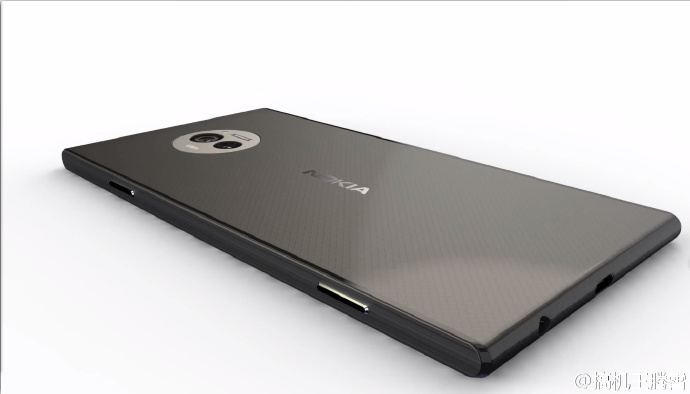
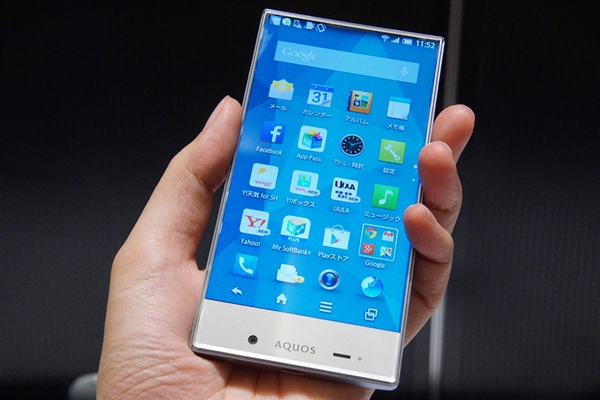
MWC 2017 is just by the corner and one of the smartphones expected is the new Nokia flagship powered by a Snapdragon 835 chip. Earlier rumors had tipped the expected smartphone as Nokia 8 and later on, renders of a Qualcomm smartphone exhibited at CES 2017 was identified as the expected Nokia 8 until Qualcomm debunked that assertion. Now, it is rumored that the expected Nokia flagship smartphone is actually called Nokia P1 and it packs way more features than we thought.
The rumor seem to have emanated from Russia and it tips the Nokia P1 as packing the Qualcomm Snapdragon 835 chipset. Other key features of note is that the flagship would sport a 5.3-inch IGZO display with a refresh rate of 1 to 120Hz. The display is further protected with Corning Gorilla Glass 5.
According to the rumor, the Nokia P1 is based on Sharp Aquos Xx3 and packs some features found on the Aquos Xx3. Recall that Foxconn now owns Sharp and Foxconn is the manufacturer of the Nokia phones for HMD Global, so the rumors carry some weight. Apart from that, the device is rumored to come with 6GB of RAM and two memory versions of 128GB and 256GB of storage respectively. There is also said to be a 22.6MP main camera at the rear identical to that of the Sharp Aquos Xx3 but the Nokia P1 comes with ZEISS optics certified by Carl. Other features include a 3,500mAh battery with Quick charge, ultrasonic fingerprint sensor, and Android 7.0 Nougat OS out of the box.
The Nokia P1 will also come in two versions based on the material used to manufacture the body. The high-end version with 256GB storage is said to come with a ceramic body, while the other version with 128GB storage will feature a metal frame. Both versions will have IP55/ IP 57 protection standard. Expect the 256GB version to come in with a hefty $950 price tag, while the 128GB version is said to be price around $800.
In the quest to meet buyers’ yearning for smartphones with longer battery life, smartphone makers have developed several technological methods of battery manufacture. Smartphones are now packed with fast charging technology that delivers full capacity charge in just few minutes. But then, the rate of exploding phones seems to have increased as well, most times the phone’s battery is the culprit.
The case of the Samsung Galaxy Note 7 is perhaps the most notable smartphone till date to have been plagued by defective battery leading to the recall of the entire line. Although Samsung is yet to release the report of its findings on the exact cause of the Note 7 exploding incidence, local media allege that the report finds the battery as the cause.
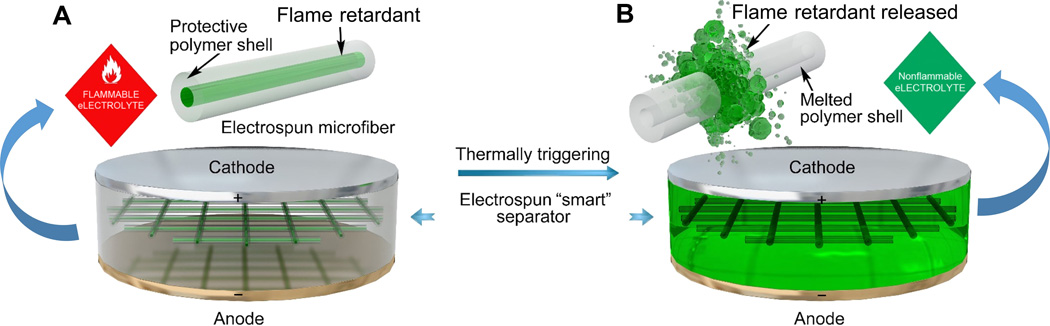
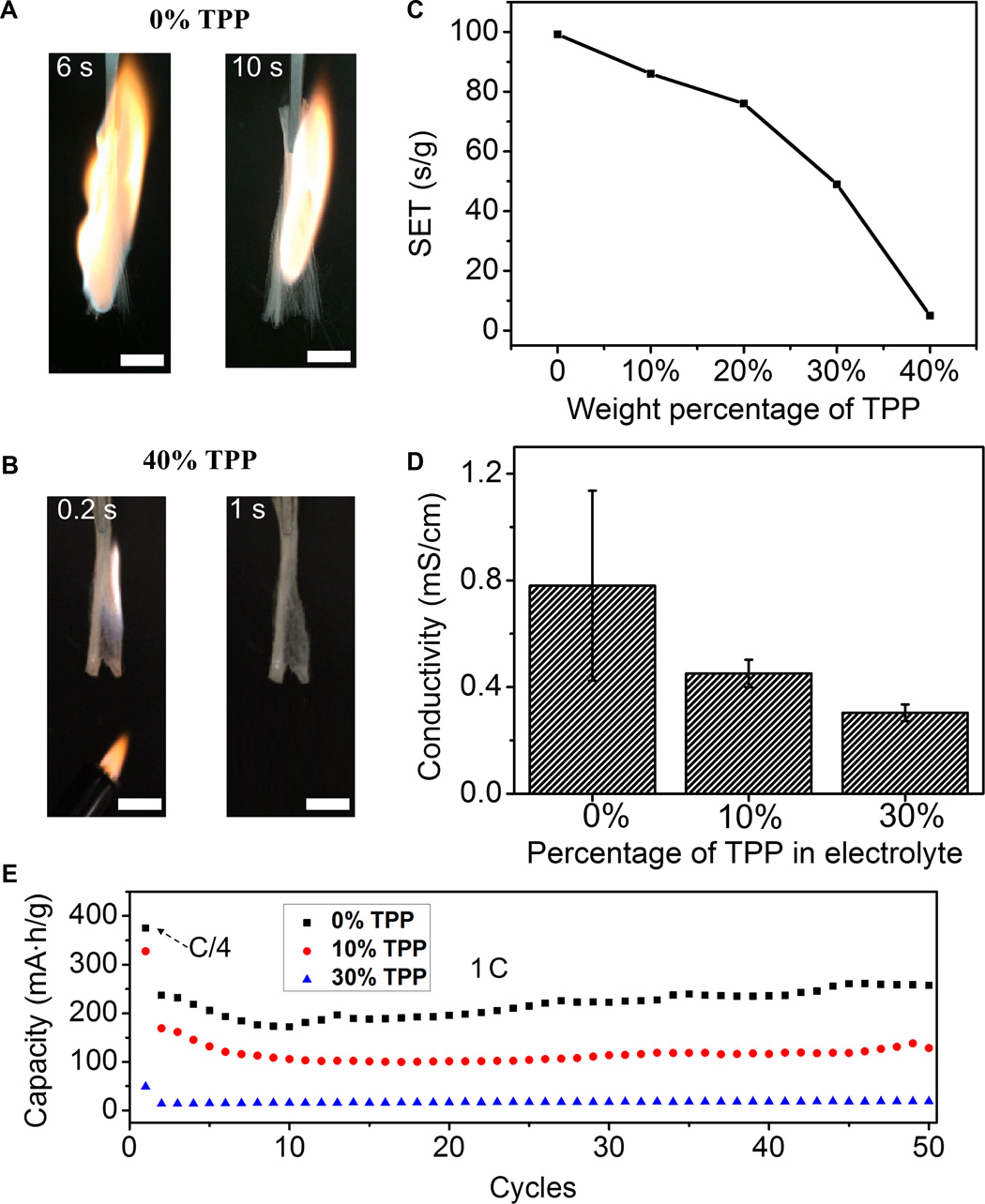
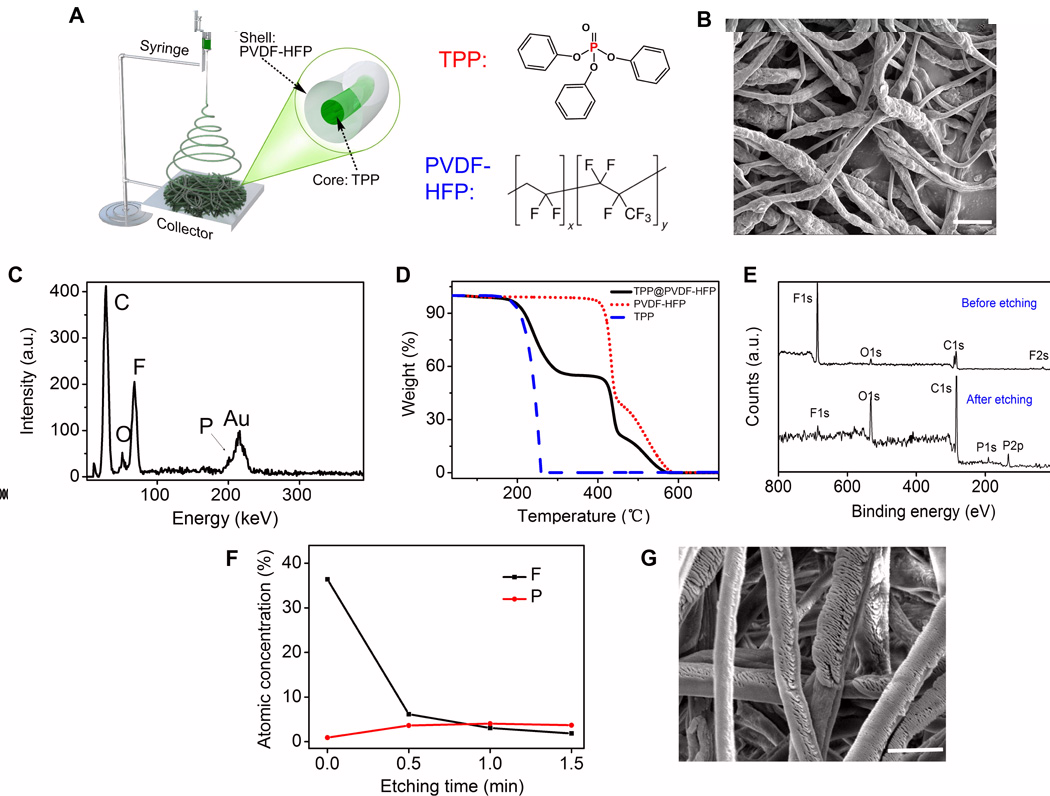
However, there seem to be an end in sight as scientists at the Stanford University have published in the Science Advances journal that they have developed a battery that cools itself when it gets overheated. The battery is a lithium-ion battery built with flame-retardant triphenyl phosphate (TPP) inside a shell within the electrolyte fluid. The shell melts when the temperature reaches 150C (302F), releasing the chemical compound. The accompanying test result shows battery fires were extinguished in just 0.4 seconds.
Lithium-ion battery is the most popular battery that powers most gadgets, including smartphones and it gets affected by heat which turns it to a potentially explosive material. Attempts have been made in the past to incorporate TPP inside batteries without the shell and that have hampered their performance, so basically what they brought into the mix is the shell which they develop for the TPP compound inside the battery.
It is hoped that this development would lead to a break-through in lithium-ion battery manufacture which would eventually bring to an end cases of battery fire or explosions.
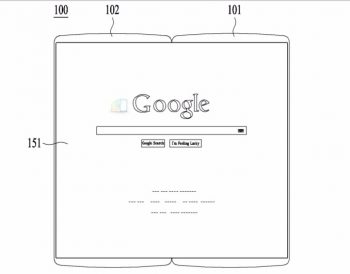
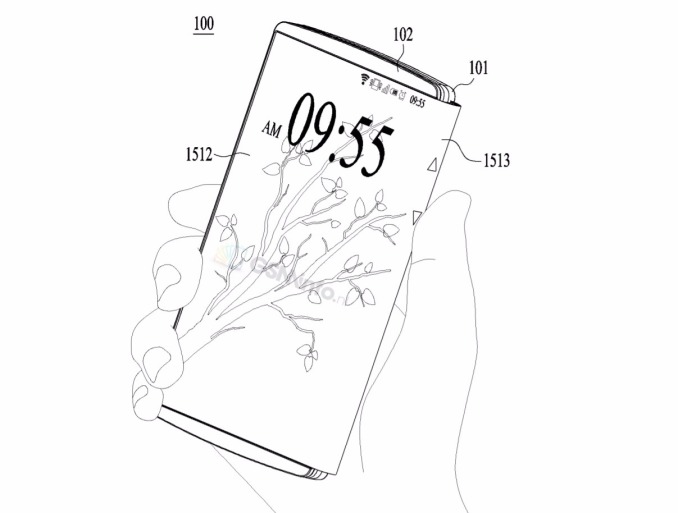
LG has received a patent for a foldable phone-tablet hybrid. It is likely to release in the second half of this year.
Samsung is reportedly working on a foldable device that can fold outwards and convert into a 7-inch tablet. LG has also received a patent for a “Mobile Phone” in the previous week for a new foldable design. This shows that even LG is keen on releasing a foldable phone.
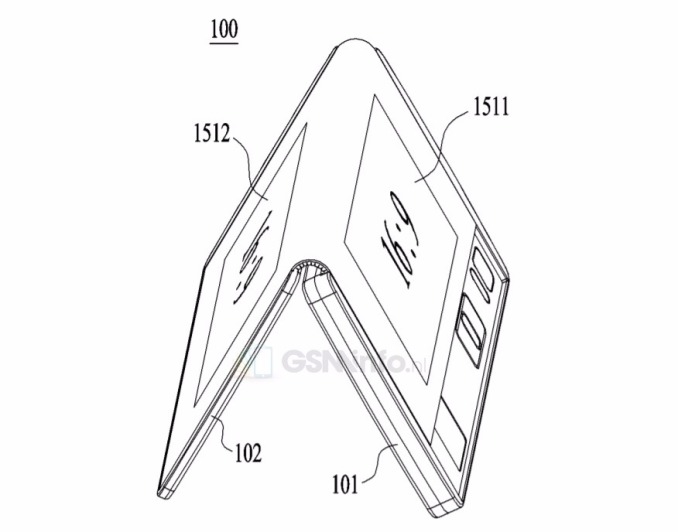
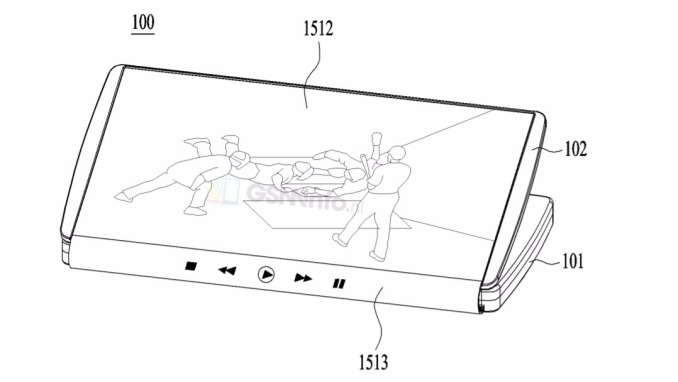
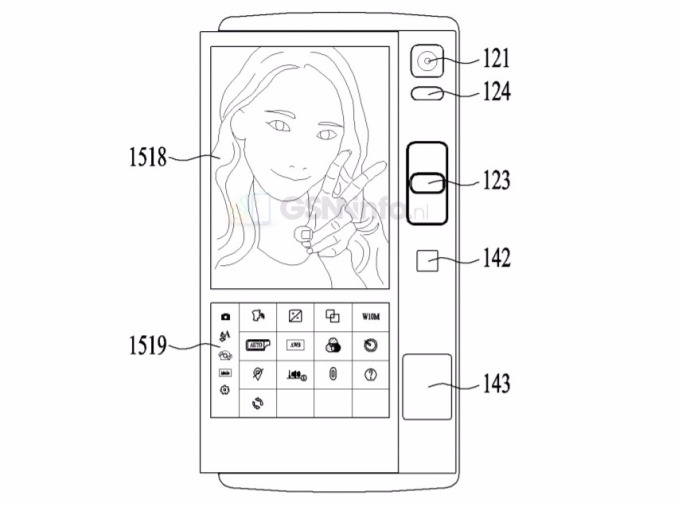
LG’s patent (US D776,074 S) at USPTO (United States Patent and Trademark Office) for a foldable device was filed on Jan. 7, 2015 and it was approved on Jan. 10, 2017. The patent details show that the device can be folded vertically. When unfolded, the device can be used a tablet. The device can be also used in a tent mode.
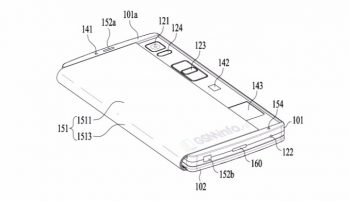
The device that uses this patent will have a touchscreen on the front and back. When unfolded, it will show a bar in the middle that will contain all the notifications. Alongside the additional display on its rear, it can have features like a camera along with LED, a fingerprint reader, and a rear-facing power button.
Recently, Microsoft was also granted for a foldable device. Speculations are rife that the much-awaited Surface Phone may arrive as a 2-in-1 foldable device that can function as a smartphone as well as a tablet. In the last week, Nokia’s patent for a foldable device was also approved which indicates even it is prepping up to enter foldable smartphone race.
Apple had also filed for a foldable iPhone in 2014. The flexible iPhone patent was approved in 2016. Samsung’ upcoming foldable devices are allegedly named as Galaxy X and Galaxy X1 Plus. Speculations are rife that Samsung may announce its foldable devices as early as in the second half of 2017. However, other speculations indicate that the device will be launched in first half of 2018.
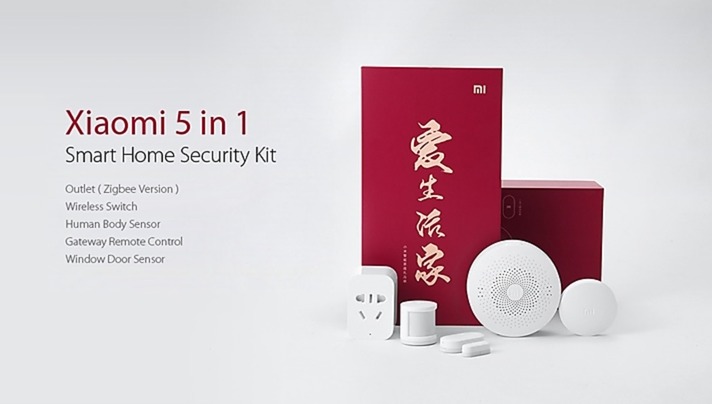
Xiaomi is known for making all sorts of accessories and the smart home kit automatic security system is one of the most interesting things in the company’s portfolio. You can now get it for just $52.99 from lightinthebox.com using the coupon code that you will find at the end of this article.
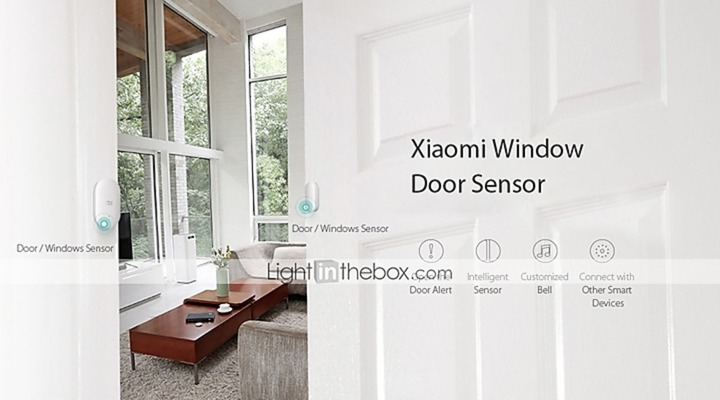
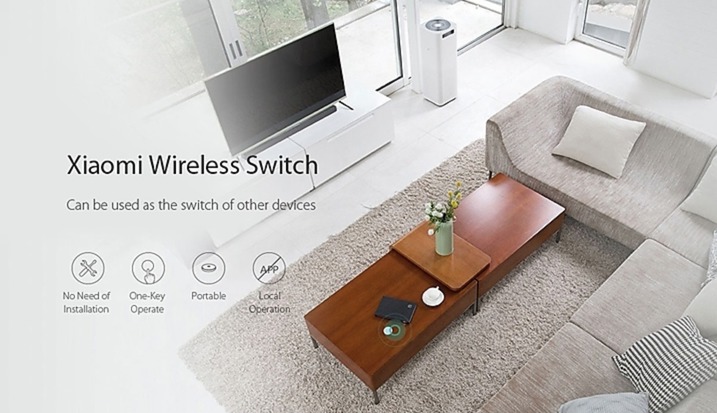
The security system includes 5 components: an outlet, a wireless switch, a human body sensor, a gateway remote control and a window door sensor.
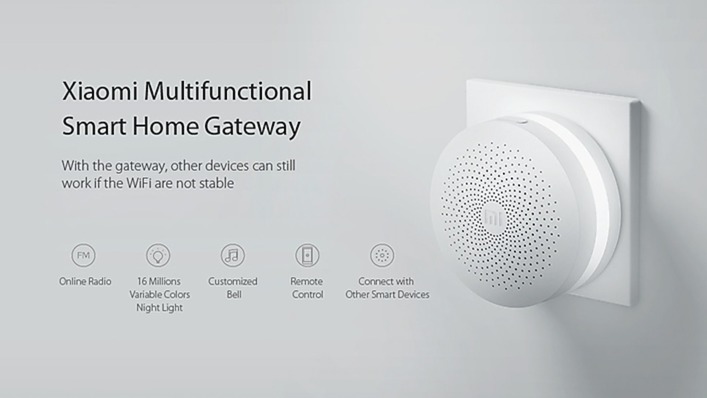
The multifunctional gateway can connect to all sorts of smart devices and it has some extra features like an FM radio, customizable bell, 16 million different colour options and so on.
One of the gadgets that can serve for both security and awareness is the door sensor. Basically, it sounds if someone opens up the door or the window.
We use cookies on our website to give you the most relevant experience by remembering your preferences and repeat visits. By clicking “Accept”, you consent to the use of ALL the cookies.
This website uses cookies to improve your experience while you navigate through the website. Out of these, the cookies that are categorized as necessary are stored on your browser as they are essential for the working of basic functionalities of the website. We also use third-party cookies that help us analyze and understand how you use this website. These cookies will be stored in your browser only with your consent. You also have the option to opt-out of these cookies. But opting out of some of these cookies may affect your browsing experience.
Necessary cookies are absolutely essential for the website to function properly. This category only includes cookies that ensures basic functionalities and security features of the website. These cookies do not store any personal information.
Any cookies that may not be particularly necessary for the website to function and is used specifically to collect user personal data via analytics, ads, other embedded contents are termed as non-necessary cookies. It is mandatory to procure user consent prior to running these cookies on your website.