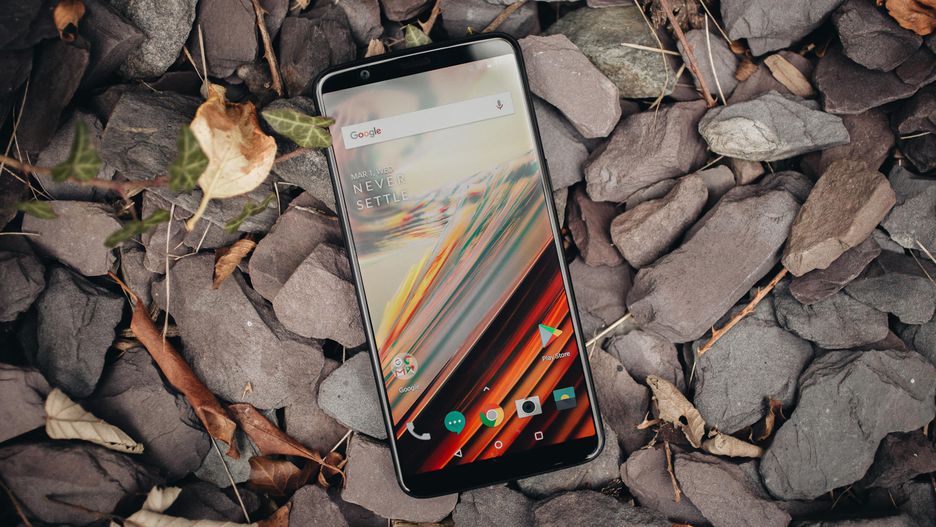
The OPPO R13 first leaked a few weeks ago, revealing a design similar to that of the iPhone X. Today, a fresh leak has surfaced online which sheds more light on a few specifications of the phone.
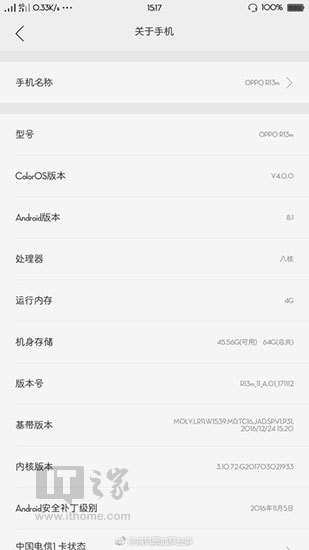
The new leak is a screenshot of the “About Phone” section under the settings menu. The image shows the OPPO R13 is running ColorOS 4.0 based on Android 8.1 Oreo. At the moment, the latest version of ColorOS is version 3.2 which was announced during the launch of the OPPO R11s and OPPO R11s Plus.
The image also reveals the phone has 4GB of RAM and 64GB of storage with about 45GB available. The processor isn’t listed but is said to be an octa-core chipset. We were also able to deduce that it is a MediaTek processor based on the baseband version which begins with “MOLY”.
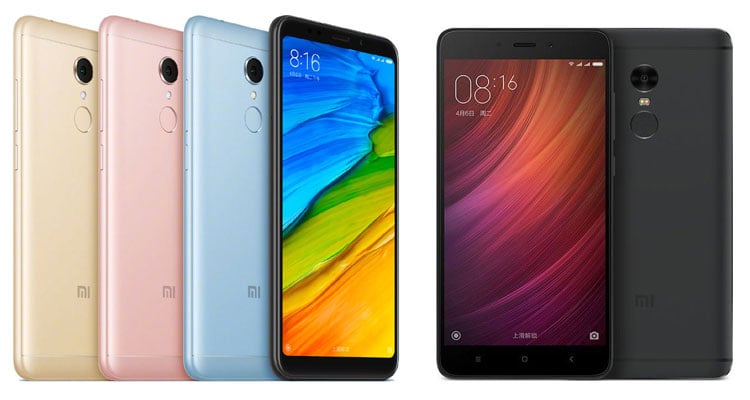
Xiaomi Redmi Note 4 has been the company’s best-seller smartphone in 2017: thanks to this device and its excellent quality-price ratio, Xiaomi has established various records of sales during this year. The new Xiaomi Redmi 5 Plus seems to be the device which will replace it starting from this month. But is it worth buying the new midrange or is it better to stick with the old one due to its price which is dropping a lot in this period? Let’s discover it with a specs comparison between these handsets.
The main difference between the Xiaomi Redmi 5 Plus and the Xiaomi Redmi Note 4 is in their displays. The Xiaomi Redmi 5 Plus has a great screen to body ratio and this is great considering it’s still a budget device. Even though it has a size of 5.99 inches, the phone stays compact, lightweight and ergonomic thanks to the narrow bezels. The display also has more pixels, so it’s not just an upgrade in the size. The hardware side is exactly the same, but while Redmi Note 4 has been launched with MIUI 8 out of the box, the Xiaomi Redmi 5 Plus is equipped with MIUI 9 and it should be optimized better.
The camera should also be slightly improved on the Redmi 5 Plus. In the battery department, we’ll have to wait for an official test as the larger screen size of the new Redmi model may affect the battery life, but it still shouldn’t be significant.
The listing price of Xiaomi Redmi 5 Plus starts from 151 dollars in China (about 128 euros, but it will be higher outside China), while you can actually buy Xiaomi Redmi Note 4 at about 151 dollars (128€) all around the world thanks to the online street prices. So, if you are out to purchase both of these devices right now, the Redmi Note 4 will be cheaper for you.
Which one should you buy? In my opinion, the Xiaomi Redmi 5 Plus actually has better value for money, so it is worth spending some extra dollar to buy the model as you will get the latest device that should be supported for a longer period. Plus, there’s the modern full screen design that you get, at a budget price tag.
However, the big drawback right now is getting hold of the Redmi 5 Plus at a decent price. Given that the phone was launched just recently, online stores are still to offer the phone for a good price tag.
In the previous week, a leaked image had revealed a mysterious Nokia phone with model number TA-1054. This smartphone has already received 3C certification and now it has been approved by TENAA in China. Speculations are rife that this smartphone will debuting as the second generation version of Nokia 6. The images of the alleged phone suggest that it will be coming with full screen design.
[envira-gallery id=”161682″]
HMD Global had unveiled the original Nokia 6 globally in January this year and the Finnish firm is said to be working on the launch of its successor phone. The original Nokia 6 features a front-mounted fingerprint reader and a regular 16:9 display. However, the alleged Nokia 6 (2018) does not feature a front-facing fingerprint reader as it seems to be fitted with an 18:9 display. There are no capacitive buttons on the chin of the phone which means that it will be coming with on-screen controls.
Like the Nokia 5, the alleged Nokia 6 (2018) also houses an elongated camera module on the back panel of TA-1054 which appears similar to the Nokia 5 and below the LED flash is the fingerprint sensor. It is speculated that the smartphone could be powered by Snapdragon 630 or 660 chipset. Previous leaks have revealed that it would be available with 4 GB of RAM and 32 GB of storage.
There is no confirmation on the launch date of the alleged Nokia 6 (2018). This year, the Finnish firm had used the Mobile World Congress (MWC) 2017 platform to announce the new Nokia phones. Hence, it is speculated that the Nokia 6 (2018) may get unveiled at MWC 2018 in February next year. Some other sources claim that the phone may get announced first in China along with 4G Nokia 3310 in January 2018.
Apple has officially confirmed that it has acquired music recognition application Shazam. While the company has not revealed the financial terms of the deal, it is reportedly worth around $400 million.
The acquisition of Shazam will now help the Cupertino-based technology giant to fulfil its ambitions in the digital music market. Shazam is one of earliest players in the world of mobile music, which enables users to identify songs from short audio clips.
Confirming this acquisition deal, an Apple spokesperson said:
We are thrilled that Shazam and its talented team will be joining Apple. Since the launch of the App Store, Shazam has consistently ranked as one of the most popular apps for iOS. Today, it’s used by hundreds of millions of people around the world, across multiple platforms. Apple Music and Shazam are a natural fit, sharing a passion for music discovery and delivering great music experiences to our users. We have exciting plans in store, and we look forward to combining with Shazam upon approval of today’s agreement.
In a statement, Shazam said:
We are excited to announce that Shazam has entered into an agreement to become part of Apple. Shazam is one of the highest rated apps in the world and loved by hundreds of millions of users and we can’t imagine a better home for Shazam to enable us to continue innovating and delivering magic for our users.
If the reported valuation of the deal turns out to be true, then the acquisition cost is far less than the $1 billion valuation of Shazam during its last funding round. While the company’s valuation was high during fund-raising, it has been facing issues with a viable business model as the company pulled in just around $54 million in revenue in 2016.
Apple could also be interested in Shazam’s augmented reality technology. The company has developed a visual recognition tech and an AR platform for brands that could help the company improve its ARKit platform.
Shazam’s audio-identification technology has already been integrated as Siri capability. Going forward, there is a possibility that the functionality will now be integrated more seamlessly into the Apple Music experience.
The feature could also be integrated into iTunes and Apple TV. The algorithms from Shazam could also end up proving useful in other areas of iOS or some other application from the company. However, it is not yet known whether the Shazam will continue working independently or its core functionality will be integrated into Apple products.
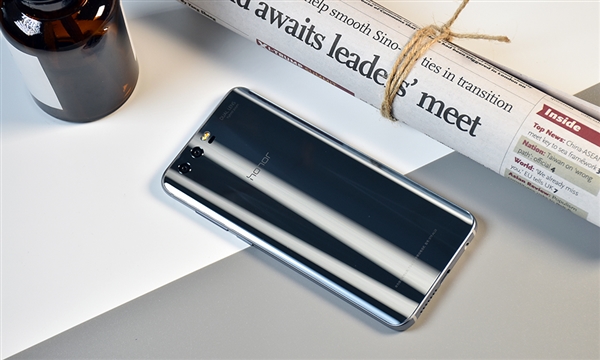
Huawei recently revealed that it would hold a launch event on December 13 in China but failed to disclose the model that would be launched on that day. That model is believed to be the Honor 9 Lite, a trimmed down version of the Honor 9. The Honor 9 Lite is expected to keep up with the full-screen design which is presently the trend in the industry. Huawei recently joined the full-screen party with the Mate 10 series and of late, the Honor V10, Nova 2S. The tech giant is expected to out the Honor 9 Lite and Enjoy 7s before the end of the year, both having the full-screen design.
Details of the Honor 9 Lite has been sketchy but some of the likely specs of the Honor smartphone have appeared online. The major highlight is that the smartphone will feature a 5.65-inch 18:9 full-screen display with a resolution of 2160 x 1080 pixels. The device is also said to come with the Honor 9’s design. On the driving seat will be a Hisilicon Kirin 659 chipset backed by 4GB of RAM on one version and 3GB of RAM on a second version. Both versions have 64GB and 32GB of storage respectively.
In addition, the Honor 9 Lite is expected to pack a dual camera setup at the rear consisting of a 13MP and 20MP sensors. The launch invitation suggests the device will have four camera so we may likely see a dual camera setup at the front as well. The device will also have a 3,000mAh battery capacity. As for the likely prices, the 3GB version is said to carry a 1,299 Yuan price tag while the 4GB RAM version will go for 1599 Yuan.
Meizu hasn’t been able to make its mark in the smartphone market this year. Though the company has not launched many devices this year, looking at the sale of its previously launched devices, there is nothing much to talk about.
However, it seems that all that is about to change. According to the reports, the company is gearing up to launch six new smartphones in the first half of 2018.
Also, there are reports which suggests that the China-based smartphone manufacturer is also ditching MediaTek and five of those upcoming six phones from the company will pack Qualcomm‘s Snapdragon processor while one will come with Samsung‘s Exynos processor.
Meizu will be completing 15 years of existence next year and to celebrate its anniversary, the company is said to release a special edition phone. The smartphone, which is named Meizu 15 Plus, is scheduled for Spring launch.
Recently, the phone’s image leaked online, giving us the first look at the upcoming smartphone, as well as revealing the device’s pricing information.
The leaked image reveals that the phone will feature a full-screen display with tri-bezel-less design, similar to that of Xiaomi Mi MIX 2. Apart from the display, the front panel also embeds a camera sensor on the lower bezel.
While most bezel-less designed smartphones features fingerprint scanner at the back of the device, mainly due to spacing issues, Meizu has decided to keep the fingerprint sensor in its usual position — on the front panel, at the centre of the bottom bezel.
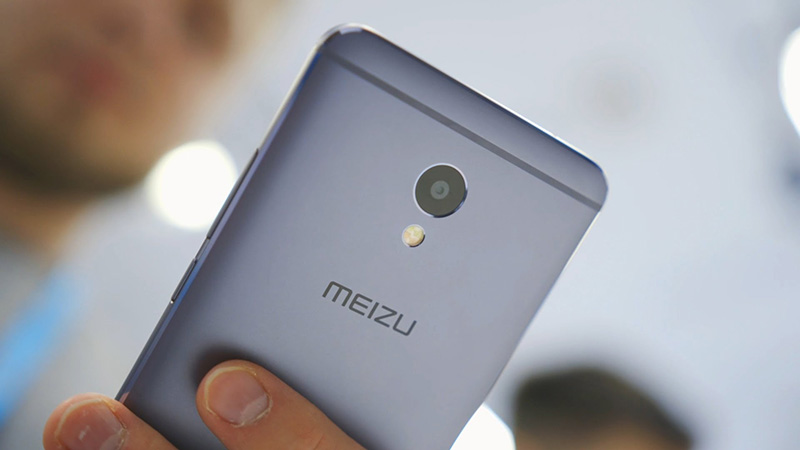
The Meizu 15 Plus will come with dual rear cameras positioned vertically in the middle. Below the camera sensors, there is a flash and laser focus module in a ring design, similar to that of Meizu PRO 6. There is also the Meizu branding below the camera setup and an antenna line at the bottom.
The smartphone is expected to come powered by Samsung’s Exynos 9810 processor. However, no more information related to the phone’s specifications is available at this moment.
The leaked image reveals two pricing for the phone, which indicates that there will be be variants of the device based on memory configuration. The top-end variant, which will be more expensive, will be priced at 3,499 Yuan (approximately $528) while the base models is expected to be available for 2,999 Yuan (approximately $453).
Xiaomi launched its latest smartphones — Redmi 5 and Redmi 5 Plus last week. Today, the phones will go on sale for the first time in China. The phones are the first devices from the China-based smartphone manufacturer to feature a full-screen display.
The first sale will begin today, i.e. December 12 at 10 AM in China. Both the devices will be available through retailers like Xiaomi Mall, Jingdong Mall, Suning Tesco and Lynx.
The smartphone features full metallic design body and will be available in four color options, including Gold, Rose Gold, Blue and Black.
Since the device comes with full-screen display, it lacks capacitive touch buttons. Instead, the company has opted to provide on-screen buttons on Redmi 5 and Redmi 5 Plus.
The Redmi 5 features a 5.7-inch HD+ display with screen resolution of 720 x 1440 pixels and 18:9 aspect ratio. Under the hood, the phone is powered by Qualcomm Snapdragon 450 octa-core processor, clocked at 1.8GHz and coupled with Adreno 506 graphics.
The device will be available in two variants based on memory configuration — 2GB RAM with 16GB internal storage and 3GB RAM with 32GB onboard storage.
The phone features a 12-megapixel rear camera sensor with f/2.2 aperture, 1.25 µm pixel size and soft-LED flash. It comes equipped with phase detection auto-focus (PDAF), dark light enhancement technology, facial recognition, HDR, Panorama and Burst mode.
On the front, there is a 5-megapixel selfie snapper that comes with features like Smart Beauty 5.0, facial recognition, and full HD video recording at 30 fps. The device runs on Android Nougat operating system based MIUI 9.
Connectivity options on the device include hybrid dual SIM slot with support for microSD card, microUSB, 4G LTE, Wi-Fi 802.11 b/g/n, Bluetooth 4.2, audio jack and GPS. The phone is fuelled by a 3,300mAh non-removable battery.
On the other hand, the Redmi 5 Plus flaunts a 5.99-inch Full HD+ display with screen resolution of 2160 x 1080 pixels. The device is powered by Qualcomm Snapdragon 625 processor — the same one that powers the Redmi Note 4 and Mi A1.
The phone will be available in two memory configurations — one with 3GB RAM and 32GB internal storage while the other model packs 4GB RAM and 64GB onboard storage. The device carries the usual set of connectivity options, similar to its smaller sibling.
The camera specifications of the Redmi 5 Plus model are same as the Redmi 5. This model also comes with MIUI 9 pre-installed, which is based on Android Nougat operating system. The phone is fuelled by a 4,000mAh battery, which according to Xiaomi, provides battery life of around two days on single charge.
Both smartphones features a fingerprint sensor at the back of the device for added security features. The fingerprint scanner is placed just below the camera module.
The Xiaomi Redmi 5 with 2GB RAM will be available for 799 Yuan (approximately $120) while the 3GB RAM will cost 899 Yuan (approximately $135). On the other hand, the pricing for 3GB RAM model of Redmi 5 Plus is 999 Yuan (approximately $151) while the 4GB RAM model is priced at 1,299 Yuan (approximately $196).
Honor View 10 by Huawei and Xiaomi Mi Mix 2 definitely are high-end phones, but they are a lot cheaper than the best flagships in the market like the iPhone X and the Samsung Galaxy Note 8. They are among the cheapest flagships in the market, so they are among the best choices i.e. if you are an advanced user but have a low budget. But obviously, seeing that they have affordable prices, they are not at the same level of some of the costlier flagships: there are some compromises in some areas. In this comparison, we will inform you about them to make you understand which one fits your needs.
3400 mAh, fast charging (Quick Charge 3.0) 9V / 2A
ADDITIONAL FEATURES
Hybrid Dual SIM
Dual SIM
The main advantage of these devices is surely the hardware side, as both of them have got two of the best SoCs in the market and 4/6GB of RAM. So, they are both excellent phones if you are searching for performance, and you won’t be disappointed in the power department. Honor View 10 also offers artificial intelligence to do large number of tasks in a smarter way, like adjusting photos depending on the light conditions.
The Mi Mix 2 looks a bit more futuristic because of the higher screen to body ratio. But overall, the displays are pretty similar with narrow bezels, pretty good color accuracy, and high detail. The Honor View 10 has a bigger battery and also a camera which we define as more innovative, even if it is not a top camera phone.
The XiaomiMi Mix 2 has a good camera and battery as well, but they are just average. Honor View 10 comes with Android Oreo installed out of the box, while for Xiaomi Mi Mix 2 you would probably have to wait about a year to get the latest Android version. Further, the Honor View 10 has a micro SD slot to expand memory, while the Xiaomi Mi Mix 2 does not.
But wait, there is the price which makes a big difference, and here, the Xiaomi Mi Mix 2 is better given that its more affordable. Online, it is actually possible to find the Xiaomi Mi Mix 2 at about 450 euros (528 dollars), while Honor View 10 has just been launched with a price tag of 500 euros (about 590 dollars).
If I had to pick one, I would actually choose Honor View 10 because of its better camera department, bigger battery, the micro SD slot and its newer Android version (even though Mi Mix 2 will probably receive more software support on the long-term, thanks to MIUI’s extended support).
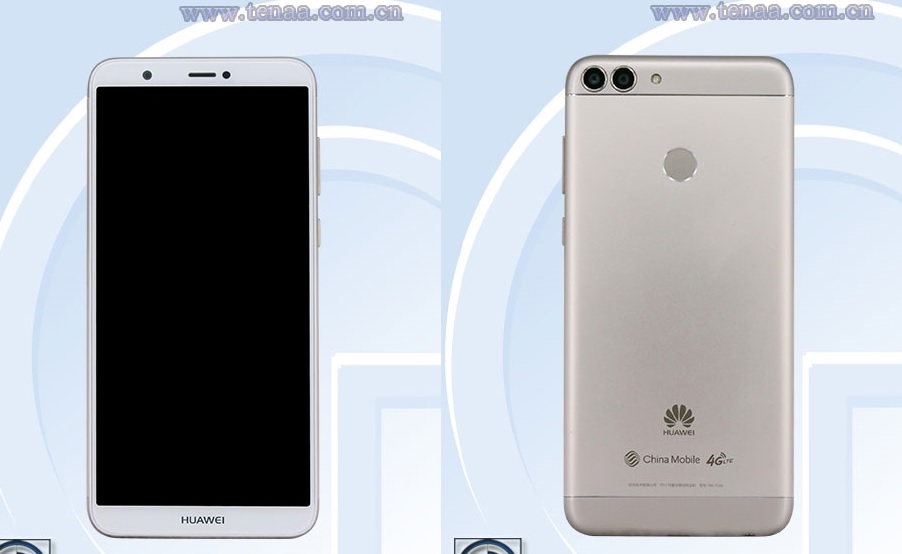
Last month, an unknown Huawei phone with model number FIG-AL00 was seen on TENAA. Although the specs were not listed, the images provided gave us a few details. Today the full specs and live images of the phone said to be the Huawei Enjoy 7S have been released along with other variants with model numbers FIG-TL00, FIG-TL10, and FIG-AL10.
The Enjoy Series are exclusive to the Chinese market but have also launched in other markets under different names. An example is the Enjoy 7 Plus which is known as the Holly 4 Plus in India and the Huawei Y7 Prime in other markets.
The Enjoy 7s unlike its siblings – the Enjoy 7 and Enjoy 7 Plus, will have a full-screen display. The display is 5.65-inches and will have a resolution of 2160 x 1080.
The chipset of choice is the octa-core Kirin 659 chipset which has appeared in a number of Huawei and Honor Mid-range phones. Paired with the chip is 3GB/4GB of RAM and 32GB/64GB of expandable storage.
The Enjoy 7s packs dual rear cameras in the 13MP + 2MP configuration and an 8MP sensor for selfies. The Enjoy series is known to have its fingerprint scanner on the rear and the 7s doesn’t break the tradition.
Huawei has included a 2900mAh battery to power the phone and will ship it with EMUI 8.0 based on Android Oreo.
Apart from the specs on TENAA, live images of the phone also showed up online. The bezels on the chin and forehead have been significantly reduced compared to that of its predecessors. The upper bezel is home to the front camera, earpiece and sensor while the lower bezel has the Huawei branding. The display is also covered with 2.5D glass.
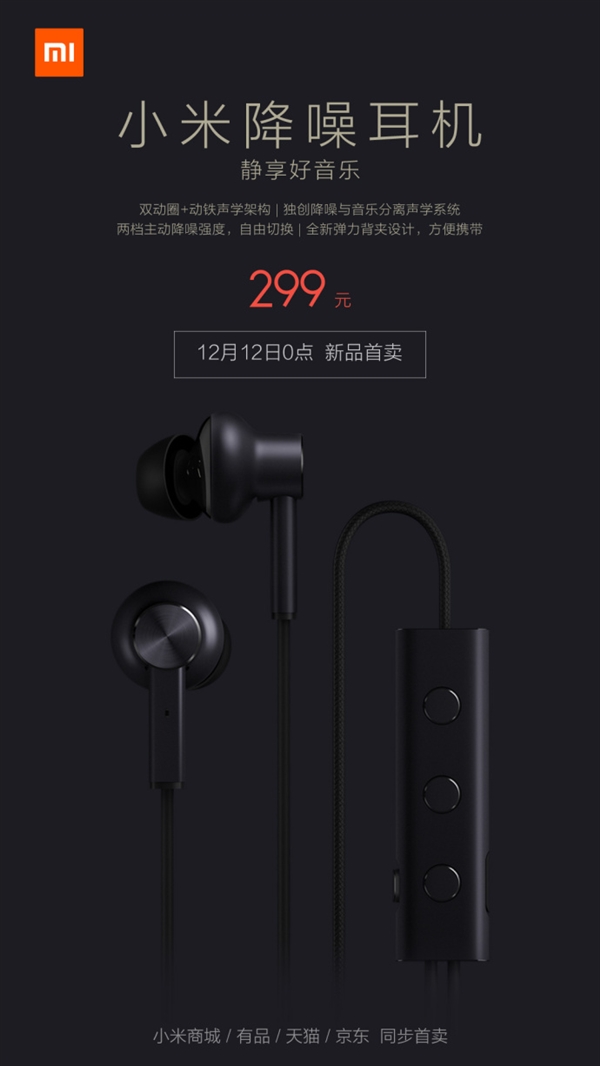
December 12 is yet another unique day in China as it is a date where the month and day are having similar digits (12.12) and it is usually heralded with sales promotion. Xiaomi has launched a new product ahead of the 12.12 sales and it is a noise-cancelling headphone. The new headphone comes in at a cheap price of 299 Yuan (~$45) and would go on its first sale at 0.00 hrs on December 12.
The new Xiaomi Noise-Cancelling headphone improves on the features of the first-gen Mi Noise Cancelling headphones. It utilizes a moving coil + acoustic architecture which results in a rich and delicate sound quality. The architecture is said to place the new Mi headphone ahead of other noise-cancelling headphones which usually experience lower sound quality when noise reduction is turned on.
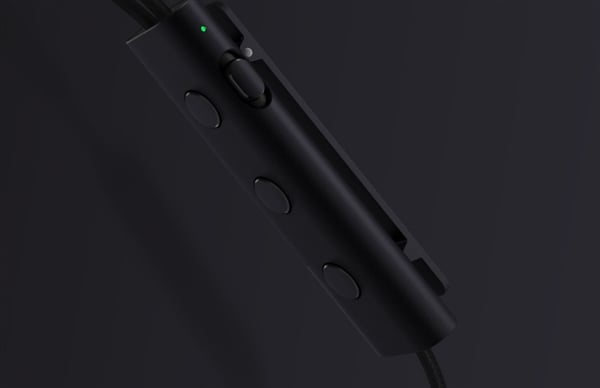
Further, the Xiaomi Noise-cancelling headphones have the Japanese Hi-Res Audio standard certification and can restore sound quality up to CD-level. Design wise, it features an ergonomic earplug design with a soft cone. It comes in solid black and has an elastic clip at the back which makes for easy usage. The noise reduction box, metal clip and headphones are all manufactured using the 6-series aluminium alloy. The control panel houses a volume control and pause button as well as a two-speed noise reduction switch with support for 50-1500Hz broadband active noise reduction and 20dB maximum noise suppression. With these parameters, the headphone is well suited for noisy environments such as aircrafts and subways. In addition, the Xiaomi headset comes with a built-n 55mAh battery which can be charged using a micro-USB port onboard. The battery can be charged to 100% in just two hours and can deliver up to 12 hours of continuous usage. Usually, Xiaomi doesn’t launch these products outside China formally but expect to find it on e-commerce platforms like GearBest and LightInTheBox soon.
Just because shopping festivals like Double 11, Black Friday, and Cyber Monday are over doesn’t mean deals on phones and other devices have ended. Most times, the deals run till the end of the year and even sometimes the beginning of the new year.
The reason for this can be attributed to one thing – clearing out stock for new products. Manufacturers will soon begin releasing successors to this year’s devices and retailers will want to clear out old devices to make way for the new ones.
Below is a list of the deals we have come across:
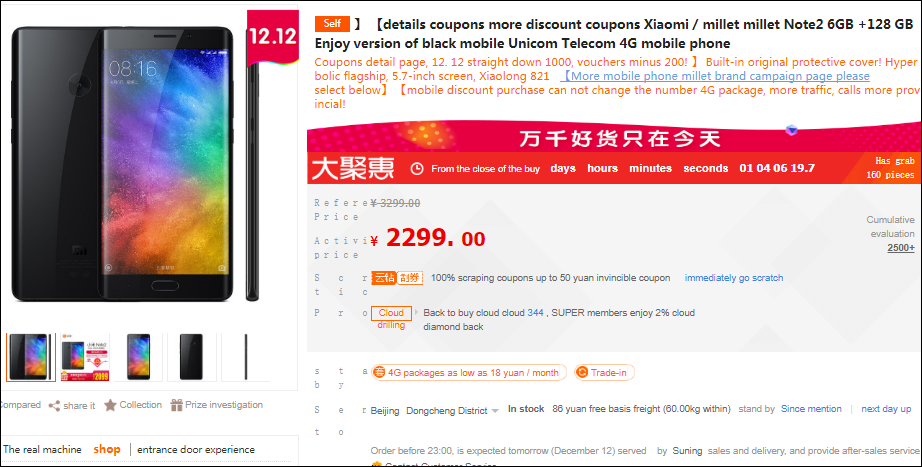
Mi Note 2: The Mi Note 2 might already be a year old, it still packs some super impressive specs. A dual-curved display, Snapdragon 821 processor, and either 4GB/6GB of RAM and 64GB/128GB of storage. Suning.com has slashed the price of the high end variant from ¥3299 (~$498) to ¥2299 (~$347). That is about $150 saved.
Mi Max 2: The Mi Max 2 got a price slash a few weeks ago. The 4GB + 64GB model now sells for ¥1599 (~$242) while the 128GB version sells for ¥1799 (~$272). With each purchase, Xiaomi will also add a free bathroom scale worth ¥99 (~$15). In India the phone also got a Rs.1000 (~$16) price slash. The 4GB + 32GB variant is now Rs. 13,999 (~$218) and the 4GB + 64GB model is ¥15,999 (~$249).
Mi Notebook Pro: Xiaomi today announced a price slash for its Mi Notebook Pro PC ahead of tomorrow’s Double 12 shopping festival. The Core i5 and Core i7 (16GB RAM) versions both get a ¥200 price cut and will now sell for ¥5399 (~$815) and ¥6799 (~$1027) respectively. The 8GB RAM Core i7 version gets ¥400 off and will sell for ¥5999 (~$906).
Meizu PRO7: Meizu has cut down the price of its two flagship phones, the PRO7 and PRO7 Plus. Originally available for ¥2880 (~$435) and ¥3580 (~$540) respectively, the PRO7 will now start at ¥1999 (~$302) and the PRO7 Plus will sell for ¥2699 (~$408) starting tomorrow.
Meizu M6 Note: Meizu’s mid-range king got a permanent price slash last week. The cut saw some variants reduce in price by ¥200 and others by ¥300. The new prices are now live on the official Meizu store and JD.com.
Honor Magic: Huawei’s Honor Magic received its first price cut since its release last year. The phone is now priced at ¥2699 (~$409), ¥1000 down from its original price. As at now, none of the retail stores have it at the new price, including Huawei’s official store – Vmall.com. So you might need to be a bit patient with this deal.
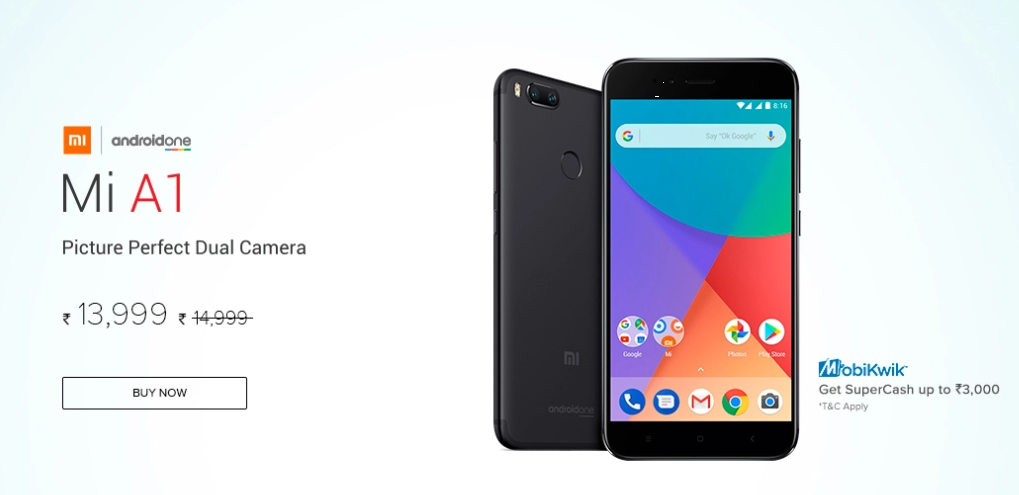
Xiaomi Mi A1 (India): The Mi A1 is the Android One variant of the Mi 5X. First released in India at a price of Rs. 14,999 (~$233), Xiaomi has announced a Rs. 1000 permanent price cut that brings it to Rs. 13999 (~$217).
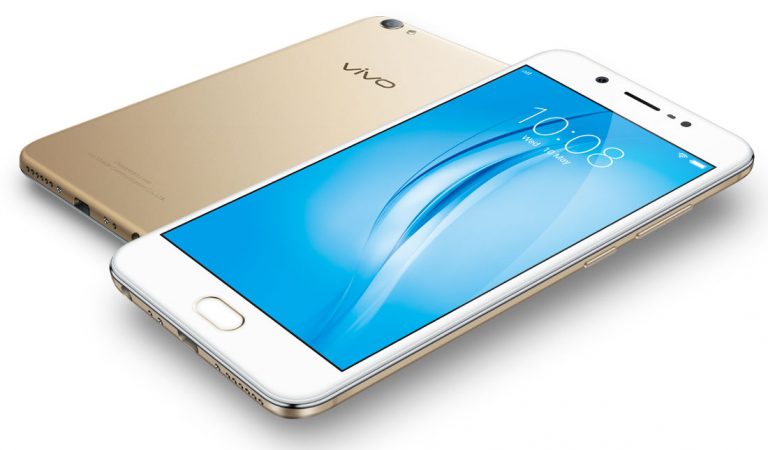
Vivo V5s (India): The Vivo V5s is a mixed package of an entry-level and a mid-range phone. Its key feature is its 20MP selfie camera. You also get 4GB of RAM and 64GB of storage but a 5.5” HD display and a MT6750 chipset. The price has been slashed by RS. 2000 bringing it to Rs.15990 (~$248). Flipkart still has it listed for Rs. 17,990 (~$279) but should adjust it soon.
ASUS Zenfone Live (India): Announced in February, the Zenfone Live is an entry-level phone whose main selling point is its BeautyLive application. It provides real-time beauty effect while streaming live to Facebook, Instagram, or YouTube. Initially priced at Rs.8999 (~$140), it is now available for Rs.7999 (~$124) on Amazon India and Flipkart (gold variant only).
Nokia 7 (White): Released back in October as a mid-range smartphone positioned between the Nokia 6 and Nokia 8. The white variant which just went on sale is priced at ¥1999 (~$302). As part of its Double 12 festival, JD.com will sell it for ¥1799 (~$272) tomorrow only. However, you will need to make an advanced deposit of ¥99 (~$15) to get the ¥200 discount.
HTC U Ultra: HTC launched the U Ultra as its first flagship of the year. Although the phone is powered by last year’s Snapdragon 821 processor, it still packs some very cool features in a beautiful body. Originally launched in China for ¥5088 (~$769), JD.com now has it for ¥2499 (~$378) which is a steal. You also get a 3.5mm to USB-C adapter, tempered glass, and a Di Tiger 10,000mAh power bank, all for free. At the moment, only the blue and black variants are available.
Moto Z, Z2 Play, Moto G5 Plus, Moto E4 Plus, and Moto X4: Motorola USA has cut the prices of a number of its smartphones. The price cut will run up until November 23 (Nov. 24 for the Moto X4 and Moto G5 Plus). The Moto Z2 Play which sold for $499.99 will now sell for $349.99. The Moto Z (first gen) priced at $500 is now $425. If you want the Moto X4, you get a $50 discount that brings the price to $349.99 from $399.99. The Moto G5 Plus 32GB and 64GB variants gets a $30 and $60 discount respectively off their current prices. Last is the Moto E4 Plus which gets $20 and $30 off the 16GB and 32GB variants respectively. The new price will be seen once you add the item to your cart. Visit the official Motorola US website to grab these deals.
Vivo V5s smartphone, which was launched in May earlier this year in India, has received a price cut of Rs. 1,000. Prior to this price-cut, the smartphone had received a price cut of Rs. 1,000 in July this year.
With this new price cut introduced on the device, the Vivo V5s will now be available for Rs. 15,990 in India. It appears that the China-based smartphone manufacturer is now looking to target the sub-15,000 market in India, which is currently being dominated by Xiaomi.
Xiaomi has also announced a price cut of Rs. 1,000 for its recently launched Mi A1 smartphone in the Indian market, bringing the effective price of the device down to Rs. 13,999.
The Vivo V5s features an aluminium body and comes with a 5.5-inch HD IPS display with screen resolution of 1280 x 720 pixels. On top of the display, there is a layer of Corning Gorilla Glass 3 for protection from minor scratches, along with a 2.5D curved glass.
Under the hood, the device is powered by MediaTek MT6750 octa-core processor, coupled with Mali-T860MP2 GPU. The smartphone includes 4GB RAM and 64GB of internal storage. There is a microSD card slot, allowing users to expand storage capacity up to 256GB. The phone also packs a custom AK4376 Hi-Fi audio chip, for enhanced audio performance.
As of the photography department, the device packs a 13-megapixel rear camera sensor with f/2.2 aperture, phase detection autofocus (PDAF) and LED flash. On the front, there is a 20-megapixel shooter, which is capable of shooting Full HD video at 30fps. The front camera packs a Sony IMX376 sensor and features f/2.0 aperture and 5P lens.
The phone comes pre-loaded with FunTouch OS 3.0, which is based on Android Marshmallow operating system. This is quite disappointing given that the Android 8.0 Oreo has already been launched. Connectivity options on the device include 4G, Wi-Fi, GPS, Bluetooth, and USB OTG. The device is powered by a 3,000mAh non-removable battery.
Xiaomi launched the Mi Note 2 last year at the same time the revolutionary Mi Mix was announced. The Mi Note 2 features a flexible curved OLED display and the display was predicted to be a potential trend for the future. Although that ended up not happening, no thanks to Mi Mix, the flagship model still commands some admiration as a result of the sleek design and awesome specs it packs. The Note has since gotten a replacement in the Mi Note 3 but its price and sales have continued to stay strong. However, Suning Tesco has provided an attractive discount for the Mi Note 2 which removes a chunk from its price.
The Standard Edition of the Mi Note 2 with 4GB RAM + 64GB ROM has for long remained at 2799 Yuan except for seasonal price cuts while the higher version with 6GB RAM + 128 GB ROM is priced at 3299 Yuan. All that has changed, perhaps temporarily, as JD is offering the Mi Note 2 (6GB + 128GB) version for 2299 Yuan (~$347) which is a 1,000 Yuan reduction from its original price.
No reason was given for the monstrous price cut, the biggest we are seeing for the Mi Note 2 but it seems to part of the 12.12 sales promo which commences tomorrow. The Xiaomi Mi Note 2 comes with a phablet-sized 5.7-inch dual curved display and a flagship Snapdragon 821 chipset. It is available in 4GB + 64GB and 6GB + 128GB versions. The device also packs a 4070mAh battery is more than you will find on similarly sized flagships and there is a 22.5MP rear shooter among other features.
In the last few weeks more proof of Meizu rebranding the Blue Charm division to mBlu has showed up online. There is the earphones with the mblu name, then the renaming of the Charm Blue website to mBlu.com, and also the switch to a new logo.
However, the first official confirmation comes from a recent domain registration at the Chinese Ministry of Industry and Information Technology.
The new domain – mBlu.com was registered at the ministry on November 28 alongside two others – flymestory.com and meizu.com.hk. All three domains were registered by Zhuhai Meizu Technology Co. which is the full name of the company.
Earlier this year, Meizu split the company into three divisions – Meizu, Blue Charm, and Flyme. The Blue Charm division will focus on its mid-range and entry level devices in addition to mobile accessories.
Sources say the Meizu M6 Note is the last mid-range phone to bear the Meizu name. Subsequent models will instead be launched under the mblu name.
The Blue Charm brand was formed three years ago on December 18, so there is a possibility that Meizu may have an official unveiling of the “new brand” next week. At the moment, the three registered domains are not active.
Xiaomi Mi A1, the Android One smartphone that was launched in India a few months ago for a price of Rs. 14,999, has now received a permanent price-cut of Rs. 1,000.
After this price cut, the smartphone is now retailing at a price of Rs. 13,999 in India through Flipkart as well as the company’s own online store. A few days ago, during the ‘Big Shopping Days’ sale of online retailer Flipkart, the Mi A1 was available at a price of Rs. 12,999 only.
The Mi A1 is a rebranded version of Mi 5X that was launched in China. The major difference between both devices is the Mi A1 is an Android One smartphone and thus comes without the company’s own MIUI.
The smartphone features a 5.5-inch Full HD display with a screen resolution of 1920 x 1080 pixels and a layer of Corning Gorilla Glass on top. Under the hood, the device is powered by a Qualcomm Snapdragon 625 processor, coupled with 4GB RAM and 64GB of internal storage version. It also comes with a microSD card slot, allowing users to further expand the storage capacity.
There is a dual camera setup at the back of the phone, featuring two camera sensors of 12-megapixel. One of the lenses is a telephoto lens while the other one is a wide-angle lens. It also comes with 2X optical zoom. On the front, the phone packs a 5-megapixel camera with a real-time beautification mode.
While the smartphone runs Android Nougat operating system out-of-the-box, it is slated to get the latest Android 8.0 Oreo update soon. In fact, the company has already started looking for beta testers for the Android Oreo update. Google has also promised updates for Android P version as well.
Connectivity options on the device include 4G VoLTE, dual-band Wi-Fi 802.11ac, GPS/ A-GPS, USB Type-C port, and 3.5mm headphone jack. It comes with a 10V smart power amplifier, DHS Audio Calibration Algorithm, and support for high impedance headphones. The phone is fueled by a 3,080 mAh battery.
Earlier this year, in July, Meizu had launched its flagship smartphones — Meizu Pro 7 and its bigger sibling, Pro 7 Plus. The smartphones, which were starting at a price of 2,880 Yuan and 3,580 Yuan, respectively, have now received a massive price cut of 600 Yuan in China.
Recently, the pricing of the devices was reduced to 2,499 Yuan and 3,299 Yuan. Now, after this latest price cut, the pricing for the Meizu Pro 7 series will start at just 1,999 Yuan. The new pricing will go live on 12th December. It seems that with this price cut, the company is looking to increase the competition in the premium smartphone sector.
To remind you of the specifications, the Meizu Pro 7 features a 5.2-inch Super AMOLED display and also packs a secondary Super AMOLED display. There are two models of the Pro 7 — one has 4GB of RAM and 64GB eMMC 5.1 storage and is powered by the Helio P25, while the other has 4GB RAM, 128GB of storage and packs Helio X30 SoC.
On the other hand, the Meizu Pro 7 Plus comes with 5.7-inch Super Super AMOLED display along with a secondary screen. This one is also available in two configurations — 6GB of RAM with either 64GB or 128GB of UFS 2.1 storage. Both versions are powered by the Helio X30 processor.
Both the smartphones come with dual camera configuration at the back and the company has adopted the monochrome + RGB setup for the camera sensors. There are two 12-megapixel Sony IMX386 sensors with f/2.0 aperture. On the front, there is a 16-megapixel front-facing camera for taking selfies.
The phones are running on Flyme OS 6, which is based on Android Nougat operating system. The Pro 7 is fueled by a 3,000mAh battery with mCharge 3.0 while the Pro7 Plus is powered by a 3,500mAh battery with mCharge 4.0. According to the company, mCharge 4.0 charges the phone at 5V 5A (25W), taking it from 0 percent to 67 percent in just 30 minutes.
OnePlus 5T, the first phone from OnePlus that features full screen design was launched recently. Even though the smartphone has just released, tech enthusiasts are already speculating on the specifications and features of OnePlus 6. A YouTube channel named as “Science and Technology” has added a concept video of the OnePlus 6. It also speculates on the specifications that will be arriving on the 2018 OnePlus flagship.
The video begins by showing off the design of the back panel of OnePlus 6. Apart from the fingerprint scanner, it features a vertically stacked dual rear cameras at the top left corner. Unlike the centered positioning of OnePlus logo seen on smartphones that the company has released so far, the OnePlus 6 concept model has the logo located a bit towards the lower part of the rear panel.
The front view of the concept model shows that the size of the bezels has been reduced to offer more screen space. The frame of the concept device is made up of aluminum. It features 6-inch Optic AMOLED display that supports QHD+ resolution of 1440 x 2880 pixels along with an aspect ratio of 18.5:9. The screen is placed under the layer of Gorilla Glass 5. It is preinstalled with Oxygen OS 5.0, a customized version of Android 8.0 Oreo.
The Snapdragon 845 chipset drives the 6 GB and 8 GB RAM variants of the OnePlus 6 concept model. It has 64 GB, 128 GB and 256 GB storage models. It features 16-megapixel + 12-megapixel dual camera system that is equipped with features like OIS, PDAF and dual-LED flash. The front panel of the OnePlus 6 concept model has f/1.6 aperture 16-megapixel selfie camera. Its other features include USB-C and 3.5mm audio jack. The 3,950mAh battery of the smartphone is coupled with Dash Charging feature.
The launch of the upcoming Galaxy A8 (2018) and Galaxy A8+ (2018) is fast approaching. Recent reports have revealed that these phones respectively bear model numbers of SM-A530 and SM-A730. The A8+ (2018) has been recently appeared in a hands-on video and now the user manuals of the Samsung Galaxy A8 (2018) and Galaxy A8+ (2018) have appeared on the official website.
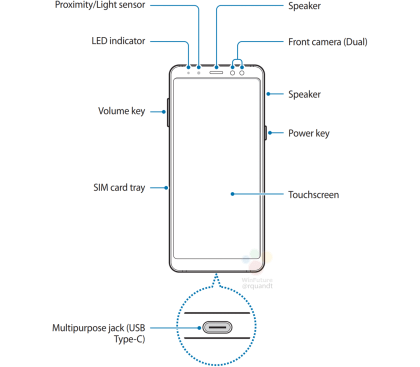
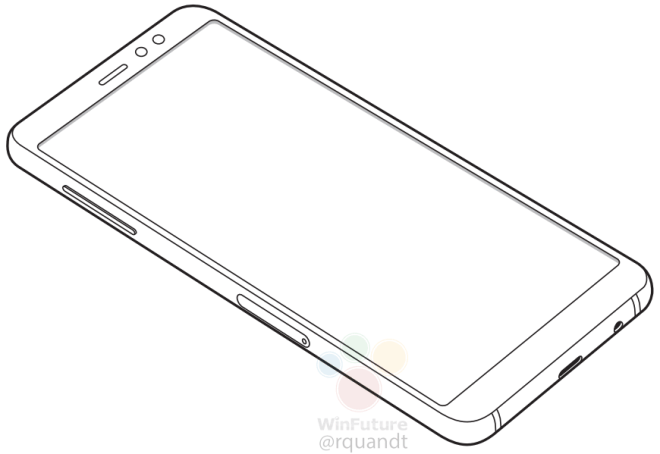
The frontside of the Galaxy A8 (2018) sports an Infinity Display like the Galaxy S8 duo. Recent rumors have revealed that it would be supporting an aspect ratio of 18.5:9. The corners of the phone are rounded. Unlike the slim bezels of the Galaxy S8 and S8+, the A8 duo has thicker upper and lower bezels.
The top bezel houses dual front-facing cameras, an earpiece, an LED indicator and proximity/light sensor. The right side of the phone features a speaker and a Power key. The single-SIM variant of the phone features a nano-SIM slot along with the volume rocker on its left side. The dual-SIM model has a secondary nano-SIM slot located along with the memory card slot on the topside. It has a USB-C port on its bottom bezel.
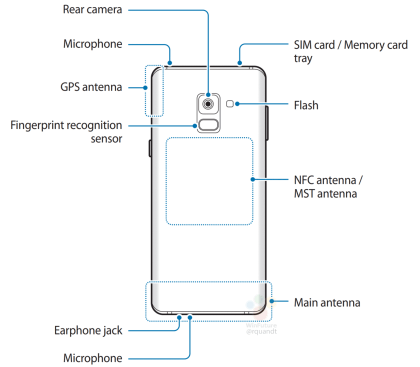
The image of the back panel shows the positioning of its main antenna as well as antennas for GPS and NFC/MST. A fingerprint scanner is placed below the rear camera that is accompanied by its LED flash. It has a 3.5mm audio jack on the bottom side of the phone. The Galaxy A8 (2018) and A8+ (2018) will be featuring 3D glass panel on their rear. These phones will be equipped with Bixby assistant.
According to Quandt, the Galaxy A8 duo would be featuring Exynos 7885 chipset that includes a 2.2 GHz octa-core processor. The Galaxy A8 (2018) and A8+ (2018) are expected to respectively house 4 GB and 6 GB of RAM. Both phones will be equipped with 16-megapixel rear camera and 16-megapixel + 8-megapixel dual front cameras.
The Galaxy A8 (2018) has a display of around 5.7 or 5.8 inches whereas the A8 (2018) would be packed with 6.01-inch display. The A8 may feature a battery of around 3,000mAh whereas the A8+ is likely to house a 3,500mAh battery. Both phones will come preinstalled with Android 7.1.1 Nougat. The tipster claims that the A8+ may not release in Europe.
OnePlus has come across several issues related to its smartphones, starting from privacy mayhem to security loophole. Now, another issue related to the company’s devices have surfaced online. OnePlus phones are not able to stream High Definition (HD) content on platforms such as Netflix and Amazon Prime Video.
The streaming of media content on such platforms is limited to only standard definition (SD) resolution. This is surprising given that the phone has an HD-capable display and packs powerful hardware, which is more than enough to allow HD streaming.
This was noted in a thread on the OnePlus forums, which points to lack of support for Widevine Level 1 DRM, which many streaming service providers require for HD streaming.
The recently launched OP 5T presently supports Widevine Level 3, which only covers standard definition streams. It has been confirmed that both the OnePlus 5T and its predecessor are currently unable to stream Netflix or Amazon Prime videos higher than the SD resolution. The previous generation smartphones from the company — OnePlus 3 and 3T are also affected.
However, a spokesperson from the company has confirmed that the feature was skipped from the start on these devices. While the company didn’t mention why they skipped the feature, OnePlus says that it will soon roll out a software update which will add this functionality on the OnePlus 5 and 5T. But, there is no time-frame provided by the company regarding the availability of the update to fix this issue. Interestingly, the company has not mentioned OP 3 and the 3T in the press release.
The recently launched OP 5T smartphone comes with a 6-inch Full HD+ display and is powered by a Qualcomm Snapdragon 835 processor. The configuration is more than enough to support HD streaming and the lack of support for HD streaming is an odd omission. It’s quite confusing as the Widevine website says that “Google does not assess license fees for the Widevine product”. So, the addition of this feature in the first place wouldn’t have cost anything. We just hope that OnePlus addresses this issue with the software update sooner.
The rumor mill has recently revealed that Samsung will be soon launching Galaxy A8 and Galaxy A8+ (2018) instead of Galaxy A5 (2018) and Galaxy A7 (2018). The new Galaxy A phones are expected to sport Infinity Display design like the Galaxy S8 and S8+ flagship phones. A hands-on video of the Galaxy A8+ (2018) that lasts for around 3 minutes has surfaced on YouTube. The video also showcases the entire specs of the smartphone.
The Galaxy A8+ (2018) has a 6-inch S-AMOLED display that carries support for resolution of 2280 x 1080 pixels. Like the Galaxy S8 duo, the screens of the A8+ and A8 will be supporting an aspect ratio of 18.5:9.
The Exynos 7885 chipset featuring an octa-core processor gunning at 2.2 GHz will be powering the Galaxy A8+ (2018) along with 6 GB of RAM. It has an internal storage of 64 GB. It will be arriving with a microSD card slot too. It will include a 3,500mAh battery that will carry support for fast charging through USB-C.
https://www.youtube.com/watch?=169&v=n-JITwMpJto
The front panel of the phone is expected to feature dual selfie snappers comprising of 16-megapixel and 8-megapixel lenses. Its rear-facing camera of 16-megapixel with f/1.7 aperture will be equipped with Optical Image Stabilization.
The handset will carry support for Samsung Pay through MST and NFC. A fingerprint scanner can be found placed under the rear camera. It will be coming with an IP68 certified dust and water-resistant chassis. It also supports Bixby assistant. The dimensions of the A8+ (2018) are 159.9 x 75.7 x 8.3mm. The front side of the phone will feature a 2.5D curved glass over the display, a 3D glass on the rear and a metallic frame.
No GALAXY X on CES2018. 95% BTW I think GALAXY A8/8+(2018) will launch soon,maybe CES2018.
The Galaxy A8 (2018) is expected to feature the same specs and design as the A8+ (2018). However, it may house a smaller screen of around 5.7 inches.
The Galaxy A8+ (2018) is expected to be available with a pricing of $600. The specs of the phone seem to be true, but we will have to wait for more information on the launch date of A8+ (2018). According to a Chinese leakster, the Galaxy A8 duo may get unveiled at the upcoming Consumer Electronics Show (CES) 2018 that will be held in Las Vegas in January.
We use cookies on our website to give you the most relevant experience by remembering your preferences and repeat visits. By clicking “Accept”, you consent to the use of ALL the cookies.
This website uses cookies to improve your experience while you navigate through the website. Out of these, the cookies that are categorized as necessary are stored on your browser as they are essential for the working of basic functionalities of the website. We also use third-party cookies that help us analyze and understand how you use this website. These cookies will be stored in your browser only with your consent. You also have the option to opt-out of these cookies. But opting out of some of these cookies may affect your browsing experience.
Necessary cookies are absolutely essential for the website to function properly. This category only includes cookies that ensures basic functionalities and security features of the website. These cookies do not store any personal information.
Any cookies that may not be particularly necessary for the website to function and is used specifically to collect user personal data via analytics, ads, other embedded contents are termed as non-necessary cookies. It is mandatory to procure user consent prior to running these cookies on your website.