OPPO officially unveiled the R11 FC Barcelona Edition just over a week ago with a disclosure that the special edition will go on sale from August 18.Indeed, the OPPO R11 FC Barcelona Edition has gone up for sale in China and is now available via Oppo’s Official Flagship store on JD.com and OPPO’s official online shop.
The R11 FC Barca Edition comes with a price pegged at 3,499 Yuan (~$522) and OPPO has indicated that the version has got limited stock available. The FC Barcelona version features a 18K gold-plated Barca logo at the back which is usually handcrafted. The device is coloured in a dominant Blue colour at the upper part and Red at the bottom aspect at the rear while the front part is just plain black. The two colours of Blue and Red are the official home colour of FC Barcelona and also the device uses an all-metal body. There is also a few texts at the red coloured part at the rear which indicates that OPPO is an official partner of the Catalan giant. The border between the red and blue coloured part adorns a strip of Gold coloured line which is 0.4mm wide and 0.1mm thick.OPPO R11 FC Barcelona Edition.
The OPPO R11 Barca edition still retains the Snapdragon 660 chipset which OPPO used on the normal version. The new version ships with 4GB RAM onboard and as a reminder, the rest of the specs include a 20MP + 16MP dual rear camera setup, a 20 MP selfie shooter, a 5.5-inch display, a 3,000mAh battery with VOOC fast charging technology and the Color OS 3.1 UI.
Samsung is currently holding the numero uno position in the global smartphone market and the South Korean company has also attained record breaking sales in the second quarter of 2017. The company has managed to achieve impressive sales record in this year mainly because of the Samsung Galaxy S8 and Galaxy S8+ flagship phones. A market research conducted by Strategy Analytics has revealed that the Galaxy S8 is the world’s bestselling Android phone in Q2 2017.
The market analysis by Strategy Analytics has revealed that 360.4 million units were shipped globally in the second quarter of this year. The research firm has revealed that Apple shipped 16.9 million units of iPhone 7 in the same quarter. This makes it the world’s most famous phone. The second spot belongs to the iPhone 7 Plus with shipments of 15.1 million units. This means that the top two smartphones in the world are the iPhone 7 and iPhone 7 Plus.
With shipments of 10.2 million units the Samsung Galaxy S8 is sitting on the third position. In other words, the Galaxy S8 is the world’s highest selling smartphone in Q2 2017. The Galaxy S8+ with shipments of 9 million units in Q2 makes it the fourth popular smartphone in the world.
Currently, the iPhone 7 has a market share of 4.7 percent and the iPhone 7 Plus has a market share of 4.2 percent. The Galaxy S8 and Galaxy S8+ have respective market share of 2.8 and 2.5 percent. The fifth smartphone to make it to the list of bestselling smartphones in Q2 2017 is Xiaomi Redmi 4A with shipments of 5.5 million units and a market share of 1.5 percent. An interesting thing to note here is that the Redmi 4A is the only low-priced smartphone among the top 5 bestselling smartphones of Q2 2017 that is mainly occupied by flagship phones.
Apple and Samsung are both expected to achieve very impressive sales with their upcoming flagship smartphones. The IPhone 8 that is expected to debut as Apple’s tenth anniversary iPhone and it is speculated to turn Apple into the world’s first trillion dollar company. Looking at the impressive sales of the Galaxy S8 duo, the upcoming Samsung Galaxy Note 8 is also pegged to receive tremendous market response from the audience.
The Sharp Aquos S2 flagship smartphone was announced earlier in this month and it was sold out completely during its first sale on Aug. 14. The Japanese company seems to be working on another smartphone that will feature a bezel-less display. Leaked renders showing the front and rear sides of the mysterious Sharp Aquos smartphone have surfaced on Weibo.
The bottom bezel of the mysterious Sharp smartphone has a Aquos branding and the same bezel features a selfie camera. The appearance of the device is not very different from the recently released Sharp Aquos S2. It boasts a high screen-to-body ratio as it features a full-screen display.
The right edge of the mysterious Aquos phone has a Power key and there seems to be a dedicated camera key. The left side of the mysterious has a SIM card tray and buttons for controlling volume. The backside of the smartphone has a single camera coupled with dual-LED flash. The smartphone seems to be having a metallic frame.
The fingerprint scanner of the phone is not visible which suggests that it may come with an iris scanner. There is a possibility that it may feature an in-screen fingerprint reader. The appearance of the smartphone suggests that it could be a concept render created by a fan.
Since the smartphone appears to be thick, it is likely to feature a huge battery. The text present on the display of the smartphone suggests that this mysterious Sharp Aquos phone may get unveiled on Sept. 30.
The Sharp Aquos S2 with 4 GB of RAM and 64 GB of storage is priced at 2,499 Yuan (~$374) on JD.com. There is an international edition of the same variant that is priced at 3,299 Yuan (~$493). The other model featuring 6 GB of RAM and 128 G of storage costs 3,799 Yuan (~$568).
It features a 5.5-inch IGZO display from Sharp that offers a resolution of 1,080 x 2,040 pixels and supports an aspect ratio of 17:9. It is available in Snapdragon 630 and 660 chipset options. It has a 12-megapixel + 8-megapixel dual rear camera system and a 3,020mAh battery.
Research firm Strategy Analytics has posted its latest research on the best-selling smartphones in the second quarter of this year and quite surprisingly, Apple’s 2016 flagship- iPhone 7 came out as the top selling model. Apple commanded a string showing which saw the iPhone 7 and 7 Plus occupying the top two positions with the Galaxy S8 and S8 Plus coming in at the third and fourth spots. The leading brand, Apple iPhone 7 sold 16.9 million units while the Plus-sized version had an estimated 15.1 million units in sales.Also, Samsung is reported to have sold 10.2 million units of the Galaxy S8 and 9 million units of the Galaxy S8+.
The list contains a stunning revelation, which is that the Xiaomi Redmi 4A is the fifth best-selling model for the second quarter of the year with over 5.5 million units sold worldwide between April and June alone. The Redmi 4A is a budget model with a premium design which has seen its price drop to the sub-$100 level such that it ships to all parts of the world. Much of that sales would likely have come from India where the model was launched earlier this year. Analysis by research firm IDC indicates that Xiaomi is the second largest smartphone manufacturer in India in the second quarter of 2017. only second to Samsung which occupies the top spot.
In all, smartphone shipments for the entire year stood at a towering 360 million units in Q2 2017 with the top 5 brands taking just a fraction of that amount. Other brands still commanded a total sale estimated to be 303.7 million units.
Last year, Xiaomi had collaborated with a French designer named Phillippe Starck for designing the Xiaomi Mi MIX concept phone. In June, Starck had visited Xiaomi to discuss on the next generation Mi MIX. This confirmed that Starck would be designing the Mi MIX 2. The French designer has shared a new video of a bezel-less smartphone on its Facebook profile. At the bottom-right corner of the video is the text that reads Mi MIX 2 conceptual product design. Hence, the video is probably showcasing the stunning design of the Mi MIX 2.
As it can be seen in the video, the bezel-less display appears to be curved on the left and right sides. Moreover, it has a super-slim bezel at the top and a slightly thicker bottom bezel. The rumor mill has revealed that the Xiaomi Mi MIX 2 would be delivering a screen-to-body ratio of 95 percent.
The bottom bezel of the Xiaomi Mi MIX 2 in the concept design continues to feature the selfie camera. Rumors have it that the piezoelectric ceramic speaker that vibrated the entire phone would be replaced with a new an earpiece that consumes less space and power and delivers better sound quality. It may feature an in-screen fingerprint scanner. The bottom side of the smartphone seems to feature a pair of external speakers with a USB-C port placed in between.
The Xiaomi Mi MIX is speculated to be powered by Snapdragon 835 chipset and 3,400mAh battery. It is expected to arrive with a 6-inch screen from Japan Display. It is speculated to feature a 12-megapixel Sony IMX386 rear camera whereas its front may feature an 8-megapixel selfie snapper. The rumor mill has also revealed that the Mi MIX 2 would be coming in two models. The base model is expected to come with a pricing of 3,999 (~$600) and it is speculated to feature 6 GB of RAM and 128 GB of internal storage. The higher configuration would be coming with a price tag of 4,999 Yuan (~$750) and it is expected to feature 8 GB of RAM and 256 GB of storage. It is tipped to arrive in a new color of Bright Silver.
Apple is known for holding an iPhone launch event in the month of September. The popularity of iPhones is such that even major smartphone manufacturers avoid launching their flagship phones in the same month. The Samsung Galaxy Note 8 and LG V30 will be debuting before the end of this month. In September, Apple is expected to unleash the highly anticipated Apple iPhone 8. Rumors have it that Xiaomi may unveil the Mi MIX 2 flagship on Sept. 12 to take on the upcoming IPhone 8.
On Aug. 16, Nokia announced the Nokia 8 Android flagship smartphone. Soon after its debut, representatives of HMD Global have hinted that the company may soon unleash a new smartphone that would be featuring a larger screen than Nokia 8. Since the Finnish brand is already selling the Nokia 6 that features a 5.5-inch screen, it is speculated that Nokia would be soon releasing a flagship phone with a larger display. Speculations are rife that it may debut as Nokia 9.
Few months ago, when the rumorsphere was speculating on the moniker of the Nokia flagship, various tech sites reported that it would be called Nokia 9. However, newer leaks had revealed that it would be debuting as Nokia 8. The Nokia 8 comes with a 5.3-inch QHD+ display which is smaller compared to other Snapdragon 835 chipset driven phablets that come with 5.5-inch or larger displays such as the Samsung Galaxy S8, Galaxy S8+, HTC U11, Motorola Moto Z2 Force, OnePlus 5 and the upcoming phablets like Galaxy Note 8, LG V30 and iPhone 8.
After the launch of Nokia 8, the Global Marketing Manager with HMD Global, Neil Broadley said that the company does intend to rival with market giants such as Samsung or Apple. Rather, the company would be concentrating on delivering what will be best for its users. The upcoming Nokia flagship that is pegged to come with a larger display will be made to meet the requirements of all users. However, there is no confirmation on whether this device will be releasing in this year or early 2018.
A report from July had stated that Nokia 8 would be the affordable flagship from the company to rival with the likes of OnePlus 5 and Xiaomi Mi 6. The report also stated that there would be another ultimate flagship from Nokia that may probably launch as Nokia 9. It may arrive with Snapdragon 835 chipset, 6 GB and 8 GB RAM options, 128 GB of storage, IP68 certified chassis and an iris scanner. There is no confirmation on whether it would be featuring an edge-to-edge display, but its design is expected to be quite different from that of Nokia 8.
The above shown alleged schematic of the Nokia 9 suggests that it would be arriving with a full-screen display and a rear-mounted fingerprint scanner. The Nokia 9 is likely to come with a 5.5-inch or a 5.7-inch QHD display. It may arrive with an expensive pricing of 749 euros in Europe and may sell for $699 in the U.S.
Leaked brochure of the Samsung Galaxy Note 8 for the Australian market has surfaced with less than one week remaining for its official launch. The specifications and features of the Galaxy Note 8 have been revealed several times by the rumor mill. The leaked brochure of the phablet contains information that reveals what features are arriving on it.
The frontside of the Galaxy Note 8 brochure has “do bigger things” text which is also present on its official launch invitation. It features a 6.3-inch QHD+ Super AMOLED Infinity Display, a InteExpert S-Pen, a dual rear camera system with 2x optical zoom, robust security through iris scanning, IP68 water and dust resistant chassis and rapid wireless charging.
The Smart Switch will allow users to easily switch from another phone to the all new Galaxy Note 8 conveniently. The pressure-sensitive S Pen stylus is expected to deliver an experience that is similar to writing with a pen. The messages written with S Pen can be shared as a GIF with others. And, messages can be made to remain on the screen while the entire display is turned off through the Screen-off memo. Rumors have revealed compared to S Pen that came with Note 7, there won’t be any new features on the Galaxy Note 8’s S Pen.
The dual rear cameras will allow users to shoot impressive close-up shots as it comes with 2x optical zoom along with optical image stabilization (OIS) for recording stable videos. The rumor mill had claimed the Note 8 would be coming with 3x optical zoom. The Dual Pixel Sensor and the f/1.7 aperture lenses ensure that the Galaxy Note 8 can be used in low-light conditions to snap amazing photos along with super-fast auto-focus.
The leaked brochure of the Galaxy Note 8 states that it would be arriving in Midnight Black and Maple Gold colors in Australia which indicates that the newly leaked Deep Sea Blue variant may not be made available for buying at the launch. There is no information available on the pricing of the Note 8’s brochure.
In a recent press conference, it was revealed that the first markets to get the Galaxy Note 8 in September are the U.S., the U.K., and South Korea. The second batch of markets which may also include Australia are expected to receive the upcoming Samsung phablet in October.
Apple is set to release its next iPhone in September though there is no exact date yet. There have been endless leaks of the iPhone 8 but we have also seen a few ones of the iPhone 7s and iPhone 7s Plus.
Today we have images of dummy models of the iPhone 8 and iPhone 7s Plus said to have been provided by a former Foxconn employee, and they have features we have seen in other leaks.
[envira-gallery id=”145507″]
Starting with the iPhone 8, this dummy model has a glossy back. The image is dark so we can’t make out the position of the camera. Though we are pretty sure there is no fingerprint scanner laying anywhere there.
The second image shows the front and we can see the top and bottom bezels are smaller. There is no TouchID as the screen extends way further down. Unlike the other leaks we have seen in recent weeks, this version isn’t as bezel-less as they are.
There is a chance this was an early design and not the final one with the bezel-less design we have been seeing around.
The iPhone 7s Plus on the other hand doesn’t look much different. The dual camera setup with the slight bump is there and there is a LED flash next to it.
Th front is slightly different though. The sensor is a bigger and sits father left and the selfie camera sits on the right of the earpiece. Apart from those changes, everything else is the same.
Coolpad has launched a new smartphone in China with a design which looks very much like the iPhone 7 Plus. This isn’t the first smartphone we are seeing which looks like the Apple flagship, the OnePlus 5 did, as well as the Oppo R11 but the difference is that this model comes with a single rear camera designed just like the dual cameras on the iPhone 7 Plus.
Specifications
As far as the specs go, the Coolpad Cool M7 sports a 5.5-inch Full HD display with a resolution of 1920 x 1080 pixels and a 2.5D curved glass on top. The phablet is powered by a Qualcomm Snapdragon 625 2.0GHz octa-core processor accompanied by a 4GB RAMwhile there is 64GB of storage onboard which unfortunately is not expandable. On the camera end, the mid-range model features a 12MP rear camera with autofocus and an f1.8 aperture and LED flash while at the front, there is a 13MP fixed focus front-facing camera with f/2.2 aperture and 79.8-degree wide angle lens. The sample photos for both the front and rear cameras don’t look bad for a mid-range phone. In addition, the smartphone offers 4G/LTE, Hybrid Dual SIM, Wifi 802.11 b/g/n, Bluetooth 4.1, GPS, and a USB Type C and gets its juice from a 3,200mAh battery. Despite the large battery, the device comes with a thickness of just 6.9 mm and weighs 152 grams. The Coolpad Cool M7 runs on Android 7.0 Nougat modified with Coolpad’s Journey UI which brings a unique Dock bar to the phone and other cool features.
Design
On the design aspect, the Cool M7 features an all-metal body with a round home button under the display which is just like that of Apple iPhones. The edges are well chamfered and would make for easy grip. At the rear, the camera and flash are located at the top left corner encased in a manner similar to the iPhone 7 Plus’ dual cameras. There is the cool logo at the rear as well and the absence of a fingerprint sensor at the rear means it is embedded with the home button up front.
Coolpad Cool M7 Pricing & Availability
The Cool M7 comes in Black and Blue colours and carries a price tag of 2,699 yuan. The device will go on sale on August 26 by 10 AM on JD.com but it is presently open for reservation for the first sale. No word yet on when the device will be available outside China.
Cool M7 Selfie Cam SampleCool M7 Rear Camera Sample
AnTuTu has released a list of its top 10 performing smartphones for the month of July 2017 and as should be expected Snapdragon 835 flagships dominated the list. The list is a compilation of the top 10 models with the highest AnTuTu benchmark score in July.
Out of the ten models which made it into the list, seven of them are flagships using the Snapdragon 835 chip while one comes with the Snapdragon 821 chip, thus ensuring the list is dominated by phones using Qualcomm processor. As should be expected Apple’s A10 chip still has its footprint on the list but the top five spot is occupied by Qualcomm models. The OnePlus 5 sits at the number one spot with a powerful run which saw it averaging 181614 points on AnTuTu while the Nubia Z17 came closely at second with 179081 points. The HTC U11 with a score of 175987 points occupy the third position with the Samsung Galaxy S8+ at the fourth position with a score of 171101 points. The Galaxy S8+ scored about 1000 points more than Xiaomi’s flagship Mi 6 which completes the top 5 positions. The list continues with the iPhone 7 Plus at the sixth spot while the Xperia XZ Premium at the seventh. The Galaxy S8 comes in at a distant seventh position and the last SD 835 model on the list. The last two spots are occupied by the OnePlus 3T with a Snapdragon 821 processor and finally, the iPhone 7 156702.
AnTuTu also listed the top 10 highest performing iOS models and as would be expected, the iPad Pro (10.5) which launched earlier this year with an improved A10X Fusion chipset came top. The iPad Pro (10.5) is followed by the iPhone 7 Plus but with a difference of 56647 AnTuTu points between the two. Th iPad Pro (9.7-inch) with a slightly underclocked A10X chip sits at the third place with the iPhone 7 at the fourth and iPhone 6 Plus at the fifth position. The iPad (5th gen), iPhone 6s, iPhone SE, iPad Air 2 and iPhone 6 Plus completes the top 10 in that order.
Already, we have seen a couple of Snapdragon 835 models launch this August like the Nokia 8, so we expect the top 10 standing for all models to change slightly this month. However, a major shake up is imminent on both lists under review in September or thereabout when the iPhone 8, Galaxy Note 8, Mi Mix 2, Huawei Mate 10 and other flagships, some with new chips are launched.
After months of waiting, the Essential Phone is now available for purchase. This is the first smartphone from Essential, a company founded by Android Co-founder Andy Rubin.
Beginning today, you can order the Essential Phone from the official website, Sprint, and Best Buy (still listed as coming soon). It will set you back $699 for the unlocked version on the official website. For $50 more you can add the $360 camera to your purchase. That offer is for a limited time before it goes back to $199.
In an official blog post, it was revealed that the Essential Phone will receive guaranteed updates for two years. If our math is correct and we are interpreting this right, that means the phone will receive Android updates till 2019 (Android O and Android P guaranteed but not sure about Android Q). It will also get monthly security updates for 3 years (up until 2020).
Don’t be surprised, Essential is a different company and Andy Rubin believes changing your phone each year isn’t right. Not only because its expensive but because of the planet. (I like this company already).
The Essential Phone is a unique phone as it is made for you that is why you won’t find any branding on the device. There is also a limited amount of pre-loaded apps.
The Essential Phone is a premium flagship with a glass and titanium build. It has a 5.7-inch bezel-less display with a 2560 x 1312 resolution. The latest Qualcomm Snapdragon 835 powers it and it is paired with 4GB of RAM. Built-in storage is 128GB with no option for expansion.
The phone packs dual 13MP cameras on the rear in a monochrome + RGB format, and there is an 8MP camera up front. A fingerprint scanner is on the back and underneath the glass is a 3040mAh battery.
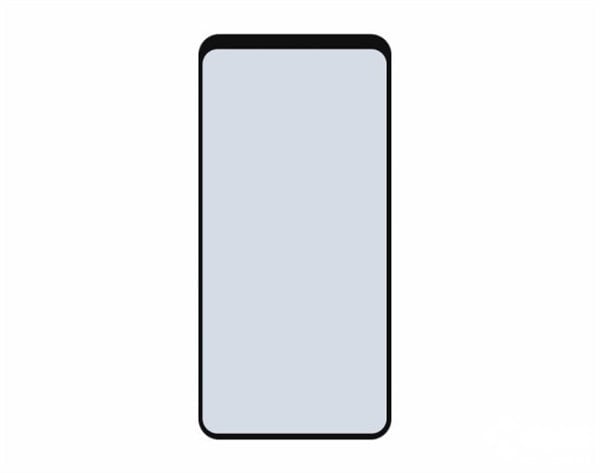
A new photo purported to be that of the Mi Mix 2 has leaked but it really doesn’t look spectacular. The Mi Mix 2 is expected to adopt a full-screen display said to have a 95% screen-to-body ratio but surprisingly, the device seems to have an entire screen display with absolutely no bezels at all four edges.
If this is actually the Mix 2, it means the home button and even the fingerprint sensor will likely be under the display which rhymes with earlier rumours that the Mi Mix 2 will use Qualcomm’s latest in-display fingerprint technology. There is also another photo is more or less a render of the Mi Mix 2, still showing a high screen ratio but this time around, it features a cut out at the top left corner which will likely be where the selfie camera and audio receiver will be located. This design doesn’t look very spectacular and besides the Mix 2 is said to come with a new AAC actuator sound technology located under the screen. So, we still won’t accept the second render as that of the Mix 2.
The Mi Mix is expected to feature a6-inch JDI display with a Snapdragon 835 processor onboard. The device is said to feature a 12MP Sony IMX386 sensor at the rear which should be more powerful than the not-so-inspiring 16MP OV16880 sensor on the Mi Mix. The Mix 2 will, however, feature a 5MP OV5675 sensor for selfies and a 3,400mAh battery. The flagship is expected to be launched on September 12 but no word from Xiaomi on that just yet.
It has been a long wait and ASUS has finally taken the wraps of its Zenfone 4 series. If you know ASUS, you should know that they love releasing multiple variants of their phones. This year is no different as there are 6 different variants of the Zenfone 4.
ASUS not only released new phones, it also announced ZenUI 4.0, the latest iteration of its own custom version of Android.
ASUS Zenfone 4 Pro
The Zenfone 4 Pro is the leader of the pack. It is ASUS’ flagship of the year and we are happy it doesn’t disappoint.
The phone like most flagships has a metal and glass design. There is 2.5D glass on the front and back and a metal frame in-between. ASUS is still in the bezel business so expect it to be bigger than the LG G6 and Samsung Galaxy S8.
The Zenfone 4 Pro packs a 5.5-inch Full HD AMOLED with ASUS’ Tru2Life technology. It is powered by the Snapdragon 835 and packs 6GB of LPDDR4X RAM. Built-in storage is 64GB with the option for expansion via a microSD card slot (2TB max).
ASUS will probably get the award for the flagship with the largest battery as the Zenfone 4 Pro has a 3600mAh battery. It is also just 7.6mm thick. There is NFC and a fingerprint scanner buried under the rectangular home button. You also get an audio jack positioned at the bottom of the phone, a USB type-C port , dual speakers and a FM Radio.
The Zenfone 4 Pro has Bluetooth 5.0,WiFi a/b/g/n/ac and GPS. There will be a Taiwanese/global variant, a North American/UK variant and a Japanese/Indian variant with varying band support.
It will run Android 7.1.1 Nougat out of the box.
Zenfone 4 Pro Cameras
The theme for ASUS this year is photography and it resonates across all its Zenfone 4 lineup.
The Zenfone 4 Pro features dual rear cameras. The sensors are one 12MP Sony IMX362 with a f/1.7 aperture, a 1.4um pixel size and 8x zoom in low light. It is paired with a 16MP Sony IMX351 with 2X optical zoom effect (25mm and 50mm focal lengths). Both
The large aperture of the main camera isn’t the only cool thing about it. ASUS says it has a triple focus system. In addition to the original contrast focus, there is laser focus and a dual-pixel phase detection autofocus that works in conjunction with the four-axis OIS and three-axis EIS and an RGB light sensor for better images. The front camera is an 8MP sensor.
ASUS camera software, PixelMaster has been bumped to 4.0 and brings features like time lapse with power saving, slow motion, and ultra-high resolution images up to 48MP.
Zenfone 4
The Zenfone 4 (ZE554KL) is the mid-range phone in the line-up. It comes in two versions. One has 4GB of RAM, 64GB of storage and is powered by the Snapdragon 630 while the other has 6GB of RAM and the Snapdragon 660 mobile platform.
Both versions have a 5.5-inch FHD Super IPS display with 600 nits of brightness. It has a dual-SIM hybrid slot with support for up to 256GB microSD cards. There is NFC, a front mounted fingerprint scanner and a 3300mAh battery.
The Zenfone 4 also uses a metal and glass design but the rear 2.5D glass has the concentric circle design ASUS is known for. It will be available in black, moonlight, and green. Do note that the green variant doesn’t have the concentric circle design.
Zenfone 4 Camera
The Zenfone 4 has dual rear cameras just like the Pro. It even has the same Sony IMX362 sensor but with a f/1.8 aperture and a 1.4μm pixel size. The second camera is an OmniVision 8856 8MP wide-angle camera with a 12mm focal length and a 120° viewing angle. The secondary camera has a f/2.2 aperture and a 1.12μm pixel size.
There is OIS, EIS and a built-in RGB sensor inside the main camera. The front camera is an 8MP sensor with an 84° viewing angle and a f/2.0 aperture.
Zenfone 4 Selfie and Zenfone 4 Selfie Pro
ASUS launched the first Zenfone Selfie in 2015 but didn’t follow it up with a successor last year. This year it is releasing two variants
The Zenfone 4 Selfie Pro (ZD552KL) has a 5.5-inch FHD AMOLED display with 500 nits of brightness. It is powered by the Snapdragon 652 paired with 4GB of RAM and 64GB ROM. It has a 3000mAh battery, support for dual SIM and a front-mounted fingerprint scanner.
Unlike the Zenfone 4 Pro and Zenfone 4 which have dual rear cameras, the Seflie has a single rear camera but dual cameras up front.
The Zenfone 4 Selfie Pro has a 12MP Sony IMX362 with a f/1.8 aperture and a 5MP OmniVision 5670 sensor with a 120° viewing angle in front. There is also a front self-timer flash and support for 4K video recording.
The rear camera is a 16MP Sony IMX351 with a f/2.2 aperture, PDAF and EIS for video recording.
The Zenfone 4 Selfie has the same screen size but with a HD resolution. The processor of choice is the Snapdragon 430 but with 4GB RAM and 64GB of storage. The front cameras are a 20MP OmniVision 20880 paired with an 8MP Omnivison 8856. On the rear sits a 16MP OV16880 sensor. Another difference it has from the Pro version is a dedicated microSD card slot.
Zenfone 4 Max Pro
ASUS already released a Zenfone 4 Max about a month ago but Taiwan will be getting a slightly different version and with the Pro suffix.
The display is still 5.5-inches with a HD resolution but it will be powered by the Snapdragon 425 paired with 3GB of RAM and 32GB of storage.
Unlike the Zenfone Max which has dual 13MP cameras, the Max Pro will have a 16MP camera paired with a 5MP wide-angle sensor. The front camera is a 16MP sensor instead of 8MP on the Max. Under the hood is a 5000mAh battery.
ZenUI 4.0
ZenUi brings a number of upgrades. There is the wallpaper carousel that changes the wallpaper based on the time of the day. There is also an AI system that categorizes your gallery based on the faces in the pictures.
ZenUI 4.0 also comes with a built-in security system that sends your location to friends and family when you are in danger. ASUS has also included support for dual apps in ZenUI 4.0.now you can run dual Facebook, Instagram,and messenger accounts.
Another new feature is called Page Marker. This works like Pocket, letting you save pages offline for future reading. You can also use it to mark where you stopped reading an article so you can continue reading from there on your other devices.
Pricing and Availabity
The Zenfone 4 Pro will sell for $599 and will be available in Black and Silver.
The Zenfone 4 will start at $399. There is no info on the price of the other variant.
The Zenfone 4 Selfie Pro will be priced at $379 and the Zenfone 4 Selfie will retail for $279.
Pricing detail for the Zenfone 4 Max Pro is unavailable.
It has been a while we heard from Li Nan, the once very vocal VP of Meizu who has reportedly recently mounted the saddle of the newly created Charm Blue division. What best way to hear from Li Nan once again than sharing some details of the upcoming Meizu M6 Note. Li Nan has shared the M6 Note’s first camera sample and yes, the device is coming with a dual camera setup.
Don’t get confused by the “Shot On Note6” watermark on the sample photo. The Meizu M6 Note is also known as the Charm Blue Note 6 but what we can grab from the watermark is that the M6 Note will indeed feature a dual camera setup at the rear. Even though we still don’t know the configuration of the cameras, the sample photo points at a powerful setup capable of capturing crisp clear shots. Nothing to suggest it is going to be an RGB + monochrome combination but a Wide angle + telephoto setup looks likely. The camera sample also points at a fast focusing shutter, perhaps with PDAF.
As a reminder, the Meizu M6 Note will come with a 5.5-inch IPS LCD Full HD display and will be powered by MediaTek’s latest mid-range Helio P25 (MT6757T) chip with the Mali-T880 GPU firing up the graphics. The processor will be backed by 3GB of RAM on some models while others will have 4GB of RAM coupled with either be a 32GB and 64GB storage variant respectively.
The LG V30 is debuting at the end of this month. However, the South Korean company has revealed plenty of information on its upcoming flagship phablet before its official launch. Earlier today, Evan Blass who is known for his consistent record on leaking information on upcoming smartphones, has shared a new render of the LG V30.
The image contains a silver edition of the LG V30 showing of the glory of its FullVision display. As it can be seen in the image, the 6-inch OLED display has minimal bezels on its sides and its upper and lower bezels are quite thin compared to other flagship phones.
It is expected to carry support for 1,440 x 2,880 pixels and an aspect ratio of 18:9. The front side appears to be a bit curved. It may not be coming with a curved display, but the front glass that is placed over it appears to be curved. Unlike predecessor phones like LG V10 and LG V20, there is no secondary ticker screen on the LG V30. The feature has been removed. A Floating Bar and Always On Display features will serve its purpose on the LG V30. Also, there are no physical or capacitive buttons on the frontside of the LG phablet.
The rear side of the Galaxy Note 8 has the fingerprint scanner slotted between the rear dual rear cameras and LED flash. On the Galaxy S8, the camera is placed between the LED flash and fingerprint scanner. Users and reviewers have criticized the rear design of Galaxy S8 as there is high possibility of smudging the camera while unlocking the phone or making payment through Samsung Pay. The Galaxy Note 8 users may also end facing similar issue.
However, LG V30 users will not have to worry about it because the fingerprint scanner is placed well below the dual rear cameras and its LED flash. Moreover, the South Korean company has promised to provide amazing photography experience with LG V30 as it will be the first ever smartphone camera to come with a f/1.6 aperture lens.
The handset seems to be sporting a metallic design. The volume controller seems to be placed on the right side of it. The left side of the phone seems to feature a Power key. There is no way to confirm through this match whether the LG V30 has a 3.5mm audio jack or not.
Xiaomi Redmi Note 5A was recently spotted at China’s TENAA certification agency. Rumors surrounding the Redmi Note 5A had claimed that the budget phablet would be debuting on Aug. 21. An official launch invitation shared by none other than Lin Bin, the co-founder, and president of Xiaomi confirms that the Redmi Note 5A is going to be official on Aug. 21 at 7:30 PM local time. It seems that the Note 5A will be unleashed through a live webcast event.
The Redmi Note 5A is rumored to arrive in two models. According to the TENAA listing of the smartphone, it features a 5.5-inch HD display and is powered by Snapdragon 425 chipset. It features 2 GB of RAM and 16 GB of storage. It is expected to feature a 13-megapixel rear camera and a front-facing camera of 5-megapixel. It is rumored to come with a 3,000mAh battery. It does not feature a fingerprint scanner. It appears to be a larger version of the Redmi 4A.
It is also expected to be available in another model featuring Snapdragon 430 chipset, 3 GB of RAM and 32 GB of storage. This model may feature a 16-megapixel rear camera and a 13-megapixel front camera. This model may come with a pricing of 1,199 Yuan (~$179) and the lower-specced Note 5A is expected to be priced at 999 Yuan (~$149). TENAA listing has revealed that the Redmi Note 5A would be available in multiple colors like black, gray, gold, silver, white, pink and red.
An official image shared on Weibo shows the handset with a fingerprint reader and in multiple colors like gold, pink and silver. Xiaomi founder and chairman Lei Jun has described it is a high quality cost-effective smartphone that will come in vibrant colors. He has also revealed that the handset does not feature a metal body. It indicates that it may come with a polycarbonate chassis with a metallic finish.
It seems that there is a version of the smartphone that comes with a fingerprint reader. Rumors have also claimed that the highest configuration model may feature 4 GB of RAM and 64 GB of storage. There is a possibility that it could be powered by Snapdragon 630 chipset. This model may feature a 5.5-inch full HD display. There is a possibility that this smartphone may debut as Redmi Note 5. These specs seem confusing. More information on the Redmi Note 5A is expected to surface as the official launch date draws near.
A new set of photos of the Sony Xperia XZ1 has emerged online and this time around, the photo isn’t a render but real life photos showing the sleek from all angles. The pictures closely resemble the renders which popped up on Twitter recently, making it very likely that this is indeed the Xperia XZ1.
The device looks like one which is all set to be shipped and so has a waterproof covering with its key specs imprinted in Sony style. From the print, we could see that the Xperia XZ1 will indeed feature a 5.2-inch display which should have a resolution of 1920 x 1080p. The device is also listed as packing a Snapdragon 835 processor with 64GB UFS storage. the RAM isn’t revealed but we expect the XZ1 to pack a 4GB RAM. Other listed details include a 13MP selfie shooter and a 19MP camera at the rear while there is also IP65/68 waterproof and dustproof properties.
On the design, the Sony Xperia XZ1’s shape is typically Sony style with the absence of a front fingerprint sensor. The device comes with Hi-Res audio with speakers at the top and bottom. There is also a USB-C port at the bottom while a 3.5mm audio jack is located at the top. The volume controllers are also present on the right side along with a dedicated button for launching the camera and the power button is also on the right side. The left side of the Xperia XZ1 does not feature any button but includes a microSD / SIM card slot.
No official date yet for the Xperia XZ1’s launch but the device is believed to be among the models Sony would launch on August 31 at IFA Berlin. That could explain why we are getting more leaks on the device by the day.
Apart from Samsung Galaxy Note 8 that is scheduled to get official on Aug. 23, the South Korean company has a few dual rear camera enabled smartphones under the wraps. One of them is the alleged Galaxy C7 (2017). The arrival of the smartphone seems to be approaching fast as it has appeared on the database of the Geekbench benchmarking platform.
According to Geekbench listing, the Samsung SM-C7100 that is believed to be the Galaxy C7 (2017) is a mid-range smartphone as it has score 865 in single-core test and 3,621 in multi-core test. The handset is running on Android 7.1.1 Nougat and it is driven by MediaTek MT6757 chipset which is also known as MediaTek Helio P20. The SoC is coupled with 3 GB of RAM.
Around two weeks ago, the Galaxy C7 (2017) was also spotted on the support page of the Chinese edition of Samsung’s site. It only revealed the model number of the smartphone as SM-C7100 and it comes with Samsung Experience user interface. Moreover, the handset has also received certification from Bluetooth SIG and TENAA. These things hint that the Galaxy C7 (2017) may get official soon.
It is interesting to note that the TENAA listing of the Samsung Galaxy C7 (2017) that a Snapdragon chipset will be powering it. Last year, the Samsung Galaxy C7 (2016) had arrived with Snapdragon 625 chipset. It appears that in this year, Samsung may sell the C7 (2017) in two chipsets variants in different markets.
According to TENAA, the Galaxy C7 (2017) has a 5.5-inch S-AMOLED display that offers a resolution of 1,920 x 1,080 pixels. It is expected to arrive in models like 3 GB of RAM + 32 GB of storage and 4 GB of RAM and 64 GB of storage. Its rear side is expected to feature a dual camera system involving a 13-megapixel sensor and an 8-megapixel sensor. It is pegged to feature a 16-megapixel selfie snapper. A 2,850mAh battery is expected to power the smartphone. It may come in color choices like Black and Gold.
Samsung had launched the Galaxy C7 (2016) in May and it came with a 5.7-inch full HD display and 3,300mAh battery. However, TENAA listing suggests that this year’s C7 will have a smaller display and battery. It seems that the C7 (2017) was supposed to debut in the second quarter of this year but its arrival has been delayed. Now that the Galaxy C7 (2017) has been certified by TENAA and Bluetooth SIG and has appeared on Geekbench, it may debut at the end of this month or in September.
The Nokia 8 is a camera-centric feature that comes with 13-megapixel dual rear cameras with Carl Zeiss optics. Also, it features a 13-megapixel selfie snapper. These cameras coupled with OZO audio technology can shoot some stunning photos and videos that can be even livestream on social sites. Here is what Nokia 8 users can be expected from its cameras.
Nokia 8’s Dual Rear Cameras
It includes a 13-megapixel Sony IMX258 RGB sensor. It is a f/2.0 aperture sensor with 1.12-micron pixels and carries support for optical image stabilization (OIS). The dual camera system also includes a f/2.0 aperture Sony IMX258 monochrome sensor that lacks OIS.
Impressive Low-Light Photography
The inclusion of a monochrome sensor helps in adding more light while shooting photos and videos in low-light conditions. According to Nokia, the dual rear cameras of the Nokia 8 are equipped with advanced image fusion algorithm that makes it possible to shoot impressive images in all conditions.
The dual rear cameras of the Nokia 8 can be used for capturing shots with bokeh effect. Nokia’s Live Bokeh effect feature allows users to increase or decrease the artificial blur for the background so that can users can shoot perfect photos with bokeh effect.
Nokia 8’s Bothie
One of the major camera features of the Nokia 8 is called Bothie. The Dual-Sight mode allows users to make use of the dual rear cameras as well as the frontal camera simultaneously to shoot split-screen videos or pictures called Bothies as shown in the image above. Bothies can be livestreamed on social platforms like Facebook or YouTube by using the Live icon in the camera app.
The frontside also includes a 13-megapixel selfie snapper that seems that it also features a f/2.0 aperture Sony IMX258 sensor. There are not many smartphones in the market that comes with auto-focus feature for the front-facing camera and Nokia 8 is one of them.
OZO Audio
The Nokia 8 is the first smartphone to come with OZO audio that captures Spatial 360-degree audio through the three microphones of Nokia 8 while shooting 4K videos. The Snapdragon 835 chipset deals with all the processing to assist OZO Audio in delivering immersive experience.
The Nokia 8 will be selling with a pricing of 599 euros (~$705) starting from Europe from Sept. 6. It will be hitting other markets like Latin America soon and is expected to arrive in India in early October.
Sharp recently unveiled the Aquos S2 and just yesterday, the device went on its first sale in China on JD.com with all units reportedly being sold out in less than 24 hours. That shouldn’t come as a surprise, considering the breath-taking bezel-less beauty the AquosS2 turned out to be. Sharp did a good job on the outward design and build quality of the mid-ranger but we don’t know about inside. Well, that has been sorted out with the Aquos S2’s teardown or disassembly carried out by Chinese tech blog- zol.com.cn.
The disassembly began with removing the back cover which is held in place with glue and then unscrewing all the nuts holding the frame in place. The back cover was removed using a suction cup and a heat gun, meaning this isn’t one for the novice to tear apart. After the back is removed, other components can easily be removed but it won’t be a good idea to try this at home if you don’t have the skill.
On the whole, the Sharp Aquos S2 internal workmanship is very good, with the internal components well arranged in a manner that would be easy to effect a repair if need be. We can see the clever arrangements for the light distance sensor and the front camera despite the limited space. The front camera module had to be cut off from the screen at the centre in order to accommodate the selfie shooter. The edges are also thickened on the inside to be able to resist strong impact. You can have a look at more of the teardown photos from below or check out the entire teardown process here.
We use cookies on our website to give you the most relevant experience by remembering your preferences and repeat visits. By clicking “Accept”, you consent to the use of ALL the cookies.
This website uses cookies to improve your experience while you navigate through the website. Out of these, the cookies that are categorized as necessary are stored on your browser as they are essential for the working of basic functionalities of the website. We also use third-party cookies that help us analyze and understand how you use this website. These cookies will be stored in your browser only with your consent. You also have the option to opt-out of these cookies. But opting out of some of these cookies may affect your browsing experience.
Necessary cookies are absolutely essential for the website to function properly. This category only includes cookies that ensures basic functionalities and security features of the website. These cookies do not store any personal information.
Any cookies that may not be particularly necessary for the website to function and is used specifically to collect user personal data via analytics, ads, other embedded contents are termed as non-necessary cookies. It is mandatory to procure user consent prior to running these cookies on your website.