We know the Snapdragon 835 processor is one of the best Android chipsets in the market right now but it’s costly as well as hard to mass produce in very large quantities. The chip is manufactured using an advanced 10nm FinFET process by Samsung, making the Korean giant the first in the industry to mass produce smartphone processors using this tech. The advantages of 10nm are pretty huge, but the mass production limitations do affect the supply of smartphones with this chip.
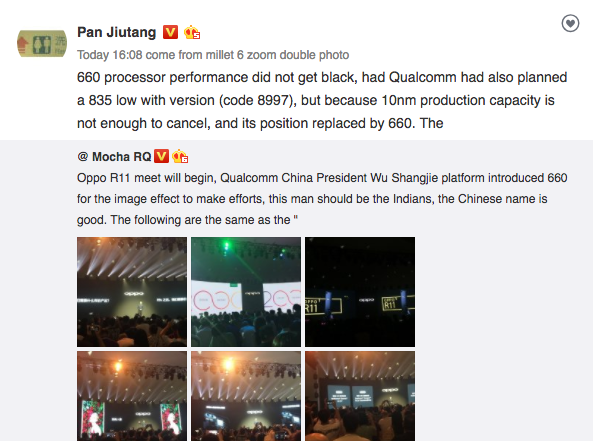
The popular analyst from China, Pan Jiutang revealed earlier today that Qualcomm had initially planned to release a slower version of Snapdragon 835 code named MSM8997. However, the current mass manufacturing limitations of the 10nm FinFET process forced the company to change plans and focus on Snapdragon 660 as its replacement.
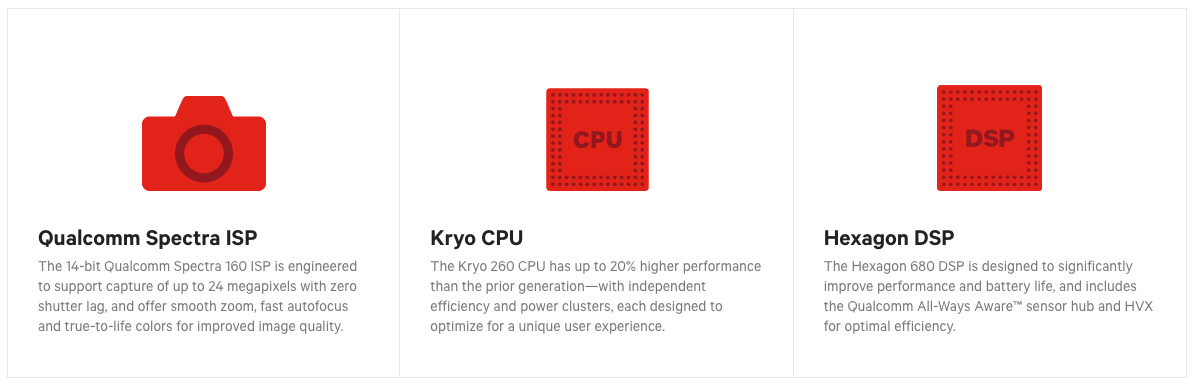
This is probably why the Snapdragon 660 (inside the OPPO R11 and R11 Plus) became the first processor in the mid-range 600 series to get custom Kryo cores, which was initially exclusive to the top-end Snapdragon 800 series. Note that the octa-core Kryo 260 cores in the SD660 are a bit different than the Kryo 280 cores inside the SD835. But the fact that the SD660 uses custom cores does put it much closer to the top-end Snapdragon 800 series than its predecessors like SD653 or SD652. Further, the new SD660 chip features flagship grade ISP (Qualcomm Spectra 160 ISP) to ensure that you get the maximum performance out of your smartphone cameras.
Hence, it’s very likely that many affordable flagship smartphones of 2017 would end up with Snapdragon 660 and not Snapdragon 835.
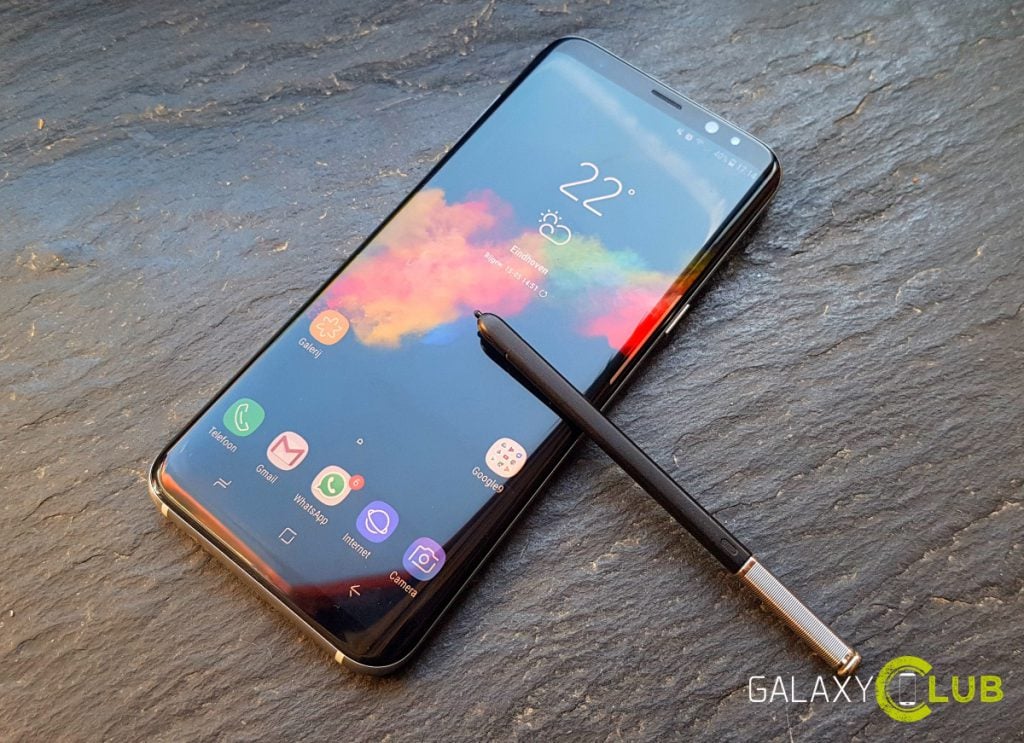
U.S-based fabless chip maker Qualcomm‘s rumoured Snapdragon 836 chip hit the news stand recently. The SD 836 chip is a revised version of the present Snapdragon 835 and is tipped as coming in the second half of the year. A new rumor has now emerged that the Snapdragon 836 processor will be featured on the expected Samsung Galaxy Note 8. If true, that would make the Galaxy Note 7 the first Snapdragon 836-powered smartphone.
The Galaxy Note 8 is Samsung’s next-gen flagship Note series smartphone which is expected to be launched in the second half of this year also. The Galaxy Note 8 is expected to utilize a 6.3-inch display and would be the same curved infinity display that was used on the Galaxy S8 and S8+. A recently leaked video had shown us the huge infinity display the Note 8 will feature as well as the front panel. The Note 8’s display is also expected to be a curved edge one with a high screen-to-body ratio which would likely be the same 18.5:9 aspect ratio featured on the Galaxy S8 with a 4K resolution.
On its part, the Snapdragon 836’s large cores are tipped to have a clock frequency of 2.5GHz, slightly higher than the 2.45GHz frequency of the SD 835 large cores. The small cores may likely retain the 1.90GHz clock frequency found on the SD 835. The tipster also revealed the SD 836’s GPU is clocked at 740MHz. The Galaxy Note 8 is expected to be announced during IFA Berlin 2017.
OPPO R11 has been in the news for the past few weeks, both officially and unofficially. Now, the company has finally taken the wraps off the R11 as well as its larger sibling, the OPPO R11 Plus. This makes them the first Snapdragon 660 smartphone duo in the market, which is an important title given that this chip is going to drive a lot of Chinese flagships in the coming months.
OPPO R11 & R11 Plus Design
Design wise, the OPPO R11 doesn’t disappoint. OPPO phones have always followed a similar design as the iPhone series and the latest R11 and R11 Plus models clearly continue the trend. They look very similar to the iPhone 7 Plus, even in terms of their dual camera placement. I’m not a big fan of companies copying the design from Apple, but it has worked wonders for OPPO in the past 12 months and there was probably no good reason for the brand to change this strategy.
If you can ignore the striking similarity to the Apple iPhone 7P, the metal built of the phone looks quite good, the antenna band design is unintrusive and the color options are definitely an added plus. There’s the regular, gold, rose gold and black color options. The bezels on the side look slim and there’s a fingerprint sensor embedded into the physical home button, just below the display, much like its predecessor, the OPPO R9S.
Unlike most Android manufacturers, OPPO’s strategy about hardware has been less aggressive. Instead of equipping its flagship models with top of the line processor and memory, the company has always focused on using upper mid-range specs. That’s not a bad thing as the Snapdragon 660 that powers the OPPO R11 and the R11 Plus is quite a capable chipset, placed just below the top-end Snapdragon 835.
The OPPO R11 and R11 Plus differ in terms of RAM and display sizes. The R11 comes with a 5.5-inch 1080p display, 4GB RAM and 64GB of internal storage. On the other hand, the OPPO R11 Plus features a larger 6-inch display with 1080p resolution, 6GB of RAM and 64GB of internal storage. The batteries are also different, with the R11 coming with a decent 3000mAh capacity battery and the R11 Plus getting a large 4000mAh one. Both naturally get VOOC fast charging support.
In case you are wondering, there’s MicroSD card support for both the models, but it’s a hybrid one that either takes 2 x nano SIMs or 1 x nano and 1 x MicroSD card.
OPPO R11 & R11 Plus Cameras
OPPO R11 and R11 Plus have the same camera setup. The rear setup consists of a combination of a 16MP f/1.7 aperture Sony IMX398 sensor and one 20MP f/2.6 Sony IMX350 sensor (we have seen this in the Axon 7S before) with telephoto lens. You can take portrait, bokeh photos and even 4K videos (either in wide-angle or telephoto) from the rear setup. It also comes with 2x optical zoom.
As for the front camera, OPPO has used a 20MP f/2.0 aperture sensor to take care of your selfie requirements.
Taking care of the software department is the new Color OS 3.1 based on Android 7.1.1 Nougat.
OPPO R11 & R11 Plus Price & Availability
Initially, OPPO had announced that it would unveil the OPPO R11 and R11 Plus on June 10. Clearly, the company couldn’t contain revealing the specs and other details till the earlier mentioned date. But it did leave something for tomorrow i.e. pricing. The company will officially reveal the prices for the variants of OPPO R11 and R11 Plus tomorrow at 9:00 AM.
Google seems to have started testing the upcoming Google Pixel 2 smartphones. On GFXBench, the alleged Google Pixel XL 2 has appeared along with its specifications. It will be coming out to replace the original Google Pixel XL that released last year in October 2016.
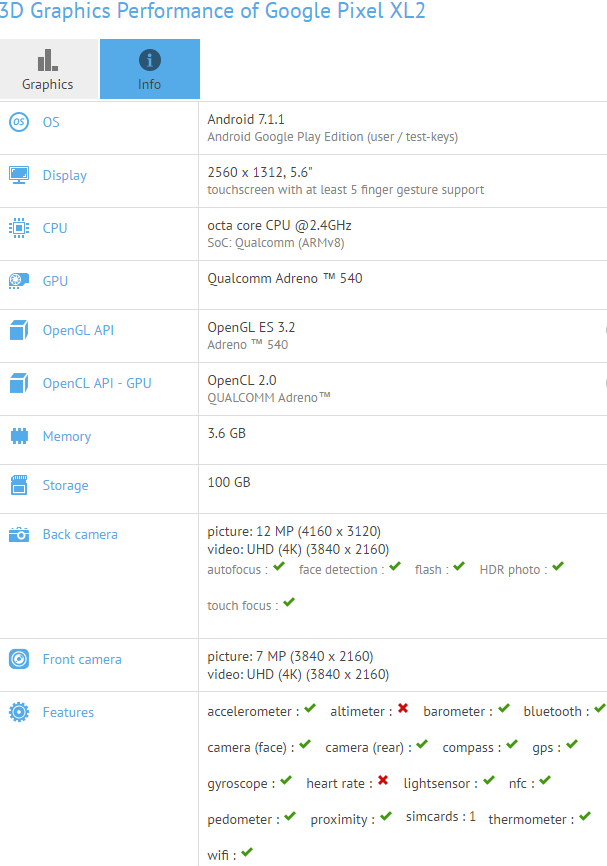
According to the listing of Google Pixel XL 2 on GFXBench, it is fueled by Snapdragon 835 chipset that clocks at 2.35 GHz along with Adreno 540 graphics. Like its predecessor, the Pixel XL 2 features 4 GB of RAM and a native storage of 128 GB. It is unlikely to feature a microSD card.
The original Pixel XL has a Quad HD resolution supporting 5.5-inch screen. However, the Pixel XL 2 has a bigger 5.6-inch display that supports a unique resolution of 2,560 x 1,312 pixels. The recently launched Essential PH-1 smartphone also supports the same resolution on its 5.71-inch screen. The Google Pixel XL 2 may also support a 18.9 or 18.5:9 5aspect ratio and also it is very likely that it may come with an elongated bezel-less screen.
The Google Pixel XL 2 GFXBench listing shows that it has a 12-megapixel rear camera. It features an 8-megapixel front-facing snapper. Both the cameras are capable of shooting 4K resolution videos. Since the GFXBench benchmarking platform does not information dual camera sensors, it cannot be confirmed whether the Pixel XL 2 features a dual rear camera module or not. The listing states that the phablet is running on Android 7.1.1 Nougat, but it is most likely to ship with Android O preinstalled.
Popular leakster, Roland Quandt who was first to reveal the GFXBench listing claims that the Pixel XL 2 may support Gigabit Wi-Fi dual-band and Bluetooth 5.0. It also carries support for NFC connectivity.
Previous leaks have revealed that the Google Pixel XL 2 would be coming with water and dust resistant chassis and an improved rear-facing camera that will shoot better photos in dim light condition. Speculations have it that it won’t be featuring a 3.5mm audio jack. The Google Pixel 2 and Pixel XL 2 are pegged to launch in October this year.
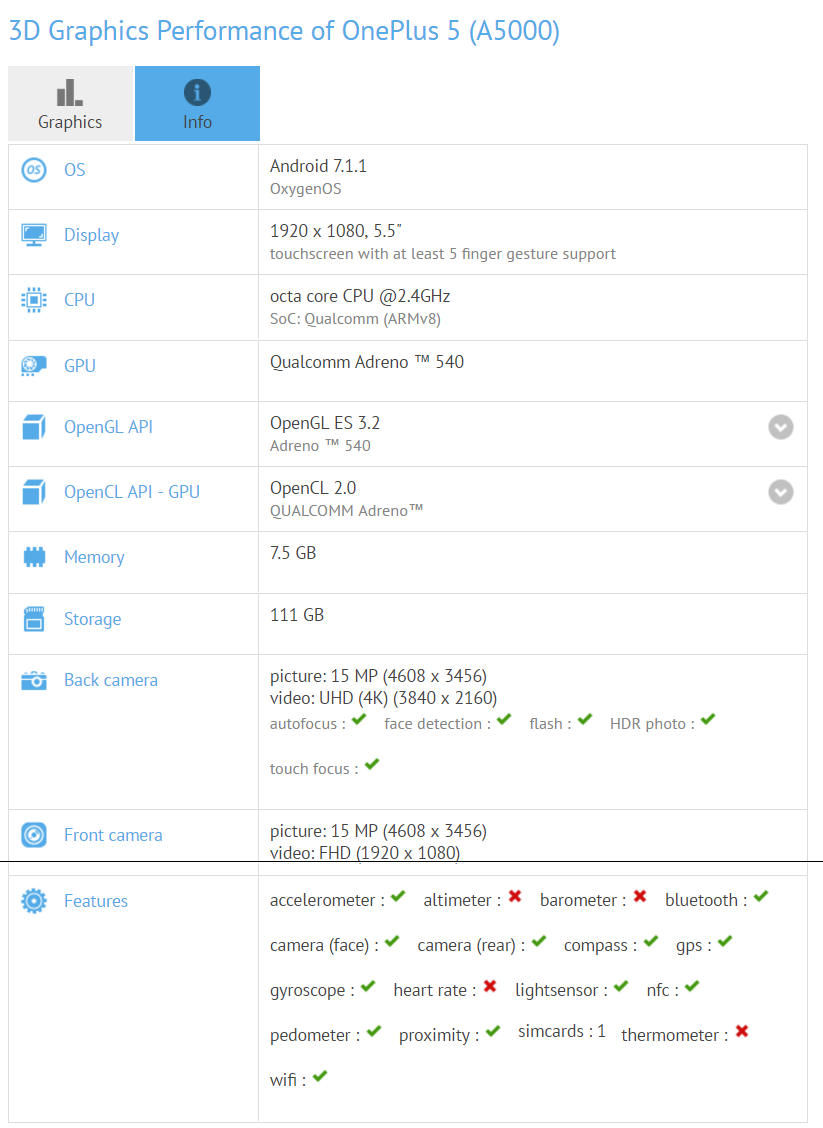
The OnePlus 5 details keep rolling in non-stop. Earlier today it appeared on GeekBench, confirming the RAM. Now, it has surfaced on GFXBench, where more details have been revealed.
The rear cameras are the most anticipated feature of the OnePlus 5. OnePlus has joined the dual camera train and the GFXBench listing gives us half of the details. We know the benchmarking site only detects one of the dual cameras, so the other sensor is still unknown.
The listing reveals the OnePlus 5 will come with a 16MP primary rear camera just like the OnePlus 3T. It will have support for 4K recording, HDR and face detection. The front camera doesn’t change too as its still a 16MP sensor.
The Geekbench listing also reveals the display size and resolution. Even though OnePlus already hinted that the phone has a smaller form-factor compared to the OnePlus 3T, it is still a 5.5-inch display…….and with a 1080p resolution. Sorry guys, no 2K display this year.
Asus is expected to launch their fourth installment of the ZenFone series in July this year, after being reported to be three months behind their original schedule. We will reckon that Asus will be pricing the ZenFone 4 competitively like its predecessors with mid to high-end specs.
asus-zenfone-ar
This release will be an important event as this will determine whether Asus can build up the momentum to increase its revenue since the dip during 1Q17 in its smartphone business. Mr. Shen, CEO of Asus, stated that the company’s smartphone division is forecasting to overall profit by the end of this year.
We will be expecting Asus to be releasing a 5.5-inch model initially before other variants in their product line. The 5.5-inch model has been reported to be priced, unlocked, below NT$15,000 (US$498).
RELATED: ASUS ZenScreen Is A Beautiful 15.6-inch USB Screen That Comes With A Pen For A Stand
The 5.5-inch model, Asus ZenFone 4 Max, is speculated to be powered by a Qualcomm Snapdragon 630 or by a Snapdragon 660 processor, coupled with 3GB RAM and offer 32GB of internal storage.
In terms of image capture, the ZenFone 4 Max will feature a dual rear camera arrangement with one 12-megapixel sensor and the other a 5-megapixel sensor. The front-facing selfie camera will be an 8-megapixel shooter. The device is expected to run on Android 7.1.1 after launch.
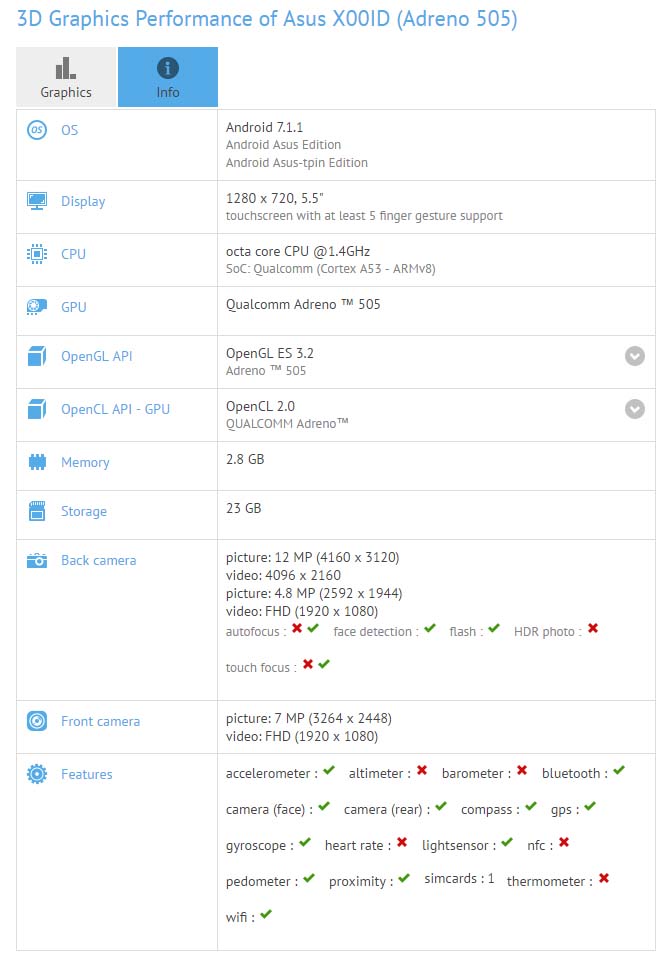
Another unknown Asus device named ‘X00ID’ has been unveiled by GFXBench, showing a 5.5-inch HD smartphone, powered by an octa-core processor clocked at 1.4 GHz. The device has been paired with 3GB RAM and internal storage that seems to be 32GB, similar to the ZenFone 4 Max, the device also features a dual rear camera set-up and an 8-megapixel camera.
How do you feel about the Asus ZenFone series’ expected delay in release?
Samsung introduced the Galaxy C series of smartphones for Chinese audience to rival with other smartphones in China. However, its market share has been consistently dropping in the country. Now, Samsung is getting ready to introduce a new Galaxy C series phone, the Galaxy C10. It will be the company’s first smartphone to sport dual rear cameras. It China, it will be soon entering a fierce battle with various mid-range phones that come with dual rear cameras. Today, its leaked specs and pricing have surfaced.
Information that have appeared on South Korean publications have revealed that the Samsung Galaxy C10 will be equipped with a massive 6-inch display that will probably support full HD resolution. Also, it will be the first Samsung phone to be powered by the newly unveiled Snapdragon 660 chipset. \The SoC will be coupled with 6 GB of RAM and it will be packed with a massive 4,000mAh battery. As leaked images have revealed, the Galaxy C10 would be sporting a vertically stacked dual rear camera setup.
The Samsung Galaxy C10 is speculated to come in two storage choices of 64 GB and 128 GB. It is rumored to be priced at 3,499 Yuan (~$514). This seems to be the price of the starting model of Galaxy C10. Samsung is also expected to launch Galaxy C10 Plus smartphone that will be arriving with identical specs that are present on Galaxy C10. However, reports suggest that the only major distinguishing factor on Galaxy C10 Plus will be that it will be packed with 8 GB of RAM.
There is no information available on the launch date of Samsung Galaxy C10. However, previous rumors have revealed that it is slated to get announced in the third quarter of this year. Will Galaxy C10 be able to resurrect the decreasing market share of Samsung in China? We hope that Samsung’s first dual rear camera phone receives good reception in China.
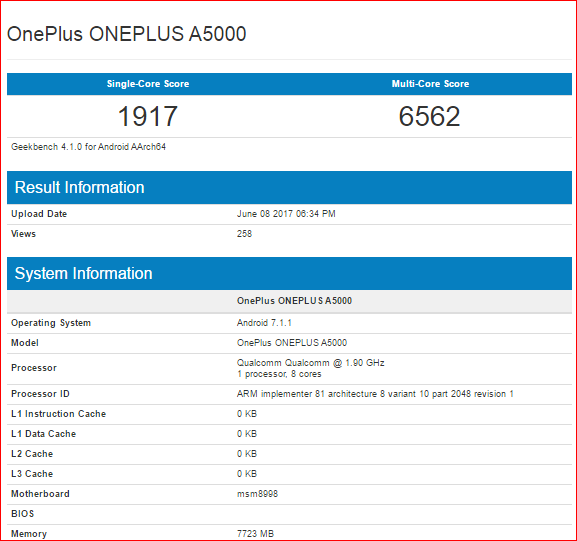
Not so long after we saw the Nubia Z17 flagship with an 8GB RAM version, seems we will be seeing another 8GB RAM-packing smartphone from a Chinese OEM soon. A Geekbench database listing has revealed the OnePlus 5 flagship details, thus confirming some of the key features.
You guessed right, the OnePlus 5 has just been benchmarked and while the result isn’t any much spectacularly different from the ones posted by other Snapdragon 835 chip as it polled a total of 6562 points in the multi-core and 1917 points on the single-core tests. However, what is spectacular about the listing is that the OnePlus 5 model that ran through Geekbench features 8GB of RAM. This sort of confirms rumours that the OP5 would have an 8GB RAM version while the base model would have 6GB of RAM.
Indeed the OnePlus 5 which was listed as OnePlus A5000 also features an octa-core Qualcomm chip clocked at 1.90GHz which is the Snapdragon 835 chip. That is as much as we can grab from the Geekbench listing but it adds up to earlier leaks such as a dual camera setup, 64GB and 128GB storage versions and others. We’ll get to know the entire details when it is launched on June 20.
OnePlus 5 is slated to get unveiled on June 20. A recent report has revealed that the OnePlus 5 would be selling with a pricing of 550 euros in European markets. And now, a leaked information has revealed the pricing of two variants of OnePlus 5.
Around a month ago, True-tech.net had revealed some camera samples that were reportedly shot using OnePlus 5 smartphone. It claimed that the amount of depth seen in some of the photos suggested that the OnePlus 5 features a dual rear camera system. A recent teaser released by OnePlus confirms that OnePlus 5 indeed features a dual camera setup on its backside.
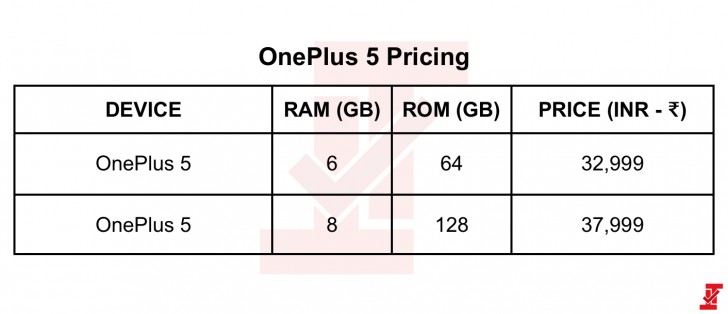
The same source has now produced the leaked pricing of OnePlus 5. It states that the OnePlus 5 would be arriving in two variants. The higher variant will feature 8 GB of RAM + 128 GB of storage and the lower model will be featuring 6 GB of RAM + 64 GB of storage. Well, both the models will be fueled by Snapdragon 835.
As the above image shows, the 64 GB OnePlus 5 is priced at Rs. 32,999 (~$513) whereas the 128 GB OnePlus 5 has a pricing of Rs. 37,999 (~$591). It cannot be confirmed whether the above image is real as it appears like a snapshot of table created on Excel.
The 64 GB and 128 GB models of OnePlus 3T were introduced at $439 and $479, respectively. There have been rumors that OnePlus 5 would be coming with an expensive price tag because of costlier components like Snapdragon 835, 8 GB RAM and dual rear camera module. Multiple tipsters have speculated that it may cost more than $500. This is also supported by a recent report that speculates that OnePlus 5 would be costing 550 euros for the European regions. Moreover, the source of this report has correctly predicted the dual camera feature for OnePlus 5.
Even though OnePlus 5 is seen sporting 8 GB RAM, there is a possibility that the company may not release this model in the western markets. In the U.S., the OnePlus 3T is the only smartphone sporting 6 GB of RAM which indicates that the company may release only 6 GB RAM model of OnePlus 5 in the U.S. and not the 8 GB RAM variant.
Chinese smartphone maker Vivo has added another refreshing new color option its X9 model. This is coming barely three months after the Vivo X9 Matte black was added to the lineup. The X9 has now got a cool blue color variant that really tweaks things up and infuses some fresh blood to the X9’s sales especially as it comes out in the bright summer.
On the looks, the Summer Blue color variant of the X9 comes with the same refreshed, premium and sleek look but with more attractiveness. With this new addition, the Vivo X9 now comes in Blue, Rose Gold, Gold, Star Gray and Matte black colours. The X9 is currently on a promotional offer that brings the price down to 2,589 Yuan, 200 Yuan off.
On the specs angle, the Vivo X9 Blue variants till features a 5.5-inch Full HD display and is powered by a 2.0GHz Snapdragon 625 chip with a 4GB RAM providing some support. The X9 also comes with 64GB of internal storage and packs a built-in 3050mAh battery under its hood.
Other features include a dual selfie camera setup composed of a 20MP main sensor and an 8MP depth of field sensor. There is also a 16MP rear camera with LED flash and an AK4376 HiFi audio system. The X9 runs Vivo’s Funtouch OS 3.0 based on Android 6.0 Marshmallow.
In China, an advertising agency named Jinyuan Technology has sued LeEco for failing to pay its marketing fees. This further puts more doubt on the financial condition of the company.
The Chinese ad agency has accused four affiliate firms of LeEco for non-payment of marketing fees of over 60 million Yuan ($8.8 million). LeEco has been sued by MIG Unmbi Technology, the parent company of Jinyuan Technology. The People’s Court of Chaoyang District in Beijing has accepted three of the five cases that has been filed against LeEco.
The court’s statement requires LeSports, Leshi Holding and Leshi E-commerce to initiate prompt payment along with a penalty of 0.05 percent per day interest. For the remaining two cases Jinyuan Technology has not received acceptance from the court. According to the statement, the ad agency is seeking 13.8 million Yuan as immediate payment from Le.com
The reason behind the delay in payment is that the promotional campaigns finished at the end of 2016. This coincided with the first confirmation by LeEco founder Jia Yueting that the company is facing financial problems as it tried to expand outside of China at breakneck pace. In the previous month, LeEco laid around 325 workers in San Jose and Santa Clara divisions in the U.S. It means that about 70 percent LeEco employees in the U.S. were laid off. Reports claim that it is due to the lack of funds that the Chinese firm has laid off so many of its employees. The company is now targeting Chinese-speaking consumers in the U.S.
LeEco began in China as a video streaming platform and it has been also selling smartphones and TVs through which it makes its original content available to the consumers. it is also developing electric cars. In May, Yueting has resigned from the post of CEO from Leshi Internet Information & Technology and is currently only serving as the chairman of LeEco.
LeEco had introduced itself in the U.S. in 2016 with Android TV, LeEco Le Pro 3 and Le S3. These products managed to grab the attention of the consumers as they came with low pricing and topnotch features, but the company failed to achieve impress sales numbers. Sunac China Holidings, a property developer had injected huge amount of funds to support LeEco. However, now that the company has defaulted in advertising charges to Jinyuan Technology, it is still in a financial mess.
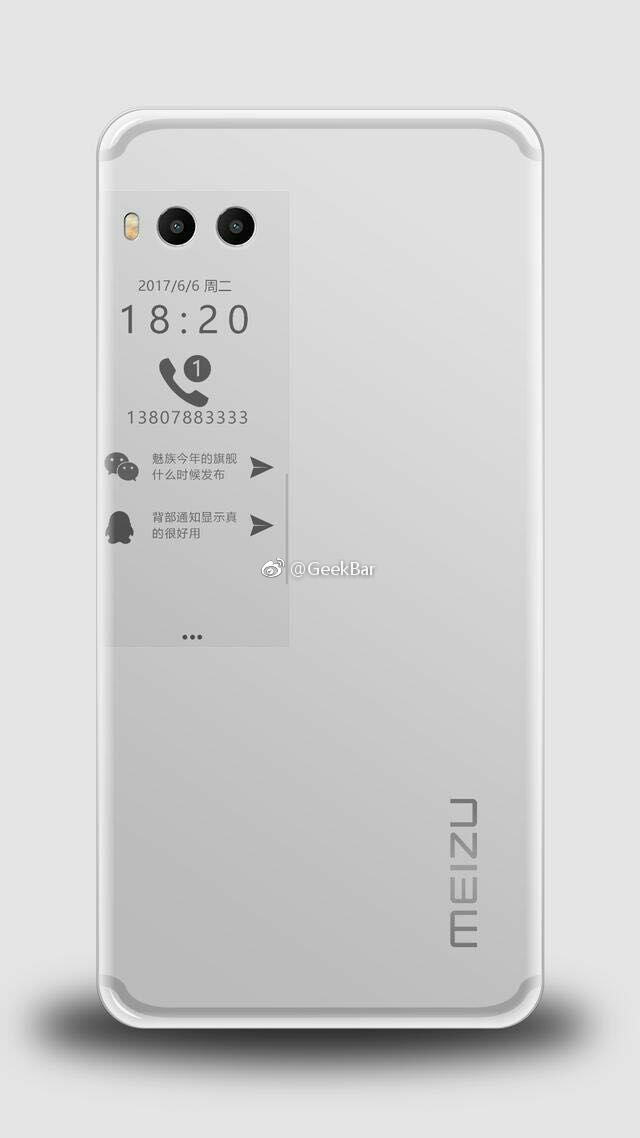
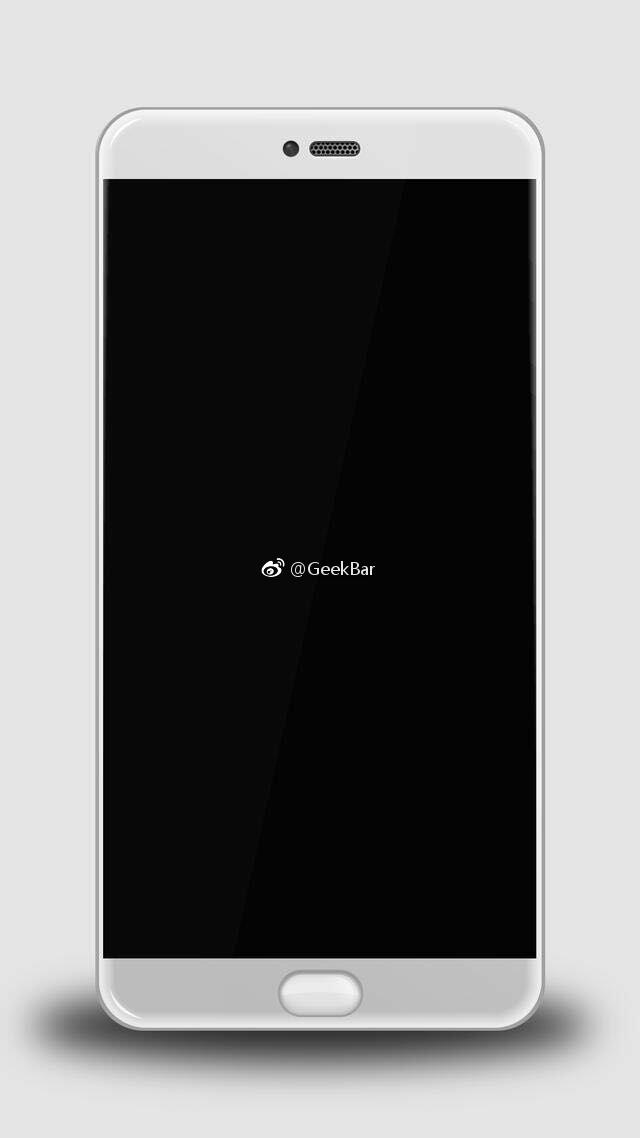
Meizu has long been rumored to be working on the Pro 7 flagship and very recently we started getting words from the company about the device. One of the company’s senior VP recently hinted at a powerful design for the Pro 7 and in turn confirmed its existence. Also, fans have been keeping themselves busy with fan-generated render emerging every now and then. As a matter of fact, it was one of such renders that got the VP to talk about the Pro 7.
Yet another set of fan-generated render of the Pro 7 and the Pro 7 Plus have appeared online. The Meizu Pro 7 Plus is said to be a direct successor of the Pro 6 Plus. Apart from the difference in size, both models will have the same specification. The Pro 7 is rumored to feature a 5.2-inch 1080p display while the Meizu Pro 7 Plus will pack a 5.7-inch 2K Samsung AMOLD display. The chip is said to be a MediaTek stock but there are talks of an Exynos chip finding its way into the Pro 7.
The Meizu Pro 7 and Pro 7 Plus are expected to be the first Meizu devices to come with dual cameras and that is captured in the leaked render. Also, both models are said to have an auxiliary screen which is a new feature. The render shows the auxiliary screen on the back of the device which will likely show notifications for missed calls, SMS, chat messages and basics like date and time.
The Xiaomi Mi Max 2 currently stands as a 6.44-inch behemoth and has hit the shelves in China. The smartphone’s predecessor is known for its long battery life, outlasting flagship phones and small tablets, as well as its obvious overall footprint. We shouldn’t be surprised if we see better battery life with the new Max 2 with an increase in battery size at 5300 mAh (compared to 4850 mAh in the original Max) paired with Quick Charge 3.0.
Questions have arisen whether Xiaomi should increase the size of the Mi Max lineup to 7 inches. Lei Jun (Founder of Xiaomi) states that the 6.44 inch is the optimum level where one hand operation is still possible. Whilst a 7-inch smartphone, for many of expected users, would be too large to use with one hand.
Although Lei Jun is reserved about a 7-inch smartphone, he has stated before he was not opposed to the idea of using a larger screen on smaller smartphone forms. An example of this is Xiaomi’s Mi Mix, where Lei Jun said the Mix has the screen size similar to the Max, but in a much smaller build.
It is unclear whether Xiaomi has plans for a larger screen smartphone, however Lei Jun has not ruled out the possibility of future smartphones housing screens beyond the 6.5-inch boundary. In terms of the Mi Max line, the 6.44-inch screen size looks like it will be staying.
Should there be a larger screen Mi smartphone? Share your thoughts down below.
Motorola is expected to launch several new phones this year. So far, it has launched the Moto C and Moto C Plus as well as the Moto Z2 Play. It has handful of devices such as Moto Z2, Moto Z2 Force, Moto G5S+, Moto G5S, Moto X4, Moto E4 and Moto E4 Plus phones waiting to get unleashed. The more time the company is taking to introduce them, the tipsters working harder to get spread leaked information. A Twitter user @HeyAndri has revealed the pricing of the Moto G5S+, Moto X4 and Moto Z2 Force.
iPhone 7 DUAL CAMERA envy? #motoG5S+, #motoX4 and #motoZ2Force all coming summer 2017. Rs 17999, Rs 20999 and Rs38999 respectively. #Moto
According to Yatim, the Moto G5S+ will be coming with a price tag of Rs. 17,999 (~$279) and the Moto X4 will be priced at Rs. 20,999 (~$326). As far the pricing of the Moto Z2 Force flagship phone is concerned, it will be costing Rs. 38,999 (~$607).
The aforementioned Moto smartphones are slated to get announced this summer. These devices are also expected to release in the U.S., but there is no information on the exact prices of these phones for the U.S. In India, the newly launched Moto Z2 Play is selling for Rs. 27,999 (~$435).
The live images of Moto G5S+ had appeared two weeks ago. The smartphone will be coming with a 5.5-inch full HD screen and it will be featuring a full metallic chassis. The Moto G5S+ will be driven by Snapdragon 625 chipset and will deliver Android 7.1.1 Nougat experience out-of-the-box. It will be arriving in color options like Gold, Grey, Silver/White and Gold/White. It will be sporting dual rear cameras coupled with dual-LED flash.
The Moto X4 is expected to come with glass and metal combination chassis. It will be featuring 5.5-inch screen with 3D glass and it will be fueled by Snapdragon 660 chipset, 4 GB RAM and 64 GB of native storage and a 3,800mAh battery. It will be also featuring dual-LED flash enabled dual rear camera module.
The Moto Z2 Force is the flagship phone from Motorola that will be powered by Snapdragon 835 chipset and 4 GB of RAM. Like the predecessor model, it is expected to come with a ShatterShield display. The Z2 Force will be also equipped with a dual camera setup on its rear side. Unlike the predecessor model, the new Z2 Force will feature a 3.5mm audio jack. Also, it will carry support for MotoMods accessories.
LG had launched the LG G6 phone in February during the Mobile World Congress (MWC) 2017 event. At the beginning of this month, ET News, a South Korean publication had reported that LG is planning to introduce two new variants called LG G6 Plus and LG G6 Pro in this month. Fresh information by the same publication reveals that the new smartphones are slated to get announced on June 27.
The LG G6 Plus is expected to come with an internal storage of 128 GB and wireless charging. The LG G6 available in South Korea does not support wireless charging, but its US variant supports it. The LG G6 Pro comes with an internal storage of 32 GB, meaning that it will come half the native storage that is available on LG G6 in Korea. Hence, the “Pro” branding sounds a bit weird for the new variant that offers lesser storage. It is not known as to what other new features are available on LG G6 Pro.
The LG G6 Pro and LG G6 Plus would be debuting in a new color variant called Optical Astro Black. This new color variant will show different hues of black depending on the reflection of the light.
The regular LG G6 was launched in the home country with a pricing of 899,000 KRW (~$802). The LG G6 Plus will be retailing at 999,800 KRW (~$892). And the LG G6 Pro will be selling for 799,800 KRW (~$710). There is no information available on whether LG has any plans to sell the LG G6 Plus and G6 Pro outside of South Korea.
At the start of this month, LG had introduced the LG Pay mobile payment solution which is based on Wireless Magnetic Communication tech that will allow users to touch their LG phones at credit card devices to initiate transaction.
At present, the LG G6 is the only device from the company that supports LG Pay. The new variants of LG G6 are expected to contribute to the success of its mobile payment service. LG will add support for other devices soon.
Reports have surfaced that MediaTek and manufacturing foundry, GlobalFoundries, will be working on the production of a new 22nm CPU with FD-SOI process. Traditionally, Taiwan Semiconductor Manufacturing Company (TSMC) has been the primary foundry partner producing Mediatek’s CPUs, making a new collaboration with GlobalFoundries unprecedented.
Currently, there are three leading 22nm processes: FinFET, CMOS, and FD-SOI. The benefits of the 22nm process include its low production costs and low power consumption whilst providing an alternative with similar performance to TSMC’s 16nm FinFET, according to GlobalFoundries. On the other hand, TSMC claims that its 22nm will be easier to adapt from 28nm whilst a 22nm FD-SOI would require changes in core architecture to avoid infringement on intellectual property cores. Regardless of the claims from both sides, MediaTek’s new relationship with GlobalFoundries offers a competitive alternative to other current 22nm processes such as TSMC’s 22nm planar technology.
In the current smartphone market, 14/16nm (Snapdragon 821/Helio P20) and 28nm (Helio P15) CPUs are found in most flagships, whilst the 10nm will become the new more popular CPU process in the coming year, which has been seen in most recently released smartphones such as the Xiaomi Mi 6.
Although MediaTek has begun expanding to alternate foundries, we will not be expecting the company to be cutting ties with TSMC anytime soon, with its 10nm Helio X30 and 16nm Helio P25 expected in devices this year.
The 22nm process is expected to provide a new set of mid to entry level devices, however, a date has not been confirmed.
What are your thoughts on MediaTek’s new partnership with GlobalFoundries?
Huawei’s Honor brand had confirmed that it would be launching the Honor 9 on June 12 in China. Ahead of that launch, the Honor 9 has reportedly appeared on Chinamobile’s website, open for booking or registration. The registration page also reveals some of the configuration of the Honor 9.
The listed specification is entirely similar with those that have featured in several leaks and the on TENAA too when the device was certified. Among the deails is the use of a 3D curved glass at the rear and we already know there is a 2.5D curved glass on the front. The camera specs is revealed as a 12MP + 20MP dual setup and rightly, a Hisilicon Kirin 960 chip will provide the firepower. The ChinaMobile listing also shows the presence of 6GB of RAM on the upcoming device. The TENAA listing reveals he presence of two RAM sizes of 4GB and 6GB.
In other specs, the Honor 9 comes with a 5.15-inch display with a resolution of 1980 x 1080p. The device comes with 64GB storage on both the 4GB and 6GB RAM models as no 128GB storage version is listed. The Honor was thought to run on the new EMUI 5.0, which is based on Android 7.0 Nougat but a new leak has revealed that at least one of the three main variants of the upcoming Honor 9 will be running the company’s proprietary UI based on artificial intelligence (AI) technology, Magic Live version 1.0.533.
LEAGOO recently released their new model – LEAGOO M5 Edge, dubbed the night shooting expert with edge-less screen design among 4G entry-level smartphones.
Below is the press release sent to us by the company.
The following are the highlights of LEAGOO M5 Edge:
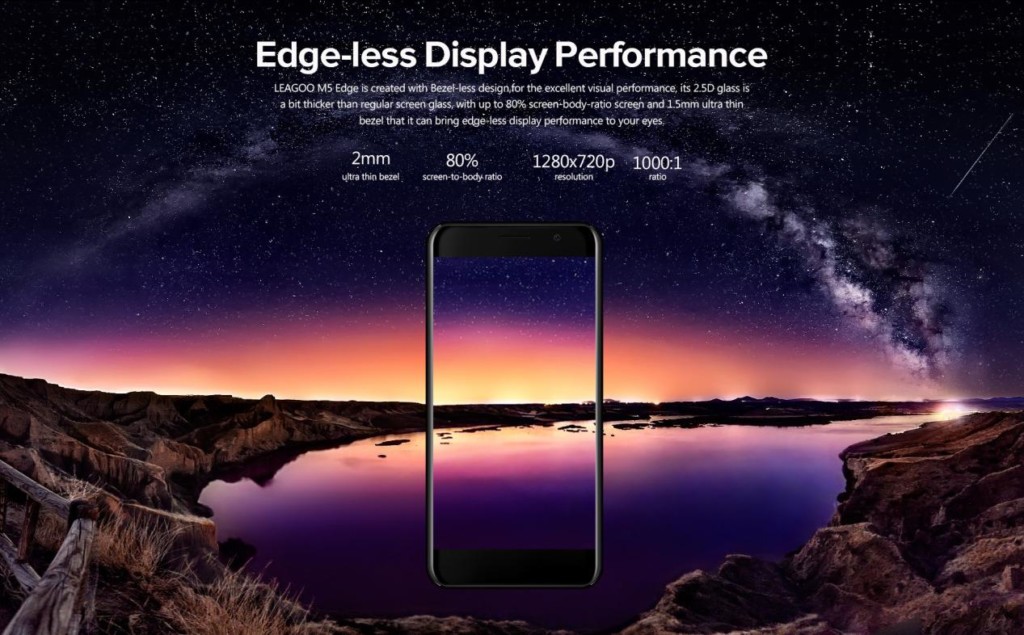
LEAGOO M5 Edge is created with Bezel-less design for excellent visual performance, its 2.5D glass is a bit thicker than regular screen glass, with up to 80% screen-body-ratio screen and 1.5mm ultra-thin bezel that it can bring edgeless display performance to your eyes.
2mm ultra thin bezel
80% screen-to-body ratio
5.0 inch IPS
1280x720p resolution
1000:1 ratio
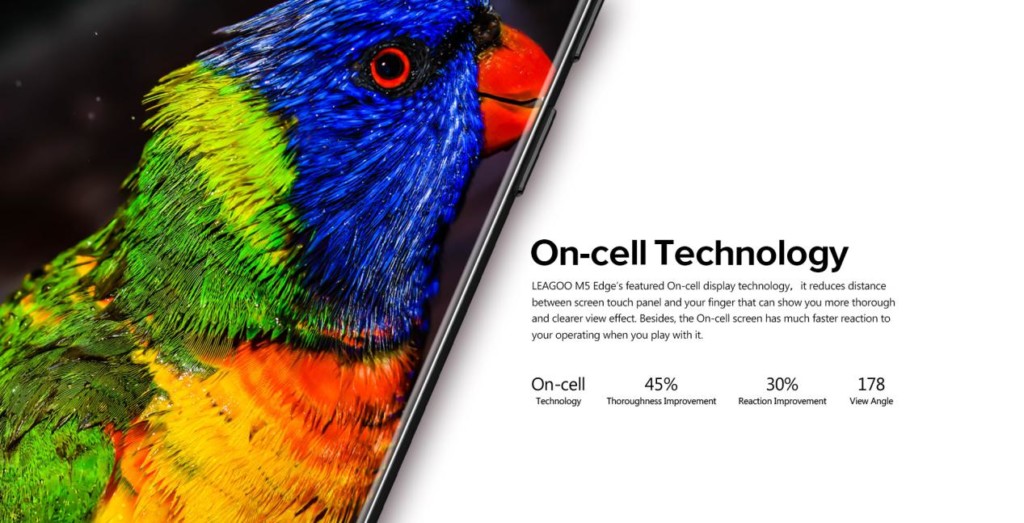
LEAGOO M5 Edge’s featured On-cell display technology,it reduces the distance between screen touch panel and your finger that can show you more thorough and clearer view effect. Besides, the On-cell screen has a much faster reaction to your operating when you play with it.
On-cell Technology
45% Thoroughness Improvement
30% Reaction Improvement
178 View Angle
The dark is no match for LEAGOO M5 Edge’s camera. The bright F2.0 lens brings in more light when there’s not enough around. So what you see is what you’ll get in the shot.
13.0MP
F2.0 Lens
4P lens
75 degrees view angle
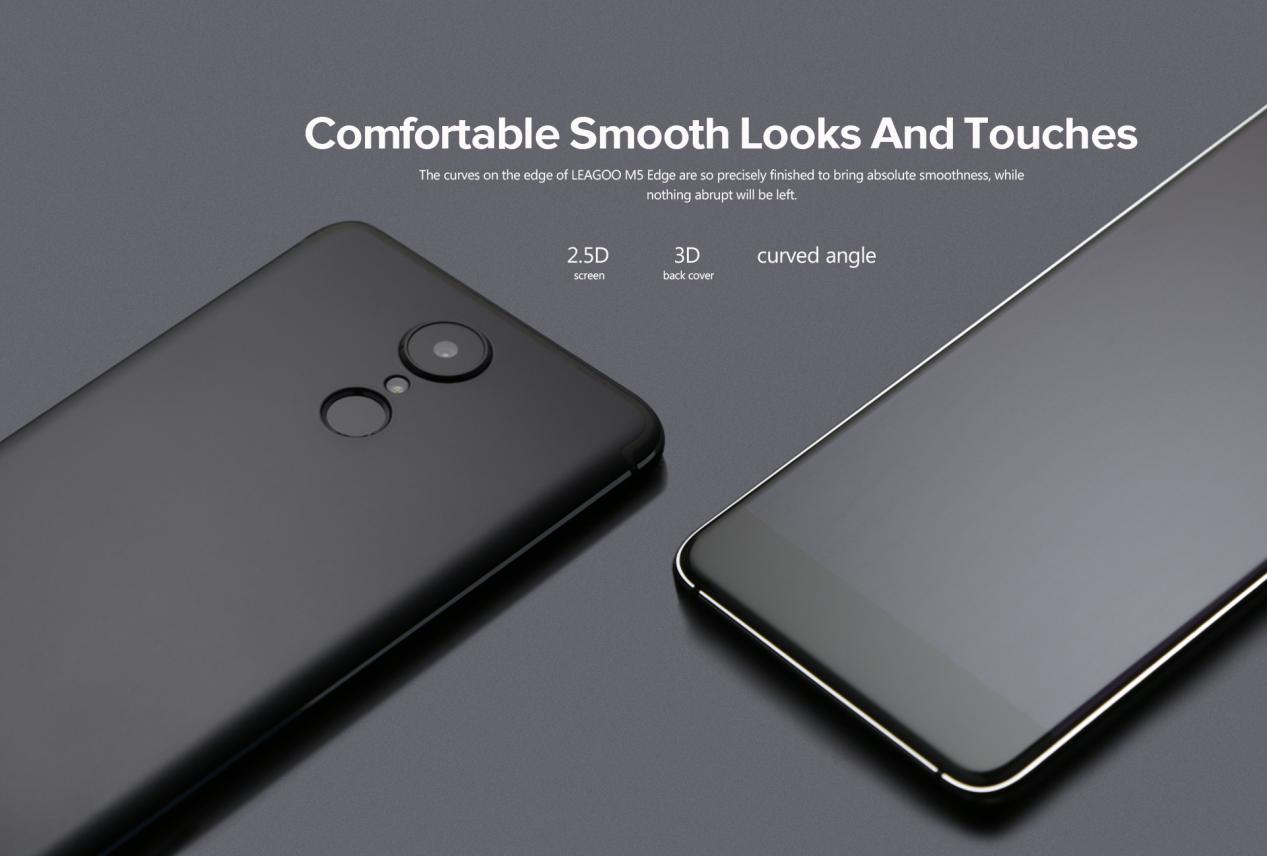
The curves on the edge of LEAGOO M5 Edge are so precisely finished to bring absolute smoothness, while nothing abrupt will be left.
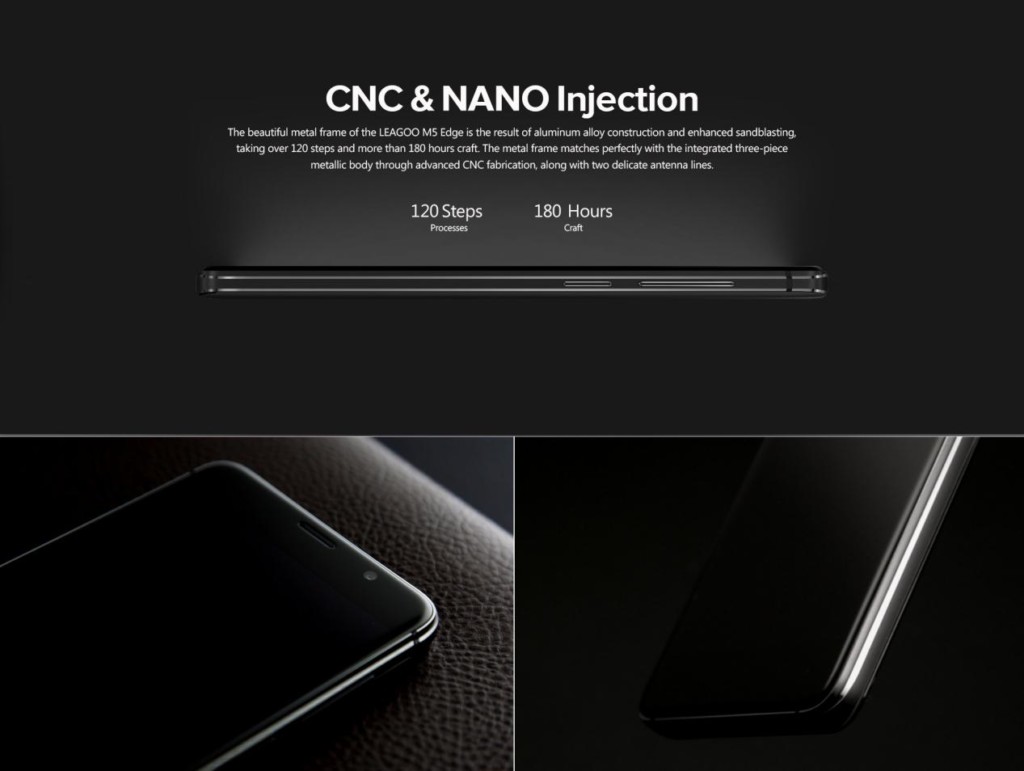
The beautiful metal frame of the LEAGOO M5 Edge is the result of aluminum alloy construction and enhanced sandblasting, taking over 120 steps and more than 180 hours craft. The metal frame matches perfectly with the integrated three-piece metallic body through advanced CNC fabrication, along with two delicate antenna lines.
CNC & Nano Injection Technology
120 Steps and 180 Hours Craft
Metal Frame
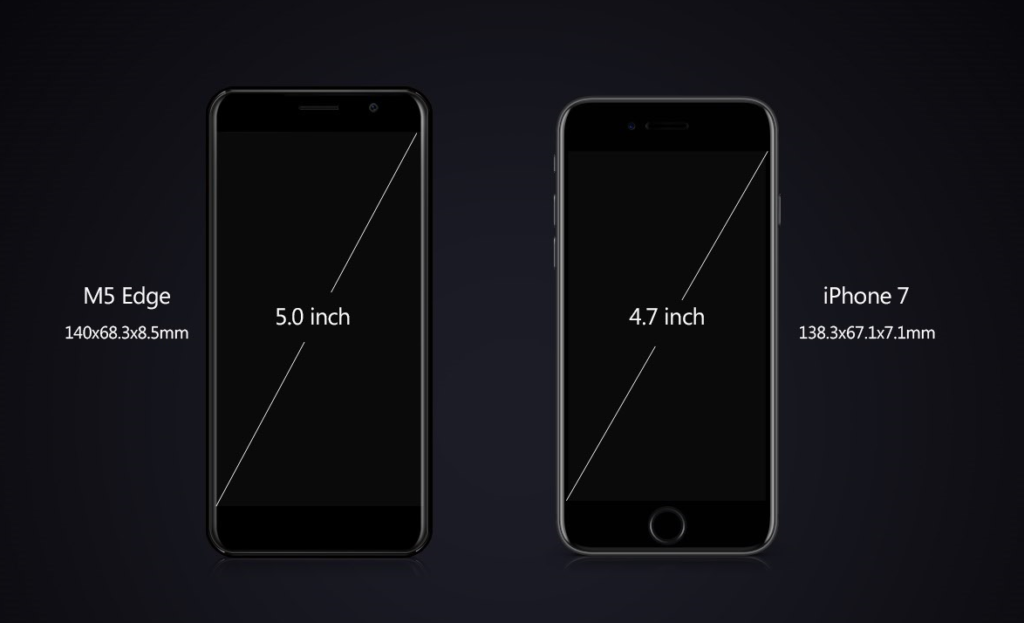
M5 Edge could be world’s smallest 5.0-inch smartphone, as a 5-inch smartphone with the body size of LEAGOO M5 Edge is similar with iPhone 7(4.7 inch) and it can provide excellent
one-hand-operating experience !
Main features of LEAGOO M5 Edge:
5.0 inch HD, IPS, On-cell, Edge-less design
World’s smallest 5.0 inch smartphone
13.0 MP f2.0 night shooting rear camera
CNC metal frame
8.0 MP 77.9°wide angle front camera
MT6737 4G quad-core chipset
2GB RAM + 16GB ROM
Removable battery
Dual SIM dual standby
Retail Price: $99.99
Now LEAGOO M5 Edge is in official reservation period, you have chance to get the $20 discount with free gift by subscribing your email during the campaign period.
OnePlus just revealed what we should expect with respect to the OnePlus 5 come June 20. Posted as a tweet, we get to see the top half of the back of the phone. It is a shameless copy of the iPhone 7 Plus and its disappointing.
The dual rear cameras are confirmed and are a bit raised. Right beside it is a led flash and above it is the U-antenna line.
You will notice that there is no earphone jack on the top side of the phone. If this is a perfect clone of the OPPO R11, then it is still at the bottom. However, it might also have been moved to the other side, going by Carl Pei’s tweet asking “Why did the headphone jack cross the road?” Or it might be gone completely!!! That is a possibility too.
Apple’s latest A10X Fusion System-on-Chip which featured on the recently released iPad Pro was spotted on GeekBench database recently with an amazing multi-core score. The new A10X Fusion propelled the iPad Pro to score a whopping 9091 points on the multi-core test which is way over what the iPhone 7 Plus fueled by an Apple A10 chip. Just in case you are not convinced, AnTuTu has now revealed its own benchmark result for the iPad Pro and its A10 Fusion chip.
The A10X Fusion chip uses a different architecture from the A10. While the A10 Fusion uses a quad-core architecture, the A10X Fusion comes with an hexa-core architecture but the exact configuration of the cores is still unknown. Despite not knowing the cores, the A10X Fusion seems to have an edge due to the higher number of cores.
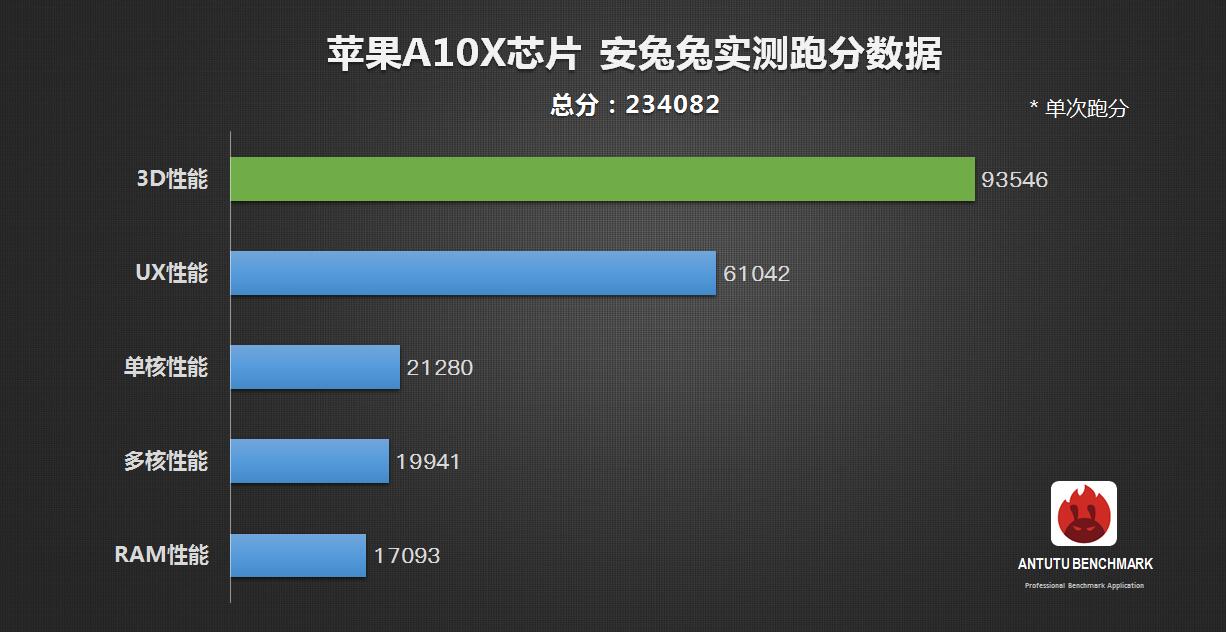
On the AnTuTu score, the A10X Fusion proves to be an extremely powerful chip as it surpassed the 200,000 mark. It precisely polled 234000 points on the single run sub-score. This is the first time an Apple chip is exceeding 200,000 points as the highest they have gotten is 180,000 back in May.
The new chip Apple A10X Fusion overall performance advantage is also visible on the individual test score. On the 3D performance, Apple A10X Fusion reached 93546 points, approaching 100,000; mononuclear properties test produced a 21,280 points score, multi-core performance 19,941 points etc.
We use cookies on our website to give you the most relevant experience by remembering your preferences and repeat visits. By clicking “Accept”, you consent to the use of ALL the cookies.
This website uses cookies to improve your experience while you navigate through the website. Out of these, the cookies that are categorized as necessary are stored on your browser as they are essential for the working of basic functionalities of the website. We also use third-party cookies that help us analyze and understand how you use this website. These cookies will be stored in your browser only with your consent. You also have the option to opt-out of these cookies. But opting out of some of these cookies may affect your browsing experience.
Necessary cookies are absolutely essential for the website to function properly. This category only includes cookies that ensures basic functionalities and security features of the website. These cookies do not store any personal information.
Any cookies that may not be particularly necessary for the website to function and is used specifically to collect user personal data via analytics, ads, other embedded contents are termed as non-necessary cookies. It is mandatory to procure user consent prior to running these cookies on your website.