You may know that Banggood has held Double 11 Festival few weeks ago, which have big deals. Now Banggood has raised a new deals promotion called Black Friday Sale that also have great deals. The promotion offers several coupon codes that you can use it to buy in this page. The ‘Star Devices’ section feature top-notch electronic items that you can now buy without breaking the bank. In the part of New Arrival, there are four new commodities such as Bakeey M30, ASUS Smartphone, Blitzwolf BW-TC17 and Xiaomi Laptop. Customers add it to cart in advance and wait for the amazing price at Nov. 21st 10 am (UTC+8).
You can click here to get more information about the Black Friday Sale.
Share this giveaway contest on Facebook, Twitter and Reddit;
Terms & Conditions:
1. The giveaway is an international giveaway. 2. We are not responsible for lost shipments. 3. We are not responsible for any duties, import taxes that you may incur. 4. We reserve all rights to make any changes to this giveaway. 5. The prize will be shipped in a month when the giveaway end.
Just follow the steps mentioned in the Gleam widget to participate in the giveaway.
Looking for a sturdy, feature-rich smartwatch that won’t set you back a pretty penny? Look no further. Loaded with an impressive array of features, ColMi Smart Watch is a simplistic, yet durable fitness tracker that keeps a record of its wearer health and monitors various activities without emptying their pockets. While this coveted smartwatch usually sells for $45.98, you can now buy it for just $19.77 on AliExpress.
This noteworthy 57% drop in the device’s original asking price is currently valid for four models including smartwatch for men, a smartwatch variant for women, the blue color version and a variant that comes with a smart clock. But there’s more for you to cheer about.
New users can avail an extra $4 simply by applying the New User Coupon during the check out process. Moreover, you can save an extra $6 by using a specific coupon if your grand total exceeds $65.
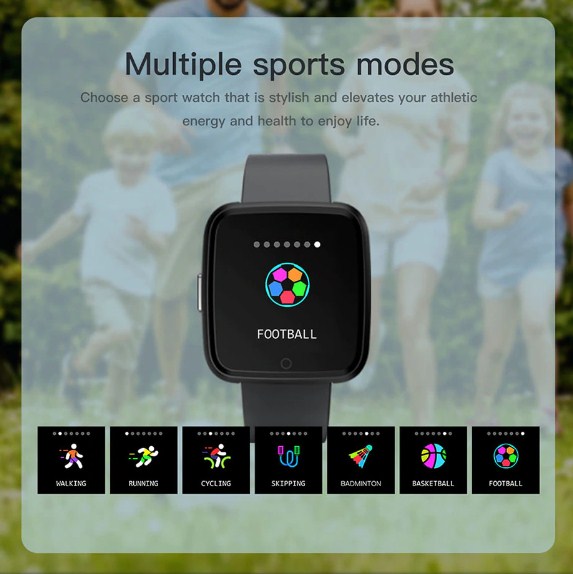
An absolute bargain at this price, the ColMi smartwatch sports an easily readable 1.3-inch IPS screen with 240×240 pixels resolution. On top of that, it comes with a slew of sports modes including walking, running, cycling, skipping, badminton, basketball, football etc.
This ColMi smartwatch is capable of recording steps, distances, calories and cycle comparison data in a bid to help the wearer understand his/her daily exercise. It is equipped with a built-in intelligent optical sensor of the hand ring that can continuously keep a track of the wearer’s heart rate changes.
The smartwatch is waterproof and dustproof with an IP67 certification. In other words, you can rinse the watch directly with water without worrying about inflicting damage to it. The watch features a high-quality strap material that monitors the quality of your sleep and can even record past sleep data without causing any sort of discomfort to the wearer.
You can head straight to this link if the ColMi smartwatch has stirred your interest and you’d like to buy it at a considerably lowered price on AliExpress.
UMIDIGI has launched a number of cost-effective smartphones this year, two of which are the highly anticipated UMIDIGI A3 and UMIDIGI A3 Pro. The company also recently unveiled their latest smartwatch dubbed UMIDIGI Uwatch. Since the Uwatch was officially launched, there still isn’t a guide that takes users through the features and how to navigate through seamlessly. However, there is now a dedicated official video which demonstrates how the Uwatch performs in real life usage. You can check out the video below.
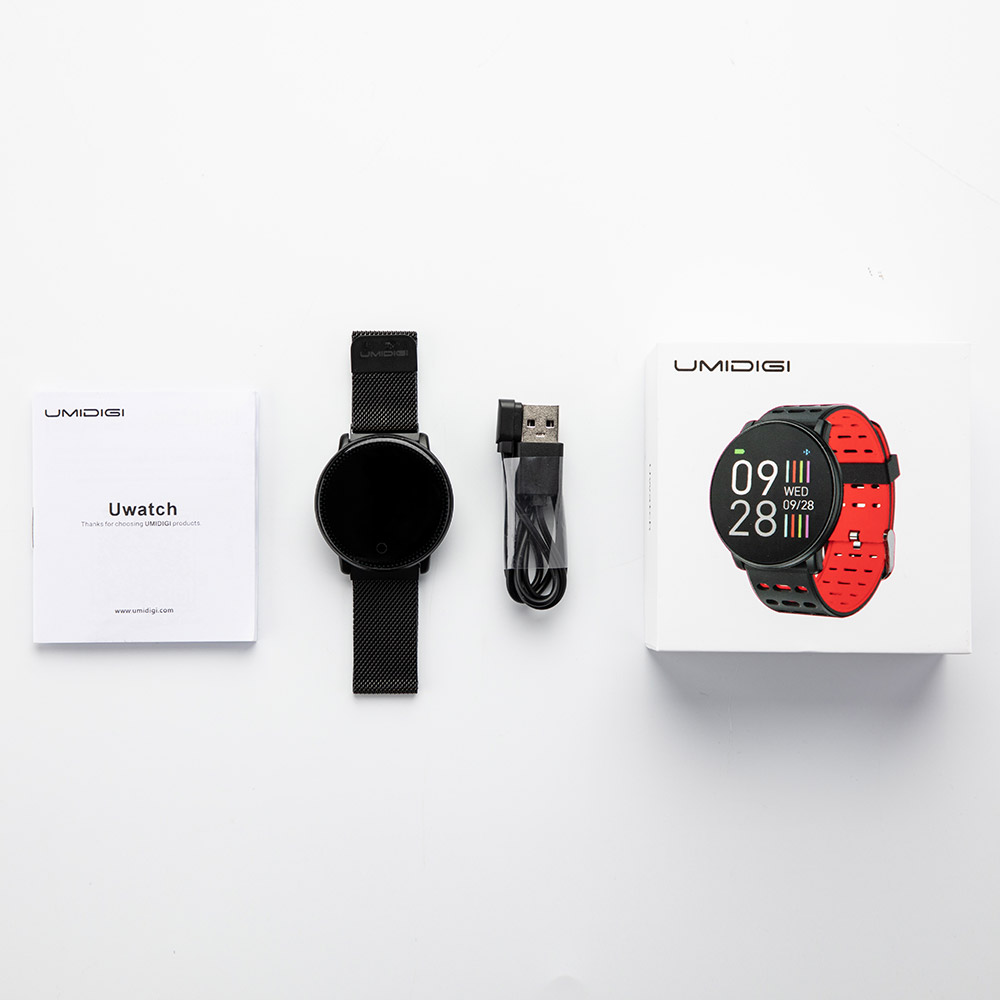
UMIDIGI Uwatch is very much different from a smart band. It comes with several functions including that of telling the time. On the design aspect, the Uwatch looks more gorgeous in many angles. It has a nice-looking design with the traditional circular dial. The strap has a Milanese Black design which is not only attractive but also comfortable to wear. It packs a 180mAh battery inside which can last for 7-10 days on a single charge and if it is on standby, the battery can last up to 25 days.
The Uwatch comes studded with features that make it not just a fitness tracker but a personal assistant. First off, the Uwatch has the feature to alert the user whenever there is an incoming phone call. The wearer can also reject the call using the smartwatch. Users can also view messages sent to their phone on the watch when paired with the smartphone as well as view all notifications from any of the apps on the phone. The smartwatch wakes up when the wearer lifts his/her wrist to check the time. In addition, users can set training goals and when the goal is achieved, an alert with a winning cup is displayed. The smartwatch also has sedentary reminder should the user sit in one place for a long time. Other features include a heart rate monitor, steps and calories counter, sleeping monitor, weather forecast. Users even get the option of customizing the watch face they want on the watch, a feature that isn’t available on all smartwatches.
UMIDIGI is also announcing that the Uwatch will sell for just $29.99 on Gearbest from November 19 to November 25. For more details about the Uwatch, visit the company’s website from here.
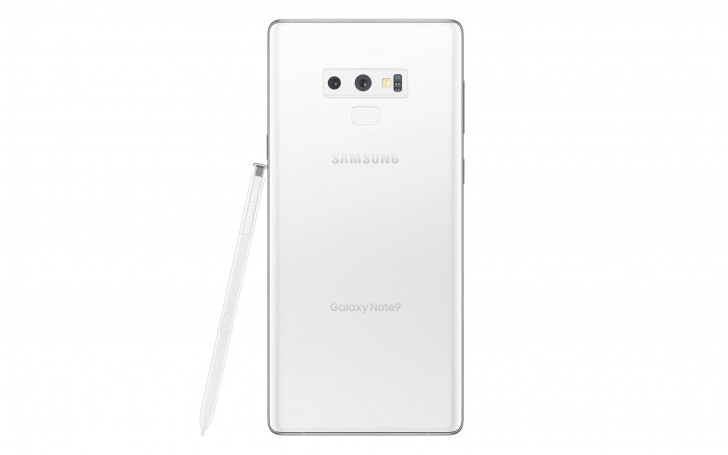
Samsung sure knows how to tweak things up to help boost sales of its phones. The Galaxy Note 9 is set to get a new paint job and in the perfect time too. Samsung will unveil a new Pure White variant of the Galaxy Note 9 on November 23.
The Samsung Galaxy Note 9 Pure White variant first popped into the public radar a couple of weeks back, thanks to popular Twitter tipster Evan Blass but he wasn’t so sure of the authenticity of the picture. However, several sources in China have revealed that the Galaxy note 9 Pure White will launch on November 23 in Taiwan.
The Galaxy Note 9 will be the first Galaxy Note-series smartphone in recent times to be offered in White color after the Galaxy Note 5 which was launched in 2015. Although the Galaxy S7 and S7 Edge were also launched in White colors. Since the new variant will first be unveiled in Taiwan, it is likely it will be made available in other regions too. Do note that with the addition of the Pure White variant, the Galaxy Note 9 is now available in six color options, the others being; Metallic Copper, Lavender Purple, Ocean Blue, and Midnight Black, and Cloud Silver. Availability is usually dependent on the region. We’ll get the full details when the variant is unveiled.
It has been nearly a year since the Honor V10 (Honor View 10) was announced. So it isn’t unusual that we expect Honor to announce a successor soon. Images said to be that of the display of the successor, which should launch as the Honor V20, have been posted online.
The photos show that the Honor V20 will completely ditch the top bezel from the Honor V10 in favor of a notched display that stretches to the top. The display has a waterdrop notch like that of the Huawei Mate 20 and the Mate 20 X, which should give the phone a higher screen-to-body ratio.
[envira-gallery id=”223699″]
The waterdrop notch means the phone will not have the 3D Face Unlock system of the Mate 20 Pro or even the infrared Face Unlock on phones like the Xiaomi Mi 8 or the Pocophone F1. Nevertheless, a fingerprint scanner will definitely be present.
According to XDA-Developers, the update is rolling out first in Mexico. Other than the new features that Android Pie brigs such as Adaptive Battery, Adaptive Brightness and a new navigation; the update also brings November’s security patch.
The Motorola One has a 5.99-inch HD+ screen, a Snapdragon 625 processor and 4GB of RAM. There is 64GB of storage which can be expanded via a MicroSD card slot (256GB max.).
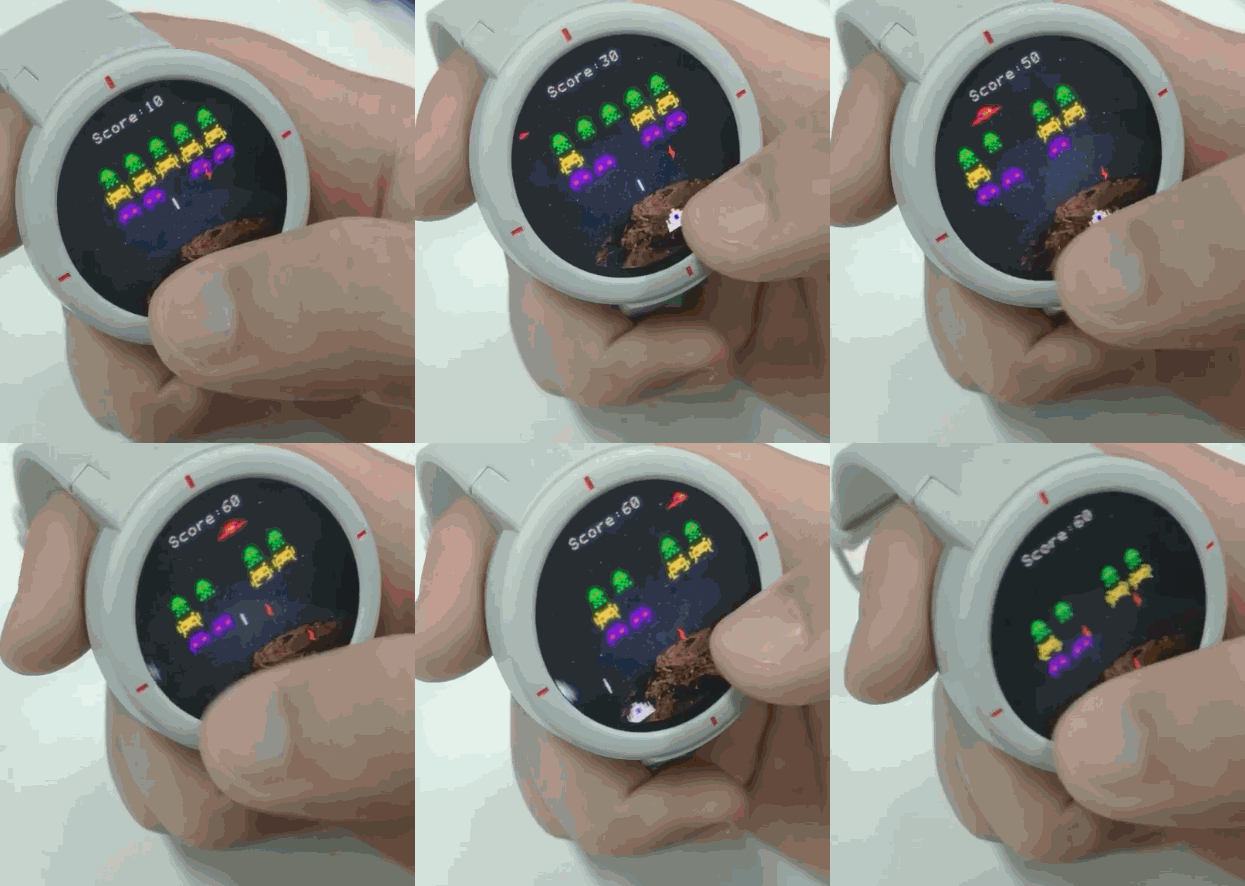
Huami, the brand behind the Amazfit line of smartwatches and Xiaomi’s own fitness trackers may (or may not) soon roll out a new feature to its watches. The new feature will allow you to play mini-games on your Amazfit smartwatch.
The watchmaker took to Weibo to share a short video of a mini-game similar to Space Invaders being played on the Amazfit Verge. Even with its small 1.3-inch, the game is still playable. Other games will likely be similar to the one below, requiring just taps and not having elaborate controls on the screen.
The smartphones market is moving every day more towards midrange devices as they offer a much higher quality-price ratio. But there is another niche of devices which contains some of the most-wanted phones: affordable flagships. Xiaomi Pocophone F1, Honor Play and Asus Zenfone 5z had a big impact in the market because they offer flagship-class hardware components at a midrange price. Here is a specs comparison between them.
Xiaomi Pocophone F1 vs Huawei Honor Play vs Asus Zenfone 5z
Dual 12 and 5 MP, f/1.9 and f/2.0
20 MP f/2.0 front camera
Dual 16 + 2 MP f/2.2 and f/2.4
16 MP f/2.0 front camera
Dual 12 + 8 MP f/1.8 and f/2.0
8 MP f/2.0 front camera
BATTERY
4000 mAh, Fast charging with Quick Charge 3.0
3750 mAh, Fast Charging 18W
3300 mAh, Fast Charging with 9V / 2A
ADDITIONAL FEATURES
Hybrid Dual SIM slot
Hybrid Dual SIM slot
Hybrid Dual SIM slot
Design
The design is not the strongest point of the Xiaomi Pocophone F1. In order to cut costs, Xiaomi decided to opt for a full polycarbonate body which is the cheapest material it could choose. Asus Zenfone 5z has the most original aesthetics with a full metal unibody design and an elegant brushed effect, while Huawei Honor Play sits in the middle with a full metal body and U-shaped antenna bands.
Display
Asus Zenfone 5z is a step forward when it comes to display quality because it sports a more accurate color reproduction thanks to its 96 percent DCI-P3 coverage. Xiaomi Pocophone F1 and Honor Play have midrange-class IPS panels which offer nothing special in terms of viewing quality, but they are sufficient.
Specs & Software
Basing on my tests, Xiaomi Pocophone F1 provides better performance thanks to its Snapdragon 845, up to 8 GB of RAM and an optimized version of MIUI with gaming-centric features. The second place belongs to Asus Zenfone 5z which is almost at the same level, while Honor Play’s Kirin 970 behaves slightly worse than Snapdragon 845.
Camera
Asus Zenfone 5z has surely the most interesting cameras. Unlike its opponents, it features optical stabilization, and it even has wide angle lenses both on the front and on the back. Xiaomi Pocophone F1 and Honor Play are more or less at the same less (with Pocophone F1 being slightly better in some scenario) with a mediocre quality.
Battery
Xiaomi Pocophone F1 has a huge 4000 mAh battery which provides several hours of nonstop gaming. It is the longest lasting and it is followed by Huawei Honor Play and its 3750 mAh unit. At the last place, we find the Asus Zenfone 5z with an average 3350 mAh battery.
Price
If we consider price, Xiaomi Pocophone F1 is definitely the device with the best value for money because of its great performance and battery (you can get it for about €300/$343). But overall, Asus Zenfone 5z is the best phone of the trio, even though it costs about €450/$515. Honor Play offers a good design and builds quality at (more or less) the same price as the Xiaomi Pocophone F1, so it is a bit more balanced.
Last week, it was reported that Xiaomi had entered into a partnership with its fellow smartphone manufacturer, Meitu. Full details of the Strategic Cooperation Agreement, as the partnership is being referred to, have been revealed by Meitu.
In an official document released by Meitu, Xiaomi will get an exclusive global license to use the Meitu brand name and global license of certain technologies and domain names in relation to all future Meitu branded smartphones excluding the Meitu V7 (this might be the upcoming triple camera phone that appeared on TENAA).
Xiaomi and Meitu will co-develop smartphones which may likely be launched under a third sub-brand and targeted at female users. The document says the phones will be designed, developed, manufactured, marketed, and sold by Xiaomi while Meitu will provide the imaging technology and algorithms used in them.
Apart from smartphones, Xiaomi will also be able to manufacture other products with the Meitu brand name except for “skin-related smart hardware products” (We have no idea what Meitu means by this).
The partnership will be split into two phases:
Phase 1 – There will be a specified quantity of co-developed smartphones to be sold. When Xiaomi reaches this pre-determined figure, it will pay Meitu 10% of the gross profit share for each phone sold. This will continue until Meitu has received, within a 5 year period, a cumulative gross profit share of a specified amount or a total payment of the specified amount from Xiaomi. At the end of this period, Xiaomi may decide to continue with the partnership which will proceed to phase 2 or terminate the partnership.
Phase 2 – Meitu says Xiaomi will pay it a specified amount for each co-developed smartphone sold for a period of 30 years which is subject to an annual minimum guaranteed amount of USD 10 million.
For other co-developed products (non-phones), Meitu is entitled to 15% of the gross profit share from the sale of each item for a period of 30 years.
In the official document, Meitu revealed it has sold 3.5 million smartphones since it ventured into the business in 2013. While that is a small figure, Meitu says it is proud of it considering the small size of its business team. However, the need to grow its user-base has led to its decision to work with a partner, in this case, Xiaomi.
The choice in picking Xiaomi is because of its record smartphone sales (over 100 million units sold from January 2018 to October 31, 2018) and its large IoT platform which has 132 million smart devices excluding phones and computers as at the end of Q3 2018.
Meitu also revealed that the co-developed phones will come pre-installed with Meitu’s own photo and social network apps which should result in a growth in their user base.
Chinese tech giant and Hong Kong Stock Exchange-listed company Xiaomi Corp. has published its financial report for the third quarter of the year 2018. The report shows the company’s revenue for Q3 was 50.8 billion yuan, representing a 49.1% increase year-on-year. The company also posted an adjusted profit of 2.9 billion yuan which is an increase of 17.3% which significantly exceeded market expectations.
The financial report shows Xiaomi’s growth last quarter has been a strong one among which its overseas business, Internet of Things (IoT)/consumer goods and internet services business all grew rapidly. This holistic growth lends some credibility to the company’s posture as a complete internet company and not just a smartphone maker.
Furthermore, the breakdown shows Xiaomi’s mobile phone business revenue for the period was 35 billion yuan, which is an increase of 36.1%. Most of the sales from the mobile phone business were from smartphones with a revenue of 33.3 billion yuan, an increase of 20.4% over the same period last year. As of October 26, Xiaomi’s smartphone shipments exceeded 100 million units throughout the year. Xiaomi also disclosed that by the end of the third quarter of 2018, the shipment of Xiaomi Mi 8 series was close to 6 million. In addition, the company’s high-end mobile phones accounted for 31% of the total revenue from mobile phones.
The period under review also saw a slight increase in the average selling price (ASP) of Xiaomi phones year-on-year and quarter-on-quarter. In the third quarter of 2018, mobile phone ASPs in China and overseas increased by 16% and 18% respectively. In addition, in the third quarter, Xiaomi continued to promote the multi-brand strategy of the mobile phone business to serve more market segments and win a larger and more diverse user base.
Apart from the mobile phone business, Xiaomi’s income from its internet service segment also continued to grow, reaching 4.7 billion yuan in the third quarter of 2018, a year-on-year increase of 85.5%. Among them, advertising revenue increased by 109.8% year-on-year. MIUI monthly active users were also reported to have reached 224 million in the third quarter, up by 43.4% year-on-year. At the same time, the average revenue per user (ARPU) for the quarter was 21.1 yuan, an increase of 29.4%. IoT and consumer goods business contributed revenue of 10.8 billion yuan in the third quarter, an increase of 89.8%. The total revenue of the business in the first three quarters of 2018 reached 28.9 billion yuan, which exceeded the total income of IoT and consumer goods business which peaked at 23.45 billion yuan. According to the financial report, Xiaomi AI Assistant Xiaoai’s monthly users also exceeded 34 million yuan in the quarter.
OPPO recently announced a few days back that it will be revealing some “good things to share with us” about ColorOS on November 22. ColorOS is OPPO’s proprietary custom interface on top of Android and this will be its fifth anniversary. Hence, the company has some new updates in store for us. A recent invite letter shared with the press revealed that the new ColorOS is very different from earlier versions. While much still remains a mystery about the new product, OPPO just released a poster on social media hinting at a new feature.
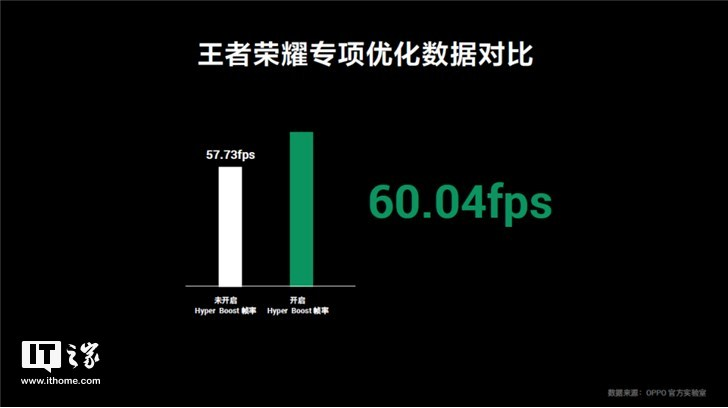
As per the new poster, smooth and stable gaming should not be a feature relegated to flagships. From what the statement hints, it seems OPPO might be bringing its GPU acceleration technology called Hyper Boost to low-end smartphones. Hyper Boost is OPPO’s equivalent of GPU Turbo which was released by Huawei. It not only improves gaming but also boosts system performance and applications with the help of the system engine and application engine.
Not only does it speed up app load times by 32 percent, but OPPO has also worked closely with 11 popular mobile game developers to optimize 100 games for its devices. The next step is to use AI to enhance the technology even further and partner with even more game developers.
As per the company’s announcement, 17 new models will already be getting the new software accelerator and we could see more added to that list when OPPO announces the new ColorOS. Apart from Hyper Boost, we just might see the company create a roadmap for devices likely to receive Android Pie. It’s about time OPPO started doing it.
The Nubia Red Magic Mars (Red Magic 2) has been making its way across benchmark sites this month. Last week, it was benchmarked on Master Lu and AnTuTu, with scores higher than that of any Android Phone in the market at the moment. Now, it has been spotted on Geekbench.
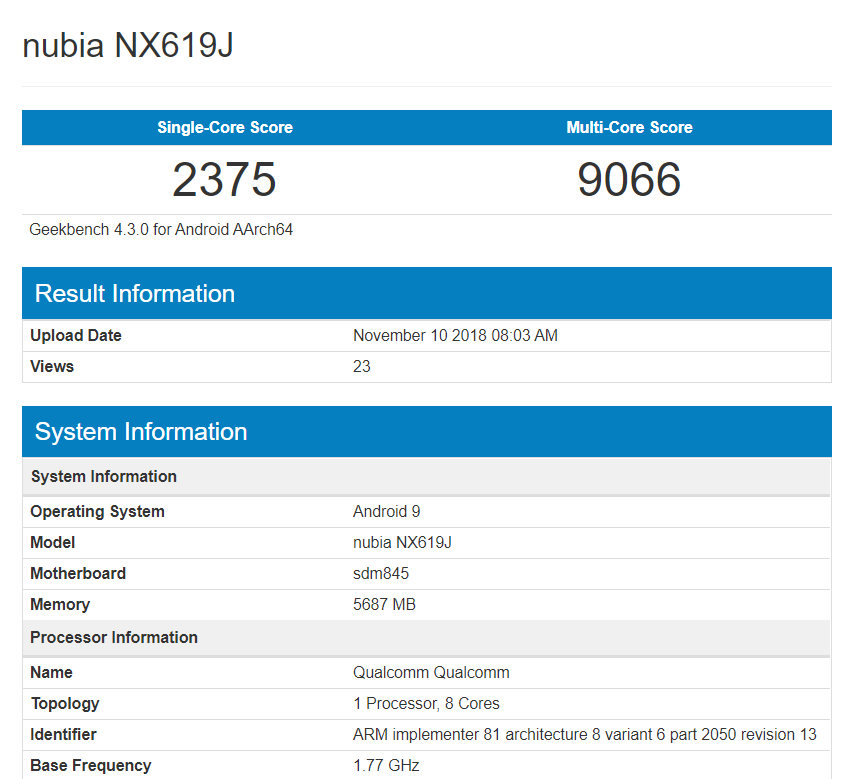
The phone is benchmarked as the “nubia NX619J” once again. It runs Android 9 Pie, is powered by a Snapdragon 845 processor (sdm845) and has 6GB of RAM.
This is the third RAM variant we have seen. Teaser posters already confirmed the phone will have a 10GB RAM version while the version benchmarked on AnTuTu and Master Lu has 8GB of RAM.
The Red Magic Mars scored 2375 points in the single-core test and 9066 points in the multi-core test. The scores are similar to that of other gaming phones like the Razer Phone 2 and the Black Shark gaming phone.
The phone will come with a dual cooling system, shoulder buttons, 4D smart shock, DTS 7.1 surround sound, and a Smart PA amplifier.
A Meitu phone with the model number MP1801 was seen on TENAA a few days ago. Sadly, no images of the phone were provided along with the listing. The page has now been updated with photos which give us a good look at the phone’s design ahead of its official unveiling.
The first thing you notice is the phone’s triple front-facing cameras. The sensors are pretty large and are housed in a notch that is visible when you brighten the photo. There is a sensor flanking the cameras at each side of the phone. Apart from the cameras, the phone’s orange frame is also visible at the top and bottom of the phone.
The image provided of the rear shows the phone is covered in a mix of leather and metal. The leather covering the upper part above the camera seems to be pale pink while that of the lower half is mint green with orange dots trailing the middle. There are also four holes at the bottom – two on each side.
[envira-gallery id=”223306″]
The camera housing is a large hexagon with a metal frame that runs across and connects to the main frame of the phone. The Meitu MP1801 has dual rear cameras and is flanked by dual LEDs on each side. The phone has its volume rocker on the left while the power button along with another button which we believe is a dedicated camera shutter are on the right side.
The listing mentions a fingerprint scanner but there isn’t one on the back or sides of the phone which means it is probably buried under the display.
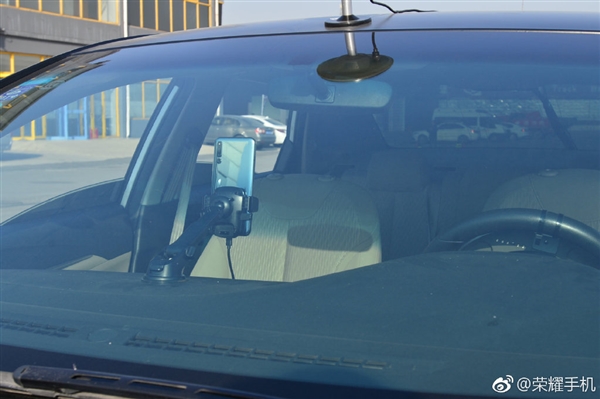
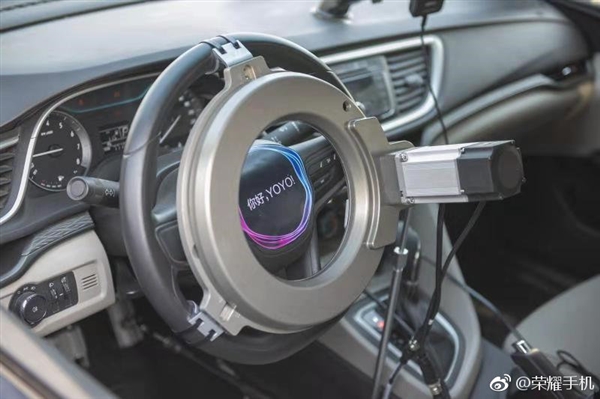
Huawei’s Honor brand has once again demonstrated the AI capabilities of its latest Honor Magic 2 flagship. The flagship phone was used to navigate a driverless car. The feat was achievable with the smartphone as a result of the powerful features it comes with. One of such is the powerful Kirin 980 AI chipset which is said to provide a superior computing powerAnother feature that plays a big role in the ability of the phone to aid navigation of the car without a real driver on the driving seat, is the advanced AI Assistant called YOYO. YOYO has tons of features similar to what other assistants offer but it also has a feature similar to Google’s Duplex. During the Magic 2 launch, Honor showed a video of the YOYO assistant making a hotel reservation for its owner. The company also touted that owners of the Magic 2 will also be able to use the YOYO assistant to control DJI drones by voice. There was also a live demonstration of this at the launch where Honor’s CEO used his voice to ask the drone to take off, take a picture of him, and also land.
The driverless car control feature is yet another amazing capability of the virtual assistant. The Magic 2 is fixed on the dashboard in front of the co-pilot in order to capture the front view using the triple wide-angle camera setup onboard the device. The steering wheel is also specially modified to control the steering direction of the vehicle by controlling the steering wheel through YOYO. With a supposed IQ of 4556 points, we may just see more features of YOYO come out soon. However, we doubt if this driverless car will go commercial soon. The car was perhaps driven on a private track and it may be a while and face lots of regulatory hurdles before it can be tested on the motorway. We are not sure how it will handle the presence of other road users but it further beefs up the prospect of a self-driven car hitting the market in no distant time, powered by your smartphone!
The mobile industry is a battleground. While some companies record growth others struggle to stay afloat. Latest reports say Chinese smartphone manufacturer, Smartisan belongs to the latter category.
Last week, a Chinese publication reported that Smartisan is facing a crisis. It said it is planning a massive layoff (about 60%) as the company is facing financial difficulties with more than half of its income gone. The article also mentioned issues with the TNT workstation and that the CEO, Luo Yonghao was suffering from depression.
Mr. Yonghao saw the article and claimed it was inaccurate. He even threatened to sue the publication. Later that day, the official Smartisan Weibo account shared a letter it sent to the publication saying the post was filled with baseless accusations against it and its CEO. The memo also requested that the publication retract the post or face legal consequences. However, the publication responded that it wasn’t afraid of a lawsuit as it had multiple sources to back up its claims.
In a separate Weibo post, the CEO touched on the issue about his health. He revealed that there are actually a number of partners and investors who believe he is battling depression and as the person in charge, he is required to provide a medical certificate to the board.
Today, another report surfaced, saying that Smartisan has admitted to the claims that it is facing a crisis. The company was said to have come clean in an interview with Securities Daily, a local publication. It didn’t go into details but requested that it be given more time, probably to sort things out.
Once again, Mr. Yonghao has denied it and said the claims are false and salaries are not owed. Apparently, the publication alleged it spoke to a Smartisan staff and is not willing to disclose his identity.
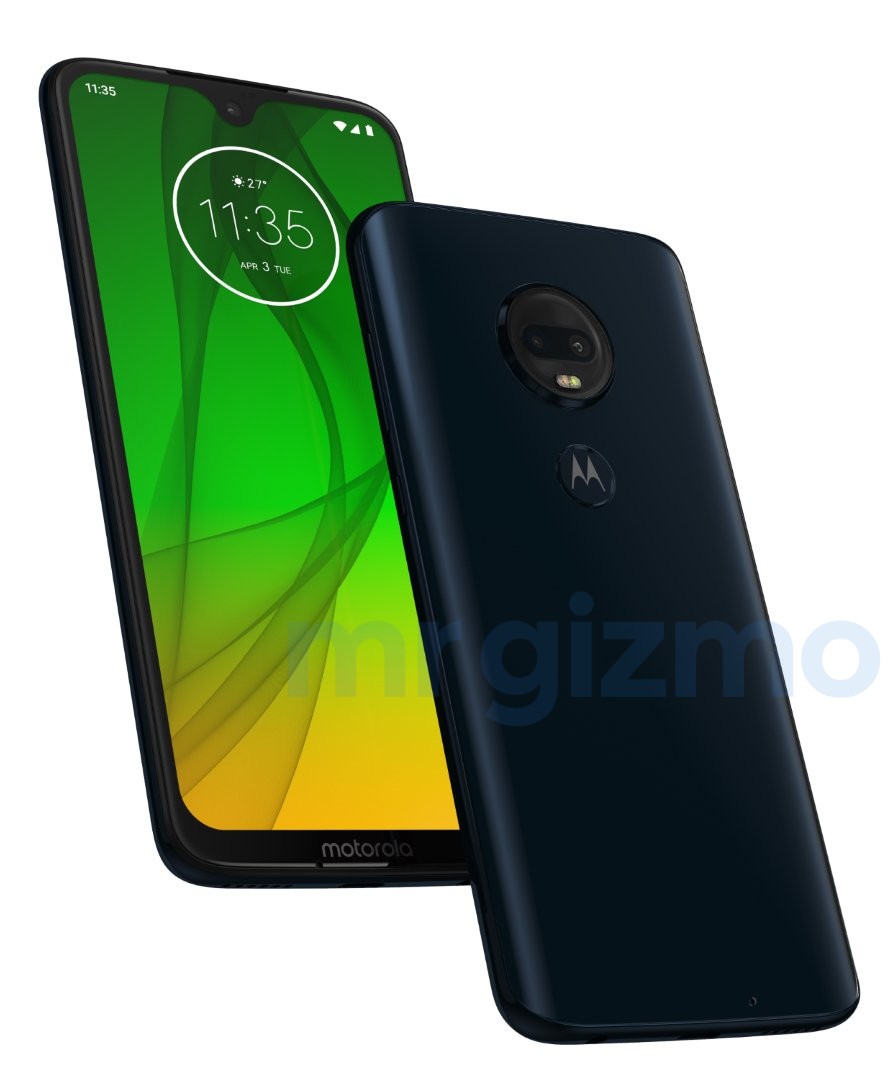
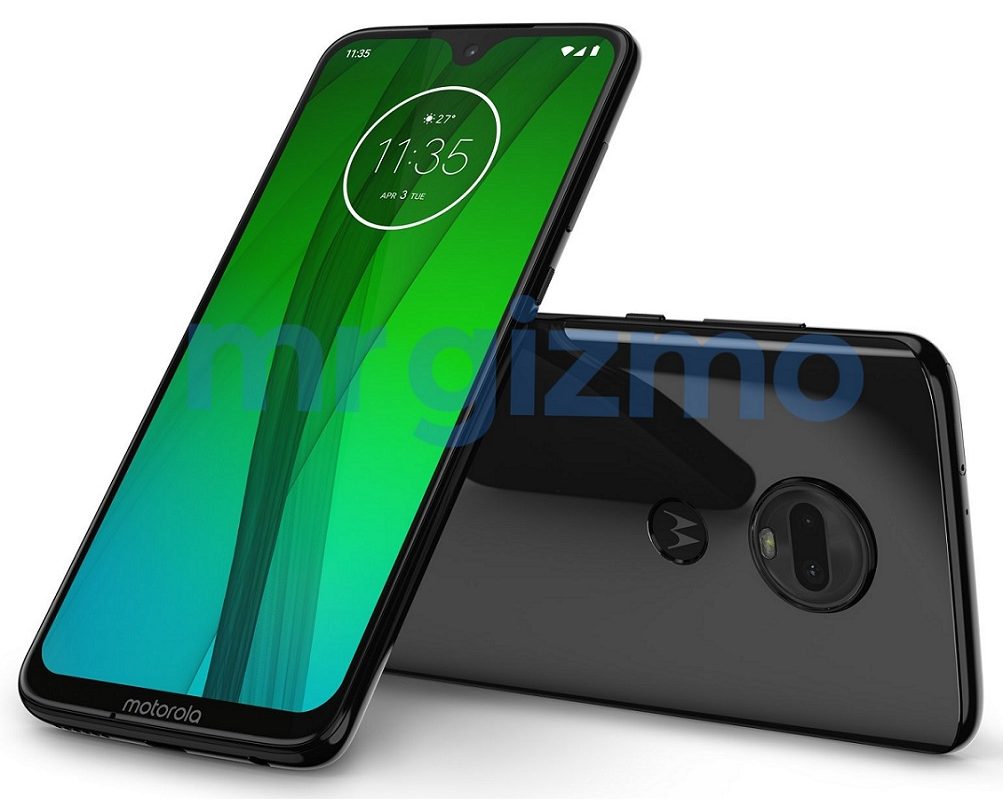
A render of the upcoming Motorola Moto G7 smartphone had appeared in the previous week. The same source has also revealed a render of the Moto G7 Plus smartphone. Like the Moto G7, the G7 Plus is also speculated to arrive with a waterdrop notch display design.
The above render shows that the Moto G7 Plus will be featuring a waterdrop notch screen like the Oppo F9 Pro and Vivo V11 smartphones. The predecessor Moto G6 Plus had featured an 18:9 aspect ratio. The chin of the G7 Plus is slightly thick compared to the side bezels. Still in comparison to the predecessor model, the G7 Plus seems to offer higher screen-to-body ratio.
The back panel of the Moto G7 Plus appears to be made out of glass. It tapers towards the frame of the device. A recent report had suggested that Moto G7 / G7 Plus could be first G-series phone to come feature Qi wireless charging support.
Like the predecessor model, it has a circular housing for the horizontal dual camera setup and LED flash. Below the camera sensors is the Moto batwing long that seems to be embedded with a fingerprint scanner. The overall design of the phone is not very different from the Moto G7. Hence, it appears that the two phones may differ in specs including display size.
Moto G7 Plus Specifications (Rumor)
The Moto G7 Plus is expected to arrive with a 6.4-inch display that will produce FHD+ resolution. The notched screen will allow the handset to offer an aspect ratio of 19.5:9. It could be fueled by Snapdragon 660 chipset or the more powerful Snapdragon 710 chipset. It may feature up to 6 GB of RAM and up to 128 GB of storage.
For photography, it is likely to arrive with 16-megapixel + 5-megapixel dual camera setup. The handset could be equipped with a 3,500mAh battery. The company may release it with Android 9 Pie OS preinstalled.
It is speculated that the Moto G7 may feature a smaller Full HD+ waterdrop notch display of 6 inches. The Snapdragon 660 SoC or Snapdragon 636 chipset power the phone along with 4 GB of RAM. The highest model of the phone may feature 64 GB of inbuilt storage.
It could be arriving with 12-megapixel front camera and 16-megapixel + 5-megapixel dual camera setup. A smaller battery of 3,000mAh capacity may power the Moto G7.
What’s your opinion on the display design of the Moto G7 and G7 Plus? Share us your views by posting your comments below.
Huawei has been actively working on a foldable phone that will also carry support for 5G connectivity. Around two months ago, the Chinese manufacturer had confirmed that it will be launching its a foldable phone within a year. Fresh information revealed by ET News publication claims that the Chinese manufacturer has already showcased the final product instead of a prototype to the carriers in South Korea.
An industry insider has claimed that Huawei had indeed shown a completed foldable phone. However, he refrained from revealing the specifications and usage patterns of the smartphone.
It appears that South Korea could be one of the first markets to receive Huawei’s first 5G foldable phone since it is the only country along with the U.S. where commercialization of 5G networks are expected to happen by the first half of 2019. In the second half of 2019, the 5G networks may get commercialized in Japan, China and Europe. Probably, the phone may release in the second or third quarter of the coming year.
The report further reveals that the Chinese manufacturer may showcase its foldable phone at the Mobile World Congress (MWC) 2019 in February next year. The handset will be reportedly featuring flexible OLED panels supplied by China’s BOE display maker.
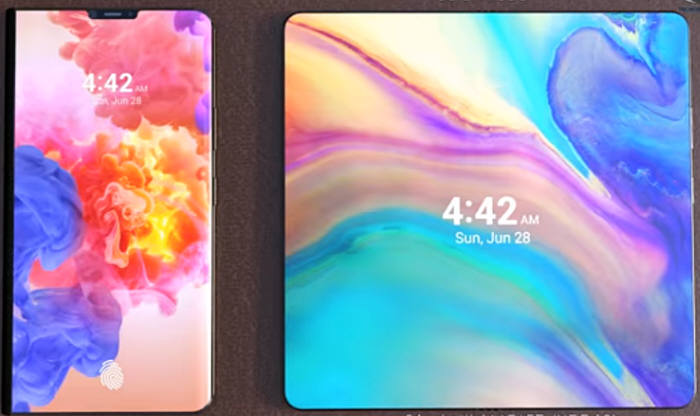
Huawei 5G foldable phone render
When folded, Huawei’s foldable phone will offer a screen space of 5 inches and when unfolded, it will provide a screen area of 8 inches. In comparison, the outer display of the Samsung’s foldable phone will be of 4.6 inches and the inner screen will be of 7.3 inches.
Previous reports have revealed that for 5G connectivity, the company is expected to use Balong 5000 5G modem on its foldable phone. It may also come equipped with an under-display fingerprint scanner.
Samsung had recently showcased its foldable phone at the Samsung Developer Conference (SDC) 2018. At the event, it only revealed the folding mechanism of the flexible display along with screen specifications. The smartphone is speculated to get announced in March. There is a possibility that Huawei end up launching the foldable phone before Samsung.
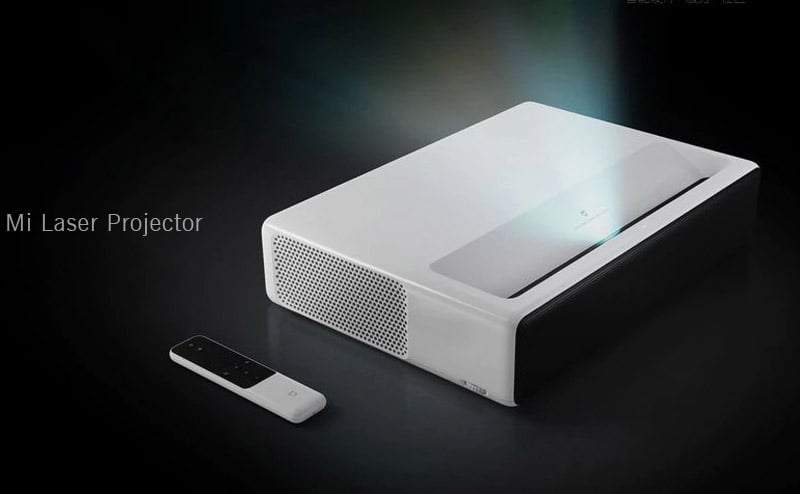
Xiaomi first announced the Mi Laser Projector in June 2017 in China and since then the projector has been a very popular product in China. It has not been officially launched in any other country outside China but is readily available from e-retailers who ship to most regions. The Mi Laser Projector has got its first physical store listing outside China as the device is now available in the U.S via retail chain Walmart.
The Mi Laser Projector joins a very scanty list of Xiaomi products that are available in the US. It comes with a lofty $1,999.99 price tag which is higher than the 9999 Yuan($1,470) price it sold for in China. However, if you factor in customs duties and other charges, the higher price tag is justifiable. In addition, it comes with free shipping and warranty, perks that won’t be available if you’re shipping from overseas.
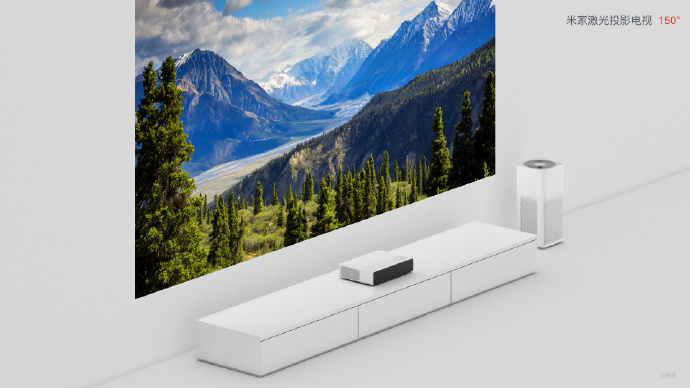
The Mi Laser Projector is an ultra-short throw projector that can be placed between 5 and 50cm away from the wall. The device is capable of producing an image up to 150 inches in diagonal in 1080p resolution. Xiaomi promises up to 5,000 lumens of brightness and 3000:1 contrast. Picture quality is assured as a result of the use of advanced laser fluorescence display technology (ALPD 3.0) and several other features.
Walmart also has a number of Xiaomi gadgets listed on its website such as light bulbs and bedside lamps. The new Mi Box S 4K HDR Android TV is also available exclusively on Walmart priced at just $60.
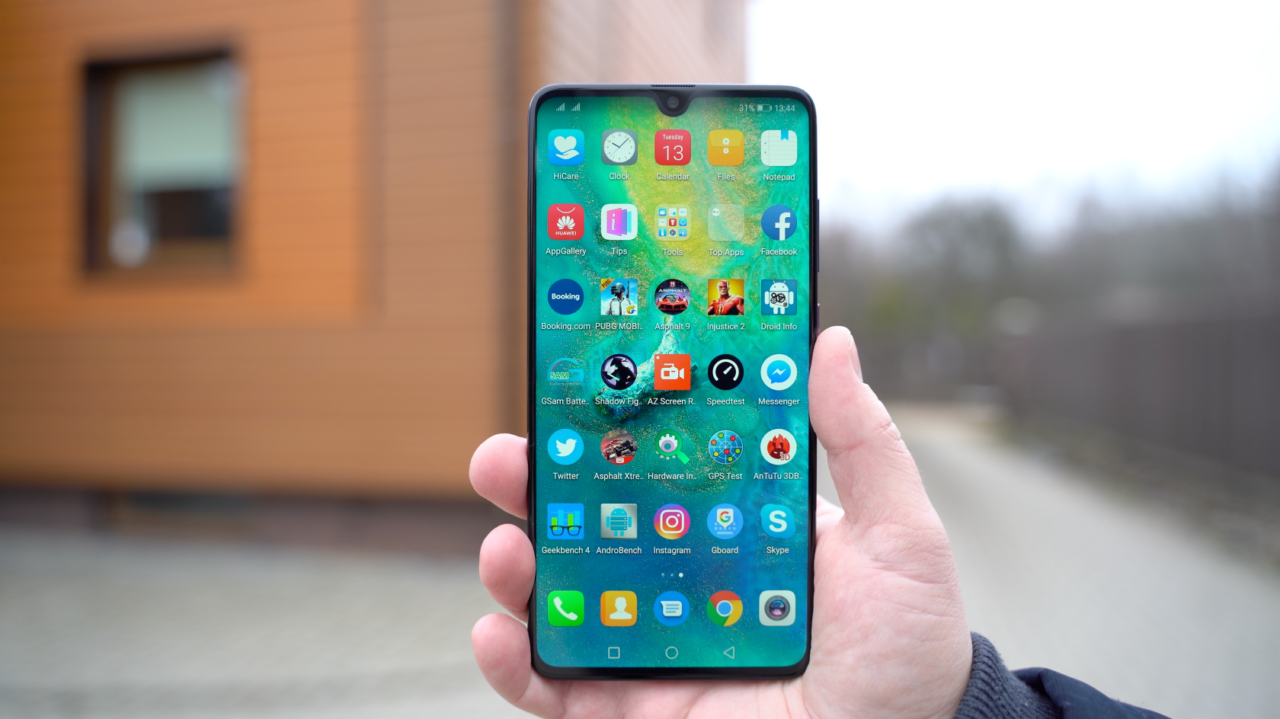
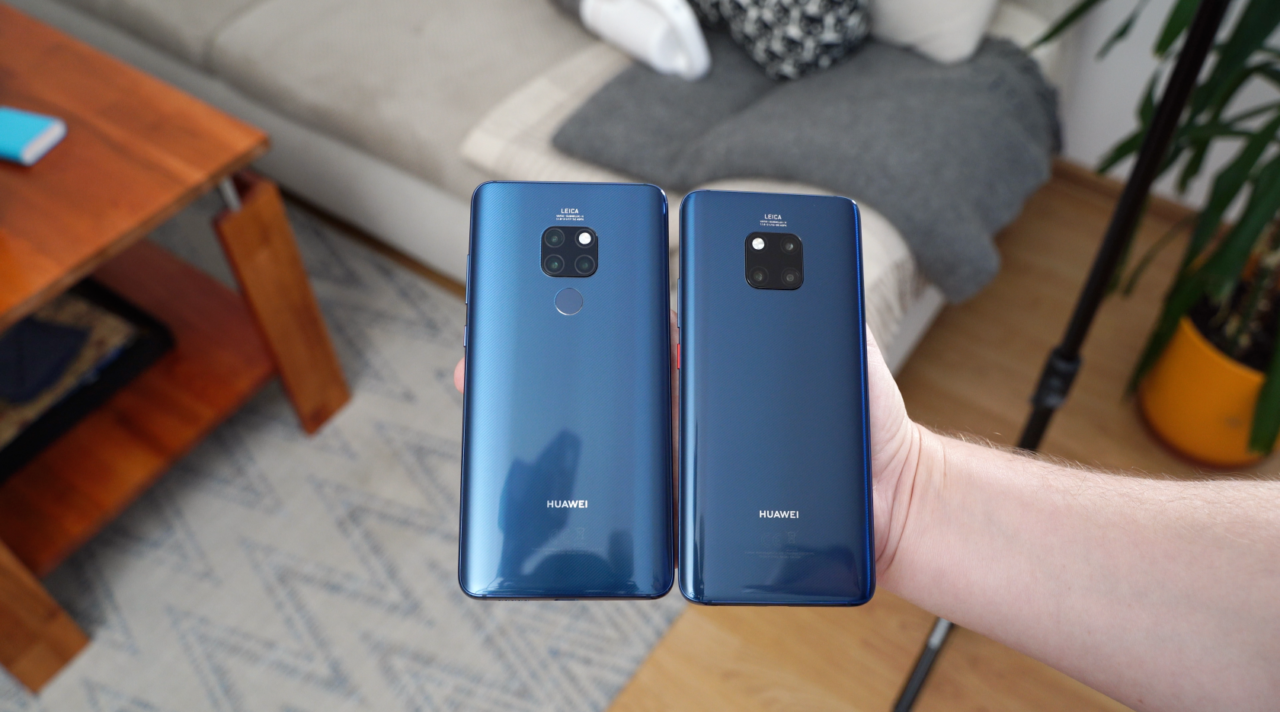
It seems that everyone is talking about the Huawei Mate 20 Pro as it is one of the most complete smartphones of 2018. Well, we agree with that and we suggest you check out our detailed review of the Pro model. However, the Mate 20 is about $200 cheaper and it has most of the features of the Pro model but it also has a few flaws to consider.
In this review, I will take a look at all the pros and cons of this device after using the phone for one month. I will also take a look at the similarities and key differences to the Mate 20 Pro, so you can make a better buying decision if you are interested in any of these phones. Learn more in our full Huawei Mate 20 review.
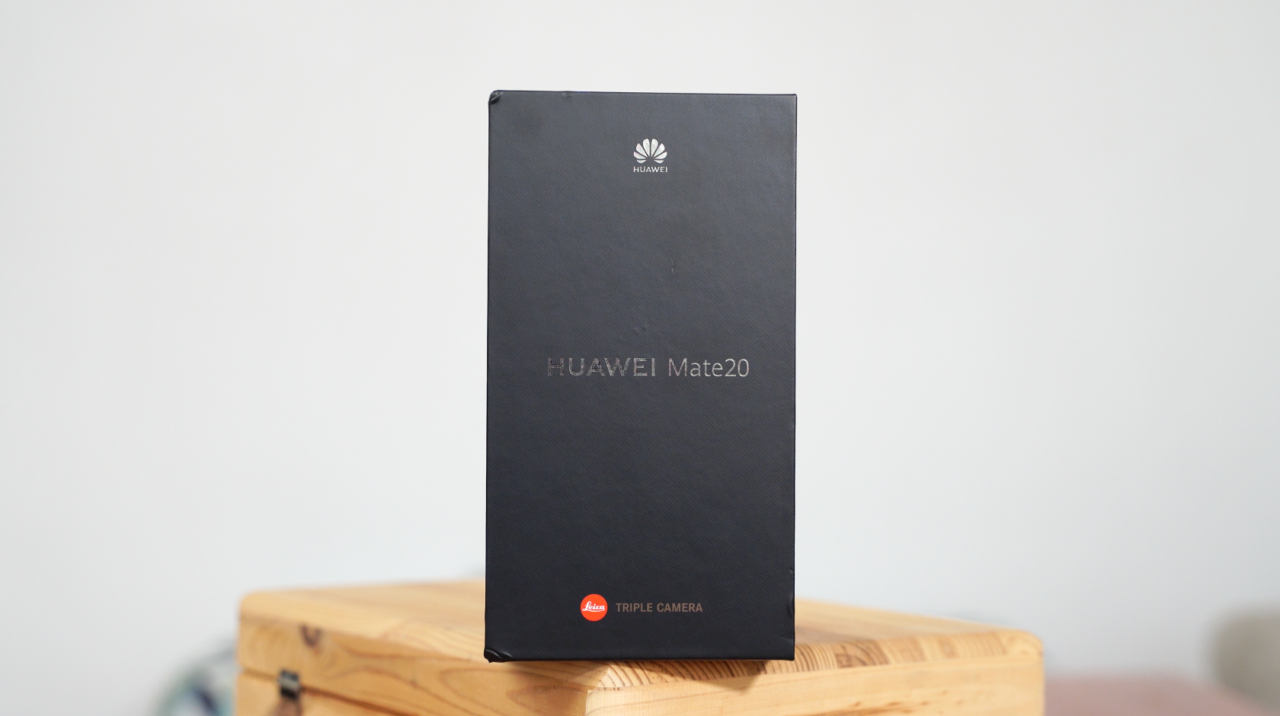
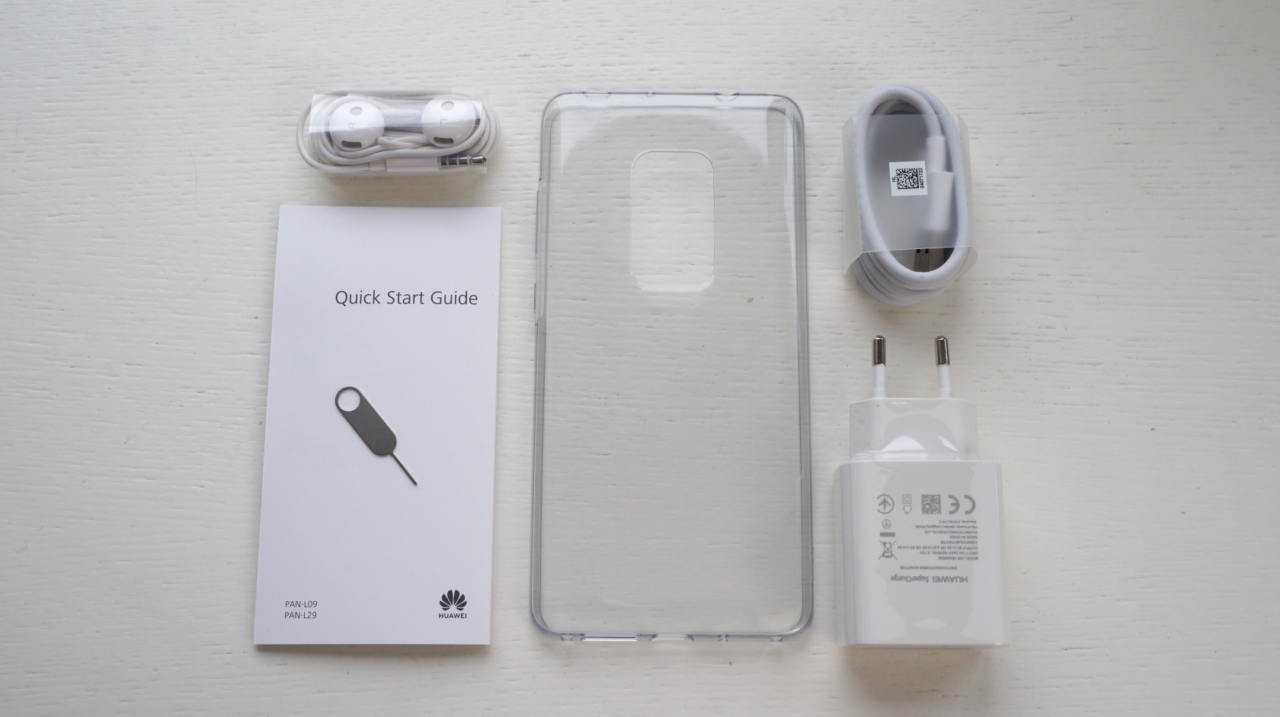
Inside the packaging, you get all the usual items and some extras include a pair of earphones. In addition, my phone shipped with a soft TPU case but the inclusion of this accessory depends on the region or market.
DESIGN and DISPLAY
I’ve been using the Mate 20 Pro since the official launch and I have to tell you that Mate 20 is similar in a lot of ways.
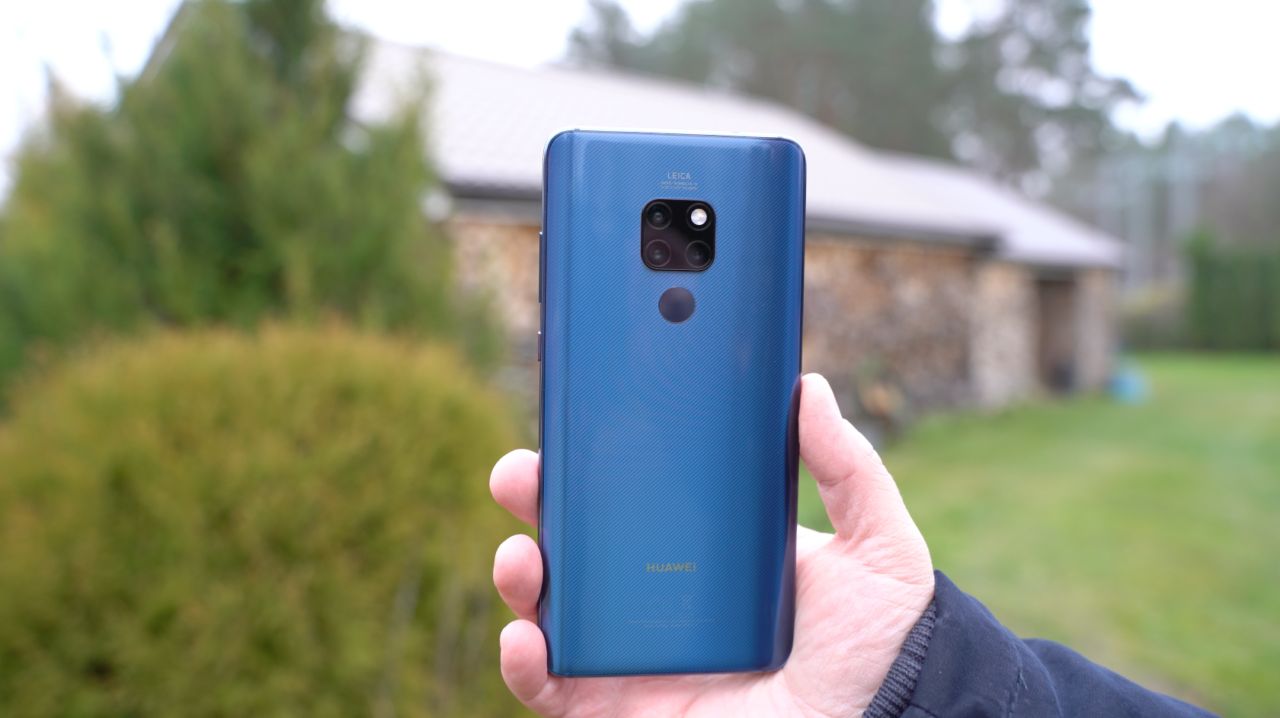
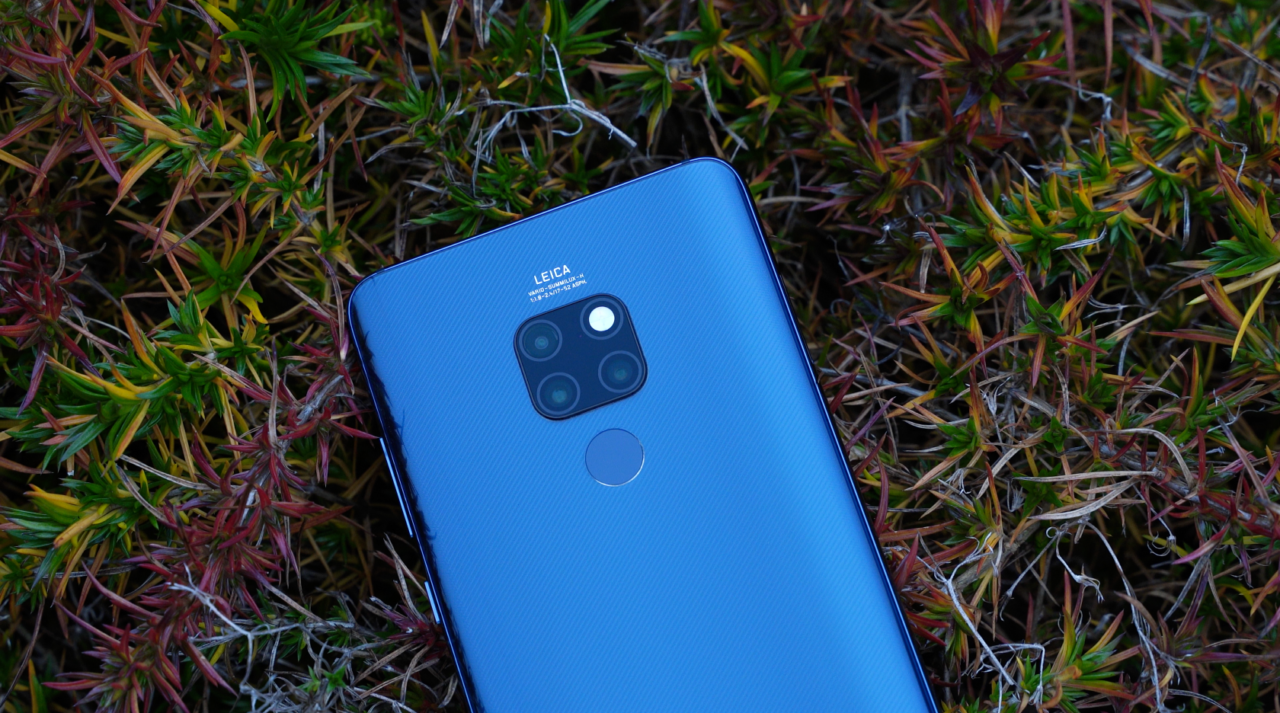
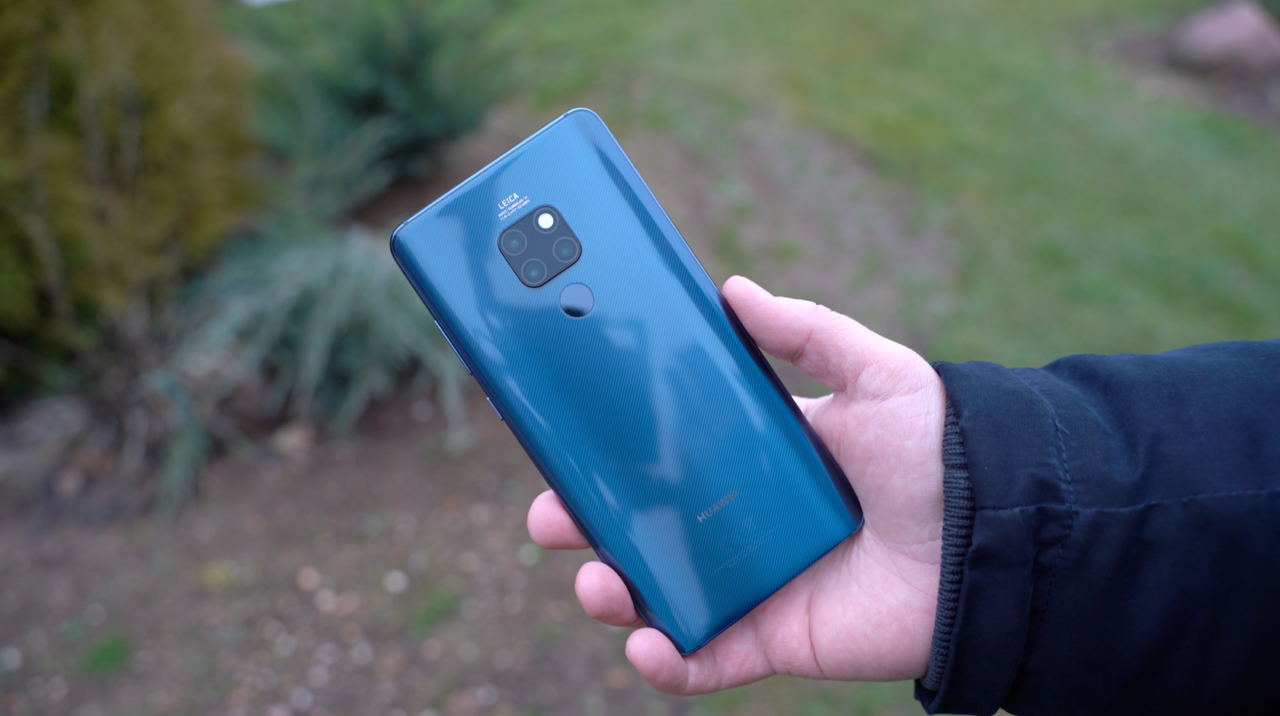
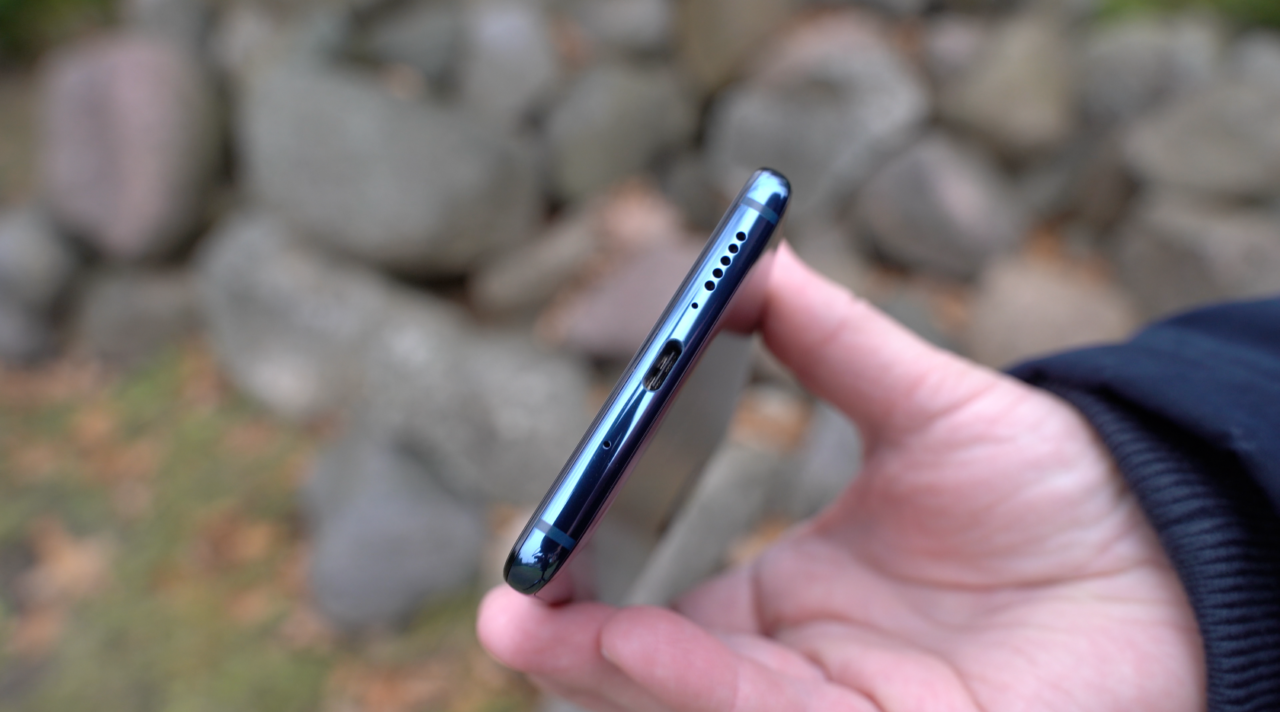
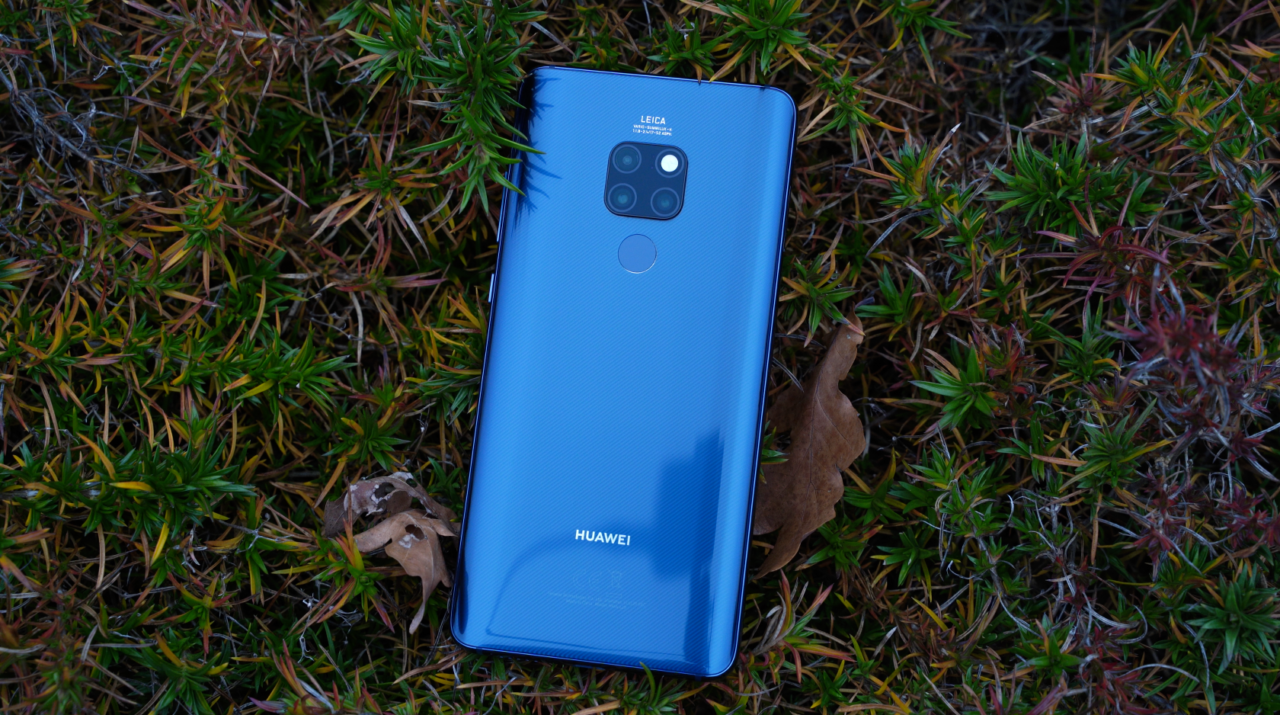
It’s made of glass and aluminum, the blue color option has a nice textured finish and a special coating that does not attract fingerprints and smudges so easily like conventional glass.
Just like the Mate 20 Pro, the Mate 20 is sturdy and well-made and I’m yet to see any scratches on it after using the phone for quite some time.
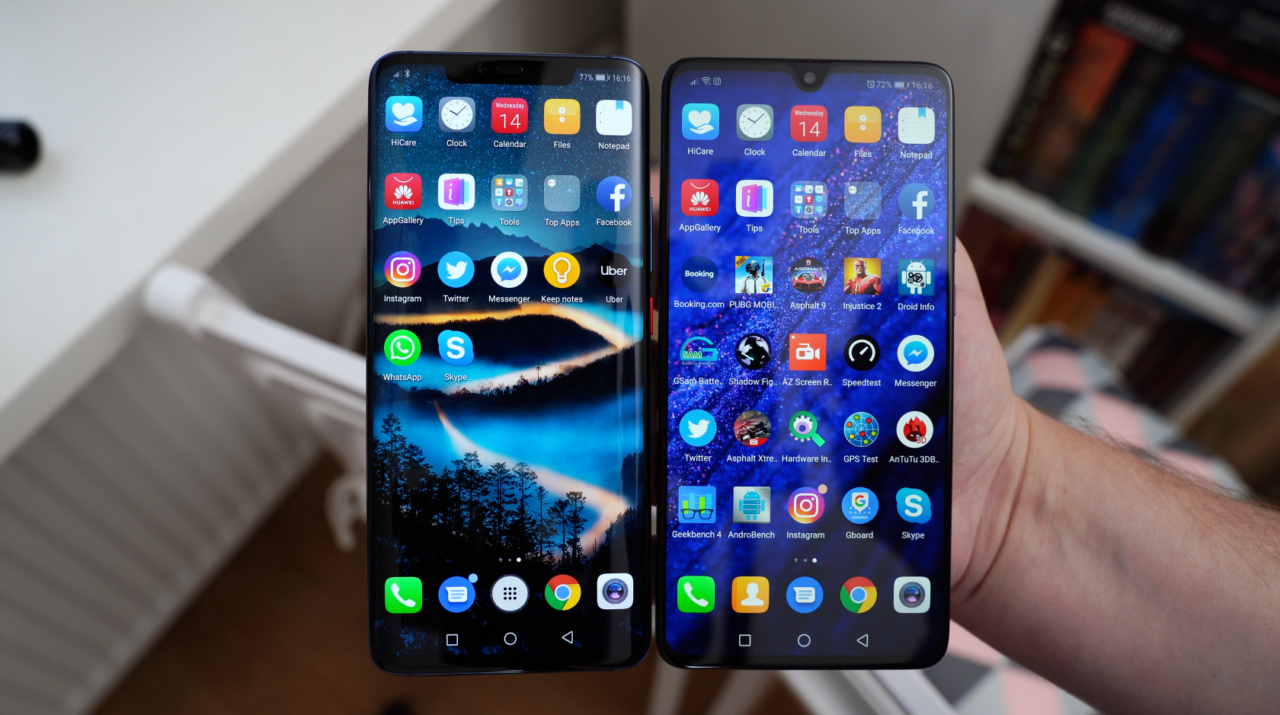
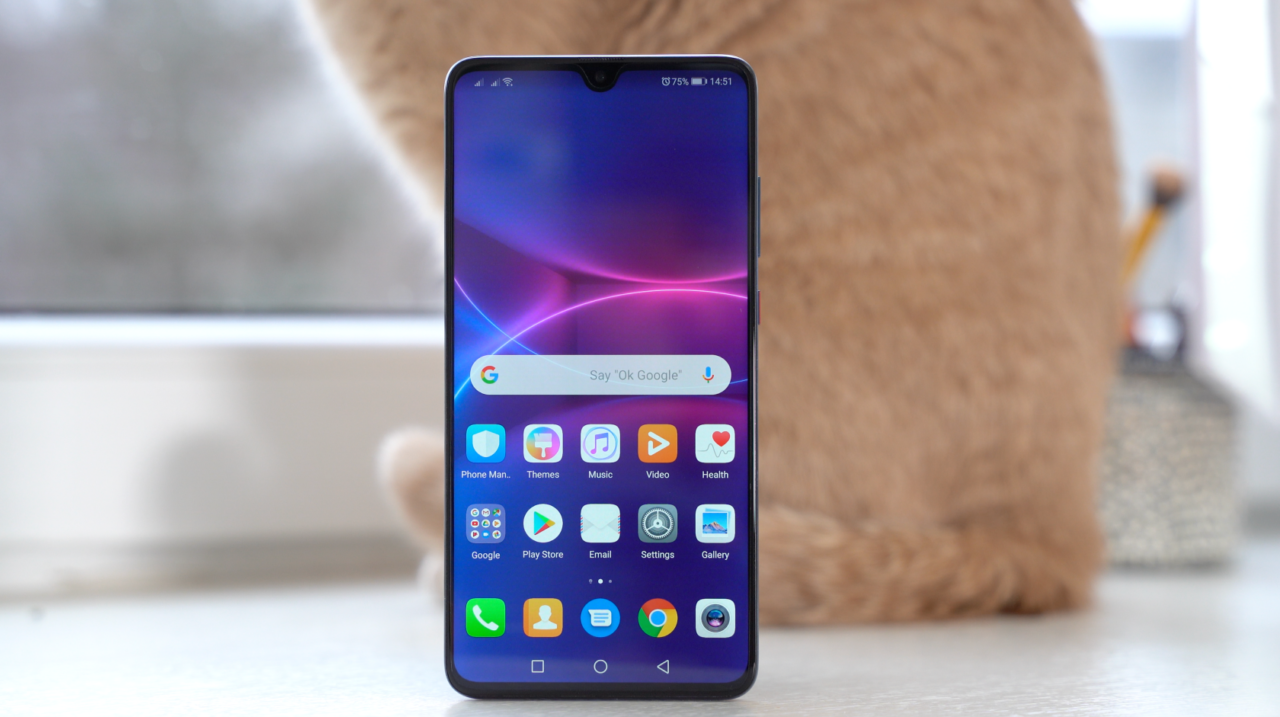
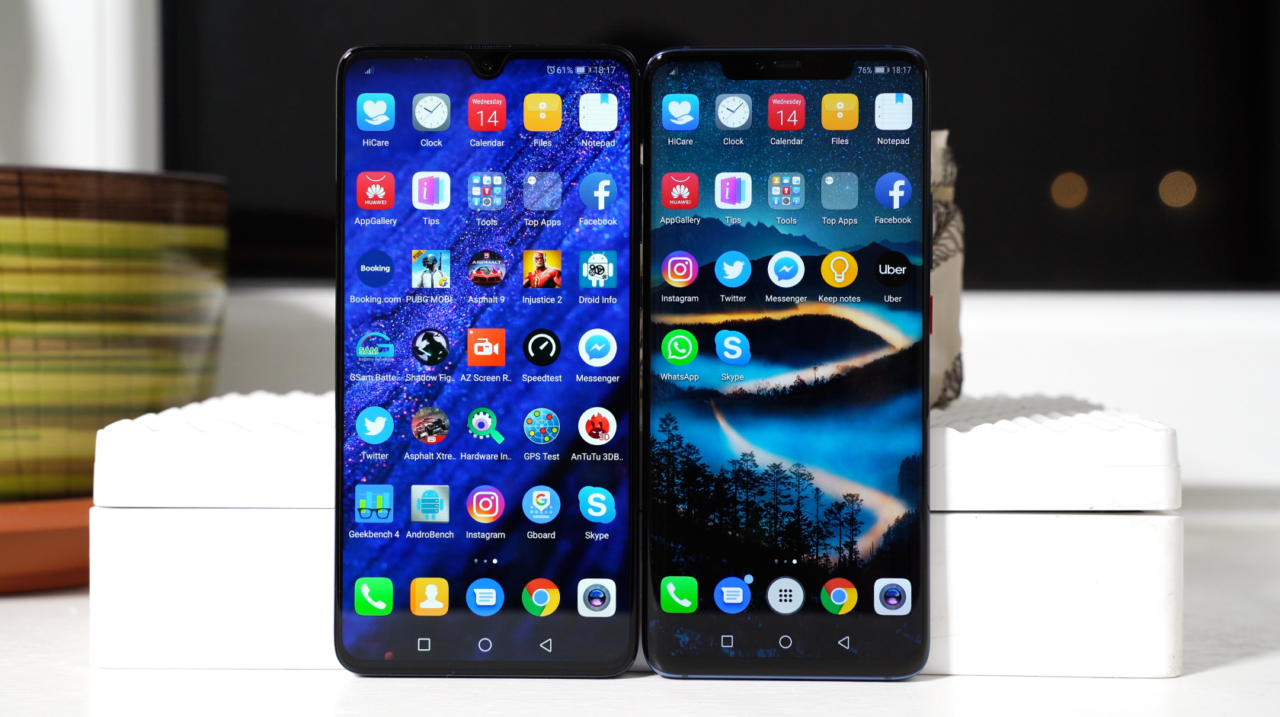
The main difference between the Mate 20 and the Pro is the feeling in the hand. The Mate 20 is significantly wider than the Pro model due to a larger display that also has a slightly different aspect ratio.
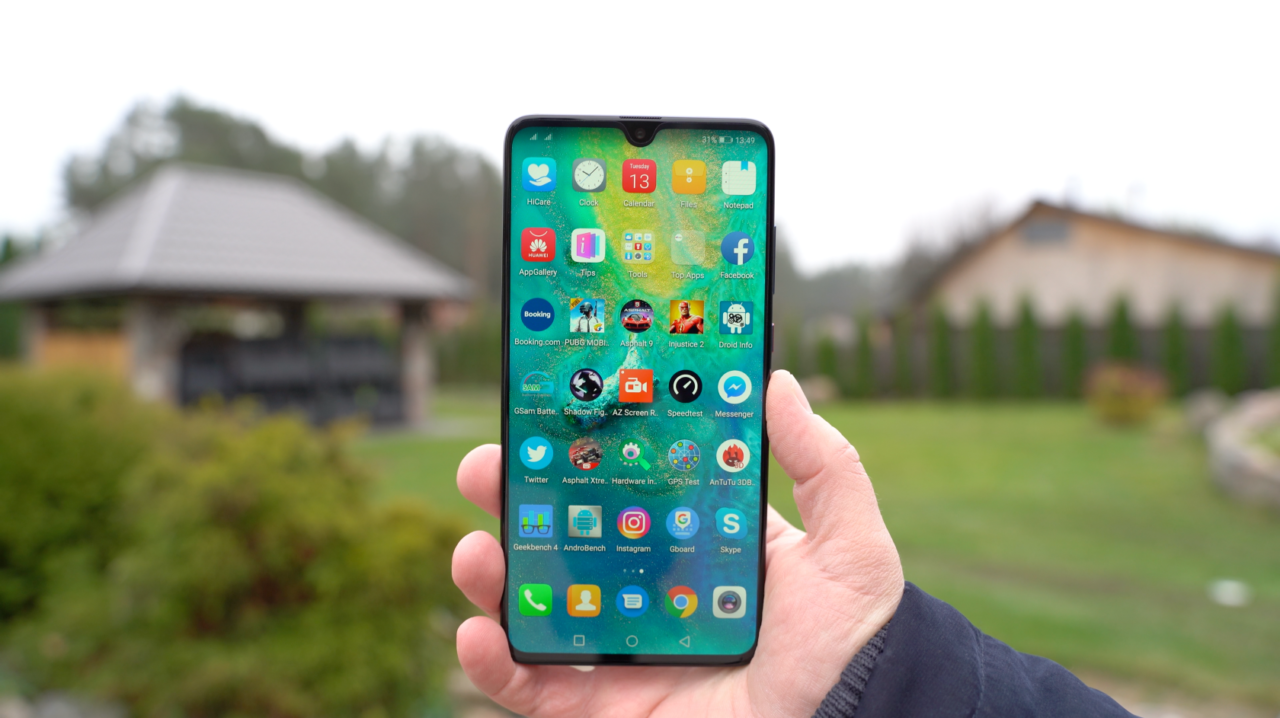
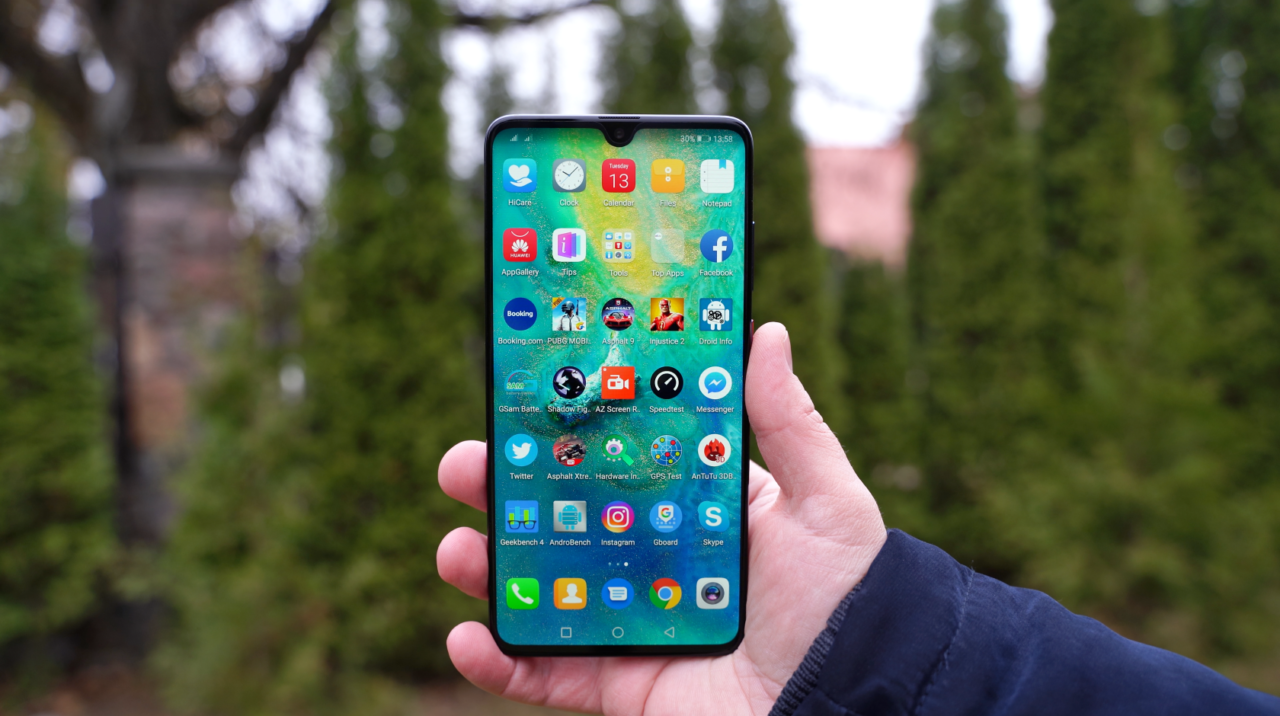
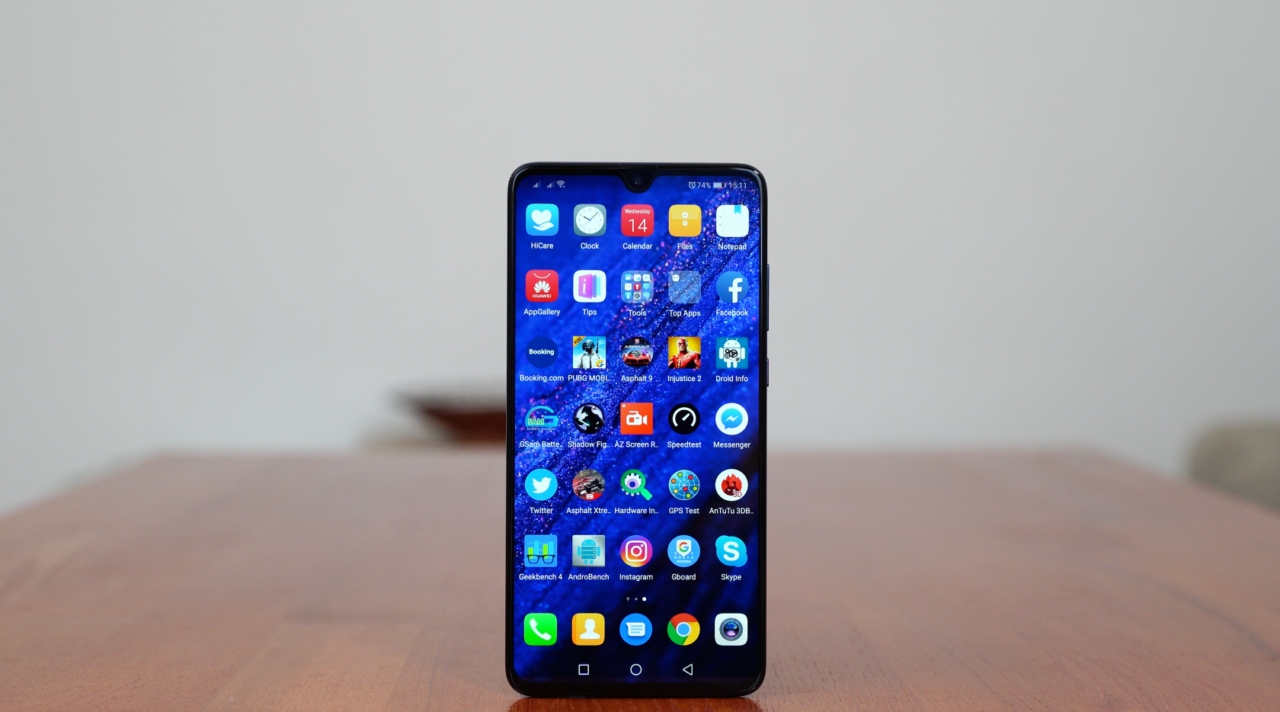
That display (6.53″, 1080 x 2244) uses IPS LCD technology as opposed to AMOLED screen found on the Mate 20 Pro. On the other hand, the panel is really nice and sharp, colors are vibrant and I had no issues seeing the display outdoors. By the way, the Mate 20 has a significantly smaller notch as opposed to the Mate 20 Pro.
The Mate 20 has a slimmed down triple camera setup that is made in collaboration with Leica. The setup consists of 12 MP, f/1.8, 27mm (wide) sensor, 16 MP, f/2.2, 17mm (ultrawide) and 8 MP, f/2.4, 52mm (telephoto) camera.
We also have a super-fast and accurate fingerprint reader which is implemented on the back whereas the Mate 20 Pro has the scanner implemented under the display.
The face recognition works quite well on the Mate 20. However, it’s less accurate than on the Mate 20 Pro which has an excellent face scanner.
Other features include a headphone jack that provides very good sound quality, IR blaster, a hybrid dual SIM card slot and IP53 certification, meaning that the phone is splashproof and dust resistant. In comparison, the Mate 20 Pro has a higher IP68 rating. Finally, the Mate 20 has a dual speakers’ system that produces balanced and rich audio.
HARDWARE and PERFORMANCE
[envira-gallery id=”223383″]
The device ships with the HiSilicon Kirin 980 CPU, 4/6 GB RAM and 128GB of internal storage.
Great specifications of the Mate 20 assure excellent gaming performance. In fact, the new Mate series phones are the first Android devices that use a 7nm CPU. I played quite a few 3D games on the highest graphics settings to push the hardware to its limits and there was no stutter, no lag and the graphics looked nice. In addition, the phone does not get hot even after 30 mins of gaming. Overall, you get a flagship-grade gaming performance, just like with the Mate 20 Pro.
USER INTERFACE
[envira-gallery id=”223391″]
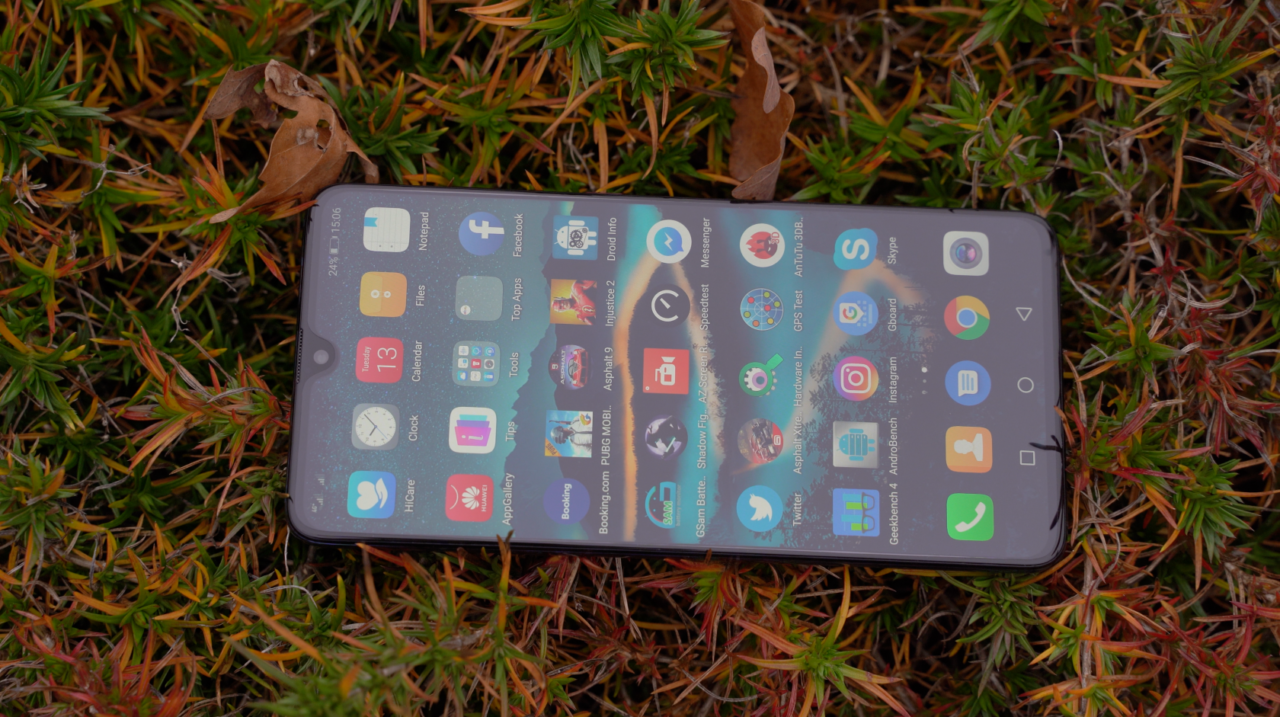
Just like the Pro model, the Mate 20 ships with the EMUI 9 which is based on Android 9.
As usual to Huawei phones, there are tons of features, tweaks, settings, navigation methods and customization options to play with. Just to name a few, I like changing the transitions effects, themes and I use a few smart features like knocking on the screen to take a screenshot. My favorite way of navigating through the UI is using gestures. I found it really convenient for one hand use and it takes just a moment to get used to it.
Just like the Mate 20 Pro, the Mate 20 is a super fast and smooth phone and I can assure that after using both devices for a long time on a daily basis. No matter what you do with the phone, no matter how many apps you are going to install, the new Mates just fly and I’m yet to see either phone stutter or lag.
IMAGE QUALITY
[envira-gallery id=”223416″]
I have to mention that I tested the camera on a dark and cloudy autumn day, meaning that the lighting conditions were pretty bad.
The overall image quality using the Leica-branded camera system is very good. You have the flexibility to choose between 2x optical zoom or use a wide-angle lens which is probably my favorite. Pictures usually come nice and detailed and the colors are quite accurate.
I compared the quality to the Mate 20 Pro and the difference is negligible but the latter phone usually takes pictures with warmer colors and a bit more detail. Again, you won’t be able to see a huge difference most of the time. On the other hand, the Mate 20 Pro has an advantage as it offers 3x optical and 5x hybrid zoom whereas the Mate 20 has only 2x zoom.
[envira-gallery id=”223447″]
Low-light image quality is very good either if you take them using auto or a dedicated night mode. Just like the Mate 20 Pro, Mate 20 allows you to take long exposure shots without a tripod and the results are simply amazing. This is arguably the best night image quality I’ve seen on any smartphone.
[envira-gallery id=”223459″]
Portrait shots usually look really nice as the object or subject is nicely separated from the background with almost no artifacts and the bokeh looks creamy.
[envira-gallery id=”223569″]
Selfies look nice. They are sharp, detailed and the colors are quite accurate. Selfie portrait shots look nice too as there no severe artifacts around the subject and pictures will look nice on social media.
Just like on the Pro model, the 4k video has quite a lot of detail and sharpness. However, there is some jello effect going on when you are panning the phone, which is quite frustrating.
1080p selfie video looks great as it is smooth and stable. Finally, the sound recording quality is good.
BATTERY LIFE
The battery life has been fantastic. On average, I was able to get over 8 hours of screen on time while using the phone quite intensively. My record screen-on time was 12 hours when I used the device just for the basic stuff like web browsing and social media.
The phone ships with the regular fast charger which fully charges the phone in about 1 hour and 10 mins. In comparison, the Mate 20 Pro ships with a 40W super fast charger that charges the phone in less than 1 hour.
CONNECTIVITY
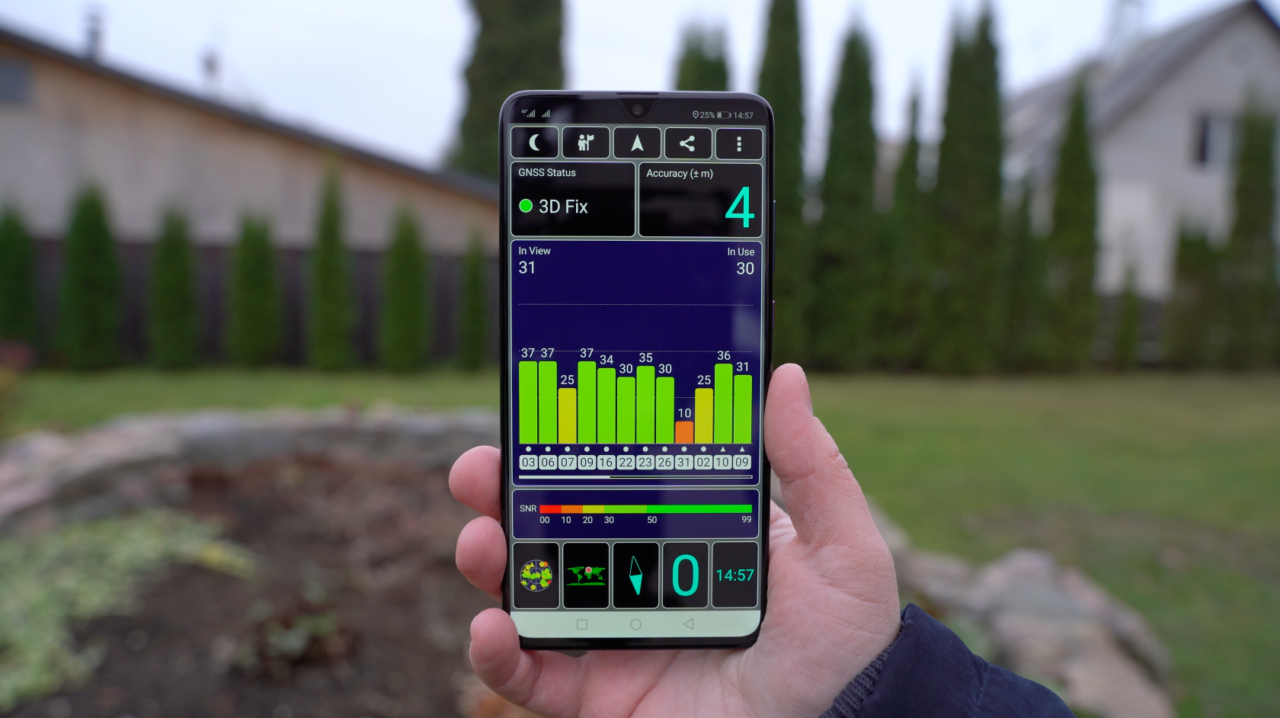
The Mate 20 offers ultra-fast 4.5G network speeds, excellent signal reception, great call quality, super fast Wifi, and dual-frequency GPS that I found to be very accurate for both driving and walking. Also, there is NFC and plenty of sensors on board.
CONCLUSIONS
The Huawei Mate 20 is a solid flagship smartphone for a lot of reasons. Let’s summarize the pros and cons.
I love the design, excellent build, great display, superb all-around performance, very good cameras, and solid battery life.
The main shortcomings are that there is the so-called jello effect in 4K video recording mode, there is no wireless charging and the water and dust resistance rating could be higher.
At the end of the day, the Mate 20 is a great and cheaper alternative to the Mate 20 Pro as it has a ton of premium features. After using the Mate 20 for quite some time, I think that it is a very solid flagship smartphone overall, despite a few shortcomings.
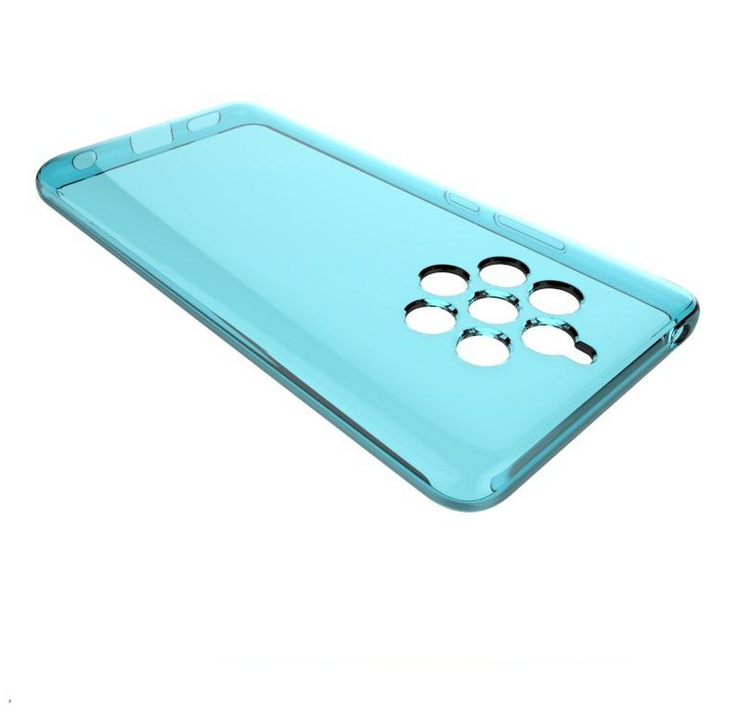
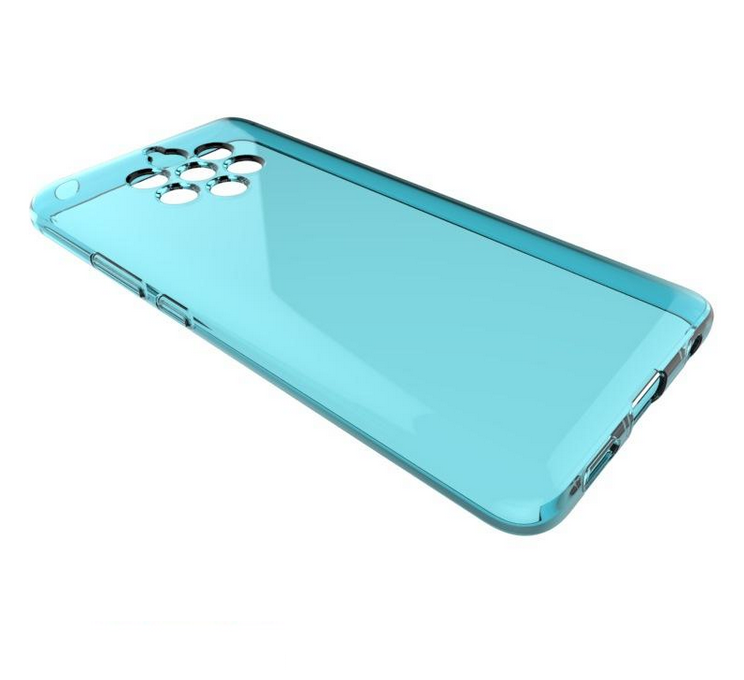
Nokia 9 PureView is one of the most awaited flagship phones since it is expected to arrive as the world’s first smartphone with penta-lens setup. HMD Global has recently confirmed that it will be holding an unveil event on Dec. 5. It is being speculated that the Finnish may launch multiple phones at the event and one of the them could be the highly anticipated Nokia 9 PureView. Fresh set of case renders of the smartphone have appeared to reveal its penta-lens setup and some of the key features.
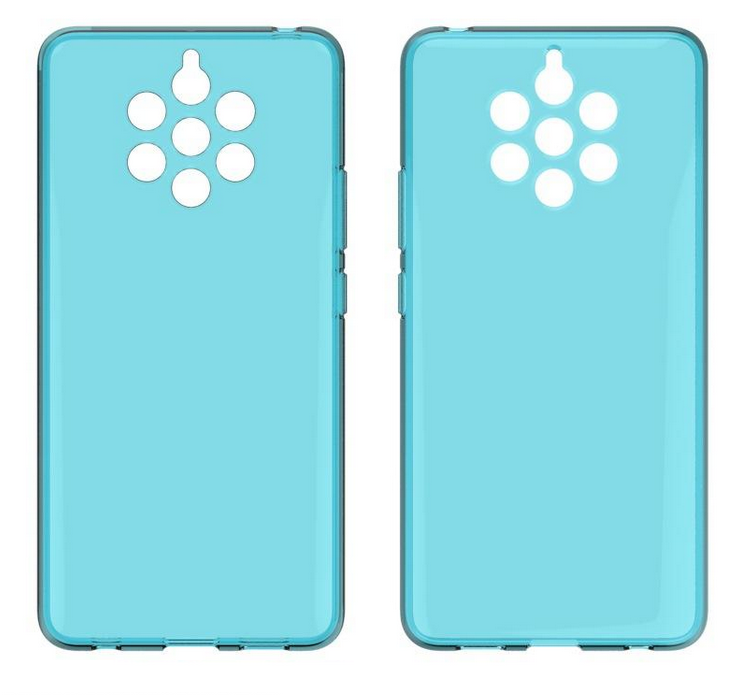
The official case listings for the upcoming Nokia 9 PureView and Nokia 8.1 phones were spotted recently, but the images of the case were not available. The same case renders of the Nokia 9 PureView have appeared on SlashLeaks to confirm its rear design.
The Nokia 9 PureView case renders has six circular cutouts arranged in hexagon design with another cutout placed in the center. Five of them are believed to belong to the camera lenses. The other two could be for the dual-tone LED flash and there one could be dual-sensor for proximity detection. The five cameras system may include a main sensor, a depth sensor, a wide-angle lens, a telephoto lens and a monochrome sensor.
The cutout present at the top of the case could be for the 3.5mm audio jack. Some rumors have claimed that just like the Nokia 8 Sirocco, the Nokia 9 PureView will not be featuring a 3.5mm audio jack. If this is true, the cutout at the top could be the microphone.
The back panel of the phone lacks a fingerprint scanner which suggests that it will be arriving with an in-screen fingerprint reader. The bottom edge of the case could be featuring cutouts for another microphone, a USB-C port and an external speaker.
It is speculated that the Nokia 9 PureView may feature an 18:9 aspect ratio supporting OLED display of 5.99 inches that will carry support Quad HD+ resolution. The Snapdragon 845 SoC is most likely to power the smartphone. The SoC could be assisted by 8 GB of RAM. HMD Global may sell the phone with Android 9 Pie OS preinstalled. It may come include a 4,150mAh battery with support wireless charging.
We use cookies on our website to give you the most relevant experience by remembering your preferences and repeat visits. By clicking “Accept”, you consent to the use of ALL the cookies.
This website uses cookies to improve your experience while you navigate through the website. Out of these, the cookies that are categorized as necessary are stored on your browser as they are essential for the working of basic functionalities of the website. We also use third-party cookies that help us analyze and understand how you use this website. These cookies will be stored in your browser only with your consent. You also have the option to opt-out of these cookies. But opting out of some of these cookies may affect your browsing experience.
Necessary cookies are absolutely essential for the website to function properly. This category only includes cookies that ensures basic functionalities and security features of the website. These cookies do not store any personal information.
Any cookies that may not be particularly necessary for the website to function and is used specifically to collect user personal data via analytics, ads, other embedded contents are termed as non-necessary cookies. It is mandatory to procure user consent prior to running these cookies on your website.

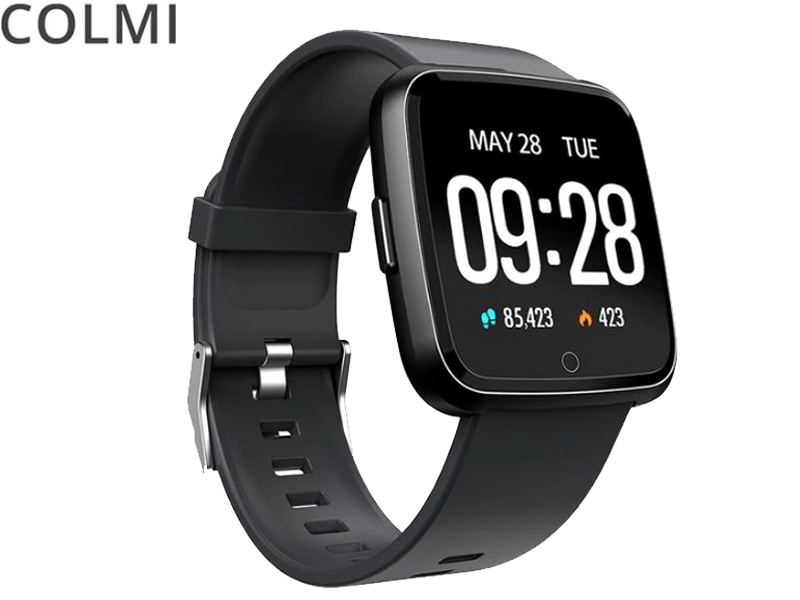 Loaded with an impressive array of features, ColMi Smart Watch is a simplistic, yet durable fitness tracker that keeps a record of its wearer health and monitors various activities without emptying their pockets. While this coveted smartwatch usually sells for $45.98, you can now buy it for just $19.77 on AliExpress.