Advertisement

Mozilla Acquires Pocket to Make Firefox Popular on Mobile Devices

Mozilla that is best known for its Firefox internet browser, officially confirmed on Feb. 27 that it has acquired the famous online bookmarking app, Pocket. It will now function as a subsidiary of Mozilla Corporation. It is the first time the company has made a decision to acquire a firm.

Pocket that was launched in 2007 by Nathan (Nate) Weiner as Read it Later was initially available as an extension for the Firefox browser. It was originally intended to serve only desktop users. However, it is now available on multiple platforms like Android, iOS, Windows and web browser like Firefox, Google Chrome and Safari

It allows readers to save articles so that they can be read later. The articles are saved in a reader-friendly format that does not include any advertisements. The content is also stored so that it can be read offline. In 2015, Pocket was integrated in the Firefox browser as a default bookmarking service.

Mozilla Acquires Pocket

Related: Lenovo Underestimated the Difficulty of Reviving Motorola During Acquisition

Mozilla CEO, Chris Beard stated in a blog post, “We believe that the discovery and accessibility of high quality web content is key to keeping the internet healthy by fighting against the rising tide of centralization and walled gardens. Pocket provides people with the tools they need to engage with and share content on their own terms, independent of hardware platform or content silo, for a safer, more empowered and independent online experience.”

According to Pocket CEO, Nate, “They’re adding fuel to our rocketship. We have worked closely with Mozilla as we partnered with their Firefox team, and established a deep trust with their team and vision. They have extraordinary resources, global scale, and reach to put Pocket in more places, and help us build an even better product, faster.”

Six years ago, Evernote had attempted to acquire Pocket that was then known as Read it Later. However, Nate had refused to accept the deal. Currently, Pocket that has a small team of 25 employees based in San Francisco has 10 million active users each month. Till date, its users have saved 3 billion content pieces.

After the acquisition, the source code of Pocket will now belong to the Mozilla Open Source Project. Both Mozilla and Pocket have confirmed through their press releases that the buyout not change anything at Pocket. It will continue to operate independently driven by the existing team.

Firefox is a popular web browser for desktops. However, it has been struggling on mobile devices. The acquisition of Pocket by Mozilla Corp is aimed towards increasing the popularity of Firefox on mobile devices. In the near future, Pocket is expected to receive few major updates. It is also expected to introduced a lite version that can run on a mobile browser. As of this writing, there is no information available on the financial terms of the acquisition.
(Source 1|Source 2)

Gizmochina Giveaway – Win A Free Nomu S20 Rugged Phone

nomu giveaway
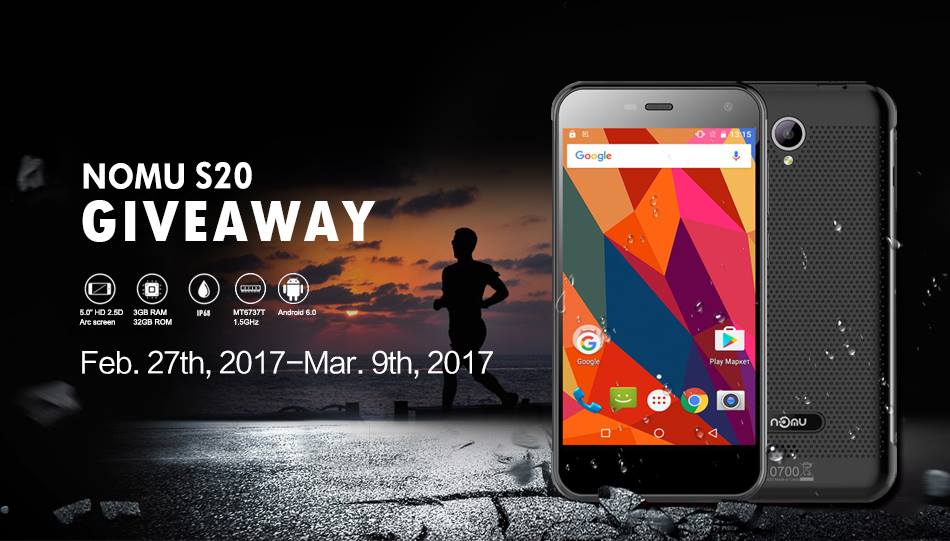
Nomu S20 Giveaway

Gizmochina along with Nomu official is conducting a Nomu S20 rugged phone as Giveaway gift to one of our lucky readers. Like always, you just have to follow the steps mentioned on the Gleam widget to get a chance to win this amazing phone.

Here is the main features of Nomu S20:

Display: 5.0 inch, 1280 x 720 pixels HD screen
CPU: MTK6737 1.5GHz Quad Core
System: Android 6.0
RAM + ROM: 3GB RAM + 32GB ROM
Camera: 8.0MP ( SW 13.0MP ) rear camera with AF and flash light + 2.0MP ( SW 5.0MP ) front camera
Sensor: Geomagnetic Sensor, Ambient Light Sensor, Gravity Sensor, Proximity Sensor
SIM Card: Dual SIM dual standby, dual nano SIM cards
Feature: GPS, A-GPS, Glonass
Bluetooth: 4.0
Network:
2G: GSM 850/900/1800/1900MHz
3G: WCDMA 900/2100MHz
4G: FDD-LTE 800/900/1800/2100/2600MHz

Meanwhile, Nomu official Facebook provide another Nomu S20 phone as Giveaway gift to their followers, just click here to entry:

How to entry this giveaway? Just follow these steps via Gleam widget:

  1. Visit Nomu’s Facebook and follow them;
  2. Share this article to your Facebook or Twitter
  3. Leave comments under this article, tell us how do you think about rugged phone

Terms & Conditions:

1. The giveaway is an international giveaway.
2. We are not responsible for lost shipments.
3. We are not responsible for any duties, import taxes that you may incur.
4. We reserve all rights to make any changes to this giveaway.
5. The prize will ship when it is available to purchase.

Just follow the steps mentioned in the Gleam widget to participate in the giveaway.

Once again, happy new year everyone and good luck.

Gizmochina Giveaway – Win A Free Nomu S20 Rugged Phone

Huawei Watch 2 Hands On: New isn’t Better

The original Huawei Watch was released in September 2015 and up until the release of Android Wear 2.0, it was one of the best Android Wear watches in the market. More than a year later, we get a successor, the Huawei Watch 2.

The Huawei Watch 2 should have been released last year if Google had not delayed the release of Android Wear 2.0. Although the new watch brings along a number of new features apart from the updated OS, fans of the original watch might not be too pleased with the design.

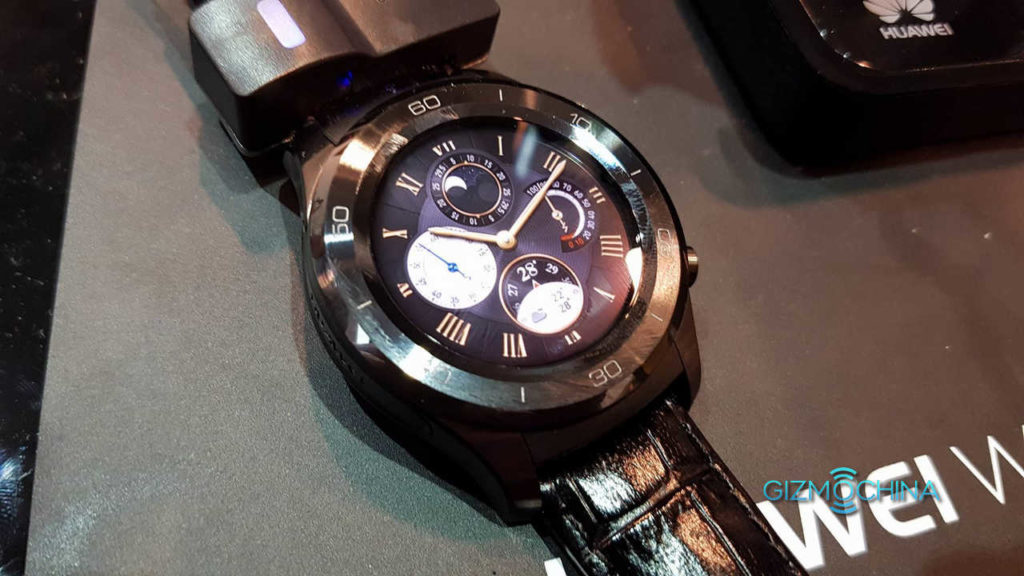
Huawei Watch 2 Classic

Huawei announced two variants of the watch: the Huawei Watch 2 Classic with leather straps and the Huawei Watch 2 which is a sport themed variant with rubber straps. Sadly, we won’t be getting the wire mesh strap of the original. For the hands-on, we were able to get our hands on the Huawei Watch 2 Classic.

The Huawei Watch 2 has a smaller screen than the first-generation Huawei Watch. Both versions have a 1.2-inch AMOLED display with a 390 x 390 resolution as against the 1.4-inch (400 x 400) of the original. The smaller screen is not the only change, the bezels are also thicker and are marked like a tachymeter.

The bezel is where the antenna of the watch is located which is a good thing as that means you can change the straps unlike the LG Watch Sport which has its antenna embedded in the straps.

Why Huawei decided to settle for this design is best known to them but some people say they might have had plans for a rotating bezel but later decided against it. The result is a chunky watch 12.6mm thick and weighing 47g (excluding the straps) with markings you probably might never find use for.

You’d think Huawei would have thought it wise to include a crown since the bezel wasn’t designed for navigating the watch. Sorry to burst your bubble. You will have to navigate through the watch with your finger which is pretty uncomfortable since the display is smaller. If you have thick fingers, you’d probably be covering a large chunk of the display while navigating.

READ MORE: Huawei P10 Hands On & First Impressions Video

Huawei P10 Hands On & First Impressions Video

Huawei’s latest flagship P10 was just unveiled and it looks pretty good. The phone is made of metal and the build quality is nothing short of a true flagship.

Huawei P10 hands on (9)

I love how nicely the phone sits in the hand due to rounded edges on the back and all-aluminum housing that is smooth to the touch and it does not attract fingerprints or smudges like the glass-made phones.

When it comes to the camera, the Huawei upgraded its Leica-branded dual camera system by using the latest 20MP monochrome sensor, which is mainly used to capture sharper detail. Also, there is another 12MP shooter, which is essentially used to capture colors. The camera system has OIS, dual tone dual LED flash and finally, the cameras use f/2.2 aperture Leica lens.

The first camera samples suggest that this camera system is able to capture some pretty good daylight images but more on that in the full review.

As far as selfie camera, Huawei also cooperated with Leica and as a result, we have an improved 8MP selfie shooter with a bright f/1.9 aperture lens. We also have a notification LED light on the top.

The P10 runs on HiSilicon Kirin 960 and it has 4GB of ram and 64GB of expandable storage.

The display looks really good. It sharp, bright and it has vivid colors. Also, the display has the latest Gorilla Glass 5 for scratch resistance.

RELATED: Huawei P10 Camera Samples Here

As for user interface, we have the Emotion UI 5.1. it runs smoothly and there are plenty of features, customization options etc but as always, it all comes whether you will use them or not.

The first impressions are that the phone is very solid, it has a powerful camera setup, great specs and so far we love what we see. Stay tuned to Gizmochina for a full review

Meizu Super mCharge Unveiled: Super Fast, 19 Minutes to Full Charge!

After seeing the revolutionary 5X camera technology from OPPO yesterday, today another Chinese brand Meizu has taken the center stage at MWC 2017 in Barcelona with its amazing Super mCharge fast charging technology. Meizu already has a fast charging technology in its kitty but this latest Meizu Super mCharge delivers fast charging at supersonic speed.

meizu-supercharge

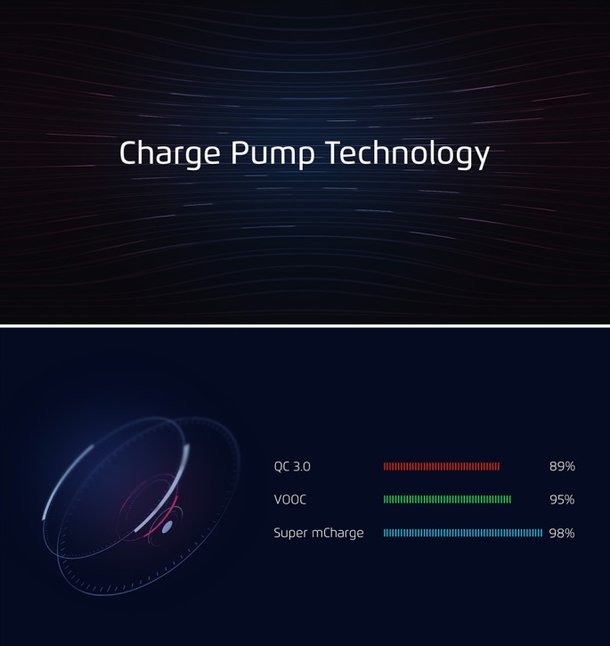
The Meizu Super mCharge uses a new charge pump technology with a conversion efficiency of up to 98% in order to solve the reduction in efficiency caused by charging heat lags. Safety is also taken care of as the new technology also reduces the charge when the phone heats up too much. The Super mCharge comes with a power rating of 55W (11V, 5A), utilizing both high voltage and high current.

meizu-supercharge-2

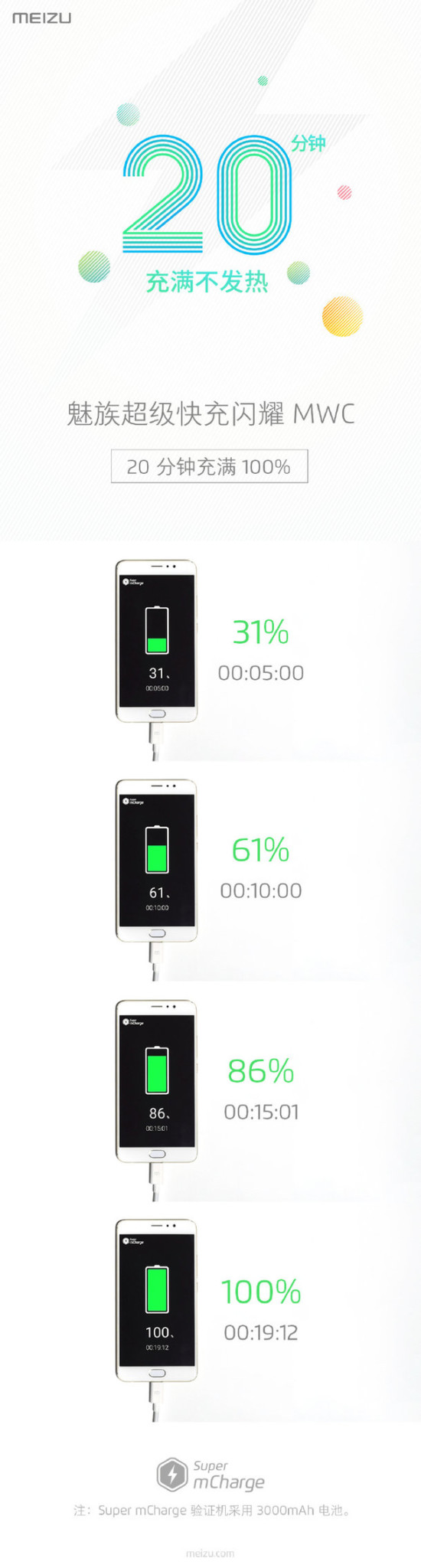
The technology was tested with a 3000mAh battery and the result is stunning. In just 5 minutes the battery had reached 30% from zero and that figure doubled to 60% in 10 minutes. As the percentage of charge increased, the rate slightly reduces but is still ferocious. In 15 minutes, the battery charge had gotten to 85% and in 19 minutes and 12 seconds, the phone was 100% charged. Meizu claims the Super mCharge is 3 times faster than the ordinary fast charge. It is also said to be faster than the Quick Charge 3.0 and VOOC fast charge technology.

meizu-supercharge-5


The 3,000mAh battery, though, isn’t just any battery but Meizu’s new high-performance battery which can even withstand up to 4 times the current delivered by the Super mCharge. The battery is said to be manufactured using a new lithium-based material which is durable. Meizu claims that even after 800 cycles of charging, the battery still has more than 80% of its capacity, thus can last up to two years of normal usage.

Read Also: Meizu Releases Portable Bluetooth Speaker for ¥169($25)

Meizu did not disclose when we should expect to see the Super mCharge inside its smartphones but it should be expected with the next Meizu flagship smartphone.

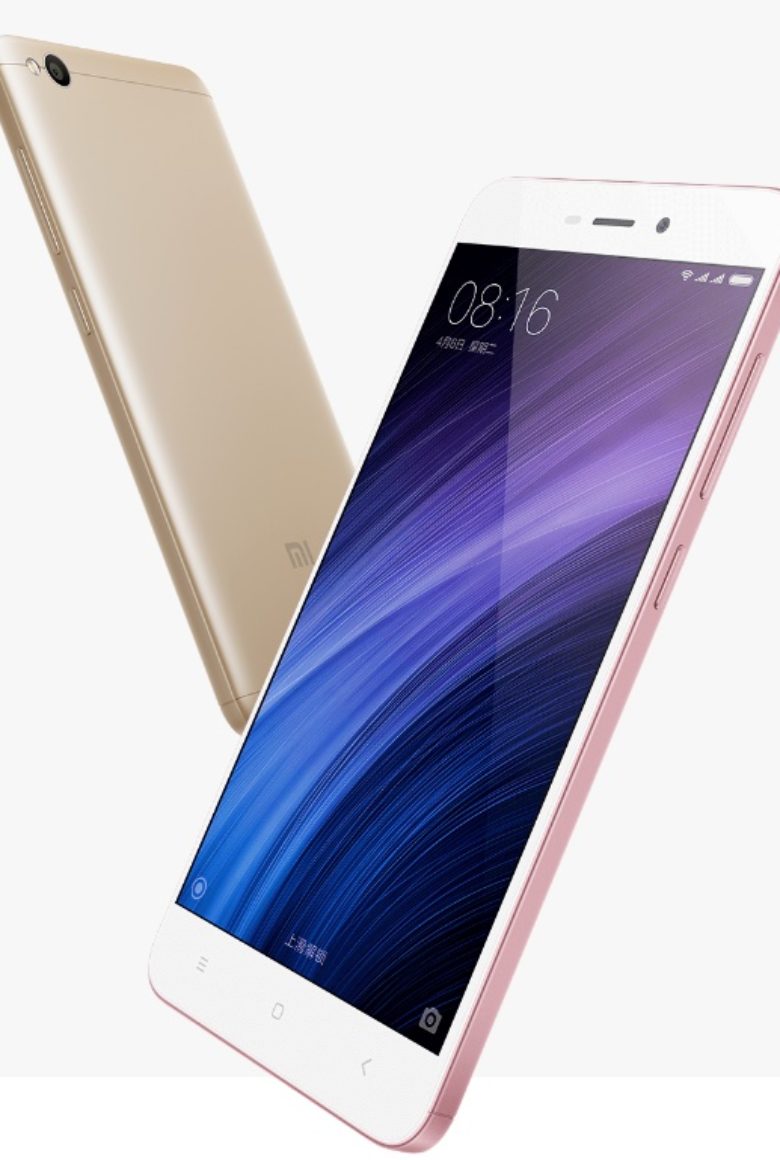
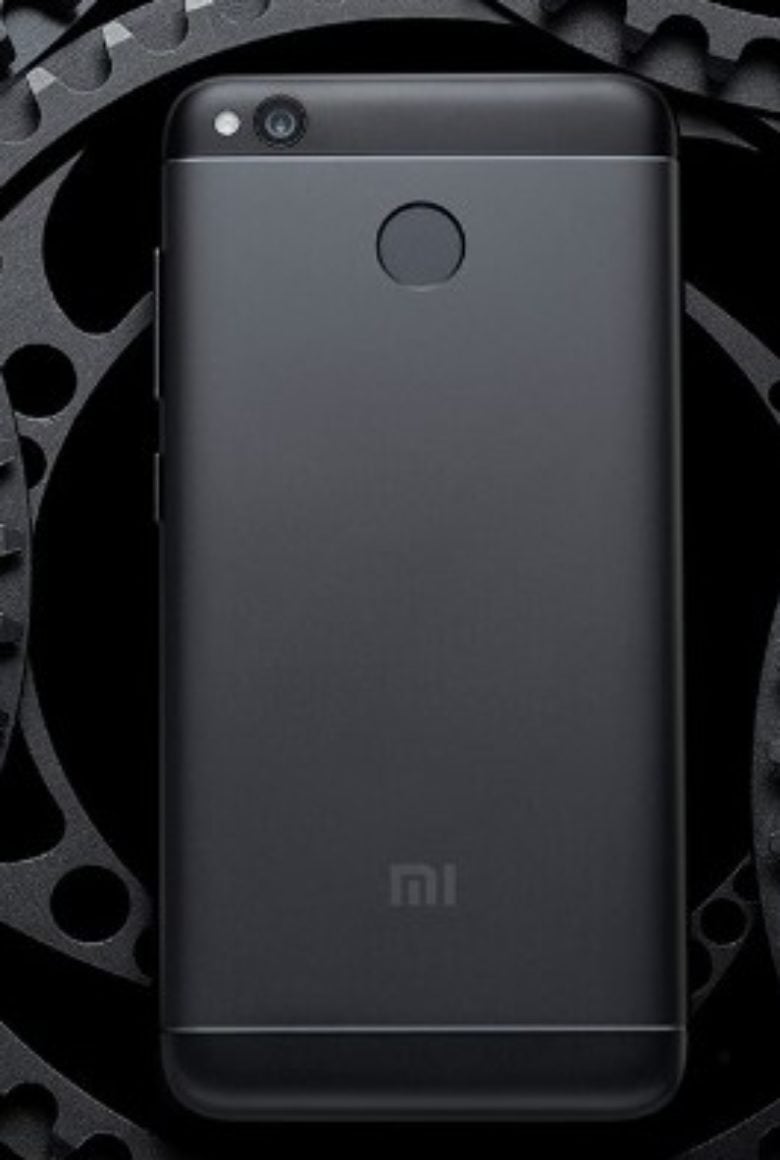
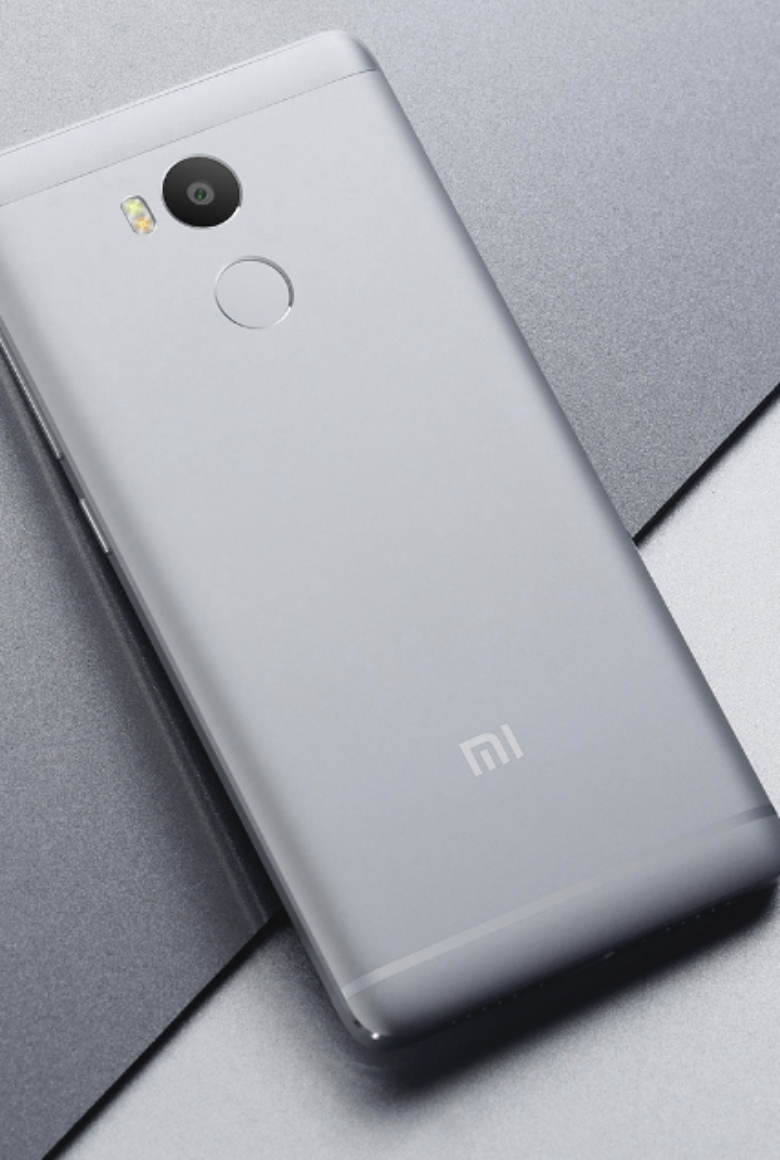
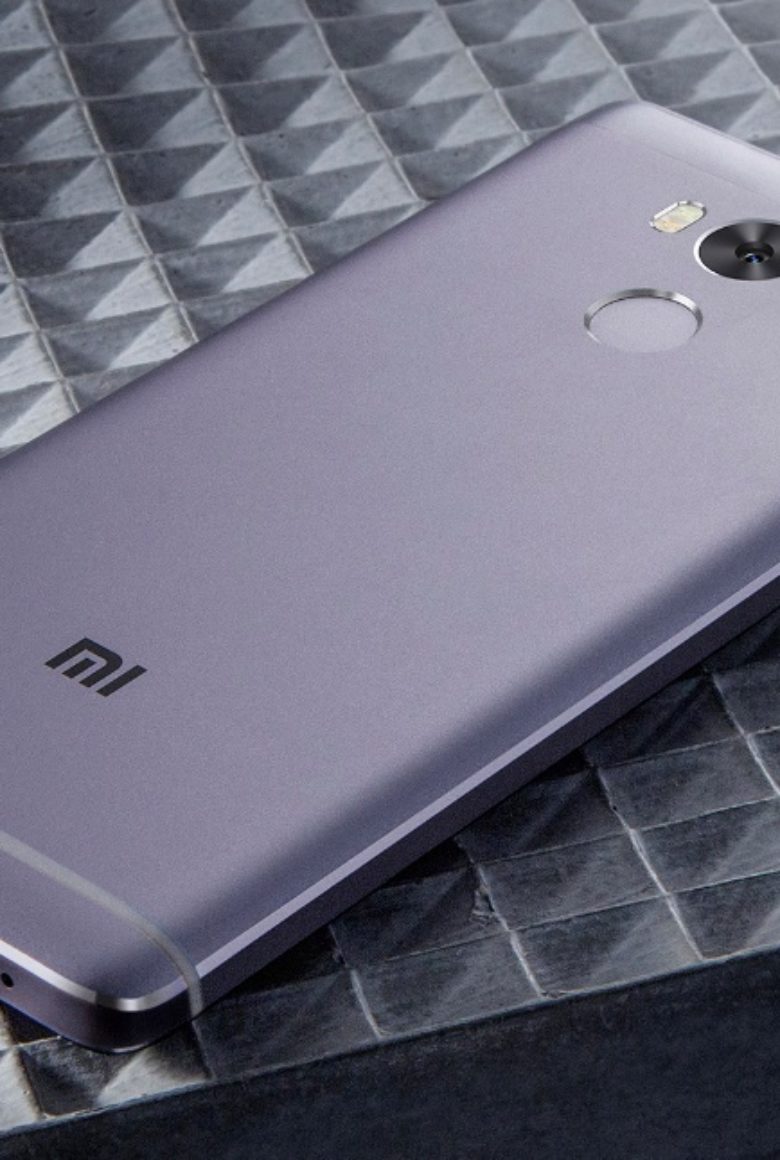
Redmi 4X vs Redmi 4A vs Redmi 4 vs Redmi 4 Prime: Which 4 is Right 4 You?

Following the announcement of the Xiaomi Mi 5C came the unveiling of the Xiaomi Redmi 4X. The launch of the Redmi 4X should not come as a surprise to those familiar with Xiaomi. It was already obvious the Redmi 4 will get the X-treatment after the Redmi Note 4X was announced.

With the addition of this new phone, we now have a total of four Redmi 4 devices: the Redmi 4A, Redmi 4, Redmi 4X, and Redmi 4 Prime. You can call them the Fantastic Four if you wish.

All four phones are well made and are priced at less than $200. However, even though they share the same name, they differ in lots of ways. So if you are having a hard time deciding which is right for you, you should read this to the end.

Display: Same but Different

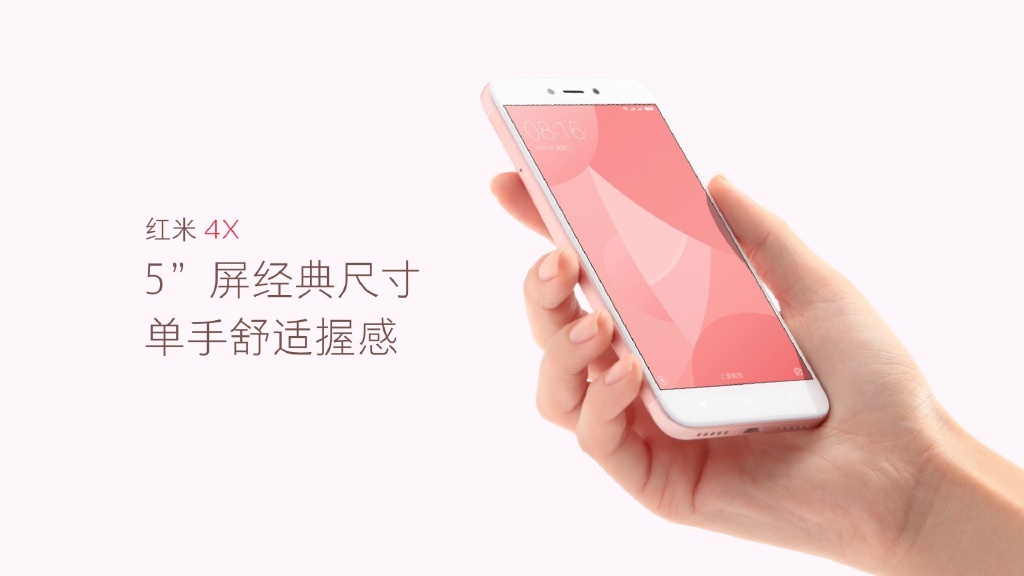
All the phones in the Redmi 4 line come with a 5-inch display making them perfect for one hand use.  The difference lies is in their resolution. While the Redmi 4A, Redmi 4, and Redmi 4X have 720p displays, the Redmi 4 Prime has a 1080p screen. That translates into different PPIs too, 294 as against 441.
If you want your display sharp and crisp, you should look to the Redmi 4 Prime but if you don’t care much for that, the Redmi 4, 4A or 4X is fine.

Processors: Different Dragons

Xiaomi has settled for Qualcomm chips only. The Redmi 4A sports the Snapdragon 425; the Redmi 4 gets the Snapdragon 430, the Redmi 4X has the newer Snapdragon 435, and the Redmi 4 Prime uses the popular Snapdragon 625. The Redmi 4 Prime is basically the Redmi Note 4X with a smaller screen. Nothing more, nothing less. So I won’t compare its chip to the rest.

The Snapdragon 425 has a quad-core CPU clocked at 1.4GHz and an Adreno 308 GPU. The Snapdragon 430 and 435 on the other hand are octa-core chips clocked at 1.4GHz and have a more powerful Adreno 505 GPU. The advantage the Snapdragon 435 has over the Snapdragon 430 is in LTE speeds. The SD435 has Cat.7 LTE as against the SD430’s Cat. 4 LTE. That means you will get faster download speeds on the Redmi 4X.

RAM and ROM

The Xiaomi Redmi 4A and Redmi 4 ships with 2GB of RAM and 16GB of storage. The Redmi 4X is available in two variants: a 2GB RAM + 16GB ROM and a 3GB RAM + 32GB ROM. The Redmi 4 Prime is only available with 3GB RAM and 32GB of storage. All four devices support microSD cards of up to 128GB. If you want a larger RAM, the Redmi 4X or Redmi 4 Prime is your best option.
READ MORE: Xiaomi’s MIUI 8.2 Comes with new Ringtones: Download Here!

Xiaomi Surge S1 Antutu Performance inside the Mi 5C Revealed

After a long wait and a persistent spinning of the rumor mills, Xiaomi finally launched its in-house Pinecone Surging S1 processor. Along with the chipset came the Mi 5C actually powered by the SoC just as rumored.

Xiaomi Mi 5C (2)

The Surging S1 processor is the first of what would likely be a long line of chipsets. The processor comes with an octa-core architecture with 4 x Cortex A53 cores clocked at 2.2GHz and 4 x Cortex A53 cores at 1.4GHz. The chip will be built on a 28nm HPC+ process. The company claims the combination of four powerful and four efficient cores result in a perfect balance of performance and power efficiency. As for GPU, the chip is using ARM Mali-T860, which comes with 40% better power efficiency as compared to its predecessor, support for AFBC and ASTC image compression technology and the latest Vulkan standard.

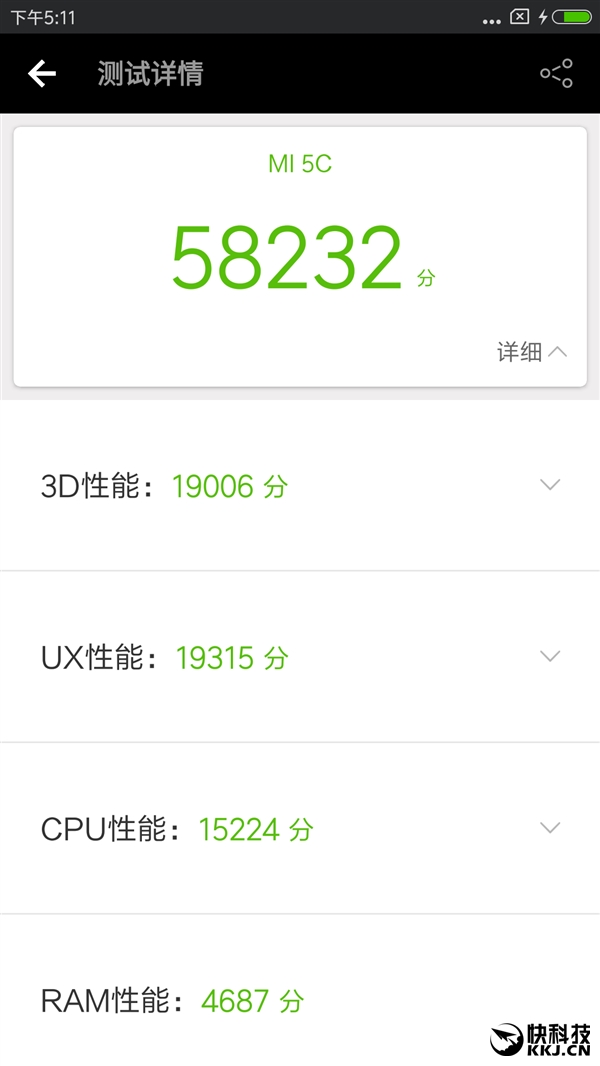
But then, how does the Pinecone chip fare in benchmark tests. Apparently, we won’t wait for long to find that out as the Mi 5C benchmark score has been revealed online. A set of screenshots grabbed from what is said to be the Mi 5C running through AnTuTu benchmark have appeared online showing not just some details of the phone but also the AnTuTu score.

xiaomi mi 5c

Related: Xiaomi Mi 5C Camera Samples: Dual Noise Reduction & Light Enhancement

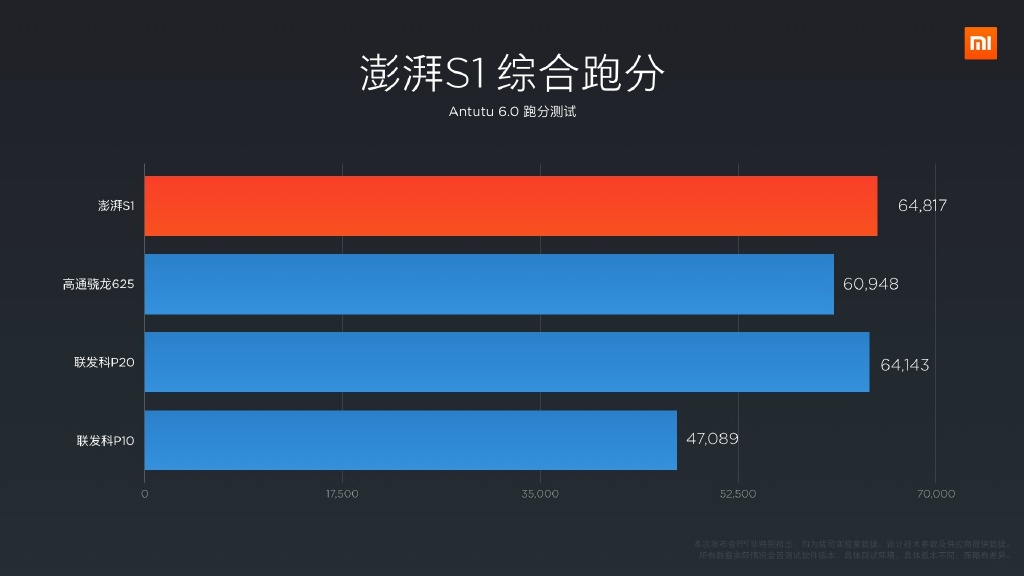
Xiaomi claims the Surge S1’s overall performance is slightly stronger than those of the Snapdragon 625 and Helio P20. The Mi 5C powered by the Surging S1 chipset was able to achieve 58323 points on an independent AnTuTu test which is not a bad score. This is, however, lower than Xiaomi’s listed score of 64,817 points as against 64,143 points which the Helio P20 scored and 60,948 polled by SD 625 chip. The guy who ran the test were quick to point out that the benchmark app was run when the device was having a battery capacity of 50%. We may have to wait for a confirmatory test before we judge. But that doesn’t take away the fact that Xiaomi has done a great job releasing their own chipset.

(source)

Xiaomi Mi 5C Camera Samples: Dual Noise Reduction & Light Enhancement

The Xiaomi Mi 5C is still fresh out of Xiaomi’s oven. The new mid-range device is the first phone to feature the new Surge S1 processor. Excluding the new chip, another interesting specification of the phone is its cameras.Xiaomi Mi 5C (2)

The Xiaomi Mi 5C is equipped with a 1.25μm 12MP camera on the rear. Xiaomi calls it Night Eye and says it features high quality dual noise reduction algorithm that preserves detail in low light. The Surge ISP algorithm also helps to improve camera light sensitivity by up to 150%. So whether you are taking pictures under very bright light or under low-light conditions, you should end up with clean and clear images.

READ MORE: LG G6 vs Xiaomi Mi MIX: Display, Specs & Price Compared

New Nokia 3, Nokia 5 & Nokia 6 will be Manufactured in India

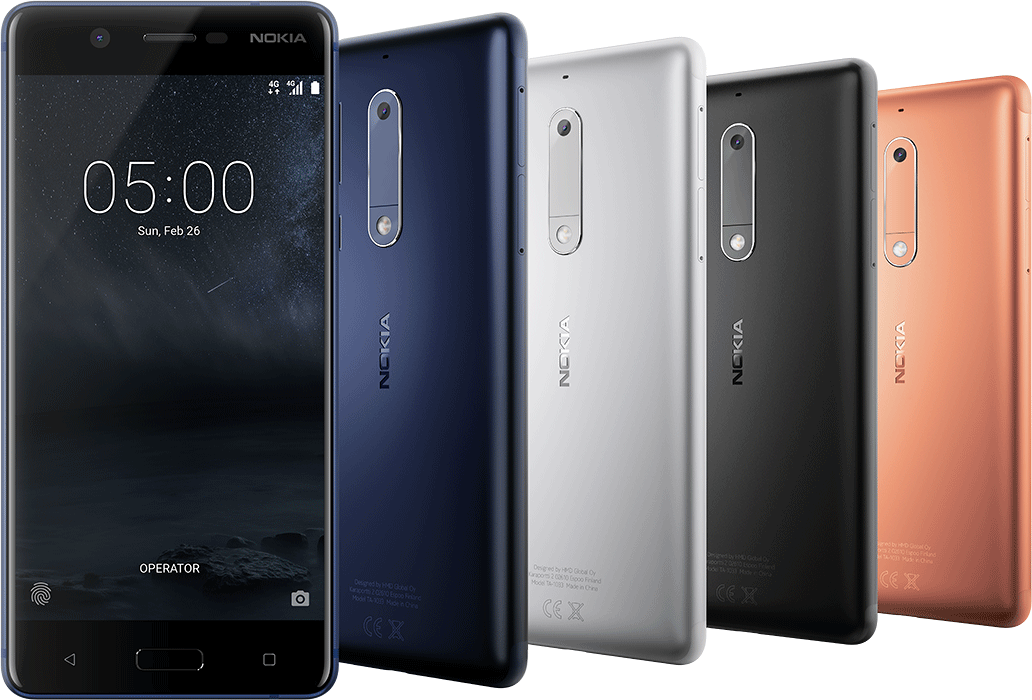
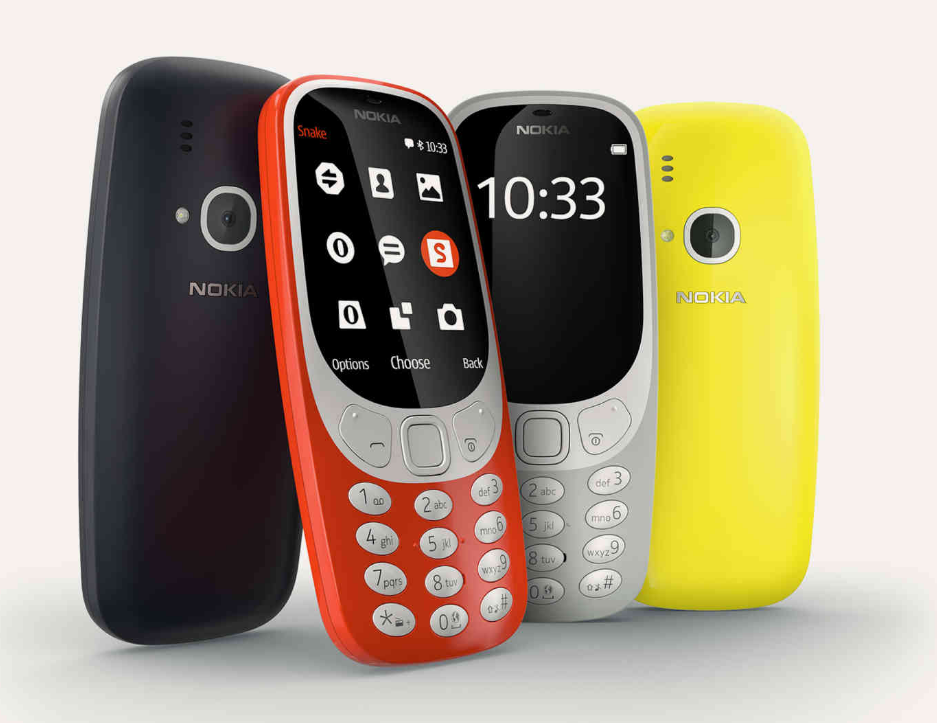
Just a few days back, Nokia unveiled the Nokia 3, Nokia 5 and the Nokia 6 intended for the global market on the sidelines of the MWC 2017 in Barcelona. The three smartphones would join the refurbished Nokia 3310 in making their debut on the global turf in the second quarter of the year.


It has now emerged that the new Nokia smartphones meant for the global market will not ship from China but would be produced in India. As you would recall, the Nokia brand is controlled by HMD Global while production is in the hands of Foxconn, so the production would be carried out in Foxconn’s factory in India. This much was disclosed by HMD Global Vice-President for India, Ajey Mehta.

nokia 5


This, no doubt, is in recognition of the vital role the expansive India market plays in the survival of the Nokia brand under HMD. HMD plans to sell the phones in India via online and offlines sales channel and also has made arrangement for the establishment of a network of service centres to provide after-sales support in the local market. Sales of the Nokia phones will commence in June in the local market and very likely would start shipping immediately to other markets.

Nokia 3310

Read More: Would You Buy The New Nokia 3310 Feature Phone?

Nokia announced the Nokia 3 as going on sale for 139 Euros (~ $147) in Europe, while the Nokia 5 will retail for 189 Euros (~$199). The Nokia 6 will be available for 229 Euros (~$242) and Nokia 6 Art Black Edition for 299 Euros (~$316). The Nokia smartphones are expected to be cheaper in India since it is manufactured locally.

via

Xiaomi Redmi 4X Official: Octa-Core SD435 chip & Large Battery Offers Superb Value!

Xiaomi had an important event today in China and the company unveiled its first ever processor, the Pinecone S1 / Surge S1 along with a phone powered by this chip, the Xiaomi Mi 5C. Along with these two important announcements, the company also took the wraps off a budget smartphone in the Redmi series, the Xiaomi Redmi 4X. This is a logical move since we saw its bigger sibling, the Xiaomi Redmi Note 4X just a few days back.

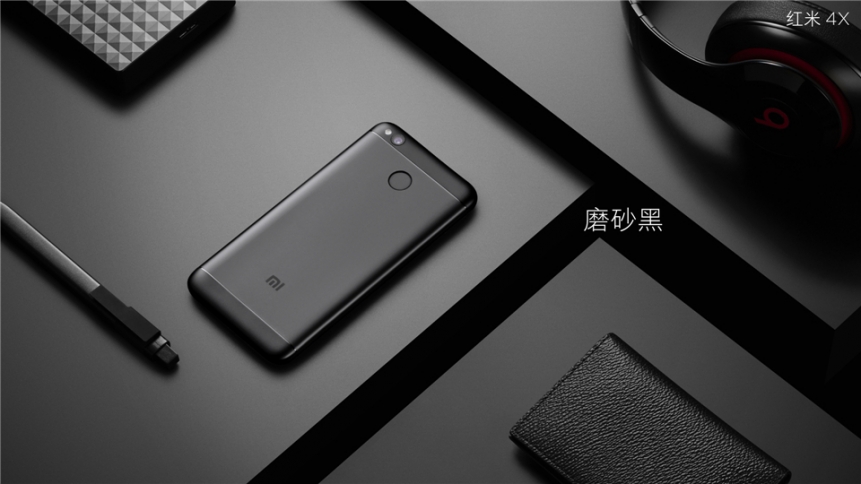
xiaomi redmi 4x

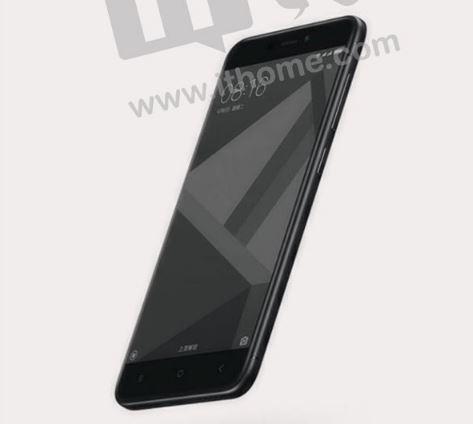
The Xiaomi Redmi 4X comes with a 5-inch 720p display onboard with 2.5D glass on top and a smooth metal body, curved around the corners. The company claims that despite being a budget device, the Redmi 4X comes with flagship like design and built.

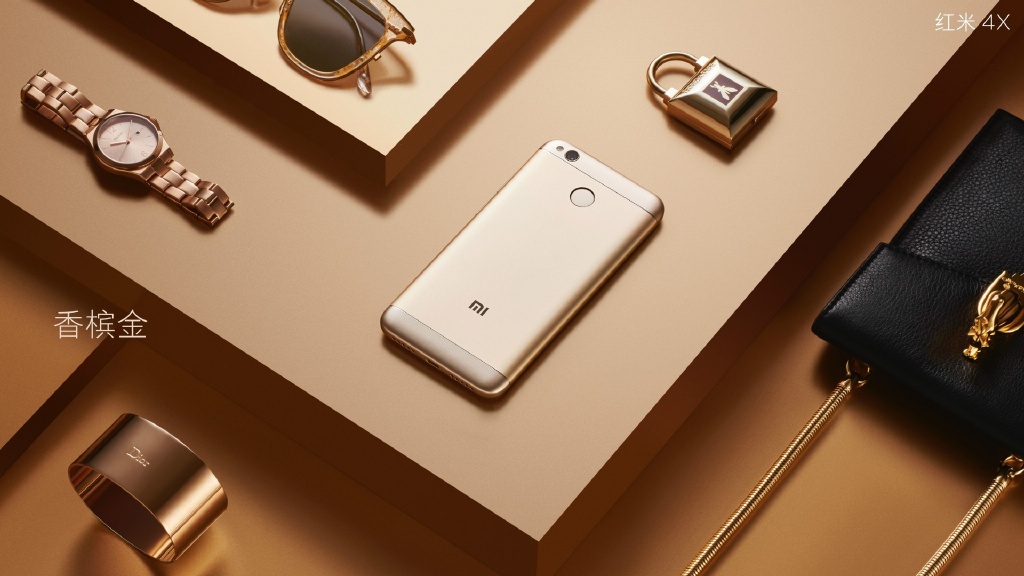
xiaomi redmi 4x

The phone is powered by an octa-core Snapdragon 435 chipset and comes in 2GB + 16GB and 3GB + 32GB memory variants. There is a large 4100mAh battery on board which will ensure at least two days of comfortable usage on a single charge. So, you do have a brand new Xiaomi phone that features a large battery, unlike the Mi 5C which comes with a small <3000 battery onboard.

RELATED: Xiaomi’s First Pinecone Chipset Is Official, Called the Surge S1

The Redmi 4X comes with a slim 8.65mm body (despite featuring a large 4000mAh battery in a compact 5-inch form factor). At the back, you get a 13MP camera as well as a fingerprint sensor, which is a great addition at this price.

xiaomi redmi 4x

The company didn’t reveal too many details about the Xiaomi Redmi 4X at the conference today, but we expect full specs details very soon.
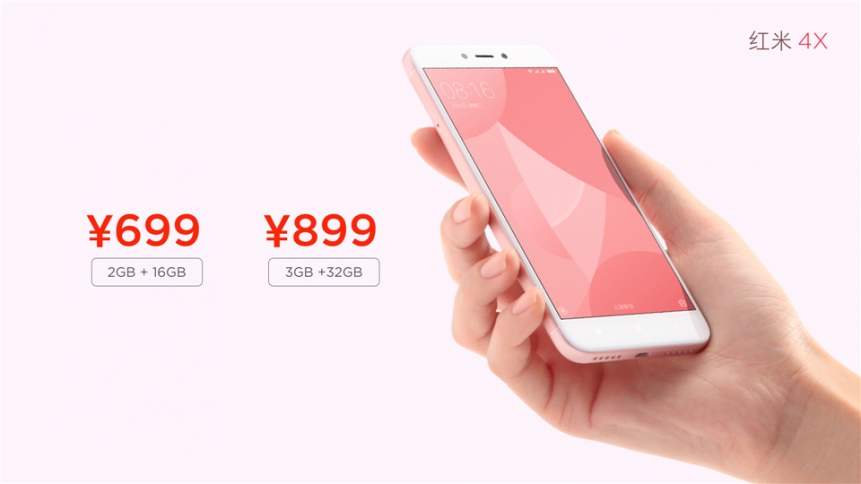
The Redmi 4X starts at 699 Yuan (~102) for the 2GB + 16GB model and goes up to 899 Yuan (~$131) for the 3GB + 32GB version. The phone will go on sale on March in a number of color options including gold and black. So, the Redmi 4X basically competes in the same category as the Redmi 4A, but with much better specs.
xiaomi redmi 4x

Xiaomi Mi 5C Official: Pinecone S1 Processor, 5.15-inch Display & Super Light Body

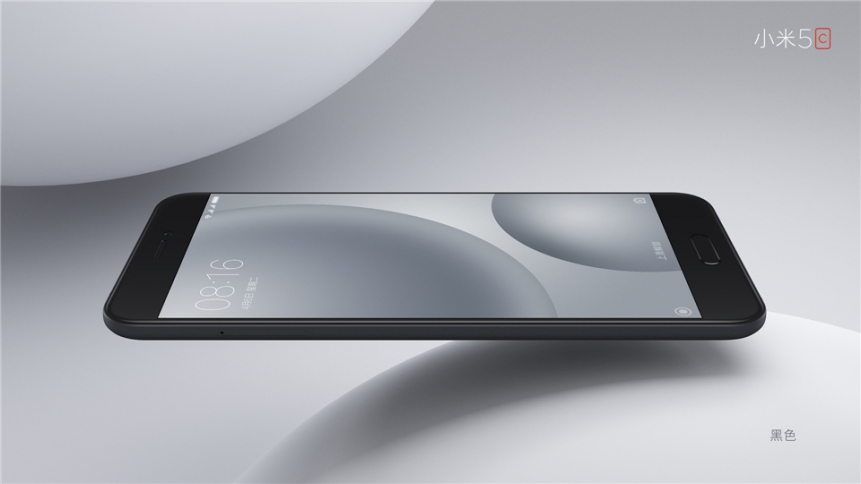
After so many months of leaks and rumors, the Xiaomi Mi 5C smartphone is finally officially. And just as expected, the Mi 5C is the first smartphone to feature Xiaomi’s newly announced Pinecone S1 /  Surge S1 chipset. The phone is essentially a mid-ranger, but the design and the overall looks of the phone are pretty top-notch.

Mi 5c

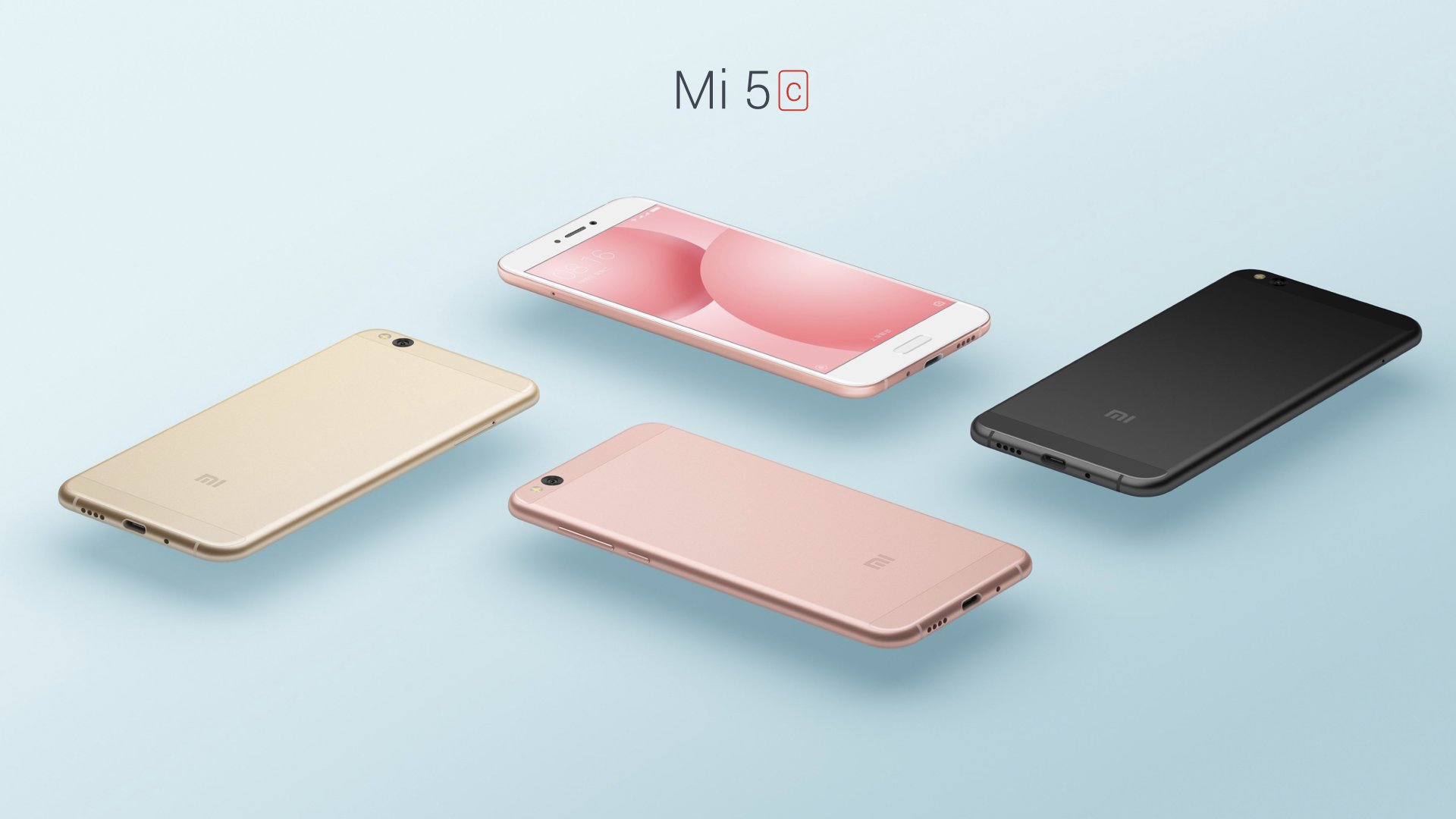
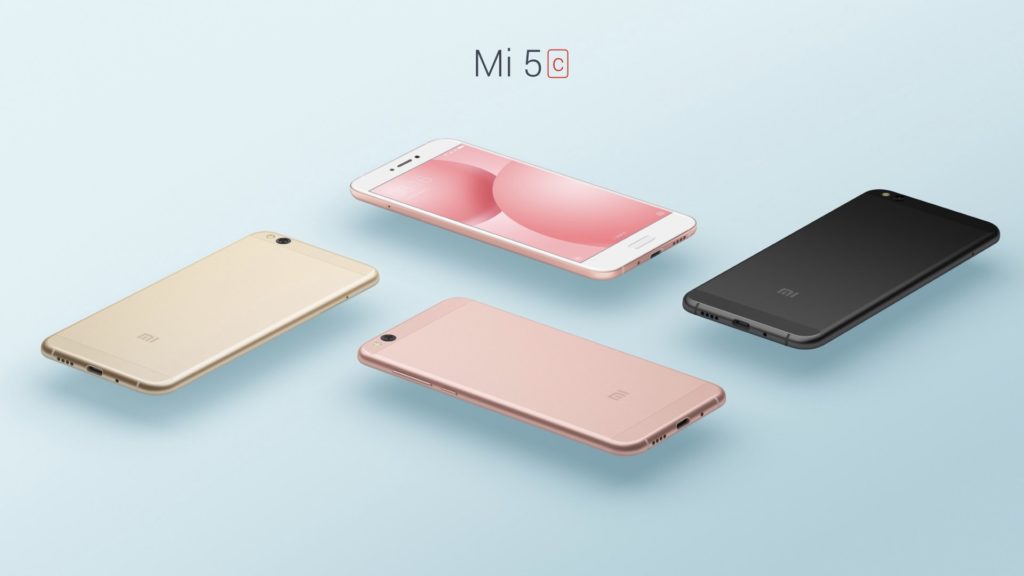
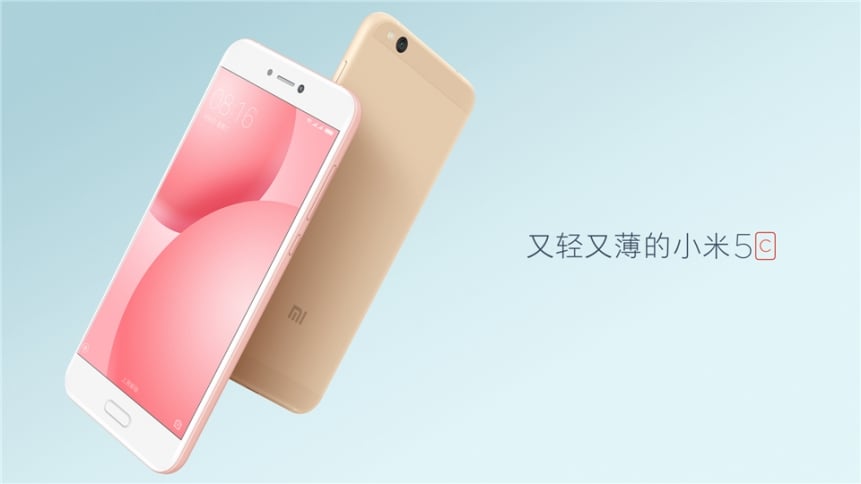
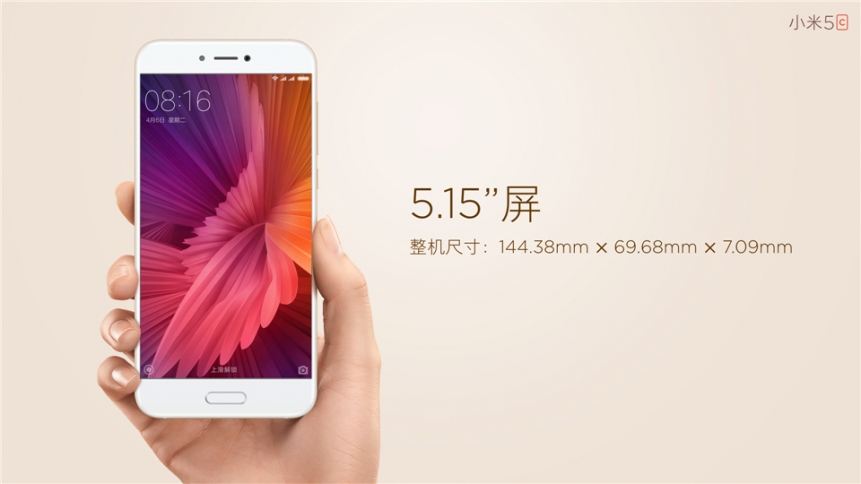
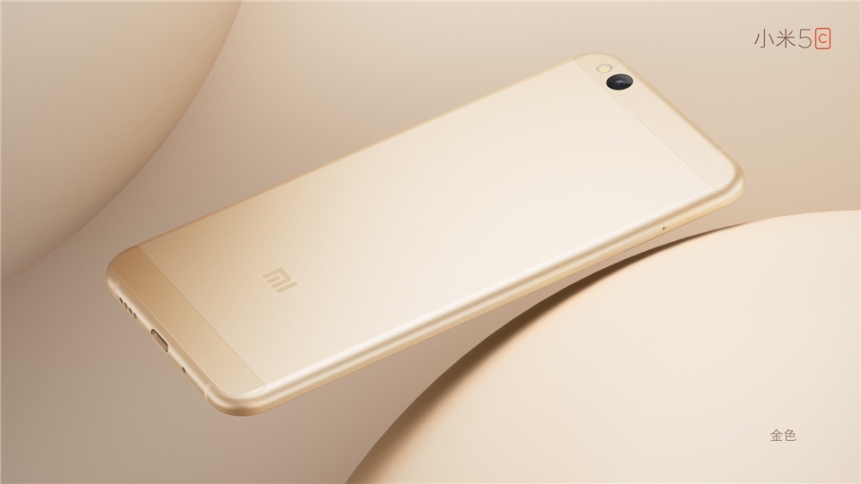
The Xiaomi Mi 5C comes in multiple color options, including gold, black, and pink. The phone looks a bit different than other Xiaomi smartphones in the market mainly because of its four curved corners and smoother metal finish. Xiaomi is known to equip its mid-range phones with a large battery, but for some reason, the company decided to keep the battery under 3000mAh. This, in turn, helps in making the Xiaomi Mi 5C super light, weighing just 134 grams and 7.09mm in thickness. The full measurements of the Mi 5C are as follows: 144.38 x 69.68mm x 7.09mm.

xiaomi mi 5c

The phone comes with a 5.15-inch 1080p display from JDI with 550 nits brightness, 2048 intelligent brightness adjustments, and ultra-narrow 1.66mm bezels. The battery on the phone is just 2860mAh but the company claims that this is good enough for a day’s usage. The phone supports 9V/ 2A fast charging as well. Xiaomi has also promised Android 7.1 Nougat upgrade for the Mi 5C in March.

mi 5c

Coming to the camera, the Xiaomi Mi 5C comes with a 12MP sensor with large 1.25um pixels enabling better low-light photography. The dual ISP algorithm reportedly improves the camera speed by up to 150%. Also, the double noise optimization feature helps in reducing the noise in the images while retaining important details. With support for pixel level dynamic range adjustment, the pictures shot from the phone come out rich as well. Of course, these are the official camera details, only a real life test of Mi 5C’s camera will reveal its actual capability.

The Xiaomi Mi 5C goes on sale on March 3 at 1499 Yuan (~218) for the 3GB + 64GB version.


mi 5c

Xiaomi’s First Pinecone Chipset, the Surge S1 Released: Octa-core, Mali-T860, Dual ISP & More

Xiaomi has always wanted to join the elite ranks of Apple, Samsung, and Huawei in designing in-house chipsets. That dream has just become a reality today as the company announced its first ever smartphone processor, the Xiaomi Surge S1. We expected the chip to be called as the Pinecone processor but the company is probably giving it a different name, the Xiaomi Surge S1. Now, now note that this is the direct translation of “澎湃S1” and the official English name could be Xiaomi Pinecone S1 or even Pengpai S1 (since 澎湃 is Pengpai in Chinese). We’ll get the official details on the name soon, but let’s focus on the specs and features of the Pinecone S1 chipset.

xiaomi pinecone s1 (1)

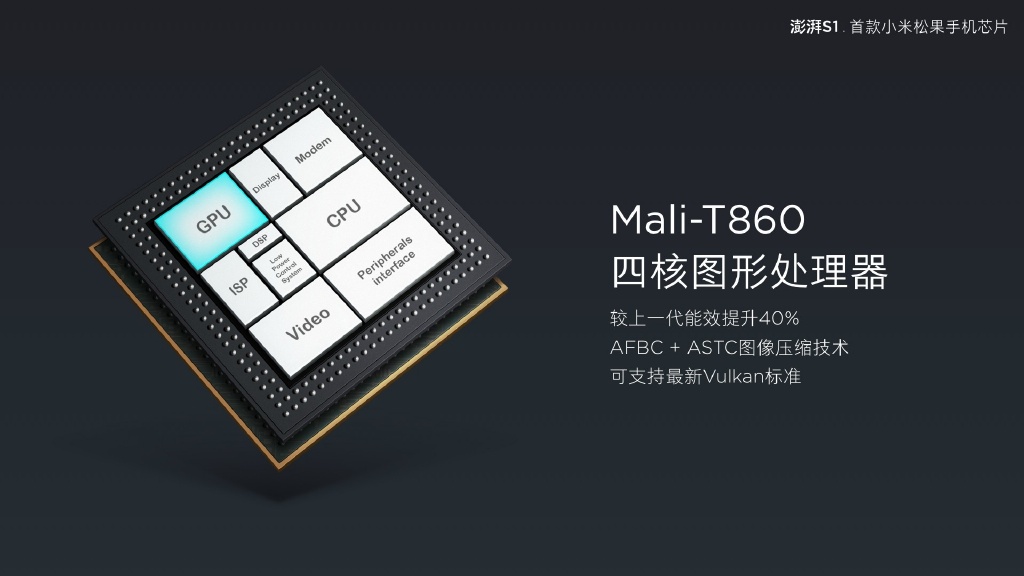
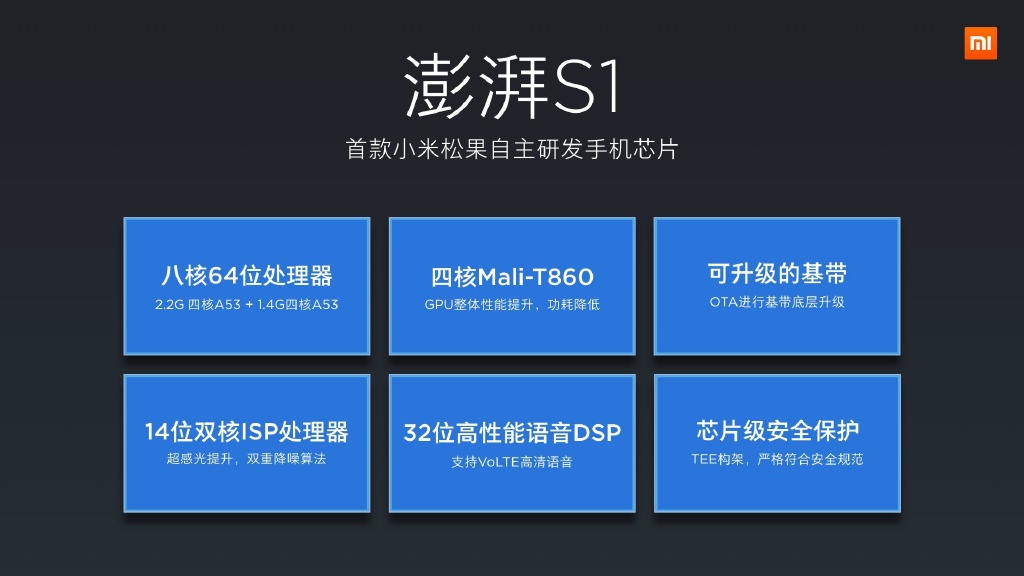
The Xiaomi Pinecone S1 or Surging S1 chipset comes with an octa-core architecture with 4 x Cortex A53 cores clocked at 2.2GHz and 4 x Cortex A53 cores at 1.4GHz. The chip will be built on a 28nm HPC+ process. The company claims the combination of four powerful and four efficient cores result in a perfect balance of performance and power efficiency. As for GPU, the chip is using ARM Mali-T860, which comes with 40% better power efficiency as compared to its predecessor, support for AFBC and ASTC image compression technology and the latest Vulkan standard.

xiaomi pinecone s1 (1)

The chip also comes with 32-bit DSP support, VoLTE, 14-bit dual ISP with support for dual noise optimized night picture improvement. Xiaomi also adds that the Pinecone S1 comes with its own chip-level security which is reportedly upgradeable via OTA. The chip also features mechanisms to prevent data leakage.


Now, something that many of you are interested about: the Xiaomi Pinecone S1 AnTuTu score.xiaomi pinecone s1 (3)

The company revealed in the conference that the Pinecone S1 AnTuTu score was higher than that of Snapdragon 625 and even Helio P2o chipsets. Of course, AnTuTu scores don’t reveal the real life performance of the chipset, but we can expect the chip to be placed among these two mid-range processors in the market.

It took 28 months for Xiaomi to develop the Pinecone S1 from the project stage to mass production stage. The company’s ultimate goal is to mass produce high-end chips which attain a perfect balance of performance and power consumption.

For the first Xiaomi chipset, the company seems to have done a pretty good job. The Pinecone S1 will be first available on the company’s brand new Xiaomi Mi 5C smartphone. More details on the Mi 5C coming soon.

xiaomi pinecone s1 2


Xiaomi Redmi 4X Specs, Pricing & Release Details Leak

Xiaomi launched the Redmi 4 and Redmi 4A smartphones last year with an ultra-cheap price tag, sleek design, and decent specs lineup. It seems the budget duo will soon get an additional sibling which would be known as Redmi 4X.

xiaomi redmi 4x


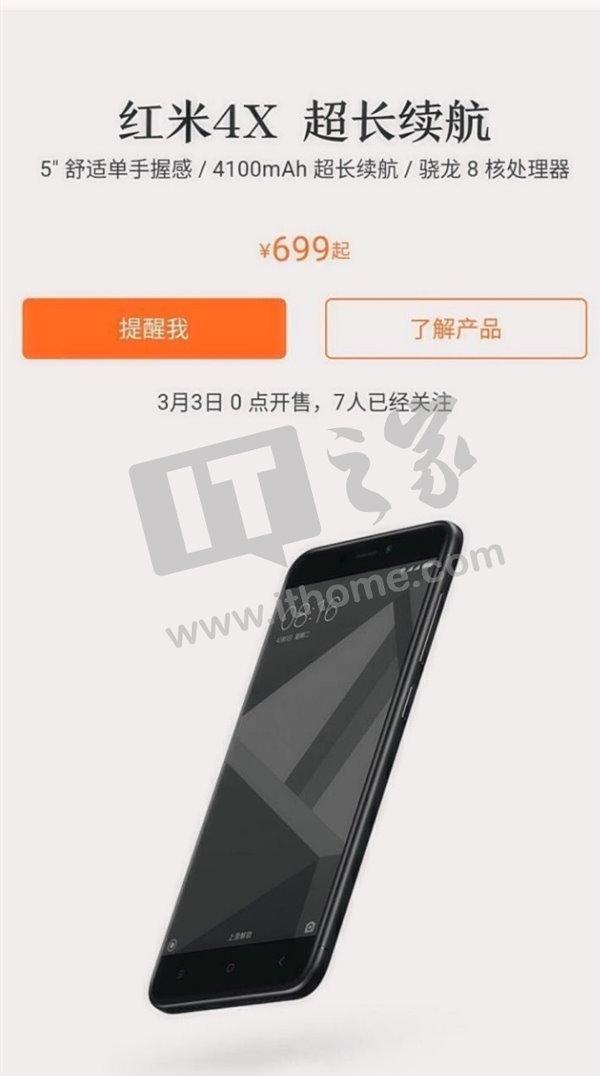
In addition to the Mi 5C, the Xiaomi Redmi 4X specs, pricing, and release details seem to have leaked online via Xiaomi Mall. The Mall listing details the Redmi 4X as having a 5-inch display and packing a large 4,100mAh battery. The Redmi 4X is expected to be powered by an unspecified octa-core Snapdragon processor and would be priced at 699 Yuan ($101). The smartphone will go on sale on March 3 at 12 AM, according to the poster.

xiaomi-redmi-4x-details

Read Also: Xiaomi Redmi 4 Official: Two SD Versions, Large Battery, Starts at 699 Yuan ($105)

The Xiaomi Redmi 4X is said to have appeared on TENAA sometime back as MAE136, and it was certified. The TENAA listing, as usual, gifted us a few specs & renders of the device. The details revealed by the TENAA appearance included a 5-inch display with a three-stage body design at the back. There is a rear fingerprint sensor as well. Further, the TENAA listing also reveals the Redmi 4X would feature a host of network bands like TD-LTE / LTE FDD / TD-SCDMA / WCDMA / CDMA2000 / CDMA 1X / GSM standard. The device will also come with dual-SIM/dual Standby support

ZTE Gigabit Concept Phone Hands Off: When a Phone is Not a Phone

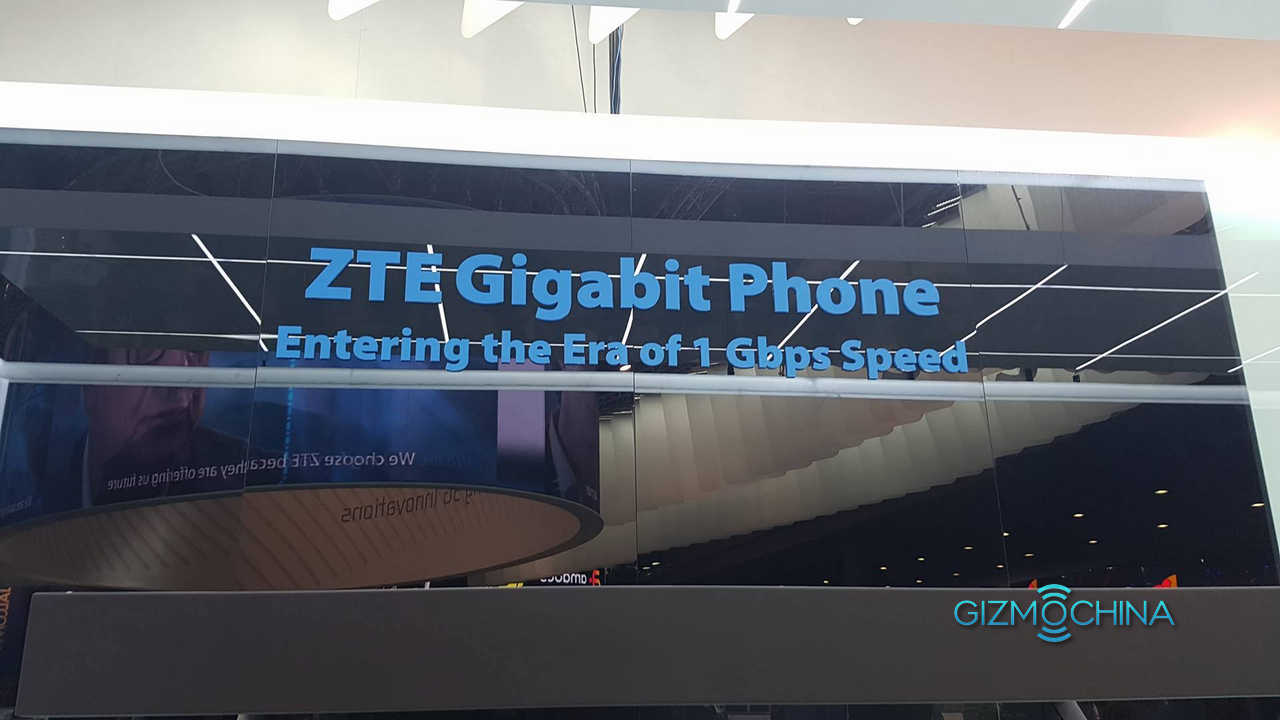
5G is the new network standard and it probably won’t kick off till 2019. But there are some companies that are really excited about what it has to offer that they have started working on prototype technology to test the network. One such manufacturer is ZTE who announced the ZTE Gigabit, a 5G concept phone on Sunday at MWC.

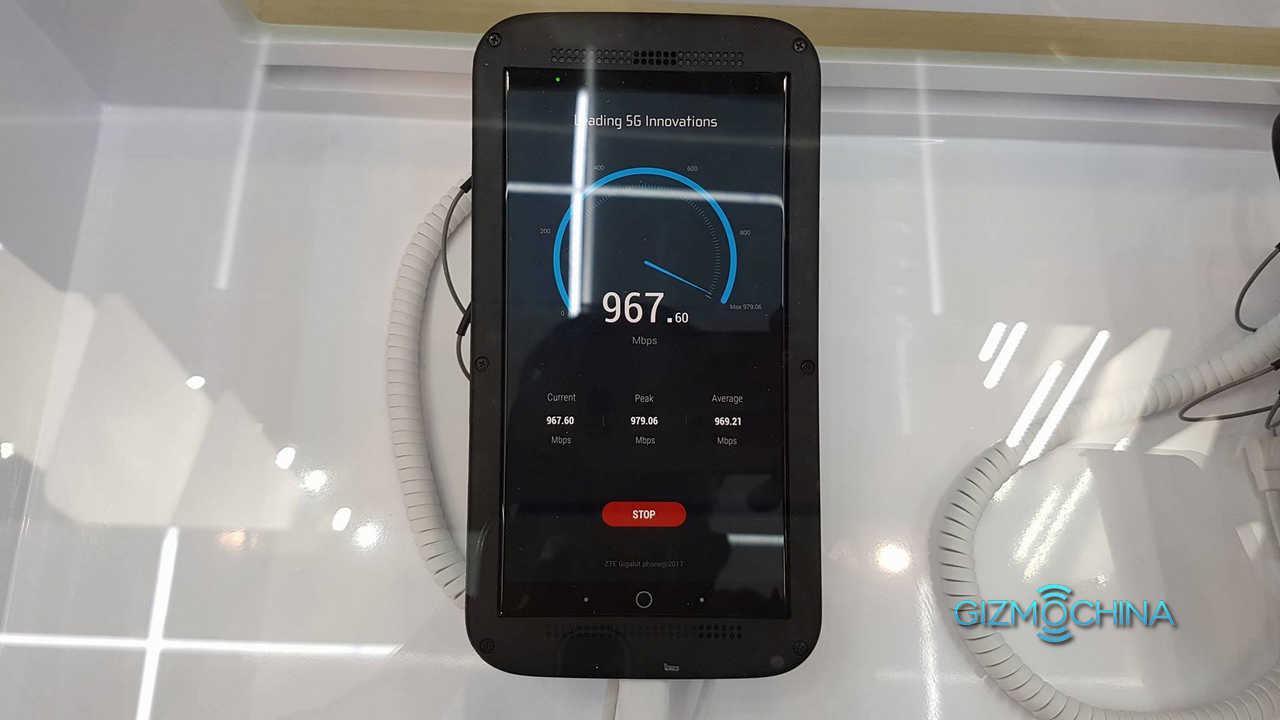
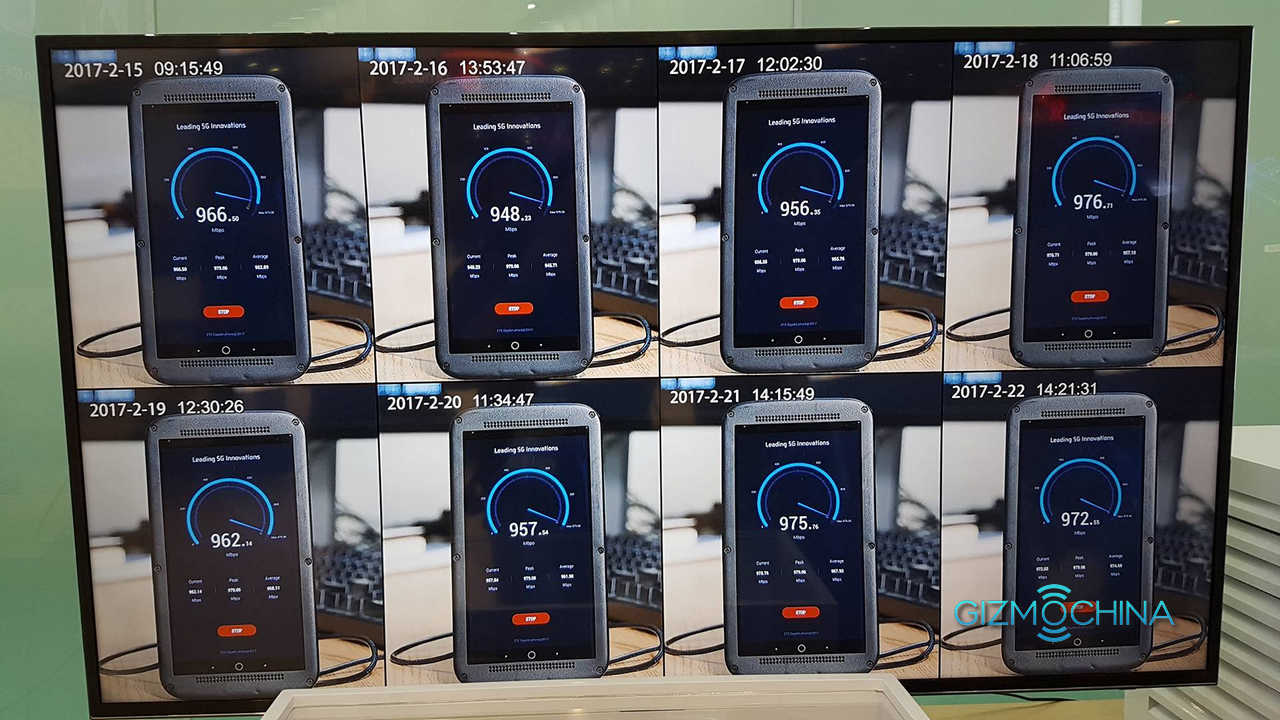
The ZTE Gigabit’s selling point is its 1Gbps download speed. It sports a Snapdragon 853 processor and can also make 360° 4K videos. No other detail was given and that is not surprising since it is actually a test device. It is not even running any OS in particular.

zte gigabit phone (2)

You might wonder why we are even calling this a hands-on because the ZTE Gigabit was actually tucked away in a glass box. All we could see was the phone perform a number of speed tests to show the potential of 5G.

READ MORE: ZTE launches Blade V8 Mini and V8 Lite with Dual Cameras and Android Nougat

The bottom line is that the Gigabit is not really a phone but a piece of hardware put together to show us the future of internet speeds. From the design to the wires jutting out at the back, we can assure you that you probably won’t be getting your hands on this one.

zte gigabit phone (3)

zte gigabit phone (1)

Sony Xperia XZ Premium 960 Fps Super Slow Motion Official Video Samples

Sony Xperia XZ Premium that was announced on Feb. 27 at Mobile World Congress (MWC) 2017 features topnotch specs like 5.5-inch 4K display and Snapdragon 835 SoC. Another exciting feature of XZ Premium is that it is the first smartphone that is capable of shooting super slow motion videos at 960 frames per second.

The Xperia XZ Premium’s 19-megapixel rear camera can record videos four times slower than the conventional smartphones that can shoot slow motion videos. For instance, the iPhone 7 and iPhone 7 Plus can shoot two kinds of slow motion videos of 120 fps (1080p videos) and 240 fps (720p videos).

The Sony Xperia XZ can shoot 720 pixels resolution super slow motion videos at 960 fps. Here is an official video from Sony that shows some examples of super slow motion recorded at 960 fps on Xperia XZ Premium.

https://www.youtube.com/watch?v=z-MQ6UKVYlU

Dubbed as Motion Eye, the 19-megapixel camera features 1/2.3 image sensor, f/2.0 aperture and 25 mm equivalent lens. With 19 percent larger pixels, the rear camera can snap amazing photos in dim light conditions. It can record highly stable 4K videos with SteadyShot feature that provides 5-axis digital stabilization. The panorama mode has been improved to shoot higher resolution images.

The Predictive Capture begins buffering when the camera sensor detects motion even before the user hits the camera button. It makes it possible to shoot four photos in a second before the camera button is pressed. This function is similar to Live Photos available on iPhones. Samsung’s Motion Photo available on Galaxy S7 series also functions in a similar way. Its 13-megapixel frontal camera also features f/2.0 aperture and 22mm wide angle lens.

https://www.youtube.com/watch?v=ibzZ4fhP9x0

Related: Sony Xperia XZ Premium, Xperia XZs, Xperia XA1, XA1 Ultra Official Images, Price, Release Date

The Sony Xperia XZs that was announced alongside it also features the same 19-megapixel rear snapper and 13-megapixel front-facing camera. The Xperia XZs also supports 960 fps slow motion video shooting. The specs sheet does not include Predictive Capture feature for Xperia XZs.

The Sony Xperia XZ Premium pegged to cost around $799 is expected to be available for purchase in late spring. The Xperia XZs is slated to release on April 5 with a price tag of $699. Sony had also announced the Xperia XA1 and Xperia XA1 Ultra at Mobile World Congress (MWC) 2017.

Nubia N1 Lite with 5.5-inch Display Goes Official at MWC 2017

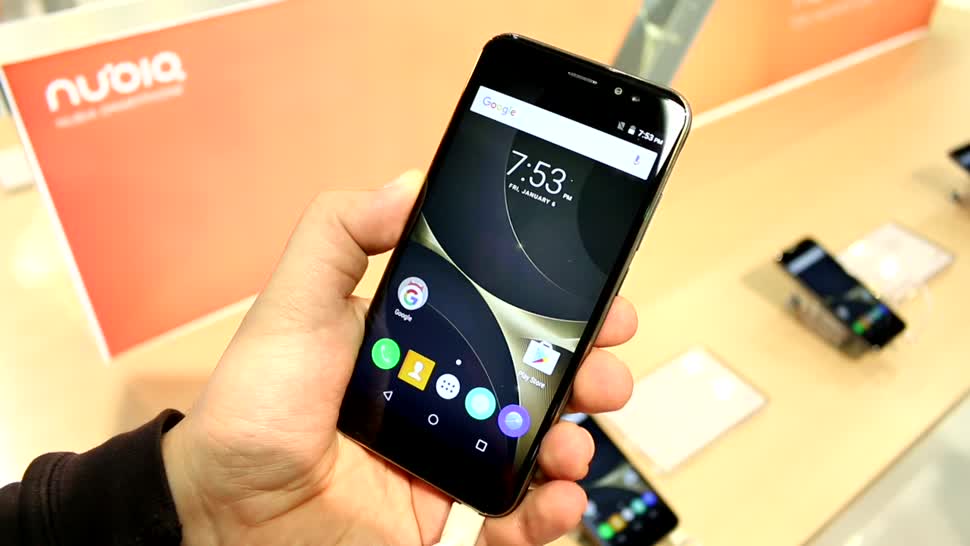
After releasing the budget Nubia N1 last year, ZTE‘s elite brand Nubia has unveiled the Nubia N1 Lite at the Mobile World Congress 2017 in Barcelona. The Nubia N1 Lite does not rub shoulders with flagships like the LG G6 and Huawei P10 which we had seen at the MWC 2017 already but it sure deserves some bit of attention.

 Nubia N1 Lite

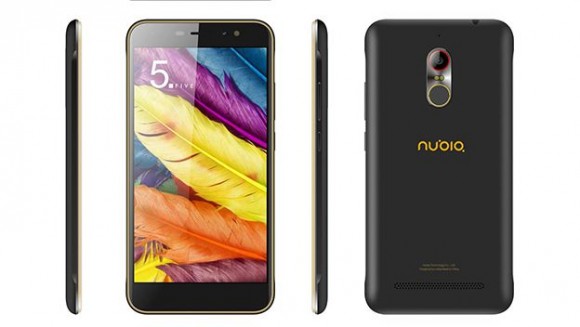
The Nubia N1 Lite, as the name implies, is a trimmed down version of the Nubia N1 but surprisingly, the device sports a 5.5-inch display, same with the Nubia N1. However, the specs of the N1 Lite are a bit scaled down like the display resolution which comes in a 1280 x 720p (HD) on the N1 Lite while the N1 came with a Full HD resolution. The N1 Lite is said to pack an unspecified Quad-core processor backed by 2GB of RAM while there is 16GB of storage onboard.

 Nubia N1 Lite

Further, the  Nubia N1 Lite features an 8MP main camera with f/2.0 aperture and dual-LED flash. Up front, there is a 5MP selfie camera which also has its own flash. There is equally a fingerprint sensor mounted at the rear, just underneath the rear camera. The fingerprint sensor is touted to unlock the smartphone in just 0.3seconds. The N1 Lite runs Android 6.0 Marshmallow OS from the go and comes with 4G LTE connectivity. Keeping the lights on is a capable 3,000mAh battery.

 Nubia N1 Lite

Read Also: Nubia Silently Releases The Nubia N1, Features 5000mAh Battery & 13MP Front Cam

The Nubia N1 Lite will officially launch in March and would be available across Europe, specifically in Germany, Spain, Italy and Czech Republic. It will also go on sale in India, Thailand, Vietnam and Indonesia. No word yet on the price and when it will hit China.

OnePlus 5 Specs Rumors: Dual-Edge Display, Snapdragon 835, 8 GB RAM, 4000 mAh Battery and More

Previous rumors have stated that OnePlus would be skipping “4” in the name of its next flagship as the number is consider unlucky in China. Hence, the OnePlus 3T’s successor is rumored to arrive with OnePlus 5 (or OnePlus Five) moniker. According to KoreaPortal, the 2017 OnePlus flagship is expected to feature an aluminum and glass combination chassis along with a dual-edge curved display.

As far as the design of OnePlus 5 is concerned, it is pegged to appear similar to the Galaxy S7 Edge. The source claims it is powered with Snapdragon 830 chipset.  It should be noted that Qualcomm has not unveiled a chipset named as Snapdragon 830. Since the Chinese firm has already released Snapdragon 821 chipset powered OnePlus 3T, the OnePlus 5 is pegged to come loaded with Snapdragon 835 SoC.

OnePlus is expected to continue with 6 GB of RAM on its upcoming flagship. However, other sources claim that it may feature 8 GB of RAM. The OnePlus 5 is speculated to come in two storage models like 64 GB and 128 GB. It may feature for expandable storage that will support for up to 256 GB additional storage space.

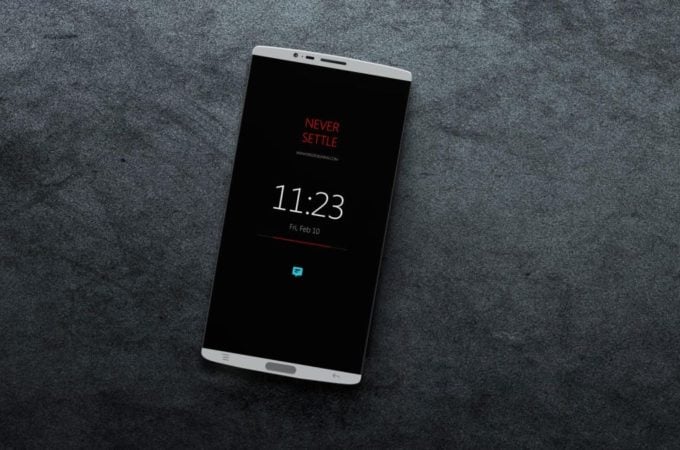
OnePlus 4

Related: OnePlus 4 Concept Renders & Likely Specs Leak

For photography, the OnePlus flagship may feature a 23-megapixel rear snapper and a front-facing camera of 16-megapixel, the same one that is present on OnePlus 3. It is expected to feature a USB Type-C port. It will be running on Android 7.0 Nougat OS. A 4,000 mAh battery with Dash Charge fast charging support is rumored to power the OnePlus 5. Other sources also claim that the OnePlus 5 would be sporting chassis like Xiaomi Mi Mix.

The recently announced Sony Xperia XZ Premium is the first commercial smartphone to be powered by Snapdragon 835 chipset. Even though it was announced on Feb. 27 at the ongoing Mobile World Congress (MWC) 2017, the smartphone is expected to be available for purchase between March to May.

Previous reports have stated that Qualcomm has allotted the initial batch of Snapdragon 835 chipset to Samsung to power the Galaxy S8 and Galaxy S8+ flagships that will be announced on March 29. Both phones are rumored to be available for purchase by April 21. Hence, the Xperia XZ Premium and other flagships featuring Snapdragon 835 are rumored to release in the second quarter of this year.

The OnePlus 3 was announced in June last year. Hence, the OnePlus Five running on Snapdragon 835 is likely to be announced at the end of Q2 2017. The authenticity of the rumored OnePlus 5 specs revealed by the source of this news seems doubtful as the report contains inaccurate information like Snapdragon 830 and 400 mAh battery. Hence, we advise our readers to digest this report with the proverbial grain of salt.

(source)

MediaTek Helio X30 with Deca-core SoC, PowerVR Graphics Announced to Rival Snapdragon 835, Exynos 8895

There are many Chinese smartphones that are powered by MediaTek chipsets. The recently announced Sony Xperia XA1 and Xperia XA1 Ultra are also fueled by MediaTek’s Helio P20 SoC. With the company manufacturing advanced chipsets at a faster pace, it soon expected to take on market giants like Qualcomm’s Snapdragon and Samsung’s Exynos chipsets. The Taiwanese firm has now announced its newest and most powerful chipset – the Helio X30 chipset, at the Mobile World Congress (MWC) 2017.

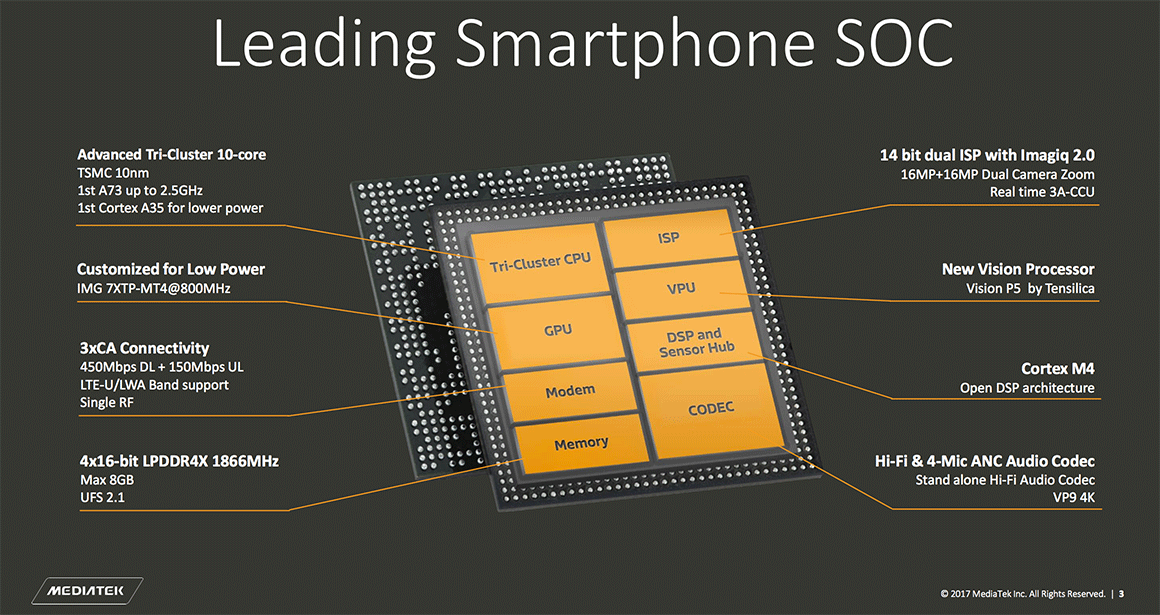
The MediaTek Helio X20 from last year was the world’s first ten-core processor. Now the company has announced the Helio X30 SoC, an upgraded version of Helio X20.It is also features a deca-core processor built with 10 nm manufacturing process. After Snapdragon 835 and Exynos 8895, the Helio X30 is the third chipset to be built with 10 nm manufacturing process.

The SoC also includes PowerVR graphics. Compared to its predecessor, the Helio X30 consumes 50 percent less power and delivers 35 percent better performance than Helio X20.

MediaTek_Helio_X30-Diagram

Related: MediaTek Could Possibly Cancel 50% of Helio X30 Production

The deca-core processor includes two Cortex A73 processors working at 2.5 GHz, four Cortex A53 processors functioning at 2.2 GHz and four Cortex A35 processors running with a speed of 1.9 GHz. For topnotch graphics, it includes PowerVR 7XTP-MT4 quad-core graphics working at 800 MHz.

Like Snapdragon 835 and Exynos 8895 chipsets, the Helio X30 also supports up to 8 GB of LPDDR4 RAM at 1866 MHz. It also supports UFS 2.1 storage. The smartphones powered by Helio X30 will deliver a max display resolution of 2,560 x 1,600 pixels.

For photography, it Helio X30 SoC can feature dual 14-bit ISPs to support 16-megapixel + 16-megapixel dual cameras that can shoot with a recording resolution of 3,840 x 2,160 pixels. The CorePilot 4.0 technology can determine the power usage and deliver optimum battery performance at the lowest power.  It also features support for Cat. 10 LTE modem.

Jeffery Ju, MediaTek’s Executive Vice President and Co-COO confirmed at MWC 2017 that the Helio X30 would be powering less than ten smartphones this year. Rumors have it that the Vernee Apollo 2 would be the first smartphone that would be featuring the new chipset. It is slated to get unveiled at MWC.

(source)

ZTE Blade V8 Hands On: The Second in Line With Dual Cameras

The ZTE Blade V8 is the second phone in the Blade V8 line. Don’t be surprised, the Blade V8 Pro was announced before it and is even already on sale.

I’m going to be honest with you, the Blade V8 is the least attractive in the V8 line. I’m not saying it is ugly but it is not as good looking as the others. It doesn’t have the shiny silver/gold bands the V8 Lite has on its back; and since it sports an all-metal back-plate, it lacks that mesh-like design on the V8 Pro.

ZTE Blade V8 (12)

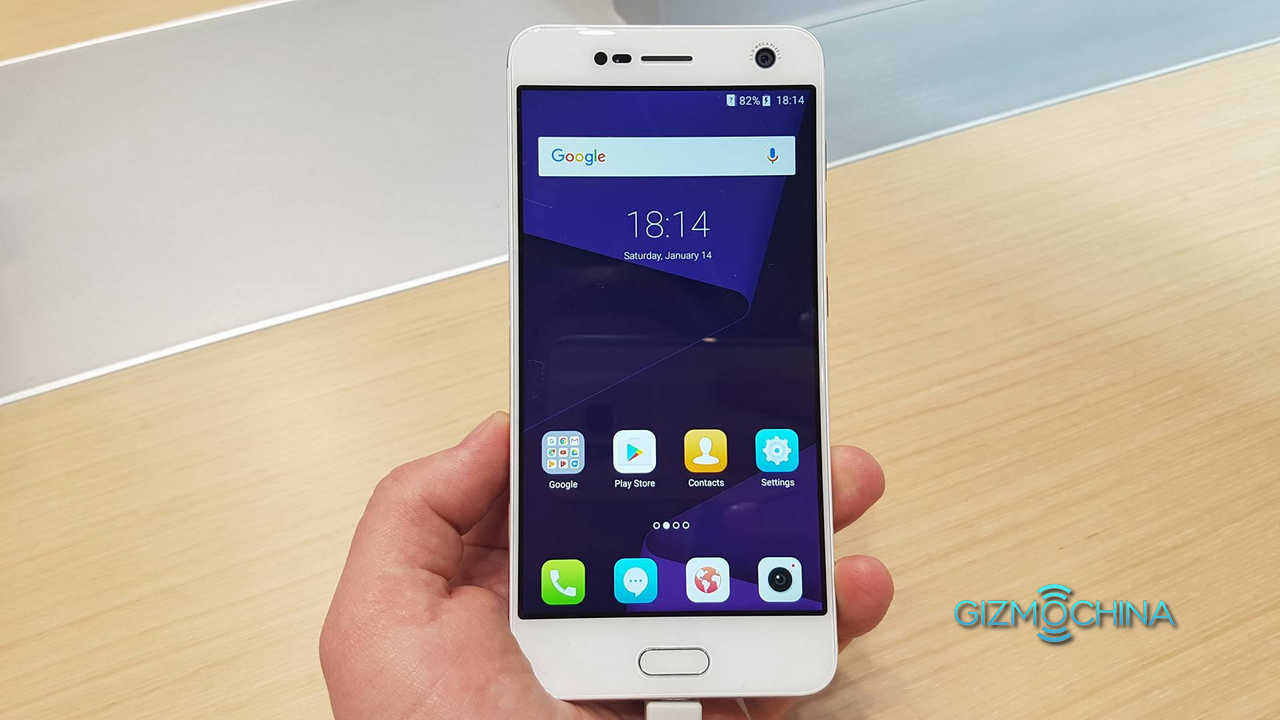
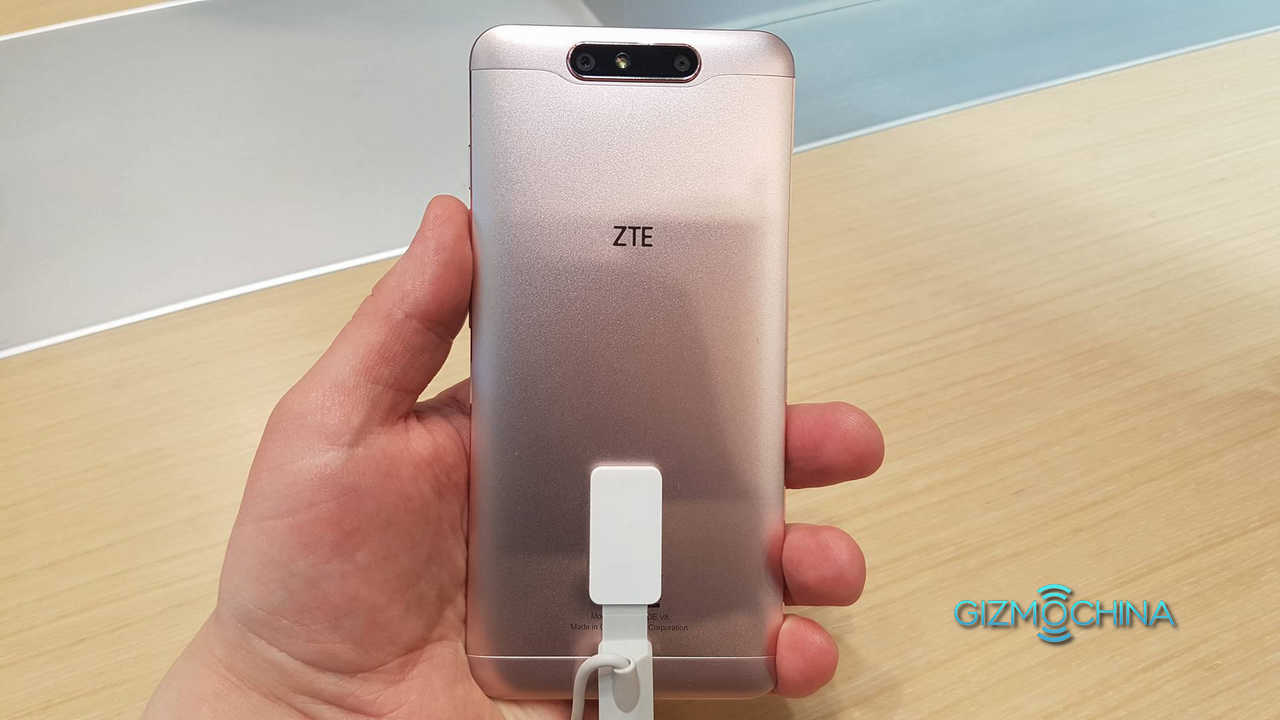
The Blade V8 might not be the most attractive one but it shares some similarities with its siblings. Take for example the camera housing. It is the same as that of the V8 Mini; and like the V8 Pro, also has its fingerprint scanner which also doubles as a home button sitting up front.

Where the Blade V8 is different from its siblings is in the design of its speakers. The speakers are positioned on the bottom and have circular cut outs (12 in total). The fact that there are two grilles doesn’t mean it has stereo speakers, that design is just to maintain symmetry. Sitting in between them both is a microUSB port. At the top is an audio jack and a noise cancelling microphone.

The front of the phone is covered in glass. The bezels are a bit large but that is expected for a phone in this price range. The top bezel is where the front facing camera, speaker, sensor and a front flash lies. At the bottom is the fingerprint scanner and navigational buttons that are sadly not backlit. The right hand side is has the power button and volume rocker and the left has the sim tray.

ZTE Blade V8 (1)

The Blade V8 sports a 5.2-inch 2.5D Full HD display and is powered by the more recent Snapdragon 435, unlike other mid-rangers in its class such as the Nokia 6, Nokia 5, and Moto G5 which all use the Snapdragon 430. There is 2GB/3GB of RAM, 16GB/32GB of storage and a 2730mAh battery.

READ MORE: ZTE Cancels Project CSX Phone, ZTE Hawkeye A day Before Deadline

Xiaomi Mi 5C with Pinecone Chipset Pricing Detail Leaks

Chinese innovative startup Xiaomi is all set to unveil its in-house processor named Pinecone tomorrow in a conference specifically slated for the unveiling. Rumor has it that Xiaomi will also unveil a new Mi 5C smartphone along with the SoC.

xiaomi mi 5c


As a matter of fact, the Xiaomi Mi 5C had long been rumored to use Xiaomi’s in-house Pinecone chipset and that seems to have been confirmed when the Mi 5C appeared on benchmark website GFXBench packing an unnamed processor that fits the specs of the Pinecone processor.

xiaomi pinecone processor

Ahead of the expected launch, the Mi 5C likely price tag has leaked online via a screenshot which looks like it had been grabbed from Xiaomi mall. The leak reveals the Mi 5C would carry a price tag of 1499 Yuan ($218). We cannot verify the authenticity of this information, besides, Xiaomi does not release the price of their smartphone officially prior to its launch. So, we’ll likely rate this leak 30% as it may likely be a fake listing.

Read Also: Xiaomi Mi 5C “Meri” Shows Up on Geekbench Again: Runs Nougat

The Xiaomi Mi 5C is expected to come with a 5.5-inch 1080p display and would have 3GB of storage as well as 64GB of internal storage. There is also a 12MP rear camera as well as an 8MP front-facing camera. The smartphone runs MIUI 8 based on Android 7.1.1 Nougat.

via