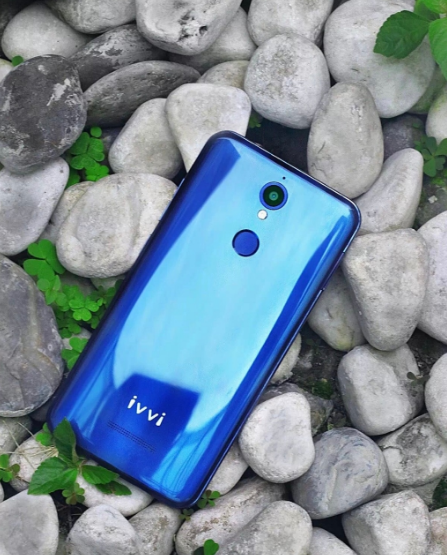
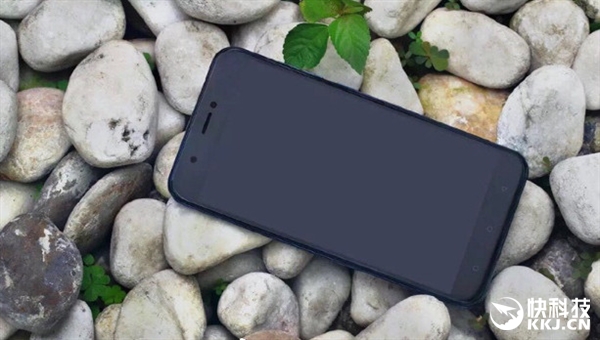
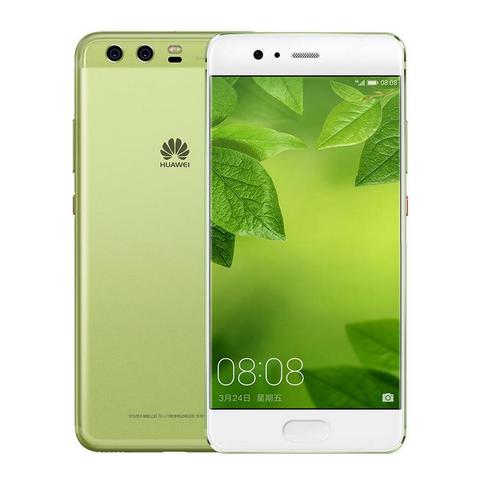
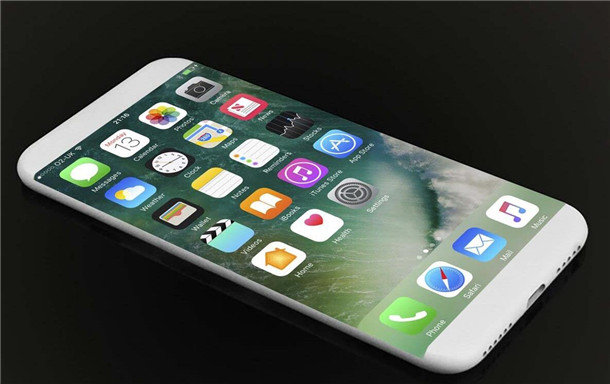
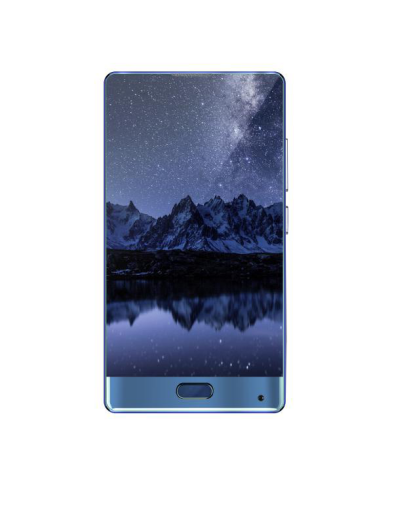
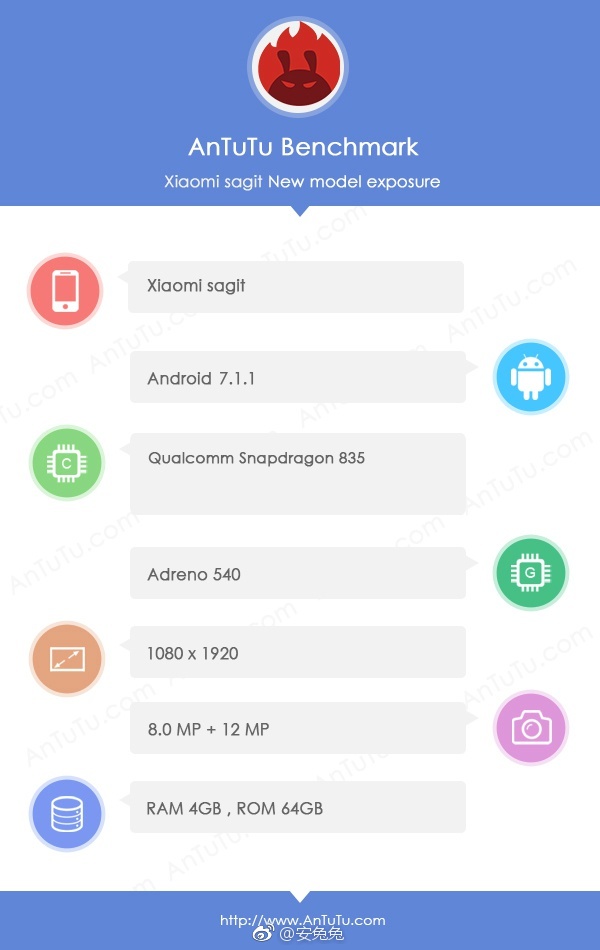
Chinese smartphone manufacturer Ivvi has released its much-touted Ivvi K5 mobile phone that comes to challenge top-end models with its premium design and amazing specs lineup. We can’t really get too excited because the K5 doesn’t feature a Snapdragon 835 chipset as the device had been tipped to do. It doesn’t even feature a Qualcomm chip instead, it packs an octa-core MediaTek chip.
The Ivvi K5 comes with a premium body that goes beyond the usual metal body but instead, it features a curved glass body both at the front and back. The glass used on the body is said to have been manufactured using new and improved composite materials which are not only lighter, but also makes the phone durable and not fragile.
On the specs end, the Ivvi K5 sports a 5.5-inch 1080p display and is powered by an undisclosed MediaTek SoC which is an Octa-core CPU. The device comes with a single memory version comprising a 4GB RAM and 64GB of internal storage. On the camera end, the K5 packs an 8MP sensor at the front and at the rear, there is a 13MP shooter. There is also a rear-mounted fingerprint sensor on the smartphone. Keeping the lights on is a 3000mAh battery and the phone comes with dual SIM/ dual standby support as well as entire network support.
Perhaps the most spectacular feature on the phone is the 3D function it comes with. The LCD display on the device is capable of displaying images with 3D effects. Thus, 3D videos, 3D games and other 3D contents can be viewed on the smartphone. This is really not a surprise, considering that Ivvi’s new owners SuperD is one of the leading manufacturers of 3D display in China.
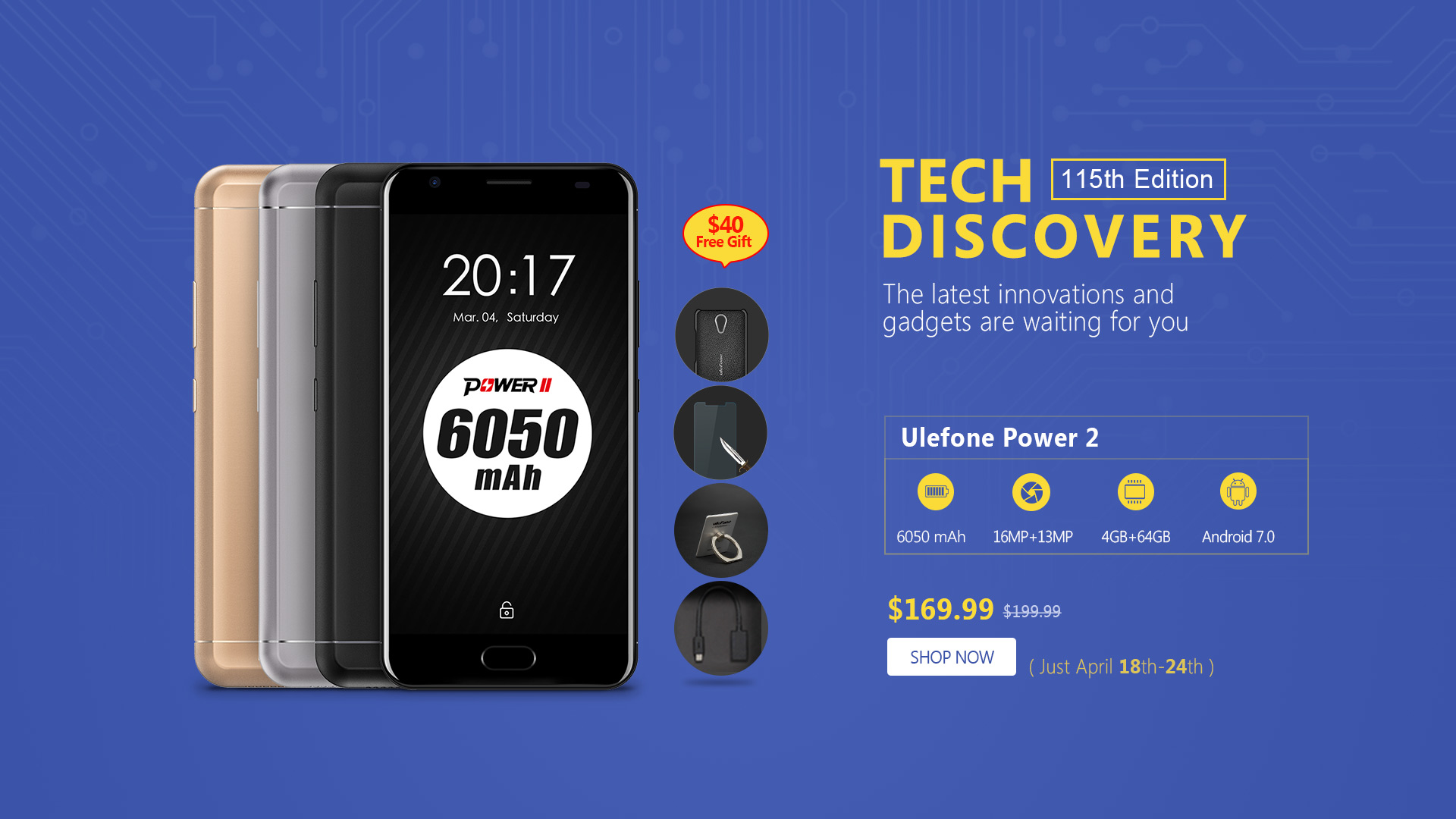
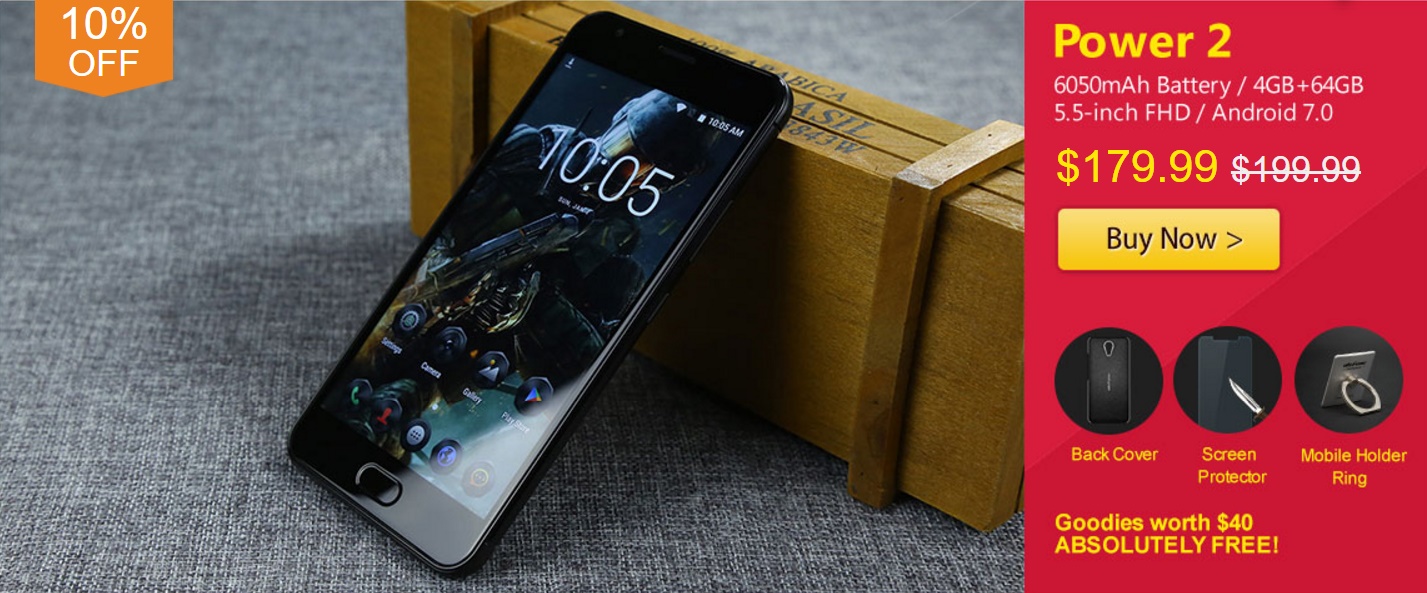
Every Tuesday is Tech Discovery Day on Aliexpress. A select list of tech related items are on sale for a week and the discounts are worth taking advantage of. Today’s Tech Discovery items includes the battery monster Ulefone Power 2.
The Ulefone Power 2 is a 5.5-inch phone that packs a 6050mAh battery. That is sufficient to last you up to 2 full days on a single charge. Another cool thing about it is that, you can use the Power 2 to charge your other devices via USB OTG.
The Power 2 has 4GB of RAM, 64GB of storage and is powered by a 1.5GHz MTK6750T octa-core processor. There is a 16MP camera on the rear, a 13MP shooter in front, and a fingerprint scanner embedded under the home button. The Power 2 also comes pre-installed with Android 7.0 Nougat.
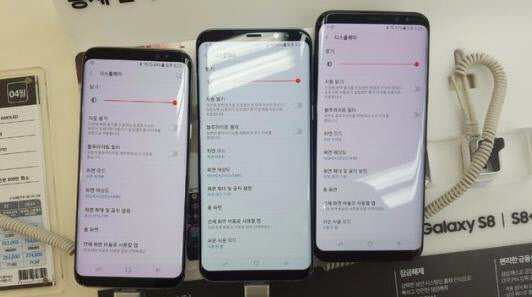
Some users in Korea are reporting a reddish tint on their Galaxy S8 screen. The report comes from the Korean Herald. The affected users had complained on the Samsung forum about the red tint and the failure to remove it after adjusting the display settings.
The Samsung Galaxy S8 is set for a Friday release globally but the users who are complaining are those who pre-ordered in Korea. Samsung itself has acknowledged the reddish tint and said “It is not a quality problem and it can be adjusted with the phone itself. If the color still appears to be reddish, customers can change it at the service center.”
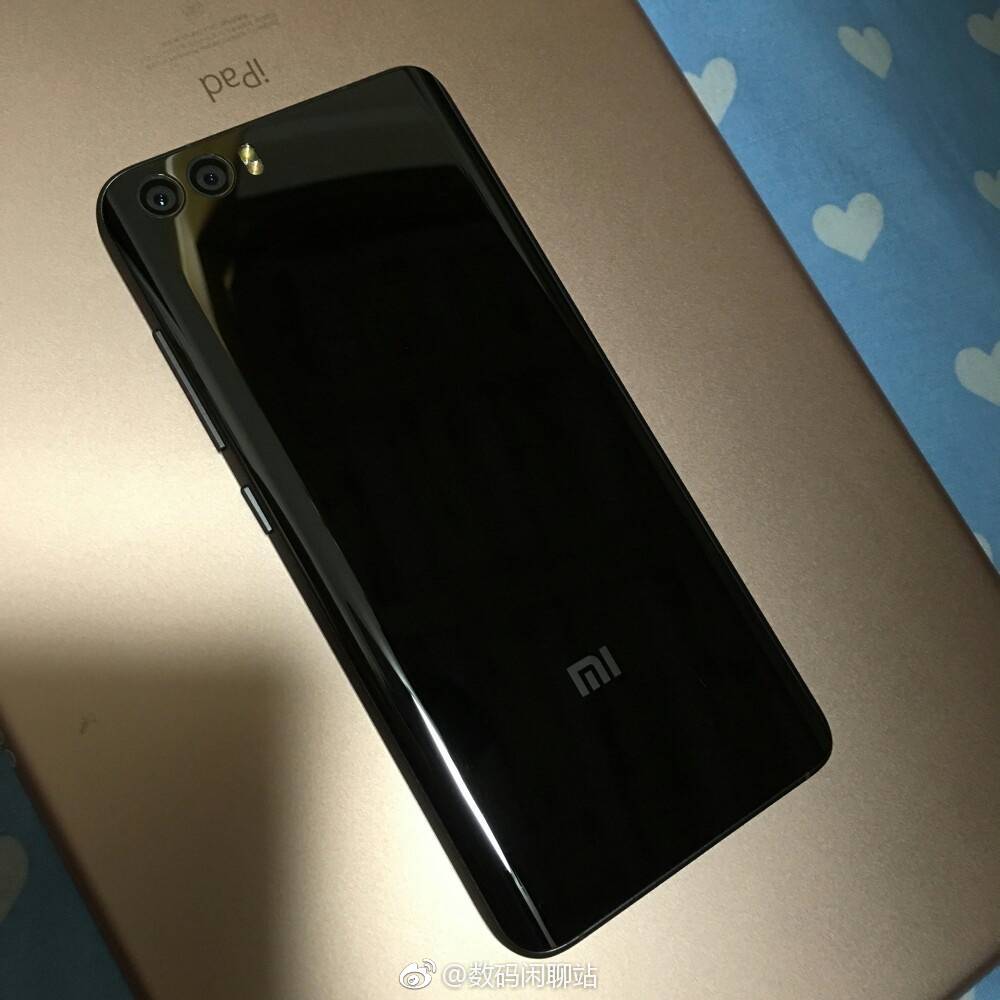
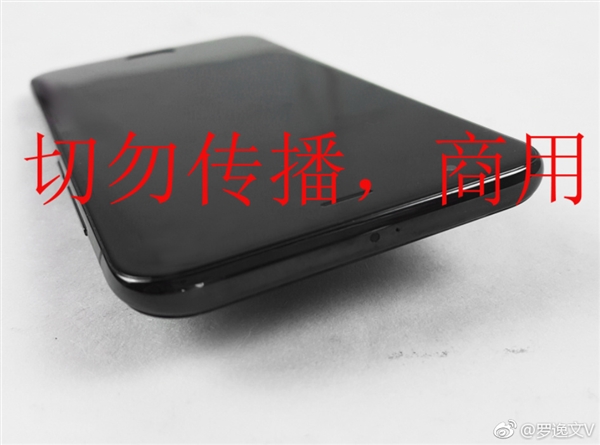
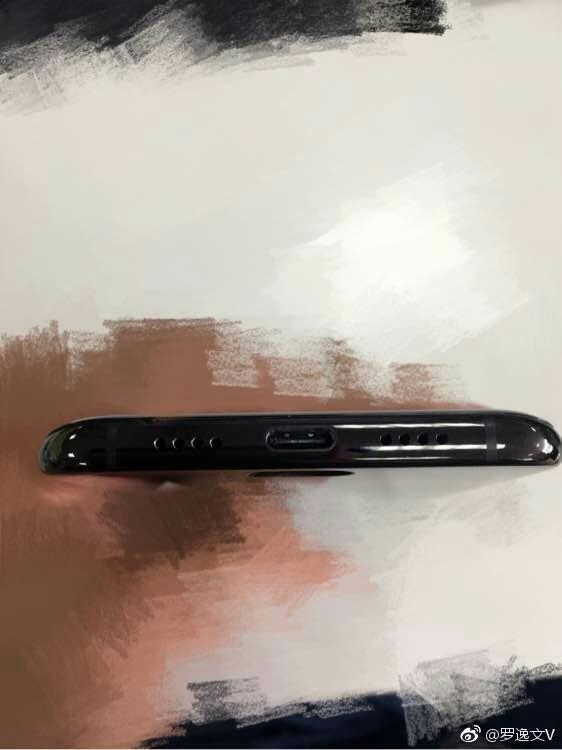
The Xiaomi Mi 6 is launching tomorrow. It will be the first Chinese smartphone to launch with the Snapdragon 835 SoC unless the Ivvi K5 launches today.
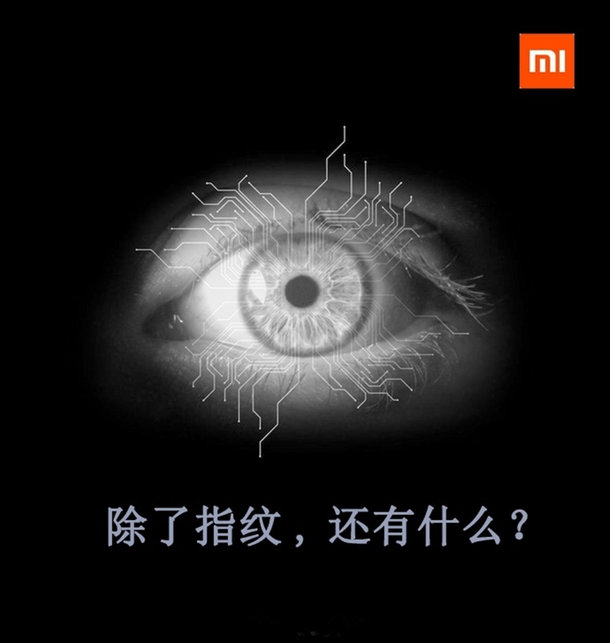
Asides the new processor, the Xiaomi Mi 6 will also have dual rear cameras, a 3D curved glass back, a 2.5D display, and an ultrasonic fingerprint scanner. Some say the promotional poster also points to other features such as the fact that it will also have a 6GB version and be available in blue too.
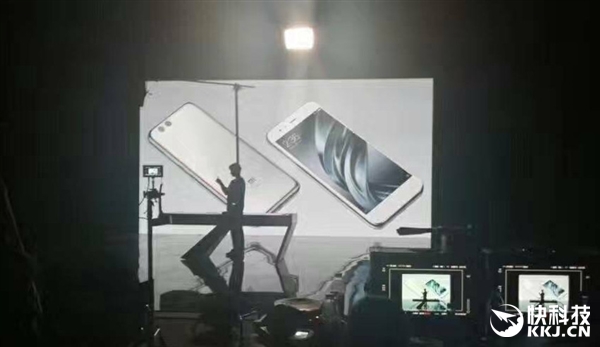
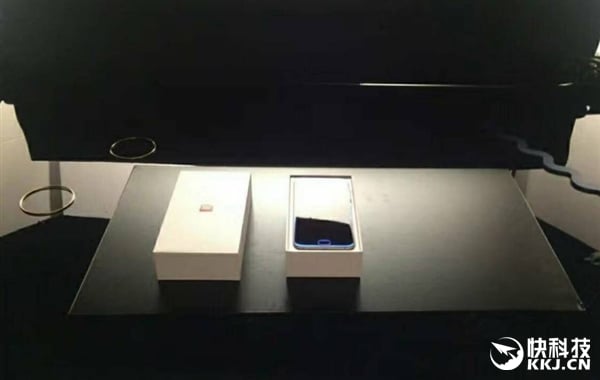
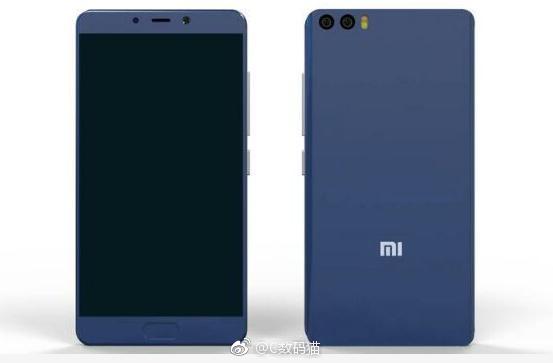
New pictures of the Xiaomi Mi 6 have leaked online. The images are most likely from photo-shoots for tomorrow’s launch. The first image shows a silver Mi 6 with dual cameras while the second image shows the blue variant in a box. If you look closely at the second image, you can make out the ultrasonic fingerprint sensor.
Chinese market research and information company Sino Research has released its 2016 smartphone micro-report which is based on quantitative analysis of the data obtained in 2016 from phone users online. The report is basically a study of the smartphone user trend in China and from the look of things, Huawei, OPPO and Vivo now have a stronghold on the top three spots as having more persons using their brands.
The report shows that global market leader Samsung experienced a decline in its hold on the Chinese market. So too, Apple continues its freefall in the market despite still the second highest ranking brand globally. The number of active iPhone users was shown to have declined from 37% to 35%, while the number of new users also dropped from 33% to 27%. The number of persons switching fro Android phones to iPhones also dropped, year on year.This could be attributed to innovations brought in by the local Android phone manufacturers like Huawei, OPPO and Vivo who are also making inroads into the global market. We have seen innovations in a larger RAM size, faster charging, dual-lens and more powerful cameras and more.
On individual models, most of Apple users switched either to the Huawei P9, OPPO R9 or Vivo X7. Huawei P9 got the lion share of defectors with a total of 38% of users switching over from Apple iPhone. The OPPO R9 received 22% of Apple users switching over to it while the Vivo X7 got 20% of Apple users. However, Apple still continues to maintain its advantage in terms of loyal users who still stick with the brand.
At the end of 2016, Huawei, OPPO and Vivo together accounted for a growth rate of 34% in their market share which is greater than the sum total of all the other Android smartphone brands put together. Their growth is significant because it represents a rise in smartphone sales when compared to previous years.
On a gender basis, most Huawei and Xiaomi users are male while the vast majority of OPPO and Vivo users are females.
Tomorrow is a big day for Xiaomi as their much awaited flagship, the Mi 6 will be unveiled. Asides that, the Chinese manufacturer has another reason to be excited.
An insider @Kevin King’s diary revealed that last month Xiaomi sold 6.3 million smartphones. The info was revealed in a Weibo post yesterday . The post goes on to state that Xiaomi is restructuring its phone business.
Xiaomi CEO Lei Jun had said earlier this month that they had discussed restructuring the phone business at the first general meeting after the 7th anniversary celebration. The focus this year will be on three key things: innovation – working on breakthroughs in core technologies; quality – products that have a quality higher than that of competitors; and delivery – finding a solution to its recurring supply issues.
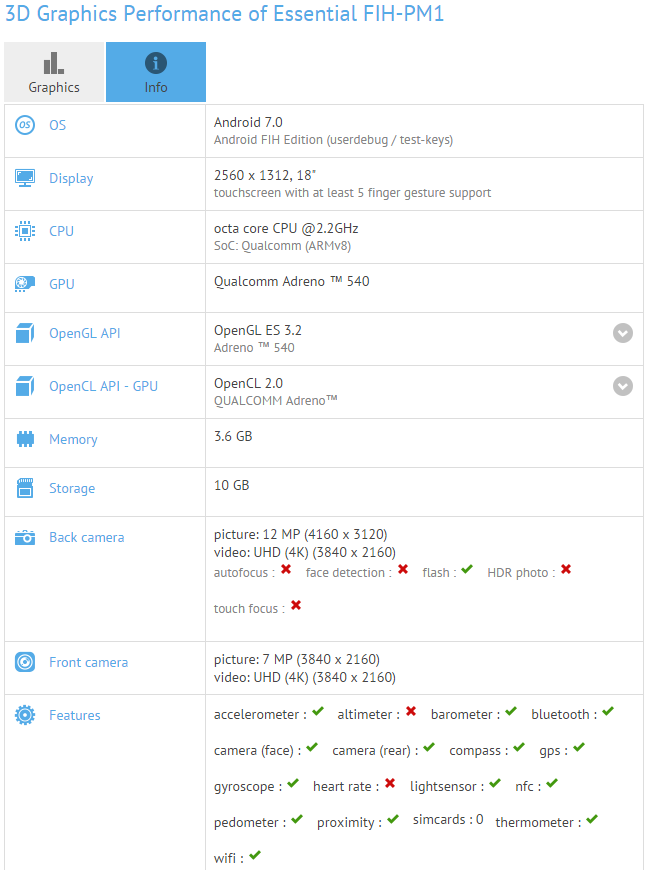
One of the most awaited smartphones of this year is the flagship Android smartphone from Andy Rubin, the co-founder of Android OS before Google acquired it. The flagship phone would be released through his company named Essential Products, Inc. Rubin has already teased the first look of the phone and now its specifications have appeared on GFXBench benchmarking platform. In January, the Geekbench benchmarks had also appeared.
The smartphone has appeared with a model number of Essential FIH-PM1. FIH stands for Foxconn International Holdings which indicates that Foxconn could be manufacturing the phone.
It bears a screen size of 5.5 inches and it offers a resolution of 1,312 x 2,560 pixels. The display provides an aspect ratio 80:41 which is similar to 18:9 on the LG G6. The Snapdragon 835 SoC that is present under the hood of the device features a 2.2 GHz octa-core processor and Adreno 540 graphics. The SoC is supported by 4 GB of RAM. The native storage provided on the phone is 16 GB.
It has a 12-megapixel rear-facing camera and a frontal shooter of 8-megapixel. The GFXBench listing suggests that the back camera does not feature autofocus. The phone is preloaded with Android 7.0 Nougat. On Geekbench, the phone has scored 1,844 points on single-core test and 5,426 on multi-core test.
I'm really excited about how this is shaping up. Eager to get it in more people's hands… pic.twitter.com/LRzQCFSKTm
According to Essential, its upcoming smartphone has “the ability to gain new hardware feature over time.” Speculations have it that the Essential phone would arriving with some modular capabilities and the already teased bezel-less display is expected to carry support for a function similar to 3D Touch on Apple iPhones. One of the rumored modules will allow users to snap high resolution 360-degree photos with the Essential phone. Speculations have it that the Essential flagship smartphone may get announced in the second half of this year.
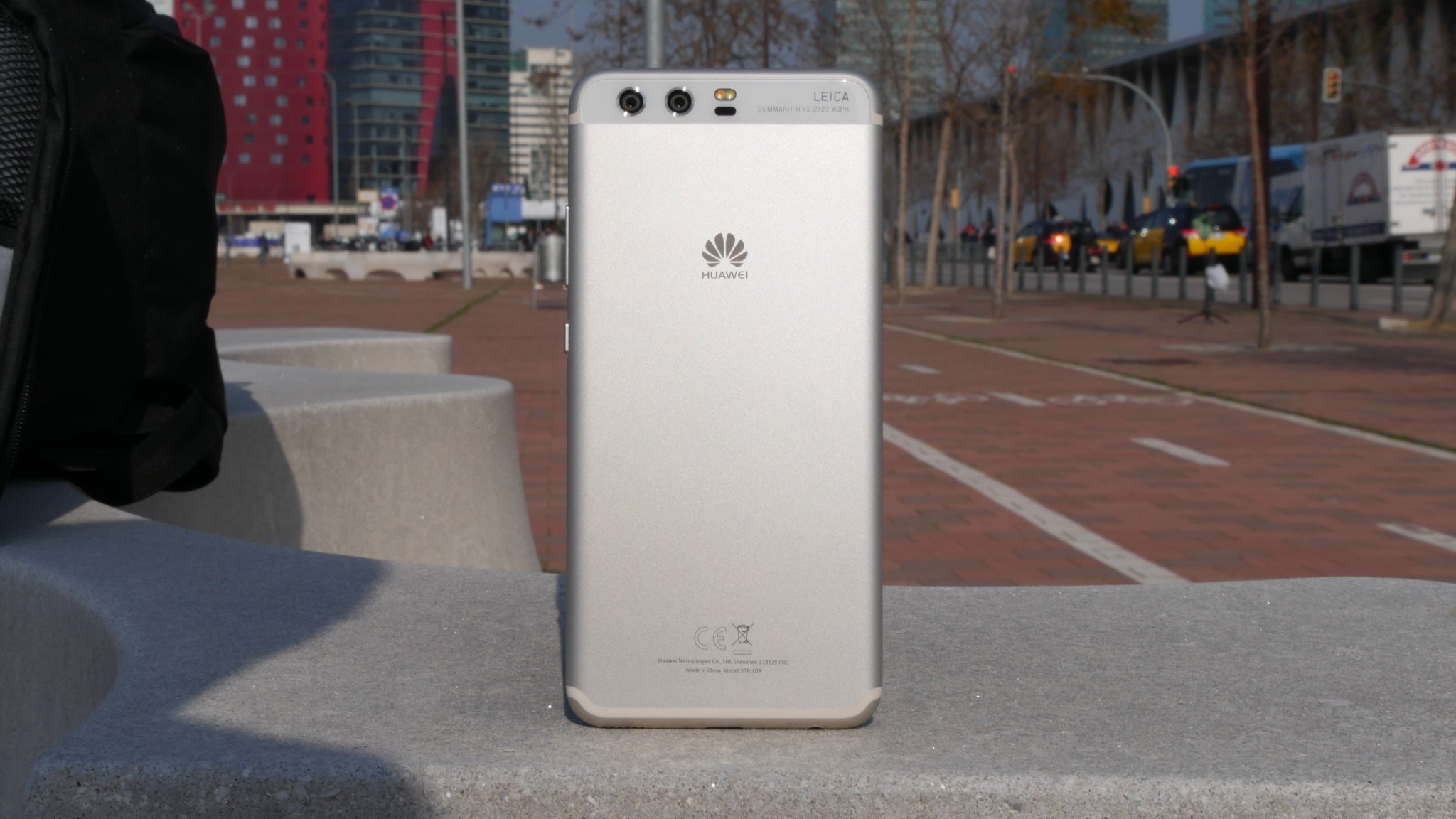
Huawei‘s latest P10 flagship was recently revealed to have some discrepancies in the flash storages installed on several of the units in China. This led to varying results in Androbench benchmark test where some of the storages were noticed to be faster than others thus fueling speculations that Huawei used UFS 2.1 storage on some, UF 2.0 on others and even eMMC 5.1 storage on some units.
The Huawei P10 is a flagship device that retails for more than $500, so any suggestion of low-end flash memory as claimed to have been noticed on some models could be judged to mean that the company is cutting corners in order to rip off customers. Of course, eMMC 5.1 memory would be cheaper than others. The tech giant apparently realises the damage such notion can cause and has come out to clarify that its flash memories are supplied by a number of credible suppliers who have a guideline set by the company. The statement also hinted that the user experience is controlled by several factors spreading from software to hardware. The statement added that the in-house Kirin chip, EMUI, camera and other software, as well as hardware, have always been upgraded in order to help users get a great user experience.
According to Huawei, the performance of the flash memory in a user’s run-time test using software which tests the performance of a single flash device cannot accurately tell the performance of the flash memory within the system. The smooth running of the flash memory isn’t a single component decision but the combined effort of the powerful chips and other components ensures the device runs smoothly in all aspects. In essence, they are saying there is no inferior memory on an of the P10 models.
Fresh information suggests that Apple is finding it difficult to integrate the Touch ID sensor beneath the edge-to-edge 5.8-inch OLED screen of the upcoming iPhone 8. According to Pacific Crest Securities equity research analyst, Andy Hargreaves, if the company is unable to resolve this issue soon, it may end up eliminating the Touch ID feature on the rumored iPhone 8 smartphone or delaying the production of OLED iPhone.
Touch ID is one of the essential features of Apple iPhones as it not only allows users to unlock the device, but also it is used for making secure payments through Apple Pay. If the company decides to remove the Touch ID biometric recognition feature, it may provide users with other options such as 3D facial recognition or iris scanning.
In the previous week, another analyst, Timothy Arcuri from Cowen and Company had revealed some information on the Touch ID issue for iPhone 8 based on the details he acquired through the supply chain. According to him, if the Cupertino company is not able to embed the Touch ID sensor under the screen of iPhone 8, it could end up in three scenarios.
The first one would be that Apple end up removing the feature and use other biometric recognition features as mentioned above. However, he added that it may not happen as iris or face scanning are not very secure methods and is likely to lead to problems with Apple Pay.
The second thing could happen is that Apple may place the fingerprint scanner on the rear side of the iPhone 8. The Galaxy S8’s rear-mounted fingerprint scanner is not very easy to access. Hence, iPhone 8’s rear-facing Touch ID sensor may be positioned in such a way that would be easier to access. Arcuri is of the view that it may not be an optimal solution.
The third thing Apple may do is announce the 5.8-inch iPhone 8 alongside the other rumored 4.7-inch and 5.5-inch iPhones, but delay its production. The newer information from Hargreaves is line with these first and third options. According to him, Apple has not given orders to its fingerprint module provider for the production of Touch ID sensor. The biometric identification feature is deeply integrated with different services from Apple. Hence, it seems unlikely that Apple may not feature it on the rumored iPhone 8 that will be reportedly launched in celebration of the 10th anniversary of iPhones.
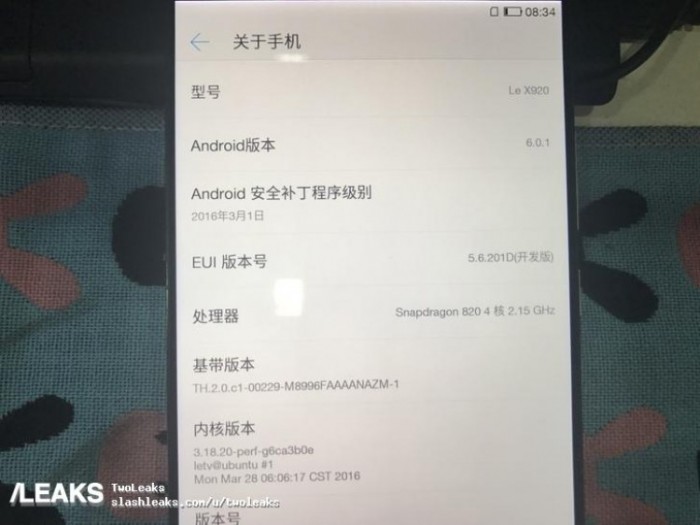
LeEco’s pace in the mobile phone market has no doubt been affected by is financial troubles. As a result, the company seems to have slowed down the frequency at which it releases new smartphones. A good number of LeEco models that appeared in leaks and were thought to be closer to their launch date were never heard of till date. But there are signs the company is about to get its groove back. Not long after the Le Pro 3 AI edition was launched, a new Le X920 model has appeared online.
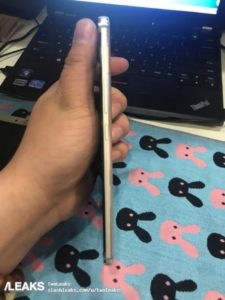
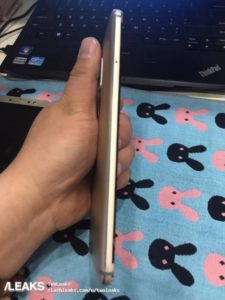
This isn’t the first time the LeEco Le X920 is making an appearance in leaks. The possibly high-end model had earlier appeared in a leaked video detailing its design a few weeks back. This latest leak not only gifts us a preview of the design of the smartphone, it also reveals some of its specifications. The device seems to have a front flash accompanying the selfie camera at the front.
Among the listed specifications is a Snapdragon 820 processor which shows that this was likely a model that should have been released last year. The device is also shown to run on Android 6.0 Marshmallow with EUI 5 hovering on top. Earlier leaks had revealed the Le X920 would sport a 6.3-inch 2K display and indeed, the size of the device points at a large phablet.
In addition, the Le X920 is suspected to be the expected LeEco Le Max 3 and it would come sporting a dual camera setup at the rear. This latest images did not reveal the rear view of the device but we had seen that the X920’s dual cameras are aligned in the vertical plane along with the LED flash. We really can’t say when this model would be launched bu we hope it would be sooner than later.
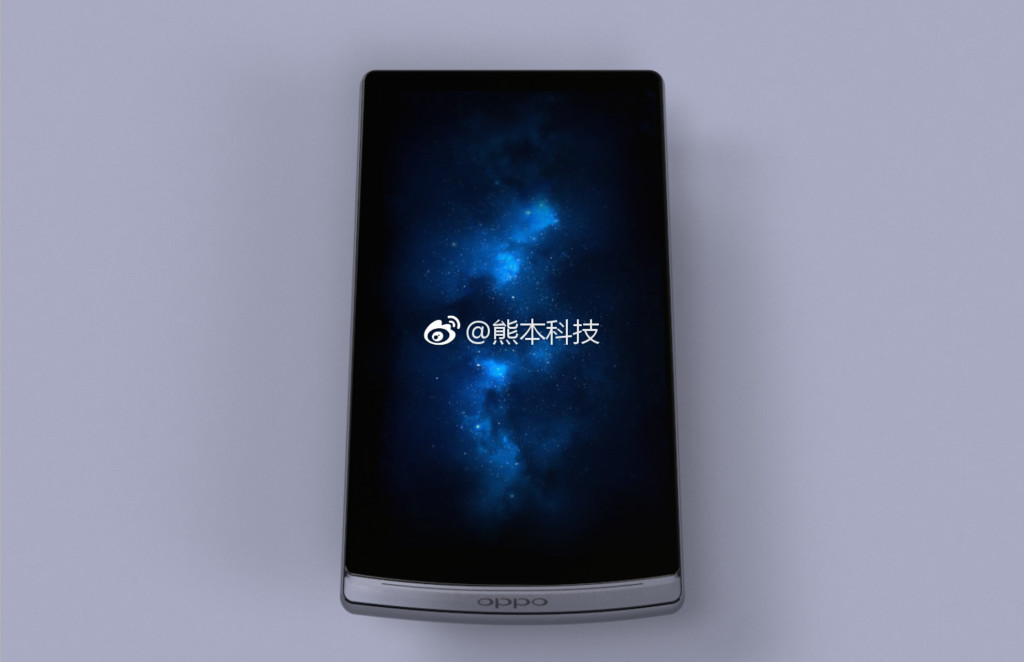
The OPPO Find 7 was launched in 2014 with topnotch specs. Since 2015, the rumor mill is speculating the arrival of its successor model, the OPPO Find 9. However, leaked photos and information of the mysterious OPPO Find 9 has been surfacing since quite some time. A new render of the alleged smartphone has surfaced to reveal its design.
The OPPO Find 9 image that has appeared on Weibo appears more like a concept model. The device can be seen sporting a curved bottom which almost appears as if it is smiling. The OPPO logo can be seen sitting on its chin. The phone does not sport curved edges on the display which suggests that it may come with super-slim bezels, but it is not difficult make out from the leaked image.
The OPPO Find 7 was a flagship phone. Since its launch in March 2014, the Chinese firm has not released a flagship smartphone as it is has concentrated more on releasing feature-rich mid-range and upper mid-range phones. This strategy has helped the company to grab the second spot in the Chinese smartphone market.
In January, the rumor mill had predicted that the OPPO Find 9 would release this year in two CPU variants of Snapdragon 835 and Snapdragon 653. The SD 653 variant is speculated to come with 4 GB of RAM and 64 GB of storage whereas the SD 835 model is rumored to feature 6 GB of RAM and 128 GB of storage.
Reports had also stated that the Oppo Find 9 would be coming with “borderless technology” based design created by OPPO. The new render does give us a hint that the phone sports ultra-thin bezels. As far as the details of the screen are concerned, the Find 9 may feature a 5.5-inch quad HD resolution supporting display. For photography, the mythical flagship is rumored to feature a 21-megapixel rear camera and a 16-megapixel selfie camera. It may be arriving with a 4,100mAh battery.
Rumors from the start of this year have claimed that the smartphone would be unveiled in the first of the year. However, the company has been reportedly delaying its arrival. Hence, there is a possibility that the phone could get unveiled in the second of this year.
A survey result by Sino research has shown that the OPPO R9S released late last year is the most popular domestic smartphone brand in China. The R9S outpaced popular brands like the iPhone 7 and has a single phone market share of 5%. In terms of popularity, the OPPO R9S is followed by Vivo X9 and then iPhone 7 and others.
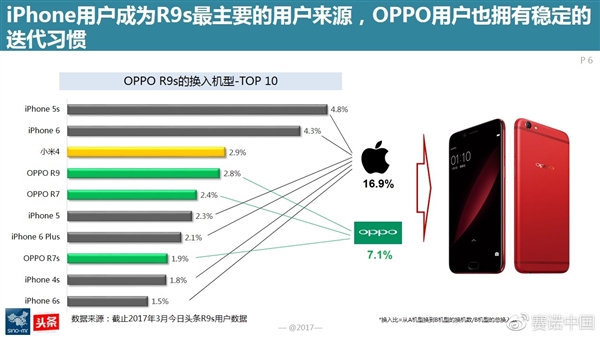
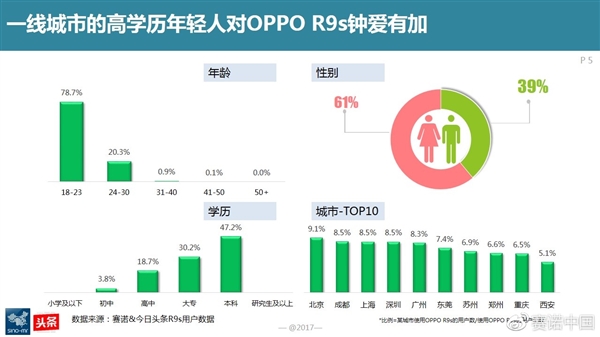
The survey also showed that 78.7% of young phone users between the age of 18 – 23 years prefer the R9S and as a result, the OPPO smartphone has the highest sales in Beijing, Chengdu and Shanghai. Also interesting of note is the trend where iPhone 5S and iPhone 6 users replaced their phones with the R9S.
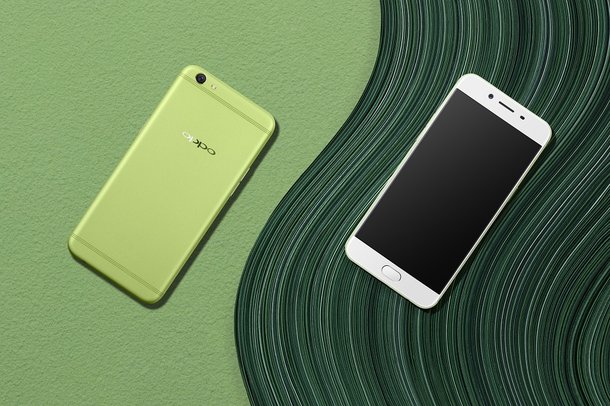
Before this latest report, the OPPO R9S has been a high flying model, revealed to have grossed over 3 million units in sales in January 2017 alone. The OPPO R9S isn’t a very cheap smartphone, priced at 2799 Yuan ($416) but its great design and rich specs lineup make it a hot selling piece. The company has continued to refresh the line in order to make it more appealing to more persons by adding a red variant and recently a fresh green colour variant.
As a reminder, the R9S comes with a 16MP Sony IMX398 sensor at the rear, which is said to be jointly developed by OPPO and Sony. The sensor is reportedly fast and comparable to SLR camera speeds and there is also dual-core focus as well as dual LED flash on board. The R9S is powered by a Snapdragon 625 chipset backed by a 4GB RAM and there is 64GB storage among other features.
They say imitation is the sincerest form of flattery and Doogee’s new phone does exactly that. It is an imitation of the Xiaomi Mi MIX. The phone not only shares a similar design to the triple bezel-less Xiaomi Mi MIX but is actually called the Doogee MIX.
Doogee says the MIX will have a 5.5-inch Super AMOLED display supplied by Samsung. Due to the lack of bezels on three of its sides, it’s overall size will be smaller than that of the Mi MIX but almost the same as that of the iPhone 6. This small size makes the Doogee MIX more comfortable to use.
A real-life leaked image of the Doogee MIX shows us that the phone has a regular earpiece at the top of the display instead of the piezoelectric ceramic driver used in the Mi MIX. The lower bezel houses a physical home button that doubles as a fingerprint scanner and also has a front facing camera sitting at the bottom right corner. Other promotional images reveal a dual-camera setup on the back.
For the rest of the specs, the Doogee MIX is expected to launch with a Helio P25 SoC. There will be 4GB of RAM and 64GB of storage. A higher-end variant will be powered by the Helio X30 and will have 6GB of RAM and 128GB of storage.
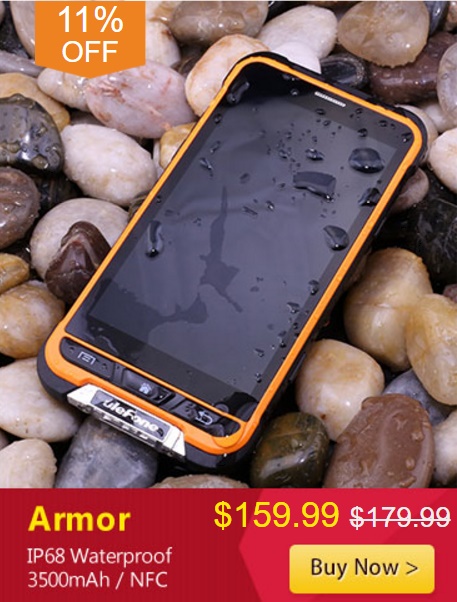
Geekbuying is running an online sale for a bunch of Ulefone smartphones. The deals are pretty interesting and you should check them out. Below are some of the phones on sale.
Ulefone Power 2
The Ulefone Power was released last year with a 6050mAh battery. That was its selling point. So when Ulefone announced the Ulefone Power 2, we thought it would sport a larger battery. Surprisingly, the battery capacity still remains 6050mAh. However, the rest of the specs have been updated. The RAM is now 4GB and storage has been doubled to 64GB. The Power 2 also runs Android 7.0 Nougat. For $179.99, you can grab this power monster and also get free case, tempered glass, and a mobile holder ring.
Ulefone Gemini
The Gemini is Ulefone’s contestant in the dual-camera tournament. It sports dual 13MP rear cameras stacked on top of each other with the LED flash between them. There is 3GB of RAM and 32GB of storage on board and you also get a 3250mAh battery. The front of the phone houses a 5.5-inch FHD display with Gorilla Glass 3, and below it is a fingerprint scanner that doubles as a physical home button. Geekbuying has it for $138.99, $11 down from its regular price.
Ulefone Armor
For those who spend more time outdoors hiking and rock climbing, the Ulefone Armor is what you should take along. The 4.7-inch phone is shockproof and has an IP68 rating. You also get 3GB of RAM, 32GB ROM, NFC and a 3500mAh battery.
Online shop, Banggood is running a clearance sale today.The clearance sale covers lots of products including phones, chargers and quad-copters.
While some items can be bought for lesser prices using coupons, others are sold for a lot more less than they can usually be gotten for. Items in the latter group are available in limited quantities, so you have to be fast to snap them up.
Below is a list of some of the items that are on sale:
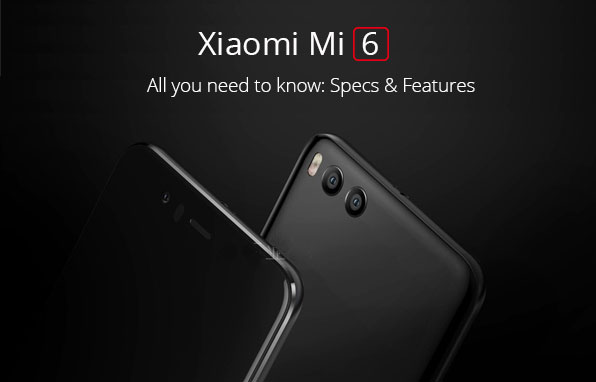
Xiaomi Mi 6 is finally launching on April 19. Yes, it’s late, much later than what we had expected. Considering last year’s launch schedule, the Mi 6 is nearly 2 months late. But the company had a fair share of valid reasons to delay its launch, one of it being the delay in getting hold of the Snapdragon 835 chipset from Qualcomm. If the phone was to be released early, like in February, sticking to the usual schedule, you would have probably had the Xiaomi Mi 6 Snapdragon 821 edition and not the 835 edition. Well, it didn’t make sense for Xiaomi to use SD821 on an important phone like the Mi 6 (unlike what LG did with its LG G6) and now, after patiently waiting for the past few months, the Mi 6 is here to meet us. Well, there’s still a couple of days left for the phone’s launch, but we know a lot about the device, thanks to the leaks in the past few weeks.
In fact, the transition from a relatively unleaked Xiaomi Mi 6 to the popular — hot in the news — at least a new leak everyday device — was quite quick. My previous Xiaomi Mi 6 summary , published a month ago, had very little details about the device. Fast forward a few weeks, and now we know so much about the phone. So, let’s paint a rough picture of what Xiaomi Mi 6 looks like and what to expect inside in terms of specs and features.
Xiaomi Mi 6 Design
To get it out there, the Xiaomi Mi 6 is not expected to feature a curved display like the Xiaomi Mi Note 2. At least, that’s what all the leaks told us, until the recent teaser sent out by the company. So, we are yet to see good renders of the Mi 6 with a dual curved display but according to the recent teaser, the Xiaomi Mi 6 is confirmed to feature a four curved design. If not for the constant rumors of a flat Mi 6, we would have instantly translated this teaser as a curved display phone from Xiaomi. But there’s another possibility, the Mi 6’s back could be curved on the four sides, which also translates into four curved design. Given that even in the past couple of days, after the release of this teaser, we are still seeing flat display on the leaked Mi 6 renders and leaks, could be it be that the teaser hints at the curved back design? Possible, but we cannot confirm it until Xiaomi clarifies this confusion.
Camera Setup & Flash
After a rather conflicting series of renders in the past few weeks, Xiaomi Mi 6 leaks and renders have kind of converged in on the phone featuring a dual horizontal camera setup. There’s another confusion — placement of the dual LED flash. Some renders show the flash to the left of the dual camera setup, while other show it on the right side. As of now, we cannot say which one’s the real deal. So, we’ll have to wait till the official launch to confirm this.
[envira-gallery id=”127214″]
Ceramic Body
In the past few months, Xiaomi seems to have improved its ceramic body production, which is why the Mi 6 is said to come with a ceramic body. Now, we don’t know for sure whether all version of the Mi 6 feature ceramic or is it like an exclusive edition, like the Mi 5 Pro. One thing’s sure, we are going to see ceramic on the Mi 6.
By the way, there are at least two versions expected of the Xiaomi Mi 6 at launch. A Xiaomi Mi 6 with a 5.15-inch display and a Xiaomi Mi 6 Plus with a larger 5.7-inch display. Naturally, the larger model is expected to feature better specs and features than its smaller sibling. Waterproofing & 3.5mm Jack
Xiaomi is not known for waterproof smartphones, but given that this feature has become standard on many known flagships, this time, the Xiaomi Mi 6 is said to be waterproof. This, if true, would be interesting, as the phone is said to lack the traditional 3.5mm headphone jack. No headphone jack means you are left with Bluetooth headsets or USB Type-C headphones. This may not go well with many Xiaomi Mi 6 fans, but we’ll have to wait and see if this turns out to be true.
Home Button
The home button won’t be clickable and instead will lie under the glass like the Xiaomi Mi 5S. The sensor will be similar to the iPhone 7 Plus according to recent reports.
Xiaomi Mi 6 Specs & Features
Xiaomi is known for bringing top-end specs on its Mi series.
Xiaomi Mi 6 CPU & RAM
The Mi 6 is expected to come with Snapdragon 835 on board. Given that the powerful Samsung Galaxy S8 is the only flagship featuring this latest chip from Qualcomm, the Mi 6 is sure to get some extra love. This is mainly because reports state that we won’t see SD835 flagship from manufacturers apart from Samsung and Xiaomi anytime soon.
We know for sure that there will be 6GB of RAM inside the Xiaomi Mi 6. This has been confirmed by Xiaomi in the recent teasers. But there should be other versions too with 4GB RAM, retailing at a cheaper price. Unlike OnePlus, Xiaomi loves variants, and we can expect a few RAM + ROM as well as other feature options available for the Mi 6 in different variants.
Xiaomi Mi 6 Iris Scanner
Yes, Iris Scanner is one of the expected features on the Mi 6. There have been a couple of leaks about such a sensor on the front, but nothing concrete so far.
Experience tell us that megapixel count reveals nothing about the camera quality. In fact, even the sensor inside cannot guarantee good camera performance as there are multiple factors other than these that affect the quality of the camera inside a device like software optimizations. The sensor is said to be either Sony IMX386 or the IMX400. We are not sure about this information at the moment, as details about the rear camera setup are scarce. Hopefully, one of the teasers in the next two days will enlighten us about the setup.
Up front, there should be an 8MP shooter.
Apart from the display size and maybe the resolutions (1080p vs 2K), the Xiaomi Mi 6 and the Mi 6 Plus may not differ in terms of its other specs. Both versions are expected to feature SD835 with high clock speeds. The Mi 6 Plus could start with 6GB of RAM, while the Mi 6 could start with 4GB but also offering a 6GB RAM version at a slightly higher price.
Xiaomi Mi 6 Battery
Xiaomi Mi 6 is said to feature a 3200mAh battery with Quick Charge 3.0. We have seen the model get an 18W charger which should ensure fast charging. The Mi 6 Plus should ideally feature a larger capacity battery, but we don’t have details about the same.
Xiaomi Mi 6 Price & Launch
Like tradition, the Xiaomi Mi 6 price is expected to start at 1999 Yuan ($290). The Mi 6 Plus should start at 2499 Yuan ($360). The pricing is not yet confirmed, so we better wait for the official launch two days later to know the pricing details for sure.
The phone will be officially announced on April 19. Rumors say that we could meet the rumored Xiaomi Mi Max 2 at the same event, but no hints from Xiaomi yet.
The Huawei P10 and Huawei P10 Plus were announced during MWC 2017. Reviews for the new flagships have been positive so far. The cameras are better, they have a more powerful processor, and feature an impressive new design. But did the Chinese manufacturer cut corners on the Huawei P10′ storage? New revelations seem to confirm they did.
The Huawei P10 is available in various memory options depending on the market. It turns out that the storage sizes are not the only differences between these variants but also the storage type.
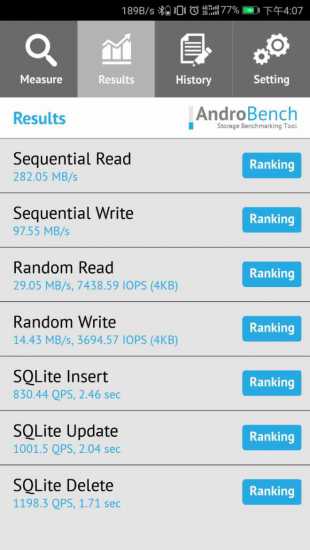
A number of Huawei P10 owners in China have noticed that the various storage versions have different read and write speeds and the differences are startling. Using storage benchmarking app, Androbench 5.0, it was discovered that some versions are way faster than others. While some people recorded read speeds of over 700MBps, some recorded above 500MBps, others a little over 400MBps, and yet some less than 300MBps. The results were posted on a Huawei forum in China.
The different speeds all fall into various categories. For those over 700MBps, they are definitely UFS 2.1 storage; those above 500MBps are UFS 2.0; and those less than 300 use an eMMC 5.1 storage.
For a phone that starts at over $500 it is disappointing to discover the Huawei P10′ storage versions differs so much. Huawei has not made any comments about the findings yet but we are eager to hear them provide an explanation.
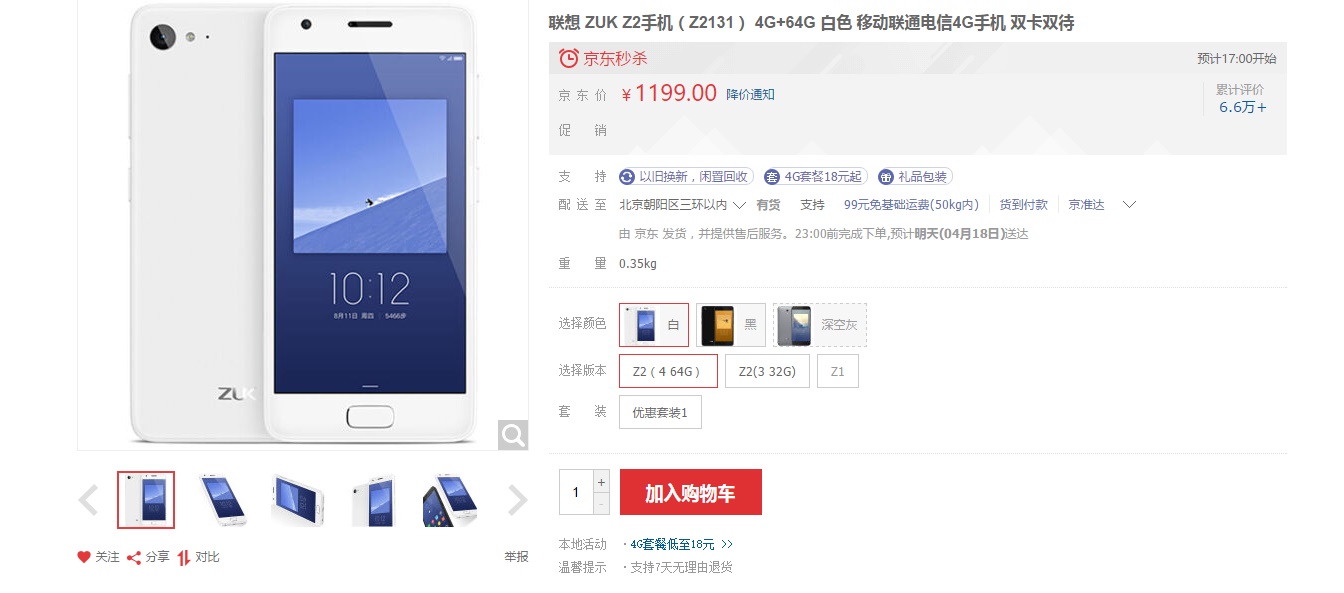
Usually when a new phone model is set for release, previous models usually get a price cut. However, that’s not the case for Lenovo’s ZUK Z2 smartphone. There is no news of a ZUK Z3 but the ZUK Z2 has been getting price cuts for months now.
If you are in search of a new phone, you might want to give the ZUK Z2 a chance. It is powered by the Snapdragon 820 processor, a still powerful chip even after two successors. Jingdong Mall currently has the 4GB RAM + 64GB ROM variant for just ¥1199 ($175). You read that right. Less than $200 will get you the ZUK Z2. It’s important to note that the price cut is limited to the white variant only
The phone has some other interesting features other than its low price, and more than ample storage and RAM. It is compact with just a 5-inch FHD display and packs a 3500mAh battery with support for fast charging. It packs a 13MP f/2.2 rear camera with a LED flash and an 8MP front facing camera. Lenovo has also released a new update for the phone based on Android Nougat. So what more are you waiting for? Head over to the site now and grab the deal.
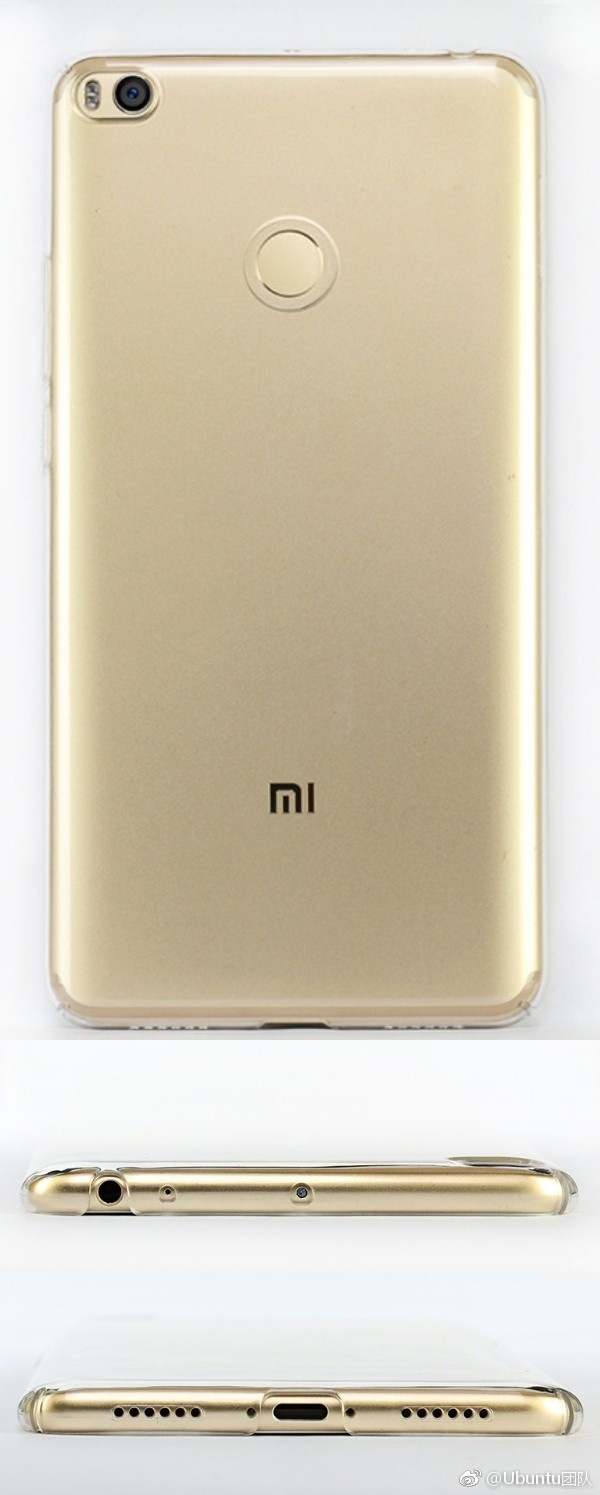
The Mi Max holds the title for the biggest phone in Xiaomi’s smartphone lineup. Released back in May last year, the phablet is set to get a successor soon. Some even say as soon as Wednesday, 19th of April alongside the Mi 6.
Leaked specification details say the Mi Max 2 will retain the same 6.44-inches display size and FHD resolution. It will run Android 7.1.1, have a 5MP camera for selfies and get its battery bumped to 5000mAh. At the moment, the processor is said to be the Snapdragon 626, a power-efficient chip like the Snapdragon 625. However, it wouldn’t be surprising if we see another processor in the Mi Max 2. The Mi Max was released in two versions: one was powered by a Snapdragon 650 chip and the other by a Snapdragon 652. The same thing might happen this year too.
A new image was posted on Weibo by @Ubuntu team. The image is said to be of the Mi Max 2 and shows the device in a TPU case. There are a few minor changes in the design. The LED flash comes before the rear camera now and the entire back is just one large piece of metal. Since the rear is just q single plate, that means the antenna lines are visible now. Xiaomi has adopted the U-shaped antenna design like that of the iPhone 7 and it does look good.
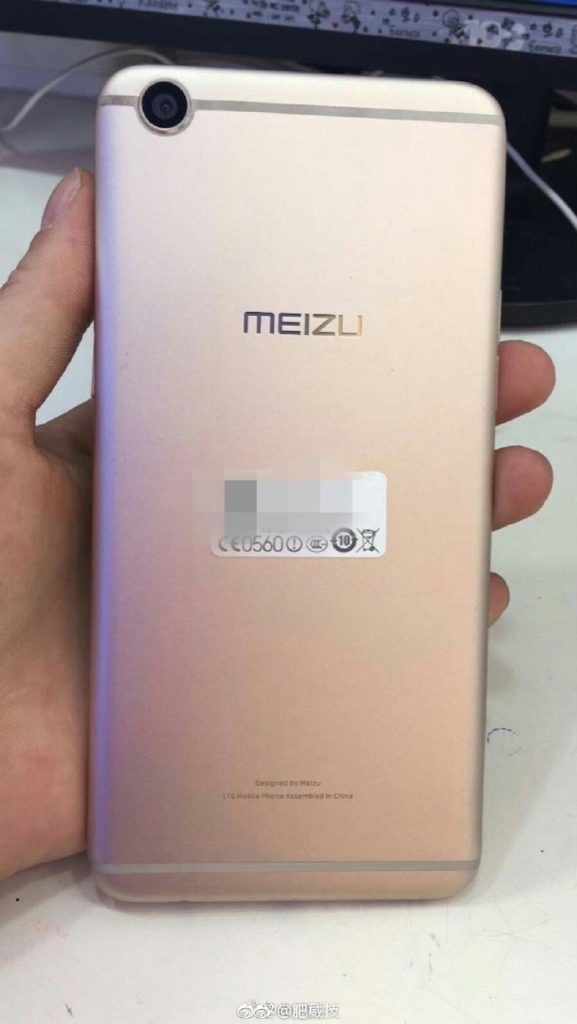
Meizu last week sent out press invites for the April 26 launch of the Meizu E2 and ahead of that launch event, an image said to be the Meizu E2 or ME2 has appeared on Weibo. The image shows us what the ME2 looks like, that is if the image is actually the expected Meizu smartphone.
Although only the rear view of the device is revealed, we are not entirely sure about this being the Meizu E2 for a few reasons. First, the smartphone comes without a camera flash on the main camera, something which is rather weird. Earlier rumours had hinted that the Meizu E2 would use a ring flash that would be integrated with the camera but there is no sign of that on this leaked image. The rear camera lies on the split antenna band at the rear and talking about that, the device looks very much like the OPPO R9S design. Well, except that this one has the camera on the same plane with the antenna band while the R9S camera at the top of the antenna band. It could be that this is a re-designed OPPO R9s which someone wants us to believe is a Meizu brand by including a Meizu logo at the back
The design doesn’t in anyway look like that of Meizu and the only thing we could hold on to that this is a Meizu smartphone is the Meizu logo inscribed at the back. The device will be launched on April 26 and then we’ll know if this is the real deal. We think it is fake, though.
We use cookies on our website to give you the most relevant experience by remembering your preferences and repeat visits. By clicking “Accept”, you consent to the use of ALL the cookies.
This website uses cookies to improve your experience while you navigate through the website. Out of these, the cookies that are categorized as necessary are stored on your browser as they are essential for the working of basic functionalities of the website. We also use third-party cookies that help us analyze and understand how you use this website. These cookies will be stored in your browser only with your consent. You also have the option to opt-out of these cookies. But opting out of some of these cookies may affect your browsing experience.
Necessary cookies are absolutely essential for the website to function properly. This category only includes cookies that ensures basic functionalities and security features of the website. These cookies do not store any personal information.
Any cookies that may not be particularly necessary for the website to function and is used specifically to collect user personal data via analytics, ads, other embedded contents are termed as non-necessary cookies. It is mandatory to procure user consent prior to running these cookies on your website.