Advertisement

OPPO celebrates 10 years of making phones, highlights some of its iconic ones

OPPO is celebrating 10 years of manufacturing smartphones (2008 to 2018). There is no elaborate event, at least we haven’t heard of one save for Wednesday’s 10x optical zoom unveiling. However, the Chinese phone maker has taken to Weibo to celebrate some of its iconic releases. Below is a list of some of them:
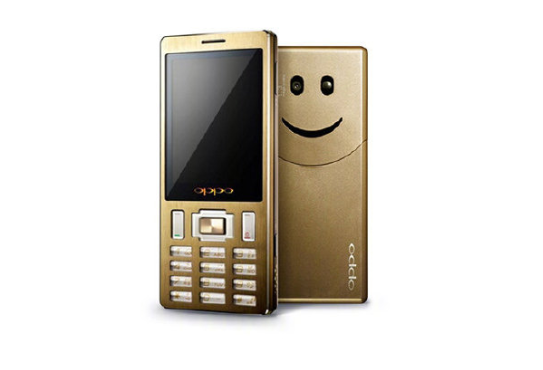
OPPO A103

OPPO A103

This was OPPO’s first phone. The A103 is a feature phone with a unique design even back in 2008. It has a smiley face on its back formed by the rear camera and flash and topped it off with a nice gold finish.
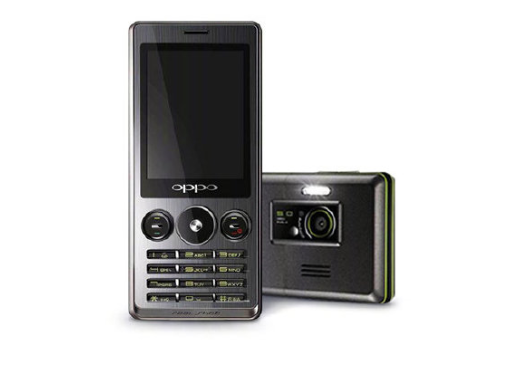
OPPO P51

OPPO P51

The OPPO P51 would pass for a Sony Ericsson phone if you swapped the manufacturer’s name on the front. It also rocked an alphanumeric keyboard like the A103. It was released in two colors – metallic gray with green accents and white with red accents.
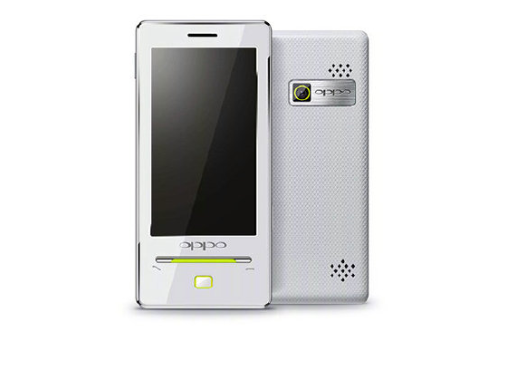
OPPO T9

OPPO T9

This launched in 2009 just like the OPPO P51. It ditched the alphanumeric keyboard for a touchscreen display. Although it did keep some hardware keys. Like the P51, it also had a green accent albeit a different shade.
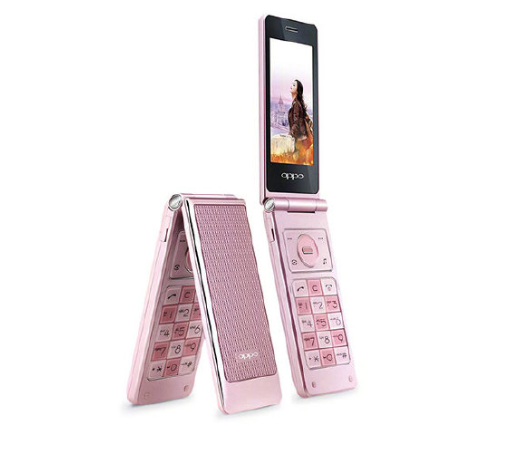
OPPO U529

OPPO U529

Just when we thought OPPO was done with phones with a physical keyboard, it launched the U529. The U529 is a flip phone and must have been a hit among women thanks to its pink color. The alternating shades used for the keyboard is a nice touch.
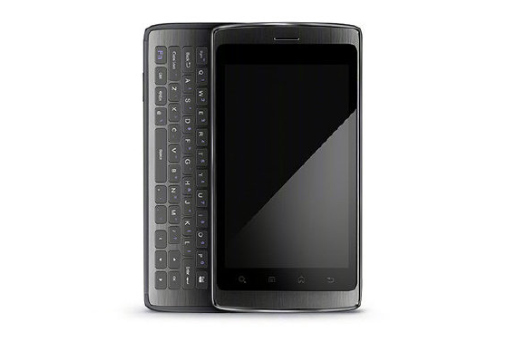
OPPO U903

OPPO X903

The X903 brought back the touchscreen display along with a slide-out QWERTY keyboard. It ran Android 2.2 Froyo and had a 1GHz processor, an 8MP rear camera and a 4-inch screen with 10-point multi-touch.
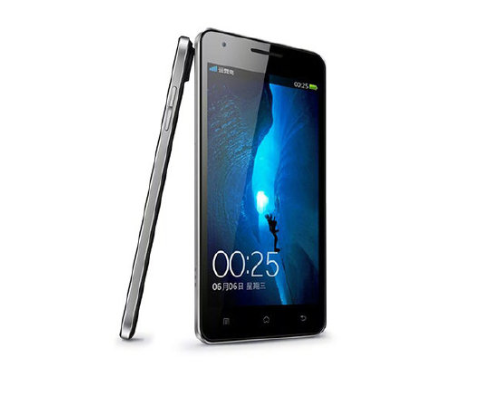
OPPO Finder

OPPO Finder

The OPPO Finder launched as the world’s thinnest smartphone in 2012 with a thickness of just 6.65 mm. There are a lot of phones much thicker than that even 7 years later.

The Finder wasn’t cheap. It cost over $600 and that got you a 4.3-inch Super AMOLED display, 1GB of RAM, 16GB of storage, and 1.3MP front-facing camera. I bet no one will pay even a third of that for a phone with the above specs this year.
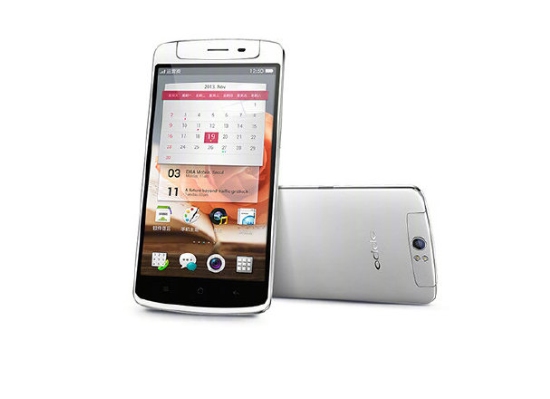
OPPO N1

OPPO N1

The OPPO N1 was a very popular phone when it launched in 2013 thanks to its rotating rear camera which doubled as the front-facing camera. It had a large 5.9-inch display (by 2013 standards), 2GB of RAM and a 3,610mAh battery.

The OPPO N1 still packs a larger battery than some phones released in the past year with a larger display.
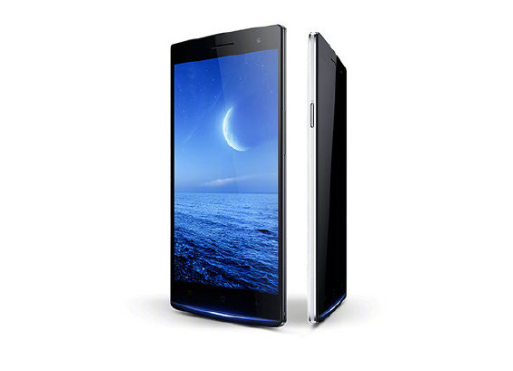
OPPO Find 7

OPPO Find 7 and Find 7a

The Find 7 and Find 7a even brought better specs but they will be remembered for bringing VOOC fast charging.
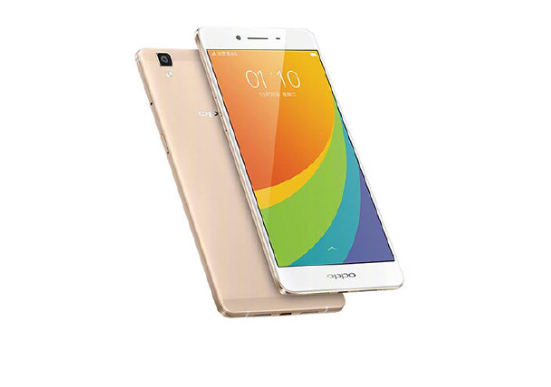
OPPO R7s

OPPO R7 and OPPO R7s

In 2015, OPPO became one of the top 10 smartphone brands in the world as it sold 50 million units. That year, some of its notable releases were the OPPO R7 and the OPPO R7s which are mid-range phones but came bundled with VOOC fast-charge technology.
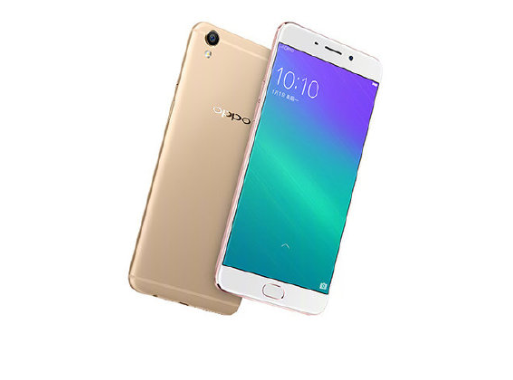
OPPO R9

OPPO R9 and R9s

In 2016, OPPO continued with just mid-range phones as it had done the previous year but that didn’t stop it from climbing higher in the top 10 list. The OPPO R9 series of smartphones were its popular releases that year.
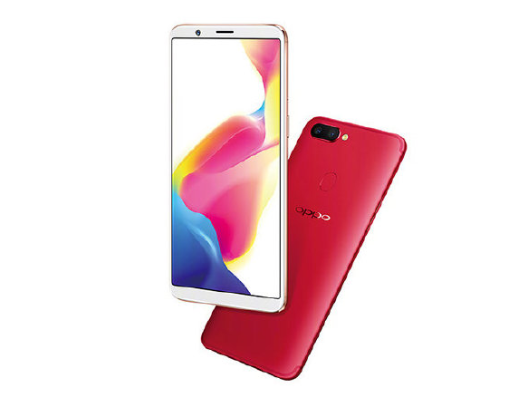
OPPO R11s

OPPO R11 and OPPO R11s

2017 began the same way with the mid-range OPPO R11 but for the second half of the year, OPPO switched the design of its phones by adopting the new 18:9 aspect ratio. It was also the year dual cameras gained popularity and OPPO wasn’t left behind. The OPPO R11 had dual rear cameras but the OPPO R11s added the new display design.
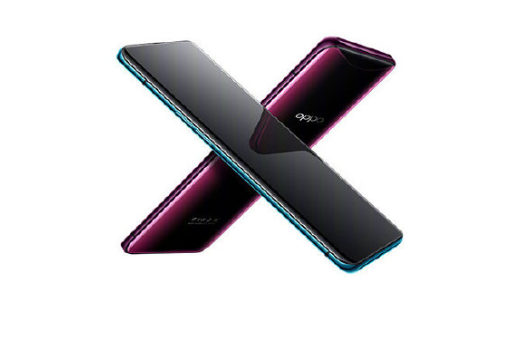
OPPO Find X

OPPO Find X

The Find X is one of OPPO’s most important device ever. It made a big splash in the mobile industry with its unique design. It had a very high screen-to-body ratio as a result of the top bezel getting shaved off.

The usual sensors that lined the top bezel were hidden and only became visible via a motorized slide-out mechanism. The rear cameras and flash were also hidden and were revealed by the same slide-out module.

The Find X also marked the return of OPPO into the proper flagship category as it came with the same top of the range processor that powered a lot of other flagships in 2018.

A special edition of the phone brought a faster version of its VOOC charging technology. Dubbed SuperVOOC, you could charge your phone from empty to full in just 35 minutes.

READ MORE: OPPO joins Xiaomi to make a push for the UK market; maiden launch set for January 29
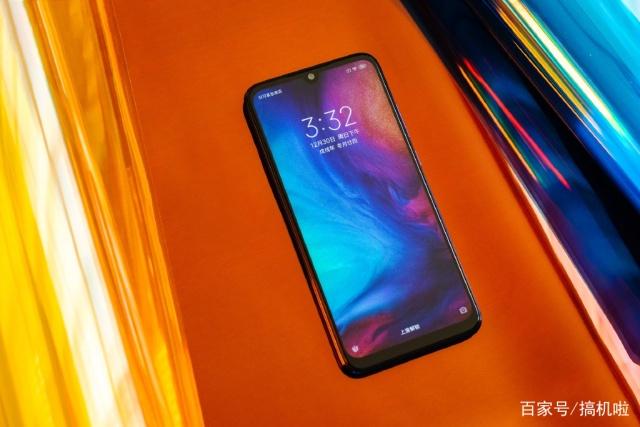
Xiaomi says the Redmi Note 7 stock will hit 1 million units this January

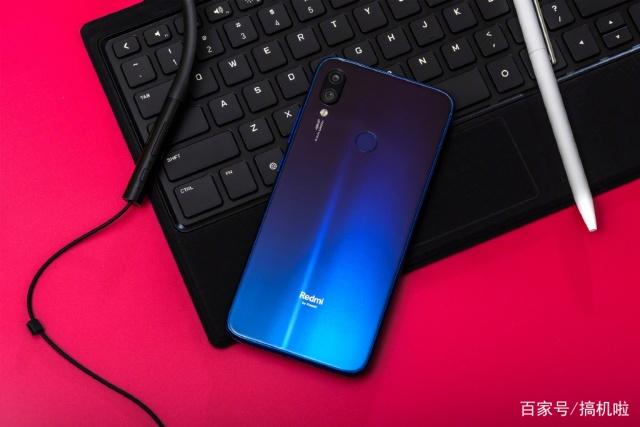
The Redmi Note 7 which was launched last week will go on its first sale today and we expect the sales to be a hot one considering the affordable price tag the premium mid-range model features. As a result of this, some netizens have expressed concerns if Xiaomi has enough units in stock. Sure, it is quite frustrating to keep waiting for weeks unending for a new smartphone that just hit the market. We want to be able to grab it in the retail store by the corner or online ASAP after it is launched. Xiaomi’s product director Wang Teng Thomas, who seems to be beaming with enthusiasm on his new role, has come out with some assuring words in this regard.redmi note 7

The product director, while responding to a concerned fan, stated that the company has in stock up to one million units of the Redmi Note that will be sold this January. In that case, a good number of fans will get the opportunity to grab the device when it goes on sale later in the day.redmi note 7

Read Also: Xiaomi MIJIA Laser Projector 4K version with 4K resolution launched for ¥9999 ($1500)

Xiaomi phones are particularly plagued with a shortage of units when they were first launched. That, coupled with an online-only sales model in 2016, may have contributed to the company slump back then. The Chinese tech giant has since adjusted, incorporating offline sales with sales in the over 200 Mi stores and authorised retailers in China. The company as also ensured it is fully stocked for the product’s first sales.  The Mi 8 and Mi 8 SE were very much in supply when their first sale took place. Thankfully, the Redmi Note 7 will likely not be plagued by parts shortage as the new Samsung GM1 48MP sensor is said to have been mass produced even before Sony’s IMX586.

(via)

The $219 Galaxy Tab S4 look-alike Alldocube X unboxing and first impression (videos)

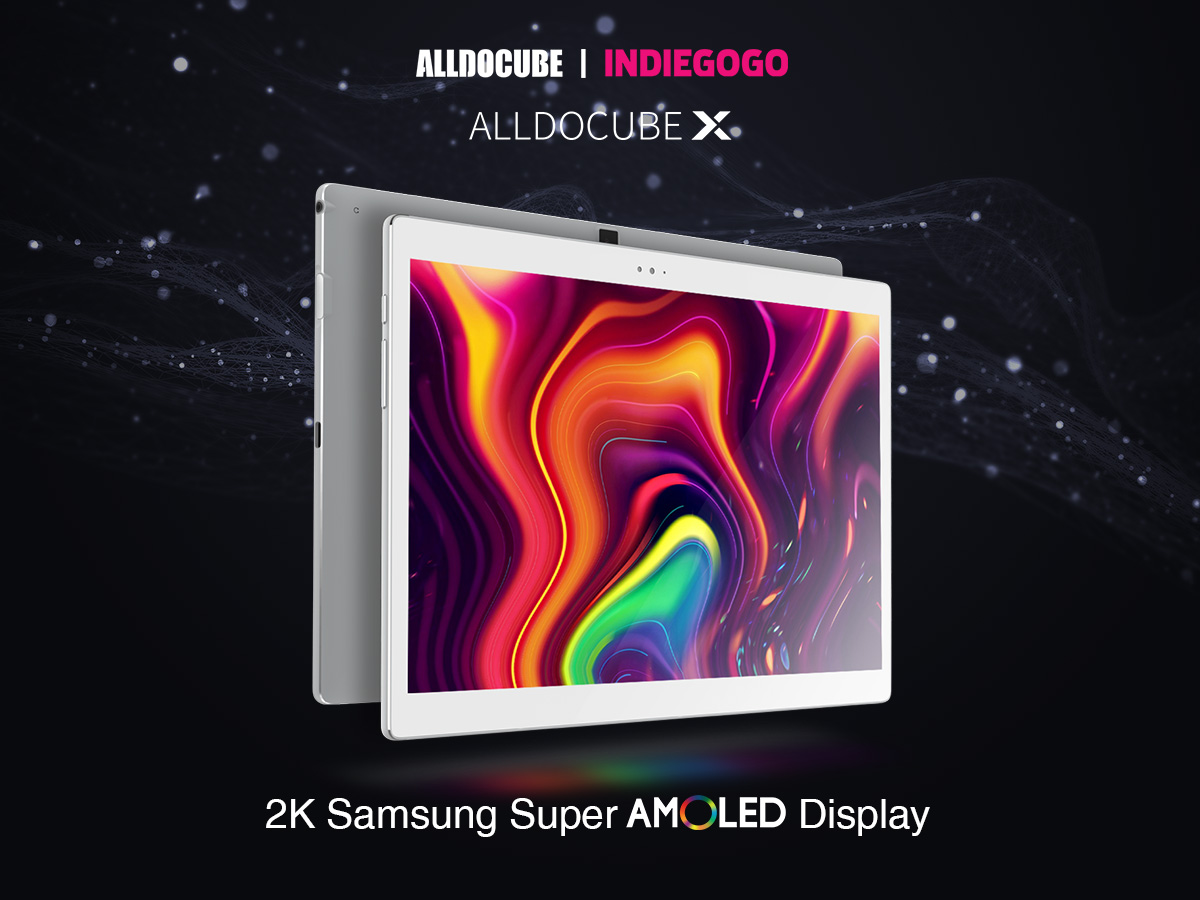
The Alldocube X tablet has been announced and before the tablet became official, Alldocube has been sharing teasers of the device. The Alldocube X is indeed looking to be one that isn’t going to disappoint. To prove that, the company has released a couple of videos showcasing the hands on and first imression look at the Galaxy Tab S4 look-alike.Alldocube X

Alldocube had shown us several reasons why the Alldocube X tablet is a perfect and cheaper alternative to the Samsung Galaxy Tab S4.  We are beginning to see reasons with that claim, going by the design which the tablet adopts. The tablet borrows the main feature of the Samsung tablet which is a 2.5K  SuperAMOLED display bringing an immersive, theatre-like experience in terms of image quality. By doing so, the company ALLDOCUBE has marked themselves as the only company from China to bring out an Android AMOLED tablet.

Apart from the 2.5K AMOLED display, Alldocube X also rank among the best affordable media tablet on the market with other entertainment features like AKM HiFi sound chip to make all you hear is music to the ears. There is also a 4K video playback and HDR support to embrace the absolutely stunning feast to the eyes. Most importantly, it is fired by a mammoth 8000mAh battery to make sure that there is all-day long juice to power your entertainment.

In terms of design, the tablet features an ultra-slim design with 6.9mm industry-leading thinness. It weighs just 500g despite the big battery and this makes it feel comfortable when held. The tablet And it’s all-metal, the look is premium and classic. Having the fingerprint sensor placed on the right side gives you exclusive access to it and protects your data’s safety. It is powered by a MediaTek MT8176 CPU while an IMG Power VR GX6250 powers the graphics. The sleek tablet packs 4GB of RAM and 64GB of ROM in the offer and supports up to 128GB of MicroSD expansion. In terms of connectivity, it comes with a USB-C port to charge and equally has OTG support. The tablet also supports WiFi and PE+2.0 quick charge. The tablet runs Android 8.1 Oreo OS but Alldocube has promsed to continue to improve its performance through software enhancements.

You can grab some more details about the Alldocube X from here.

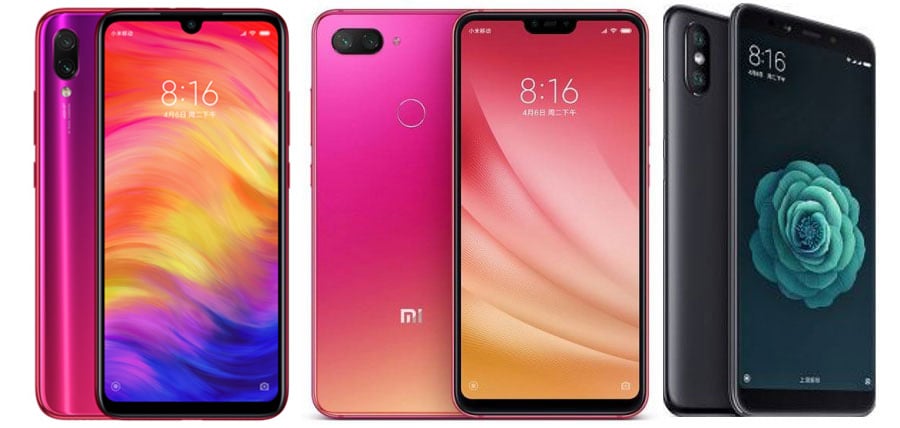
Xiaomi Redmi Note 7 vs Mi 8 Lite vs Mi A2: Specs Comparison

Xiaomi is one of the most considered smartphone manufacturers when it comes to midrange devices sold for less than $300. The new Redmi Note 7 is the first Xiaomi’s midrange smartphone of 2019 and it is the first device after Redmi became independent from Xiaomi. A lot of people are already considering it the perfect midrange phone and waiting for it to hit the shelves. But before giving it a chance, we think it is worth comparing it with other Xiaomi midrange phones which offer similar specifications: Mi 8 Lite and Mi A2, in order to establish which one is the best. Here you will find all the differences between three of the most interesting midrange phones in terms of quality-price ratio.


Xiaomi Redmi Note 7 vs Xiaomi Mi 8 Lite vs Xiaomi Mi A2

Xiaomi Redmi Note 7 Xiaomi Mi 8 Lite Xiaomi Mi A2
DIMENSIONS AND WEIGHT 159.2 x 75.2 x 8.1 mm, 186 grams 156.4 x 75.8 x 7.5 mm, 169 grams  158.7 x 75.4 x 7.3 mm, 166 grams
DISPLAY 6.3 inches, 1080 x 2340p (Full HD+), 409 ppi, IPS LCD 6.26 inches, 1080 x 2280p (Full HD+), 19:9 ratio, 403 ppi, IPS LCD  5.99 inches, 1080 x 2160 pixels, 403 ppi, 18:9 ratio, LTPS IPS LCD
PROCESSOR Qualcomm Snapdragon 660, octa-core 2.2 GHz Qualcomm Snapdragon 660, octa-core 2.2 GHz Qualcomm Snapdragon 660, octa-core 2.2 GHz
MEMORY 3 GB RAM, 32 GB – 4 GB RAM, 64 GB  – 6 GB RAM, 64 GB – micro SD slot 4 GB RAM, 64 GB – 6 GB RAM, 64 GB – 6 GB RAM, 128 GB  4 GB RAM, 32 GB – 4 GB RAM, 64 GB – 6 GB RAM, 64 GB
SOFTWARE Android 9 Pie, MIUI Android 8.1 Oreo, MIUI  Android 8.1 Oreo, Android One
CONNECTIVITY Wi-Fi 802.11 a/b/g/n/ac, Bluetooth 5.0, GPS Wi-Fi 802.11 a/b/g/n/ac, Bluetooth 5.0, GPS  Wi-Fi 802.11 a/b/g/n/ac, Bluetooth 5.0, GPS
CAMERA Dual 48 + 5 MP f/1.8 and f/2.4
13 MP front camera
Dual 12 + 5 MP f/1.9
24 MP front camera
Dual 12 + 20 MP f/1.8
20 MP f/2.2 front camera
BATTERY 4000 mAh, fast charging with Quick Charge 4.0 3350 mAh
Fast Charging Quick Charge 3.0
 3000 mAh, Fast Charging Quick Charge 3.0
ADDITIONAL FEATURES Hybrid Dual SIM slot Dual SIM slot  Dual SIM slot

Design

There are huge differences in the aesthetics of these smartphones for both looks and materials. Xiaomi Mi A2 is less attractive because it comes with a classic full metal unibody design and thick bezels both above and below the display. Its design is definitely not exceptional, while both its rivals come with a premium design that includes a glass back and an aluminum frame. I would pick the new Xiaomi Redmi Note 7 for one simple reason: besides having a smaller waterdrop notch (but slightly thicker bezels) it comes with a better build quality. According to the company, the phone is water resistant and dust resistant even though it does not come with an IP certification, and the first teardown has already proved it. Further, it has Corning’s Gorilla Glass 5 protection for the display and its glasses will be very resistant.


Display

No matter which display you choose, you will get more or less the same quality. All are midrange-class IPS panels with Full HD+ resolutions and their sizes are similar. The only important differences are the notch and the aspect ratio. Xiaomi Mi A2 has an 18:9 display without a notch, Xiaomi Mi 8 Lite has a 19:9 display with a medium-sized notch and Xiaomi Redmi Note 7 has an even taller 19.5:9 screen with a small waterdrop notch but slightly thicker bezels than Xiaomi Mi 8 Lite. I would personally go for the Xiaomi Mi A2 because I think its display offers a slightly better image reproduction.

Specs & Software

Just like the displays, even the hardware departments are very similar. Each of these phones is powered by the midrange Snapdragon 660 chipset by Qualcomm which is able to offer more than sufficient performance in every scenario, including gaming. However, while Xiaomi Redmi Note 7 and Xiaomi Mi A2 come with MIUI 10 out of the box (only the former is based on Android Pie), Xiaomi Mi A2 has the stock Android One which should provide a smoother user experience thanks to the absence of customizations. But Xiaomi Mi A2 is the only one that does not feature a micro SD slot to expand the internal storage. Also note that Xiaomi Redmi Note 7 does not have a variant with 128 GB of internal storage unlike Mi A2 and Mi 8 Lite.


Camera

When it comes to the camera there is no challenge: Xiaomi Redmi Note 7 is the most impressive. It comes with the new 48 MP sensor by Samsung paired with a 5 MP depth sensor, and it can provide a stunning level of detail thanks to the incredibly high resolution. It is able to capture impressive photos even in low light conditions. The second place goes to Xiaomi Mi A2 which also offers a better front camera for selfies, equipped with a front-facing LED flash that is always useful to click photos in the dark. Xiaomi Mi 8 Lite has a less convincing rear camera setup but it is still sufficient for a midrange phone.


Battery

Due to its way bigger capacity (4000 mAh), Xiaomi Redmi Note 7 takes the title of best battery phone of the trio. It can easily last two days on a single charge if you do not stress it too much. Further, it features a faster-charging technology: Quick Charge 4.0, that is the latest standard by Qualcomm. The second place goes to Xiaomi Mi 8 Lite with its 3350 mAh battery supporting Quick Charge 3.0. Xiaomi Mi A2 is not so strong at battery life and it is just a sufficient device, but at least it is well-optimized.


Price

Xiaomi Redmi Note 7 debuted in the Chinese market with a price tag of about $147/€128, while Xiaomi Mi A2 and Xiaomi Mi 8 Lite are already available in the global market. The former can be found at about $230/€200 thanks to online street prices, while the latter costs about $263/€230. Despite its lower price, Xiaomi Redmi Note 7 wins the comparison because of its bigger battery, better build quality, and amazing camera.


Xiaomi Redmi Note 7 vs Mi 8 Lite vs Mi A2: PROs and CONS

Xiaomi Mi 8 Lite

PROs

  • Great design
  • Good front camera
  • Global availability

CONS

  • Costlier


Xiaomi Redmi Note 7

PROs

  • Great build quality
  • Good design
  • Bigger battery
  • Android Pie

CONS

  • Limited availability (for now)


Xiaomi Mi A2

PROs

  • Android One
  • Good price
  • Nice cameras
  • Sleek and lightweight design

CONS

  • Smaller battery


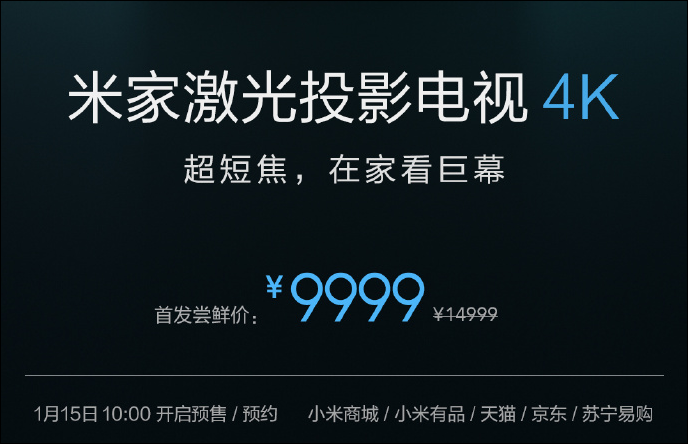
Xiaomi MIJIA Laser Projector 4K version with 4K resolution launched for ¥9999 ($1500)

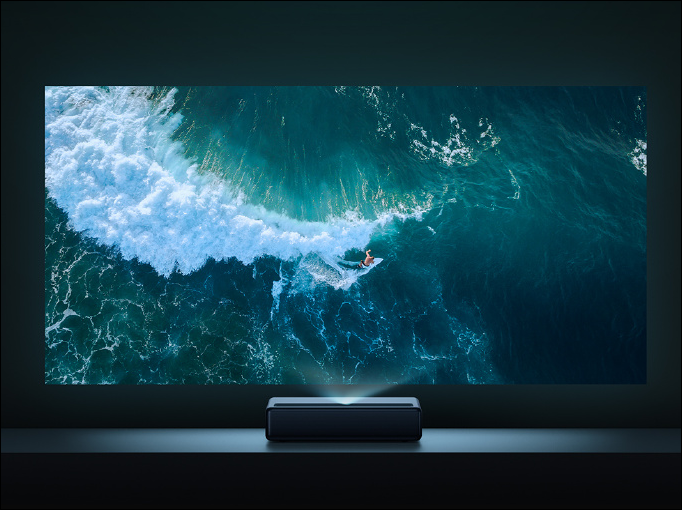
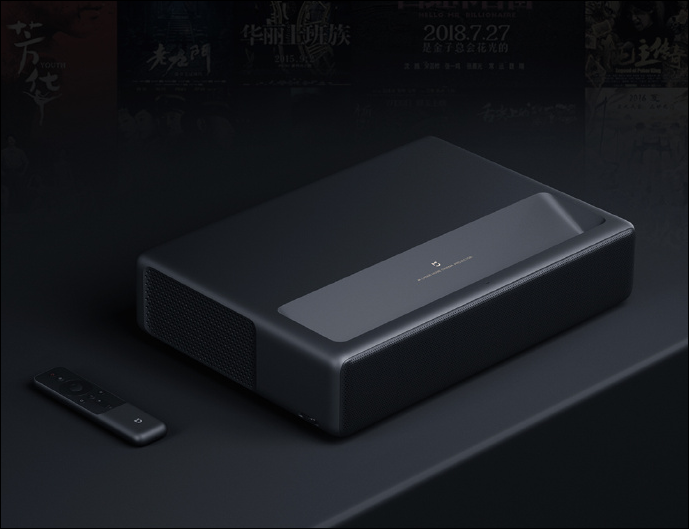
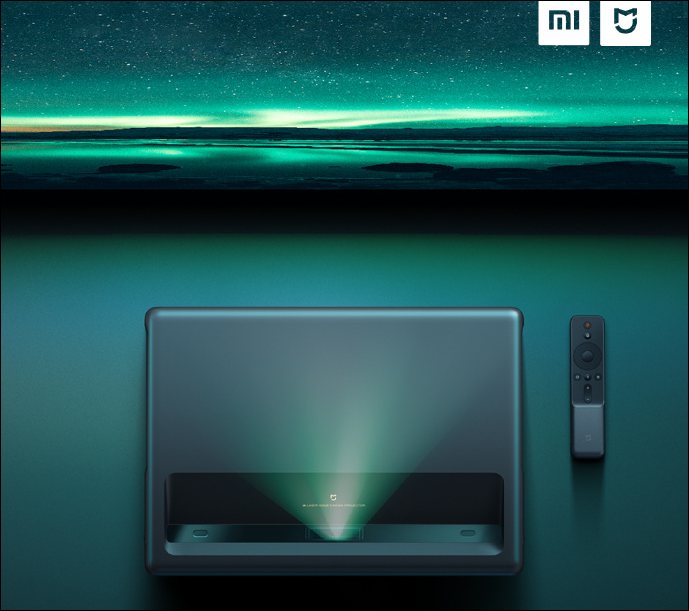
Xiaomi first launched the Mi Laser Projector in June 2017 and it was well received in the market such that the company raked in sales of 10 million yuan just 2 hours after it went on its first sale. The device came with a 9999 yuan price tag and despite the hype, was only able to provide an FHD resolution. The company has now launched the MIJIA Laser Projector 4K version with the same design, same price tag but a higher 4K resolution.Xiaomi MIJIA Laser Projector 4K version

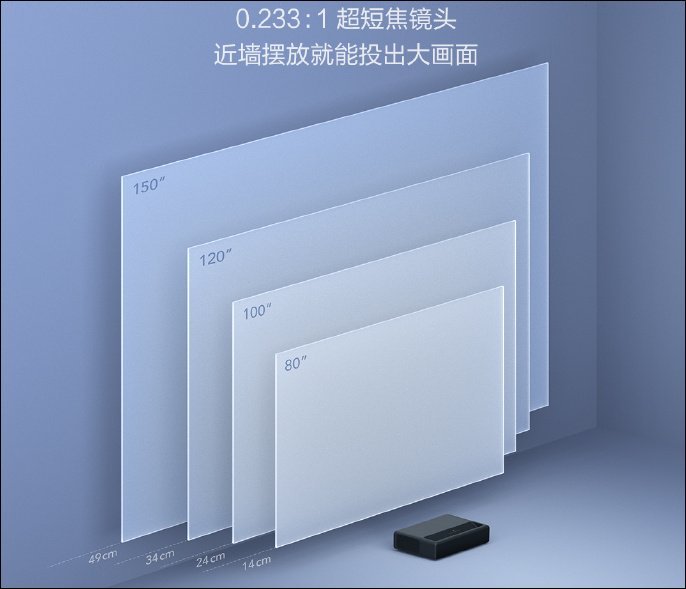
In terms of design, the MIJIA Laser Projector 4K version bears a similar design to the Mijia Laser Projector that was launched last year but that model comes with a white colour scheme while the new MIJIA Laser Projector is dark gray. The rest of the specifications are mostly similar. The Mijia Laser Projector comes with a 0.233:1 large depth of field and has an ultra-short focal lens design. The projector screen can be placed in the TV cabinet with the size adjusted to fit in. The wall can also be used as the screen and so, it does not occupy too much indoor space. The design also eliminates the cumbersome problem of wires scattered everywhere. The Laser projector itself only needs to be placed 49cm away from the wall in order to deliver 150-inch screen projection. For a 120-inch screen, the distance reduces to 34cm. A 100-inch screen needs a distance of 24cm and an 80-inch screen, a 14cm distance. You don’t need to manually focus the lens as it fine tunes itself.MIJIA Laser Projector

Xiaomi claims the laser light inside the projector has a shelve life of 25,0000 hours. That translates to up to 17 years usage if the projector is used for 4hours daily, meaning the laser is ultra-durable and long-lasting. Picture quality is assured as a result of the use of advanced laser fluorescence display technology (ALPD 3.0). The projector provides a red light ratio of 16% to 18%, wide color gamut, color quasi, with contrast comparable to the laser studio 3000: 1 screen contrast. The light source brightness can reach up to 1500 lumens which are of theatre screen level. The projector also diffuses its direct light source, allowing for more eye protection.Xiaomi MIJIA Laser Projector 4K version

In addition, the Mijia Laser 150″ projector is capable of providing theatre-level audio-visuals right in the comfort of the sitting room. It also comes built-in with all the content available on the MIUI TV. The device equally has its own remote control which supports the Xiaomi universal remote control app. That means the Xiaomi universal smart remote can be used to operate the sophisticated device.

The MIJIA projector will go on its first sale on January 18 for 9999 yuan but presale will open on January 15. After the first sale, the price will then berth at 14,999 yuan ($2,220) which is the official retail price.

(source)MIJIA LAser Projector 4K version

Geekbench listing shows the Pixel 3 XL Lite has 6GB of RAM and is manufactured by Foxconn

News of a lite variant of Google’s Pixel 3 smartphones surfaced last year. But this wasn’t just rumors. There were lots of live photos posted online confirming the phone’s existence. The latest report says there will be two variants – a Pixel 3 Lite and a Pixel 3 XL Lite and now the latter has appeared on Geekbench.

Google Pixel 3 XL Lite Geekbench

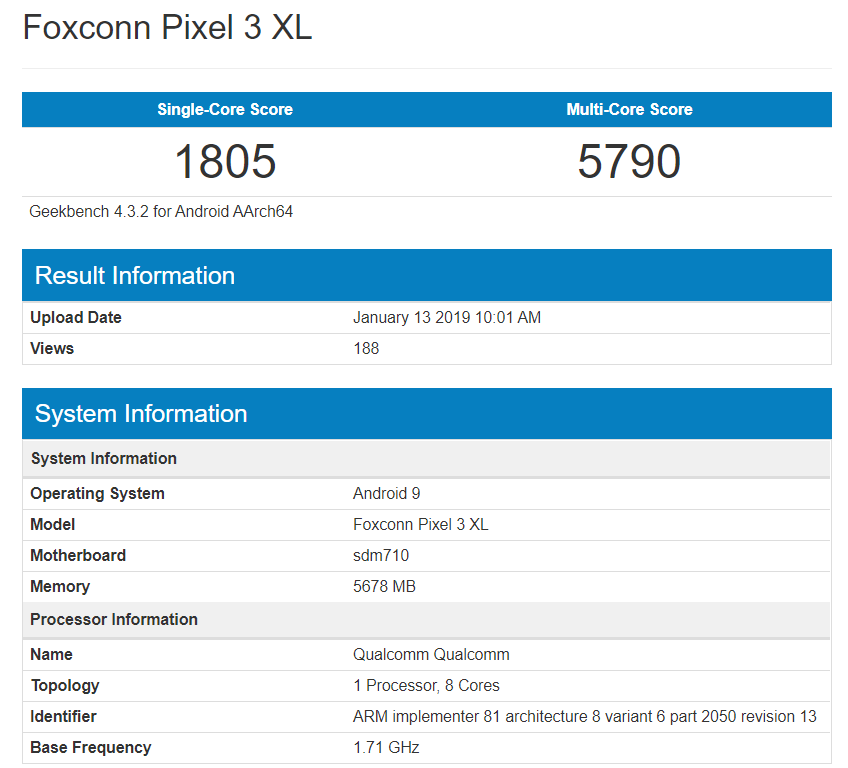
Benchmarked as the “Foxconn Pixel 3 XL”, the name reveals production is being handled by Foxconn who already handles production of the Pixel 3 and Pixel 3 XL.

The device which was benchmarked yesterday runs Android 9 and is powered by the Snapdragon 710 processor. This is different from what we heard about the phone having a Snapdragon 670 chipset. The phone not only comes with a more powerful chipset, but it also has 6GB of RAM, the highest we have seen on any Google smartphone.

The Pixel 3 XL Lite scored 1805 points in the single-core test and 5790 points in the multi-core test. The scores are similar to that of other phones such as the Mi 8 SE which is powered by the same chipset.

READ MORE: Android Q will come with a system-wide dark mode says Googler

Samsung to release three Galaxy A-series phones with in-display fingerprint scanners

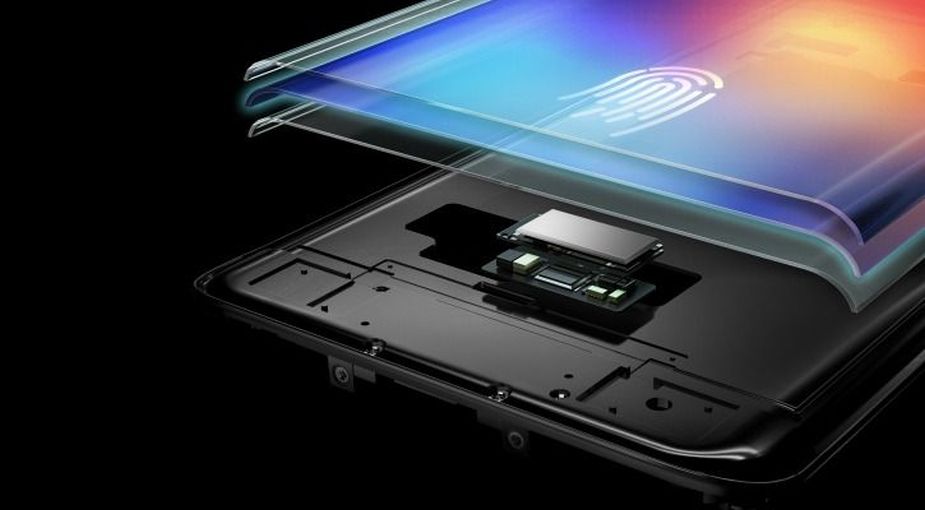
Samsung is playing catch-up when it comes to certain trends in the mobile industry. For example, it doesn’t have a phone with an in-display fingerprint scanner yet but that should change next month when the Galaxy S10 launches. A new report says the feature will be coming to its Galaxy A-series too.

Under Display Fingerprint Scanner
Samsung to release three Galaxy A-series phones with in-screen fingerprint sensors

According to Korean Media, ET News, Samsung will launch three Galaxy A-series phones with under-display fingerprint scanners this year. The three phones are the Galaxy A90, Galaxy A70, and the Galaxy A50. Based on their names, we can assume the Galaxy A90 will be the most powerful of the three.

The source says Samsung already has suppliers for the sensor and modules ahead of the phones’ release in the second quarter. Aegis Technology is said to be the manufacturer of the sensor module which is optical and not ultrasonic like Qualcomm’s. Mass production will be handled by Partron and Mcnex.

Other than these three, Samsung is reported to have six other models planned for this year too. These will likely come with side-mounted and rear-mounted fingerprint scanners. The Galaxy A-series will also come with multiple rear cameras with some having Time of Flight (ToF) 3D sensors.

READ MORE: Samsung Galaxy S10 5G variant and foldable Galaxy Flex to arrive with monstrous battery sizes

OnePlus announces it’s now global sponsor of Fnatic e-sports team

If you watch soccer/football, then you must have noticed the players’ jerseys usually have the name of the sponsor written boldly in front. OnePlus has announced its first sponsorship of a sports team, no, not a soccer team but the esports team, Fnatic.

The announcement was made yesterday on the official OnePlus Forum as well as Fnatic and OnePlus’s social media accounts. The esports team had a match in Berlin yesterday where it unveiled its playing jersey for 2019 which has OnePlus’s logo and wordmark.

OnePlus and Fnatic

Speaking on the partnership, OnePlus’s co-founder, Carl Pei said “Gaming has always been central to OnePlus and working with Fnatic was, from the beginning, a natural partnership born from friendship: two like-minded organizations looking to push the boundaries. We’re excited for this to be our first-ever global sponsorship in esports! Together, we’ll continue to change industries and attitudes, through a joint passion to Never Settle.”

Fnatic’s own founder and chairman, Sam Mathews said OnePlus and his esports team share the same values in terms of performance and becoming the best, “so in OnePlus we have the perfect partner to take Fnatic into a new era.”

READ MORE: OnePlus 7 may support wireless charging as OPPO joins Wireless Power Consortium

Xiaomi’s Flagship Game isn’t strong, but the new ‘Redmi’ could change that


A couple of weeks back, the headline ‘Xiaomi outs the new Redmi Note 7 smartphone’ would have been technically correct. But now, it’s not. Redmi is a separate brand and so is Xiaomi’s Mi.

Welcome, 2019!

Redmi by Xiaomi


Redmi’s first smartphone this year, the Redmi Note 7 turned out to be great — not like the Redmi Note 6 Pro and the Redmi 6 which were lackluster. I mean, these two phones were not bad, they were not Xiaomi good either.


See what I did there? Xiaomi has become equivalent to value and affordability. But that’s not necessarily a good thing for the recently listed company.


The decision to split Redmi from the Xiaomi family was not just for the budget focused brand. Xiaomi’s flagship brand, ‘Mi’ should eventually benefit more from this decision. So, despite the spotlight being around Redmi going independent, I think we should see the real picture here, which is ‘Mi’ getting its own niche market.


Redmi’s the Real Hero!

Xiaomi has always been popular for its budget smartphones. Heck, if you are out to buy a budget phone, chances are, you have shortlisted a bunch of Redmi phones. Indeed it was Redmi phones that drove the company’s growth to a considerable extent all these years. So it wasn’t surprising to see analysts mentioning Redmi smartphone models that helped the Beijing-based company become the fourth largest smartphone maker in the world. But the same reports often failed to mention its flagship models.


A report from Kantar World Panel reveals that Xiaomi Mi 8 was the most popular smartphone in China in Q3 2018. So, it’s clear that the company is making efforts to fix this problem. Getting its flagship smartphones to sell well is most likely a priority for the company right now. After all, high-end smartphones command better margins, unlike budget phones. And it’s not just about margins. High-end users are likely to spend more on services, boosting overall revenue.


But with Redmi and Xiaomi walking the same road, it was always going to be difficult.


Finding Your Niche

Consider Honor and Huawei. Both of them have low-end phones as well as high-end phones. Honor’s new Honor View 20 with its punch hole camera shined at CES 2019 for its high-end features. Huawei’s low-end model, like the Huawei Enjoy 9 isn’t half bad for its price. But when you think of the two brands, how do you perceive them?


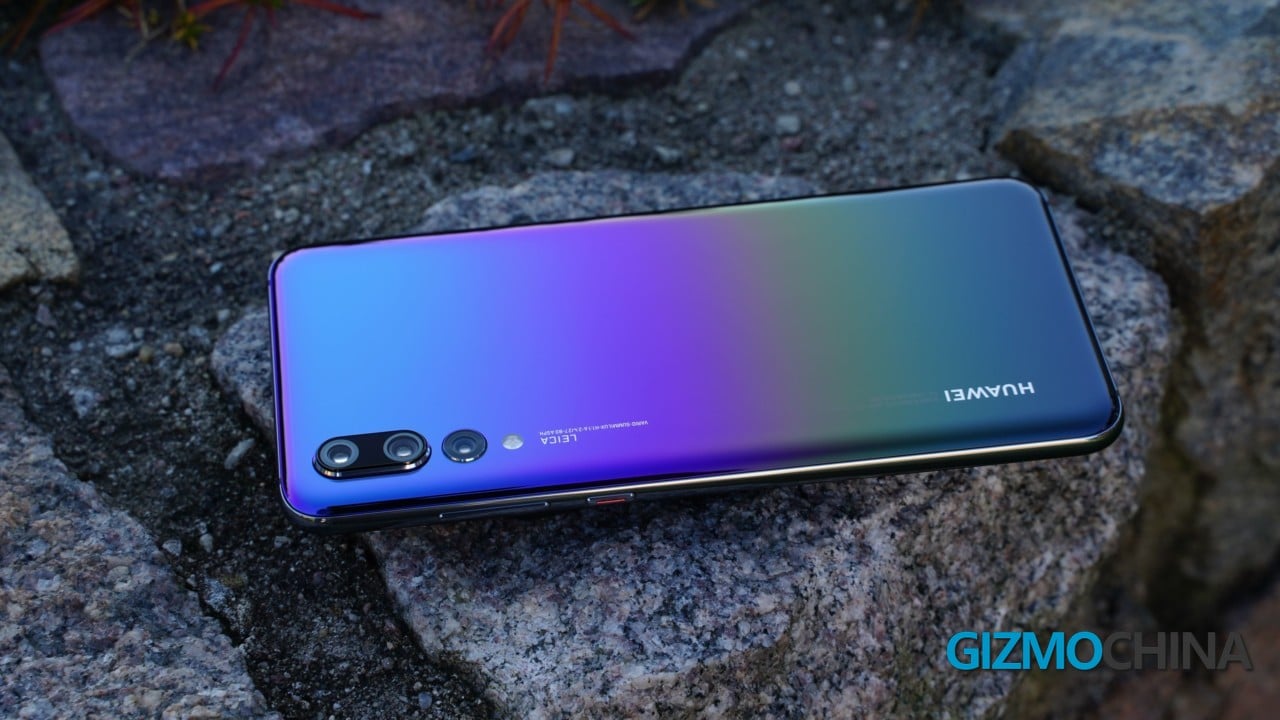
Huawei P20 Pro Aurora Featured 2
Huawei P20 Pro


It’s very likely that when you think of Huawei, you think of the premium Mate 20 series and the P20 series. In short, when you are out to buy a flagship phone in 2019, a few of Huawei’s models are automatically shortlisted. Similarly, for affordable flagships or for affordable mid-rangers, Honor’s likely in your potential list. This perception hasn’t risen just out of a phone-by-phone comparison, it is a result of both brands being very clear about where they stand.

OnePlus is a good example of a successful niche brand. Realme and POCO are some additional examples which show how focusing on a particular market segment is the way to go.


Weak Flagship Game

Xiaomi Mi Mix 3
The Xiaomi Mi Mix 3

Xiaomi knows its flagship game isn’t strong. Yes, the Mi Mix 3 is inspiring, but how many of you are seriously considering purchasing the device? In an important market like India, Xiaomi doesn’t even have a true flagship lineup. The best selling flagship model from the company is the POCO F1. But see how it’s not associated with the Xiaomi brand? Not to mention, the POCO F1 is an affordable flagship and not a premium one. 

Oh yes, if you really look around, you’ll find that the Mi Mix 2S is available in India. But it’s not doing so well. And they haven’t even launched its successor yet. 

The existing Xiaomi Mi 8 / Mi 8 Pro lineup have capable options. Heck, with the new updates, their cameras have become better as well. But they are overshadowed by the company’s brand perception.


But with Redmi and its budget offerings being sliced out of the Xiaomi brand, they have a chance. Mi series may finally advance as a solid premium brand!


Maybe, at the end of the year, I’ll be looking at a Xiaomi flagship (possibly the Mi 9 or the Mi Mix 4) as the best smartphone of the year.

With Xiaomi making its move to strengthen its premium segment, I am pretty confident that we would see a flagship that takes on the upcoming Mates and Galaxies in the market.

What say you?

Nokia looking to elicit another wave of nostalgia with the Nokia N9 powered by KaiOS

HMD Global Oy’s Nokia rode on the crest of nostalgia when it released the rebranded Nokia 3310 last year as a replacement for the evergreen and rock-solid Nokia 3310 of yore. The feature phone was an instant hit with fans who have good memories about the maiden 3310. The success even spurred the launch of a 4G version and later on, the company pushed the Nokia 8110 another feature phone with a long history. The company may be planning to play that card once again with the Nokia N9.Nokia N9

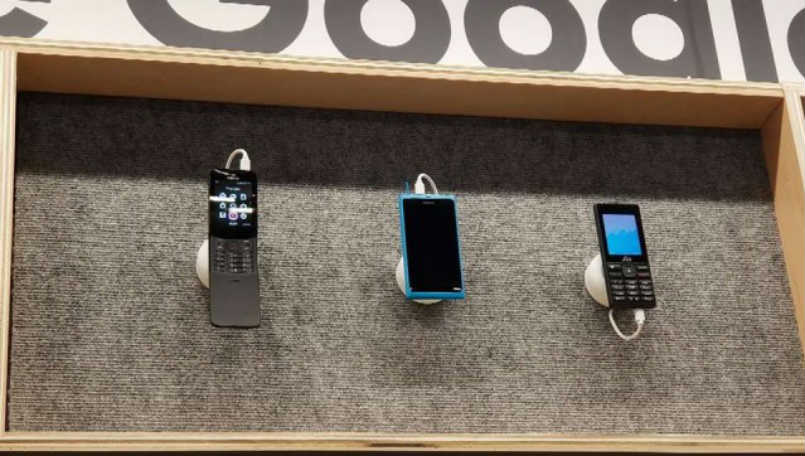
This bit may have been revealed unknowingly by Google at CES 2019. Google mounted a giant booth located just outside the Las Vegas Convention Centre where it displayed all the devices that support Google Assistant. One of the stands at the booth, Google displayed three smart feature phones powered by KaiOS. The phones include the JioPhone, and Nokia 8110 4G and a third device which looked similar to Nokia N9. This was spotted on a picture of the booth posted on KaiOS technologies’ official Facebook page.

The unannounced phone also had the Nokia logo which isn’t to clear as a result of the distance from which the photo was captured.  Since the device was listed by Google under the category of Google Assistant-supported device, we can assume it is running KaiOS, a modern operating system aimed at feature phone users. While all Android smartphones come with Google Assistant by default, these feature phones running KaiOS are the only other devices to support Google’s digital assistant. However, the first Nokia N6 was a MeeGo-powered phone and didn’t feature KaiOS, buttressing assertions this is a new model.  In addition, the design looks very much like the iconic Nokia N9 and bore the cyan color which was one of the color variants of the initial N9.

Read Also: Ulefone Armor Mini vs Nokia 3310 durability test (video)

As a reminder, the Nokia N9 (codename Lankku) was first announced in June 2011 and released in September. It was the first and only device from Nokia with the Linux-based MeeGo “Harmattan” mobile operating system, partly because of the company’s alliance with Microsoft announced that year. It was available in four colors: black, cyan and magenta and white. We can’t say when the new N9 will be released but it is doubtful if it will elicit the same level of interest as the Nokia N9 and 8110 4G.

(via)

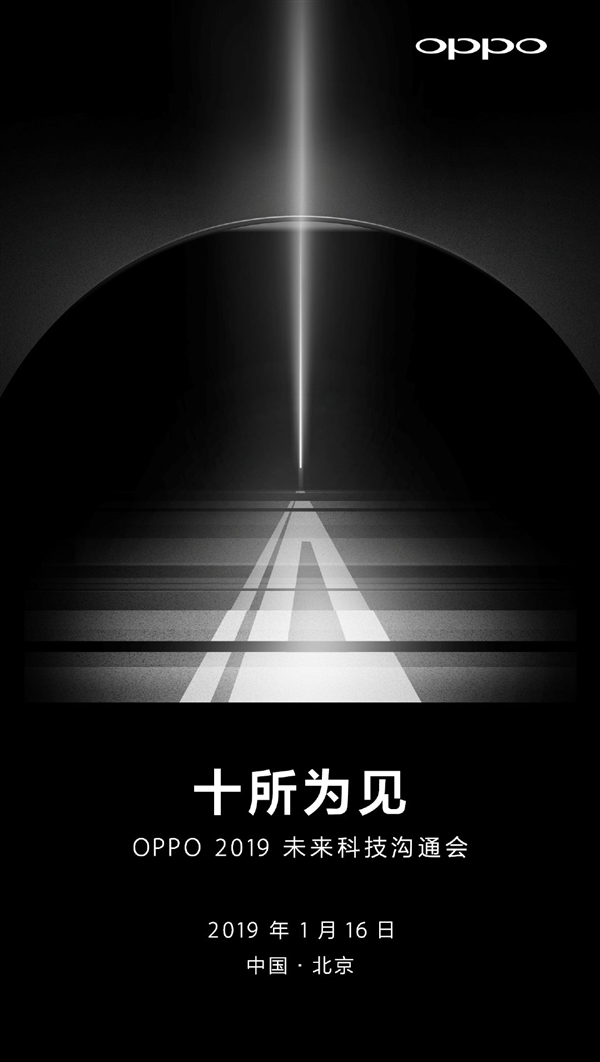
OPPO to unveil 10x optical zoom technology on January 16

At 2017’s edition of Mobile World Congress, OPPO showcased a new camera technology called 5X Precision Optical Zoom. The technology used a unique combination of hardware and software to obtain high-quality images even after zooming 5 levels. Now OPPO is taking things much higher with a 10x optical zoom technology it plans to show off on January 16.

OPPO 10x lossless zoom poster

News of OPPO’s 10x lossless zoom technology first surfaced last month in a patent. Based on the diagrams in the patent, it seems OPPO will also employ a dual camera setup just like that of the 5x Precision Optical Zoom technology and also a periscope-like arrangement. The periscope-like setup makes it possible for the camera module to remain thin.

There are rumors that the 10X lossless technology will first appear in the OPPO F19 and OPPO F19 Pro but seeing as the 5X Precision Optical Zoom isn’t even in any OPPO phone till date, we will advise you to take that info with a grain of salt. Nevertheless, we are eager to see how the new technology works when it is unveiled on Wednesday.

READ MORE: OnePlus 7 may support wireless charging as OPPO joins Wireless Power Consortium

New Xiaomi Surge Chipset is still in development, unexpected issues delaying the progress

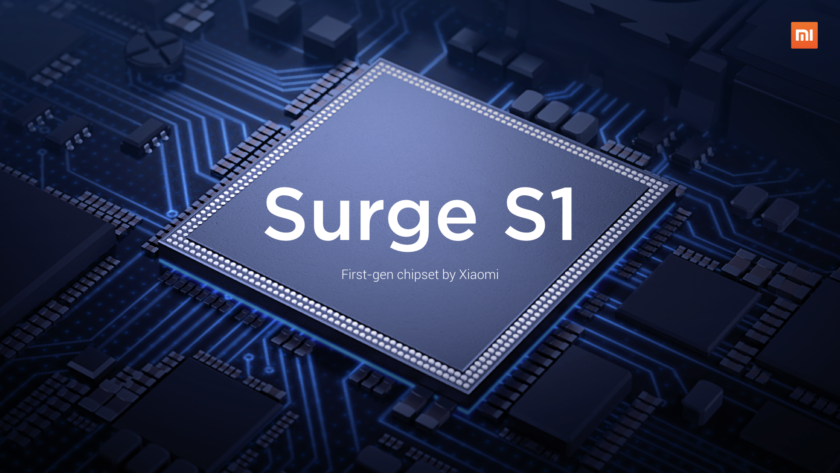
In February 2017, Xiaomi stunned the industry when it launched the Mi 5C as its first phone that features the company’s self-developed Pinecone Surge S1. The device was expected to get a successor in the Mi 6C last year that would be powered by a Surge S2 chipset but that didn’t happen. As early as April last year, it was reported that TSMC was manufacturing the Surge S2 for Xiaomi using the chipmaker’s 16-nanometer FinFet process.Surge-S1

The Mi 6X was expected to be launched at MWC 2018 with the new chipset but that didn’t happen. The S2 was even tipped to be released along with the Mi 8. That also did not materialise. However, Xiaomi’s product director Wang Teng Thomas has thrown some insight as to why the chipset is delayed. He responded to a netizen’s question if the chipset has been abandoned., hinting that it has not been abandoned but that it is still under development. He also hinted that the process is being belayed by some unexpected issues.

Read Also: Xiaomi Surge S1 Antutu Performance inside the Mi 5C Revealed

The Surge S2 is expected to utilise an octa-core design comprising four Cortex-A73 cores and four Cortex-A53 cores. The Cortex- A73 cores are clocked at around 2.2GHz while the Cortex-A53 will come with a clock frequency of around 1.8 GHz. The device will come with a Mali G71MP8 GPU which will support UFS2.1 and LPDDR4 memory. Unfortunately, the chipset will still not feature support for CDMA network. However, the Surge S2’s comprehensive performance evaluation seems to be the same as the Kirin 960. In contrast, the Surge S1’s performance is slightly higher than Qualcomm’s Snapdragon 625 chipset. The S1 is an octa-core processor with four Cortex-A53 cores clocked at 2.2GHz and another four A53 clocked at 1.4GHz while the GPU is ARM’s Mali-T860.

(via)

Redmi 7 price range between 700 to 800 Yuan (under ~$120), confirms Xiaomi CEO

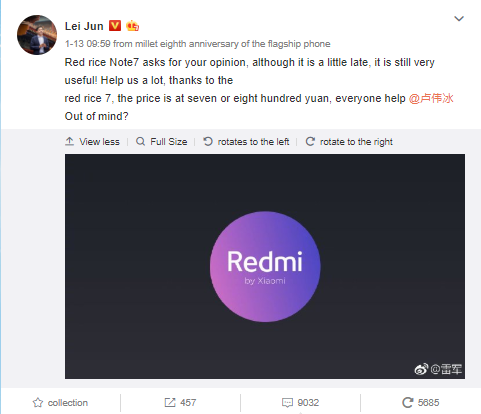
Redmi has recently launched the feature-rich Redmi Note 7 smartphone with amazing starting price of 999 Yuan (~$147). In the coming month, Redmi will be announcing the Redmi Note 7 Pro handset. The Chinese manufacturer is also expected to announce the Redmi 7 series in the near future. Yesterday, Xiaomi CEO Lei Jun confirmed the existence of the Redmi 7 series to Redmi fans by revealing it that it will be priced between 700 Yuan (~$103) and 800 Yuan (~$118).

Redmi Note 7 Gorilla Glass 5

Jun has only shared the pricing of the upcoming Redmi 7 series. There is no official information available on the specifications of the phone. It is yet to be confirmed whether the company will be releasing three phone such as Redmi 7A, Redmi 7 and Redmi 7 Pro as the respective successor for Redmi 6A, Redmi 6 and Redmi 6 Pro handsets.

The pricing information shared by Jun confirms that the Redmi phones will continue to carry attractive specs and cost-effective pricing. In the previous week, the Xiaomi CEO had confirmed that the company is working on a Snapdragon 855 powered flagship that will carry a price tag of 2,500 Yuan (~$369).

The 3 GB RAM + 32 GB storage, 4 GB RAM + 64 GB storage and 6 GB RAM + 64 GB storage editions of the Redmi Note 7 are respectively priced at 999 Yuan (~$147), 1,199 Yuan (~$177) and 1,399 Yuan (~$207).

There is no information available on pricing of the Redmi Note 7 Pro handset. It is expected to debut after the Spring Festival in China. The only major change arriving on the Note 7 Pro when compared to the regular Note 7 is that its 48-megapixel Samsung GM1 will be replaced by the more powerful 48-megapixel Sony IMX586 sensor.

Redmi 7 pricing Xiaomi CEO Lei Jun

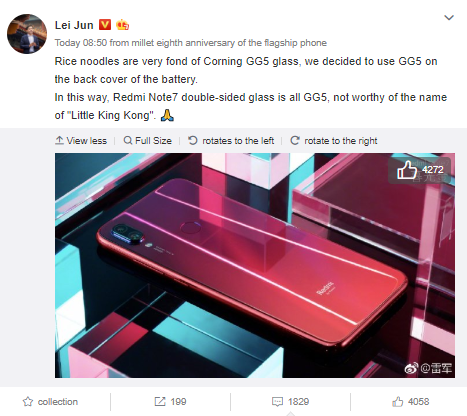
Through a separate Weibo post, Jun has confirmed that the Redmi Note 7 which is the first glass-bodied Redmi phone is equipped with Corning Glass 5 panels on its front and rear. He added that double-sided Gorilla Glass 5 enabled Note 7 is worthy of its “Little King Kong” nickname.

In the previous week, Redmi had released the above video to show that how strong the Gorilla Glass 5 panel of the Redmi Note 7 is. The Snapdragon 660 chipset powered phone features a 6.3-inch waterdrop notch enabled full HD+ display. For photography, it features 48-megapixel + 5-megapixel dual camera setup and 13-megapixel selfie shooter. It is packed with 4,000mAh that supports Quick Charge 4 through USB-C.

Oppo establishes a new brand Zhimei for tech and lifestyle products

Oppo has already managed to establish itself as one of the leading smartphone brands in the Asian markets. The company is also among the top five smartphone vendors across the world. Now, the company is all set to take a step forward.

In order to expand its business and possibly enter new markets, the company has announced that it is establishing a new brand named ‘Zhimei’ which will focus on developing products with new and emerging technologies.

oppo logo

The company announced that it has officially established an Emerging Mobile Terminal Division and has appointed Liu Bo, the former OPPO Chief Procurement Officer, as OPPO Vice President and President of Emerging Mobile Terminal Division. He will be looking after everything at this new brand and will directly report to Oppo CEO Chen Mingyong.

Making the announcement of this new brand, Oppo CEO Chen Mengyong said that the new brand is for the emerging mobile technologies and will lay out the future plans of Oppo in the 5G era. He also said that with this brand, Oppo is planning to promote entry-level products with smart futuristic technologies.

In line with this, the company will also continue to increase its investment in research and development (R&D) to deepen the integration of new technologies with its hardware and software. The Zhimei brand will also develop AI-based products as well as IoT products.


Read More: Oppo’s flagship smartphone codenamed ‘Poseidon’ appears on Geekbench; features SD855 SoC and Android Pie


The company will be expanding its product portfolio to launch smart mobile accessories such as smart headphones as well as smart lifestyle products like smartwatches. We can also expect the company to launch products focused towards the sports and healthcare market.

Oppo ‘Poseidon’ appears on Geekbench; features SD855 SoC and Android Pie

Oppo is working on a new smartphone codenamed ‘Poseidon’ which has appeared on Geekbench, revealing a few key specifications. Looking at the specs sheet, it appears that it is the company’s upcoming flagship smartphone.

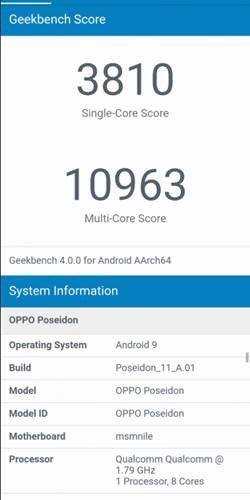
In the benchmarking result, the phone scored 3,810 in single-core test and 10,963 in multi-core test. The listing also reveals that the phone will be powered by Qualcomm’s latest flagship chipset Snapdragon 855 octa-core processor clocked at 1.8GHz. Further, the listing reveals that the phone will be running Android 9 Pie operating system out-of-the-box.

Oppo Poseidon Geekbench

The Qualcomm Snapdragon 855 — successor of the current-generation Snapdragon 845 — comes with support for 5G connectivity and a few other features which are aimed at improving the user experience. It offers 5G connectivity using the company’s own Snapdragon X50 5G modem.

The octa-core processor features four power-saving cores clocked at 1.78GHz, three performance cores clocked at 2.42GHz and another special “gold” core for performance boost which is clocked at 2.84GHz. It is coupled with Adreno 640 graphics processor, which is expected to bring performance improvement.

Just like the Apple A12 Bionic chipset and Huawei’s Kirin 980 processor, the Qualcomm Snapdragon 855 is also manufactured using the 7nm process by TSMC. It also comes with the company’s fourth-generation, multi-core AI Engine that is claimed to offer up to 3 times the AI performance compared to the SD845.

It also features the world’s first Computer Vision Image Signal Processor (CV-ISP) to deliver new photo and video capture features. For the gaming, the company unveiled Snapdragon Elite Gaming, a set of features in the mobile platform to enhance mobile gaming experiences.


Read More: OnePlus 7 may support wireless charging as OPPO joins Wireless Power Consortium


Currently, there’s no more information available regarding the phone’s specifications as well as its naming, features, pricing, and availability. However, we should be receiving more information related to the smartphone in the coming weeks. So, stay tuned!

Avail An Extra 20% Off On Top-End Keyboards On Banggood [Coupons Inside]

It is no secret that the keyboard is one of the most important computer accessories that is used for inputting text into a PC, playing a computer game and multiple other purposes.


While there’s no dearth of top-branded and highly efficient keyboards in the market today, you are highly likely to end up spending a lot of money of this input device whether you are buying it on an online or an offline store, but that’s about to change. In a bid to make high-end keyboards available to cost-conscious buyers, Banggood has launched Keyboard Promos.

As part of this recently kicked-off promo, the Chinese online store that guarantees the best bang for your buck is offering an extra 20% percent off on a wide selection of keyboard. All items included in this promo have been split into multiple categories in order to simplify and expedite the search process.

Under the ‘Top Sale’ section, you get an 8% off on the Anne Pro 2 Gateron switch version keyboard that normally sells for S$85.99 on Banggood. Thanks to the aforesaid discount, you can get the black or white color version of the keyboard for a dropped price of just $79.

Moreover, you can even choose between blue, brown and red switches. On top of that, you can use coupon code 6117ea to get an extra 10% off before you proceed to check out.

Likewise, you can get a 10% off on the Akko X Ducky One 2 mechanical gaming keyboard that sells for $99.99 without the discount. As a result, the One 2 – Mini RGB keyboard can now be yours if you are willing to shell out only $89.99 on Banggood.

You can choose between brown and red switches as well. In order to save 10% extra, all you need to do is to apply the aforesaid coupon 6117ea. The Akko X Ducky One 2 mechanical gaming keyboard comes with numerous RGB LED lighting modes that include the latest game modes.
Alternatively, you can go for the Obins Anne Pro 2 mechanical gaming keyboard that normally carries an $89.99 price tag, but is currently available for a lowered price of just $84.99 on Banggood. You can extend this 6 percent discount with the help of the coupon code 6117ea.

The rest of the keyboard have been separated into two sections including More Like You, and Decorate your Keyboard. You can use coupon code dcac5f to grab an extra 15% off on all keyboards included in the ‘More Like You’ category.

The ‘Decorate your Keyboard’ section is associated with coupon code c0a9d3 that can be used to avail extra 20% off. You can click here to visit the promotion page and check out all the available keyboards and grab massive discounts on their original selling prices before the promo wraps up!

Xiaomi Mi brand’s focus on high-end phones could put an end to super cheap Mi 8 deals: Product Director

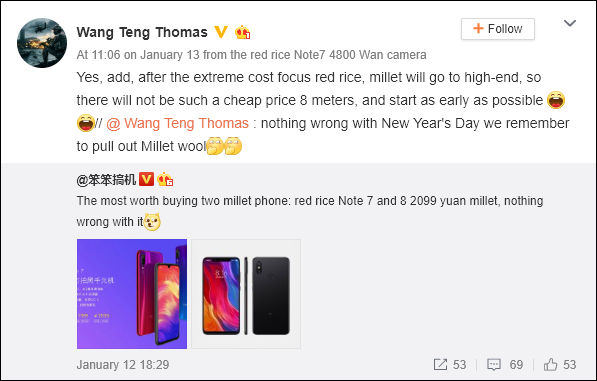
Xiaomi‘s Mi brand has always been the high-end smartphone brand while the Redmi series is devoted to affordable models. But in recent times we have seen the flagship Mi phones like the Mi 8 come in at amazing discount prices during promotions. Presently, XIaomi seems to be running the New Year promo which brings down the price of the Mi 8 to 2099 yuan ($310) for the base model. Apparently, such amazing offers from the Mi brand may end soon as hinted by Xiaomi’s product director, Wang Teng Thomas in a recent Weibo post.Xiaomi

The Xiaomi product director was responding to a post by a fan who was extolling the new Redmi Note 7 and Mi 8 as the two most cost-effective Xiaomi phones that are worth buying. In response, Mr Wang hinted that after the cost-focused Redmi series, there won’t be any such crazy cheap deals anymore as the Mi brand will go high end.

Read Also: Xiaomi bet big on AI and smart devices with $1.5billion investment

Xiaomi has always insisted that it would not increase the profit margin from its phones above 5% but in the face of going public with the company, there have been doubts as to how the company will keep its phone prices low and still make some profit for its investors. So, the statement by Xthe company’s product director could be viewed from two different perspectives. The first is that he wants people to buy Mi 8 as soon as possible so that all available stock is sold out before the Mi 9 lands. In another light, the company may have finally concluded plans to position the Mi brand as a high-end brand that no longer sells cheap flagships and he’s already portraying that. If the second scenario holds true, we may be looking at higher price tags on the Mi flagship. Already, the Redmi Note 7 has been released as the first independent Redmi branded phone and the price is crazily cheap, starting at 999 yuan ($147).

(source)

Nokia 9 PureView release date could be delayed to MWC 2019

With the appearance of press renders and leaked video of the Nokia 9 PureView handset, it appeared that HMD Global may debut it by the end of the month. A fresh leak reveals that the Finnish firm have pushed back the launch of the Nokia 9 PureView handset once again. It is now speculated to go official at the Mobile World Congress (MWC) 2019 tech expo that will be held in Barcelona, Spain at the end of February.

The Nokia_Leaks Twitter account that is known for sharing leaked information on upcoming Nokia phones has claimed that HMD Global has postponed the launch of the Nokia 9 PureView to MWC 2019.

Nokia anew, another Twitter account that leaks details of forthcoming Nokia smartphones has claimed that if the company has really planned to debut the Nokia 9 PureView in January then it would be sending out invitations until Wednesday. It has added that if the company has really delayed the arrival of Nokia 9 PureView to MWC 2019, it will be a real failure since it can get overshadowed by other new smartphones such as the Galaxy S10 series debuting launching around the same time.

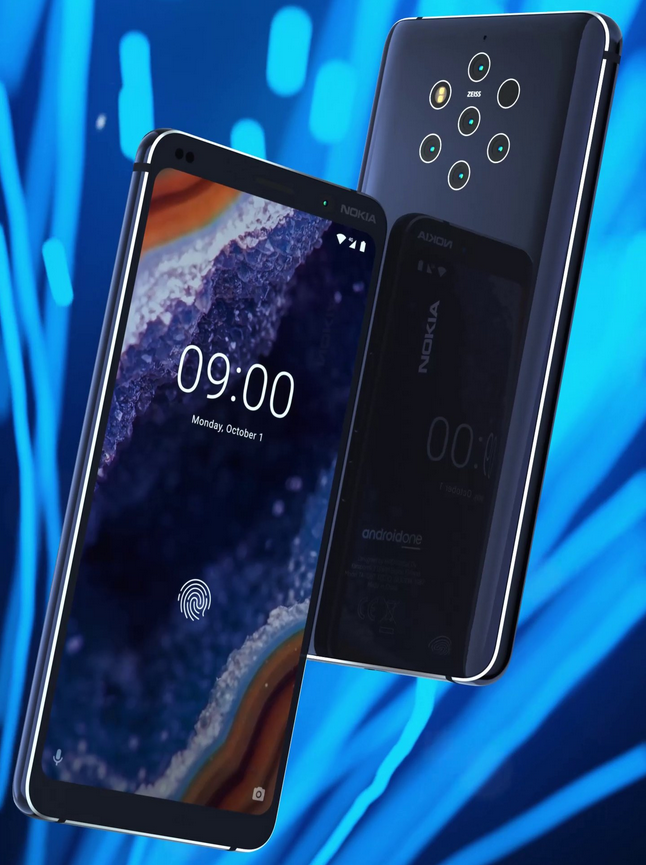
Nokia 9 PureView press image

The USP of the Nokia 9 PureView will be its rear-mounted penta-lens camera setup. It will also be the first Nokia phone to arrive with an in-screen fingerprint reader. The handset may house a 5.99-inch AMOLED display that will deliver 18:9 aspect ratio and full HD+ resolution. It is speculated to house a 4,150mAh battery which may come equipped support for Qi wireless charging. It goes without saying that the handset will deliver stock Android experience. The handset will be fueled by Snapdragon 845 chipset that could be coupled with up to 8 GB of RAM. The smartphone may arrive with a price tag of 749 euros (~$859) in Europe.

The Nokia 9 PureView won’t be the only phones launching at the MWC 2019. Recent reports have revealed that the Nokia 6.2 and Nokia 8.1 Plus are the upcoming phones from the Finnish firm. The Nokia 6.2 is expected to feature a punch-hole display, Snapdragon 632 chipset, 4 GB / 6 GB of RAM and 16-megapixel dual rear ZEISS cameras. It is tipped to debut first in Chin by the end of this month and its global debut may happen at MWC 2019. The Nokia 8.1 Plus is also expected to house a punch-hole display and a dual camera setup. Currently, the specifications of the Nokia 8.1 Plus are under the wraps.

(source 1, 2)

Buy Xiaomi Sothing Mini Warmbaby Fan Heater For $23.33 On Banggood; Get Exclusive Coupon And Chance To Win Free Order

It is imperative for you to keep warm over the winter months in order to keep health-related issues like colds, and flu at bay.
While there are multiple ways like wearing warm clothes to keep you warm and resist serious health problems, these options aren’t quite sufficient. Alternatively, you can use heaters that are more effective when it comes to keeping you warm in winter.
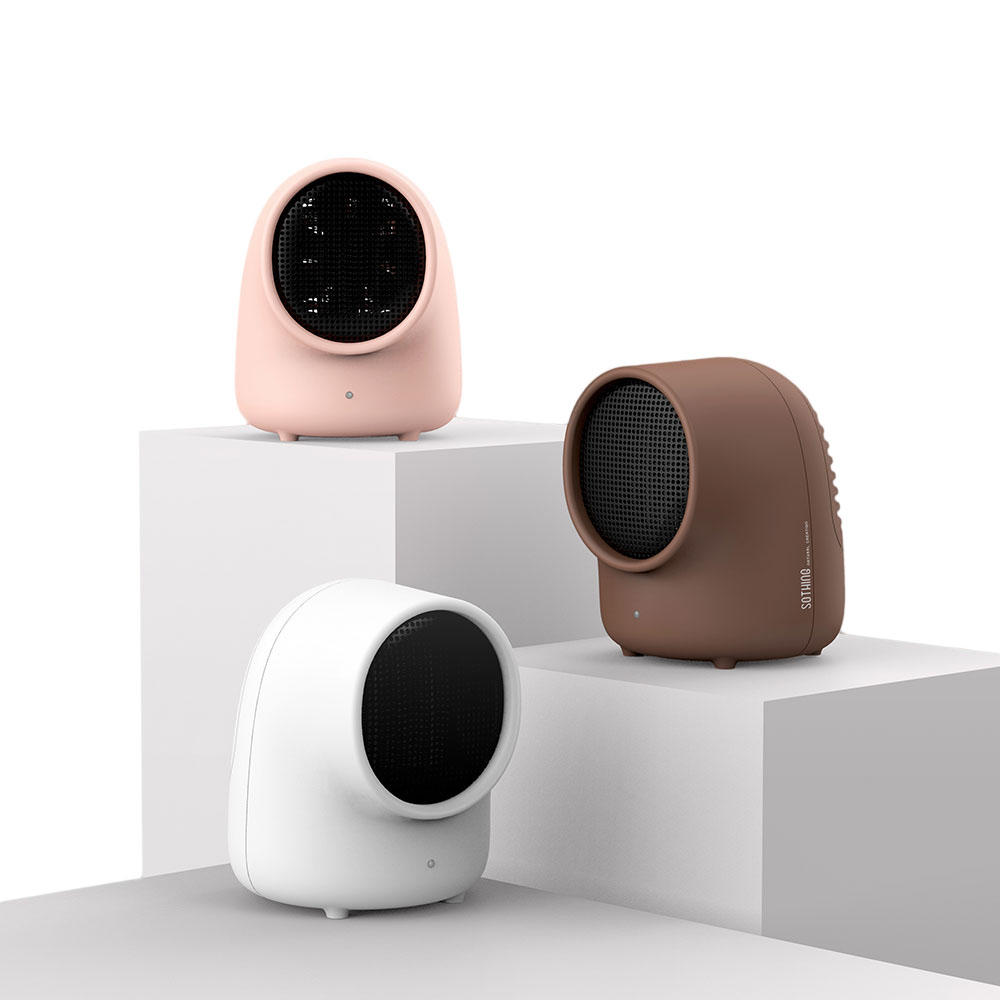
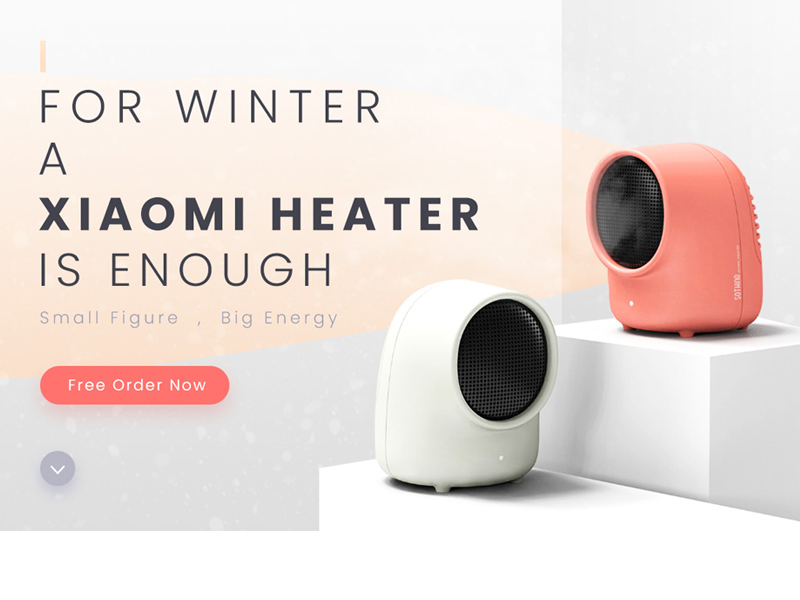
The market is brimming with all sorts of steeply-priced heaters, Xiaomi, on the other hands, is offering its well-received SOTHING Mini Warmbaby Fan Heater for a considerably lowered price on Banggood. Like any other top-branded heater available in the market today, the SOTHING Mini Warmbaby isn’t easy on the pocketbook.

In fact, this Xiaomi-branded heater would normally set you back $46.89 on Banggood. As part of its recently kicked-off promo dubbed, ‘Xiaomi Heater 23.33 Snap-Up,’ the company is now doling out a noteworthy 25 percent off on the heater’s original asking price.

As a result, you can now buy the highly effective electronic heater for just $34.99 on the popular Chinese online store that guarantees the best bang for your buck. But if that doesn’t impress you much, you can use the exclusive coupon code b0a761 and get an extra $11.66 off at the time of checking out.

In other words, you can bring the already lowered original asking price of the Xiaomi heater further down to just $23.33 simply by applying the aforesaid coupon. It is worth noting that that the above-mentioned coupon will expire on January 31st.

As if that weren’t enough, Banggood is offering its users something more to cheer about. The site will randomly pick two users who have ordered the Xiaomi heater and send them their order for free.

These lucky winners will receive an email from Banggood. The users provide their relevant details so that the order amount can be returned. The winners’ list will be revealed at UTC+8 on January 21st.

You can click here to visit the promotion page and check out the rest of the details and get a chance to win a free order. Note that the discount will be valid for the pink and white color versions of the SOTHING Mini Warmbaby fan heater for a limited period of time.

Lenovo Z5 Pro GT release delayed to January 29

Lenovo Z5 Pro GT is the world’s first Snapdragon 855 powered handset. It is also the first ever phone to feature 12 GB of RAM. Lenovo had announced it unexpectedly at the launch event of Lenovo Z5s smartphone in December 2018. The Chinese manufacturer had claimed the smartphone will the first sales will begin on Jan. 24. However, new information reveals that Lenovo may have pushed back the release date of the smartphone to Jan. 29.

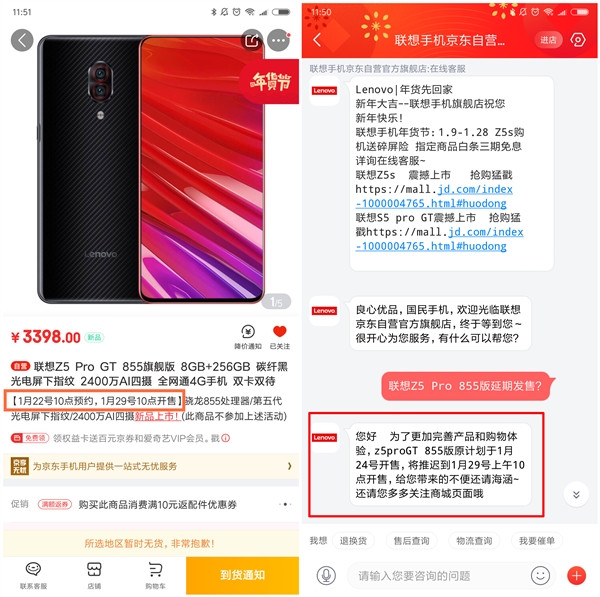
Lenovo Z5 Pro GT release date delayed

ITHome has shared a screenshot of a customer support conversation of Jingdong Mall which reveals that the release date of the Lenovo Z5 Pro GT has been postponed to Jan. 29 in order to enhance the product and shopping experience.

At the launch of the Z5 Pro GT, the company had confirmed that its pre-orders would begin on Jan. 15. There is no confirmation from JD.com on whether there is any change in the pre-order date of the Z5 Pro GT. Lenovo is yet to release an official statement on the delayed release date of the smartphone.

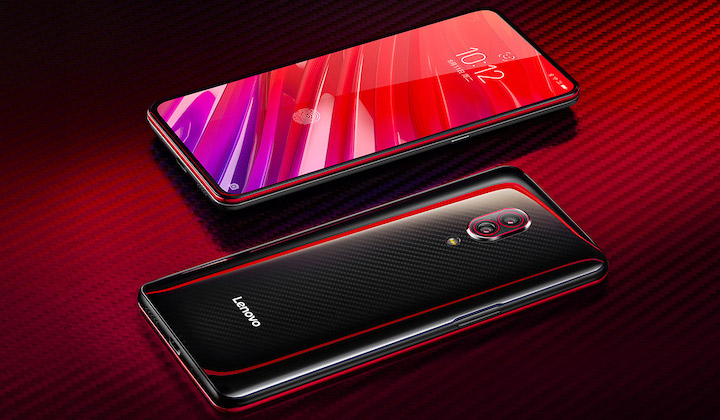
Lenovo-Z5-Pro-GT-featured

The Lenovo Z5 Pro GT is fitted with a 6.39-inch AMOLED display which offers a marvelous screen space of 95.06 percent. It is the first Lenovo phone to feature an in-display fingerprint scanner. The slider phone features a 16-megapixel + 8-megapixel mechanical dual selfie camera setup that springs up by sliding the screen. The rear shell of the phone has 24-megapixel + 16-megapixel dual camera setup. There is a 3,350mAh battery inside the smartphone. It comes preinstalled with ZUI 10 based Android 9 Pie OS.

The Lenovo Z5 Pro GT will be available in four models in China such as 6 GB RAM + 128 GB storage, 8 GB RAM + 128 GB storage, 8 GB RAM + 256 GB storage and 12 GB RAM + 512 GB storage. These models are respectively priced at 2,698 Yuan (~$399), 2,998 Yuan (~$443), 3,398 Yuan (~$503) and 4,398 Yuan (~$651). The handset will be available only in Black color. There is no confirmation from the Chinese manufacturer on the international availability of the Z5 Pro GT.