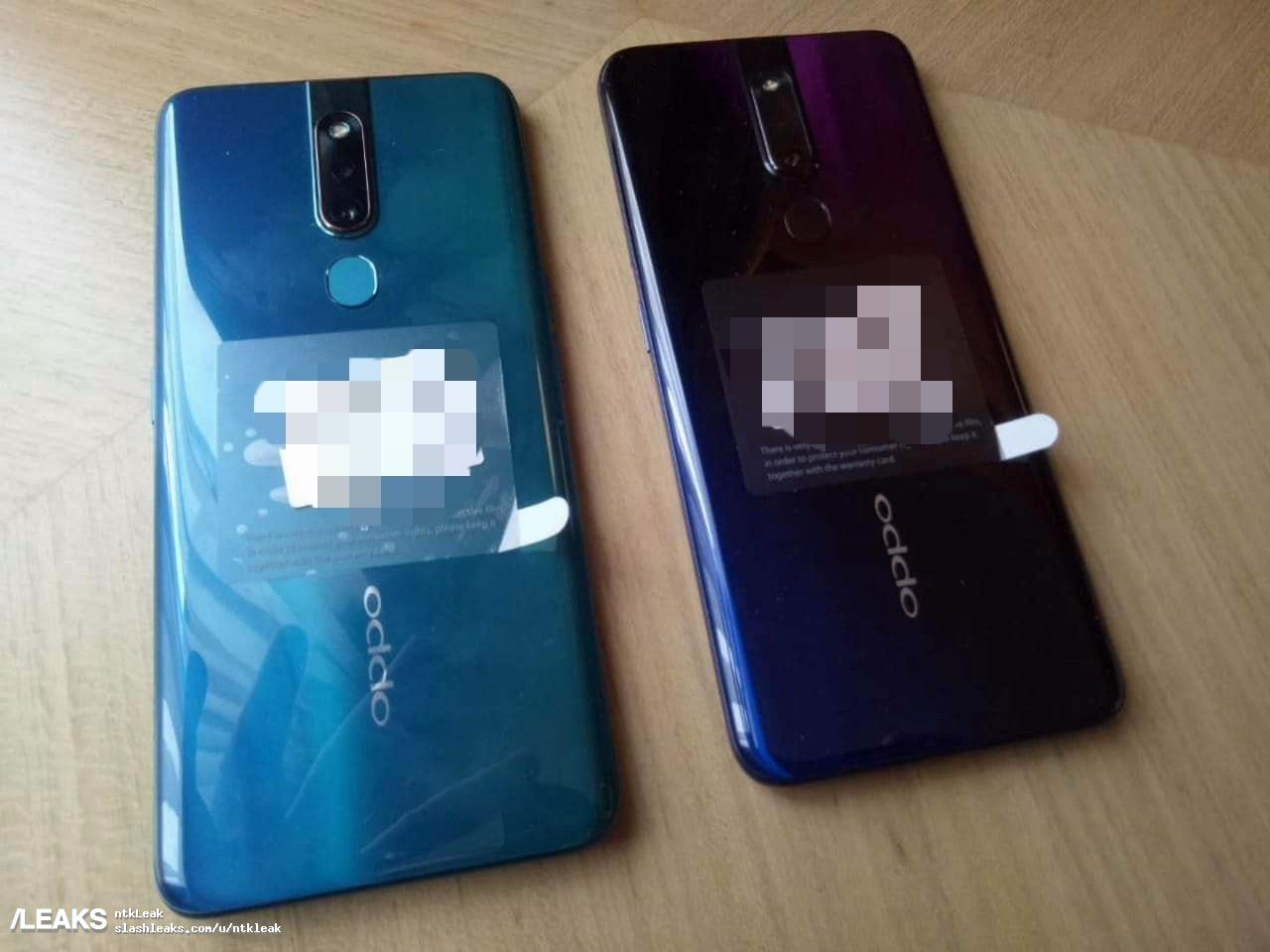
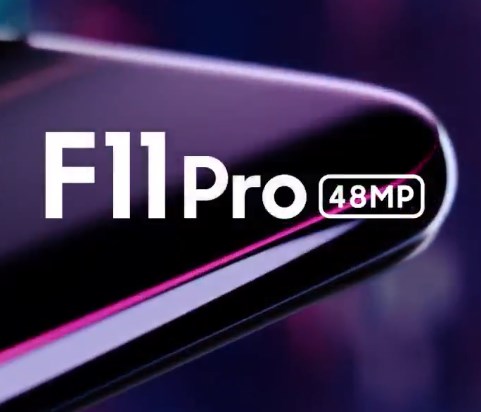
In the previous month, leaked shots of the OPPO F11 Pro had surfaced on Weibo. It was only yesterday that OPPO officially confirmed the existence of the OPPO F11 Pro by releasing a teaser on Twitter. The teaser confirmed that the smartphone would be equipped with a 48-megapixel rear camera. It is speculated that the Chinese manufacturer will be debuting the OPPO F11 Pro in early March. Freshly leaked photos showing the unique rear design of the smartphone have surfaced on Weibo.
The leaked image shows the OPPO F11 Pro in two gradient color variants. The first is blue and second seems to a dark blue and purple. There is a unique vertical camera strip that extends to the top edge of the back panel. Below the camera strip is a fingerprint reader.
As mentioned above, the company has already confirmed that the dual camera module includes a 48-megapixel primary sensor. With the AI Ultra-clear Engine backing onboard, the dual camera setup of the F11 Pro has been optimized to capture clearer images in low-light conditions. The AI Engine also takes care of other things like image stabilization and skin brightening.
The frontside of the OPPO F11 Pro were revealed in leaked photos that had appeared in the last month and also through a leaked poster that had surfaced this month. The smartphone is equipped with a notch-less display that is fitted with a 32-megapixel selfie camera. Interestingly, the Vivo V15 Pro getting unleashed in India on Feb. 20 also features a notch-less display with 32-megapixel pop-up selfie camera. It comes with triple rear cameras and fast charging.
There is no concrete evidence available on the other specifications of the OPPO F11 Pro. However, it is speculated to be fueled by a MediaTek chipset. The SoC could be coupled with 6 GB of RAM and it may feature an internal storage of 128 GB. The company had introduced the OPPO F9 Pro as the first F-series phone with VOOC fast charging support. Hence, it is very likely that the upcoming F11 Pro will also carry support for it.
Electric scooters are an ideal for short commute. These plug-in electric vehicles are lightweight, efficient and stylish.
If you have restlessly been waiting to buy an electric scooter without breaking the bank, now’s the time.
GearBest is doling out noteworthy discounts on the Ninebot Segway ES1 No. 9 and Xiaomi M365 folding electric scooters.
Ninebot Segway ES1 No. 9 Folding Electric Scooter
The Segway ES1 No. 9 is a great choice for various activities like commuting, shopping, entertainment, and leisure.
It is equipped with a powerful 500W motor and backed by a robust 5.2Ah Li-ion battery to ensure your trip is nothing short of perfect.
The foldable electric scooter from Xiaomi Mijia features a dual-brake system, which comprises a digital brake and a mechanical brake. It has a short braking distance of 4m.
The Ninebot Segway ES1 No. 9 would normally set you back $502.67, but you can now buy it for just $325.99 on GearBet.
On top of that, you can use coupon code GBES1QC to reduce the e-bike’s retail price to just $309.99.
You can visit this link to grab the discount. With only 400 pieces remaining, this promo is slated to end in just thirteen days.
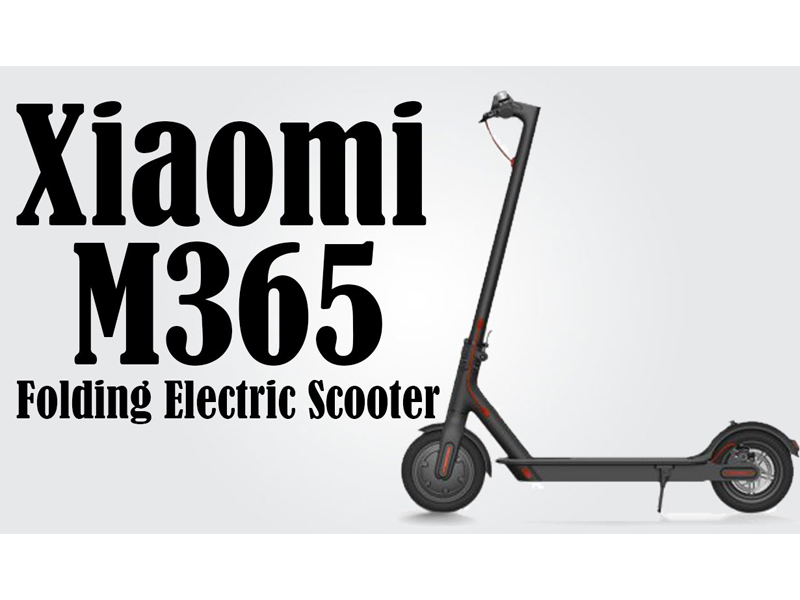
The recently launched M365 is an irresistible electric scooter. It sports a unique folding design and is housed in a sturdy aircraft-grade aluminum alloy frame.
Aside from that, it features an advanced E-ABS braking system, cruise control system, kinetic energy recovery system, and an intelligent BMS system for an immersive riding experience.
Unlike the regular version that comes with a charger as an accessory in the package, this Europe version boasts an impressive array of accessories including an English user manual, screws, T-shaped wrench, extending nozzle, pair of spare tires, EU plug and a power adapter. The Europe version of the Xiaomi M365 folding electric scooter usually carries $579.17 price tag, but you can now buy it for just $425.99 on GearBest. This 26 percent discount will be valid for the white color version of the electric bike.
There’s a 21 percent off on the white-tinted Xiaomi M365 electric scooter, which usually retails for $538.94, but can now be yours if you are willing to shell out just $425.99.
With only 193 pieces of the black and 213 pieces of the white color version left, this promo is slated to end in fourteen days. You can follow this link to grab the discount.
It is no secret that a handheld gimbal helps you capture that flawless self-portrait all the time. Aside from that, shooting with a gimbal gives you the freedom to move around since they are lightweight and compact.
While gimbals have become one of the hottest accessories in filmmaking and photography, they aren’t easy on the pocketbook. In fact, a top-branded gimbal would normally set you back a pretty penny.
If you have restlessly been looking for a cost-effective handheld gimbal that doesn’t compromise on quality, we got your back.
Here are top-notch gimbals that you can buy without emptying your pocket.
Xiaomi Mijia Action Camera Handheld Gimbal
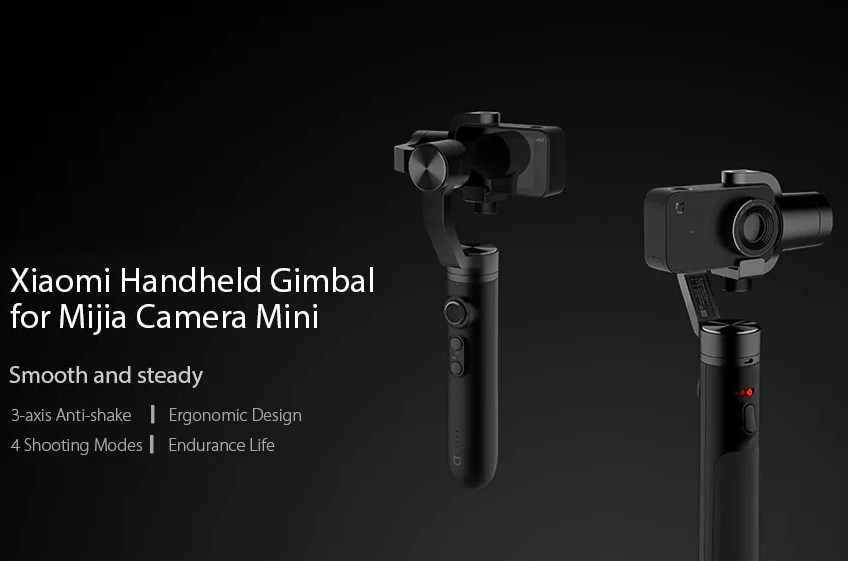
Designed for Mijia Camera Mini, this Xiaomi-branded gimbal sports an ergonomic design. It adopts the 3-axis stabilization technology for more stable recording.
The Xiaomi Handheld Gimbal is made using sturdy aluminum alloy material with CNC technology in a bid to improve the rigidity as well as the stability of the PTZ. As a result, it can take stable images even in motion.
While the aforesaid features justify the steep $145.22 price tag the Xiaomi Mijia Action Camera Handheld Gimbal usually carries, you can now buy it for a dropped price of just $128.99 on GearBest.
On top of that, you can buy the Mijia Camera Mini for just $116.30 along with the handheld gimbal and save $21.95. Note that the action camera usually retails for $138.25.
You can visit this link to grab this 11 percent discount, which will be valid for the black color version of the handheld gimbal.
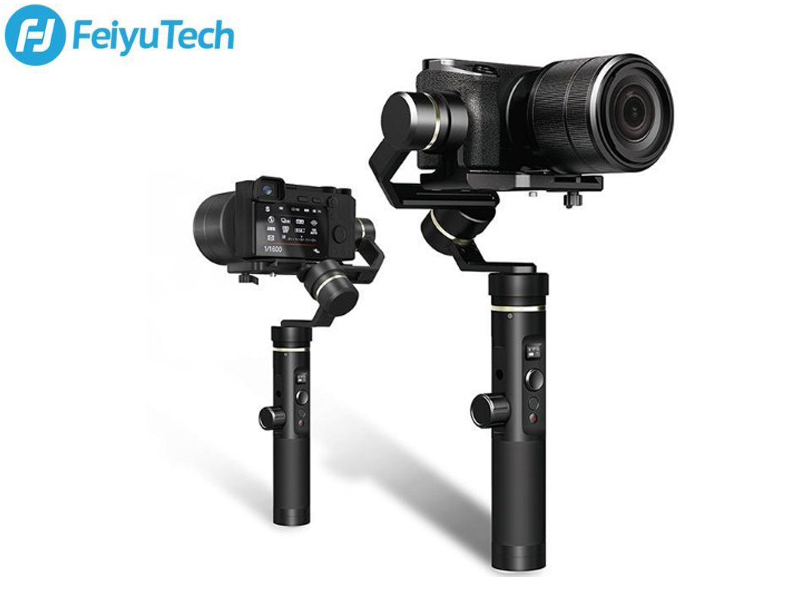
One of the perks of using a handheld gimbal is the portability. The G6 Plus is a highly portable gimbal that will not lose its focus even while shooting in motion.
Despite being housed in a small frame, the G6 Plus can support all types of mobile phones and cameras within 800 grams. In other words, it is compatible with GoPro, pocket video cameras and micro-single lens reflex cameras. On the downside, the Feiyu Tech G6P G6 Plus doesn’t come cheap. This feature-laden handheld gimbal usually carries a steep $399 price tag on both online as well as offline stores.
In a bid to make its well-received handheld gimbal available to cost-conscious buyers, Feiyu Tech is now offering the G6 Plus for a lowered price of just $249 on Banngood.
This is a 38 percent reduction in the device’s original asking price. You can take advantage of the discount until February 19 by visiting this link.
The Osmo Pocket enables you to instantly share capturable moments with your loved ones regardless of your location.
Touted as DJI’s smallest 3-axis stabilized handheld camera, the Osmo Pocket can convert a moment into a photographic memory.
The Osmo Pocket camera features a 3-axis stabilized gimbal. It uses a new algorithm in order to produce a maximum control speed of 120°/s and control accuracy of ±0.005°.
The Osmo Pocket would normally set you back $469, but you can now buy it for a lowered price of just $419 on GeekBuying. This is an 11 percent drop in the device’s original selling price.
You can visit this link to avail the discount. Note that the promo is slated to end in just four days.
Ideal for professional footage shooting, the YI Handheld Gimbal comes with a 3-axis gimbal head and features three operating modes including Pan Mode, Lock Mode, and Pan and Tilt Mode.
You can capture smooth footages of even fast moving objects with the YI Handheld Gimbal. It is a great choice for capturing people playing sports, cars, animals etc.
Thanks to its ergonomic design, the YI Handheld Gimbal can comfortably fit in your palm. Moreover, you can effortlessly switch to different modes, holding the gimbal in just one hand. While the YI Handheld Gimbal usually sells for $299.98, you can now get your hands on it for a lowered price of just $179.99 on AliExpress.
Aside from grabbing this 40 percent discount, new users can apply the $3 off coupon at checkout and save more money.
You can follow this link to take advantage of the discount before the promo ends in three days.
Oppo took the wraps off its hotly-anticipated K1 smartphone in October last year. Much to the delight of the Chinese smartphone maker, the Oppo K1 continues to garner popularity among smartphone lovers even months after hitting the store shelves.
Taking the phone’s skyrocketing demand into consideration, Oppo is now offering the K1 at considerably lowered price on Flipkart. So without further ado, let’s delve into the details.
The Oppo K1 comes in astral blue and piano black color versions, both carrying an 18,990 INR (about $267) price tag.
As part of its latest offer, the Indian electronic commerce company is offering the two eye-catching color versions for just 16,990 INR, which roughly converts to about $240. An absolute steal at this price, the Oppo K1 takes the smartphone experience to the next level. It sports an extra large 6.4 inches Super AMOLED capacitive touchscreen with 1080 x 2340 pixels resolution and Corning Gorilla Glass 5 on top.
The device packs a powerful Qualcomm Snapdragon 660 Octa Core 1.95 GHz processor along with an Adreno 512 GPU, under the hood.
Moreover, the K1 ships with 4GB of RAM and offers 64GB of expandable (up to 256GB) internal storage capacity for you to save your favorite content.
On the photography front, the Oppo K1 houses a 16.0MP+2.0MP dual-camera setup on the back. Up front, there’s a 25.0MP AI Beauty camera for selfies and video chatting.
Furthermore, the dual-SIM smartphone runs ColorOS 5.2 based on Android 8.1 Oreo OS. It draws its juices from a robust 3600mAh battery.
Aside from an optical in-screen fingerprint sensor, the Oppo K1 features a slew of other useful sensors like the accelerometer, gyro, proximity, and compass.
You can follow this link in order to check out the full specification and grab the discount before this unmissable offer comes to an end.
A Samsung device with model number SM-P205 was spotted on Geekbench earlier today. The device is believed to be the Galaxy Tab A (2019), a successor to the Galaxy Tab A 10.1 (2016).
The Geekbench result reveals the device runs Android 9. It is powered by the Exynos 7885 which is more powerful than the Exynos 7870 that powers the 2016 model.
The 7885 is also a 14nm chipset like the 7870 but it has 2 x Cortex A73 cores clocked at 2.2GHz and 6 x Cortex A53 cores clocked at 1.6GHz. The Exynos 7870, on the other hand, has 4 x Cortex-A53 cores clocked at 1.6GHz and 4 x Cortex A53 cores clocked at 1.0GHz. The 7885 also has a Mali-G71 MP2 as against the 7870’s Mali-T830 MP1.
There is 3GB of RAM and hopefully paired with 32GB of storage for the base model. The 2016 model, which I own, has 16GB of storage with 3GB of RAM. We hope there is a 64GB model too.
This model above is expected to come with a stylus as its model number starts with a P. Samsung tablets which have an S Pen usually have a “P” starting their model numbers.
The firmware for the phone is said to have been sported online about a month ago. Now that it has been seen on Geekbench, it is expected to launch soon.
OPPO has just shared a teaser poster for the much-anticipated R11 Pro on Twitter. The teaser is all about the camera prowess of the device and it confirms the presence of a 48MP sensor. The teaser didn’t specify if the massive sensor will be on the front or rear but an earlier leak tips the device to pack a 32MP pop-up selfie camera. Thus, the 48MP will be the main sensor at the rear.
The teaser promotes the device with the hashtag #BrilliantPortrait. apparently in reference to the powerful selfie camera it packs. The tweet also promotes the low-light camera function of the model which indicates the device will have the AI super night mode feature.
Although there is no date set for the R11 Pro’s launch, the device is expected to launch sometime in March. It recently got certifications in Indonesia and Thailand with a model number of CPH1969. The F11 Pro is expected to feature a high-end MediaTek SoC with 6GB of RAM and 128GB of storage. As for pricing, the OPPO F11 Pro is rumoured to be priced under Rs. 25,000 (~$350) in India when it is launched.
Huawei just launched a new entry-level phone in the Philippines: the new Huawei Y6 Pro (2019). To be honest, it is not really new, it already debuted in Sri Lanka about two weeks ago with a leather back. But the variant that just hitten the Philippines has no leather back and comes with a very affordable price. That is why we decided to compare with other recent entry-levels that catalyzed a lot of attention in the last period: the new and long-awaited Moto G7 Play by Motorola and the Realme C1 (2019) from the first Oppo’s sub-brand. Who will win? Go ahead with this specs comparison to discover it.
Huawei Y6 Pro (2019) vs Motorola Moto G7 Play vs Oppo Realme C1 (2019)
Huawei Y6 Pro (2019)
Motorola Moto G7 Play
Oppo Realme C1 2019
DIMENSIONS AND WEIGHT
156.28 x 73.5 x 8 mm
147.3 x 71.5 x 8 mm, 149 grams
156.2 x 75.6 x 8.2 mm, 168 grams
DISPLAY
6.09 inches, 720 x 1520p (HD+), 290 ppi, IPS LCD
5.7 inches, 720 x 1512p (HD+), 294 ppi, IPS LCD
6.2 inches, 720 x 1520p (HD+), 271 ppi, IPS LCD
PROCESSOR
MediaTek Helio A22, quad-core 2 GHz
Qualcomm Snapdragon 632, octa-core 1.8 GHz
Qualcomm Snapdragon 450, octa-core 1.8 GHz
MEMORY
3 GB RAM, 32 GB – micro SD slot
2 GB RAM, 32 GB – micro SD dedicated slot
2 GB RAM, 16 GB – micro SD dedicated slot
SOFTWARE
Android 9 Pie, EMUI
Android 9 Pie
Android 8.1 Oreo, Color OS
CONNECTIVITY
Wi-Fi 802.11 b/g/n, Bluetooth 4.2, GPS
Wi-Fi 802.11 b/g/n, Bluetooth 4.2, GPS
Wi-Fi 802.11 b/g/n, Bluetooth 4.2, GPS
CAMERA
13 MP f/1.8
8 MP f/2.0 front camera
13 MP f/2.2
8 MP f/2.2 front camera
Dual 13 + 2 MP f/2.2 and f/2.4
5 MP f/2.2 front camera
BATTERY
3020 mAh
3000 mAh, fast charging 10W
4230 mAh
ADDITIONAL FEATURES
Hybrid Dual SIM slot
Dual SIM slot
Dual SIM slot
Design
Nowadays, even entry-level handsets such as these ones come with a pretty elegant and attractive design. Among these handsets, the one that comes with a better look, in my opinion, is the Huawei Y6 Pro (2019). I like it because of its very small dewdrop notch on the upper side of the display, unlike its rivals that come with big and silly notches. While Huawei Y6 Pro (2019) dominates the entry-level scene with its cool design, Moto G7 Play shines for its build quality. Indeed, it is splash resistant and it also comes with a display protected by Corning’s Gorilla Glass 3 (only in selected markets, so make sure to check the specs sheet when the phone will hit your zone). Also note that the Moto G7 Play is the only to rock a fingerprint reader, it is placed under the rear camera. Oppo Realme C1 2019 is not a big deal when it comes to aesthetics.
Display
The display is the weak point of low-end handsets. These devices offer just an HD+ resolution, so they are not the best in terms of definition. But they have sufficient displays with decent detail and the IPS technology. I would choose my favorite one basing on the size of the display and the notch. If you want a compact device that is easy to use with one hand, go for the Moto G7 Play, if you want the biggest and most comfortable screen, then choose Realme C1 2019 and if you want the smallest notch, go for the Huawei Y6 Pro 2019.
Specs & Software
Here we have the most important differences. Moto G7 Play comes with the midrange-class Snapdragon 632 chipset that is an upgrade of Snapdragon 625 and 626 (not better than Snapdragon 630, though), while Huawei Y6 Pro 2019 and Realme C1 2019 have entry-level chipsets. Despite Moto G7 Play comes with less RAM (just 2 GB against 3 GB on the most expensive variants of Huawei Y6 Pro 2019 and Realme C1 2019), I would choose the Moto G7 Play for its faster SoC.
Camera
The camera department that wins this comparison is the one present on the Moto G7 Play, at least on the paper. It has a decent focal aperture for an entry-level handset, and it is the only that can record videos with 4K resolution. Further, it comes with a pretty nice front camera equipped with a front-facing LED flash. The second place goes to the Huawei Y6 Pro 2019 for its brighter aperture, even though Realme C1 is the only rear dual camera phone boasting an additional depth sensor. We chose the Huawei Y6 Pro 2019 as the second camera phone of this comparison because of its good detail with several light conditions and its better front camera.
Battery
Realme C1 (2019) is equipped with a mammoth battery: 4230 mAh is an infinite capacity for an entry-level handset. Indeed, it is one of the battery champions of 2019. Its opponent can nowhere compete with the Realme C1 2019, just like most of the other entry-level devices.
Price
Huawei Y6 Pro (2019), Moto G7 Play and Realme C1 2019 cost about €120/$135, €150/$170 and €100/$110, respectively. Moto G7 Play wins this comparison because of its excellent build quality, good cameras, fingerprint reader and very nice chipset. But Realme C1 2019 with its huge battery offers the ghivalue for money.
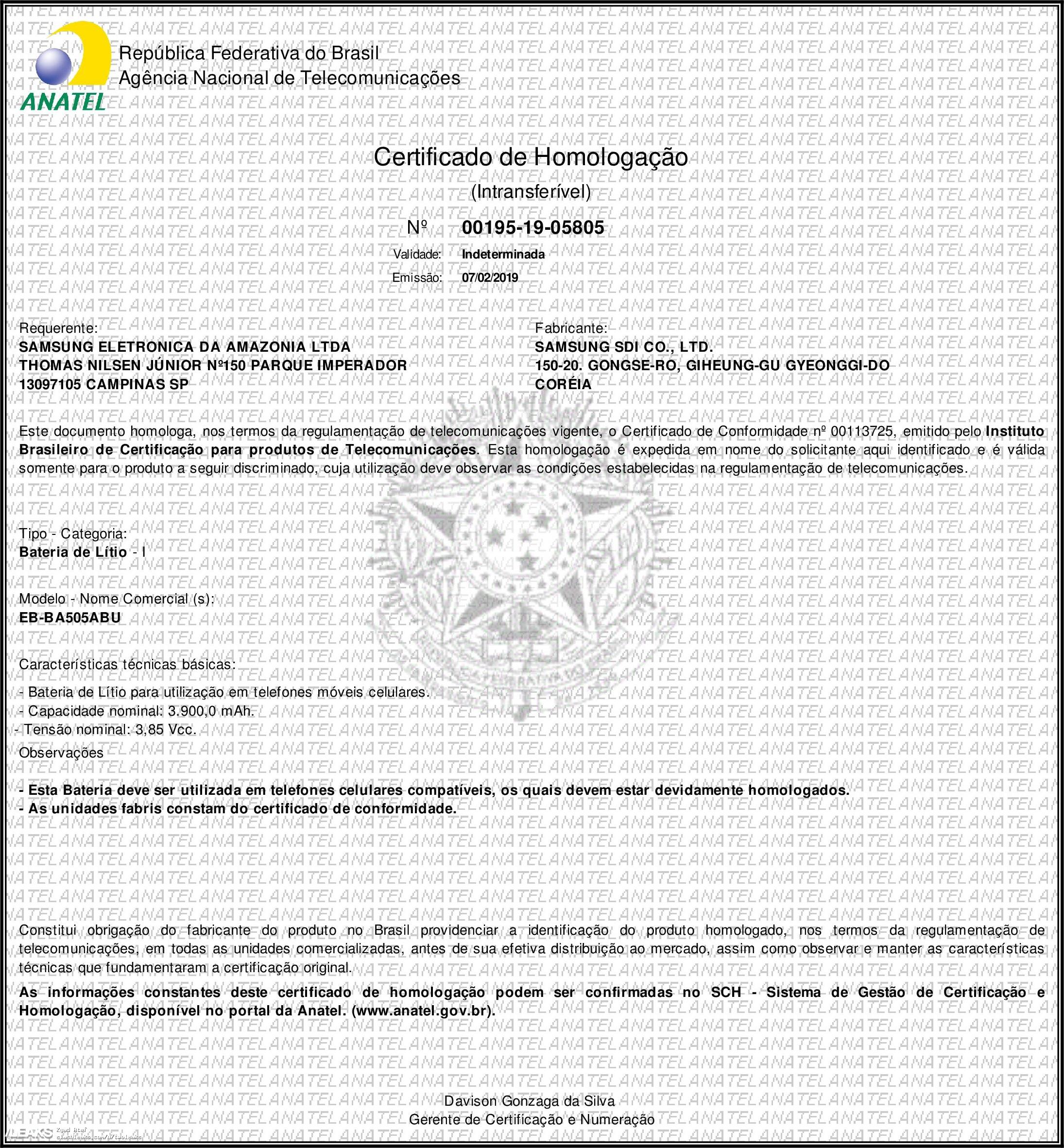
The Galaxy A50 is one of the A-series smartphones Samsung is scheduled to release this year. A couple of its specs have leaked in the past few weeks and now a Brazilian certification has confirmed its battery capacity.
The phone’s battery has been certified by Brazil’s telecommunications agency which is known as ANATEL. The battery has model number EB-BA505ABU and a nominal battery capacity of 3,900mAh (~4,000mAh). The Galaxy A50 appeared on Geekbench as the SM-A505FN, so we are pretty sure this is its battery.
Although the Galaxy A50’s battery is smaller than that of the Galaxy M20 (5000mAh), it is bigger than that of the Galaxy M10 (3,400mAh). It has the same 6.2-inch display and it should be able to last a bit more than a day paired with the Exynos 9610 processor.
Geekbench already revealed that the Galaxy A50 will have 4GB of RAM and it is expected to be paired with 64GB of storage. Samsung may also announce a 6GB RAM variant with 128GB of storage.
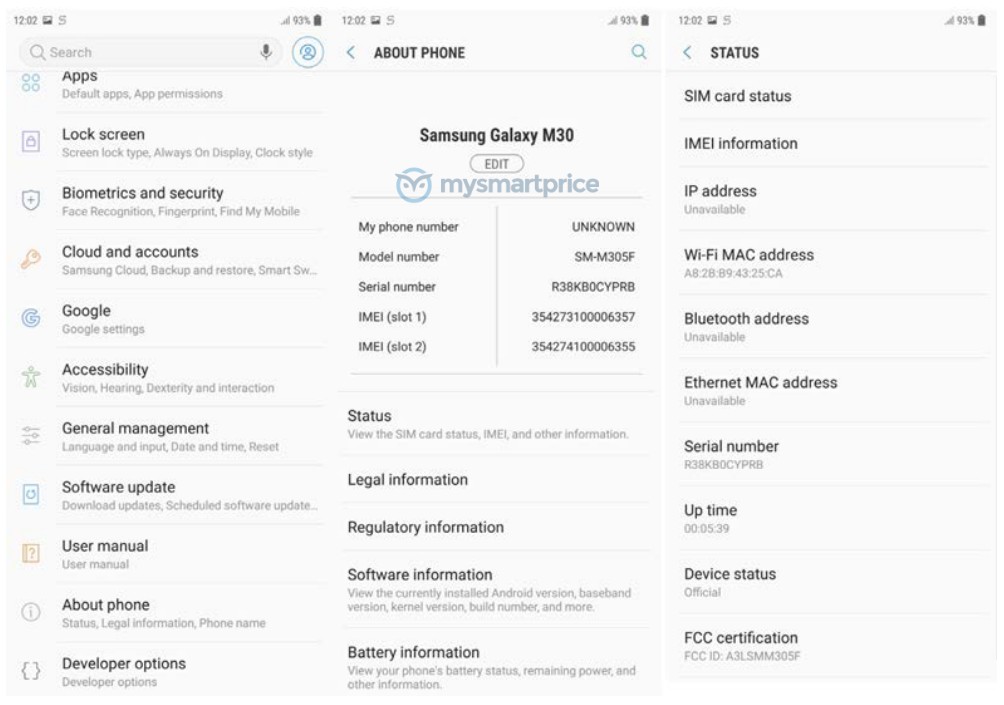
Samsung recently launched its all-new Galaxy M-series smartphones in the Indian market — Samsung Galaxy M10 and Galaxy M20. The company is now gearing up to launch the third smartphone in this new lineup — Samsung Galaxy M30, but the exact the launch date is not yet known.
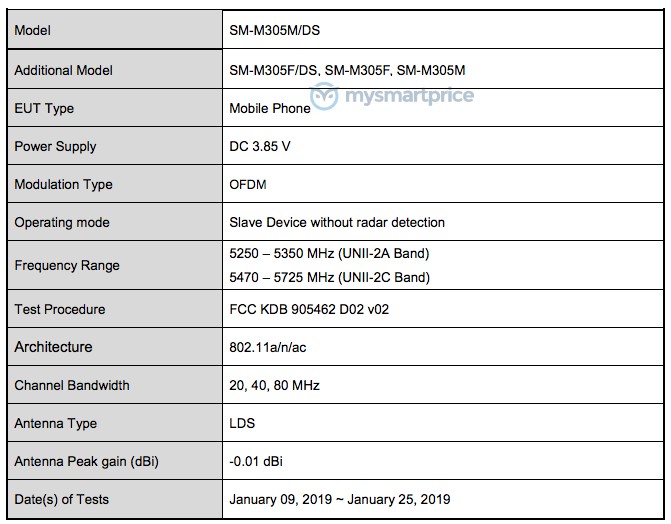
Now, the upcoming Samsung Galaxy M30 has passed through the FCC certification process, which reveals some new information. It suggests that the phone could come with a Super AMOLED display, which is missing in the Galaxy M10 and Galaxy M20.
Earlier, the phone’s renders were leaked online, revealing its design. It also revealed that the phone will come with triple camera sensors on the back along with an LED flash, positioned vertically in the top-left corner. There’s also a rear-mounted fingerprint sensor for added security.
The Samsung Galaxy M30 is expected to come with a 6.4-inch Super AMOLED Infinity-V display with support for Full HD+ screen resolution (2220 x 1080 pixels). The phone, which will feature minimal bezels, will house its front-facing camera in the V-shaped bezel on top of the display.
Coming to the camera sensors, the phone could come with a 16-megapixel front-facing snapper along with support for face unlock feature. On the back side, the device will feature a 13-megapixel primary sensor and two 5-megapixel sensors along with an LED flash.
Under the hood, the device will be powered by the company’s own Exynos 7904 chipset, along with 6GB of RAM and 128GB of internal storage. We are also expecting another variant with 4GB of RAM and 64GB of internal storage.
Connectivity options on the device will include dual-band Wi-Fi a/b/g/n/ac, Wi-Fi Direct, Bluetooth, a USB Type-C port, and a 3.5mm headphone jack. As for the software, it’ll come pre-installed with Android 9 Pie-based One UI. The phone will be powered by a 5,000mAh battery which could easily last through a day on a single charge.
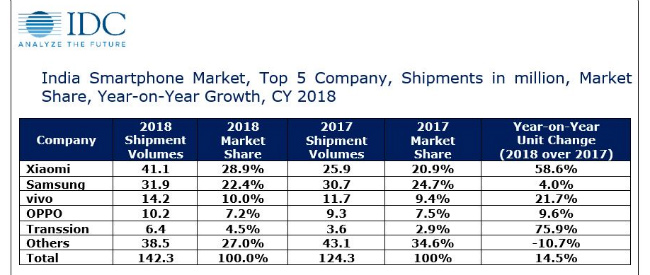
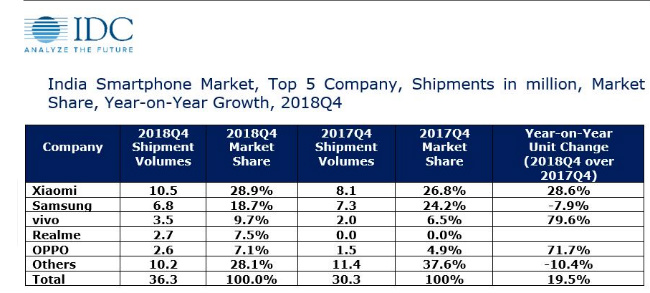
Xiaomi‘s tremendous progress in the Indian smartphone market is again in the spotlight, thanks to the International Data Corporation’s (IDC) Asia/Pacific Quarterly Mobile Phone Tracker that has just been released. The market data reveal a 14.5% YoY growth in 2018 as the industry shipped 142.3 million units and Xiaomi had the lion share.
The data shows that the company known as the “Apple” of China had a pretty successful year in 2018 with a total shipment of 41.1 million units shipped. This happens to be the largest shipment by any of the top brands in India. The shipment gives Xiaomi a market share of 28.9%. On the other hand, global market leader Samsung shipped a total of 31.9 million phones giving it a market share of 22.4%. BBK subsidiaries Vivo and Oppo also won big in India with a market share of 10% and 7.2% as well as shipments of 14.2 million and 10.2 million smartphones respectively. Little known Chinese company Transsion, owners of brands like Infinix, Tecno completes the top 5 for 2018.
Xiaomi is expected to consolidate on this lead in India with its Pocophone and Redmi brands alongside the Mi brand. IDC’s report shows the Redmi series contributed tremendously to the growth of the brand. Xiaomi’s Redmi 5A and Redmi Note 5/Pro series emerged as the fastest selling devices of 2018 across brands, driving 10 million shipments each in the entire year. Another contributory factor was the opening of more offline stores in rural areas while consolidating on its online sales. Xiaomi is still the king of online sales with a share of 47.2% while the IDC report shows the Chinese company became the second largest OEM in terms of offline sales.
Following poor sales of the new iPhones, sellers are beginning to cut prices. The slash which started in China has made its way to Hong Kong.
A report from the Hong Kong News Agency says telecom operators have begun to slash prices by several hundreds of Hong Kong Dollars (HKD). The 512GB iPhone XS is said to have received a price cut of HKD 2050 (~$260).
Following poor sales in the region, Apple decided to lower prices in certain countries. In China, the price of the new iPhones is reported to have been lowered to the level before the Renminbi depreciated. For other countries, Apple is allowing the price to be based on the local currency and not based on US Dollars.
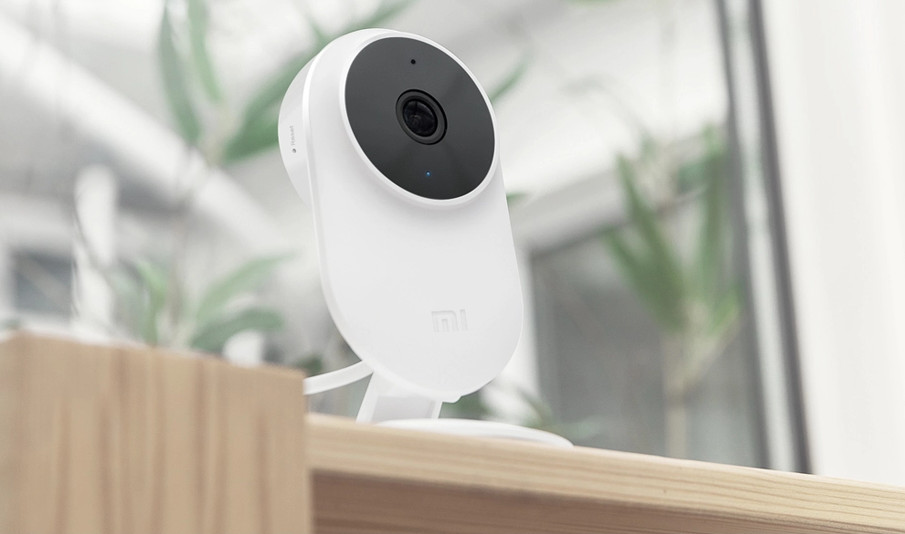
After teasing it for some time, Xiaomi has today officially launched its Mi Home Security Camera Basic 1080p in India. It is priced at Rs. 1,999 which roughly converts to $28 and will go on sale in India from 14th February, i.e. tomorrow through Mi.com — Xiaomi‘s official online store.
As the name itself suggests, it comes with a 1080p full HD video recording, at up to 20fps, has 130-degree ultra-wide angle lens that covers more of the room and effectively reduces blind spots. It also has an advanced AI motion detection, comes with Infrared night vision with 10m infrared range, zoning classification, and two-way voice communication.
It comes with support for both Wi-Fi bands, which claims to provide a secure and reliable connection, even on more congested networks. It also comes equipped with a built-in Bluetooth chip for added connectivity option.
The device has an omnidirectional noise-canceling microphone and high-fidelity speakers so that users can communicate clearly and smoothly. If family members do not want to be recorded by the camera, they can calibrate the camera to automatically hibernate when it detects their Mi Bands or iPhones nearby to protect privacy.
The BSI sensor and WDR dynamic wide range provide a quality image of the home and the AI motion detection accurately detects changes in any space to reduce false alarms. There’s also a picture-in-picture mode that lets the user check on sleeping baby at the same time from the phone.
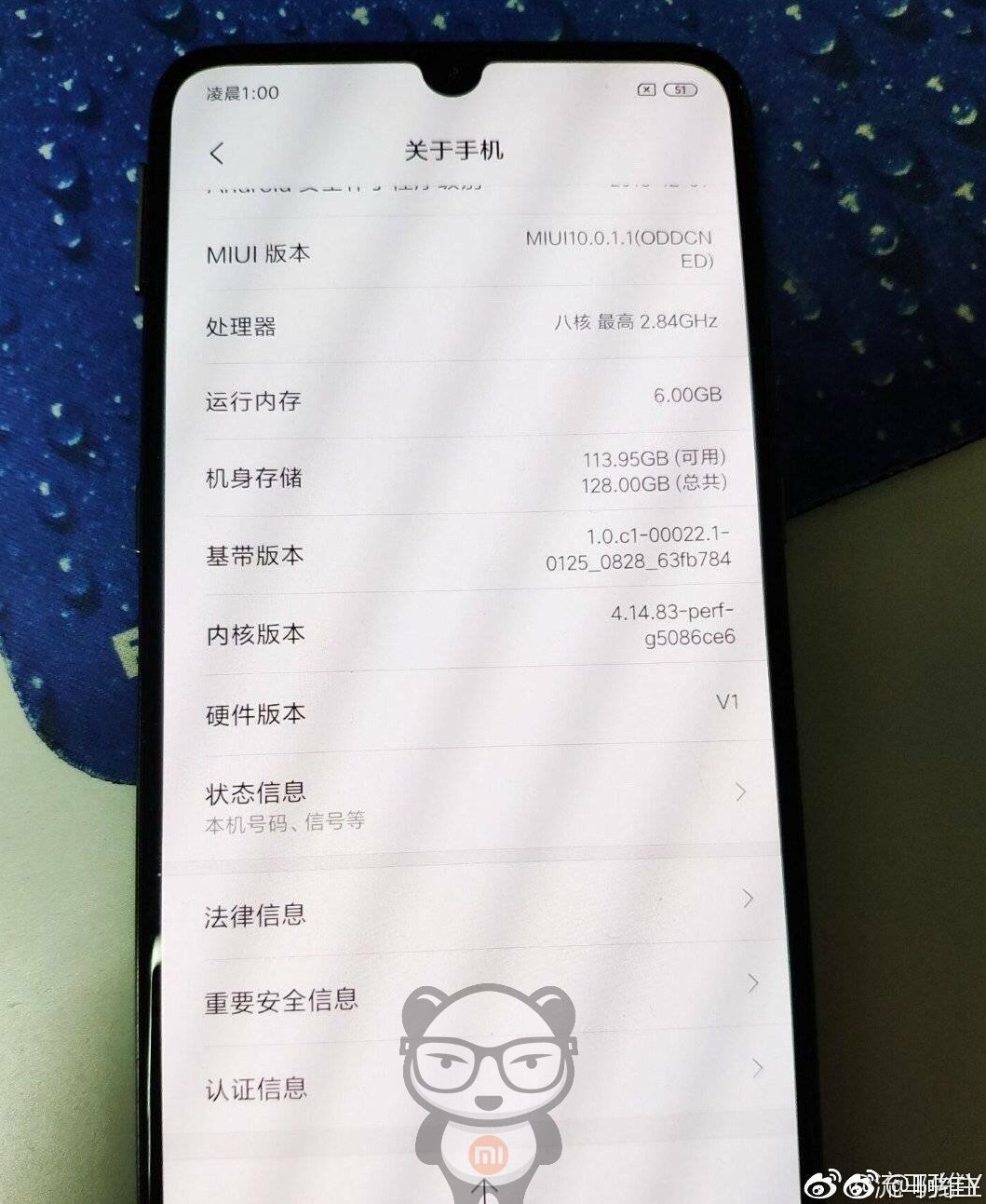
The Xiaomi Mi 9 flagship arrives in exactly a week and we are pretty much excited over here. Ahead of the launch, new live images have surfaced and these ones show us both sides of the phone along with some key specs.
The Mi 8 series launched with varying notch sizes but for the Mi 9, Xiaomi is going with the waterdrop notch. The bottom bezel appears to be a bit thinner than that of the Mi 8 while the side bezels have largely remained unchanged. According to the source, the Mi 9 has a 6.4-inch AMOLED display and is covered with Gorilla Glass 5.
[envira-gallery id=”236207″]
On the back, the Xiaomi Mi 9 sports vertically arranged triple cameras just as we saw in the first leaked live photos. The sensors are positioned on the left of the phone and share a single housing. Below the cameras is an LED flash. The main camera is a 48MP sensor and it is paired with a 12MP secondary sensor and a ToF camera.
These images show the blue and black variants of the Mi 9. The former appears to be more reflective. There is no fingerprint scanner which means there is one under the display. Unfortunately, the images that show the front of the phone has the display turned off, blurred out, or don’t even show the fingerprint icon on the lockscreen.
[envira-gallery id=”236212″]
The Xiaomi Mi 9 has a volume rocker and power button on the right side. However, a new addition is the button on the left. We believe this is a dedicated button to call up the AI assistant. This new button brings up a number of questions.
Will the Mi 9 ship with Xiaomi’s XiaoAI assistant with support for other languages on the international version or the Google Assistant? It will also be great to know if the button will be customizable or can be deactivated.
Since the past year, the Cupertino giant is struggling with a decline in iPhone sales. There are many reasons behind such a drop in the overall sales of the iPhones. Many analysts and even the CEO of Apple, Tim Cook has confirmed about the fall in iPhone sales due to some reasons. The issues such as lack of innovation, trade wars, pricing, and strong competition are major speed breakers in Apple’s path to growth. Today, an analyst from Sanford C. Bernstein has agreed with Apple’s CEO Tim Cook on another reason which is impacting the iPhone sales.
As per the Bernstein’s Toni Sacconaghi, the upgrades for longer and regular periods on iPhones has resulted in sluggish sales this year. Apple has stretched the official upgrade period of an Apple iPhone from 3 to 4 years in the fiscal year 2019. Further, Apple’s discounted battery replacement campaign even deepened the crisis. The old iPhones with a new battery has made them long-lasting. Even though, fewer subsidies and offers on the carriers have also led the decline in iPhone sales. He said, “In our view, the single most important controversy surrounding Apple today is the iPhone replacement cycle – despite the iPhone installed base growing +9% last year, we now expect units to be down -19% in fiscal 2019, implying a material pushout in upgrade rates.”
In January, Tim Cook cited that the longer upgrade cycles are making 15% iPhone sales to dip. In actual he said, “Our customers are holding on to their older iPhones a bit longer than in the past,” further adding “When you paired this with the macroeconomic factors particularly in emerging markets, it resulted in iPhone revenue that was down 15 percent from last year.”
As per Toni Sacconaghi prediction, Apple will continue to fall this year also. The Cupertino giant will witness 19% fall in the 2019 fiscal year against the expected growth of 16%. He estimated that currently, 900 million active iPhones are in the market. It would not be possible to give exact figures as “modeling iPhone’s installed base is as much art as science, with myriad assumptions.”
As per the analyst, many iPhone 6 series users will replace their phones this year.
Xiaomi finally revealed the much-touted Mi 9 flagship will be unveiled on February 20 and immediately after that announcement, the company unveiled a brand ambassador for the Mi 9. He is Roy Wang of the popular all-boys band TFBoy. Indeed, Xiaomi unveiled the Mi 9’s brand ambassador with a bang as the poster announcing him contains a picture of the dude holding the device in his hand.
The photo shows just the back side of the flagship but it reveals something spectacular. That is the triple rear camera sensor that the Mi 9 is rumoured to feature. Indeed, this confirms the device will pack three sensors at the rear, all stacked vertically. There is also an LED flash just under the camera sensors.
The phone is encased in a customized protective case with the brand ambassador’s first name, “ROY”. So, we can’t see the entire back but a fingerprint sensor is noticeably absent at the rear. The Xiaomi Mi 9 is also teased to be the best-looking Xiaomi phone so far. We won’t have to wait too long to see the entire design.
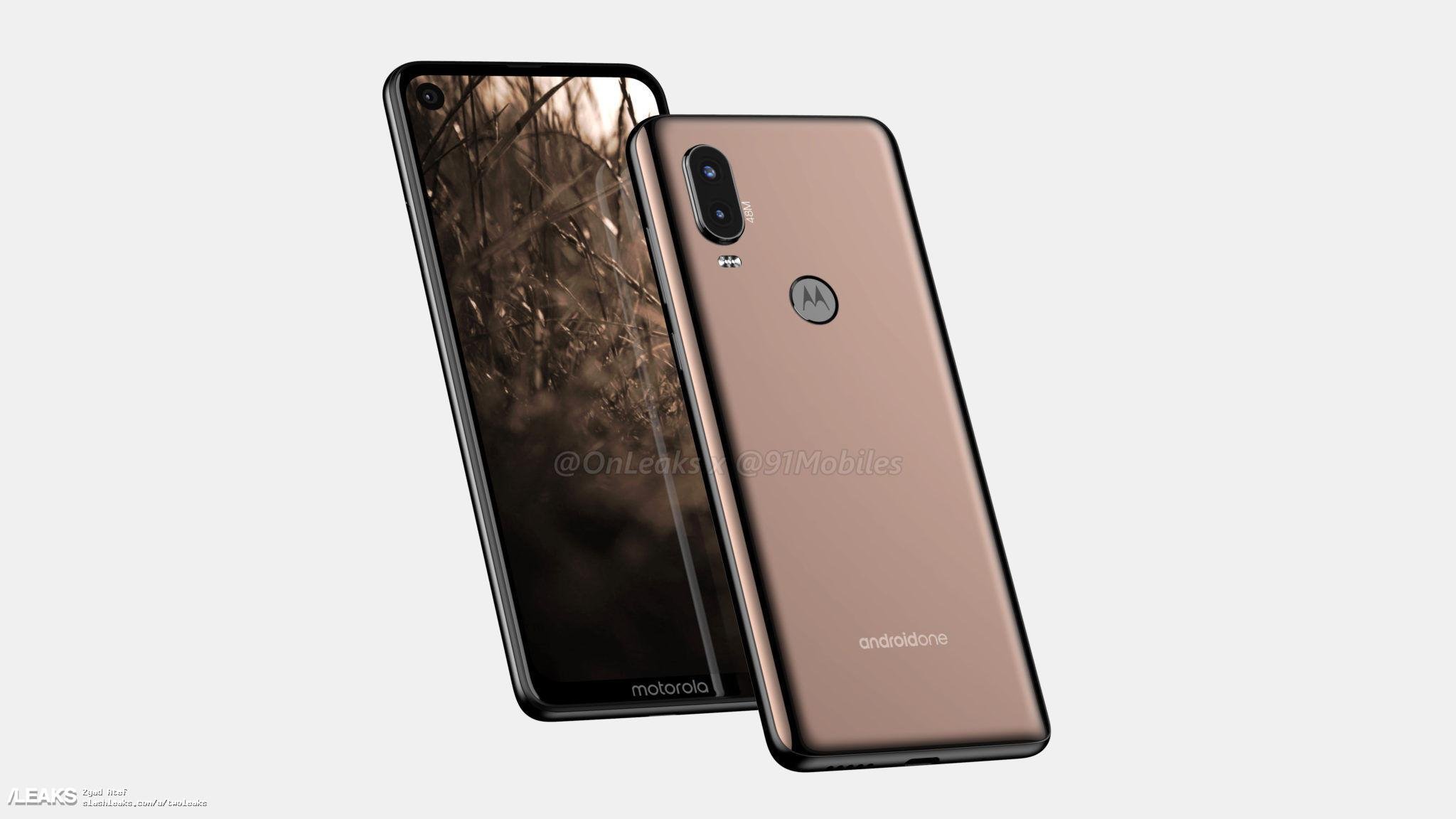
A recent leak had revealed that at least two of the forthcoming smartphones from Motorola may feature Samsung’s Exynos series of processors. Fresh information shared by 91mobiles reveals that the upcoming Motorola P40 will be driven by the Exynos 9610 chipset.
The Motorola P40 was previously rumored to be powered by the Snapdragon 675 chipset. However, new information reveals that the 10nm Exynos 9610 SoC by Samsung by powering the device. The smartphone is rumored to release in multiple variants such as 32 GB storage + 3 GB RAM, 64 GB storage + 4 GB RAM and 128 GB storage + 4 GB RAM.
The Motorola P40 will be the company’s first phone to arrive with a punch-hole display. Like the predecessor Motorola P30 phone, the upcoming P40 will be debuting as an Android One device. The handset is also expected to feature a 48-megapixel sensor in its rear-mounted dual camera setup. Previous leaks have suggested that its secondary sensor could be of 5-megapixel. Unlike the P30 handset, its successor is tipped to arrive with support for NFC connectivity. The smartphone is rumored to be packed with a 3,500mAh battery. It is expected to arrive in color variants such as Blue and Gold.
There is no information available on the launch date of the Motorola P40. Also, there are no leaks on the pricing of the smartphone. The Lenovo-owned company had released the Motorola P30 exclusively in China. However, initial rumors of the P40 have claimed that the handset will be launching outside of China. Last year, apart from the China-exclusive P30 phone, Motorola had released P30 Note and P30 Play smartphones that were respectively made available outside of China as Motorola One Power and Motorola One.
Niantic is soon going to roll out a new update for Pokemon GO. The latest update will carry some significant advancements which will give a new life to the Pokemon GO game. As per the official announcement, Pokemon GO is going to get an improved AR photo mode. It is an extension to the already present AR+ feature on the Pokemon GO game. Currently, the feature is limited to some places where Pokémon is spotted. Users are not able to click a picture wherever they want without any restriction.
The new improved feature aka. AR photo mode will allow users to drop any creature in their bag on the landscape. It will give users the ability to snap a photo with the creature you have in your wardrobe. Even though, you will be able to change its angle and light for a perfect shot.
Currently, the feature is not available in the game, though it is coming soon on both the Android and iOS devices. The new AR photo mode will work in both ways either at a specific location or by accessing the camera with your bag items.
In order to use the Pokemon GO’s new feature, select the Pokemon and tap on the screen to throw Poke Ball. After finding Pokemon at the right place, you can adjust the angle before taking the photo. All photos will be stored on your phone, and you can even share them on popular social networks.
Moreover, Niantic keeps updating its games with new features and enhancements with time. Recently, the Android game received ARCore support along with an ability to track your steps.
Just a few hours after announcing it will unveil the Mi 9 flagship on February 20, Xiaomi has again made another announcement. The Chinese giant has revealed that it will have another product launch on February 24. However, the location this time is in Barcelona, Spain.
For this announcement, Xiaomi took to its Twitter page. The poster doesn’t reveal much but the caption for the tweet asks fans to guess what products it will release at the event. This means we will be seeing more than one new product at the launch.
There are reports it will showcase the Mi MIX 3 5G version at the event but there are also reports the Mi 9 will also get a global launch. Notwithstanding, we won’t be surprised if Xiaomi announces another phone alongside the aforementioned ones. There is also a chance we might get to see the global version of the Mi 8 Explorer Edition, hopefully at a cheaper price than its launch price since it is nearly a year old.
Looking for a cost-effective gaming laptop that doesn’t compromise on quality? You’ve come to the right place.
Video gamers using low-end gaming PCs or laptops usually end up having an inferior experience. Regrettably, a top-end gaming laptop will set you back a pretty penny. But that’s about to change.
Known for offering the best bang for your buck, Banggood has teamed-up with Xiaomi to offer its feature-rich gaming laptop at a considerably lowered price of $1,429.99.
This is a noteworthy 35 percent drop in the device’s original asking price of $2,199.99. An absolute bargain at this price, the Xiaomi Gaming Laptop sports an eye-catching 15.6-inch FHD display with a screen resolution of 1920×1080 pixels.
It packs a powerful Intel Core i7-8750H, Hexa-Core, 4.1GHzmax processor along with a highly competent NVIDIA GeForce® GTX1060 graphics processing unit, under the hood.
The Xiaomi Gaming laptop ships with 16GB of DDR4 RAM to ensure seamless advanced multitasking. It offers a hearty 256GB SSD + 1TB HDD for you to save your favorite content.
On the photography front, the device houses a 1.0MP front camera so that you can stay in touch with family and friends through video chatting when on the go.
The gaming laptop runs Chinese version of the Microsoft Windows 10 operating system and is backed by a 55Wh battery that delivers 5 hours of online video playback, 5.5 hours of local video playback and 6.5 hours of web browsing.
You can visit this link to avail the discount and check out more details about the Xiaomi Gaming Laptop. Note that the discount will specifically be available only for the grey color version of the laptop.
After announcing the Huawei Y6 Pro (2019) in Sri Lanka, it is now making its way to the Philippines. Huawei Y6 Pro (2019) is the third device among Y series which constitutes Huawei Y9 (2019) and Huawei Y7 Pro (2019). The newly launched device is another mid-range product which comes packed with Helio A22 chipset featuring quad-core CPU. Earlier, the processor details were not announced, but now all the details of Y6 Pro (2019) are available.
Moreover, there’s a 6.1 inches HD+ full view display with the resolution of 720 x 1520 pixels. It carries an aspect ratio of 19:9 which will give you a broader viewing experience. The Huawei Y6 Pro (2019) comes with a 3GB RAM and 32 GB internal storage. Users can expand the storage up to 512GB via a microSD card slot. It is powered by Helio A22 chipset and PowerVR Rogue GE8300 GPU.
In the camera department, Huawei has added a single camera of 13 megapixels with an aperture of f/1.8. For selfies, Huawei added a primary 8-megapixel snapper with fixed focus. In order to make the camera more selfie-friendly, the company has added various beautification modes. Huawei has entirely focused on its cameras, as the smartphone also carries a Selfie toning flash 2.0 for better and glowing selfies.
It consists of a 3020 mAh battery which can sustain a whole day upon a single full charge. Although, Huawei Y6 Pro carries a micro USB port on the bottom and runs EMUI 9.0, based on Android 9.0 Pie.
The phone will be sold through various online and offline retailers. Although, you can get some free goodies if you pre-order it from Lazada from February 18. Huawei Y6 Pro 2019 is available in a couple of different colors such as Midnight Black and Sapphire Blue colors. It is a low-priced smartphone carrying a price tag of PHP6,990 ($135). If you want to brag it straightway from the offline market, then you have to wait for February 23.
We use cookies on our website to give you the most relevant experience by remembering your preferences and repeat visits. By clicking “Accept”, you consent to the use of ALL the cookies.
This website uses cookies to improve your experience while you navigate through the website. Out of these, the cookies that are categorized as necessary are stored on your browser as they are essential for the working of basic functionalities of the website. We also use third-party cookies that help us analyze and understand how you use this website. These cookies will be stored in your browser only with your consent. You also have the option to opt-out of these cookies. But opting out of some of these cookies may affect your browsing experience.
Necessary cookies are absolutely essential for the website to function properly. This category only includes cookies that ensures basic functionalities and security features of the website. These cookies do not store any personal information.
Any cookies that may not be particularly necessary for the website to function and is used specifically to collect user personal data via analytics, ads, other embedded contents are termed as non-necessary cookies. It is mandatory to procure user consent prior to running these cookies on your website.



 The Europe version of the Xiaomi M365 folding electric scooter usually carries $579.17 price tag, but you can now buy it for just $425.99 on GearBest. This 26 percent discount will be valid for the white color version of the electric bike.
 On the downside, the Feiyu Tech G6P G6 Plus doesn’t come cheap. This feature-laden handheld gimbal usually carries a steep $399 price tag on both online as well as offline stores.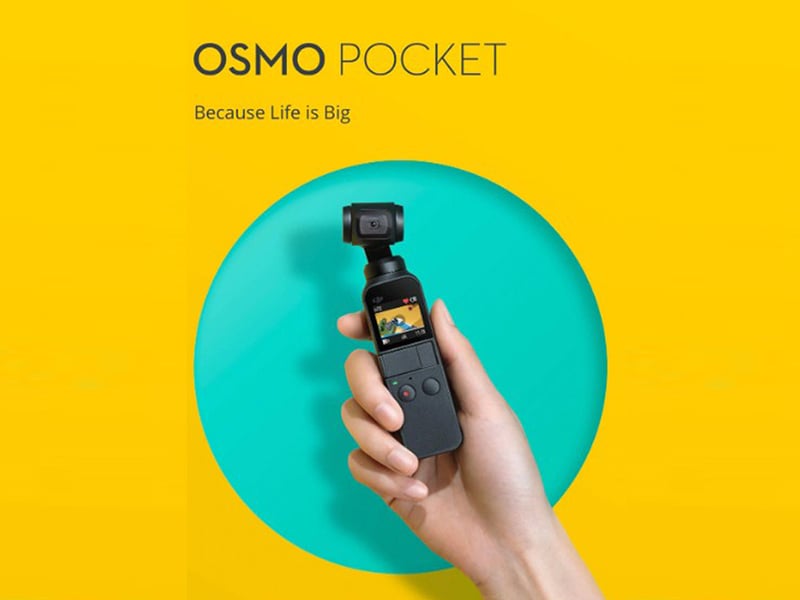
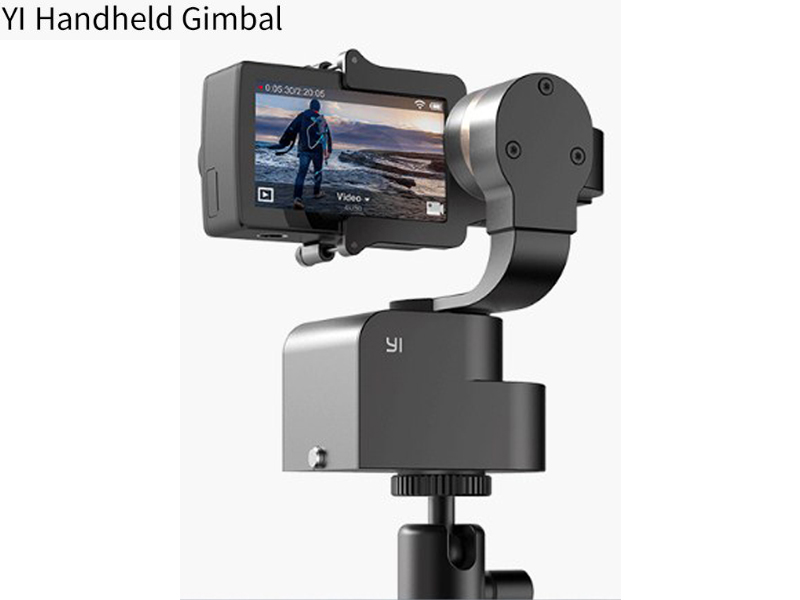 While the YI Handheld Gimbal usually sells for $299.98, you can now get your hands on it for a lowered price of just $179.99 on AliExpress.
 Much to the delight of the Chinese smartphone maker, the Oppo K1 continues to garner popularity among smartphone lovers even months after hitting the store shelves.
 An absolute steal at this price, the Oppo K1 takes the smartphone experience to the next level. It sports an extra large 6.4 inches Super AMOLED capacitive touchscreen with 1080 x 2340 pixels resolution and Corning Gorilla Glass 5 on top.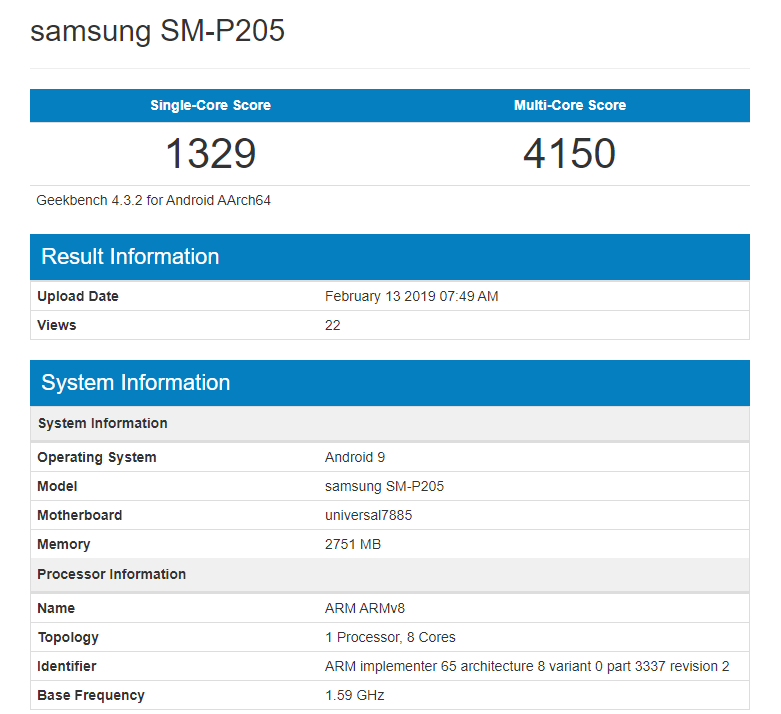







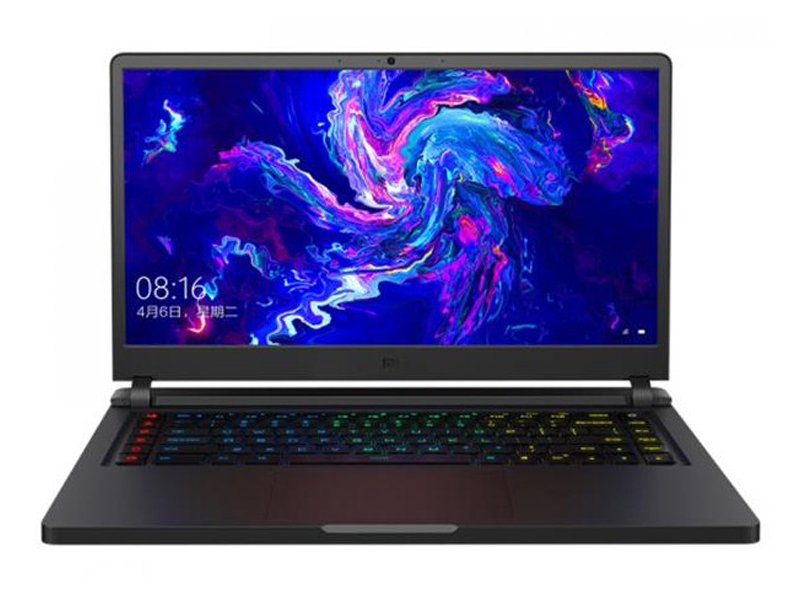 An absolute bargain at this price, the Xiaomi Gaming Laptop sports an eye-catching 15.6-inch FHD display with a screen resolution of 1920×1080 pixels.