Advertisement

Xiaomi Releases Massive MIUI 9 China ROM Updates For 18 Models

Xiaomi has rolled out MIUI 9 update for a barrage of smartphones, Xiaomi models that is. The new update is for the China ROM and it is the biggest single rollout since the release of the MIUI 9 Stable ROM. This is coming about three months since the first MIUI 9 China Developer ROM was released. Xiaomi also commenced OTA push of MIUI 9 China ROM on October 31st but that was for a few models.MIUI 9

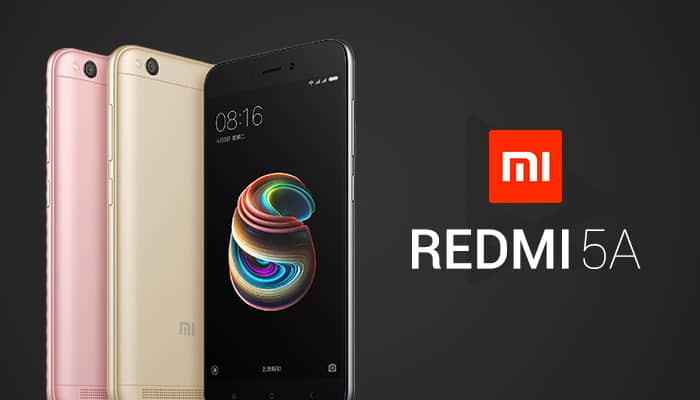
Right now with this release, MIUI 9 China ROM is now available for a total of 18 models. The models include the Mi 6, Mi Max 2, Mi Note 3, Mi Note 2, Mi 5X, Redmi 4X, Redmi Note 5A, Redmi Note 5A Prime, Mi 5s, Mi 5, Mi 5c,  Mi MIX, Mi 5s Plus, Redmi 5A, Redmi Note 4 Qualcomm/Redmi Note 4X, Mi MIX 2, Mi Note Pro, Mi 4S, Mi 4c.

Read More: Xiaomi Redmi Note 5 Gets Listed On JD.com, Launch Imminent

If you own one of the models and wish to flash the ROM on your smartphone, you can download all the ROMs from here. Do remember to back up all important data before flashing and don’t attempt this if you have no idea how to flash a Custom ROM on your smartphone. Xiaomi advises that those flashing from Beta ROM to Stable ROM needs to clear all the data before flashing so as not to get issues of system incompatibility such as no signal and rebooting. Those already running Stable ROMs wouldn’t need to clear all data. Xiaomi touts the MIUI 9 ROM based on Android 7.0 Nougat as fast as lightning, among of features.

(source)

Samsung Galaxy S9 Likely to Launch Ahead of MWC 2018 with Anti-Glare Camera, Wireless AKG Earbuds

The mass production of the Galaxy S9 and Galaxy S9+ flagship smartphones will reportedly begin from next month. Fresh suggests that Samsung may announce the Galaxy S9 early in next year and it will come with some new features like anti-glare camera and wireless AKG headset.

Galaxy S9 Launch Date

According to the tweet shared by a leakster, the Galaxy S9 and S9+ may launch early in 2018. Previous reports have revealed that the Galaxy S9 and S9+ may debut a day ahead of the upcoming Mobile World Congress (MWC) 2018 that will be held between Feb. 26 to March 2. Samsung has used this strategy in 2014 and 2015 to debut the Galaxy S6 and Galaxy S7 respectively.

However, the arrival of the Galaxy S8 duo was delayed this year, probably because of the Galaxy Note 7 debacle. Hence, the Galaxy S9 and S9+ are speculated to launch on Feb. 25 in 2018. Through the above tweet, the leakster also claimed that the Galaxy S9 duo would be equipped with dual cameras.

He also claims that the Galaxy S9 would be borrowing some “tricks” from the iPhone X. However, it is known as to what could be the source hinting too. However, it is likely that just as the Apple had introduced Face ID feature on the iPhone X, Samsung to may add a robust facial scanning feature on the Galaxy S9.

Galaxy S9 wireless AKG headset, 3.5mm audio jack

Read More: Alleged Samsung Galaxy S9+ Geekbench Listing Reveals Exynos 9810, 4 GB RAM

According to another leakster who has been consistently spilling accurate information on upcoming flagship phones from Samsung, the Galaxy S9 would be arriving with a new AKG headset. The South Korean company is already offering AKG tuned headset with Galaxy S8 and Galaxy Note 8. However, the tipster claims that the company may provide Galaxy S9 users with Bluetooth-enabled AKG headset.

Some may assume that the Galaxy S9 may not feature standard audio jack since the company is speculated to provide users with wireless AKG headsets. However, the leakster has emphasized that the 3.5mm headphone will not be axed from the Galaxy S9 and S9+.

Recent reports have revealed that the Galaxy S9 duo are rumored to arrive with vertically stacked dual rear cameras. The leakster claims that the camera of the S9 “uses anti-glare BBAR layer ghost technology.” BBAR could possibly mean Broadband Anti-Reflection coating that resists glare and dual images.

There is no information on why the Galaxy S9’s camera will feature BBAR coating because the cameras on Samsung’s premium phones already feature anti-glare coatings. The new kind of coating that the leakster is referring could mean that the Galaxy S9 may feature some sort of improved anti-glare coating for the new set of dual rear cameras.

(source 1, 2)


Samsung’s Rumored 4-inch Full Screen Phone Could be Galaxy S9 Mini

Samsung is rumored to be working on Galaxy S9 and Galaxy S9+ smartphones. Recent reports have revealed that the company would be mass producing the Galaxy S9 duo starting from next month. Fresh speculations that the Galaxy S9 and S9+ will be also accompanied by Galaxy S9 Mini.

According to ValueWalk, this mysterious smartphone could be the upcoming 4-inch Galaxy S9 Mini smartphone. However, the publication is only speculating on the information shared by a Weibo leakster who claimed that Samsung is working on a less than 5-inch premium smartphone that will be equipped with an Infinity Display.

Coral Blue Galaxy S8

Read More: Alleged Samsung Galaxy S9+ Geekbench Listing Reveals Exynos 9810, 4 GB RAM

The Galaxy S8 and Galaxy S8+ smartphones respectively feature 5.8-inch and 6.2-inch Infinity Displays. Last year’s Galaxy S7 and Galaxy S7 Edge respectively house 5.1-inch and 5.5-inch displays. Even though the screen sizes on Samsung’s flagship phones have increased significantly, recent reports have revealed that there is still demand for small-sized smartphones. This was the reason why Apple had introduced iPhone SE last year.

Apple is rumored to launch as many as three full screen iPhones in 2018, but rumors that had surfaced earlier in this month had claimed that the company may debut a 4-inch iPhone SE 2 in Q1 2018. The rumored Galaxy S9 Mini could be a very competitor for the alleged iPhone SE 2.

Samsung did not release “mini” versions for Galaxy S7 and Galaxy S6. Hence, there is a possibility that it may not launch a compact edition for Galaxy S9. Since there is no concrete evidence to prove the existence of iPhone SE 2 and Galaxy S9 Mini phones, we advise our readers to take this report with a pinch of salt.

The upcoming 2018 editions of the Galaxy A5 and Galaxy A7 are rumored to respectively feature 5.5-inch and 5.7-inch Infinity Displays. These phones will allow users to enjoy Samsung’s full screen design with an affordable pricing. The 2018 Galaxy A5 and A7 have received Bluetooth SIG approval and FCC certification in the U.S. and are rumored to launch in next month or in January 2018.

(source)


Top Full Screen Smartphones From China At Different Price Points

Since many full-screen design phones have launched in the recent past, there is no denying that it is the latest trend in the smartphone industry. Chinese companies are offering full screen phones at various price segments and here’s a list of the top full screen smartphones from China in 2017.

ZTE Nubia Z17S

ZTE had unveiled the Nubia Z17S flagship phone alongside Z17 Mini S in October. It boasts a premium appeal because of is aviation-grade aluminum body that is coupled with 3D glass and bezel-less design.

  • 5.73-inch LCD display supporting 1,080 x 2,040 pixels resolution
  • Snapdragon 835 chipset
  • 12-megapixel + 23-megapixel dual cameras
  • 5-megapixel selfie camera
  • 3,100mAh battery

Pricing
6 GB RAM / 64 GB storage – 2,999 Yuan (~$451)
8 GB RAM / 128 GB storage – 3,999 Yuan (~$602)


https://www.giztop.com/nubia-z17s.html

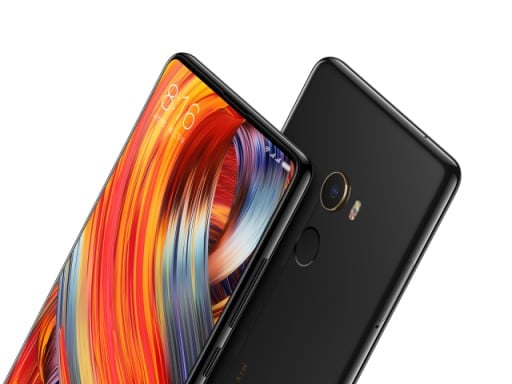
Xiaomi Mi MIX 2

Xiaomi started the trend of full screen smartphone by debuting the Mi MIX concept phone last year. Even though the new Mi MIX 2 is smaller compared to the predecessor, it is a wonderful looking smartphone that features a curved ceramic rear panel that is coupled with 7000 series aluminum alloy frame. There is a special edition Mi MIX 2 that features a ceramic unibody too.

  • 5.99-inch FHD+ LCD display
  • Snapdragon 835 chipset
  • 12-megapixel rear camera
  • 5-megapixel front camera
  • 3,400mAh battery

Price tag:
6 GB RAM + 64 GB ROM – 3,299 Yuan (~$496)
6 GB RAM + 128 GB ROM – 3,599 Yuan (~$542)
6 GB RAM + 256 GB ROM – 3,999 Yuan (~$602)
8 GB RAM + 128 GB ROM – 4,699 Yuan (~$707)

https://www.giztop.com/xiaomi-mi-mix-2.html


Huawei Mate 10 and Mate 10 Pro

The Mate 10 and Mate 10 Pro flagship phones sport metal unibody design with a unique textured pattern running on the back panel where the dual rear cameras are placed. The Mate 10 duo are fueled by Kirin 970 that is accompanied by NPU chip for handling AI. Users can also enjoy desktop mode on a larger display by connecting the Mate 10 or Mate 10 Pro to it.

  • Mate 10: 5.9-inch QHD LCD screen
  • Mate 10 Pro: 6-inch FHD+ OLED screen
  • AI driven Kirin 970 chipset
  • 20-megapixel + 12-megapixel dual cameras
  • 8-megapixel front camera
  • 4,000mAh battery

Price tag:
Mate 10
4 GB RAM + 64 GB storage – 3,899 Yuan (`$587)
6 GB RAM + 128 GB storage – 4,499 Yuan (~$677)

https://www.giztop.com/huawei-mate-10.html

Mate 10 Pro
6 GB RAM + 64 GB storage – 4,699 Yuan (~$707)
6 GB RAM + 128 GB storage – 5,399 Yuan (`$813)

https://www.giztop.com/huawei-mate-10-pro.html

Vivo X20 and Vivo X20 Plus

The Vivo X20 and X20 Plus are upper mid-range full screen smartphones. The stellar dual rear cameras of the Vivo X20 duo are coupled with Vivo Image Cube dual-core image sensor processor. These phones also carry support for facial recognition for unlocking.

Vivo X20

  • Vivo X20: 6.01-inch FHD+ AMOLED display, 3,250mAh battery
  • Vivo X20 Plus: 6.43-inch FHD+ AMOLED display; 3,900mAh battery
  • Snapdragon 660 chipset
  • 4 GB RAM
  • 64 GB storage
  • 12-megapixel + 5-megapixel dual cameras
  • 12-megapixel selfie camera

Price tag:
Vivo X20 – 2,998 Yuan (~$451)

https://www.giztop.com/vivo-x20.html

Vivo X20 Plus – 3,398 Yuan (~$511)

https://www.giztop.com/vivo-x20-plus.html

OPPO R11s and OPPO R11s Plus

The Oppo R11s and R11s Plus are also upper mid-range phones. These phones also feature amazing dual rear cameras. The selfie snapper of the OPPO R11s duo supports AI Beauty which can beautify the portrait shots by enhancing facial features.

OPPO R11s

  • OPPO R11s: 6.01-inch FHD+ AMOLED display, 3,200mAh battery
  • OPPO R11s Plus: 6.43-inch FHD+ AMOLED display, 4,000mAh battery
  • Snapdragon 660
  • 4 GB RAM
  • 64 GB storage
  • 20-megapixel + 16-megapixel dual cameras
  • 16-megapixel selfie camera

Price tag
OPPO R11s – 2,999 Yuan (~$451)
OPPO R11s Plus – 3,199 Yuan (~$481)

https://www.giztop.com/oppo-r11s-4gb-64gb-black.html


Smartisan Nut Pro 2

The Smartisan Nut Pro 2 sports an impressive design thanks to is metal and glass combination chassis. The rear side of the phone has a dual camera system which includes a large-sized sensor and a small-sized sensor.

  • 5.99-inch FHD+ LCD display
  • Snapdragon 660
  • 12-megapixel + 5-megapixel dual cameras
  • 16-megapixel front camera\3,500mAh battery

Price tag:
4 GB RAM + 32 GB ROM – 1,799 Yuan (~$270)
4 GB RAM + 64 GB ROM – 1,999 Yuan (~$301)
6 GB RAM + 64 GB ROM – 2,299 Yuan (~$346)
6 GB RAM + 128 GB ROM – 2,699 Yuan (~$406)
6 GB RAM + 256 GB ROM – 3,299 Yuan (~$496)


Huawei Maimang 6 (aka Mate 10 Lite)

The Maimang 6 features the same full-screen display that is available on the Mate 10, but carries support for FHD+ resolution. It is the only smartphone on the list that features dual front cameras and dual rear cameras.

  • 5.9-inch LCD FHD+ display
  • Kirin 659 chipset
  • 4 GB RAM
  • 64 GB storage
  • 13-megapixel + 2-megapixel dual front cameras
  • 16-megapixel + 2-megapixel dual rear cameras
  • 3,340mAh battery

Price tag: 2,399 Yuan (~$361)

https://www.giztop.com/huawei-maimang-6.html

Honor 7X

Honor 7X is the cheapest full screen smartphone in the list. Even though it’s a budget-friendly smartphone, it has a sleek appeal. It is also powered by the same chipset that is available on the Maimang 6 and it comes in multiple storage models. The Honor 7X also features dual rear cameras.

Honor 7X

  • 5.93-inch FHD+ LCD display
  • Kirin 659 chipset
  • 4 GB RAM
  • 64 GB storage
  • 3,340mAh battery

Price tag:
32 GB -1,299 Yuan (~$195)
64 GB – 1,699 Yuan (~$255)
128 GB – 1,999 Yuan (~$301)

https://www.giztop.com/huawei-honor-7x.html

All the above-listed smartphones carry support for 18:9 aspect ratio except for the ZTE Nubia Z17S that supports 17:9 aspect ratio.


Which smartphone do you think offers the best value for money? Share us your thoughts by commenting below.


Gionee M7 Plus GFXBench Listing Reveals Key Specifications

The Gionee M7 Plus has recently appeared on AnTuTu benchmarks and now it has been also spotted on GFXBench benchmarking platform.

The GFXBench listing states that the M7 Plus has a 7.5-inch display that supports a resolution of 2160 x 1080 pixels. Well-known leakster Evan Blass had revealed in the previous month that the M7 Plus would be coming with a 6.43-inch display. Hence, it seems that the display size of the phone is mentioned incorrectly on GFXBench.

Gionee M7 Plus GFXbench

The M7 Plus could be sporting the very same display that is available on the Vivo X20 Plus that also houses a 6.43-inch screen. According to GFXBench listing, the smartphone is driven by an octa-core processor by Qualcomm that clocks 2.2 GHz and it also features Adreno 512 graphics. This indicates that the Snapdragon 660 chipset would be powering the Gionee M7 Plus. The SoC is accompanied by 6 GB of RAM and it has an internal storage of 64 GB.

Read More: Gionee Thailand Confirms Dual Front & Rear Cameras, Full View Display & Color Variants in Gionee S11 Advert

It is likely to feature a selfie snapper of 8-megapixel. Leaked photos of the M7 Plus have revealed that it features dual rear cameras. GFXBench listing has revealed that one of the dual camera sensors could be of 16-megapixel. The M7 Plus is also expected to carry support for NFC.

The exact size of its battery is still not known. However, one of the leaked photos of the M7 Plus has revealed that it would be arriving with support for up to 16W wireless charging.

(via)


Essential Phone Gets Android Oreo Beta Update

If you own the Essential Phone the there is good news for you. The new smartphone manufacturer has announced an Android Oreo beta update for the Essential Phone.

Essential Phone Android Oreo beta

According to the instructions on the official update page, those interested in trying out the beta update are required to sign up with a valid email address. Afterwards, the download link is then made available.

The Beta 1 update (OPM1.170911.130) is 995MB in size. Currently known issues with the update include increased battery drain when Bluetooth is enabled and Android Auto compatibility issues with some vehicles. There is a chance there are more bugs and Essential says there is an online form where they can be reported.

READ MORE: Essential Phone Now Available in Pure White

Gionee M7 Plus Scores 100K+ on AnTuTu with Snapdragon 660

Gionee M7 Plus is speculated as one of the eight full screen smartphones that the company may unveil on Nov. 26. The M7 Plus has now appeared on AnTuTu to not only reveal its key specs but also its benchmarking scores.

According to AnTuTu listing, the display of the Gionee M7 Plus produces resolution of 2160 x 1080 pixels. The 14nm Snapdragon 660 chipset that has been designed to high-end smartphones is present under the hood of the M7 Plus along with 6 GB of RAM.

The handset is running on Android 7.1.1 Nougat OS. As far as AnTuTu score of M7 Plus is concerned, it has recorded an impressive score of 103,367.

Gionee M7 Plus AnTuTu

Read More: Gionee Thailand Confirms Dual Front & Rear Cameras, Full View Display & Color Variants in Gionee S11 Advert 

Previous reports have revealed that the M7 Plus would be equipped with a 6.43-inch Full View display that is likely to deliver an aspect ratio of 18:9. The leaked photos of the smartphone have revealed that the back panel of the phone will be housing a pair of horizontally arranged camera sensors along with a fingerprint scanner.

Also, it is expected to arrive with support for up to 16W wireless charging. As of this writing, there is no information on the exact size of the battery that will be fueling the M7 Plus.

(source)

MediaTek Exec Reveals The Company Is Taking A Break From High-End Mobile Chips

Chinese chip maker MediaTek is presently the second largest fabless mobile chip manufacturer but the company has struggled to compete with U.S giant Qualcomm in the high-end category. The company released the Helio X30 as its 2017 flagship and despite falling in the same class with the Snapdragon 835, Apple A11, Exynos 8895 and Kirin 970, the MediaTek flagship chip has struggled to fly. Presently, the chipset can only be found onboard the Meizu Pro 7 Plus and Elephone X8 Lite.MediaTek-Chip-helio

This situation may have forced the Chinese chipmaker to call it quit in the manufacture of flagship chip, at least for now. MediaTek’s General manager in charge of International sales, Finbarr Moynihan is credited to have disclosed that the company is sort of taking a break from flagship chips in order t focus its attention on new premium devices. He also threw more light on the Helio X30 and the reason why it did not perform marvellously. The reason being that the chipset and the modem were required to be able to meet the high-end modem requirements for the US, European, Chinese, Japanese, Korean, African, and Indian carriers. But the Helio X30 didn’t have some of the global modem specifications that would have made it get adopted by OEMs outside China. Also, the release of cheap mid-range devices by many Chinese brands did not help the X30. Majority of MediaTek’s patrons are Chinese OEMs.

Read Also: Meizu and MediaTek Partner on Facial Recognition Technology

The MediaTek Exec went further to reveal that the company will focus more on the Helio P-series chipsets which have some new premium models onboard. This doesn’t mean the company is giving up entirely on the high-end flagship chip category but they are taking a bit of a break from that end and hope to climb back up gradually.

(source)

H3213 Avenger Seen on GFXBench, May Be Sony’s First Dual Camera Smartphone

Just like Google, Sony is another manufacturer that hasn’t yet jumped on the dual camera train. However, that may be changing soon. A new smartphone codenamed the H3213 Avenger has been seen on GFXBench and it packs dual front cameras,

Sony H3213 Avenger GFXBench

The Sony H3213 Avenger has a 6-inch FHD display. This is the same size as that of the XA1 Ultra but it is unknown if when itwill come with the new design Sony is planning for next year.

There is 4GB of RAM and 32GB of storage (20GB available!!!) and a Snapdragon 630 is the chipset of choice. The octa-core processor is clocked at 2.2GHz and has the Adreno 508 as its GPU.

For its first dual camera smartphone, Sony is going all out with it. It has a 16MP primary sensor that can record in 4K and its paired with an 8MP sensor. There is a chance the secondary sensor of the will capture depth of field information for portrait images.

READ MORE: Sony Launches Xperia R1 And Xperia R1 Plus Mid-Range Smartphones In India

Vivo V7 With 24MP Camera To Launch In India On November 20

In September this year, Vivo launched V7 Plus smartphone in the Indian market, which was powered by Snapdragon 450 processor. The phone was touted as the world’s first device to be powered by SD 450 SoC. Now, the company is all set to launch another smartphone powered by Qualcomm‘s Snapdragon 450 processor.

Vivo is holding a press event on November 20 where the company will launch Vivo V7 — the younger sibling of the V7+ with marginally smaller display. The media invite had a smartphone with a single rear camera and a fingerprint scanner. Before the official launch in India, Vivo will launch the smartphone in Indonesia on November 16.

Vivo V7 Launch Invite

The Vivo V7 will come with a FullView display. The smartphone is expected to feature a 5.7-inch HD+ display as opposed to the 6-inch display on the V7 Plus. Under the hood, it will be powered by Qualcomm Snapdragon 450 SoC, along with 4GB RAM and 32GB of internal storage.

Vivo has been known for focusing on the camera department and the V7 will not be an exception. The smartphone retains the same 24MP selfie camera which was the highlight of the V7+. The device will also come with a 16MP front-facing camera.

It will run on Android Nougat operating system based FunTouch OS 3.2 and will be powered by a 3,000mAh battery. The dual SIM smartphone will also support 4G VoLTE connectivity along with the usual set of connectivity options, including Wi-Fi, Bluetooth and GPS.

Read More: Vivo Y79 With 24MP Front-Facing Camera Launched In China At 2,498 Yuan

The Vivo V7+ is priced at Rs. 21,990 in India. With the upcoming V7 being a watered down version, we expect the phone’s pricing to be around Rs. 15,000 to Rs. 18,000. It is expected to be available in two colours — Black and Gold. However, we’ll have to wait for the official launch for the confirmation about pricing and availability.


Lenovo Has Unveiled ThinkStation P520/P520C, ThinkPad P52s

Lenovo has introduced two new ThinkStation desktops and a ThinkPad notebook. The newly announced Lenovo P520 is a flagship workstation whereas the Lenovo P520C is its cost-effective variant. The ThinkPad P52s is Lenovo’s first quad-core mobile workstation from the company.

Lenovo P520, P520C

Lenovo ThinkStation P520

The Lenovo P520 is meant to deliver topnotch performance for carrying out high-end tasks like 3D animation and visual effects. The P520 is running on Windows 10 Pro for Workstation. It will be available also available in Ubuntu Linux.

The P520 is powered by the new Intel Xeon W-series CPUs, allowing up to 18 cores or clocking speeds of up to 4.5 GHz. It features eight DIMM slots that can support up to 32 GB of RAM. This allows the ThinkStation P520 to support up to 256 GB of DDR4 RAM. It can support a pair of Nvidia Quadro P6000 graphics.

The ThinkStation P520 can feature up to 8 eight drives. It is equipped with PCIe x16, one PCIe x8, two PCIe x4 and one PCI expansion slots. It also features 8 USB 3.0 ports and 1 Thunderbolt 3 port. The desktop is enabled with network connectivity options such as Intel dual band wireless AC-8264 and 2T/2R + Bluetooth 4.2.

Lenovo ThinkStation P520C

The ThinkStation P520C is a budget-friendly desktop that also comes in the same Intel Xeon W-series processor variants. It is equipped with Nvidia Quadro P5000 graphics and supports up to 128 GB of DDR4 RAM.

It includes with up to 4 drives and instead of 8 USB 3.0 ports, it features 6 USB 3.0 ports. It features the same network connectivity options and PCI expansions slots except for the single PCI slot found on P520.

Lenovo P520s

Lenovo ThinkPad P52s

The ThinkPad P52s notebook is the thinnest and lightest mobile workstation from the Chinese manufacturer. It comes in Core i5 and Core i7 (eighth generation) processor variants along with Nvidia Quadro P500 graphics.

The P52s comes in three screen options of 15.6 inches such as a full HD IPS, a full HD touchscreen and a 4K UHD. Its users can up to up to 32 GB of DDR4 RAM on two DIMM slots. The ThinkPad P52s comes in multiple storage options such as up to 2 TB HDD or 1 TB NVMe SSD.

As far as ports of the ThinkPad P52s is concerned, it is equipped with 2 x USB 3.0, one USB-C, one Thunderbolt 3, one HMDI 1.4, one RJ45 Ethernet and memory card reader.


Lenovo P52s

Read More: Lenovo Brings The MIIX 520 With 8th Gen Intel Core Duo SoC To China With A Cheaper Price

The Lenovo ThinkStation P520, ThinkStation P520C and ThinkPad P52s are poised to release in January 2018. As of this writing, there is no information available on their pricing.


Windows 10 Snapdragon 835 Laptop Appears on HP’s Official Site; Launch Seems Imminent

In May, Microsoft had confirmed that it would be launching Snapdragon 835 driven Windows 10 laptops through brands like HP, Asus and Lenovo. It seems that the unveiling of Snapdragon 835 powered HP laptop is close at hand as it has appeared on the official site of the company.

A mysterious Snapdragon 835 powered HP device labelled as “2US29AV” has surfaced on the HP Care Pack Services page. The listings are no longer accessible, the below screenshot shows that the device would be coming in two variants. Previous reports have suggested that it may come in options like 4 GB RAM + 128 GB UFS storage and 8 GB RAM + 256 GB UFS storage.

2US29AV
Qualcomm CEO Steve Mollenkopft had previously said that ARM-powered Windows 10 PCs will not be unveiled until the last quarter of this year. Since the 2US29AV device has appeared on the official site, it seems that the arrival of HP’s Snapdragon 835 powered laptop is drawing near.

One of the Snapdragon 835 powered notebook by HP was spotted on Geekbench in the previous week. The device is expected to run full version of 32-bit Windows 10 along with Universal Windows Platform (UWP) applications.

HP Qualcomm

The upcoming Windows 10 laptops that are fueled by Snapdragon 835 will be able to deliver better battery life and LTE connectivity. Previous reports have revealed that the Redmond-based company is collaborating with various carriers such as AT&T, T-Mobile, Vodafone, EE, Three and BT to bring support for e-SIM on ARM-based Windows 10 laptops. It seems that the cellular PC revolution will begin soon.


IDC Research: Xiaomi Equals Samsung’s Market Share in India

According to the latest survey by IDC research firm, the smartphone shipments in India have significantly increased to 39 million units in the third quarter of this year mainly due to the pre-Diwali sales. For the first time ever in a quarter, India accounts for 10 percent of the global smartphone shipments. Also, Xiaomi now possesses the same market share as Samsung in the country.

More than 80 million smartphone shipments were recorded in Q3 2017. IDC claims that there has been rise of 40 percent in smartphone shipments in comparison to the previous quarter. When compared to Q3 2016, the smartphone shipments have grown by 21 percent.

When it comes to top five smartphone vendors in India, Samsung and Xiaomi are now tied at first position with each having a market share of 23.5 percent. The research firm adds that it is because of the aggressive pricing strategy that Xiaomi has adopted, it has managed to sell plenty of devices online.

IDC Q3 2017 Shipments, Market Share

By shipping 4 million units in Q3 2017, the Redmi Note 4 remains as the best-selling smartphone in the country. Also, the shipments of Xiaomi devices have increased by twofold as the company is also generating revenue through offline partners and Mi stores. A recent report by Counterpoint has cited that the Redmi Note 4, Redmi 4 and Redmi 4A are the three top selling smartphones in India in Q3 this year.

Samsung that has a market share of 23.5 in India attained 39 percent sequential growth QoQ and 23 percent YoY. The top selling smartphones for Samsung in Q3 2017 are Galaxy J2, Galaxy J7 Nxt and Galaxy J7 Max.

Lenovo (including Motorola) has regained the third sport after two quarters. In comparison to Q2 2017, the Chinese firm has managed to increase its third quarter shipments by 83 percent. In Q3 2017, it held a market share of 9 percent.

Vivo had an impressive second quarter this year, but since its shipments have decreased it has now slipped to fourth position with a market share of 8.5 percent. With the arrival of new smartphones like Vivo V7+ and Vivo Y69, the company is now regaining lost ground since September.

In Q317, OPPO had its biggest sell-in quarter in the country as shipments grew by 40 percent sequentially and 81 percent in comparison to Q3 2016. It held a market share of 7.9 percent.

Will Xiaomi’s market share surpass Samsung in Q4 2017 in India? Share us your views by commenting below.

(source)

Microsoft Edition Galaxy S8 And S8 Plus Now Available From Microsoft’s Online Store

From April this year, Microsoft started selling Samsung Galaxy S8 and Galaxy S8 Plus smartphones in its brick-and-mortar stores. Now, the company has also started selling the devices through its online store.

The Microsoft Edition Galaxy S8 and Galaxy S8 Plus comes pre-loaded with a range of productivity tools from Microsoft, including Cortana, MS Word, Excel, OneNote, and Outlook among others. It also comes with the new Microsoft Launcher which gives the ability to access calendar, documents, and recent activities in personalized feed.

Microsoft Edition Galaxy S8

The unlocked version of the Microsoft Edition Galaxy S8 costs $724.99, while its bigger variant — the Galaxy S8 Plus is priced at $824.99. The pricing is similar to the devices’ pricing on the Samsung’s official website. In addition, Microsoft is also offering carrier versions of the device from the likes of Verizon and AT&T.

Microsoft has already revealed that there will be a big discount on both devices as part of the company’s Black Friday deals. During Black Friday sale, both the smartphones will carry a discount of $150.

As a refresher, the Galaxy S8 features a 5.8-inch display while the Galaxy S8 Plus comes with a 6.2-inch display. The Super AMOLED display comes with a scree resolution of 2960 x 1440 pixels, with an aspect ratio of 18:5:9. Under the hood, both the devices are powered by Qualcomm’s Snapdragon 835 chipset which provides eight Kryo CPU cores clocked at up to 2.35GHz along with an Adreno 540 GPU and 4GB of RAM. Both the smartphones have 64GB of internal storage and supports microSD card of up to 256GB for expanding storage.

Read More: Microsoft Edge’s iOS and Android Version Arriving Soon, Preview Version Is Now Available

There is a 12-megapixel rear-facing camera with optical image stabilisation (IOS), LED flash and a f/1.7 aperture, and an 8-megapixel front-facing camera with f/1.7 aperture and autofocus. While the Galaxy S8 is powered by a 3,000mAh battery, the S8 Plus packs a bigger 3,500mAh battery. Currently, the smartphones run Android Nougat OS but an upgrade to Android 8.0 Oreo is already in the beta stage.


OPPO R11s Plus vs Huawei Mate 10: The Premium Phablet Comparison

2017 is definitely the year of bezel-less phones. Xiaomi Mi Mix 2 started the trend at the end of 2016, and now most of the best flagships in the market have a borderless display. Oppo R11s Plus vs Huawei Mate 10 are the two major high-end phones released by the Chinese companies this year. With this comparison, we want to explain to you which is best among the two, and we will try to help you decide which one fits your need in the most appropriate way.

oppo r11s plus vs huawei mate 10

Design and Build Quality

Both these devices have a very futuristic design thanks to their borderless display and premium materials used for their bodies.

It is very hard to notice antenna bands on these phones at first glance, which makes them even more attractive. Oppo R11s Plus measures 164.8 x 80.2 x 7.3 mm and it has a weight of 182 g. Huawei Mate 10 has a size of 150.2 x 77.8 x 8.2 mm and a weight of 186 g. Both are big phablets, so you cannot expect compact ergonomics. Oppo R11s Plus is slightly bigger so its opponent is more ergonomic, but on the other hand, it has a bigger screen and is thinner.

In both cases, there are metal bodies and the Gorilla Glass protection by Corning for the display (Gorilla Glass 5 for R11s Plus and an unspecified version for the Mate 10). While Oppo R11s Plus does not have any certification for dust and water-resistance, Huawei Mate 10 is IP53 certified, so it is splashproof and dust-resistant (but not completely as the highest grade is IP6X). For its original look and a slightly higher attention to detail and build quality, the Huawei Mate 10 wins in terms of design, according to us.


Oppo R11s Plus vs Huawei Mate 10: Display

There is no challenge between the displays of these phones, as they both have outstanding screens.

Oppo R11s Plus has a huge 6.43-inch display that shows images at a Full HD+ resolution of 1080 x 2160 pixels with AMOLED technology. It has an 80.7% screen-to-body ratio thanks to the 18:9 aspect ratio, and a pixel density of about 376 ppi. Huawei Mate 10 has a classic 16:9 display with IPS LCD technology and a size of 5.9 inches. But its resolution and pixel density are outstanding: it has a Quad HD resolution of 1440 x 2560 pixels and a density of about 499 ppi. The screen to body ratio is superior to R11S Plus’ 80 percent here as well (about 81.6%) but there is still some space for a front Home key integrating a fingerprint reader.

While Oppo R11s Plus has more vivid colors and deeper blacks due to the AMOLED technology, Huawei Mate 10 has an outstanding level of detail. Further, the Mate 10 has a better color accuracy thanks to HDR10 technology, that is also supported in important apps like YouTube and Netflix (coming soon). It should also be much more legible in sunlight thanks to its peak brightness of 730 nits. Even without the 18:9 aspect ratio, Huawei Mate 10 has a display which is definitely better than the one of its opponent.


Oppo R11s Plus vs Huawei Mate 10: Hardware

  • Oppo R11s Plus AnTuTu benchmark score: 104.000 (appr.)
  • Huawei Mate 10 AnTuTu benchmark score: 176.000 (appr.)

The difference between these phones is big in terms of hardware as well.

Oppo R11s Plus has an octa-core Snapdragon 660 SoC running at a max frequency of 2.2 GHz, composed of Kryo custom cores by Qualcomm. It is the best midrange processor by Qualcomm, but it stays a mid-range SoC. Huawei Mate 10 has the best processor ever made by Huawei, an octa-core Kirin 970 with a frequency of 2.4 GHz (which also supports AI).

The RAM is 6 GB on Oppo R11s Plus and 4 GB on Huawei Mate 10, while the internal storage is 64 GB in both cases. The memory is expandable, but they both have a hybrid micro SD slot, so you would have to say goodbye to the secondary SIM slot. The capacity supported goes up to 256 GB. You can charge Oppo R11s Plus through a micro USB 2.0 port and Huawei Mate 10 through a USB-C slot. They both have Wi-Fi 802.11 a/b/g/n/ac and Bluetooth 4.2 connectivity standards.

Both the handsets can deliver incredible performances, but Kirin 970 is faster and smoother in every situation, gaming included. However, Oppo R11s Plus can manage the multi-tasking experience better thanks to a higher amount of RAM and a slightly bigger display that is useful for the split screen feature. But we believe Huawei Mate 10 is better in performance here.


Oppo R11s Plus vs Huawei Mate 10: Software

Even though they have great performances, the user interface of these phones is nowhere near to stock Android and it has been highly customized by the company. But the software for these phones adds many important features as well. Oppo R11s Plus has been launched with ColorOS 3.2, based on Android 7.1.1 Nougat. Among the features, there is an advanced split screen mode and facial unlock with artificial intelligence which is able to recognize the user and unlock the phone in just 0.08 seconds. AI plays an important role in selfies as well, as there is a beautification mode based on AI. It allows to highlight eyes, cheekbones, nose or jawline in selfies, it can brighten eyes and enable a Portrait Mode with an advanced artificial blur.

Huawei Mate 10 is powered by EMUI 8.0 based on Android 8.0 Oreo, the latest version of the OS by Google. The Kirin 970 has a dedicated Neural Processing Unit, and this means that AI features are even more advanced than the one of its opponent, with machine learning supported as well. You can use AI to translate languages and for scene recognition from the camera. There is an advanced Always-On mode to see time, notifications and other info when the phone is on standby. You can also transform this device into a PC. It is possible to connect it to a DisplayPort monitor for a desktop-like use, with the user interface adapting to the monitor, naturally. These are only some of the many innovative features available. Clearly, the Huawei Mate 10 has a software which is much more advanced.


Oppo R11s Plus vs Huawei Mate 10: Camera

Oppo R11s Plus and Huawei Mate 10 can be considered among the top camera phones in the market, even though the latter is in a league of its own.

Oppo R11s Plus has a dual camera setup with resolutions of 16 + 20 MP with a f/1.7 aperture (both sensors), 1.0 µm pixel size, and  Phase Detection autofocus. The selfie cam has a 16 MP resolution (f/2.0) sensor and AI-based features that we described above. Huawei Mate 10 has a dual camera with a resolution of 20 + 12 MP, it has Leica lens, optical stabilization and it can do 2x optical zoom. The aperture is f/1.6, the lowest (largest) ever seen on a smartphone. The selfie camera has an 8 MP resolution with a f/2.0 aperture.

The flagship by Oppo shoot great photos from the main camera, with a high level of detail, but we do not think that its primary camera will have the same performance as the Mate 10. The flagship by Huawei manages to shoot photos with outstanding detail and good color accuracy, and even in low-light conditions, it is great. On the other hand, the selfie camera is much better on Oppo R11s Plus. But, even if the secondary camera is more innovative besides offering incredible performances, we choose Huawei Mate 10 as the winner of the camera comparison, because it offers photos which are way better, in every lighting condition.


Oppo R11s Plus vs Huawei Mate 10: Battery

The battery life is the main problem of most flagships, but not in this case.

The battery of Oppo R11s Plus has a huge capacity of 4000 mAh and it also supports fast charging thanks to VOOC Flash Charge technology (5V / 4A). Huawei Mate 10 has a battery with a 4000 mAh capacity as well, and it supports fast charging: you can reach 58% with just 30 minutes of charging.

If we only talk about flagships, these are the phones from the last generation which have the biggest battery capacity and also the longest battery life. Huawei Mate 10 can last one day and a half with a normal use (making some calls, listening to music, navigating the internet and some video streaming). If we set a high brightness (not the max) with video playback it can last about 10 hours, which is incredible. Regarding Oppo R11s Plus, there are still not enough battery tests to evaluate its battery life perfectly, but we believe it may last even more than Mate 10. Its display has a Full HD+, and this means a lower power consumption. Further, the Snapdragon 660 is optimized very well in terms of energy consumption.


Oppo R11s Plus vs Huawei Mate 10: Price

Prices are very different, and in both cases, we are talking about low prices if we compare these phones with the most famous devices on the market. The main problem of Oppo R11s Plus is the availability: Oppo is still not a worldwide company, so the phone will be sold only in Asia. Anyways, its listing price in China is about 580 euros ($685). Huawei Mate 10 instead is going to be available in many selected markets, and its listing price in many regions goes around 700 euros ($824). Oppo R11s Plus cheaper without any doubt, but Huawei Mate 10 has a great value for money.


Oppo R11s Plus vs Huawei Mate 10: Winner

It is not hard to establish a winner in this comparison. We are talking about phones for slightly different targets, but there is no doubt about the fact that Huawei Mate 10 is a superior phone. Oppo R11s Plus has just a more innovative camera department and, maybe, a slightly longer battery life. But Huawei Mate 10 has a better design, display, a higher level of performances and more features on the software side. Anyways, note that, at this price, the Oppo R11s Plus is much cheaper to buy.


Huawei Mate 10: PRO and CONS

PRO:

  • Outstanding display quality
  • Flagship performances
  • AI and innovative features
  • Great camera
  • Long battery life

CONS:

  • Price is not so low
  • Average selfie camera


Oppo R11s Plus

PRO:

  • Innovative, complete and high-level camera department
  • Comfortable display
  • 6 GB RAM
  • Monster battery
  • Convenient price

CONS:

  • Mid-range SoC


So, which one would you pick?

HTC Vive Focus VR Headset Powered by Snapdragon 835 is Official

After months of leaks, HTC has finally unveiled a new standalone VR headset dubbed as Vive Focus. It was unveiled through Vive Developers Conference that was held in Beijing, China. Even though the Taiwanese firm has officially introduced the Vive Focus VR headset, it has not disclosed its specifications. Also, the company is yet to confirm on the pricing of the new VR headset.

Vive Focus VR headset can be mounted on the head. It features a high-resolution AMOLED screen and it is fueled by Snapdragon 835 chipset. The trackpad available on it is similar to the one found on the bigger Vive devices. Since the device is free from cumbersome cables and tracking beacons, the Taiwanese company calls it “world-scale.”

The design of the Vive Focus is similar to Sony’s PlayStation VR and HTC’s Vive Deluxe Audio Strap. It has an attractive blue finish and has a slightly rounded design. According to the official website, the Vive Focus is enabled with WorldSense feature which delivers six degrees of movement such as left, right, up, down, forwards and backwards.

htc vive focus

Read More: Oculus Go Is A $199 Standalone VR Headset, Arrives Early 2018

Vive Wave VR open platform will allow developers to create VR-ready content for Vive Focus. Content created for Samsung Gear VR and Google Daydream VR is also expected to come soon on Vive Wave. HTC will be also bringing games and VR experiences through Vivereport on Vive Focus.

The HTC Vive Focus is expected to first release in China. However, as mentioned above, the company is silent on the release date and pricing. There is no confirmation on whether the VR headset will be made available in western markets.

As far as HTC’s plans for the U.S. is concerned, the company has confirmed that it won’t be bringing Vive-branded standalone headset for Daydream VR. Google has confirmed that a standalone daydream headset by Lenovo will be heading towards the U.S.

(source)


Xiaomi Redmi Note 4 Gets Permanent Price Cut Of Rs. 1,000 In India

Xiaomi Redmi Note 4, one of the most successful smartphone from Xiaomi in the Indian market, has now received a price cut of Rs. 1,000. The announcement was made by Xiaomi India’s Managing Director, Manu Kumar Jain, who shared the news on Twitter. He wrote, “We are announcing a permanent price drop of Rs. 1,000 on India’s #1 selling smartphone: #RedmiNote4.”

As a result of this price cut, the Xiaomi Redmi Note 4 with 3GB RAM is now available at Rs. 9,999, while the variant with 4GB RAM is now available at a price of Rs. 11,999. The price drop is applicable on both — the company’s own Mi.com Store and Flipkart.

Xiaomi Redmi Note 4

The Xiaomi Redmi Note 4 features a 5.5-inch Full HD with a screen resolution of 1920 x 1080 pixels and a 2.5D Curved Glass on top. Under the hood, the smartphone is powered by a Qualcomm Snapdragon 625 SoC octa-core processor.

In India, the smartphone was launched in three variants — 2GB RAM, 3GB RAM and 4GB RAM with 16GB, 32GB and 64GB internal storage, respectively. However, the 2GB RAM model has been unavailable from sometime and is possibly discontinued.

The device comes with a 13-megapixel camera sensor at the back and a 5-megapixel front-facing camera. Connectivity options on the phone include 4G VoLTE, GPS, Bluetooth 4.2 LE, and Wi-Fi 802.11 a/b/g/n/ac with dual-band support and WiFi Direct.

The smartphone runs on Android Nougat-based MIUI and the company has recently rolled out the latest MIUI 9 update as well. It packs 4,100mAh non-removable battery and comes in three colour options — Black, Dark Grey, and Gold.

Within just 45 days of launching the device in India, Xiaomi claimed that it managed to sell over one million units of Redmi Note 4. In the first six months of launching the device, the company touched a milestone of selling 5 million units of Redmi Note 4 smartphone in India. The phone was also named as the highest shipped smartphone in India in Q1 2017.

Read More: Xiaomi Redmi Note 5 Gets Listed On JD.com, Launch Imminent

Xiaomi has now grabbed the leading spot in the Indian market in terms of smartphone shipments, edging out Samsung which used to dominated the market. As per the IDC report, the China-based company managed to ship a record 9.2 million smartphones in the third quarter of 2017 in India. A Counterpoint research report has crowned Xiaomi Redmi Note 4, Redmi 4 and Redmi 4A as the top 3 selling smartphones in India.

(Source)


360 Mobiles Files Application To Trademark “Flagship Device”

Chinese smartphone maker, 360 Mobiles is the latest to apply for a trademark but this time what it wants trademarked seems like a stretch. Sources say the manufacturer has applied to trademark the phrase “Flagship Device”.

360 mobiles Flagship Device

360 Mobiles is known for making smartphones that pack impressive specs with super affordable price tags. However, most of its phones are more mid-range than flagship. The information available about the trademark application says the phrase “Flagship Device” will cover smartphones, phone cases, protective films, and more.

READ MORE: New 360 Mobiles Phone with Full Screen Design Appears on TENAA

The application is currently pending and if approved may prevent other manufacturers from referring to their phones as flagship devices. Nevertheless, the chances of it being approved are slim. The trademark office is said to be cautious when it comes to granting trademarks for words that may cause controversies.

LeEco (LeTV) is said to have applied to trademark the phrase “Full Screen” in March. Up till this moment, the application is said to still be awaiting review.

(Source)


OnePlus Smartphones Comes With A Hidden Backdoor To Root Access

OnePlus was recently in hot waters when it was found collecting personally identifiable information for analytics. Now, a new report has surfaced online which could create trouble for the company ahead of its new smartphone launch.

A Twitter user, who goes by the name “Elliot Anderson” (named after the lead character of Mr Robot TV show) has discovered that OnePlus accidentally left in place a diagnostic testing application. He further added that the application can be exploited in order to grant root access which could effectively act as a backdoor.

oneplus 5 hands on (4)

The mobile application in question is a system app that was made by Qualcomm and customized by OnePlus. Named as EngineerMode, the application is provided by Qualcomm to OEMs for easily testing all hardware components of the device.

Named as “EngineerMode”, the application comes pre-installed on OnePlus devices, including the OnePlus 5, 3T and 3. It is used to run system tests for GPS, vibration, screen brightness, as well as for checking root access and performing a series of automated tests.

When the twitter user decompiled the application, he found that by launching the ‘DiagEnabled’ activity found in the APK with a specified password, the device could actually be rooted. One of the system property allows the user to run ADB as root which enables the user to acquire full root access on the phone without unlocking the bootloader.

The ‘DiagEnabled’ is a Qualcomm made activity so there is a possibility that other Qualcomm devices could possibly be affected by this. To check if your device has EngineerMode installed, go to Settings -> Apps -> Menu -> Show system apps and search for “EngineerMode” in the list.

This appears to be a massive security issue as hackers may find ways to use it to gain access to OnePlus handsets. The developer has said that he plans to release an app for rooting OnePlus devices soon.

Read More: OnePlus CEO Releases Camera Sample Teasing The OP5T’s Amazing Low-Light Performance

Meanwhile, in response to this, Carl Pei, CEO of the company, said that they are looking into the matter. This security issues comes into light just days before the company is set to launch its upcoming smartphone — OnePlus 5T in New York.

(Source)


Gionee Thailand Confirms Dual Front & Rear Cameras, Full View Display & Color Variants in Gionee S11 Advert

The Gionee S11 is set to launch soon but it appears Thailand may get it first. The official Gionee Thailand Facebook page already has an ad of the upcoming phone that confirms some of its specs.

Gionee S11

The advert confirms that the Gionee S11 will have dual front and dual rear cameras. The front cameras are a 16MP + 8MP sensors just like the Gionee S10. It is unknown if the sensors are exactly the same as those of its predecessors. On the rear, there is also a 16MP primary sensor but paired with a 5MP sensor instead.

The quad cameras are not the only key features of the Gionee S11. It will also come with a 5.99” FHD 2.5D Full View display. The ad confirms it will have 6GB of RAM and 64GB of storage but doesn’t mention the processor powering the phone. Based on the phone’s GFXBench and TENAA listings, the S11 may have a MT6763 or Helio P25 processor under the hood.

READ MORE: Gionee M7 Power With 5,000mAh Battery To Launch In India On November 15

Another info the advert confirms is that the phone will come in blue, pink, and gold. Based on the official replies to fans’ comments, the Gionee S11 doesn’t yet have a launch date (in Thailand) yet. Although Gionee has an event scheduled for November 26 where it plans to unveil a bunch of new phones in Shenzhen, China, there is a chance the S11 will be unveiled there first.

You can watch the video in the source link below.

(Source, via)