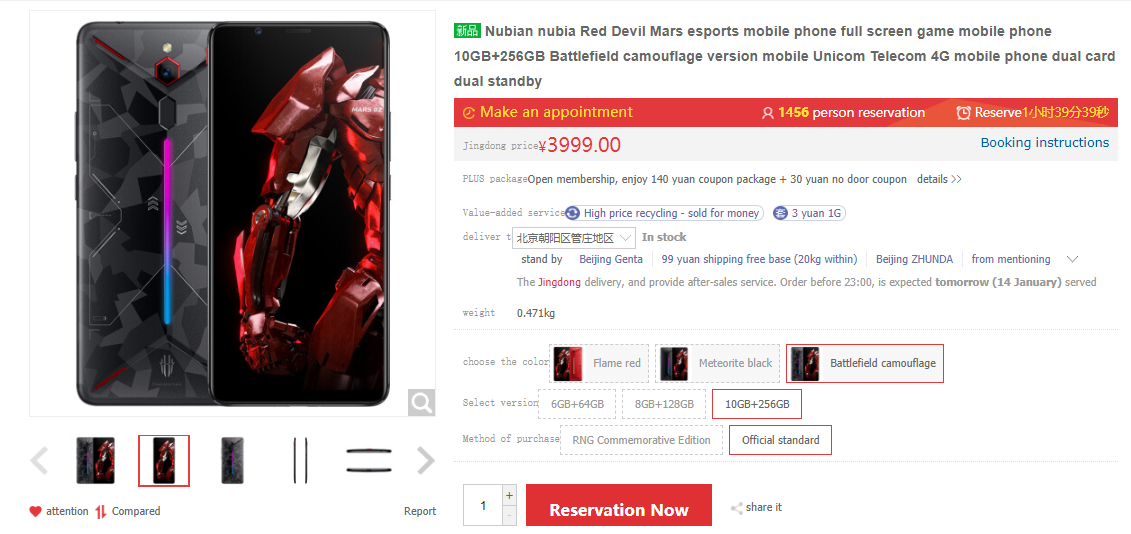
Nubia’s Red Magic Mars comes in three color variants. They are Flame Red, Meteorite Black, and Camouflage. The first two variants have been available for purchase for about a month now. Nubia has announced that it has begun taking pre-orders for the camouflage edition ahead of its first sale tomorrow.
This version of the Red Magic Mars not only has a nice paint job, but it is also the only variant with 10GB of RAM and 256GB of storage. The camouflage edition also has a special anti-fingerprint coating. The price tag is ¥3999 (~$591) and pre-orders are already live on Jingdong.com for those interested in purchasing a unit.
The Nubia Red Magic Mars has a 6.0-inch 1080 x 2160 display, a Snapdragon 845 processor, 6GB/8GB/10GB of RAM and 64GB/128GB/256GB of storage. There is no support for storage expansion.
There is a 16MP f/1.8 sensor on the rear and an 8MP f/2.0 sensor in front for selfies. It has a rear-mounted fingerprint scanner, packs a 3,800mAh battery, and runs Android 9 Pie with Red Magic UI on top. There is an RGB strip on the back, two touch-sensitive shoulder buttons on the side, and stereo speakers with DTS 7.1 surround sound.
In a world where large screen phones are now commonplace, there is still a percentage of buyers who prefer phones with small displays or an overall small form factor while still packing flagship specs. Sony’s Compact series caters to that percentage but new reports say the Japanese smartphone maker may ax it this year.
According to ITHome, VP of Sony Mobile, Don Mesa said in an interview that the business is undergoing restructuring which also includes leadership and all arms of its business.
The Xperia XZ2 Compact may be the last Compact phone by Sony
Speaking on the Compact series, Mesa is reported to have said that they have kept the series for long because of its ease of use. He then added that “different sizes are needed, but people now want more screen area to display content.” These words have been taken to mean the Compact series may be canceled.
Mesa did confirm that it will unveil a new product at MWC 2019 which is believed to be the Xperia XZ4 but based on his words, there may not be an Xperia XZ4 Compact.
While Sony canceling the series is sad news, we sort of saw this coming since they didn’t release an Xperia XZ3 Compact last year.
The Xperia XZ4 is said to have a tall display with a 21:9 aspect ratio. It is also expected to pack three rear cameras.
The OnePlus 7 isn’t expected to launch until around May/June but a live photo said to be that of the phone has surfaced online, providing what can be our very first proper look at the upcoming flagship.
The OnePlus 7 is shown in an industrial case side by side with the OnePlus 6T. The case makes it look as if the phone has really thin bezels but we don’t think it is any thinner than that of the OnePlus 6T. However, there isn’t a notch on the device and the speaker is much wider than that of the OP6T.
Unfortunately, the image doesn’t show the lower half of the device, so we can’t see if the chin has gotten thinner.
The lack of a notch has led to speculations that the OnePlus 7 may have a slider. However, one can’t say if it is a mechanical one or a motorized one.
The OnePlus 7 should come with a Snapdragon 855 processor and be available in different RAM and storage configurations. It should also come with Warp Charge 30 which debuted on the OnePlus 6T McLaren Edition.
There are also rumors that it may be the first OnePlus phone with support for wireless charging since OPPO, a sister company has joined the Wireless Power Consortium and OnePlus may follow suit.
Android Go is the perfect solution for all those people who have a very low budget but need a good smartphone. For less than €100, thanks to this enlightened version of Google’s operating system, you can get a phone which provides a smooth user experience even with low-end hardware components. The latest Android Go phone released is the Alcatel 1x which debuted at CES 2019 in Las Vegas. Here, we will compare the new TCL’s entry-level with other important Android Go phones manufactured in China: Huawei Y5 Lite and Nokia 2.1.
Excluding the Nokia 2.1 which comes with an aluminum frame, all these Android Go have a full polycarbonate design in order to cut costs. Given the aluminum frame of the Nokia 2.1 and the Gorilla Glass protection for its display, it has the best build quality and it should be the most resistant. However, it is not the most beautiful one as it has thicker bezels due to its 16:9 display. Alcatel 1x has a definitely better look thanks to its 18:9 display and its clean back. Note that Nokia 2.1 is the only device to feature stereo speakers for a more solid audio experience, while Alcatel 1x is the only to feature a fingerprint reader which is placed on the back cover.
Display
In each case, you get an HD+ display, the resolution is not so high but it is sufficient for a decent level of detail. Huawei Y5 Lite does not seem to have an IPS panel, so it should be inferior. I would personally prefer Nokia 2.1 because it has a wider 16:9 display that is also protected by Gorilla Glass. Further, the big display alongside the stereo speakers is able to provide a better multimedia experience, at least with video contents. That is why I prefer Nokia 2.1 when it comes to display and multimedia.
Specs
Nokia 2.1 has the fastest and most powerful processor: the quad-core Snapdragon 425. But it has just 8 GB of internal storage and only 1 GB of RAM. That is why talking about performance, Alcatel 1x should be slightly better. Despite its processor is less convincing, it has 2 GB of RAM as well as 16 GB of internal storage. The higher quantity of RAM should make it easier to manage more apps at the same time, while 8 GB of internal storage found on the Nokia 2.1 is often insufficient on a 2018 smartphone. On each of these devices, you get a micro SD slot to expand the internal storage. All the phones have Android Go installed, based on the version 8.1 Oreo.
Camera
On the paper, Alcatel 1x has a superior camera department. The dual camera on the back with a 13 MP primary sensor and a 2 MP depth sensor definitely makes the difference. It should be able to capture more detailed photos as well as a better bokeh effect. Further, the front camera comes with a front-facing LED flash that is not present on the Nokia 2.1, while it can be found on the Huawei Y5 Lite. But the latter’s rear camera should not be at the same level as Alcatel 1x 2019, that is why it takes the second place.
Battery
Nokia 2.1 is a battery champion and it can last more than two days on a single charge. It has a 4000 mAh battery which can usually provide a very long battery life even on midrange and high-end phone, so imagine on an entry-level one with a low-resolution display and a low-end chipset. It is one of the best smartphones for battery life. Judging from the components and the marginal difference between the capacities, Alcatel 1x and Huawei Y5 Lite should have more or less the same battery life, but the software optimization will surely make the difference and we still can not test it as the Alcatel 1x was unveiled just two days ago.
Price
The price is the strongest point of these handsets and every smartphone with Android Go installed out of the box. While Nokia 2.1 and Huawei Y5 Lite have are sold at about €100/$115, Alcatel 1x 2019 will soon hit the shelves with a price tag of €120/$137 in Europe. Even though it has only 8 GB of internal storage, I would personally give a chance to the Nokia 2.1 because of its stereo speakers, its better build quality, its bigger battery and the huge software support by HMD Global in the last year. But someone may also like Alcatel 1x 2019 because of its fingerprint reader, a more advanced hardware department and a better rear camera. For me, the battery makes the difference on an entry-level device, that is why I would go for the Nokia 2.1. I would definitely not choose the Huawei Y5 Lite because it offers nothing special compared with its rivals and it is inferior to both Alcatel 1x and Nokia 2.1.
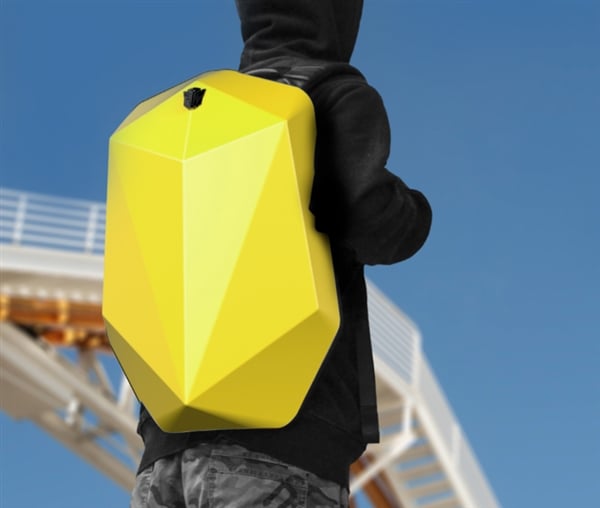
Xiaomi‘s partnership with Hasbro, owner of the Transformer franchise dates back to 2016 when both firms teamed up to release a Transformer robot that can transform into a dummy Mi Pad tablet. Xiaomi has now been licensed by Hasbro to manufacture the Mi Bumblebee computer backpack which is shaped like a Bumblebee. In case you don’t know, Bumblebee is a fictional robot character from the Transformers franchise. In most versions, Bumblebee is a small, yellow with black stripes Autobot. The character is named after the Bumblebee, a black-and-yellow striped bee which inspired his paint scheme.
The Xiaomi Bumblebee Backpack features a cool and stiff body with a special protective double-layer shell on ergonomic design. As stated, the design is inspired by the Bumblebee in Transformers and it features a faceted element and an arched tough body with high strength and extra large space. With a total internal capacity of 16L, the backpack has reasonable storage.
Its circumference is 53x35x16cm, and the surface is a double-shell with a combination of high-strength PC and EVA material. The design also includes a hidden zipper which is placed at the back. The shoulder strap is stuffed with cotton lining with a built-in luggage strap. On the internal, there is a separate computer compartment made from cashmere material and which can comfortably hold a 15.6-inch laptop and is equipped with multiple function storage pockets. There are other partitions which are detachable and designed to meet different storage needs.
The Mi Bumblebee computer backpack will be available in Beetle Yellow and Armor Gray. It comes with a price tag of 539 yuan ($79). Xiaomi is yet to reveal when the backpack will go on sale.
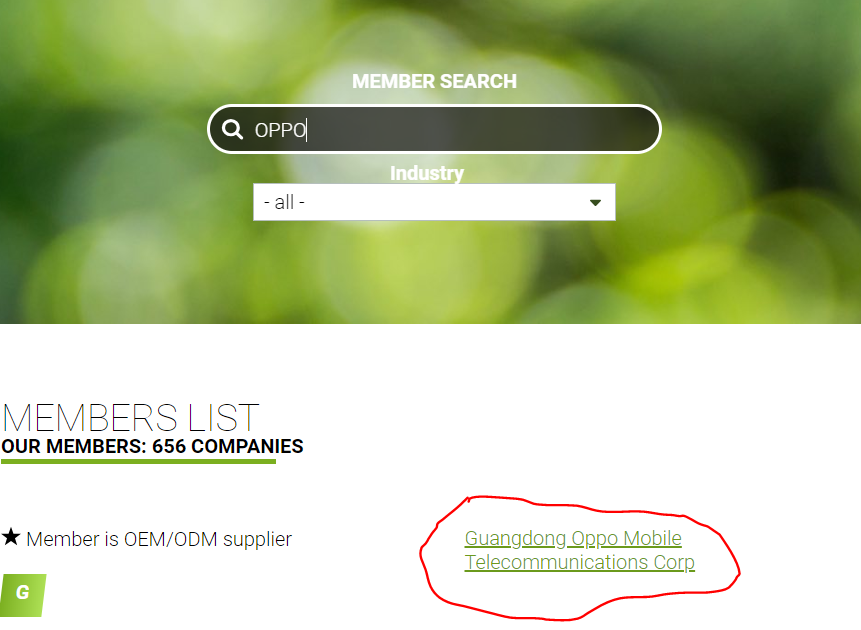
At the moment, no OPPO phone has support for wireless charging. The Find X which was its flagship for last year only brought a faster quick charging technology called SuperVOOC. However, that might be changing soon as OPPO has now joined the Wireless Power Consortium (WPC), creators of the Qi wireless charging standard.
OPPO joining the WPC has sparked speculations that OnePlus may add wireless charging support to the OnePlus 7
If we are to go by the close relationship between OPPO and its sister company, OnePlus, we think this may also mean the next OnePlus flagship, the OnePlus 7 may have support for wireless charging.
The news of OPPO joining the WPC was first reported by ChargerLab and it points at the manufacturer releasing a phone with wireless charging support soon.
If we were to take a guess, we would say the OPPO R19 (possibly OPPO R19 Pro) will be the first OPPO phone with support for Wireless Charging. OPPO may also surprise us and launch a successor to the Find X that will come with the feature.
The fact that some of OPPO and OnePlus phones share very close features has generated speculations that OnePlus may follow suit and launch a phone with wireless charging. However, this is just speculation. OnePlus hasn’t joined the Wireless Power Consortium and it will have to if it plans to launch a phone with the feature.
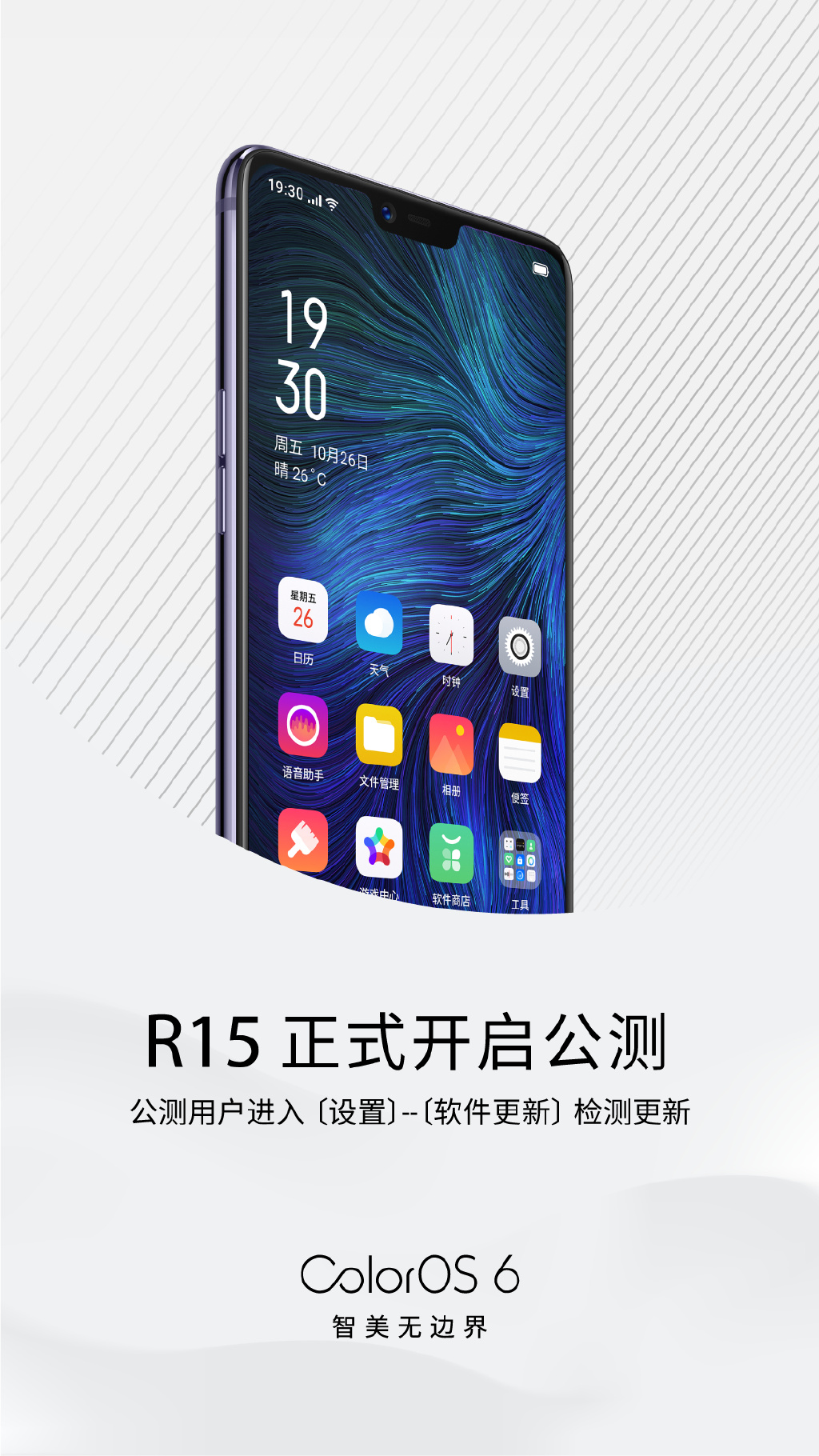
ColorOS 6 brings a brand new interface along with Android 9 Pie to the OPPO R15. The new UI uses a lot of white and also tries to reduce the use of text to create a non-clustered interface. OPPO says the new OS has been designed for full-screen (18:9 and up displays) phones.
The update also brings a new Chinese font called OPPO Sans, and an AI-based application freeze feature that learns which apps are frequently used and which to suspend to free up system resources. Once an app has not been used for more than 20 minutes, the system will already know based on studied usage pattern if it is an app that is frequently used to know if it should freeze it or not.
CES is a place to showcase the best tech from all around the world. Here we see big screen TVs, monitors, gaming PCs, weird robots that automate everyday tasks, weird robots that look scary but are useful and a lot more. In fact, the event is flooded with products that try to be unique and stand out from the rest. While you’ll find a lot of interesting products at the event, we have picked out what we thought were the best of the lot. The products mentioned below stood out from the rest and are favorites among our team.
So, let’s take a look at Gizmochina’s Pick of the Best of CES 2019. This article is a bit different than the usual ones in the sense that each of our Gizmochina team members contributed to this list. Below we tell you which products stood out according to each one of us and why.
There were two products that really stood out for us at the event and almost everyone here at Gizmochina agrees that these two were the very best.
1. LG’s Signature Series OLED TV R
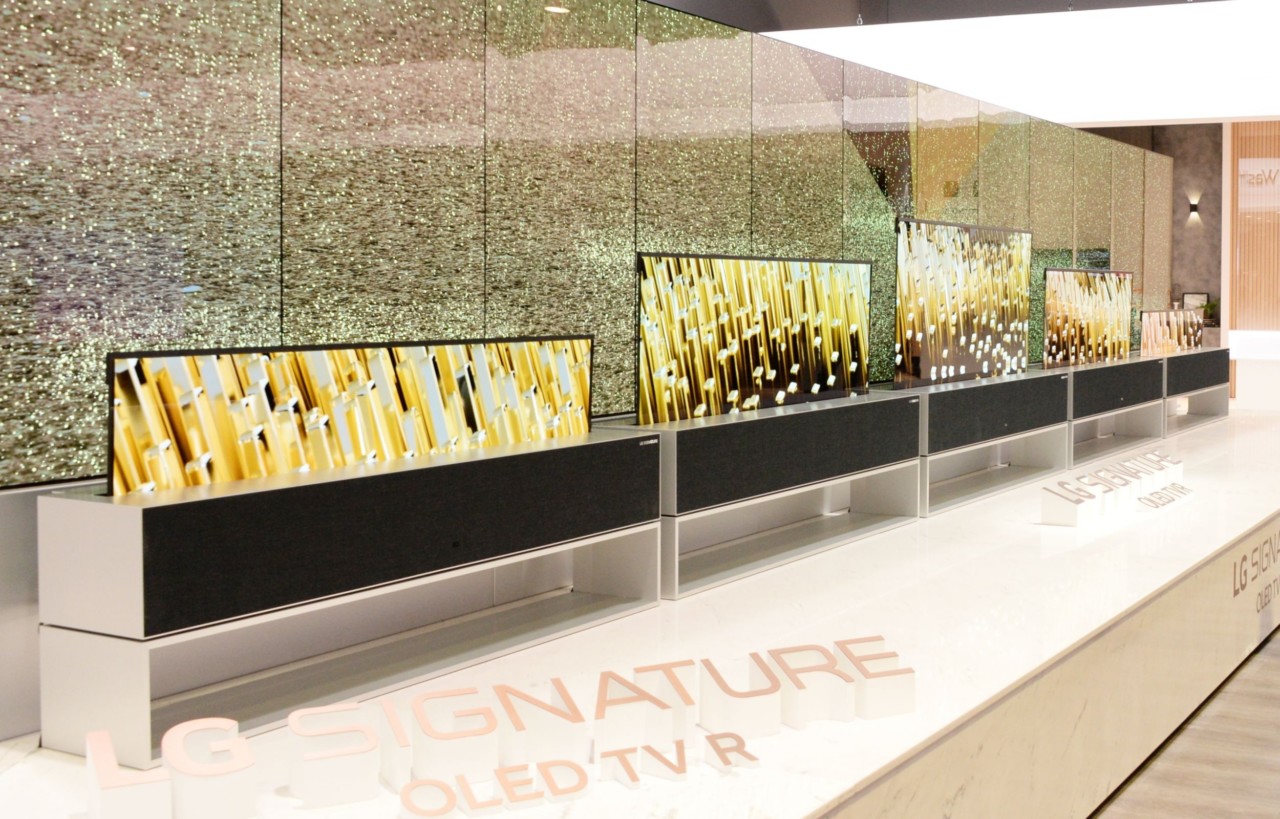
If there was one product that stood out for us at CES 2019, it was the LG Signature OLED Rollable TV. Now, we know LG has shown off rollable TV prototypes before, but what’s really cool this time is that it’s a commercial product. Yes, for a very, very large sum (which is yet to be announced), you will be able to take home this beauty sometime later this year.
What makes it incredible is the way it works. For me, that’s the best part of this product. You push the power button and what looks like a low hung stand in your room gives birth to this incredible 65-inch OLED TV. Once your entertainment needs are over, it will silently roll itself back into its housing. It’s pretty NEAT!
This was one product that every one of Gizmochina’s team nominated as one of the best products at CES 2019!
“If you are a minimalist, you will love the LG Signature OLED TV R. If you have kids, you will appreciate the OLED TV R. And if you just love having a piece of tech you can show off to your friends when they come over, then this is for you.” — Habeeb
“I know that it may be an obvious choice but I think that rollable displays will ease people’s lives as everyone will be able to bring the most sophisticated hi-tech products everywhere” — Michele
“What’s cool is that even the size of the screen can be adjusted for playing songs, viewing photos.” — Anvin
“This will bring some ease to moving a giant TV around the home or even when changing apartment. But let’s hope we won’t have to sell an organ to get this one. “ — Jed
“I love the fact that the base stand also works as a sophisticated sound bar (apart from being the TV housing!).” — Jeet
2. Bell’s Nexus VTOL aircraft ( Uber Elevate Air Taxi)
Another product that almost everyone here at Gizmochina thought stood out from the crowd was Bell’s Nexus Air Taxi. While we are still a good 3-4 years away from seeing air taxis in action, this is a promising development in the field. Despite being a non-functional unit being displayed at the event, the fact that it can take off like a helicopter and cover nearly 150 miles in just one hour promises some really big things for the transport industry.
“I find it really amazing because it looks like one of those aircraft you only see in sci-fi movies. Yet, there it is right before our very eyes and the company even hinted we could see it flying in the air space in a few years time.” — Jed
“It’s cool because it’s a vehicle which could help to solve traffic congestion and pollution problems in big cities sooner than expected” – Michele
“While it looks like an oversized drone, it’s much more than that. The company has made quite a progress compared to what it showcased last year and it’s fascinating that this sci-fi like thing could become a reality in a few years.” — Jeet
Jeet’s Picks
3. NReal Light MR Glasses
We have previously seen mixed reality glasses such as Microsoft Holo Lens and Magic Leap One but they aren’t practical to wear everywhere. Solving this problem is ‘Light’ mixed reality glasses from Nreal, which was founded by former Magic Leap engineer.
The ‘Light’ glasses looks very much similar to the regular sunglasses and have smaller profile than others. They are also considerably lighter in weight compared to the conventional MR glasses. It will be priced at around $1,000 and will hit the markets in H1 2019.
4. Hyundai Elevate
Hyundai showed off its Elevate project at CES 2019 which the company is calling an “ultimate mobility vehicle” that combines technology from electric cars with robotics. While most car manufacturers are making products just for everyday transportation purpose, Hyundai has unveiled a product that can be used in the time of crises. Further, the product combines the best of both worlds — electric car technology and robotics technology.
Hyundai Elevate is a walking search and rescue car that is designed with four mechanical legs with wheels for feet. It can roll along on extended legs or retract them to be driven like a car.
Hyundai executive John Suh says that the need for search and rescue, and humanitarian aid, is growing around the world and ‘Elevate’ is designed to save lives in disasters.
Did you know, it can LITERALLY WALK on any terrain, just like any other mammal!
Habeeb’s Picks
5. LG Display Neo Art
I use an external display plugged into my PC and I am sure a lot of other people do too. There are times when I have to resort to my laptop’s display, such as when I am at my parent’s place, but there is a feeling of “digital claustrophobia” if I can call it that, that sets in after some time.
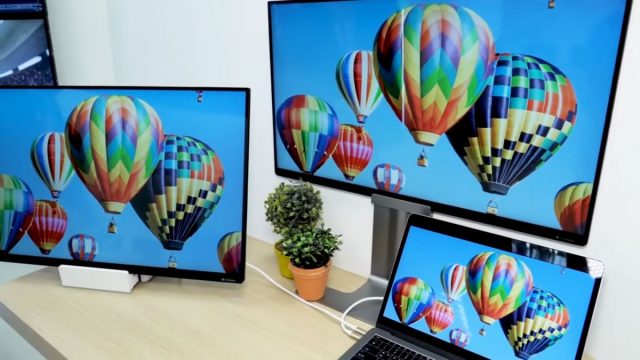
The LG Display Neo Art is a 27-inch “portable” monitor that connects via USB-C to your laptop for both power and display output. There is no power cable crisscrossing HDMI cable. All you need is a single cable and a stand to set it up on.
The display can be easily moved around rooms but moving it long distances (e.g. from home to work and back) without breaking it isn’t something you want to be doing. For that to happen, the display has to be much more portable and the only way I can see that happening is if it were flexible – allowing you to roll it up in a case much like a building plan. Nevertheless, the technology is still pretty great even at this stage and I look forward to it being available for consumers in the next few years.
6. Samsung Space Monitor
The Samsung Space Monitor was announced before CES 2019 began but since Samsung brought it to the event, I guess it makes the list.
If your desk is no wider than 4ft, then you know how cramped it is after you add a desk lamp, an external monitor, a keyboard and mouse, and your laptop. With Samsung’s Space Monitor, you can reclaim more space as the monitor clamps to your desk and sits flush to the wall instead of on the desk itself.
Another advantage of the monitor is that the display isn’t too close so it’s not hurting your eyes, although the hinge design of the clamp means you can pull it forward when you need to.
The Space Monitor should bring a bit of sanity to your desk while providing incredible display quality.
Anvin’s Pick
7. Lenovo Smart Clock
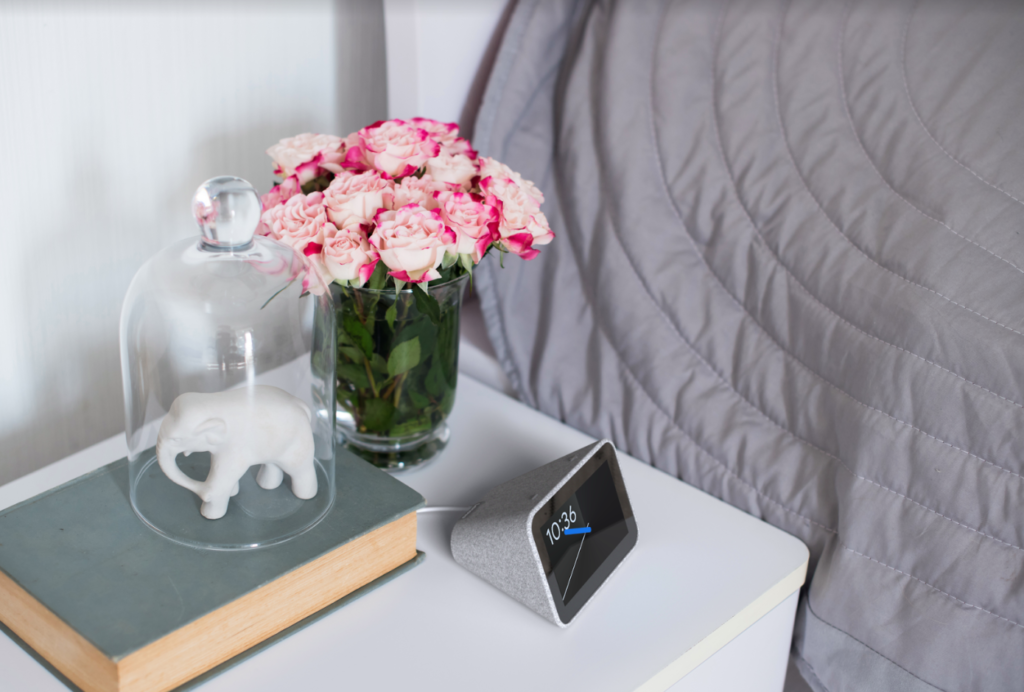
The best part of this nifty little Alarm clock from Lenovo is that it doesn’t try to do a lot. It’s cheap (which means accessible to more people), super compact, and can easily replace your existing alarm clock. But with google assistant on board, it’s really smart too! Given its size and price, its made for the masses. It’s a really good way to start your life in a smart way.
Michele’s Pick
8. Samsung Gem exoskeleton
Looking at the high amount of people who struggle with manual jobs (especially older people), I think it will be amazing for people to get back to their regular routine with this setup. Maybe, in the future, we’ll see an exoskeleton from Samsung that will increase our abilities tenfold, just like we see in the movies!
Jed’s Pick
9. Sony LSPX-S2 Glass Sound speaker
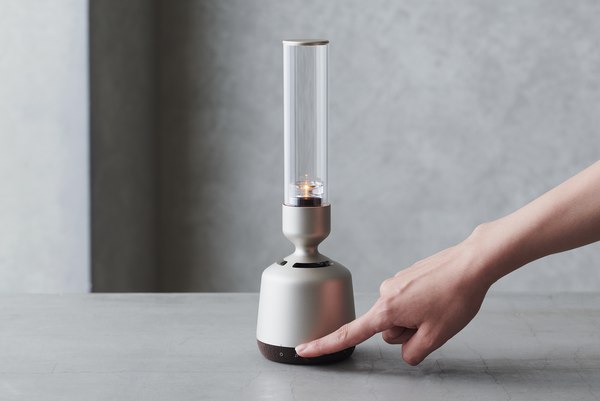
Sony’s naming system always looks weird but the products are hardly less cool. The glass speaker from Sony at CES 2019 actually elicited thoughts of a romantic candlelight dinner in my head. Won’t be a bad idea to have the light illuminate the table while at the same time cool, romantic music envelopes the arena from the same gadget. The LSPX-S2 is one smart speaker that doesn’t even look like a speaker but that’s cool. So long the output is rich and impressive.
10. Valeo XtraVue ‘Invisible’ Trailer (My Personal Pick)
One of the products that I thought was extremely cool at CES 2019 was Valeo’s XtraVue ‘Invisible’ Trailer. Yes, it’s exactly what you think. It’s a trailer from that’s nearly invisible from the front half. The trailer itself is not what really excites me, but if the technology works anywhere as good as what we see in the video, the future possibilities are endless. It’ll be so cool seeing (oh wait, I mean not seeing) an invisible car, something like in the movie Die Another Day!
There are a lot of other cool products showcased at the event. But we thought the above 10 really stood out!
Xiaomi floated an IPO on the Hong Kong stock exchange aimed at generating revenue for the expansion of the company. During the initial public offer, te company did not describe itself as just a smartphone company but as an internet company despite gaining a wide reputation from its smartphone brand. Xiaomi is now set to invest in other spheres which would position it as truly an internet company. According to a Bloomberg report, the Chinese giant will invest at least 10 billion yuan ($1.5 billion) on artificial intelligence and smart devices over the next five years.
The huge investment is part of the Chinese giant’s strategy of grabbing more revenue from high-value services and the Internet of Things (IoT). The innovative Chinese company is also focusing on pushing for the top of the market while working towards expanding its tentacles into Europe. While speaking to Bloomberg TV recently , Xiaom’s CEO Lei Jun stated; “Now is the time for the action. We are all in on AIoT.” This is a reference to the incorporation of artificial intelligence into Internet of Things in order to create a smart ecosystem of connected devices. We have seen the firm implement this system of combining its XiaoAI smart assistant with its smart home (IoT) devices lately. However, XiaoAI is only adapted for Chinese speakers and we are yet to see other languages become supported. Adding more supported languages may likely be part of the development plan. This will surely boost the sales of the company’s growing catalogue of IoT gadgets whenever they become available outside China.
Lei Jun didn’t elaborate on the company’s investment plans but the company is looking to generate more revenue in the face of a brewing trade war between China and the US that has caused uncertainty to envelop the economic space. Also, the company may be fast looking outside smartphones to diversify its revenue as the smartphone market experiences some saturation. It is yet to be seen if the company holds as much prospects as first speculated. Investors don’t seem to be very confident about that as the company’s stock has plummeted by roughly 40% since after its July 2018 initial public offering.
If you need a well-balanced midrange smartphone which does not disappoint under any point of view, then the new Xiaomi Redmi Note 7 released after the official separation between Redmi and Xiaomi (Redmi became an independent sub-brand) is the perfect phone for you. But it is not the only one. If you are trying to understand which device is the most suitable for you, then you may like this comparison between the new Redmi Note 7 and the latest Huawei mid-rangers P Smart (2019) and Honor 10 Lite. Three different phones sold at a similar price: which one has the best value for money? Go ahead with the comparison to know it.
Xiaomi Redmi Note 7 vs Huawei P Smart (2019) vs Huawei Honor 10 Lite
The design is an aspect on which both Huawei and Xiaomi are focusing a lot in the last period. Indeed, all these devices are incredibly beautiful and well-built. Talking about the look, the one I like more is the Honor 10 Lite due to its high screen-to-body ratio and the gradient color variants, but I would prefer Redmi Note 7 due to its more solid build quality. Indeed, according to the company, the rear glass is very resistant and the display also comes with the Gorilla Glass 5 protection. Further, Xiaomi Redmi Note 7 is water and dust resistant, even though no IP certification was provided.
Display
No matter which device you buy, you will get more or less the same display quality from these handsets. But Huawei P Smart (2019) should be slightly better in terms of viewing quality because LTPS panels are able to provide a lower power consumption as well as more controlled temperature ranges and a higher contrast. Xiaomi Redmi Note 7 has a slightly bigger display (just 0.1 inches), while Huawei P Smart 2019 and Honor 10 Lite have exactly the same display size.
Specs & Software
Just like the displays, even the hardware departments of these handsets do not differ so much. I would prefer the Xiaomi Redmi Note 7 because in my opinion, it has a better GPU inside the Snapdragon 660 chipset. Huawei Honor 10 Lite takes the second place with its Kirin 710, while Huawei P Smart 2019 takes the last spot of the ranking because it does not have a variant with 6 GB of RAM, neither 128 GB of internal storage. All the devices come with the latest Android version out of the box (Android Pie), but while Redmi Note 7 has the MIUI 10 to customize it, Huawei P Smart 2019 and Honor 10 Lite have the EMUI 9 installed.
Camera
The best camera side belongs to the Xiaomi Redmi Note 7. It is equipped with the new Samsung’s sensor sporting a resolution of 48 MP and a secondary 5 MP depth sensor. It provides a stunning detail in photos for a midrange, as well as low levels of noise in low-light conditions. Honor 10 Lite has a great camera too, better than Huawei P Smart 2019, but it is far from its Xiaomi’s rival. But when it comes to the front camera, Honor 10 Lite should be the best with its 24 MP resolution and f/2.0.
Battery
With a 4000 mAh unit, Xiaomi Redmi Note 7 will be able to provide the longest battery life. It should have no problems lasting up to two days on a single charge, while Huawei P Smart 2019 and Honor 10 Lite have just an average battery life: one day with moderate use. Further, Xiaomi Redmi Note 7 has the support to Quick Charge 4.0, while its opponents do not offer any kind of fast charging technology.
Price
Xiaomi Redmi Note 7 debuted in China with a price tag of about $147, Huawei P Smart 2019 costs about €250 in the global market, and Honor 10 Lite was launched with a €210 price tag. I would personally pick Xiaomi Redmi Note 7 not only for the price but also for its great camera and its long lasting battery.
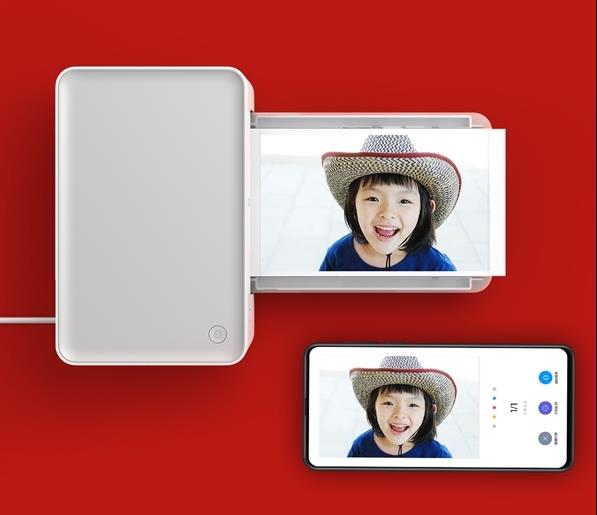
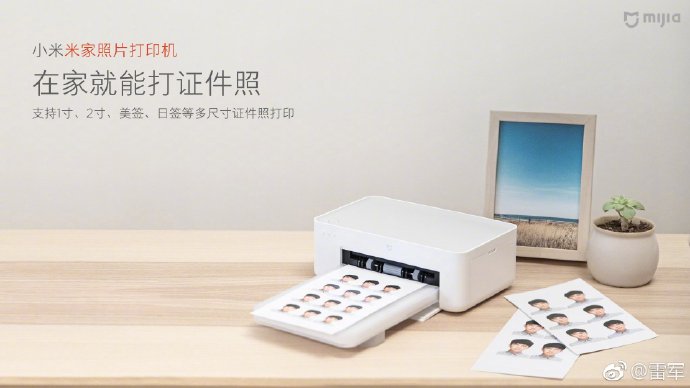
During the Redmi Note 7 launch conference yesterday, Xiaomi also released another product just as it had promised. The Xiaomi MIJIA Photo Printer was officially launched clutching a 499 yuan price tag. The device comes with a set of color papers comprising 4o photo papers and a ribbon, which will cost an extra 59 yuan ($8). This printer was earlier tipped t launch on December 19 but apparently, XIaomi had other ideas.
This is not the first photo printer Xiaomi is launching if our memory serves us right. The company, last year, crowdfunded the XPRINT AR photo printer but then, it was only a third-party AR photo printer and not a Xiaomi branded product. In this case, the MIJIA photo printer can print photos taken with your phones in various formats. Xiaomi’s CEO Lei Jun spoke glowingly about the photo printer, extolling its capability to print pictures just the way they are, in terms of quality.
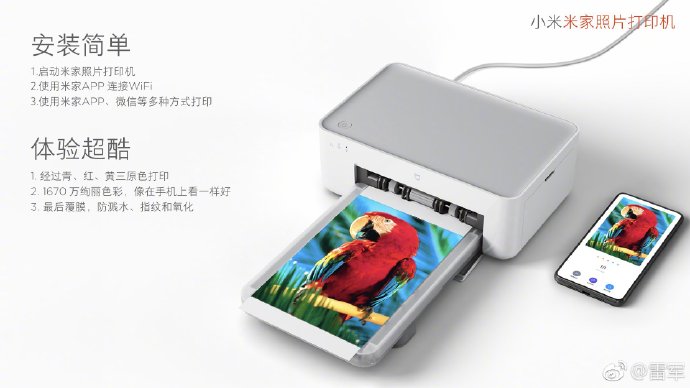
The photo printer comes with a compact but cool size, a regular feature of most Xiaomi products. The printer is capable of print pictures at a maximum size of 6 inches. It is understood that the print resolution of Xiaomi Mijia Photo Printer is 300 x 300dpi, using CMY 3-color dye sublimation printing technology, which can realize 256-level color scale complete output presentation. Sublimation technology can present more rich color levels and wider color gamut, ensuring a better color reproduction. In order to solve the problem of photo fading and yellowing. The Xiaomi Mijia photo printer is automatically coated with a colorless transparent protective film at the last step of photo printing, showing excellent scratch, anti-fingerprint and splash-proof properties, while the photo dye factor is protected from gas, light or moisture. While fading, the color of the photo stays longer. In addition, the device is said to have 655 vents and 12 different apertures with a sleek appearance. The vents are perhaps to let in air in order to keep it cool always. As a result of this, it can print photos continuously in a stable manner.
The printer comes with support for Mijia APP, WeChat app. The device also supports AirPrint screen printing, computer wireless printing, and can be controlled using the power button which also doubles as the print button. print photos with one button. Te smart printer also allows you to share your photos with friends and family even when you are not with the printer.
There is no word yet as to when it will be available in China and even elsewhere.
Realme, the smartphone brand launched last year, which was earlier a subsidiary of Oppo, is one of the dominating smartphone company in India’s budget smartphone segment. The company, which has already launched five smartphone models so far, is now reportedly working on another model.
According to the reports, after launching Realme 1 and Realme 2 as well as Realme 2 Pro, the company is now gearing up to launch Realme 3 in the Indian market. The report also adds that the phone will be launched in Q1 2019, which means that it will debut before the end of March this year.
While nothing related to the smartphone is known at this point in India, Realme India CEO Madhav Sheth has said that the company is working on a smartphone with the 48-megapixel camera sensor. However, it’s not confirmed if this is the Realme 3 or some other model.
Recently, the company, which started off as an online-only brand, expanded its presence to the offline market. Prior to that, it had entered into a partnership with Reliance Digital to sell its smartphones across more than 1,300 locations in 130 cities. Realme will add 20,000 outlets in 150 cities of India this year.
In addition to that, Realme is also looking to open exclusive experience stores. In an interaction with an Indian newspaper, Madhav Sheth said that the company is currently working on the company’s structure and principles and is yet to finalize the location for its first experience store. However, we should expect such store in the second half of this year.
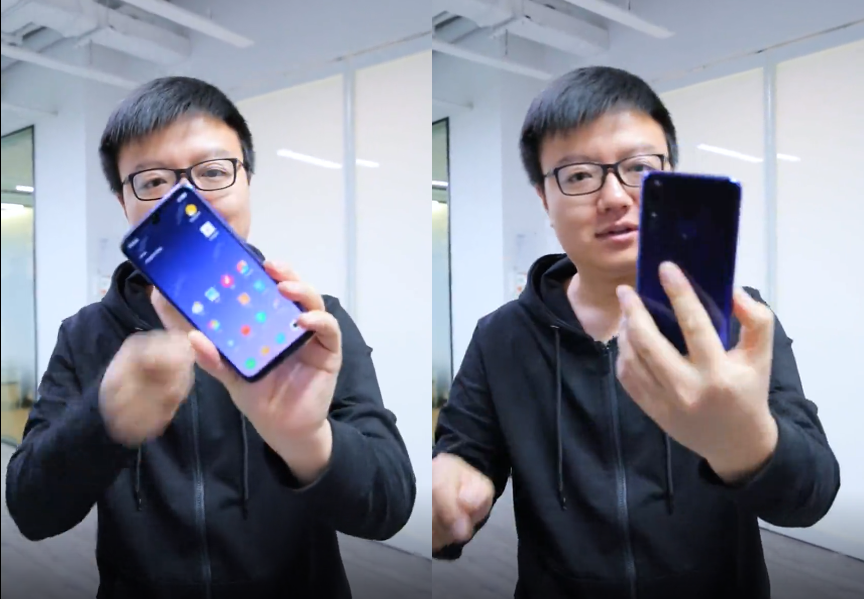
The Redmi Note 7 is proving to be a highly cost-effective smartphone with impressive hardware. The focus has no doubt been on the 48MP Samsung sensor at the rear but that isn’t the only feature of the device which will tickle fan’s fancy. A video has appeared on Weibo showing the Redmi Note 7’s screen undergoing several extreme tests.
The new Redmi device is shown in the video while being subjected to different extreme tests to prove the display screen is durable. The screen was used to crack walnuts, then was smashed with the heel of the lady’s shoes severally. In addition, the screen was struck repeatedly on the table and then slammed with a rolling pin for kneading, yet the screen didn’t crack. Here’s the video posted on YouTube, in case you want to check it out.⇓⇓⇓
During the Redmi Note 7’s launch event, Xiaomi disclosed that the device features a “rock solid and diamond-like” durable body. That’s because the handset is fitted with 2.5D Corning Gorilla 5 glass panels with an additional 0.8mm thickness on its front and rear. To protect it from breaking easily, the company also strengthened its four corners and the “microcrack” edge polishing process has increased the sturdiness of the device. Hence, the drop protection performance of the Gorilla glass on the Note 7 is said to be four times stronger than competing glass. The glass also retains optical clarity and touch sensitivity of other previous generations of Gorilla Glass. We’ll have to wait and see if Zack Jerry will get his hands on the Redmi Note 7 any time soon. But then, the device looks like one with a solid build that can stand the test of time and constant usage.
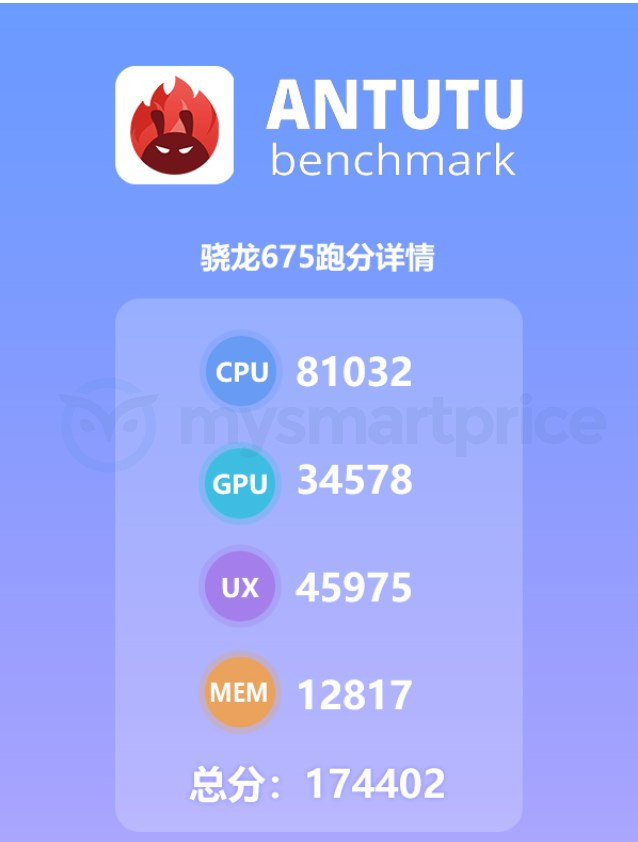
In October last year, Qualcomm announced its latest mid-range chipset Snapdragon 675, which is manufactured using the 11nm processor. The chipset, which is expected to power upcoming mid-range smartphones has now appeared on the AnTuTu benchmarking platform.
According to the AnTuTu listing, the Snapdragon 675 processor scored 1,74,402 points. In comparison, the Snapdragon 670 SoC managed to score 1,50,000. Looking at the results, the SD675 has also outperformed Snapdragon 710 SoC which managed to score 1,70,000 points.
The Qualcomm Snapdragon 675 Mobile Platform is an octa-core processor that includes two performance cores of Cortex A76 working at 2.0 GHz and six power efficient cores of Cortex A55 clocked at 1.78GHz. The new chipset will be bringing some advanced features on mid-range phones that are now found only on high-end or flagship phones.
The chipset is equipped with Adreno 61X graphics that carries support for OpenGL ES 3.2, Open CL 2.0, Vulkan, and DirectX 12. For gaming, the company seems to have employed software gaming enhancements that promise to deliver 90 percent reduced janks.
Imaging is the other improved feature of the Snapdragon 675 SoC. The chipset supports front-facing or rear-mounted triple cameras with features such as portrait mode and 3D face unlock. Smartphones powered by the SD675 chipset will carry support for limitless slow-motion videos of HD quality. It also comes with a multi-core third generation AI engine that will play an important role in capturing videos and photos, learning and adapting the voice of the user and improving battery performance.
The chipset supports 4K video playback and DisplayPort through USB-C. For connectivity, it includes X12 LTE modem with 600Mbps download speeds and 3x carrier acceleration, Wi-Fi 802.11ac 2×2 with MU-MIMIO, tri-band and Bluetooth 5.0.
Other features of the SD675 include FHD+ resolution supporting the display, DSP security for superior protection while face unlocking a smartphone, Qualcomm Aqstic and aptX audio technologies and support for Quick Charge 4+.
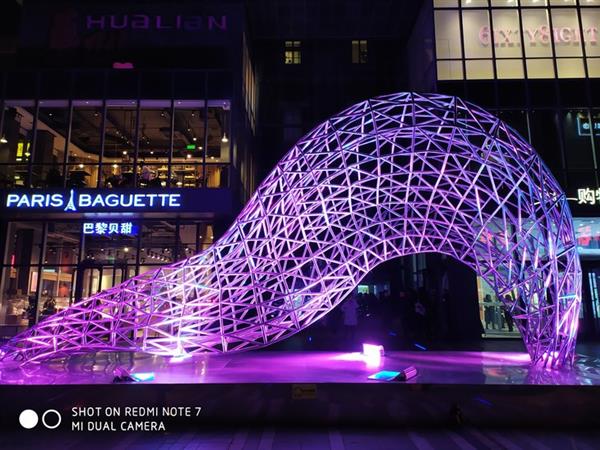
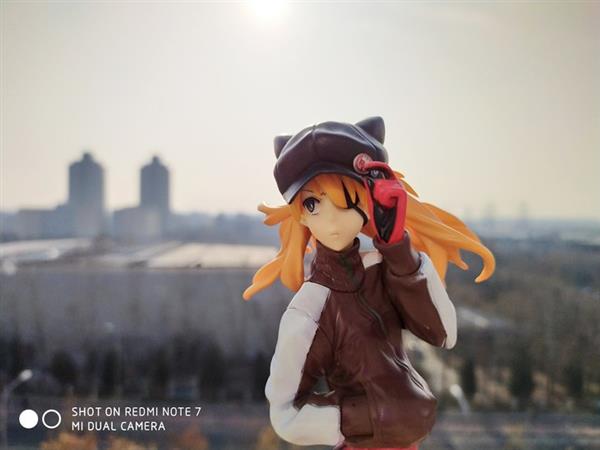
When Huawei launched the Nova 4 last December with a 48MP Sony IMX586 sensor, we never thought as early as one month later, a handful of new ones would be launched with such large pixel camera. The Redmi Note 7 falls in that category which already has the Hisense U30 and soon the Honor View20. Xiaomi’s independent Redmi brand officially unveiled the Redmi Note 7 yesterday showing a cost-effective, quality model. As always, all aspects of the phone will be subjected to review and here you have the review of the Redmi Note 7’s camera samples as picked up on Chinese blog MyDrivers.
Xiaomi Redmi Note 7 48MP sensor sample
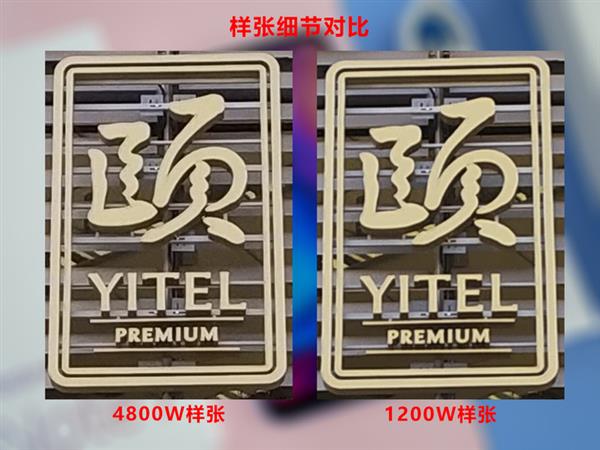
The Redmi Note 7 is promoted heavily with the big 48MP lens and that isn’t surprising. The 48MP sensor is the main camera and is a Samsung ISOCELL GM1 Ultra Clear sensor with a 1/2 inch size. The super-sensing area is second only to the SonyIMX600 sensor used in the Huawei P/Mate series flagship. It is on par with the Sony IMX586 sensor used on the Nova 4. The ultra-high pixels provide more detailed performance for Samsung GM1 products. Moreover, Samsung GM1 also adopts Quad Bayer pixel arrangement, which can combine four 0.8μm pixels into one by four-in-one pixel technology (Pixel binning). A large pixel of 1.6 μm (the output photo becomes 12MP) increases the amount of light entering the camera.
Xiaomi Redmi Note 7 12MP sample
The Samsung ISOCELL GM1 hardware comes with some limitations which makes it necessary for some of the samples to be shot using professional mode when the 48MP sensor is to be deployed. While AI mode is deployed without HDR when the 12MP sensor is in use. Two sets of camera samples were taken for comparison.
For instance, the photo of the giant Starbucks coffee cup. Under the 48MP sensor, the font on the giant Starbucks coffee cup is still clear while it becomes slightly faint when Pixel binning is used to achieve a 12MP sensor. That shows the 48MP sensor gives more attention to details. Pixel binning comes to play when images are to be captured in low light conditions. By combining raw data from four pixels into one, the effective output is a higher amount of light captured, while reducing the noise generated. Without actually artificially boosting the “signal” (amount of light perceived by the sensor, usually done by increasing the ISO), the resulting image is much brighter when Pixel binning is used simply because of the combination of four pixel-data into one.
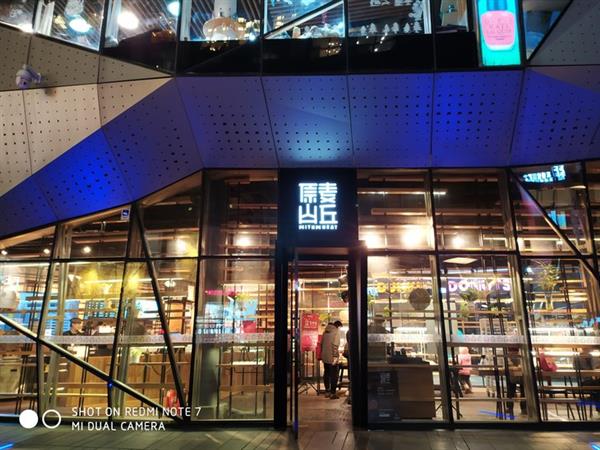
Checking out the camera samples, the Redmi Note 7 could be said to have the best camera among the thousand yuan smartphones. The night shooting and daylight captures are all awesome. In addition, the AI mode in the camera is also quite user-friendly. When it is detected that the scene is backlit, the shooting options of “Backlight” and “Sketch” will pop up automatically. Even when shooting a Silhouette, the backlight and multi-frame will be synthesized to ensure the silhouette effect is captured.
Check out more samples from the Redmi Note 7 camera shutter.
Xiaomi India is now celebrating its fifth anniversary in India by introducing attractive discounts on various smartphones. The prices of the Mi A2 Android One, Redmi Note 5 Pro, Redmi Y2, Redmi 6 Pro and Redmi 6 have been permanently slashed. Moreover, starting from midnight today, the Redmi 6A will be available for purchase on open sale.
Here is all the information on the revised price tags of the aforementioned smartphones along with their pricing at launch:
The Redmi 6A variants such as 2 GB RAM + 16 GB storage and 2 GB RAM + 32 GB storage are respectively priced at Rs. 5,999 and Rs. 6,999. Since the time it was made official in September last year, it has been available for buying only through flash sale. Beginning at 12 AM midnight today, Xiaomi India will make it available on open sale through Amazon India and Mi.com.
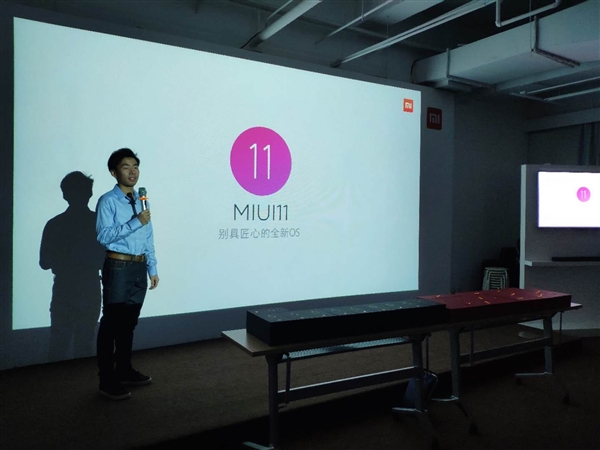
Xiaomi has reportedly started the development of its next generation of MIUI custom ROM and it would be called MIUI 11. This was made known during the company’s MIUI Core Experience Annual Meeting by Liu Ming, head of Product planning department of Xiaomi internet. This falls in line with the time schedule when the current-gen MIUI 10 commenced and in the coming months, we expect the company to start recruiting closed beta testers.
Presently, MIUI 10 stable update has already been pushed to over 40 models cutting across the Mi and Redmi models. With over 300 million users and a cumulative estimate of 402 weeks of development and update in its 8years+ of existence, MIUI could be said to be one of the longest-running ROMs on mobile phones in China. It has been the practice of Xiaomi to release a major update every year and this year isn’t going to be any different. The new update is expected to be released along with the new generation of Xiaomi’s flagship mobile phone.
From the photo seen on the power point presentation screen, MIUI 11 will be known as “a new and unique OS”, perhaps just the same way MIUI 9 was dubbed “lightning fast” while MIUI 10 adopted the slogan “AI full-screen system”.
Xiaomi had earlier hinted that it will focus on improving the UI during the development of MIUI 11. The company further stated that the focus on MIUI 11 will not be on making a big difference in the user interface between MIUI 10 and MIUI 11. Instead, the focus will be on a design focused on the real needs of consumers. The rollout is still months away but we believe, the next-gen custom ROM will bring impressive features.
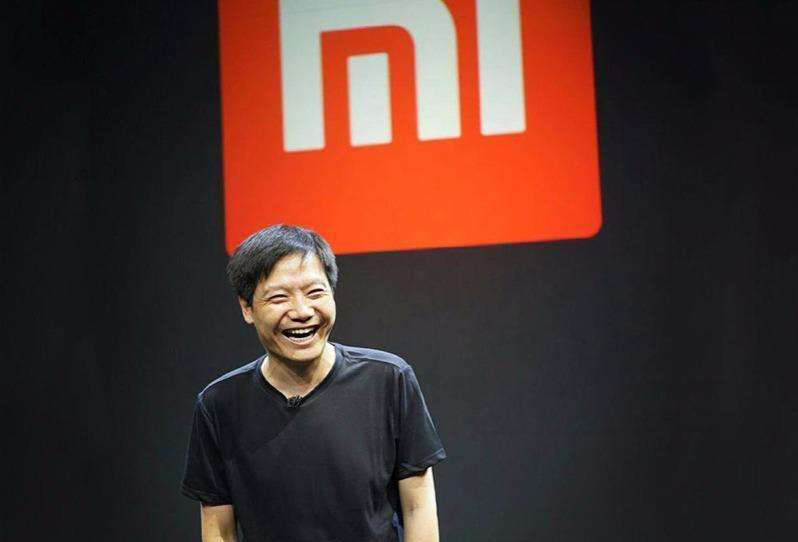
Xiaomi’s co-founder and CEO Lei Jun appeared on Bloomberg in an interview where he shared information related to the company’s performance so far and what the company is looking forward to in the new year.
The company’s share dropped in the past few days, wiping off around $6 billion of its market valuation. However, Lei Jun shrugged that off and says that the company is adopting next-generation technologies which should energize demand for its smartphones.
While he did not comment on how an economic deceleration might affect the business, he was hopeful that the 5G technology will revive demand for smartphones as well as the host of internet services that Xiaomi offers. The company is offering a range of online services, including movies and music streaming to around 220 million users. He said:
In China, the penetration rate of smartphones is extremely high. But I think we are at the eve of 5G. I believe when 5G phones start to get popular, the overall demand from China will recover.
Xiaomi, which is dominating the Asian market, is now planning to expand to other regions. The company will soon expand to the European market but there’s no progress related to the US expansion plans. This could probably because of the on-going US-China trade war. He said that over the past two to three years, the company has entered about 80 countries and regions and is hoping that the company keeps that momentum going.
Yesterday, alongside the launch of Redmi Note 7 smartphone, the company has also announced that the Redmi brand will now work independently of its parent company. This move will enable the Chinese company to distinguish the products, operations, and working methods. It now has three brands — Mi for premium high-end phones, Redmi for budget devices and Poco for “affordable flagship” devices.
Most smartphone manufacturers are using their own custom skin on top of the Android operating system. While such custom interfaces introduce new features that are missing in stock Android, not everyone is a fan of the design of the custom skin. For those, the third-party launchers come in handy, allowing them to customize the look.
However, Huawei is now taking a step that will block the third-party launchers on its Android fork EMUI. Huawei has announced through its forums that it will be blocking the use of third-party launchers on EMUI 9.
The company is trying to explain this by saying that it received feedback from users who encountered various problems while using third-party launchers. So, the company says that in order to maintain the customer experience, it will block the use of launchers.
Huawei further adds that most third-party launchers come pre-installed with bloatware which in turn affects the phone’s performance. It adds that sometimes, due to high power consumption by such applications, the phone also starts experiencing heating-related issues.
Another issue that the Chinese company is pointing out is advertisements. It says that most third-party launchers are loaded with advertisements, from pop-up ads to background apps, which apart from inconvenience for usage, also poses a privacy risk.
In light of this, the company says that it has decided that from EMUI 9, users wouldn’t be allowed to set third-party launchers as the default. While it appears that the company is concerned about the users’ data and experience, Huawei has taken an easy way out and is depriving its users of using the feature which is one of the major things that makes Android the most popular mobile operating system.
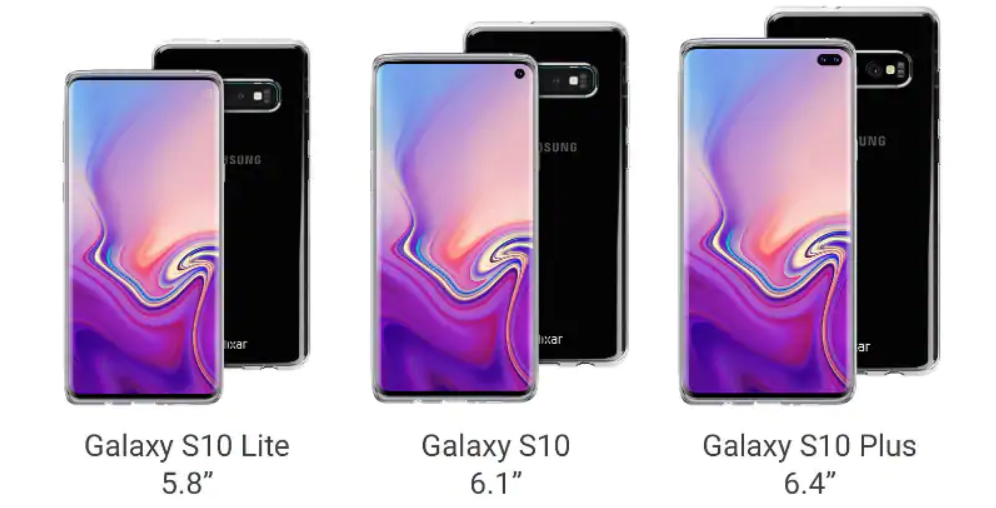
Samsung recently took the media by storm when it announced that this year’s Galaxy Unpacked event would be held on February 20. During the event, the South Korean tech giant is expected to officially unveil the Galaxy S10 flagship series. Going by leaks, Samsung Galaxy S10 series is made of the Galaxy S10+, S10, and S10 E (Lite). We have already seen some leaks around these models and don’t expect the rumour mills to stop buzzing until the models are official.
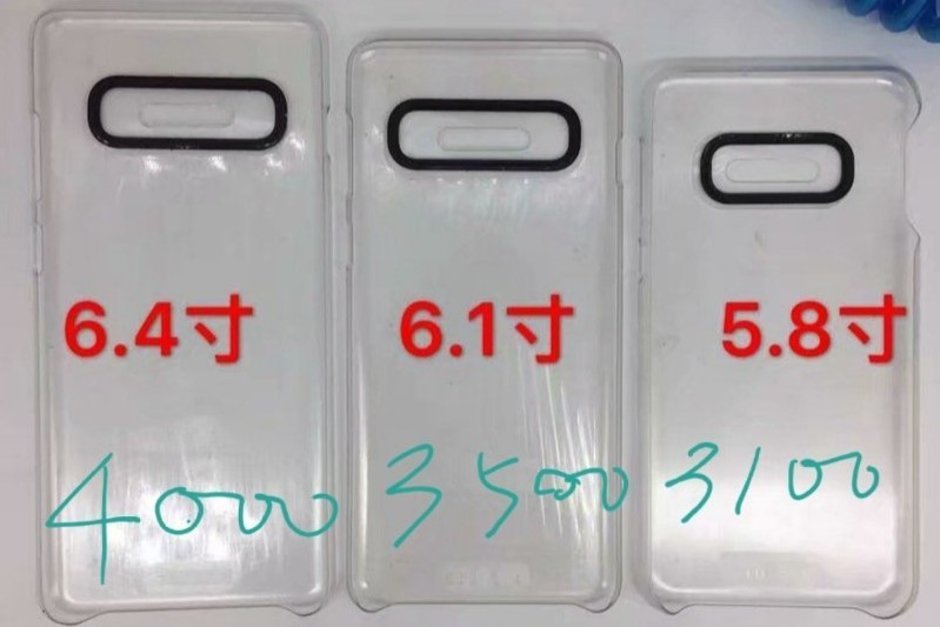
The latest rumour surrounds the battery capacity of some of the Galaxy models Samsung will drop this year. An earlier rumour had already shown that the Galaxy S10+, S10, and S10 E (Lite) will pack 4,000mAh, 3,500mAh, and 3,100mAh battery capacities respectively. However, the battery capacity of the 5G-enabled Galaxy S10 variant and that of the foldable Galaxy Flex/Fold are yet to feature in any leak until now. GalaxyClub.nl has hinted that the 5G Galaxy S10 model, internally known as the Beyond X (SM-G977), would possibly pack a massive 5,000mAh battery. The battery unit is reportedly the same with the ones that would be crammed inside the upcoming Galaxy M20 and M30 mid-range devices.
Further, the foldable Galaxy Flex will reportedly pack an even bigger battery. The rumour has it that the foldable phone will utilise two separate batteries of 3,100mAh capacities. This set up will provide the flagship model with 6,200mAh battery. That is practically a tablet-size composition which means you could get up to two days battery power on a full charge. We know the Galaxy S10 would be unveiled during the Unpacked event but we can’t say when this foldable beast would meet with us. We’ll keep you updated as more details emerge.
We use cookies on our website to give you the most relevant experience by remembering your preferences and repeat visits. By clicking “Accept”, you consent to the use of ALL the cookies.
This website uses cookies to improve your experience while you navigate through the website. Out of these, the cookies that are categorized as necessary are stored on your browser as they are essential for the working of basic functionalities of the website. We also use third-party cookies that help us analyze and understand how you use this website. These cookies will be stored in your browser only with your consent. You also have the option to opt-out of these cookies. But opting out of some of these cookies may affect your browsing experience.
Necessary cookies are absolutely essential for the website to function properly. This category only includes cookies that ensures basic functionalities and security features of the website. These cookies do not store any personal information.
Any cookies that may not be particularly necessary for the website to function and is used specifically to collect user personal data via analytics, ads, other embedded contents are termed as non-necessary cookies. It is mandatory to procure user consent prior to running these cookies on your website.