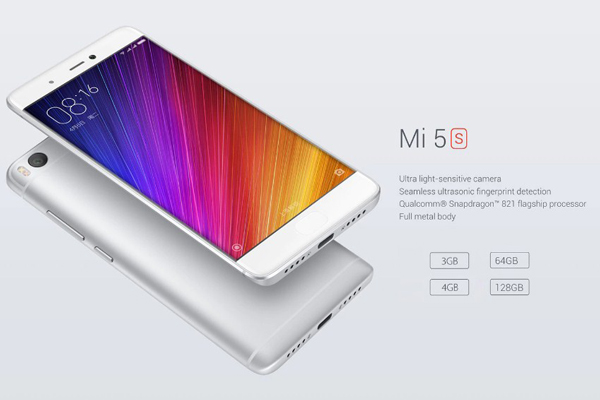
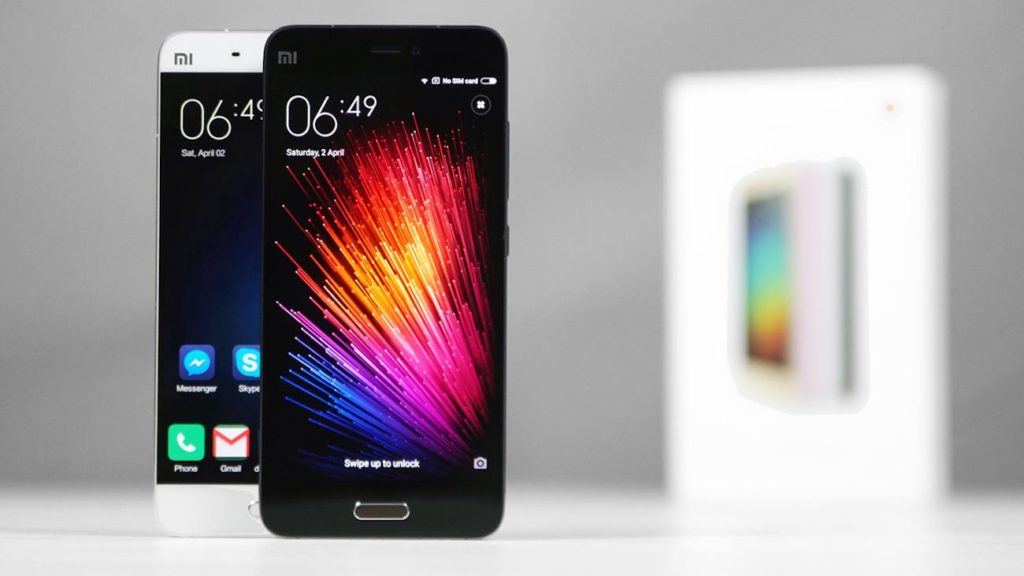
Xiaomi Mi 5s smartphone was made available to the public back in September 2016. The phone sports a 5.15-inch touchscreen display which bears a resolution of 1080 X 1920 pixels and is powered by 2.15GHz quad-core Qualcomm Snapdragon 821 processor.
The Mi 5s packs 3GB of RAM, paired with 64GB of non-expandable internal storage. For the photography enthusiasts, the phone offers a 12MP camera on the back and a 4MP front shooter for selfie addicts.
You can now get your hands on the Mi 5s by shelling out just $297.99 on Banggood. The site is currently offering a considerable 26% discount on the handset’s original asking price of $399.99. On top of that, you also earn 297 Banggood points.
But if that doesn’t impress you much, you can use coupon code ‘1BGXM5SP’ and get an additional $26.82 off on the Mi 5s smartphone. You’d end up paying only $271.17 for this gold-tinted Xiaomi-branded smartphone after applying the aforesaid coupon code at the time of checking out.
You can head straight to this link in order to take advantage of the offer before it comes to an end.
Xiaomi’s Mi 6 smartphone hit the store shelves in April last year. The handset sports a 5.5-inch touchscreen display with a resolution of 1080X1920 pixels at 428 PPI (pixels per inch). It packs a powerful 2.45GHz octa-core Qualcomm Snapdragon 835 processor with 6GB of RAM and 64GB of non-expandable ROM, under the hood.
Much to the delight of smartphone enthusiasts who have restlessly been waiting to get their hands on Xiaomi Mi 6 smartphone without spending a lot of money, Banggood is currently offering a pre-order discount on the handset’s original asking price of $517.81.
Thanks to the aforesaid Banggood promo, you can now pre-order the black color version of the Mi 6 smartphone by shelling out only $397.69. Aside from saving $120.12, you also earn 397 Banggood points.
The Xiaomi Mi 6 is backed by a robust 3350mAh nonremovable battery and it runs on Android. On the photography front, it sports a 12MP rear-mounted camera and an 8MP front shooter for selfie addicts. In addition to Xiaomi Mi 6 smartphone, the package comprises one Type-C cable, Type-C TO AUDIO cable, US charger, and an eject pin.
You can click here to pre-order the phone on Banggood and take advantage of the discount before it comes to an end. It’s worth noting that the smartphone is expected to ship after Monday, January 15. You can use promo code ‘1Mi664GB’ at the time of checking out and buy the handset for only $369.85.
Sporting a creative design, Dibea C17 2-in-1 wireless vacuum cleaner is capable of cleaning closer to walls and edges, under sofas, kickstands, and beds. The device is equipped with a couple of extra rotary cleaning head, and Carbon fiber rolling brush that has two-speed control.
Dibea 2-in-1 wireless vacuum cleaner is currently up for grabs for just $99.99 on GearBest. This is a considerable 6% reduction in the device’s original asking price. It is only available in red color option on the site. The Dibea C17 is an always-ready vacuum cleaner as it features a convenient docking station which is quite useful while charging, storing the device and even holding the extra accessories. Moreover, it sports a cordless design that allows you to clean everywhere without tangling.
If you want to take advantage of GearBest’s latest promo and buy the Dibea C17 vacuum cleaner at a discounted price, head straight to this link. It’s worth noting that only 18 pieces were left at the time of writing. On top of that, the promo is slated to end in 8 days.
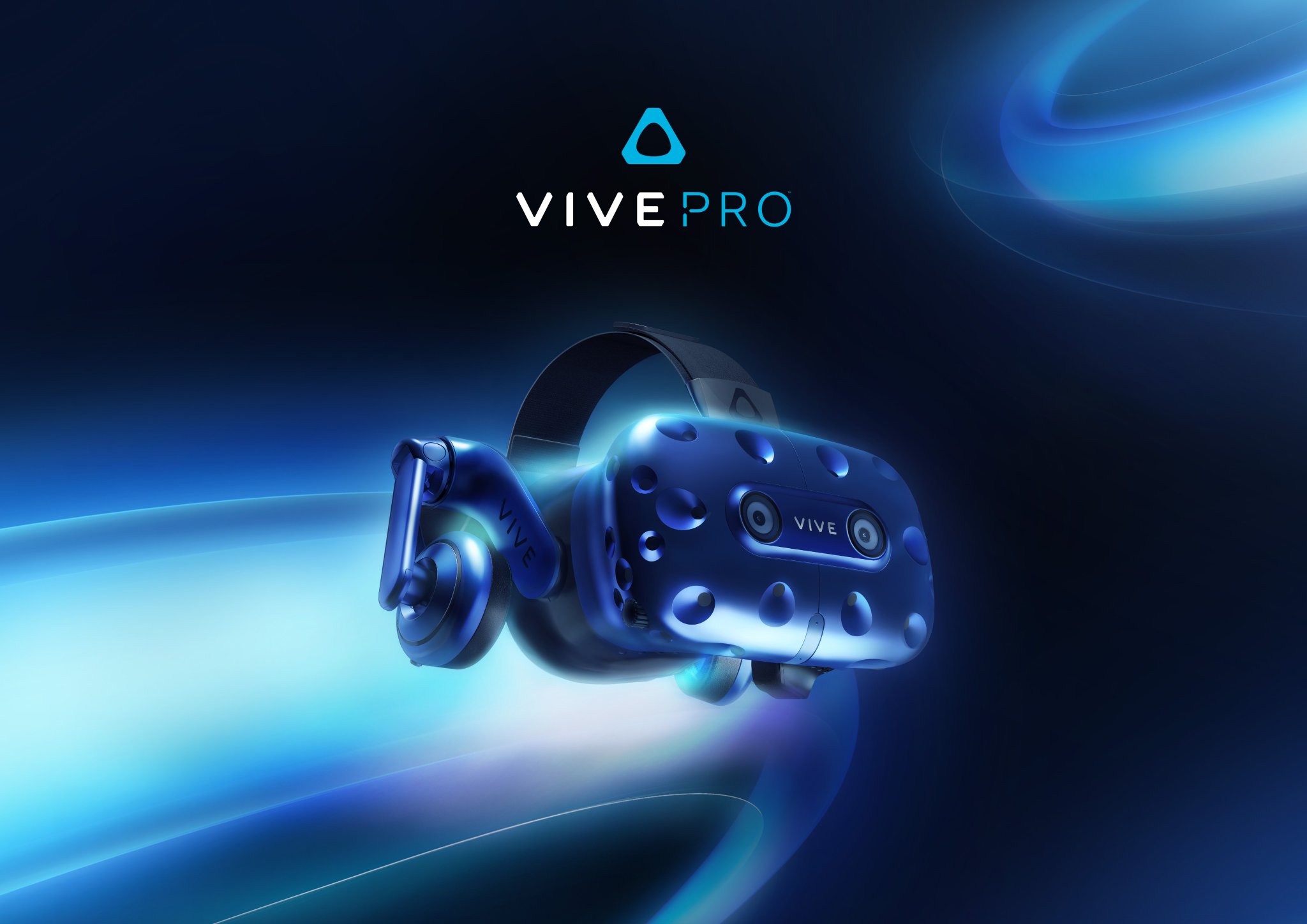
CES 2018 won’t officially open till tomorrow but lots of companies have been announcing new products. HTC’s VR company, Vive, is one of them and has announced the Vive Pro and Vive Wireless Adaptor.
Vive Pro
The design of the Vive Pro is loosely based on the original. The front has the same vent holes but now includes dual front facing cameras. Vive has also built a new headstrap for the headset that includes “integrated high-performance headphones with a built-in amplifier”.
They have also included a sizing dial for maintaining balance when you put on the headset. Unlike the original that comes in black, the Vive Pro comes in blue.
In terms of specifications, the Vive Pro still packs dual OLED displays but with an improved combined resolution of 2880 x 1600. This is a 78% increase over the former. There are also dual noise-canceling microphones with active noise cancellation and dual cameras.
The full tech specs have not been revealed yet as well as pricing and release date. We sure will update this post once they are available.
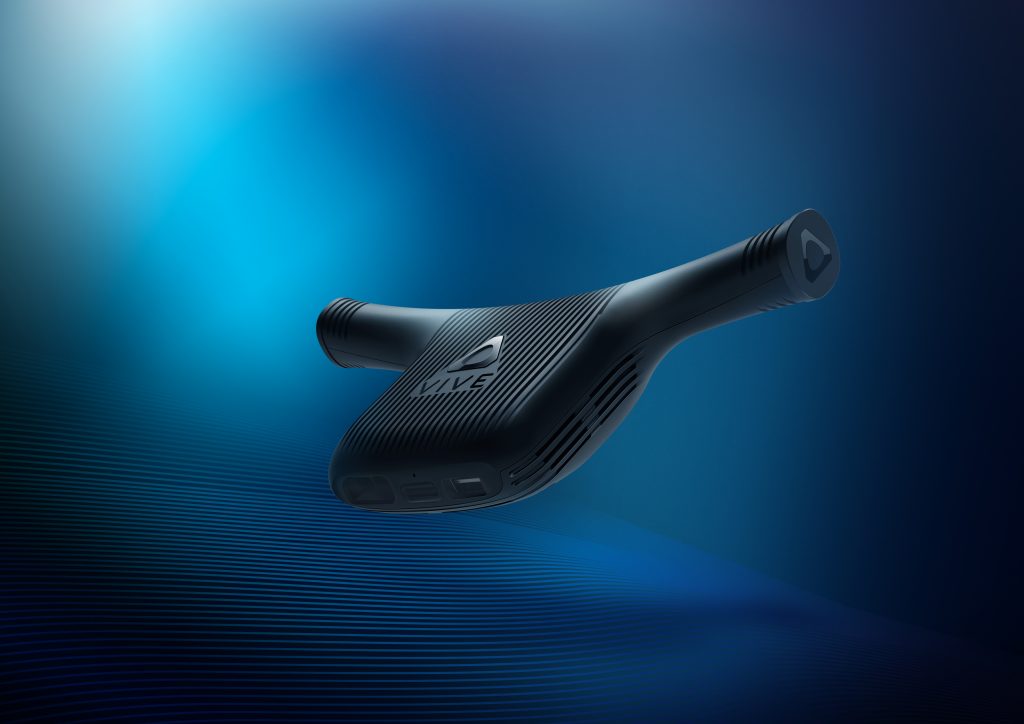
Vive Wireless Adaptor
Vive also announced the Vive Wireless Adaptor, a device that will allow you use the Vive and Vive Pro wirelessly. The adaptor uses Intel’s WiGig technology which operates at 60GHz, an interference free band. The result is lower latency and an improved performance. The company says the adaptor will ship to customers all over the world in Q3 2018.
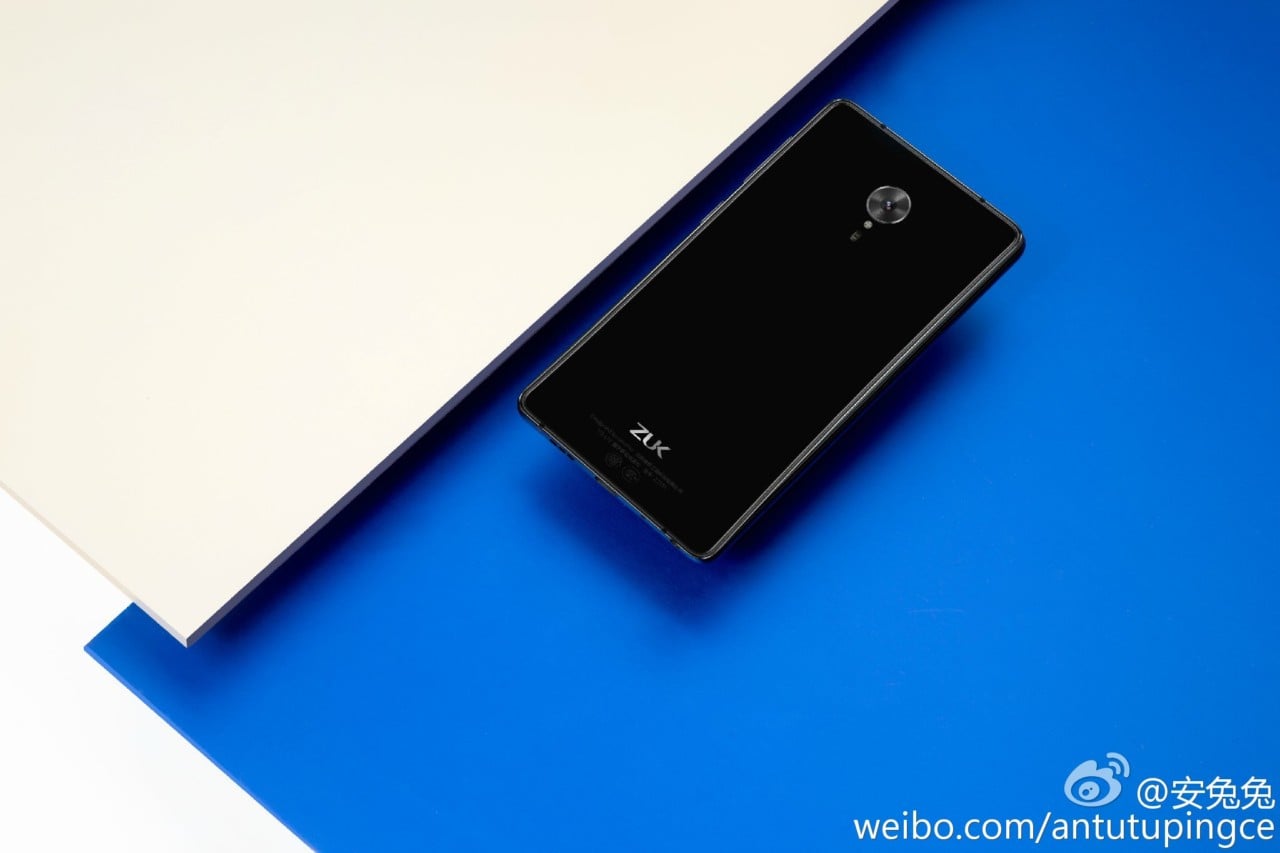
ZUK, a subsidiary of China-based Lenovo which was incorporated in 2015 with an aim to offer premium phones at an affordable price, has not been in operations since quite some time. However, as per the latest report, the company is all set to make a comeback later this year in April.
Last year, there were reports suggesting that ZUK Z3 will be launched and the company was expected to host three separate events to announce the phone. However, that didn’t happen last year and now fans are suggesting that the company could launch the device this year.
Along with the discussion about the ZUK Z3 phone on China-based microblogging platform Weibo, some posters have also appeared with a message of April 23, which many believe is the date when the company could announce a new product.
Last week, Chang Cheng, Vice President of Lenovo Group, got transferred to the company’s MBG (Mobile Business Group) China and has been given the responsibility for the product organization, research, and development work in the country. The news about his transfer as Lenovo’s Product Planning Manager in China also hints about the brand’s return.
While the company has stopped production of new devices, the ZUI — Android-based company’s own operating system is still in development. However, the company has not yet announced anything related to ZUK and there is a possibility that all this is just speculation. So, take this news with a pinch of salt.
The last smartphone announced by the company was ZUK Edge, which features a 5.5-inch Full HD display with Corning Gorilla Glass on top. It is powered by quad-core Qualcomm Snapdragon 821 processor along with 4GB/6GB RAM and 64GB internal storage. The phone packs 3,100mAh non-removable battery and with the recent price-cut, it costs 1799 Yuan (approx. $264).
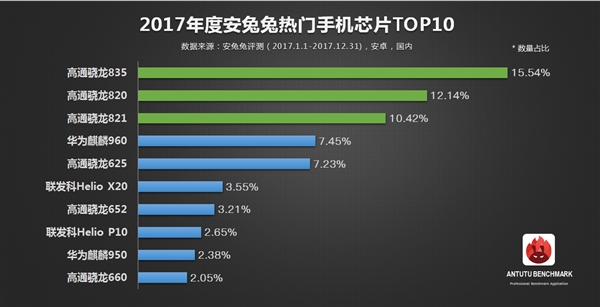
The year 2017 was a very interesting year for the mobile phone industry. The second half of the year heralded the trend for mobile phones with the 18:9 aspect ratio and full-screen display. Despite the smartphone display dominating the headlines, one aspect that was also full f excitement was that of the smartphone processors. AnTuTu has now released a chart which gives an idea of the statistics of the various mobile chipsets that were used on the Android smartphones launched last year.
The statistics show the percentage based on usage for the processors and as you would expect, the Snapdragon 835 dominated the charts with a 15.54% market share. The figure may not be too impressive, though, considering that the new flagship chip wasn’t deployed as much as the SD 821 performed last year. Surprisingly, the Snapdragon 821 isn’t the second most popular chipset this year but the Snapdragon 820 claimed that record and that could be due to its cost. Third on the list is the Snapdragon 821 chipset and indeed, Qualcomm dominated the top 3 spots. Not just that, Qualcomm equally dominated the flagship mobile chipset market as Huawei’s Kirin 960 and Kirin 950 chipset are the only flagship chips on the list. The Kirin 960 chip occupies the number four spot 7.45% share of the Android phone market. All of those figures are from Huawei’s mobile phones like the Huawei P10, Mate 9 etc. However, don’t be surprised at the none-inclusion of the Kirin 970 chip on the list considering it was released in the fourth and final quarter of last year.
Going further, the Snapdragon 625 chipset occupies the number 5 spot and this is indeed impressive for a processor released in the early part of 2016. Qualcomm also grabbed a slice of the mid-range segment with the Snapdragon 652 and 660 chipsets recording some gains. The specific rankings and percentages are as follows: Snapdragon 835 (15.54%), Snapdragon 820 (12.14%), Snapdragon 821 (10.42%), Kirin 960 (7.45%), Snapdragon 625 (7.23%), MediaTek Helio X20 3.55%), Snapdragon 652 (3.21%), MediaTek Helio P10 (2.65%), Kirin 950 (2.38%) and Snapdragon 660 (2.05%).
It was reported that Xiaomi cancelled the Redmi Note 5 in favor of the Redmi 5 Plus. Although there has been no official confirmation about that happening neither has there been one saying it is still in the works. Notwithstanding, news about the phone has continued to surface.
A new leaked render of the Redmi Note 5 has been seen online. While it does share some similarities to the last one, it is also slightly different.
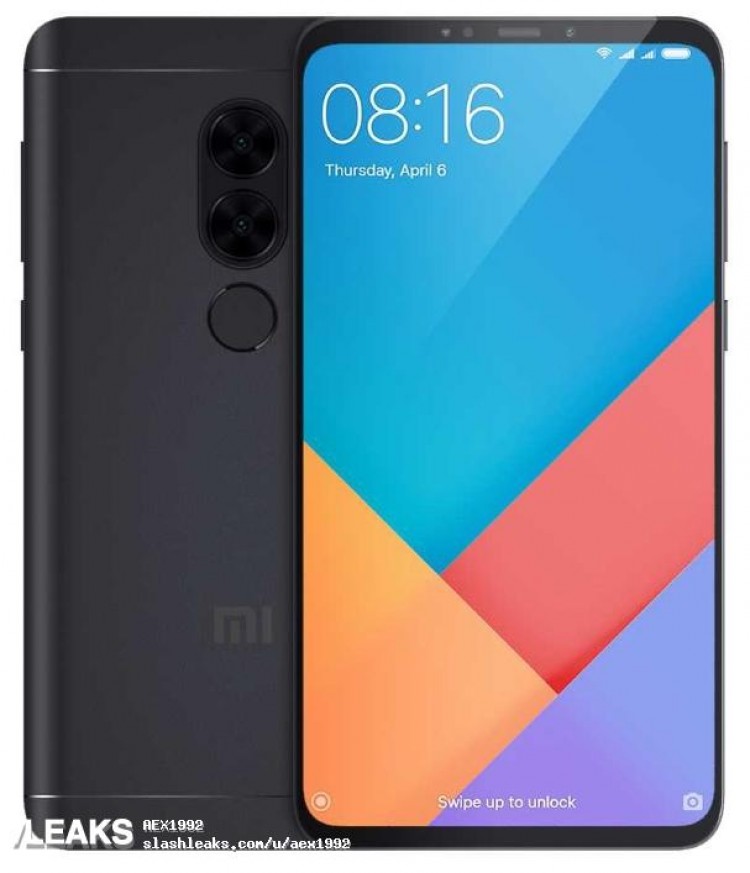
The Redmi Note 5 is shown in the image above with very thin bezels. Much more smaller than what you have on the Redmi 5 and Redmi 5 Plus. The bottom bezel is even thinner than that of the Mi MIX 2, which means the front camera and sensors sit at the top with the speaker.
If the Redmi Note 5 were to launch with this design, it will be a contender for the mid-range phone with the highest screen-to-body ratio.
On the rear, things are a bit more familiar. The design is still Redmi-like with silver antenna lines, curved sides, and the Mi logo. Where it does differ from the last leak is in the camera design.
There are still two sensors but both share the same housing. There is also no LED flash separating the sensors and the fingerprint scanner. Although the image doesn’t show the LED flash, it is definitely flanking the sensors on the right.
There is no confirmation that the Redmi Note 5 will be released. So far, everything we have seen has been just been unconfirmed leaks and rumors and the above is not an exception.
The phone is said to feature the same 5.99” FHD+ display as the Redmi 5 Plus and comes with a mysterious Snapdragon 632 processor.
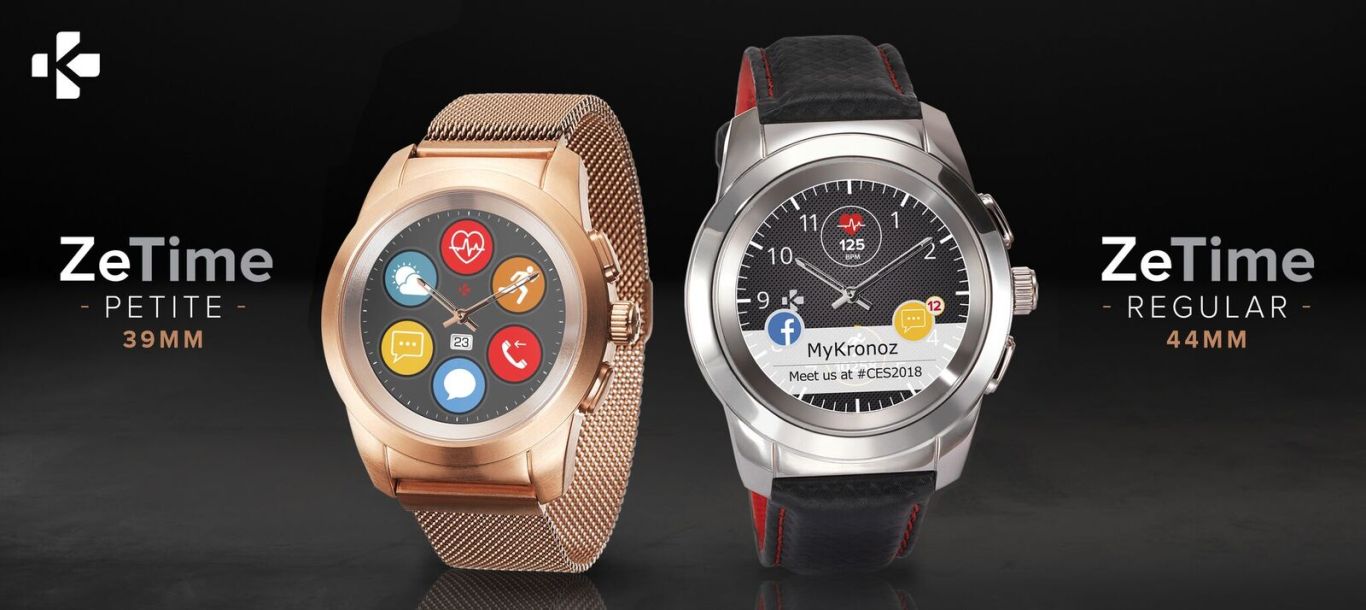
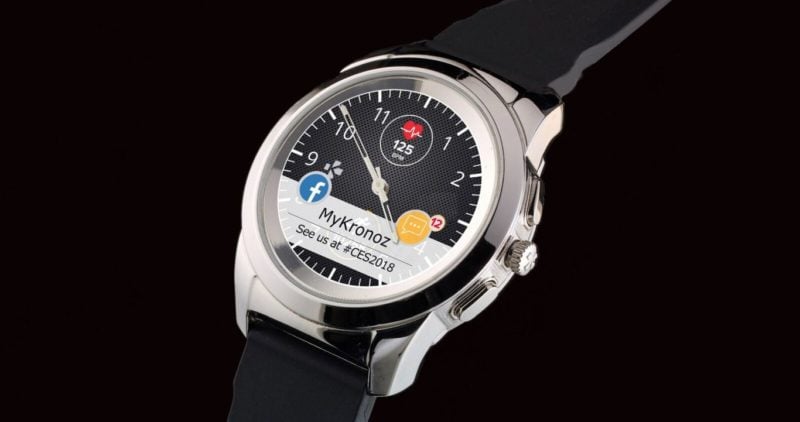
If you are into hybrid smartwatches, the MyKronoz ZeTime was a pretty good option bringing the best of both worlds featuring mechanical analog watch hands and a full touch screen display underneath. This meant that the watch showed you the time even when the screen was off. The company has now released a new variant of the ZeTime smartwatch at CES 2018, dubbed as the ZeTime Petite. Like the name suggests, this is going to be a more compact version of the original watch, featuring very similar features in a smaller, 39mm case (vs 44mm case on the regular version).
The ZeTime Petite comes with a stainless steel case protected by sapphire glass on top along with multiple watch bands and materials options. The screen size drops down to 1.05-inches (vs 1.22 inches on the original ZeTime) with 240 x 240 resolution. There are all the usual features that you would expect in a smartwatch, including notifications, fitness oriented options, heart rate sensor and remote phone controls. Plus, being a hybrid, the Mykronoz ZeTime Petite can last up to 3 days on a single charge for smartwatch functions and up to 30 days for the mechanical analog movement.
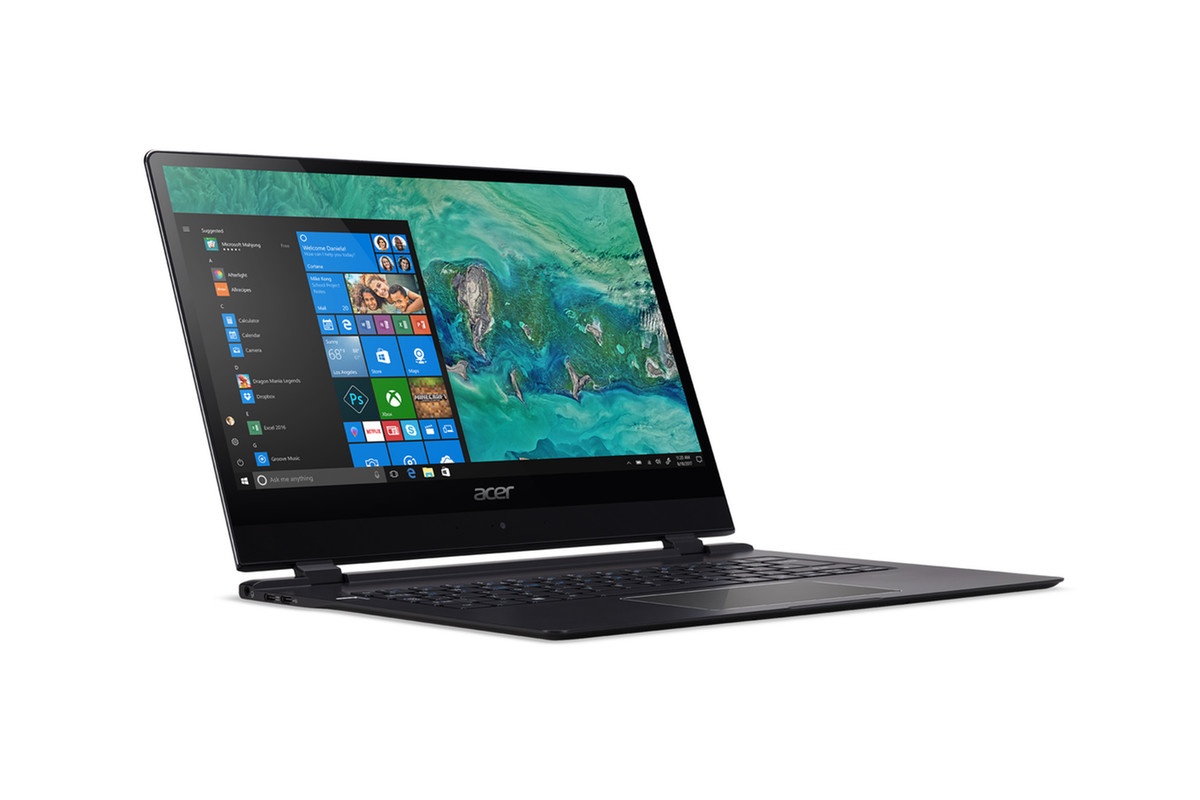
Acer today announced three new laptops at CES 2018 in Las Vegas. Out of those three, one which captures the attention is the Acer Swift 7 which is claimed to be the world’s thinnest laptop, measuring just 8.9mm in thickness.
The company says that the Swift 7 laptop is designed in such a way that it makes the device easier for users to carry anywhere they travel, at any time. The laptop comes with an aluminium unibody design.
The display on the Acer Swift 7 has been upgraded from 13.3-inch to 14-inch, but it comes with Full HD resolution. The display uses IPS5 technology, along with Acer Color Intelligence and a Corning Gorilla Glass NBT touchscreen. The laptop packs a backlit keyboard, making it easier to work in low-light conditions such as long-haul international flights or train journeys.
It is powered by 7th generation Intel Core i7 processor, along with 8GB LPDDR3 RAM and 256GB PCIe SSD storage. It runs Windows 10 and also includes a fingerprint reader which allows password-free and more secure sign-in through Windows Hello.
The laptop further comes with 4G LTE connectivity, which is rare in laptops. 4G connectivity is powered by Intel XMM 4G LTE. According to the company, this makes it useful for the professionals who wish to eliminate tedious wireless connection problems while travelling and stay focused on the task at hand. It comes with Nano SIM card slot support and features eSIM technology.
As of the pricing and availability details, the new Acer Swift 7 will be available for purchase in North America starting March, carrying a price tag of $1,699. Later, the laptop will be available in EMEA starting April, for a starting price of 1,699 Euros.
While Swift 7 is thinner, it pales in comparison to other devices offered by Acer’s competitors in this price range. While Swift 7 offers 7th generation processor, 8GB RAM and 256GB SSD, most devices in its price range now offer 8th generation Intel processors, better display and comparatively higher memory configuration.
For more coverage from CES 2018, check outthis link!
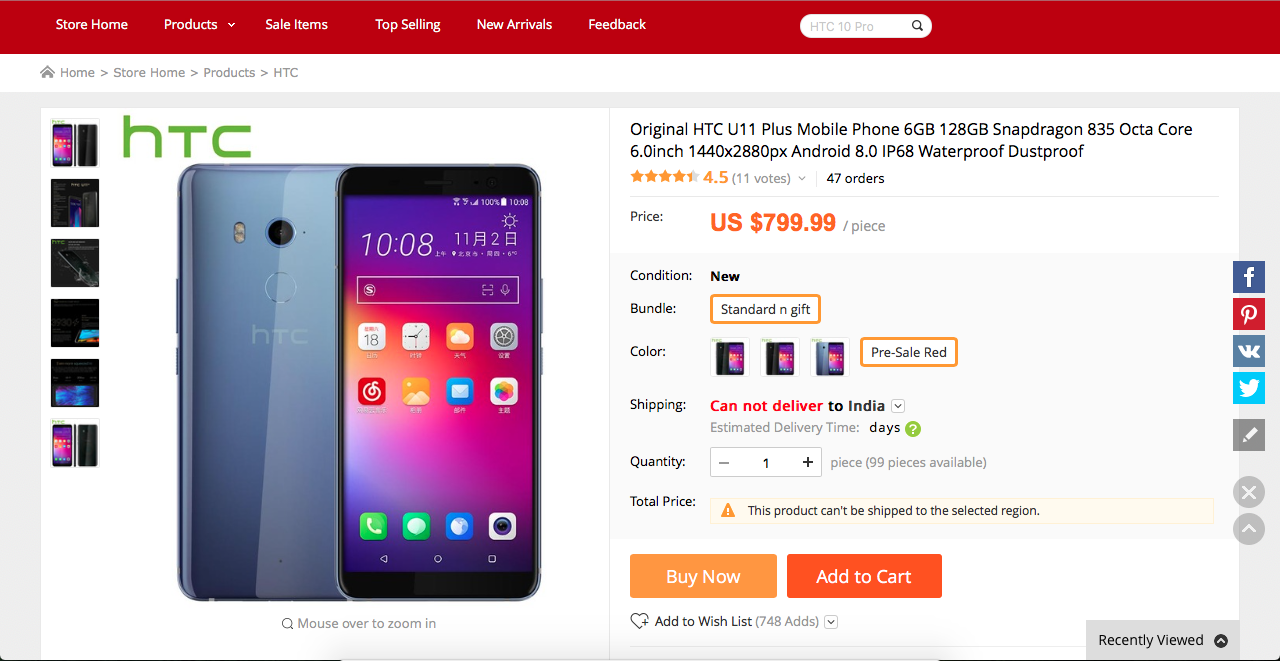
In the past months, we have seen a lot of smartphones being offered in red colour, including OnePlus 5T, Xiaomi Mi A1, and Oppo R11s. Now it seems that HTC is also joining the list of such smartphone manufacturers by offering a red colour option for the HTC U11+.
The HTC U11+ has been listed on Aliexpress in red colour option which is currently available on pre-order. According to the listing, the price of the red colour variant will be same as the standard version. The phone was originally launched a couple of months ago in three colour options — Translucent Black, Ceramic Black and Amazing Silver.
The phone features a trendy full-screen display and retains the squeezable frame feature which was first made available on the U11. It flaunts a 6-inch Super LCD-6 display that supports HDR10 and DCI-P3 colour gamut. It has 2880 x 1440 pixels screen resolution and 18:9 aspect ratio, with 78 percent screen-to-body ratio.
Under the hood, the device is powered by Qualcomm‘s Snapdragon 835 processor. It comes in two variants — 4GB RAM with 64GB onboard storage and 6GB RAM with 128GB internal storage. Both models come with a microSD card slot, allowing users to further expand the storage capacity of the device.
There is a 12-megapixel with a f/1.7 aperture on the rear panel that features 1.4µm pixels, UltraSpeed autofocus, Optical Image Stabiliser (OIS) and dual-LED flash. It also enables 4K video shooting with Hi-Res audio. On the front panel, there is an 8-megapixel camera for taking selfies with f/2.0 aperture that supports an 85-degree field of view and full HD video shooting.
This is the company’s first phone to come pre-loaded with Android 8.0 Oreo that is customized with Sense UI. The Edge Sense feature allows users to squeeze the frame of the phone to access favourite apps, contacts and some settings.
HTC is providing ANC enabled USonic headphones with the phone that can be connected via USB Type-C port. The phone also features BoomSound speakers which are claimed to be 30 percent louder than the ones present on U11. The HTC U11+ is fuelled by a 3,930mAh capacity battery that also supports Qualcomm’s Quick Charge 3.0 fast charging technology.
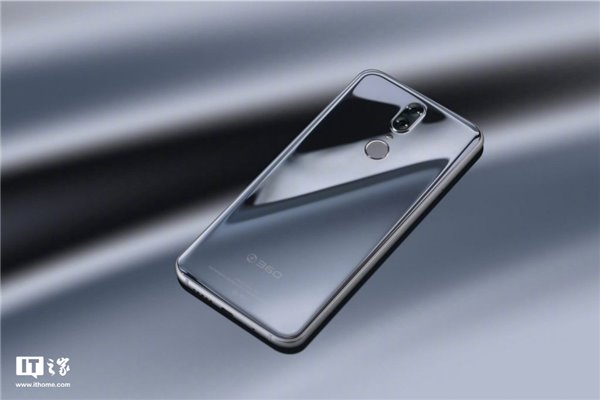
The new colour variants, one apiece, add some freshness to the already superb latest 360 N6 series models.The two new models will be available for pre-orders on Tuesday but their prices are still undisclosed. Apart from the new paint jobs, their specification is consistent with those of the regular models launched earlier.
The 360 N6 and N6 Pro has as their major highlight, a full-screen design which is undoubtedly the trend for 2017 smartphones and is expected to continue trending this year. The N6 packs an all-metal body and the display is a 5.93-inch full-screen with a resolution of 2160 x 1080 pixels (FHD+) and 18:9 aspect ratio. There is no capacitive button at the front which means it utilises on-screen controls which are as a result of the full-screen design. At the rear, there is a single camera centrally positioned. Just under the camera sits the rear-mounted fingerprint sensor.
On the other hand, the 360 N6 Pro features a 5.99-inch screen with the popular 18:9 aspect ratio and a 2160 x 1080 resolution. The bezels have been cut to make way for the screen, resulting in a phone with an 84.5% screen-to-body ratio. The device packs Qualcomm’s super mid-ranger, the Snapdragon 660 processor, a more than capable processor that should handle anything you throw at it. The N6 Pro comes in three RAM and ROM configurations. The base version has 4GB RAM + 64GB ROM; there is a 6GB RAM +64GB model, and the high-end version comes with 6GB of RAM and 128GB of storage. All three models have support for storage expansion.
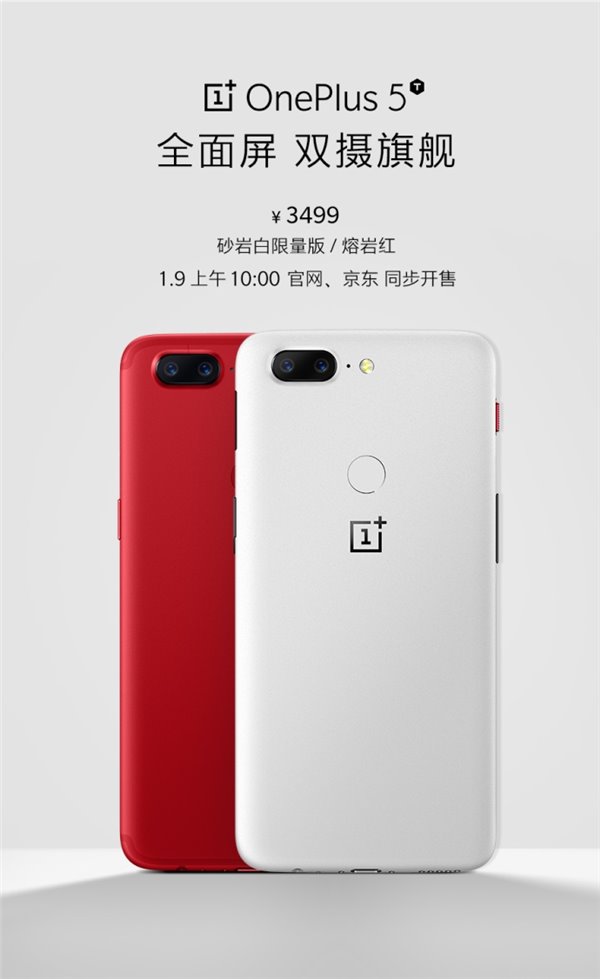
OnePlus may not be releasing the OnePlus 5T Star Wars limited edition in China but you can purchase the Sandstone White and Lava Red variants on the official site tomorrow.
While both variants lack any Star Wars branding, both colors can be attributed to the popular franchise. The OnePlus 5T Lava Red does share the same shade as that of the Elite Praetorian Guards of Supreme Leader Snoke in The last Jedi. The OnePlus 5T Sandstone White on the other hand gives off a Stormtrooper vibe.
Both variants will go on sale tomorrow priced at ¥3499 (~$539) on Jingdong and OnePlus.cn at 10:00 AM local time.
The OnePlus 5T Sandstone White and Lava Red both have 8GB of RAM and 128GB of storage. The rest of their specs are the same as the 6GB + 64GB Midnight Black variant.
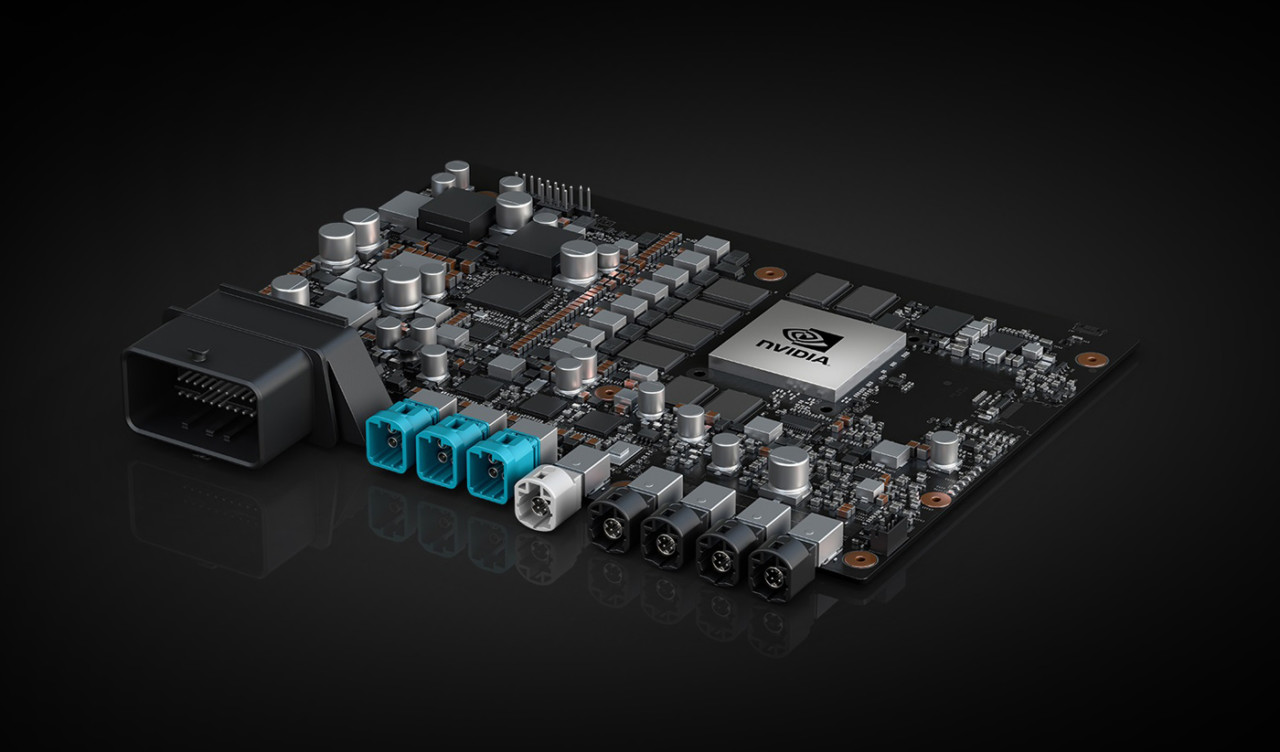
Today at CES 2018 in Las Vegas, Nvidia announced its new powerful Xavier SoC for artificial intelligence-based autonomous cars. It will power the Nvidia DRIVE software stack which was announced last year. The stack has now been expanded to a trio of AI platforms that now covers every aspect of the experience inside next-generation automobiles.
The company says that the Xavier SoC comes with 9 billion transistors, and claims that Xavier is the most complex system-on-chip ever created. Nvidia says that more than 2,000 engineers worked on the project over a four-year period, and the company invested around $2 billion in research and development.
The chipset features custom 8-core CPU, a 512-core Volta GPU, an 8K HDR video processor, a deep-learning accelerator and new computer-vision accelerators. According to the company, it can perform 30 trillion operations per second using only 30 watts of power.
Nvidia says that it is 15 times more efficient than the previous architecture. Two Xavier processors will be powering the Nvidia DRIVE Pegasus AI platform which was announced three months ago. The company is sampling this new SoC to the first customers this quarter. Nvidia clarifies that any existing software or algorithms developed for previous DRIVE platforms will run without requiring any modifications.
Along with DRIVE AV (Autonomous Vehicles), the company has also announced DRIVE IX and DRIVE AR, which will also be based on Xavier. DRIVE IX is for an intelligent vehicle experience which brings AI into the user-experience (UX) of the car or robo-taxi. It uses that as a smart assistant for the driver and passengers. On the other hand, DRIVE AR is the company’s push for Augmented Reality in automotive settings.
Nvidia has also announced its self-driving technology will be utilized by Uber, a cab-hailing service provider which started working on its self-driving car in 2015. Uber plans to use Xavier, which began shipping to customers for the first time this week.
Volkswagen will also use Nvidia’s Drive IX platform to create an “intelligent co-pilot” to assist a driver and China’s Baidu is working with Nvidia to create a production-ready AI autonomous vehicle system designed for China.
For more coverage from CES 2018, check outthis link!
Xiaomi has come a long way in its few years of existence. Starting with smartphones, the Chinese company has branched out into several other products including TVs, vacuum cleaners, and cameras etc. However, its biggest decision will likely be made this year when it goes public.
Reports coming from China say Xiaomi may be valued at up to $200 billion when it goes public in H2 2018. The figure is said to have been given by Lei Jun and approved by an investment bank.
Xiaomi’s IPO has been in the news for a while. As at last week, Hong Kong bankers were said to be expecting it to reach $100 billion. Now that figure has doubled and if it does reach it, it will be two times more than that of Baidu which sits at $85 billion as at today.
Back in mid-2016, Xiaomi wasn’t expected to go public until 2025. Founded in 2010, Lei Jun had said the company would need at least 15 years before holding an initial public offering. Now, the song has changed and it may be happening 7 years early.
In 2017, sales improved for Xiaomi as it broke its target by 18% and recorded as much as $1 billion in net profit. For 2018, Xiaomi has set a target of $2 billion in profits.
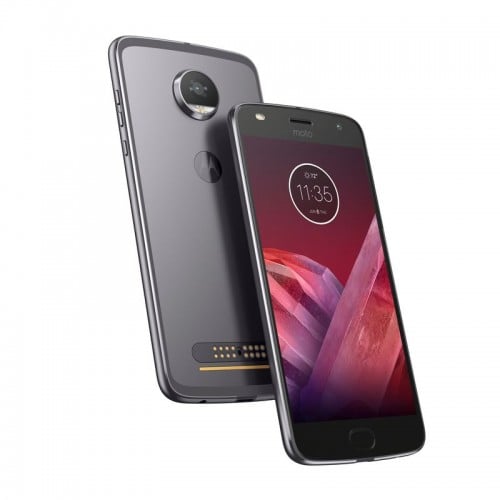
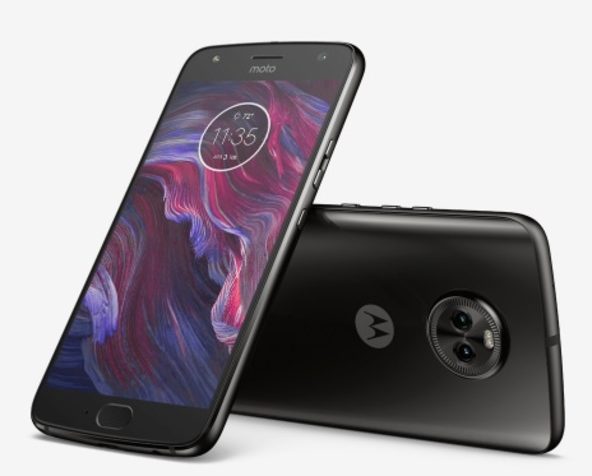
The holidays are over but the deals are not. Motorola is running a limited time discount on three (or four) of its phones. If you are on the search for a new phone to begin the year, you should check out these Moto Z2 Play, Moto G5 Plus and Moto X4 deals.
Starting with the Z2 Play, Motorola has slashed $100 off the price of the 64GB model bringing the price down to $399.99 from $499.99. The price cut applies to both the gold and gray variants.
The Moto G5 Plus has also gotten a price cut but on both storage variants unlike the Z2 Play. The 32GB variant is down by $20 while the 64GB edition gets $40 off bringing them to $209.99 and $259.99 respectively.
The Moto X4 is the other phone getting a deal. However, the deal varies depending on if you are purchasing the regular version or the Android One model.
The regular Moto X4 is $50 off and will sell for $349. The Android One version which doesn’t have Alexa installed gets $75 off and that brings the price down to $324.
The deals for the Moto Z2 Play and regular Moto X4 will end January 20 while the deal for the Moto G5 Plus ends January 13 and the Android One Moto X4 ends on January 15.
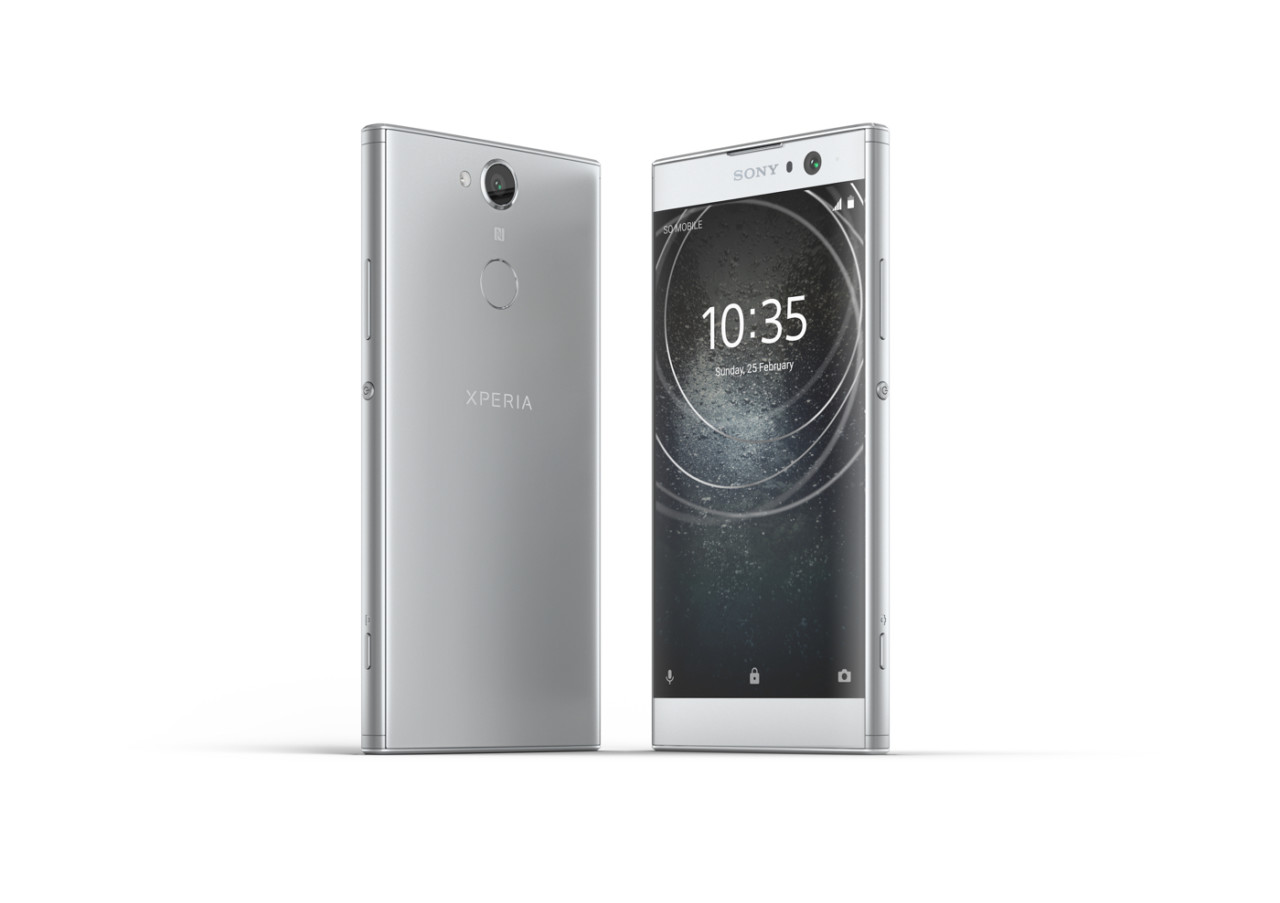
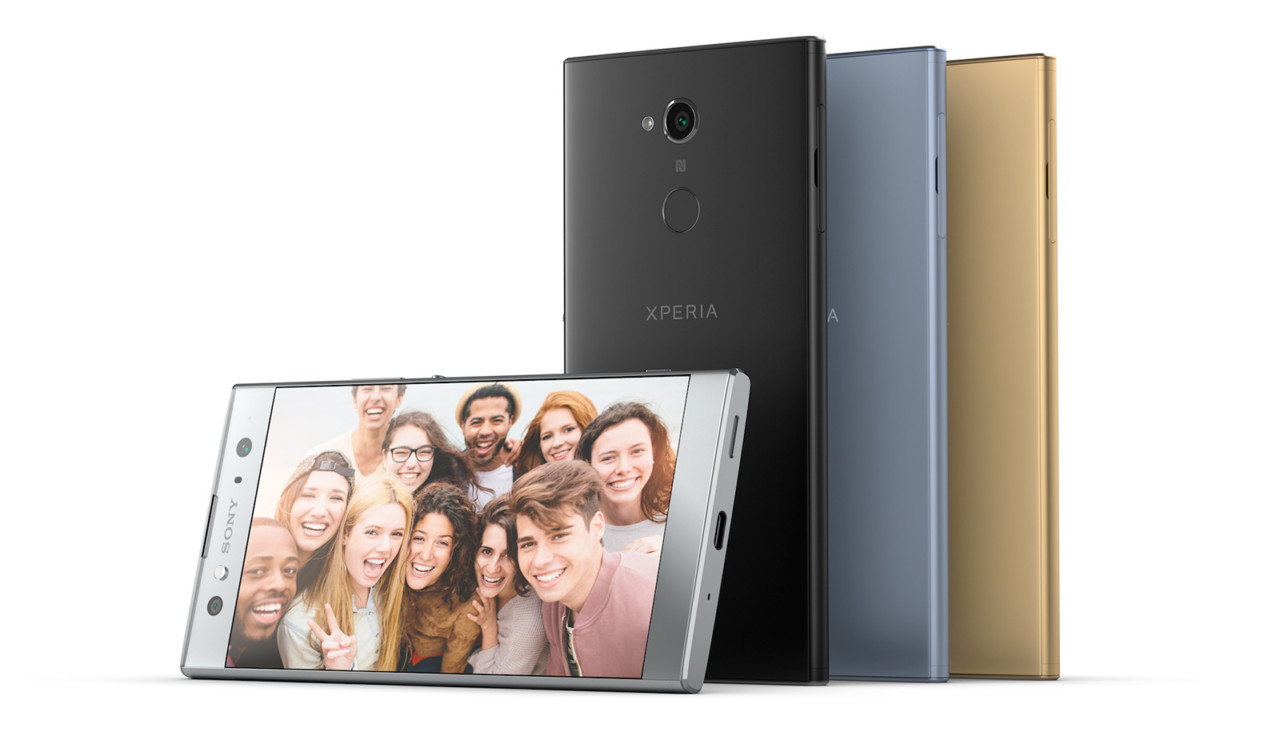
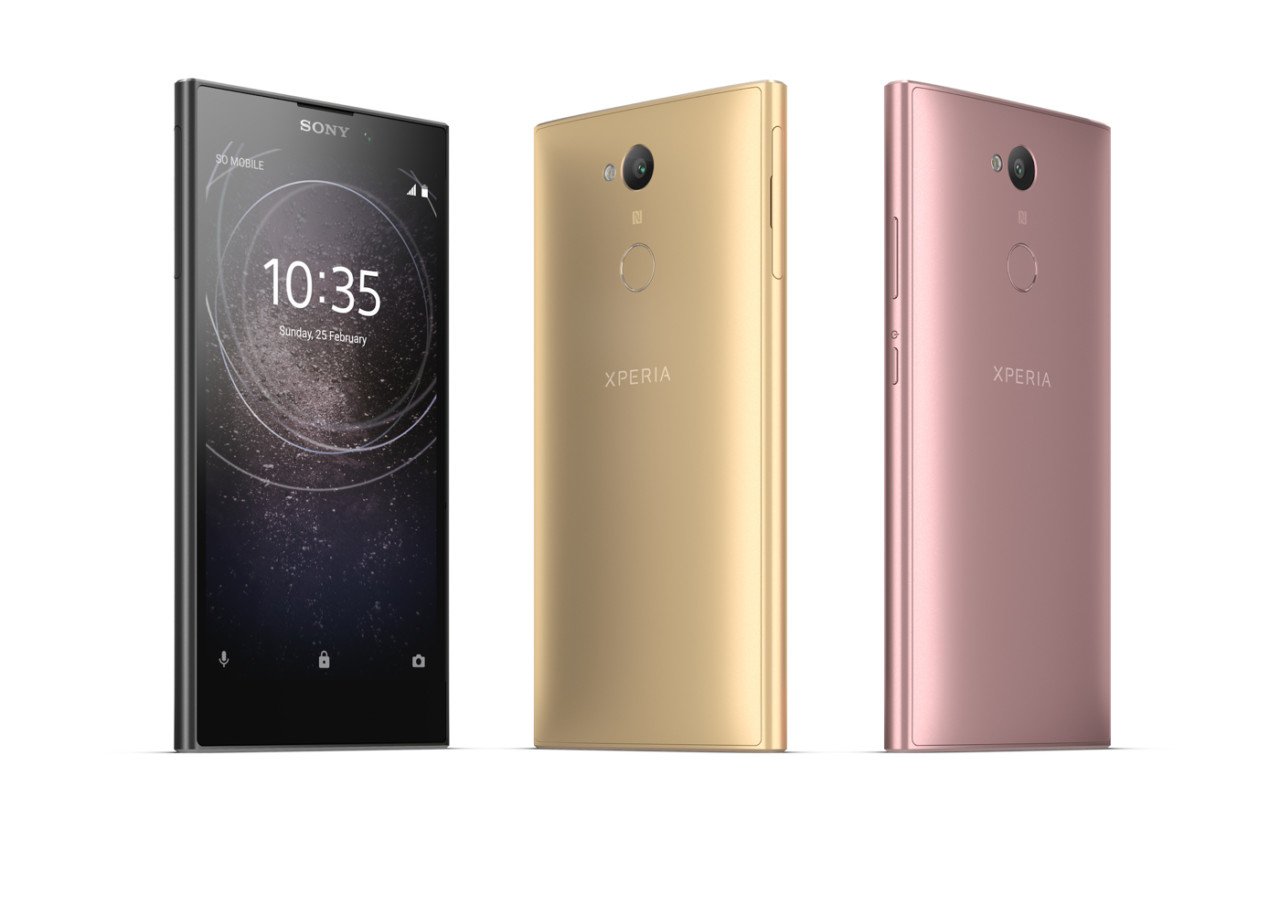
As expected, Sony has today announced three new entry-level and mid-range devices at CES 2018 in Las Vegas. The devices include Xperia XA2, XA2 Ultra and L2.
While the design of the phone appears similar to its predecessor, there are many welcome changes. The rear camera module, which used to take the top-left corner space, has now been moved to the centre-top. The fingerprint sensor has also found a place on the back panel.
For the XA2 series, the company has ditched MediaTek processor and has instead opted for Qualcomm‘s Snapdragon 630 chipset. While the Xperia XA2 features a 5.2-inch Full HD display, its bigger sibling XA2 Ultra comes with a 6-inch Full HD display.
The Xperia XA2 packs 3GB RAM and 32GB of internal storage, along with a microSD card slot for further expanding the storage capacity. On the other hand, the Xperia XA2 Ultra comes with 4GB RAM and two variants based on the internal storage — 32GB and 64GB. This one too comes with a microSD card slot for storage expansion.
Sony has always focused on the camera performance for the Xperia series and the XA2 and XA2 Ultra are no exception. Both devices feature a 23-megapixel camera sensor with f/2.0 aperture, hybrid autofocus and support for 4K video recording and 120fps slow-motion shooting.
On the front, the Xperia XA2 comes with an 8-megapixel ultra wide fixed-focus camera for taking selfies and video calling. The Xperia XA2 Ultra features a dual-camera setup on the front with an 8-megapixel camera sensor and a 16-megapixel camera sensor with less extreme FOV, 16:9 aspect ratio, autofocus, and optical image stabilisation (OIS).
Both devices are running Android 8.0 Oreo operating system out-of-the-box. While the XA2 is powered by a 3,300mAh battery, the XA2 Ultra is fuelled by a 3,580mAh battery. Both phones support Qualcomm’s Quick Charge 3.0 fast charging technology.
Along with the XA2-series, the company also announced a new entry-level phone — Sony Xperia L2. It features a 5.5-inch HD display with 1280 x 720 pixels screen resolution. It is powered by a 1.5GHz quad-core MediaTek MT6737T processor, coupled with 3GB RAM and 32GB internal storage with support for expanding storage using microSD card.
There is a 13-megapixel rear camera and an 8-megapixel front-facing camera. The phone features a fingerprint sensor on the back, same as XA2-series. It runs Android 7.1 Nougat operating system and is fuelled by a 3,300mAh battery.
The Sony Xperia XA2 and XA2 Ultra will be available from February 2018 while the Sony Xperia L2 will be available for purchase in late January. However, the company has not yet revealed pricing information.
For more coverage from CES 2018, check outthis link!
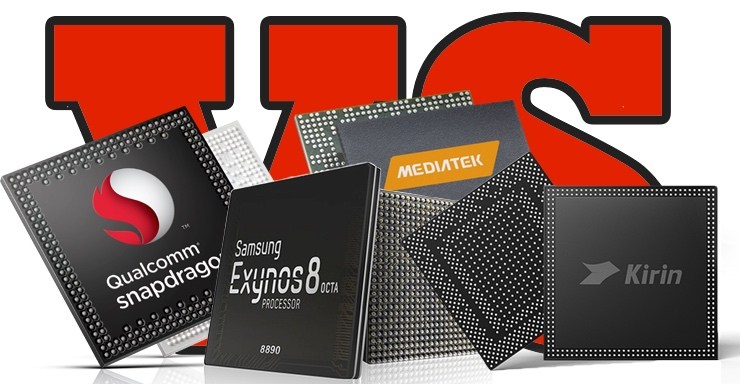
If we take into consideration the Android smartphones market, Samsung Exynos 9810, Qualcomm Snapdragon 845 and Kirin 970 are the best processors ever announced in the past few months. Exynos 9810 will power the upcoming Samsung Galaxy S9 in its European version, Kirin 970 is aboard Huawei Mate 10 and 10 Pro and it will also be aboard the Huawei P20, while Qualcomm Snapdragon 845 will power the other most important flagship phones of 2018. Which one is the best SoC? Here you can see a Exynos 9810 vs Snapdragon 845 vs Kirin 970 comparison between their specs.
Exynos 9810 vs Snapdragon 845 vs Kirin 970
Exynos 9810
Qualcomm Snapdragon 845
Kirin 970
CPU
octa-core
4x Exynos M3 2.9 GHz, 4x Exynos M3 1.9 GHz
2nd Gen 10 nm FinFET LPP, 64 bit
octa-core
8x Kryo 385, Clock frequency: Up to 2.8 GHz
2nd Gen 10 nm FinFET LPP, 64 bit
octa-core
4x Cortex A73 2.4 GHz, 4x Cortex-A53 1.8 Ghz
10 nm, 64 bit
GPU
ARM Mali G72 MP18
Adreno 630
ARM Mali G72 MP12
Camera
Up to 24 MP Single
16 + 16 MP Dual
Up to 32 MP single camera
Up to 16 MP dual camera
Dual camera support
Video
Up to 4K Ultra HD at 120 fps (video recording)
Up to 4K Ultra HD at 120 fps (video playback)
Up to 4K Ultra HD at 60 fps (video recording)
Up to 4K Ultra HD at 60 fps (video playback)
Up to 4K Ultra HD at 30 fps (video recording)
Up to 4K Ultra HD at 60 fps (video playback)
Display
Up to 4K UHD 4096 x 2160 pixels
WQUXGA 3840 x 2400 pixels at 60 fps
Up to 4K UHD
Up to 4K Ultra HD
Connectivity
Dual Band Wi-Fi b/g/n/ac with MU-MIMO.
Bluetooth 5.0, NFC
Cellular Modem: LTE Cat. 18 6CA up to 1.2 Gbps (download), LTE Cat. 18 2CA up to 200 Mbps (upload)
Dual Band Wi-Fi 2×2 802.11ad Multi-Gigabit with MU-MIMO.
Bluetooth 5.0, NFC
Cellular Modem: Snapdragon X20 LTE, up to 1.2 Gbps Mbps download speed, up to 150 Mbps upload speed
Dual Band Wi-Fi 802.11 a/b/g/n/ac with 4×4 MIMO
Bluetooth 4.2, NFC
Cellular Modem: LTE Cat. 18 up to 1.2 Gbps download speed
Audio
32 bit/384 kHz quality
Qualcomm Aqstic audio technology
Qualcomm aptX
32 bit/384 kHz quality
Location
GPS, GLONASS, Beidou
GPS, GLONASS, Beidou, Galileo, QZSS, SBAS
Low Power Geofencing and Tracking, Sensor-assisted navigation
GPS, GLONASS, BDS
Battery Charging
Samsung Adaptive Fast Charge, Fast Wireless Charging (Qi and PMA)
Qualcomm Quick Charge 4/4+
Fast battery charging
Each of these SoCs have octa-core architecture and has a dedicated chip for artificial intelligence and deep learning. The first difference that is possible to notice is the clock frequency. Exynos 8910 has the highest max frequency, but Snapdragon 845 has a max frequency of 2.8 GHz for each of its cores, while Exynos 9810 has a 2.9 GHz frequency only for 4 cores. Kirin 970 has the lowest frequency with 2.4 GHz. Each SoC has a modem that can reach a download speed of 1.2 Gbps, but Exynos 9810 has the highest upload speed with 200 Mbps.
On the other hand, the Snapdragon 845 has a GPU that’s likely better: the Adreno 630. Further, Snapdragon 845 will probably provide more modding options. If I had to pick one, I would personally choose the Snapdragon 845 by Qualcomm, but that is mostly for personal tasks, as Samsung Exynos 9810 is as excellent as its opponent. I define Kirin 970 slightly inferior to both its opponents, but note that Huawei devices with this processor are more affordable.
Exynos 9810 vs Snapdragon 845 vs Kirin 970: Summary
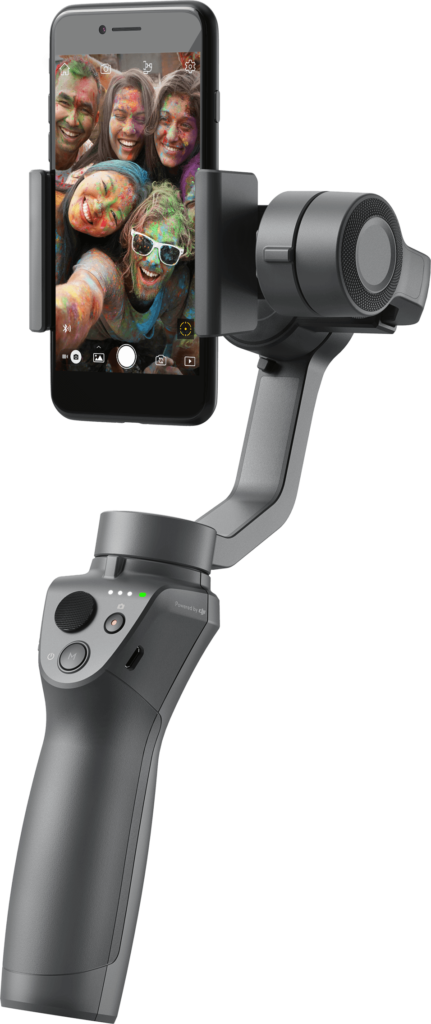
DJI has announced a successor to its Osmo smartphone stabilizer. Called the Osmo Mobile 2, the new stabilizer brings a couple of new features at a much cheaper price.
Hand-held stabilizers are not new. They are pretty useful for shooting shake-free videos and come in handy for both amateurs and professionals.
One of the main upgrades in the DJI Osmo Mobile 2 is the ability to allow you mount your phone in portrait mode. To shoot in portrait in the original model, you had to hold the stabilizer in a horizontal position.
The Osmo Mobile 2 also comes with an in-built 2600mAh battery (18650 LiPo) that should last up to 15 hours on a single charge. That is a significant upgrade to the original which uses replaceable 1225mAh batteries that last about 4.5 hours.
The new version also charges faster in just 2 hours via micro USB and can in turn charge your phone via a USB port at the back (5V/1.5A). It is also lighter at 485g, thanks to the switch to “high performance nylon” from the nylon and magnesium alloy of the original.
To sum it up, the Osmo Mobile 2 will sell for just $129 when it goes on sale. Compare that to the original’s $299 launch price, though you can now purchase it for $199.
Earlier, we reported that Meizu is gearing up to launch Meizu Pro 7 phone in the Indian market. Now it seems that the company is finally ready to bring it to the Indian shores.
According to the report, Meizu Pro 7 will be launched in India later this month. However, there is no exact timeline available for the launch. The report further suggests that the device will be priced under Rs. 30,000 (approximately $473) in India.
In November last year, the company teased the launch of a “Pro” smartphone, without revealing the phone’s name. The image posted by the company on the social media website stated, “it’s time for you to become a Pro! Stay Tuned! #BeAPro.”
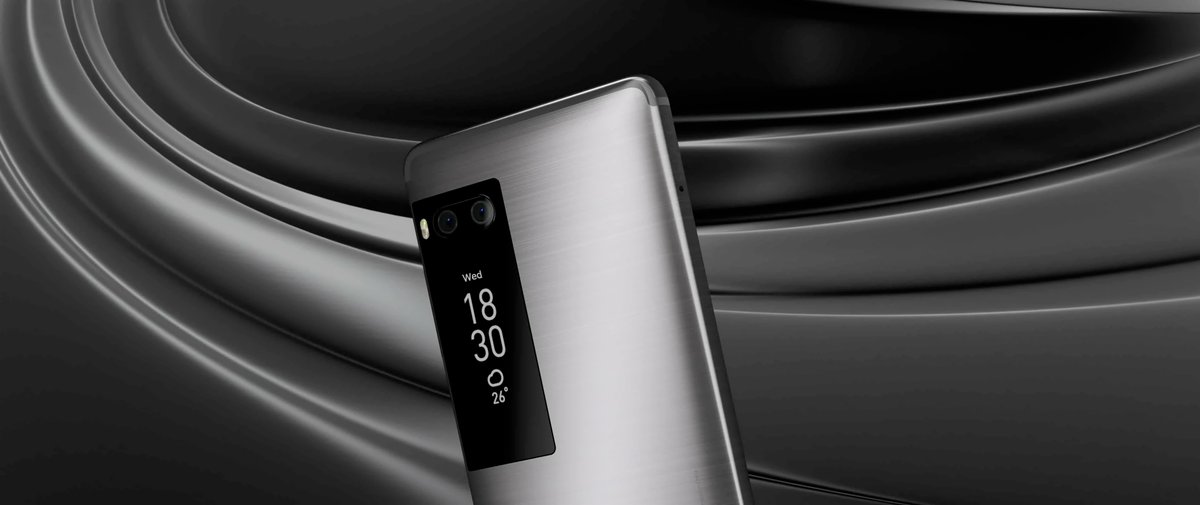
The Meizu Pro 7 was originally launched in China in June last year, along with Meizu Pro 7 Plus. However, the Pro 7 Plus will not be launched this year, according to the report. The Pro 7 features a unique secondary AMOLED display at the back which shows time, notifications, weather, and also serves as a selfie screen for taking portraits from the rear camera.
The device features a 5.2-inch Full HD Super AMOLED primary display with 1920 x 1080 pixels screen resolution. There is also a 1.9-inch Super AMOLED secondary display with screen resolution of 240 × 536 pixels and 307ppi pixel density.
Under the hood, the Meizu Pro 7 is powered by 2.5GHz MediaTek Helio P25 octa-core processor along with Mali-T880 GPU, 4GB RAM, and 64GB internal storage. The other variant of the phone comes powered by 2.6GHz MediaTek Helio X30 deca-core 10nm processor with PowerVR 7XTP-MP4 GPU, 4GB RAM and 128GB internal storage.
There is a dual camera setup at the back, featuring two 12-megapixel sensors with one being a monochrome lens and other being RGB lens, along with f/2.0 aperture, phase detection autofocus, and LED flash support. On the front, there’s a 16-megapixel camera sensor with f/2.0 aperture.
The fingerprint sensor is embedded in the phone’s home button and the device comes with USB Type-C port. Other connectivity options on the device include 4G VoLTE, WiFi 802.11 b/g/n/ac, Bluetooth 4.2, and GPS. The device is fueled by a 3,000mAh battery that comes with a support for mCharge fast charging.
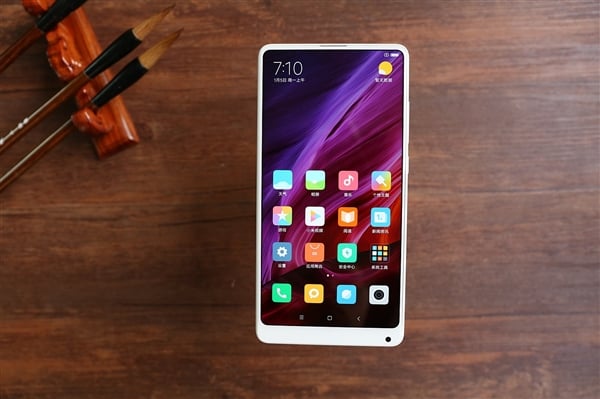
Xiaomi‘s 2016 Mi Mix is credited to have spurred a shift to 18:9 full-screen smartphones and it wasn’t much of a surprise when the company released the Mi Mix 2 in continuation of the full-screen trend. The Mix 2 features much more reduced bezels than the Mi Mix and retains the 18:9 aspect ratio.
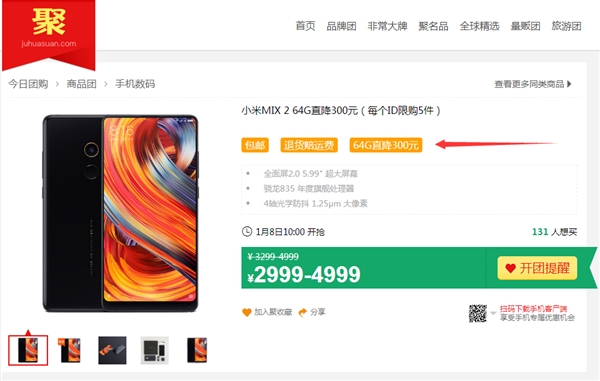
The Mi Mix 2 starts at 3299 Yuan (∼$506) for the base model with 6GB RAM + 64GB storage. While the higher 8GB RAM +128GB storage variant goes for 4,699 Yuan ($724). Just four months after its launch, the Mi Mix 2 variants have had their prices slashed by 300 Yuan ($46) on Taobao (Tmall) in China. This 300 Yuan discount sees the prices going down to 2999 Yuan ($462) for the 6GB RAM variant and 4,399 Yuan (~$677) for the 8GB RAM variant. We don’t know the reason for the price slash but it looks like a temporary offer that could elapse soon. Nevertheless, the price slash is suggestive that the device may soon see its price getting more competitive on all major sales channel as the day goes by. Quite curiously, you could get it for even less outside China as GearBest recently offered the 6GB Mi Mix for $439.99 with coupon. But ordinarily, it is listed for $462, at par with the Tmall price. Who’s waiting along with me until the base variant is priced at $350-$400 before picking up a unit? That might happen sooner than we expected.
As a reminder, the Xiaomi Mi Mix 2 features a 5.99-inch FHD+ display with a resolution of 2160 x 1080. It is powered by a Snapdragon 835 chip with an Adreno 540 GPU. The processor is backed by a 6GB RAM on some models while there are three storage versions; 64GB, 128GB, and 256GB. There is also an 8GB RAM + 128GB Special Edition. The Mi MIX 2 packs a single 12MP Sony IM386 sensor at the rear as well as a 5MP selfie camera. There is a 4,400mAH battery under the hood with QC 3.0 and a rear-mounted fingerprint sensor. There is also dual WiFi band support and it supports 43 bands, 22 of which are LTE bands, including band 20. The Mi MIX 2 runs on MIUI 9 based on Android Nougat, is available in black only except for the Special Ceramic edition.
Update: Here is a coupon code for Xiaomi Mi Mix 2: 1BGMix264, $35 off, here is the buy link: Banggood
We use cookies on our website to give you the most relevant experience by remembering your preferences and repeat visits. By clicking “Accept”, you consent to the use of ALL the cookies.
This website uses cookies to improve your experience while you navigate through the website. Out of these, the cookies that are categorized as necessary are stored on your browser as they are essential for the working of basic functionalities of the website. We also use third-party cookies that help us analyze and understand how you use this website. These cookies will be stored in your browser only with your consent. You also have the option to opt-out of these cookies. But opting out of some of these cookies may affect your browsing experience.
Necessary cookies are absolutely essential for the website to function properly. This category only includes cookies that ensures basic functionalities and security features of the website. These cookies do not store any personal information.
Any cookies that may not be particularly necessary for the website to function and is used specifically to collect user personal data via analytics, ads, other embedded contents are termed as non-necessary cookies. It is mandatory to procure user consent prior to running these cookies on your website.


 The Dibea C17 is an always-ready vacuum cleaner as it features a convenient docking station which is quite useful while charging, storing the device and even holding the extra accessories. Moreover, it sports a cordless design that allows you to clean everywhere without tangling.