Advertisement

Best of CES 2019: Products that stood out at the event this year! (Our Picks)

CES is a place to showcase the best tech from all around the world. Here we see big screen TVs, monitors, gaming PCs, weird robots that automate everyday tasks, weird robots that look scary but are useful and a lot more. In fact, the event is flooded with products that try to be unique and stand out from the rest. While you’ll find a lot of interesting products at the event, we have picked out what we thought were the best of the lot. The products mentioned below stood out from the rest and are favorites among our team.

So, let’s take a look at Gizmochina’s Pick of the Best of CES 2019. This article is a bit different than the usual ones in the sense that each of our Gizmochina team members contributed to this list. Below we tell you which products stood out according to each one of us and why.

There were two products that really stood out for us at the event and almost everyone here at Gizmochina agrees that these two were the very best.

1. LG’s Signature Series OLED TV R

If there was one product that stood out for us at CES 2019, it was the LG Signature OLED Rollable TV. Now, we know LG has shown off rollable TV prototypes before, but what’s really cool this time is that it’s a commercial product. Yes, for a very, very large sum (which is yet to be announced), you will be able to take home this beauty sometime later this year.

LG-Signature-OLED-TV-R

What makes it incredible is the way it works. For me, that’s the best part of this product. You push the power button and what looks like a low hung stand in your room gives birth to this incredible 65-inch OLED TV. Once your entertainment needs are over, it will silently roll itself back into its housing. It’s pretty NEAT!

This was one product that every one of Gizmochina’s team nominated as one of the best products at CES 2019!

“If you are a minimalist, you will love the LG Signature OLED TV R. If you have kids, you will appreciate the OLED TV R. And if you just love having a piece of tech you can show off to your friends when they come over, then this is for you.” — Habeeb

“I know that it may be an obvious choice but I think that rollable displays will ease people’s lives as everyone will be able to bring the most sophisticated hi-tech products everywhere” — Michele

“What’s cool is that even the size of the screen can be adjusted for playing songs, viewing photos.” — Anvin

“This will bring some ease to moving a giant TV around the home or even when changing apartment.  But let’s hope we won’t have to sell an organ to get this one. “ — Jed

“I love the fact that the base stand also works as a sophisticated sound bar (apart from being the TV housing!).” — Jeet


2. Bell’s Nexus VTOL aircraft ( Uber Elevate Air Taxi)

Another product that almost everyone here at Gizmochina thought stood out from the crowd was Bell’s Nexus Air Taxi. While we are still a good 3-4 years away from seeing air taxis in action, this is a promising development in the field. Despite being a non-functional unit being displayed at the event, the fact that it can take off like a helicopter and cover nearly 150 miles in just one hour promises some really big things for the transport industry.

“I find it really amazing because it looks like one of those aircraft you only see in sci-fi movies. Yet, there it is right before our very eyes and the company even hinted we could see it flying in the air space in a few years time.” — Jed

“It’s cool because it’s a vehicle which could help to solve traffic congestion and pollution problems in big cities sooner than expected” – Michele

“While it looks like an oversized drone, it’s much more than that. The company has made quite a progress compared to what it showcased last year and it’s fascinating that this sci-fi like thing could become a reality in a few years.” — Jeet


Jeet’s Picks

3. NReal Light MR Glasses

Nreal Light MR Glasses

We have previously seen mixed reality glasses such as Microsoft Holo Lens and Magic Leap One but they aren’t practical to wear everywhere. Solving this problem is ‘Light’ mixed reality glasses from Nreal, which was founded by former Magic Leap engineer.
The ‘Light’ glasses looks very much similar to the regular sunglasses and have smaller profile than others. They are also considerably lighter in weight compared to the conventional MR glasses. It will be priced at around $1,000 and will hit the markets in H1 2019.


4. Hyundai Elevate

Hyundai showed off its Elevate project at CES 2019 which the company is calling an “ultimate mobility vehicle” that combines technology from electric cars with robotics. While most car manufacturers are making products just for everyday transportation purpose, Hyundai has unveiled a product that can be used in the time of crises. Further, the product combines the best of both worlds — electric car technology and robotics technology.
Hyundai Elevate is a walking search and rescue car that is designed with four mechanical legs with wheels for feet. It can roll along on extended legs or retract them to be driven like a car.
Hyundai executive John Suh says that the need for search and rescue, and humanitarian aid, is growing around the world and ‘Elevate’ is designed to save lives in disasters.
Did you know, it can LITERALLY WALK on any terrain, just like any other mammal!
Habeeb’s Picks

5. LG Display Neo Art

I use an external display plugged into my PC and I am sure a lot of other people do too. There are times when I have to resort to my laptop’s display, such as when I am at my parent’s place, but there is a feeling of “digital claustrophobia” if I can call it that, that sets in after some time.

The LG Display Neo Art is a 27-inch “portable” monitor that connects via USB-C to your laptop for both power and display output. There is no power cable crisscrossing HDMI cable. All you need is a single cable and a stand to set it up on.

The display can be easily moved around rooms but moving it long distances (e.g. from home to work and back) without breaking it isn’t something you want to be doing. For that to happen, the display has to be much more portable and the only way I can see that happening is if it were flexible – allowing you to roll it up in a case much like a building plan. Nevertheless, the technology is still pretty great even at this stage and I look forward to it being available for consumers in the next few years.


6. Samsung Space Monitor

The Samsung Space Monitor was announced before CES 2019 began but since Samsung brought it to the event, I guess it makes the list.

If your desk is no wider than 4ft, then you know how cramped it is after you add a desk lamp, an external monitor, a keyboard and mouse, and your laptop. With Samsung’s Space Monitor, you can reclaim more space as the monitor clamps to your desk and sits flush to the wall instead of on the desk itself.

Another advantage of the monitor is that the display isn’t too close so it’s not hurting your eyes, although the hinge design of the clamp means you can pull it forward when you need to.

The Space Monitor should bring a bit of sanity to your desk while providing incredible display quality.


Anvin’s Pick

7. Lenovo Smart Clock

Lenovo Smart CLock
The best part of this nifty little Alarm clock from Lenovo is that it doesn’t try to do a lot. It’s cheap (which means accessible to more people), super compact, and can easily replace your existing alarm clock. But with google assistant on board, it’s really smart too! Given its size and price, its made for the masses. It’s a really good way to start your life in a smart way.


Michele’s Pick

8. Samsung Gem exoskeleton

CES 2019: 5 Things to Look Out for in ‘Samsung City’

Looking at the high amount of people who struggle with manual jobs (especially older people), I think it will be amazing for people to get back to their regular routine with this setup. Maybe, in the future, we’ll see an exoskeleton from Samsung that will increase our abilities tenfold, just like we see in the movies!


Jed’s Pick

9. Sony LSPX-S2 Glass Sound speaker

Sony LSPX-S2 Glass Sound Speaker

Sony’s naming system always looks weird but the products are hardly less cool. The glass speaker from Sony at CES 2019 actually elicited thoughts of a romantic candlelight dinner in my head. Won’t be a bad idea to have the light illuminate the table while at the same time cool, romantic music envelopes the arena from the same gadget. The LSPX-S2 is one smart speaker that doesn’t even look like a speaker but that’s cool. So long the output is rich and impressive.


10. Valeo XtraVue ‘Invisible’ Trailer (My Personal Pick)

One of the products that I thought was extremely cool at CES 2019 was Valeo’s XtraVue ‘Invisible’ Trailer. Yes, it’s exactly what you think. It’s a trailer from that’s nearly invisible from the front half. The trailer itself is not what really excites me, but if the technology works anywhere as good as what we see in the video, the future possibilities are endless. It’ll be so cool seeing (oh wait, I mean not seeing) an invisible car, something like in the movie Die Another Day!


There are a lot of other cool products showcased at the event. But we thought the above 10 really stood out!

What was your favorite product from CES 2019?
 

Xiaomi bet big on AI and smart devices with $1.5billion investment

Xiaomi floated an IPO on the Hong Kong stock exchange aimed at generating revenue for the expansion of the company. During the initial public offer, te company did not describe itself as just a smartphone company but as an internet company despite gaining a wide reputation from its smartphone brand. Xiaomi is now set to invest in other spheres which would position it as truly an internet company. According to a Bloomberg report, the Chinese giant will invest at least 10 billion yuan ($1.5 billion) on artificial intelligence and smart devices over the next five years.xiaomi

The huge investment is part of the Chinese giant’s strategy of grabbing more revenue from high-value services and the Internet of Things (IoT). The innovative Chinese company is also focusing on pushing for the top of the market while working towards expanding its tentacles into Europe. While speaking to Bloomberg TV recently , Xiaom’s CEO Lei Jun stated; “Now is the time for the action. We are all in on AIoT.” This is a reference to the incorporation of artificial intelligence into Internet of Things in order to create a smart ecosystem of connected devices. We have seen the firm implement this system of combining its XiaoAI smart assistant with its smart home (IoT) devices lately. However, XiaoAI is only adapted for Chinese speakers and we are yet to see other languages become supported. Adding more supported languages may likely be part of the development plan. This will surely boost the sales of the company’s growing catalogue of IoT gadgets whenever they become available outside China.

Read Also: Xiaomi Redmi Note 7 vs Huawei P Smart (2019) vs Honor 10 Lite: Specs Comparison

Lei Jun didn’t elaborate on the company’s investment plans but the company is looking to generate more revenue in the face of a brewing trade war between China and the US that has caused uncertainty to envelop the economic space. Also, the company may be fast looking outside smartphones to diversify its revenue as the smartphone market experiences some saturation. It is yet to be seen if the company holds as much prospects as first speculated. Investors don’t seem to be very confident about that as the company’s stock has plummeted by roughly 40% since after its July 2018 initial public offering.

(source)

Xiaomi Redmi Note 7 vs Huawei P Smart (2019) vs Honor 10 Lite: Specs Comparison

If you need a well-balanced midrange smartphone which does not disappoint under any point of view, then the new Xiaomi Redmi Note 7 released after the official separation between Redmi and Xiaomi (Redmi became an independent sub-brand) is the perfect phone for you. But it is not the only one. If you are trying to understand which device is the most suitable for you, then you may like this comparison between the new Redmi Note 7 and the latest Huawei mid-rangers P Smart (2019) and Honor 10 Lite. Three different phones sold at a similar price: which one has the best value for money? Go ahead with the comparison to know it.


Xiaomi Redmi Note 7 vs Huawei P Smart (2019) vs Huawei Honor 10 Lite

Xiaomi Redmi Note 7 Huawei P Smart (2019) Huawei Honor 10 Lite
DIMENSIONS AND WEIGHT 159.2 x 75.2 x 8.1 mm, 186 grams 155.2 x 73.4 x 8 mm, 160 grams 154.8 x 73.6 x 8 mm, 162 grams
DISPLAY 6.3 inches, 1080 x 2340p (Full HD+), 409 ppi, IPS LCD 6.21 inches, 1080 x 2340p (Full HD+), 415 ppi, LTPS IPS LCD 6.21 inches, 1080 x 2340p (Full HD+), 415 ppi, IPS LCD
PROCESSOR Qualcomm Snapdragon 660, octa-core 2.2 GHz Huawei HiSilicon Kirin 710, octa-core 2.2 GHz Huawei HiSilicon Kirin 710, octa-core 2.2 GHz
MEMORY 3 GB RAM, 32 GB – 4 GB RAM, 64 GB  – 6 GB RAM, 64 GB – micro SD slot 3 GB RAM, 64 GB – micro SD slot 4 GB RAM, 64 GB – 6 GB RAM, 64 GB – 6 GB RAM, 128 GB – micro SD slot
SOFTWARE Android 9 Pie, MIUI Android 9 Pie, EMUI Android 9 Pie, EMUI
CONNECTIVITY Wi-Fi 802.11 a/b/g/n/ac, Bluetooth 5, GPS Wi-Fi 802.11 a/b/g/n/ac, Bluetooth 4.2, GPS  Wi-Fi 802.11 a/b/g/n/ac, Bluetooth 4.2, GPS
CAMERA Dual 48 + 5 MP f/1.8 and f/2.4
13 MP front camera
Dual 13 + 2 MP f/2.2
8 MP front camera
Dual 13 + 2 MP f/1.8
24 MP f/2.0 front camera
BATTERY 4000 mAh, fast charging 3400 mAh 3400 mAh
ADDITIONAL FEATURES Hybrid Dual SIM slot Hybrid Dual SIM slot  Hybrid Dual SIM slot

Design

The design is an aspect on which both Huawei and Xiaomi are focusing a lot in the last period. Indeed, all these devices are incredibly beautiful and well-built. Talking about the look, the one I like more is the Honor 10 Lite due to its high screen-to-body ratio and the gradient color variants, but I would prefer Redmi Note 7 due to its more solid build quality. Indeed, according to the company, the rear glass is very resistant and the display also comes with the Gorilla Glass 5 protection. Further, Xiaomi Redmi Note 7 is water and dust resistant, even though no IP certification was provided.


Display

No matter which device you buy, you will get more or less the same display quality from these handsets. But Huawei P Smart (2019) should be slightly better in terms of viewing quality because LTPS panels are able to provide a lower power consumption as well as more controlled temperature ranges and a higher contrast. Xiaomi Redmi Note 7 has a slightly bigger display (just 0.1 inches), while Huawei P Smart 2019 and Honor 10 Lite have exactly the same display size.


Specs & Software

Just like the displays, even the hardware departments of these handsets do not differ so much. I would prefer the Xiaomi Redmi Note 7 because in my opinion, it has a better GPU inside the Snapdragon 660 chipset. Huawei Honor 10 Lite takes the second place with its Kirin 710, while Huawei P Smart 2019 takes the last spot of the ranking because it does not have a variant with 6 GB of RAM, neither 128 GB of internal storage. All the devices come with the latest Android version out of the box (Android Pie), but while Redmi Note 7 has the MIUI 10 to customize it, Huawei P Smart 2019 and Honor 10 Lite have the EMUI 9 installed.


Camera

The best camera side belongs to the Xiaomi Redmi Note 7. It is equipped with the new Samsung’s sensor sporting a resolution of 48 MP and a secondary 5 MP depth sensor. It provides a stunning detail in photos for a midrange, as well as low levels of noise in low-light conditions. Honor 10 Lite has a great camera too, better than Huawei P Smart 2019, but it is far from its Xiaomi’s rival. But when it comes to the front camera, Honor 10 Lite should be the best with its 24 MP resolution and f/2.0.


Battery

With a 4000 mAh unit, Xiaomi Redmi Note 7 will be able to provide the longest battery life. It should have no problems lasting up to two days on a single charge, while Huawei P Smart 2019 and Honor 10 Lite have just an average battery life: one day with moderate use. Further, Xiaomi Redmi Note 7 has the support to Quick Charge 4.0, while its opponents do not offer any kind of fast charging technology.


Price

Xiaomi Redmi Note 7 debuted in China with a price tag of about $147, Huawei P Smart 2019 costs about €250 in the global market, and Honor 10 Lite was launched with a €210 price tag. I would personally pick Xiaomi Redmi Note 7 not only for the price but also for its great camera and its long lasting battery.


Xiaomi Redmi Note 7 vs Huawei P Smart (2019) vs Huawei Honor 10 Lite: PROs and CONS

Xiaomi Redmi Note 7

PROs

  • Great build quality
  • Affordable price
  • Amazing camera
  • Bigger battery
  • Nice design

CONS

  • Nothing particular


Huawei Honor 10 Lite

PROs

  • Good design
  • Affordable
  • Great front camera
  • Wide availability

CONS

  • No fast charging


Huawei P Smart (2019)

PROs

  • Beautiful design
  • Good display
  • Wide availability

CONS

  • Disappointing cameras

Xiaomi officially launches the MIJIA Photo Printer priced at 499 yuan ($73)

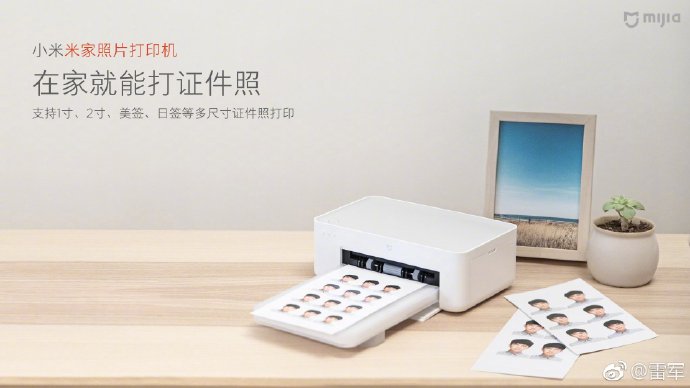
During the Redmi Note 7 launch conference yesterday, Xiaomi also released another product just as it had promised. The Xiaomi MIJIA Photo Printer was officially launched clutching a 499 yuan price tag. The device comes with a set of color papers comprising 4o photo papers and a ribbon, which will cost an extra 59 yuan ($8). This printer was earlier tipped t launch on December 19 but apparently, XIaomi had other ideas.Xiaomi MIJIA Photo Printer

This is not the first photo printer Xiaomi is launching if our memory serves us right. The company, last year, crowdfunded the XPRINT AR photo printer but then, it was only a third-party AR photo printer and not a Xiaomi branded product. In this case, the MIJIA photo printer can print photos taken with your phones in various formats.  Xiaomi’s CEO Lei Jun spoke glowingly about the photo printer, extolling its capability to print pictures just the way they are, in terms of quality.Xiaomi MIJIA Photo Printer

The photo printer comes with a compact but cool size, a regular feature of most Xiaomi products. The printer is capable of print pictures at a maximum size of 6 inches. It is understood that the print resolution of Xiaomi Mijia Photo Printer is 300 x 300dpi, using CMY 3-color dye sublimation printing technology, which can realize 256-level color scale complete output presentation. Sublimation technology can present more rich color levels and wider color gamut, ensuring a better color reproduction. In order to solve the problem of photo fading and yellowing. The Xiaomi Mijia photo printer is automatically coated with a colorless transparent protective film at the last step of photo printing, showing excellent scratch, anti-fingerprint and splash-proof properties, while the photo dye factor is protected from gas, light or moisture. While fading, the color of the photo stays longer. In addition, the device is said to have 655 vents and 12 different apertures with a sleek appearance. The vents are perhaps to let in air in order to keep it cool always. As a result of this, it can print photos continuously in a stable manner.

Related: Redmi Note 7 camera samples showcase the 48MP sensor’s prowess in various lighting conditions

The printer comes with support for Mijia APP, WeChat app. The device also supports AirPrint screen printing, computer wireless printing, and can be controlled using the power button which also doubles as the print button. print photos with one button. Te smart printer also allows you to share your photos with friends and family even when you are not with the printer.

There is no word yet as to when it will be available in China and even elsewhere.

(source)Xiaomi MIJIA Photo PrinterXiaomi MIJIA Photo PrinterXiaomi MIJIA Photo Printer

Realme 3 with 48MP camera sensor could launch in India in Q1 2019

Realme, the smartphone brand launched last year, which was earlier a subsidiary of Oppo, is one of the dominating smartphone company in India’s budget smartphone segment. The company, which has already launched five smartphone models so far, is now reportedly working on another model.

Realme new logo

According to the reports, after launching Realme 1 and Realme 2 as well as Realme 2 Pro, the company is now gearing up to launch Realme 3 in the Indian market. The report also adds that the phone will be launched in Q1 2019, which means that it will debut before the end of March this year.

While nothing related to the smartphone is known at this point in India, Realme India CEO Madhav Sheth has said that the company is working on a smartphone with the 48-megapixel camera sensor. However, it’s not confirmed if this is the Realme 3 or some other model.

Recently, the company, which started off as an online-only brand, expanded its presence to the offline market. Prior to that, it had entered into a partnership with Reliance Digital to sell its smartphones across more than 1,300 locations in 130 cities. Realme will add 20,000 outlets in 150 cities of India this year.


Read More: After online success, Realme goes offline; reveals it has sold over 4 million smartphones so far


In addition to that, Realme is also looking to open exclusive experience stores. In an interaction with an Indian newspaper, Madhav Sheth said that the company is currently working on the company’s structure and principles and is yet to finalize the location for its first experience store. However, we should expect such store in the second half of this year.

(Source)

Xiaomi Redmi Note 7 Corning Gorilla Glass 5 screen smashed repeatedly but remains unscathed

The Redmi Note 7 is proving to be a highly cost-effective smartphone with impressive hardware. The focus has no doubt been on the 48MP Samsung sensor at the rear but that isn’t the only feature of the device which will tickle fan’s fancy. A video has appeared on Weibo showing the Redmi Note 7’s screen undergoing several extreme tests.Alleged Redmi Note 7 front and rear

The new Redmi device is shown in the video while being subjected to different extreme tests to prove the display screen is durable. The screen was used to crack walnuts, then was smashed with the heel of the lady’s shoes severally. In addition, the screen was struck repeatedly on the table and then slammed with a rolling pin for kneading, yet the screen didn’t crack. Here’s the video posted on YouTube, in case you want to check it out.⇓⇓⇓

Read Also: Redmi Note 7 Pro with 48MP Sony IMX586 sensor to launch after Spring Festival

During the Redmi Note 7’s launch event, Xiaomi disclosed that the device features a “rock solid and diamond-like” durable body. That’s because the handset is fitted with 2.5D Corning Gorilla 5 glass panels with an additional 0.8mm thickness on its front and rear. To protect it from breaking easily, the company also strengthened its four corners and the “microcrack” edge polishing process has increased the sturdiness of the device. Hence, the drop protection performance of the Gorilla glass on the Note 7 is said to be four times stronger than competing glass. The glass also retains optical clarity and touch sensitivity of other previous generations of Gorilla Glass. We’ll have to wait and see if Zack Jerry will get his hands on the Redmi Note 7 any time soon. But then, the device looks like one with a solid build that can stand the test of time and constant usage.

(source)

Qualcomm Snapdragon 675 chipset appears on AnTuTu, outperforms SD710 SoC

In October last year, Qualcomm announced its latest mid-range chipset Snapdragon 675, which is manufactured using the 11nm processor. The chipset, which is expected to power upcoming mid-range smartphones has now appeared on the AnTuTu benchmarking platform.

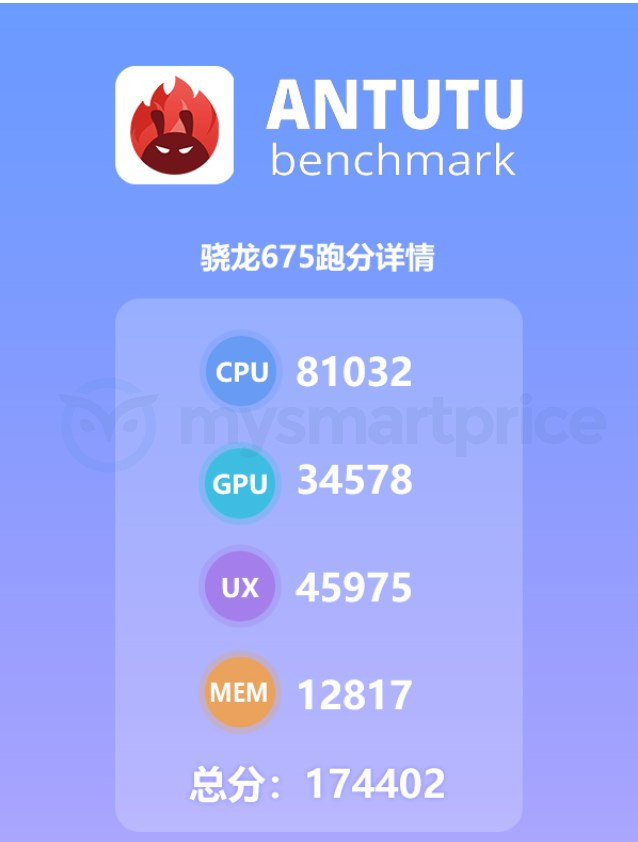
According to the AnTuTu listing, the Snapdragon 675 processor scored 1,74,402 points. In comparison, the Snapdragon 670 SoC managed to score 1,50,000. Looking at the results, the SD675 has also outperformed Snapdragon 710 SoC which managed to score 1,70,000 points.

Qualcomm Snapdragon 675 AnTuTu

The Qualcomm Snapdragon 675 Mobile Platform is an octa-core processor that includes two performance cores of Cortex A76 working at 2.0 GHz and six power efficient cores of Cortex A55 clocked at 1.78GHz. The new chipset will be bringing some advanced features on mid-range phones that are now found only on high-end or flagship phones.

The chipset is equipped with Adreno 61X graphics that carries support for OpenGL ES 3.2, Open CL 2.0, Vulkan, and DirectX 12. For gaming, the company seems to have employed software gaming enhancements that promise to deliver 90 percent reduced janks.

Imaging is the other improved feature of the Snapdragon 675 SoC. The chipset supports front-facing or rear-mounted triple cameras with features such as portrait mode and 3D face unlock. Smartphones powered by the SD675 chipset will carry support for limitless slow-motion videos of HD quality. It also comes with a multi-core third generation AI engine that will play an important role in capturing videos and photos, learning and adapting the voice of the user and improving battery performance.

The chipset supports 4K video playback and DisplayPort through USB-C. For connectivity, it includes X12 LTE modem with 600Mbps download speeds and 3x carrier acceleration, Wi-Fi 802.11ac 2×2 with MU-MIMIO, tri-band and Bluetooth 5.0.


Read More: Qualcomm says its 5G chipset would power up to 30 devices this year, mostly phones


Other features of the SD675 include FHD+ resolution supporting the display, DSP security for superior protection while face unlocking a smartphone, Qualcomm Aqstic and aptX audio technologies and support for Quick Charge 4+.

(Via)

Redmi Note 7 camera samples showcase the 48MP sensor’s prowess in various lighting conditions

When Huawei launched the Nova 4 last December with a 48MP Sony IMX586 sensor, we never thought as early as one month later, a handful of new ones would be launched with such large pixel camera. The Redmi Note 7 falls in that category which already has the Hisense U30 and soon the Honor View20. Xiaomi’s independent Redmi brand officially unveiled the Redmi Note 7 yesterday showing a cost-effective, quality model. As always, all aspects of the phone will be subjected to review and here you have the review of the Redmi Note 7’s camera samples as picked up on Chinese blog MyDrivers.

Xiaomi Redmi Note 7
Xiaomi Redmi Note 7 48MP sensor sample

The Redmi Note 7 is promoted heavily with the big 48MP lens and that isn’t surprising. The 48MP sensor is the main camera and is a Samsung ISOCELL GM1 Ultra Clear sensor with a 1/2 inch size. The super-sensing area is second only to the SonyIMX600 sensor used in the Huawei P/Mate series flagship. It is on par with the Sony IMX586 sensor used on the Nova 4. The ultra-high pixels provide more detailed performance for Samsung GM1 products. Moreover, Samsung GM1 also adopts Quad Bayer pixel arrangement, which can combine four 0.8μm pixels into one by four-in-one pixel technology (Pixel binning). A large pixel of 1.6 μm (the output photo becomes 12MP) increases the amount of light entering the camera.

Xiaomi Redmi Note 7
Xiaomi Redmi Note 7 12MP sample

The Samsung ISOCELL GM1 hardware comes with some limitations which makes it necessary for some of the samples to be shot using professional mode when the 48MP sensor is to be deployed. While AI mode is deployed without HDR when the 12MP sensor is in use. Two sets of camera samples were taken for comparison.Xiaomi Redmi Note 7

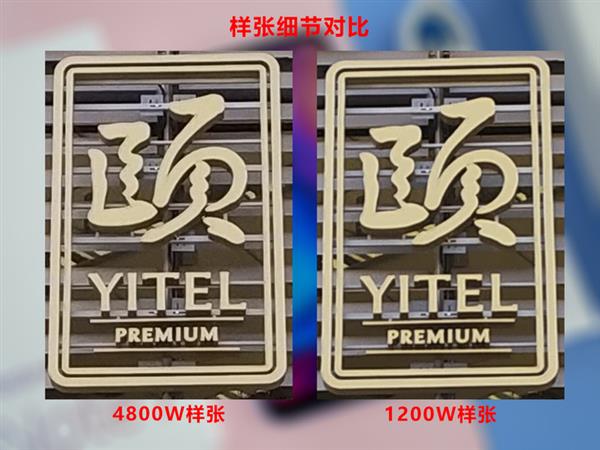
For instance, the photo of the giant Starbucks coffee cup. Under the 48MP sensor, the font on the giant Starbucks coffee cup is still clear while it becomes slightly faint when Pixel binning is used to achieve a 12MP sensor. That shows the 48MP sensor gives more attention to details. Pixel binning comes to play when images are to be captured in low light conditions. By combining raw data from four pixels into one, the effective output is a higher amount of light captured, while reducing the noise generated. Without actually artificially boosting the “signal” (amount of light perceived by the sensor, usually done by increasing the ISO), the resulting image is much brighter when Pixel binning is used simply because of the combination of four pixel-data into one.Xiaomi Redmi Note 7 camera sample

Read Also: The Xiaomi Redmi Note 7 Is Now Accepting Pre-Order On Giztop

Checking out the camera samples, the Redmi Note 7 could be said to have the best camera among the thousand yuan smartphones. The night shooting and daylight captures are all awesome. In addition, the AI mode in the camera is also quite user-friendly. When it is detected that the scene is backlit, the shooting options of “Backlight” and “Sketch” will pop up automatically. Even when shooting a Silhouette, the backlight and multi-frame will be synthesized to ensure the silhouette effect is captured.

Check out more samples from the Redmi Note 7 camera shutter.Xiaomi Redmi Note 7Xiaomi Redmi Note 7Xiaomi Redmi Note 7Xiaomi Redmi Note 7

Xiaomi Redmi Note 7
Redmi Note 7 Silhouette effect

Xiaomi India celebrates 5th anniversary with massive discounts on smartphones

Xiaomi India is now celebrating its fifth anniversary in India by introducing attractive discounts on various smartphones. The prices of the Mi A2 Android One, Redmi Note 5 Pro, Redmi Y2, Redmi 6 Pro and Redmi 6 have been permanently slashed. Moreover, starting from midnight today, the Redmi 6A will be available for purchase on open sale.

Here is all the information on the revised price tags of the aforementioned smartphones along with their pricing at launch:

Xiaomi Mi A2

  • 4 GB RAM + 64 GB storage –Launch Price: Rs. 16,999; Revised Price: Rs. 13,999
  • 6 GB RAM + 128 GB storage – Launch Price: Rs. 19,999, Revised Price: Rs. 15,999

Available for buying through Amazon and Mi.com

Redmi Note 5 Pro

  • 4 GB RAM + 64 GB storage – Launch Price: Rs. 13,999; Revised Price: Rs. 12,999
  • 6 GB RAM + 64 GB storage – Launch Price: Rs. 16,999; Revised Price: Rs. 13,999

Available for buying through Flipkart and Mi.com

xiaomi redmi note 5 pro

Redmi Y2

  • 3 GB RAM + 32 GB storage – Launch Price: Rs. 13,999; Revised Price: Rs. 12,999
  • 4 GB RAM + 64 GB storage – Launch Price: Rs. 16,999; Revised Price: Rs. 13,999

Available for buying through Amazon and Mi.com

Redmi 6 Pro

  • 3 GB RAM + 32 GB storage – Launch Price: Rs. 10,999; Revised Price: Rs. 9,999
  • 4 GB RAM + 64 GB storage – Launch Price: Rs. 12,999; Revised Price: Rs. 11,999

Available for buying through Amazon and Mi.com

Xiaomi Redmi 6 Pro

Redmi 6

  • 3 GB RAM + 32 GB storage – Launch Price: Rs. 7,999; Current Price: Rs. 7,999
  • 3 GB RAM + 64 GB storage – Launch Price: Rs. 9,499; Revised Price: Rs. 8,999

Available for buying through Flipkart and Mi.com

Redmi 6A

The Redmi 6A variants such as 2 GB RAM + 16 GB storage and 2 GB RAM + 32 GB storage are respectively priced at Rs. 5,999 and Rs. 6,999. Since the time it was made official in September last year, it has been available for buying only through flash sale. Beginning at 12 AM midnight today, Xiaomi India will make it available on open sale through Amazon India and Mi.com.


Xiaomi reveals MIUI 11 development has commenced; a “new and unique OS” coming

Xiaomi has reportedly started the development of its next generation of MIUI custom ROM and it would be called MIUI 11. This was made known during the company’s MIUI Core Experience Annual Meeting by Liu Ming, head of Product planning department of Xiaomi internet. This falls in line with the time schedule when the current-gen MIUI 10 commenced and in the coming months, we expect the company to start recruiting closed beta testers.MIUI 11

Presently, MIUI 10 stable update has already been pushed to over 40 models cutting across the Mi and Redmi models. With over 300 million users and a cumulative estimate of 402 weeks of development and update in its 8years+ of existence, MIUI could be said to be one of the longest-running ROMs on mobile phones in China. It has been the practice of Xiaomi to release a major update every year and this year isn’t going to be any different. The new update is expected to be released along with the new generation of Xiaomi’s flagship mobile phone.

From the photo seen on the power point presentation screen, MIUI 11 will be known as “a new and unique OS”, perhaps just the same way MIUI 9 was dubbed  “lightning fast” while MIUI 10 adopted the slogan “AI full-screen system”.

Read Also: Xiaomi will focus on the real needs of the user in designing MIUI 11

Xiaomi had earlier hinted that it will focus on improving the UI during the development of MIUI 11. The company further stated that the focus on MIUI 11 will not be on making a big difference in the user interface between MIUI 10 and MIUI 11. Instead, the focus will be on a design focused on the real needs of consumers. The rollout is still months away but we believe, the next-gen custom ROM will bring impressive features.

(source)

Xiaomi CEO Lei Jun talks about the company’s plan moving forward

Xiaomi’s co-founder and CEO Lei Jun appeared on Bloomberg in an interview where he shared information related to the company’s performance so far and what the company is looking forward to in the new year.

The company’s share dropped in the past few days, wiping off around $6 billion of its market valuation. However, Lei Jun shrugged that off and says that the company is adopting next-generation technologies which should energize demand for its smartphones.

xiaomi logo

While he did not comment on how an economic deceleration might affect the business, he was hopeful that the 5G technology will revive demand for smartphones as well as the host of internet services that Xiaomi offers. The company is offering a range of online services, including movies and music streaming to around 220 million users. He said:

In China, the penetration rate of smartphones is extremely high. But I think we are at the eve of 5G. I believe when 5G phones start to get popular, the overall demand from China will recover.

Xiaomi, which is dominating the Asian market, is now planning to expand to other regions. The company will soon expand to the European market but there’s no progress related to the US expansion plans. This could probably because of the on-going US-China trade war. He said that over the past two to three years, the company has entered about 80 countries and regions and is hoping that the company keeps that momentum going.


Read More: Redmi Note 7 with premium glass body, 19.5:9 screen and a 48MP camera is now official for 999 Yuan (approx. $147) only!


Yesterday, alongside the launch of Redmi Note 7 smartphone, the company has also announced that the Redmi brand will now work independently of its parent company. This move will enable the Chinese company to distinguish the products, operations, and working methods. It now has three brands — Mi for premium high-end phones, Redmi for budget devices and Poco for “affordable flagship” devices.

(Source)

Huawei announces that it will now block third-party launchers on EMUI 9

Most smartphone manufacturers are using their own custom skin on top of the Android operating system. While such custom interfaces introduce new features that are missing in stock Android, not everyone is a fan of the design of the custom skin. For those, the third-party launchers come in handy, allowing them to customize the look.

However, Huawei is now taking a step that will block the third-party launchers on its Android fork EMUI. Huawei has announced through its forums that it will be blocking the use of third-party launchers on EMUI 9.

Huawei EMUI 9

The company is trying to explain this by saying that it received feedback from users who encountered various problems while using third-party launchers. So, the company says that in order to maintain the customer experience, it will block the use of launchers.

Huawei further adds that most third-party launchers come pre-installed with bloatware which in turn affects the phone’s performance. It adds that sometimes, due to high power consumption by such applications, the phone also starts experiencing heating-related issues.

Another issue that the Chinese company is pointing out is advertisements. It says that most third-party launchers are loaded with advertisements, from pop-up ads to background apps, which apart from inconvenience for usage, also poses a privacy risk.


Read More: Apple and Huawei sit atop the Top 10 Smartphone brands in China in terms of revenue


In light of this, the company says that it has decided that from EMUI 9, users wouldn’t be allowed to set third-party launchers as the default. While it appears that the company is concerned about the users’ data and experience, Huawei has taken an easy way out and is depriving its users of using the feature which is one of the major things that makes Android the most popular mobile operating system.

Samsung Galaxy S10 5G variant and foldable Galaxy Flex to arrive with monstrous battery sizes

Samsung recently took the media by storm when it announced that this year’s Galaxy Unpacked event would be held on February 20. During the event, the South Korean tech giant is expected to officially unveil the Galaxy S10 flagship series. Going by leaks, Samsung Galaxy S10 series is made of the Galaxy S10+, S10, and S10 E (Lite). We have already seen some leaks around these models and don’t expect the rumour mills to stop buzzing until the models are official.Samsung Galaxy S10 series leak

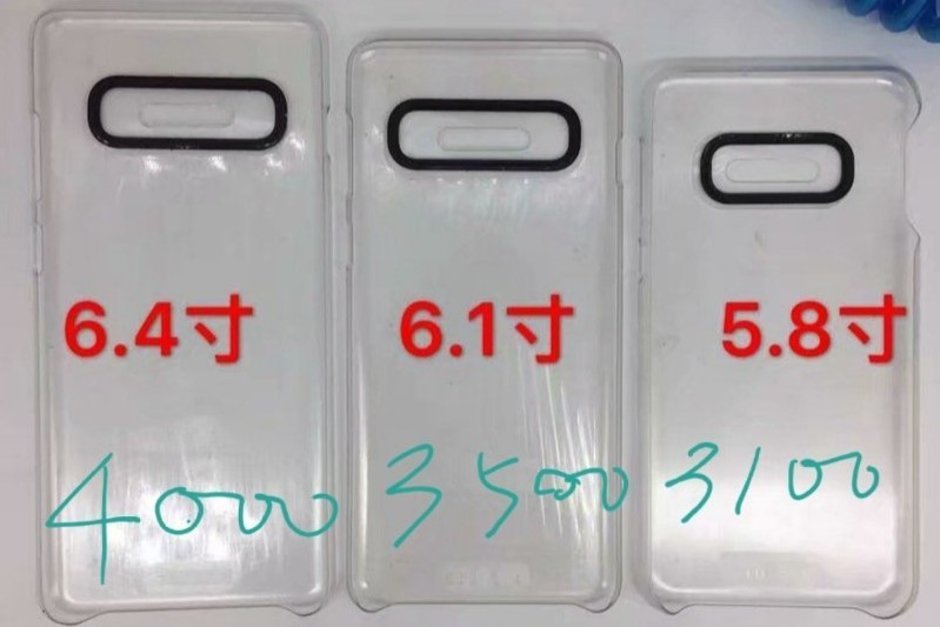
The latest rumour surrounds the battery capacity of some of the Galaxy models Samsung will drop this year. An earlier rumour had already shown that the Galaxy S10+, S10, and S10 E (Lite) will pack 4,000mAh, 3,500mAh, and 3,100mAh battery capacities respectively. However, the battery capacity of the 5G-enabled Galaxy S10 variant and that of the foldable Galaxy Flex/Fold are yet to feature in any leak until now. GalaxyClub.nl has hinted that the 5G Galaxy S10 model, internally known as the Beyond X (SM-G977), would possibly pack a massive 5,000mAh battery. The battery unit is reportedly the same with the ones that would be crammed inside the upcoming Galaxy M20 and M30 mid-range devices.Samsung galaxy S10

Read Also: Samsung foldable phone shown to select few at CES 2019, 5G prototype on public display

Further, the foldable Galaxy Flex will reportedly pack an even bigger battery. The rumour has it that the foldable phone will utilise two separate batteries of 3,100mAh capacities. This set up will provide the flagship model with 6,200mAh battery. That is practically a tablet-size composition which means you could get up to two days battery power on a full charge. We know the Galaxy S10 would be unveiled during the Unpacked event but we can’t say when this foldable beast would meet with us. We’ll keep you updated as more details emerge.

(source)

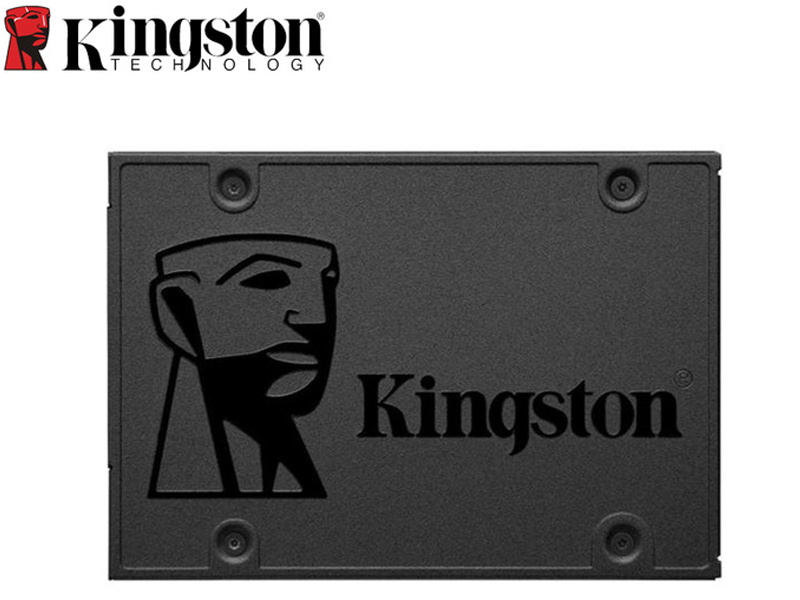
Buy A 480GB Kingston A400 SSD At A Dropped Price Of $89.99 On GeekBuying [Coupon Inside]

A hard drive is devised to help you store your data on a PC or a laptop so that you can access it at a later time.
There’s no dearth of top-branded SSDs (Solid State Hard Disks) in the market today; however, you have to empty your pocket in order to get your hands on one of these coveted hard disk drives. Thankfully, Kingston is bent on ensuring cost-conscious buyers can get their hands on a top-end solid-state drive without breaking the bank.
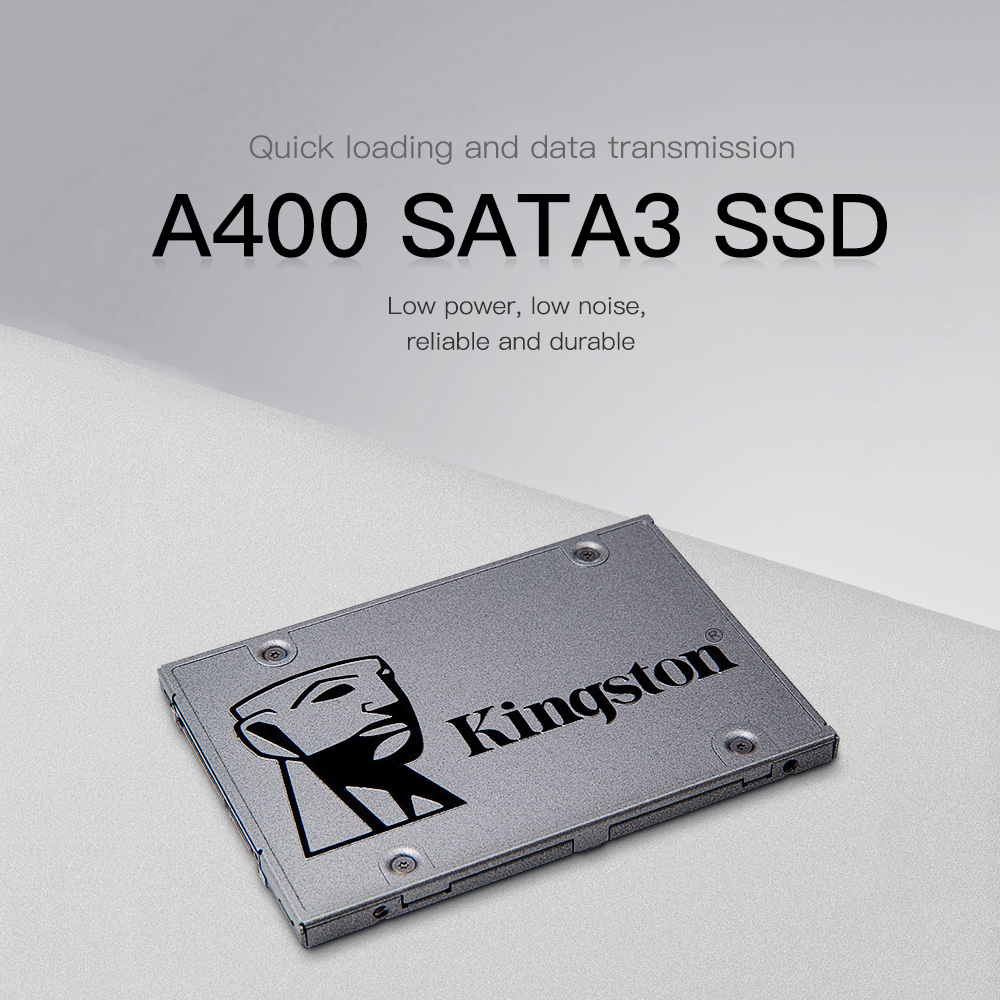
The California-based SSD drives maker has teamed-up with GeekBuying to offer the 480GB capacity version of its A400 SSD for an unbelievably lowered price. As a result, you can now buy the Kingston A400 SSD (480GB) for just $99.99 on the Chinese online store that’s known for offering the country’s best electronic items at unbeatable prices.

As if that weren’t enough, you can even extend this 17 percent discount by applying coupon code GIZ_GCFWACKX at checkout. The aforesaid coupon helps you get an extra $10 off by bringing the device’s already lowered selling price further down to just $89.99 before you place your order.


Designed to radically enhance the responsiveness of your system, the Kingston A400 is an irresistible solid-state drive at this price. As compared to mechanical hard drives, the A400 dramatically accelerates boot, and loading times allowing you to perform various activities without any sort of interruption or lag.

Moreover, this SSD is equipped with the new gen controller that makes it 10x faster than a regular hard drive. It warrants a better performance, super responsive multitasking and an overall faster system.

You can follow this link to check out more details about the Kingston A400 SSD and grab the discount before the promo comes to an end. It is also worth noting that the coupon is slated to expire soon.


Get Big Discounts On Top-Branded 3D Printers And Parts On Banggood [10% Off Coupon Inside]

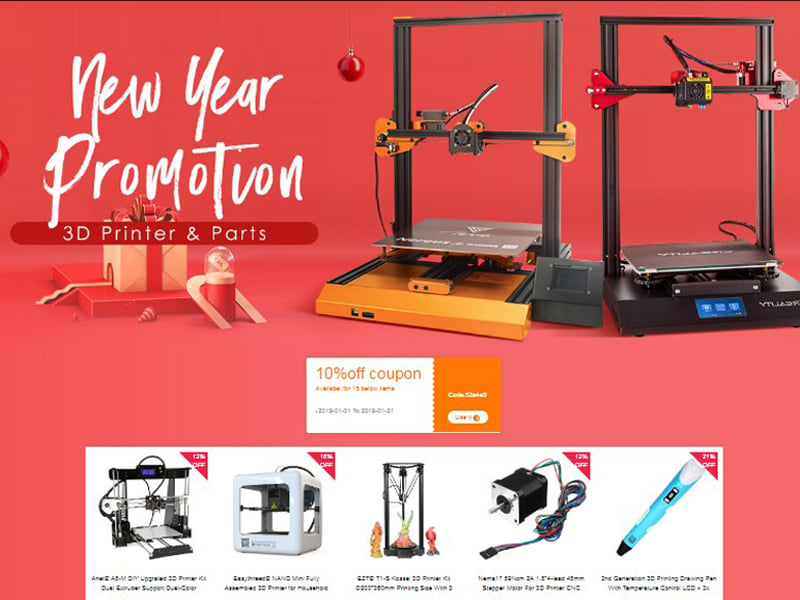
As part of its New Year Promotion, Banggood is now doling out noteworthy discounts on a wide selection of 3D printers and accessories.


In addition to offering discounts on top-branded 3D printers, the Chinese online store is also giving buyers an opportunity to get an extra 10 percent off on fifteen 3D printers that have been included in a category called ‘Coupons.’ So without wasting any time, let’s delve straight into the details.

In a bid to expedite and simplify its recently kicked-off promo, Banggood has added all heavily discounted 3D printers to the ‘Coupons’ category. In this segment, you can find all sorts of 3D printers and their accessories retailing for prices lower than their original asking prices.

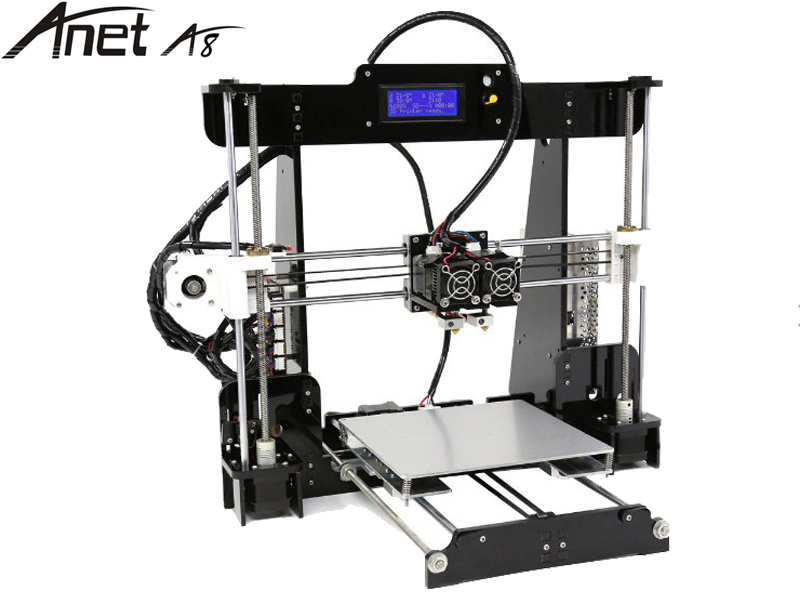
For the sake of an instance, the Anet A8-M DIY Upgraded 3D Printer Kit would normally set you back $299.99 on both online as well as offline stores, but you can now buy it for just $259.99 on Banggood. Moreover, you can extend this 13 percent discount and save $26 more by applying coupon code 52a4e9.
In other words, you can bring the already lowered retail price of the Anet A8-M DIY Upgraded 3D Printer Kit further down to only $233.99 simply by applying the aforesaid coupon before you proceed to checkout. Note that the coupon will expire on January 31st.



Likewise, you can apply the above-mentioned coupon to save a considerable amount of extra money on any item included in the ‘Coupons’ section. The next category dubbed, ‘Brand Creality 3D’ is also brimming with top-end 3D printers and accessories that you can buy at unbeatable prices.

Alternatively, you can go for high-end 3D printers and accessories manufactured by TEVO and Anet in the following segment called ‘TEVO & Anet.’ More importantly, all items featured in this section are currently up for grabs bearing heavily discounted price tags.

This Banggood promotion also includes a slew of Resin-branded printers that now carry reduced price stickers. The rest of the printers and accessories have been added to the ‘Other Popular Printers’ and ‘Hot Sale Accessories’ segments. If you are interested in checking out newly arrived 3D printers, you can head straight to the ‘New Arrival’ category.

In order to take full advantage of the discounts and use the extra 10% off coupon before it lapses, all you need to do is to follow this link that will take you to the promotion page.

Lily is a smart speaker that teaches Chinese language in a non-traditional way

If you are finding a way to learn the Chinese language without putting in much efforts to read books, vocabulary lists, flashcards or other paraphernalia, then the Lily smart speaker seems like a product for you.

Lily is a voice-controlled smart speaker that can simply and easily teach Chinese. The company describes the speaker as Alexa for Chinese learning. It claims that the fastest way to learn a language is not simply through reading books or the use of a basic app but to immerse in the language and speak as much possible — which is what the speaker intends to offer.

Lily Speaker

The team behind this smart speaker consists of Chinese language learners and machine learning engineers, who specialize in voice processing. The company says that it has invented an exciting device that can teach Chinese faster than anything on the market.

It teaches the Chinese language through four major modes — interactive conversations, real-time translation, vocabulary voice games, and a Chinese voice assistant. However, Lily’s functionality is not limited to teaching the language but also doubles as a high-quality home speaker.

Lily Speaker

Currently limited to the Chinese language, the company says that it will start offering more languages after Q2 2019, starting with French and Spanish. Those who purchase the device now will get the benefit of the upcoming languages for free just by updating the software.


Read More: Global smart speaker shipments grew 197 percent in Q3 2018, Xiaomi takes the fifth position


Lily — the first smart speaker that teaches Chinese, is currently being crowdfunded on Indigogo. The company had planned to raise $10,000 through the campaign and has already received $958,000 about 9580 percent of its initial goal. If you are interested in purchasing Lily, go the source link.

(Source)

Vivo Z3i Standard Edition launched for 1,998 Yuan (~$296)

In October, Vivo had launched the Vivo Z3i smartphone in China. The handset was packed with the same specs as the 6 GB RAM + 128 GB edition of the Vivo V11i model that is available in some markets like Philippines and Taiwan. In India, the V11i handset is selling as V11. Today, the Chinese manufacturer has introduced the Vivo Z3i Standard Edition in China with a price tag of 1,998 Yuan (~$296).

Vivo Z3i Standard edition_

Vivo Z3i Standard Edition Specifications and Features

The Vivo Z3i Standard Edition that has a model number of Vivo 1813A/T houses a 6.3-inch LCD display with waterdrop notch. It carries support for full HD+ resolution of 2280 x 1080 pixels. The handset measures 155.97 x 75.63 x 8.1mm and it weighs 163.7 grams.

The MediaTek Helio P60 chipset powers the smartphone along with 6 GB of RAM. It has an inbuilt storage of 128 GB. For more, it is equipped with a microSD card slot. The handset is fueled by a 3,315mAh battery.

Vivo Z3i Standard Edition

For photography, the Vivo Z3i Standard Edition comes equipped with f/2.0 aperture 16-megapixel + f/2.4 aperture 2-megapixel dual camera setup on its rear and a frontal shooter of 24-megapixel with f/2.0 aperture. It is preinstalled with Android 8.1 Oreo OS along with FunTouch OS 4.5 UI. For security, the phone is equipped with a rear-facing fingerprint reader and face unlock.

Vivo Z3i Standard Edition Price and Release Date

Surprisingly, the newly introduced Vivo Z3i Standard Edition have same specs for display, chipset, RAM, storage, cameras and battery compared to the Vivo Z3i. However, the only major difference is that Vivo Z3i comes with a AMOLED display whereas the Vivo Z3i Standard Edition has an LCD panel.

The Vivo Z3i Standard Edition is priced in colors like Aurora Blue, Dream Pink and Starry Night Black and it can be availed for 1,998 Yuan (~$296). Aurora Blue and Millennium Pink are the color variants of the Vivo Z3i and it carries a higher price tag of 2,398 Yuan (~$355).

(source)

Note: Article has been updated with difference between Vivo Z3i and Z3i Standard Edition and release information.

Buy SMRC ICAT2 And S21 RC Drones At Unbelievably Lowered Prices On GeekBuying [Coupons Inside]

If you are a drone enthusiast looking to get your hands on a top-end drone without spending a lot of money, GeekBuying’s got your back.
Known for offering China’s best electronic items like smartphones, TV boxes, and RC quadcopters, GeekBuying is now giving drone lovers an opportunity to buy SMRC-branded drones without emptying their pockets. Aside from GeekBuying reducing the retail prices of select drones, there’s more for you to cheer about so continue reading for more details.

SMRC ICAT2 1080P 5G Wifi FPV GPS Brushless RC Drone

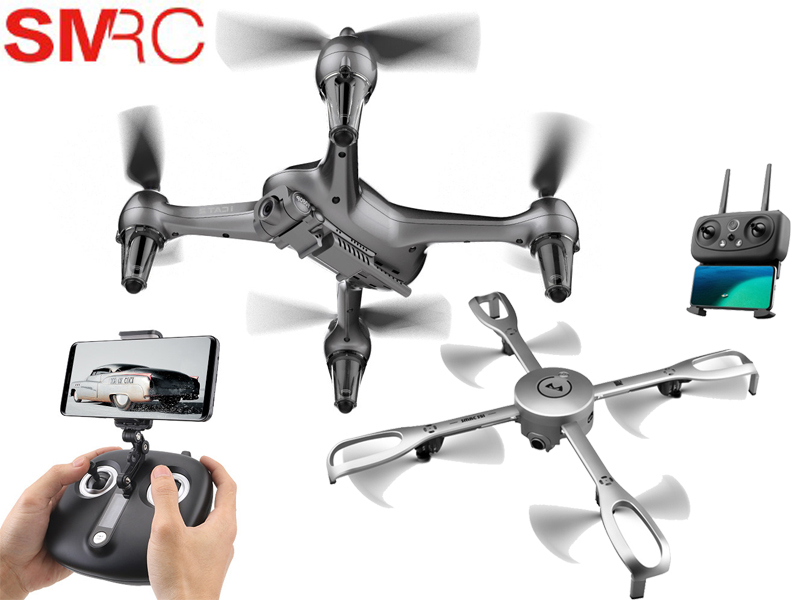
In a bid to ensure a powerful flight, the SMRC ICAT2 packs 4 1806 1850KV brushless motors. Moreover, it houses a well-tuned 1080P 5G Wi-Fi camera so that you can capture awe-inspiring images and videos from the sky.

The SMRC ICAT2 adopts the GPS mode wherein it receives the signal from satellites showing its exact position. The device also comes with a Follow Me Mode that activates the camera’s auto-recognition function to identify human figure and capture your activities.
Aside from that, the SMRC ICAT2 includes the Follow Me mode, one-key return function and lots more. Loaded with useful functions, the SMRC ICAT2 would normally set you back $168.99 but if you are living on a tight budget, you can now buy it for only $129.99 on GeekBuying.
If this 23 percent discount doesn’t impress you much, you can use coupon code GIZ_BYXEBFGY to get an extra $27 off at checkout.  As a result, the already lowered selling price of the SMRC ICAT2 reduces to just $125.99.

You can follow this link in order to avail this link. Note that the promo is slated to end in just two days.

SMRC S21 1080P 5G WiFi FPV GPS Foldable RC Drone

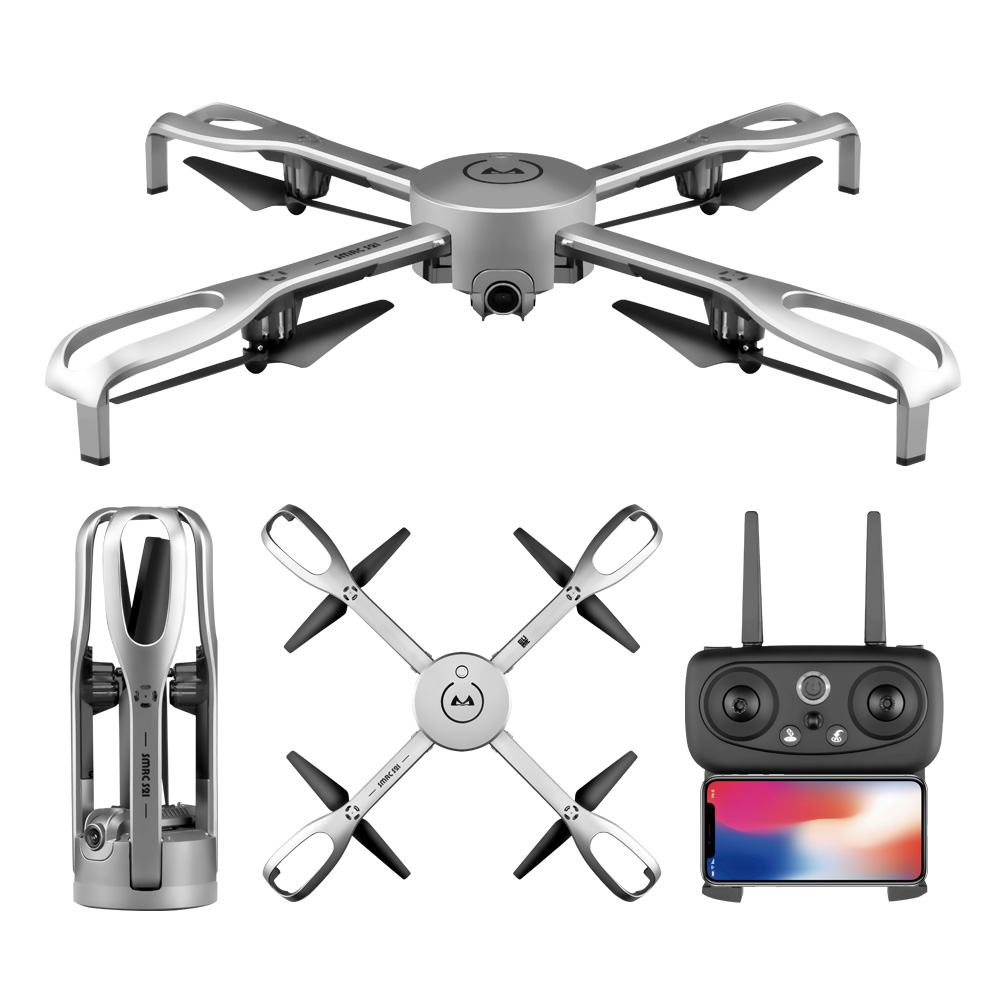
The SMRC S21 is a compact quadcopter that adopts a foldable design so that it can be easily carried where ever you go. Aside from portability, this drone is capable of capturing stunning pictures and videos with its built-in 1080P 5G Wi-Fi camera.

The drone has a GPS mode that enables it to receive the signal from satellites in order to disclose its exact location. Just like the SMRC ICAT2, the S21 boasts useful modes including the Follow Me Mode, and the Altitude Hold Mode. It also has the one-key return function included in the SMRC ICAT2.
The SMRC S21 usually carries a $125.99, but much to the delight of cost-conscious buyers, it has now gone up for sale carrying a heavily discounted price of just $99.99. You can extend this 21 percent discount further by using coupon code GIZ_IXGKKFIB during the checkout process.
The aforesaid coupon helps you save $21 extra by reducing the original asking price of the SMRC S21 to only $92.99 before you place your order. You can grab this discount by visiting this link. It is worth noting that the promo will come to an end in two days.

Buy The OnePlus 6 Smartphone For Only $391.99 On Banggood [Coupon Inside]

Last year we saw numerous flagship smartphones hitting the store shelves and garnering huge popularity among smartphone lovers.

Popular Chinese smartphone manufacturer OnePlus, also made its long-awaited OnePlus 6 smartphone available to its loyal fan base in May last year. Even nearly a year after its release, the demand for this feature-laden smartphone hasn’t scaled down.

Taking this sky-rocketing demand into consideration and in a bid to allow cost-conscious buyers to get their hands on the coveted phone, OnePlus is now offering the OnePlus 6 for a considerably lowered price on Banggood. Moreover, there’s a way you can get an extra discount, and we’ll talk about it in just a bit.

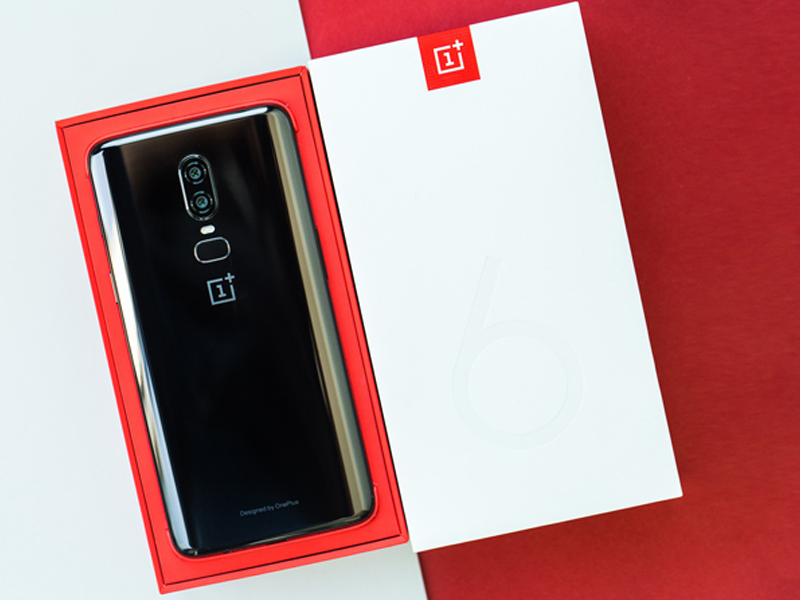
The OnePlus 6 boasts an impressive array of features that completely justify the $609.99 price tag it normally carries but thanks to a 26 percent discount, you can now buy it for only $452.86 on the Chinese online store that guarantees the best bang for your buck. But that’s not all.

Aside from taking advantage of the aforesaid discount, you can use coupon code 1BGOP61 and get an extra $60.87 off during the check out process. In other words, you can bring the phone’s already reduced retail price further down to just $391.99 simply by applying the aforesaid coupon before placing your order.
An absolute bargain at this price, the OnePlus 6 sports a mammoth 6.28 inches Optic AMOLED capacitive touchscreen display with 1080 x 2280 pixels resolution and Corning Gorilla Glass 5 on top for added protection. It packs Qualcomm’s Snapdragon 845 processor along with Adreno 630 GPU for an immersive experience.

Moreover, the phone ships with 6GB of LPDDR4X RAM and offers 64GB of non-expandable onboard storage space. On the optics front, it houses 16.0MP+16.0MP dual camera setup on the back and a 20.0MP front shooter for selfies and video chatting.

The OnePlus 6 runs Android 8.1 Oreo OS and draws its juices from a robust 3300mAh battery. On top of that, it features a slew of useful sensors like accelerometer, gyro, proximity, compass and a rear-mounted sensor.

You can visit this link to check out the rest of the specification of the OnePlus 6 smartphone and avail the discount which is valid for the black color version of the smartphone for a limited period of time.

Nokia 9 PureView to reportedly have ‘Light’ tech for better low-light photography

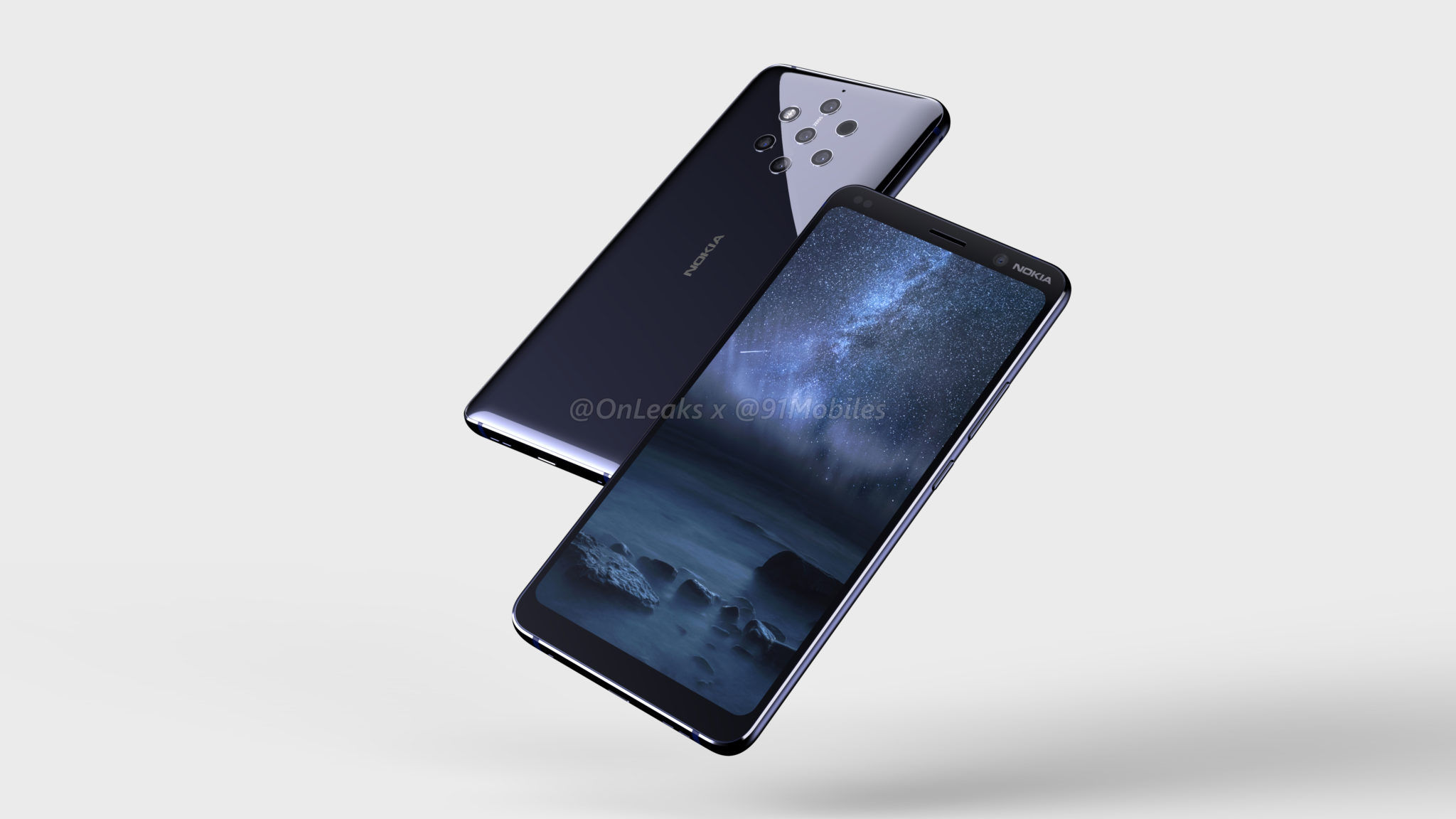
HMG Global‘s upcoming flagship smartphone — Nokia 9 PureView — one of the most anticipated smartphones — will be the world’s first smartphone to feature five camera sensors on the back panel.

Now, it is being speculated that along with having Zeiss optics, the upcoming Nokia smartphone could also come with an enhanced low-light experience from imaging firm Light that specializes in “computational photography”.

Light, which is a US-based startup, has built a technology that uses a five-camera module array to collect 10 times more light than a traditional smartphone sensor. The development is in line with what was claimed in a recent purported promo of the Nokia 9 PureView.

Nokia 9 PureView 3D render

Further, it is mentioned that its software pipeline that works on multiple platforms and devices can also combine and fuse 5, 10, or even 50 images. While describing its software pipeline, Light wrote, “The pipeline is built to combine images from different perspectives, as well as different sensors, apertures, and focal lengths. We leverage pixel matching, geometric, and photometric corrections, and ISP algorithms in order to achieve our results.

Previously, US-based Light was in the news a couple of years ago for bringing prototypes such as a 16-lens camera and a nine-camera phone. It is also touted to offer its multi-camera solutions without any additional bump.

While the Penta-camera setup on the back panel of the phone makes it interesting, the phone’s specifications aren’t exciting as it feels like a 2018 flagship phone rather than a 2019 one. It is said to be powered by Snapdragon 845 chipset, coupled with up to 6GB or 8GB RAM.

It is expected to feature an 18:9 aspect ratio screen and may carry support for Quad HD+ resolution. It could also be the first Nokia smartphone to feature an in-display fingerprint scanner. The phone is also expected to be powered by a 4,150mAh battery that may carry support for wireless charging.


Read More: Nokia 6.2 specifications leaked online, said to feature a punch-hole display


According to the reports, Nokia‘s upcoming flagship smartphone will be announced in late January and will be first launched in the European market. It also adds that the phone will be priced at 749 Euros (approximately $851) and 799 Euros (approximately $908) depending upon the market.