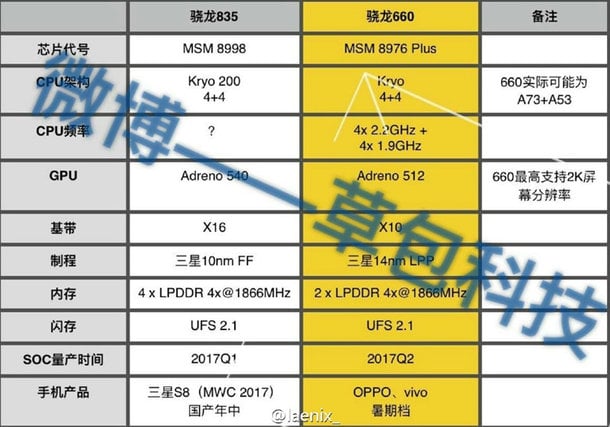
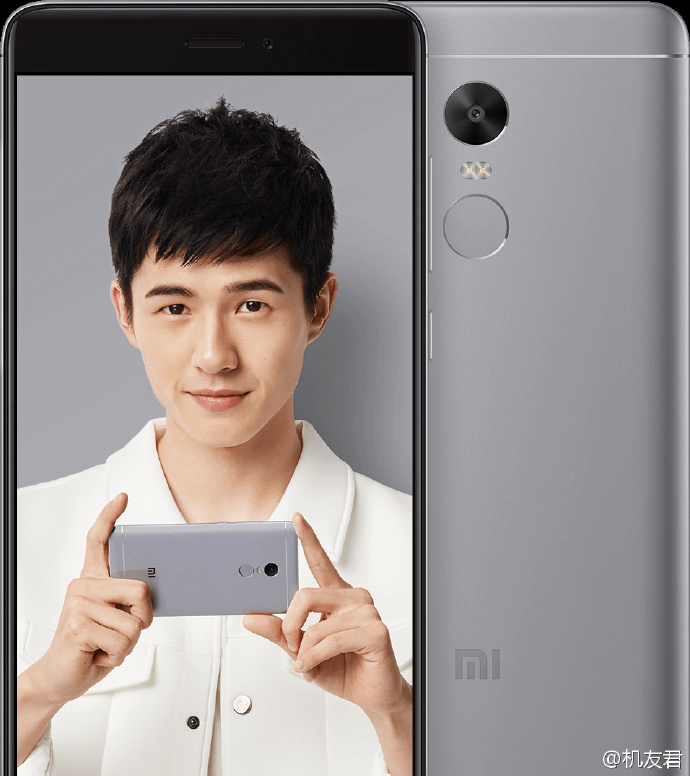
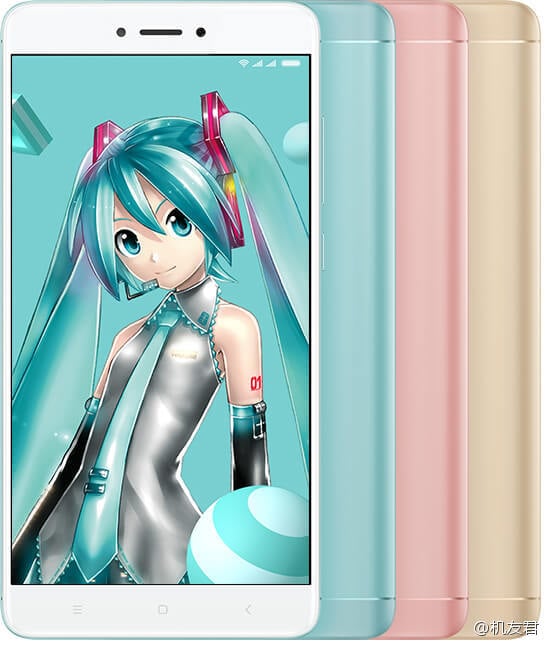
Xiaomi will be launching its first phone for the year in a few days. The device which is the Redmi Note 4X is more like the Redmi Note 4 with a new chip. So there’s no much excitement around the device. There is however news of a new Redmi device in the works with a Snapdragon 660 SoC.
The info comes from a Weibo user ‘@grass digital’ who says Xiaomi has launched Snapdragon 660 projects likely to be Redmi phones or a new Xiaomi series similar to the Xiaomi Max.
If Xiaomi is working on a Snapdragon 660 Redmi phone, it should probably be the Redmi Pro 2 whose spec leaked a few weeks ago.
The new chip which we first heard of last year has model number MSM8976 Plus. This is similar to that of the Snapdragon 652 (MSM8976) and Snapdragon 653 (MSM8976 Pro). While the model numbers might be similar, the chip is quite different. It is said to be built on a 14nm process unlike the Snapdragon 652 and 653 which were built using the 28nm process.
The major processors in the mobile market are Qualcomm’s Snapdragon, Mediatek’s Helio, Samsung’s Exynos and Huawei’s Kirin. Soon, Xiaomi will be joining the ranks with its Pinecone processors. We don’t need to go over the history of how Pinecone came to be, so let’s skip ahead to the main topic.
Qualcomm is the main chip supplier in the world. Quite a number of smartphone manufacturers use their chips in their phones. Even Samsung that has its own Exynos line still releases phones with Snapdragon processors. But there are times that Qualcomm releases a chip that doesn’t live up to expectation. An example is the Snapdragon 810 processor released in 2015. Even though there were fantastic devices like the Nexus 6P, the overheating issue of the chip was the bane of such phones.
Samsung was able to dodge the bullet by releasing the Galaxy S6 with its Exynos processor, but manufacturers like Google, OnePlus and LG who don’t have their own chips were left at the mercy of Qualcomm. In case something like that happens again, Xiaomi will have its Pinecone chip to fall back too.
Another case is the chips used for new products like smartwatches. LG and Google’s Android Wear 2.0 watch, the LG Watch Sport uses a Qualcomm Snapdragon Wear 2100 SOC. Reviews say the battery life and performance is poor and the chip is the likely culprit. The processor is built on a 28nm process which Qualcomm last used in phones released in 2013. It’s not like Qualcomm can’t manufacture a better chip but there is a probability that the company still doesn’t see the market as profitable, hence its lack of investment.
The Samsung Gear S3 smartwatch on the other hand uses a 16nm Exynos chip and the same applies to Apple’s Watch Series 2 which uses a custom 16nm Apple S2 chip. Both devices perform better, are smaller in size and offer superior battery life. If Xiaomi decides to expand its wearable line beyond its partnership with Huami, a custom chip built on a more-recent fabrication node will be better than what Qualcomm currently offers.
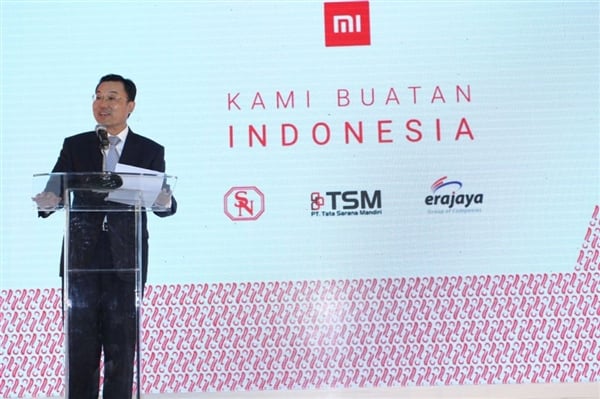
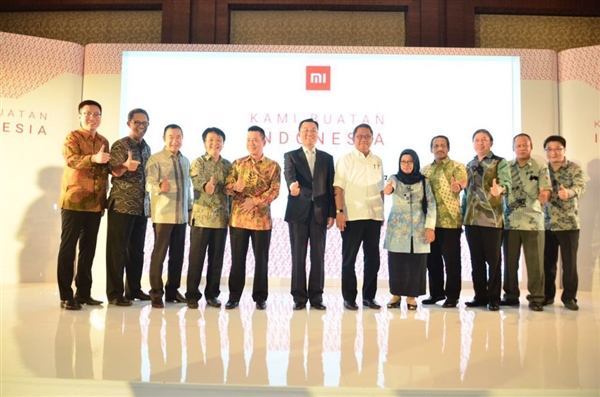
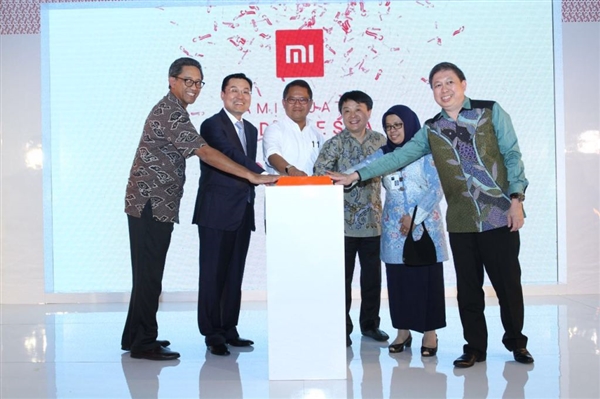
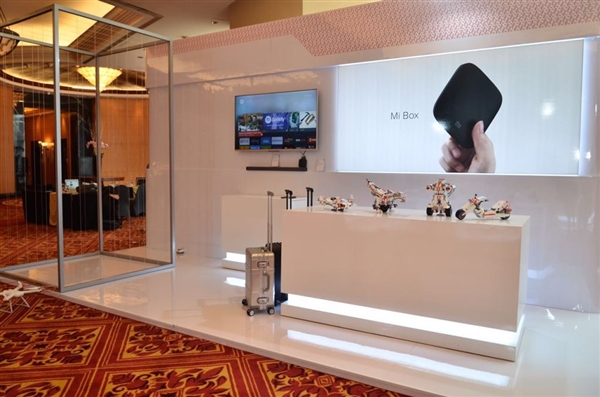
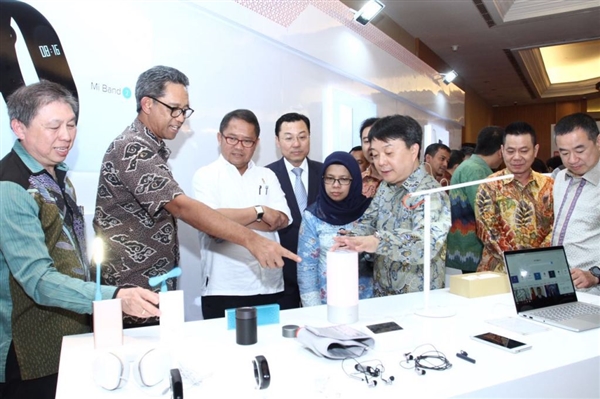
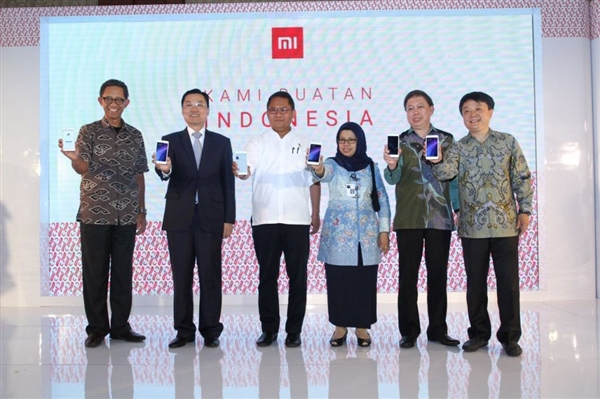
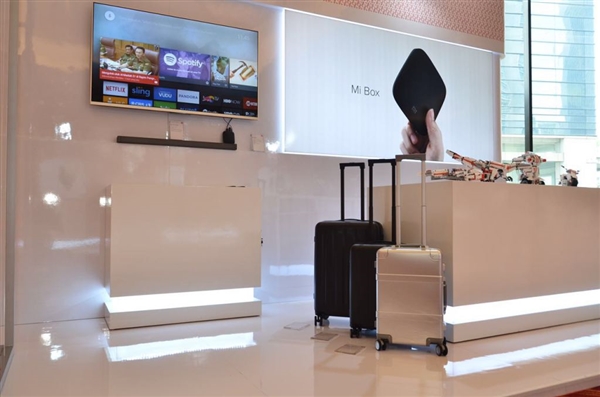
Xiaomi is currently expanding its footprint across the globe. Following its entry into India, the next port of call is Indonesia. The smartphone giant has established an assembly factory on the island of Batam. The factory currently has a capacity to assemble more than 100,000 phones per month.
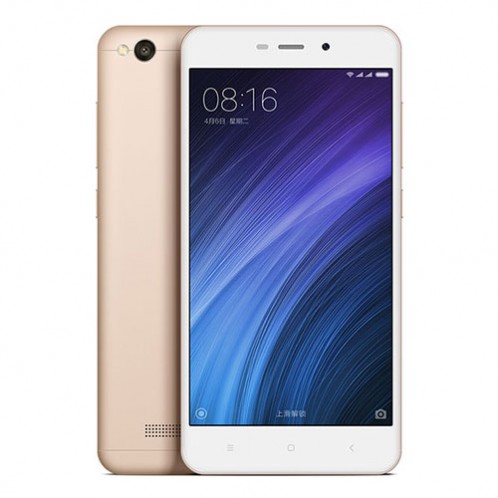
You might think that since the phones are assembled in Indonesia, they should be priced less or equal to that of China. Sadly, that is not the case. The Redmi 4A is the device currently assembled by the factory. It is priced at 1.49 million Indonesian Rupiah which is roughly ¥770 (~$113). The Redmi 4A sells for ¥599 (~$87) on Xiaomi’s official website, though you will find it selling for a slightly higher-price on third-party sites.
Xiaomi Redmi 4A
The decision to assemble devices in Indonesia comes as part of a new condition put in place by the government. The requirement is that 4G LTE smartphones sold in the country by foreign manufacturers must be made up of 30% local content. It is said that assembly, packaging, design, software, and R&D investment counts as part of the percentage. Xiaomi’s decision was to assemble its phones while Apple made a $44 million investment in R&D.
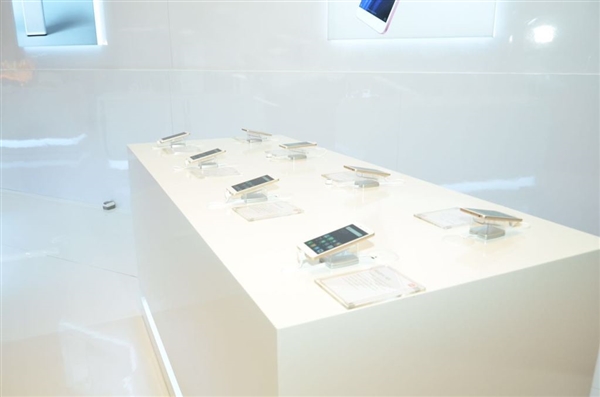
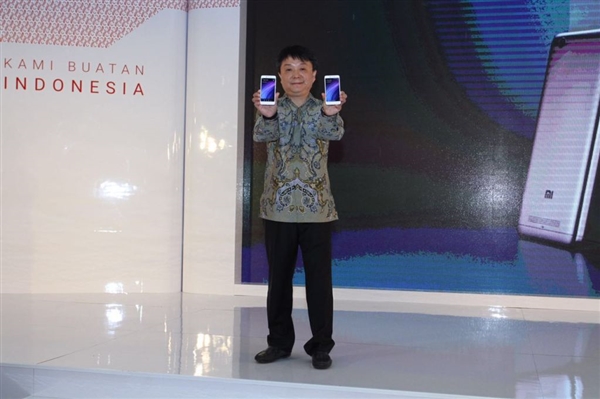
The Redmi 4A has a 5-inch 720p display, 2GB RAM, 16GB ROM and a Snapdragon 425 SoC. There is a 13MP sensor at the back and a 5MP shooter up front. Xiaomi ships the phone with a 3120mAh battery and MIUI 8 based on Android Marshmallow. The device has dual SIM slots (nano + micro) with SIM 2 doubling as a microSD card slot. The Redmi 4A will be sold by Erafone, Xiaomi’s retail partner in the country.
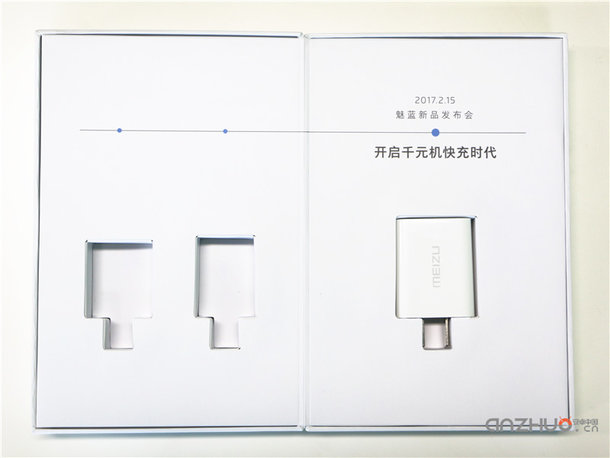
The Meizu M5S is generating a lot of buzz with its fast charging feature. The mid-range device is set to launch on the 15th of February and judging from the teaser image released by Meizu, the device should launch with fast charging technology. The official invitation for the event also includes a 9V/2A charging adapter, further confirming the feature.
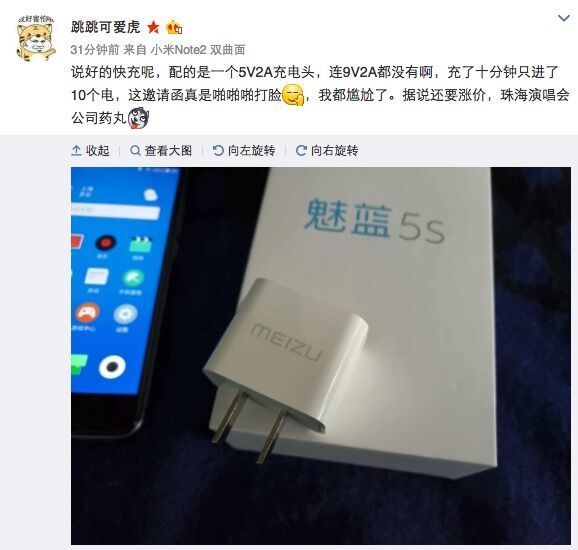
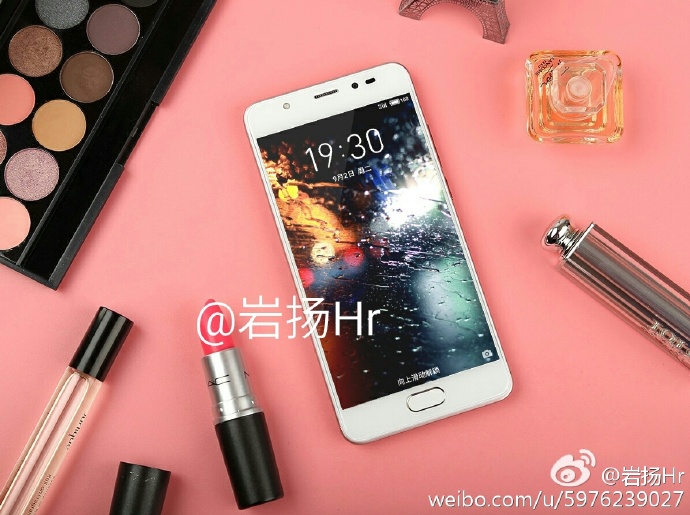
However, earlier this week a Weibo user posted pictures of the device and the included charger which surprisingly is a 5V/2A (10W) adapter. The conclusion was that it doesn’t have fast charging. But we all know there are fast chargers with that same power rating, so the assumption was that it was just a slower form of fast charging. Upon testing the charger, he was able to get 10% charge in a span of 10 minutes which sadly is slow, ruling out the case of it being a fast charger.
So how come the invitation has a 9V/2A charger and the phone doesn’t ship with one? It turns out that there are two variants of the Meizu M5S and the higher-end variant is the one with the fast charger.
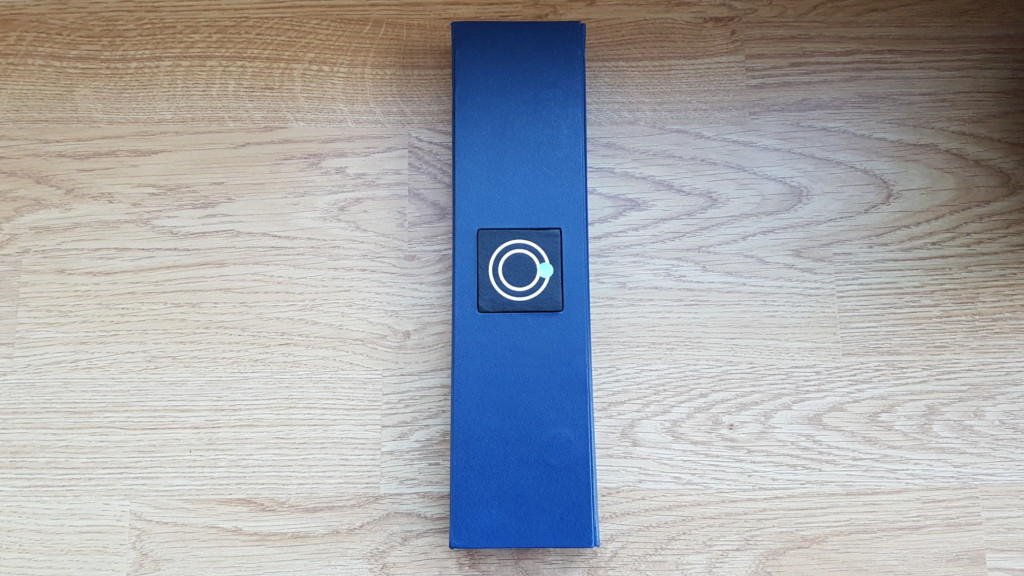
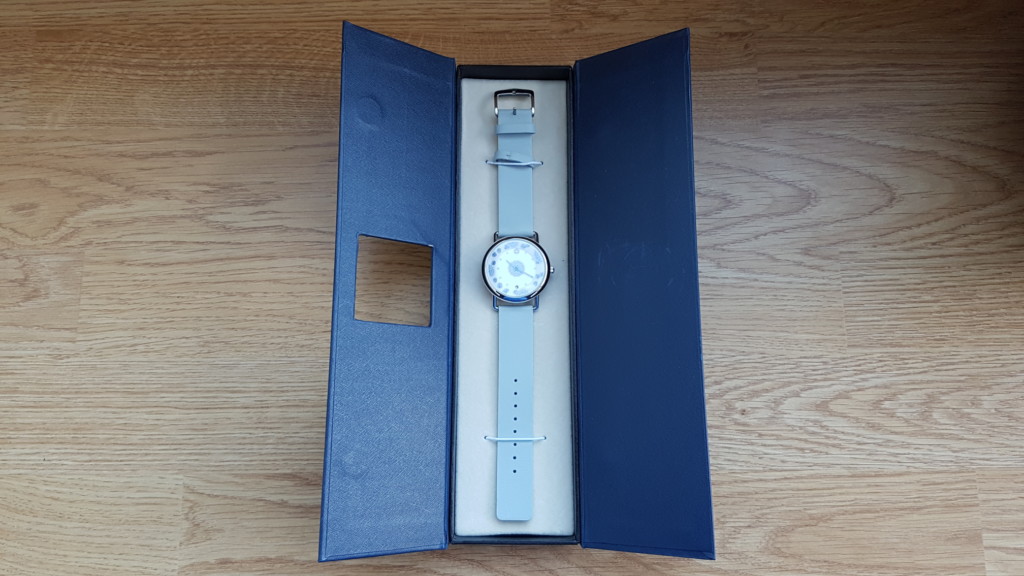
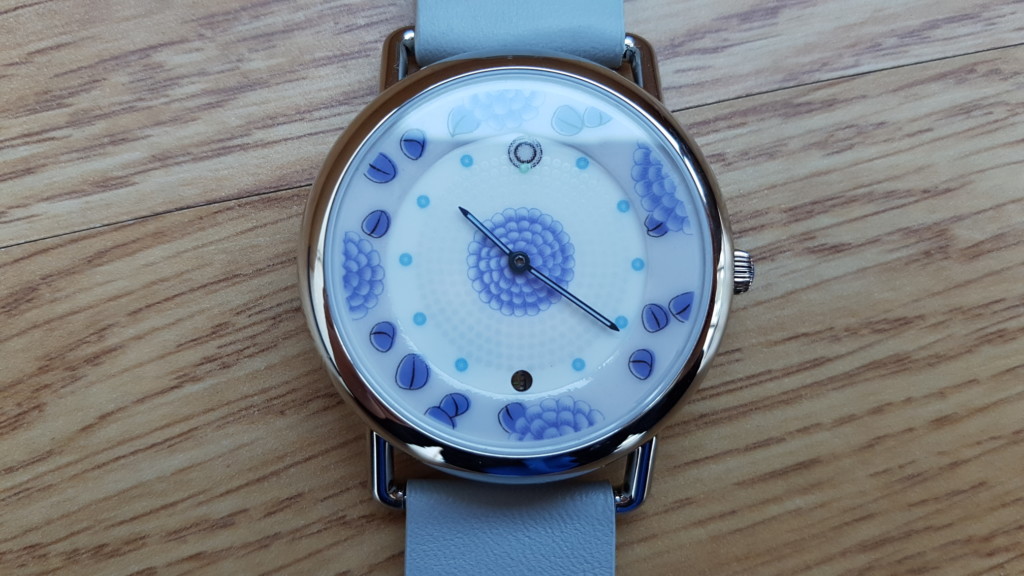
The watch comes in a pretty simple yet neat packaging.
DESIGN
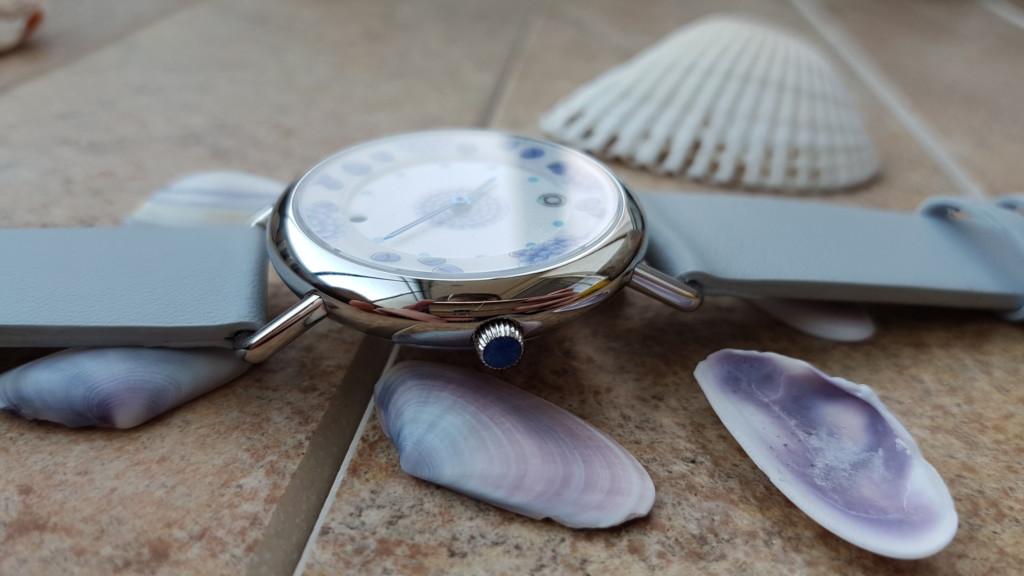
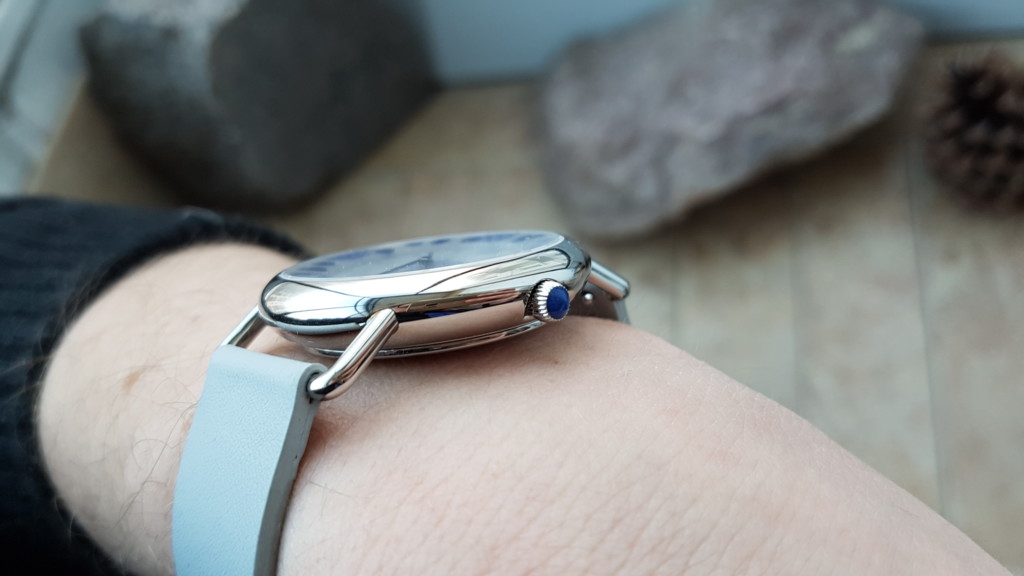
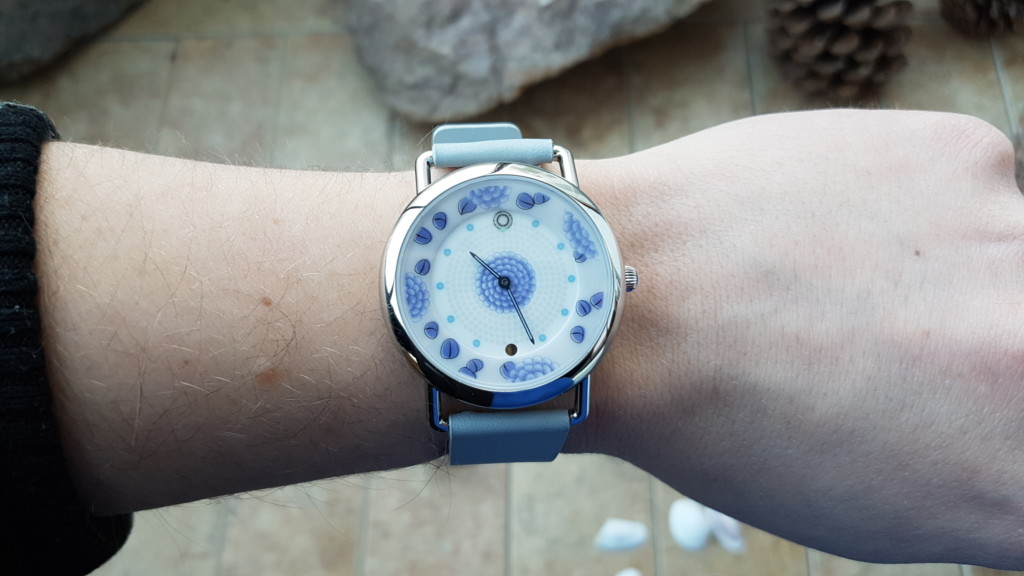
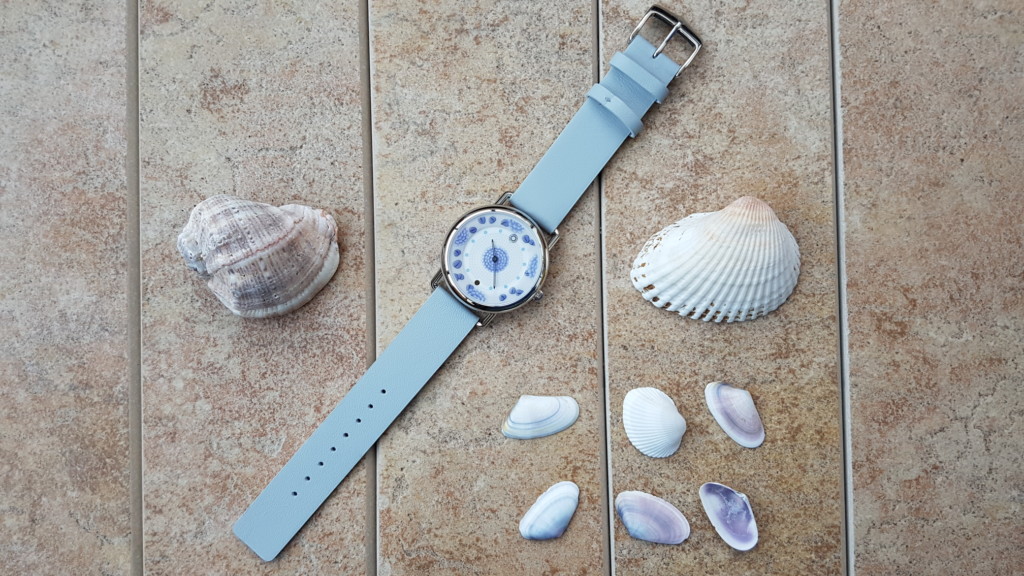
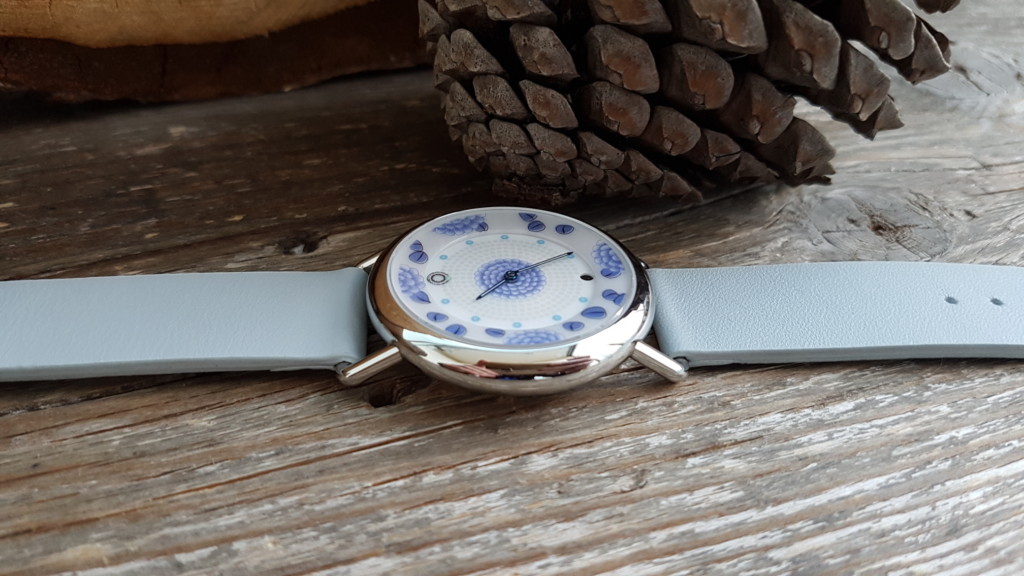
The FENwatch aims to bring something new to the watch market by producing the world’s first porcelain watch. In fact, it uses the classic blue and white colours that are usually associated with the Chinese porcelain goods like premium plates etc.
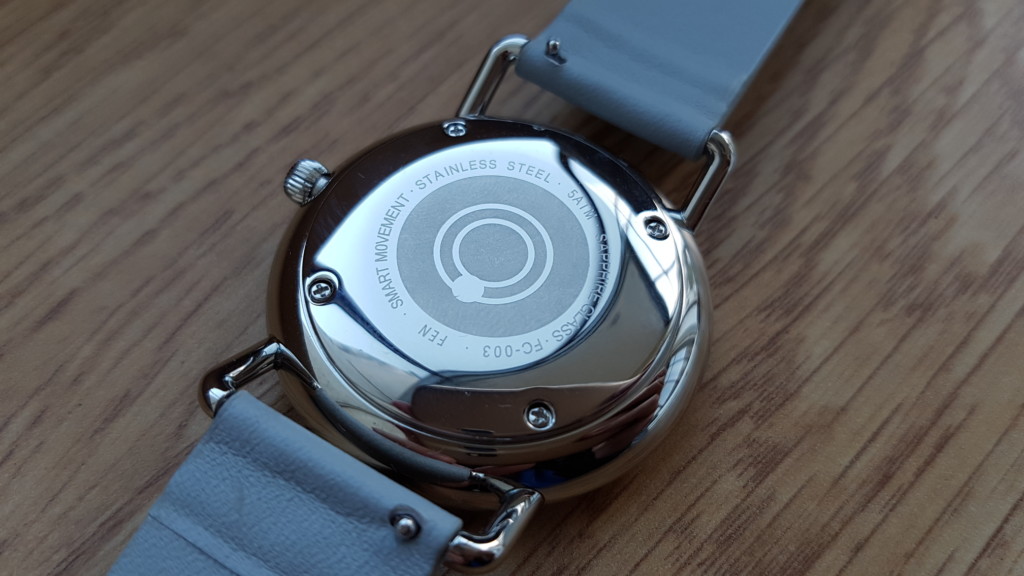
In addition, the watch uses a great combination of Swiss movement and smart technologies, so the battery is said to last up to 365 days, which is a great feature to have considering a short battery life of today’s smartwatches. Also, the watch uses the K1 glass with sapphire coating.
The watch uses a stainless steel housing that helps assure the water resistance of up 50m under water.
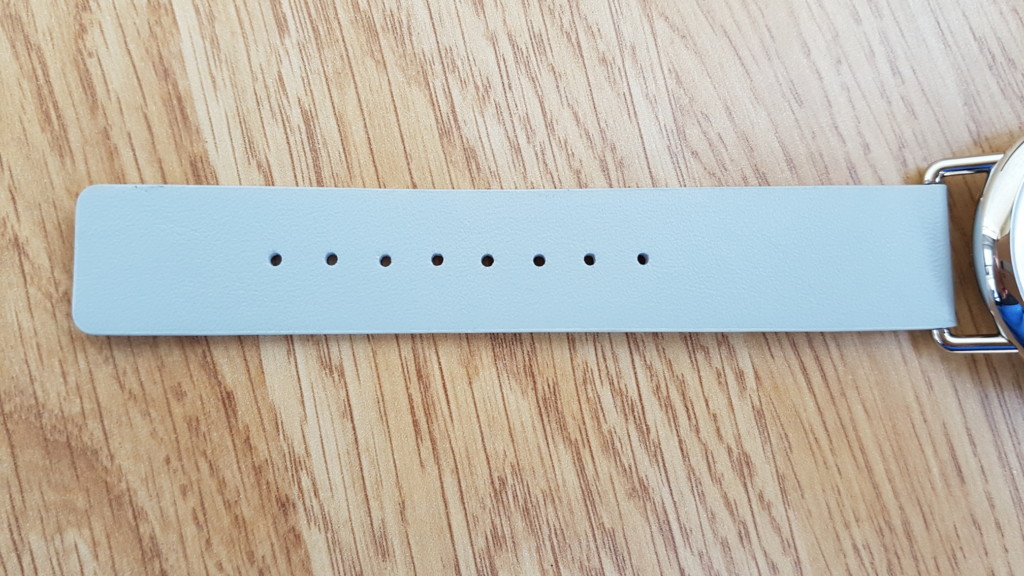
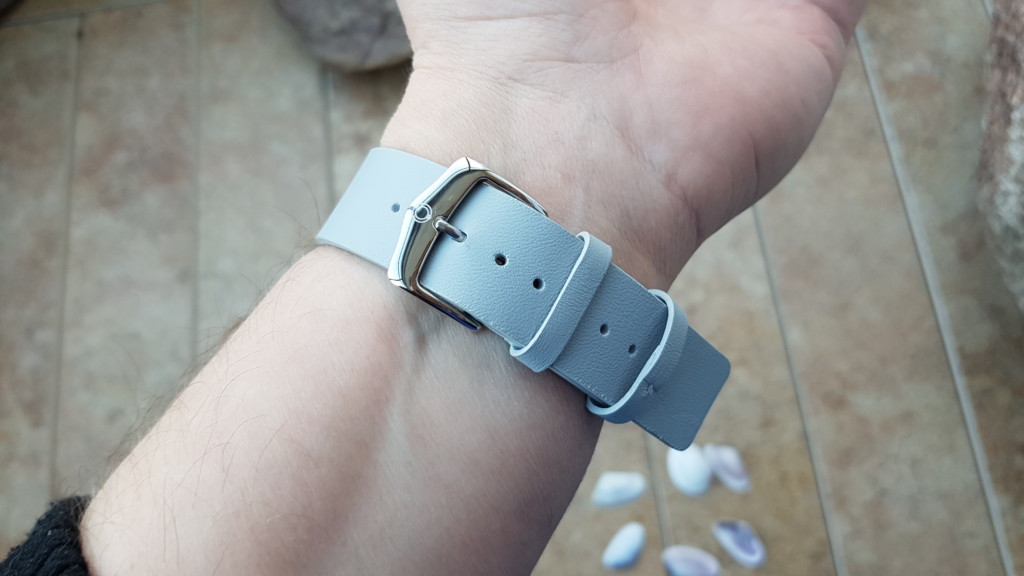
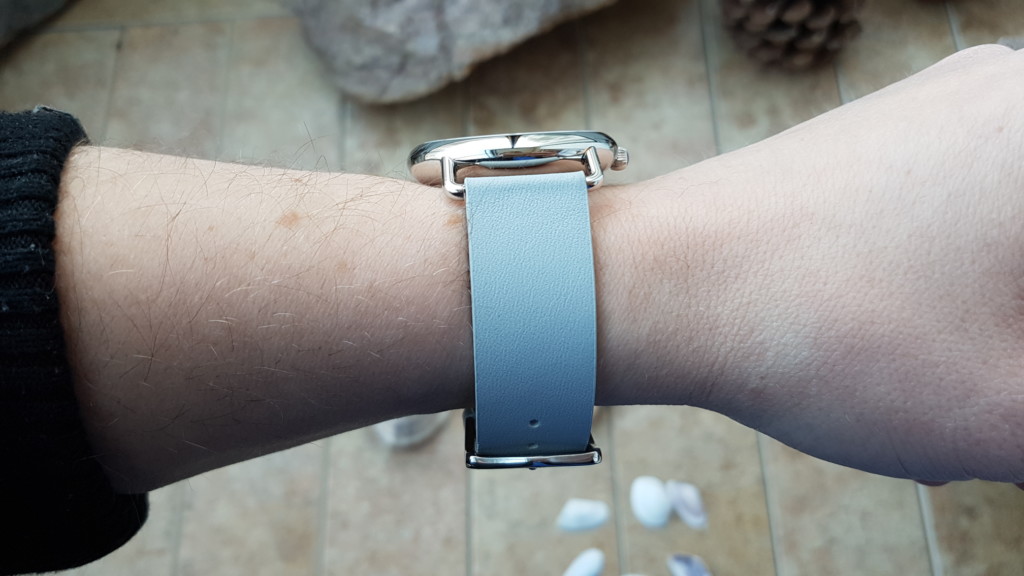
The strap is made of high-quality lamb leather, which is nice to the touch.
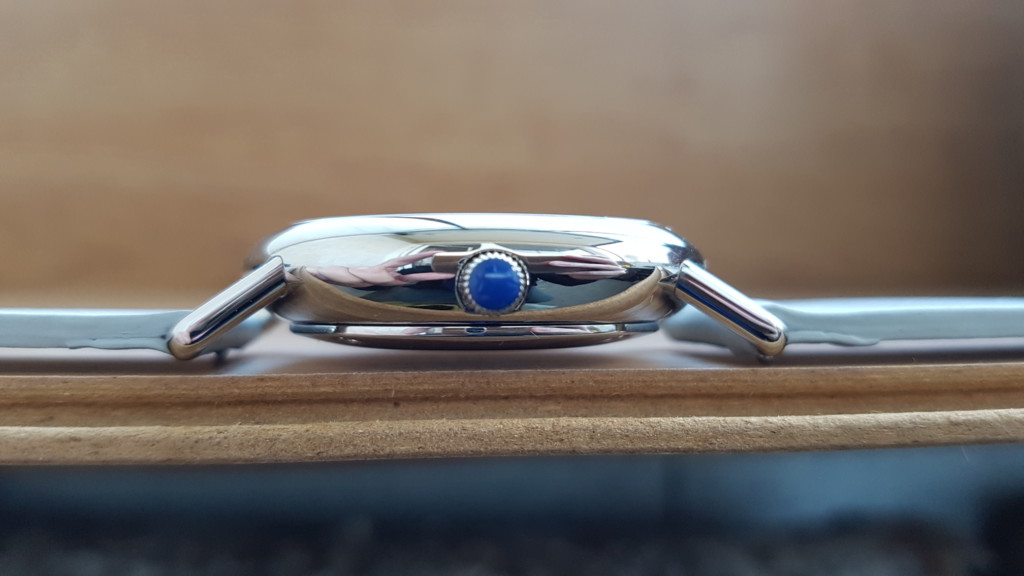
On the side, we have a multifunctional button that allows you to pair the watch with your smartphone via the Bluetooth and select from different fitness-related features.
FEATURES and FUNCTIONALITY
The main features of the watch include your movement data with the help of step tracker, monitors your sleep patterns and provides exercise tips to help you improve your health. Also, there is a UV index level sensor, remote shutter, call alert, call reject, phone locator services and so on. All those features can be managed with the help of the app, which is compatible with both Android and iOS.
Even though the watch is mainly designed for the female users, I was the only one in our review labs to test the comfort of the watch. It is comfortable to wear and it did not irritate my skin after wearing the watch for a couple of days.
CONCLUSIONS
The FENwatch aims to be different and it succeeds in quite a few ways. Indeed, it is the world’s first watch that is hand-made from the porcelain. The design language aims to depict the traditional Chinese culture and the watch has a great overall build quality.
You can get the FENtwatch at the discounted rates if you pre-order it via the Kickstarter campaign, which still has 8 days to go.
Meizu has created a new Meizu Smart Home products page on Weibo where the company seems set to start adding other smart gadgets to its lucrative smartphone line.
Already several products are listed on the Weibo page including the Meizu band, MX6 smart protective case, Meizu EPX headphones, Floating speaker with floating display and others. The company doesn’t seem to have all of the products in single sales platform like Xiaomi’s Mi home, rather a click on some of the product links takes you to third party websites like Jingdong. The Gravity Floating speaker with floating display, for instance, is a Meizu-backed crowdfunded project on Indiegogo. The project is already closed but the product is now up for purchase and that is where the link directs users to. Others are available on Meizu’s official website where they have the Meizu mall.
Some of the products are almost replicas of what Xiaomi had done in the past like the Meizu smart toothbrush, Meizu projector, and the Meizu air purifier. Perhaps Meizu is adopting a similar business model like Xiaomi is doing through its Mijia brand. The success of the Mijia brand has been monumental since Xiaomi fused all smart home products to launch under the brand. The Mijia brand posted its sales projection for 2016 towards the end of the year and the figures were dazzling. Could we be seeing Meizu toe similar line this year? Let’s wait and see
Meizu is scheduled to hold a press conference in Beijing on February 15 where the company is expected to officially unveil the mid-range M5S, its first smartphone for the year. The Meizu M5S is teased as coming with a very capable power supply, capable of fast charge.
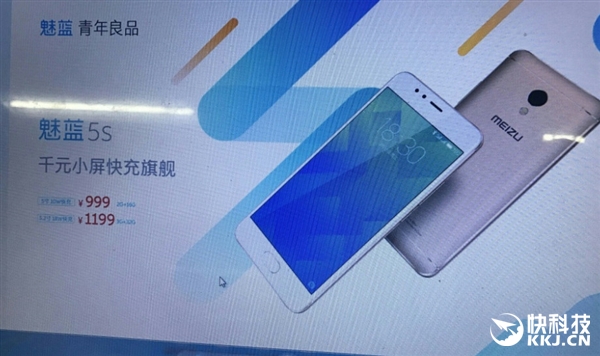
Ahead of the launch, the price list of the M5S has leaked on Weibo, giving us an idea of the likely price tag the M5S would launch packing. From the leaked poster, we can gather that the M5S would likely come with a 5-inch version with 10W fast charge, 2GB RAM and 16GB of storage which would be price around 999 Yuan, while there is also another version with 5.2-inch display, 18W fast charge, 3GB RAM and 32GB of storage which goes for a higher price of 1,199 Yuan.
We can’t be so sure about having two M5S versions with two different display sizes. Earlier rumors had tipped the M5S as coming with a 5.2-inch display and is equipped with a 1.3GHz octa-core MediaTek MT6753 chip as well as Meizu’s mTouch fingerprint sensor, a 13MP rear camera, 5MP front camera and a 2,930mAh battery. It is possible the leaked price list is a fake one.
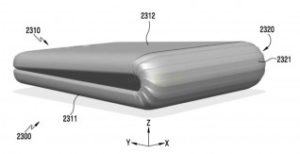
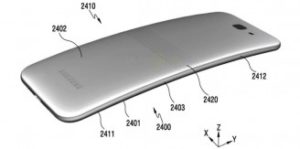
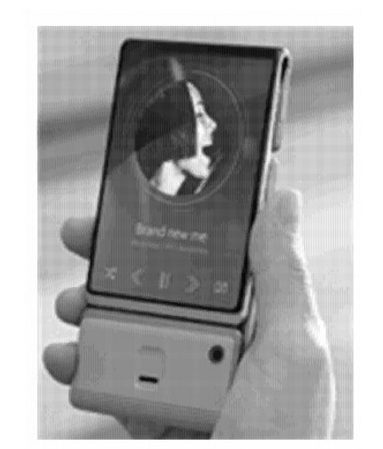
Rumors were rife last month that tech giant Samsung is planning to release a foldable smartphone in the third or fourth quarter of this year. That may not be the case after all if the latest rumor is anything to go by.
A recent rumor says the launch may not take place next year, rather the phone will only enter trial production in Q4 2017. According to the report citing sources within the Taiwanese handset supply chain, the tech giant plans to begin a minor production of a few quantity of the device in the four quarter of this year, sort of test running the production process. Mass production of the Samsung foldable device will commence in H2 2018. The source cited technical issues involving the production process for the delay. Specifically, the reliability of the Polyimide based (PI) plastic cover, a key component in the production of the foldable smartphone.
Mass production of the Samsung foldable device will commence in H2 2018. The source cited technical issues involving the production process for the delay. Specifically, the reliability of the Polyimide based (PI) plastic cover, a key component in the production of the foldable smartphone. Since the phone uses a foldable display, the plastic cover will play a big role in the ability of the phone to withstand wear and tear.
The foldable phone may likely come as a 7-incher and would fold outward in such a way that you probably won’t have to unfold it in order to view notifications and other minor stuff that can be carried out without flipping it open. So, if you are looking forward to the Samsung foldable smartphone or tablet at MWC 2017, it’s better to take your mind off the thought of that happening.
Xiaomi yesterday teased a poster that projects the upcoming Redmi Note 4X as having the ability to churn out top notch performance. Part of that top performance is hinged on the large 4,100mAh battery the mid-ranger is said to pack. A video has now emerged which shows the Xiaomi Redmi Note 4X packs a long battery life which surpassed those of the iPhone 7 Plus having a 2,900mAh battery and the OPPO R9S with a 3,010mAh battery.
Talking about the iPhone 7 Plus, the Redmi Note 4X ordinarily shouldn’t lock horns with it because it packs a superior Apple A10 chip which should be able to keep the battery usage at the barest minimum. But then, the Xiaomi Redmi Note 4X equally packs the efficient, mid-range Qualcomm Snapdragon 625 chipset reputed to reduce battery usage.
The challenge involved using the Redmi Note 4X, OPPO R9S and iPhone 7 Plus to video simultaneous like a dashboard cam, a drive around town spanning several hours. The video shoot lasted for 14 hours 26 minutes, covering a distance of 902 km. The OPPO R9S was the first to run out of power and that was followed by the flagship iPhone 7 Plus. Surprisingly, the Redmi Note 4X made it through the entire journey and still had about 18% of power left for other uses. That is despite a powerful 13MP rear camera which was in use.
So we expect a very capable smartphone n the Redmi Note 4X which is also coming with a 5.5-inch Full HD display and three memory versions of 2GB + 32GB, 3GB + 32GB and 4GB + 64GB. The mid-range device is also expected with a budget friendly price tag of 999 yuan, 1099 Yuan and 1299 Yuan respectively. You can check out the video from down below.
Huawei’s sub-brand, Honor released a poster of their upcoming phone the Honor V9 a few days ago. The launch is scheduled for February 21 and will take place in Beijing. The company has released a new image via its official Weibo account mentioning that a new device called the Honor 8 Youth Edition will also be launched in China on February 21.
The Honor 8 Youth Edition is a toned-down variant of the popular Honor 8 released last year. It has the same attractive glass and metal design as the Honor 8 but skips on a number of features.
The Honor 8 Youth Edition is expected to launch with a 5.2-inch 1080p display, a Huawei Kirin 655 processor, and 3GB of RAM. Instead of dual rear cameras, the phone gets a single 12MP sensor with f/2.2 aperture. Up front is an 8MP front-facing camera for selfies. The device will come with a 3000mAh battery and will launch with EMUI 5.0 out of the box. It will be available in black, white, gold, and blue.
The Honor 8 Youth Edition poster has the picture of Chinese-born Canadian singer, Wu Yifan on it. This means he’ll be serving as spokesperson for the phone when it launches.
The Honor 8 Youth Edition is the same as the Honor 8 Lite spotted in Finland earlier this month and also the same device as the Nova Lite and the Huawei P8 Lite (2017) released in January. It is possible that Huawei is releasing the device under different names in different regions. The Honor 8 Lite is priced at 269 Euros in Finland which is roughly ¥1990. However, it should sell for less when it is released in China.
If you haven’t heard of the name Small Pepper before now, you’ll be pardoned because sincerely, you are not alone. Small Pepper is a little known Chinese smartphone manufacturer that has got a pretty decent array of mid-range and budget smartphones in its kitty. The company is set to add another spectacular device to its lineup.
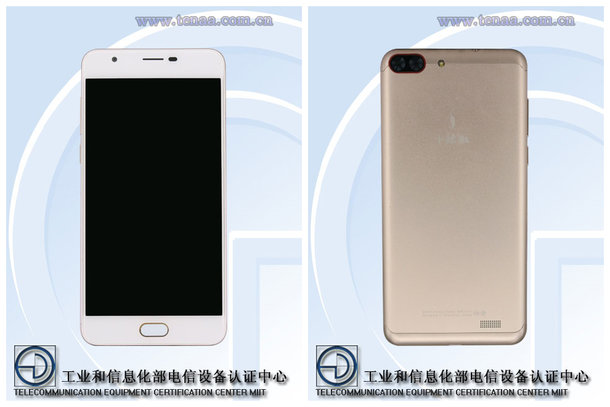
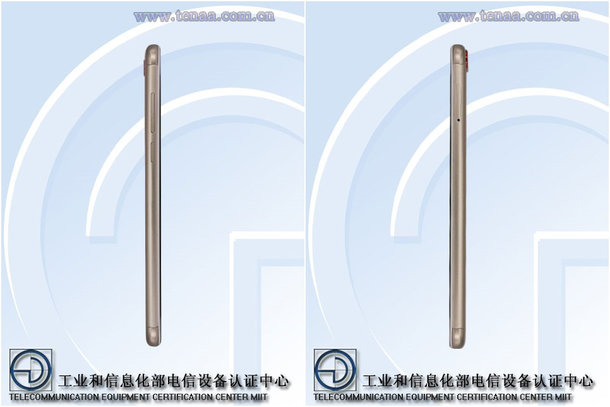
The phone recently appeared on TENAA as Small Pepper LA-A1 and it packs a dual-lens camera at the rear. Dual cameras seem to be one of the raves of the moment and Small Pepper is keying into that trend. The phone also uses an oblong shaped front home button that looks like Meizu’s mBack button. At the rear, the device uses a fused antenna design that sits at the extreme edge both at the top and bottom. The speaker is located at the lower right corner at the back.
On the specs bench, the Small Pepper LA-A1 features a 5.5-inch HD display and is powered by a quad-core CPU clocked at 1.25GHz. The device also comes equipped with 3GB of RAM as well as 32GB of storage which is expandable. On the camera end, there is a 13MP + 5MP camera setup while at the front you get an 8MP camera. The phone packs a 2,900mAh battery and comes with full network support. On the software end, the device comes pre-installed with Alibaba’s YunOS. Considering the low-level specs, the device might fall in the 1,000 Yuan category when it finally hits the market.
The name Nokia might be associated with phones, but it is also associated with telecommunications infrastructure. The Finnish corporation has given HMD Global the license to release phones under the Nokia brand but it still uses the name for its telecom network equipment business.
Nokia is one of the three major players in the telecom equipment market, with the other two being Ericsson and Huawei. Right now, the company is in talks to acquire Comptel (Comptel Corporation), another Finnish company that deals in software communications.
The acquisition will help Nokia advance its software strategy and stay relevant in the 4G mobile broadband equipment production. The acquisition will cost Nokia $370 million with Nokia offering €3.04 in cash per share. Comptel’s board of directors have unanimously agreed to accept the offer and will recommend that shareholders do the same too.
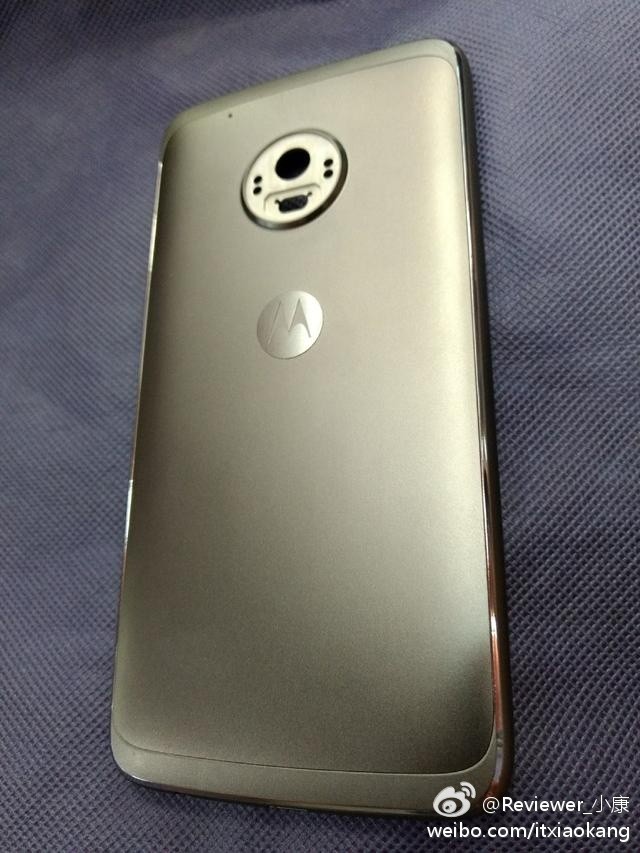
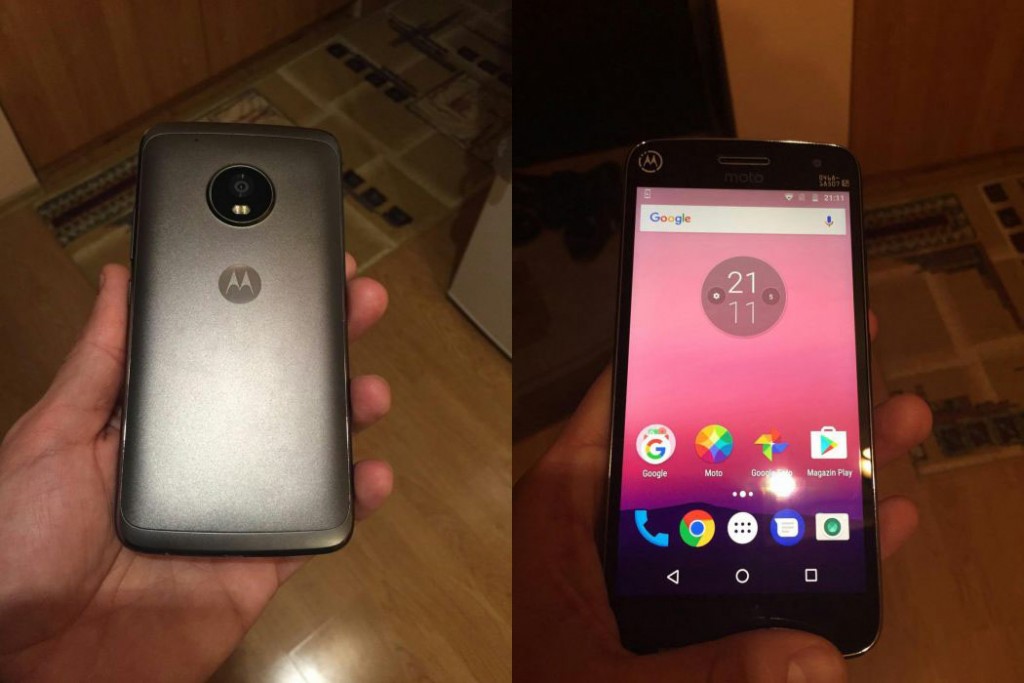
The Moto G5 Plus is expected to debut on Feb. 26 through a pre-event of Mobile World Congress (MWC) 2017. The rumor mill is consistently revealing more information on the purported specs of the Motorola phone. Now, another leaked photo has surfaced to reveal its marvelous rear camera design.
A new leaked shot of the rear panel of the Lenovo Moto G5 Plus has surfaced. It appears to be same as its leaked photo that came up at the beginning of January. As previous rumors have stated, the new image also suggests that the device will be coming with a plastic chassis with metallic appeal. At the center, the usual Moto batwing logo.
Like it is seen on Moto Z, the Moto G5 Plus also features a dedicated round-shaped housing for the rear camera. It is expected to come with f/1.7 aperture 12-megapixel Rapid Focus camera enabled with Sony IMX 362 sensor. Rumors hint that it will be accompanied with usual features such as dual-LED flash, phase detection autofocus, laser autofocus and 4K video shooting.
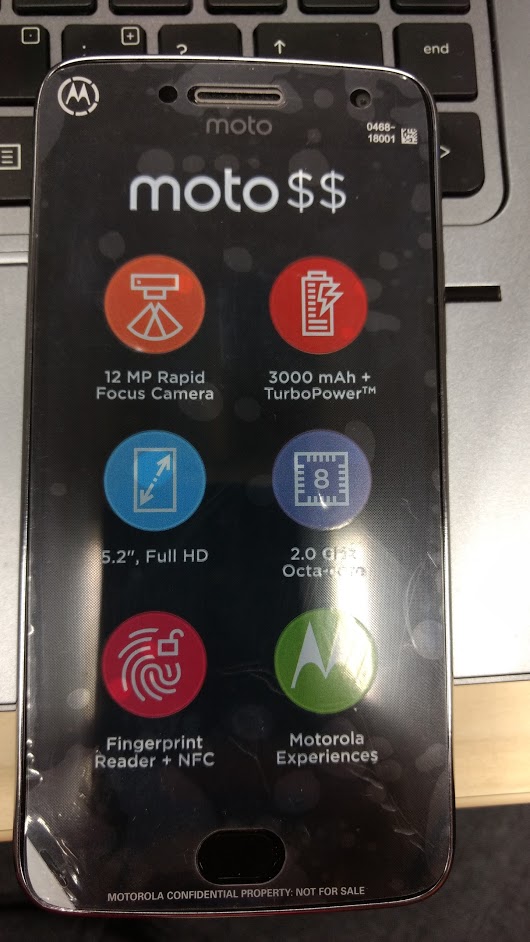
Earlier this week, a tipster had released another leaked image of Moto G5 Plus. The features of the smartphone can be seen mentioned on the protective plastic layer placed on top of the display of the Moto G5 Plus.
Instead of the 5.5-inch display present on Moto G4 Plus, the Moto G5 Plus is expected to house a smaller 5.2-inch screen. The device will be powered by 2.0 GHz processor from Snapdragon 625 chipset. The phone may come in RAM options of 3 GB and 4 GB along with a single storage option of 32 GB. It is expected to carry support for up to 128 GB microSD card.
Its front-facing shooter is rumored to be of f/2.2 aperture 5-megapixel Omnivision OV5695 image sensor. Other features include NFC, fingerprint scanner, Android 7.0 Nougat, 4G LTE, and a 3,000 mAh battery.
The Brazilian edition of Moto G5 Plus is pegged to include DTV receiver. Since the above image says that it will feature Motorola Experience, it is pegged to include proprietary software features from Motorola like Moto Assist, Moto Display and Moto Actions.
Lenovo will not only unveil the Moto G5 Plus on Feb. 26, but also the Moto G5 will be introduced to the world. Both the phones are expected to go on sale in March.
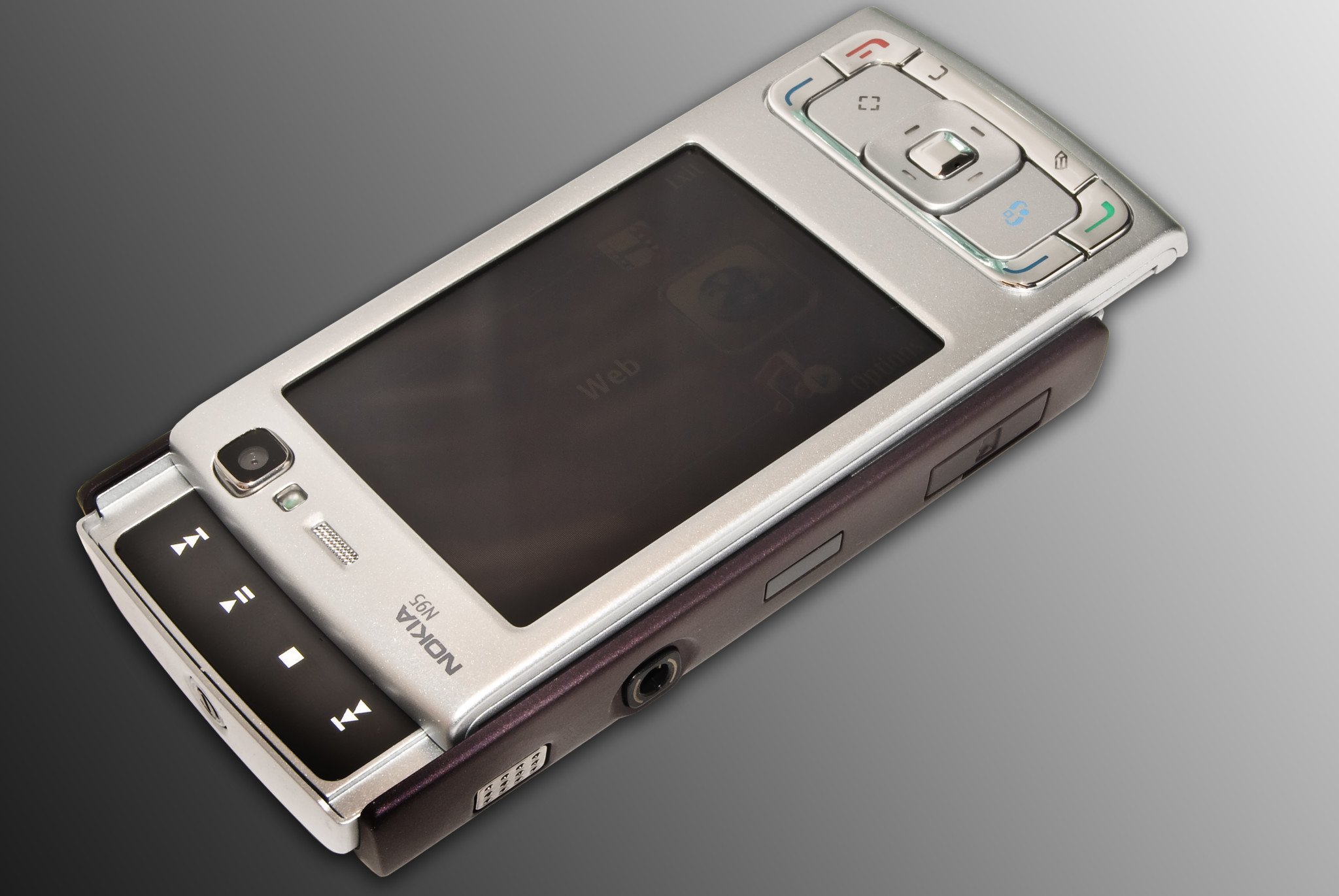
There is still some diehard Nokia fans who still remember with nostalgia, the glory days of Nokia when the Nseries ruled the phone scene. Mostly powered by Symbian OS, the Nseries smartphones were a suitable companion to music lovers, photography enthusiasts and even lovers of mobile games. The Nokia Nseries was a capable gaming rig that gives you what at that time could qualify as great graphics. We had earlier seen signs that Nokia is planning to revive the line.
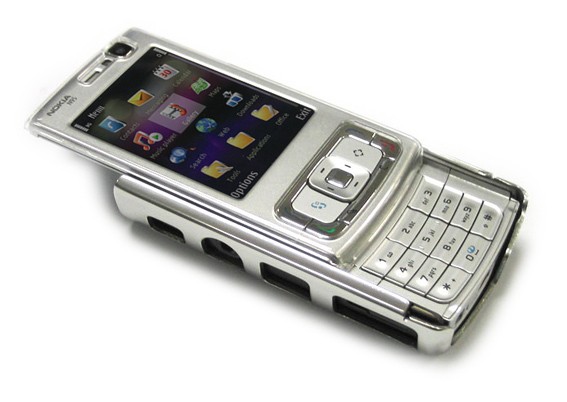
Now, more facts are emerging about the Nokia Nseries phone that would be the first to drop. According to the latest rumor, the smartphone would be called Nokia N95. The device would likely be launched along with other new Nokia releases at the MWC 2017in Barcelona. The Nokia N95 is said to use the Qualcomm Snapdragon 600 series chip which we hope will be the SD 652. The choice of SoC places the N95 in the mid-range category and Nokia is said to target up to 50 million units in cumulative sales from the N series.
Perhaps after the N95, we’ll be seeing other Nseries-titled smartphones in Nokia’s quest to play some emotional games. Recall that the Nokia N95 was a famous model when it held sway, coming with multimedia features, front and rear cameras with LED flash on both ends and had the capability to take any game thrown at it because of its large storage space. So Nokia will likely capitalize on the successes of those model to try to gain some much-needed ground in the presently saturated mobile phone market. The bar is thus very high right now because of the positive reviews the Nseries phones of previous years got, so Nokia’s reputation is at stake should they fail to meet up the expectations of the army of loyal fans the brand has built over the years.
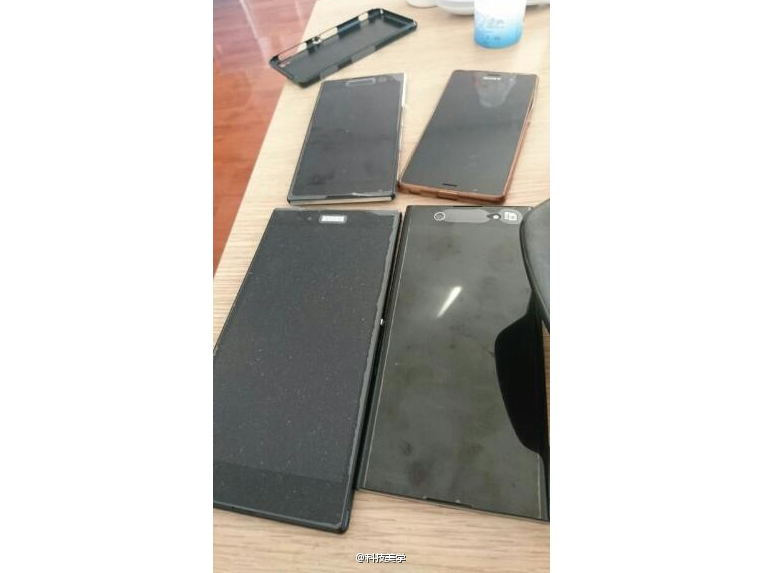
Sony has already confirmed that it will be present at the upcoming Mobile World Congress (MWC) 2017 to unleash new devices. Previous rumors have hinted that Sony Xperia XA 2 may get unveiled at MWC 2017. Now, a leaked shot containing the alleged Sony Xperia XZ 2 and many mysterious devices have surfaced just ahead of the upcoming launch event.
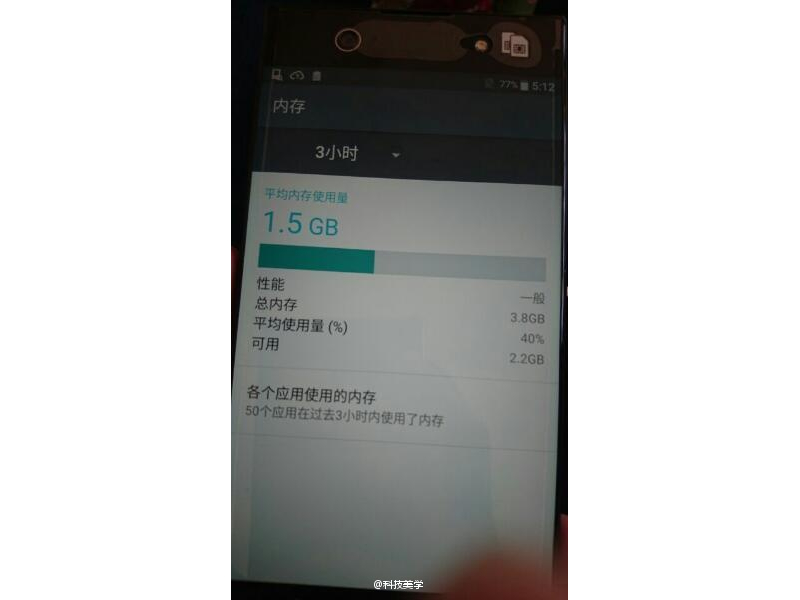
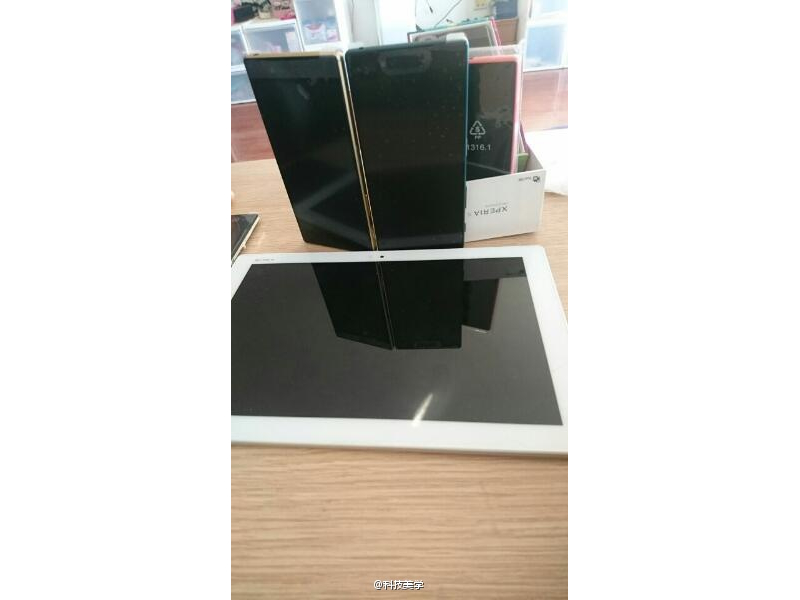
The leaked photos that appeared on Weibo shows couple of unknown Sony smartphones. However, the photos appear blurry and their authenticity have not been confirmed. The first photo contains four Sony smartphones. According to the source, the phone seen at the bottom right is the Sony Xperia XZ 2.
The device that can be seen just above the purported Xperia XZ 2 seems to be its predecessor model, the Sony Xperia XZ from 2016. Because of the angle used in shooting the photo, it is not easy to guess the size of the Sony Xperia XZ’s display. The predecessor model is fitted with a 5.2-inch screen.
The large device present on the left side of the alleged Xperia XZ 2 seems to sport an older design. Speculations suggest it may be the Sony Xperia Z Ultra that features a 6.4-inch display that has a metallic frame accentuated with silver elements and less rounded corners. Since the speculated Xperia XZ 2 is kept alongside it, it is assumed that the upcoming flagship may arrive a larger display than Xperia XZ from 2016.
Another image suggests that the Xperia XZ 2 would be arriving with 4 GB of RAM. Its predecessor has 3 GB of RAM. It seems to house an LED enabled front-facing shooter. In the third image, there is a tablet that features large bezels on all sides. There is no confirmation on whether the tablet seen here is a new or old one. However, considering the fact that Sony has used large bezels on the tablets it has released so far, the leaked image may be showcasing a new tablet.
Sony has not confirmed the devices that it will announce at MWC 2017 and also it has not released any teaser. However, the rumor mill has revealed that the Japanese tech giant may announce as many as five smartphones at the upcoming event that will be held on Feb. 27 at Barcelona, Spain. The event will start at 8:30 AM CET.
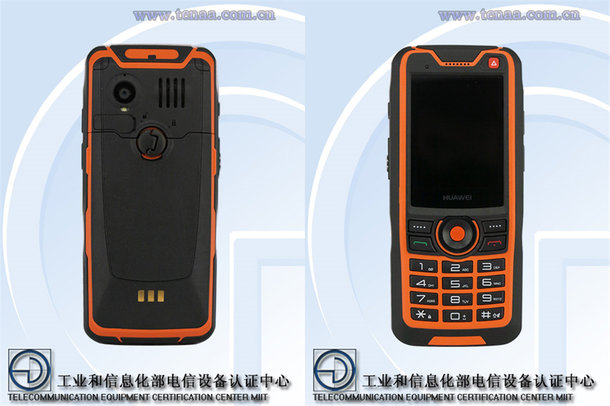
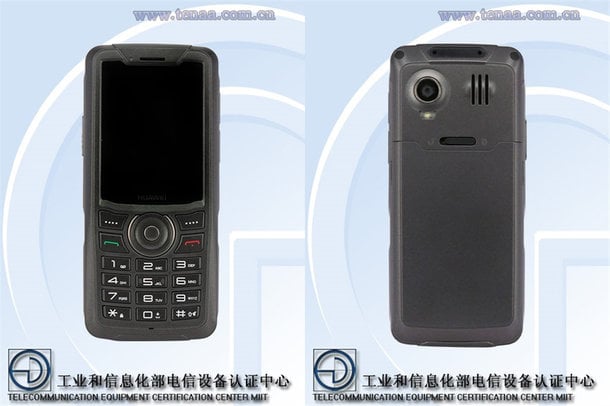
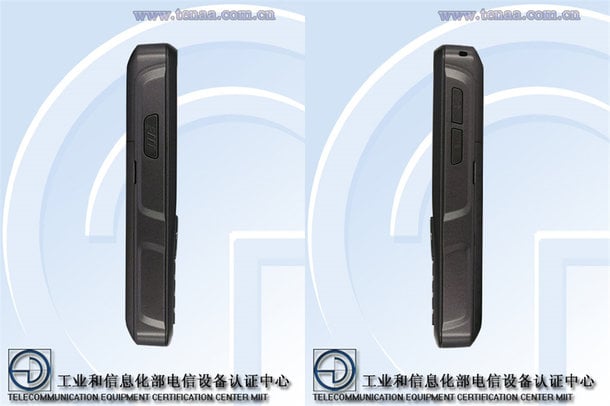
Two Huawei phones with physical numeric keyboards have appeared on the website of the Chinese Telecoms regulatory agency TENAA where they have received certification. The two phones are simply identified as Huawei R952 and Huawei R662. Both models feature low-end features and are almost similar in design except for some few minor differences in look.
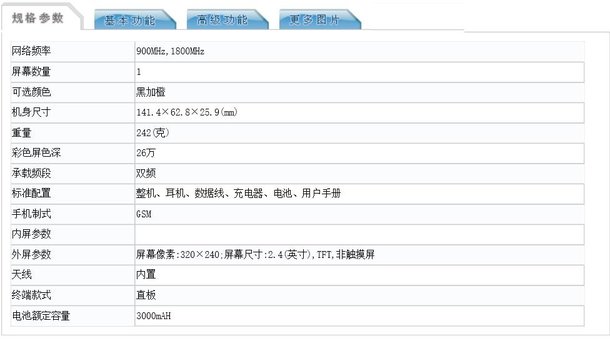
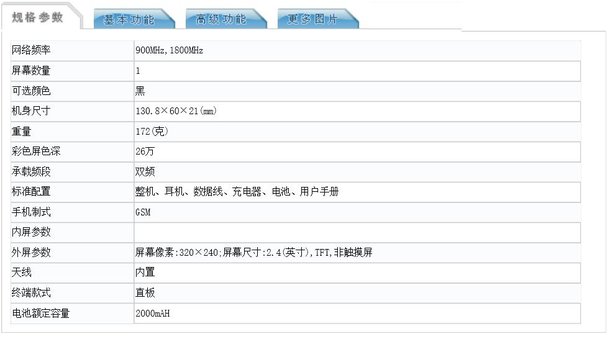
A glance at the specs listed with both phones reveals that they both come with the same specs lineup. Among the specifications listed is a 2.4-inch TFT display with 320 x 240 pixel resolution. The R952 cram a 3,000mAh battery and the R662 feature a 2000mAh battery under its hood. Both models, however, come with 2GB of RAM onboard and 16GB of storage which seems to be expandable up to 32GB via microSD.
In addition, the Huawei R952 and R662 are listed with an octa-core 1.2GHz processor but doesn’t seem to have an Android operating system onboard because it is listed as “not supported”. Their dimensions are also different as the R952 comes with a dimension of 141.4 x 62.8 x 25.9 mm while the R662 has a dimension of 130.8 x 60 x 21mm.
In December 2016, Honor had confirmed that it will be releasing Android 7.0 Nougat update for Huawei Honor 8 in February. Honor has now also confirmed through a tweet that the rollout of the update would begin starting Feb. 11.
It had released the beta edition of Android 7.0 Nougat update for the users of Honor 8 in the U.K. in November 2016, but now the update is confirmed to release by tomorrow. Since it is a global release, the software rollout will be a gradual process which means all the Honor 8 users will not receive the update at the same time.
EMUI 5.0 is coming to Honor 8 from Feb 11th! Check out the new App Drawer on EMUI 5! Excited? https://t.co/aH8oKwqOK6
The rollout of the update would last the entire month and all the Honor 8 users across the world are expected to get the update by the end of February. Since the Honor 8 users in the U.K. were the first ones to get the beta build of Nougat, it is likely that it may be the first country to get the finished update as well. Honor 8 users in the U.S. are also expected to get the update from Feb. 11 as the tweet originates from Honor USA Twitter handle.
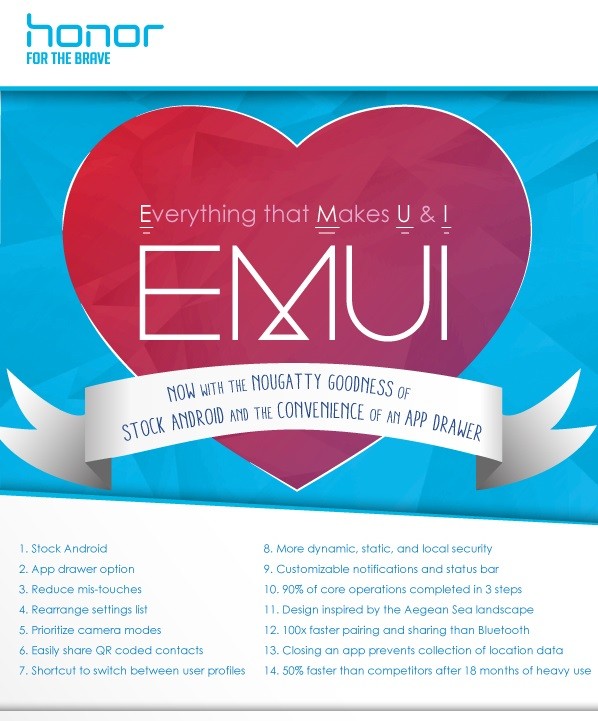
The Honor 8 Android 7.0 Nougat also brings along the latest EMUI 5.0 skin that not only responds well but also delivers optimized performance along with improvements to the battery performance. It also carries a neat appeal. The firmware update also installs the new features of Android Nougat such as split-screen multitasking, access to app drawer through home screen and Doze on the Go.
Here is an image by Honor to know the features and improvements that Honor 8’s EMUI 5.0 update would include:
The update will show up automatically through a notification on Honor 8 from tomorrow. Alternatively, users can manually check its arrival by navigating to Settings > System Update > Check for Updates.
The other Honor phone that is expected to get the Android 7.0 Nougat EMUI 5.0 update soon is the Honor 6X. It is expected to get the update by the second quarter of this year.
Meizu is one innovative company that has got quite a substantial amount of patent rights and still, the company is adding more. The latest of Meizu’s patent is a new shopping method which is based on picture recognition.
The innovative technology was sighted on China’s trademark office and it involves a new shopping method that lets users sit in the comfort of their homes and shop directly via picture recognition. How this seems to work is that all you need do is scan the goods you want to buy with some little details and then send to where it would be processed. Thus, users may not need to enter the product name physically.
This patent isn’t entirely new as image recognition features is already in use but we don’t have the full details of the patent on our hands right now. Be rest assured, though, that we’d bring you more details as they emerge.
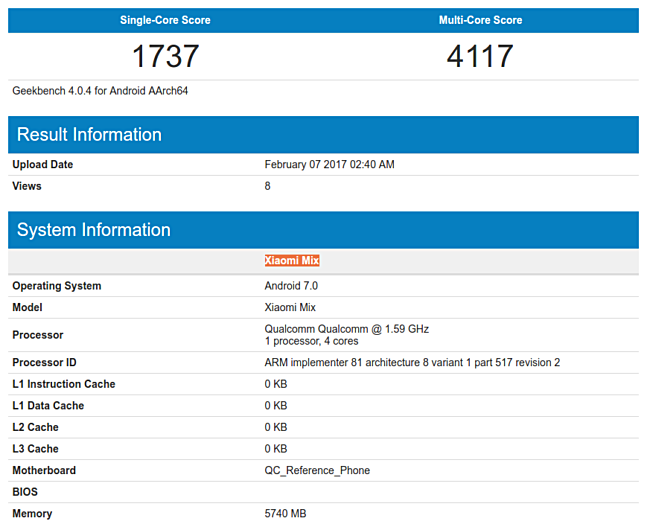
There are indications that the Xiaomi Mi Mix will soon get the Android Nougat treatment as an Android 7.0 running Mi Mix was spotted recently on benchmark website Geekbench.
We won’t be surprised about this, though, because Xiaomi had hinted of its intention to start rolling out Android 7.0 Nougat upgrade to some of its smartphones soon. Top on the list to get the official upgrade is the Mi Mix. There is no specific date when the upgrade would roll out but the GeekBench listing is an indication that it would likely be sooner than later.
The Geekbench score is in line with the one posted on its previous showing on Geekbench attaining an average score of 1737 points on the single core test and 4117 on the multi-core test. The specs obviously didn’t change as the device is listed with a 6GB RAM.
The Xiaomi Mi MIX is priced at ¥3499 ($509) for the 4GB RAM + 128GB version and ¥3999 ($581) for the 6GB+256GB variant irrespective of the color. If you head to Japan, try not to be shocked if you see it being sold for double the price.
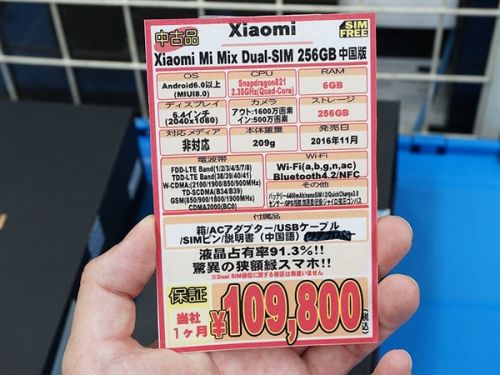
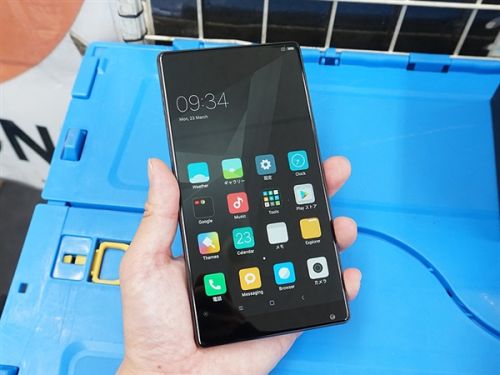
In a second-hand store in Tokyo that specializes in importation of devices, the 6GB RAM variant of the Xiaomi Mi MIX was seen selling for 109,800 Yen which is roughly ¥6700 ($974)!
For that amount, you could purchase the 6GB variant and still have enough to buy a Xiaomi Mi 5S or Mi 5s Plus if you buy from Mi.com. However, if you will be buying from third party re-sellers, you might be paying more or less the same amount as the store in Japan. A quick search on one of the major online stores shows that the 4GB RAM variant sells for about $740 (¥5100). That shows how much re-sellers jack up prices for phones like this.
We use cookies on our website to give you the most relevant experience by remembering your preferences and repeat visits. By clicking “Accept”, you consent to the use of ALL the cookies.
This website uses cookies to improve your experience while you navigate through the website. Out of these, the cookies that are categorized as necessary are stored on your browser as they are essential for the working of basic functionalities of the website. We also use third-party cookies that help us analyze and understand how you use this website. These cookies will be stored in your browser only with your consent. You also have the option to opt-out of these cookies. But opting out of some of these cookies may affect your browsing experience.
Necessary cookies are absolutely essential for the website to function properly. This category only includes cookies that ensures basic functionalities and security features of the website. These cookies do not store any personal information.
Any cookies that may not be particularly necessary for the website to function and is used specifically to collect user personal data via analytics, ads, other embedded contents are termed as non-necessary cookies. It is mandatory to procure user consent prior to running these cookies on your website.