Early yesterday morning, during the morning commute to work, a lady’s Xiaomi phone burst up in flames while in use. The lady who was standing during the trip was holding her phone when it started smoking causing her to quickly drop it, resulting in a commotion.
Images from the camera on the bus shows passengers fleeing to the exits while the bus was in motion. The driver on realizing what was happening had to quickly stop the vehicle to allow passengers get off. The fire was eventually put out and no one was reported to be injured.
[envira-gallery id=”130863″]
An investigation team that analysed the CCTV footage said the lady was seen using a headset with the phone earlier. There is no report yet as to what led to the phone bursting into flames but the fire left a scorch mark on the floor before it was put out.
Chinese smartphone maker Xiaomi is in talks with a number of banks to refinance a $1 billion three-year loan from 2014, Reuters reports. The Chinese tech giant is reported to have approached three banks namely, Deutsche Bank, Morgan Stanley and Wing Lung Bank concerning the matter. Could this be a sign of financial trouble for Xiaomi who ranked among the top 10 phone manufacturers globally in 2015?
There are several reasons why a company would want to go the path of refinancing an old loan and some of the reasons border on financial difficulties. Another curious aspect is that the loan which Xiaomi is trying to refinance had a three-year tenor that was supposed to elapse this year. But apparently, Xiaomi which is usually dubbed “China’s Apple”, might have had difficulties repaying. This may be unconnected with te company’s faltering sales record the past few years.
Xiaomi is known for its generally high-quality but cheap products. Xiaomi’s products cut across smartphones, Smart TVs, routers, laptops, and several Smart home gadgets. This cheap approach means its profit can only come when it sells more products, with the smartphone division standing out as its major stronghold. But in recent times, Xiaomi has struggled to achieve the same result which catapulted it to the top five highest selling brand in 2015, grossing over 70 million units in sales. In Q1 of 2016, Xiaomi shipped only 10.9 million phones, a 26% year-on-year decline, and subsequently, they were able to ship only 62 million units in 2016. The inability of Xiaomi to ultimately ship out more units of their smartphones most likely had a strong effect on their revenue generation and this certainly affected their finances.
The reduction in Xiaomi’s shipment between 2015 and 2016 could have occurred for a variety of reasons ranging from marketing strategy to market competition, availability and others. Before now, Xiaomi uses online-only sales pattern where sales are done via flash sales. This method proved to be very successful when the company started in 2010. However, most of their competitors such as Vivo, OPPO and Huawei not only use the online sales pattern but somewhat favours the traditional offline method by selling through physical stores thus giving them an edge. But in recent times, Xiaomi has opened offline physical stores where fans can get its devices with plans to add more offline stores and to expand outside out China with this model.
Xiaomi’s CEO Lei Jun had admitted earlier this year that his company had perhaps grown “too fast” in the past few years leading to challenges in the business. He may just have been right. Should Xiaomi get this financial boost, review its market strategy and revamp its production volume, its revenue is most certain to skyrocket.
It’s been four years since OPPO last updated the Find series after the release of the Find 7. All this while, rumours have been circulating concerning a next-gen flagship from OPPO which would likely be named Find 9. While latest news suggests that OPPO may have finally rested the Find series due to the success of the R-series, the OPPO Find 9 just won’t part ways with the rumour mills. Perhaps, that is an indication of how much fans desire for the Find 9 to come.
Yet again, another fresh set of OPPO Find 9 renders has appeared on Weibo from tipster @kjuma. The image on this latest render is different in design from what we had seen in the past. The new images shows the Find 9 featuring very narrow bezels on all four sides with a full-screen design. The device has a high screen to body ratio with top bezel almost absent, covered by the display to a large extent.
The renders did not contain that of the back view but it is likely the device comes with a rear fingerprint sensor since there is no physical button at the front. That is, of course, if it is not hidden under the glass (ultrasonic technology). The Find 9 on display looks like what has a metal body with only a slight curvature and a design consistent with previous Find-series phones except for the straight upper and lower edges.
We cannot really say if this is real but they look like a fan-generated render aimed to keep the Find 9 topic on the front burner. Before now, there were talks of the Find 9 featuring a Snapdragon 835 chip on one of its variant but presently, we are as confused as you are. We don’t know if the Find 9 is in the works and would release in the second half of this year or if the entire project has been discontinued. Only OPPO can answer that and they are too busy milking the R9 models to give us an answer.
In March of 2016, Apple unveiled the 4-inch iPhone SE, probably to cater to those who wanted a compact phone like the iPhone 5s. Exactly a year after its release, Apple relaunched the phone with new storage variants (32GB and 128GB) and stopped production of the 16GB variant.
Yesterday, Apple announced that the 2017 edition of its WWDC event will kick off on June 5. Asides the announcement of new versions of iOS and macOS, and a Siri-based smart speaker, Apple is also expected to announce a second-generation iPhone SE. A weibo user has leaked an image said to be the shell of the upcoming phone.
Although the name isn’t confirmed yet, the second generation iPhone SE appears to have a glass back, confirming Apple is making a shift from metal. The camera setup is also vertical as the LED flash now sits directly underneath the camera lens.
The image also reveals that the shell is made of Ion-X glass, the same used for the Apple Watch Sports. The Ion-X glass is more flexible, lighter and less expensive than sapphire but it is also more prone to scratches. Since the iPhone SE is currently Apple’s cheapest smartphone, it is not hard to see why they are settling for the material.
The Samsung Galaxy S8 and S8 Plus has continued to dominate media discussions surrounding its powerful Snapdragon 835 chip, amazing design and marvellous hardware. The Galaxy S8 has a fragile build due to the near bezel-less large display and glass body it features.
The glass covering and near bezel-less display makes the Galaxy S8 and S8 Plus easy to get damaged in the event of a fall. For such an expensive phone, that is a red signal because it means the Galaxy S8 and its sibling will be expensive to fix in the event they took a fall and got shattered. However, a recent report on US tech blog Motherboard has revealed that despite the fragile nature of the Samsung flagship, the device is relatively affordable to repair. The report also quoted several independent shops of saying that the Galaxy S8 and S8 Plus’ design allows for a relatively simple method of screen replacement
While we don’t hope to have to go to the repairer’s, we just can’t take away the possibility of the Galaxy S8 and S8 Plus sometimes slipping out of their owner’s hands. Standing at 5.8-inch for the S8 and 6.4-inch for the S8 Plus, the two Galaxy flagships are pretty large smartphones that are bound to take a fall someday. If peradventure that happens, you’ll have to dole out around $200 for a replacement screen. This amount is said to be $100 less than what the replacement screen of the Galaxy S7 and S7 Edge cost.
For a pair which retails for no less than $750, replacing a broken screen for $200 may still sound outrageous for some but it sure won’t be for anyone that can afford the flagship. Now, you may want to hold on carefully to your prized possession because the recent teardown of the smartphones revealed the internals are not going to be easy to repair.
Each year we all wait for one of the most powerful budget flagships and it is finally here. Meet the Xiaomi Mi 6, the phone that has killer specs, awesome looks, and a compelling dual-camera setup. Stay tuned to find out if the best of Xiaomi is worth your attention in the full Xiaomi Mi 6 review.
The Xiaomi Mi 6 ships with all the usual stuff and some extras include a soft TPU case to protect your phone.
Also, you get a USB-C to the headset jack adapter since the phone lacks the 3.5mm port. Finally, the Mi 6 ships with the fast charger.
DESIGN and DISPLAY
Once you first pick the Xiaomi Mi 6 up, the first impressions are that the phone looks just gorgeous. Also, it has excellent build quality and it is fairly compact since it sports a 5.15” IPS LCD display, which is sharp, vibrant and definitely one of the best 1080p panels you can find.
We have an 8MP shooter and LED notification light, which, however, is not customizable like on previous Xiaomi phones.
At least we have nicely backlit capacitive keys and the fingerprint sensor that is one of the fastest and most accurate scanners that you can find on any smartphone. It unlocks the phone 10/10 times, straight from the standby mode.
I love that the phone sits nicely in the hand. The stainless-steel frame is almost seamless with a curved glass back panel, which actually does a decent job with all the fingerprints and smudges. In comparison, the phone does not attract fingerprints so quickly like the Galaxy S8. Also, the buttons are easy to reach and they have a great tactile feedback.
It’s worth mentioning that the Xiaomi Mi 6 is now splash-proof even though the official certification number is not yet confirmed. Keep in mind that splash-proof phones are not the same as water resistant smartphones. In other words, you cannot submerge the Xiaomi Mi 6 under water, don’t mess your new phone up.
One of the key selling points of the Mi 6 is the dual camera setup that consists of a 12MP shooter with a wide-angle lens and another 12MP sensor with the telephoto lens that gives 2 times zoom and the ability to take beautiful portrait photos with bokeh effect. The main camera has a bright f/1.8 aperture lens, 4-axis OIS, and dual tone dual-LED flash.
It is great that we have the IR blaster that allows you to control devices like TVs.
I love the loudspeaker quality. The sound is balanced and rich, and there is even a decent amount of bass.
What I don’t like is that there is no headset jack on this phone. I know that Xiaomi wants to follow a trend but if you look at the latest flagships from Samsung or LG, Xiaomi should be more careful with this decision and I think they should have kept the headset jack. Anyway, the sound quality via the USB-C port using a supplied adapter is great. No distortions, great volume output, and rich sound.
Xiaomi Mi 6 in pictures:
[envira-gallery id=”130728″]
HARDWARE and PERFORMANCE
As far as hardware goes, the Xiaomi Mi 6 is one of the most powerful smartphones the money can buy.
It ships with the latest and greatest Snapdragon 835 chip, 6GB of RAM and 64GB or 128GB of internal storage, which is, however, not expandable.
The gaming performance is almost perfect. All the 3D games run fine on the very highest graphics settings and the phone does not have any overheating issues. However, I noticed that there were a few skipped frames on the Asphalt 8. I believe that this is due to an early software build and you don’t really need to worry about that since Xiaomi releases software updates very often.
BENCHMARKS
USER INTERFACE
The Mi 6 ships with the MIUI 8, which is built on top of Android 7.1. My device has the MIUI Global ROM 8.2 that has Google Services pre-installed and all the Chinese bloatware removed.
I love how fast the phone is on the daily basis even after installing quite a few apps. So far, the phone has been working fine and I didn’t have any lag.
As usual, there are plenty of customization options Xiaomi phones have been famous for. Just to name a few, you can adjust display settings, choose from a variety of themes or wallpapers, customize the capacitive buttons, use some gesture controls and so on. If you want to customize the phone even further, there are a lot more other features to play with.
We have a familiar Xiaomi camera app that allows you to take pictures very fast. You can also play with some basic shooting modes and settings. E.g. you can adjust some image properties using the manual mode or shoot slow-motion videos at 720p.
There is also 2x lossless zoom mode that allows you to utilize that secondary camera sensor and this feature comes really handy. The results are pretty good, definitely a lot better than using digital zoom.
The portrait mode takes good-looking pictures with bokeh effect but sometimes you may get a picture with a bit unnatural looking blurred background.
When it comes to the image quality using auto-mode, the Mi 6 can take great pictures in good lighting. There is plenty of detail, the colors look nice and noise reduction is pretty good. However, I found that the dynamic range adjustment is a bit worse than on the top tier phones like the Samsung Galaxy S8.
The indoor and macro shots are great too. Again, there is lots of detail and you get that nice bokeh effect thanks to the bright lens.
The low-light camera performance is decent but it is far from the top-shelf flagship-grade quality. If we compare the pictures with the Samsung Galaxy S8, you will see that there are much less detail and much more noise.
The 4k video quality is great. The footage is detailed and the continuous auto-focus feature works well. The colours look nice too but they seem to be slightly oversaturated. Also, there are some video artifacts going but in general, this is probably the best video quality from any Xiaomi phone.
The 1080p video looks good too. Obviously, there is less detail but the OIS seems to do a better job than in 4k video mode.
The selfies look great as there is a lot of detail and the colors are accurate. However, the quality decreases quite dramatically in lower-lit situations.
The 1080p selfie video looks quite good. There is a good amount of detail but the footage is not as good as the one shot with the Galaxy S8. Finally, the sound recording quality is decent but still, not quite the mainstream flagship quality.
When it comes to connectivity, the Xiaomi Mi 6 is flawless. The call quality and signal reception have been excellent, the Wifi range and speed are good, the Bluetooth works fine and finally, the GPS is very accurate, thanks to a reliable Snapdragon processor.
BATTERY LIFE
The Xiaomi Mi 6 ships with a 3350 mAh battery that performs great. I used my phone very intensively for taking a lot of pictures and shooting 4k video, running benchmarks, installing a lot of apps and so on and I still managed to get over 5 hours of screen-on time. If you use the device just for the basic stuff, you should be able to get 6 or even 7 hours of SOT.
Finally, the Mi 6 ships with the fast charger. It takes about 1:30 h to fully charge the phone, thanks to the Quick Charge 3.0.
CONCLUSIONS
So, there you have it, the Xiaomi Mi 6, the latest and greatest from the Chinese tech giant.
I have to say that this is one solid smartphone and it brings a lot of flagship-grade qualities for a much lower price than the mainstream flagships.
Xiaomi nailed the design and build quality, the display is nice and sharp, and the overall performance is great. You also get a great battery life with the fast charger and all connectivity options work flawlessly.
The dual-cameras can take some very nice pictures but the quality is still not on par with the top tier phones like the Galaxy S8, especially if you compare the low-light photos.
You should also know that the Mi 6 lacks the headset jack and there is no microSD card slot.
At the end of the day, the Xiaomi Mi 6 is the best Xiaomi’s phone yet. Even though it has a few cons to consider, you can definitely call it a flagship phone even if it does not carry a mainstream flagship price tag.
When Meizu’s product roadmap leaked a few months ago, the MX7 was one of the products we saw on the list. We were able to deduce from the leaked info that the Meizu MX7 will launch in September and will be powered by a Helio P30 SoC.
September is still a good five months from now but an alleged live image of the Meizu MX7 just showed up online. Because it is still too early, we advice you to take this with a pinch of salt, although it is possible Meizu might have adjusted its calendar. But even at that, MediaTek still has not announced the Helio P30 processor yet. Heck! We are still even waiting for phones to show up with the Helio P25.
However, there is an explanation for the SoC. According to the source, the Meizu MX7 will launch with the Helio X30 or Snapdragon 660 SoC. These two processors are not yet present in any phone, but at least they have been officially announced.
The Meizu MX7 is expected to feature a 21MP rear camera and a 5MP sensor for selfies. The display will be 5.7-inches with a 2K resolution and it will have a USB Type-C port and 3.5mm audio jack.
Xiaomi has announced that it would hold a press conference in Beijing on May 18 where it will officially release its 2017 flagship TV in China. The poster released by the company contained just the number “4” which is identified as the flagship TV. This, therefore, leaves no doubt as to the identity of this product and it is likely the Mi TV 4 unveiled at CES 2017.
The Xiaomi Mi TV 4 was definitely the stand out product which Xiaomi unveiled on its debut appearance at CES 2017 in Las Vegas. The Mi TV 4 comes in three different sizes namely 49 inches, 55 inches and 65 inches, with the 65-inch model having a spectacular modular design which. What this means is that the motherboard, sound system, and the large display are three separate components which can be replaced separately. This is indeed an innovative design making sure that you don’t have to shell out a lot of money to upgrade your smart TV. Just replacing the motherboard with a smarter one is enough to bring your TV up to date. Albeit, the 65-inch Mi TV 4 isn’t Xiaomi’s first TV with a modular design.
On the whole, all the three models are ultra-thin with a narrow frame, having a 4.9mm body which is even thinner than most of the smartphones that are in the market.The SmartTV comes with a sleek metal body and a frameless display which indeed makes it very beautiful. The screen resolution is up to 4K with an overall awesome visual effect and lots of amazing features which would be unveiled on the launch date.
We’ll get to find out the prices for the Mi TV 4 range on May 18 but Xiaomi did mention at CES that the high-end 65-inch version will sell for under $2000 (around 13,700 Yuan). Xiaomi still has you covered with the Mi TV 4A if that price may be way too much for you.
During its very first event in Mexico, Xiaomi confirmed that it will be bringing its smartphones to Mexico from this month. The Redmi Note 4 and Redmi 4X are the two Xiaomi phones that will be landing first on the Mexican soil. In Mexico, these smartphones will be available for buying both offline and online.
According to Xiaomi’s director of product management and marketing, Donovan Sung, “Mexico is a really important market for us and acts as our starting point to reach the rest of Latin America.” In 2016, there were 44.2 million smartphone users in the country. The number of smartphones users in Mexico is increasing at a steady pace because of the competition between the smartphone brands as well as lower pricing of phones.
To make the Redmi Note 4 and Redmi 4X available in Mexico, Xiaomi has partnered with several online and offline retailers of Latin America. The offline retailing partners include Coppel, Best Buy and Sam’s Club and the online retailers are Amazon, Best Buy, Soriana, Elektra and Walmart.
As far as pricing is concerned, the Redmi Note 4 will be available by May end with a pricing of MXN 5,499 ($285). The Redmi 4X will be launching a bit later with a price tag of MXN 3,999 ($209).
Xiaomi has also debuted its MI Community LATAM in Mexico. Xiaomi en Mexico Facebook group created by Xiaomi fans has 15,000 members. The creation of the Mi Community mobile app will give an official platform to Xiaomi fans to interact with each other and participate in various activities.
Through Mi Community, Xiaomi can get in touch with its loyal fans and receive feedback and comments to improve its products and services. Becoming a part of the Mi Community will provide exclusive access to launch events and products. Xiaomi will soon launch a Mi Community app on Google Play Mexico this month. The app will be later on made available to other Latin American countries.
This isn’t the first time that Xiaomi phones will be coming to Latin and South American markets. In the past, Xiaomi has sold its smartphones in Mexico through third party partners. Xiaomi has been selling its devices in Brazil, but it downsized its operations within 12 months of beginning its operation in the country in 2016.
Taiwanese mobile chipset manufacturer MediaTek has always aimed to make an impact on the high-end smartphone market but they have always fallen behind Qualcomm in the pecking order. The Helio X20 is the company’s high-end chipset which has attracted a fairly decent patronage from smartphone makers ranging from flagships to mid-range models.
However, a recent report on Taiwan’s Economic Daily has revealed that MediaTek has quite a large cache of Helio X20 inventory which is due to the fact that patronage for the chip isn’t enough to clear up the inventory. The MediaTek Helio X20 is the world’s first deca-core processor and is built on a 20nm process. The report also disclosed that the Helio X20 comes with a unit cost of $20 which isn’t too much compared to other high-end chipsets. But overall demand for the X20 is said to have slowed down resulting in the build up.
The recent release of the mid-range Snapdragon 660 and 630 which are touted to post strong performances, both built on more efficient 14nm process will not in anyway help the plight of MediaTek and the Helo X20. MediaTek may resort to further drop the unit price of the X20 in order to attract manufacturers even though the problem seems to sterm from the public perception that Qualcomm chips are better. This notion isn’t entirely correct but MediaTek has a lot of PR to do in order to change that perception.
Samsung will be re-releasing the Galaxy Note 7 starting in its home country next month. The phone will be released as the Galaxy Note 7R where the “R” probably stands for refurbished.
The Galaxy Note 7R will share an identical appearance with the original Note 7 but will feature a smaller battery. The smaller and redesigned battery is Samsung’s solution to prevent the phone from exploding.
An image from TecnoBuffalo shows the Note 7R and reveals the battery capacity. The information page of the phone lists the phone as having a 3200mAh battery. It also reveals that the Galaxy Note 7R will launch with Android 7.0 Nougat.
The rest of the specifications are expected to remain the same. That means the Note 7R will have a 5.7-inch display, 4GB RAM, and be powered by an Exynos 8890 SoC. The rear camera will be a 12MP shooter and there will be a 5MP camera for selfies.
This year, news on flagship mobile processors have almost been entirely centred on Qualcomm and the Snapdragon 835 chipset which has even found its way into smartphones. We almost forgot MediaTek has an Helio X30 which have been purportedly announced but is yet to find its way into any smartphone.
MediaTek isn’t going to let Qualcomm grab all th media attention when it is searching for worthy OEMs from its Helio X30 chip. To this end, the company is promoting the Helio X30 features in a video presentation posted on its Weibo account. From what we can gather, the Helio X30 is the world’s first and currently the only mobile chip with a deca-core processor built on the 10nm manufacturing process which means its fire power may likely be superior.
The video reveals the Helio X30 comes with up to 35% increase in performance over the Helio X20. The new chipset also drops power consumption by 50%, that means it runs in a low power state ensuring you get twice the duration of usage which the X20 offered. In addition, the Helio X30 also comes with a new CorePilot verification system, baseband support and lots more.
Specs wise, the Helio X30 use two 2.5GHz Cortex-A73 cores and four 2.2GHz Cortex-A53 cores and four 1.9GHz Cortex-A35 cores. The highest baseband achievable is Cat. 10. The Helio X30 also comes with the PowerVRXTP-MT4 GPU clocked at 800MHz. The processor supports 4K screen, 8GB RAM, UFS 2.1 flash storage and more. You can watch the video from here.
Within the next few minutes, Gearbest will launch a big brand lightning flash sale on its website wherein you can get your favorite products from brands such as Xiaomi, Vernee and other at great prices. The price will be available for a limited time and you’ll get to know the final offer price only after the lightning deal kicks off.
Some of the popular products up for discount on the site include the Xiaomi Redmi Note 4, Xiaomi Mi 6, the Mijia Pen. There are many other brands (deal coming soon) such as Vernee (Apollo, Apollo X and even Thor are listed for this sale), Elephone, ILIFE Robot Vacuum cleaner lineup etc. There are many tablet convertibles being offered as well, like Teclast Tbook series, or even basic cheap tablets like Teclast X80.
Just check out the deal page link added below to get the final prices during this lightning flash sale.
Huawei is currently the biggest smartphone manufacturer in China. It’s recent flagship, the P10 and P10 Plus have been under fire for its use of different flash storage. Although Huawei has issued an official regarding that issue, its problems are not over yet.
Fresh trouble brewing for Huawei is related to a faulty Huawei P10 charger that nearly burnt a house down. The owner of the phone who goes by @WEN Xiao Xiang on Weibo took to the microblogging site to explain his displeasure about the matter.
[envira-gallery id=”130450″]
In his post, he explained that the incident occurred the second time the charger was used. After plugging the phone and leaving it to charge for a while, he noticed the charger had started to burn. The fire was said to have even damaged the power outlet and stained the wall with smoke.
Upon contacting Huawei, WEN Xiao Xiang said he was surprised at the way the company handled the matter. Huawei officials were sent to his house to retrieve the charger for testing to check if the fire was caused by the charger or the wiring system of his house.
Before the test result was out, the Huawei after-sales center in Tengzhou brought a professional electrician to check his home’s wiring. The electrician didn’t find any issue with his home. However, the Huawei staff declined to write a report absolving him of any fault. His reason was that the Jinan office had refused to take the blame until the test results were out.
From the rest of his posts, it appears Huawei is trying not to take responsibility for the incident and instead put the blame on his home on 6-year old home. He has also provided the original receipt gotten from the Huawei store he purchased the three day-old phone, as proof that he bought the phone from a certified store.
After a long silence from smartphone releases, Coolpad has gone official with its latest smartphone which is dubbed Cool Play 6. The Coolpad Cool Play 6 is projected as a gaming smartphone and so, comes with a hardware lineup that can withstand heavy games.
Design
On the design aspect, the Coolpad Cool Play 6 features a premium metal body which is available in black and soft gold colours. The display comes with bezels on all sides, with the bottom bezels looking usually large despite the absence of a physical home button. While at the rear, the Cool play 6 features as its main highlight, a dual camera setup aligned in the vertical plane. The device also comes with a fingerprint sensor located just under the rear cameras. The back casing looks like what is non-removable considering that the battery isn’t removable. The speaker grills just at the bottom edge add some beauty to the sleek design Coolpad used on the Coolplay 6.
Coolpad Cool Play 6 Specifications
Piloting the affairs on the smartphone is a 64-bit Qualcomm Snapdragon 653 chipset which is backed by a large 6GB RAM. The Cool Play 6 also comes with a 64GB storage on board. The device also features a 5.5-inch display. The dual camera setup is comprised of a 13MP Sony sensor combining with a black and white secondary sensor which is likely a depth of field sensor. The main sensor comes with 6P lens, autofocus as well as a f/2.0 aperture. Up front, you get an ample 8MP sensor for cool selfie snapshots.

In addition, the Coolpad Cool Play 6 packs a large built-in 4,060mAh battery which offers up to 252 hours on standby, up to 9 hours of internet browsing, 8hours of video watching and 6hours of extreme gaming. The phone is also touted to feature a built-in intelligent temperature control technology which ensures it doesn’t get too hot even while running heavy games. This will, in turn, ensure that the battery does not get drained on time. The Cool Play 6 also features Wi-Fi performance optimization. Coolpad has also reached an agreement with Tencent and the Play 6 users will get access to game content platform FreshDay where they can play live games and others. This is a limited gift pack, by the way. The phone runs on Coolpad’s own Journey UI based on the Android kernel.
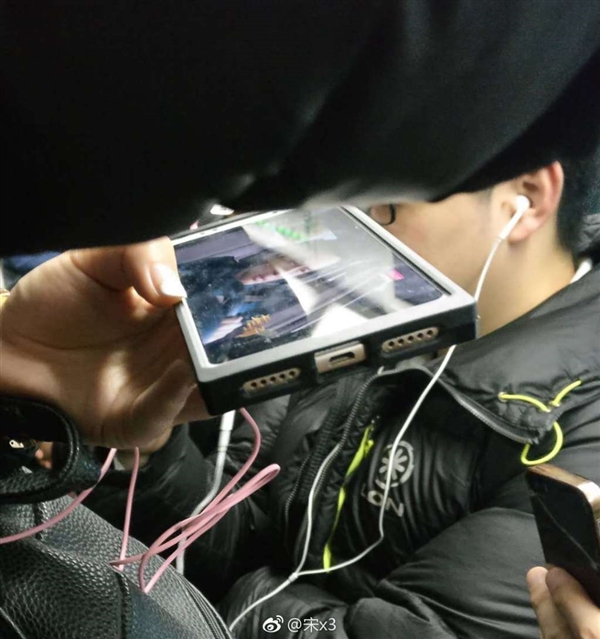
As for the price, the Coolpad Cool play 6 has a price tag of 1499 Yuan ($217) which is a reasonable amount for the specs you get. Registration for the Cool Play 6 is already on but the smartphone will be available as from May 16 at 10 AM on Jingdong.
Apple is silent on iPhone 8, but the rumor mill is consistently speculating on its specs and features. Fresh renders of iPhone 8 that are based on CAD images have appeared.
Though the new renders appear quite real, there is still no confirmation on whether the iPhone 8 will look same as what we see in the renders here. The reason behind it is that the Cupertino company may be experimenting the design of the upcoming iPhone with numerous iPhone 8 prototypes. Hence, the final version of the iPhone 8 could appear quite different from the renders here
The iPhone 8 reportedly features a 5.8-inch OLED screen which is rumored to be placed in a smaller body that measures 1435 x 70.9 x 7.7mm. The render show that there are no bezels around the screen. Even the front-facing Touch ID sensor is missing. It indicates that the Touch ID sensor may come embedded under the screen.
Some rumors are claiming that the iPhone 8 may arrive with rear-facing Touch ID sensor. Rumors also hint that iPhone 8 may also feature facial recognition feature.
The bottom side of the iPhone 8 in the renders seem to feature a USB Type-C port placed between two external speaker grilles. The right edge of the iPhone 8 has a Power key and a SIM card tray. The left side features the volume buttons.
The rear side of the iPhone 8 features a vertically stacked dual rear camera setup with an LED flash placed between the two sensors. Rumors have revealed that the vertically arranged camera may carry support for advanced augmented reality features. The back panel appears to be made up of glass and its corners have rounded appeal.
A report from KGI Securities has revealed that the iPhone 8 has encountered production problems. The delay is probably because of the overhaul improvements coming to IPhone. 8. Apple is speculated to release three iPhones this year, the iPhone 7 featuring a 4.7-inch screen, the iPhone 7 Plus with 5.5-inch display and the iPhone 8 that will come packed with a 5.8-inch display.
Apple follows a traditional pattern of unleashing the iPhones in September each year. This year too, the company is speculated the upcoming iPhones in the same month.
Apple is known for acquiring smaller tech firms so that the products and services from such firms can be sold under Apple’s branding. The Cupertino company has now acquired a firm called Beddit, a maker of sleep tracker which can be placed between the sheet and mattress while sleeping. For monitoring sleep, users of Beddit Sleep Tracker do not require wearing any wearable device. All that the user is required to do is sleep with the tracker placed between the sheet and mattress.
Apple confirmed the acquisition by updating the privacy policy page of Beddit. It now reads as “Beddit has been acquired by Apple. Your personal data will be collected, used and disclosed in accordance with the Apple Privacy Policy.” The Beddit Sleep Tracker is available for purchase on Apple stores with a pricing of $150. The financial terms of the acquisition have not been revealed.
The Beddit Sleep Tracker which appears like a duct tape makes use of ballistocardiography methods to measure the mechanical activity of various vital organs of the body such hearts and lungs. The sleep tracker can provide information on the quantity and quality of sleep, heart rate, number of breathes per minute, snoring indicator for poor sleep quality and it also provides details on how to optimize bedroom environment for better sleep. The sleep tracker can tell which takes done in the day can affect the sleep. It can provide details on how to make good sleep a habit.
The acquisition shows that Apple wants to provide native sleep tracking feature to its users. It is likely that Apple may add some sleep tracking feature on iOS or integrate Beddit features on Apple Watch. At present, iOS and Apple Watch can monitor sleep only through third-party apps or add-ons devices.
Beddit is no longer advertising its watchOS app which indicates that the Beddit’s sleep tracking technology will be incorporated in Apple Watch. A research by CDC has revealed that 50 to 70 million adults in the U.S. suffering through a sleep disorder which indicates that there is indeed a market for sleep monitoring.
Meizu has officially announced the splitting of the company into three new divisions where they now have the Meizu brand, Blue Charm and the Flyme divisions. The new reorganisation also sees the reshuffling of the various portfolio with some execs moving upward. Meizu President, Huang Zhang, also known as Jack Wong, remains as Chairman and CEO of the company, overseeing the entire operations of the company. Mr Wang will also directly oversee the high-end Meizu products and we do hope we’ll finally get to see his “dream machine” which we believe is the Pro 7.
Apart from Huang, the entire top executive structure has been restructured. Li Nan who was formerly Meizu VP for sales and marketing now heads the newly created Blue Charm division as President in addition to his duties as head of branding, sales and marketing.
Former CEO Bai Yongxiang who was running Meizu while Jack Wong was away, steps up to head the Meizu division as President and would report directly to Jack Wong. While Yang Yan who was senior vice president of Meizu technology and president of Flyme division will continue to oversee the Flyme operating system.
No reason was given for the reshuffling but it is believed to be geared towards repositioning the innovative brand for future growth. Since releasing its first smartphone, Meizu M8 in 2009, Meizu has gone on to grow into a formidable force in the Chinese smartphone industry and from their latest innovation in fast charging technology, the company isn’t planning to relent soon.
The Smartisan Nut Pro is now official. Unveiled at an event this evening in China, Smartisan’s new phone is a mid-ranger with a premium design.
Smartisan Nut Pro Design
Built from a mixture of metal and glass and available in carbon black, red wine, and a special edition called “Thin Red Line”, the Smartisan Nut Pro looks like a very sophisticated iPhone SE. The phone is just 6.98mm thick, weighs 158g but still manages to hold a 3500mAh battery.
The Nut Pro has dual rear cameras that sit at the top left corner and are spaced apart. Right in the middle of the phone is Smartisan’s logo and at the base is the manufacturer’s name. The base is in symmetry with the lower bezel in front that holds the physical home button. A simple but classy design.
Smartisan Nut Pro Specs
Available in 32GB, 64GB and 128GB storage options, the Smartisan Nut Pro varies in specification according to the storage capacity. All three have a 5.5-inch in-cell full HD display, 4GB of RAM, and dual 13MP rear cameras with f/2.0 aperture and PDAF. Where they vary is in the front facing camera, processor and some additional features.
The 32GB variant has an 8MP f/2.0 front camera while the 64GB and 128GB variants sport 16MP f/2.0 sensors. The 32GB is also powered by a Snapdragon 625 processor while the remaining two use the more recent Snapdragon 626. If you want NFC, you can only get that on the 128GB version.
The rest of the specs remain the same. There is a fingerprint scanner under the home button that can store up to ten different prints and also supports Alipay. The phone uses a dual hybrid SIM tray, supports dual band WiFi, and has Bluetooth 4.2. It also has a 3500mAh battery that supports Quick Charge 3.0.
Smartisan Nut Pro Price
The Smartisan Nut Pro starts at ¥1499 (~$217) for the 32GB version which is only available in carbon black; ¥1799 for the 64GB version (~$260) available in carbon black and red wine; and ¥2299 (~$333) for the 128GB version which is available in carbon black, red wine, and The Thin Red Line special edition.
The phone manufacturer also announced Smartisan 3.6/3.7, the latest iteration of its OS. Some of the new features include quick record which lets you take down voice notes by holding down the home button. It also supports optical character recognition (OCR) which lets you convert written text into machine encoded text. This will be useful when copying information from business cards, flyers and noticeboards.
Previous features such as One Step and Bing Bang (Smartisan’s version of Google Now on Tap) have also both been updated to version 1.5 and 2.0 respectively.
Recently ZTE released Nubia Z17 Mini and it might be one of the most significant mid-range releases in the year 2017. I have to highlight it has an amazing dual and selfie camera that belong only to the camera champions in the market.
When a middle range phone is released from a Chinese brand, it is wise to be careful before making the buying decision. There are many potential drawbacks, but that’s why we’ll size and measure all the pros and cons before cutting. ZTE has proved in the past that they know to make a sexy phone with some great features and astonishing performance. Considering that Cristiano Ronaldo is posing on the ad of Nubia Z17 Mini, you can bet that ZTE has big expectations from this model. And what should your expectations be? Let’s roll it.
Top-level Nubia Z17 Specification
Cards Slots: Dual Nano-SIM or SIM + memory card up to 200GB
Display: LTPS IPS LCD, 5.2 inches, 1080 x 1920 res (424ppi), Gorilla Glass
Nubia UI v4.0 runs on Android 6 (Marshmallow)
Standard edition: CPU Octa-core Snapdragon 652 (4 x 1.8GHz plus 4 x 1.4GHz); Memory: 4GB / 64GB; GPU: Adreno 510
High edition: CPU Octa-core Snapdragon 653 (4 x 1.95GHz plus 4 x 1.4GHz); Memory: 6GB / 64GB; GPU: Adreno 510
Rear Camera – Dual 13MP
Selfie Camera – 16MP
Video: 4k
Battery: 2950 mAh
Nubia Z17 Mini Review: Design, the feel, and the hardware
I remember back in 2015 when Nubia Z9 got launched. It was a big shift for ZTE and it attracted the attention of many right away. Even some designers were happy to see a ‘fresh face’, and those guys are usually picky. With Z17 Mini, Nubia follows this stylish design. It is very hard to accurately rate design because of personal preferences, but this model deserves high marks for it. The phone feels sturdy and sits well in the hand.
It comes in four colour combinations: 1) Elegant Black (my personal favorite); 2) Gold Black; 3) Champagne Gold; and 4) Red. It has red as a part of their branding and the phones feature great camera features that symbolically means that photography is user’s passion.
Interestingly, 97% of Z17 Mini’s body is made of aluminum, which gives a premium feel. It’s worth mentioning the curves on the edges are not fully rounded. Instead, a part of the curve is cut and that gives the phone a bit different feel in hands and a better grip. Although, it feels a bit slippery in the beginning. Adding to it weight of 155 gr, the general feel of Z17 Mini is convincing in a way that you are holding a premium handset. With its dimensions (146.7 x 72.5 x 7.5 mm (5.78 x 2.85 x 0.30 in)), the phone feels compact enough.
Many phone makers nowadays put the fingerprint sensor on the back of the phone, and to be honest, this place isn’t very useful for me personally, as I prefer the scanner on the side. But if you see what Samsung has done with the position of the fingerprint sensor on the new Galaxy 8, then I can’t complain much about Nubia’s decision.
[envira-gallery id=”130338″]
The home button is a nice stylish red circle below the screen, while Back and Recent buttons are just small dots. In fact, this follows Nubia’s elegant design. On the bottom edge, there are holes for two speakers but when I played some music and covered the right one, the music got muted, which means there is no stereo speakers. The other one is an oversized microphone hole, which is fair enough decision for the pure aesthetics.
Nubia Z17 Mini Review: Display, connectivity, & battery
Z17 Mini is equipped with LTPS IPS LCD display. Speaking with no abbreviations, that’s a standard for mid-range phones. The viewing angle is very wide. The only thing that could behave better on this phone is brightness and contrast on the daylight. But, in this class with such performances that Z17 Mini offers, you can’t expect a much better screen as they are quite expensive. The screen is a higher number of 424 ppi (1080 x 1920 pixels) and the screen size is 5.2 inches – I really don’t know why it’s called “Mini”. The screen is sharp, crisp and has good colour contrasts. It is scratch protected with Gorilla Glass that is curved on the edges (2.5D). However, from the experience, never take it for granted and protect your screen with a foil, tempered glass or a case.
While I was testing Nubia Z17 Mini for this review, WiFi worked well, LTE and 3G network also exchanged data in a nice fashion. If that is particularly important to you, look for a handset that packs Snapdragon 820, 821 or the latest 835. Networking chips are integrated into processor’s module and that’s the most important when it comes to the quality of the network. iPhone also does a great job here, but we all know its price and limitations of iOS. There is one drawback for connectivity for now –Bluetooth has issues. My unit had a hard time making Bluetooth connections, and I hope it’s probably an issue fixable by a ROM upgrade.
Battery lasts for a day without a problem in a heavy usage regime. Of course, there is no a phone out there which you wouldn’t run out of juice if you really wanted so. That also depends on apps you use and how often you manage those working in background. Overall, the battery isn’t a hero, but it’s good enough, so you shouldn’t worry about it.
Nubia Z17 Mini Review: UI, Gestures & Apps
No matter how good specifications are, it is important that the core of UI is also well designed and that offers useful options. In terms of that, Nubia UI does a good job. When it comes to the design of the whole thing and sometimes UX of its apps, there are a few drawbacks. Worth mentioning that the Nubia 4.0 ROM reminds of MIUI a lot. Even some widgets are copied directly from there. For example, one tap to clean up RAM. However, there is also a nice widget “Lock screen” that allows you to lock the screen with just one tap. Usually, you can download it from Google Play, but software is always better to come as a part of the OS.
A very good thing about Nubia is its Theme market where you can find and download tons of free themes, and some of them are very cool. Unfortunately, the themes names and a lot of other text is in Chinese only. It is visual enough and it doesn’t stop you from using the app. But, in general, there are many parts of the system that are not translated in English. And those that are translated, usually are not written in a spirit of English language, so sometimes you need to stop and think what that means. It’s what we expats living in China call – Chinglish – a combo of English and Chinese mixed up. Also, there are some typos. All of these don’t really stop you to use all the features that Nubia offers, but it ruins UX a bit. Or makes you laugh depending on your spirit.
And good news regarding it. It seems that Z17 Mini will go internationally, including India and Europe (source to this leak). I assume it means that translations will be additionally polished and improved. Also, you can bet that the price in Europe and India will be significantly higher than here.
One of the reasons why you should consider getting Nubia Z17 is Edge Gestures. There are plenty of gestures that utilizes the side of the screen. On top of that, there are animations on how exactly to make the move and explanations of what they do.
Also, inside of the phone Settings, there is an Options Menu with various features. You can split-up the screen and easily adjust the size of each split which is sometimes a very useful option. One-handed mode – you can reduce the size of the active screen so that you can reach everything by using one hand. What I liked very much is that you can customize left and right button key. So, based on your habit with a previous phone, you can setup the Back button to be on left or on the right. Remember that buttons are only tiny red dots. Another cool feature is Super Screenshot that allows you to take screen shots of a specific part of the screen, or even to record the screen. Why saving only a copy of your screen at a moment when you make a video of it?
Besides these useful and handy features, you have integrated Security and Resources manager that helps you to manage safety and resources on your phone. And there are some features related to the fingerprint sensor that behaves like an additional physical button in some situations. That’s cool.
With all these features available, Nubia Z17 mini is a phone packed with features and you’ll be happy to have them.
Nubia Z17 Mini Review: Performance
There is a difference in high and standard version of Nubia Z17 Mini. In this review, I use the standard version with 4GB of RAM and Snapdragon 652. Both versions use the same graphic rendering chip (Adreno 510) and have the same amount of storage (64GB). The only two differences are Snapdragon 653 and 6GB of RAM. I haven’t tested the higher version on Antutu, but in terms of processing, the difference is tiny, not worth paying extra money just because of it. However, having additional 2GB of RAM comes handy and for those who can afford it, just go for it.
So, what Antutu says? The standard version scored around 83k which is a good score for a mid-range phone.
.
But more than plain Antutu or Geekbench numbers, I prefer testing phones by overloading their memory and opening bunch of apps all at once. Then switching between them, typing, browsing, playing games, etc. If the phone works without lagging, that means that it performs well. And, Z17 mini did! I had opened Asphalt 8, Gmail, Viber, Google Maps, Google Docs, VPN client (this one is heavy), Facebook Messenger, Camera, Chrome, Instagram and a few other less known apps. I was switching between apps and using them without any problems.
Nubia Z17 Mini Review: Call Quality, Multimedia & Audio Quality
The quality of the call is good and no issues with the sound. Chinese phone makers tend to have a metallic echo in the background, but Nubia is doing well and you can’t hear it. The speaker is good, a bit of a shallow sound and lack of bass, what I expect from Chinese phone maker.
Nubia Z17 Mini Review: Camera
Well, I didn’t have a title of this article ‘’Camera champion’’ not to be fascinated by it! The camera is simply amazing – dual back camera of 13 MP as well as a selfie shooter of 16 MP. Oh yes, it’s the good old Sony camera and the model is IMX258. It can be compared to the real pro SLR camera and you can pull of Bokeh effect with a simple click. However, that is not the best thing about it – the very best feature of this phone are all the apps you can use to play around with your fancy phone camera. 3D photo, panorama, Multi-expo, Star trail, Trajectory and much more. Photos in daylight and night have great colours and contrasts. The video is also great, producing some very well lit videos even during night time. It captivates environments better than our own eye in low light.
This brings me to the conclusion that this phone is targeting millennials and all people passionate about their photography. Personally, I don’t use selfie camera that much – except when posing for reviews, but what I do appreciate is having this option. The screen colours are bright, crisp and picture are sharp and clear. Overall, if you don’t mind a bit of Chinese user experience, this phone is amazing for the price tag.
We use cookies on our website to give you the most relevant experience by remembering your preferences and repeat visits. By clicking “Accept”, you consent to the use of ALL the cookies.
This website uses cookies to improve your experience while you navigate through the website. Out of these, the cookies that are categorized as necessary are stored on your browser as they are essential for the working of basic functionalities of the website. We also use third-party cookies that help us analyze and understand how you use this website. These cookies will be stored in your browser only with your consent. You also have the option to opt-out of these cookies. But opting out of some of these cookies may affect your browsing experience.
Necessary cookies are absolutely essential for the website to function properly. This category only includes cookies that ensures basic functionalities and security features of the website. These cookies do not store any personal information.
Any cookies that may not be particularly necessary for the website to function and is used specifically to collect user personal data via analytics, ads, other embedded contents are termed as non-necessary cookies. It is mandatory to procure user consent prior to running these cookies on your website.