More mobile phone manufacturers are now embracing dual camera technology on their smartphones and this ranges from flagship devices to mid-budget smartphones. Many fans were quite disappointed with the lack of dual cameras on the Samsung Galaxy S8 or S8 Plus but Xiaomi is expected to feature such on the upcoming Mi 6. Meizu is not one to be left out of the party as a recently leaked set of images have shown what is likely Meizu’s first dual camera phones.
The leaked images which originated from China’s Weibo isn’t very clear but we are able to see that the smartphone comes in three distinct colours of gold, green and gray. All that we get is the rear view of all three color options but the dual rear camera would likely be the standout feature on the smartphone. The dual cameras sit in a horizontal plane at the top left corner of the phone while the LED flash and what is likely an OIS is at the right side of the sensors.
Also, the dual sensors are noticed to be of two different sizes with one bigger than the other. The main camera sensor is likely the bigger one while the supporting sensor should be the smaller one. The supporting sensor is most likely a depth of field sensor. Furthermore, the leaked dual camera smartphone also has a metal body which we could tell from the fused antenna band design which is visible at the top and bottom edges.
Now, these aren’t very clear renders and given the three different designs with dual cam setup, there’s a good possibility that this is the work of photoshop. The leakster probably wanted to just show off the design of the setup and not the entire back. So, if you were hoping for some real images of an upcoming dual camera Meizu device, you would probably have to wait for some more time.
Not too long after a device suspected to be the Xiaomi Mi 6 was spotted in China’s 3C website, the Mi 6 is in the news once again. This time around a render of the likely Plus-sized version of the Mi 6 captured from the front and rear has leaked online. As would be expected, the render gifts us a look at the device from the front and rear end.
This new render comes in a coral blue colour but the images are similar to those which had leaked earlier on but obviously, this one doesn’t look real. Up front, we could see the home button looks similar to the Mi 5S’ underglass ultrasonic fingerprint sensor while there is no opening for the iris recognition technology which the Mi 6 is rumoured to feature. The Mi 6 Plus is said to come with a 5.7-inch HD display and the render shows a thin bezel at the two sides of the display but the screen to body ratio isn’t spectacular.
The rear view shows the dual-lens camera setup that the Mi 6 is almost certain to come with. The cameras are arranged in a horizontal plane while the LED flash sits to the right of the cameras. The capacitive buttons on the right side protrude abnormally that they seal this images as likely not being real live renders. Perhaps it is a fan generated work which isn’t a bad depiction anyway, even though it doesn’t look too captivating as we would have expected the Mi 6 Plus to be.
Earlier rumours had tipped the Xiaomi Mi 6 Plus to come with 6GB of RAM, 64GB / 128GB storage versions, Sony IMX362 12MP main camera, and an 8MP front camera (Ultrapixel) as well as a large 4,500mAh battery. On the other hand, the Mi 6 is expected with a smaller 5.15-inch display and two versions with 4GB and 6GB of RAM as well as three storage versions of 32GB, 64GB and 128GB. The Mi 6 will likely also pack a lesser 3,2oomAh battery. Both smartphones will likely be unveiled this April so brace up for more leaks and rumours.
Presently, China is nowhere near the top 10 countries with the best internet connectivity but that could change in the near future as China Aerospace Science & Industry Corporation (CASIC) has announced the country’s plans to send an army of 156 mini-satellite into space in order to speed up its broadband coverage.
The entire 156 mini-satellites will orbit at 1,000 km above the ground and according to CASIC, it’s the first low orbiting, networked satellite project developed in China. Orbiting at a low altitude would ensure that there wouldn’t be signal delay.
The satellites are apparently ka-band satellites as they are said to fall in the 26.5GHz to 40GHz frequencies bands which is the range of the ka-band. The Ka-band has become the band of choice for many satellite operators due to its increasing capacity availability and its applicability for broadband services. The project is a long term one as the first satellite will be sent into space before next year and then four more will join by 2020 to form a constellation. All 156 mini-satellites will be in operation by the end of 2025.
OnePlus teased yesterday via its twitter account that it had a Dash Charge Product scheduled to launch today. Most of us were probably expecting a new charger or an electronic product at most. Alas! Turns out we were wrong. The new product is actually an energy drink, the Dash Energy Drink. I bet you didn’t see that coming.
OnePlus says the Dash Energy Drink is nutritional and will “unlock a person’s hidden potential. OnePlus is even using the “a day’s power in half an hour” slogan to market the energy drink. They say with the energy drink, you don’t need to sleep for eight hours to recharge. That time can now be cut down to just 30 minutes with the Dash Energy Drink. This is probably a joke.
Interested in testing out this theory? Then you can get the Dash Energy Drink starting tomorrow. If you live in London, you will be able to get a taste of the drink at Bishops Square, Spitalfields, London between 12 midday to 4PM. For those in India, the OnePlus Experience Store in Bangalore will have it starting at 11AM IST. EU residents can enter the online raffle(not yet active as at the time of writing) to win a pack of four energy drinks.
Another day and another Xiaomi Mi 6 leak. This time around, it’s not the specs or the pricing that has been leaked, rather a new set of Mi 6 images that show us one of the possible designs of the upcoming flagship. To be honest, this is one of the best looking Xiaomi Mi 6 images we have seen till date. The fact that the display takes over most of the front part of the phone once again throws light on the design philosophy being adopted by smartphone flagships in 2017. Last year it was the unique antenna band placement at the back by the likes of Meizu and iPhone. This year, it’s much more significant — a bezel-less front.
As you can see in the image above, the phone comes with a bezel-less front, except for the thin part above the body. It’s not a curved display like the Samsung Galaxy S8+, nevertheless, it looks pretty beautiful. The basic idea seems to be inspired from the Xiaomi Mi Mix, in a much rounder and compact body. The standard sensors are located on the top, including the front camera. On the right, we can see the power and volume buttons.
At the back, there’s the dual camera setup as rumored. However, the cameras are arranged vertically as opposed to the recent alleged Mi 6 images which featured a horizontal dual camera placement. This definitely makes things more interesting (and confusing).
While we can’t be sure this is indeed the real Xiaomi Mi 6, let’s hope that the design is something similar. Mi 6 needs a refreshing design, or else there is a good chance that it might end up among the numerous value for money flagships that are going to be announced in 2017 without standing out.
As for the other specs, the Xiaomi Mi 6 is expected to feature some advanced tech like iris recognition, waterproofing, and even wireless charging. Of course, none of these features have been confirmed yet, so we better wait for April, until the phone is officially announced.
So, what do you think about these leaked images of the Xiaomi Mi 6? Like it or hate it?
Its been two days since Samsung took the wraps of the Galaxy S8 and Galaxy S8+. Since the launch, we have been getting new details on both phones from those who have been able to get some hands-on time with the devices. One of such people is a Chinese blogger who has had the chance to compare the Exynos 8895 variants.
Tech blogger @肥威 took to Weibo to say that comparison tests between the Exynos powered variants of the Galaxy S8 and Galaxy S8+ showed that the larger variant is more powerful. He includes a picture to back up his claim.
The image shows both devices running hardware and software information utility app, AIDA64. The app shows that the Exynos 8895 in the Galaxy S8 is clocked at 2.3GHz while that of the Galaxy S8+ is clocked at nearly 2.5GHz (2.49GHz). The finding has only been reported by him for now but other reviewers might come across it as well.
The difference in clockspeed might be negligible and is not something we haven’t seen before. The Xiaomi Mi 5 (3GB + 32GB) has its Snapdragon 820 SoC clocked at 1.85GHz while the Mi 5 Prime and Pro (3GB + 64GB & 4GB + 128GB) has the same processor clocked at 2.15GHz. There is also no info if this applies to the Snapdragon 835 variant too.
Turns out the Xiaomi official website is not the only place where discounts for the Mi Festival will run. Online mall, Jingdong will also be running its own sales. If you are out for a new phone, then you may want to consider the Xiaomi Mi 5s which is getting discounted on the site.
The Mi 5s is the successor to the Mi 5. They have the same screen size but the Mi 5s is powered by a Snapdragon 821 processor and features an under-glass fingerprint scanner up front. The Mi 5s is also made out of metal instead of glass like the Mi 5.
The 3GB + 64GB variant sells for ¥1999 ($290) but Jingdong will let you have it for ¥1799 ($261) if you pay in full upfront. If you pay ¥990 ($144) upfront, your discount is lowered to ¥100. Sadly, the discount doesn’t apply to the 4GB + 32GB variant and the 4GB + 128GB model. The former sells for ¥1949 ($283).
A new Xiaomi smartphone has just received 3C (CCC) certification in China and there are indicators pointing at the possibility of this being the expected Mi 6. The 3C certification is a mandatory product certification system in China with the aim of protecting consumer’s security through the supervision of products concerning health, hygiene, security, environment and anti-fraud.
The Xiaomi smartphone received the 3C certificate on March 29, according to the listing and is shown to have been manufactured for Xiaomi Communications Co. Ltd by FIH Precision Electronics (Langfang) Co. LTD which, simply put, is Foxconn. The suspected Mi 6 comes with the model number MCE16 and is shown to support LTE connectivity.
In addition, the device is shown to have support for three charging output ratings including 5V, 3A/9V, 2A/12V, 1.5A, with a minimum power rating of 15W and maximum of 18W, which is the fast charge standard. The device is suspected of being the Mi 6 because of the fast charger which it is listed to feature but that doesn’t give the speculation any certainty. It could turn out to be another device, even though we don’t know of any other smartphone Xiaomi is getting out into the market anytime soon.
The Xiaomi Mi 6 is expected out in the open this April and the rumored features it is expected with keep piling up, positioning the device as a true flagship. The Mi 6 is said to use the latest Snapdrag0n 835 chip and very recently it was revealed that the device may likely be without the legendary 3.5mm headphone jack and would be waterproof. Other rumoured features include an iris recognition technology, wireless charging, colourful body and fast charge support.
Xiaomi will next week begin its annual Mi Fan Festival. The festival is actually Xiaomi’s way of marking its anniversary. This year will be the 7th edition of the event and like others expect lots of price slashes.
Instead of waiting till the festival starts to begin announcing the price slash, Xiaomi has started churning out teasers to get us excited. First, on the list is its line of Mi Routers. The price slash cuts across most of its current catalog.
The price cut starts with the Mi Wi-Fi Cat Power that allows you to extend the signal from your Mi router to other parts of your home where the signal is weak or non existent. Starting on the 6th of April you will be able to purchase the signal converter and the WiFi extender combo for ¥249 ($36).
Next is the Mi Router 3. This router doesn’t have all the bells and whistles of the Mi Router HD announced at CES 2017 such as a Qualcomm chip or a large storage but there is dual band WiFi and it sports four antennas too. The Mi Router 3 usually sells for ¥149 ($22) but will get a cut to ¥139 ($20).
A new Motorola smartphone with model number XT1723 has been spotted on the US Federal Communications Commission (FCC) website where it has been certified. The device is suspected to be the Moto E4, successor to the Moto E3 (Moto E 2016) released last year. The Moto E3 also got certified by FCC last year with the model number XT1706.
Usually, the FCC site doesn’t reveal much about the device being certified but in this case, the little listed is enough to get us excited. The Moto XT1723 model is listed with a massive 4,000mAh battery which dwarfs that of the Moto E3 which came with a 3,500mAh battery. The device is also listed with a 16GB storage which is believed to be its base version. There will likely be a 32GB storage version in the long run. That is just where it ends but we hope to see more about the device in the coming days.
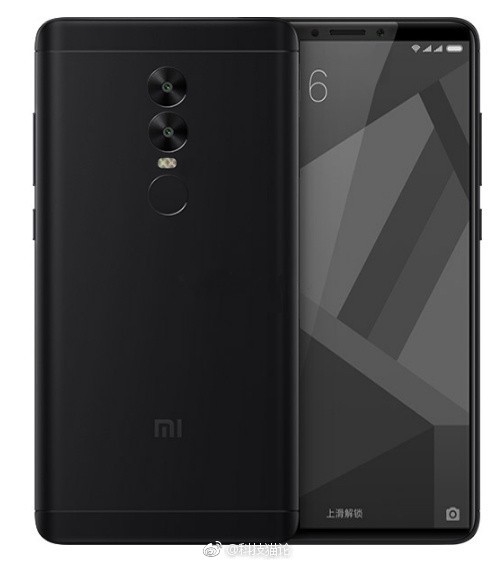
The FCC certification means the Motorola, owned by Lenovo, has now gotten the green light to sell the Moto E4 in the US and Canada. The E4 will likely join two other Motorola models which had earlier appeared on WiFi Alliance with model numbers XT1750 and XT1754.
Huawei is currently sitting on the third position behind Apple and Samsung in the global smartphone manufacturer ranking. However, the company’s efforts on gaining grounds on market leaders have led to slower growth in its revenues.
Huawei has shifted its focus from its telecom equipment business to smartphone business. However, such a shift has led to decline in the net profit margins for two years in a row. According to a recent report from Bloomberg, Huawei has put a lot of money into research and marketing to rival against Apple and Samsung. Compared to its net income revenue in 2011, Huawei gained only one-third revenue in 2016. It is the slowest growth rate since 2011.
Even though it is a relatively new brand in the smartphone industry, it has rapidly grown to become the third smartphone maker in the world. However, to expand at such a faster pace, Huawei has input a lot of money in research and marketing. The following graph shows that the company’s research and development costs have increased seven-fold since 2007.
On Friday, the company has said that from the revenue it earned in 2016, it has spent 14.6 percent on R&D. It plans to use $10 to $20 billion annually for R&D as the company plans to research and advance in various segments like preparation to support 5G standards, artificial intelligence, wireless technology and cloud computing.
According to Huawei Chief Financial Officer Sabrina Meng, “In 2017, we will continue to boost the efficiency and quality of our operations to ensure solid growth,” Since December 2016, the company has started cutting costs that go into mega marketing events as growing expenditure can affect efficiency and profitability of the company.
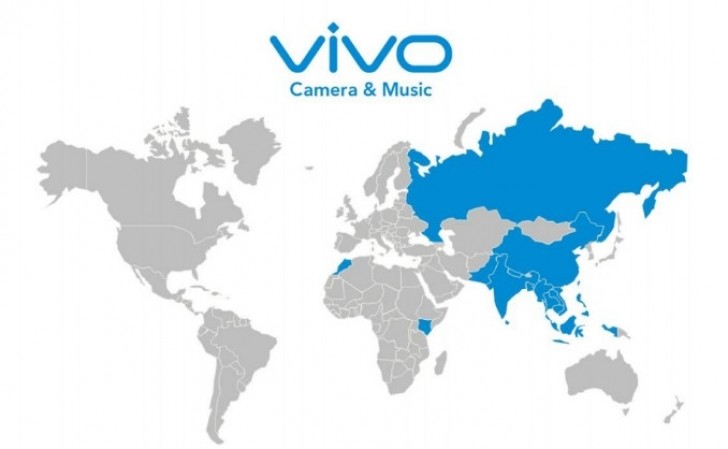
Huawei is earning lesser revenue from its main business of networking equipment as the firm aims to achieve more sales through consumer business like cloud computing and smartphones. It wants to become word’s larger smartphone maker by 2021 by expanding its sales in international markets, but at present it is heavily reliable on sales from home market as China contributed 45 percent of revenue in 2016 and 42 percent in 2015. Moreover, Huawei is under threat in the home market from brands like Oppo and Vivo.
Samsung is having very high hopes from its recently introduced Galaxy S8 and Galaxy S8+ flagships. A recent report from South Korea has revealed that both phones will not encounter any shortage in supply.
Samsung is quite confident about the success of the Galaxy S8 and Galaxy S8+ phones as it has already said that it anticipates to sell more number of Galaxy S8 units than it sold Galaxy S7 in 2016. According to industry experts, Samsung has sold more than 48 million units of Galaxy S7 and S7 Edge by the beginning of this year. Hence, the Galaxy S7 duo phones have set a new in-house record for the company for first-year sales.
The Galaxy S8 and Galaxy S8+ are respectively priced at $749 and $849. The Galaxy S8 duo are costlier than the Galaxy S7 and S7 Edge. Still, Samsung expects Galaxy S8 to outsell Galaxy S7 as the company have made all the preparations to meet the demand for its newest flagships.
Speaking on the supply of Galaxy S8 duo, Koh Dong-jin, the Head of Mobile Business with Samsung Electronics said that the Galaxy S8’s initial supply will be twice more than that of Galaxy S7. He further added that since the company is able to prepare the supply of Galaxy S8 and Galaxy S8+ without difficulty, the company won’t meet any problem of supply delay. For the initial sales, Samsung is preparing 20 million units of the new flagships.
The preparation for the initial sales of Galaxy S8 duo suggest that the company is ready for record-breaking sales. Moreover, the customers across the world will have no problems in purchasing a Galaxy S8 or S8+. However, the only thing that can somewhat disturb the sales of Galaxy S8 and S8+ is their costlier price tags.
The Galaxy S8 duo will go on sale from April 21 in the U.S. and some other regions. Both phones will subsequently arrive in other markets of the world. Industry watchers are of the view that the company would be selling over 46 to 60 million Galaxy S8 units this year.
Xiaomi has announced that the Mi 5C will start getting upgrades which would push Android 7.1 Nougat upgrades to the new phone. This is in line with the company’s promise during the launch of the Mi 5C. The upgrades will be via OTA push but this one is meant for Xiaomi Mi 5C smartphones running the MIUI 8 developer ROM.
One good thing about Xiaomi’s MIUI is that it is constantly upgraded to offer users newer and more features and it is so flexible you can decide to stick with a Developer ROM or a Stable ROM, or even a Ported ROM developed by unofficial developers. Developer ROMs are usually updated every week (except for special occasions like Chinese national holidays), and they will get bug fixes and new features in every update. On the other hand, Stable ROMs don’t have a regular update frequency. They are updated once a month or two months or even longer.
In this case, Mi 5C users running the developer ROM will get OTA updates as from today. Alternatively, the update package can be downloaded from the MIUI official website. It must be noted, though, that the Xiaomi Mi 5C comes with the MIUI 8 Stable ROM by default and so will ordinarily not get this OTA update.
However, if you are eager to get a feel of using Android 7.1 Nougat on your Mi 5C, you can download the Developer ROM from the MIUI Forum. But if you have no idea about flashing your phone and stuff, just chill. The Mi 5C running MIUI 8 Stable ROM will still get updates to Android 7.1 Nougat later on.
OnePlus has released a new tweet that reveals that the company will be announcing something related to its Dash Charge fast charging technology very soon. Also, the OnePlus CEO, Carl Pei has hinted that a new Dash Charge product is arriving.

The Dash Charge feature on OnePlus 3 and OnePlus 3T let users to charge the batteries to rapidly charge the batteries to 63 percent from scratch with just 30 minutes of charging. Since official tweets hints the coming of a new Dash Charge product, speculations have it that the company may announce a new power bank that is equipped with Dash Charge rapid charging feature. Other speculations suggest that as the Dash Car Charger from the company has gone out of stock, it is likely that OnePlus may announce a related product.
Some may think that it may be an April Fool’s Day prank, but it does not seem so as the announcement is set to happen on March 31. Secondly, the tweets have come from the official Twitter channel of OnePlus as well as from the company’s CEO. These things suggest that there is a legitimate announcement slated to happen on Friday.
We will have to wait for few more hours to find out the new Dash Charge product from OnePlus.
Xiaomi has again come out with yet another teaser, this time of a product launching 0n April 5. The product will be coming out in time for the Mi Festival 2017 which runs from April 6 – 9. The name of the product isn’t clearly stated but the teaser speaks volume about what we’ll likely be seeing on that day.
The teaser poster is that of a young man who carries a carton containing a football. The poster also contains the logo of a camera and these all points in the direction of a Smart sports camera coming. The product will by unveiled by 10 AM on April 5 and then we’ll know what it is for sure.
However, Xiaomi has got a number of Action camera in its lineup, especially the Yi-series. The Yi camera is manufactured by Xiaoyi which is now an independent company. Perhaps, this camera will bear squarely the Xiaomi brand name as it isn’t likely a crowdfunded product even though it falls under its smart home MIJIA brand.
Finally, the latest and greatest Samsung galaxy flagships are here, the Galaxy S8 and the Galaxy S8 Plus. Both phones follow a familiar Samsung’s design language but they now have truly bezel-less displays that just look gorgeous.
In fact, the Galaxy S8 is narrower and just feels so much smaller in the hand in comparison to the last year’s Galaxy S7 edge even though it has a larger 5.8” display. The S8+ has a 6.2” display but it also has one of the best screen to body ratios out there.
You can check out my Galaxy S8 hands on review video below:
Both phones are 8mm thick and they sport pretty small batteries. The S8 has a 3000mAh unit whereas the S8+ sports a 3500mAh power bank.
As far as the specs go, the S8 and S8+ will use either Snapdragon 835 or Exynos 8895 chipsets, 4GB of RAM and 64GB of storage, which is also expandable via the MicroSD card slot. There are rumors about the 6GB model but there is no official info about that.
The 2k resolution AMOLED panels look really sharp and vibrant. They also use the 18:9 aspect ratio and HDR video support, which seems like a trending feature in 2017.
Some people may be disappointed but finally, the physcial home button is gone. There is still a button underneath the on-screen keys, which gives you a nice haptic feedback. You will also be able to switch the recent apps and the back buttons.
A new 8MP auto-focus selfie camera is said to be better than ever. I took a few selfies in low-light and they do look pretty good but more on the image quality in my full review later.
There was no space for the fingerprint scanner on the front, so Samsung put it on the back… in the most awkward position you can ever imagine. It will take time to get used to it and you may smudge your camera lens from time to time but at least the scanner is accurate. Also, it finally unlocks the phone straight from the standby mode.
The reason why the fingerprint scanner placement is questionable is that you have new face recognition and iris scanner features, which seem to work pretty well but they are slower to use since you need to wake your phone up first.
As most of the Samsung phones, the S8 is a huge fingerprint magnet and it looked gross even though I kept cleaning it all the time. I won’t be getting a black model, where all those smudges are visible, that’s for sure.
Same as the last year’s flagship, the S8 sports the IP68 rating for water and dust resistance, so you will be able to wash those smudges out.
We have the same 12MP camera on the back but it now has better software optimizations. I took a few camera samples in low-light and they do look really good but again, more on the image quality in my full review.
We have a usual set of buttons, a headset jack and a dedicated button for a new Samsung’s voice assistant that is called Bixby. It is basically Samsung’s version of the google assistant. So far it looks promising but this is a feature that I will be testing in detail later on.
I spent just an hour with the new Galaxies but I absolutely love the new Grace UX. It looks cleaner and most importantly, it is really fast even though there are lots of features and customization options. We will see how it performs after installing a lot of apps on the phone. The new Samsung Dex will allow you to transform your Galaxy phone into a desktop computer to boost your productivity by optimizing the apps and the home screen for a large display. However, the Dex dock will be sold separately.
Samsung also announced a new Gear 360 camera that will be easy to use and it will let you live stream 360 videos easily.
Both new Galaxies will be available in a variety of colors and the release information currently puts pre-orders at March 30, with the phones making it into your hands by April 21.
Most carriers in the US will be offering the Galaxy S8 for $750 and the Galaxy S8 Plus for $850. The prices in Europe will be 800 EUR for the Galaxy S8 and the 900 EUR for the S8+.
Apart from the Yunmao Good light Mini 2 Smart body scale, Xiaomi also launched a smart thermometer as its 73rd product on the crowdfunding platform on Thursday. The Smart thermometer is already up for funding on the crowdfunding platform and it carries a price tag of just 99 yuan (~$14). The device will start shipping on May 18.
The Smart thermometer comes with a diameter of 17mm and with a high thermal conductivity. The device uses a stainless steel temperature sensor which is of food-grade meaning it is safe. It measures temperatures ranging between 32-degree centigrade and 42-degree centigrade with an error of 0.1 degrees.
The Xiaomi Smart thermometer is water resistant, with an IPX6 rating and there is a safe adhesive through which the thermometer can be attached to the body. It requires just 2.5 seconds to detect a baby body temperature. The thermometer comes with Bluetooth connectivity and can be connected to the Mi App via a mobile phone. The temperature measurements can be followed continuously via the app. Another cool feature is that it comes with an alarm that beeps when the temperature level is at a dangerous level. Parents can set their own low and high-temperature level and when this level is reached, the alarm beeps.
Since its financial troubles became public knowledge, Chinese smartphone giant LeEco has been on the quiet side, only managing to pop into the news a few times since the beginning of the year. But one smartphone that has failed to leave our presence is the LeEco flagship with a weird-looking dual rear camera. This device which has been the subject of series of leaks is touted to be of a flagship stock and would even feature AI technology.
There is a new information now, call it rumour if you like, that the LeEco flagship would be launched this April, specifically on April 11. The rumour emanated from a Weibo user who also revealed that the flagship device would use a dual-lens camera setup which he predicts would be the flagship standard going forward despite the Galaxy S8 not having one. We don’t know the other details of the flagship but there is a rumor that it would sport dual cameras at the front as well as at the rear. Previously we were expecting a Snapdragon 821-powered flagship but we don’t know if that would change since there is a new Sheriff in town now.
Another revelation by the Weibo tipster is that the LeEco smartphone would come with artificial intelligence (AI), making it a true flagship. Incase you are at a loss here, the AI technology will likely function as a voice assistant similar to Samsung’s Bixby. And if indeed the smartphone comes with an AI technology, that would make it the first LeEco smartphone to feature such.
April 11 is just two weeks away, while it is unlikely that LeEco will launch a smartphone on that day, we’ll keep our fingers crossed and hope they do.
Synaptics announced today a new line of fingerprint sensors. The new sensors will be under the “FS4600 family of Natural ID”. They will be used in smartphones to provide high-performance and secure biometric authentication.
Manufacturers adopt various designs for their fingerprint scanners. We have seen square shaped scanners (Moto G4 Plus and Moto Z Play), pill shaped ones (Meizu M5 Note, Xiaomi Mi 5), circular ones (Redmi Note 4), and square scanners (Lenovo Vibe K4 Note). Synaptics says its new sensors can be adapted into any of these designs and in any position too.
Another new feature coming to the FS4600 family is that it can be placed under either glass, ceramic, or polymer coatings. It can also be assigned the function of two OD soft buttons and will support force sensing and swipe navigation. Security for the FS4600 will be provided by Synpatics’ SentryPoint security software.
Portuguese footballer and Real Madrid C.F player, Cristiano Ronaldo is the brand ambassador for Nubia. Earlier today, he took to his Weibo page to share a picture from his photo shoot with the soon-to-be-released Nubia Z17 Mini.
The image gives us a good look at Nubia’s second dual camera phone for the year, the first being the Nubia M2 released last week. There are a number of differences between both devices but we will just focus on the obvious ones. First the dual cameras and the LED flash are positioned differently. In the Z17 Mini, they are positioned along the antenna line like you have in the iPhone 7. The LED flash also precedes the cameras.
For the Nubia M2, it sports the U-design antenna lines, so you have the dual cameras below it. The sensor also come before the LED flash. Another major difference is the position of the fingerprint scanner. It sits upfront underneath the home button in the M2 but is positioned at the back on the Z17 Mini.
Both phones will also differ in terms of specs. According to the information on TENAA, the Nubia Z17 Mini will have a 5.2-inch 1080p screen, 4GB of RAM, 64GB of storage, 16MP front facing camera and probably dual 13MP sensors on the back. Due to the smaller screen, the battery has been cut down to 2930mAh.
We use cookies on our website to give you the most relevant experience by remembering your preferences and repeat visits. By clicking “Accept”, you consent to the use of ALL the cookies.
This website uses cookies to improve your experience while you navigate through the website. Out of these, the cookies that are categorized as necessary are stored on your browser as they are essential for the working of basic functionalities of the website. We also use third-party cookies that help us analyze and understand how you use this website. These cookies will be stored in your browser only with your consent. You also have the option to opt-out of these cookies. But opting out of some of these cookies may affect your browsing experience.
Necessary cookies are absolutely essential for the website to function properly. This category only includes cookies that ensures basic functionalities and security features of the website. These cookies do not store any personal information.
Any cookies that may not be particularly necessary for the website to function and is used specifically to collect user personal data via analytics, ads, other embedded contents are termed as non-necessary cookies. It is mandatory to procure user consent prior to running these cookies on your website.