Advertisement

Energizer unveils a slew of smartphones, some with dual pop-up cameras

Energizer is well known as an American company that manufactures batteries but they have ventured into smartphone manufacture in recent times. The company recently released a new smartphone which it dubs Energizer E500S. Things are about going ballistic rihgt now as the company is said to be planning to showcase up to 26 new models at MWC.
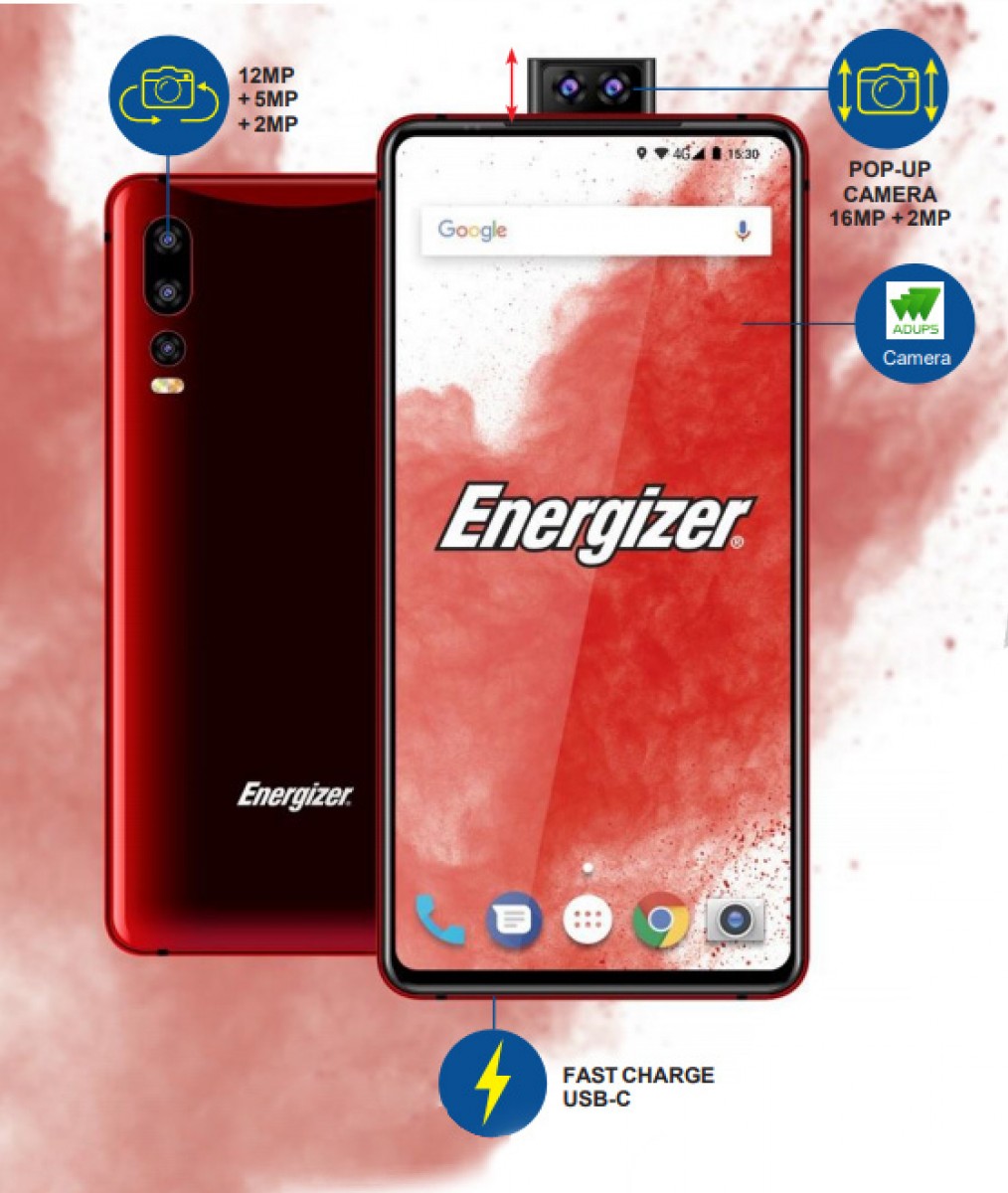
The phones are actually manufactured by a company known as Avenir which has now unveiled the most spectacular series of the lot dubbed the Ultimate series. The Energizer Ultimate series is made up of about five different models; the U620S Pop, U630S Pop, U620S, U570S and U650S.

Energizer Ultimate U620S and U630S

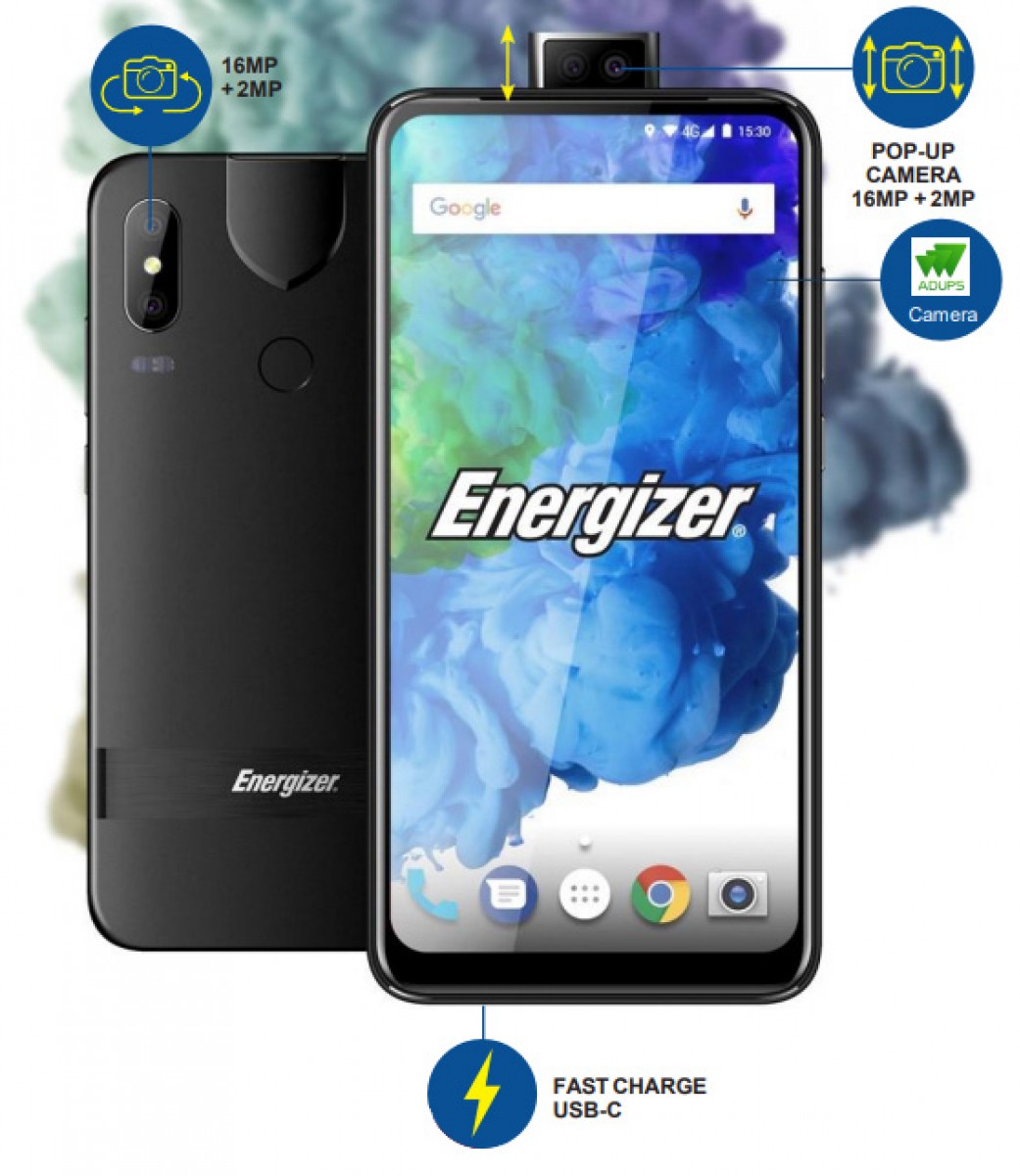
Specs wise, the Ultimate U620S Pop and U630S Pop are similar to each other. They both feature dual selfie pop-up cameras which is a 16MP+2MP combo. The secondary camera is a depth of field sensor. The Ultimate U620S Pop has a more premium build as it packs a 6.2-inch full-screen display with a FHD+ resolution of 1080p. The model is powered by a MediaTek Helio P70 chipset paired with 6GB of RAM while there is 128GB storage with a microSD slot to further expand the storage. In addition, the Ultimate U620S Pop packs a triple camera on the rear which is a 16 MP + 5 MP + 2MP combo. The third module is clearly a depth sensor, but we don’t know that the 5MP camera does. Further, there is a side-mounted fingerprint reader on the U620S Pop while it gets its juice from a 3,200mAh battery with fast charge. For a company that manufactures battery, the cell capacity isn’t too impressive.

On the other hand, the Energizer Ultimate U630S Pop has a slightly bigger 6.3-inch screen with HD+ resolution of 720p. The device is powered by a Helio P22 chipset and it has 4GB of RAM and 64GB  of internal storage. Th U630S Pop has a slightly larger battery, 3,500mAh. For the rear camera, this model has a dual camera setup made up of a 16MP + 2MP combo as well as a rear fingerprint sensor. For availability, the U630S will be launched in June,while the U620S will enter the market in July.
Energizer Ultimate U650S

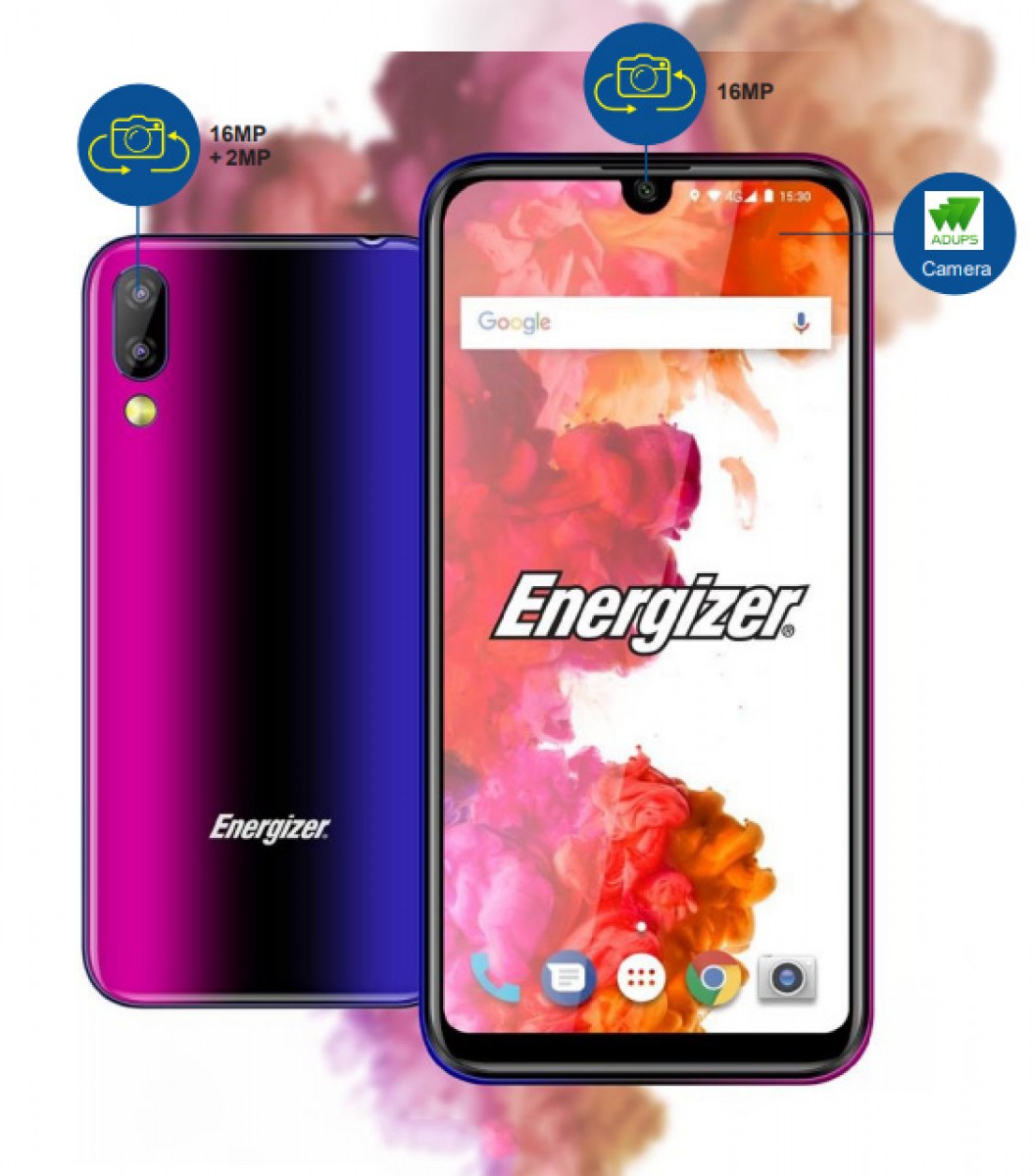
The Ultimate U650S is the largest model in the series as it packs a 6.5-inch display with 720p+ resolution. There’s a waterdrop notch with a 16MP selfie camera, plus a 16 + 2MP dual camera on the back.

The phone is powered by a Helio P22 chipset with 4GB of RAM and 128GB storage (plus a microSD slot for up to 256GB more). There’s a 3,500mah battery inside with fast charging and a USB-C port. The device will be launched officially in faraway October this year.

Energizer Ultimate U620S

The major difference in the name of the Ultimate U620S and the Energizer Ultimate U620S Pop is the “pop up camera”.  The Ultimate U620S features a 6.2-inch 720p+ screen and, instead of a pop-up, it packs a single 16MP selfie camera housed inside the  waterdrop notch on top of the display. It has the usual 16MP+2MP dual camera on the back.

Furthermore, t Ultimate U620S is powered by a MediaTek MT6765 chipset which is a faster version of the Helio A22. It offers 4GB of RAM and 64GB of expandable storage. The Ultimate U620S has the largest battery capacity – a 4,000mAh cell. The U620S coms in two colour gradients: Purple/Blue and Blue/Green gradients. Both options will be available in July.
Energizer Ultimate U570S

The Energizer Ultimate U570S is the smallest of the five with a 5.7” screen (720p+). It also has a small notch for a 16MP selfie camera and 16+2MP dual camera on the back.

The model is powered by a quad-core processor and 32GB storage. It has a 3,000mAh battery and a microUSB port, plus a 3.5mm headphone jack. The Ultimate U570S is coming out in April in three colors: Purple/Blue gradient, Blue and Yellow.

(source)
Chip manufacturing giant Intel patents a foldable smartphone design

There is no doubt that foldable phones are the future of smartphones and we could start seeing commercial units dropping as early as the first half of this year. So, it is no surprise when we see that a good number of OEMs are working on their own model. Samsung, LG, OPPO, Huawei, Xiaomi, Royole and several others are reportedly working on their own foldable phone. What we didn’t expect to see was that tech giant Intel will be thinking about foldable phones. Surprisingly, Intel had filed a foldable design patent application in 2017.

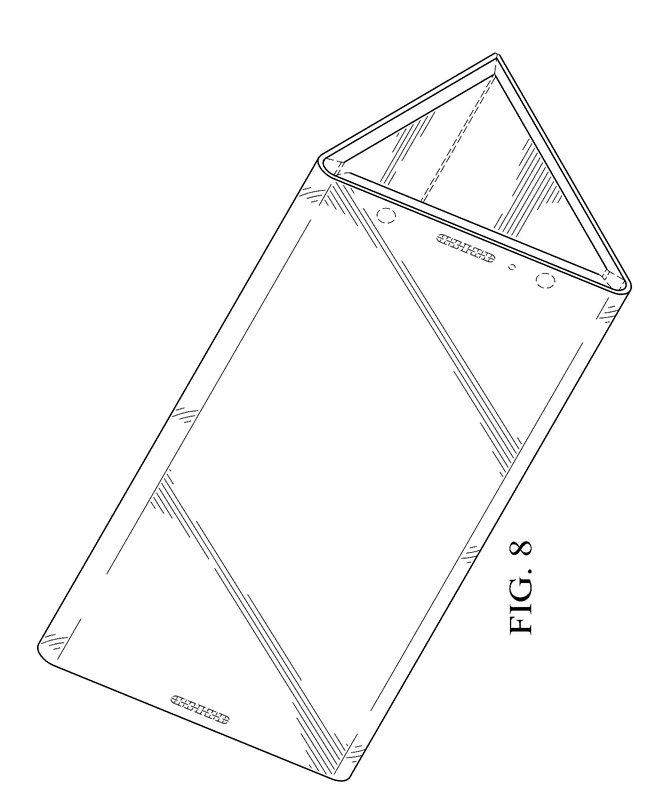
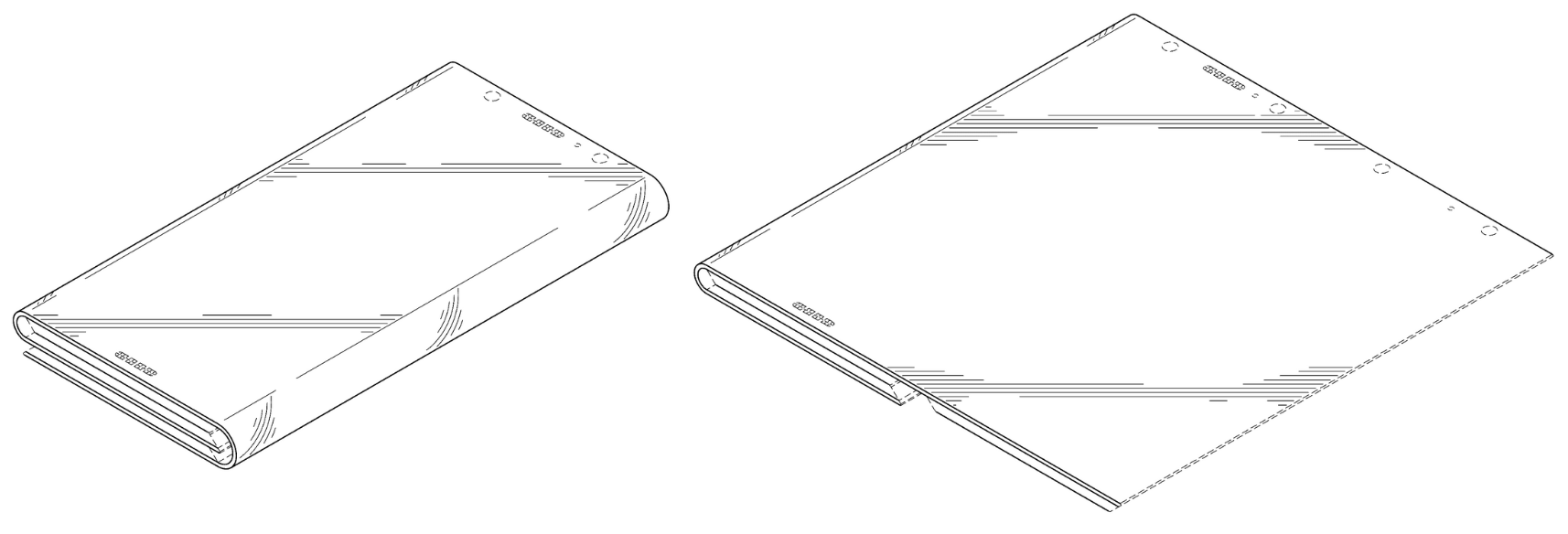
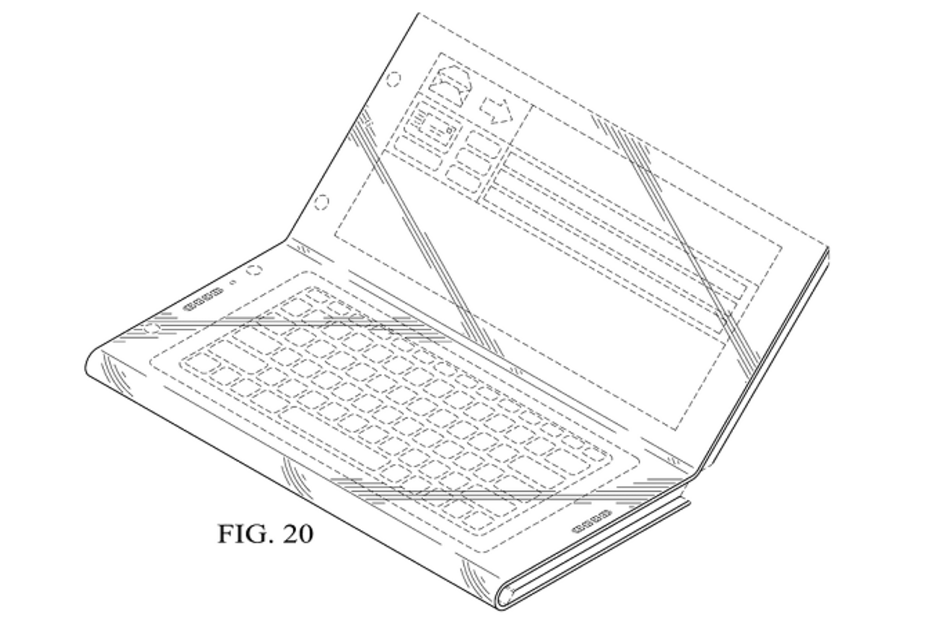
The patent has now been awarded by the US Patent and Trademark Office (USPTO) as reported by Lets Go Digital. The application is titled Electronic Device With Foldable Display Panels. From the sketches, we can see that the Intel foldable phone is a device that opens up with hinges around a centre display. The main display at the centre is flanked on the right and left sides by screens that are the same size, turning the unit into a tablet when it is fully opened.

The design bears semblance with Microsoft’s Andromeda device that has been put on hold in some aspects. One is that the middle panel can be turned into a virtual QWERTY keyboard while it rests on one of the outer panels. The other outer panel then acts as the display screen in form of a laptop. The sketch also hints the device will have a stylus pen fitting into an opening at the bottom of the device in its closed position.

Read Also: Royole takes a dig at Xiaomi’s foldable phone, Xiaomi responds

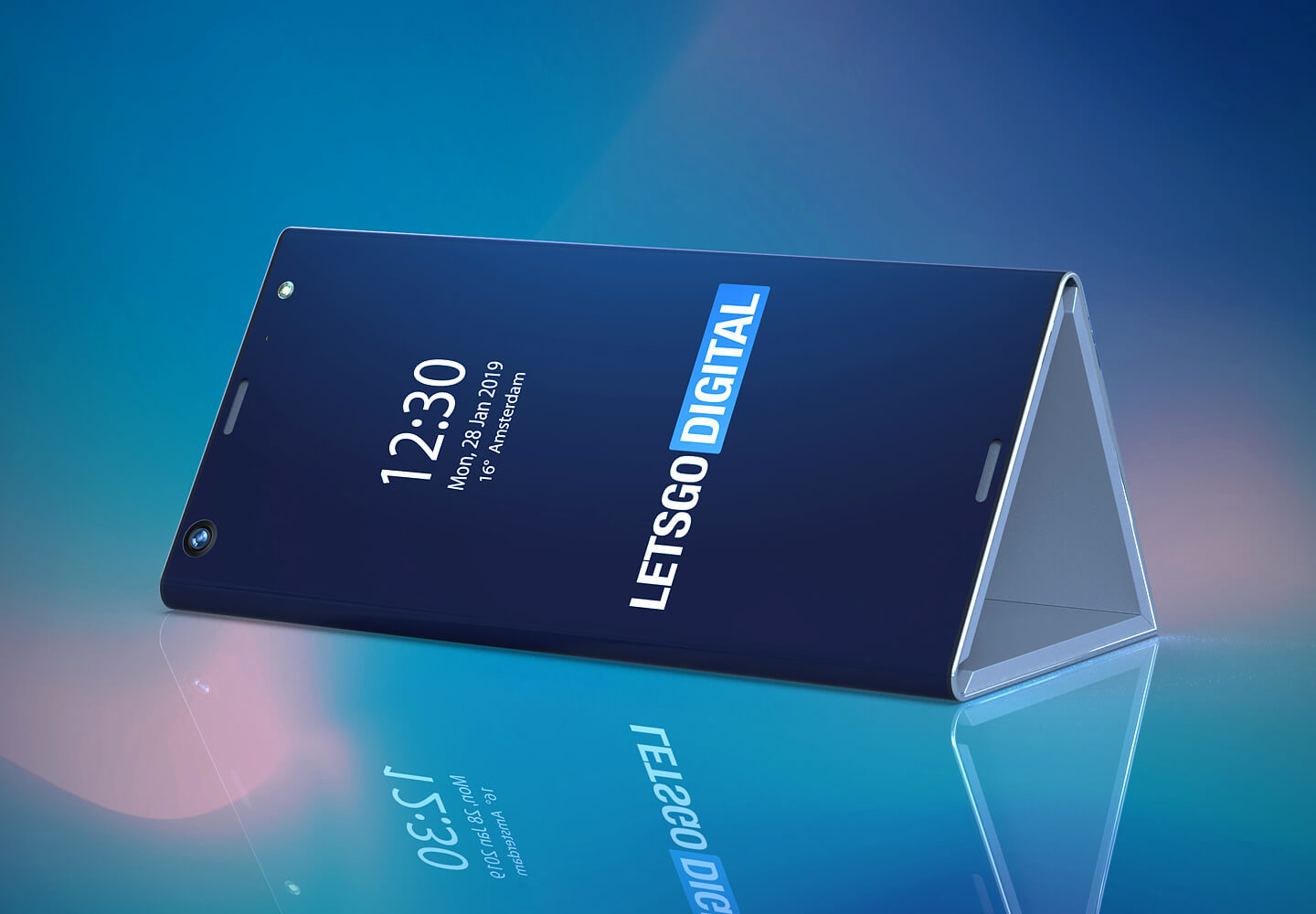
The patent doesn’t in any way mean that Intel is planning to release a foldable phone anytime soon. The patent could aid the chipmaker curry some chip orders from other firms looking to produce a foldable mobile device. Meanwhile, you should check out the graphical renders of the device produced by Lets Go Digital from the sketches.

(source, via)

Nokia TA-1157 Android One phone with dual rear cameras hits the FCC

A new Nokia phone with the model number TA-1157 has been seen at the FCC. The listing includes schematics and a few key specs.

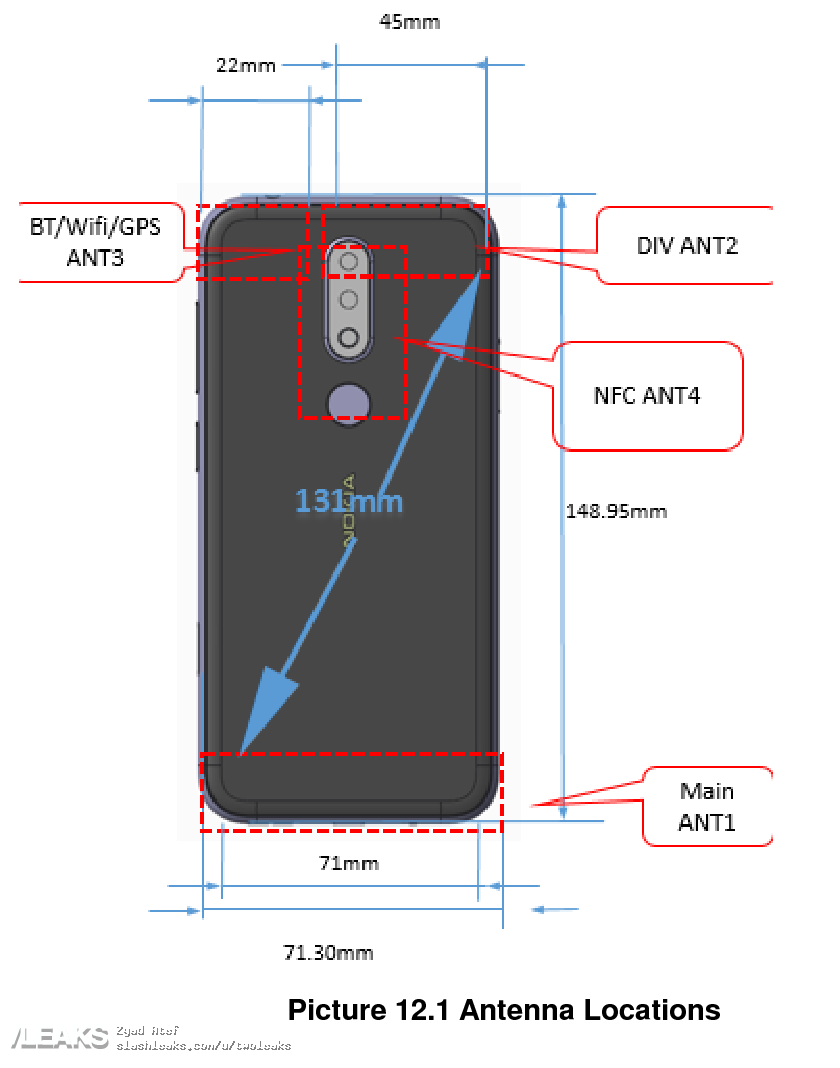
Nokia TA-1157 schematic diagram

The Nokia TA-1157 is an Android One phone with dual rear cameras. The sensors share a single housing with the LED flash and are positioned in the middle of the phone in a vertical arrangement. There is a fingerprint scanner below the setup. The schematic diagram also confirms it will have NFC.

The FCC document reveals the phone is 148.95 mm long and 71.3 mm wide. It also measures 165.1 mm diagonally. Based on the dimensions, we believe the Nokia TA-1157 will have a screen size less than 6.0-inches. It will also have support for LTE bands 1, 3, 5, 7, 8, 20, 28, 38, 40, 41. It should launch in Europe since there is band 20 support.

[envira-gallery id=”234724″]

The Nokia TA-1157 will come in two variants, at least for the rest of the world. One will have 3GB of RAM and 32GB of storage and the other will have 2GB of RAM and 16GB of storage. We expect both will have support for storage expansion.

The document also reveals the device will pack a 3,000mAh battery. There will be two suppliers for the battery – Sunwoda Electronic Co. and Jiade Energy Technology. Both suppliers are based in China.

READ MORE: Nokia 6.1, 5.1 and 3.1 prices slashed in India

OPPO reveals it is aiming to be the first to release a 5G smartphone

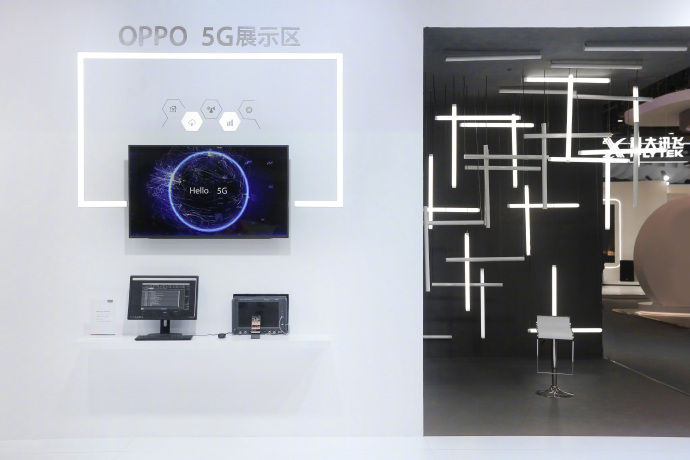
OPPO CEO Chen Mingyong recently granted an interview to Qualcomm China and during the interview, he spoke on a variety of topics centred on the company’s plans for its mobile phone business. Top on the issues discuss is the plan for the 5G+ era. The CEO disclosed that mobile phones will remain the core and hub of all things in the 5G era and so the company will continue to build on its mobile phones. He equally disclosed that one of the company’s core business will be the launch of a new smartphone with the Snapdragon 855 mobile platform.oppo 5g

Chen Mingyong came out with a surprised when he said that OPPO will strive to be the first manufacturer to launch 5G mobile phones. He further disclosed that the Chinese company will further develop AI capabilities with 5G and actively explore the application scenarios of the 5G+ era. At the same time, OPPO plans to launch 5G mobile phones in the first half of 2019. At present, OPPO is actively building an open IoT platform to accelerate the development of AI+IoT technology.

Read Also: OPPO strives to release the first 5G smartphone

In April last year, OPPO announced the establishment of the OPPO Research Institute, which is conducting front-end research on the research fields of 5G, AI, image processing and new materials and new technologies in the three areas of software, hardware and standards. At the same time, OPPO also announced that it will invest ¥10 billion R&D funds in 2019 (this year), which will focus on the vision of the company in AI, 5G and other fields.

(source)
Realme 2 Pro running Android 9.0 Pie appears on GeekBench

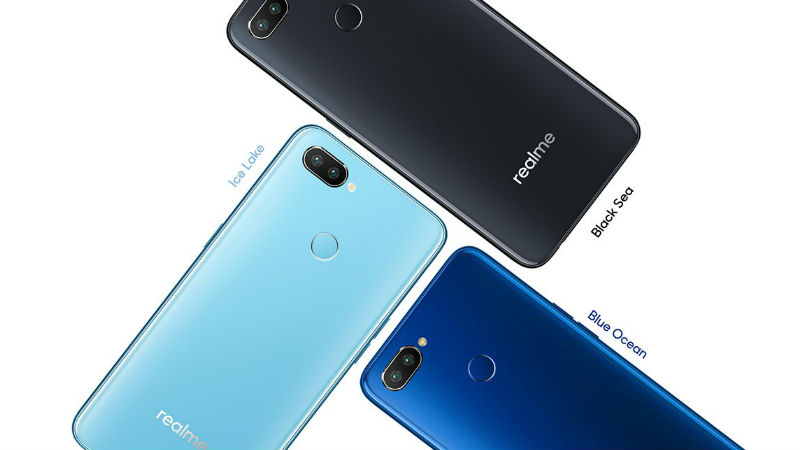
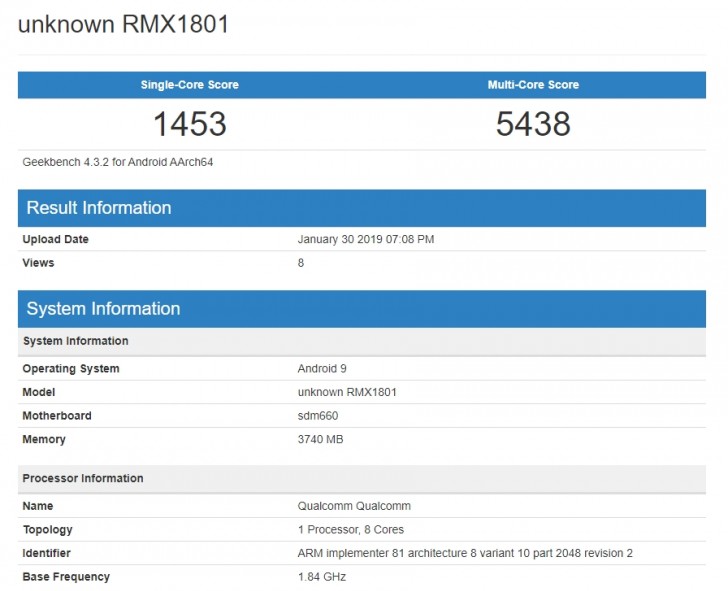
It is almost four months already since OPPO’s Realme brand launched the Realme 2 Pro. The company had pledged to deliver fresh updates to its smartphones within the first half of 2019 and there is an indication it is going to keep to that pledge, at least for the Realme 2 Pro. A model suspected to be the Realme 2 Pro has been spotted on benchmark app database GeekBench. What makes the GeekBench listing stand out is the presence of Android 9.0 Pie operating system. Presently, the device runs ColorOS 5 based on Android 8.1 Oreo.Realme 2 Pro

If the unnamed device is indeed the Realme 2 Pro, that will make it the first Realme model to get Android Pie. That shouldn’t be much of a surprise since the device is the company’s most expensive device. The GeekBench model is listed as “unknown RMX1801” but the device is strongly suspected to be the Realme 2 Pro because their software build numbers start with RMX. Apart from that, the model is listed as packing a Qualcomm Snapdragon  660 chipset and the 2 Pro is the only Realme smartphone featuring that chipset. The model also comes with 4GB of RAM.

We believe the update will hit soon but it is possible it is still deeply undergoing testing.

(source)
Xiaomi Mi Bunny Story Machine Mini – Bluetooth version launched for 149 Yuan (~$22)

Xiaomi has launched a new product, the Mi Bunny Story Machine Mini – Bluetooth version. This is the second model of such product the company is launching. Mi Bunny is actually the company’s mascot until it thought of bringing the mascot to life. The product was the unveiling of the Mi Bunny smart assistant named Kuri. The brand then launched the Mi Bunny Story Machine Mini around this time last year. This is the second iteration of that product with the iconic bunny design but this version comes with Bluetooth support. Xiaomi Mi Bunny Story Machine Mini - Bluetooth version

In terms of appearance, this version is not very much different from the first model. This model comes with a compact and portable design with a height of 14cm. The device packs 16GB of built-in storage can it can play music that can aid the child to drift off to sleep. The machine is pre-installed with high-quality story content which aids in the development of the child’s IQ and enlightenment. It will use big data feedback to filter out the baby’s favourite stories from more than 350 pieces of the best children’s stories and rhymes.

Read Also: Xiaomi Mi Bunny Smartwatch 3 (4G version) with AMOLED display, Gorilla Glass 3 launched

The biggest highlight of this version is the Bluetooth connectivity feature it packs. With Bluetooth connectivity, the Mi Bunny Story Machine Mini can be paired with a smartphone and used as a speaker to play contents from the phone or media player. The device will go on sale at 10 AM on February 1 via Xiaomi Mall, TMall, and other online retailers. The 149 yuan price tag is the same as the price of last year’s model.Mi Bunny Mini

IDC: Xiaomi is fourth largest smartphone manufacturer in the world

Popular market research firm, IDC, has released its report for the fourth quarter of 2018 (4Q18). The report also includes the total shipment sales for the 2018 calendar year. According to the report, smartphone sales declined globally in 2018. However, manufacturers like HuaweiXiaomi and OPPO managed to increase their shipments.

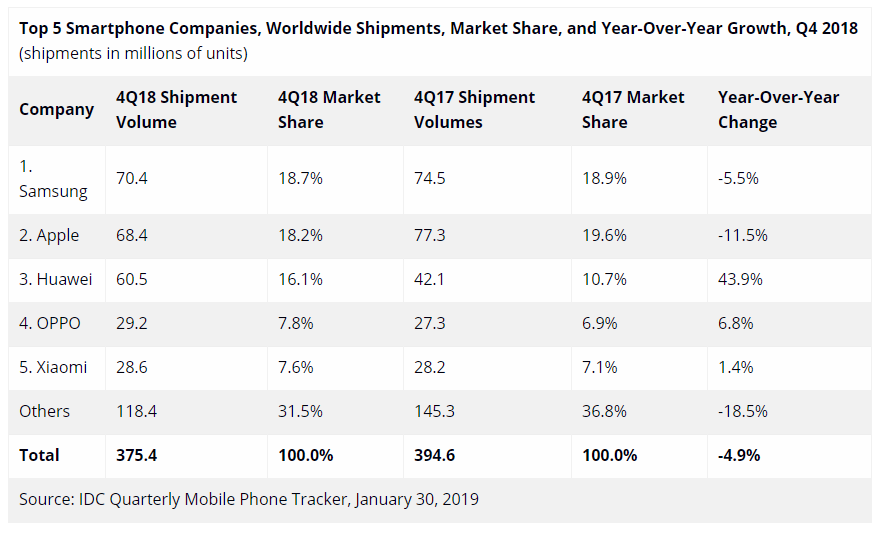
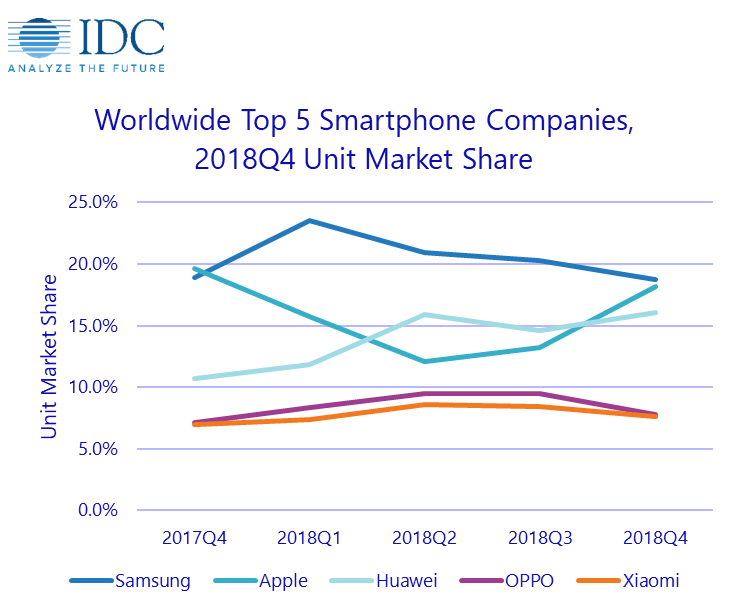
For the fourth quarter of the year, Samsung shipped 70.4 million units to grab a market share of 18.7% but when compared to its shipment of 74.5 million and market share of 18.9% in 4Q17, it declined.

Top 5 Smartphone Manufacturers Q4 2018

Apple comes in close at number two with 68.4 million units shipped and a market share of 18.2%. It also shipped less and lost market share when compared to the same quarter in 2017 (77.3 million units and a 19.6% market share).

Huawei, on the other hand, shipped fewer units than Samsung and Apple but recorded significant growth compared to 4Q17. The Chinese manufacturer shipped 60.5 million units – an increase of 18.4 million units from the preceding year. It also increased its market share from 10.7% to 16.1%.

OPPO and Xiaomi close the top five list with 29.2 million units and 28.6 million units shipped respectively. And both grew their market share too last quarter.

IDC Smartphone Market Analysis 2018

The overall shipment for 2018 reveals more clearly how each manufacturer performed.

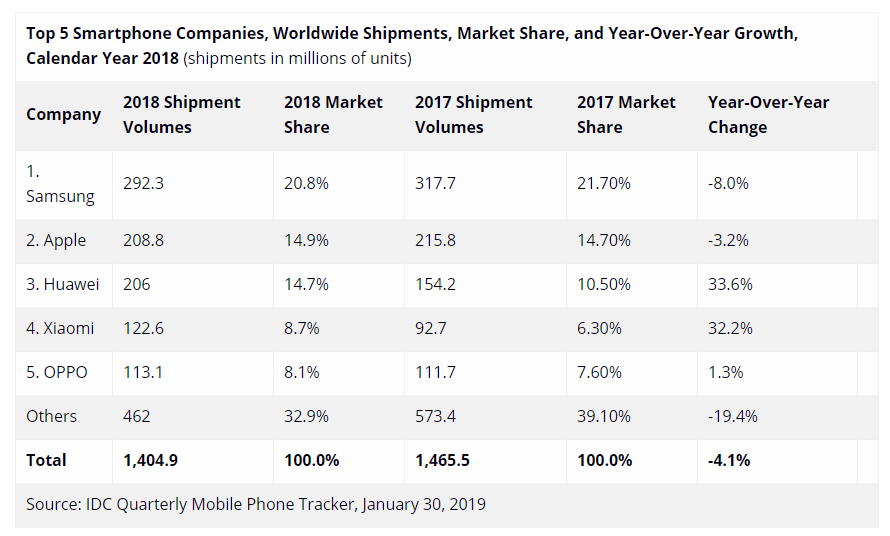
Samsung shipped a total of 292.3 million units for a market share of 20.8% to keep the title of largest smartphone company in the world. However, it shipped more units in 2017 (317.7 million) and had a larger market share (21.7%).

Apple shipped 208.8 million units to come in at number two but it still has a lot of catching up to do if it intends to dethrone Samsung. Even though the Cupertino-based company shipped more in 2017 (215.8 million) it actually grew its market share by 0.2% in 2018 for a total of 14.9%.

Huawei can be termed the biggest winner even though 2018 was a bit rough for it. In 2017, Huawei shipped 154.2 million units and had a market share of 10.50%. By the end of 2018, its market share jumped to 14.7% and its total shipment was 206 million units!

Top 5 Smartphone Manufacturers 2018
Xiaomi is the fourth largest smartphone manufacturer for 2018

Xiaomi also did great in 2018 with a total shipment volume of 122.6 million units up from 2017’s 92.7 million units. Its market share also grew by 2.4%. This was more than enough to push OPPO to fifth place and its sister company Vivo to the sixth position.

OPPO shipped a total of 113.1 million units in 2018, recording an increase of about 1.4 million units. It also grew its market share from 7.6% to 8.1%.

Total smartphone shipment in 2018 was 1.404 billion, a 4.1% decline compared to 2017. IDC cites longer replacement cycles, political and economic uncertainty, increasing price, and consumer frustration as part of the reasons for the decline in growth.

READ MORE: Canalys Chinese smartphone market data for 2018 shows a significant decline

Xiaomi’s first Android Go phone, Redmi Go kicks off pre-order in the Philippines

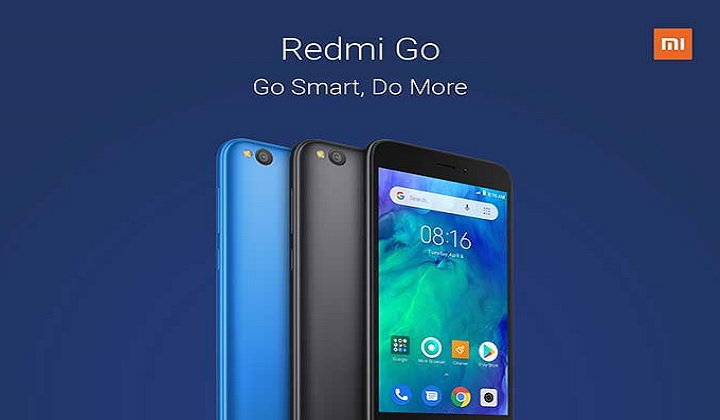
A couple of days back, Xiaomi went official with its first Android Go smartphone christened Redmi Go. The phone looks very much like the top-selling and cool Redmi 4A model which was one of the company’s highest -grossing smartphone till date. The back may look more like the Redmi 6A but the 6A is basically a redesigned Redmi 4A. The launch also pitches the device as the third Xiaomi phone after Mi A1 and Mi A2 and the first Redmi model to run pure Android OS.Redmi Go featured

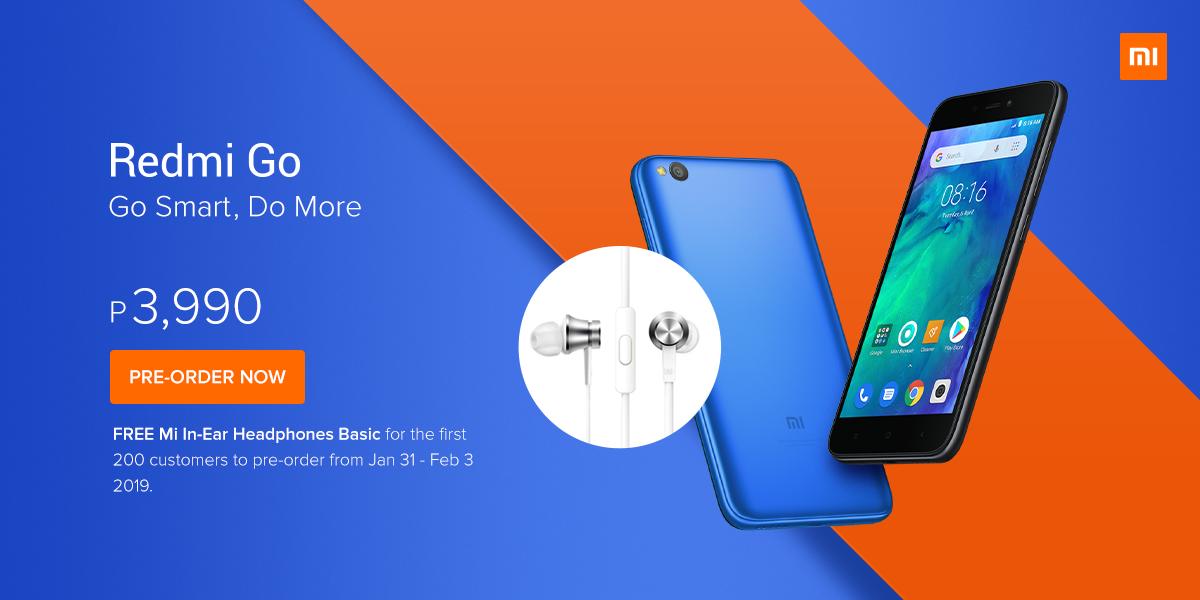
As if these attributes are not interesting enough, the Redmi Go comes with an amazing 80 euros price tag and is expected to hit Europe and the Philippines soon. That of the Philippines may just be around the corner as the model is now on pre-order in the Asian country via popular online retailer Lazada. It adopts a slightly cheaper price tag of ₱3,990.00 (around $75) and is expected to start shipping on February 5. The offer also includes a free Mi headset for the first 200 preorders.redmi go

Read Also: Xiaomi Redmi Go vs Xiaomi Redmi 6A: Specs Comparison

As a reminder, the Redmi Go specifications are largely basic. It features a 5-inch 1280 x 720 display and is powered by a 1.4GHz quad-core Snapdragon 425 processor. Like other Android Go phones, it has 1GB of RAM and 8GB of storage with a MicroSD card slot for expanding the storage. The phone has an 8MP rear camera with an LED flash and a 5MP front-facing camera. It runs Android 8.1 Oreo (Go Edition) and packs a 3,000mAh battery. Other features include dual SIM support, a 3.5mm audio jack, and a MicroUSB port for charging and data transfer.

(source, via)

Huawei and Xiaomi shone in Europe during Q4 2018; iPhone XS Max captured the US – Kantar

We have seen several market research firms reel out their analytic data for the global smartphone market for 2018. First, it was Strategy Analytics, then Counterpoint Research and then the International Data Corporation (IDC). Yet another report has been released this time from Kantar Worldpanel.Huawei Xiaomi shipments

The first which describes itself as a “global expert in shoppers’ behaviour” shed some interesting insight into new industry trends across key regions like Western Europe, urban China, and the US. The data is for the period spanning October to December 2018 and focuses on smartphone OS.  The data shows that Huawei continues to saunter on in Europe despite recent controversies and spying suspicions as these have had a minimal impact on the Chinese firm’s European business. Both the Huawei and Honor branded mobile phones are making waves in the old continent.iPhone XS and iPhone XS Max

Read Also: Moto G7 series Brazilian prices leaks and they are ridiculously expensive

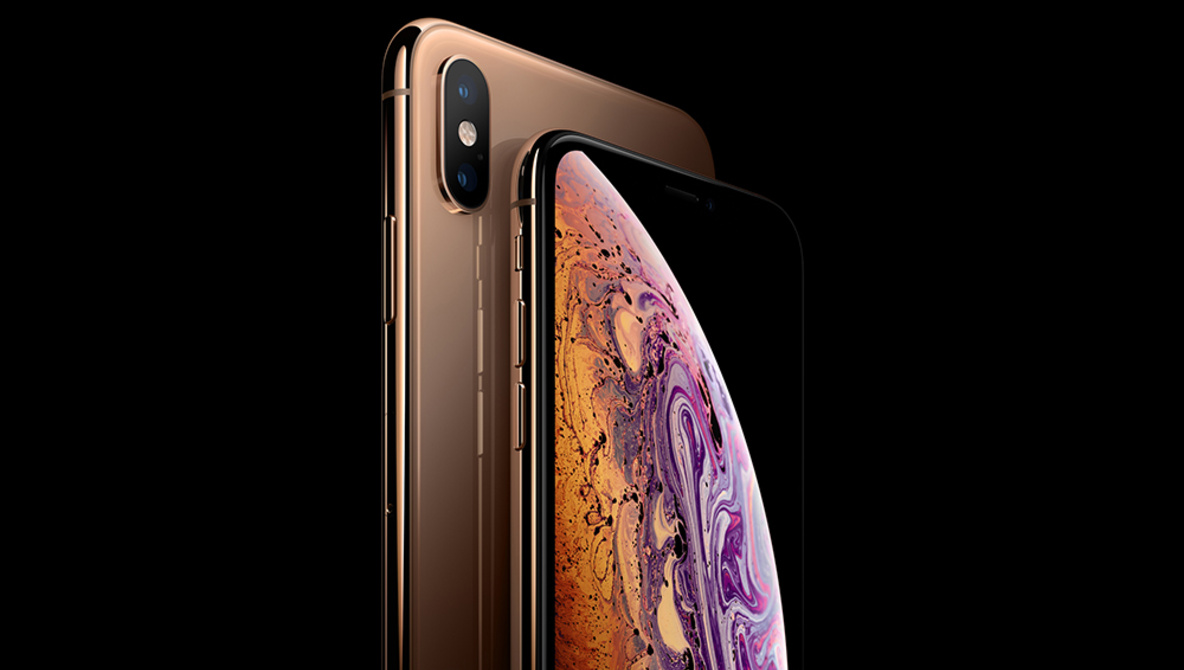
Apart from Huawei, another Chinese brand which is shown to make tremendous progress in Europe is Xiaomi. The company had recently expanded to major countries like Spain, Italy, and France, boosting the brand to the number four position in Europe’s top-selling chart. Samsung still remains a force to reckon with, contributing largely to the 75% market share Android smartphones enjoyed in Q4 2018 across the five biggest European markets, consistently shrinking the share of Apple’s iOS. On Apple, the market data shows that Apple’s market share continues to rise in the US, its major stronghold. The iPhone XS Max, iPhone XR, and iPhone X were the most popular devices on store shelves, according to Kantar’s latest research. The iPhone XS Max also commanded an impressive performance in urban China, ranking fourth overall, while the Honor 8X was ranked as the overall at the top of the chart.

(via)

Samsung records lowest profits in two years in Q4 2018 but 2018 was an amazing year overall

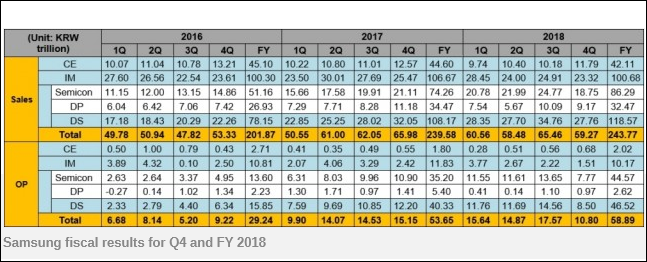
Samsung has officially announced its financial statement for the fourth quarter of 2018 as well for the entire 20i8 fiscal year. The result shows the company had to endure a slow growth rate in the fourth quarter of the year ending on December 31, 2018. That is because the sales and operating profit of the company declined but thankfully, the company’s result for the entire year was a record-setting one.Samsung Galaxy A8s featured

According to official data released by the Sout Korean company, the sales of mobile devices was weak all year long. Despite this setback, the IT & Mobile Communications division reported gains on the back of 5G equipment installations and expansion of LTE networks.  Thus, the company’s earnings are likely to improve after the introduction of commercial 5G services in South Korea and the planned launch of the Galaxy S10 on February 20 at the Unpacked event in San Francisco, United States.

The firm’s memory chip sales were also not so impressive compared to revenue generated from that arm of the company in the last two years. The fourth quarter (Q4 2018) was the first quarter since the beginning of 2017 that didn’t see a yearly increase. The company said major customers held back on orders, anticipating a further reduction in price.

Read Also: Samsung announces 1TB eUFS 2.1 storage ahead of Galaxy S10 launch

On the whole, the company posted KRW 59.27 trillion in consolidated quarterly revenue, down 10 percent from a year earlier, and KRW 10.8 trillion in quarterly operating profit, down 29 percent. For the 2018 fiscal year, Samsung reported KRW 243.77 trillion in revenue and KRW 58.89 trillion in operating profit. The tech giant says it will “aim to secure future growth by increasing sales of premium products and strengthening online and B2B businesses” this year.

(source)
Xiaomi Mi 8 will get OTA update to usher in support for 4K 60fps soon – official

Xiaomi’s president Lin Bin has disclosed that an update that will bring 4K 60fps video capture to the flagship Mi 8 is in the works. The exec hinted this on his Weibo page and even set a timeline when he added that the OTA will be pushed within 2 months. The Mi president was responding to a post shared by a Weibo user containing some samples of the Mi 8 camera’s Night Scene mode capture.

Xiaomi Mi 8 Night Scene mode

Xiaomi Mi 8 is the company’s 2018 Mi series model and according to official details, the device supports 4K 30fps, 1080p 30fps and 720p 30fps video capture but does not support 60fps. The Mi Mix 3 which has a similar dual camera setup supports The Xiaomi MIX 3 with the same dual camera module supports 4K 30fps, 4K 60fps, 1080p 30fps, 1080p 60fps, 720p 30fps video capture. Recall that the Mi 8 recently got an update which brought the night scene mode to the device. The Night Scene mode was first included on the Mi Mix 3. The Mi 8 has also been tweaked with the 960 frames slow-motion photography, all via OTA updates.

Xiaomi Mi 8 Night Scene mode

Read Also: Xiaomi Mi 8 SE running Android Q seen on Geekbench

Despite the powerful camera setup and solid hardware configuration, the Mi 8 still ranks as one of the affordable Snapdragon 845 flagship models around. The device presently runs the latest Android 9.0-based MIUI 10. The price even is 200 yuan cheaper presently, starting at 2099 yuan.

(source)
Moto G7 series Brazilian prices leaks and they are ridiculously expensive

The Moto G7 series is scheduled to launch on February 7 in Brazil. At the moment, there is practically nothing that we do not know about the specs of the phones which includes the Moto G7, the Moto G7 Play, Moto G7 Power and the Moto G7 Plus.

Ahead of the launch, prices of the phones in Brazil, except for the Moto G7 itself, have leaked and all we can say is they are ridiculously expensive.

The prices are from network operator Claro, so they are pretty genuine. The Moto G7 Play is priced at BRL 999 (~$271) and that gets you a phone with a 5.7” HD+ display, 2GB of RAM, a 13MP rear camera, an 8MP camera, and a 3,000mAh battery.

[envira-gallery id=”234639″]

The Moto G7 Power which packs a larger 6.2-inch HD+ display, a larger 5,000mAh battery and 3GB of RAM is priced at BRL 1,299 (~$352). The Moto G7 Plus which is the top of the line is priced at BRL 1,899 (~$515). This gets you a 6.2” FHD+ screen with a waterdrop notch, 4GB of RAM and support for 27W fast-charging.

READ MORE: Motorola rolls out Android Pie update to Moto Z3, brings support for 5G Moto Mod too

China to officially recognize video gaming as a profession

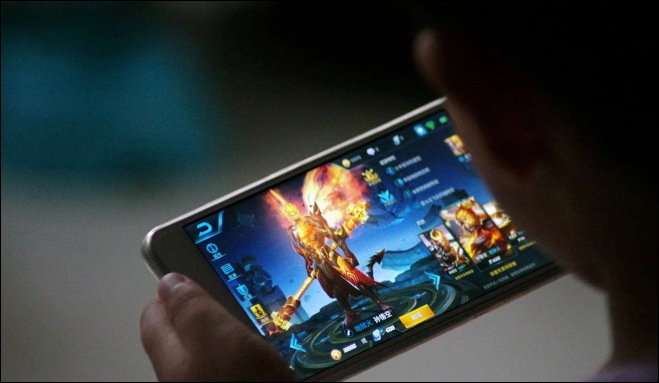
Recently, China had to clamp down on video gaming as the country was faced with a monumental rise in cases of gaming addiction especially among teenagers in the country with an estimated 24 million kids affected. The government also blames the country’s widespread myopia on the playing of video games. As a result, several measures were taken to stem the tide. The measures seem to have worked as the Chinese government is now reportedly planning to recognize video gaming as an official profession.

This is the latest in a series of moves aimed at reigniting the country’s gaming sector following a nine-month freeze on game approvals. China’s Occupation Skill Testing Authority (OSTA) made this disclosure on January 25 when it released a list of new job titles. The job titles cover a variety of fields, from artificial intelligence (AI) to internet of things (IoT). Also, Cloud computing engineers, big data analysts, and professional gamers are also included as job titles. The list was apparently created as an internal evaluation and will be open for input from the public until January 31.

Read Also: Tencent deploys facial recognition to detect underage gamers amidst China’s gaming addiction crisis

This is coming on soon after the government commenced approval of new video games again just December last year after its nine-month embargo. At present, China’s broadcasting regulator has issued four batches of video game licenses in the past month, totalling nearly 260 gaming titles. According to China’s Occupation Skill Testing Authority (OSTA), prospective professional gamers, also known as e-sports players, will participate in gaming competitions, work as training partners, provide data analysis for the industry, and design new games. Another included job title is professional gaming operator, which will involve marketing new and existing game titles.

(source)

LG V50 ThinQ 5G may launch alongside the G8 as the company’s first 5G phone

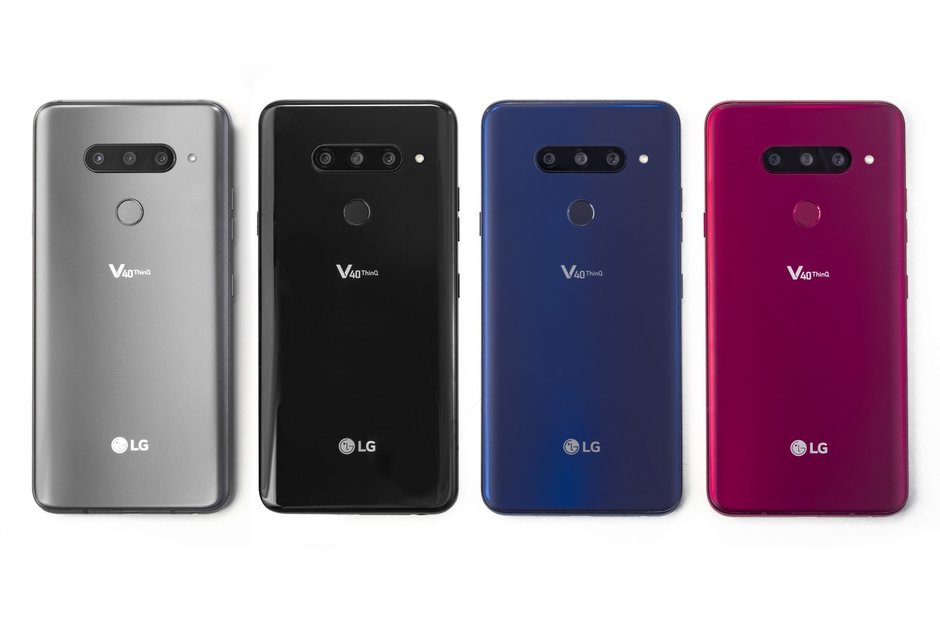
LG usually release two different flagship models at different times in the year. The LG G series and V series models follow each other, separated by a couple of months. The Korean tech giant may jettison that schedule, that is if news emanating from South Korea is anything to go by. The company is reportedly working towards releasing its next V-series flagship, LG V50 ThinQ alongside the G-series model – G8 instead of leaving it till around October.lg v40 thinq

The news was carried by Korean blog ETNews that the LG V50 ThinQ 5G will be released this Spring alongside the LG G8 ThinQ. As earlier reported, LG will be releasing a 5G phone separate from the flagship G8. That phone is now tipped to be the V50 ThinQ and it will be making its debut half a year early.

Read Also: OnePlus emerges as the leading premium smartphone brand in India in 2018

We don’t need to dig too deep to know why the company is releasing the two flagship models at the same time. It obviously doesn’t want to be left out of the race to the next-generation network technology. Since LG is already losing out in the battle with competitor, it isn’t launching the 5G feature on the G8 which will be more expensive. Rather, the next-gen 5G support will be on a more budget-friendly alternative for customers who can’t afford to make the leap to 5G yet. It indeed promises to be a costly leap, much like the first generation of 4G devices 8 years ago, as ETNews pegs the LG V50 ThinQ 5G’s price between 1.3 million Korean Won (about $1,162 US) and 1.5 million Won (about $1,342 US). Other 5G phones from competitors are expected to be way higher than these ones.

(source)

Samsung Galaxy M10 and Galaxy M20 receive software update with January security patch

Last week, Samsung launched its all-new Galaxy M-series smartphones in the Indian market — Galaxy M10 and Galaxy M20. Now, just a few days after their official launch, the company has started rolling out the first-ever update to the devices, although the phones are slated to be available for purchase from 5th February.

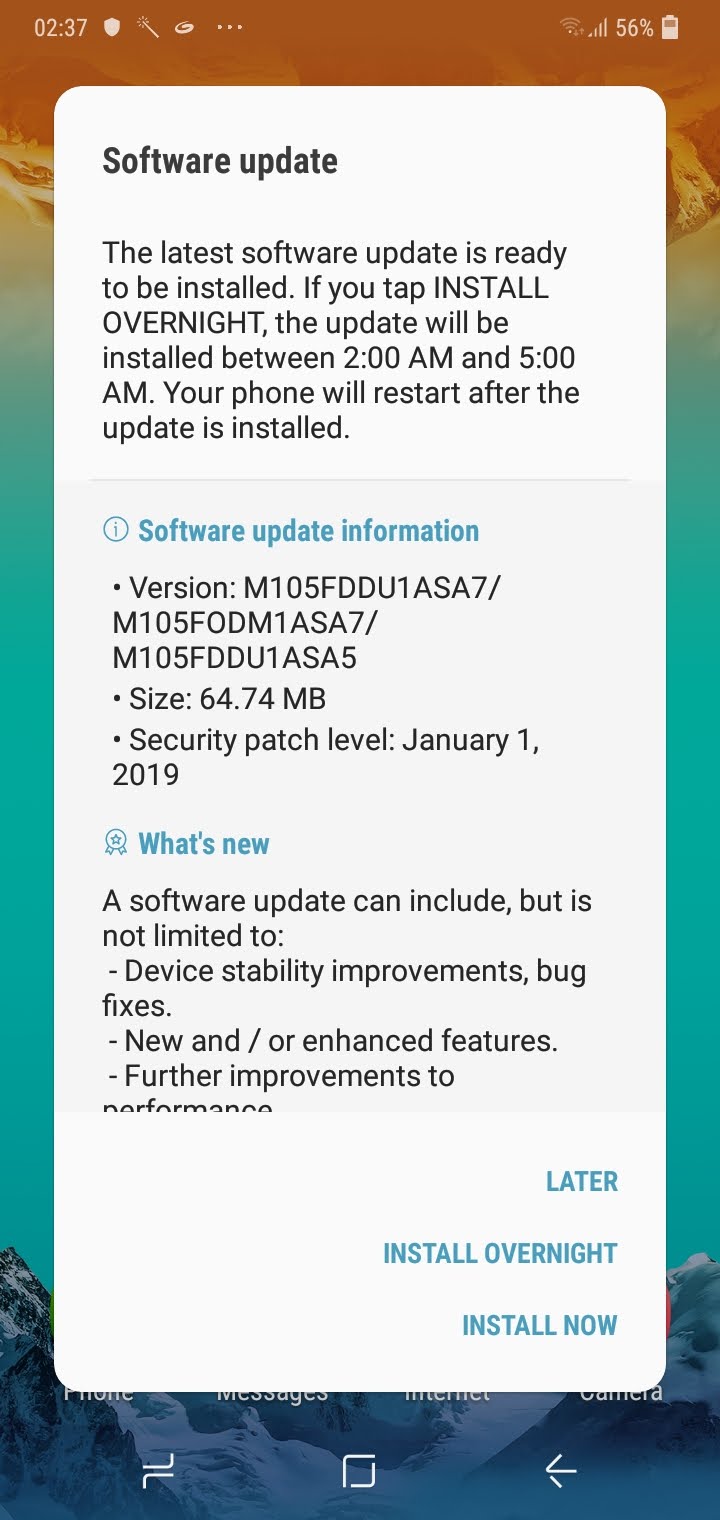
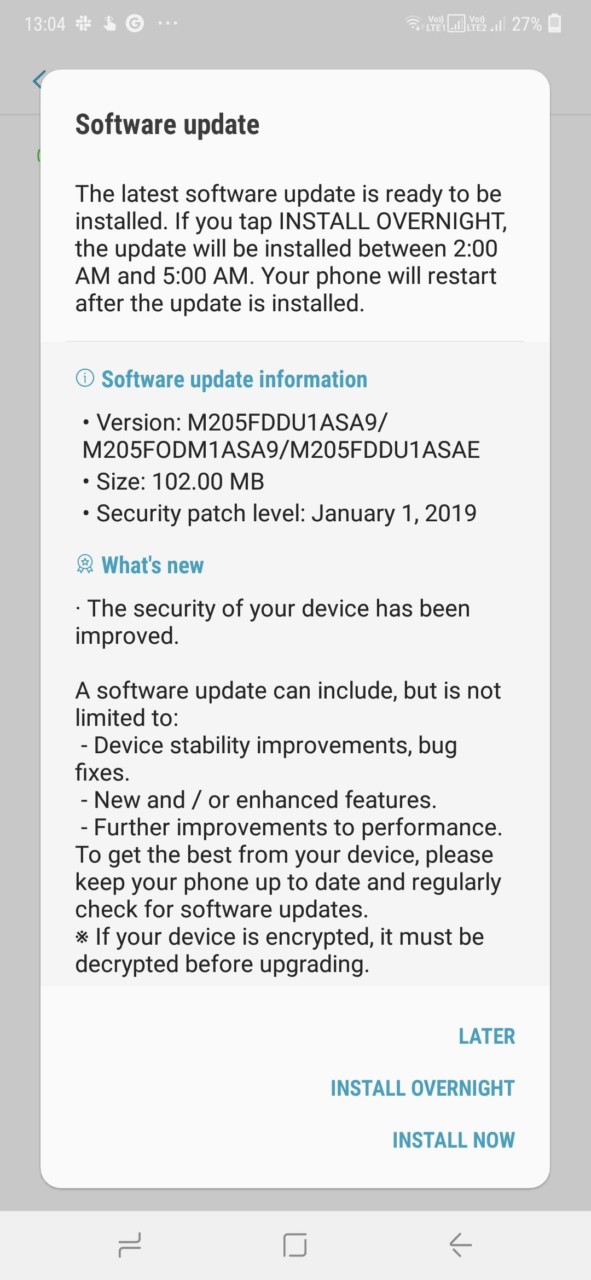
However, some of the review units have now started receiving the new update, which brings improvements and bug fixes. The update, which carries firmware version M105FDDU1ASA7 for the Galaxy M10 and firmware version M205FDDU1ASA9 for the Galaxy M20 smartphone, has January security patch but do not bring any remarkable improvement in the overall performance of the smartphones.

While the update is currently being rolled out, it seems that the devices that will be available for purchase from 5th February, the update will be available out-of-the-box. The update for the Galaxy M10 weighs 64.74MB while Galaxy M20’s update weighs 102MB.

Samsung Galaxy M10 Update

The Samsung Galaxy M10 features a 6.2-inch HD+ Infinity-V display with 720 x 1520 pixels screen resolution and 19:9 aspect ratio and is powered by Exynos 7870 chipset, coupled with 2GB/3GB RAM. It comes with 16GB/32GB of internal storage and comes with a microSD card slot for expanding the phone’s storage capacity up to 512GB.

As for the camera configuration, the device features a 13-megapixel primary sensor along with an f/1.9 aperture and a 5-megapixel secondary, ultra-wide sensor. For selfies, there’s a 5-megapixel front-facing sensor. It runs Android 8.1 Oreo operating system out-of-the-box with the company’s own Samsung Experience 9.5 UX and is powered by a 3,400mAh battery that supports three times faster-charging.

Samsung Galaxy M20 Update

The Samsung Galaxy M20 comes with a 6.3-inch Full-HD+ Infinity-V display with 1080 x 2340 pixels screen resolution and 19.5:9 aspect ratio. Under the hood, it is powered by the company’s own Exynos 7904 chipset, paired with Mali-G71 MP2 GPU and 3GB/4GB RAM and 32GB/64GB internal storage.

For imaging, the Galaxy M20 comes with a dual rear camera setup along with a 13-megapixel primary sensor that has an f/1.9 aperture and a 5-megapixel ultra-wide secondary sensor. On the front side, it comes equipped with an 8-megapixel sensor along with an f/2.0 aperture.

There’s a fingerprint sensor on the back and the phone also supports Face Unlock feature. This one too runs Android 8.1 Oreo operating system out-of-the-box with Samsung Experience 9.5 UX on top and is powered by a 5,000mAh battery with fast charging support.


Read More: Samsung Galaxy A50 leak reveals triple cameras and in-display fingerprint scanner


As for the pricing, the 2GB RAM model of Galaxy M10 is priced at Rs. 7,990 (approximately $112) while the 3GB RAM model costs Rs. 8,990 (approximately $126). The 3GB RAM model of Galaxy M20 costs Rs. 10,990 (approximately $155) and the 4GB RAM model is priced at Rs. 12,990, which roughly converts to $183.

(Source)

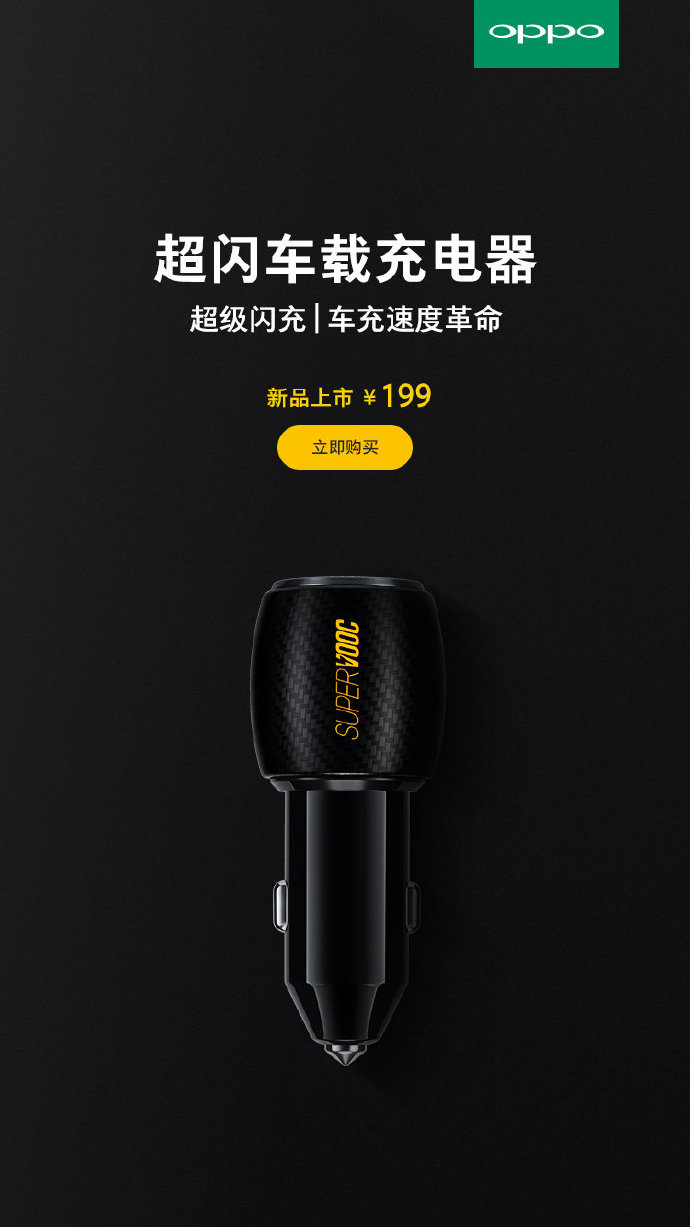
OPPO SuperVOOC car charger launches for ¥199

OPPO’s SuperVOOC is the fastest charging technology you will find in a phone at the moment. The fast-charge technology launched with the Find X Lamborghini Edition and is also available for the Find X Super Flash Charge Edition and the OPPO R17 Pro.

OPPO SuperVOOC Car Charger

SuperVOOC charges at 10V 5A i.e. 50W and will allow you to recharge a phone from empty to 40% in just 10 minutes. A few months ago, OPPO launched a Pokemon themed power bank that supports SuperVOOC, allowing you to recharge your phone at the same insane speed even while away from a wall power outlet. Now it has followed it with a SuperVOOC car charger.

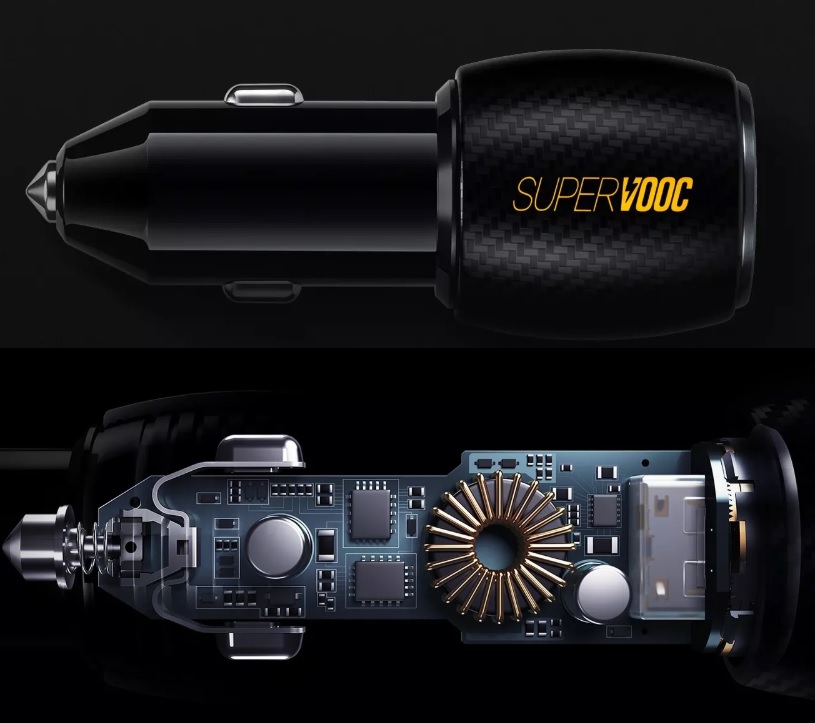
The OPPO SuperVOOC car charger comes in black with yellow accents. The lower half that goes into your cigarette lighter port has a glossy finish while the upper part has a carbon fiber finish. There is SuperVOOC written in bright yellow on the left. A circular yellow LED at the top lights up when it is connected. OPPO says the design is inspired by the engine of an aircraft.

OPPO SuperVOOC car charger

OPPO claims the charger is safe with up to six different protections including high voltage and low voltage protection and high current and low current protection.

READ MORE: OPPO’s patent hides the Punch Hole in the Icon; Could it be OPPO R19’s design?

Huawei applies for trademarks for “Mate Mini” and “Mate Smart”

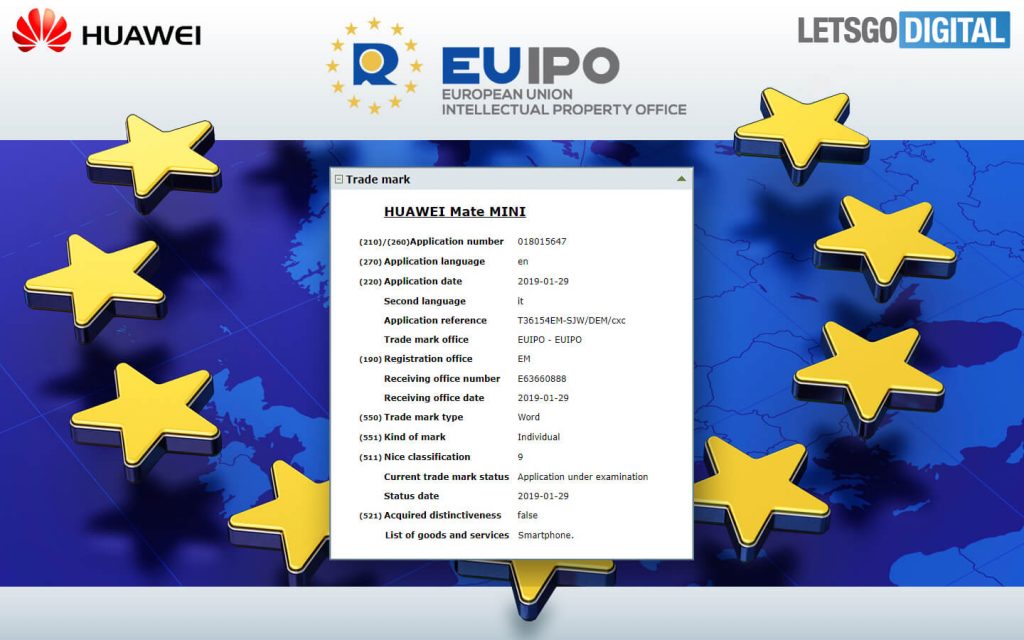
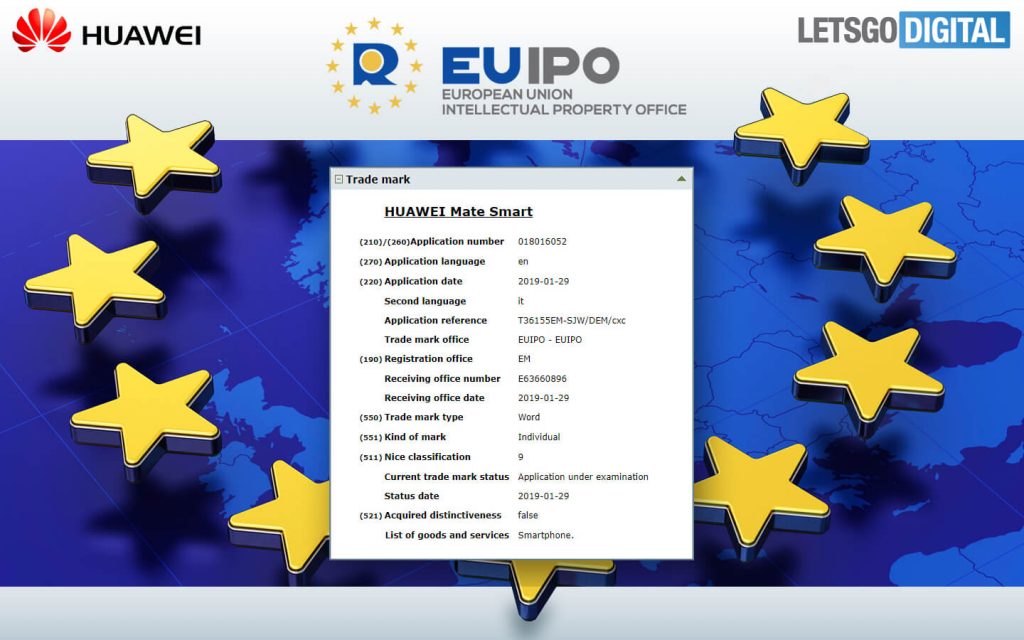
Huawei may announce a new line of smartphones this year. The Chinese manufacturer recently submitted trademark applications for “Huawei Mate Mini” and “Huawei Mate Smart” at the European Union Intellectual Property Office.

Huawei Mate Mini trademark

The documents do not reveal much but since they are under the smartphone category for goods and services, we believe they are future smartphones.

The Mate Mini is presumed to be a new line of small screen devices with flagship specs. At the moment, there is a very short list of flagship phones with small displays as most manufacturers only release high-end phones with large screens.

Huawei Mate Smart trademark application

The Mate Smart, on the other hand, is speculated to be the Mate series variant of the P Smart series. The P Smart was first announced in December 2017 as the international variant of the Huawei Enjoy 7s. It was followed by the P Smart + and P Smart 2019 which were both announced last year.

READ MORE: Huawei’s upcoming flagship Mate 30 to feature SLP circuit board

Qualcomm inks interim licensing deal with Huawei

A recent development has been made between the sour relations of Huawei and Qualcomm after over a year. Qualcomm has inked a new interim licensing deal with the Chinese handset maker, Huawei. On Wednesday, Huawei made the announcement public by revealing that they have signed a short-term licensing agreement with the world’s largest chipmaker, Qualcomm.

Qualcomm logo

The deal has been made in the Qualcomm’s first quarter, ended on Dec 31, and Huawei’s fiscal third quarter. The Chinese smartphone manufacturer will make payment of $150 Million for three quarters. Qualcomm’s Chief executive, Steve Mollenkopf said that the deal still seems to be less than the company owed. Though, he added that the new agreement is “on slightly better terms, which is very good.” Further, he said, “We continue to believe that over the course of 2019, we will reach a resolution on the key outstanding issues in our disputes with Apple through settlement or litigation, and we are prepared for both outcomes.”

The new deal will act positively on the Qualcomm’s licensing business which is scheduled to play a significant role in the 5G licensing programme. It holds major patents related to key technologies such as 3G, 4G, and 5G. Qualcomm estimated that the licensing business would allow them to garner $1 billion – $ 1.1 billion as they have signed 35 customers for the 5G licensing programme. If all goes well, Qualcomm will perform better than the estimated expectations for this quarter.

Even Christopher Rolland, an analyst with Susquehanna International Group said that the revenue is “slightly disappointing, but most were well aware of the weakness in the handset market, so will be forgiven.” He termed this deals as a “step in the right direction.”

Qualcomm reported quarterly financial earnings which stood against all the odds at the Wall Street. The improved report led the Qualcomm shares to rose nearly 2.6 percent at $51.47. It calmed the Investor’s concerns about the poor performance over the global slowdown in smartphone sales. Although the recent deal between the Huawei and Qualcomm has also improved the Qualcomm’s earnings.

(Via)

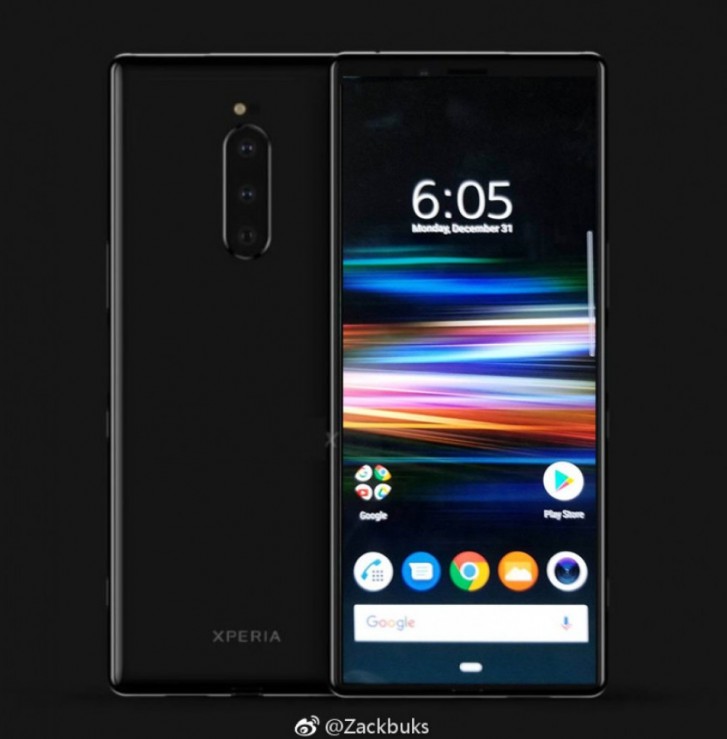
Sony Xperia XZ4 premium version reportedly arriving with 52-megapixel camera

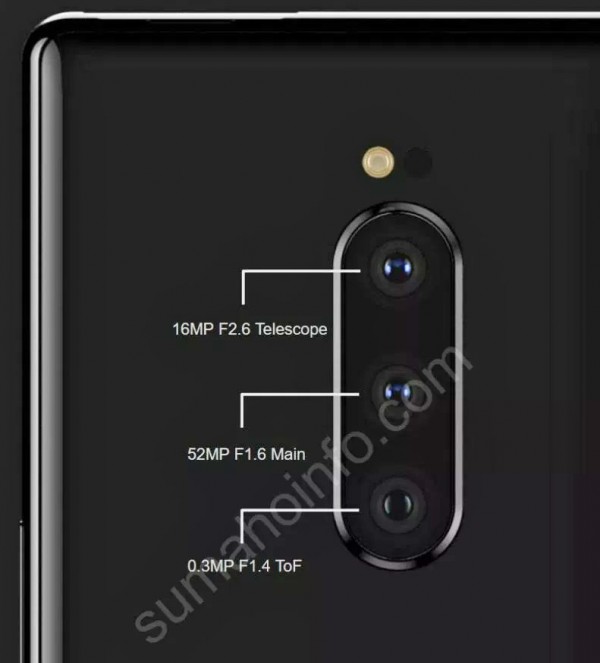
A Japanese publication had recently leaked key information on the specifications of the upcoming Sony Xperia XZ4. The same publication has revealed a leaked image of a triple camera setup enabled Sony phone that had first appeared on Reddit. It claims that the triple camera system belongs to the premium edition of the Xperia XZ4, and not its regular version.

As it can be seen in the above image, the triple camera setup includes a 16-megapixel telephoto lens at the top with f/2.6 aperture and there is an f/1.4 aperture ToF lens as the third sensor. Sitting in between these lenses is the 52-megapixel lens with f/1.6 aperture.

The above image is actually taken from the previously leaked CAD renders of the Xperia XZ4 smartphone shown below. It is not that difficult to photoshop an image and desired number of megapixels and make it viral through social media channels. Hence, it is advisable to digest the report with a grain of salt.

Sony is expected to announce the Xperia XA3, Xperia XA3 Ultra, Xperia L3 and Xperia XZ4 through its Feb. 25 event at the Mobile World Congress (MWC) 2019. Rumors have it that the XZ4 will be equipped with an OLED screen that produces Quad HD+ resolution of 1440 x 3660 pixels and tall aspect ratio of 21:9. It is likely to powered by the Snapdragon 855 chipset and 6 GB of RAM. It may feature an internal storage of 128 GB. The handset will be loaded with Android 9 Pie OS. It may include a 4,400mAh battery.

(via)

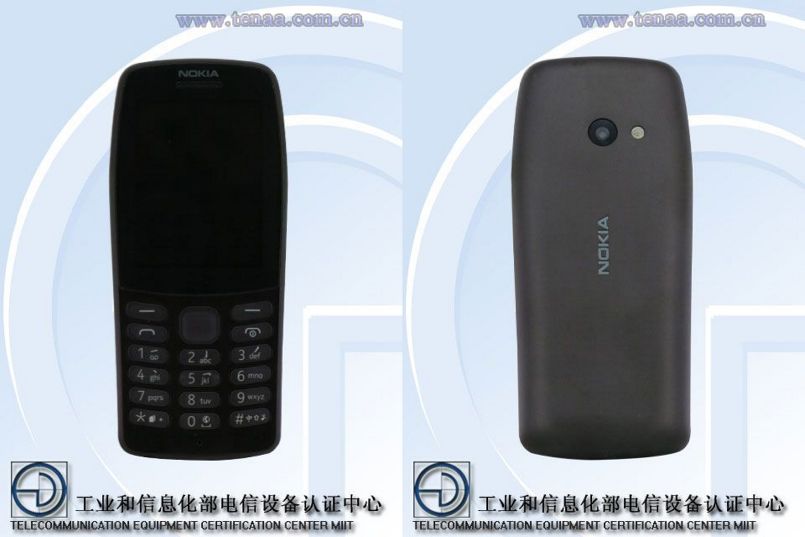
Nokia TA-1139 feature phone hits TENAA in China

HMD Global owned Nokia is set to announce a new feature phone at MWC 2019 in Barcelona. The event on February 24 will witness a couple of new smartphone devices, Nokia 9 PureView and Nokia 6.2 along with a feature phone. Earlier, it was rumored that a third smartphone device would also be present at the MWC 2019. But, today’s listing on TENAA (China’s certification agency), has made it clear that Nokia will showcase a feature phone.

nokia ta-1139 feature phone

As per the listing on TENAA, Nokia TA -1139 feature phone carries a small 2.4 inches TFT display having a resolution of 240 x 300 pixels. It hosts an 8 MB RAM, and 16 MB of internal storage along with an ability hold a microSD card of 32GB.

The listing has denied the possibility of being a smartphone because it carries only two bands of 900 MHz and 1800 MHz.  Even though, the chances of its being a 4G enabled device seem shattered due to the usage of a weak processor with a clock speed of over 360 GHz.

Further, Nokia TA-1139 packs a massive battery of 1020 mAh which can sustain over a week without a single charge. In the camera department, Nokia has added a 3-megapixel sensor on the rear side along with a LED flash. It measures 120.8 x 53.49 x 13.82 mm and weighs over 83.6 grams. It will be available in fancier colors such as Red, Gray, and Black.

The look of the device seems to be taken from its predecessor, Nokia 106 matching the historic Nokia 3210.

Although, Nokia has not spilled any official information regarding the Nokia TA-1139 feature phone. We have to wait for some more days for the official announcement which is going to take place on February 24th at Mobile World Congress 2019 in Barcelona.

(Via)