The OnePlus 5 is a highly anticipated device and because of that there will be a lot of leaks, genuine and fake flooding the internet. While most of the features and its design are still unconfirmed, one thing we can be sure of is that it will be powered by a Snapdragon 835 processor.
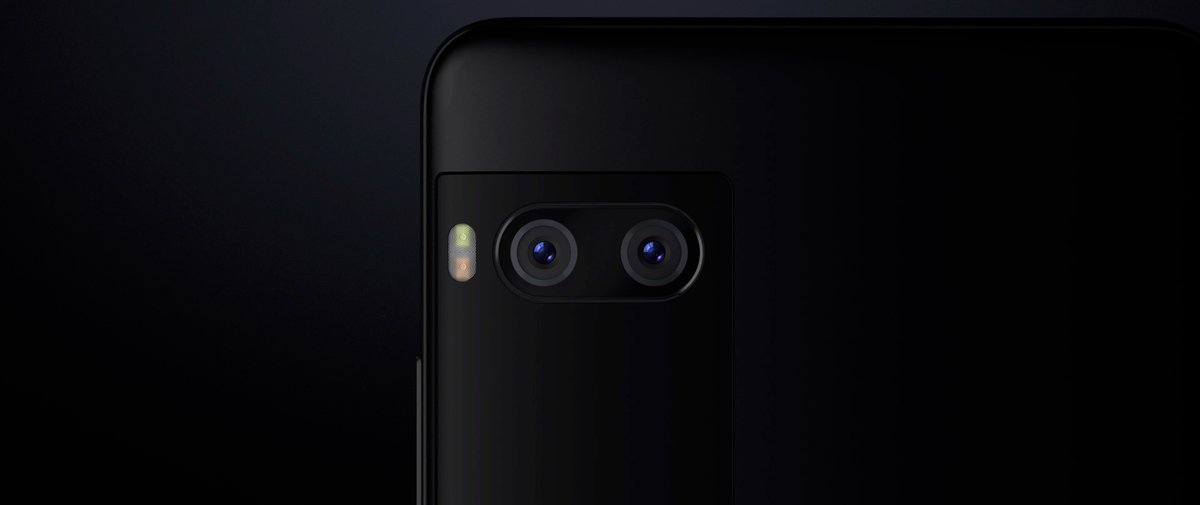
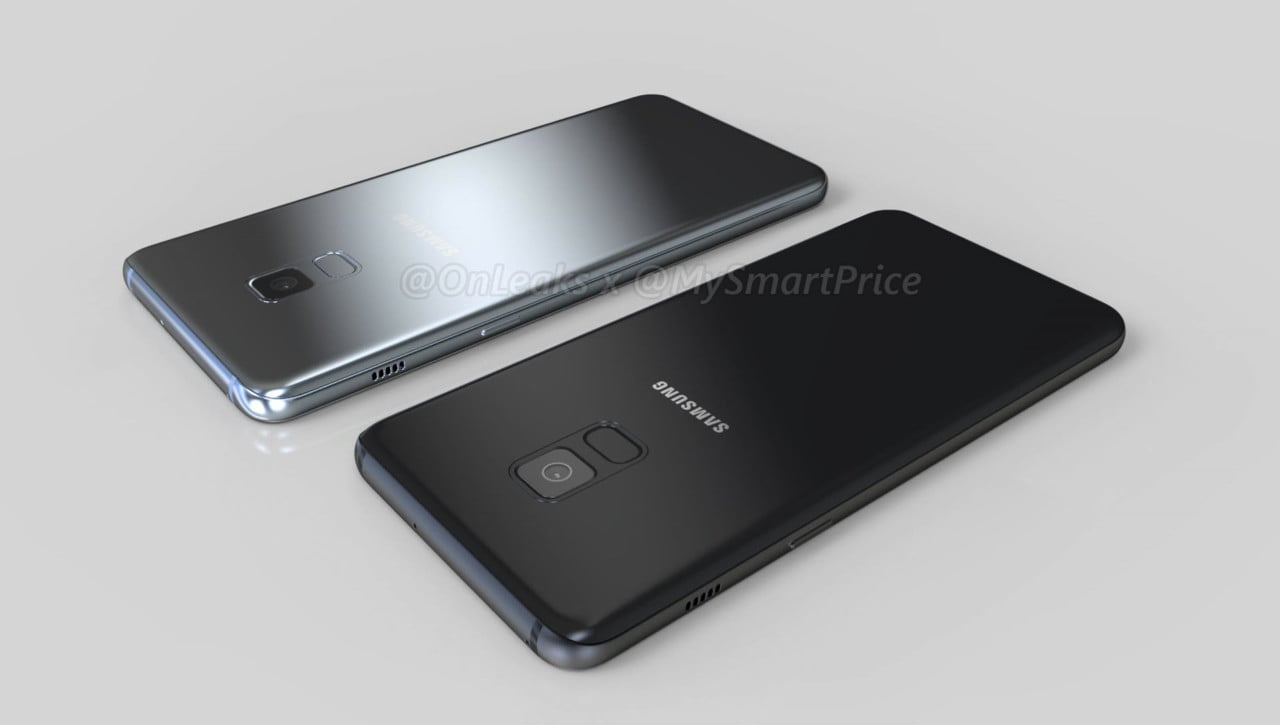
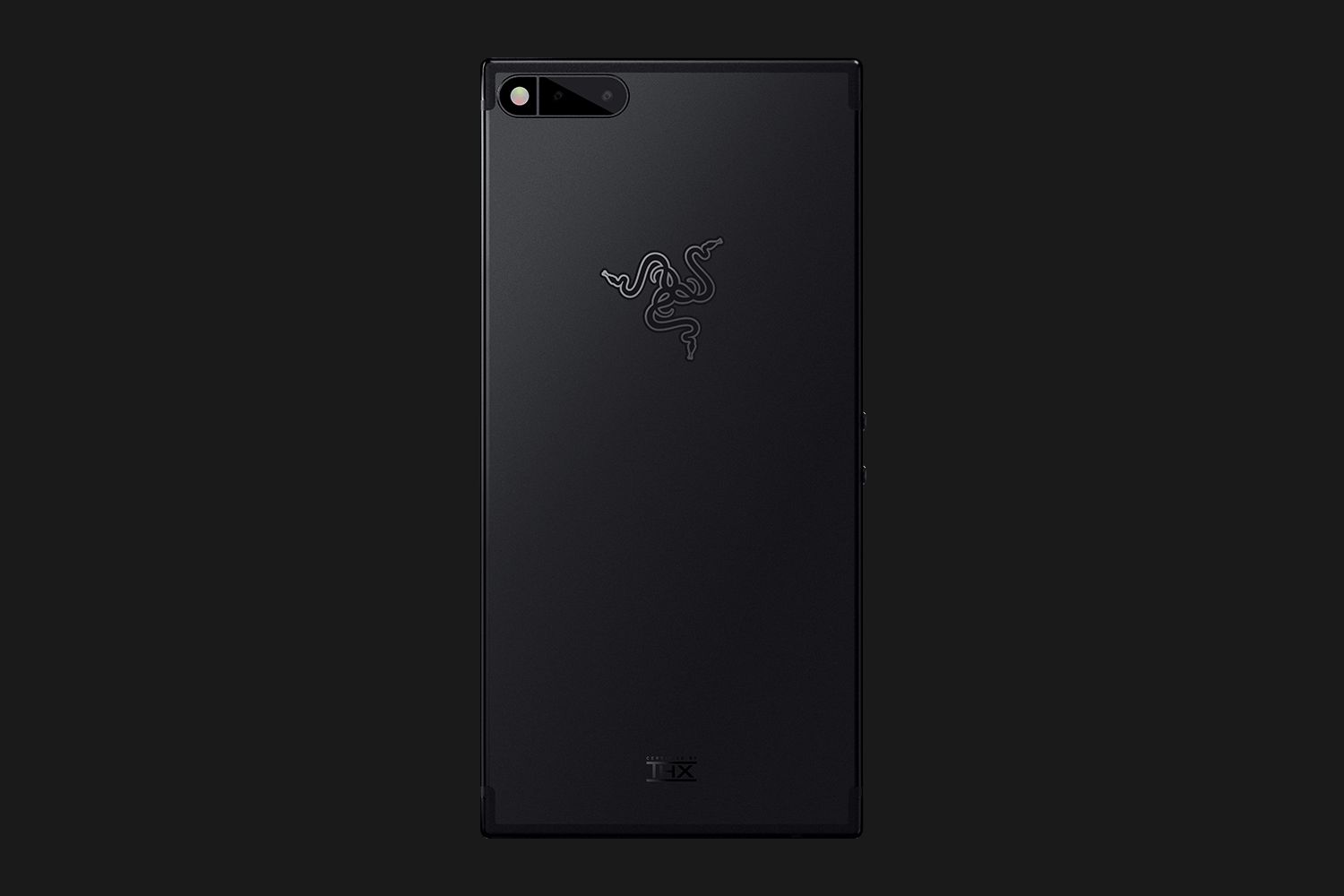
A new image showing the rear of the OnePlus 5 has surfaced online. Since it is unconfirmed, we advise you take it with a pinch of salt. First, the color of the phone is the same Gunmetal Grey of the OnePlus 3T and you can make out the blurred OnePlus logo below the camera. However, that is where the similarities end.
The OnePlus 5 has dual rear cameras arranged in a vertical setup and the antenna lines are different but familiar. Familiar because they are the same as those on the OPPO R9S and the Samsung Galaxy C9 Pro. OPPO calls it the split antenna design and we have no issues with the way it looks on the OnePlus 5.
The phone also appears smaller in terms of the width, hinting at a possible reduction in side bezels. This will probably make handling the device a lot easier.
The OnePlus 5 is scheduled for a Summer release but the exact day has not been revealed yet. It is rumored to come with 8GB of RAM and dual cameras.
Samsung’s Exynos 8895 high-end processor is quite powerful that it even trumps the Snapdragon 835 processor in multiple areas. However, there is an issue that has been plaguing Exynos processors and that is limited network support. News has it that Samsung is planning to release a new mid-range chip that will support all the network bands in China.
The new chip said to be called the Exynos 7872 is built using the 14nm FinFET process and belongs to the Exynos 7 Octa series. The processor will have six-cores: four cortex-A53 cores for power efficiency and two cortex-A73 cores for performance. For its GPU it will have a Mali-T830 MP2, and a fully-integrated modem for improved network support. From the configuration, this can be Samsung’s answer to the Snapdragon 65x series.
Meizu has always used MediaTek’s processors but this has always not been without issues considering the numerous long-term constraints Meizu has to grapple with, like the absence of Cat. 4 LTE band support and others. Although Meizu and Qualcomm settled their long-standing patent dispute late last year, it may take up to the end of 2017 to see a Qualcomm chip performing on a Meizu mobile phone. The question which keeps popping is; which chip would the expected Meizu Pro 7 feature?
Recent reports reveal that Meizu and Samsung held a very low-key joint event on Friday, May 12 tagged Meizu + Samsung Tech Day. The event wasn’t publicised and the agenda was also unknown. Could this be an indication that both companies are in the process of sealing a collaborative deal? We don’t know about that but with Samsung hoarding a lion share of the Snapdragon 835 processors, it could be that both companies are about sealing a deal to feature a Samsung chip for the expected Meizu Pro 7.
The Pro 7 has been on the front burner for a while now but details are still sketchy about the next Meizu flagship. Since Samsung Galaxy S8 series used the latest Qualcomm snapdragon 835 and since the Exynos 8895 is a very good and efficient chip, it is fair to speculate that Meizu could be negotiating a deal for it. If Meizu needs a chip from Samsung, of course, it is not difficult to guess that it will be the Exynos 8895 and most likely the Pro 7 will be the device to have it. That won’t be the first time a Meizu phone will feature an Exynos chip so, that isn’t ruled out.
The Moto X used to be Motorola’s flagship device but last year, it was ditched in favor of the Moto Z. The first gen Moto X was released in 2013, and was followed by the Moto X 2nd Gen in 2014 and the Moto X Force in 2015. This year it is coming back not as the Moto X (2017) but as the Moto X4.
The new name was revealed last night on Twitter by Evan Blass. However, that is not the only info released about the upcoming smartphone. A short video was also posted on Baidu by a Chinese user. The video was recorded during a presentation of the Moto X4 and the 9-second long video reveals some interesting features of the phone.
The Moto X4 will come with a metal and glass body, 3x Carrier Aggregation, IP68 rating, AI integration, and the famous always-on voice command. What we were also able to catch from the video is the presence of dual rear cameras on the Moto X4 with a dual LED flash sitting at the top. The design of the LED flash is different from the one we saw in leaked press renders last month but the whole setup still shares the same design as the Moto Z.
The glass and metal design looks good but I am sure some of us will miss the Moto Maker customization that was one of the highlights of the earlier generation models.
Alongside the above specs, more specification details of the Moto X4 were also released on Reddit. The phone will come with a 5.5-inch display with 3D glass, Qualcomm’s new Snapdragon 660, 4GB RAM and 64GB ROM. It will also have a 3800mAh battery with quick charge, a front-mounted fingerprint scanner, and laser autofocus.
Very impressive specs, right? We believe Lenovo might be on to something with the Moto X4 judging from the perfect blend of mid-range specs and flagship features on the device. If these specs are true and the price doesn’t exceed $400, then the Moto X4 is likely going to replicate the success of the first gen Moto G.
OnePlus is already working on releasing a new phone but the OnePlus 3T is still a great buy. The flagship device which was released in November 2016 is still a contender against some 2017 flagships.
The OnePlus 3T is powered by a Snapdragon 821 processor. There is 6GB of RAM on board and it is available with 64GB or 128GB of storage. It also comes with a 3400mAh battery with one of the speediest fast charge technology on the planet.
On the official website, the 64GB model sells for $439 but GearBest is offering the Gunmetal Grey version for $408 if you add the coupon code “3TGB” at checkout. That knocks off enough money that can be used to purchase a protective case or a pair of earphones.
Smartisan eventually unveiled its latest smartphone which goes by the funky name Nut Pro. The mid-ranger comes with a somewhat sleek, premium design which deviates from previous Smartisan models. The Smartisan Nut Pro’s design doesn’t adhere to the symmetrical design of the Smartisan family model but still retain the same thick size.
The device utilises a metal body covered with glass both at the front and back. The edges are also very sharp and not chamfered but they are smooth nonetheless. The design and outward features are there for all to see but we’ve taken things a bit further by bringing you teardown images of the Nut Pro. These teardown images give us an idea of what lies underneath its metal fuselage.
The teardown began with the removal of the SIM card tray from its slot with the ejector. The SIM tray’s location is an indication that the Nut Pro’s back cover and battery are non-removable. Although the Nut Pro comes with non-removable battery, the battery is easy to take out once the back cover is removed. But taking off the back cover is a nutty process that requires some expertise. Once the back cover and battery are out, all the other components can easily be dismantled with a scalpel and a screwdriver.
As a reminder, the Smartisan Nut Pro sports a 5.5-inch in-cell full HD display, 4GB of RAM, and dual 13MP rear cameras with f/2.0 aperture and PDAF. The device comes in three storage models haveing 32GB, 64GB and 12GB storage respectively. All three models vary in their selfie camera configuration and SoC. The 32GB option has an 8MP front camera while the 64GB and 128GB variants sport a 16MP front camera. Also, the 32GB is powered by a Snapdragon 625 processor while the remaining two use a higher Snapdragon 626 chip.
As for the price, the Nut Pro starts at 1499 Yuan (~$217) for the 32GB version which is available in carbon black only. The 64GB version retails for 1799 Yuan (~$260) and is available in carbon black and red wine. Finally, the high-end 128GB version goes for 2299 Yuan (~$333) and is available in carbon black, red wine, and a Thin Red Line special edition. More teardown images after this line.
A recent report in the Taiwanese media had revealed that MediaTek still has a large inventory of its mid/high-end Helio X20 chip. All fingers point to Qualcomm and the strong performance of the Snapdragon chip which made it the beautiful bride which all OEMs and even tech savvy fans want to court. Apparently, in a bid to regain lost grounds, the Taiwanese fabless chip manufacturer is said to be working on an Helio P23 chip especially as Qualcomm has now announced the Snapdragon 660 and 630 mid-rang chips. The details of the chip were leaked recently, with its launch tipped to be in the fourth quarter of the year.
More details have now emerged from analyst Sun Changxu via a Weibo post, alleging that MediaTek is looking up to OPPO, Vivo and Gionee for the patronage of the yet to be announced chip. Notice how she used the photos of the three companies logo to drive home her point on the post? Recall that both OPPO, Vivo and Gionee were all tipped to be working on models which would feature the SD 660 SoC. The analyst also disclosed that the Helio P23 would likely be featured in phones whose prices range from 1000 Yuan to 3000 Yuan (between $150 – $450) which is the range the three company’s top -selling models fall into. Also, MediaTek would be looking to sell the chip in India and other east Asian markets.
On the rumoured specs, the Helio P23 is said to be built on a 16nm architecture but incorporates the main features of the Helio X30 such as the PowerVR 7XTP GPU. It will support Cat. 7 LTE, LPPDR4X RAM, up to 2K displays, and dual cameras. The Helio P23’s ability to integrate Cat. 7 LTE is a huge boost for the chip which is also said to make use of eight core-A53 cores and will be easier and cheaper to make.
The Tizen OS powered Samsung Z4 has been officially unveiled. It is a simple 4G smartphone with modest specifications made for first-time users.
The Samsung Z4 has a 4.5-inch screen that produces a resolution of 480 x 800 pixel and it features a 2.5D curved glass. The Z4 is fueled by 1.5 GHz quad-core processor and 1 GB of RAM. There is no information available on the native storage of the phone and external storage slot of Z4.
It comes preinstalled with Tizen 3.0 OS. Samsung has included several productivity features on the Samsung Z4. There are some Quick features such as Quick Talk, Quick Torch, Quick Launch (for camera), Quick Switch that provides easy and quick access to frequently used features of the phone. The Quick Talk function allows users to launch some apps through voice commands.
The selfie camera of the Samsung Z4 is of 5-megapixel with f/2.2 aperture. It is equipped with an LED flash. For shooting selfies quickly, users can show palm or say “cheese” to the phone. The Auto Selfie feature can automatically recognize face and snap selfies. The rear camera of 5-megapixel is coupled with dual-LED flash. The Video Flip feature allows easy switching between the two cameras to record multiples in a single video.
The Z4 comes with connectivity options such as v4.0 Bluetooth, microUSB 2.0, GPS, GLONASS, Wi-Fi 802.11 b/g/n 2.4 GHz, Cat. 4 LTE, VoLTE, and VoWi-Fi and dual-SIM. Its dual SIM variant will be available in select regions. It features a 2,050 mAh battery. The Battery Notifications feature can be used to allow certain notifications to show up when the battery reaches a pre-set level. Power Planner can optimize the performance of the battery so that the phone can last for the specified time period. The Samsung Z4 measures 132.9 x 69.2 x 10.3 and its weight is 143 grams.
The Samsung Z4 will be launching in select regions starting from India in this month. It will be available in color options like black, gold and silver. The company plans to showcase the Samsung Z4 at the upcoming Tizen Developer Conference that will be held on May 16 and 17 in San Francisco, California.
Compared to the Samsung Z3 that came out in October 2015, the newly launched Z4 is a downgraded phone. The Samsung Z3 includes 5-inch Super AMOLED HD display, 1.3 GHz quad-core CPU, 1 GB RAM, 8 GB native storage, microSD card support, 8-megapixel rear camera, 5-megapixdel front camera, and 2,600mAh battery.
Xiaomi has a long range of products ranging from smartphones to Wi-Fi routers. Among them, the company has a few Wi-Fi extenders as well and the Mi Powerline Wi-Fi homeplug would be one of the easiest gadgets out there to extend your Wi-Fi range.
I recently got my hands on the Mi Powerline Wi-Fi Homeplug starter kit, which contains one host and an extender with dual antennas. Now, I call it a starter kit because you can actually add up to 7 extenders to one single host at a time, making sure that your Wi-Fi network runs throughout your home. But this starter kit contains just one extender and you will have to buy more extenders separately. One of the highlights of the extenders is that it comes with an RJ45 slot as well, so if you have a desktop PC without a Wi-Fi adapter, you can easily use one of these extenders to connect to the central Wi-Fi.
Like all Xiaomi boxes, the Mi Powerline Wi-Fi Homeplug extender kit comes in a simple white package. Like I mentioned above, you get two separate devices inside the box — one host that connects to the router and one extender with dual antennas and support for up to 300Mbps. The back of the box contains basic instructions as well as the specifications of the extender.
Inside the box, the two devices are neatly placed in their respective slots with a manual (only in Chinese) at the center. That’s all there’s to it. So, let’s move on to how it works.
Mi Powerline Wi-Fi Extender Setup
The setup is pretty straightforward and easy. In fact, I could start and connect to the extended Wi-Fi network in just a couple of minutes of unboxing.
Host Still Connecting…..
Host Connected: Blue Light
Connect the host device (the one without the antennas) to a power socket and then to your existing router using the RJ45 connector. Now, connect the extender (one with the dual antennas) to a socket in the room where your router network is patchy. You’ll see a yellow light blinking on both the devices which means they are yet connected. Soon, they’ll turn blue and you’ll see that both the devices have a constant blue light, which means the extender is now connected and working. Just browse through the Wi-Fi networks available and you’ll see Xiaomi’s own network. You can change the name as well as the password by downloading the Mi Home App.
Mi Wi-fi Extender On A Different Socket (Status: Connected)
Once setup, you can plug in the extender to any nearby socket to extend your existing Wi-Fi network.
Mi Powerline Wi-Fi Extender Review
Since the setup was pretty simple, all I had to do was to check whether the extended Xiaomi Wi-Fi network was as fast as my original network (in areas of good connectivity) as well as whether I could get consistent high speed. In both these areas, the new extended network managed to excel.
So, I plugged in the Wi-Fi extender a couple of rooms away from where my original TP-Link router was placed. First, I checked the strength of the original router network, which was low as there are multiple walls in between, reducing the signal coverage. When I was just beside my router, Speedtest revealed my speed to be around 12Mbps. That dipped down to around 4-5 Mbps when I was two rooms away.
router speed Very Close
Connection Speed On Router Network Two Rooms Away
Extended Wi-Fi Network Speed
But once I plugged in the extender and connected to the new Wireless network created by the device, I could easily get around 11-12Mbps speed on the same test. While the difference in speeds on the test might not be significant, there is a considerable difference in browsing and download speeds in the other room. Before getting this Mi Powerline Wi-Fi extender, I was using an old router for boosting my signal in that room, but I had to set it all up on the old router which took some time. This is a much simpler, better looking and quicker method of extending your Wi-fi signal.
I have not talked about the design much, but note that the white finish and the handy form factor, along with the plesant LED colors for notifying the connection makes sure that the extender kit will look good in any house.
Check out some more images of the Xiaomi Mi Wi-Fi homeplug Extender Kit Below.
[envira-gallery id="131162"]
Overall, I am happy with this kit and the fact that I can easily get hold of more extenders to improve my Wi-Fi coverage is definitely an added plus.
Earlier today we reported on the addition of two trendy new colour variants to the Huawei Mate 9 lineup which already had six attractive colours before now. The Mate 9 just got a Topaz Blue and Agate Red colour variants and quite honestly they look more beautiful in these photo tour courtesy Sina Technology.
Huawei seems to be emulating the strategy used on the highly successful P9 and P9 Plus on the Mate 9. First, the Mate 9 featured the same dual Leica camera setup which was first introduced on the P9. And now, the Mate 9 is being refreshed just like the P9, getting the two colours which were introduced into the P9 lineup and was very well received. Coincidentally, the duo is Huawei’s top grossing devices presently. The Mate 9 ‘s colour options now include Champagne Gold, Moonlight Silver, Mocha brown, Ceramic White, Gray, Black, and now Agate Red and Topaz Blue, eight amazing colours.
The Huawei Mate 9‘s new Agate Red and Topaz Blue variants are available only on the 4GB RAM + 64GB storage version. The two trendy colours will be available for grabs from Huawei’s official flagship store on Jingdong (JD.com) for just 3899 Yuan on May 14 by 10 AM. You can check out more tour photos of the Mate 9 Topaz Blue and Agate Red variants from below.
The Huawei Honor 9 is in works as its leaked images have already surfaced in April as well as earlier in this month. The Honor 8 came with rear-facing dual cameras and the leaked shots of Honor 9 have revealed that it will continue to feature dual rear cameras.
The dual rear camera module of Honor 8 includes a pair of 12-megapixel sensor. According to a Chinese leakster, the Honor 9’s rear-mounted twin camera setup would include 20-megapixel + 12-megapixel sensors.
The 2016 Huawei Mate 9 flagship smartphone features Leica branded 20-megapixel monochrome + 12-megapixel RGB sensors. Like the Mate 9, the Honor 9 is also expected to feature 20-megapixel monochrome and 12-mgeapixel RGB sensors. There is no confirmation on whether the Honor 9 will feature Leica branded dual rear snappers.
As far as the design of the phone is concerned, the leakster claims that the Honor 9 appears quite similar to the Xiaomi Mi 6. Leaked photos of the Honor 9 has revealed that is has a glossy appeal as it appears to feature glass rear and has curved edges like the Mi 6. It seems to be a hybrid of Mi 6 and Honor 8. Like the predecessor phone, dual rear cameras are placed on the left corner which is accompanied with laser focus module and dual-LED flash.
The major change in the design is that the fingerprint scanner is no longer present on the backside of the Honor 9. It is now present under the physical Home button at the frontside. On Honor 8, the fingerprint reader could function as Smart Key to start any desirable function such as open any app, launch camera, take screenshot and so on. Since the fingerprint scanner is moved at the front of Honor 9, it is likely that the company may have axed the Smart Key feature.
Recent information has revealed that the Honor 9 could be the first phone from the Chinese company to come without a 3.5mm audio jack. The bottom side of the phone has a USB Type-C port placed between a pair of two identical speaker grilles.
The leakster has claimed that the Huawei Honor 9 would be unveiled at the end of the coming month. The launch of the Honor 9 at June seems likely because the predecessor phone was launched in July last year.
Following the successful launch of Google Pixel and Pixel XL which received so much positive attention, Google is said to be working on its next gen Pixel smartphone which rumor claims is called the Google Pixel 2. A new concept teaser by Concept Creator has come out to give us an idea of the design the Pixel 2 would likely feature.
Google Pixel 2 is pretty much a mystery at this time but one thing is known for sure, this device will be bigger and a lot better than the Pixel. There would be improvement in its design, water-resistance, iris eye scanner and it will most likely come with a bigger battery. The Pixel and Pixel XL did not feature dual cameras but Google may just go for dual lens rear cameras on the Pixel 2 in line with the current trend for smartphone manufacturers and that is captured on the concept teaser. If Google considers dual lens ‘too trendy’, it may just adopt a 16MP camera that offers better image quality without dual-lens. In addition, the Pixel 2 is also teased to feature a full screen design which would make it look more premium. There is also likely going to be an OLED display just like the Pixel had.
So far, all information on the Pixel 2 suggests that Google will improve on the Pixel and Pixel XL which was released in the Q4 of 2016. These devices are already high budget smartphones and the Pixel 2 will even be costlier but it is sure to give you a good run for your money.
The Google Pixel 2 is expected to run on Snapdragon 835 processor, backed by 6GB RAM. At this time, it is best we keep our fingers crossed while we await the unveiling of this amazing device. You can check out the short video teaser from down below. We expect a more elaborate teaser from Concept Creators soon showing the device more clearly.
The rumor mill has been talking about the leaked specs of the LeEco Le X920 since the last quarter of 2016. Speculations have it that the Le X920 was expected to launch earlier, but the financial woes of the company have delayed its arrival. Recent rumors have suggested that it will be launching as LeEco Le Max 3. The alleged smartphone has now appeared on Geekbench to confirm some of the specs that have been already surfaced in previous rumors.
The “LeMobile Le X920” appearance on Geekbench indicates that the company may be internally testing the prototype unit of the alleged Le Max 3. Even before the appearance of the Le X920 on Geekbench, rumors have claimed that the phone would be powered by Snapdragon 820.
Apart from SD 820 chip, the benchmarking platform has revealed that the Le X920 has 4 GB of RAM and it is running on Android 6.0.1 Marshmallow OS. On Geekbench’s single-core test, the Le X920 has scored 1774 points and it has scored 3955 points on the multi-core test.
In the past week, live images of the alleged Le Max 3 had surfaced. The snapshot showing the “About Phone” screen of the phone revealed that it features Android 6.0.1 Marshmallow OS customized with EUI 5.6 and Snapdragon 820 chipset with 2.15 GHz quad-core processor.
The Le Max 2 that was launched last year has a model number of Le X820. Hence, the Le X920 is rumored to launch as Le Max 3. The Le Max 2 came in 4 GB and 6 GB RAM variants. So, the Le Max 3 is also speculated to be available in 6 GB RAM option. However, what’s strange about the alleged Le Max 3 is that it features the same Snapdragon 820 chipset which powers the predecessor model.
Speculations have it that the Le X920 would be featuring a 6.3-inch quad HD display, 22.5-megapixel Sony IMX318 sensor for rear camera, 8-megapixel selfie camera, USB Type-C port and 3,700mAh battery. Rumors claim that the phone may launch within the ongoing second quarter of 2017 and it is expected to cost 1,388 Yuan ($201).
Meizu recently restructured its internal operations just as we reported, with Meizu president Jack Wong said to be in charge of the R&D for high-end phones while the Blue Charm division will be overseen by VP Li Nan. Now, the latest news is that the much anticipated Meizu full-screen phone will be coming in 2018. Recall that Meizu President Jack Wong had hinted that no full-screen phone will be coming from Meizu this year.
According to the report, the Meizu full-screen phone will only take one year to manufacture and would be priced around 4000 Yuan (around $580) or more. The device is tipped to have a stunning design which would take on Samsung and Apple models and isn’t comparable to what is obtained on the current Charm Blue models. As to the processor, the Meizu bezel-less phone will use a Qualcomm flagship chip and since Meizu and Qualcomm have put an end to their rift, this is very much possible.
In addition to the design that needs to be put up, Meizu also needs time to adapt the internals to Qualcomm’s processor, the source also hints. Concept renders of Meizu’s bezel-less phone has been a regular lately in leaks and that could be an affirmation that the company is actually planning for one. 2018 is still a while away and we don’t know if the said launch will be in the first or second half. So. we won’t advise you to get your hopes up just yet.
OnePlus has recently confirmed that the OnePlus 5 moniker and its summer launch. However, in the previous week, the OnePlus 5 was found listed on OppoMart even though the flagship killer has not been officially announced. Today, other Chinese retailers like Geekbuying and GearBest have listed the OnePlus 5 with its full specifications and pricing.
The OnePlus 5 listing on Geekbuying states that it has a 5.5-inch screen that supports quad HD resolution of 2,560 x 1,440 pixels. The 64-bit Snapdragon 835 chipset that has a 2.35 GHz octa-core processor and Adreno 540 powers the OnePlus 5. The SoC is coupled with a whopping 8 GB of RAM and the native storage of the phone is 64 GB. It comes with support for microSD storage.
The listing further claims that it has a dual rear camera of 23-megapixel and a 16-megapixel front-facing camera. It has a front-mounted fingerprint scanner and a USB Type-C port. It is running on Android 7.1 Nougat OS and is packed with a 4,000mAh battery.
As far as pricing is concerned, the regular price of OnePlus 5 is mentioned as $621.99. The pre-order price of the phone is $449, but its shipping date is not mentioned. The retailer has listed only the black color variant of OnePlus 5.
GearBest too has listed the Global Version of OnePlus 5 with Arrival Notice button. The retailer has mentioned the price of the phone as $689. The OnePlus 5 specifications on GearBest is almost same as that on Geekbuying. However, GearBest has also mentioned the dimensions of the phone as 6.01 x 2.94 x 0.28 inches and its weight as 156 grams.
The Geekbuying and GearBest listing of OnePlus 5 cannot be completely trusted as some of the specs do not match with the rumored specs of OnePlus 5. Except for OnePlus X, no other OnePlus smartphone have featured a microSD card slot. Rumors have also claimed that the OnePlus 5 would continue to sport a full HD screen, but these retailers have mentioned that it features a quad HD display.
The listing of OnePlus 5 on aforementioned retailer sites cannot be trusted since OnePlus is yet to officially unveil the OnePlus 5. The company is expected to launch the OnePlus 5 in June or July this year.
When Xiaomi took the wraps off the Mi 6, it was announced that it would have a high-end ceramic version. It has been a few weeks since the Mi 6 went on sale and the ceramic version is still not available.
The main reason for the unavailability of the ceramic version is said to be due to the low capacity of ceramic CNC machining. In addition to that, an insider revealed that the Snapdragon 835 processor is still in short supply.
A recent TENAA listing of the Xiaomi Mi 6 appears to be that of the ceramic edition and hints at it being available in multiple colors. The reason we believe it is the ceramic version is because the images on TENAA show the phone with a reflective body. The reflective back is most likely ceramic, plus it even appears to be curvier.
[envira-gallery id=”131081″]
We can’t tell if it is the light bouncing off the surface that gives it that effect or the ceramic version truly has more curves. The image also shows a China Mobile branding on the back. We have added the images of the new listing and the one before the launch to show you what we are talking about.
Japanese electronics giant Sharp has thrown up sort of a controversy with its latest press invite. The company recently released a poster hints at a launch event coming up on May 24 in Beijing, China.
The press invite didn’t state what the media event was for but it had the image of what looks like the edge of a bezel-less smartphone. The invitation also has as its theme a write-up which is in Chinese but talks about creating an unbounded media communication. The image and the caption of the invitation both points at the likelihood of a borderless Sharp smartphone coming.
Sharp is not new to bezel-less screen technology as its Aquos series have been rumoured severally to have a completely bezel-less phone coming. But the problem is usually that Sharp’s mobile phones are not readily available outside China. So, we cannot say if this is actually a new bezel-less phone coming. It could as well be another smart gadget like a SmartTV. We can’t say for sure so, we’ll have to wait until May 24 when the pack will be unwrapped. We do hope, though, that this is a bezel-less phone with Sharp’s awesome display technology at work inside.
Rumors have it that the upcoming iPhone 8 will be equipped 3D facial recognition feature. Fresh reports coming from South Korea has revealed that LG Innotek, a branch of the company that specializes in manufacturing electronic components, will be supplying world’s first 3D facial recognition camera modules to Apple. In order to manage Apple’s order, LG has reportedly invested $238.5 million on a completely new facility for manufacturing the new 3D camera modules.
The 3D facial recognition camera would be able to sense depth. This would allow users to unlock their smartphone in a more secure way. Samsung has already introduced facial recognition feature on Samsung Galaxy S8 and Galaxy S8+. However, the facial recognition feature available on the Galaxy S8 duo that relies on 2D technology are not that secure as it can be fooled easily by using a photograph of the subject’s face.
Since last year, Apple and LG Innotek are reportedly working together on a 3D facial recognition camera system that will not only work as security feature but also it can be used on entertainment applications and augmented reality. LG Innotek is the same company that provides dual rear cameras for the iPhone 7 Plus. The probable reason behind why LG has invested such a huge amount in a new facility for the 3D facial recognition camera for iPhone 8 is the new 3D camera will be smaller in size in comparison to the cameras on the iPhone 7 Plus.
The 3D camera will be slotted on the frontside of the upcoming iPhone. Considering the fact that the 3D camera will be smaller in size, there is a possibility that Apple may reduce the bezels on the iPhone 8 as it can be seen on Galaxy S8 and LG G6.
The iPhone 8 is speculated to come with a 5.8-inch edge-to-edge OLED display. The physical Home button is expected to be replaced by a virtual one. Recent reports had revealed that the Cupertino company had encountered problems in embedding the Touch ID sensor under the display. Hence, the rumor mill started claiming that the iPhone 8 would arrive with only have eye-based biometric recognition feature. These rumors have faded away but Apple is heavily pegged to bring retina scanning on the next iPhone.
A Google device with label “Google Taimen” has been spotted on Geekbench benchmarking site. It could be the third Google Pixel 2 device of the year apart from the other rumored models such as Walleye (codename for Google Pixel 2) and Muskie (codename for Google Pixel 2).
1.9 GHz octa-core SoC from It seems that someone having a prototype unit of Google Taimen has tested it on Geekbench. Even though the benchmark does not reveal the name of the chipset, but the Qualcomm driving the Google Taimen is speculated as the Snapdragon 835. The SoC of Taimen is accompanied by 4 GB of RAM and it is running on Android O which is the next version of Android OS after Android 7.0 Nougat.
The Google Taimen has recorded an impressive single-core score of 1804 and multi-core score of 6248 on Geekbench. The first news about the existence of Google Taimen had surfaced around two months ago. Google is known for codenaming its devices with names of fishes. Taimen is the largest salmonid in the world which hints that the Google Taimen would be a larger device than the Pixel 2 and Pixel XL 2 phones. The older report had claimed that the Google Taimen is a “separate” device hinting that it may be a non-Pixel device or it may be a tablet or a true successor of Nexus 6 that came with a huge display of 5.96 inches.
The upcoming Google Pixel 2 and Pixel XL 2 smartphones are speculated to launch in October this year. There is a possibility that Google Pixel 2 phones may get announced a bit early. The upcoming Pixel 2 smartphones are rumored to come with waterproof chassis. These phones are also rumored to come with improved cameras that would include large-sized megapixels for shooting high quality images in low-light conditions. Rumors also claim that the Pixel 2 phones will not be featuring the standard 3.5mm headphone jack.
Huawei has silently updated its flagship Mate 9 lineup, adding two new, attractive and trendy colours. Turns out the Huawei Mate 9 is getting two new colours which were very popular in the P8 and P9 series, namely, Red Agate and Topaz Blue. Huawei first introduced the two colours on the P9 and P9 Plus which already had a long array of colour options then and records show the two colour options were instant hits. Coincidentally, the P9 and Mate 9, both feature dual Leica cameras.
The two new Huawei Mate 9 Red Agate and Topaz Blue variants are only available on the 4GB + 64GB model and they both are listed to officially go up for sale on Huawei’s official flagship store on Jingdong (JD.com) for 3899 Yuan on May 14 at 10 AM. With this last additional two colours, the Mate 9 is now available in 8 different colours namely, Gold, Silver, Mocha brown, White, Gray, Black, and now Red Agate and Topaz Blue.
Other specifications are the same with the variants already available and as a reminder, the Mate 9 packs a 5.9-inch 1080p and is powered by a Kirin 960 chip. The Mate 9 features a dual camera setup designed by Leica at the rear which is a 12MP + 20MP combo. There is also a large 4,000mAh battery on board the device.
We use cookies on our website to give you the most relevant experience by remembering your preferences and repeat visits. By clicking “Accept”, you consent to the use of ALL the cookies.
This website uses cookies to improve your experience while you navigate through the website. Out of these, the cookies that are categorized as necessary are stored on your browser as they are essential for the working of basic functionalities of the website. We also use third-party cookies that help us analyze and understand how you use this website. These cookies will be stored in your browser only with your consent. You also have the option to opt-out of these cookies. But opting out of some of these cookies may affect your browsing experience.
Necessary cookies are absolutely essential for the website to function properly. This category only includes cookies that ensures basic functionalities and security features of the website. These cookies do not store any personal information.
Any cookies that may not be particularly necessary for the website to function and is used specifically to collect user personal data via analytics, ads, other embedded contents are termed as non-necessary cookies. It is mandatory to procure user consent prior to running these cookies on your website.