Advertisement

Xiaomi Mi Bunny Smartwatch 3 (4G version) with AMOLED display, Gorilla Glass 3 launched

Xiaomi has launched an upgraded version of the Mi Bunny Children Phone watch 2c. The new model is dubbed Mi Bunny Children Watch 3 and this is the 4G version. We couldn’t trace any record of a non-4G version released in the past so, it is possible that a version without LTE would drop later on. This new version comes with a price tag of 599 yuan (~$88).Xiaomi Mi Bunny Smartwatch 3
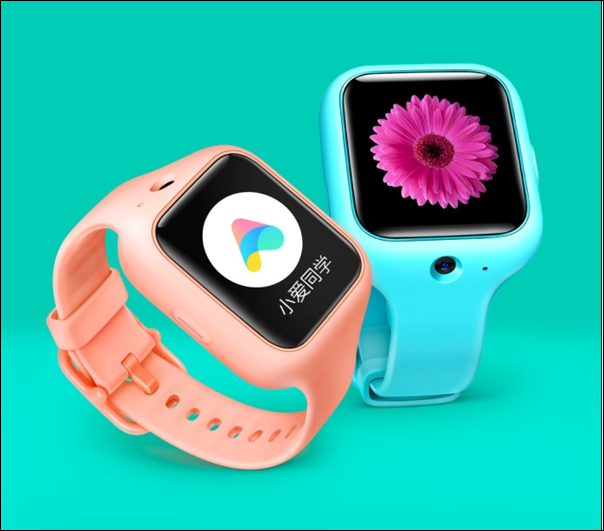
In terms of the design, the smartwatch features a 1.41-inch retina-class HD AMOLED display with a resolution of 320 x 360 pixels. The screen is further protected from scratch by a 2.5D curved glass There is also a layer of Corning Gorilla Glass 3 on the screen. Further, the Mi Bunny Watch 3 (4G) supports IPX7 waterproofing while the strap is made from food contact-grade material which is also comfortable to wear as it is not sensitive to the skin.Xiaomi Mi Bunny Smartwatch 3

In addition, the Mi Bunny phone watch 3 has full support for dual 4G network such that even when a call is being taken, a voice message will be delivered. It also packs a 2MP HD camera with a 30-degree shooting angle that perfectly matches the child’s shooting angle. The camera has the ability to identify plants in order to aid in the child’s learning process. It can be paired with a dedicated app which can be used to locate the child’s exact position. This feature is made possible as a result of the features like GPS, Beidou, Wi-Fi, gravity sensor, camera assist, EPO, HotStill, AGPS etc. Parents can also set a safety net on the app whereby the parents will be notified when the child heads out of the zone. This prevents loss of the device and reduces danger to the child.Xiaomi Mi Bunny Smartwatch 3

Related: Xiaomi Mi Bunny Children Phone Watch 2C Launched Priced At 199 yuan ($31)

It will be available in Blue and Pink colours just like its predecessor. The smartwatch will go on sale at 10 AM on June 24 via Mi Mall, Tmall, Jingdong and Suning.
Samsung sold 2 million units of Galaxy J8 and Galaxy J6 smartphones in India

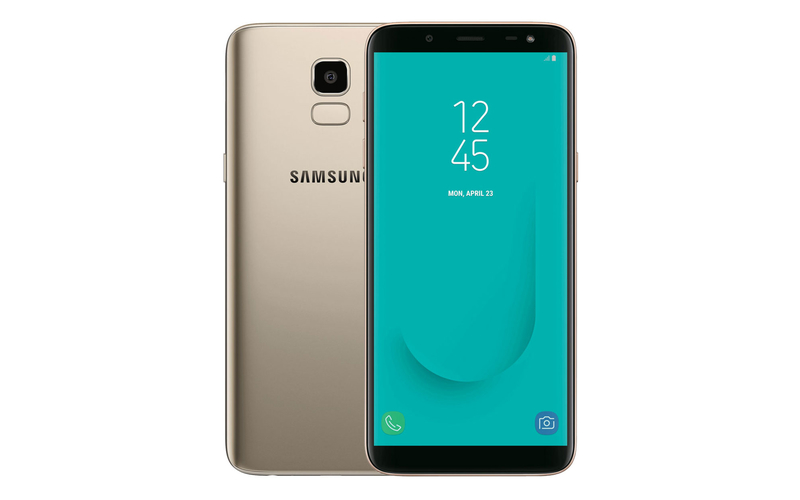
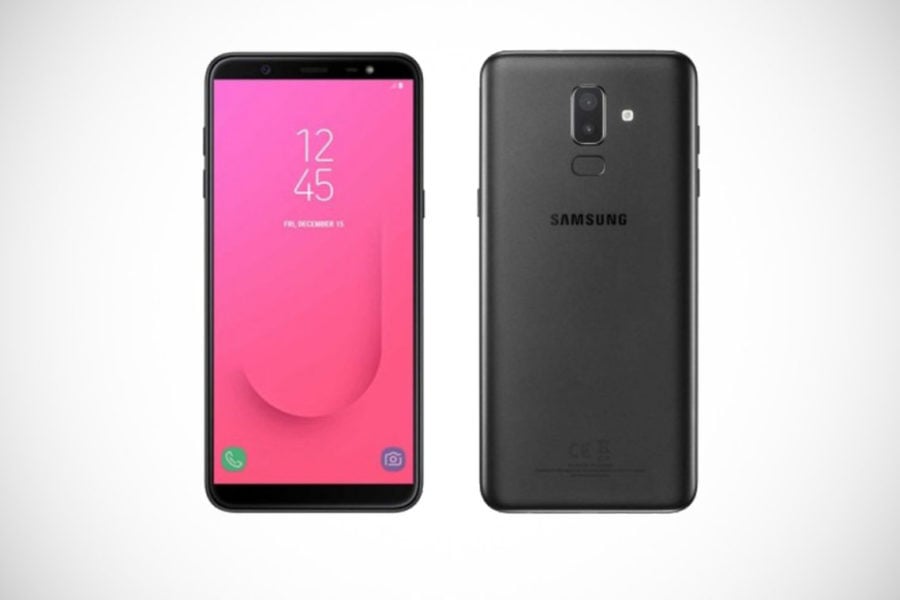
A couple of months ago, Samsung launched two new smartphones in the Indian market — Galaxy J8 and Galaxy J6. Now, the company has revealed that it has managed to sell 2 million units of both the smartphones combined.

The South Korea-based company said that it attracted more than 50,000 customers a day for its recently launched budget devices. The Samsung Galaxy J6 was launched in May while the Galaxy J8 went on sale last month.

Samsung Galaxy J6

Commenting on this, Asim Warsi, Senior Vice President, Samsung India, said:

We are happy with the huge success of Galaxy J8 and Galaxy J6 smartphones. Our philosophy of keeping our ears to the ground and incorporating consumer feedback into our products has paid off. Galaxy J, known for unique ‘Make for India’ innovations, has a stellar legacy, accounting for one in three smartphones sold in the country. We are confident that the new devices will help us further increase our market share in the country.

The Samsung Galaxy J8 is currently available for purchase at Rs 18,990 (approximately $275) while Galaxy J6 costs Rs. 13,990 (approximately $203) for the 32GB ROM model and the 64GB ROM model is available at Rs. 15,990, which roughly converts to $232.

In the second quarter of 2018, the company shipped 9.9 million smartphones in India, registering almost 50 percent annual growth rate – its best since the fourth quarter of 2015, according to the market research firm Canalys.

Samsung-Galaxy-J8-2018

The Samsung Galaxy J6 features a 5.6-inch HD+ Super AMOLED Infinity Display and is powered by the company’s own Exynos 7870 octa-core14nm chipset, coupled with Mali T830 GPU. It packs 3GB/4GB RAM with 32GB/64GB ROM, along with microSD card slot for expanding storage.

There’s a 13-megapixel rear camera and an 8-megapixel front camera, both having LED flash. Connectivity options on the device include 4G VoLTE, Wi-Fi b/g/n, Bluetooth 4.2 LE, and GPS. Running on Android 8.0 Oreo operating system out of the box and is powered by a 3,000mAh battery.

On the other hand, the Samsung Galaxy J8 sports a 6-inch HD+ Super AMOLED Infinity Display and is powered by Qualcomm Snapdragon 450 octa-core processor clocked at 1.8GHz, along with Adreno 506 GPU and 4GB RAM.

Read More: Samsung Galaxy Note 9 certification by Brazil’s telecoms agency confirms 4000mAh battery

It packs 16GB of internal storage and has a microSD card slot for storage expansion. On the back side, there’s a 16MP primary camera and a secondary camera sensor of 5MP. On the front side, there’s a 16MP snapper for video calling and taking selfies. It runs on Android Oreo and is powered by a 3,500mAh battery.

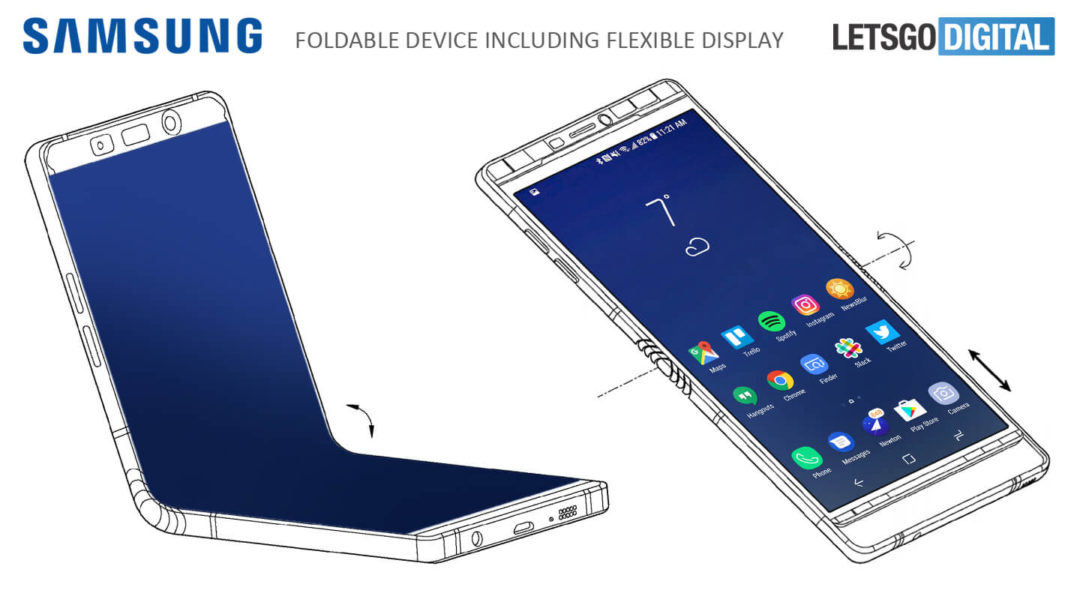
Samsung patents phone with a “fold-back” display and a single camera

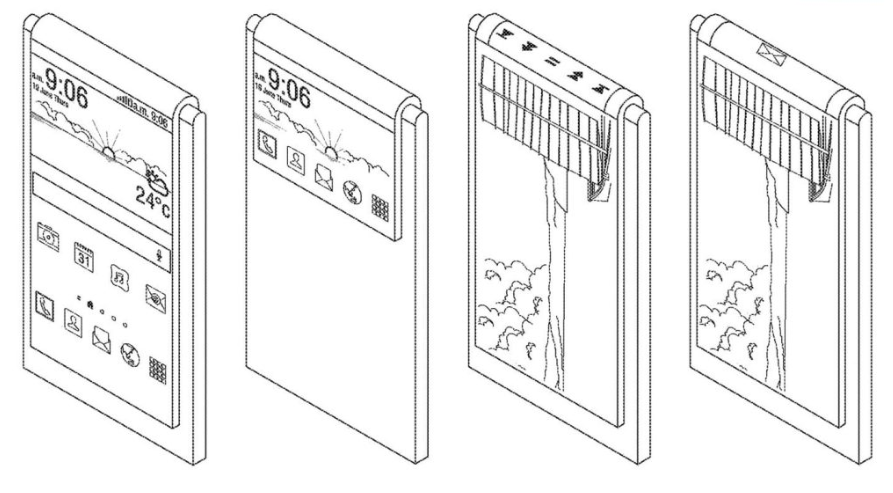
A strong patent portfolio is an integral part of a business and in the mobile industry, Samsung is one of the manufacturers with the most patents. A new patent filed by the Korean giant has surfaced online and it shows a phone with a display that stretches and folds to the back.

Samsung foldback phone media controls

The patent was filed at the WIPO in March before it was published earlier this month. According to the patent description, the phone has a flexible display that stretches to the top and then folds back to cover the upper part of the phone’s rear. This design gives the phone a tri-bezel-less appearance as well as a dual-display look. It also has just a single camera and it is at the back.

Samsung foldback phone normal photo

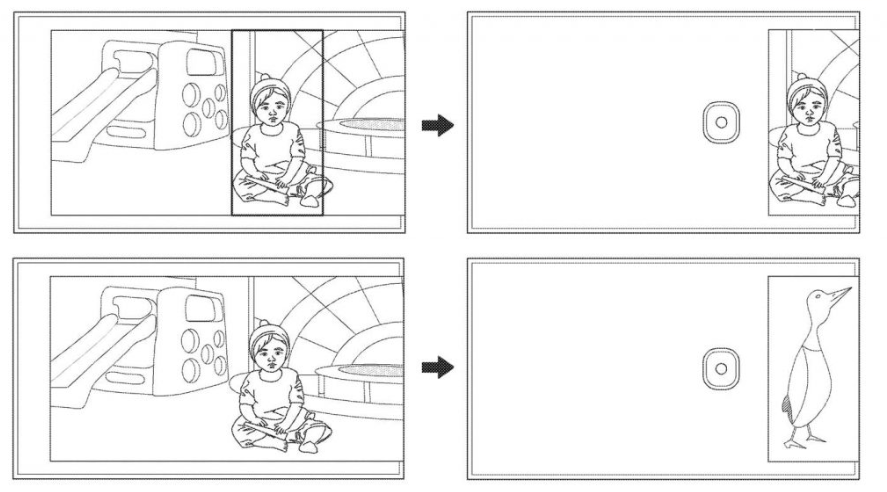
Images in the patent show that the “rear display” can act as a viewfinder when taking selfies. If you want to take a regular picture, the front part acts as the viewfinder but the rear also shows the focus object in the viewfinder. In a separate picture, we see the rear display show something else when using the front as the viewfinder, in this case, a bird which we believe is to hold the attention of the child whose photo is taken.

Samsung foldback phone selfie photo

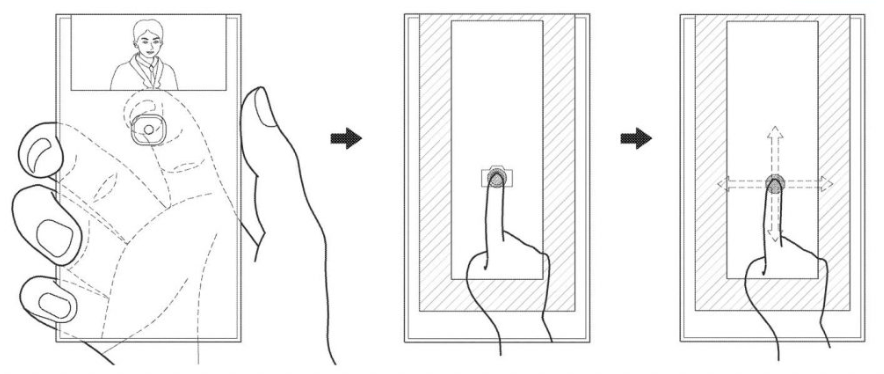
While there doesn’t seem to be a dedicated shutter button for taking a selfie using the rear display, the user can simply tap on the main screen. Another option we think can be adopted and which is already in use now is to set the volume control as a shutter button.

READ MORE: Samsung Galaxy Watch, the rebranded Gear S4 will launch on August 9

Meitu T9 to launch in Taiwan, will cost NT$20,900 ($685)

Meitu, the selfie-centric smartphone maker has announced that its latest phone, the Meitu T9 will be available in Taiwan. A poster has surfaced online and it reveals more details.

Meitu T9 Taiwan launch

Meitu will have a launch event in Taipei on Thursday, July 26. The phone will then be available for pre-order starting the same day until July 29. The selling price for the phone is given as NT$20,900 (|$685).

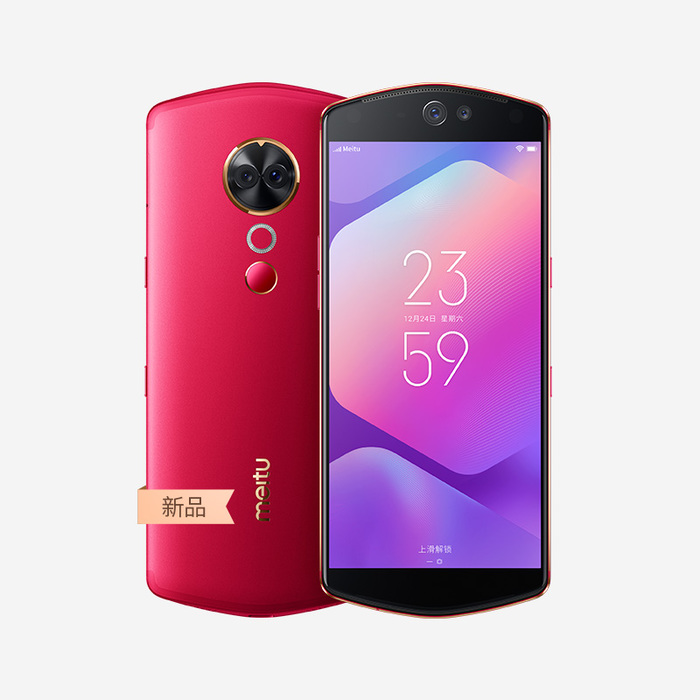
For the above price, you will get a phone with a 6.01-inch Samsung AMOLED 18:9 display. It will have a Snapdragon 660 processor, 6GB of RAM, and 128GB of storage. The phone is also available in a 4GB RAM + 64GB configuration but we don’t know if that model will be sold in Taiwan.Meitu T9 Berry red

The selling point of the phone is its cameras. There are dual cameras on both sides. The primary sensors on the front and rear are Sony IMX363 12MP sensors and both have OIS and PDAF. They are paired with 5MP sensors for capturing depth of field details.

READ MORE: Meitu MP1710 visits TENAA: Quad cameras, same hexagonal design

Samsung’s foldable smartphone might not be called “Galaxy X”

There has been a lot of speculation on the much-anticipated Samsung foldable phone which is supposed to be released in January at CES 2019. Before now, rumor has it that the device would be named “Galaxy X” as most top-notch devices use the letter X letter. However, this may not be the case with this Samsung device, as a recent tweet by a Twitter tipster who is an insider indicates that the device wouldn’t be named Galaxy X. The tipster didn’t share the name the smartphone would be called, so, at this point in time, it is unclear the name the South Korean company would choose for the smartphone. It is now speculated that the Galaxy X branding might be used on the Samsung gaming smartphone lineup, which Samsung is already working on.

If this is the first time you bumping into the device, Samsung’s new foldable smartphone would adopt a display that can be folded vertically and this is unlike the early prototypes. The device would be just like a normal smartphone and operated normally if laid out flat but if folded, the top and bottom portions of the panel can be operated separately. However, a second hidden display would pop up if the device is completely folded which would allow the users to glance at notifications, weather forecast, and some other information.

Read Also: Samsung goes neck and neck with Xiaomi in India, Canalys Q2 2018 report shows

The first production of the device is said to be limited by Samsung to around 300,000 and 500,000 units depending on the demand on the product. The pricing of the smartphone could have a high starting price of $2,000 but if the demand on the product is high just like the original Galaxy Note Edge, the brand might significantly increase and improve the next generation of the foldable smartphone.

OnePlus promises 6 new features at Open Ears Forum in India

In order to improve its relationship with its fans, OnePlus started a program called Open Ears Forum. The program is usually hosted in different cities and is an avenue for OnePlus to hear feedback from its fans. It held one in Goa, India recently and at the event, it promised six new features coming to OnePlus devices.

First of its promise is porting the OnePlus 6‘ “selfie portrait mode” to the OnePlus 5 and OnePlus 5T. OnePlus has also promised to keep working on removing the “oil painting effect” plaguing the default camera app on the OnePlus 6.

Another feature coming to OxyegnOS is a night mode or “Dark Theme” for the OnePlus Shelf on the homescreen. Users will also get more accent colors for the theme. OnePlus also promised that the OnePlus Switch App will now have more features including support for desktop backups. The FileDash app for data transfers will also gain support for OnePlus apps. It will also make the app easy to access.

READ MORE: OxygenOS 5.0.4 Brings July Security Patch and Camera Improvement to OnePlus 3/3T

Xiaomi rolls out MIUI 10 Global Beta ROM 8.7.19 for 20 models

Xiaomi did schedule to release a new MIUI 10 Global Beta ROM for eligible devices today. Indeed, MIUI 10 Global Beta ROM version 8.7.19 has been released for up to 20 different models. The latest ROM brings fixes for several issues that were spotted in the previous releases. This is the second update the Chinese OEM is releasing in the space of a few weeks, having released MIUI 10 Global Beta 8.7.5 recently.MIUI 10 Global Beta ROM

Top among the new fixes the update brings are translations in the security settings. There have been some reports of some content in the security settings not getting translated. This new update fixes that. It also fixes the clock error whereby the digits are not shown properly.. Xiaomi had announced a new Anti-Rollback feature that comes through MIUI 10 for the Redmi Note 5 and Redmi Note 5 Pro earlier this month. The new feature serves to restrict their downgrading. The new update also fixes issues with the Mi 5 which keeps the notification LED on when a new notification comes on the handset, without any of the usual blinkings.

In addition, the official changelog shows that the latest MIUI 10 Global Beta update has fixed the blur effect on the Redmi Note 5 and Redmi Note 5 Pro that was disappearing for some users after saving photos in the gallery. Also for the Redmi Note 5 and Redmi Note 5 Pro, the update fixes the issue that was pushing the devices to ask users to log in when they enable sync messages from Mi Cloud in the Messaging app. The update also fixes the force close of a “security core component” that surfaces when holding the Menu key in the ‘Dual app’ search bar. However, it is yet to roll out on the Redmi Note 5 and Note 5 Pro as the latest update is said to be currently suspended for both models.

The models that are eligible to get the new upgrade includes the Redmi 4X, Mi 5s, Mi Max 32GB/ 64GB/ 128GB, Mi 5s Plus, Redmi 4A, Redmi 5A, Redmi Note 4 Qualcomm Edition, Redmi Note 4X, Mi Max 2, Redmi Note 5A/ Redmi Y1 Lite, Redmi Note 5A Prime/ Redmi Y1, Redmi 5, Redmi 5 Plus, Mi 6, Mi Mix 2, Mi Mix 2s, Redmi S2, Mi 5, Mi Note 2, and Mi Mix. The download links for these models are available on MIUI forum.

Read Also: Xiaomi Mi Pad 4 gets MIUI 10 global beta update

For those who own compatible models and want to update their phones, it is advised that they backup their data before upgrading to MIUI 10. According to the instruction on MIUI Forum, if you’re already using MIUI 7, MIUI 8, or MIUI 9 stable ROM, you can update your handset to MIUI 10 using the fastboot method. There is a detailed instruction on how to do that on the MIUI forum. But in the case of users with models running MIUI 9 Global Beta ROM, the latest update can be availed by going to “settings” and then check for updates from the “About phone” section. Such users can also update compatible models using the Updater app.

(source, via)

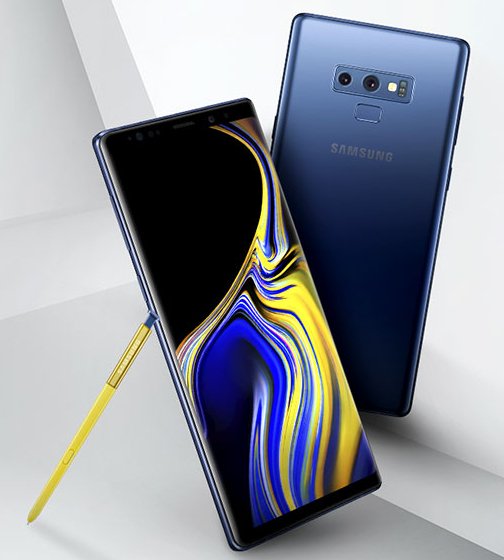
Fake Galaxy Note9 gets unboxed in leaked video

We are a few weeks away from the launch of the Galaxy Note9, so it shouldn’t come as a surprise that there will be new leaks surfacing on the web. However, while some may be genuine, there will also be fake ones. A video has surfaced online and it shows the Galaxy Note9 getting unboxed. However, this unit is likely a fake.

Galaxy Note 9 Hi-res render

The phone comes in a similar box as other Samsung flagships with the only difference being the specs of the phone and of course, the name of the device. On the rear of the sleeve, the specs are listed out.

It says the Galaxy Note9 has a 6.3” Quad HD+ sAMOLED display and measures 160.5mm (full rectangle). It also has Dual Pixel 12MP OIS + 12MP OIS rear cameras, an 8MP AF selfie camera, IP68 water and dust resistance, and an iris scanner. The variant in the box has 6GB of RAM and 64GB of built-in storage. It also supports wireless charging and comes bundled with AKG earphones.

[embedyt] https://www.youtube.com/watch?v=Hs8XYsMBHHU[/embedyt]

Plastered on the front of the phone is a sticker that reads “Galaxy Note9”. The device isn’t turned on so we don’t get to see the UI. On the back, we can see the dual rear cameras, a LED flash, and a blood pressure sensor. There is also a fingerprint scanner below the setup. Samsung’s logo is inscribed in the middle, and at the bottom, there is Galaxy Note9, a CE marking, and other info such as where the phone was made. In this case, this unit was manufactured in Vietnam. Other items included in the box are a charger, two USB-C adapters, a pair of earphones, and a USB cable.

So how do we know this is fake? First, the sleeve case says this is a T-Mobile unit judging from the sticker at the bottom of the box’s outer sleeve. That sticker isn’t unusual but for Samsung phones sold by T-mobile, the box usually has T-Mobile written on it not just a sticker. For the Galaxy Note8, T-Mobile’s logo is printed on the back of the sleeve case where the specs are written and also on the sides.

READ MORE: Galaxy Tab S4 ditches fingerprint scanner for Iris Scanner and Intelligent Scan

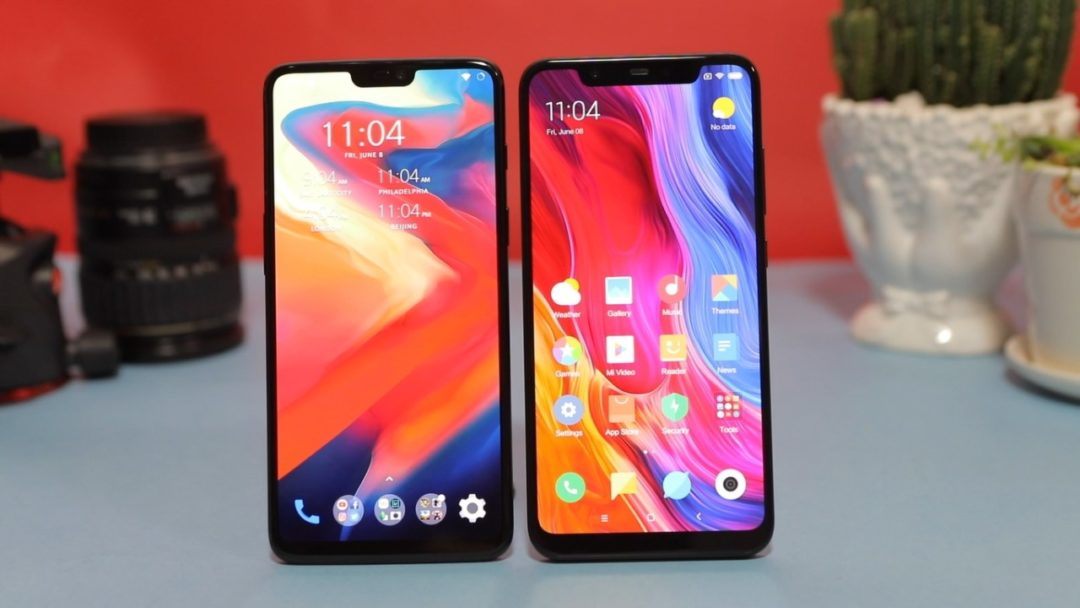
Oneplus 6 VS Xiaomi Mi 8: 2018 Flagship Phones Comparison

oneplus 6 vs xiaomi mi 8

Welcome Smartphone fans. I recently took a trip to my hometown where I went camping in some of the American Mountain west’s most amazing areas, watched some concerts, and had a great time with family. I brought along 2 phones with me… The OnePlus 6, a phone that doesn’t seem to want to leave my side, or should I say that I don’t want IT to leave my side, and the new Xiaomi Mi 8. Although I did plenty of comparisons, and will include the usual side-by-side spec showcases, I’m not exactly going to grade these off of each other so much as I feel they are generally for different customers so this will be a different style video than my recent comparisons. Let me show you what I mean. My name is Adam, Tech Editor for GizmoChina, and I believe I’ve included plenty of information which can assist you in your buying decisions. Make sure to watch the whole video for results over 5 different sections that is sure to help you pick a favorite. Let’s get to it!

Now that we’ve compared the design, display, power, experience, and camera we have some good ideas on which device is ahead of the other in most ways… However, the Xiaomi Mi 8 can be found for 50-60% the price of the Oneplus 6, making it a very budget friendly flagship.

For me, the winner of this comparison has a user experience that is nearly perfect, with a design that stuns, power to do just about anything, with a knock-out display, and one of the better smartphone cameras I’ve used.

Picking the right phone for you will come down to which of these features you feel you need for your budget. I know which one I prefer… how about you?


Sony announces new IMX586 image sensor with 48 megapixel resolution

While Sony’s smartphones have not been performing well in sales, there’s one market where the company has been on top — camera sensors. Today, the Japan-based company has announced a new imaging sensor — Sony IMX586, which supports resolution of 48 effective megapixels, which Sony says is the highest in the industry for smartphones.

The IMX586 image sensor, made for the smartphones and other portable devices, is claimed to have the world’s smallest pixel size of 0.8μm, making it possible to pack 48 effective megapixels onto a 1/2-type unit.

Sony IMX586 Image Sensor

Further, it comes integrated with Sony’s exposure control technology and signal processing functionality directly into the image sensor. This enables real-time output with a much better dynamic range that is four times greater than conventional units.

The new sensor also uses the Quad Bayer color filter array, where adjacent 2×2 pixels come in the same color, which allows for a higher sensitivity shooting. The sensor can also be devised to use signals from four adjacent pixels during low light, resulting in increased sensitivity. The company is promising that the Sony IMX586 will provide brighter images with lower noise regardless of the lighting conditions.

In a statement, Sony said:

This product was designed and manufactured with techniques that improve light collection efficiency and photoelectric conversion efficiency over conventional products, resulting in the world’s first 0.8 μm pixel size, with both high sensitivity and high saturation signal level.

It is also capable of recording full frame at 30 frames per second and can also record 4K videos (4096×2160) at 90 frames per second. Currently, all the major flagship smartphones in the market are capable of recording 4K videos at 60 frames per second.

Read More: Sony confirms new product launch at IFA 2018, likely to announce the Xperia XZ3 and Xperia XZ3 Compact

The Sony IMX586 is priced at 3,000 Japanese Yen, which roughly converts to $27 and will start shipping the CMOS image sensor in September this year. However, the company has not revealed when we’ll be able to see the sensor packed in a smartphone.

Sony Xperia XZ3 case renders appear to reveal design

Sony is rumored to debut the Sony Xperia XZ3 flagship phone at the IFA 2018 event at the end of the coming month. However, a UK-based retailer named MobileFun had listed the smartphone on its site in the previous week even though Sony is yet to confirm on its existence. The same retailer has listed protective cases for Xperia XZ3 made by Olixar. The case renders available on the listing has once again revealed the design of the smartphone.

The case renders tell a lot about the appearance and form factor of the upcoming Xperia XZ3. The front design of the smartphone is same as Xperia XZ2 that was unveiled earlier this year which suggests that it could be featuring an 18:9 aspect ratio display.

The only dual camera smartphone from Sony is the Xperia XZ2 Premium that was unveiled in April. The newly spotted case renders show that the Xperia XZ3 could be the next dual camera phone from the Japanese firm. In fact, the Xperia XZ3 is expected to feature the exact same 19-megapixel + 12-megapixel Motion Eye dual camera setup that is available on the Xperia XZ2 Premium. The XZ3 is also rumored to feature the same 13-megapixel front camera present on the XZ2 Premium.

[envira-gallery id="202595"]

The dual camera setup is placed in a vertical design on the XZ3. Below it is the fingerprint scanner which is positioned at the center of the back panel. Since the protective case for the smartphone is ready, its arrival could be very close at hand. Now that the Japanese firm has recently confirmed that it will be holding a launch event on Aug. 30 at IFA 2018, the Xperia XZ3 may get announced at the said date. The company may also launch Xperia XZ3 Compact alongside it.

Read More: Sony Xperia XA2 Plus with 6-inch 18:9 display, SD630, 6 GB RAM is official

MobileFun’s Xperia XZ3 listing had revealed that it features a 5.7-inch display that supports Full HD+ resolution of 2160 x 1080 pixels and an aspect ratio of 18:9. The Snapdragon 845 SoC and 6 GB of RAM are present under the hood of the phone. It has a native storage of 64 GB. The handset receives power from 3,240mAh battery. It was listed with a price tag of 849 euros (~$993).

(source)

Xiaomi Mi Max 3 Pro may still exist; Found listed with Snapdragon 710 phones on Qualcomm site

Last week, Xiaomi had introduced the highly anticipated Snapdragon 636 SoC powered Mi Max 3 smartphone in China. Before the launch of the smartphone, the rumor mill had claimed that there will be a higher version of the p hone called Xiaomi Mi Max 3 Pro driven by Snapdragon 710 SoC. However, the company did not speak anything on it at its launch event. Today, a screenshot of “Qualcomm processor specifications table” has surfaced on Weibo that contains a list Snapdragon mobile platform. The list contains a smartphone named Xiaomi Mi Max 3 Pro along with Xiaomi Mi 8 SE and Vivo NEX (lower-edition) that are powered by Snapdragon 710. This indicates that the SD710 edition of Mi Max 3 Pro may exist.

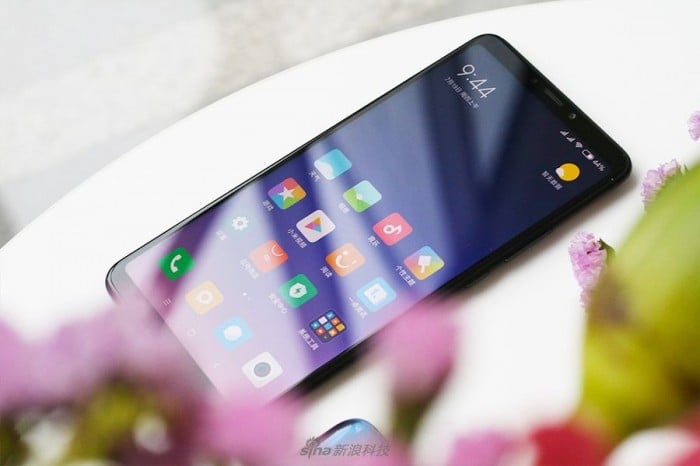
Xiaomi Mi Max 3 Pro Proof

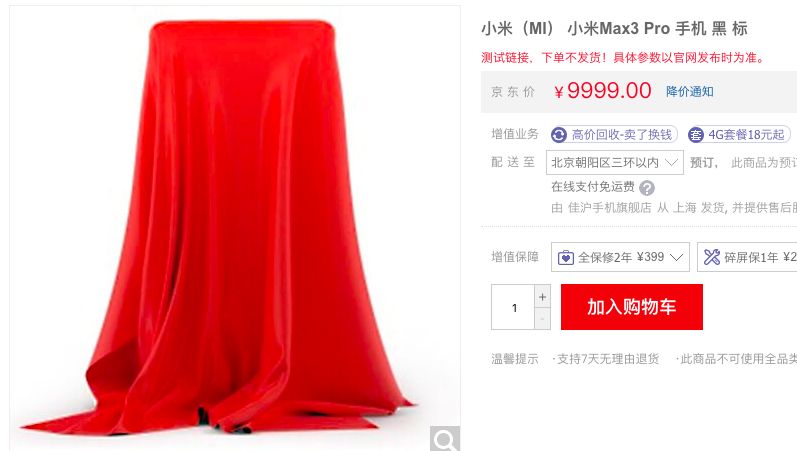
A report from the previous month had claimed that the Mi Max 3 Pro features Snapdragon 710, 6 GB of RAM and 128 GB of storage. Some of the Chinese retailers such as JD.com have listed Mi Max 3 Pro model, but there is no official confirmation on its existence. If it really exists, the company may soon release a teaser on it in the near future.

xiaomi-mi-max-3-pro-listing_

The 64 GB and 128 GB storage variants of the Mi Max 3 that respectively features 4 GB and 6 GB of RAM are now available for buying in China. These models are respectively priced at 1,699 Yuan ($250) and 1,999 Yuan (~$294).


The Mi Max 3 was recently spotted at AnTuTu with an impressive average benchmarking score of 118,471 which shows its performance is quite close to Snapdragon 660 powered phones. The Mi Max 3 is fitted with a 6.99-inch IPS LCD display that supports Full HD+ resolution and 18:9 aspect ratio. It is packed with a 5,500mAh battery that comes with support for Quick Charge 3.0.

Xiaomi Mi Max 3

The phablet features 12-megapixel + 5-megapixel dual camera setup and a fingerprint scanner on the rear panel. It has a frontal shooter of 8-megapixel. Currently, the smartphone is available exclusively in China. Probably, it may arrive in international markets by the end of Q3.

Read More: Xiaomi Mi A2 listed on two popular online retail stores for pre-orders ahead of launch

Will Xiaomi launch Snapdragon 710 version of Mi Max 3 Pro? Share us your thoughts by adding your comments below.

(source)

Google could launch second-generation Pixelbook along with Pixel 3 this year

Google’s upcoming hardware devices — Pixel 3 and Pixel 3 XL have been in news from quite some time. However, it’s not just the smartphones that the company is planning to launch later this year. According to the new reports, Google is also planning to launch the second-generation Pixelbook this year.

Evan Blass tweeted that Google is planning to launch a second-generation Pixelbook with smaller bezels, which will start shipping before the end of this year. This doesn’t seem surprising given that the company has been offering discounts on the first-gen device.

Pixelbook

The next-generation Pixelbook will be unveiled along with Pixel 3 and Pixel 3 XL smartphones. Along with that, rumors also suggest that the company could announce a Pixel Watch as well as a new generation of Pixel Buds.

The first-generation Chrome OS-running device from Google is among the best Chromebooks device and offers killer performance with amazing keyboard and a sturdy build. However, the bezels on the device look bit dated and the smaller bezels on the second-gen Pixelbook will be a welcome change.

Read More: Google Pixel 3, Pixel 3 XL Design Revealed Through 360-Degree Renders

The first-generation Pixelbook was pretty expensive but we’ll have to wait a bit longer to know if the company reduces the pricing for the upcoming device. While it still seems like a speculation at this time, there’s a good possibility that the second-generation Pixelbook is coming.

We are expecting to see Google’s lineup of hardware devices for the year 2018, including the Pixel 3-series smartphones, to get unveiled in October, approximately a month after Apple launches its next-generation iPhone.

(Source)

Snapdragon 720 rumoured to feature a dedicated NPU for AI just like Kirin 970!

U.S fabless chipmaker Qualcomm first announced its new Snapdragon 700 series at MWC 2018 with the Snapdragon 710 being the first of the series to find its way into smartphones. The new SDM700 series lies in between the flagship Snapdragon 800 series and the premium mid-range Snapdragon 600 series. It draws a number of advanced features from the former and is very suitable for high-end models.Qualcomm Snapdragon 700 Series

Apart from the Snapdragon 710, little is known of other members of the series but a new rumour has emerged which deals with the Snapdragon 720. While there is presently no information on the specification of the Snapdragon 720, it is only known to be an enhanced version of the Snapdragon 710. However, the SDM720 is said to have a Neural Processing Unit (NPU) similar to Huawei’s Kirin 970 which is dedicated to AI acceleration. If this turns out to be true, it will be the first time Qualcomm as the current Snapdragon platform doesn’t have a dedicated AI hardware unit but rather relies on the Artificial Intelligence Engine(AIE). This is software-based and the efficiency in the specific AI scene is still low.

In addition to Snapdragon 720, there had been a leaked poster that appeared a few months back containing details of the Snapdragon 730. The earlier leak tipped that Qualcomm’s SDM730 will be manufactured using a Samsung 8nm LPP process (10nm upgrade), integrating two Kryo 4xx 2.3GHz, six Kryo 4xx 1.8 GHz CPU core and specially equipped with NPU 120 unit!

Related: Mysterious Snapdragon 680 Appears on Geekbench with Impressive Scores

Finally, the new rumour also includes that at least three mobile phone manufacturers are currently developing Snapdragon 720-powered models, of which Samsung is expected to be the first to utilise the chipset on its mid-range Galaxy series.

(source)

BlackBerry KEY² with SD 660 SoC and QWERTY keyboard launched in India for Rs. 42,990 ($626)

BlackBerry KEY², the latest smartphone from the company, which was launched last month, has now finally launched in India. The smartphone is priced at Rs. 42,990, which roughly converts to $626 and will be available in Black color only.

It will be available for purchase in India through Amazon.in from 31st July. The company is also offering some offers, including Reliance Jio cashback of Rs. 4,450 (approximately $65) and ICICI bank cash back offer of 5 percent along with a few other benefits.

BlackBerry KEY² official render

The smartphone comes with a 4.5-inch display with 1620 x 1080 pixels screen resolution, 433PPI and 3:2 aspect ratio and Corning Gorilla Glass 3 protection on top. It also has a 4-row QWERTY physical backlit keyboard with keys that respond to touch gestures.

It has support for flick typing and up to 52 customizable shortcuts. Compared to its predecessor, the keys are about 20 percent bigger with the same footprint. There’s also a new dedicated key called “Speed Key” that enables users to launch apps. Just like its predecessor, the fingerprint sensor is embedded into the spacebar key.

Under the hood, the phone is powered by Qualcomm’s Snapdragon 660 octa-core processor along with Adreno 512 GPU and 6GB RAM. There are two options for internal storage — 64GB and 128GB with microSD card that supports expandable storage up to 2TB.

As for the photography, there’s a dual camera setup on the back with a 12-megapixel primary sensor, f/1.8 aperture, 79.3-degree wide-angle lens, dual phase detection autofocus, and a 12-megapixel secondary sensor with f/2.6 aperture and 50-degree lens. On the front side, there’s an 8-megapixel front-facing camera.

Read More: BlackBerry Ghost and Ghost Pro will launch as BlackBerry Evolve and BlackBerry Evolve X respectively

The BlackBerry KEY² runs on Android 8.1 Oreo operating system out-of-the-box. Connectivity options on the device include 4G VoLTE, Wi-Fi 802.11 b/g/n/ac (2.4 & 5 GHz), Bluetooth 5 LE, GPS / GLONASS, NFC, and USB 3.0 Type-C. The phone is powered by a 3,360mAh battery with Quick Charge 3.0 fast charging support.

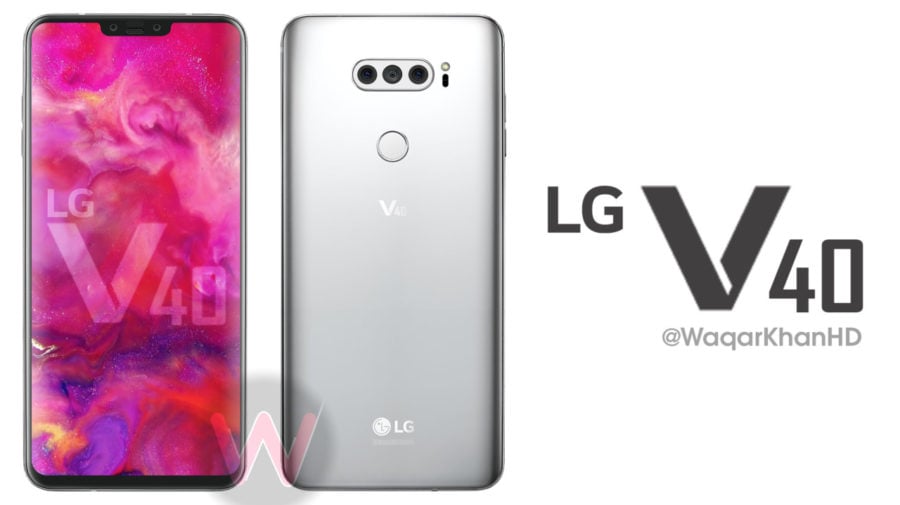
LG V40 specifications leak reveal triple cameras, 3D face scanning along with arrival time

In the previous month, Samsung had confirmed that it will be launching the Galaxy Note 9 on Aug. 9. The upcoming LG V40 ThinQ is expected to arrive as a major rival for the Galaxy Note 9. However, the company is yet to confirm on its launch date. A South Korean publication has recently revealed juicy details on the upcoming V40 ThinQ smartphone.

According to ET News, the LG may announce the V40 ThinQ smartphone in September and release it in the market in early October. Last year, LG had launched the V30 smartphone at the IFA 2017 expo at the end of August. It seems that LG may skip the IFA 2018 event this year and announce the V40 ThinQ later in September.

In September, Apple will be announcing the three new iPhones which includes two OLED smartphones and one LCD phones. It is speculated that the two OLED iPhone may hit the market in September whereas the entry-level LCD iPhone may arrive in the market by mid-October or early November. The October arrival of the LG V40 ThinQ seems to be well-planned release to ensure that its arrival is not disturbed by Galaxy Note 9 and 2019 iPhones.

LG V40 ThinQ is expected to arrive with five cameras out of which three will be placed on its rear panel. The triple camera setup is expected to include 20-megapixel, 16-megapixel and 13-megapixel sensors. The report claims that it could be the only forthcoming smartphone to feature a super wide-angle lens and a super-telephoto lens.

lg v40 - specs, features, price, release date, hands on, render, concept, triple camera, five camera (4)

Read More: LG V40 concept renders reveal 5 cameras and notched display

The V40 ThinQ smartphone is also expected to be equipped with two cameras at front for 3D face scanning that will work similar to advanced facial recognition feature available on the Apple iPhone X, OPPO Find X and Xiaomi Mi 8. The notched OLED screen of the smartphone is expected to offer a screen-to-body ratio of more than 90 percent.

(source)

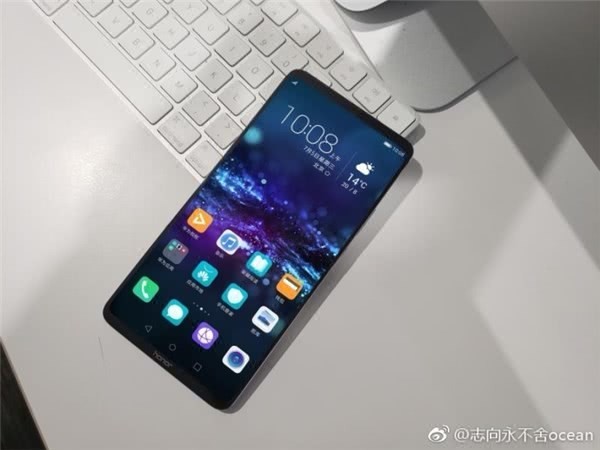
Honor Note 10 with 512GB ROM gets certified by TENAA, launching on July 31

Huawei is all set to launch its new smartphone under its Honor Note lineup on 31st July. The upcoming smartphone, Honor Note 10, which is the successor of the Honor Note 8 that was launched back in 2016, has now been certified by TENAA in China.

The smartphone with model number RVL-AL09 has passed through TENAA, confirming the phone’s specifications. The listing reveals that the device will feature a massive 6.95-inch Full HD+ AMOLED display with 2220 x 1080 pixels screen resolution and 18.5:9 aspect ratio.

Honor Note 10

While the 18.5:9 aspect ratio is common for Samsung smartphones, this is the first time Honor is opting for such screen aspect ratio. Under the hood, the device is powered by a 2.4GHz octa-core processor. While the listing does not reveal which processor is powering the phone, it is likely to be the company’s own HiSilicon Kirin 970 SoC. It will pack up to 8GB RAM and up to 512GB storage.

As for the photography, there’ll be a dual rear camera setup with a 16MP primary sensor with LED flash, f/1.8 aperture, phase detection autofocus and a 24MP secondary sensor with f/1.8 aperture. On the front side, the listing reveals a 13MP snapper.

Along with the Face Unlock support, the device also comes equipped with a fingerprint sensor for added security. Connectivity options on the device include Dual 4G VoLTE, Wi-Fi 802.11 b/g/n/ac (2.4GHz/5GHz), Bluetooth 4.2 LE, GPS, NFC, and USB Type-C.

On the software front, the smartphone will be running on Android 8.1 Oreo operating system out-of-the-box with the company’s own custom interface EMUI 8.2 on top, which comes with several artificial intelligence-based features. The device will drive power from a 4,900mAh battery which also supports fast charging.

The Honor Note 10 is expected to be available in several color options, including Black, Silver, Red, Yellow, and Blue along with two gradient colors. The China-based company has also reportedly teamed up with Rolls Royce Holdings Plc for a special Honor Note 10 Rolls Royce Edition.

Read More: Honor 9N launching in India on July 24 will be exclusively available via Flipkart

The Rolls Royce edition of Honor Note 10 is rumored to carry a hefty price tag of 9,998 Yuan (~$1,499). On the other hand, the regular Honor Note 10 is now available for reservations at JD. To know the official pricing and availability information, we’ll have to wait for the phone’s launch on July 31.

(Source)

China’s BOE may supply OLED panels for future iPhones

Around a week ago, a South Korean publication had claimed that Huawei and China’s BOE Technology Group struck a strategic deal for flexible OLED panels. After bagging Huawei, the third largest smartphone manufacturer in the world, the Chinese display manufacture is now looking forward to supply OLED panels to Apple for the iPhone models arriving in the future.

BOE is the number one supplier of LCD panels, but it is not very famous when it comes to OLED panels as it has recently begun its productions. Last year, Apple had launched the iPhone X as its first OLED smartphone. The Cupertino company had solely relied on Samsung Display, the market leader of OLED screens for iPhone X. According to The Wall Street Journal, the Chinese firm which is already supply displays for iPad and MacBook to the Cupertino company is also seeking to provide OLED panels for future iPhones.

At present, BOE is the only company from China that supplies display panels to Apple. Striking a deal with BOE will allow the Cupertino company to maintain good relationship with the Chinese government. By partnering with Apple, BOE can compete with Japan Display (JDI) from Japan and Samsung Display and LG Display from South Korea.

BOE logo

Read More: Huawei Mate 20 Lite may come in two variants

In 2017, Apple had exclusively OLED panels from Samsung Display for iPhone X. This year the company will be launching two OLED iPhones. One of them is expected to arrive as a successor of the iPhone X. Hence, it is rumored to house a 5.8-inch display. The other one is dubbed as iPhone 9 Plus by the rumor mill. Since it is expected to feature a 6.45-inch OLED display, it could be the largest iPhone ever from the company. Recent reports have revealed that LG Display will be supplying three to five million OLED panels for 2018 OLED iPhones.

(source)

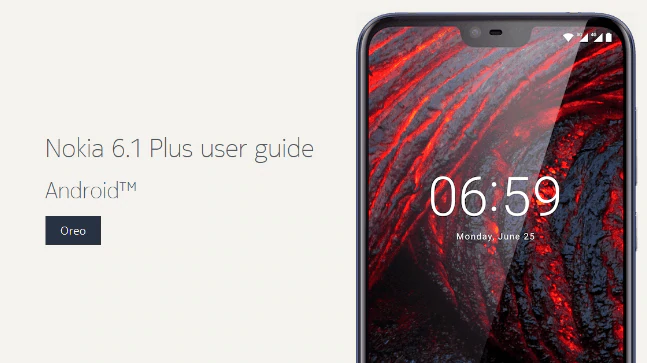
Nokia 6.1 Plus Indian launch could be very near

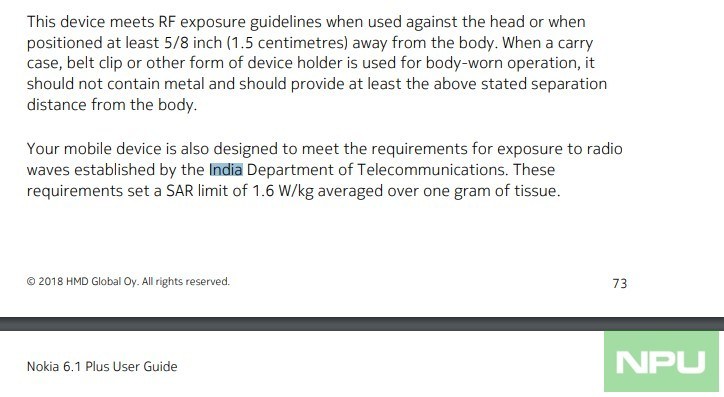
The first market to receive the Nokia X6 outside of China is Hongkong. Lastly, the smartphone was introduced as Nokia 6.1 Plus in the country. The smartphone is expected to arrive in other countries like Taiwan, Russia and India in the near future. As far as Indian launch of Nokia 6.1 Plus is concerned, a recent report had claimed that the smartphone may get official in August or September. Now that the user guide of the smartphone has surfaced on Indian edition of the official Nokia website, it seems that the phone may hit the market early.

The appearance of the user guide is not a direct proof to judge the arrival of a smartphone in a particular market. However, it could be hint that its launch could be close at hand. The user guide of Nokia 6.1 Plus for the Hong Kong market does not include its Indian SAR information. Since it is a user guide meant for the Indian version of the Nokia 6.1 Plus, it seems that the Finnish firm may unveil it soon in India.

India has recently received the all new Nokia 3.1 with a price tag of Rs. 10,449 (~$152) and the upcoming Nokia 6.1 Plus will be the first notched smartphone from the company for India. China has received it in three variants such as 32 GB storage + 4 GB RAM, 64 GB storage + 4 GB RAM and 64 GB storage + 6 GB RAM with respective pricing of 1,299 Yuan (~$193), 1,499 Yuan (~$223) and 1,699 Yuan (~$253).

The handset includes a Full HD+ resolution supporting IPS LCD display of 5.8 inches that supports an aspect ratio of 19:9. The Snapdragon 636 SoC powers the smartphone. It has a microSD card for additional storage. The back panel of the phone houses 16-megapixel + 5-megapixel dual camera setup and a front-facing camera of 16-megapixel. The 3,060mAh capacity battery of the Nokia X6 supports Quick Charge 3.0 fast charging.

Read More:Hands-on pictures of Nokia X5 (Baltic Sea Blue)

The Nokia X5 powered by the MediaTek Helio P60 is the second notched display phone from the company. It is currently available exclusively in China. HMD Global product manager Juho Sarvikas has recently confirmed that the smartphone will be made available in international markets in near future.

(via)

Kirin 980 specs leaked; Maximum clocking speed could be 2.8 GHz

After powering multiple smartphones with Kirin 970 SoC, Huawei is pegged to debut the Kirin 980 flagship chipset at the upcoming IFA 2018 tech trade show in Berlin, Germany in September. A fresh report has revealed that the maximum frequency of the Kirin 980 will be 2.8 GHz and the SoC will be built with 7nm process technology by Taiwan Semiconductor Manufacturing Company (TSMC).

The Kirin 980 SoC is expected to include quad cores of Cortex A77 CPU and quad cores of Cortex A55. Rumors have it that for the first time Huawei may pack its own graphics processor inside it. The performance of the GPU of the Kirin 980 is speculated to be 1.5 times better than Adreno 630 that comes with Snapdragon 845.

Earlier this year, Huawei owned HiSilicon had introduced Balong 765 as the world’s first chip to support LTE Cat. 19 that supports maximum downloads at 1.6Gbps. Speculations are rife that the Kirin 980 may feature it.

Just as the Kirin 970 had arrived with a dedicated NPU unit, the Kirin 980 that is arriving as it successor will be also equipped with second-generation NPU 1M unit for enhanced AI performance. Cambricon Technologies that had worked with HiSilicon for building the NPU unit for Kirin 970 will be providing the second-generation NPU unit for Kirin 980 that is expected to deliver 5 trillion calculations per watt. Depending on AI processing required, it will be available in dual, quad and octa-core versions. Also, the smartphones powered by the new SoC will also be equipped with GPU Turbo graphics acceleration technology.

Kirin 710

The Mate 20 and Mate 20 Pro are pegged to arrive as the first smartphones with Kirin 980 onboard. Earlier this year, the AnTuTu listing of the Kirin 980 powered Mate 20 Pro had surfaced with an extraordinary average benchmarking score of 356,819.

Read More: Huawei Mate 20 Lite may come in two variants

Huawei has recently launched the Kirin 710 SoC as a successor for the Kirin 659. The recently launched Nova 3i is the first smartphone from the company to feature the new 10nm mid-range SoC from the company. It includes quad cores of Cortex A73 that clocks at 2.2 GHz and quad cores of Cortex A53 CPU that works at 1.7 GHz along with ARM Mali G5 GPU that offers 1.3 times better performance than Kirin 659’s GPU.

(via)