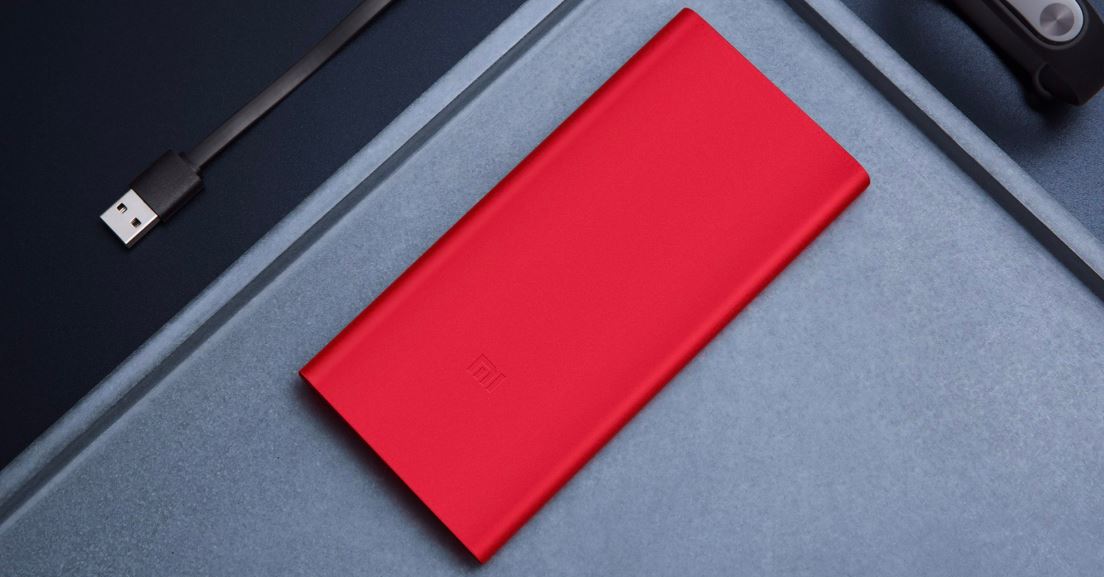
Xiaomi has released a special edition of its popular power bank, the Mi Power Bank 2i. The special edition is called the Mi Power Bank 2i Red Edition and that’s because of its red aluminum alloy case. The original has a silver aluminum alloy case.
Apart from the bright red colors, the Mi Power Bank 2i Red Edition has the same features as the original model. It has a slim profile, measuring just 14.2mm in thickness and is also lightweight (240g). Its battery capacity remains 10,000mAh.
There are two output ports and each port supports 18W fast charging. The MicroUSB input port also supports 18W fast charging. There are four LEDs that indicate the battery level of the power bank. The power bank can charge your phone, tablet and also low-power devices such as the Mi Band series.
Xiaomi stunned the smartphone industry when it launched the Pocophone F1 with flagship-grade specs but cheap pricing. This immediately drew some comparison with the OnePlus models which also affords buyers to lay their hands on flagship hardware at price tags that won’t tear a hole in their pockets. Some might argue that the OnePlus 6 model is far superior to the Poco F1 but then, that is disputable. Xiaomi may just have tested the waters with the F1 as there are clues that the Chinese company may likely introduce the Pocophone F2 within the next 6-8 months.
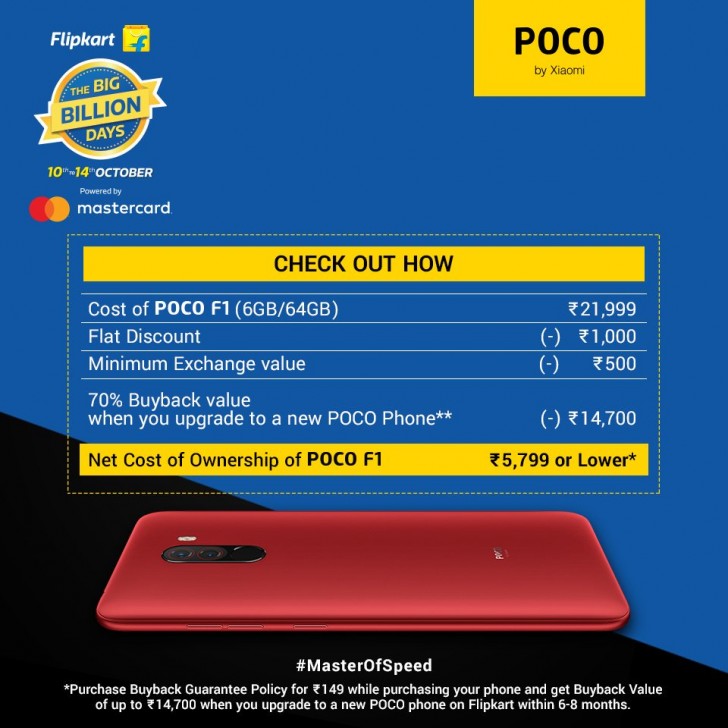
The clue is contained in a poster for Flipkart’s Big Billion Days deal for the Poco F1. The entire package offers the device Rs 21,999 for the 6GB + 64GB variant. But there are other perks attached including a Rs 1000 yuan flat discount and Rs 500 off as minimum exchange value. Flipkart also placed a 70% Buyback value of Rs 14,700 on the F1 when the buyer upgrades to a new Poco phone within 6-8 months. This is the clue as it puts the net cost of owning the F1 at just Rs 5,800 ($78). There’s a catch, though, as buyers will have to purchase Buyback Guarantee Policy for just Rs 149 while purchasing the phone.
This deal offer doesn’t categorically state the Pocophone F2 will drop within the next 6-8 months. But then, who swaps an old phone for a new one of the same model? So, for Flipkart to roll out this program now, it is strongly possible that Xiaomi will be releasing the Poco F2 in half a year’s time. That would fall in the first half of 2019 which sounds just right. Xiaomi would wont to consolidate on the success of the F1 by releasing the F2 early next year. We can’t say for sure what will change in the design and specs of this year;’s version. We might like get a redesigned body and perhaps, Qualcomm’s latest 2019 chipset, Snapdragon 855.
Competition is getting every day fiercer in the midrange sector of the smartphones market. Oppo unveiled its new K1 today and it carries one of the most convenient price tags ever seen in its line-up. This puts the Chinese company face to face with another giant selling very affordable devices for their specs sheet: Xiaomi. The Mi A2 is the perfect rival of the new K1 and surprisingly, the K1 has even a similar price tag to the Realme 2 Pro which is the latest device from the new Oppo’s sub-brand. We think a comparison between these three devices would be very useful to you if you are searching for a device costing around €200. So here we go!
Oppo K1 vs Realme 2 Pro vs Xiaomi Mi A2
Oppo K1
Oppo Realme 2 Pro
Xiaomi Mi A2
DIMENSIONS AND WEIGHT
N/D
156.7 x 74 x 8.5 mm, 174 grams
158.7 x 75.4 x 7.3 mm, 166 grams
DISPLAY
6.4inches, 1080 x 2340p (Full HD+), 409 ppi, Super AMOLED
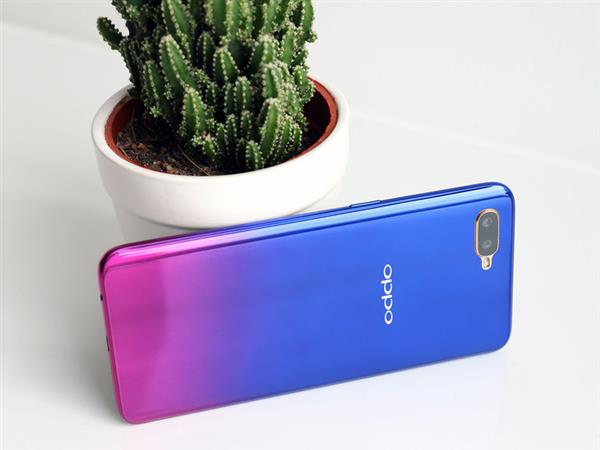
The design and the build quality are not the strongest points of Xiaomi Mi A2 and Oppo Realme 2 Pro. While the first is a classic metal unibody phone and its bezels are not very narrow, the second is beautiful but it is made of plastic. On the other hand, Oppo K1 is an outstanding device when it comes to aesthetics. It boasts an amazing glass back available in gradient colors as well as very narrow bezels on the front side, and a waterdrop notch. It definitely wins the design comparison.
Display
Oppo K1 is the absolute winner even when it comes to the display. It is equipped with a wide 6.4-inch panel providing vivid and brilliant color thanks to the Super AMOLED technology. It is a display made by Samsung and it is even superior to some actual flagships. However, note that Xiaomi Mi A2 has the only notchless panel in this trio, so if you do not like that thing on the upper part of the display, it may be interesting for you.
Specs & Software
Given that they come with the octa-core Qualcomm Snapdragon 660 chipset under the hood, all of these devices provide good performance in every scenario, even though they are not flagships. The winner among these ones is Oppo Realme 2 Pro for a simple reason: its most expensive variant comes with 8 GB of RAM, while its opponents have max 6 GB of RAM. While Realme 2 Pro and Oppo K1 have the customized UI Color OS installed, Xiaomi Mi A2 has a stock operating system with Android One, but it will get faster updates.
Camera
On the rear side, Xiaomi Mi A2 has the dual camera with the most convincing performance. It is composed of two sensors, both with a bright f/1.8 aperture, and very nice resolutions. Oppo K1 wins when it comes to the front camera thanks to its very nice 25 MP snapper backed by AI.
Battery
The presence of a relatively small battery is the main weak point of the Xiaomi Mi A2 which has just an average battery life and cannot reach its opponents. Oppo Realme 2 Pro and Oppo K1 have the same capacity, but the latter should last more as it has a display with a lower energy consumption as it is a Super AMOLED panel.
Price
Oppo K1 just debuted in China with a price tag of about €200 in its base variant, Oppo Realme 2 Pro starts from just €165 and Xiaomi Mi A2 was launched with a listing price of about €220. I would personally pick Oppo K1 due to its impressive aesthetics and its bigger battery.
A couple of weeks after Apple announced its latest iPhone XS and iPhone XS Max, several users started reporting issues related to the charging which caused the phone not to charge automatically despite the charger being plugged in.
While the company did not release any official statement related to the company, Apple has now rolled out iOS 12.0.1 update that fixes the said charging issue on the iPhone XS lineup.
Along with that, the update also fixes a major Wi-Fi bug that could cause some iPhone XS devices to prefer to join a 2.4GHz Wi-Fi network rather than a 5GHz. It also fixes the reorientation of the “123” number key on the iPad, which was moved in the iOS 12 update and swapped with the emoji/language key.
The official change-log from the company for the iOS 12.0.1 update, which includes bug fixes and improvements for your iPhone or iPad, mentions following:
Fixes an issue where some iPhone XS devices do not immediately charge when connected to a Lightning cable.
Resolves an issue that could cause iPhone XS devices to rejoin a Wi-Fi network at 2.4 GHz instead of 5 GHz.
Restores the original position of the “.?123” key on the iPad keyboard
Fixes an issue where subtitles may not appear in some video apps
Addresses an issue where Bluetooth could become unavailable
The iPhone XS and iPhone XS Max charging issue was widely reported soon after the new devices hit the market. The issue required having the display on while connecting the Lightning cable to ensure charging was happening. However, not all the devices were affected with this issue.
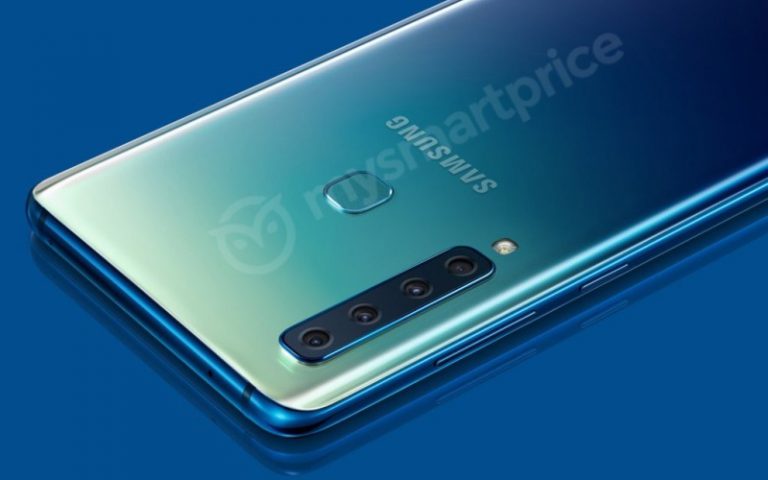
The Samsung Galaxy A9 (2018) that is expected to go official tomorrow will be the world’s smartphone to arrive with quadruple camera system. It is speculated that in some markets that the handset could be called Galaxy A9s. An Indian publication has shared an official image of the rear panel of the smartphone that showcases its four-camera setup.
The below image suggests that the rear panel of the Galaxy A9 will be made out of the glass. The glass rear tapers towards the aluminum frame of th phone. A volume rocker and a Bixby button is placed on one of the edges of the phone.
A squarish fingerprint scanner is present on the backside of the phone. It goes without saying that the USP of the phone is the vertically aligned four-camera setup that resides on the top-left of Galaxy A9’s back.
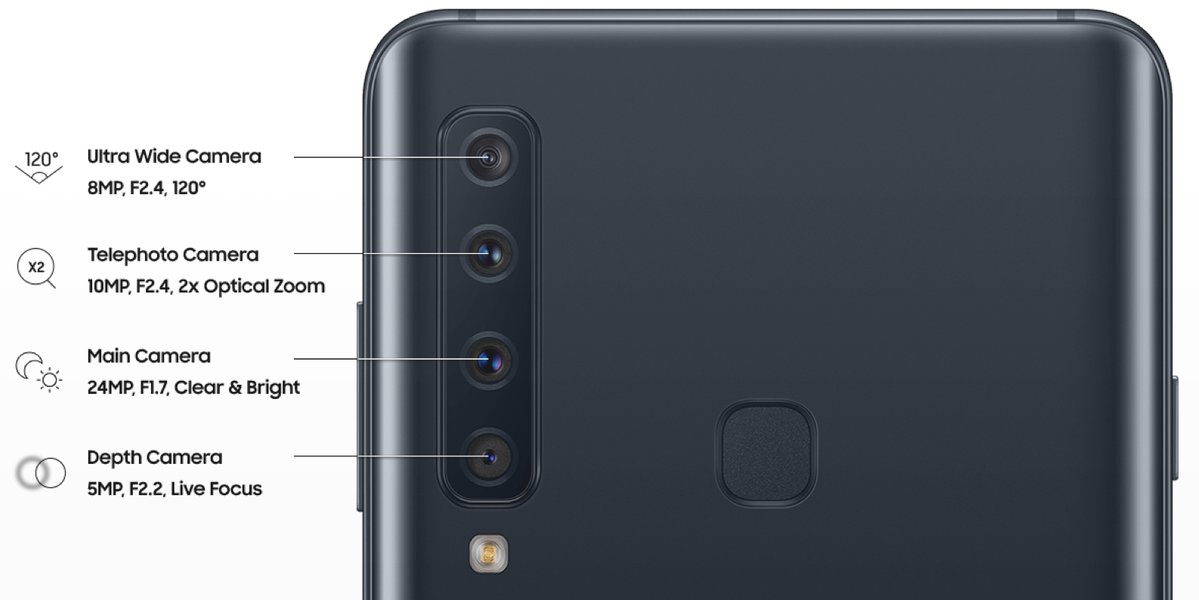
Popular tipster Evan Blass has also shared an image that details the rear camera system of the smartphone. The image shared by Blass reveals that the quadruple camera setup of the Galaxy A9 will feature an 8-megapixel ultrawide camera with f/2.4 aperture and 120-degree field of view. The next one that follows it is a 10-megapixel telephoto lens with 2x optical zoom and f/2.4 aperture.
The third sensor is actually main sensor of 24-megapixel with f/1.7 aperture that is equipped with “Clear & Bright” technology. Probably, this sensor will play a key role in capturing better shots in low-light conditions. The last one is a 5-megapixel depth camera with f/2.2 aperture. It will carry support for “Live Focus” feature. Below the four-camera system is an LED flash.
Recent reports have revealed that the Galaxy A9 will be arriving with a 6.3-inch S-AMOLED screen that will produces FHD+ resolution. Samsung’s 18.5:9 Infinity Display design will be available on the smartphone. The handset could be fueled by Snapdragon 660 chipset and 6 GB of RAM. It may feature an inbuilt storage of 64 GB. For snapping selfies, the Galaxy A9 may feature a front-facing camera of 24-megapixel. It may feature a 3,720mAh battery and it is likely to arrive with Android 8.1 Oreo OS flavored with Samsung Experience UX.
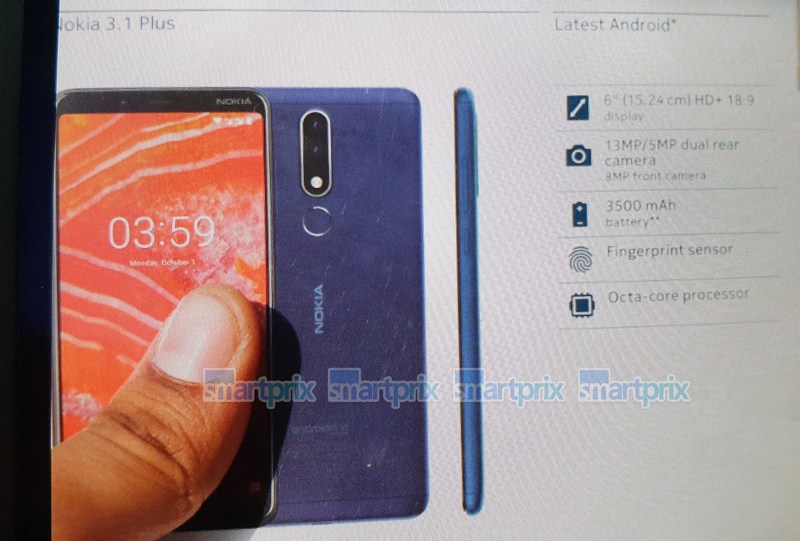
HMD Global has a new phone launching in India tomorrow. Most sites, including us, presumed it is for the launch of the Nokia 7.1 Plus but a new leak has revealed it is a different phone entirely – the Nokia 3.1 Plus.
An image showing the retail box of the phone has surfaced on the web and it also lists the specs of the device.
The Nokia 3.1 Plus will sport a 6-inch display with a 1440 x 720 resolution. It is a big upgrade from the Nokia 3.1‘s 5.2-inch HD+ screen which explains the Mega Display teasers. It also doesn’t have a notch.
The box also reveals the phone will come with a 13MP + 5MP dual camera combination on its rear. The image of the phone on the box shows the cameras are lined-up vertically and share the same housing with the LED flash. Right below the camera setup is a fingerprint scanner.
The Nokia 3.1 Plus will be powered by an unnamed octa-core processor, probably from MediaTek, and will have a 3,500mAh battery. The phone will run stock Android since it is an Android One phone like its siblings. However, we expect it to come with Android 8.1 Oreo out of the box with a promised update to Android 9 Pie in future.
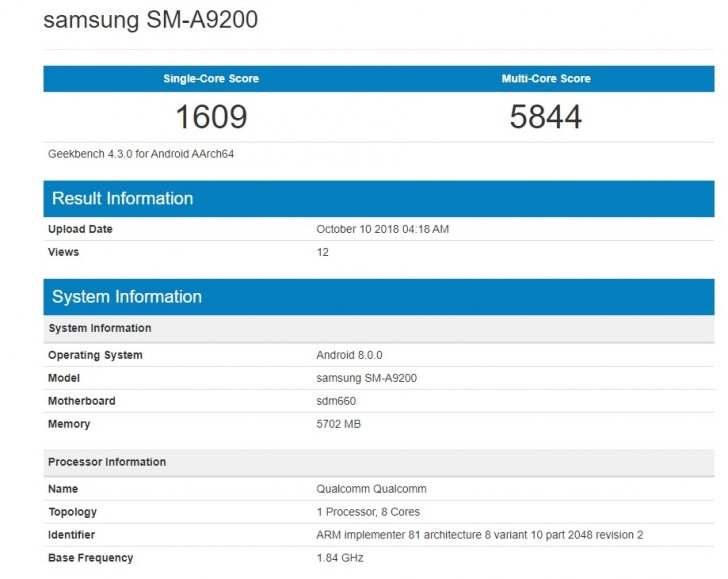
There have been several rumours that Korean tech giant Samsung was planning to revamp its budget and midrange smartphone lineup in order to regain the market shares the company is rapidly losing to Chinese OEMs. One of the models that will kickstart the new vista is the Galaxy A9 (2018). Subsequently, a Samsung model suspected to be the Galaxy A9 (2018) has been spotted on benchmark website GeekBench. The device makes an appearance on GeekBench database with the model number Samsung SM-A9200.
Top of the expected specs on the Galaxy A9 (2018) is the quad camera setup which the device is rumoured to pack at its rear. This will make the device the first Samsung model to have such. While that is not yet confirmed, the Geekbench listing gives us an idea of what it packs under its hood. The listing shows a Qualcomm Snapdragon 660 chipset onboard with 6GB of RAM. The device will run Android 8.0 Oreo out of the box which is rather disappointing considering Android 9.0 Pie has been out for months now. The benchmark score of 5844 points on the multi-core test and 1609 points on the single-core test falls in line with those of other SD660 models.
Razer, the gaming hardware manufacturer will announce the Razer Phone 2 today. The launch is scheduled to begin in less than 12 hours but just before then, the phone was briefly up on Amazon Italy. The page has now been pulled down but some sites were able to grab the important info before it went down.
The Razer Phone 2 keeps some of the specs of its predecessor such as the 5.72-inch QHD LCD display which has a 120Hz refresh rate. The RAM is the same at 8GB and storage also remains 64GB which is surprising since AnTuTu revealed it has a 512GB ROM.
There are new things too such as a Snapdragon 845 processor and a Razer Chroma RGB logo. Owners should be able to customize the RGB lights just as they can customize other Razer products with Chroma. The Razer Phone 2 also has a unique “vapor cooling chamber” to prevent the phone from heating up while playing games.
[envira-gallery id=”216000″]
The Razer Phone 2 has its dual rear cameras in a new position which we first saw in a leaked render a few weeks ago. The front bezels are still huge and are definitely home to stereo THX certified speakers. The power button also doubles as the fingerprint scanner.
The rear is apparently covered in glass as Amazon mentions it has support for wireless charging although there is no mention of the battery capacity. The phone is also IP67 water-resistant.
The Razer Phone 2 might sell for much more than expected as the listing showed a price tag of €870. That is more than a €100 increase when compared to last year’s model that had a €750 launch price.
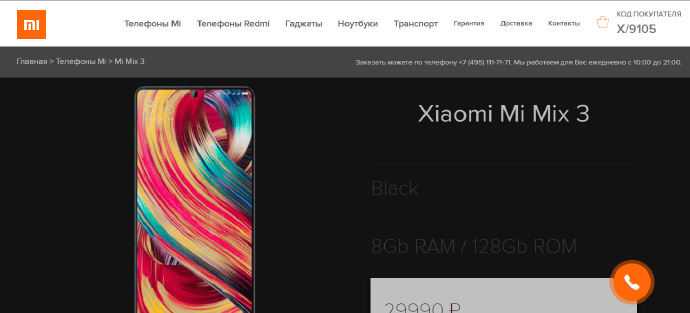
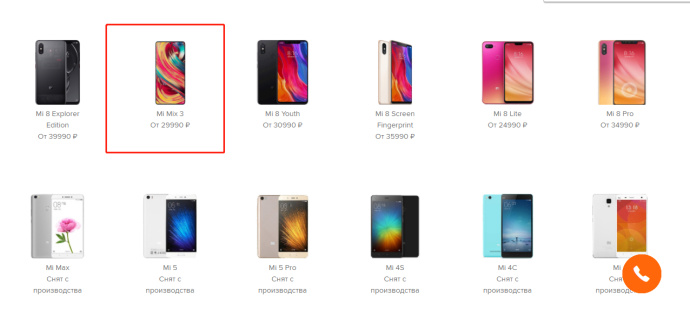
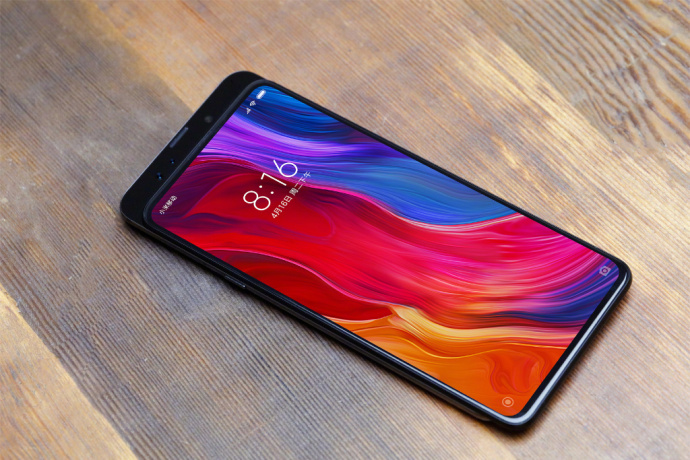
Couple of screenshots of the alleged official listing of the upcoming Xiaomi Mi MIX 3 smartphone on Xiaomi Russia website were recently spotted on the Weibo. Chinese publication IT Home that was first to spot those images claimed that it could not find the listing for Mi MIX 3 on the official Xiaomi Russia website. It further stated that the screenshots actually belonged to Mi MIX 3’s listing on an unofficial Xiaomi store (Xiaomi.shop) from Russia.
The Xiaomi.shop has a dedicated page for Mi MIX 3. The listing reveals that the handset features 8 GB of RAM and it has an inbuilt storage of 128 GB. It carries a price tag of 29,990 rubles (~$452).
Since Xiaomi.shop is not the official store of Xiaomi Russia, the listing for the Mi MIX 3 could be fake. As far as the render of the Mi MIX 3 available on the Russian retailer site is concerned, it also appears to be fake since it features an in-display selfie camera at the top portion of the screen.
The official image of the Mi MIX 3 that was released by Xiaomi President Lin Bin had revealed that the handset will be arriving with a manual slider design. The official image had also revealed that the camera and other sensors were placed on the slider of the smartphone.
Xiaomi is yet to confirm on the launch date of Mi MIX 3. However, it is certain that the company will be confirming on it soon since the handset is slated to get announced in this month. As of this writing, there is no confirmation on the specifications of the Mi MIX 3. It is very likely to feature Snapdragon 845 and an in-screen fingerprint reader. The handset is also expected to feature 3D structured light module for 3D facial recognition.
This year we saw the release of the first triple rear camera smartphone which is Huawei’s P20 Pro. More triple rear camera phones have been released afterward but some manufacturers are bent on setting a new record by releasing a phone with a quadruple rear camera system. Samsung is one of these companies and its Galaxy A9 Star Pro is the device that might set the record.
The Galaxy A9 Star Pro will come with four camera sensors on its back, one sensor more than that of the Galaxy A7 (2018). Evan Blass has shared a photo which shows all four cameras and their configuration.
The Galaxy A9 Star Pro will have its four rear cameras arranged vertically on the left side. The first camera is an 8MP f/2.4 120° ultra-wide angle sensor. Below it is a 10MP f/2.4 telephoto camera with 2x optical zoom. A 24MP f/1.7 camera follows and last comes a 5MP f/2. depth camera. All four cameras share a single housing and below the setup is a dual tone LED flash.
The picture also shows the phone will come with a squircle-shaped fingerprint scanner which sits in the middle. There is a button on the left but we are not sure it is the power button since it isn’t Samsung’s style. Our guess is it is a Bixby button. The volume rocker is on the right but we can’t tell if there is another button below it.
Xiaomi‘s flagships for this year comprise of the Mix 2s and the Mi 8 models. The Mi 8 was released in May this year and went on sale in China in June. Xiaomi’s CEO Lei Jun has now revealed that the company has sold over 6 million units of the Mi 8 since the models went on sale. Lei Jun also announced a 200 yuan ($28) price cut for the Mi 8 standard version in China to celebrate the milestone. This brings down the price to 2,499 yuan ($360).
The estimated figure covers all the different models that make up the Mi 8 family which include the Mi 8, Mi 8 Pro, Mi 8 Lite and Mi 8 SE. The Mi 8 Pro and Mi 8 Lite were only launched last month but are already on sale in China.
The disclosure doesn’t really come as a surprise due to the popularity of the Mi 8 among fans. Xiaomi did not just restrict the models to the flagship category but also included super mid-rangers like the Mi 8 SE with a Snapdragon 710 premium midrange SoC. The Mi 8 Lite also falls into this class.
Huawei has announced a new type of battery for use in electronics devices. The new battery is the industry’s first lithium-silicon battery and it promises big improvements in safety and charging speeds.
The battery was unveiled on Monday by the Huawei Consumer Business Group. Huawei says they swapped the graphite-based anodes for Lithium-Silicon because the latter increases the power retention of the battery and also makes it more durable.
Huawei believes the new battery technology will bring a big change to the way we use smartphones. The reproduced quote below sums up their expectations:
Just like how multi-touch technology changed the way displays work, Huawei’s ultra-fast charging technologies will redefine the way people use smartphones and free users from nomophobia — the fear of having no access to phones – Huawei
Huawei says the battery has a 3D nitrogen-doped carbon network coating that can be synthesized at a low temperature and has a high conductivity which results in ultra-fast charging. Huawei didn’t provide an example of how fast a sample battery can be charged. However, they did mention that ultra-fast charging charges using a low voltage and a high current, unlike other fast charging technologies that use a high voltage-low current method.
The Chinese manufacturer adds that “the innovation is based on electrochemical kinetics advancements which allow ultra-fast charging batteries to support greater power efficiency and current input. Leveraging the nitrogen-doped carbon frame, Huawei improved the stability intercalation and deintercalation of lithium.”
Unfortunately, there is no info on when the new battery technology will enter commercial production yet.
OPPO has officially launched its latest mid-range smartphone in China. The OPPO K1 is one hell of a premium mid-range beast in terms of the design and even the specifications don’t disappoint. The K1 is already available for pre-order in China with the price starting at 1,599 Yuan (approx. $231).
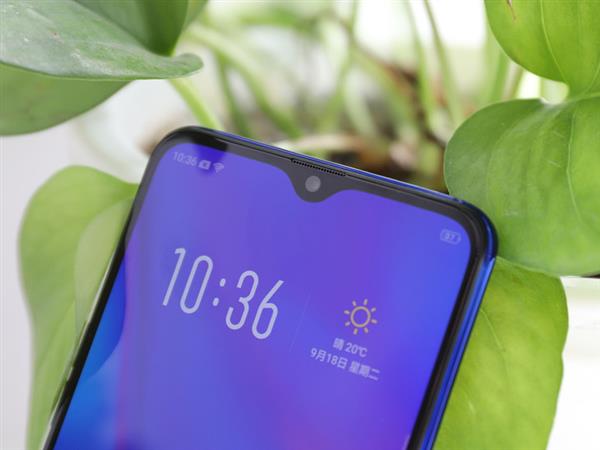
OPPO K1 comes with the gradually trending water drop notch at the top of the display. This ensures the bezels around the display are at their thinnest. We must note that the K1’s front design is the same with that of the OPPO R17 that was launched a couple of months back. The rear design is, however, different from the R17. The K1 still packs a dual rear camera setup but unlike the R17, its camera is located at the top left corner arranged in a horizontal alignment. The premium mid-ranger doesn’t have a fingerprint sensor at the back instead, it packs an on-screen fingerprint sensor. This makes OPPO K1 one of the few mid-range phones with the emerging fingerprint recognition technology.
Talking about the specs, OPPO K1 packs a humongous 6.4-inch FHD+ Super AMOLED display with a resolution of 2340 x 1080 pixels. The display has a Corning Gorilla Glass protection on top and offers a high 91% screen-to-body ratio. The device is powered by a Qualcomm Snapdragon 660 premium mid-range chipset. The SD660 chipset has got a worthy successor in the Snapdragon 710 but it still is a powerful midrange chipset. The processor teams up with 4GB of RAM on the base model and 6GB of RAM on the higher variant. Both variants come with 64GB of internal storage which can be expanded.
For photography, the OPPO K1 packs a 25MP selfie shooter which sits at the water drop notch. At the rear, the dual camera set up is a 16MP+2MP combo. The camera comes with artificial intelligence (AI) which enhances the photographic experience. The camera samples shot using the K1’s rear cameras look pretty impressive. Providing the interface is the Android 8.1 Oreo-based ColorOS 5.2 that brings several cool features to the model. The device gets its juice from a 3,500mAh battery with OPPO’s Super VOOC fast charging technology.
As for the prices, the OPPO K1 is available for 1599 yuan ($231) for the 4GB+64GB variant and 1,799 yuan ($259) for the 6GB+64GB. The device comes in Van Gogh Blue and Mocha Red and will start shipping on October 19. Outside of China, you can pre-order the K1 on Giztop, Gizmochina’s online shop and have it delivered when shipping commences. Meanwhile, check out the K1’s camera samples from below.
Honor has confirmed that it will be debuting the Honor 8C smartphone tomorrow in Beijing, China. A recent report had claimed that the Chinese manufacturer will be launching the MediaPad T5 tablet alongside the Honor 8C. Today, the company has released an official teaser to confirm that it will be launching a new tablet tomorrow.
The Weibo post that confirms the arrival of the new Honor MediaPad T5 reveals that it will be equipped with dual speakers tuned by Harman Kardon along with Histen 5.0 3D audio technology by Huawei. This suggests that the MediaPad T5 will be a good device for enjoying videos and music. The presence of GPU Turbo technology on the MediaPad T5 indicates that it will also offer good gaming experience.
The official Honor store on Jingdong Mall has two Honor tablets namely, the Waterplay series and Play Pad 2 (launched as MediaPad T3 in India in 2017). The Honor Waterplay Tab is a waterproof tablet that is priced at 1,999 Yuan whereas the Play Pad 2 costs 999 Yuan. Probably, the MediaPad T5 tablet arriving could be priced between Waterplay and Play Pad 2 tablets.
There is no information on the accurate specs of the Honor MediaPad T5. However, it is expected to come equipped with a 10.1-inch screen that may support 2K resolution. The device could be either powered by the Kirin 710 or Kirin 970 chipset.
As far as the Honor 8C is concerned, it will be hitting the market as the first Snapdragon 632 powered smartphone. The entire specs of the phone have been revealed, but its pricing is yet to be confirmed. The Honor 8C is expected to arrive with 6.26-inch IPS LCD waterdrop notch screen with HD+ resolution, 4 GB of RAM, 32 GB / 64 GB of inbuilt storage, 4,000mAh battery with 10W charging support, 8-megapixel front camera and 13-megapixel + 2-megapixel dual camera.
Recently, we reported that Asus is going to launch its first gaming-centric smartphone — Asus ROG Phone, in the United States, later this month. The phone, which was first unveiled at Computex in June, will now be available for pre-booking in the US from 18th October.
The company has revealed that the Asus ROG Phone with 128GB internal storage will cost $899 while the 512GB internal storage model is priced at $1,099. Along with that, Asus has also unveiled the pricing of related accessories.
The ROG Mobile Desktop Dock costs $229.99, while the ROG TwinView Dock is priced at $399.99. The ROG Gamevice Controller will be available for $89.99, and the ROG WiGig Dock will set you back $329.99. On the other hand, the ROG Professional Dock is priced at $119.99, and finally the ROG Phone Case will cost $59.99.
While Asus has not yet revealed the shipping date for its ROG gaming phone, but has said that the accessories will be available in Q4 2018.
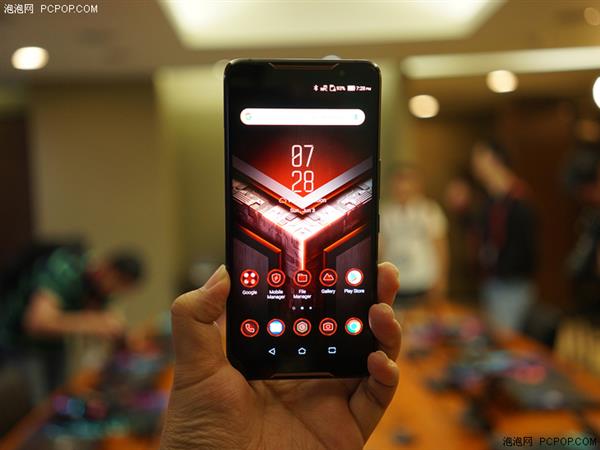
The Asus ROG Phone is designed for the purpose of high-end gaming and thus, it comes with support for dedicated accessories to enhance the gaming experience. It features a 6-inch display with support for 2160 x 1080 pixels screen resolution, and HDR content at 90Hz with 1 ms response rate.
The phone is powered by Qualcomm‘s Snapdragon 845 processor, clocked at 2.96GHz. The chipset is coupled with 8GB of RAM and the phone offers two storage options — 128GB and 512GB. It also comes with Optiflex — the company’s custom technology that speeds up the phone.
As for the photography, the device houses a 12MP Sony IMX363 f/1.7 primary sensor with 120-degree wide-angle lens and an 8MP secondary sensor with f/2.0 aperture. There’s an 8MP front-facing snapper for taking selfies and video calling.
The Asus ROG Phone has a special X Mode that can be activated by squeezing the sides of the phone. With the special X Mode, the phone stops all background tasks and directs all processing power to the game you are playing. Further, when in X Mode, the phone’s UI also changes from blue to deep red.
Running on Android 8.1 Oreo operating system out of the box, the smartphone comes powered by a 4,000mAh battery with support for ASUS HyperCharge fast charging technology that can charge the device from 0 to 60 percent in just 30 minutes.
The Honor 8X Max was announced last month and it is the first phone from the manufacturer with a water-drop notch. Huawei’s Mate 20 will also have a water-drop notch but it likely won’t be the first Huawei device. Official renders of a new Huawei phone called the Huawei Enjoy Max have surfaced and there is a chance it might launch before the Mate 20.
The photos were posted on Twitter today by Evan Blass (@evleaks) and they show the phone from different angles including all the color variants it will be available in. The name of the device is definitely new but we have actually come across the Huawei Enjoy Max before. Remember the Huawei phone with a leather back that showed up on TENAA weeks ago? Yes, that is the Enjoy Max.
Save for the leather finish and the Huawei branding, the Enjoy Max and the Honor 8X Max are literally the same phones. They also share the same internals excluding the processor which might be the Snapdragon 670 in the case of the Enjoy Max.
[envira-gallery id=”215937″]
Based on the TENAA specs, the Huawei Enjoy Max will come with a 7.12-inch LCD screen with a 2244 x 1080 resolution. It will be powered by a 1.95GHz processor with 4GB of RAM and 64GB/128GB of expandable storage.
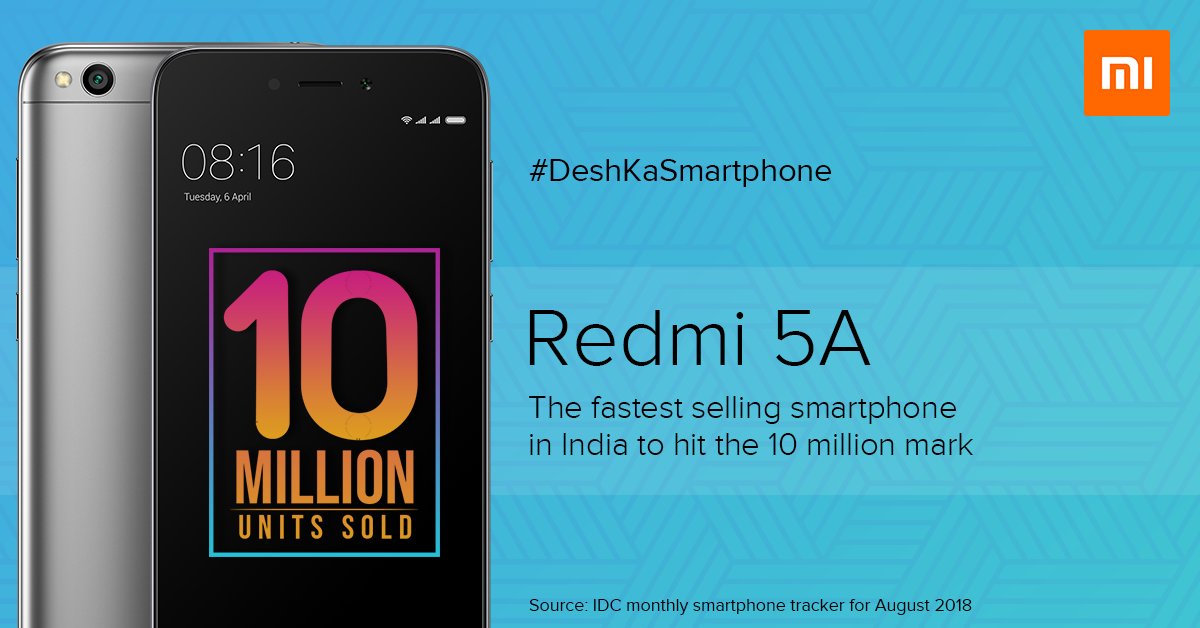
Last year in November, Xiaomi had introduced the Redmi 5A smartphone. Initially, the company had sold the smartphone with a very enticing price tag of Rs. 4,999 for the first 5 million customers. From March this year, the handset was made available with a starting price of Rs. 5,999. Xiaomi has now confirmed that it has managed to sell more than 10 million units of the Redmi 5A smartphone since its launch. Citing IDC survey data for August 2018, Xiaomi claims that the Redmi 5A is the fastest selling phone that has managed to achieve the milestone in a short span of time.
According to, Raghu Reddy, Head of Categories and Online Sales, “These remarkable milestones are the result of the immense love and admiration from our millions of Mi Fans and customers. Redmi 5A is one of our blockbuster smartphone products due to the amazing features it offers coupled with great quality and truly honest pricing, which makes it an undebatable choice in its category and with the recently launched Redmi 6A we have made it even better. Xiaomi as a brand will continue to bring innovative products of great quality with best specs and ensure that it is accessible to all consumers across India.”
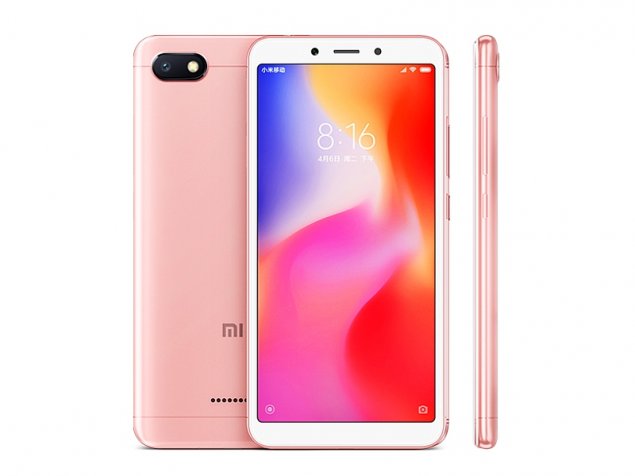
The Xiaomi Redmi 5A has been consistently reigning on the numero uno spot since the last nine months. Currently, the Redmi 5A variants like 2 GB RAM + 16 GB storage and 3 GB RAM + 32 GB storage are respectively available for Rs. 5,999 and Rs. 6,999. The handset can be availed in color options such as Blue, Dark Grey, Gold and Rose Gold. The handset is available for buying through Mi.com, Mi Store app, Flipkart and Mi Home stores.
In the previous month, Xiaomi had introduced the Redmi 6A as the successor of the Redmi 5A. Like Redmi 5A, its successor features 13-megapixel rear camera, 5-megapixel front camera and 3,000mAh battery. The Redmi 6A comes with some new features a larger 5.45-inch HD+ display that supports 18:9 aspect ratio. It is driven by 2 GHz MediaTek Helio A22 quad-core processor that offers better performance over the older Snapdragon 425 that powers the Redmi 5A.
Xiaomi has included support for Electronic Image Stabilization (EIS) for the rear camera of Redmi 6A. The handset comes loaded with the latest MIUI 9 flavored Android Oreo OS and it also features AI face unlock. Redmi 6A users have already received the latest MIU 10 update.
The Xiaomi Redmi 6A variants such as 2 GB RAM + 16 GB storage and 2 GB RAM + 32 GB storage are respectively priced at Rs. 5,999 and Rs. 6,999. It can be availed through Mi.com, Mi Store app, Amazon India and Mi Home stores.
The world’s largest telecom-equipment maker, Huawei has unveiled two new AI chips at its annual global partners’ conference. Huawei has already surpassed Apple Inc. as the world’s no. 2 smartphone vendor. Now, they have another goal of exceeding sales and giving competition to the US chip makers like Qualcomm and Nvidia in the AI market.
Yesterday, Huawei announced a new Ascend series which is capable of machine learning as like of chips from Nvidia and Qualcomm. Along with the new chips, Huawei has also introduced the cloud computing services to help devices better integrate with different services. Its cloud computing platform will give competition to the homegrown Alibaba, Microsoft Corp and Amazon Web Services.
Huawei announced two new Artificial Intelligence chips called Ascend 910 and Ascend 310. Huawei aims Ascend 910 for use in the data centres whereas Ascend 310 is intended for internet-connected devices like smartphones, smartwatches and IoT devices.
“Huawei’s AI strategy is built on top of continued investment in basic technologies and talent training,” Chairman Eric Xu told the Huawei Connect conference in Shanghai.
It’s an overall push from Huawei to excel in the 5G technology both software and hardware wise. It will also help the Chinese company to mark a debut against the world’s top AI and cloud-based companies in the US. Huawei is shifting into AI chip business for enterprises and consumer applications. It’s a big push from Huawei, as until now they have managed to made chips for its smartphones.
“Going forward we need to think of new ways to prepare our business and industry for change. There are clear signs that AI will change or disrupt a whole host of industries,” Huawei Rotating Chairman Eric Xu said on Wednesday.
Let’s see the how Huawei ascend in the AI chip market.
In a bid to mark its 11th Anniversary with a red letter, CooliCool is doling out massive discounts on a wide selection of items ranging from smart wearables, electronic accessories, RC quadcopters and lots more.
The 11th Anniversary Carnival which kicked-off on Wednesday, October 10th has been split into multiple categories in a bid to expedite the search process. Here’s a brief glimpse of what each category has to offer in terms of discounts.
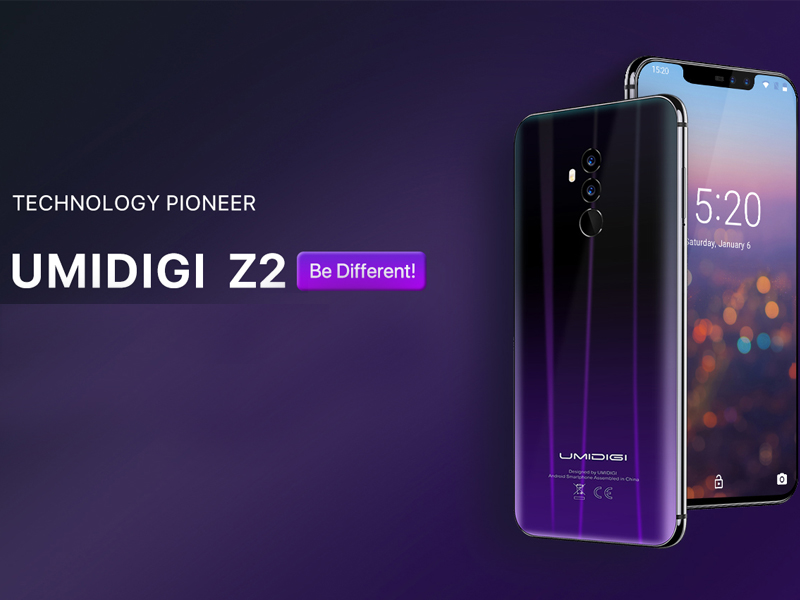
The ‘Sale on Top’ section features the UMIDIGI Z2, the Ulefone Power 6 and a slew of other well-received smartphones that you can buy at a discounted price on CooliCool. On top of that, each phone comes with a specific coupon code that you can use to get an additional discount.
For the sake of an instance, you can get a 23% off on the Micromax Dual 4 E4816 smartphone that usually sells for $129.99 on CooliCool. Thanks to the aforesaid discount, you can now buy it at a dropped price of just $99.99.
You can apply coupon code 11MX10 to bring your already discounted price down to just $89.99. In other words, you can save an extra $10 with the help of the above-mentioned coupon at the time of checking out. There are noteworthy discounts on some of the most popular tablet PCs like the VOYO VBook i7 Plus, VBook i3 and ALLDOCUBE M5 in the following category called Super Deals. If you’re in the market for a cost-effective tablet PC, you might want to check out this section.
There are More Deals to Discover in our next section that features top brands like Elephone, UMIDIGI, Xiaomi, Nokia and Lenovo. You can even avail noteworthy discounts on smartphones from equally popular brands like Ulefone and Doogee as well.
Much to the delight of drone enthusiasts, CooliCool is offering well-received drones at a considerably lowered price in the section called ‘RC Quadcopters.’ In addition to drones, you can avail discounts on various toys like the SWRC-002 DIY Remote Control Car as well. If you’re a fitness-conscious person who likes to keep a track of your health without spending a lot of money, you’ve come to the right place. The Smart Wearable segment is crammed with awe-inspiring smartwatches and fitness bands that you can buy without breaking the bank.
Deemed as one of Asia’s biggest online commercial corporations, CooliCool will be giving buyers an opportunity to get big discounts on car electronics and electronic accessories and a myriad of other items available in the aforesaid categories until October 22nd, when the anniversary celebration is slated to end. Meanwhile, you can head straight to this link and take advantage of the discount.
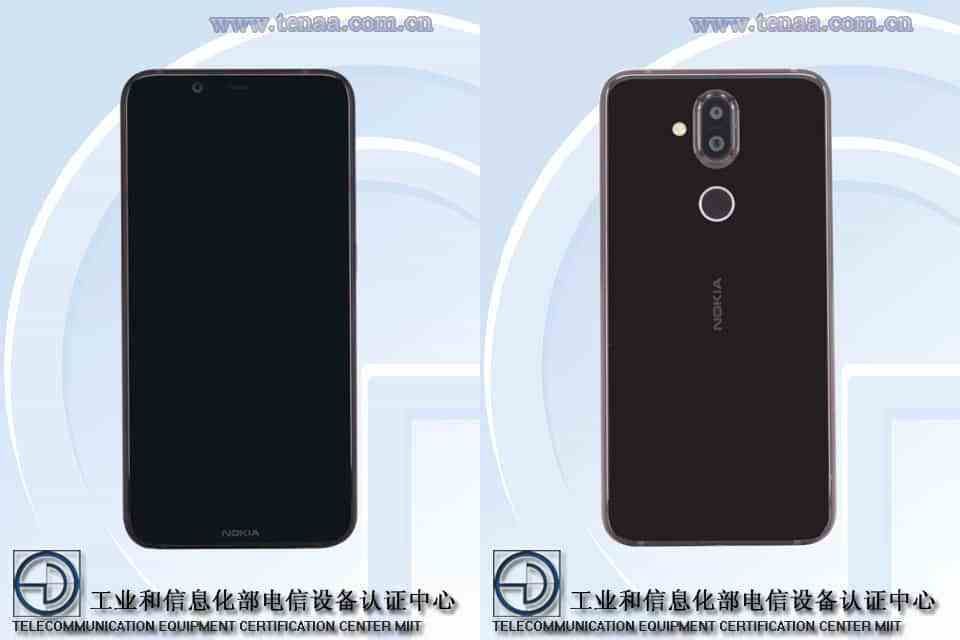
At the beginning of this month, HMD Global had announced the Nokia 7.1 smartphone. The mid-range phone arrived with a notched display design and Snapdragon 636. Today, the Finnish confirmed through its Nokia Mobile Weibo account that it will be holding an unveil event on Oct. 16 to announce a new smartphone. The teaser image shared by the company suggests that the company will be debuting the Nokia X7 smartphone on the said date.
Some may speculate that HMD Global may debut the Nokia 7.1 smartphone in China on Oct. 16. However, the camera module shown in the below teaser is bit different from the camera setup of the Nokia 7.1.
In the teaser image, ZEISS branding can be seen clearly mentioned between the two camera sensors. Also, the dual-tone LED flash is placed on left side of the vertical camera. The Nokia 7.1 also features ZEISS branding between the two cameras present on its rear. Unlike the upcoming Nokia phone, the Nokia 7.1 has the LED flash placed below the dual camera module. Also, it appears to be the very same Nokia TA-1131 smartphone that was certified by TENAA around two weeks ago. Hence, it is now being that the Finnish firm may announce the Nokia X7 smartphone on Oct. 16.
The Nokia X7 teaser image reveals that it will impress the audience with low-light photography prowess. Rumors have it that the Nokia X7 will be featuring a 6.2-inch display that will carry support for full HD+ resolution. The Snapdragon 710 chipset is expected to power the smartphone. It may arrive in two models such as 64 GB storage + 4 GB RAM and 128 GB storage + 6 GB RAM. The handset may include a 3,400mAh battery and it may arrive with Android 8.1 Oreo OS preinstalled.
There is no information available on the pricing of the Nokia X7. The 32 GB storage + 3 GB RAM and 64 GB storage + 4 GB RAM editions of the Nokia 7.1 were introduced with respective pricing of $349 and $400. The Nokia X7 is expected to debut with Nokia 7.1 Plus moniker outside of China. HMD Global will be holding a launch event in India tomorrow. Probably, it may announce the Nokia 7.1 smartphone in India.
We use cookies on our website to give you the most relevant experience by remembering your preferences and repeat visits. By clicking “Accept”, you consent to the use of ALL the cookies.
This website uses cookies to improve your experience while you navigate through the website. Out of these, the cookies that are categorized as necessary are stored on your browser as they are essential for the working of basic functionalities of the website. We also use third-party cookies that help us analyze and understand how you use this website. These cookies will be stored in your browser only with your consent. You also have the option to opt-out of these cookies. But opting out of some of these cookies may affect your browsing experience.
Necessary cookies are absolutely essential for the website to function properly. This category only includes cookies that ensures basic functionalities and security features of the website. These cookies do not store any personal information.
Any cookies that may not be particularly necessary for the website to function and is used specifically to collect user personal data via analytics, ads, other embedded contents are termed as non-necessary cookies. It is mandatory to procure user consent prior to running these cookies on your website.
















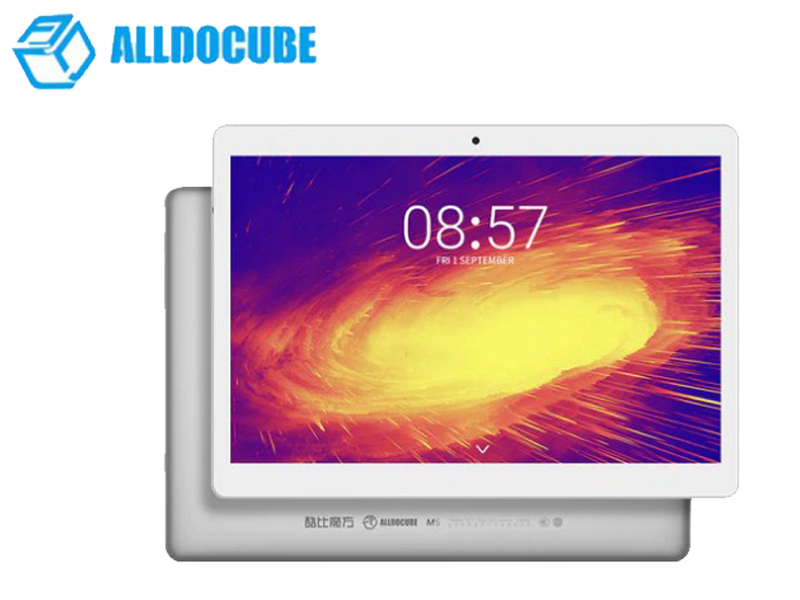 There are noteworthy discounts on some of the most popular tablet PCs like the VOYO VBook i7 Plus, VBook i3 and ALLDOCUBE M5 in the following category called Super Deals. If you’re in the market for a cost-effective tablet PC, you might want to check out this section.
 If you’re a fitness-conscious person who likes to keep a track of your health without spending a lot of money, you’ve come to the right place. The Smart Wearable segment is crammed with awe-inspiring smartwatches and fitness bands that you can buy without breaking the bank.